The Founding Principles of Kanazawa Institute of Technology
Our Mission
According to the Japanese School Education Act, the aims of universities, as centers for academic activity, are to help develop intelligence, morality and practical skills through the teaching and research of specialized arts and sciences, as well as to bestow knowledge. Colleges of technology (kosen) aim to foster the capabilities necessary for actual professions through the teaching of specialized arts and sciences.
John F. Kennedy made a speech entitled “A Strategy of Peace” at the commencement ceremony of American University on June 10, 1963, a speech which is said to be historically famous comparable to the Gettysburg Address given by Abraham Lincoln. In this speech, he spoke of the mission of universities, drawing upon elegant words, saying that “there are few earthly things more beautiful than a university”, because it is a place “where those who hate ignorance may strive to know, where those who perceive truth may strive to make others see.”
The School Education Act defines the mission of universities theoretically and former president Kennedy defines it in a highbrow tone. Indeed, universities are centers of academic activity, where high-level education and innovative research activities are carried out, aiming to contribute to national and international progress in science and technology and the enhancement of international culture. Colleges of technology aim to produce excellent engineers who will play a prominent role in the further development of Japanese industry.
The Principle of Education
As advocated by the philosopher Fichte, the purpose of general education is to cultivate human beings as themselves, each as his true self. In addition, educator Paul Natorp says that education is the act of cultivating character, meaning the formation of personality.
KIT has three main missions: the cultivation of character, academic research and occupational education. Although these three missions each have important significance, we focus on the cultivation of character as our ultimate mission. In short, although character can be formed through academic research and occupational education, the latter cannot be accomplished without character cultivation. Therefore, we are positive that the true nature of our mission is to be a place that produces highly intelligent people possessing deep cultural refinement.
Considering the above, we regard our school as a setting for the cultivation of character. Student life consists not only of classrooms, laboratories and libraries, but all aspects of life including cultural activities, physical exercise, guidance in dormitory life, health facilities, hygiene management, counseling for school life, job placement, etc.
The Ethics of the School Community
Cultivation of character is the most important mission for both public and private schools. In private schools especially, we must appreciate that not only professors but also board members and school staff are involved in education. Accordingly, our school community, consisting of board members, school staff and students as a trinity, must become a place for the cultivation of character and a seedbed for the nurture of citizens suitable for the democratic society of Japan.
Although they are subject to the Private School Act and have to abide certain rules, private schools enjoy a degree of freedom compared to public schools that are regulated by complicated rules and subject to bureaucratic control. In the prewar era, the government supervised and controlled private schools strictly. However, private schools have established distinctive traditions and solid school cultures in spite of this strict control.
While every private school faces many challenges in management planning and finance, they continue to maintain their pride because they enjoy a position of freedom. Our school has set a goal of innovative academy-industry partnership, a policy that makes us a forerunner in the technological age. Our board of directors aims to establish a noble academic tradition through various activities, freely demonstrating our strengths as a private school in order to accomplish our policies of “cultivation of high character”, “deep technical innovation” and “superb academic-industrial cooperation” with the full support of our school’s staff and students.
There are many private schools built through the founders’ personality and insight. They have strengthened themselves by weathering hardships over long periods of time, and are proud of their traditions and school cultures. For example, we can see Okuma’s spirit and intentions in Waseda University, Fukuzawa’s in Keio University and Niijima’s in Doshisha University. KIT must also establish a style based on our school’s principles stated here that sets an example as a model worthy of veneration in Japanese academic circles.
Path to Glory
Following World War II, Japan’s amazing economic development far surpassed that of West Germany, which also came following war defeat. This great success can be attributed to a combination of Japanese wisdom, technology and diligence.
With this great national strength as a backbone, our school plays a central role as a technical base and academic foundation for regional development in Ishikawa Prefecture, the Hokuriku region, Chubu region and the coastal area along the Sea of Japan. We are also responsible for producing the leading engineers and top class managers that are required for Japanese industry to be competitive in the world market.
Learning from the school management principles of the Massachusetts Institute of Technology, said to be the “sacred ground” of modern American science and technology, we will realize our ambition of becoming a first-class university boasting the highest standards, from space development to industrial sociology, and provide great honor to the academic world of democratic Japan. In order to accomplish this national mission, we will devote ourselves by combining all of our capabilities with cooperative might and determination.
(February 1965)
Three Principles
KIT and ICT's trinity of students, administration, and faculty and staff work together to realize the shared goal of an ideal engineering academia. We strive to contribute to society by providing excellence in education and research as the realization of the three principles stated by our school’s founder, the venerable Dr. Rikichi Izumiya.
To create well-rounded citizens with good character
We will foster the development of creative and unique engineers and researchers that are eager to explore our own culture, possess high moral standards, and are both broad- and internationally-minded.
To be innovative
We will foster the development of engineers and researchers that will contribute to engineering innovation while remaining flexible to the future advancement of science and technology.
To promote industry-university collaboration
We will contribute to the local community as a modern and enlightened school while actively exploring the themes demanded by Japanese industry.
KIT-IDEALS

Code of Conduct (Based on Our School Community's Shared Values)
We, the members of this school community, have come to recognize the core values that should be shared by all of those among us, and from these values we have established the “KIT-IDEALS” as follows. Students, administrators, and faculty and staff should remain ever mindful of these and, by adhering to them, strive to better our school community.
 |
We strive to embody a spirit of honesty, gratitude, and humility, and to realize a bright and fair place for learning. |
|---|---|
 |
We strive to exhibit the passion, self-confidence, and conviction necessary for a spirited learning environment. |
 |
We strive for independence, creativity, and flexibility, constantly promoting reform and progress through collaboration and co-creation. |
 |
We value honesty and take gratification in learning together. |
 |
We value diligence and cheer on those who strive to improve themselves. |
 |
We value initiative and take joy in achievement and the pursuit of discovery. |
 |
We value self-discipline, and we trust and respect one another. |
 |
We value teamwork and strive to fulfill the responsibilities of our individual roles. |
 |
We value individuals and their goals, and we strive to reach great heights, unfazed by the fear of failure. |
Three Policies
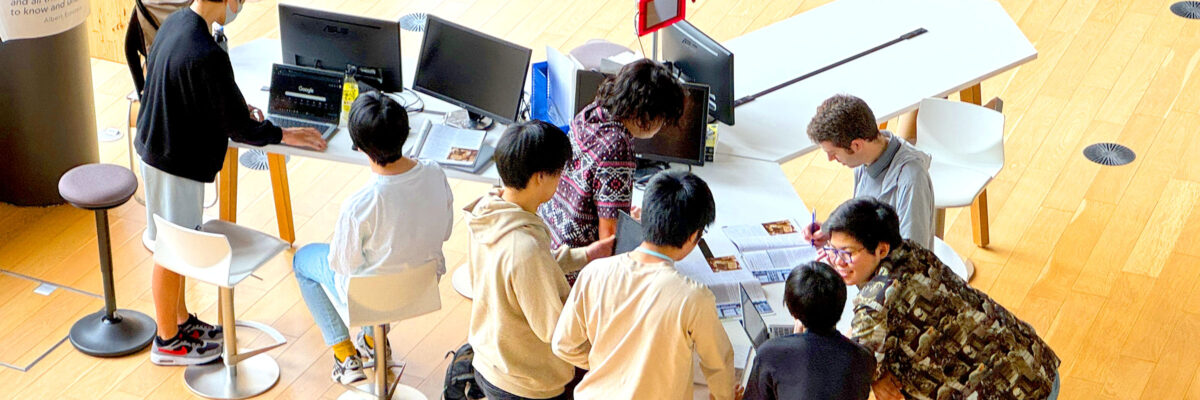
KIT and ICT's trinity of students, administration, and faculty and staff work together to realize the shared goal of an ideal engineering academia.
We strive to contribute to society by providing excellence in education and research as the realization of the three principles stated by our school’s founder, the venerable Dr. Rikichi Izumiya.
ICT Educational Mission
Fostering Leaders of Global Innovation
Three Policies
To achieve the educational mission, our school set the following three policies (Admission Policy, Curriculum Policy, Diploma Policy).
Admission Policy
The mission of International College of Technology, Kanazawa is Fostering Leaders of Global Innovation based on the principles of our founding mission statements, which are to create well-rounded citizens with good character, to be innovative, and to promote industry-university collaboration.
In order to build the foundation to be leaders of global innovation, the 1st and 2nd year students aim to improve their own qualities and diverse abilities through residential education, the 3rd year students strengthen their knowledge and communication skills to thrive globally by undertaking specialized study abroad in engineering, and the 4th and 5th year students collaborate with Kanazawa Institute of Technology in specialized fields and project activities so as to practice education that produces the greatest results.
We aim to foster leaders of global innovation equipped with scientific and technological capabilities to create new value, communication skills to thrive globally, and human qualities to contribute to society.
Furthermore, we seek to enroll students who share the code of conduct based on our school community’s shared values (KIT-IDEALS) and seek their own self-realization.
The Kind of Student We are Looking for
- Who is motivated to learn independently, has interest in science, technology, and engineering design, and can take initiative in problem identification and solving, manufacturing, and innovation (the creation of new value).
- Who have a strong interest and have an inquiring mind in playing an active role in a global society, and seek to improve their English communication skills.
- Who embrace diverse values and have the motivation to engage in solving social and local issues
Basic Policy for Admission Selection
Admission examinations will be conducted in 4 categories—Global Admission, Admission Based on Self-Recommendation, General Admission, and Special Admission Based on Self-Recommendation—in order to recruit a diverse range of students.
In the Global Admission, Admission Based on Self-Recommendation, and Special Admission Based on Self-Recommendation, applicants are evaluated comprehensively through an interview (30 min/person), academic transcript, statement of purpose, and other materials.
In the General Admission, applicants are evaluated comprehensively through academic achievement tests (Mathematics and English), an interview (15 min/person), academic transcript, statements of purpose, and other materials.
Curriculum Policy for the Department of Science and Technology
Philosophy and Objectives of the Curriculum
The curriculum of this department is based on the educational goal of "Fostering Leaders of Global Innovation". It follows the engineering education framework proposed by the CDIO Initiative, recognized as an international standard. The aim is to cultivate engineers who not only possess scientific and technological competence befitting innovators, but also communication skills for global engagement and human qualities that enable them to contribute to society.
Basic Structure of the Curriculum
The curriculum of this college consists of the following five areas:
First-Year Education
Aims to build a foundation of learning skills and adaptability to different cultures, while establishing fundamental ICT skills and language proficiency. Through the use of learning portfolios and individual interviews, students are supported in independently designing and implementing their own study plans based on their interests and goals. These methods promote the early development of an active and autonomous learning attitude.
General Education
Cultivates broad knowledge in the humanities, social sciences, and natural sciences, as well as an international perspective and ethical awareness.
Specialized Education
Provides step-by-step learning programs in the following four domains: Co-creation Area / IT Literacy Area / Basic Engineering Area / Specialist Focus Area.
International Education:
Develops the language skills and cross-cultural adaptability necessary to succeed globally, through study abroad and overseas co-op projects.
Career Education
Provides practical opportunities, such as internships and overseas co-op projects, to support students in building their careers toward social independence after graduation. (* The third-year study abroad program and the co-op project are integrated as practical learning opportunities connected with each area of the curriculum.)
Correspondence with the Diploma Policy
Through learning outcomes in the following three areas, students will acquire the competencies indicated in the Diploma Policy and be prepared to thrive as global innovators after graduation.
- Personal qualities as a leader that contributes to society: Cultivated through basic engineering and humanities/social sciences courses, nurturing leadership, ethical awareness, and a sense of social mission. (Examples: History and Culture, Ethics for Engineers)
- Communication skills for acting on a global scale: Developed through Japanese and English language education, cross-cultural learning experiences, and presentations, fostering understanding of diversity and communication skills. (Examples: English Expression, Academic English, Overseas English Programs)
- Superior scientific and technological capabilities worthy of an innovator: Acquired through specialist focus courses, mastering professional knowledge and skills, and further developed through specialized seminars that foster problem identification, value creation, and a continuous learning attitude.
Features of Learning Methods and Educational Quality Transformation
Active Learning:
Promotes autonomous learning by incorporating projects, exercises, and discussions across all courses.
Project-Based Learning (PBL)
Implements engineering design education across multiple academic years, enabling students to address interdisciplinary challenges.
Global Engagement
Offers classes taught in English and requires all students to participate in study abroad programs.
Evaluation of Learning Outcomes
Learning outcomes are evaluated comprehensively and from multiple perspectives, based on the syllabus of each course, using the following methods:
- Final examinations, quizzes, reports, presentations, assignments, portfolios
- Visualization of qualitative competencies through rubric-based assessment
- GPA system for numerical indicators of academic performance and self-evaluation
(* Evaluation methods are not limited to one approach; multiple methods may be combined to allow flexible course design.)
Each course is assessed according to the evaluation criteria specified in its syllabus. The weight of each item follows the distribution outlined in the syllabus, and final grades are calculated on a 100-point scale.
Grades are expressed as follows, corresponding to the evaluation points: S (90 points and above) A (80 to 89 points) B (70 to 79 points) C (60 to 69 points) D (below 60 points) F (failure due to poor attendance)
Each grade is assigned a grade point (S=4.0, A=3.0, B=2.0, C=1.0), which is weighted by course credits and averaged to calculate the GPA.
Furthermore, ICT tools such as the Learning Management System (LMS) and portfolio systems are actively utilized to distribute class materials and assignments, manage submissions, and support visualization and reflection on learning. These tools provide an integrated and continuous mechanism for comprehensively grasping and evaluating students’ learning processes and outcomes.
Diploma Policy
Our school fosters practical and creative engineers who have what it takes to be a global innovator acting on a global scale. A global innovator is a person who uses scientific thinking to characterize problems, acquires the latest engineering knowledge and insight, and creates new value using creative solutions. In addition, a global innovator is a professional who can work in global society by cooperating with experts from various fields, accepting the diversity of cultures and values. Innovators who find new value must understand a wide range of engineering principles and engineering practices. In other words, they are those who understand and practice each stage of "Conceive, Design, Implement, Operate" of the international framework CDIO Initiative whose aim is reform of educational engineering.
Specifically, our students need to acquire the following abilities and behavioral objectives.
Ⅰ Personal qualities as a leader that contributes to society
- Courage to innovate
Operate with a strong conviction (motive, tenacity) and continue to strive without fearing failure to lead oneself or a team towards success - Sense of duty to society
Maintain a sense of duty to resolve social issues with concern for regional communities and natural environments - Integrity as a leader
Be a responsible collaborator treating others with kindness and respect through modesty while exhibiting leadership in a global environment
Ⅱ Communication skills for acting on a global scale
- Collaboration
Actively contribute to accomplishing a goal as a team, understanding one's own role and input - Diversity and identity
Maintain a clear sense of identity while possessing a fundamental understanding of various cultures and value systems - Impressing upon others
Having organized one's thoughts logically, effectively convey them in a way that takes into consideration the position and emotions of others
Ⅲ Superior scientific and technological capabilities worthy of an innovator
- Creating value
Be able to create new value through the practice of design thinking and broad investigations of academic disciplines - Scientific thinking that combines industry, society, and nature
Be able to express one's own thoughts having understood and analyzed science and technology from the aspects of industry, society, and nature - Attitude for continuous learning
With sound learning as a foundation, maintain an attitude for continuously acquiring new knowledge and skills
Based on understanding of the above, graduation requirements are to acquire the specified number of credits by completing the courses and educational programs established according to our school's educational philosophy and purpose.