




白山登山2026

白山麓キャンパスで保健・体育科目を担当しているフィリップ・ケザウです。2026年10月2日(金)に白山麓キャンパスの1・2年生とともに白山登山を実施しましたので、ご報告いたします。
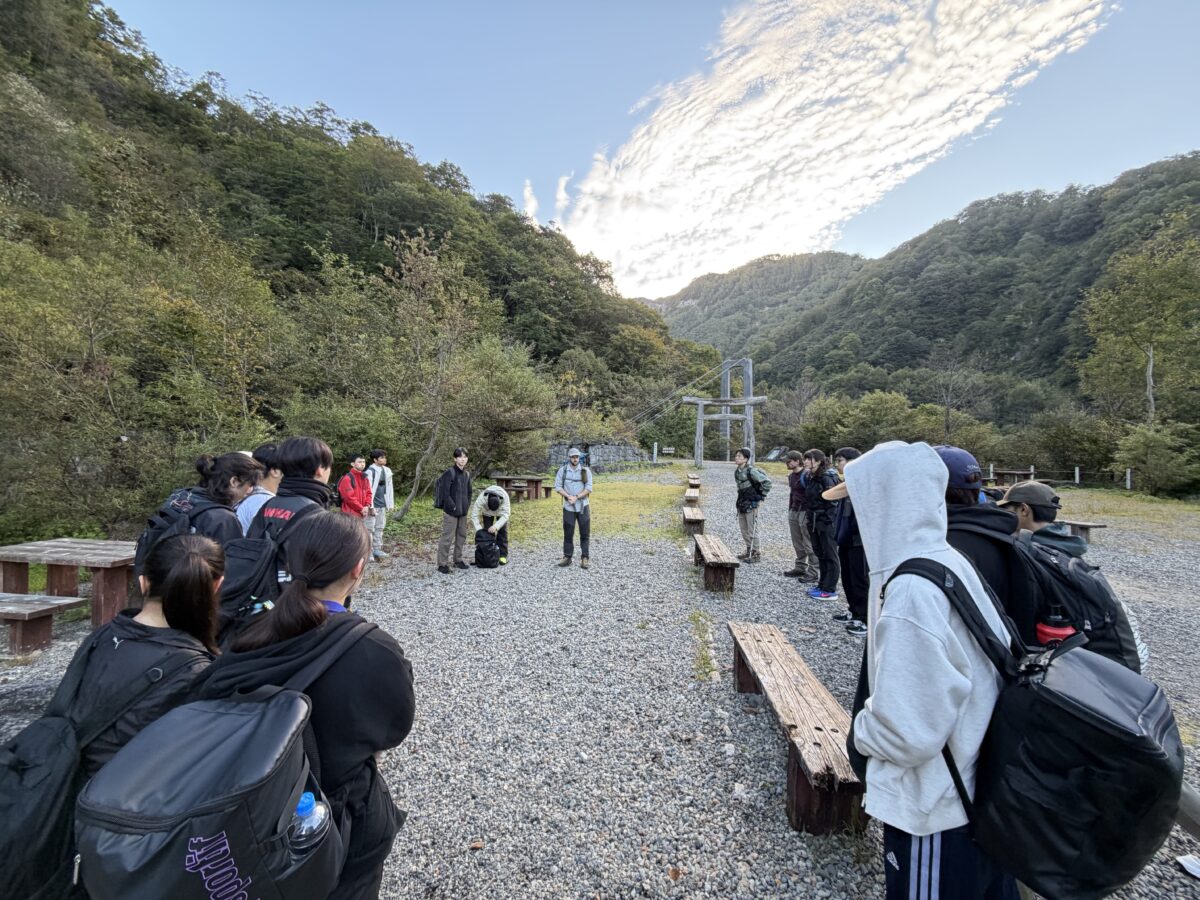
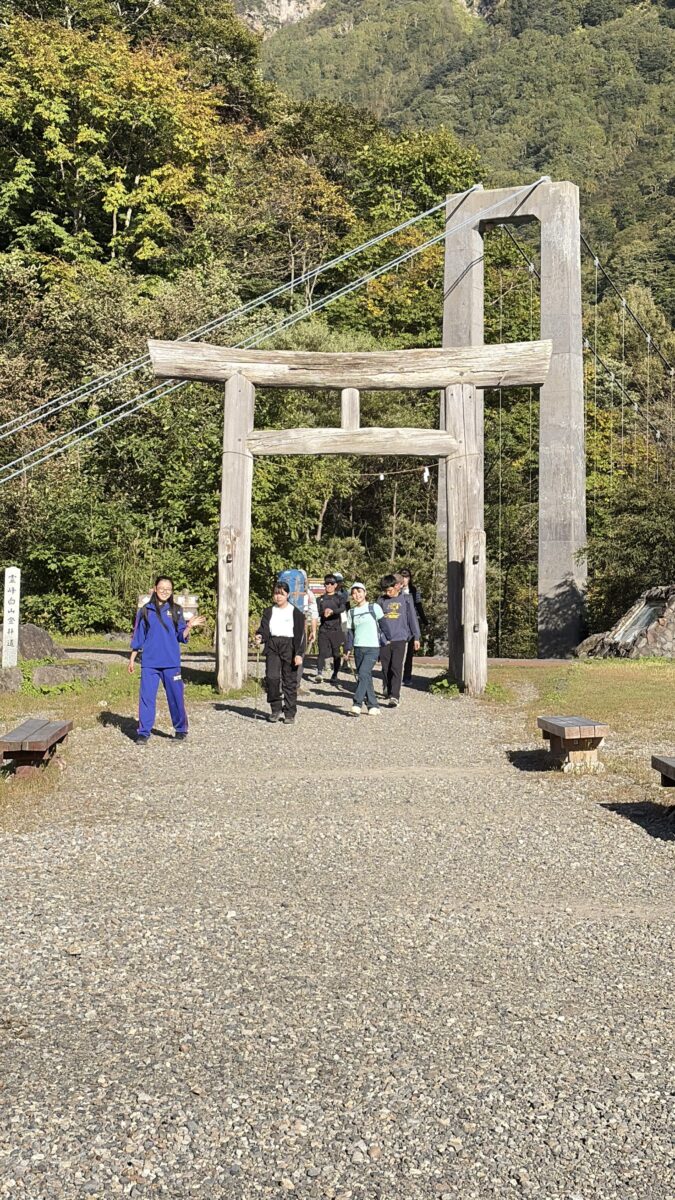
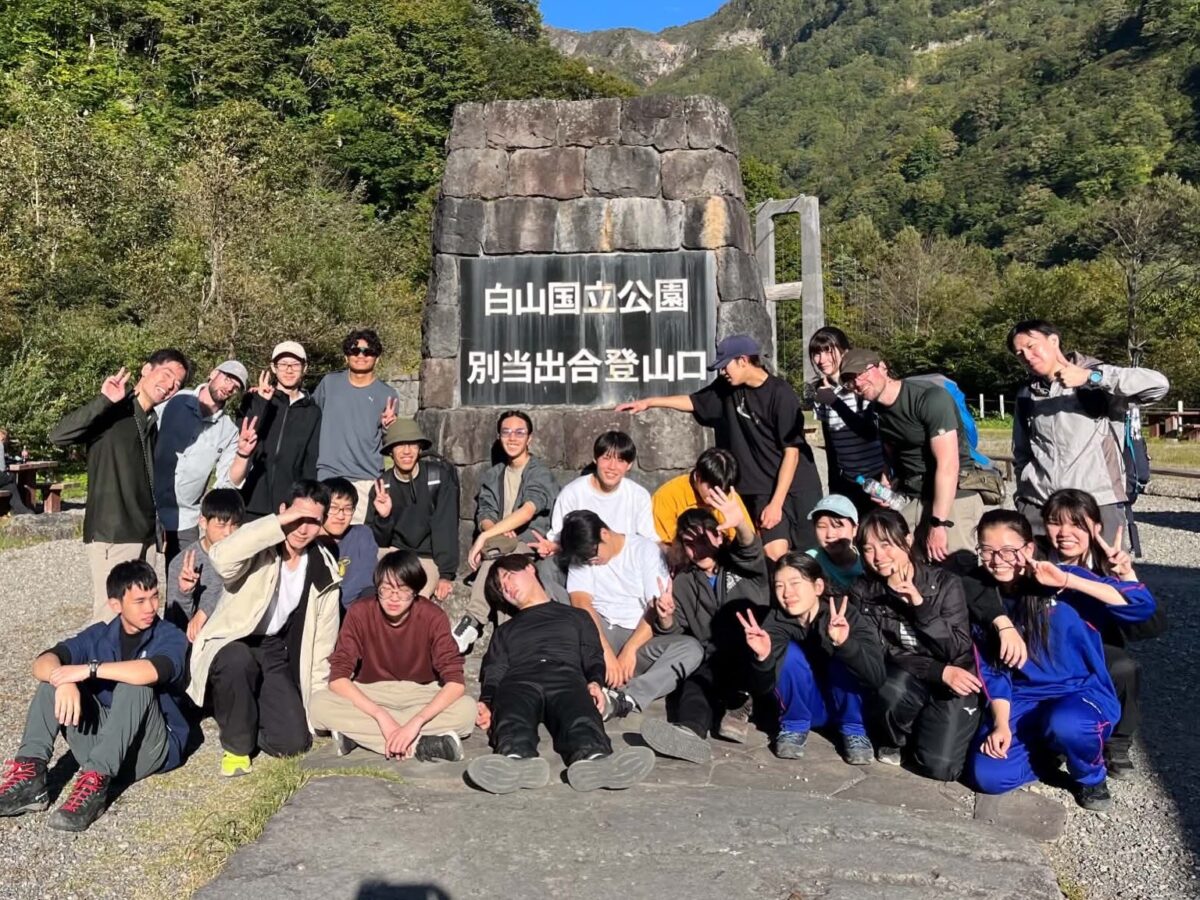
2日(金)の午前5時、21名の学生と6名の教職員がバスに乗り込み、約1時間の道のりを車内で睡眠を取りながら、登山口である別当出合(標高1,260m)へ到着しました。
白山は、立山・富士山とともに日本三霊山の一つとして知られており、多くの石川県民がご来光を目当てに毎年登っています。白山麓キャンパスでも毎年白山登山を実施していますが、ご来光登山ではなく日帰りでの登頂を目指しています。過去2年間は天候不良により中止となったため、現在ニュージーランドへ留学している3年生は登る機会がありませんでした。また、今回の登山は現2年生にとっても最後の挑戦となりました。
今回、バスでの移動から目を覚まし、白山の3つの峰の一つである御前峰(標高2,702m、標高差:およそ1,500m)を目指したのは、1年生10名と2年生11名です。彼らは、1週間前に5km走を完走して体力確認を終えていた他、急な天候変化にも対応できるように装備の入念な点検も受けていました。一方で、同学年の他の学生たちは、白山ジオパーク内の三方岩岳でより負担の少ない登山を行いました。
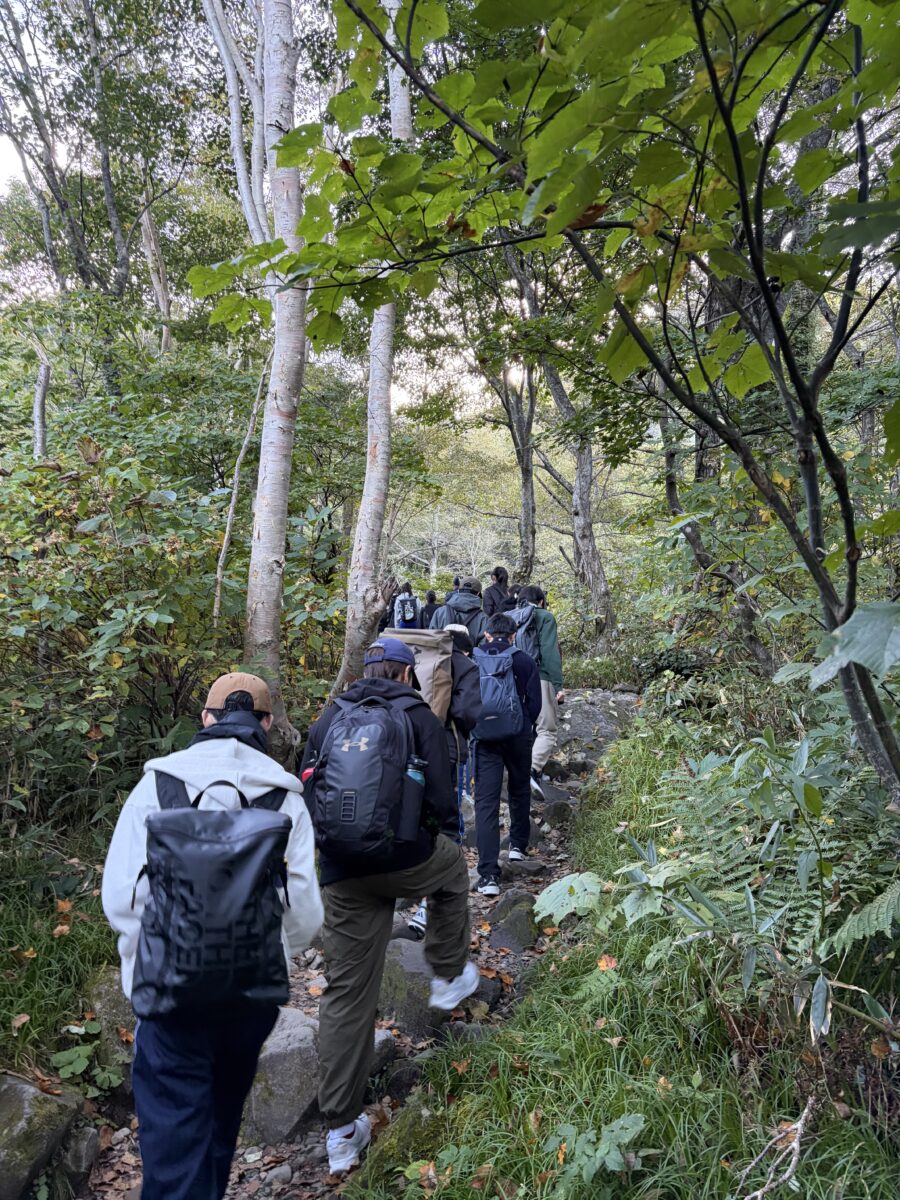
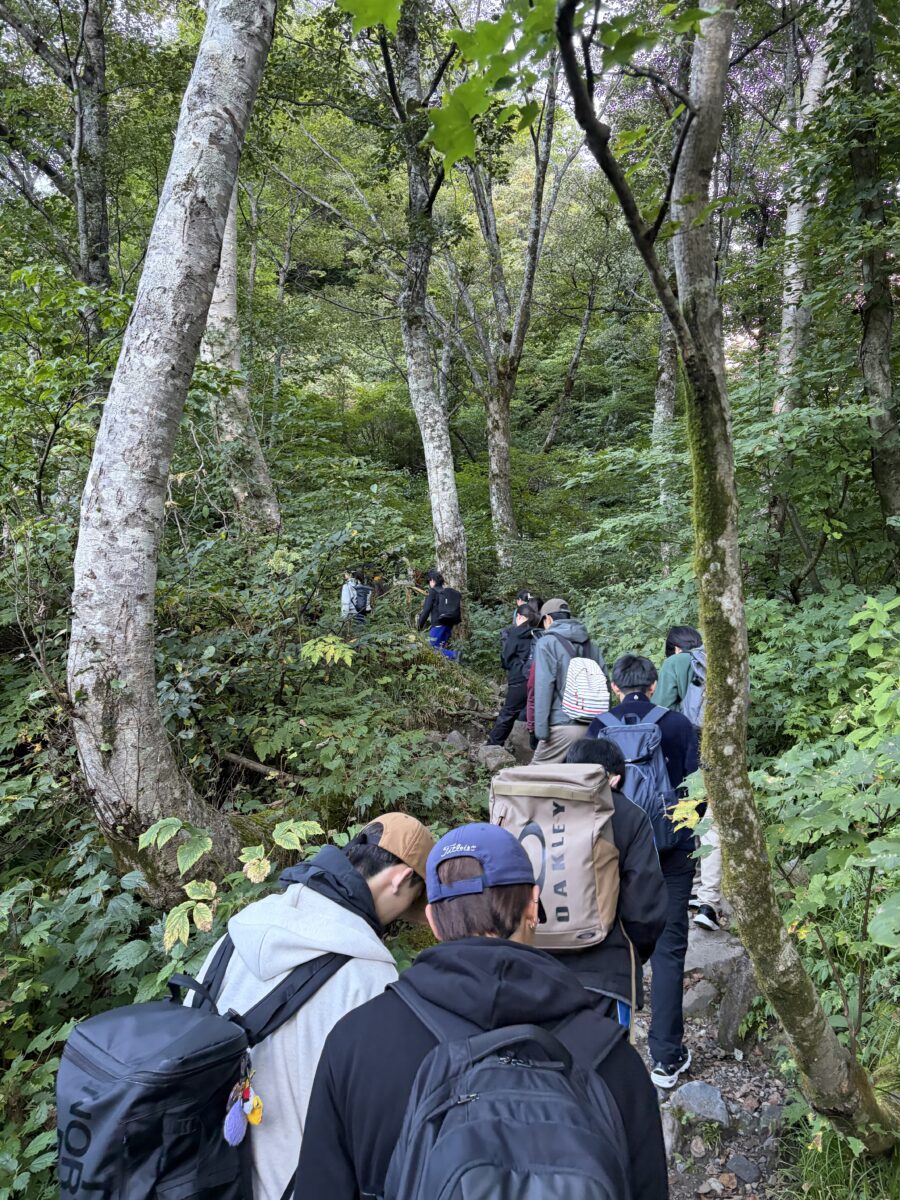
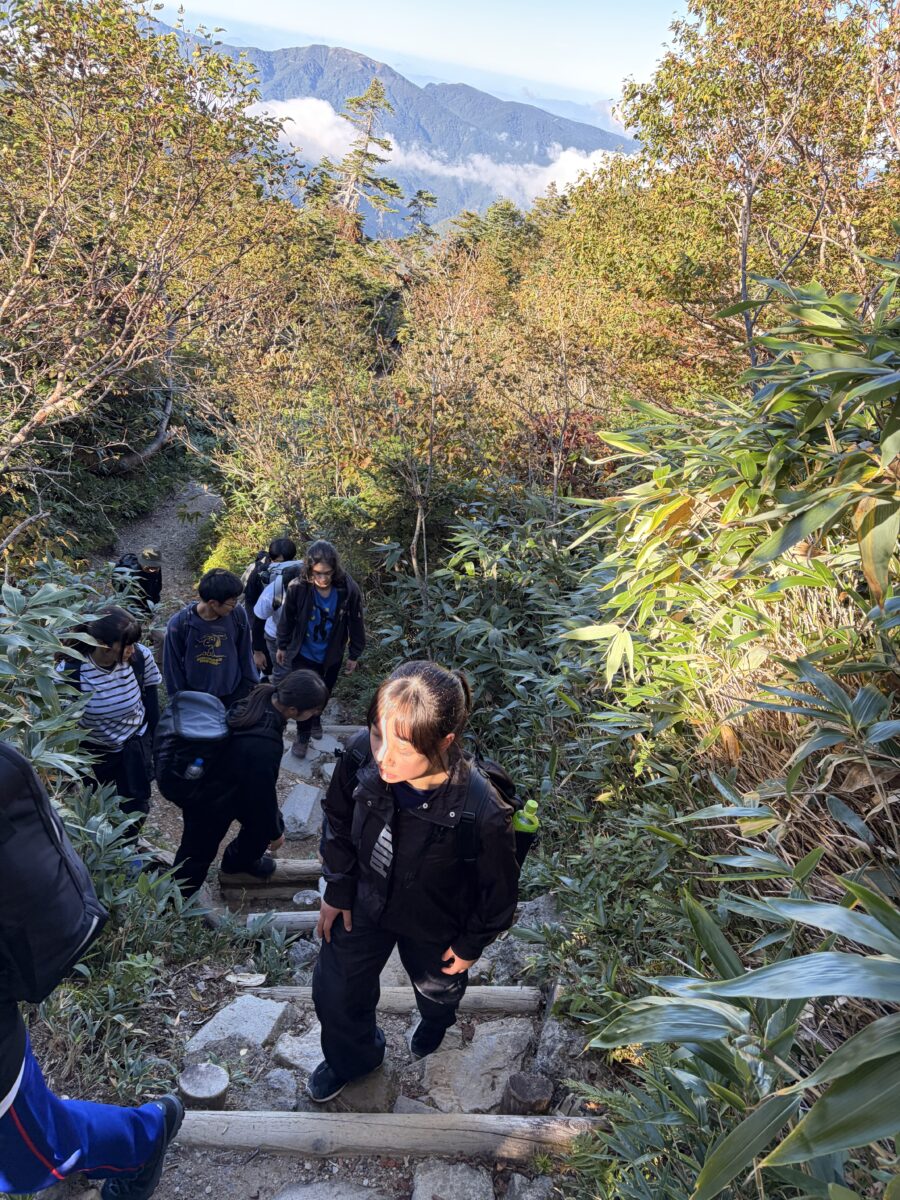
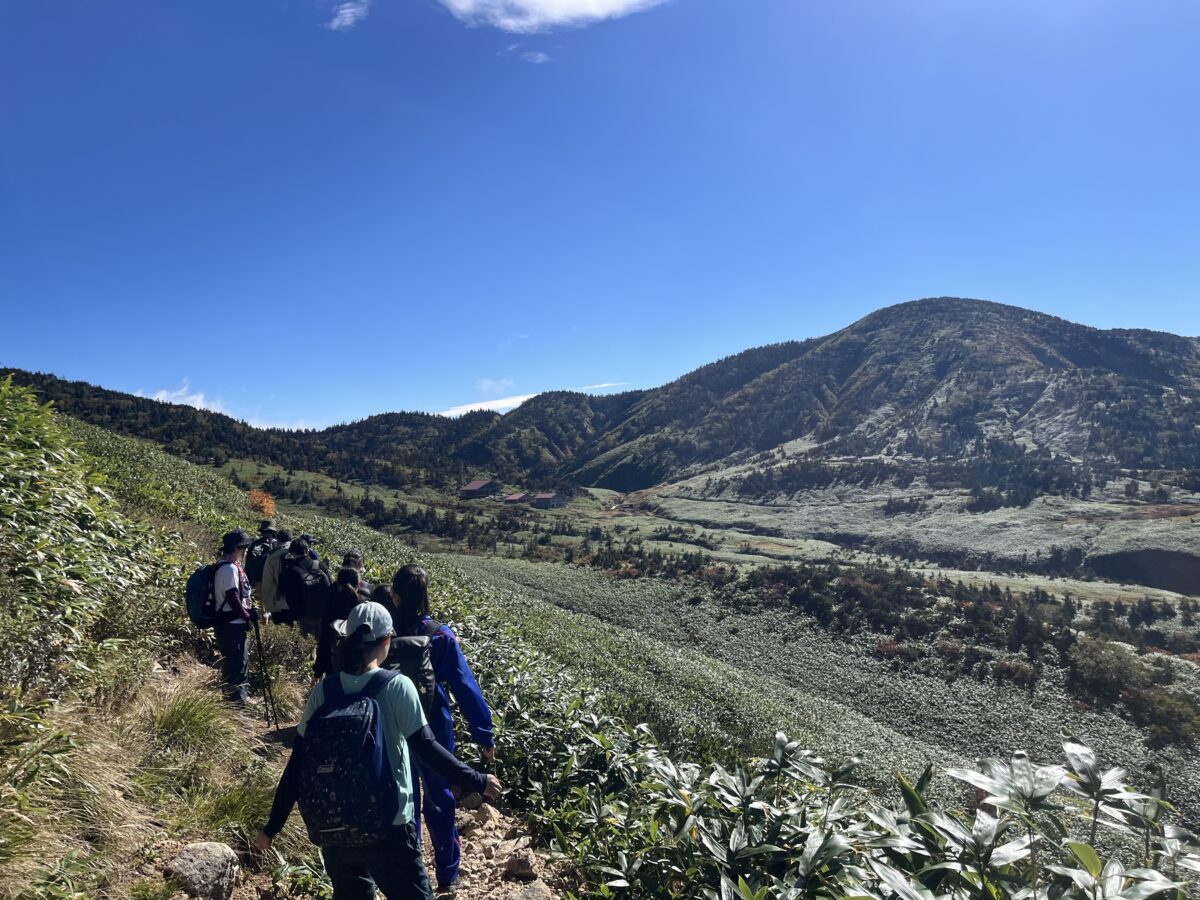
当日は快晴で涼しく、登山は順調なスタートとなりました。予定より20分早く最初の山小屋に到着しましたが、残念ながらこの時点で体調不良となった学生が1名おり、下山して学校へ戻ることになりました。その後、狭い登山道ですれ違いをしやすくするため、2つのグループに分かれて行動しました。当初は「速いグループ」と「ゆっくりグループ」に分かれると考えていましたが、先行グループが第二山小屋に到着した連絡をすると、後続グループもほぼ同時に到着するという結果になりました。
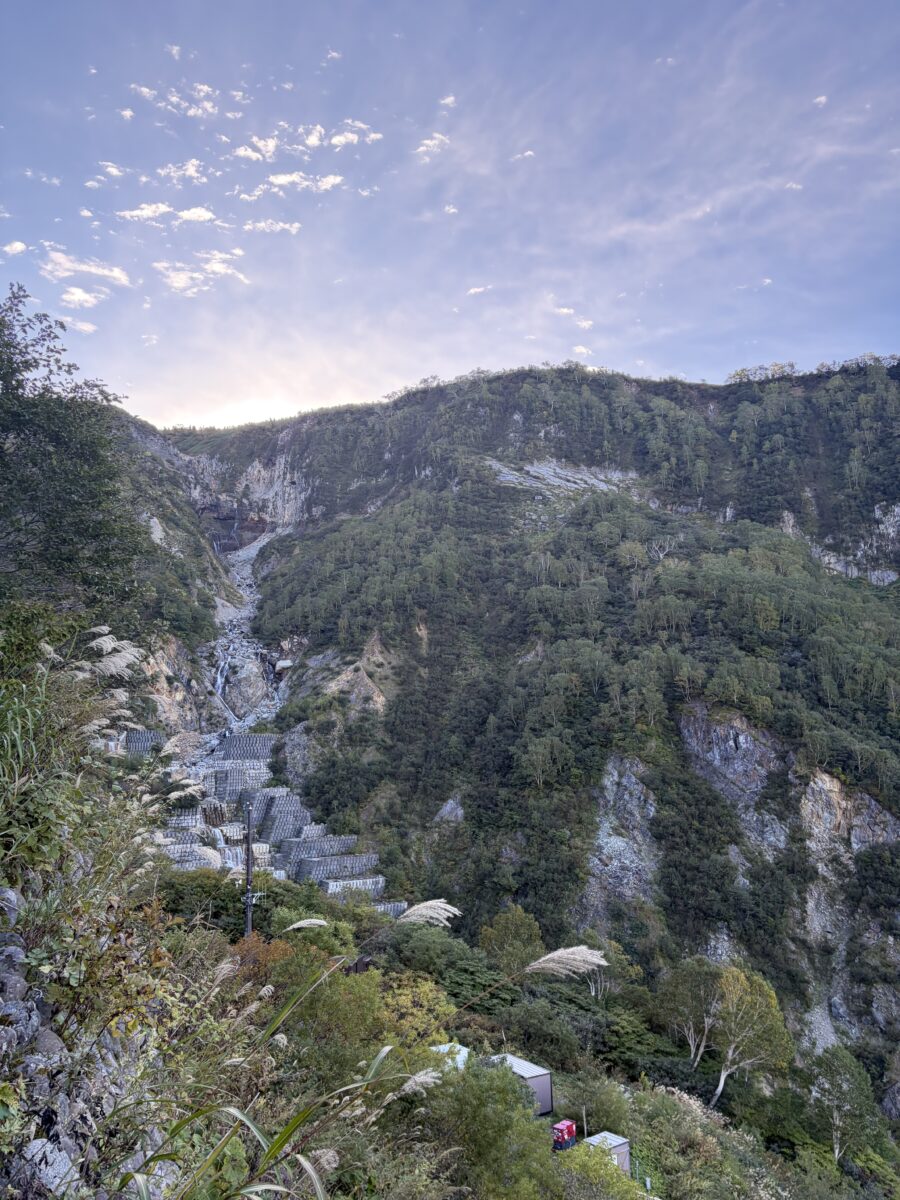
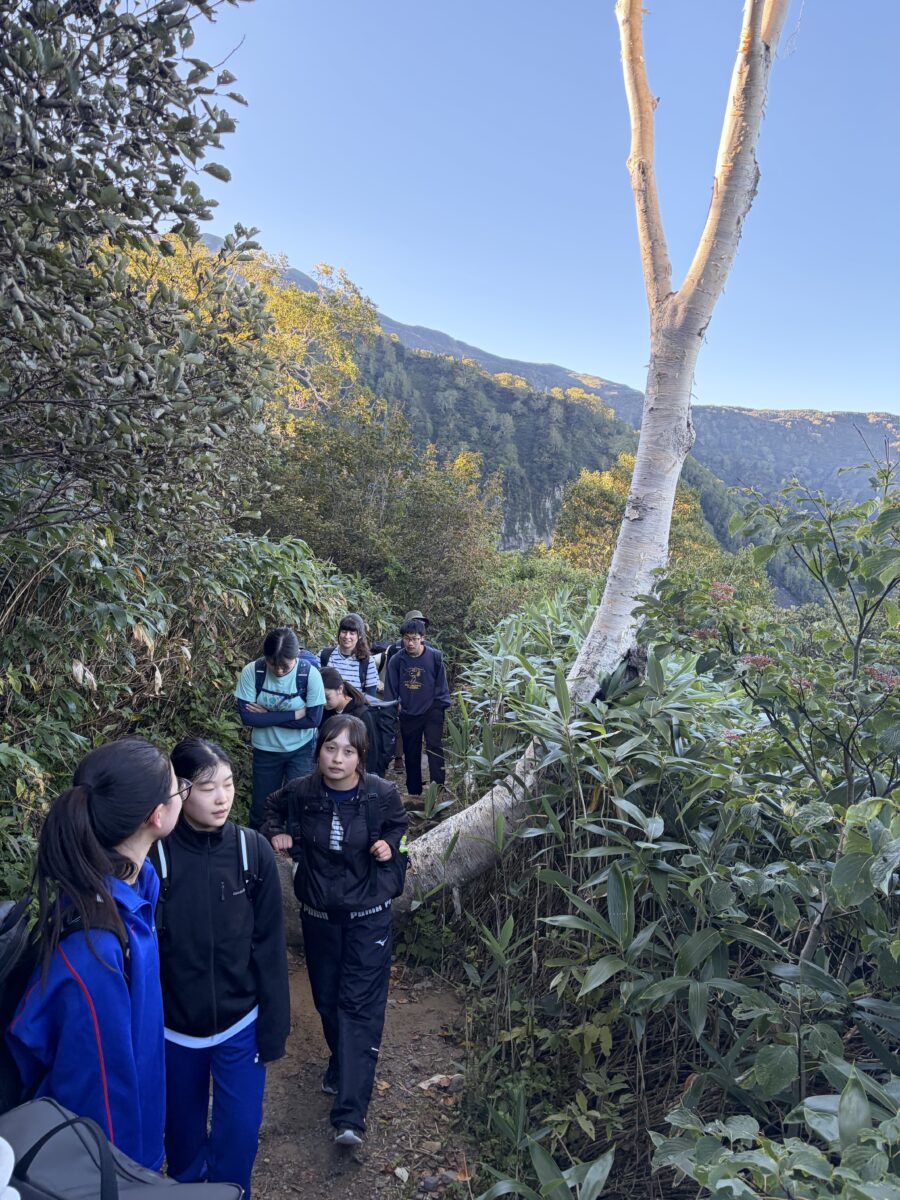
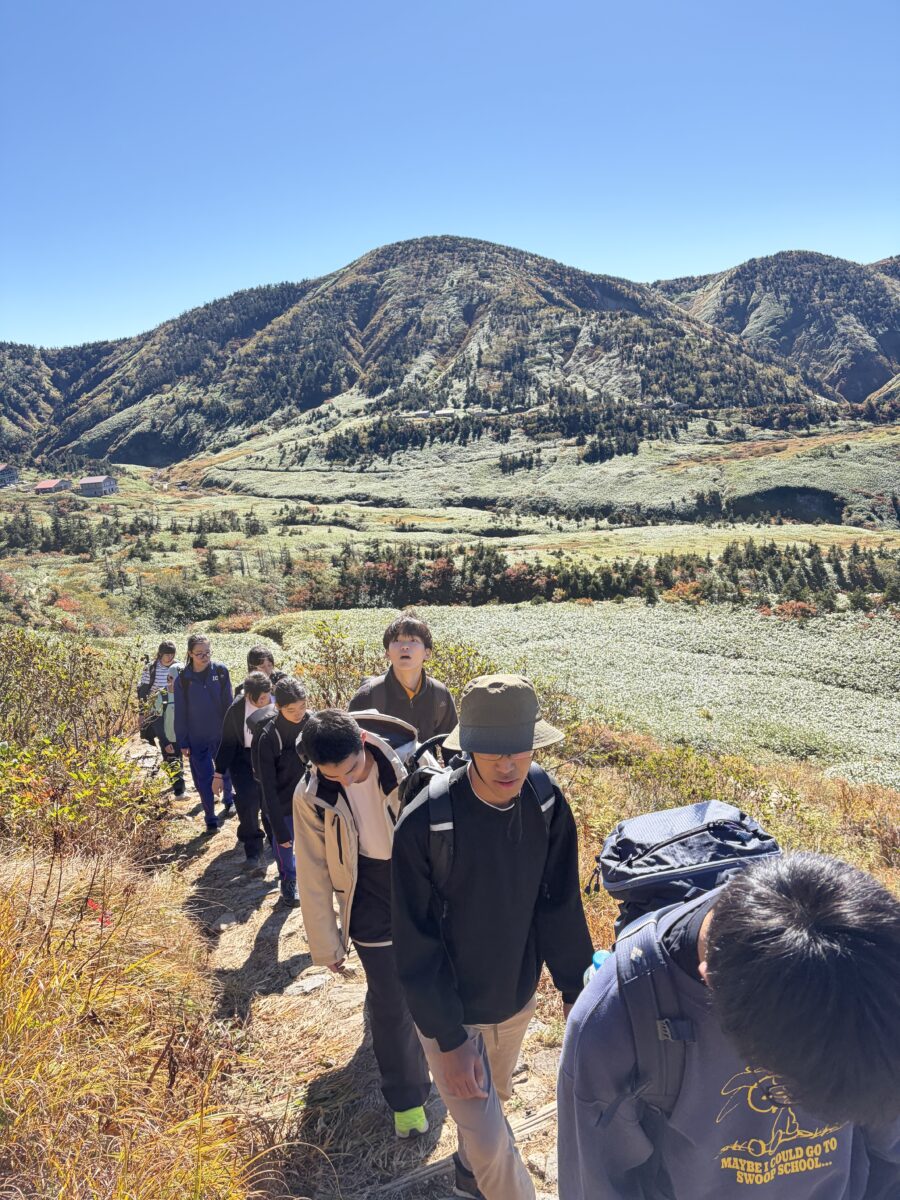
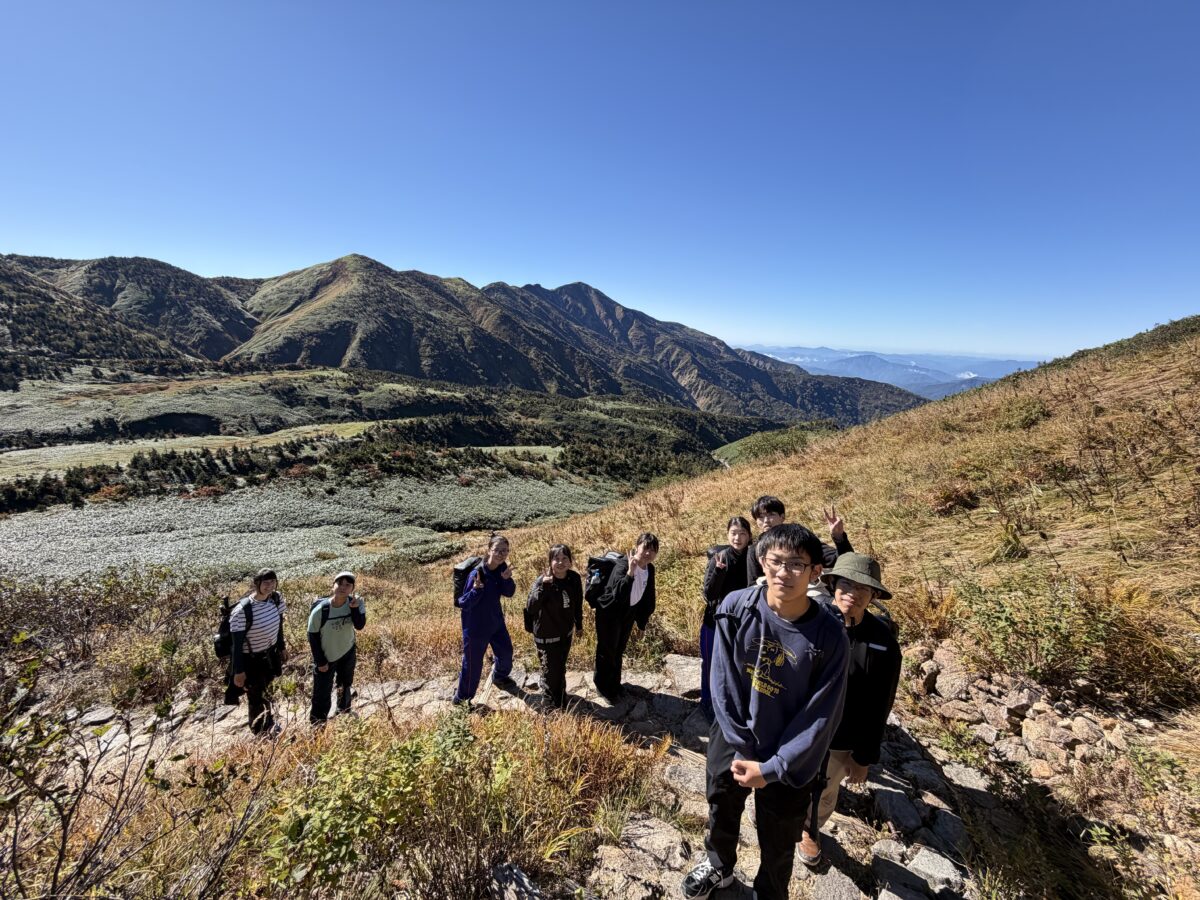
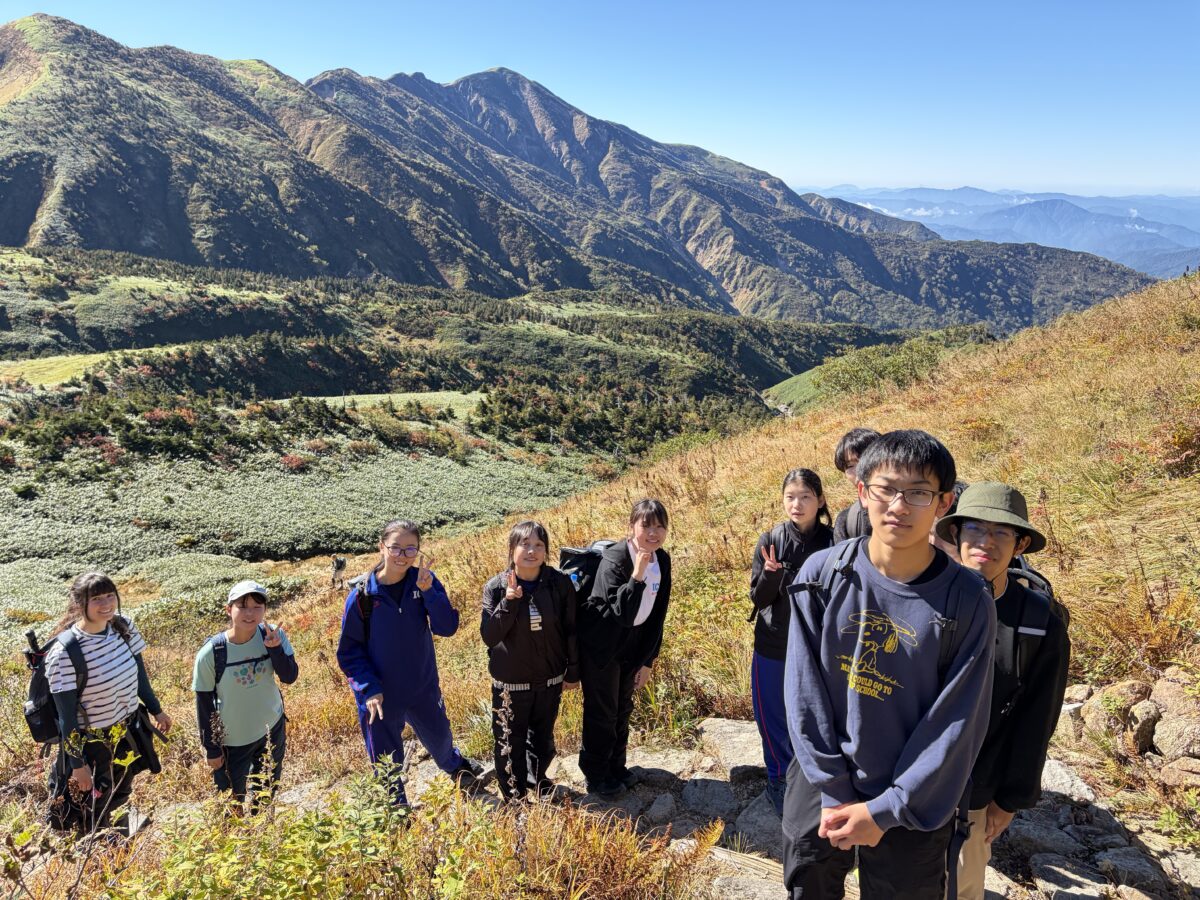
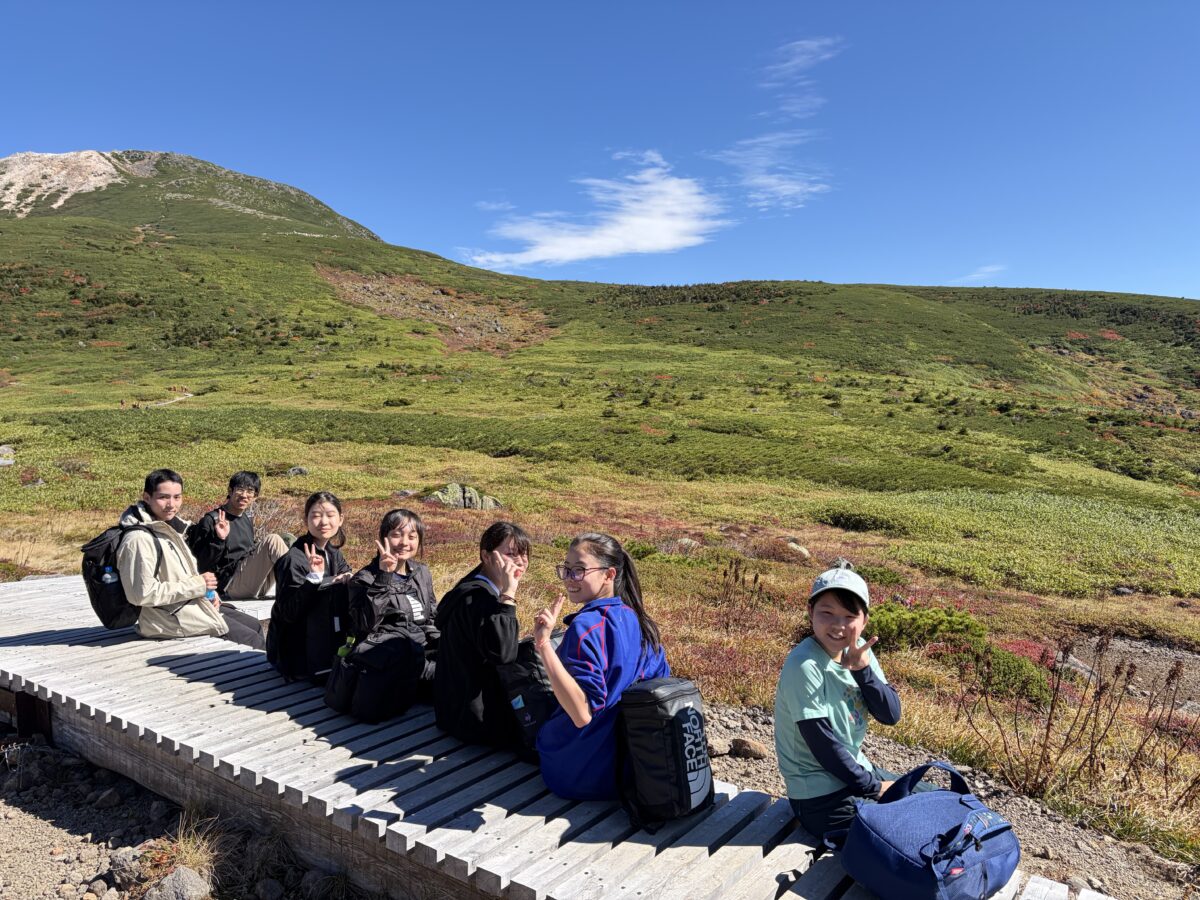
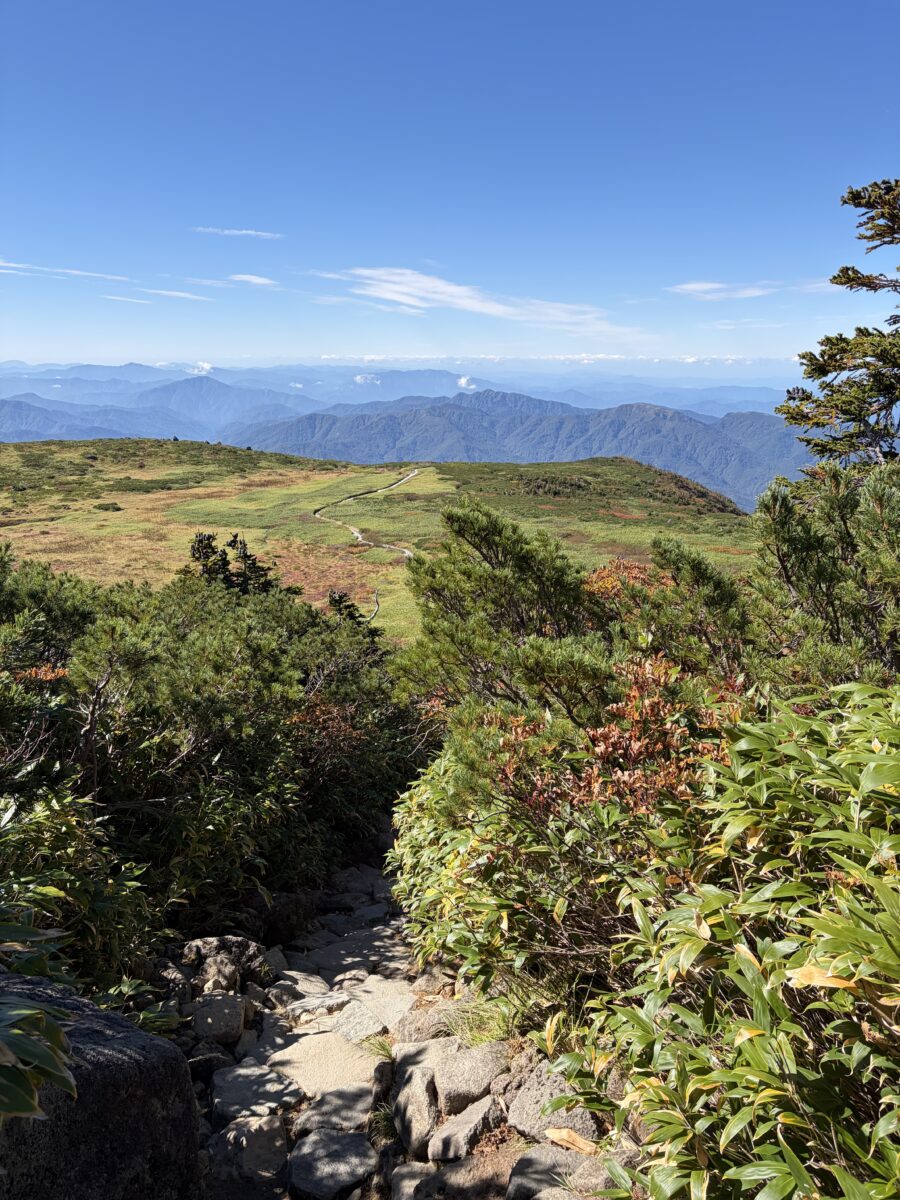
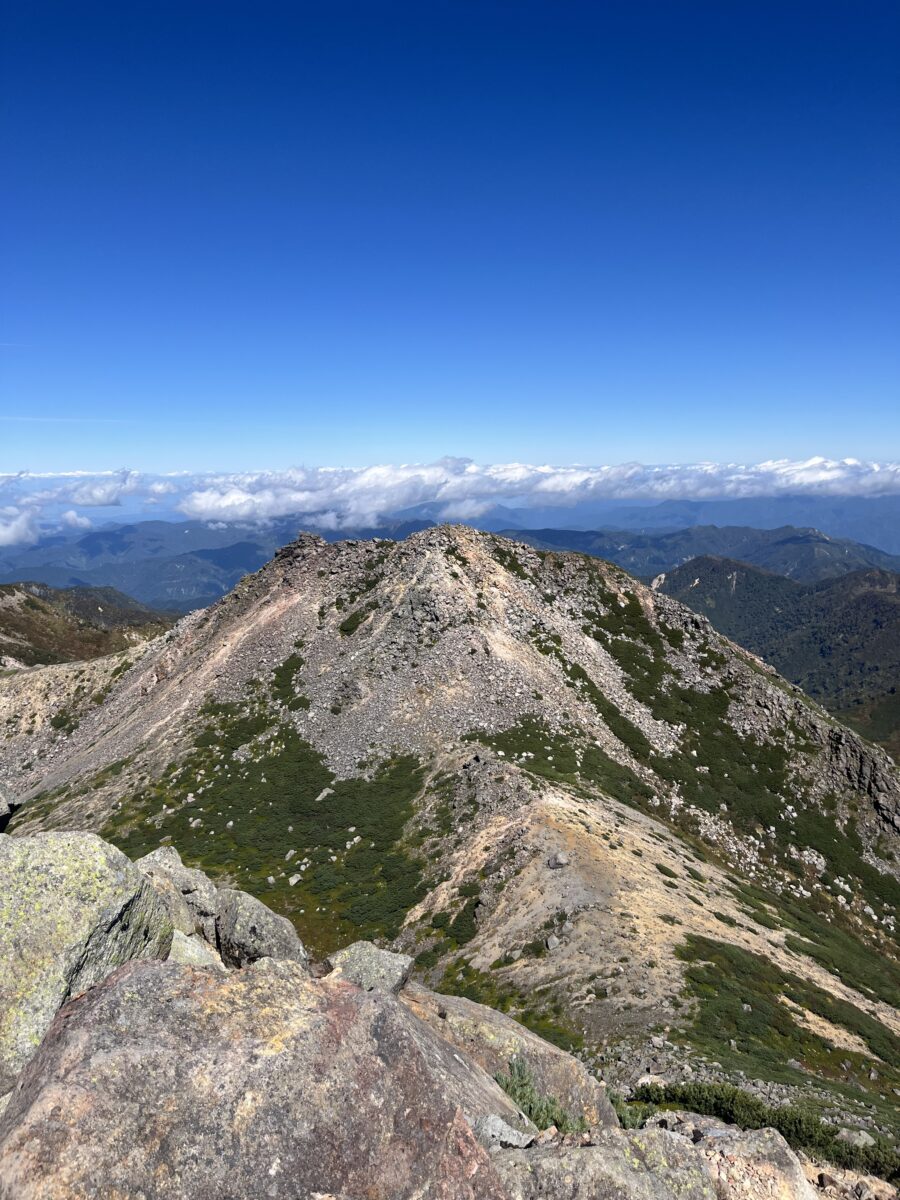
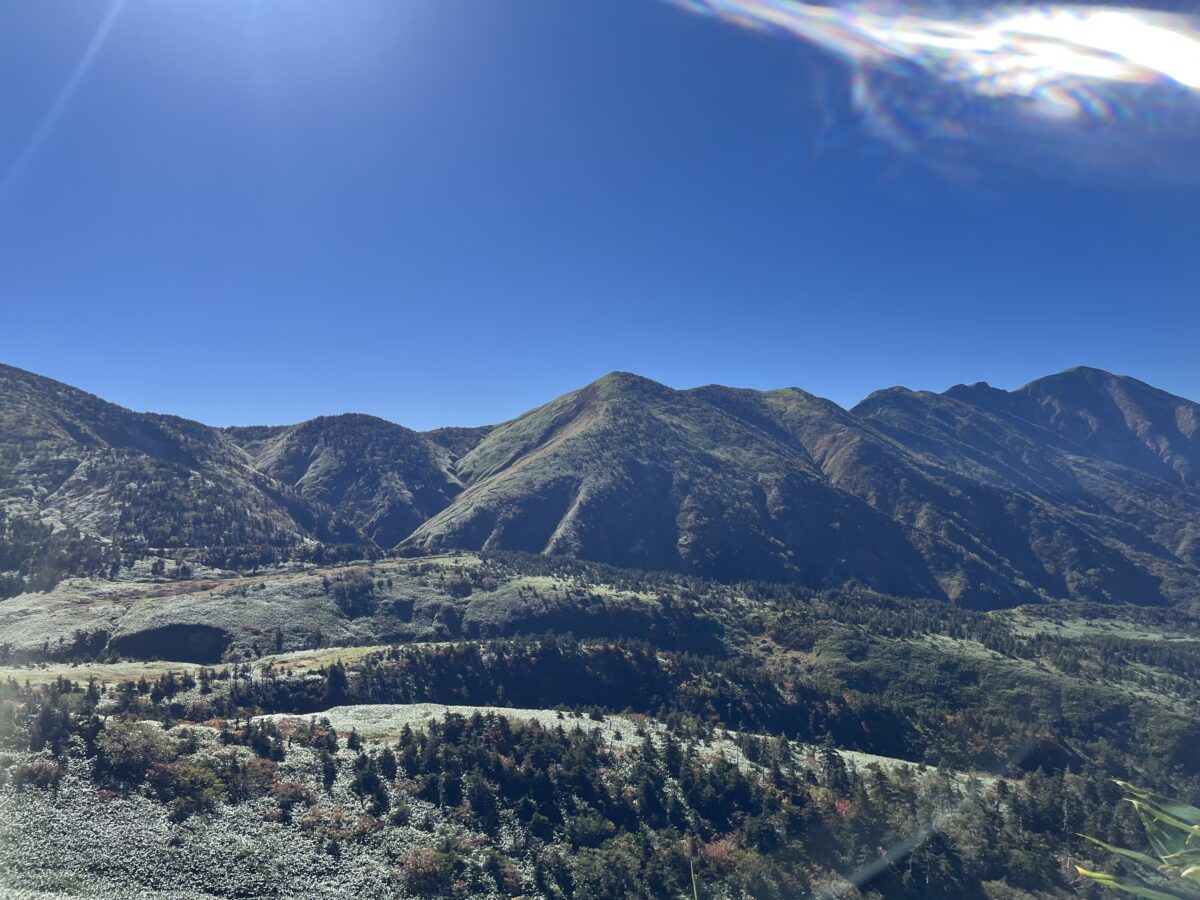
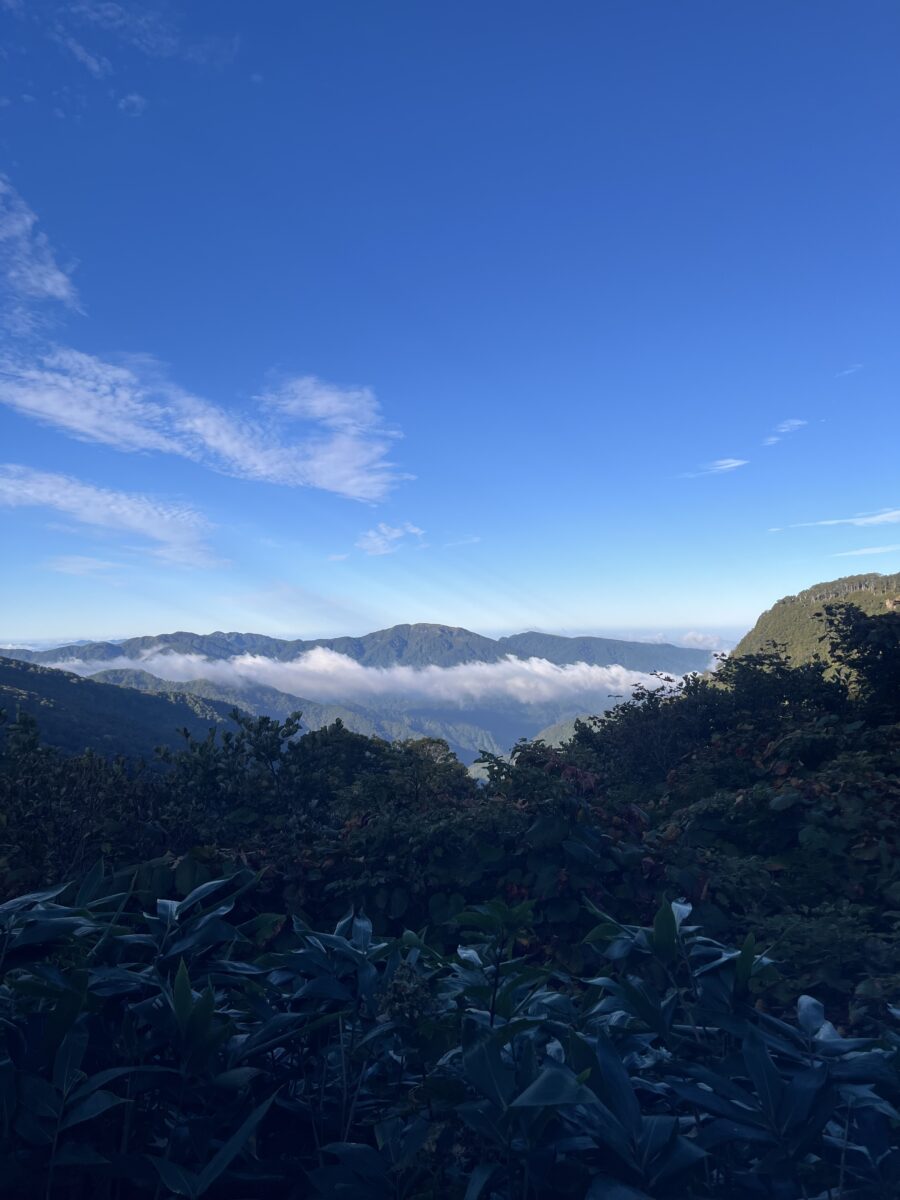
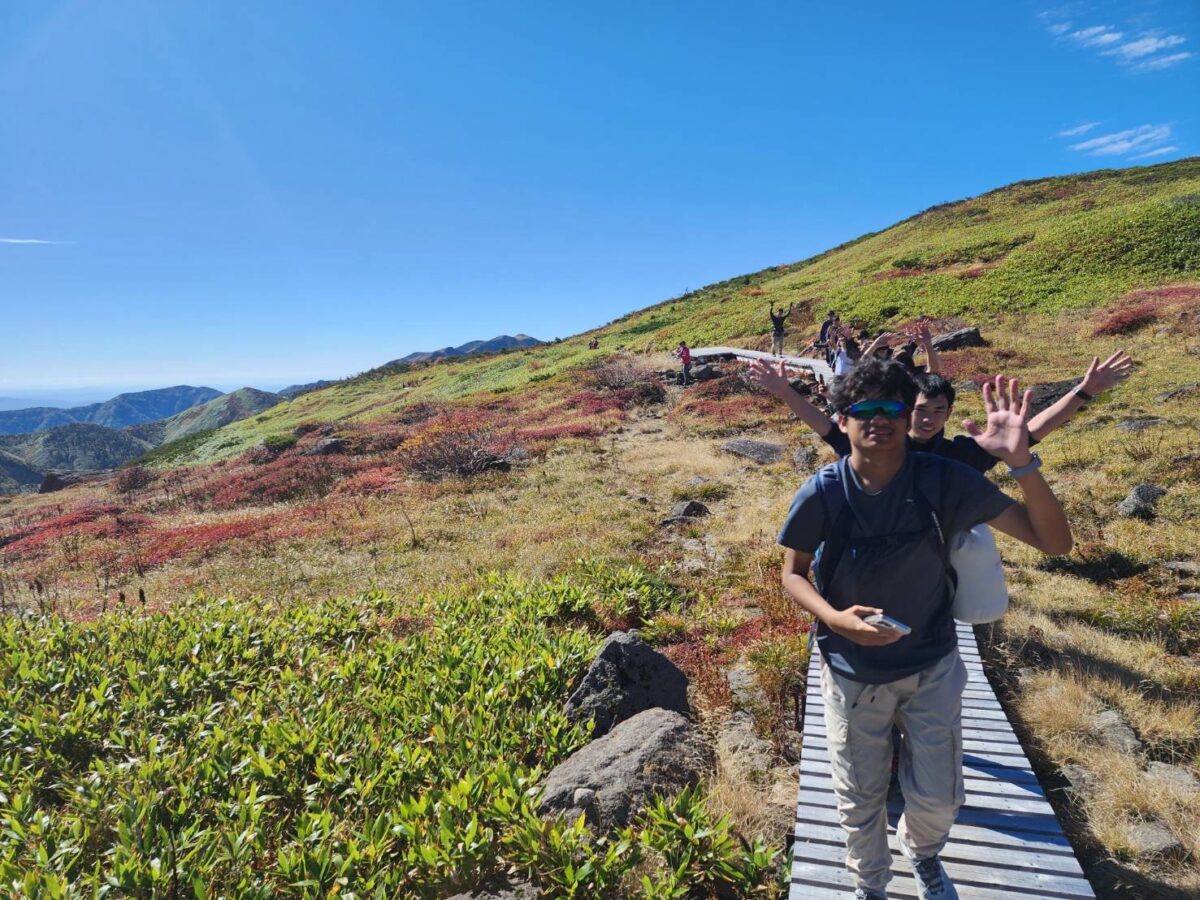
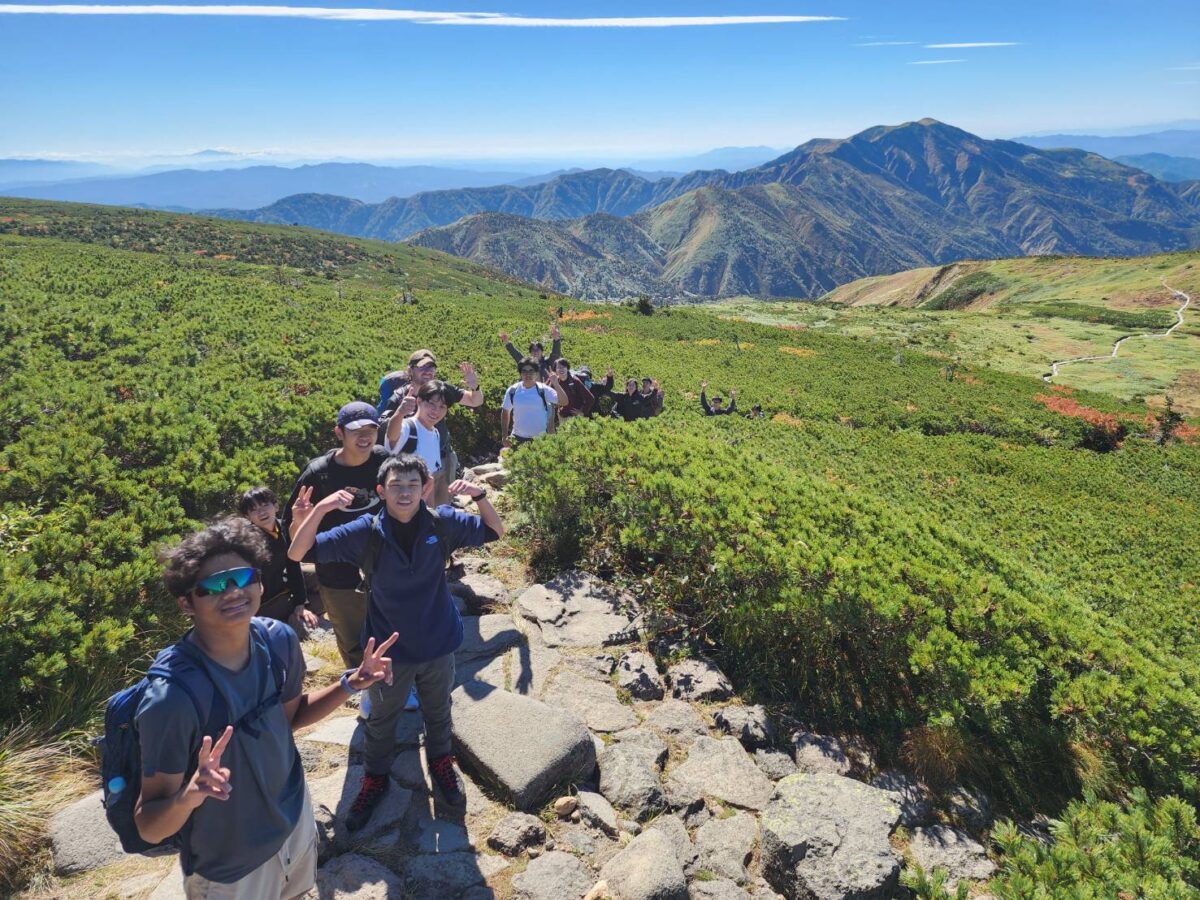
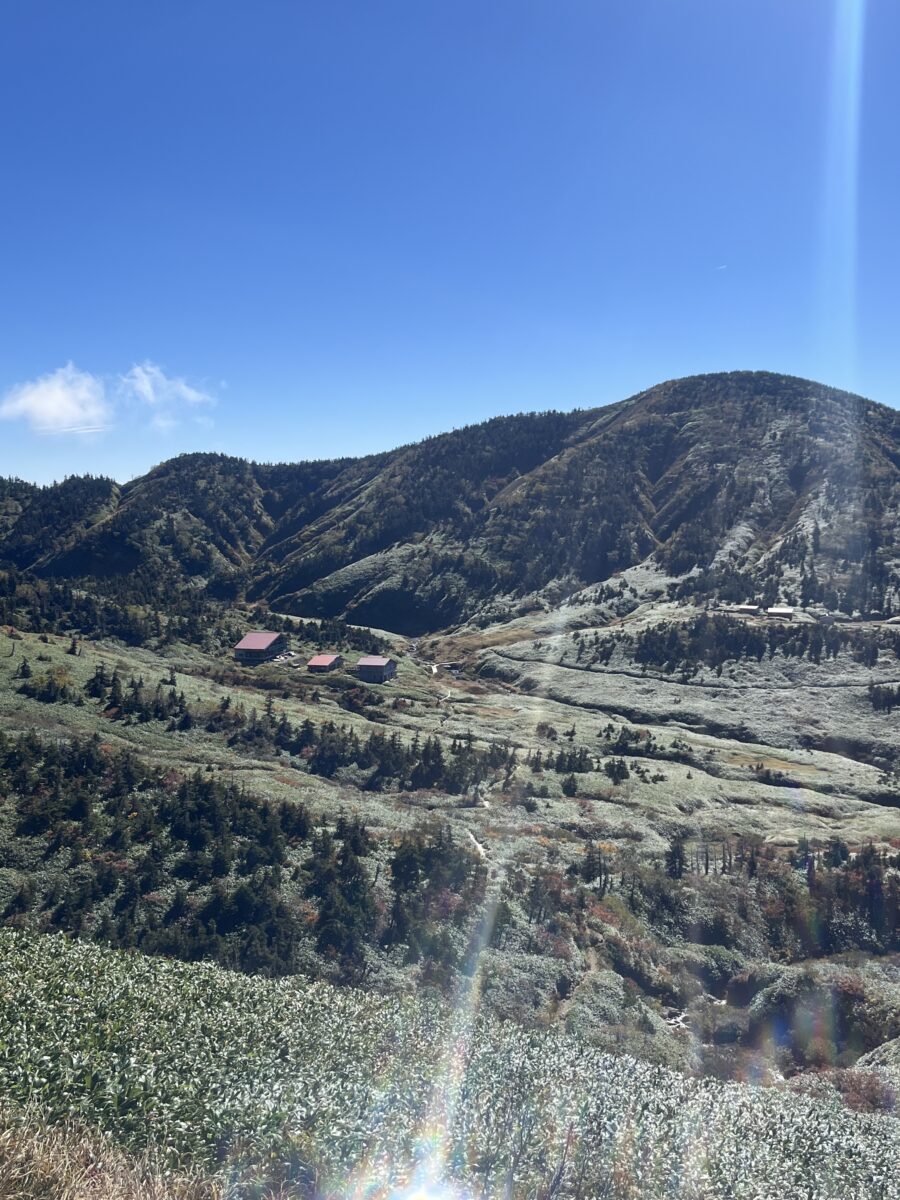
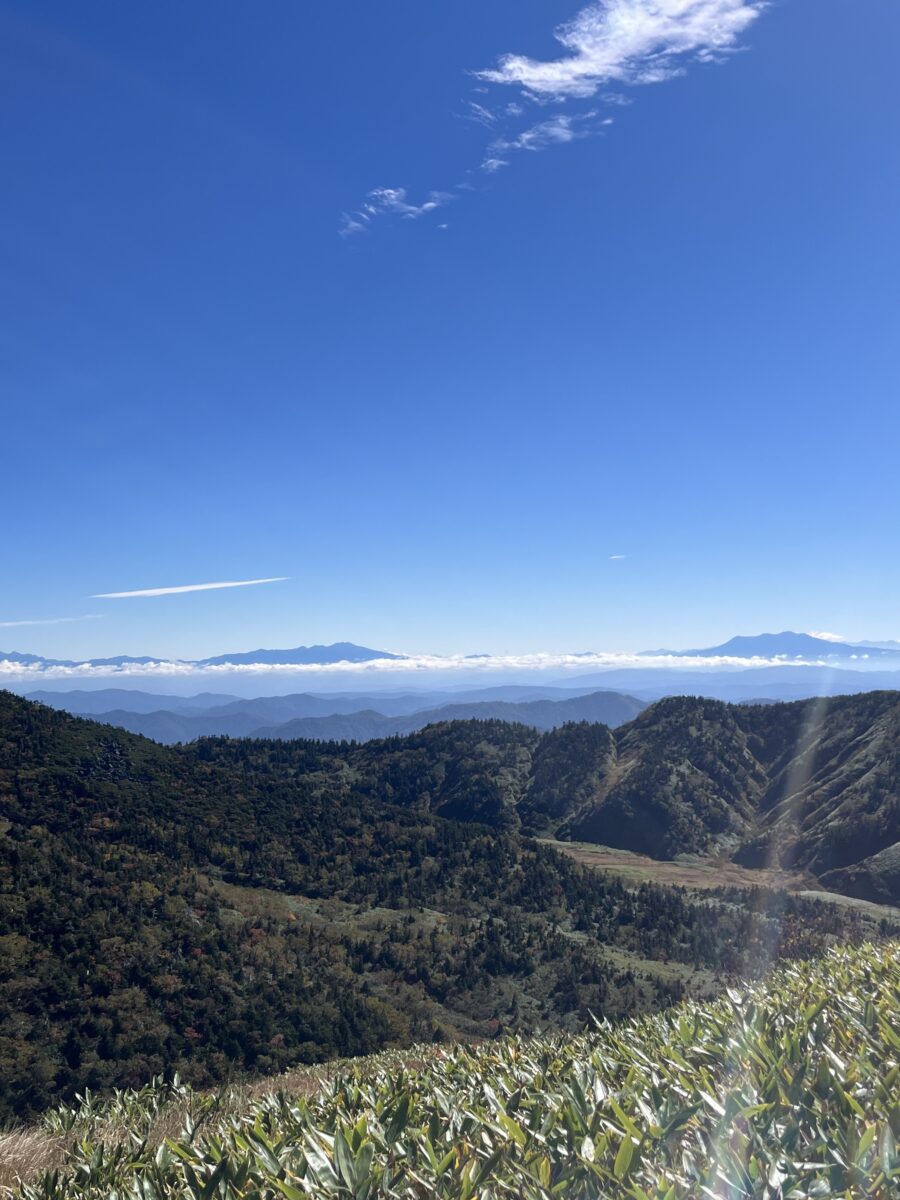
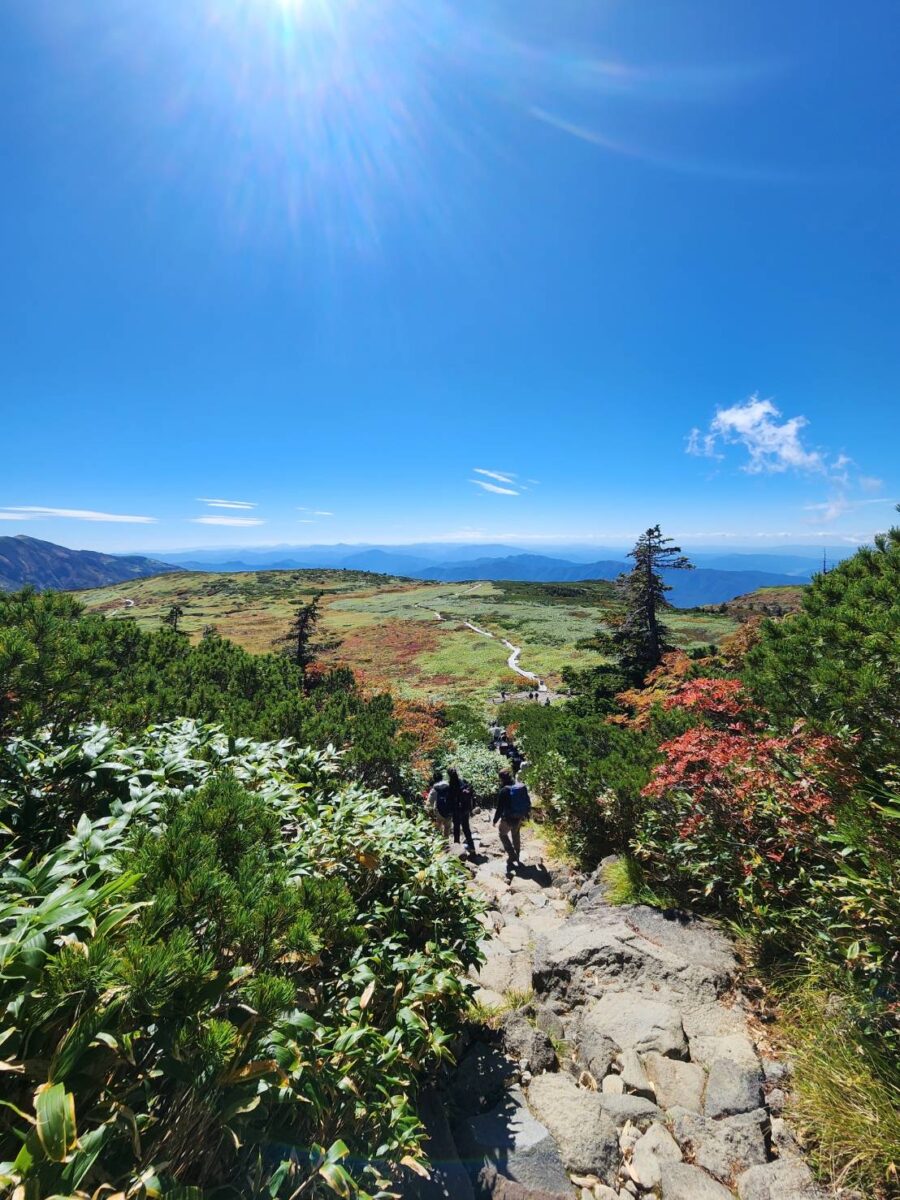
白山には複数の登山ルートがありますが、最も一般的なのが砂防新道です。しかし今回は第二山小屋以降が通行止めとなっていたため、両グループともエコーラインを利用することになりました。エコーラインは砂防新道より約2km長いものの、勾配が比較的緩やかで、別山へと続いている稜線沿いを歩くことができます。この日のエコーラインの稜線からの景色は見事で、澄み切った青空と、風に揺れる緑の高山植物-小さな笹のような葉-が山肌を彩り、秋の始まりを感じさせる穏やかな風景が広がっていました。さらに鋭く続く別山への稜線と、その先に青い影を帯びた山々が重なり合い、遠くまで続く雄大な眺望を楽しむことができました。
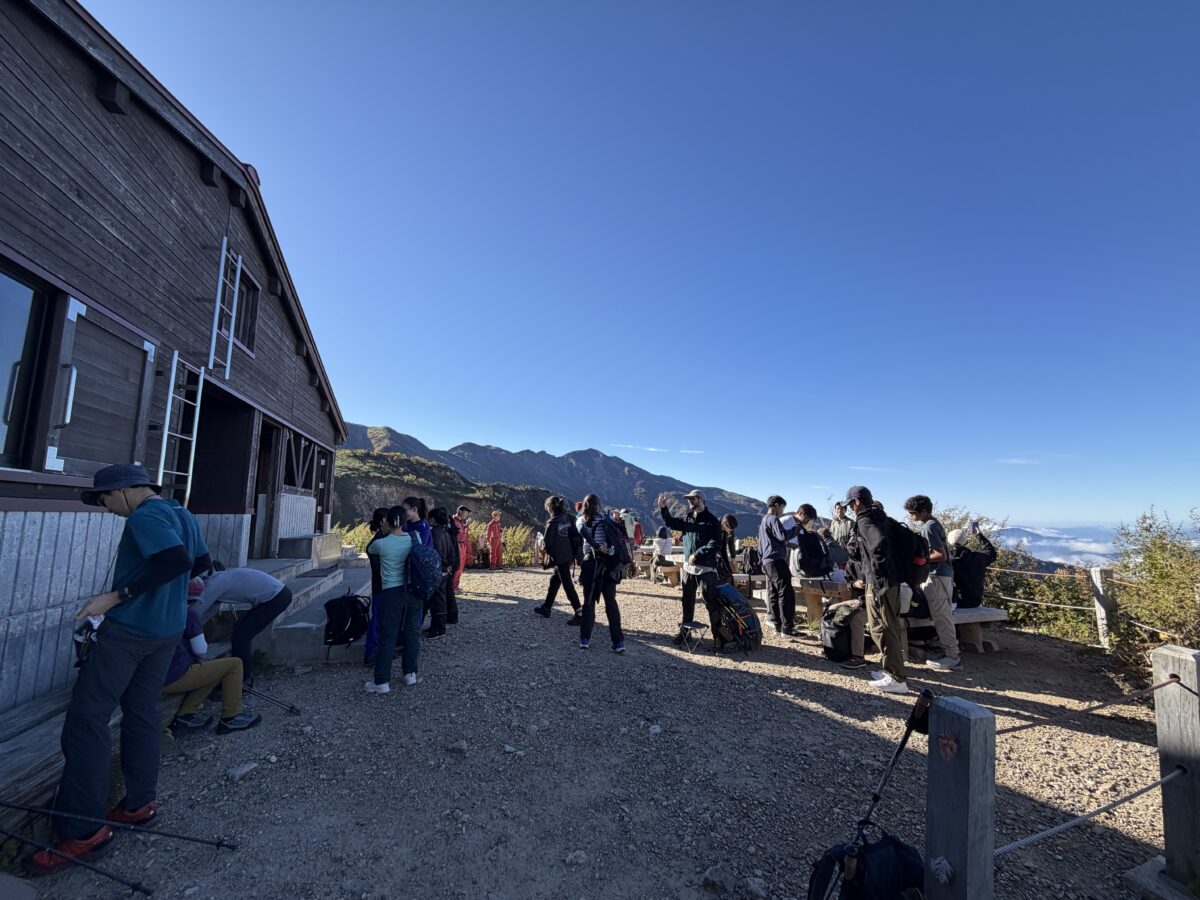
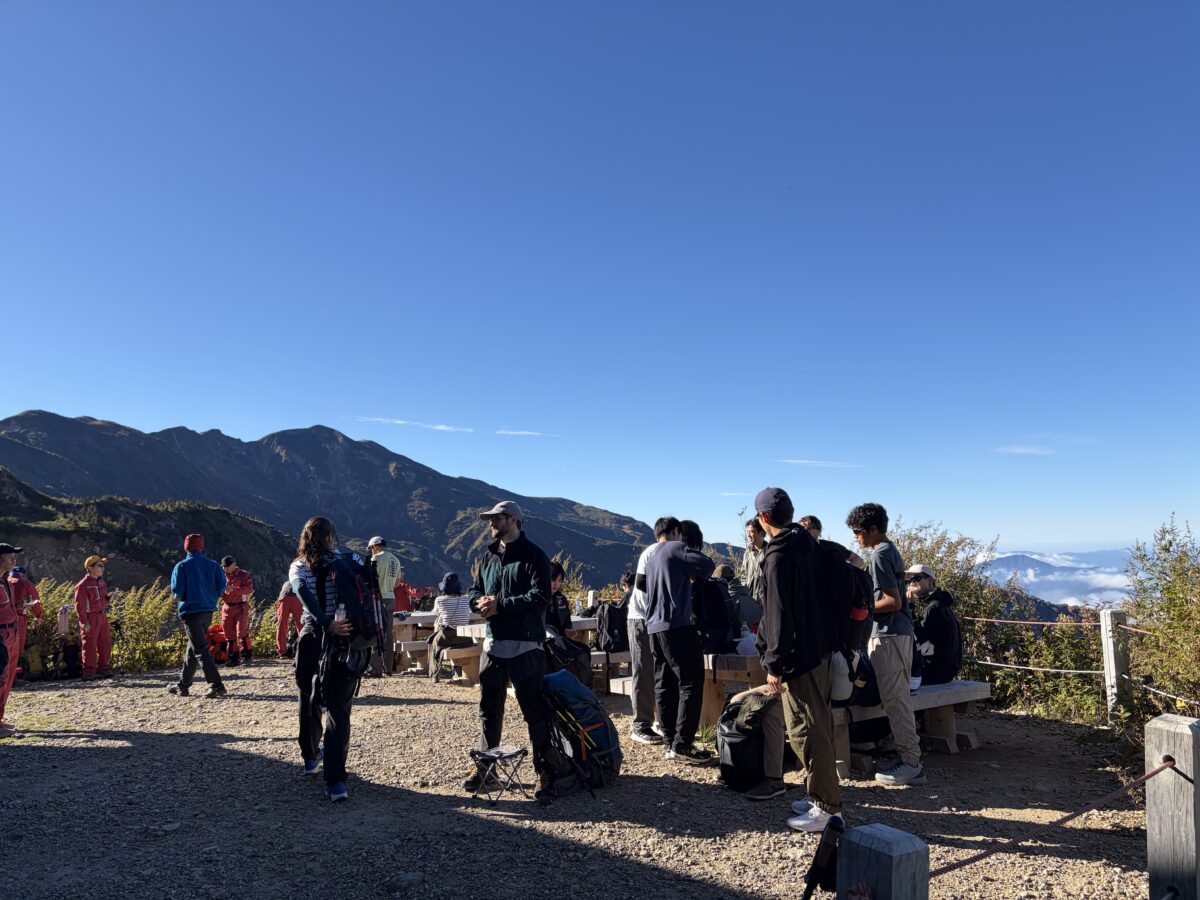
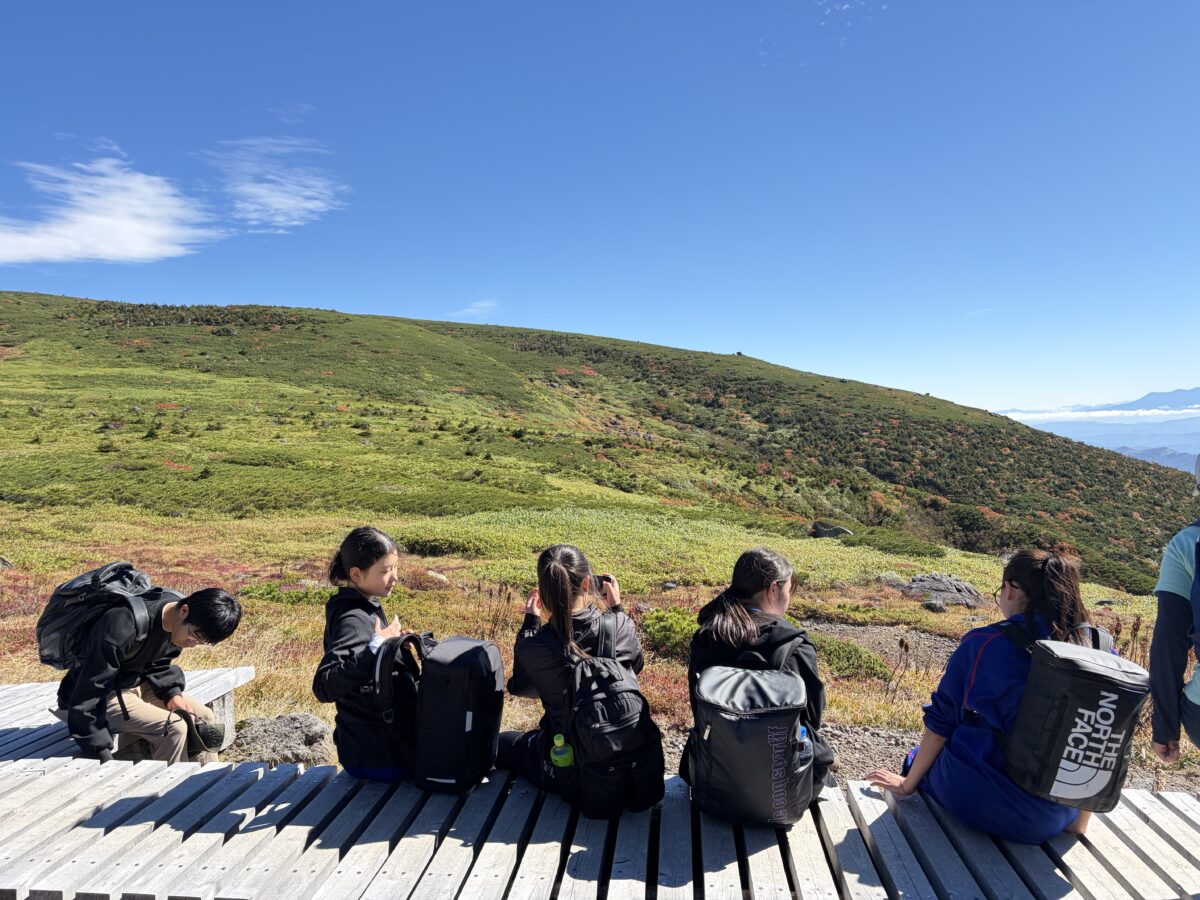
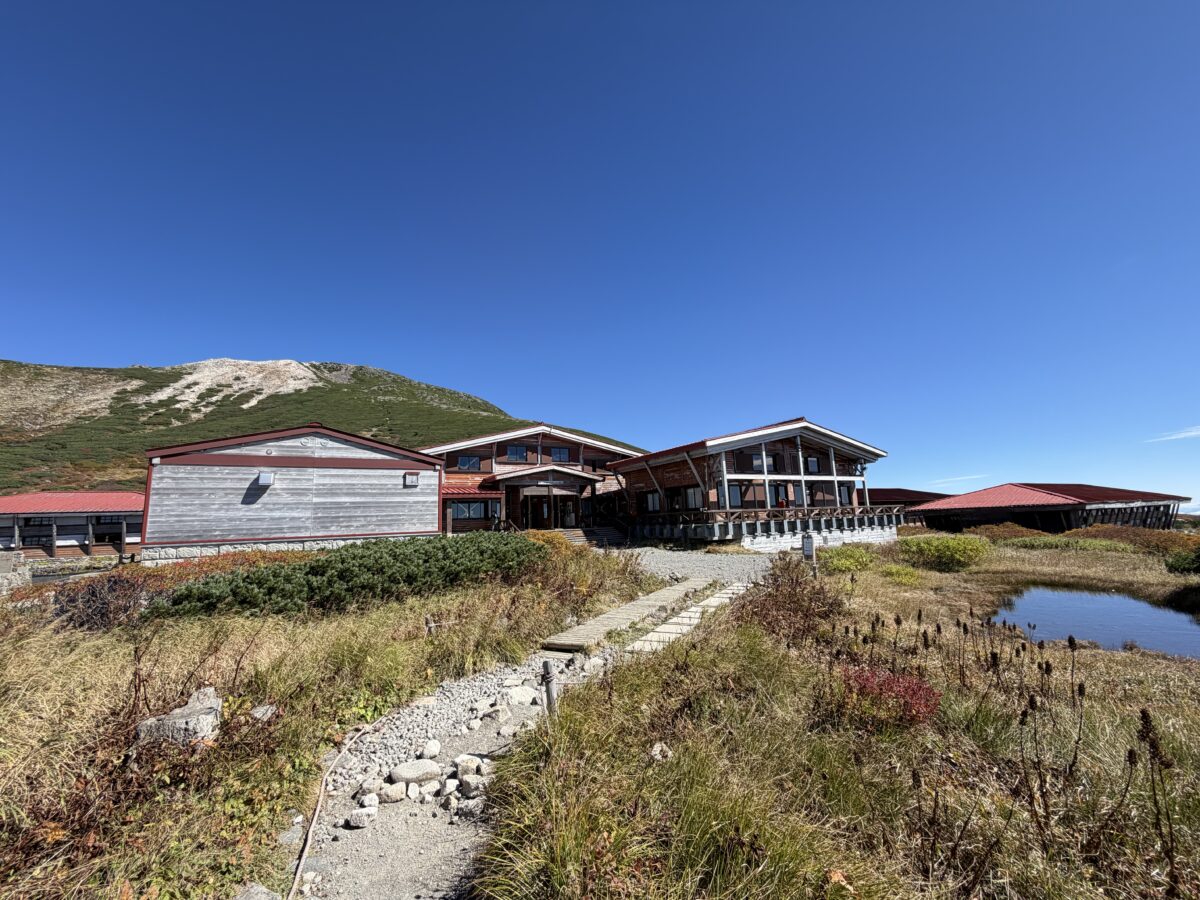
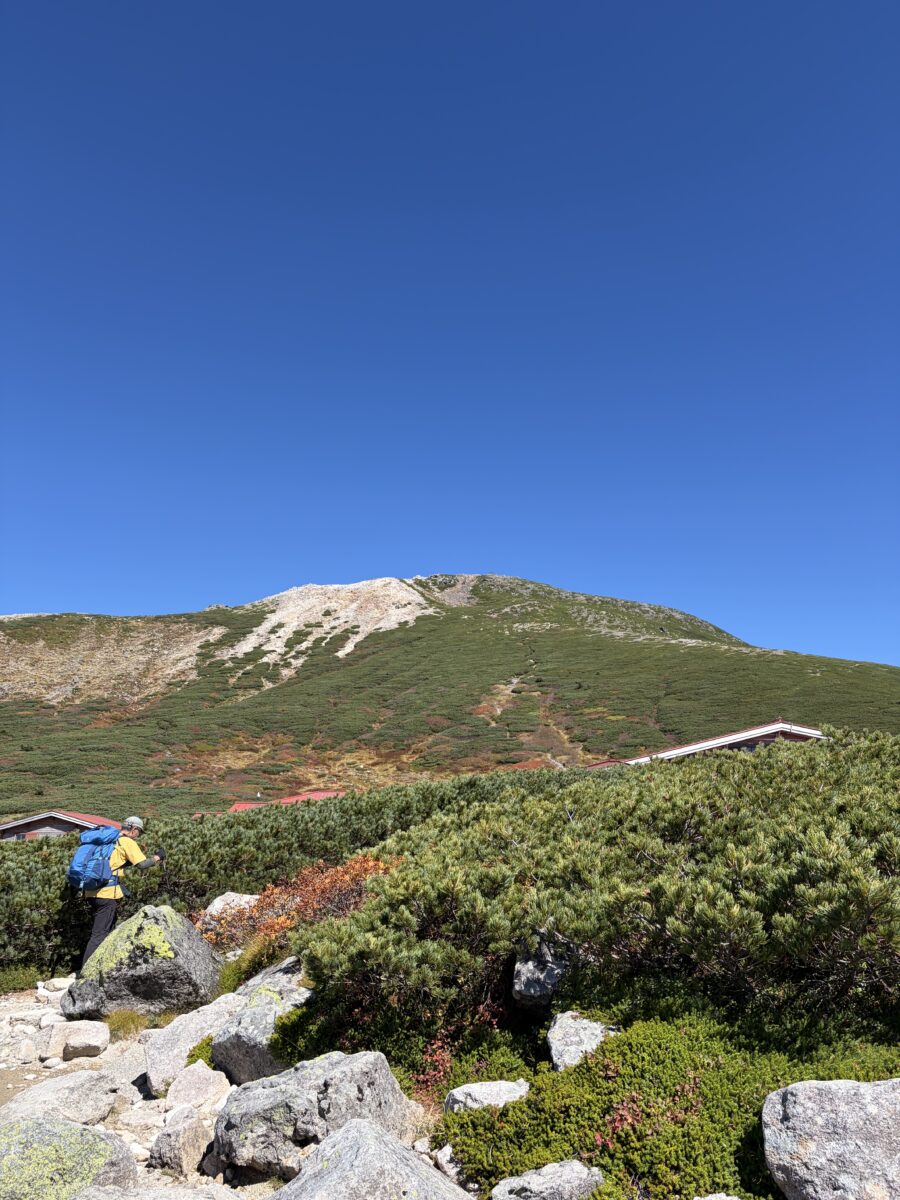
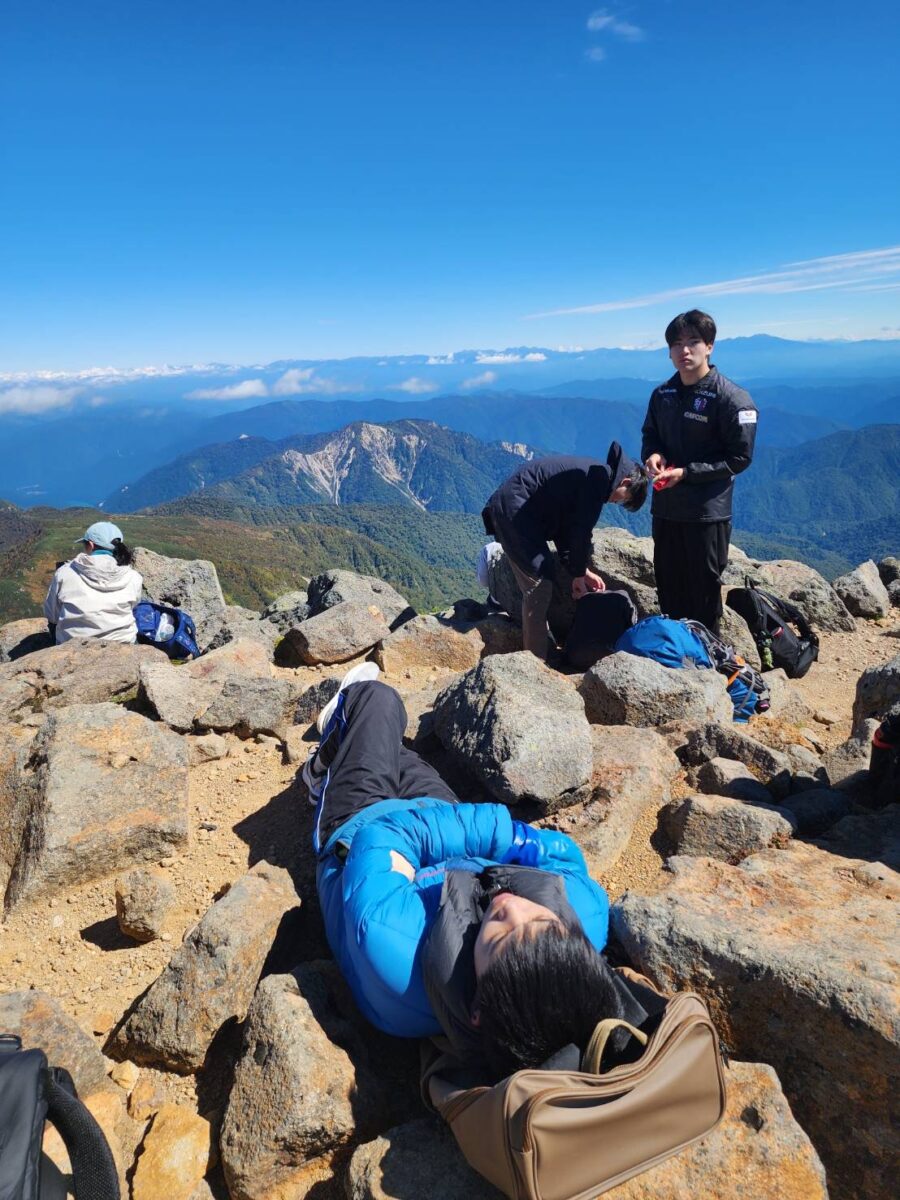
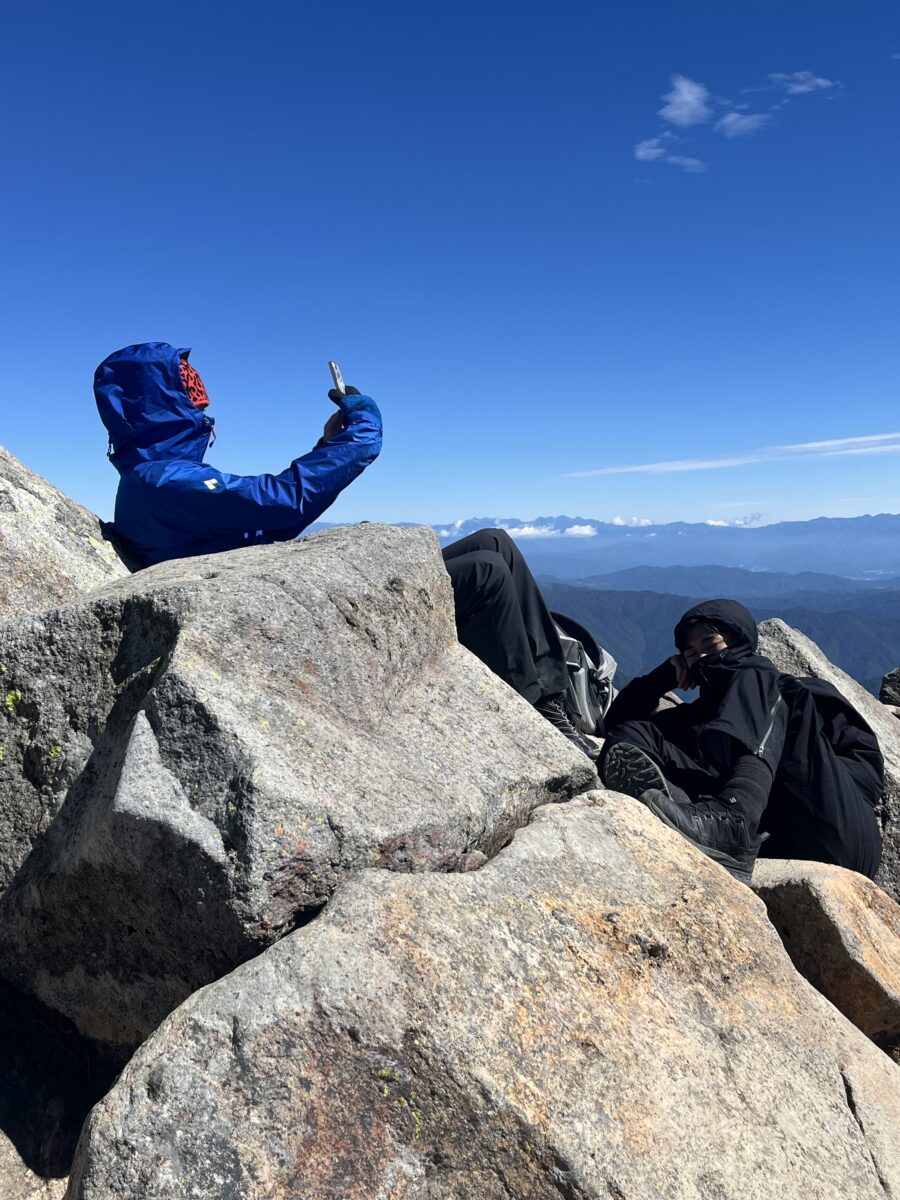
エコーラインからは白山山頂もよく見え、私たちは順調に室堂まで進み、昼食休憩を取りました。風は強く吹いていましたが、耐えられないほどではありませんでした。しかし、体温を奪うには十分で、10分ほどすると鼻先が冷たく感じるほどでした。このような環境では、風によって体温が奪われるのを防げる防風性の高い衣類が非常に重要です。昼食後、多くの学生が絶え間なく吹く冷たい風の厳しさを理解しているように見え、その風が山登りにある種の緊張感(真剣さ)をもたらしていました。一方で、十分な準備をしてきた学生は比較的快適に過ごしており、特に事前準備をしっかり行っていた樋口さんは、他の学生たちが寒さに震える中で昼寝をしている姿が見られました。
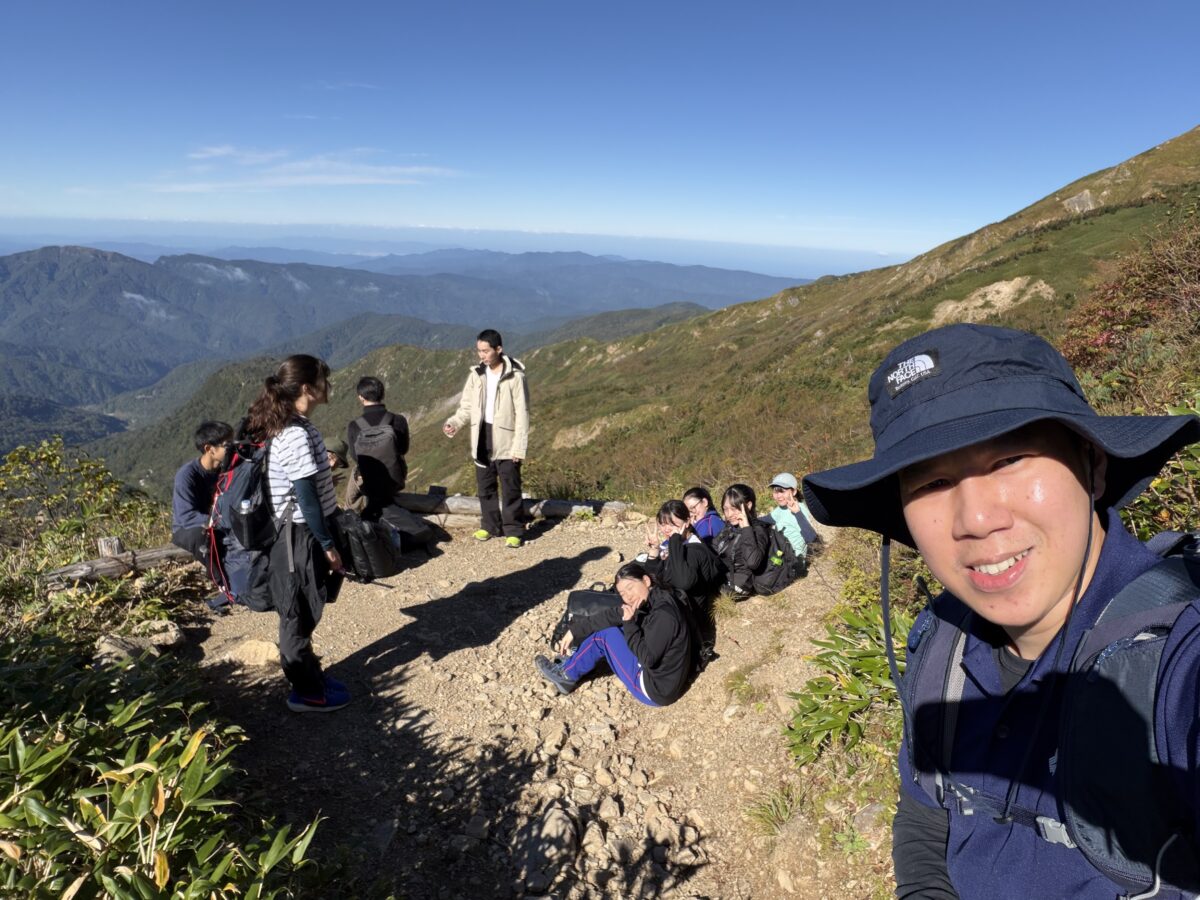
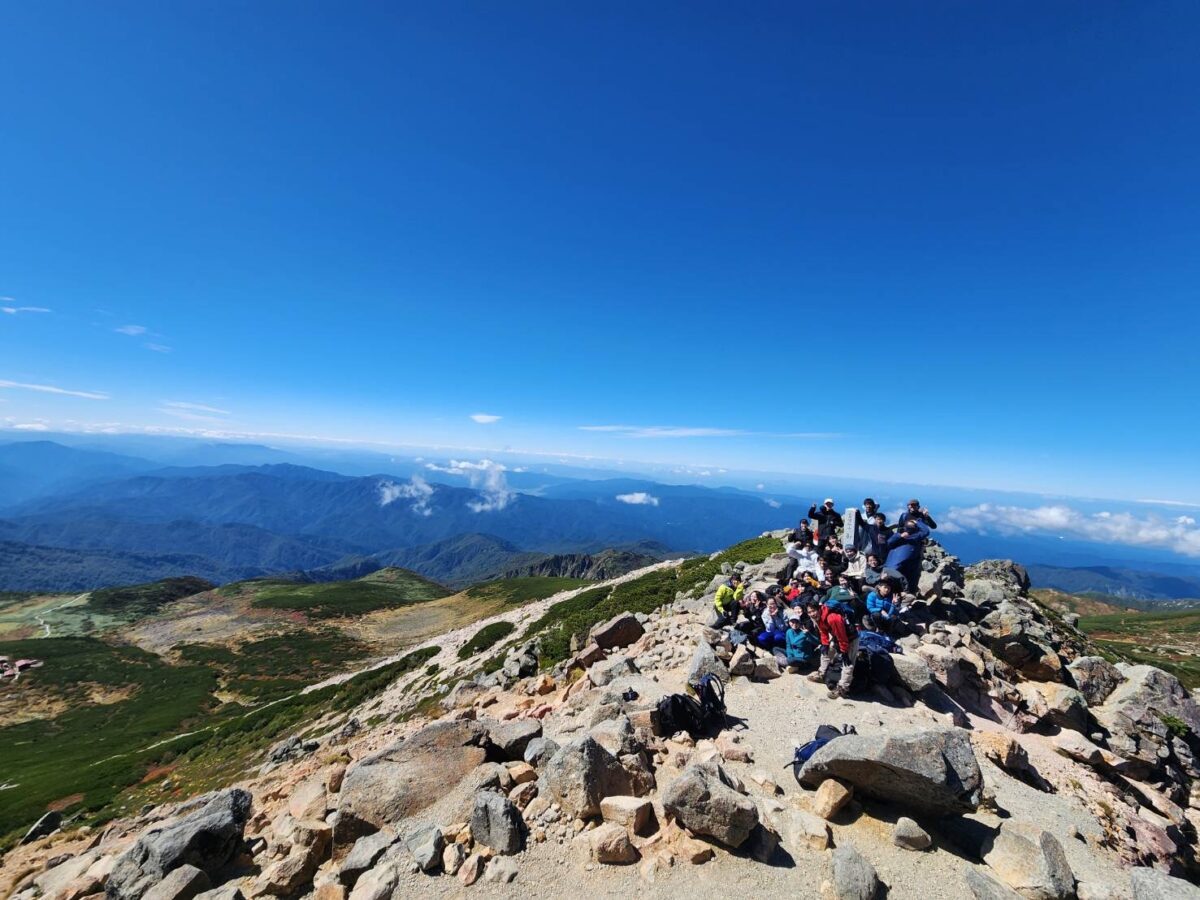
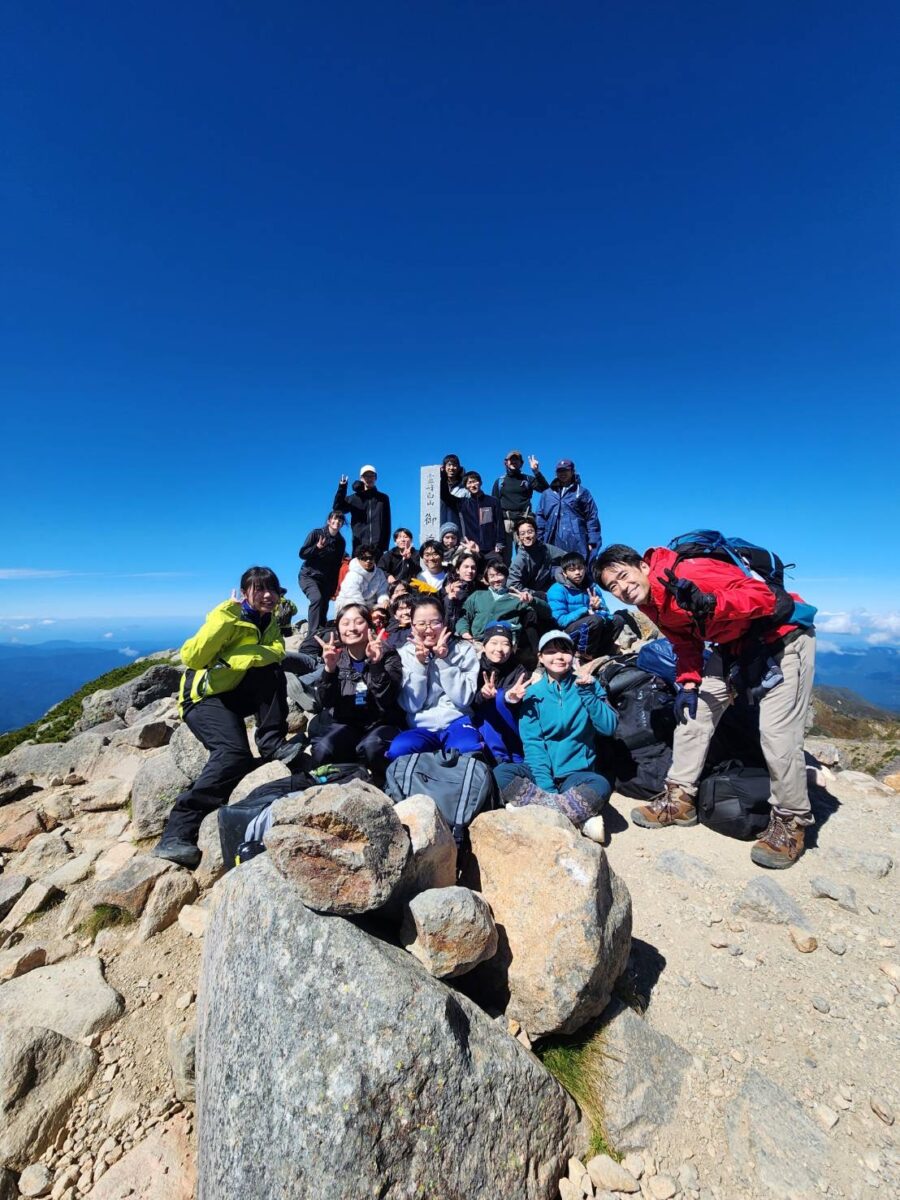
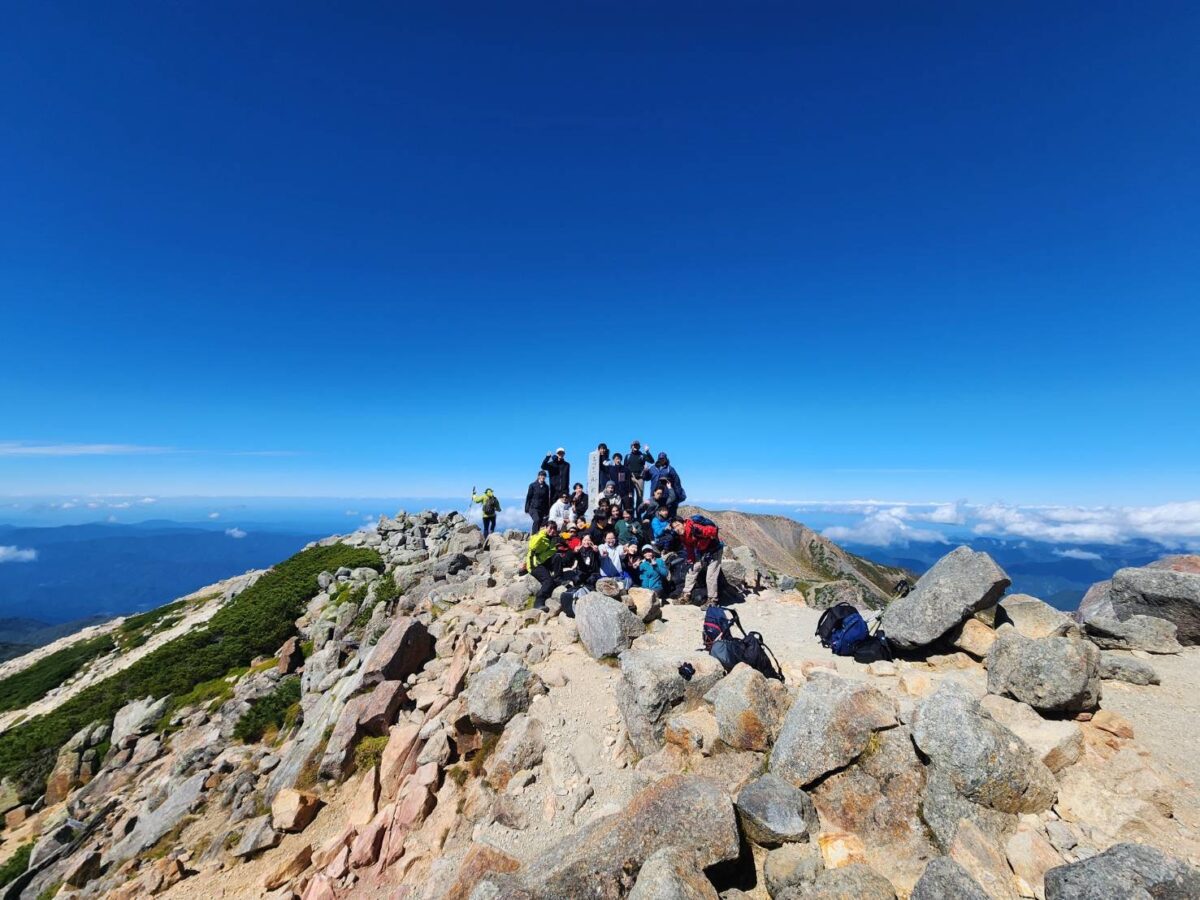
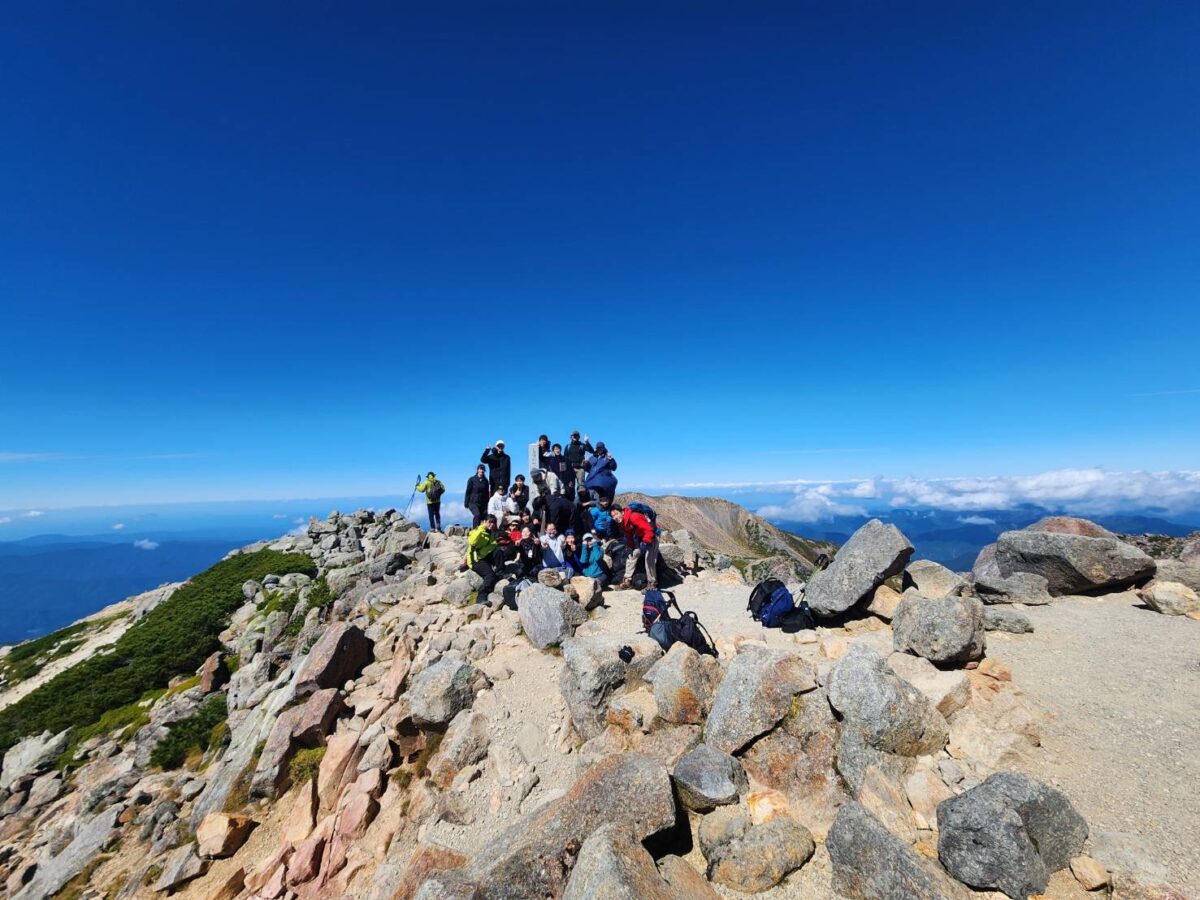
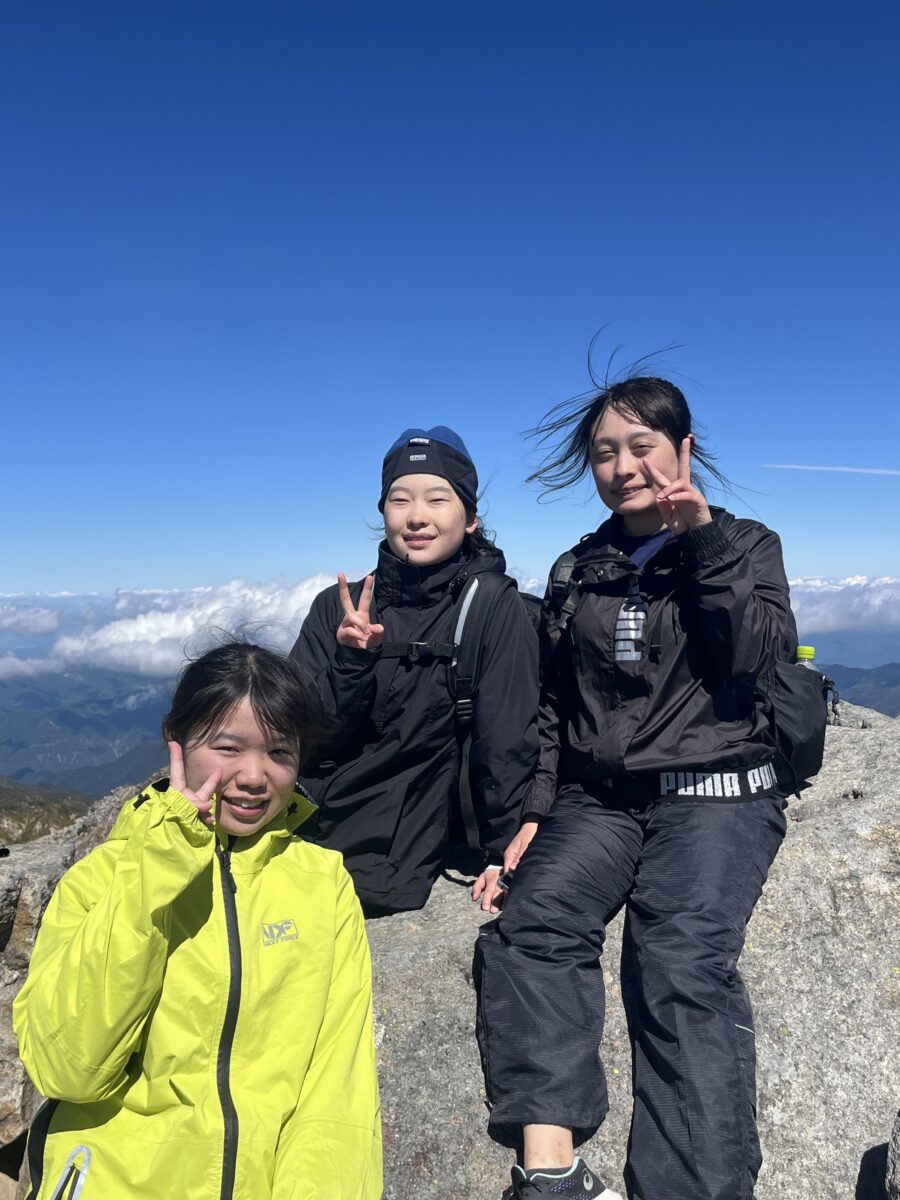
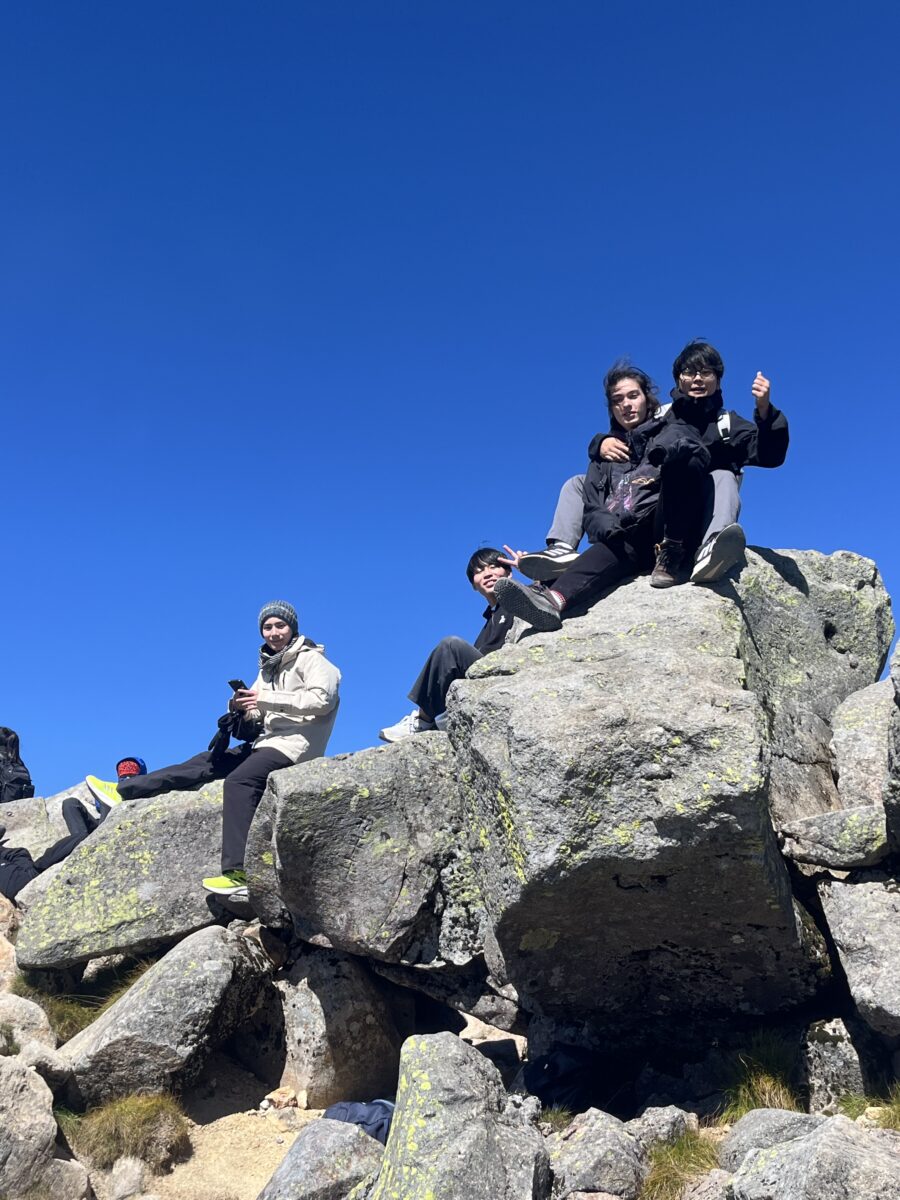
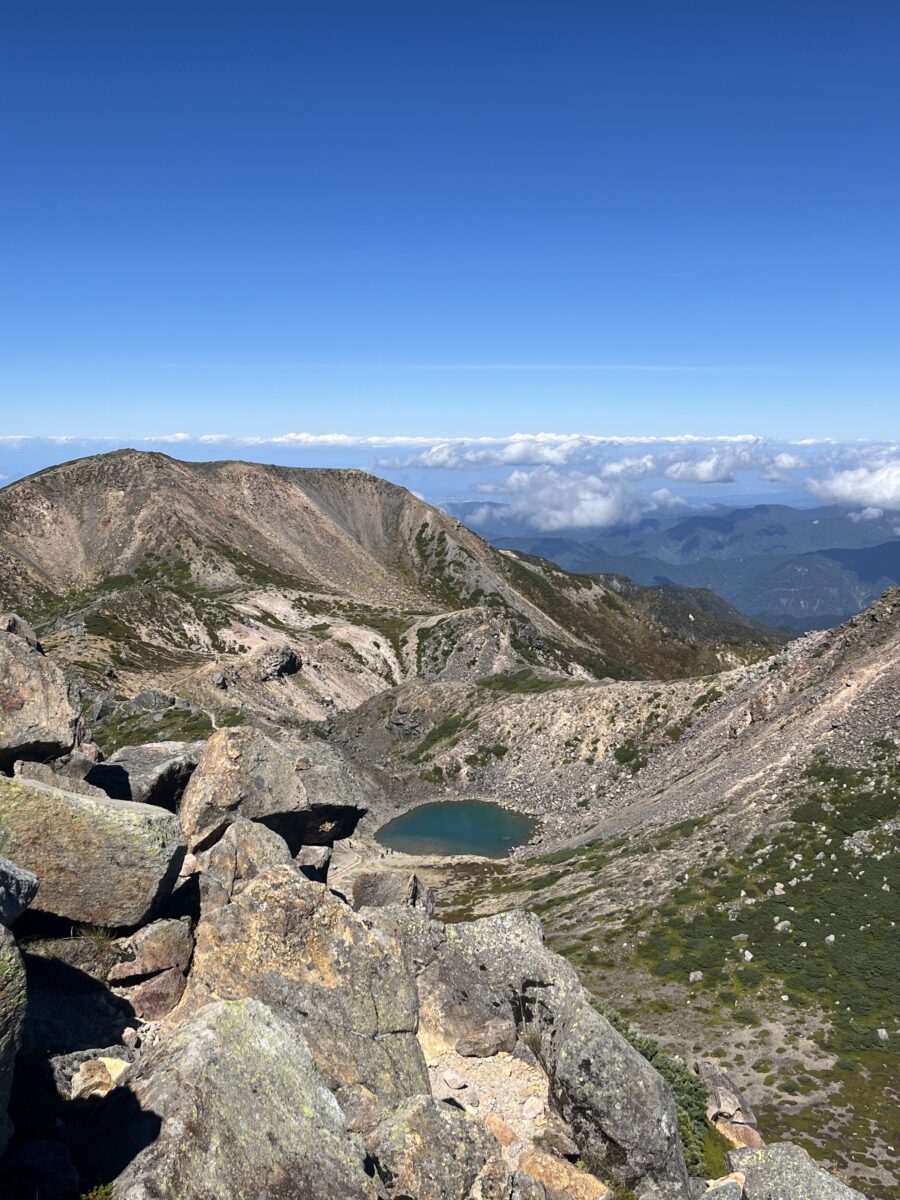
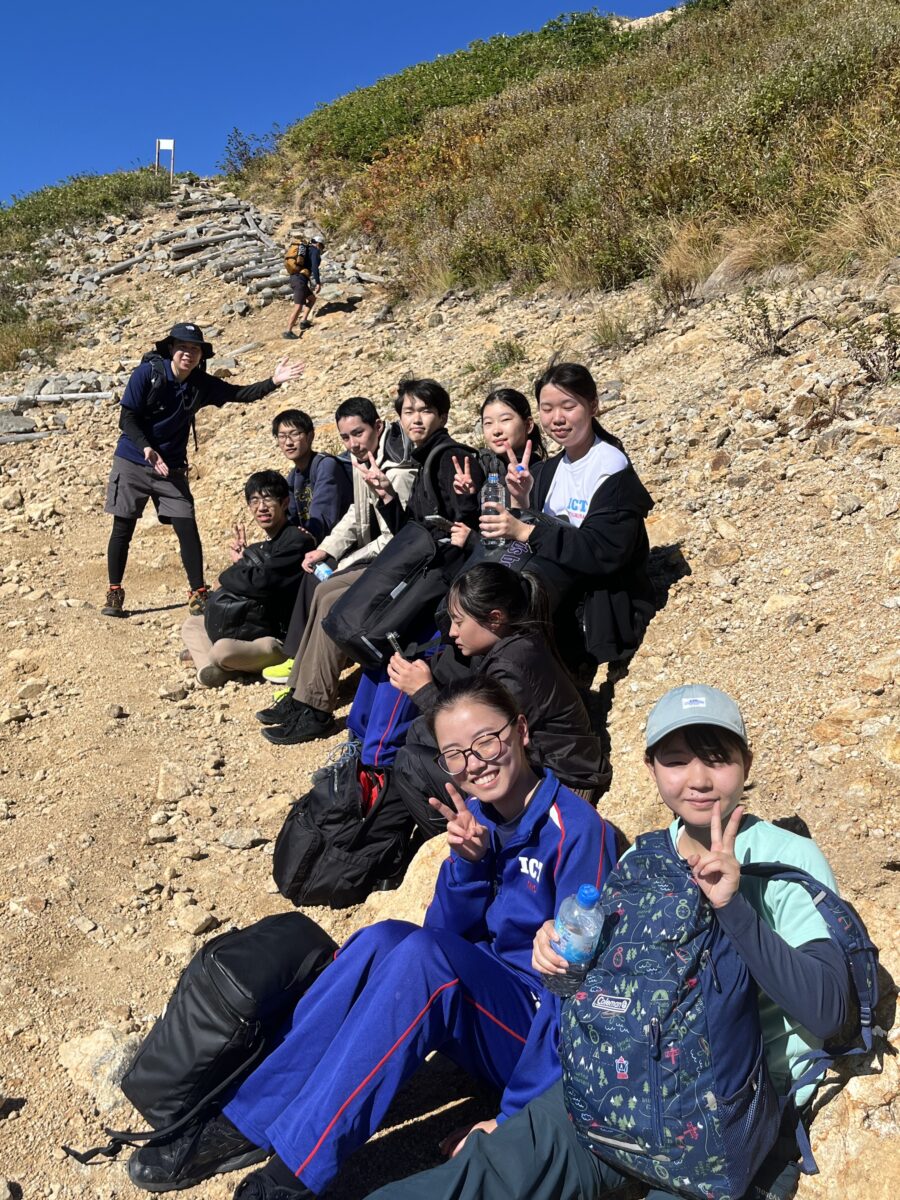
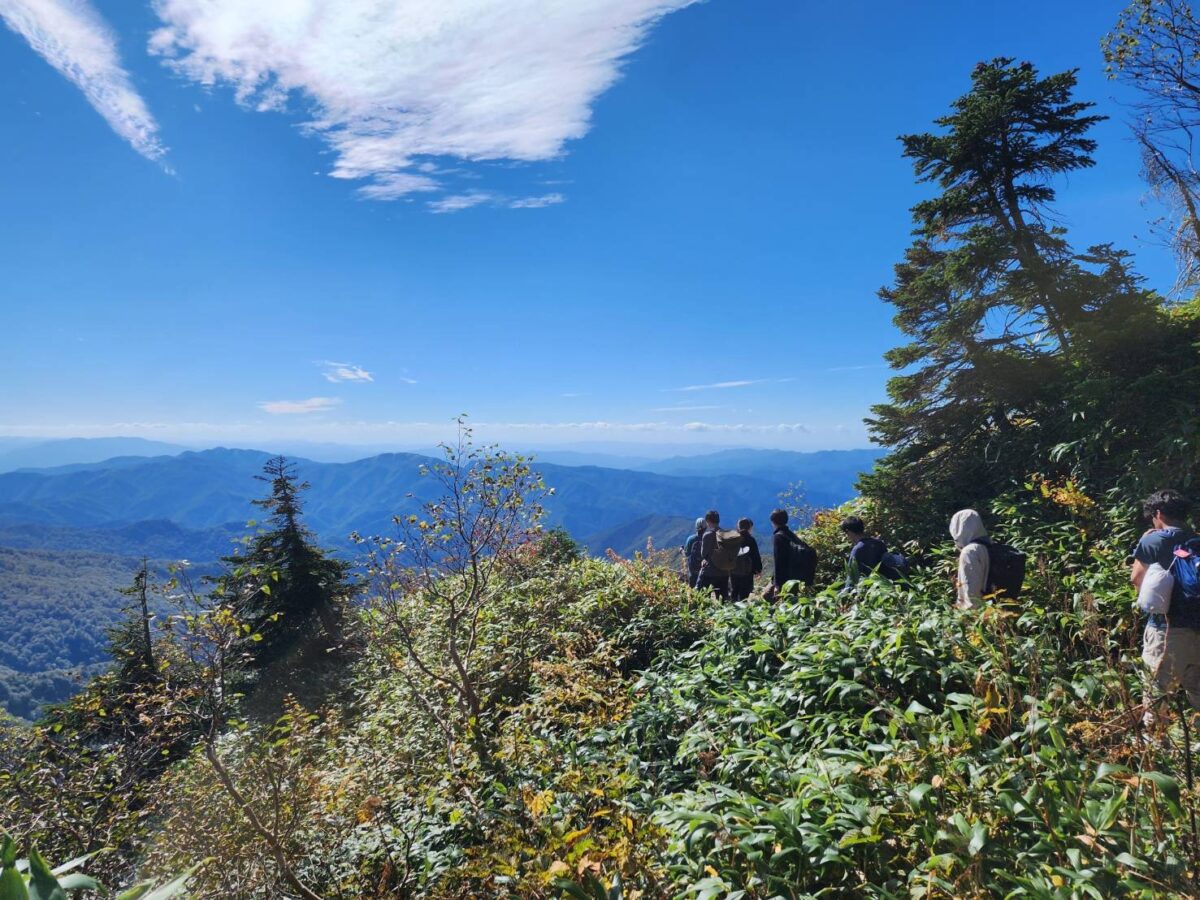
幸いにも、昼食後に御前峰へ到着した頃には風が弱まり、それほど寒さを感じなくなっていました。学生たちは笑顔で景色のきれいさについて感想を語り、中には日当たりの良い岩陰で眠っている学生もいました。また、全員で1分間静かに景色を眺め、周囲の自然を味わう時間も設けました。なお、白山麓高専事務室長の本田さんは、第1山小屋から体調不良になった学生を下山させ、別の教員によって無事にキャンパスへ搬送されることを確認した後、再び私たちに追いつき、ちょうど私たちが下山を始める頃に山頂へ到着しました。
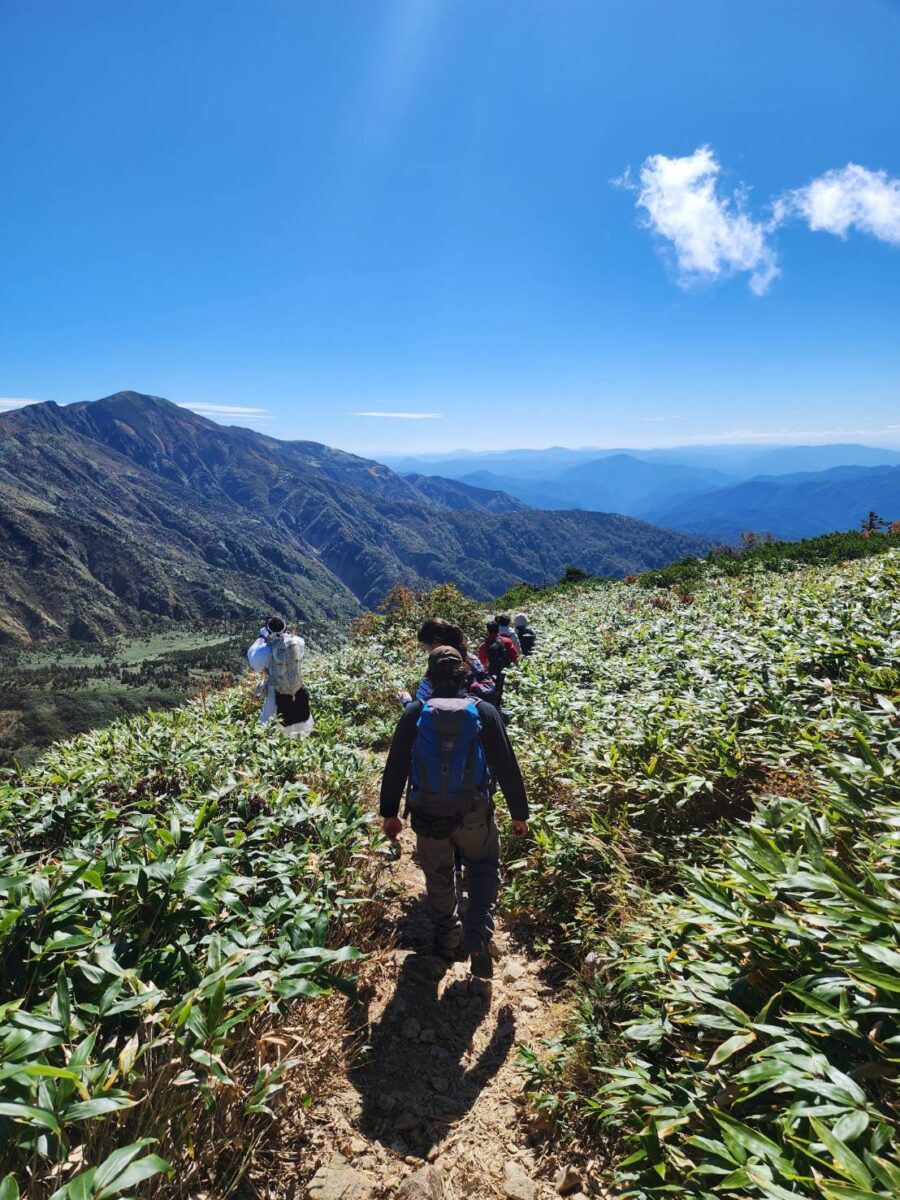
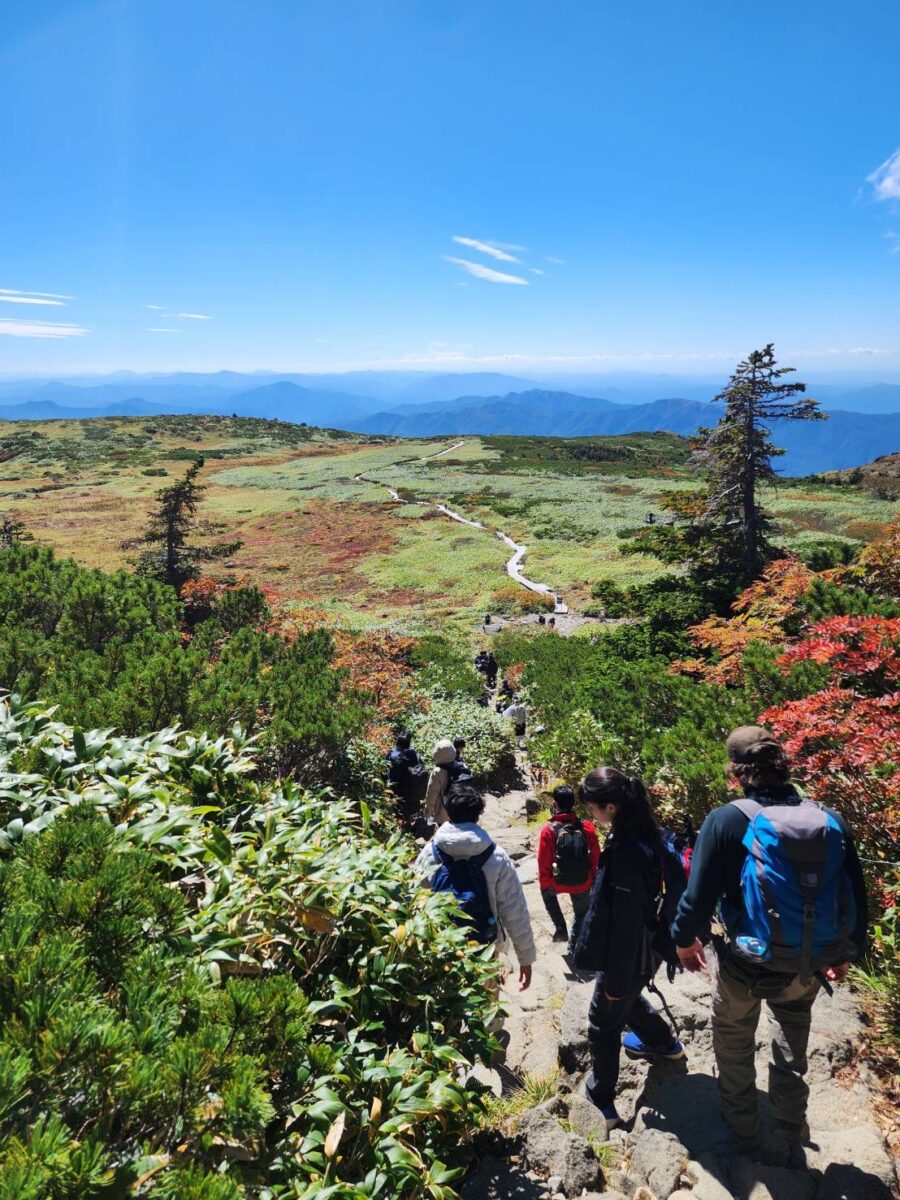
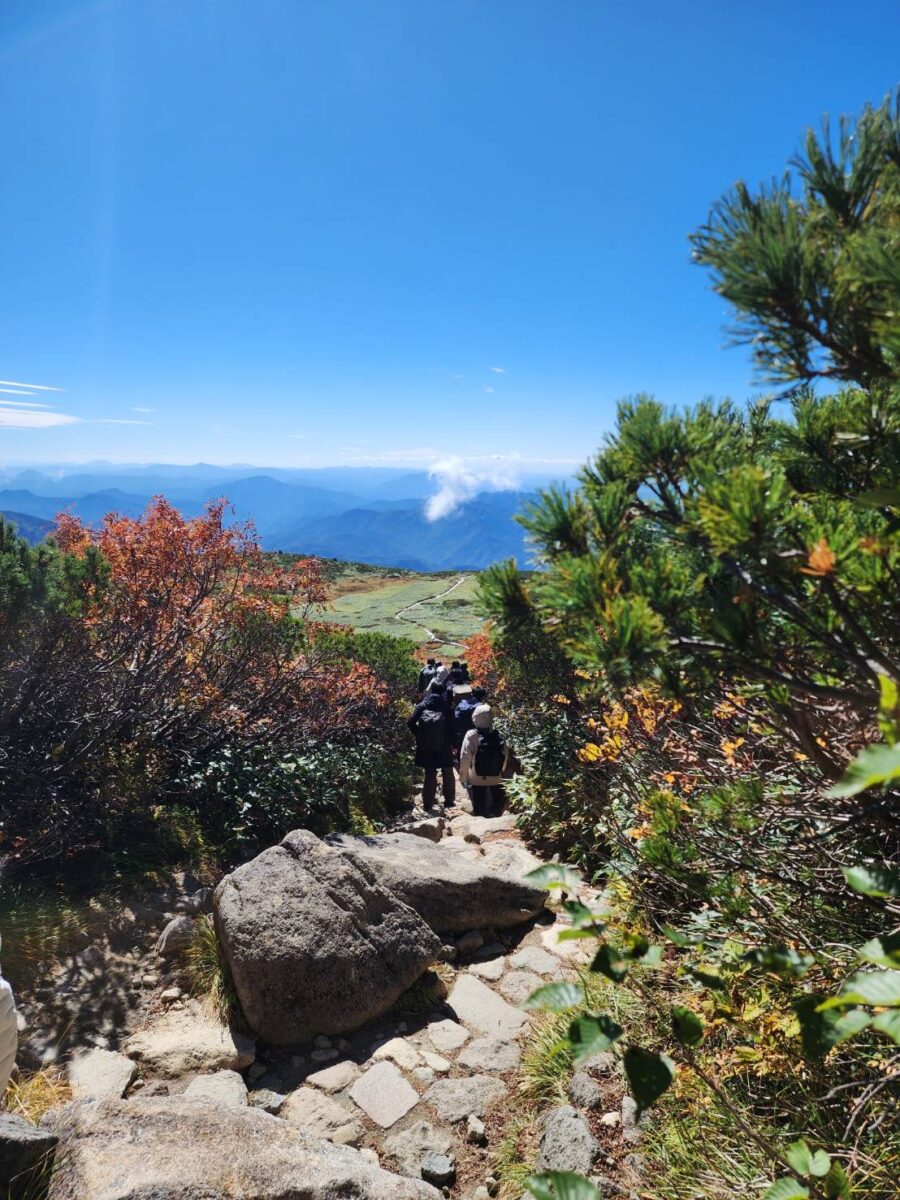
下山も登りと同じエコーラインを利用しました。例年のルートほど急ではありませんでしたが、その分距離は長くなります。稜線が風を遮り、午後の日差しは暑く感じられました。学生たちは疲労と長時間の下り坂によって足を震わせながら歩いていましたが、実際には学生よりも、十分な準備運動をしてこなかった教員の方から多くの弱音が聞かれました。
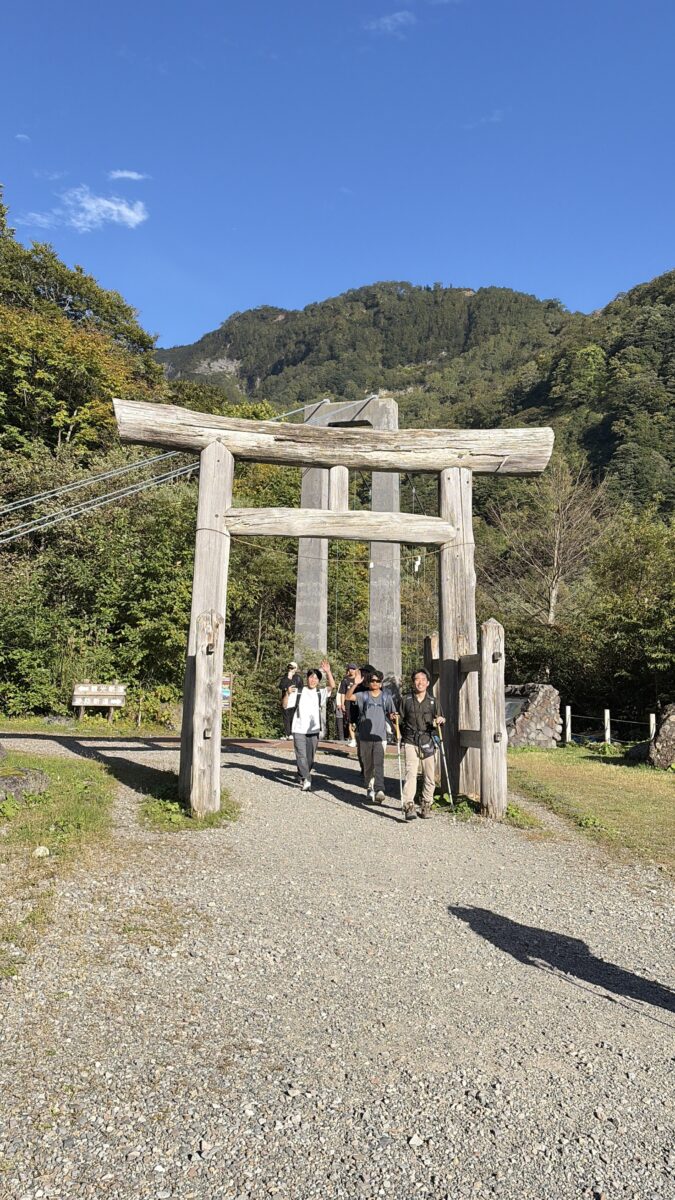
ようやくバスに到着した時には、大きな歓声というより安堵の声が上がり、その場に座り込む学生もいました。そして全員が乗車してからわずか5分後には車内は完全な静寂に包まれました。学生たちは全員、座席に座ったまま眠りについていたのです。
今年の白山登山は、これまでで最も素晴らしい登山の一つだったと感じています。通常は砂防新道を利用していますが、景色の美しさに加え急勾配が少ないことから、今後はエコーラインを主なルートとして検討したいと思います。そして何より、来年も今年のように天候に恵まれることを願っています。
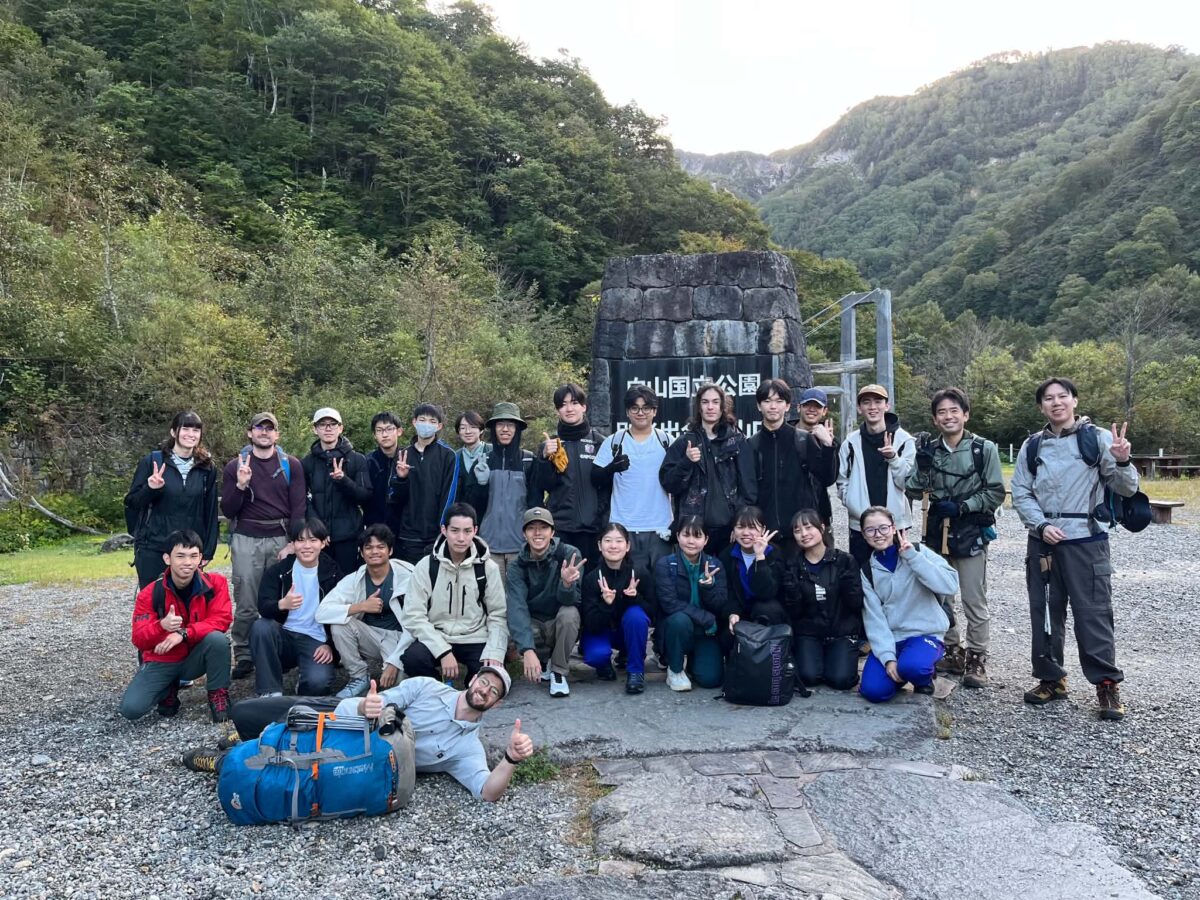
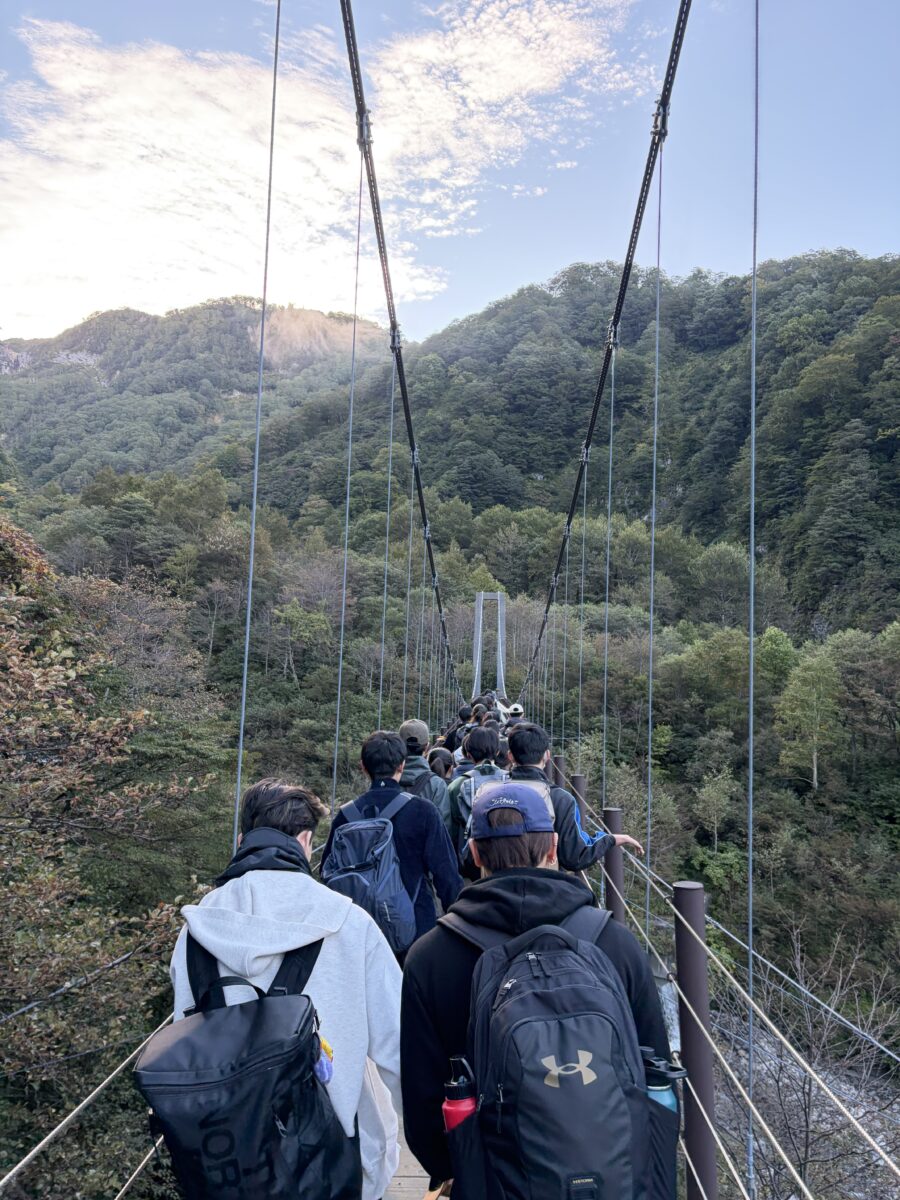
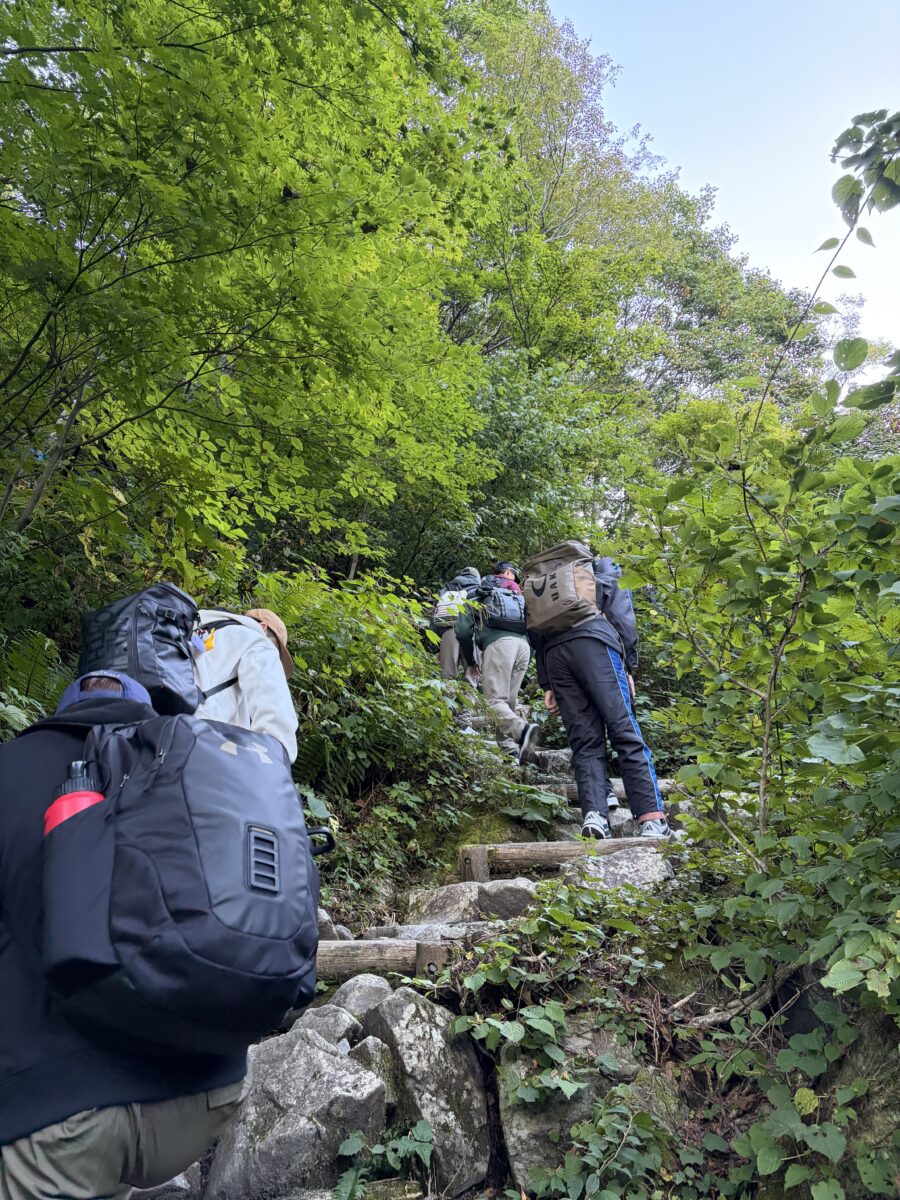
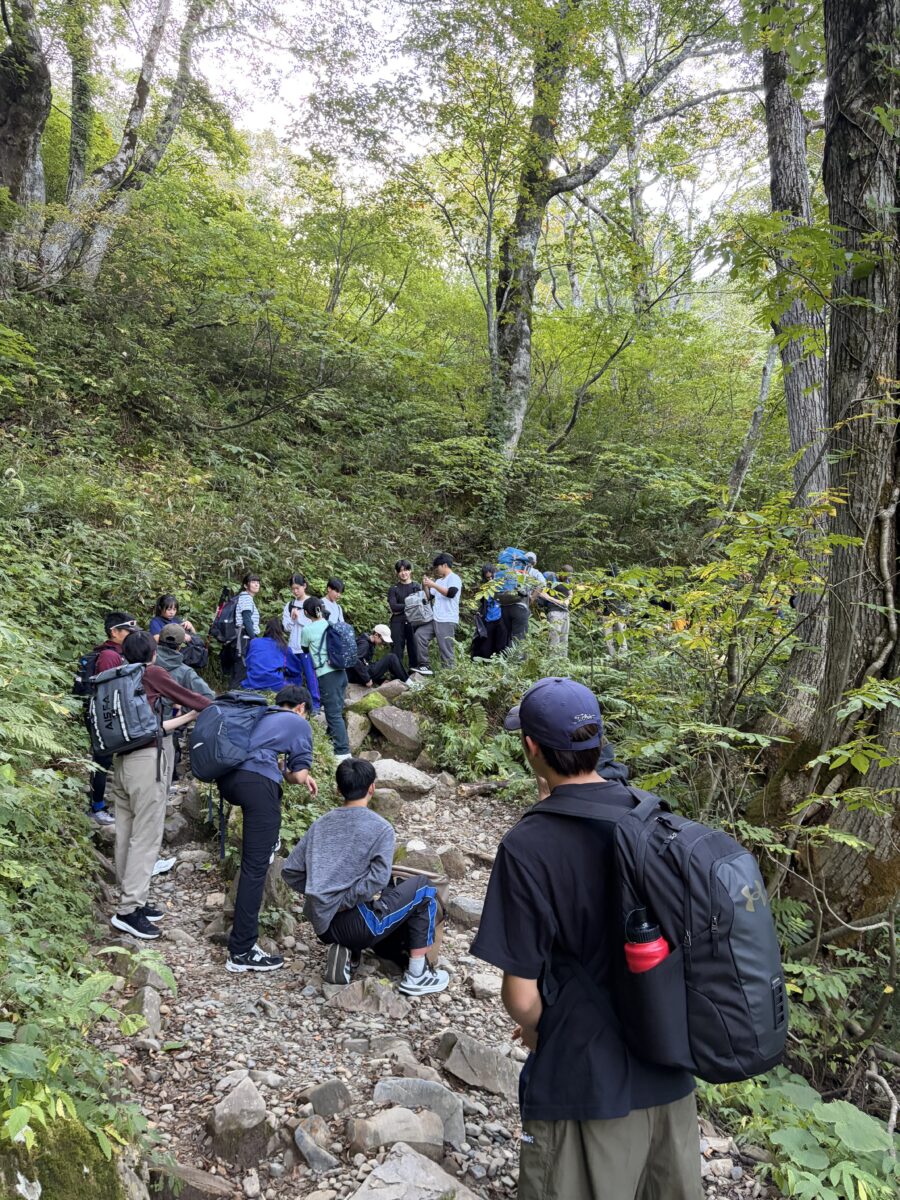
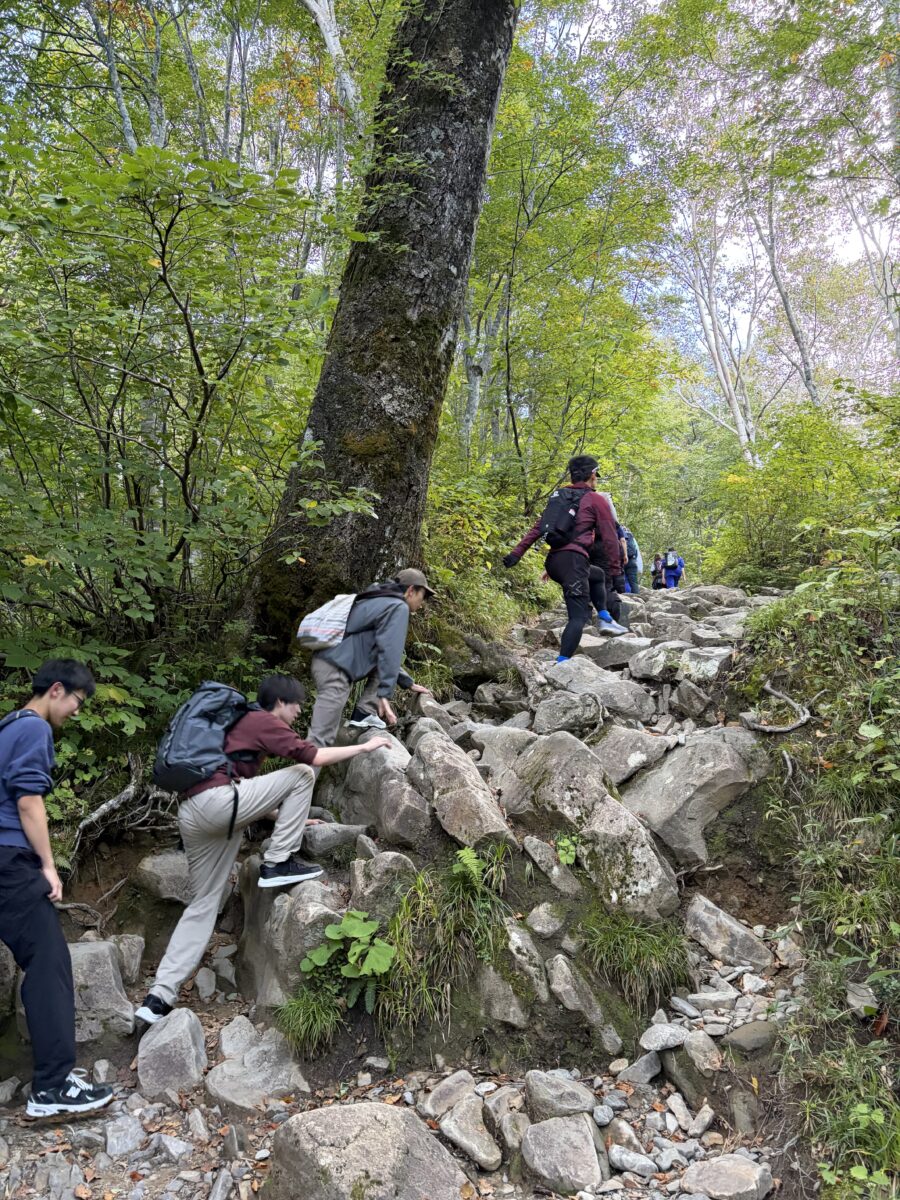
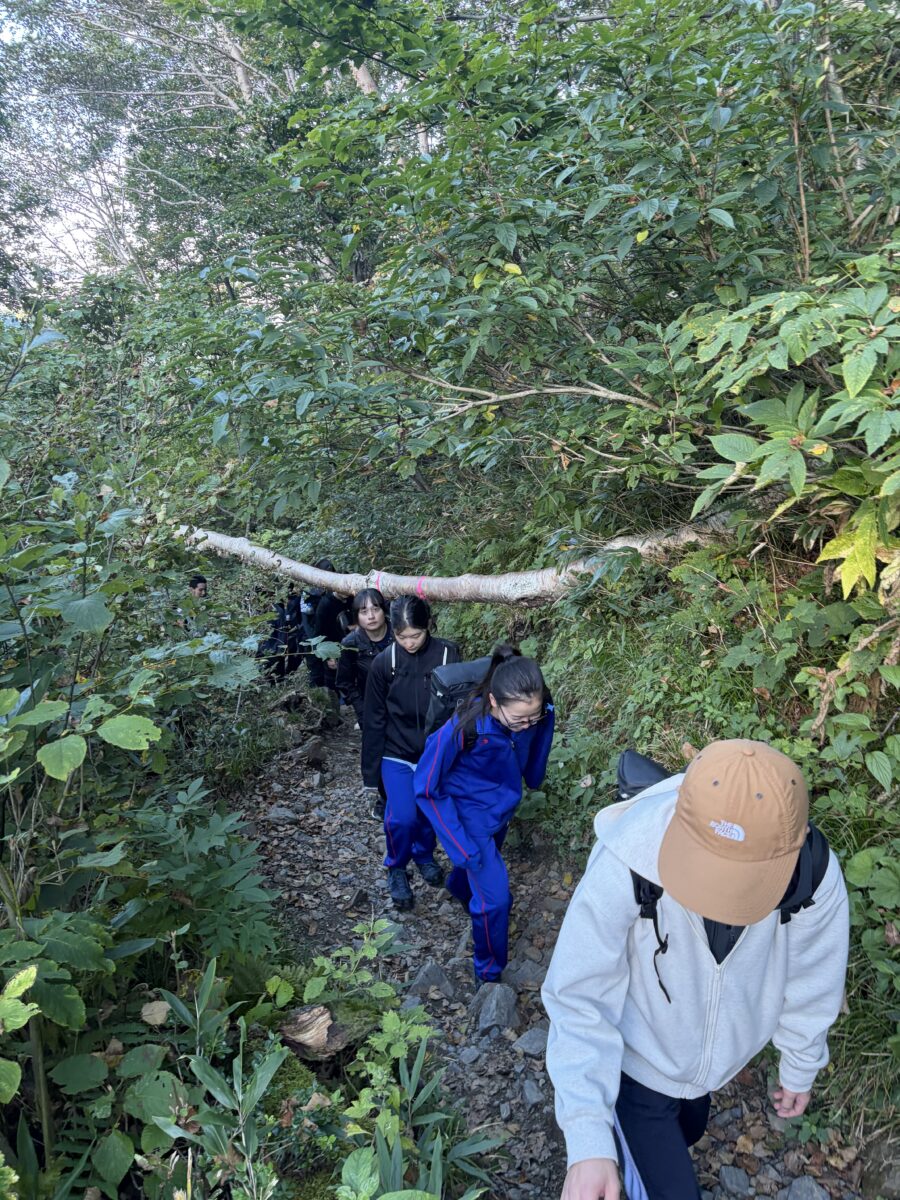
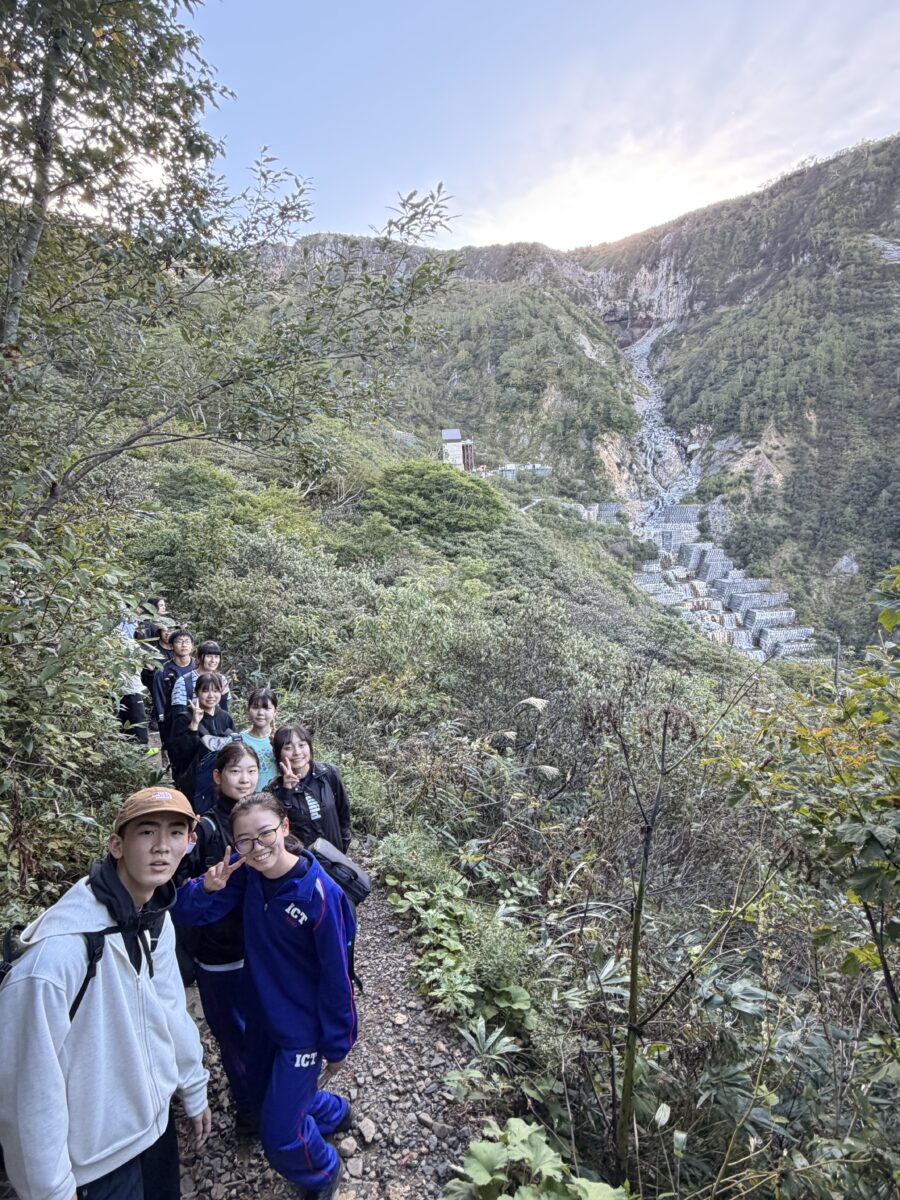
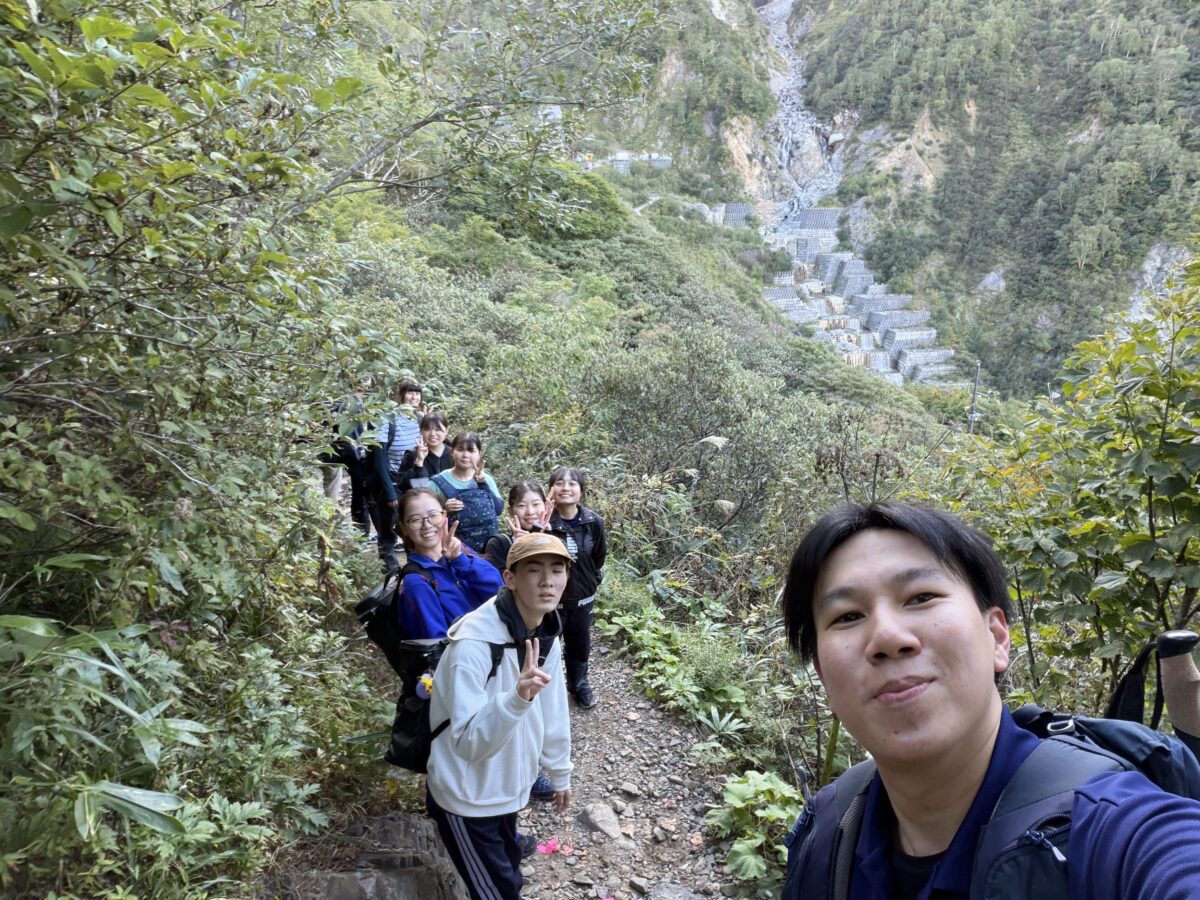
出発!
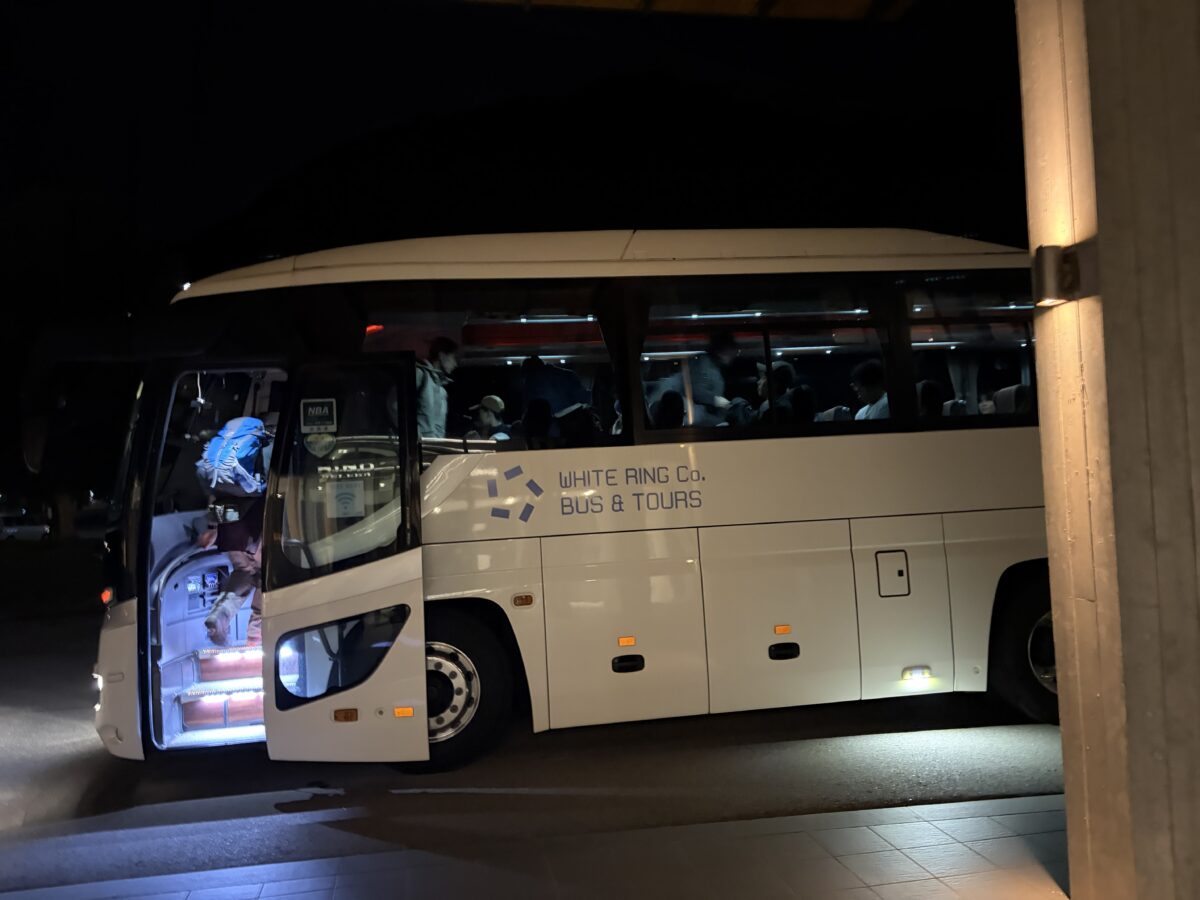
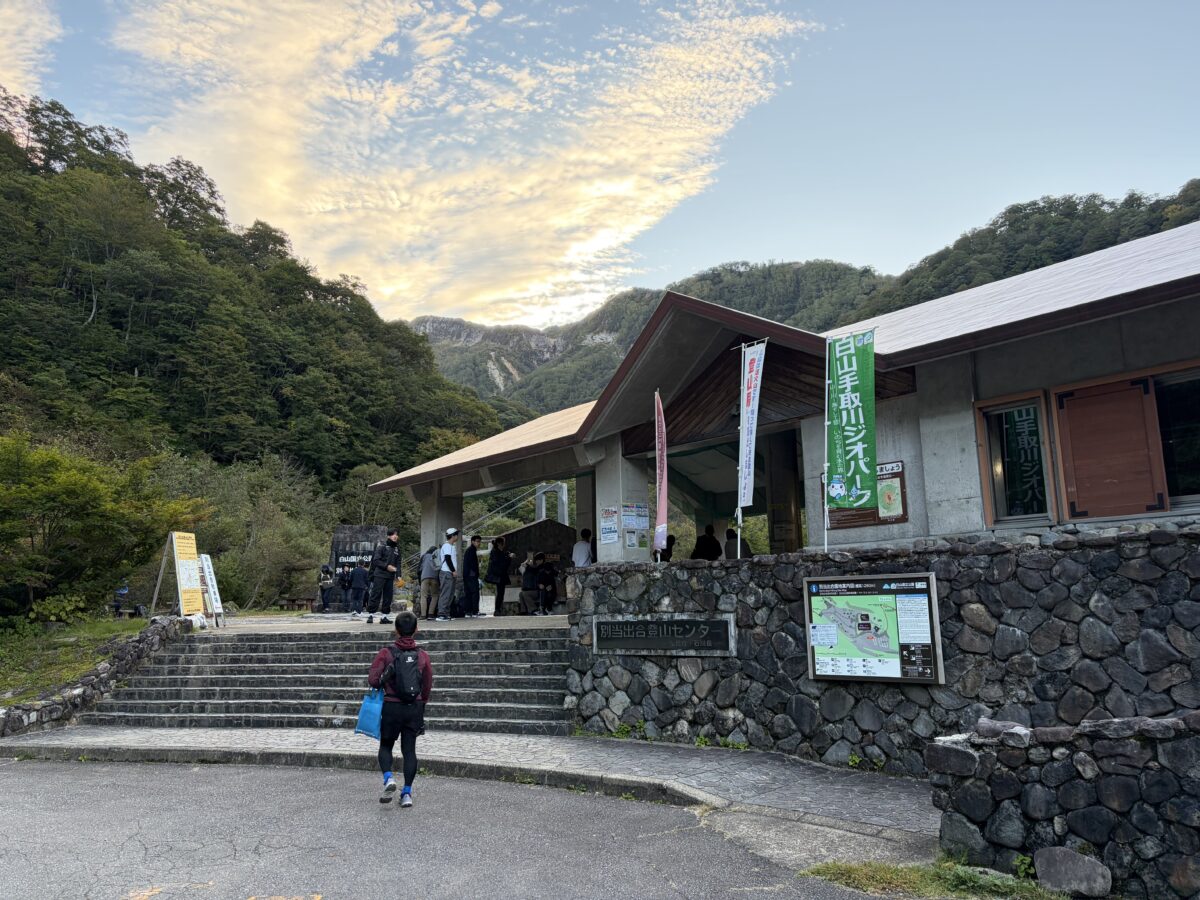
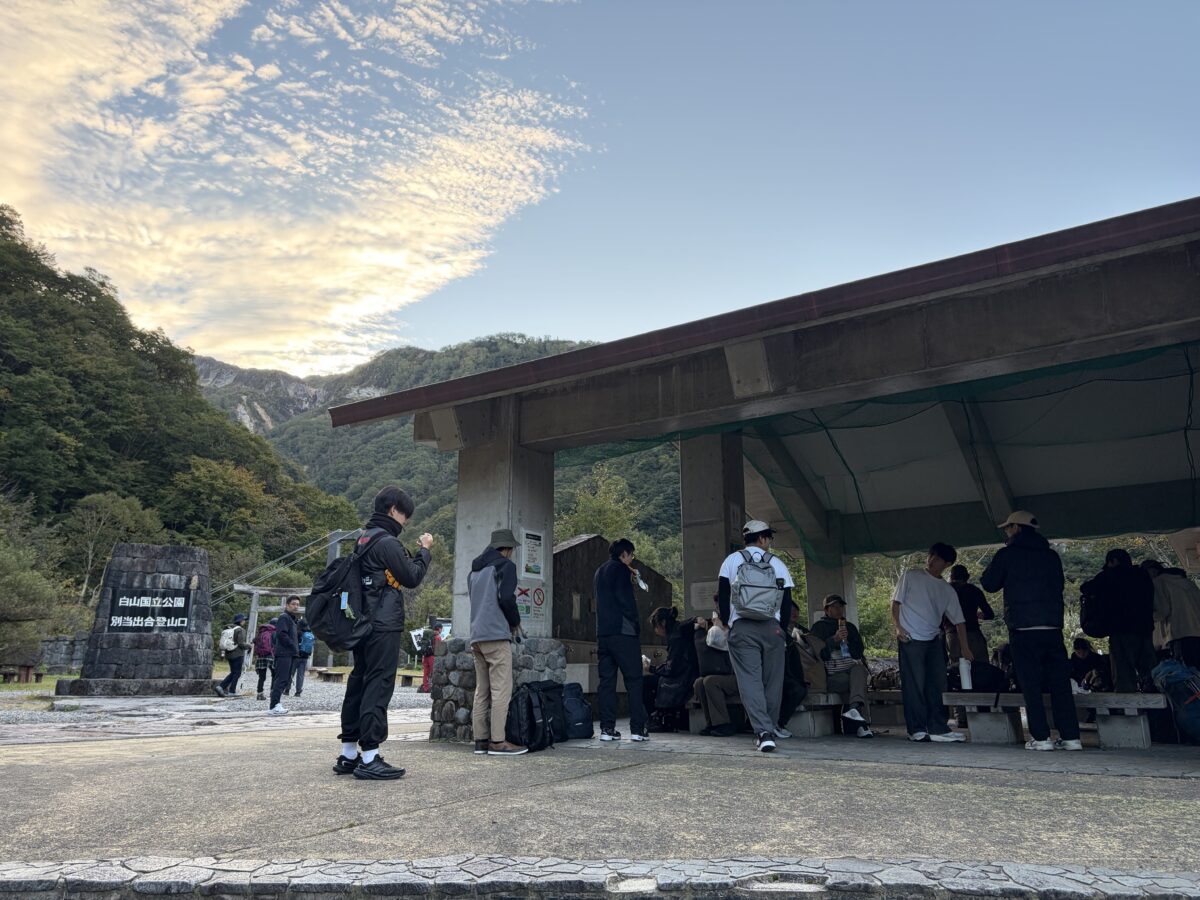
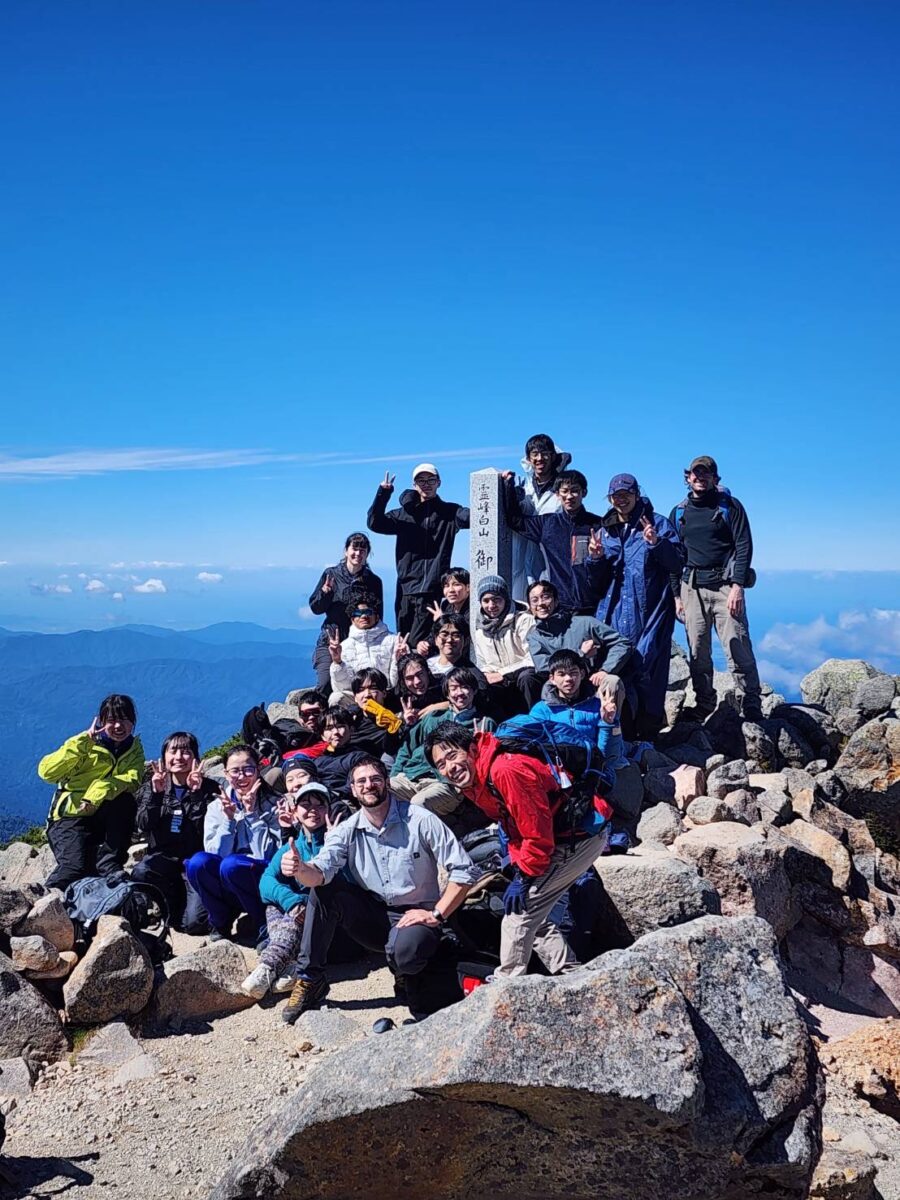
登頂!
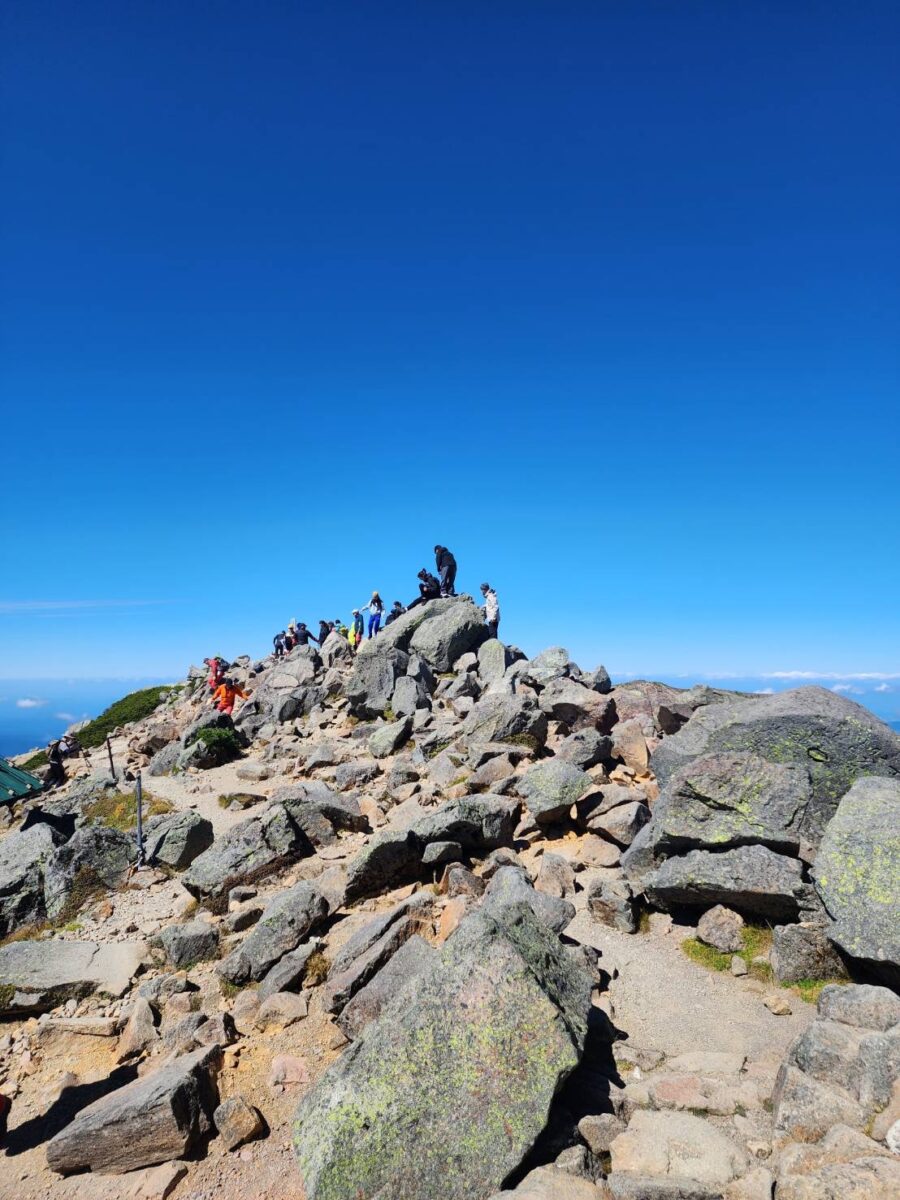
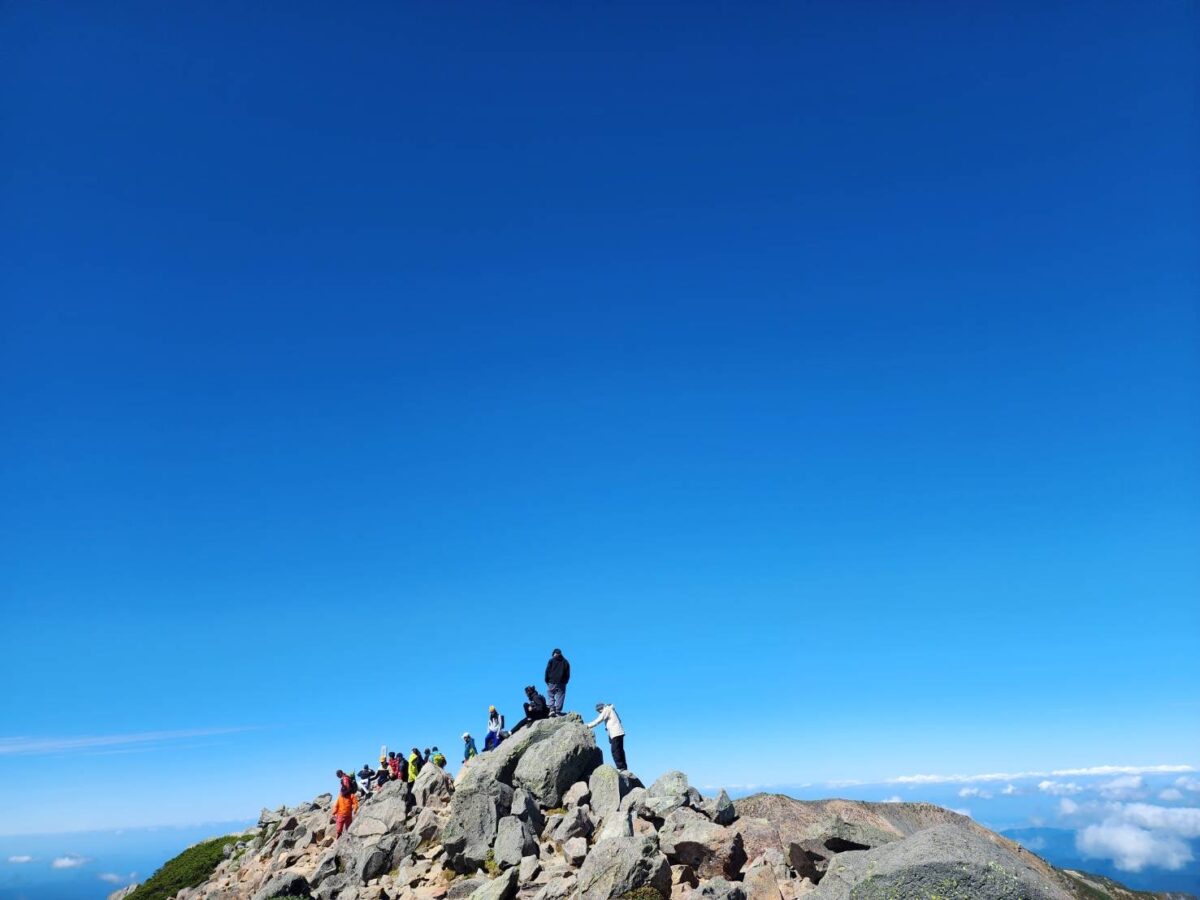
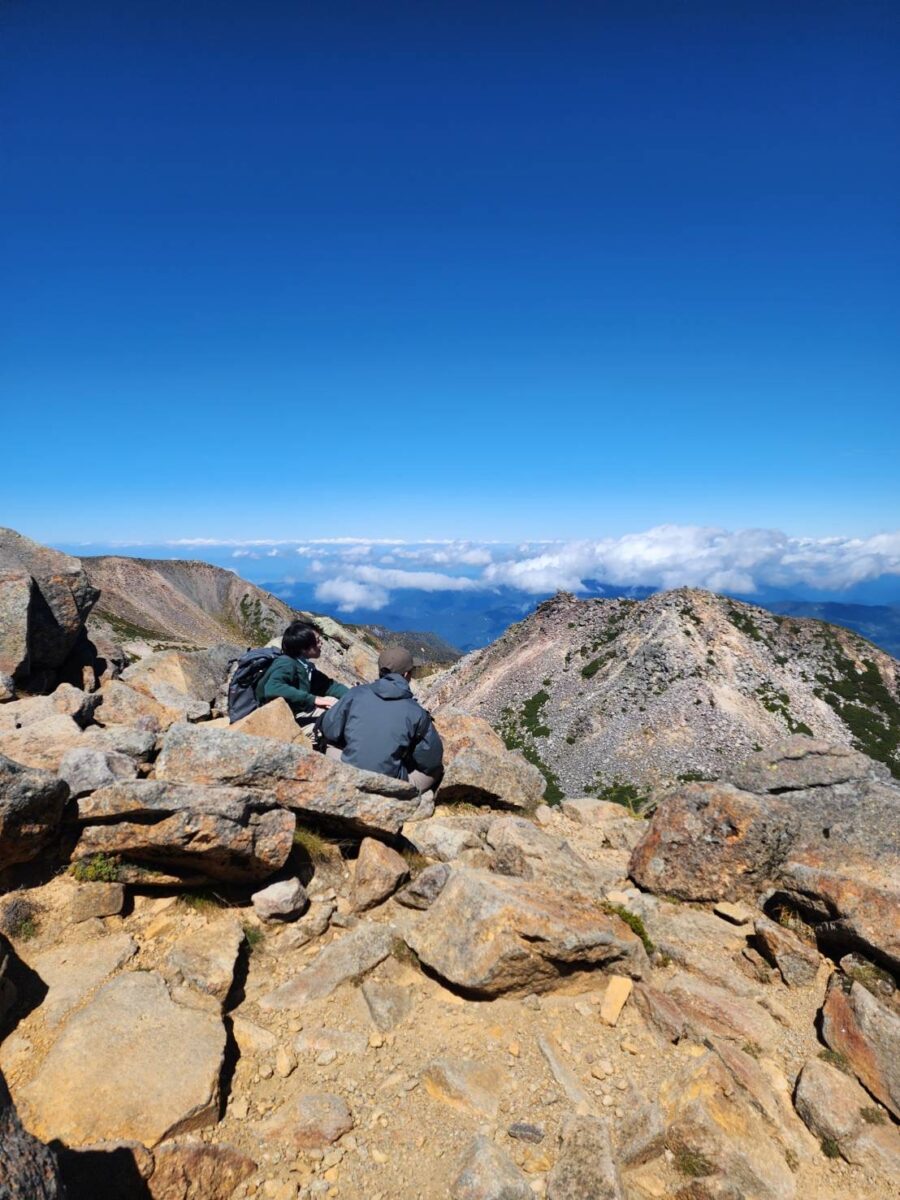
下山!
1年生のアディさんは白山登山の動画を作成しました!
フィリップ・ケザウ
Mt. Hakusan Climbing 2026
This is Philip Cadzow, the ICT Physical Education teacher with a report of climbing Mt. Hakusan on the 2nd of October with some 1st and 2nd year ICT students from Hakusanroku Campus.
On Friday October 2nd, 2026, at 5:00 a.m., 21 students and 6 teachers crowded onto a bus and slept the hour-long journey until they were deposited at the start point of the hike; Bettodeai station – an altitude of 1,260m.
Mt. Hakusan is known as one of the three holy mountains of Japan along with Mt. Tateyama and Mt. Fuji, and many residents of Ishikawa annually climb Mt. Hakusan to watch the sunrise. Students and faculty from Hakusanroku Campus also attempt to climb Mt. Hakusan each year, but not for the sunrise and usually making the climb up and down in one day. The last two years we have attempted to climb but have had to cancel due to bad weather, which means that the 3rd years who are now in New Zealand were never able to climb Mt. Hakusan, and it was the final chance for the current 2nd year students.
Waking up from the bus ride and ready to start their climb from Bettodeai station to one of Mt. Hakusan’s 3 peaks called Gozengamine – an altitude of 2,702m and an elevation change of roughly 1,500m, were 10 1st year students and 11 2nd year students. These students were the ones who had completed a 5km run the week prior to check for fitness and had a thorough gear check to make sure they were prepared for sudden weather changes. The other students of their year group were going on an easier hike in a different part of the Hakusan Geopark called Sampoiwadake.
The weather was cool with a clear blue sky, and the hike started very well as everyone made it to the first hut 20 minutes faster than planned, but unfortunately at this point one student had to be taken back down the mountain and back to school as they began to feel unwell. We then divided into 2 groups to make passing people on the narrow track easier. Originally, it was thought that they would be named the fast group and the slow group, but as the first group reached the second hut and messaged the slow group to know that they had arrived, the slow group also arrived at the second hut!
There are many different climbing routes up Mt. Hakusan and the most common of these is the Saboshindou path – named as Sabo (prevent erosion) shindou (new route). However, this route was closed off after the second hut and both groups were forced to take a longer route called Echo line – this route is about 2 km longer than Saboshindou but it’s not as steep and goes past the ridgeline that carries onto the next mountain over called Mt. Bessan. The view that day from the Echo line ridge was of a clear blue sky, shining green foliage from what looked to be small alpine bamboo that kept the mountainside gently swaying in the breeze, even in the beginnings of autumn, and a sharp ridgeline across to Mt. Bessan; leading the eye further away and into the distance of the surrounding hills all shaded in blue shadow.
Mt. Hakusan’s peak was visible from the Echo line ridge and the group made fast progress up to the Murodo (big mountain hut) to have a break for lunch. The wind gusted but didn’t howl, it wasn’t so cold as to numb the hands, but it stripped heat away from the body and after 10 minutes a person’s nose would start to go a little numb. The most important layer of clothes in this environment is anything that can block the wind from stripping away a person’s body heat. After the lunchbreak many of the students could be seen appreciating the seriousness of the constant cold wind and it lent a certain seriousness to the mountain hike. Although some students who were more prepared than others had a better time of it. Kotarou, who prepared well for the trip, was seen taking a nap while others shivered.
Luckily by the time students had eaten lunch and made it to the Gozengamine peak of Mt. Hakusan, the wind had dropped and it wasn’t so cold. Students smiled and made comments on how beautiful the view was. Other students hid behind a sunny rock and made a very good impression of sleeping. Everyone was made to take a silent minute to appreciate the surrounding view. Honda-san, who took the sick student down the mountain from the first hut and made sure that they were transported safely back to campus by another teacher, managed to catch back up to us and make it to the top just as we started to descend.
The route hiking down was the same Echo line that we took to climb up, and so it wasn’t as steep as the other years’ route, but it was longer. The ridgeline down blocked the wind, and the afternoon sun was hot. Students had shaking legs from exhaustion and the constant downhill but most of the complaints were from the teachers who hadn’t exercised enough in preparation.
Making it to the bus didn’t cause as much celebration as it did cries of relief and people sagging to the ground, and once all students had loaded on to the bus, after 5 minutes there was absolute silence. All students had fallen asleep upright, sitting on the bus.
I think this year’s trip up Mt. Hakusan was one of the best we’ve had. While we normally hike the Saboshindou route, I think from this year on we will be taking the Echo line – the view was just as good but without the sharp incline. I just hope that the weather can cooperate with us again next year.
1st year student Ady created a video!
Philip Cadzow