




Local Community
地域連携

こんにちは。国際高専の白山麓キャンパスで英語を教えているジェームス・テイラーです。今回、夏休みに行われたイベントについてお話したいと思います。
2026年8月18日(火)、白峰で子供向けのイングリッシュカフェを開催しました。このイベントは、尾口コミュニティセンターと白峰コミュニティセンターが共同で実施している交流行事で、今年は白峰小学校から7人(全校生の半分以上です!)とかわちこども園から1人が参加し、彼らの保護者や弟・妹達も見学者として参加してくれました。
今年も8月はとても暑かったのですが、幸い白峰コミュニティセンターのスタッフの方が参加者全員のためにアイスを持ってきてくれました!まずアイスクリームを食べながら、僕が3冊の英語の絵本を読みました。1冊目は「Leo the Late Bloomer」(作:ロバート・クラウス)です。この本は、他の子たちより成長が遅いライオンのレオ君のお話しで、みんな成長するペースが違うので心配はいらないというメッセージが込められています。2冊目は「The Smartest Giant in Town」(作:ジュリア・ドナルドソン)です。新しく買ったオシャレな服を、困っている友達にあげる巨人のお話です。そして3冊目は「They All Saw a Cat」(作:ブレンダン・ウェンゼル)です。同じ1匹の猫でも、生き物によって見え方が違うというお話です。これらの絵本には、子どもたちだけでなく大人にとっても大切なメッセージが込められています。
次は体を動かすゲームの時間です。子供たちは、椅子取りゲーム(音楽が流れている間は円形に並べられた椅子の周りを歩いたり踊ったりして、音楽が止まったら座るゲーム)をしました。椅子の数は毎回子どもの人数より1つ足りないため、毎回誰か1人がアウトになります。子どもたちは、楽しすぎてこのゲームを3回もしました!
最後に少し特別なルールのあるビンゴゲームをしました。それは、子どもたちがゲームをする前に自分のビンゴカードを作らなければいけないというルールです。子どもたちは、3冊目の絵本「They All Saw a Cat」に出てきた動物の英語名を学んでから、僕が言った動物の絵をビンゴカードの好きなところに描きました。そして、カードを完成させた後でビンゴゲームを楽しみました!コミュニティセンターのスタッフの方々が、参加した子どもたち全員のために景品とイベント後に持って帰るプレゼントまで準備してくださいました。
今年も白峰の子どもたちと一緒に楽しい時間を過ごせました。準備や運営に尽力してくださった尾口コミュニティセンターと白峰コミュニティセンターのスタッフの皆さんのおかげで、とてもいいイベントになりました。心より感謝いたします。
ジェームス・テイラー
Hello everyone. I’m James Taylor, one of the English teachers at ICT Hakusanroku Campus. In this journal, I’d like to tell you about an event I held during the summer holiday.
On Tuesday, August 18th, 2026, I went to Shiramine to lead an English Café event for local children, organised by the Oguchi and Shiramine Community Centres. This year, we had seven children from Shiramine Primary School (that’s more than half of the school population!) and one child from Kawachi Nursery, along with some parents and young siblings of participants who watched.
August was very hot this year, but luckily the Shiramine Community Centre staff had brought ice creams for everyone, so we started by eating them while I read a few stories: “Leo the Late Bloomer” by Robert Kraus, about a lion who learns much more slowly than everyone else, but since everyone learns at their own pace, it doesn’t matter; “The Smartest Giant in Town” by Julia Donaldson, which is about a giant who buys new clothes but then gives them away to help his friends; and “They All Saw a Cat” by Brendan Wenzel, which shows how different creatures view the same cat. Each of these books has an important message for children (and adults).
Next, it was time to move around, so we played musical chairs: the children walked or danced around a circle of chairs while the music played and had to sit down when the music stopped. There was always one chair too few, so someone was always eliminated. The children enjoyed it enough to play three times!
Finally, we played bingo, but with a slight twist: the children had to make their own bingo cards before we could play! We used the animals from “They All Saw a Cat”, learnt the names in English, and then the children filled in the spaces on their bingo cards by drawing each animal that I said. After that, we could play! The Community Centre staff prepared prizes for everyone, along with extra presents to take home at the end.
As always, it was fun to spend time with the children in Shiramine, and I’m grateful to the staff of the Oguchi and Shiramine Community Centres for their hard work organising everything.
James Taylor

こんにちは。校長の鹿田 正昭です。
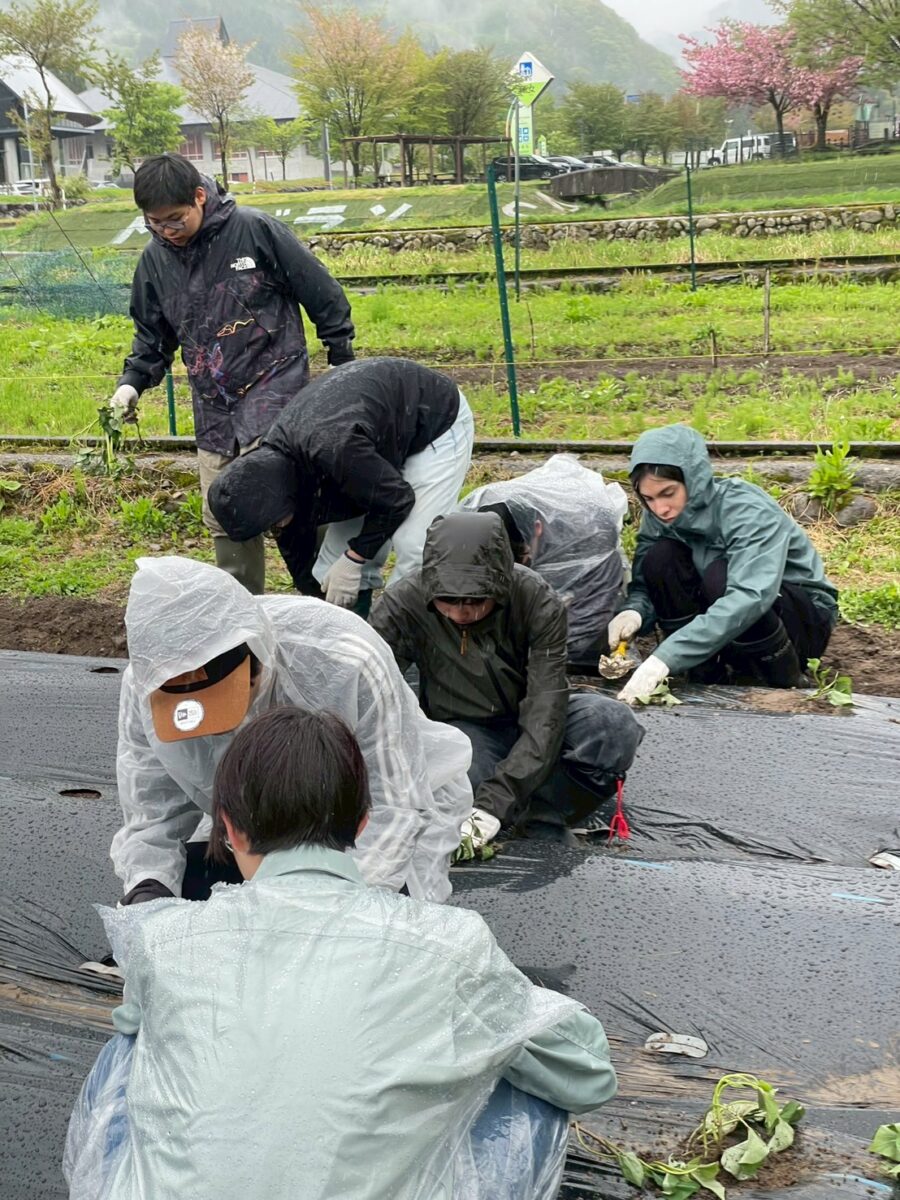
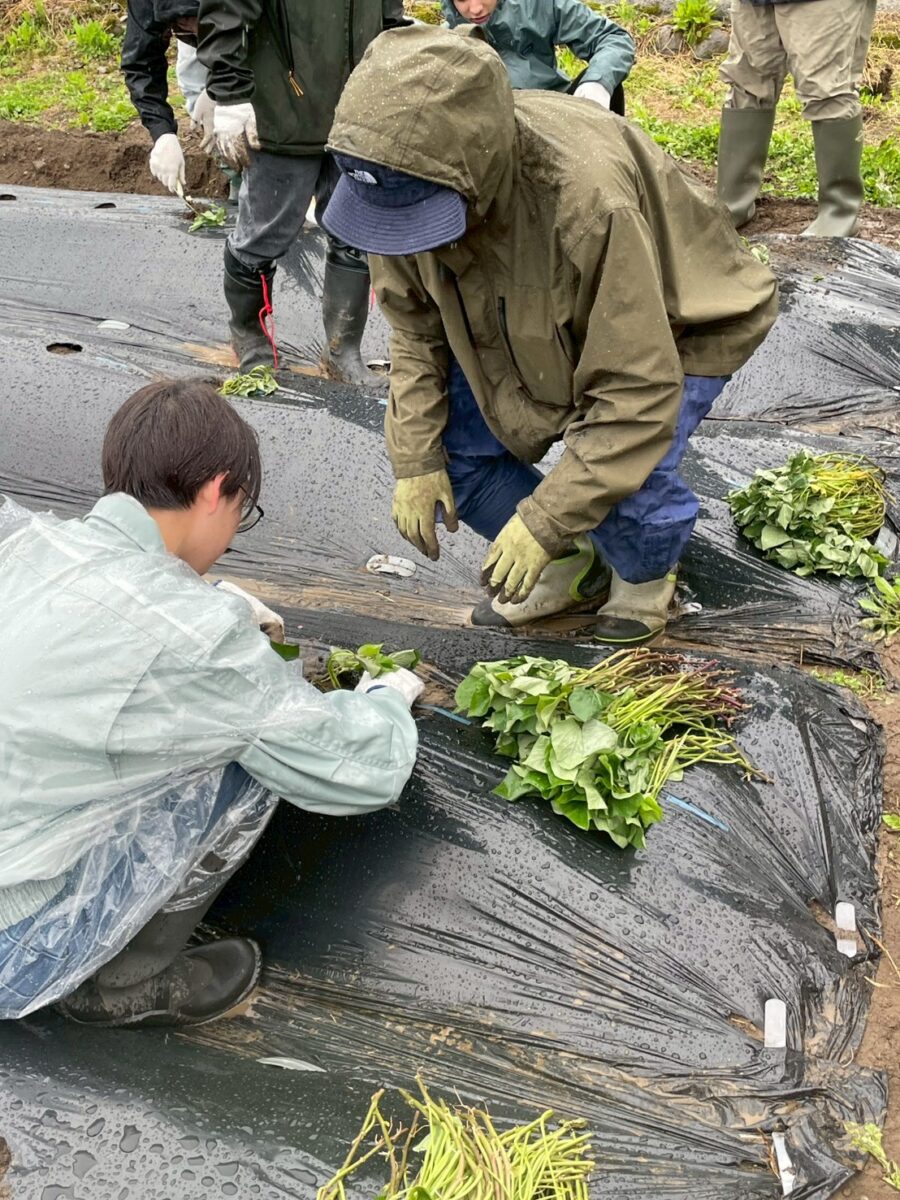
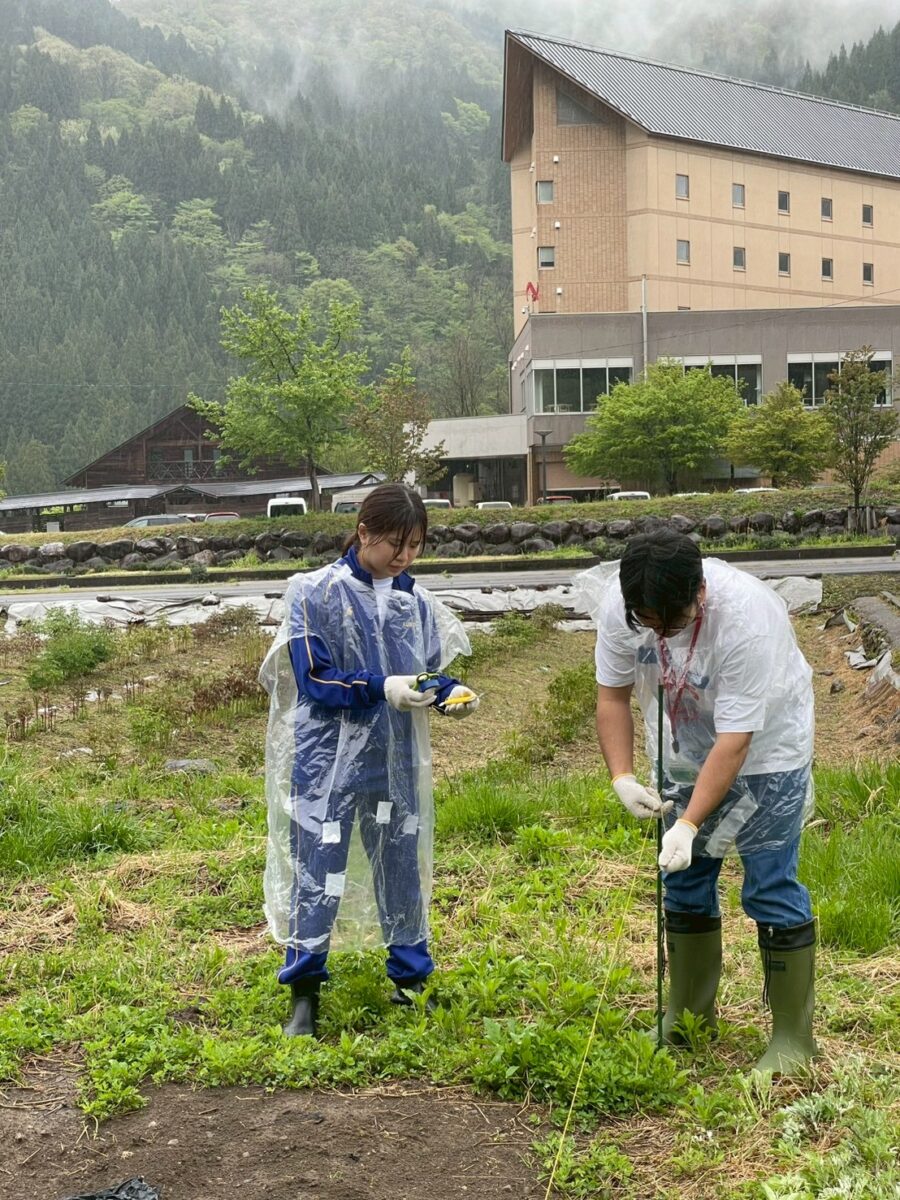
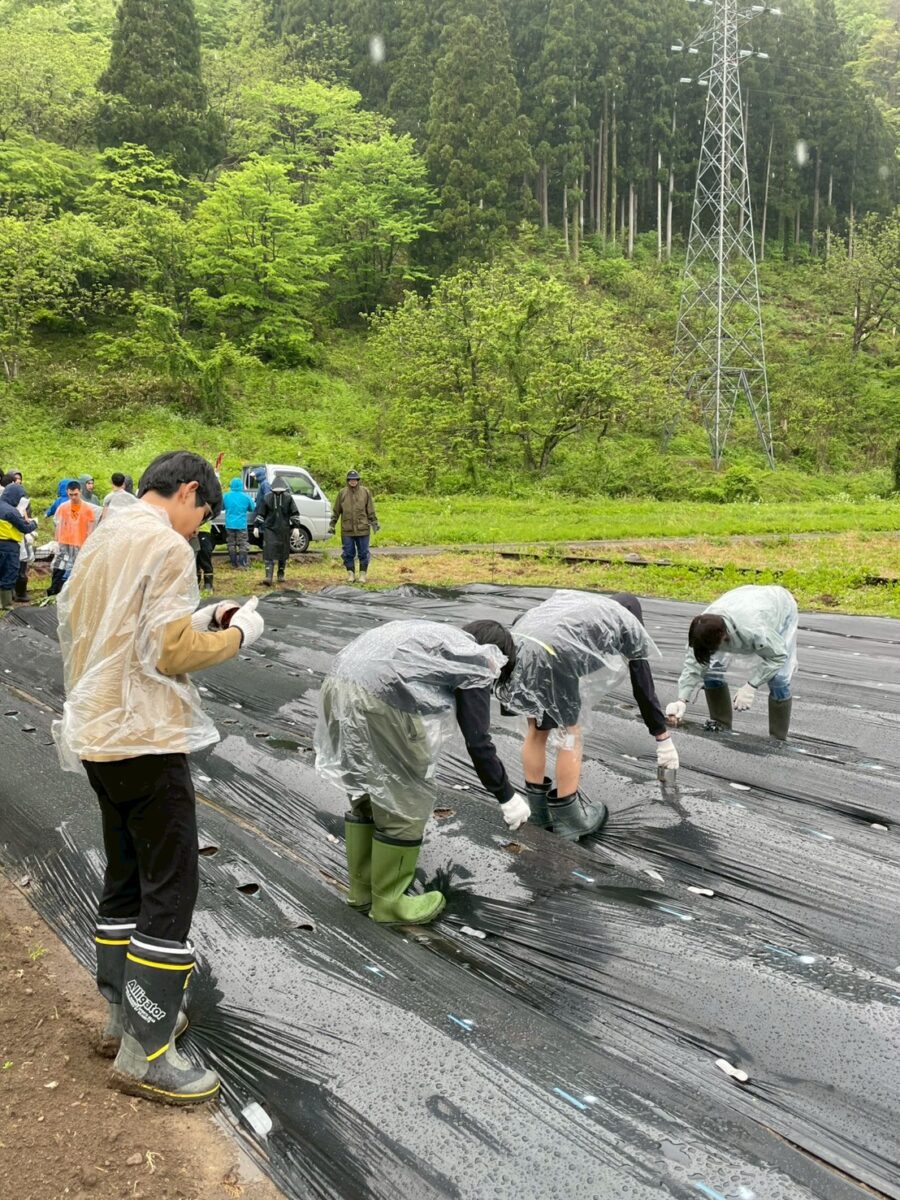
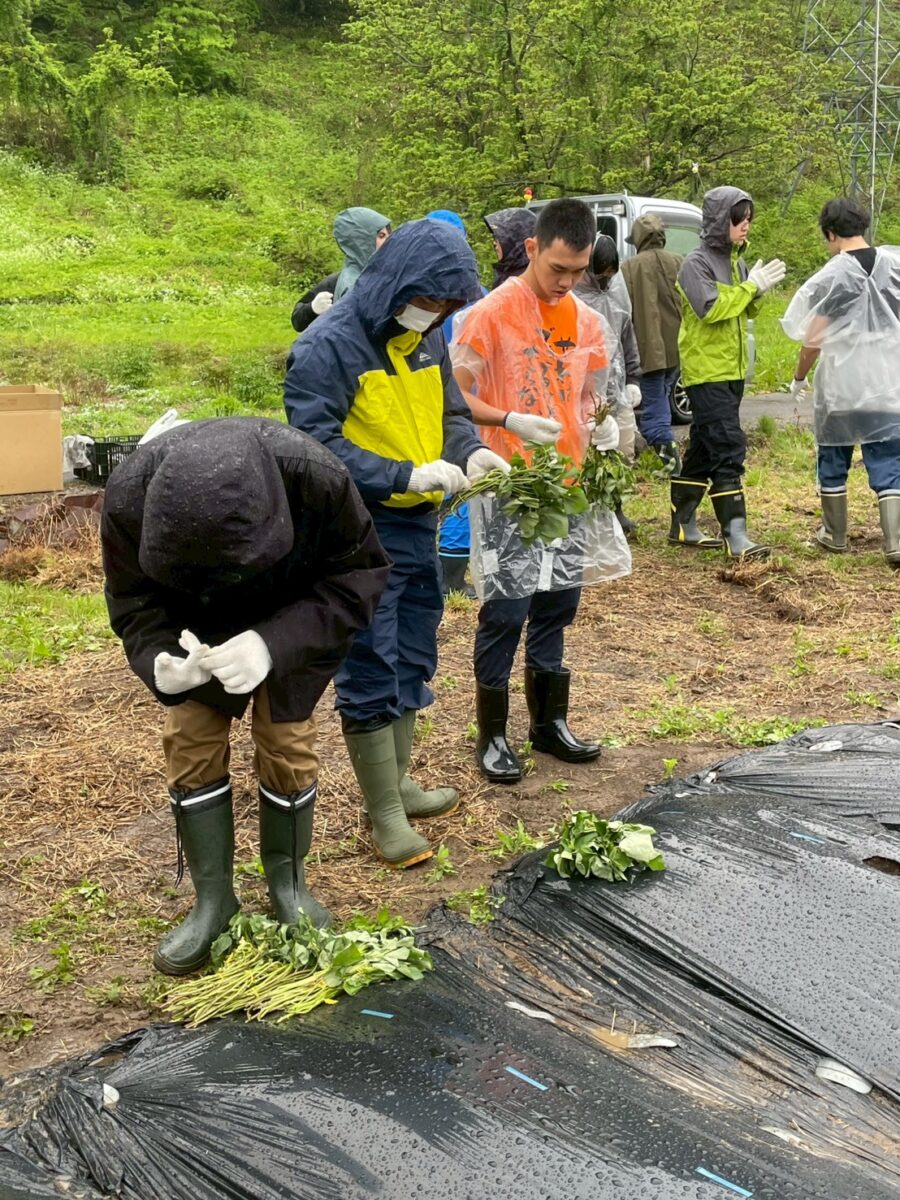
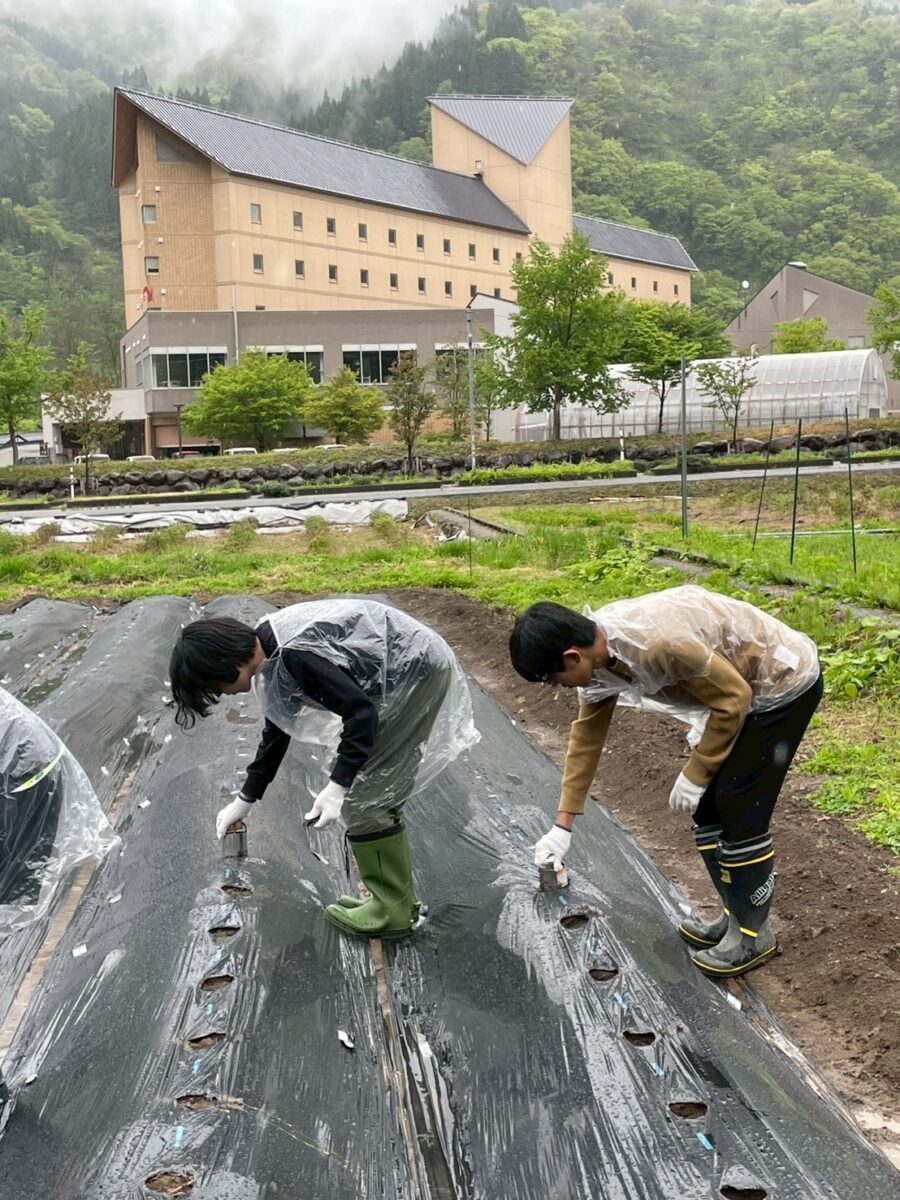
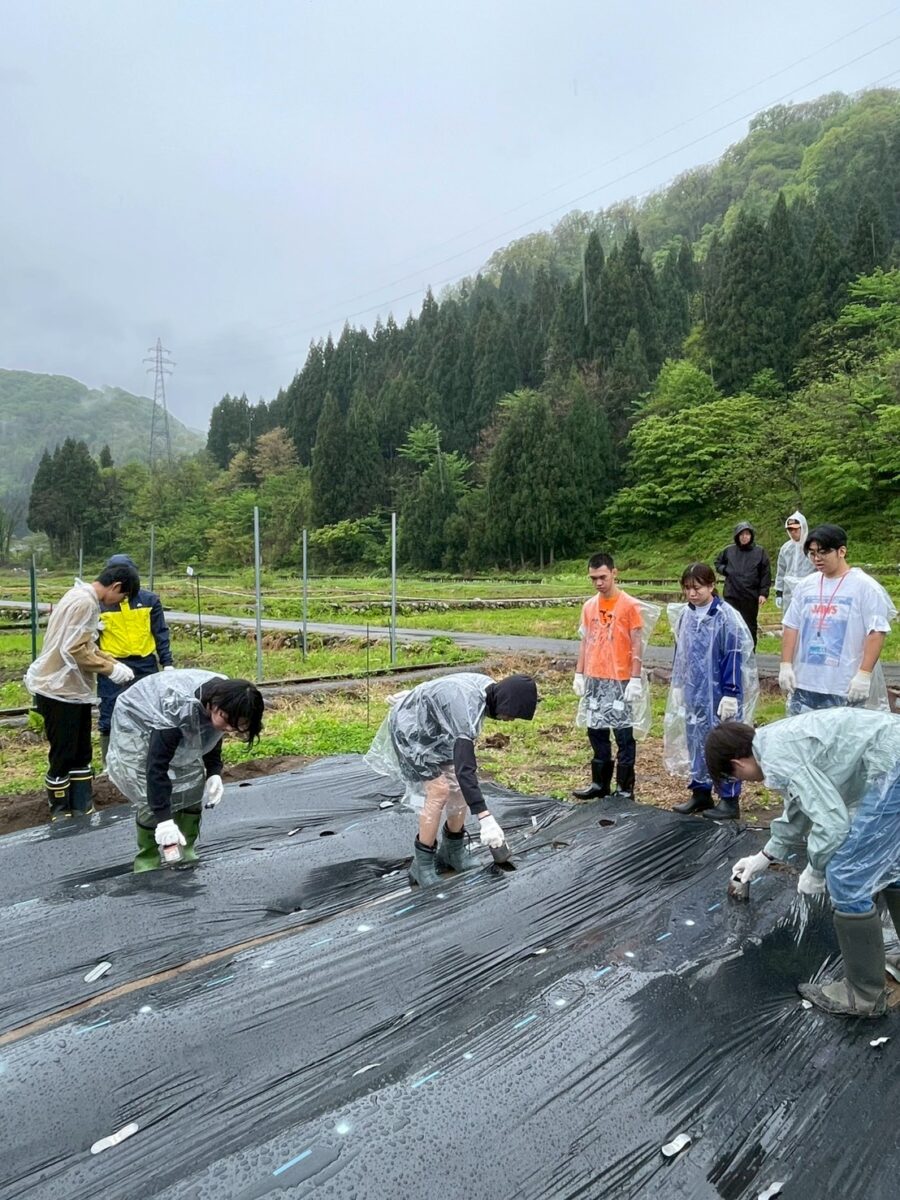
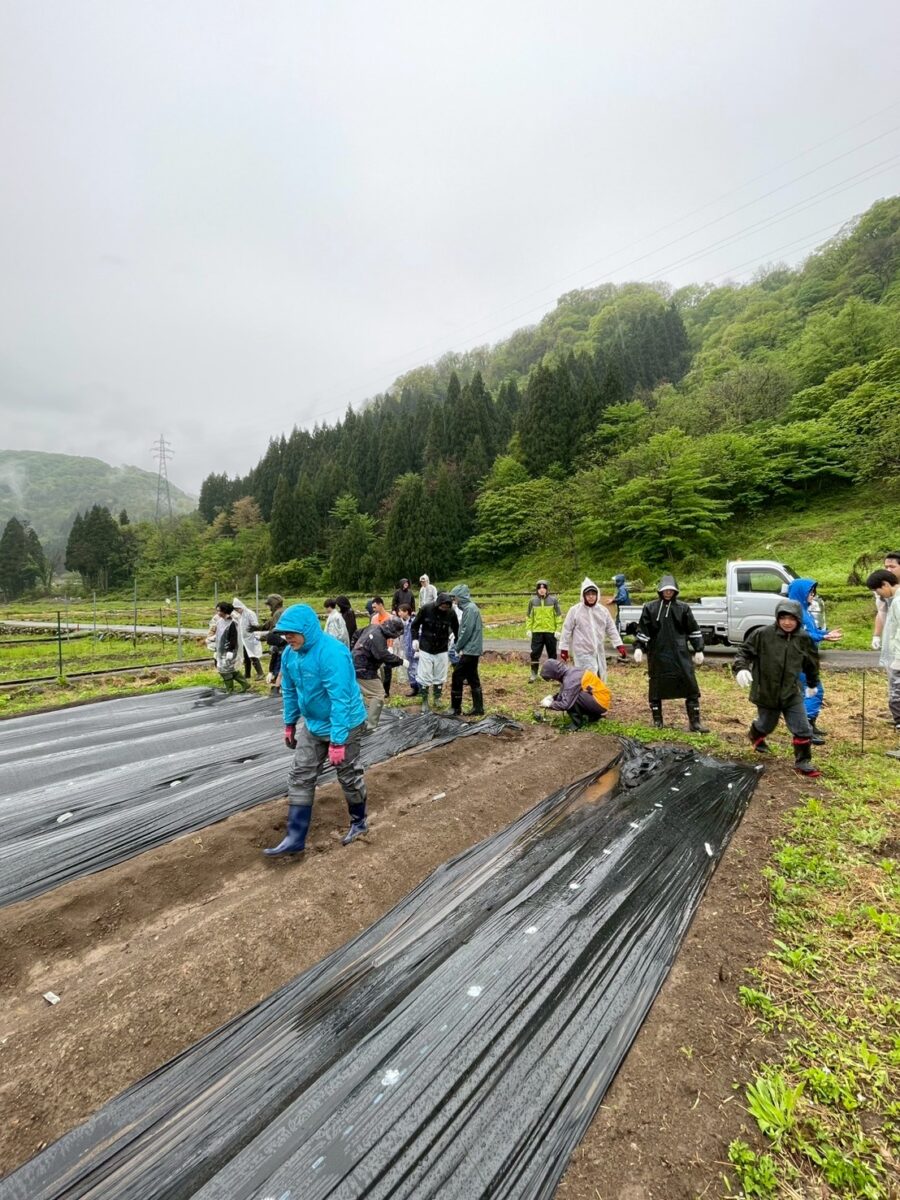
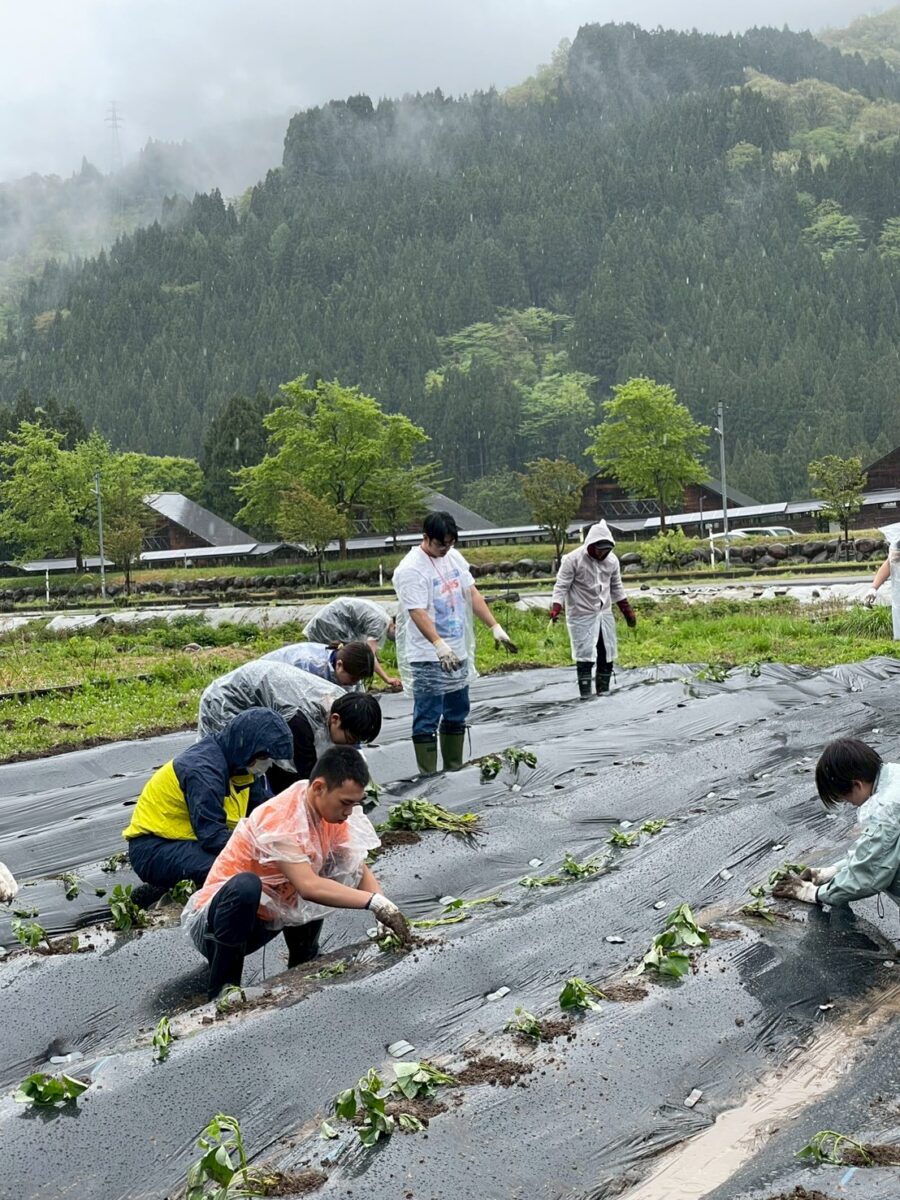
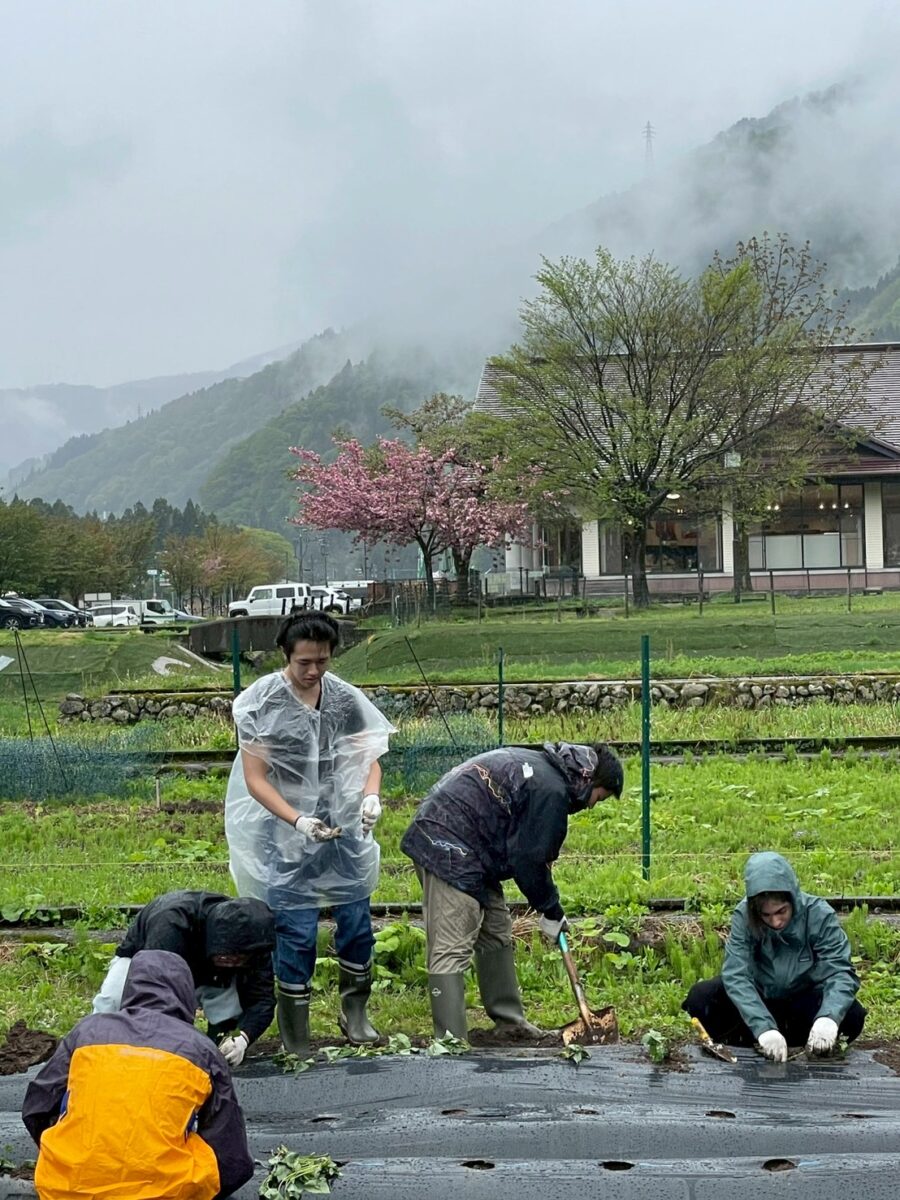
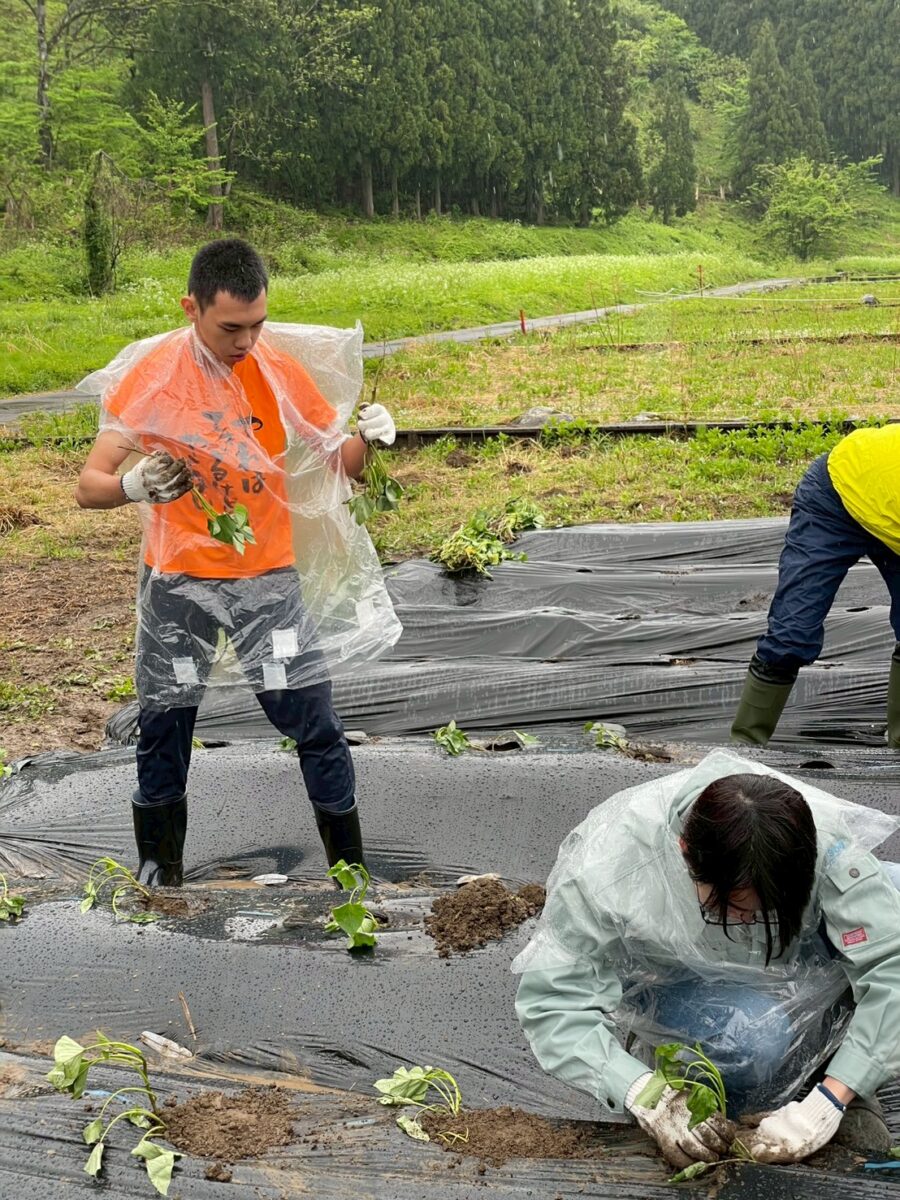
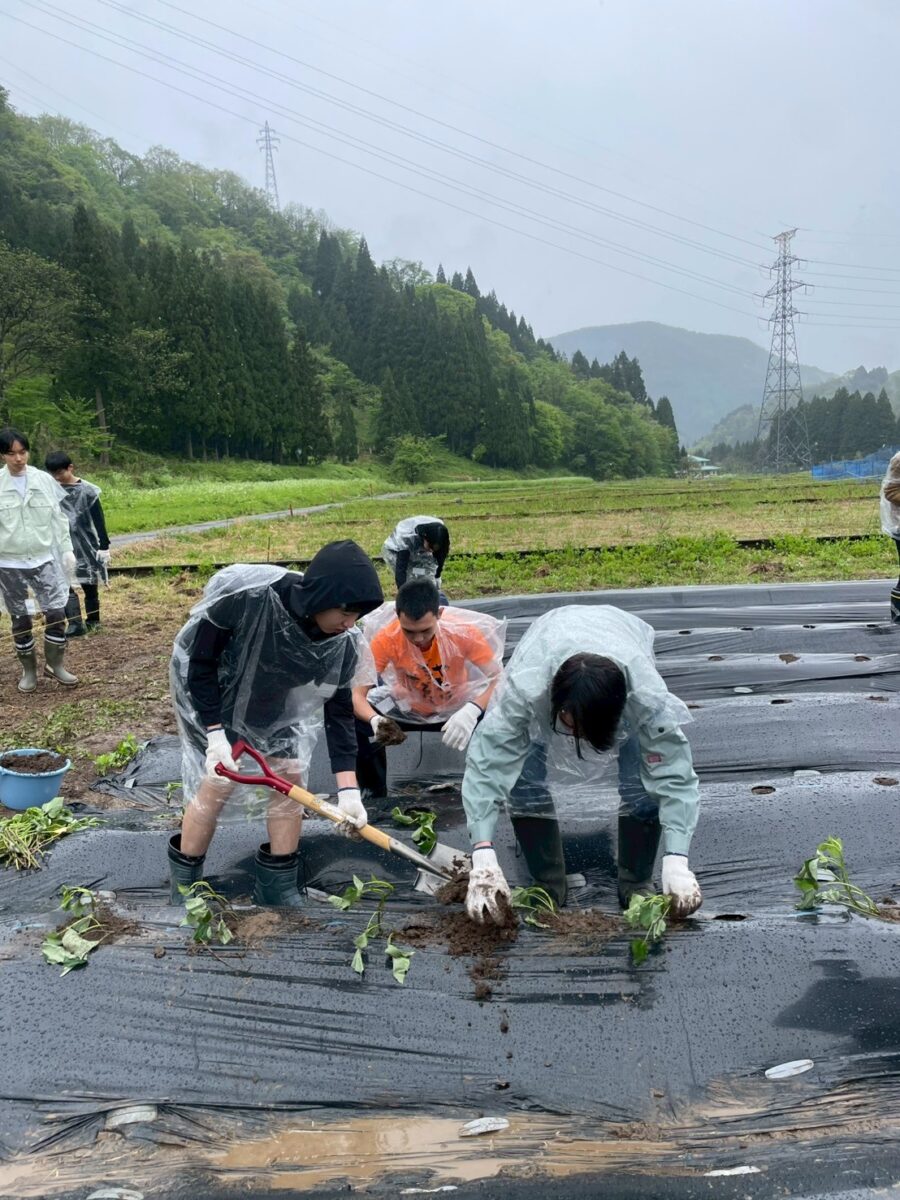
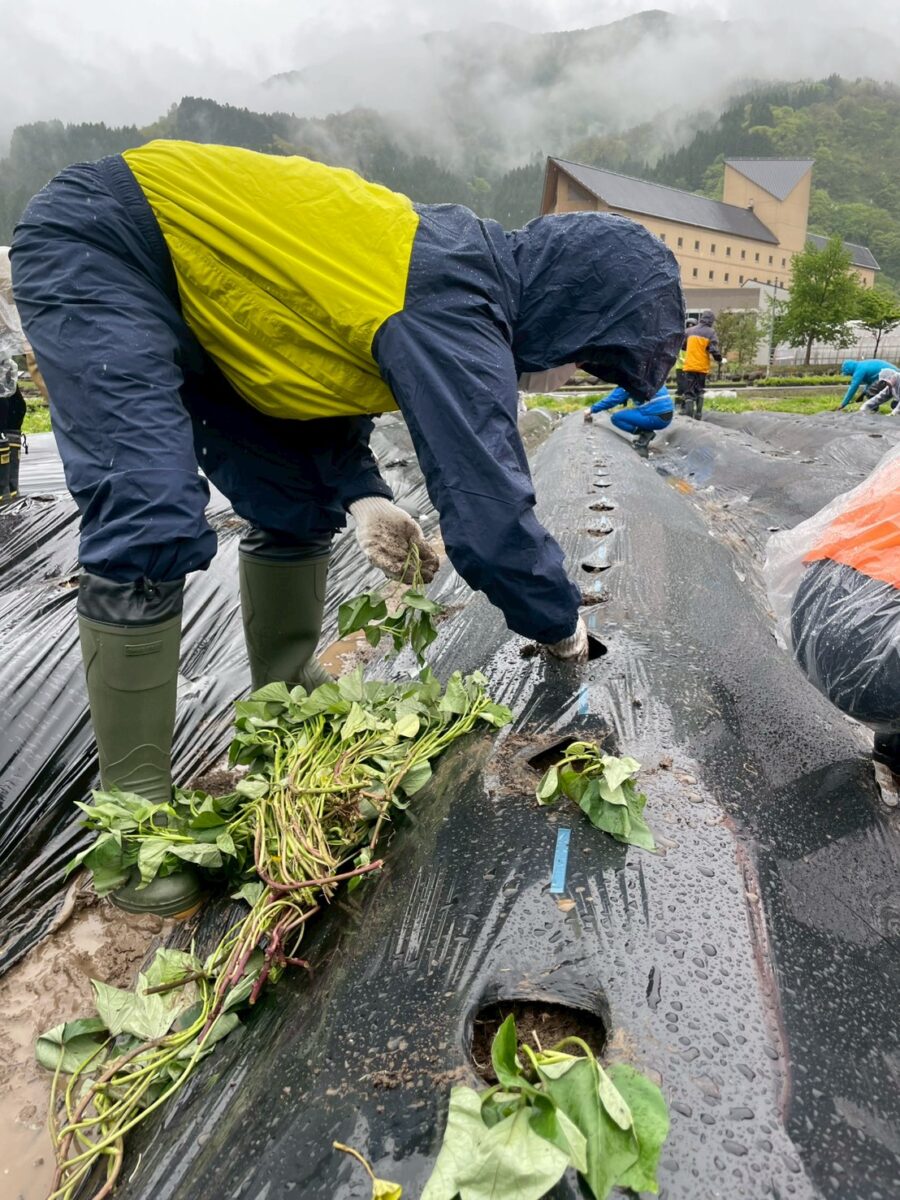
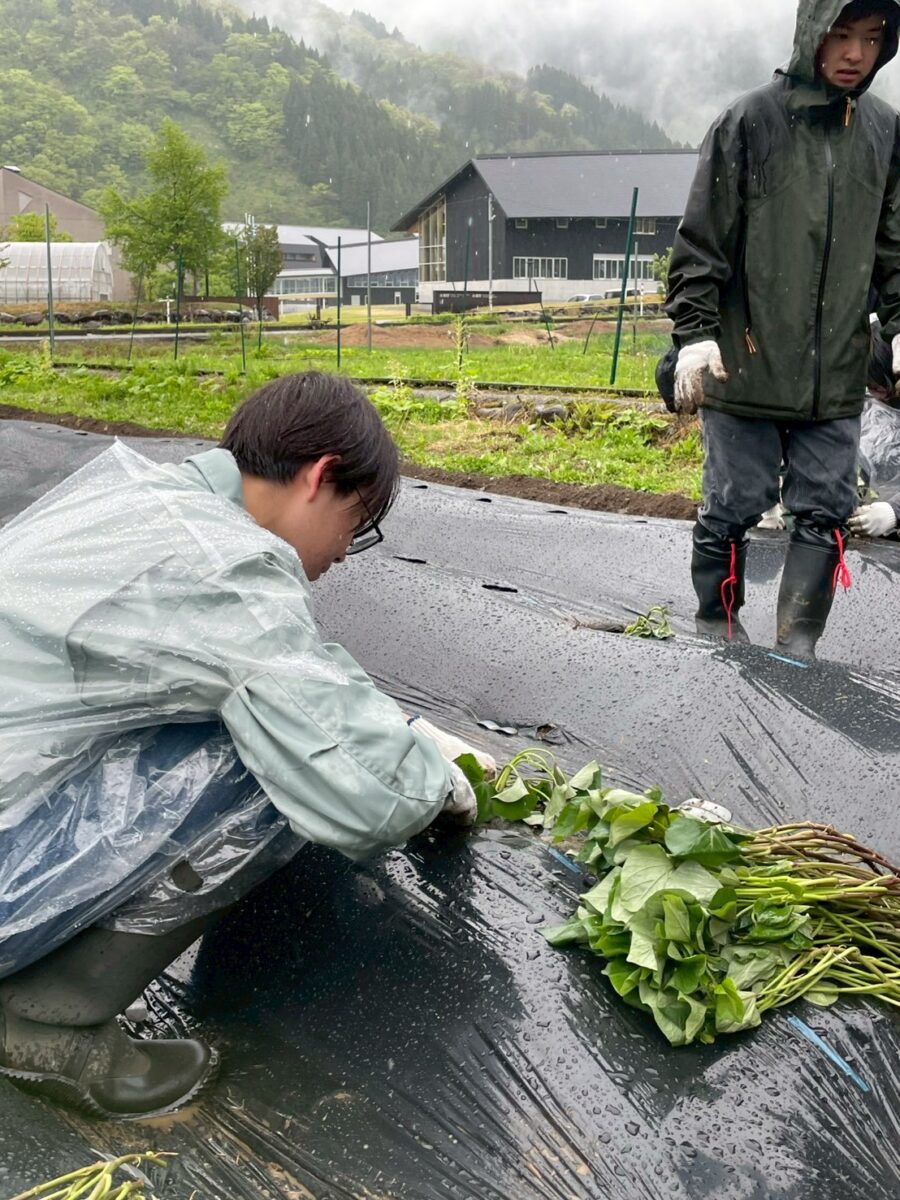
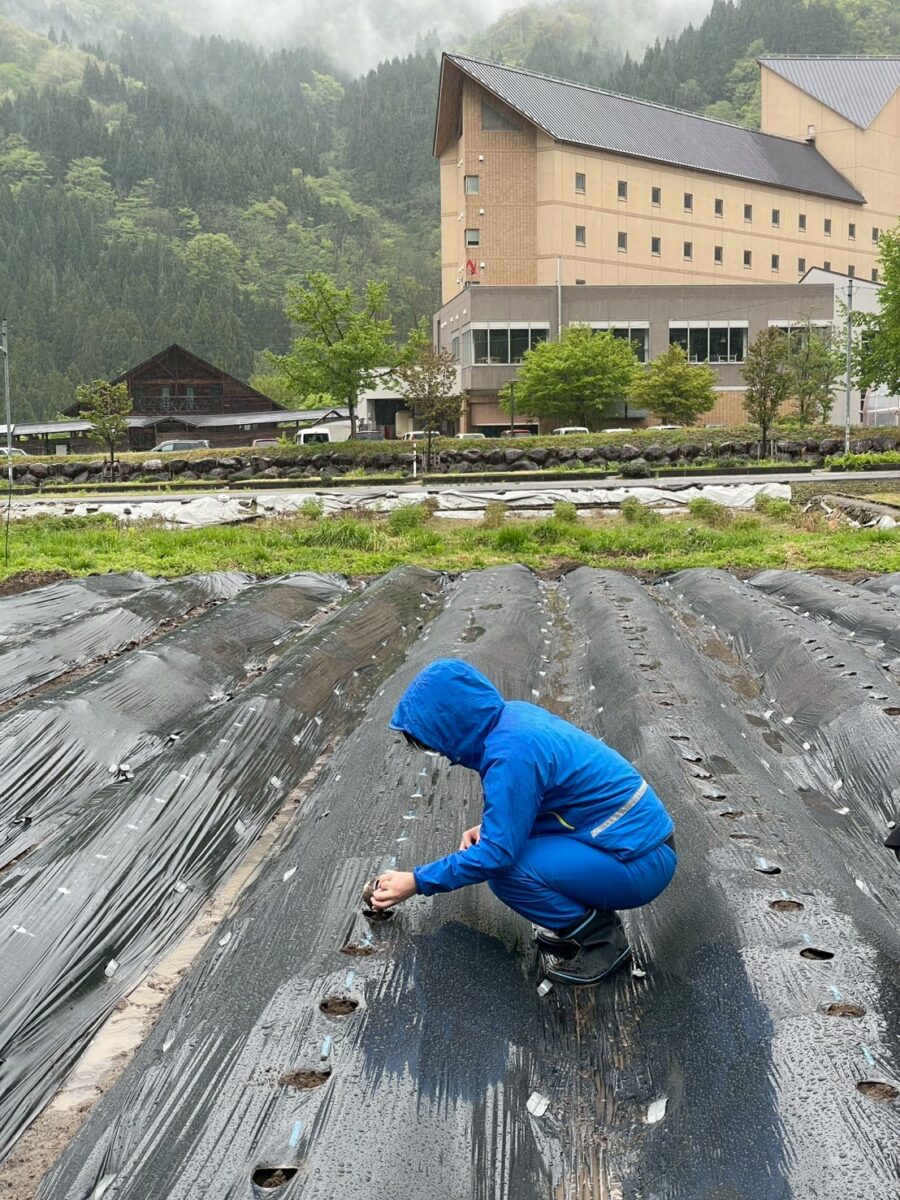
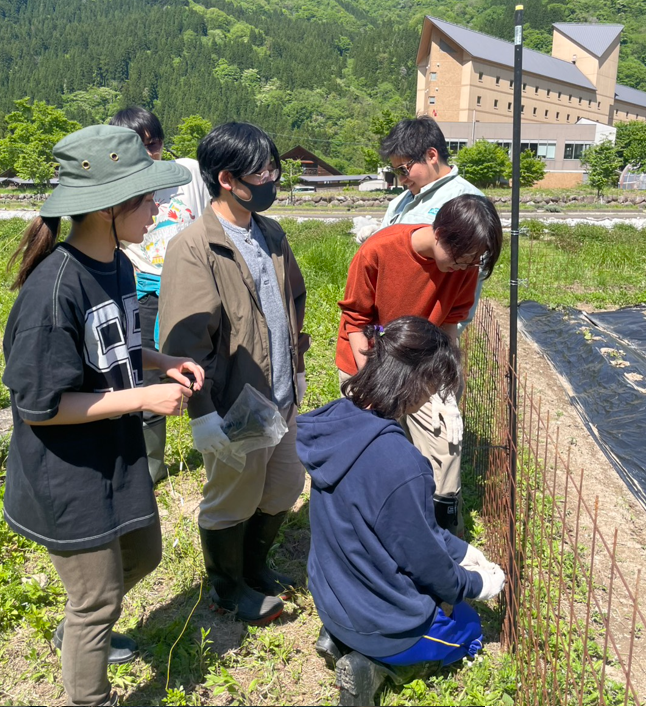
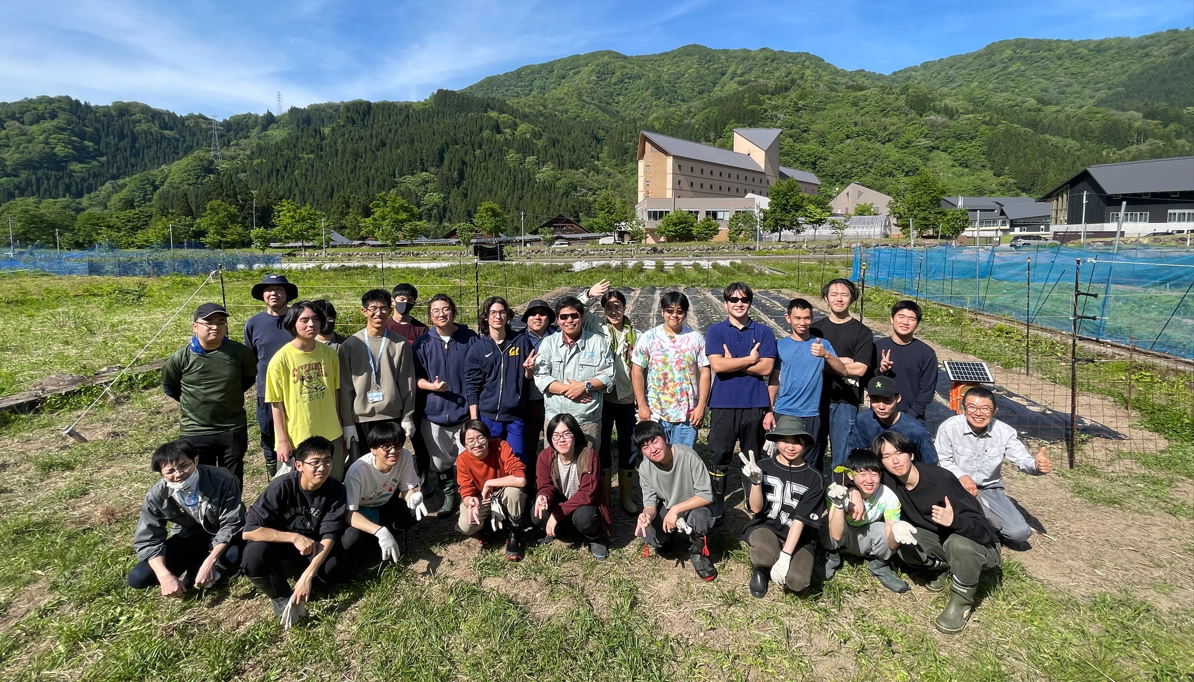
2026年4月23日(木)、今年で4回目の参加となるエンジニアリングデザインⅡ(2年生)「紅はるか」の苗植えをお手伝いしました。これまでの3回はいずれも晴天でしたが、今年はあいにくの雨となってしまいました。
また、嬉しいことに2年生の人数が多いことから、小高先生から「一人当たり10本から15本程度の植え付けでお願いします」と一人当たりの本数制限のお話がありました。初めての年(3年前)は苗床1列全部を1人で植えました。今回はあいにくの雨でしたが、人数が多いこともあってスムーズに作業が進み、植え付けは50分程度で終わりました。
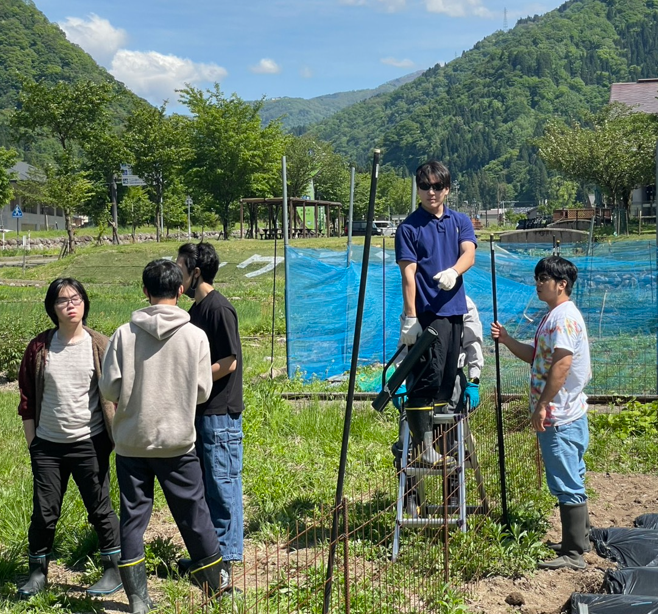
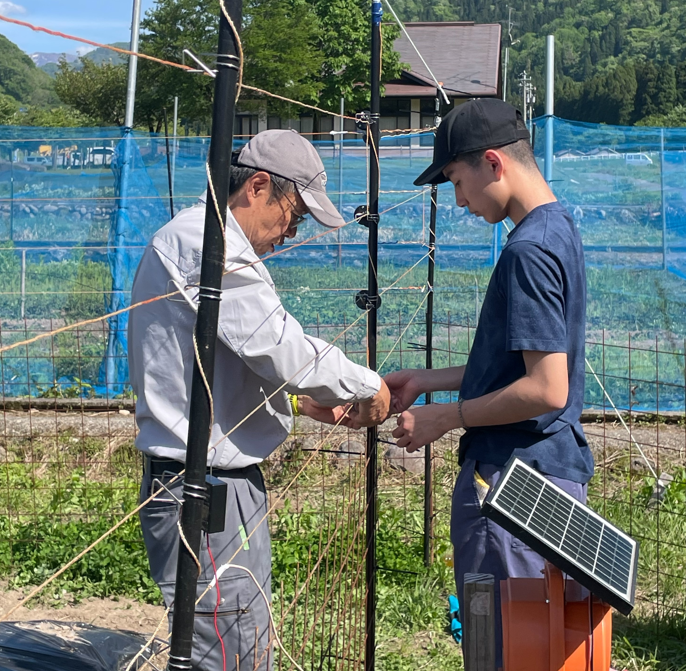
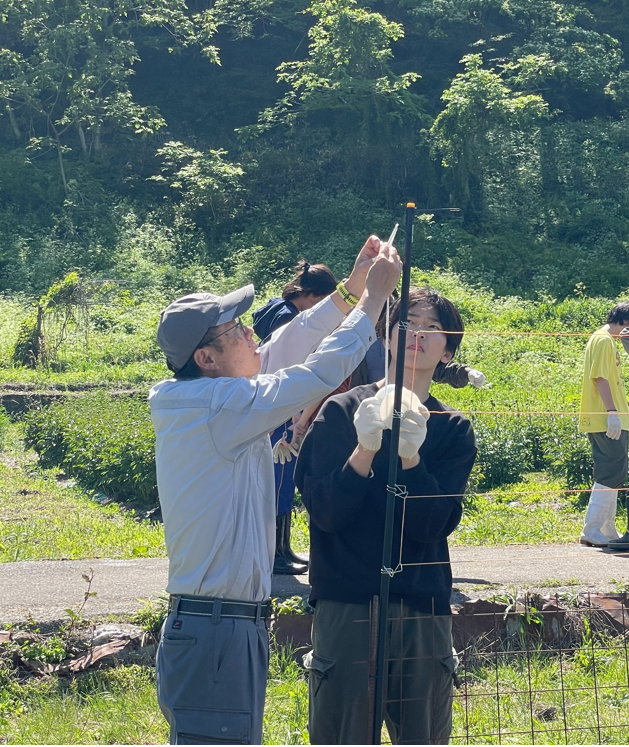
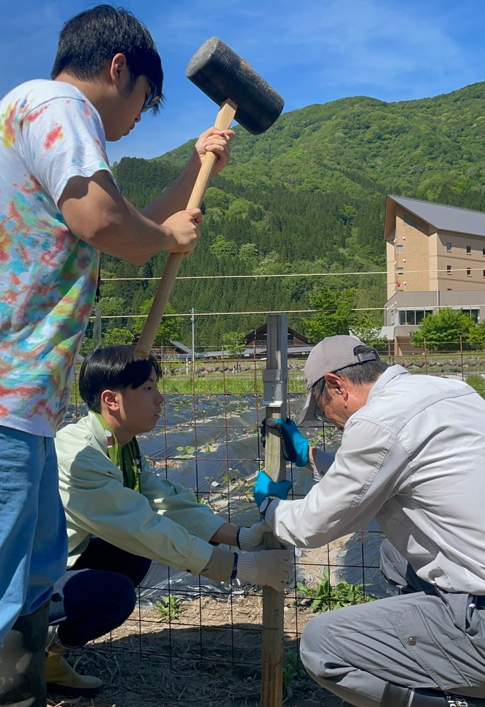
私は苗付けが終わったところで引き上げましたが、電気柵の設置も順調に進んでいるように見えました。晴れの場合には苗植え直後に散水する必要がありましたが、今年は自然の散水がありましたので、その分も時間の節約になったようです。今年も順調に育ってくれることを期待しています。秋の収穫も参加したいと思っています。
恒例ですが、11月7日(土)、8日(日)に白山麓キャンパスでオープンキャンパスを開催します。これに合わせて焼き芋販売が「道の駅瀬女」で行われる予定です。お時間があれば、ぜひ「道の駅瀬女」まで足を伸ばしてみてください。
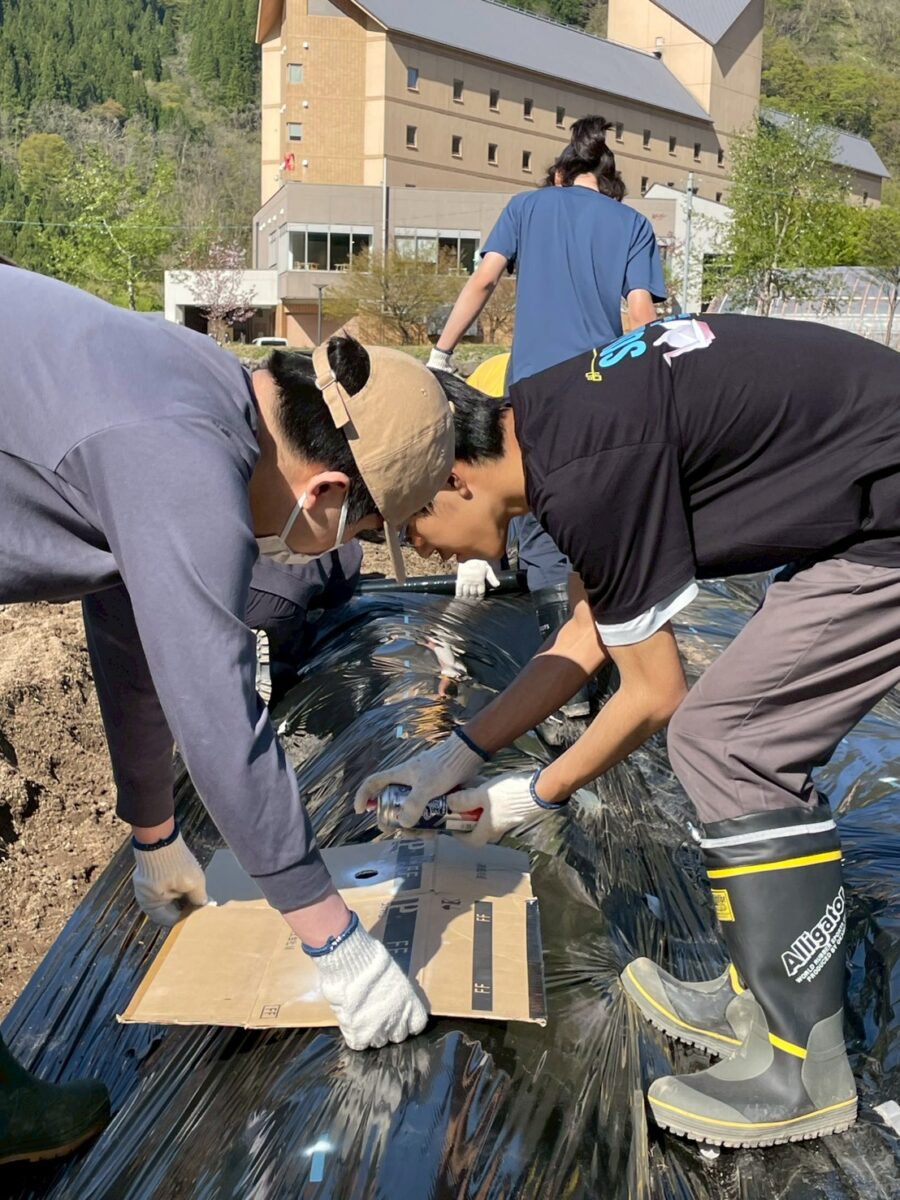
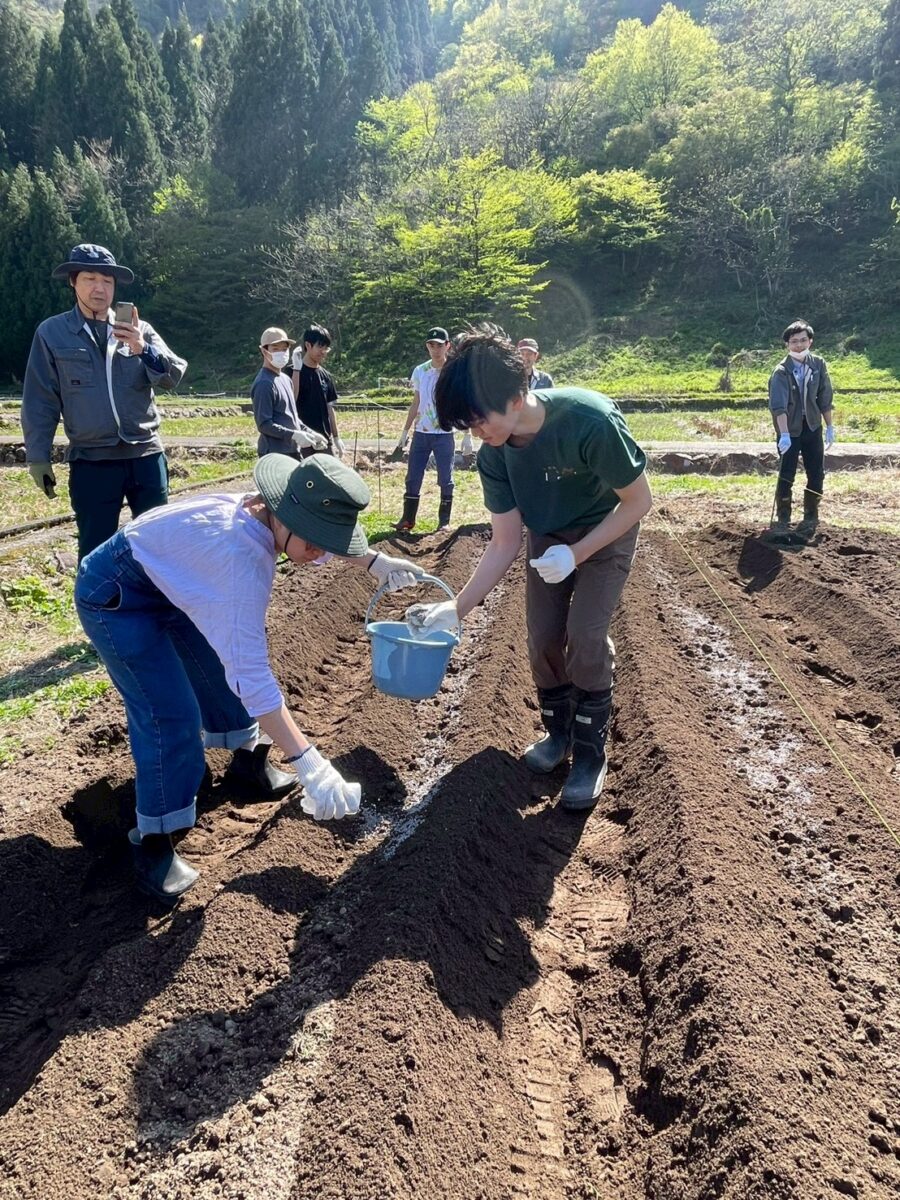
2026年4月16日(木)土作りや畝作り
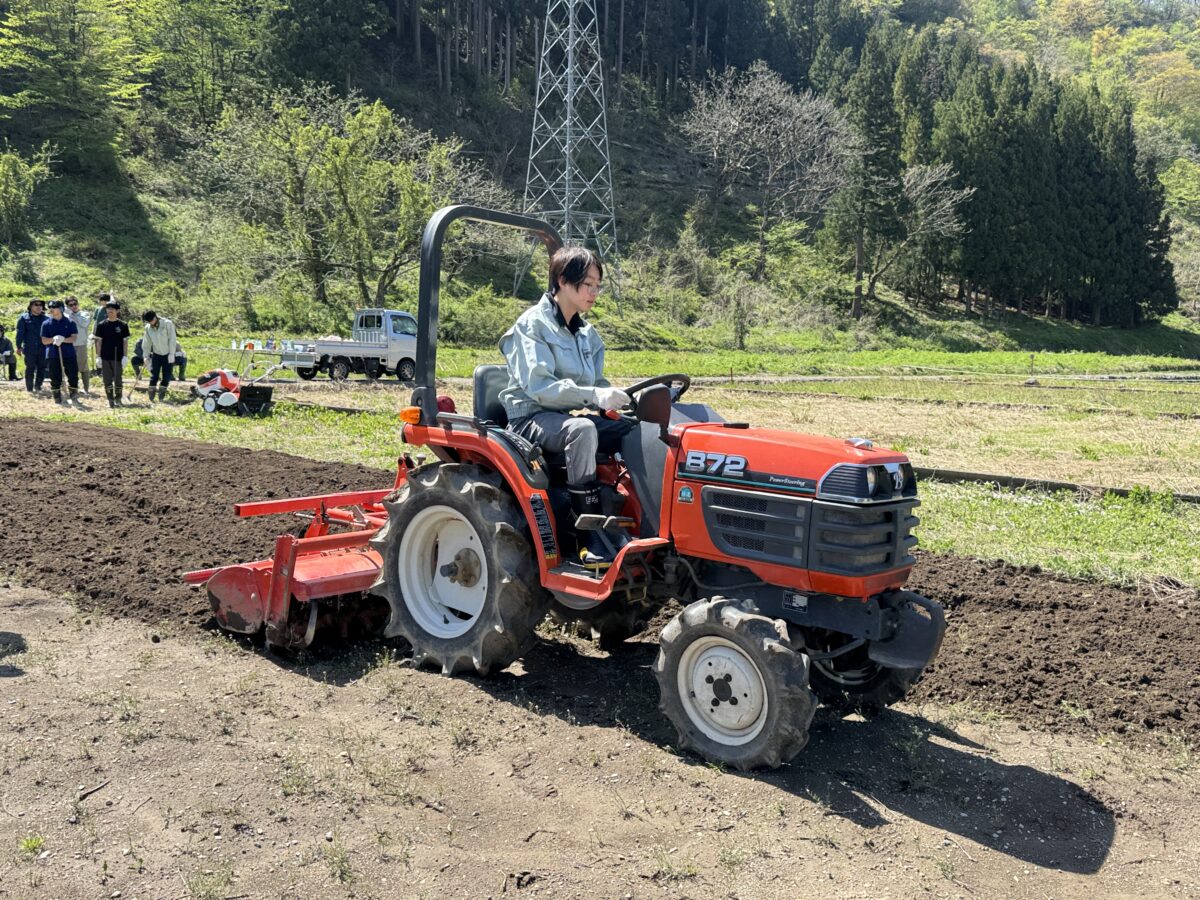
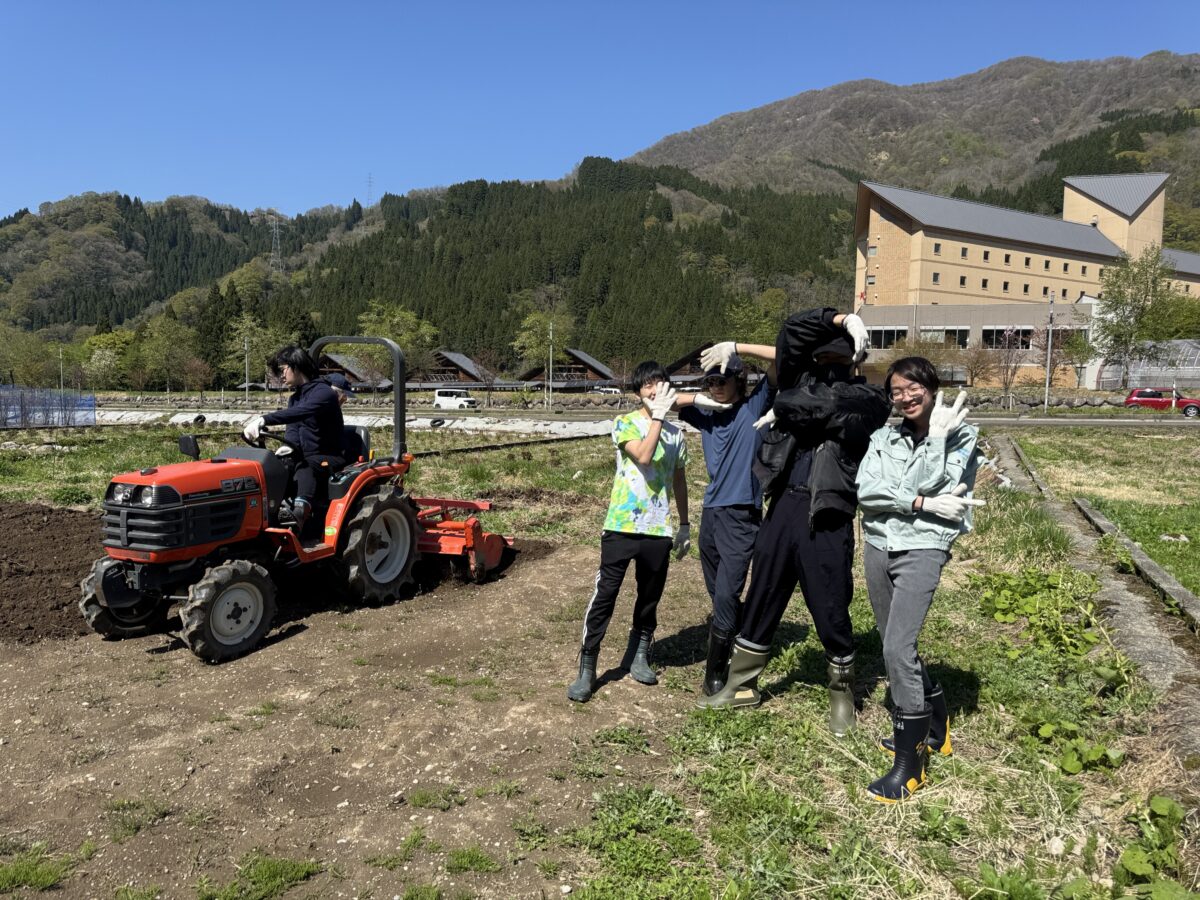
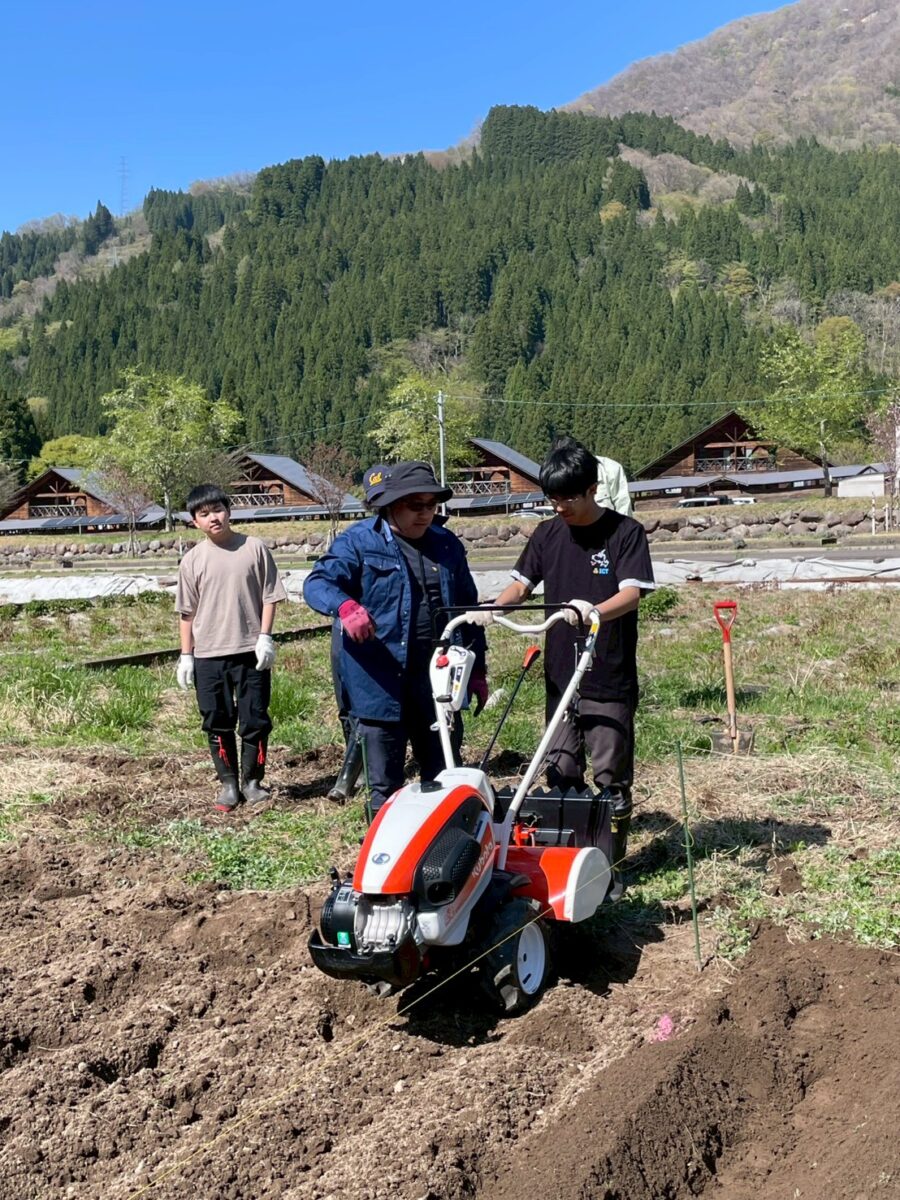
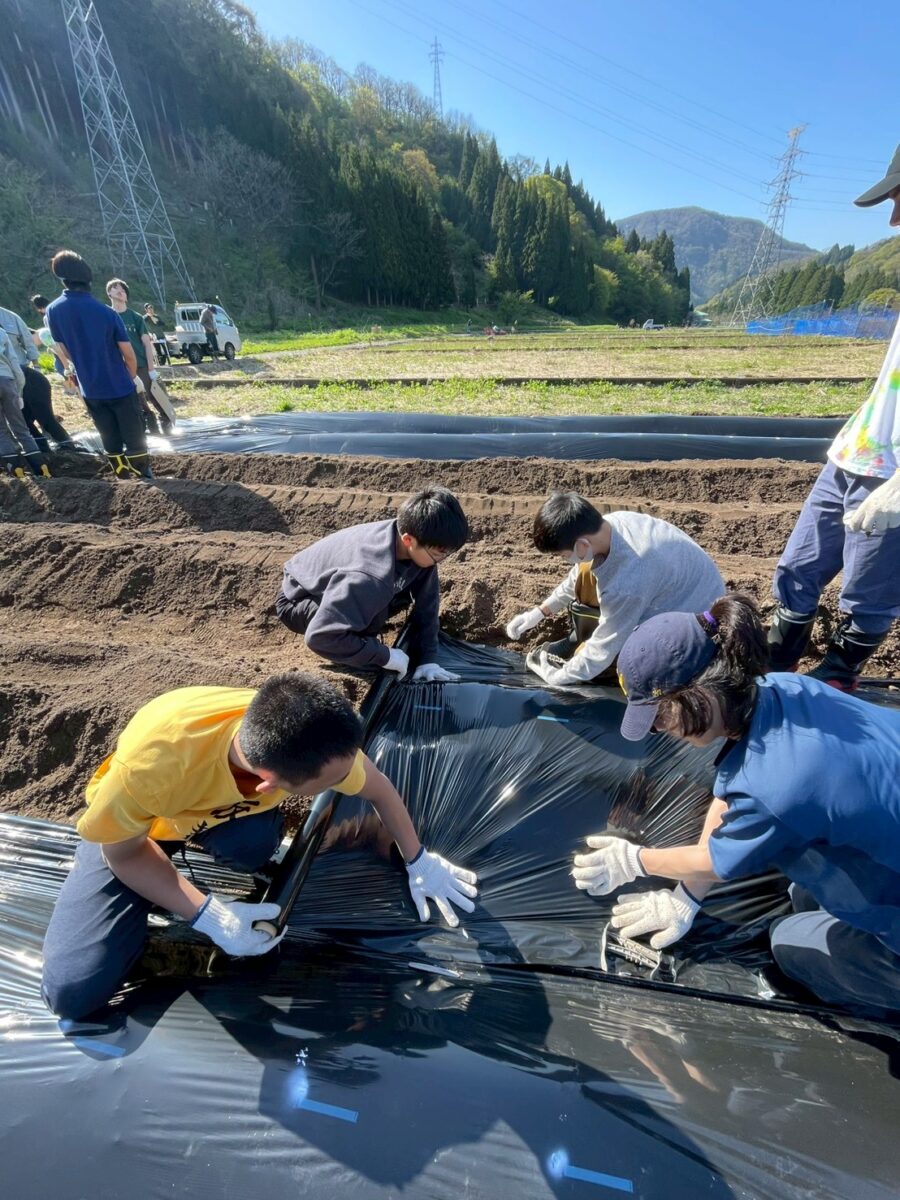
2026年4月23日(木) 「紅はるか」苗の作付け土作りや畝作り
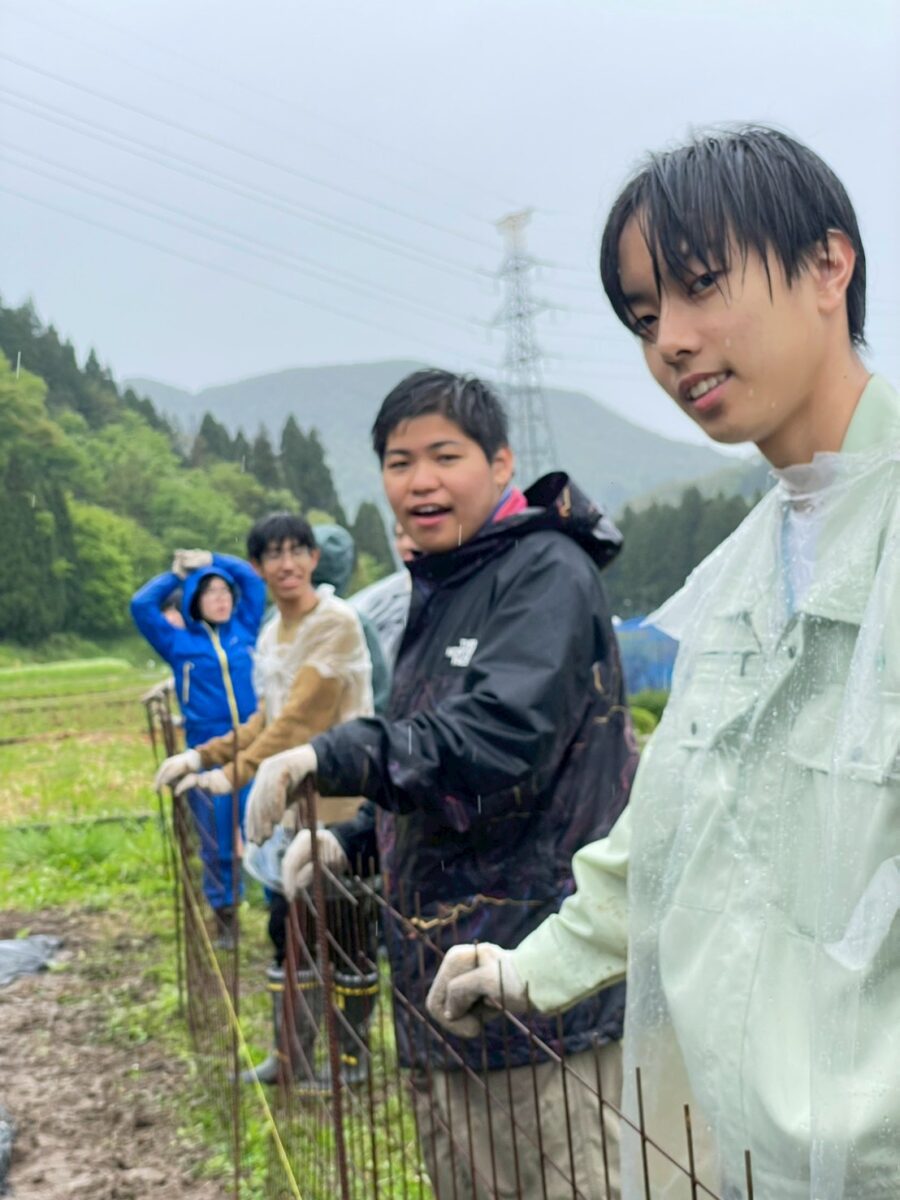
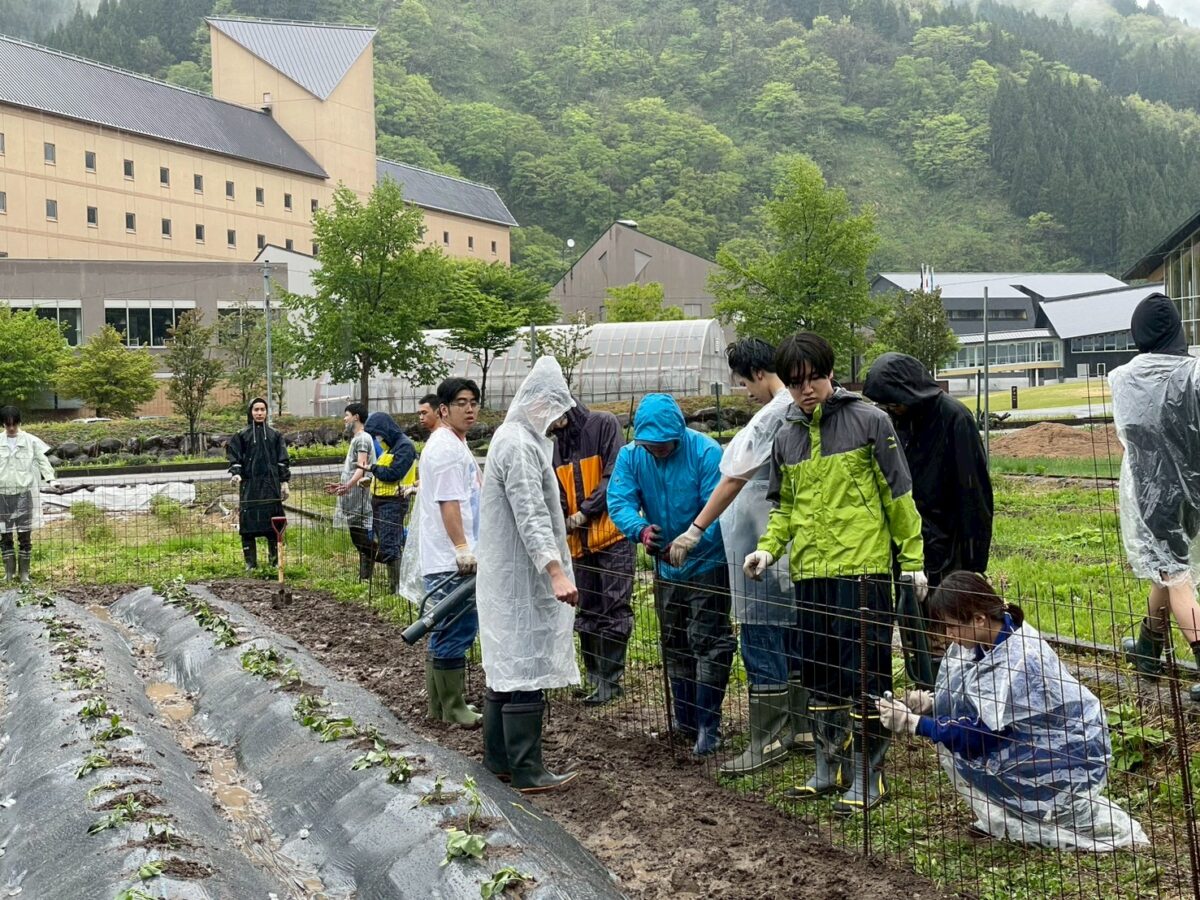
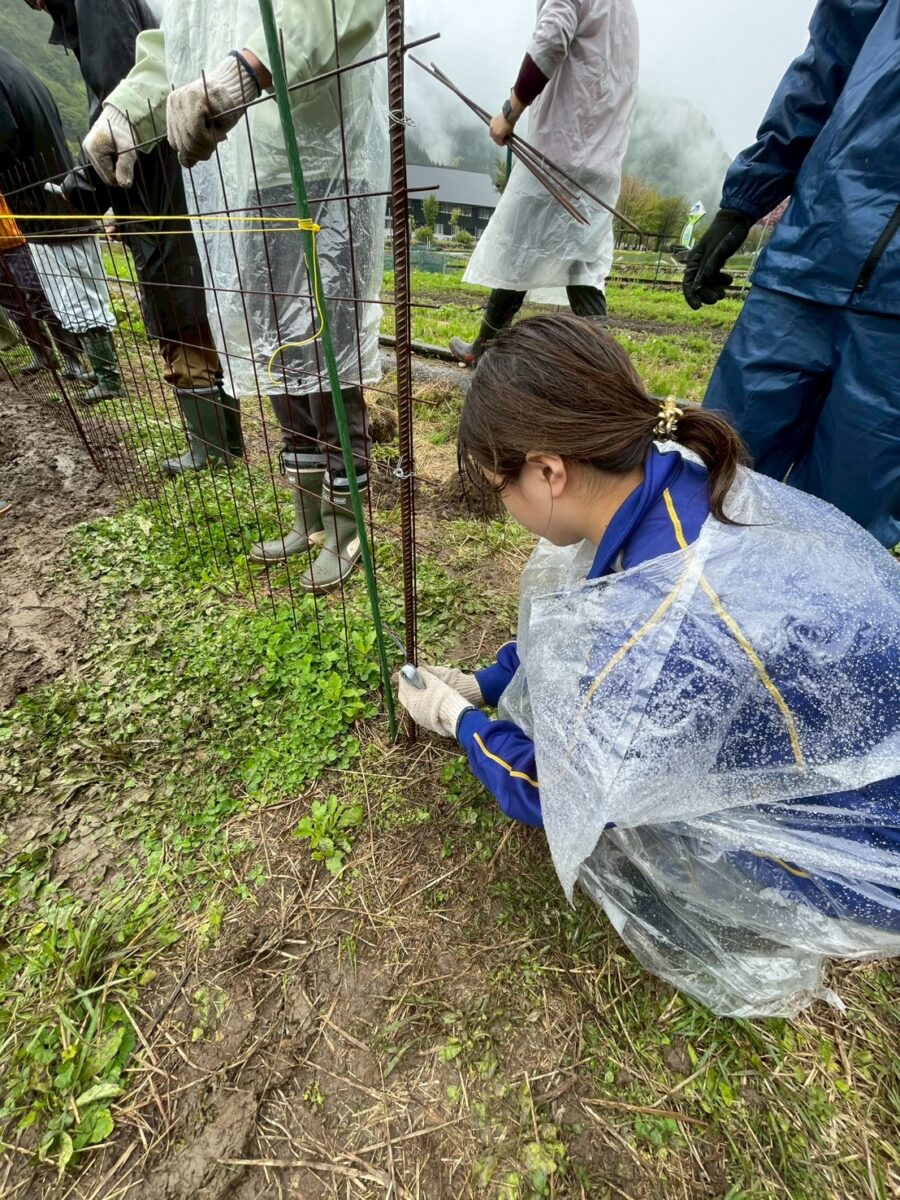
2026年5月7日(木)畑の周りに猿の侵入を防ぐための電気柵を設置
鹿田 正昭
Hello. I am Masaaki Shikada, ICT President.
On Thursday, April 23rd, 2026, I helped with the planting of Beni Haruka sweet potato seedlings as part of Engineering Design II (2nd year students), marking my fourth year participating in this activity. While the previous three years were all blessed with fine weather, unfortunately this year we had rain.
I was also pleased to see that, because of the large number of 2nd year students, Kodaka sensei requested that each student plant approximately 10 to 15 seedlings. In the first year (three years ago), one person planted an entire row of the nursery bed alone. Although we had rain this time, the work progressed smoothly thanks to the larger number of students, and the planting was completed in about 50 minutes.
I left shortly after the seedling planting was finished, but the installation of the electric fence also appeared to be proceeding without any problems. In sunny weather, watering is necessary immediately after planting; however, this year the rain provided natural watering, which seemed to save time as well. I hope, once again this year, that the seedings will grow well. I would also like to take part in the harvest in autumn.
As is customary, an Open Campus will be held at the Hakusanroku Campus on Saturday, November 7th, and Sunday, November 8th. To coincide with this event, roasted sweet potatoes are scheduled to be sold at the Sena Roadside Station. If you have time, please consider stopping by the Sena Roadside Station on either of those days.
Thursday, April 16th, 2026
Soil preparation and digging rows for planting.
Thursday, April 23rd, 2026
Planting Beinharuka soil and ridges for planting Beniharuka seedlings.
Thursday, May 7th, 2024
Electric fence installed around fields to prevent monkeys from entering.
Masaaki Shikada
 こんにちは。白山麓キャンパスで英語を教えているジェームス・テイラーです。
2025年12月3日(水)に尾口コミュニティセンターに行き、毎年恒例となっている地元住民のための「イングリッシュカフェ・クリスマスパーティー」を開きました。今回は、尾口地区、吉野谷地区、白峰地区から子供17人と大人5人が参加しました。パーティーが始まる約1時間前に、ちょうどよいタイミングで今シーズン初めての雪が降りました!
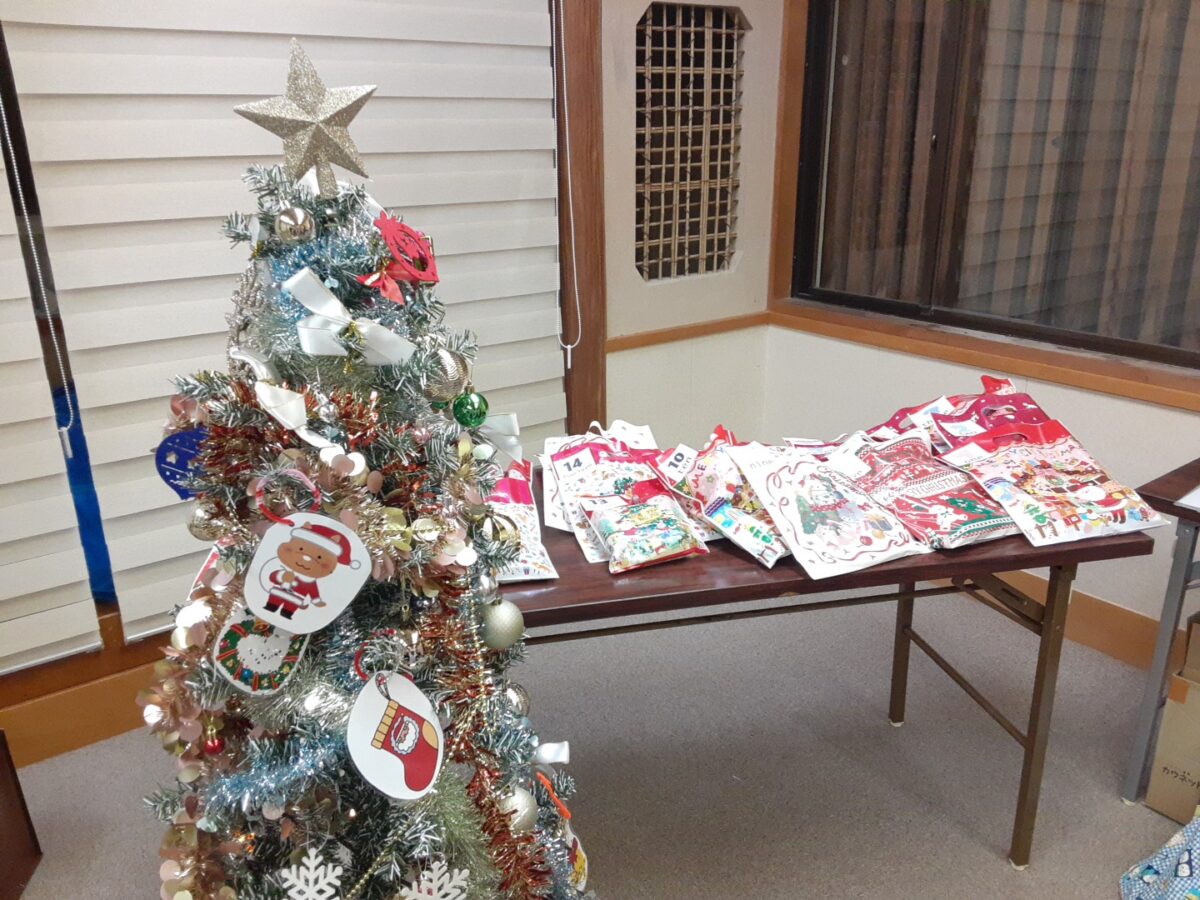
例年通り、まずはクリスマスツリーの飾り付けから始めました。高学年の小学生は低学年よりも少し遅く学校が終わるため、低学年の子どもたちは先にツリーの飾り付けを終わらせ、到着した高学年の友達に見せることができました。
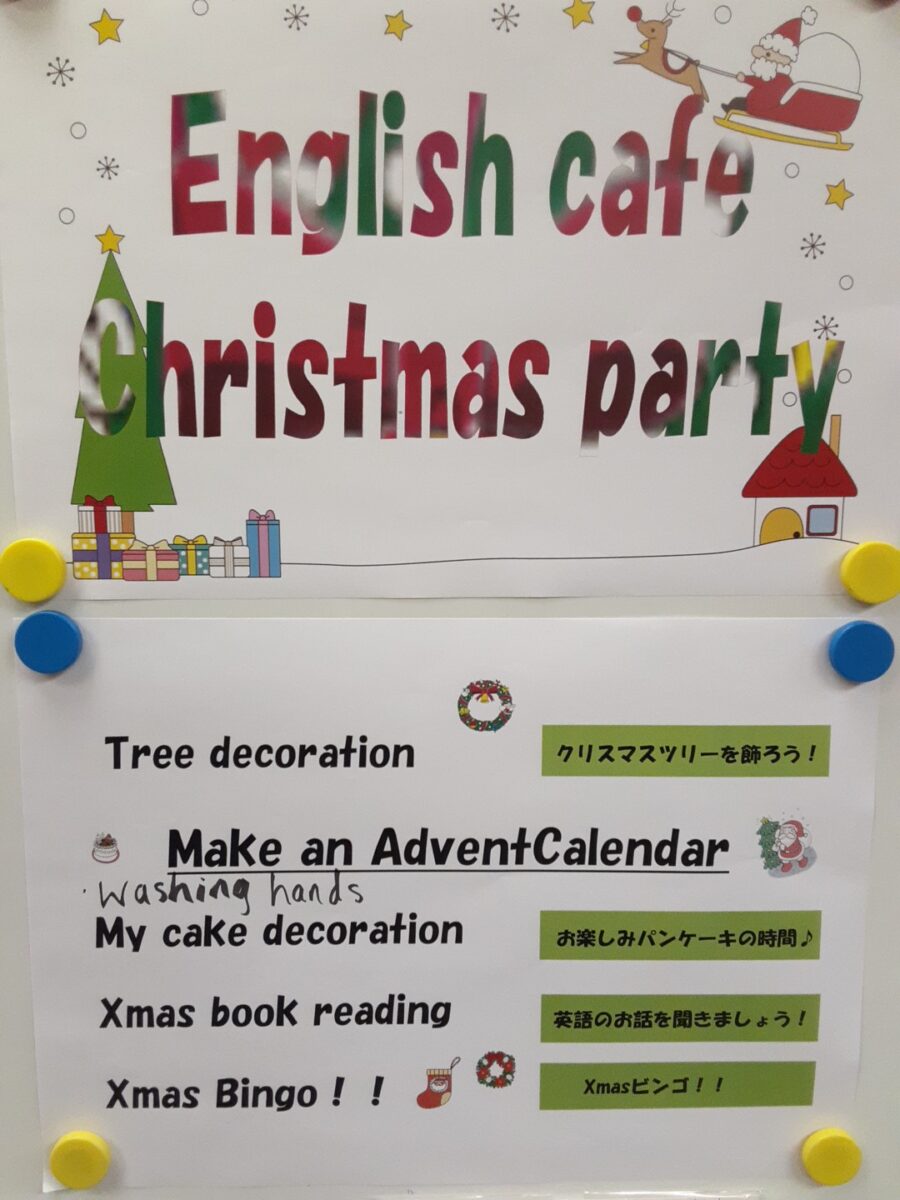
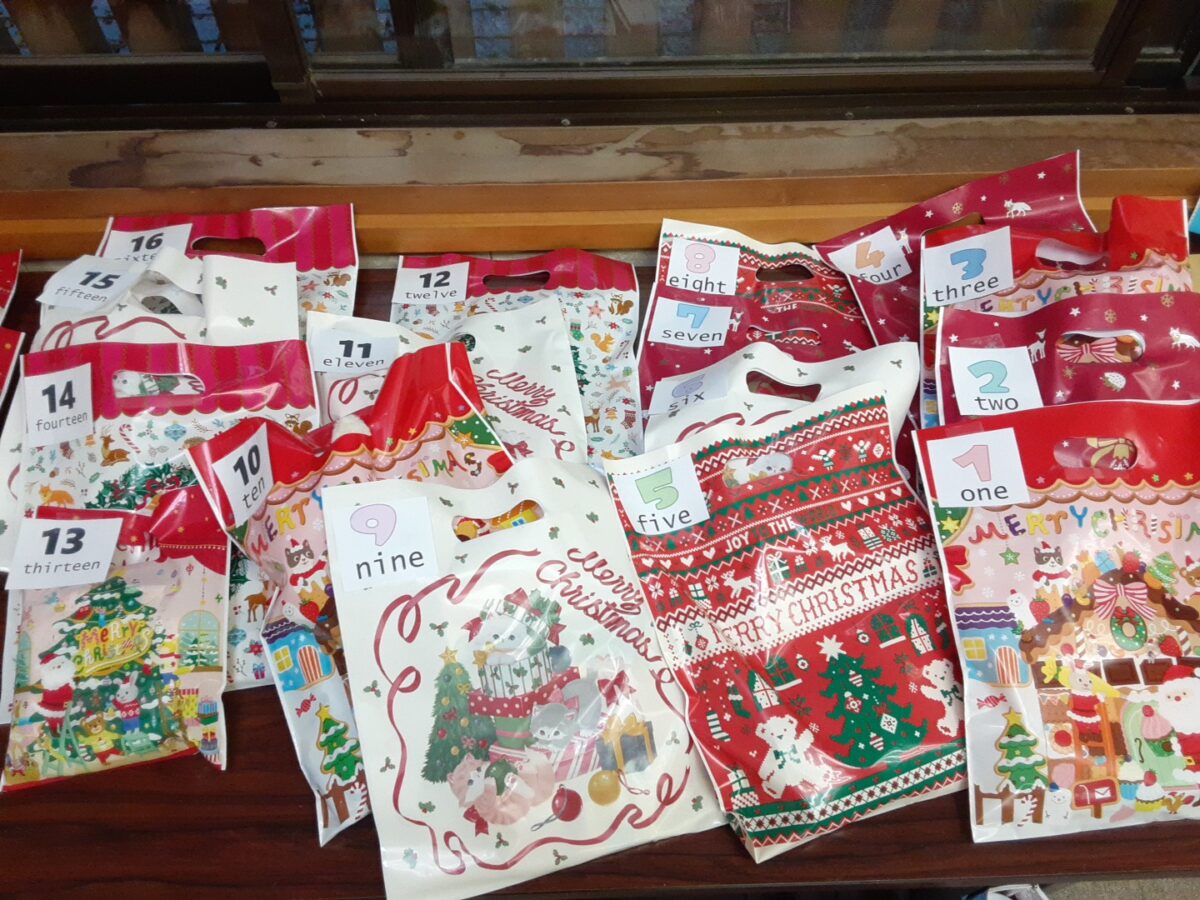
その後、オリジナルの「アドベントカレンダー」を作るアクティビティをしました。アドベントカレンダーとは、24個(または25個)の小さな扉に1個ずつクリスマスらしいチョコレートなどのお菓子が入っているカレンダーで、12月1日からクリスマスイブ(またはクリスマス当日)まで毎日1つずつ扉をあけて中に入っているお菓子を楽しみます。
尾口コミュニティセンターのスタッフさんたちが、イベントのために特別に用意してくださったのは、手作りできるアドベントカレンダーでした。カレンダーの扉に自分の好きなお菓子を入れられるので、子供たちは楽しそうに「どれにしようかな」と悩んでいました。
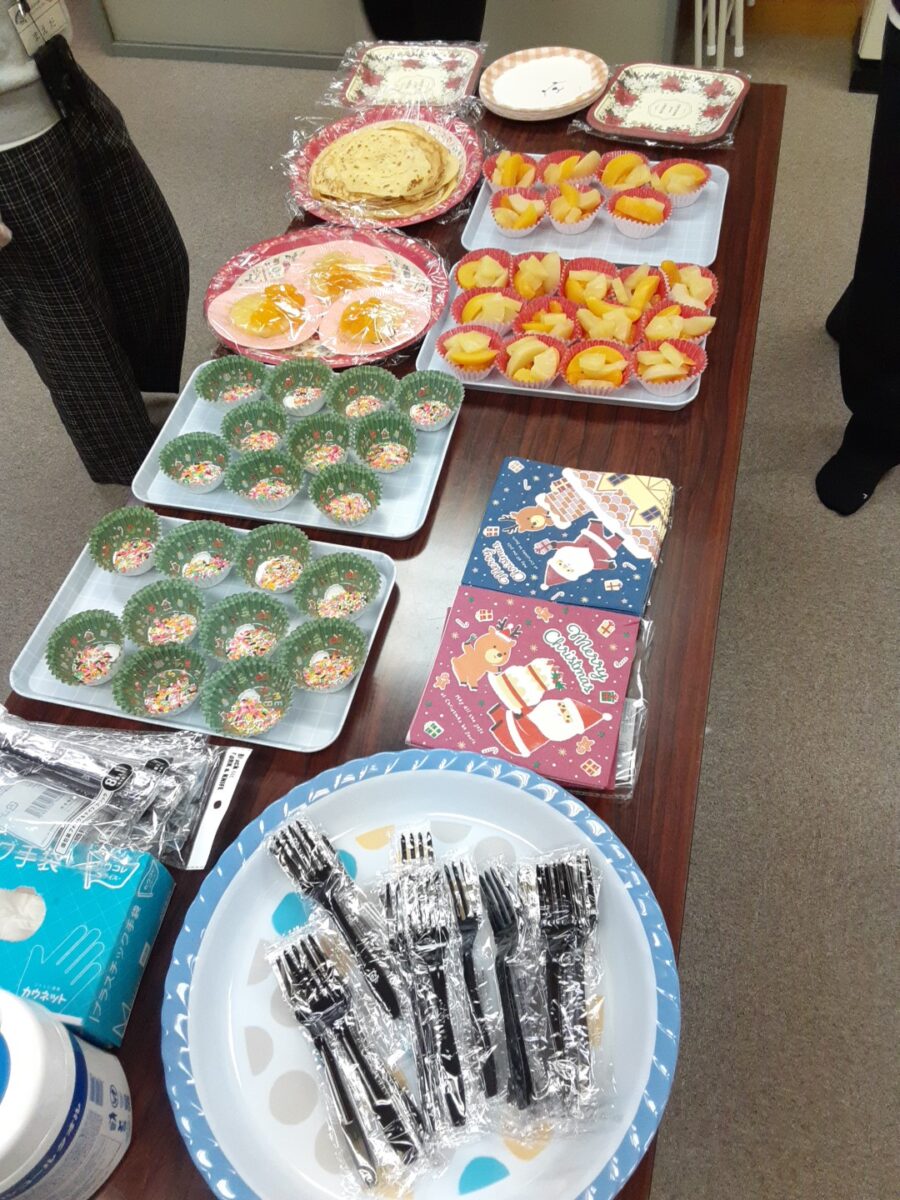
アドベントカレンダーが完成し、手を洗った後は、パンケーキのデコレーションタイムです。尾口コミュニティセンターのスタッフさんたちがイギリスのレシピを使い、数時間かけてクレープのような薄いパンケーキを焼いてくれました。参加者は、準備された色々なトッピングから好きなものを選ぶことができ、完成したパンケーキは、見た目も味もとてもよかったです!
食事中、私が9月に白峰のイングリッシュカフェで子どもたちに読んだ時にとても人気だった絵本「Five Little Monkeys Jumping on the Bed」(アイリーン・クリステロウ著)を読みました。
最後に、クリスマスがテーマのビンゴをしました。子供も大人も全員プレゼントがもらえて大満足そうでした。そしてパーティーが終わる少し前、サンタさんが「メリークリスマス」を言いに来てくれました!
今年も、イングリッシュカフェのクリスマスパーティーは参加者全員が楽しめるイベントとなりました。これは主に、尾口コミュニティセンターのスタッフである山下さんや中田さんの努力と丁寧な準備のおかげです。心から感謝します。次回のイングリッシュカフェが今から楽しみです。
ジェームス・テイラー
Hello everyone. I’m James Taylor, one of the English teachers at ICT’s Hakusanroku Campus.
On Wednesday, December 3rd, 2025, I went to the Oguchi Community Centre to lead the annual English Café Christmas Party for local residents. This time, we had 17 children and 5 adults from the Yoshino, Oguchi, and Shiramine areas. With almost perfect timing, we had our first proper snowfall about an hour before the party began!
Just like every year, we started by decorating the Christmas tree. Since the older primary school children finished school a bit later than the younger ones, the younger children were able to finish decorating the tree in time for their older friends to see it when they arrived.
After that, everyone got the chance to make their own advent calendar. An advent calendar is a calendar with 24 or 25 doors, one for each day from the start of December to Christmas Eve or Christmas Day. Behind each door, there is usually some chocolate shaped like something Christmassy. The children at English Café were able to choose what small snacks or sweets they wanted to put behind the doors of their calendar. The advent calendars were make-it-yourself kits that the Community Centre staff bought especially for the event.
Once everyone had made their advent calendars and washed their hands, it was time to decorate some pancakes. The Community Centre staff used a British recipe and spent several hours making thin pancakes in preparation for the party, so guests were able to choose from a variety of toppings. They looked and tasted really good!
While they were eating, I read a story that was very popular when I read it to children at the Shiramine English Café in September: “Five Little Monkeys Jumping on the Bed” by Eileen Christelow.
Finally, we played Christmas-themed bingo, with prizes for everyone. Just before it was time to go home, Father Christmas came to say “merry Christmas” to everyone!
Once again, the English Café Christmas Party was an enjoyable event for children and adults, thanks mainly to the hard work and careful preparation of the Oguchi Community Centre staff, Mr. Yamashita and Ms. Nakada. I’m already looking forward to the next English Café.
James Taylor
こんにちは。白山麓キャンパスで英語を教えているジェームス・テイラーです。
白山麓キャンパスで暮らし、働くことの素晴らしい点の一つは、周囲に豊な自然があることです。毎日色んな面白い生き物を間近で見られます。例えば、毎年9月下旬に瀬戸地域に現れる蝶のアサギマダラです。
アサギマダラ(英語名:Chestnut tiger butterfly)は面白い蝶です。なぜかというと、毎年とても長い旅をするからです。長い旅の途中で立ち寄る場所の一つが瀬戸で、白山麓キャンパスからほんの数十メートルの場所にやって来ます。
地元の方々は、蝶を呼び寄せるために、使われていない畑にフジバカマを植えています(白山麓キャンパス向かいの「道の駅 瀬女」付近)。この場所は「アサギマダラ空の駅・白山」と呼ばれていて、アサギマダラファンクラブ白山は、毎年ここでマーキング調査をしています。2025年9月27日(土)、私は息子と一緒に蝶のマーキング調査体験会に参加しました(主催:アサギマダラファンクラブ白山、尾口コミュニティセンター、白山麓里山活性化協議会)。
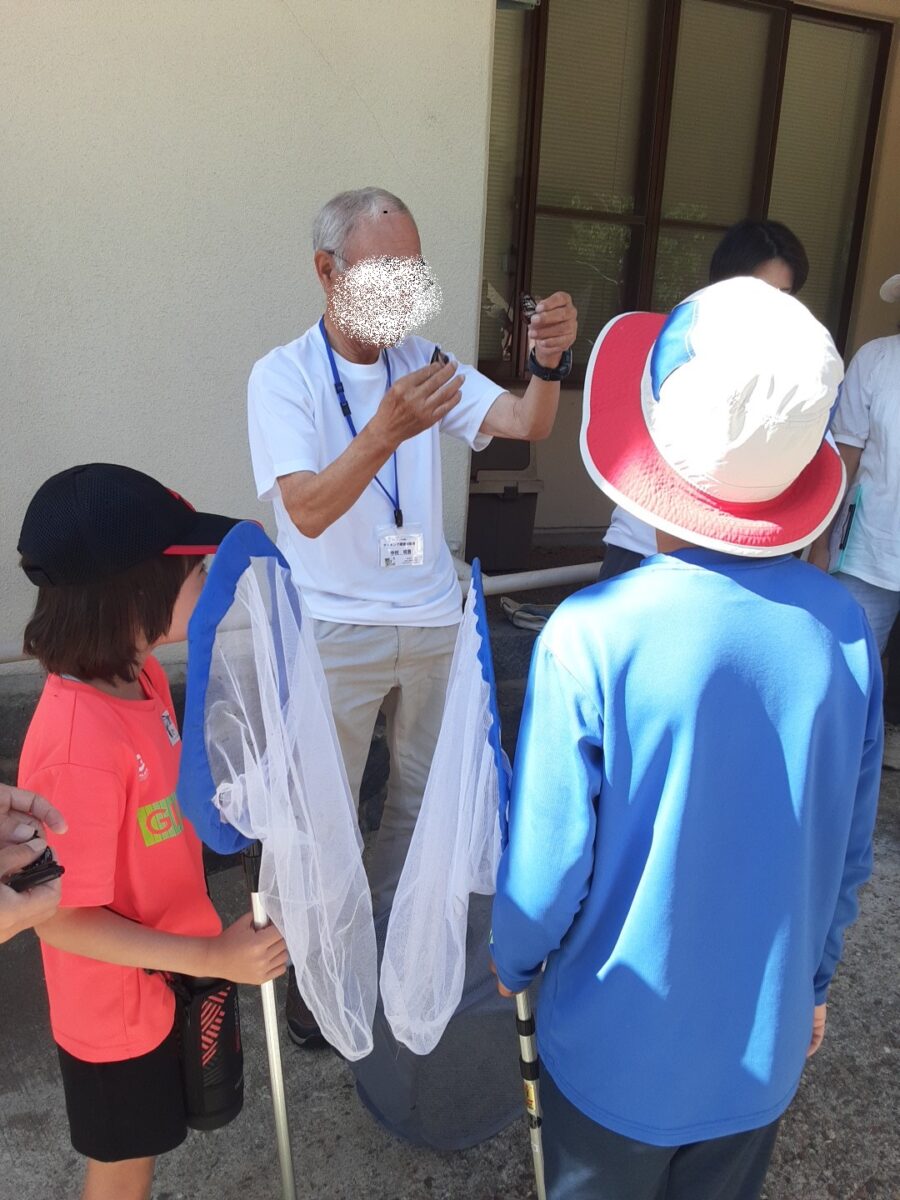
まず、アサギマダラファンクラブ白山の中村 明男さんのお話しを聞きました。中村さんは、蝶のライフサイクルや移動の習性について説明してくれました。また、例として自分で捕まえてマーキングしたアサギマダラを見せてくれた後、マーキングの仕方を説明・実演してくれました。
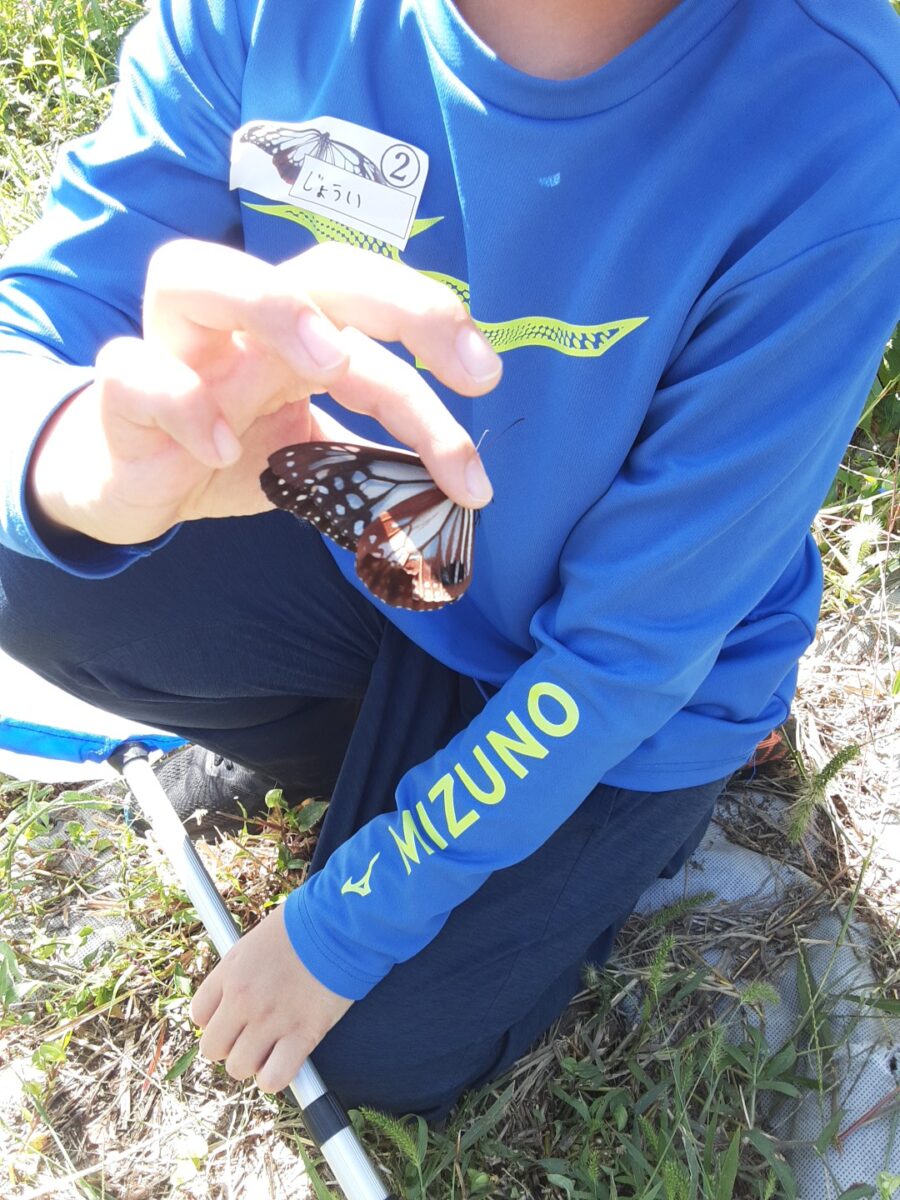
蝶は捕まえられると、死んだふりをするので、羽に文字が書きやすくなります。フェルトペンを使って、捕まえた場所(私たちの場合は「白山」)、日付(9/27)、自分の名前又はイニシャル、そして捕まえた順番を示す番号を羽の白いところに丁寧に書きます。
また、この情報を紙にも記録し、中村さんが他の地域にあるアサギマダラファンクラブとオンラインで共有できるようにします。さらに、私たちがマーキングした蝶を誰かが捕まえた場合に、連絡をもらえるように連絡先も記入します。
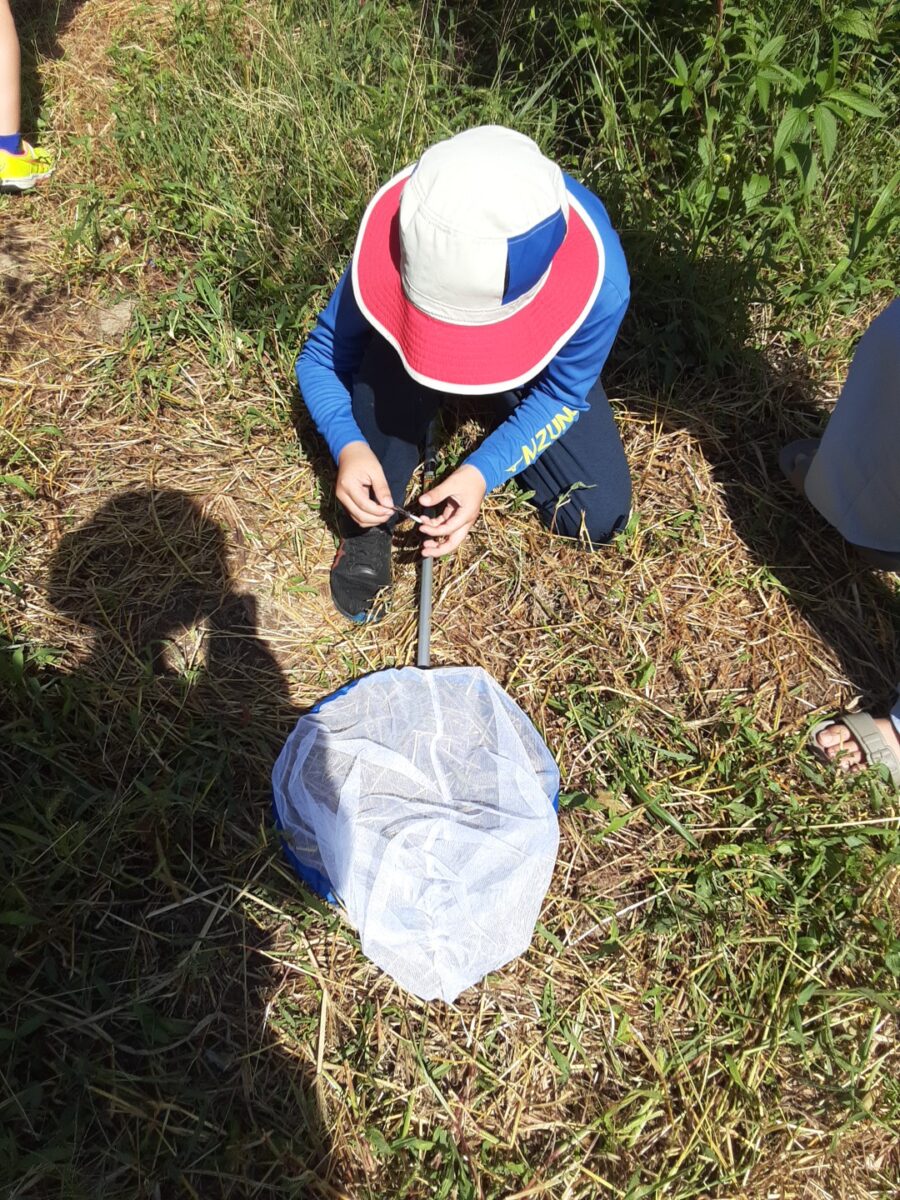
過去には、瀬戸でマーキングされたアサギマダラが、四国、九州、沖縄、さらには台湾でも見つけられたことがあります(瀬戸から台湾までは、2,000キロ以上も離れています!)。天候の変化により、近年は蝶の数が少なかったのですが、息子は3匹捕まえてマーキングすることができました。
その3匹の蝶たちはどこまで飛んでいくのかな。
ジェームス・テイラー
Hello everyone. I’m James Taylor, one of the English teachers at ICT’s Hakusanroku Campus.
One of the best things about living and working at Hakusanroku Campus is the abundance of nature that surrounds us. We get to see a wide variety of interesting creatures up close. An example of this is the Chestnut tiger butterflies that appear in the Seto area at the end of every September.
Chestnut tiger butterflies are known in Japanese as “Asagimadara”. They are an interesting type of butterfly because they migrate very long distances, and one of the places they stop en route is just a few dozen metres down the road from our school. To encourage the butterflies, local residents and community groups plant Boneset (“Fujibakama” in Japanese) in disused allotments – like those near the Roadside Station Sena opposite ICT -- and call it the “ASAGIMADARA SORANOEKI (Sky Station)・HAKUSAN”. The Asagimadara Fan Club Hakusan conducts a marking survey here every year. On Saturday, September 27th, 2025, my son and I participated in a butterfly marking event organised by the Asagimadara Fan Club, Oguchi Community Centre, and the Hakusanroku Satoyama Revitalisation Council.
First, we listened to a lecture by Mr. Nakamura of the Asagimadara Fan Club Hakusan, who told us about the butterflies’ life cycle and migratory behaviour. Mr. Nakamura showed us examples of Chestnut tiger butterflies that he’d caught and marked, then gave an explanation and demonstration of how to mark them. Once they’ve been caught, the butterflies play dead, so it’s easy to write on the white part of their wings. Using a felt tip pen, you have to carefully write the location (Hakusan or 白山 for us), the date (9/27), then our name or initials and a number to denote the order in which we caught and marked the butterfly. We also had to write all this information on a paper so that Mr. Nakamura could enter it online and share it with other Asagimadara Fan Clubs in other regions of Japan. We also had to write our contact details, so that if someone catches a butterfly we’ve marked, we can be contacted and told where it got to.
In previous years, Chestnut tiger butterflies that have been marked in Seto have later been found in places like Shikoku, Kyushu, Okinawa, and even Taiwan – that’s over 2,000 kilometres from Seto. The changes in the weather have meant that last year and this year there weren’t so many butterflies, but my son managed to catch and mark three.
I wonder how far they’ll travel.
James Taylor
Related Articles on Last Year’s ICT Chestnut Tiger Butterfly Marking Event
こんにちは。校長の鹿田 正昭です。
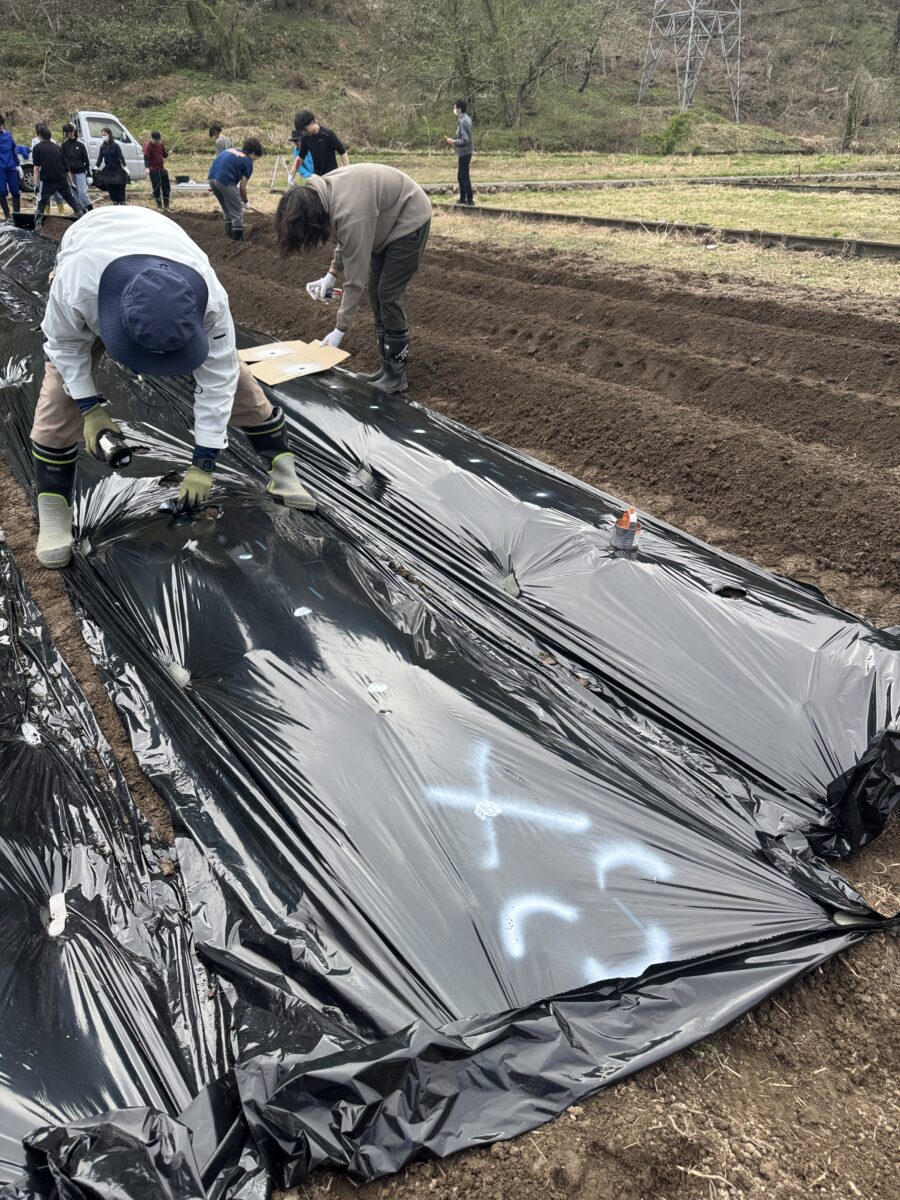
 2025年4月24日(木)、今回で3回目の参加となる、エンジニアリングデザインⅡ(2年生)「紅はるか」の苗植えをお手伝いしました。今回は金沢キャンパスで会議があったため、会議終了後に白山麓キャンパスに移動し、到着した頃にはすでに畝が完成し、植え付けが始まっていました。今年は西側から2列目を半分ほど植えました。今冬は雪が多かったため土がかなり湿っている感じでしたが、この方が作業を進めやすいと感じました。
苗植えは3回目となりましたが、慣れてきたとはいえやはり自分の植えた苗が収穫時にうまく育っているか気になります。一昨年は雨が多かったせいか、あまり大きな芋の収穫はできませんでした。昨年は天候も良く、適度な雨だったため大きな芋が育ちました。今年も昨年同様な出来具合を期待したいと思います。
2年生全員とエンジニアリングデザインⅡ担当の先生方、ラーニングメンターのアブワン兄妹も参加して午後4時前に苗付けを完了しました。そして電気柵の設置や獣害対策が施され、今年も昨年に引き続いての豊作を期待したいと思います。
本校では11月1日(土)、2日(日)にオープンキャンパスを開催します。これに合わせて恒例の焼き芋販売が「道の駅瀬女」で行われる予定です。お時間があれば、ぜひ「道の駅瀬女」まで足を伸ばしてみてください。
オープンキャンパス詳細はこちら




鹿田 正昭
Hello. I am Masaaki Shikada, ICT President.
On Thursday, April 24th, 2025, I helped plant Engineering Design II's "Kosen Beniharuka" seedlings for the third time. This time, I had a meeting at Kanazawa Campus, so I couldn’t travel to Hakusanroku Campus until after the meeting ended. By the time I arrived, the ridges had already been prepared and the planting had begun. This year I planted the second row from the west side. The soil was quite wet this winter due to the heavy snowfall, but I felt this made the work easier.
This is the third time I have planted seedlings, and although I am getting used to it, I still worry about whether the seedlings I planted will grow well. The year before last, the potatoes did not grow very large, probably because it rained a lot. Last year, good weather and moderate rainfall resulted in large potatoes. We expect this year's crop to be as good as last years.
All 2nd year students, Engineering Design II teachers, and Learning Mentors Domyson Abuan sensei and Sharmee Abuan sensei joined us to complete the seedling planting before 16:00. Then electric fences were installed and measures were taken to prevent damage from animals. We hope for another good harvest this year, following on from last year.
Our school will hold an open campus on Saturday, November 1st and Sunday, November 2nd. In conjunction with this event, the annual baked sweet potato sale will be held at the Sena Road Station. If you have time, please visit the Sena Road Station and try some potatoes!
Click here for more details about Open Campus
Masaaki Shikada