




Student
学生
 こんにちは。デザイン&ファブリケーション部顧問の林 道大です。9月12日(土)と13日(日)に金沢工業大学で開催された、第31回日本顔学会大会(フォーラム顔学2026)に参加してきました。フォーラムでは、人間の顔に関するさまざまな研究について発表したり、顔に関係する商品が展示されたりしていました。例えば、メイクアップに関すること、顔の印象に関すること、顔の認識に関すること、人間以外のロボットや動物の顔のこと、似顔絵に関することなどです。学会では口頭発表29件、ポスター発表25件のほかにデモ展示6件、企業展示5件があり、全国から175名の参加者がありました。
本校からは4年生の沖山 琳世さんが、モナリザの視線に関するポスター発表を行いました。タイトルは「ステレオ実写画像からのオフセットモナリザ効果(oMLE)を誘発する顔画像の合成手法(Facial image synthesis inducing the offset Mona Lisa Effect (oMLE) from stereoscopic photographic images)」です。簡単に内容を紹介します。写真や絵画のなかの人をいろいろな方向から見たときに、見ている人に視線が合ってしまうことがあります。これは「モナリザ効果」と言われることが多いです。発表した研究では、そのモナリザ効果が生じる画像と、生じない画像の違いを、実際の人間の写真を加工することで実験して確かめました。
沖山さんは画像のモデルとなるために、何日にもわたって何度もモデルとして写真に撮られたり、画像の評価実験をしたりして、夏休みの間に準備しました。その成果を会場でポスターセッションの形式で発表しました。発表には多くの参加者が聞きに来られ、ポスター前ではいろいろと議論が繰り広げられていました。日頃は指導教員と話すことが多いのですが、学会会場では他大学の教員や、企業の研究所の方々、あるいはイラストレーターなどと、いつもとは違うさまざまな意見交換ができたのではないでしょうか。さらに、閉会式では日本顔学会の前学会長の名前が付けられた「菅沼賞」をいただくことができました。また会場ではイラストレーターの方に似顔絵を描いてもらっていました。
今回は、地元での開催でしたが、今度は日本全国、さらには海外での発表にも意欲的に参加してほしいと思います。
デザイン&ファブリケーション部
顧問 林 道大
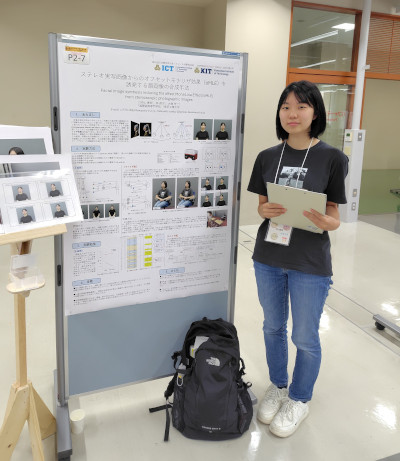
Looking a little nervous before the presentation発表前で少し緊張する様子
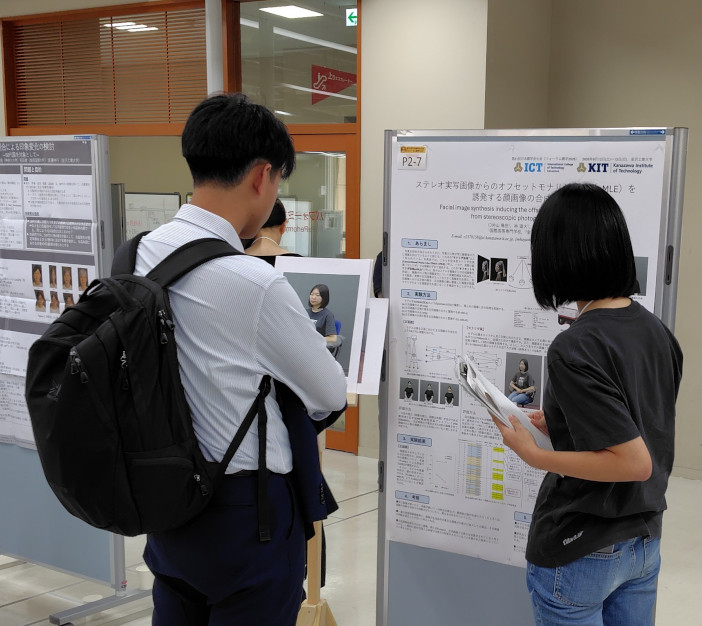
Explaining the research研究を説明している様子
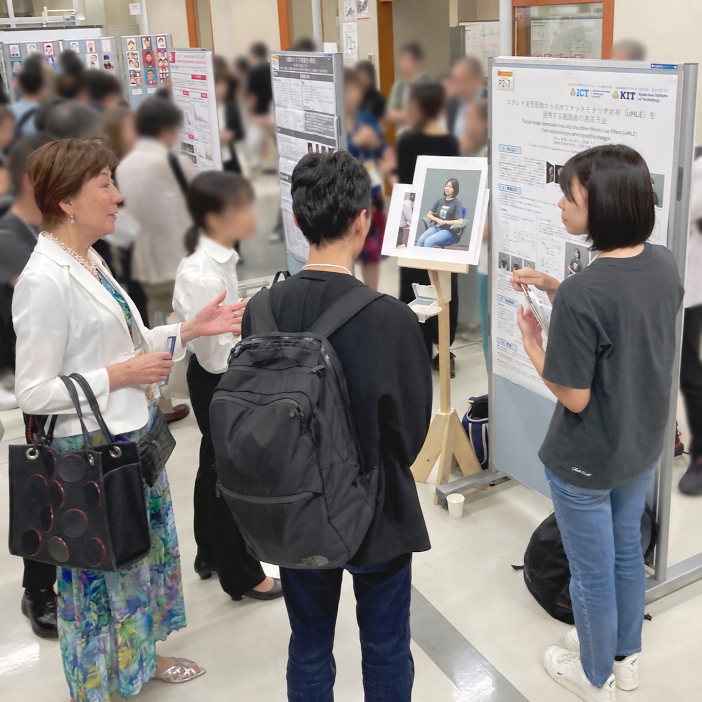
A venue bustling with participants盛況な会場の様子
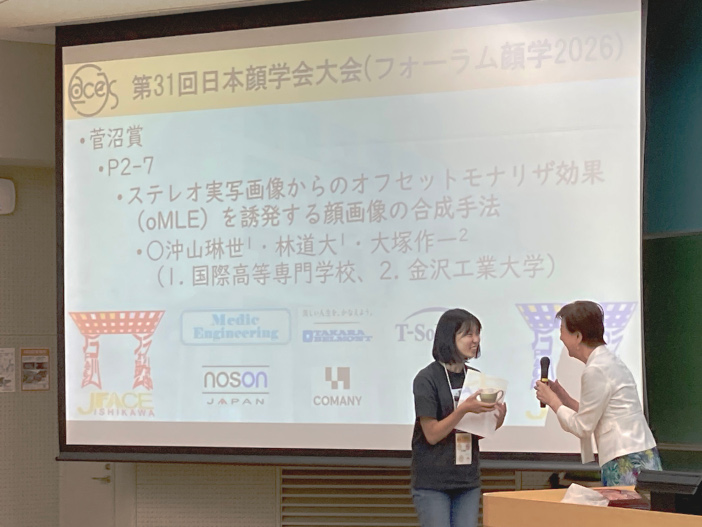
Receiving the award表彰され少し照れている様子
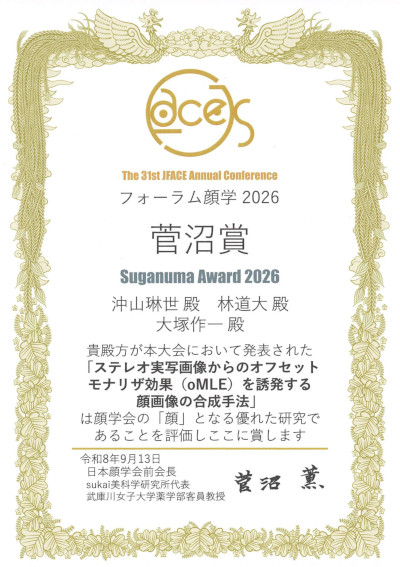
The award certificate頂いた賞状
Hello. My name is Michihiro Hayashi, advisor of the Design & Fabrication Club.
On September 12 and 13, we participated in the 31st J-FACE Annual Conference of the Japanese Academy of Facial Studies, “Forum KAOGAKU 2026,” held at Kanazawa Institute of Technology.
The forum featured a wide variety of research and exhibits related to the human face. Topics included makeup, facial impressions, facial recognition, the faces of robots and animals, and portrait illustration. The conference included 29 oral presentations, 25 poster presentations, six demonstrations, and five corporate exhibits, with a total of 175 participants from across Japan.
From ICT, fourth-year student Rinse Okiyama gave a poster presentation on gaze perception and the Mona Lisa effect. The title of the presentation was “Facial Image Synthesis Inducing the Offset Mona Lisa Effect (oMLE) from Stereoscopic Photographic Images.”
To briefly explain the research, when we look at a person in a photograph or painting from different angles, we may sometimes feel as though the person’s eyes continue to look directly at us. This phenomenon is commonly known as the “Mona Lisa effect.” In this study, differences between images that produce the Mona Lisa effect and those that do not were experimentally examined by processing photographs of real people.
During the summer vacation, Rinse Okiyama worked intensively on preparing for the presentation. She served as the model for the images and took part in repeated photo sessions over several days, as well as image evaluation experiments.
She presented the results in a poster session at the conference. Many participants came to hear about the research, and lively discussions took place in front of the poster. In everyday research activities, students mainly have opportunities to discuss their work with their supervising teachers. At the conference, however, Rinse Okiyama was able to exchange ideas with faculty members from other universities, researchers from companies, illustrators, and many other people with different perspectives.
At the closing ceremony, Rinse Okiyama received the “Suganuma Award,” named after a former president of the Japanese Academy of Facial Studies.
She also had the opportunity to have her portrait drawn by an illustrator at the venue.
This year’s conference was held locally, but I hope that in the future she will continue to take on new challenges and actively present her research not only throughout Japan, but also internationally.
Design & Fabrication Club
Advisor: Michihiro Hayashi
Looking a little nervous before the presentation発表前で少し緊張する様子
Explaining the research研究を説明している様子
A venue bustling with participants盛況な会場の様子
Receiving the award表彰され少し照れている様子
The award certificate頂いた賞状
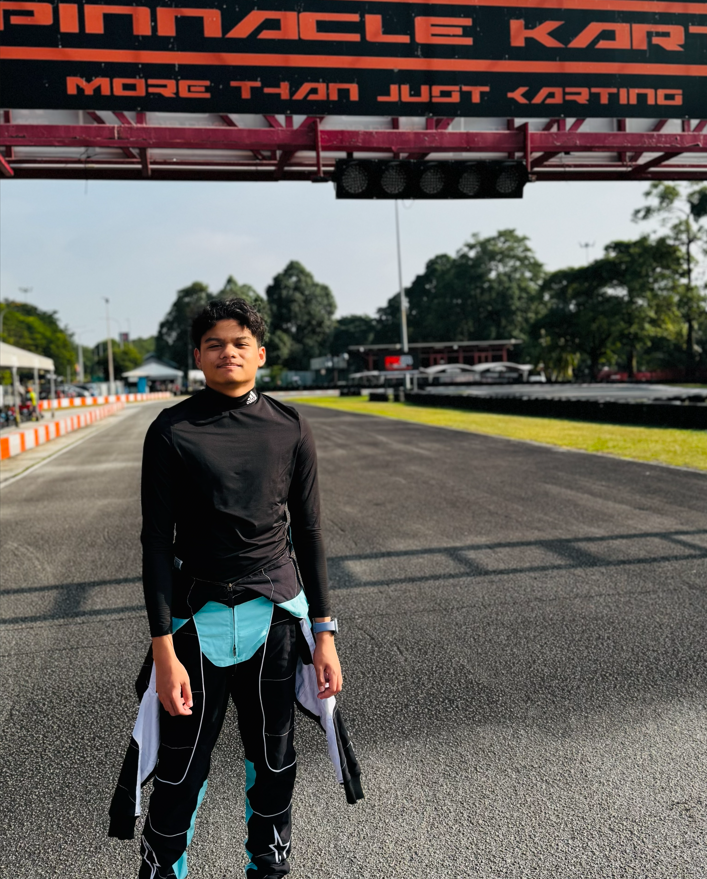
こんにちは。私はマレーシア出身の1年生アディ・ロヒザムです。夏休み中の2026年8月8日、人生で初めてゴーカートレース大会に参加する機会を得ました。
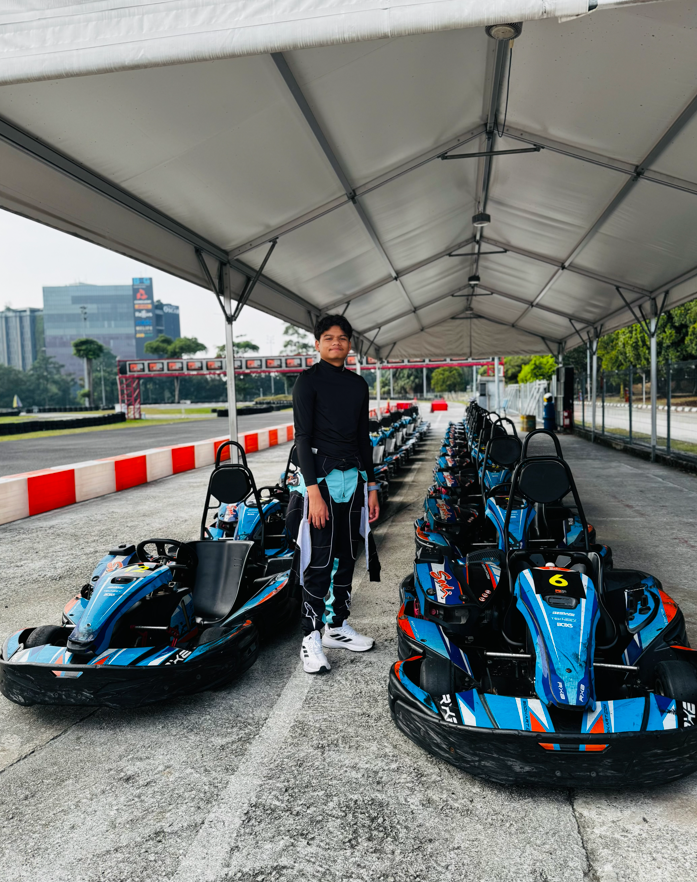
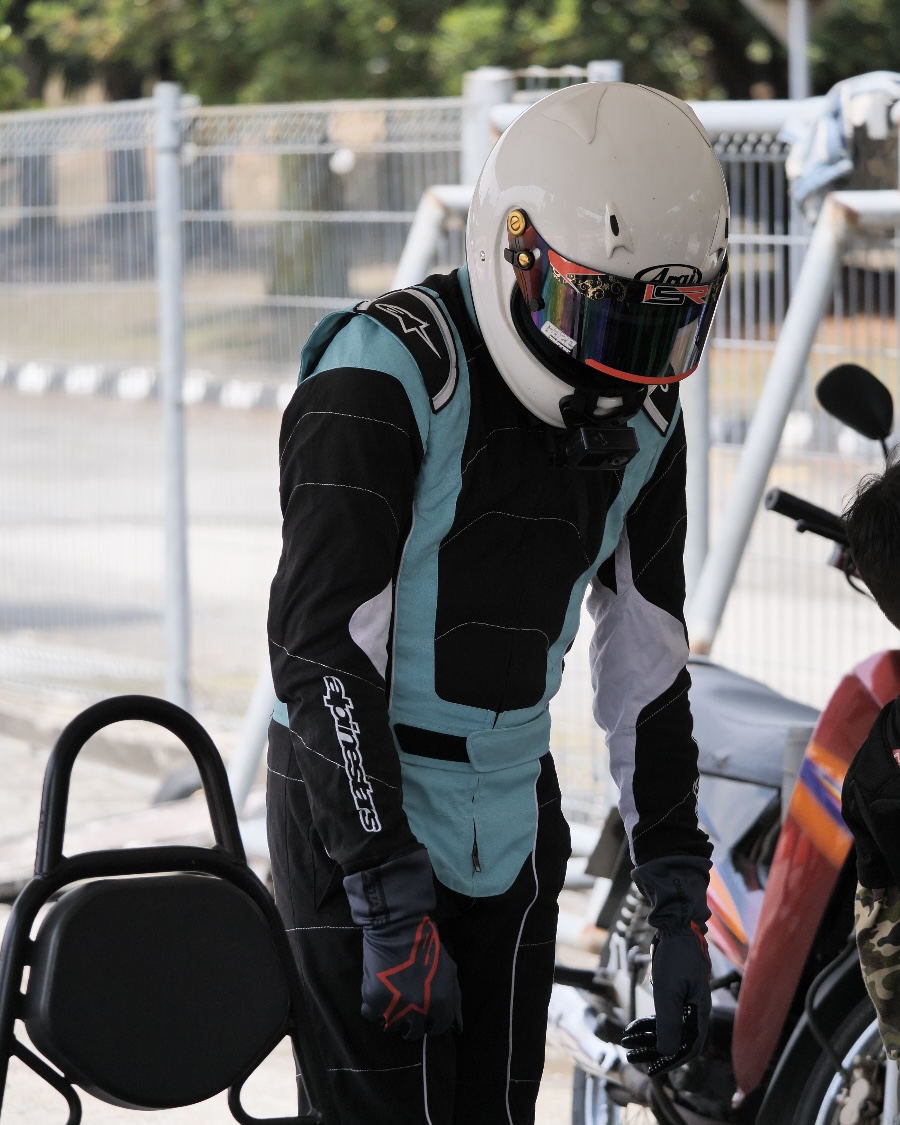
私が出場したのは、PROJECT KAR7INGが主催する「Rookie Rush Karting League 2026」の第4戦です。私はジュニアカテゴリーに参加し、270ccエンジンを搭載したSodi RX8というゴーカートを運転しました。このカートは直線で最高時速約60kmに達します。予選と決勝では、それぞれ別のカートが用意されていました。
カート競技にはさまざまな種類やクラスがあり、私はまだこのスポーツを始めたばかりです。今回が本格的なサーキットレースへの初挑戦でした。
予選は私にとって厳しいスタートとなりました。リアタイヤのグリップに苦戦し、5回ほどスピンしてしまいました。また、3周目のタイムアタック中には友人がコース中央でスピンし、避けきれず接触してしまいました。幸い大きなけがはなく、そのまま走行を続けることができました。
難しい予選ではありましたが、16台中11番手で予選を終えました。
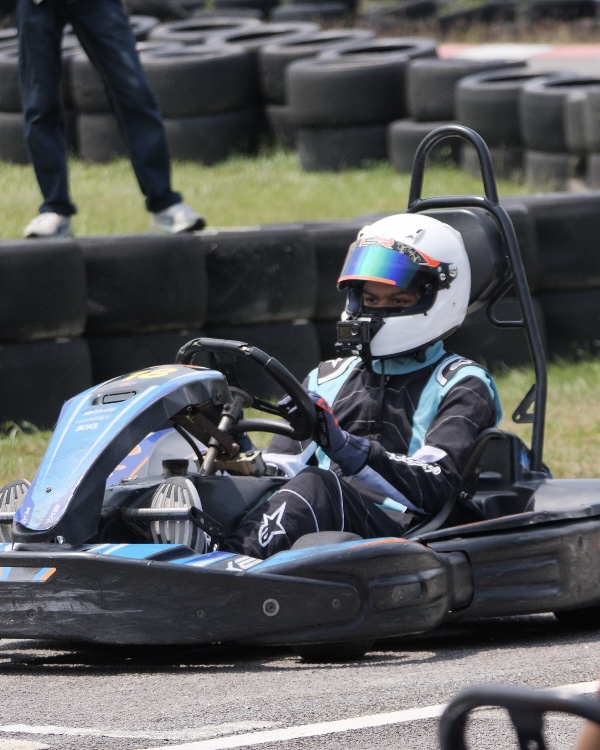
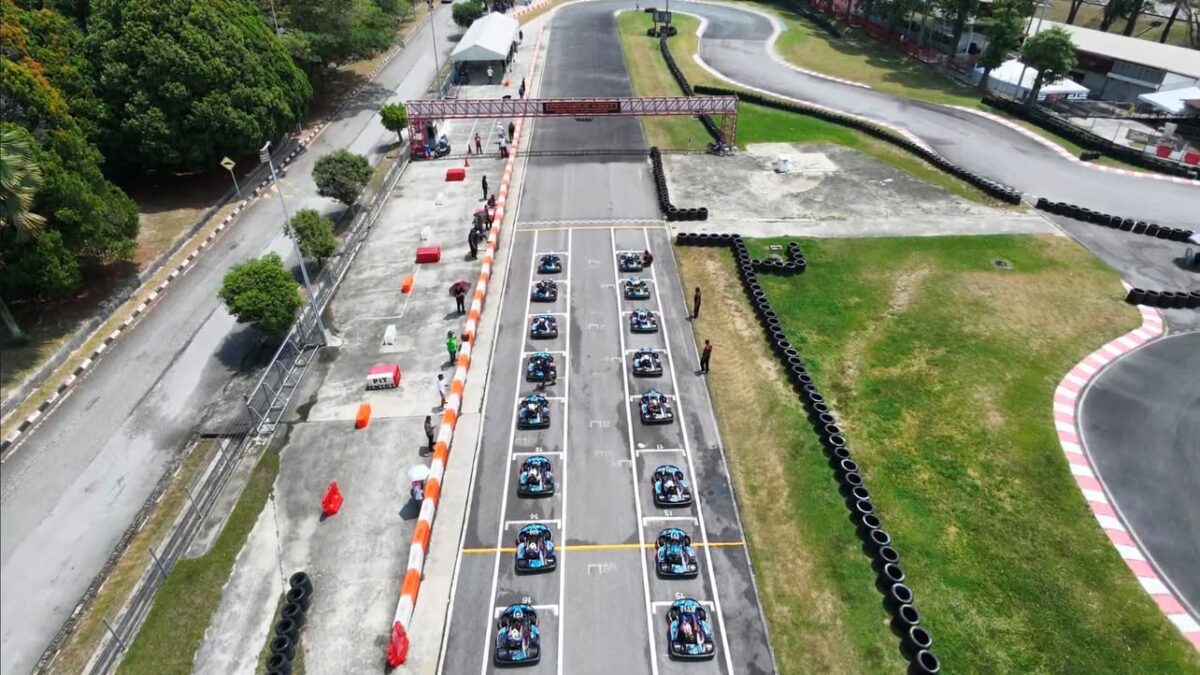
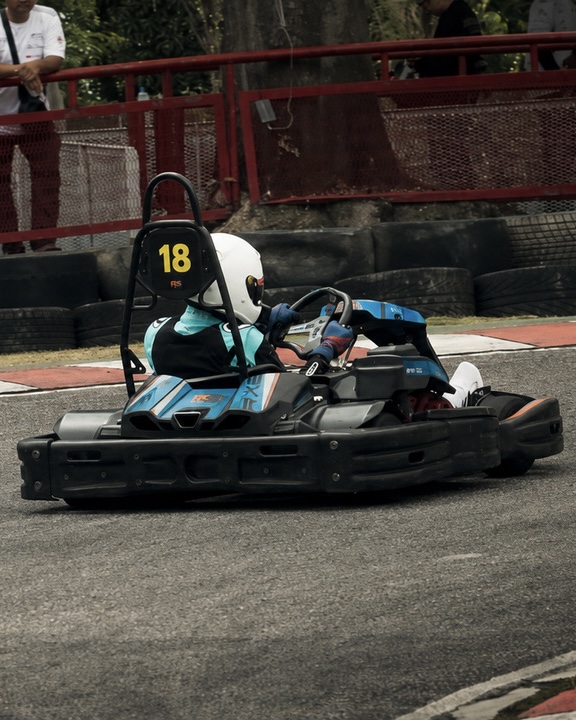
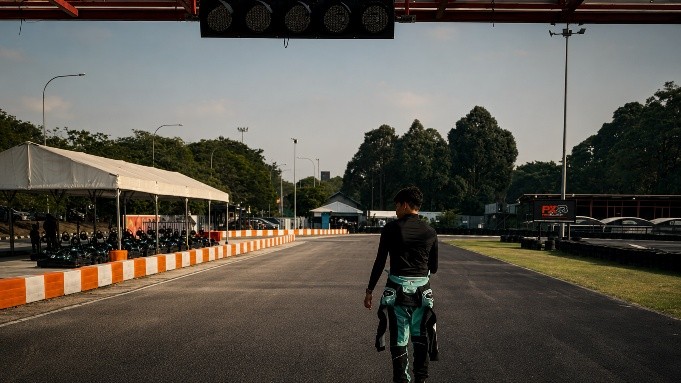
決勝は11番グリッドからのスタートでした。私はとても緊張していました。スタートシグナルの赤いランプが一つずつ点灯し、そして突然消灯。全車が一斉に第1コーナーへ向かって飛び出しました。
しかしスタートはうまく決まらず、4つ順位を落として15位まで後退してしまいました。それでも追い越しのチャンスを探し続け、周回を重ねるごとに少しずつ順位を上げていきました。そして迎えた最終ラップ。最後のコーナーでチャンスが訪れました。前を走るドライバーのすぐ後ろにつけ、仕掛けるタイミングを待ちます。そしてコーナー進入で勝負をかけ、見事にオーバーテイクに成功しました。
そのままチェッカーフラッグを受け、10位でフィニッシュしました。
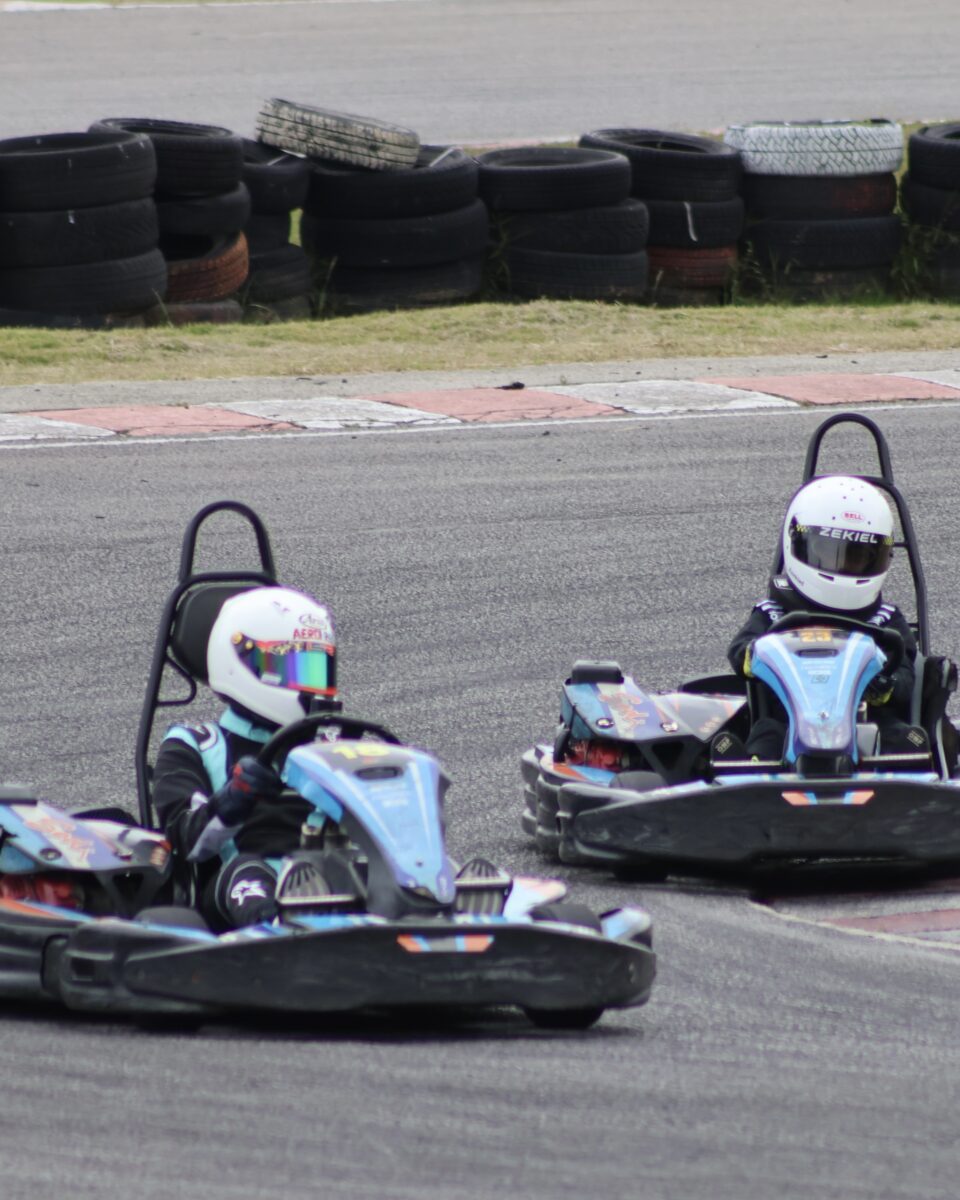
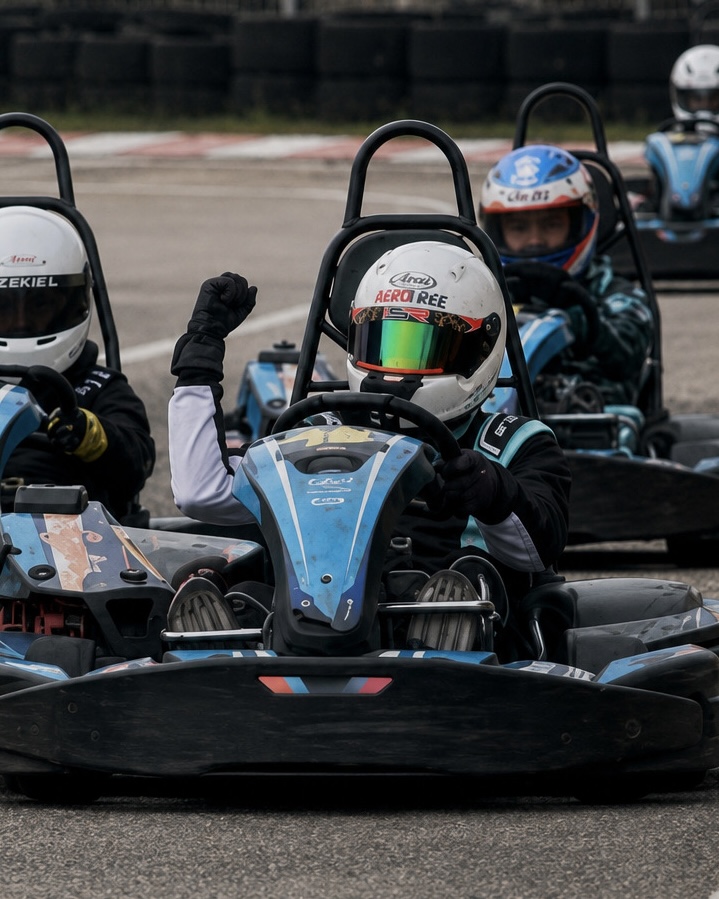
私にとって、この大会は単なるレースではありませんでした。以前からレーシングカーに乗ってみたいという夢があり、今回初めて実際にサーキットを走り、競技としてレースに参加できたのです。
ミスをしたことも含め、すべての経験を楽しむことができました。サーキットの雰囲気はとても温かく、自分もこのコミュニティの一員になれたような気持ちになりました。そして、もっとレースをしたい、もっと上手くなりたいという思いが強くなりました。
もちろん、まだまだ学ぶべきことはたくさんあります。私は経験豊富なカートレーサーではなく、まだスタート地点に立ったばかりです。しかし、だからこそ今回の経験は私にとって大きな意味を持っています。
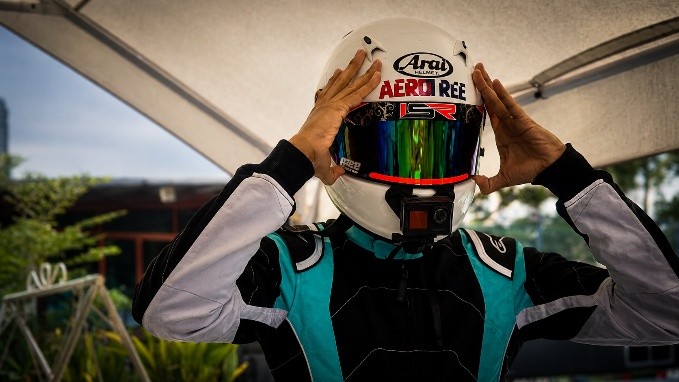
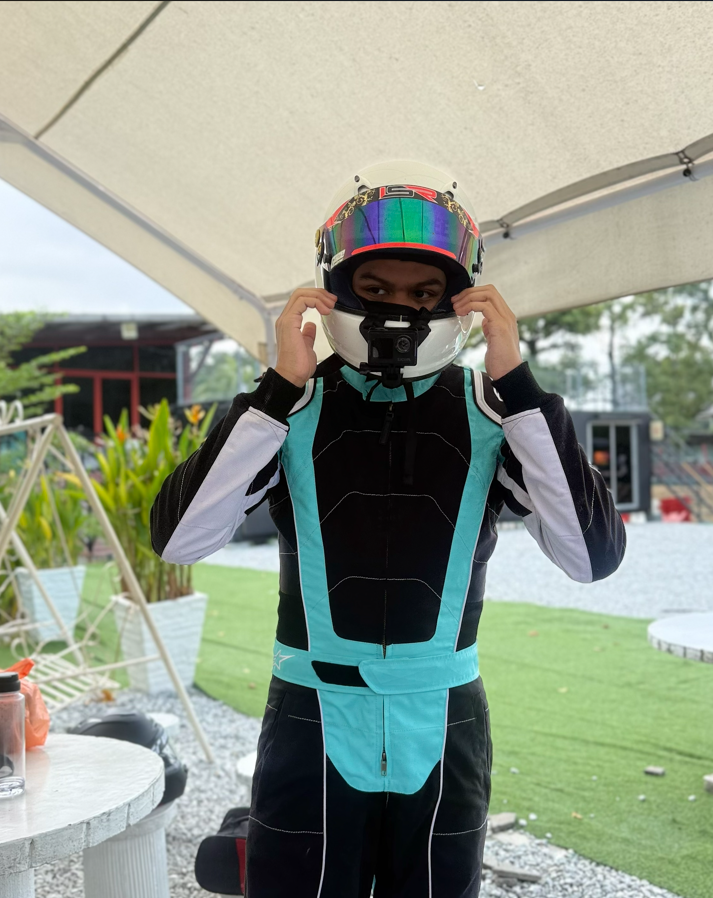
レーシングドライバーを目指している人へ伝えたいことがあります。フォーミュラカーでもGTレースでも、あるいは別のモータースポーツでもかまいません。夢を追いかけるうえで、今の自分のスタート地点を理由にあきらめないでください。
最初から誰よりも速くある必要はありません。すべてを知っている必要もありません。大切なのは一歩を踏み出し、学び続け、目標に向かって努力を重ねることです。
もしレーシングがあなたの夢なら、ぜひ挑戦してみてください。挑戦しなければ、自分がどこまで行けるのかは決して分からないのです。
アディ・ロヒザム
Hi, my name is Ady Rohizam, and I am a 1st year student from Malaysia. During my summer break, I had the opportunity to take part in my first-ever go-kart competition on August 8th, 2026.
The event was Round 4 of the Rookie Rush Karting League 2026, organized by PROJECT KAR7ING. I competed in the Junior category. For this competition, I drove a 270cc engine (cubic centimeters) Sodi RX8 go-kart, which could reach a top speed of around 60 km/h on the straights. We were provided with separate karts for qualifying and the race.
Karting has many different types and classes of karts, and I am still very new to the sport. This was my first real experience competing on a track.
Qualifying was a difficult start for me. I struggled with the grip of the rear tires and spun out around five times. During my third hot lap, one of my friends spun in the middle of the track, and I unfortunately bumped into him. Luckily, I was not seriously injured and managed to continue.
Despite the difficult session, I qualified 11th out of 16 drivers.
Starting 11th on the grid, I was quite nervous. The red lights came on one by one. Then, suddenly, they went out. Everyone launched towards the first corner.
My start was slow, and I dropped four positions. I was now 15th. I kept looking for opportunities to overtake. Lap by lap, I slowly gained positions and worked my way back through the field.
Then, on the final lap, I saw an opportunity at the last corner. I stayed close behind the driver in front of me and waited for the right moment. As we approached the corner, I made my move and managed to overtake him.
I crossed the finish line in 10th place.
For me, this was more than just a competition. I have always wanted to experience racing, and this was my first chance to actually get on the track and compete.
I enjoyed every part of the experience, even the mistakes. The atmosphere at the track made me feel like I belonged in this community, and it made me want to race again and continue improving.
I know I still have a lot to learn. I am not an experienced karter, and I am only at the beginning of my journey. But that is what makes this experience important to me.
To anyone who dreams of becoming a racing driver, whether your goal is Formula racing, GT racing, or another form of motorsport, do not let your starting point stop you.
You do not have to be the fastest when you begin. You do not have to know everything. What matters is that you start, keep learning, and keep working towards your goal.
If racing is your dream, take the chance to start. You never know how far you can go until you try.
Ady Rohizam
こんにちは!二年生の東 藍です。かなり遅くなりましたが、今回は僕の春休みについて話させてもらおうと思います。遅れたせいで少々季節外れですが、生暖かい目で読んでいただければと思うばかりです。
今回の春休みは南極に行ってきました。南極にというと何を考えますか? 未開の地? その極寒であらゆる冒険家や探索隊を飲み込んできた南の最果て? 少なくとも春休みに「よし、行こう」なんて思い立っていくような旅行スポットではありませんね。何なら本業の探検家以外危険すぎて行けない場所だと思う人もいると思います。私もそうでした。でも実は、南極旅行というのは思いのほか簡単に行けます。無論、ほかの場所への旅行のほうがいろいろと行くのは簡単ですが、南極旅行や北極旅行というのは思いのほか観光産業として成り立っているのが予想外でびっくりしました。別にどっかの大学の研究チームとかに所属しないんでいいんですね。もちろん大学や観測所に詰めている方々のように南極の奥地を調査や観光できるわけでは決してないですが、それでも南極外周部にある様々な島々を訪れたり南極本土にちょっと上陸してみたりなどと意外とできることの幅は広かったです。会社によっては遊覧船から降りずただずっと船の中から南極を見るなんて大した面白みも何もないプランもあるらしいですが、今回利用した会社、QUARKではいろいろな貴重な体験をさせていただきました。南極の極寒の海に飛び込んだり、至近距離でクジラやペンギンを見れたり、カヌーをしたりなど、本当に様々なことを体験できました。本稿ではそのいくつかを紹介していきたいと思います。
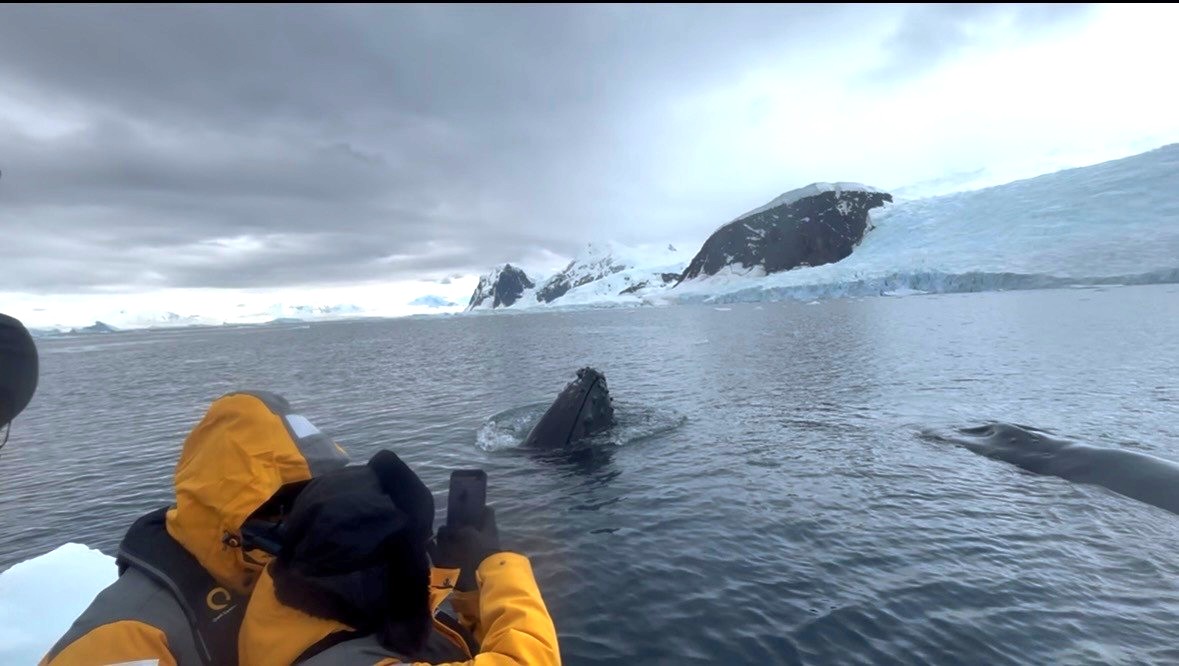
南極旅行で最も印象に残ったのはクジラです。皆さん海でクジラを見てきたと言ったら基本的には遊覧船から鯨が潮吹いているのが見えた、みたいなものを想像するかと思いますが、クジラたちは案外好奇心が大変旺盛で、あちらのほうから寄ってきたりしてきました。クジラ観察のために小型のゴムボートに乗ってクジラのほうまで行ったからというのもあると思いますが、どちらにせよこちらが帰るまでは基本的にずっと周りを泳いだり近づいたりしてきました。書いてて思いましたがなんだか威嚇されてるみたいですね。少なくともボートに接触とかはなかったのでただ単純に珍しいものが近づいてきたから見に来たという感覚だったんだと思います。
何回かクジラたちを見に行く機会があったのでいろんなクジラを見れました。なかでも印象的だったのは睡眠している母親の周りを泳いで遊んでいるクジラの子供です。見に行った時に結構興味津々であっちから寄ってきたり、尾ひれを出して海面にたたきつけて水しぶきを上げさせたりして愉快でかわいらしいクジラでした。この後に戻る時間になった時にガイドさんが一番残念がってたのが面白かったです。
ほかにも二頭のクジラが近寄ってきて、ほんとに手を出したら触れそうなくらいの距離に来たりして多分僕の人生の中で一番神秘的な経験をしたと思います。多分この上ないほどクジラを身近に感じたんじゃないでしょうか。氷山に囲まれた場所で至近距離でクジラたちが潮を吹いたりして、水族館で見るそれとはまた別の感動がありました。
南極で止まっていた船では、外に探検に出ていない間は、南極の探検家の歴史や南極の氷河の流動などについた様々なことを教えていただきました。南極の生物の種類、その日見たのがどんな生き物たちだったのか、どんな品種だったのか、など教えていただいたことは多岐にわたります。
さて、ここまでは鯨メインで話しておりましたが、もちろん南極で遭遇した生物は彼らだけではありません。クジラたち以外にも、たくさんのペンギンや、アザラシとも遭遇したりしました。水族館で見るそれとは違い、アザラシたちは捕食者らしい獰猛な印象を受けました。多分ペンギン捕食をしてるの見たからでしょうね。あいつらペンギン捕まえたら空に投げて遊ぶんですよ。ちょっと怖かったです。ペンギンたちはかわいかったですね。文句のつけどころがない。特に、生まれて一年とかのペンギンは好奇心が旺盛で、観光客が奥に行き過ぎてしまわないように突き刺された棒が気になって必死にはむはむしだしたりする子がいてとてもかわいかったです。
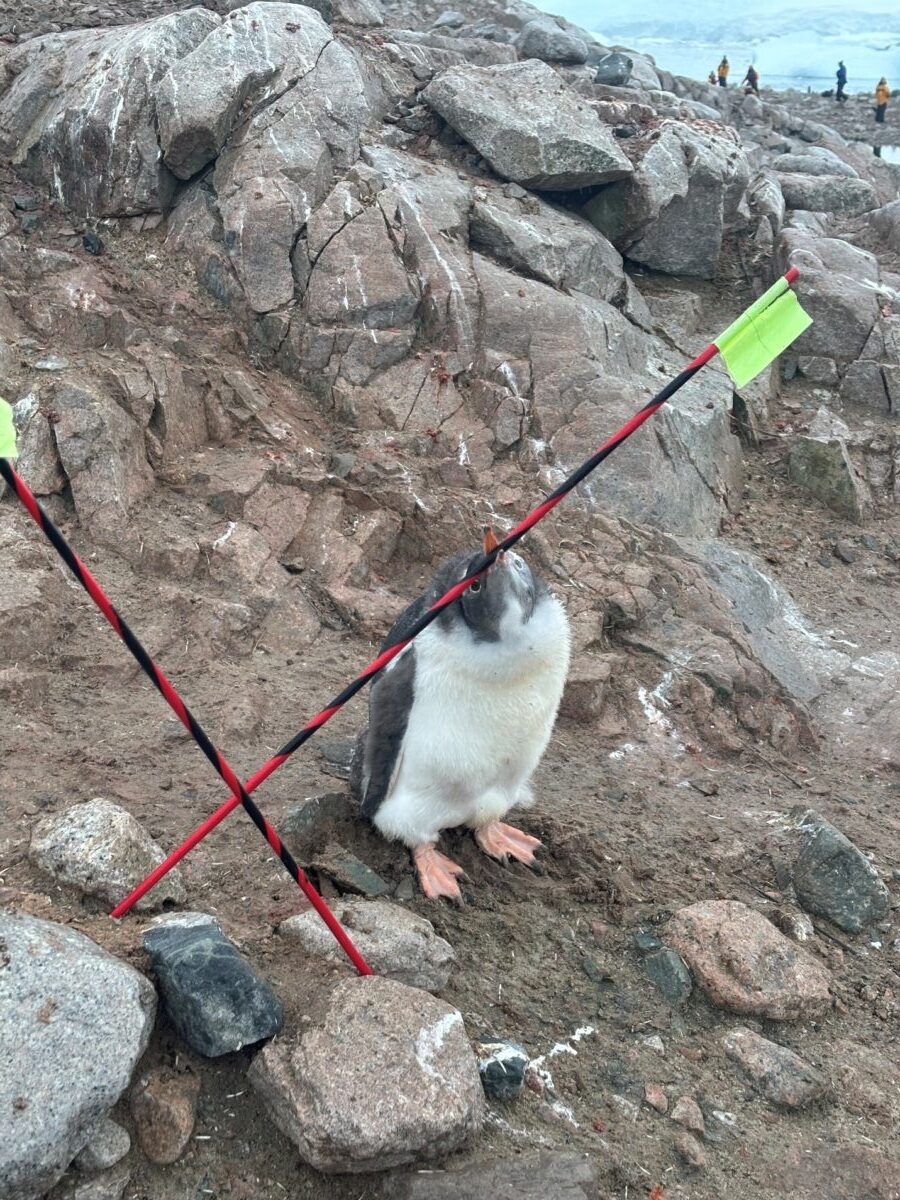
この子ですね。はいかわいい。ほかにも夫婦のようにお互いに向き合ったまま微動だにしないペンギンたちがいたりもして面白かったです。
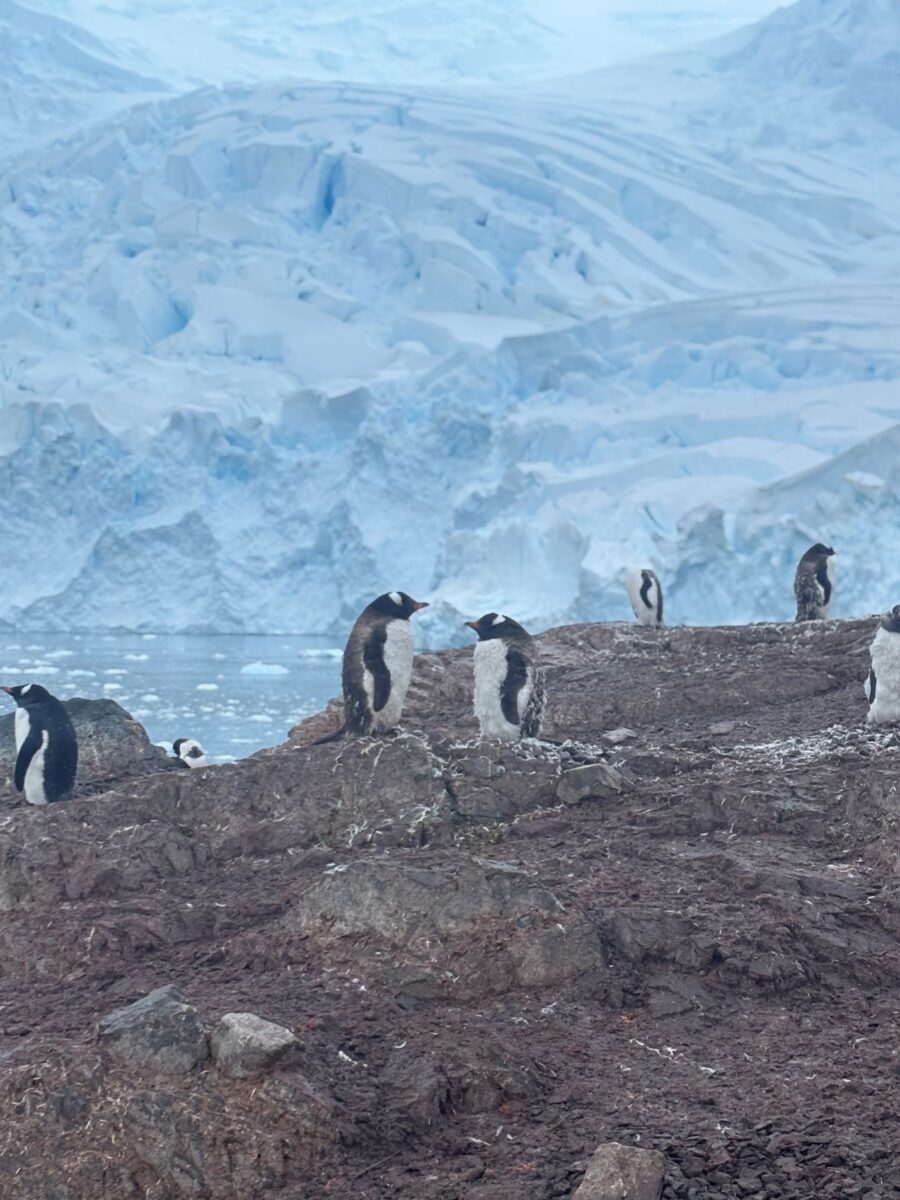
なんかペンギンたちののほほんとした過ごし方を見ていると心が洗われましたね。南極にはほかにもかわいらしい生き物以外にも息をのむような絶景も観れました。個人的には一番印象的なのはデセプション島という火山島の景色で、この島の何が特別かというと、一万年前の火山の噴火によってカルデラ湖ができており、馬蹄形になっており、火山も活発であり、地熱により温泉が湧き出ています。要は南極の桜島みたいなものですね。イギリスの観測基地に作り替えられた過去の捕鯨基地の廃墟もあり、時間帯により地熱で大量の水蒸気が上り非常に幻想的な風景を演出してました。
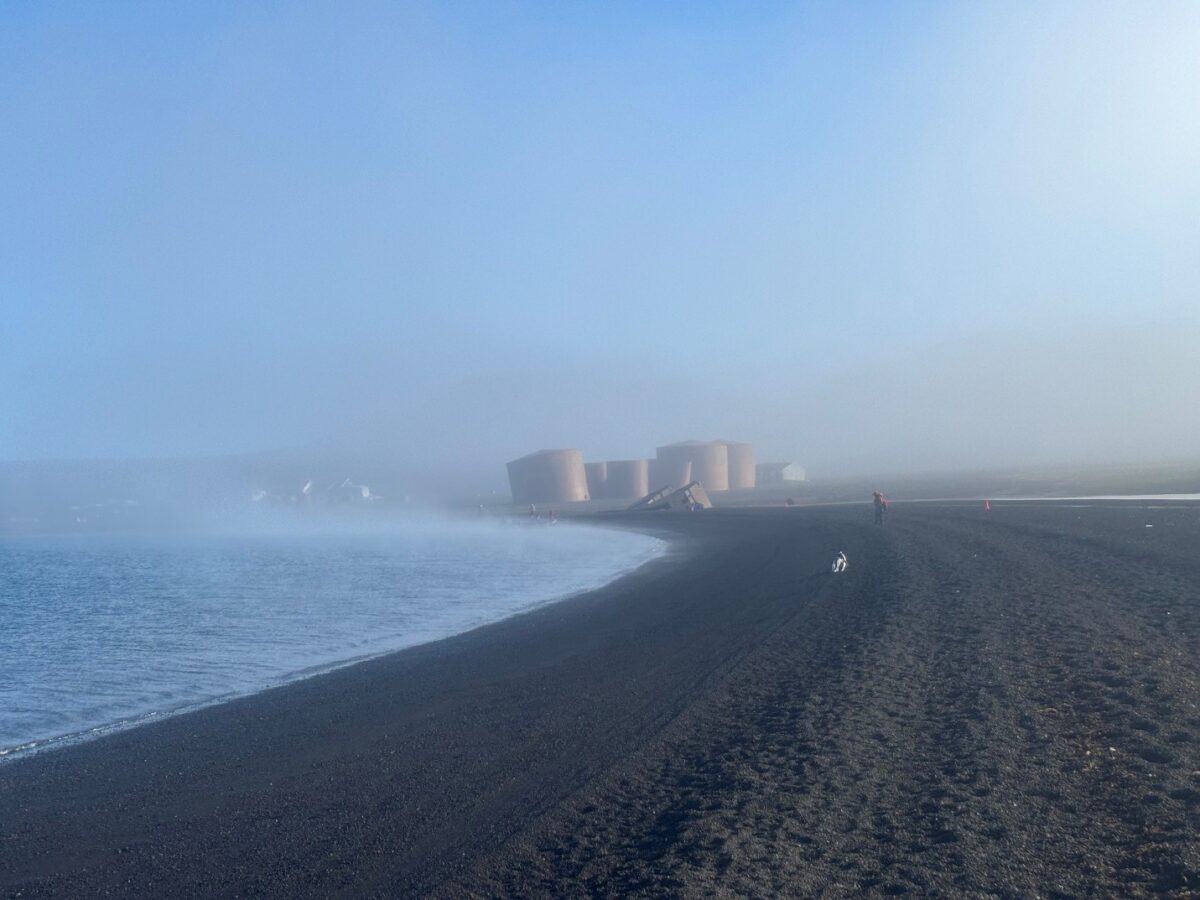
サイレント・ヒルみたいですね。もちろんペンギンとアザラシたちはこのような場所でも活発でした。奥に見えるのは鯨油の保管施設か何かだと思います。そのさらに奥、かなり見えにくいと思いますが、飛行機の格納庫がありました。天候などの観測に使用していたそうです。個々の沿岸部は本当にいろんなものが置いてあり、埋もれてハンドルとボンネット、あと前部座席の先っちょだけ出てる車とかがありました。本当に別世界に迷い込んだ気分でした。あとふつうに食い荒らされたペンギンの死体もありました。ちょっとグロかったです。それから、謎に飛行機の墜落跡もありました。
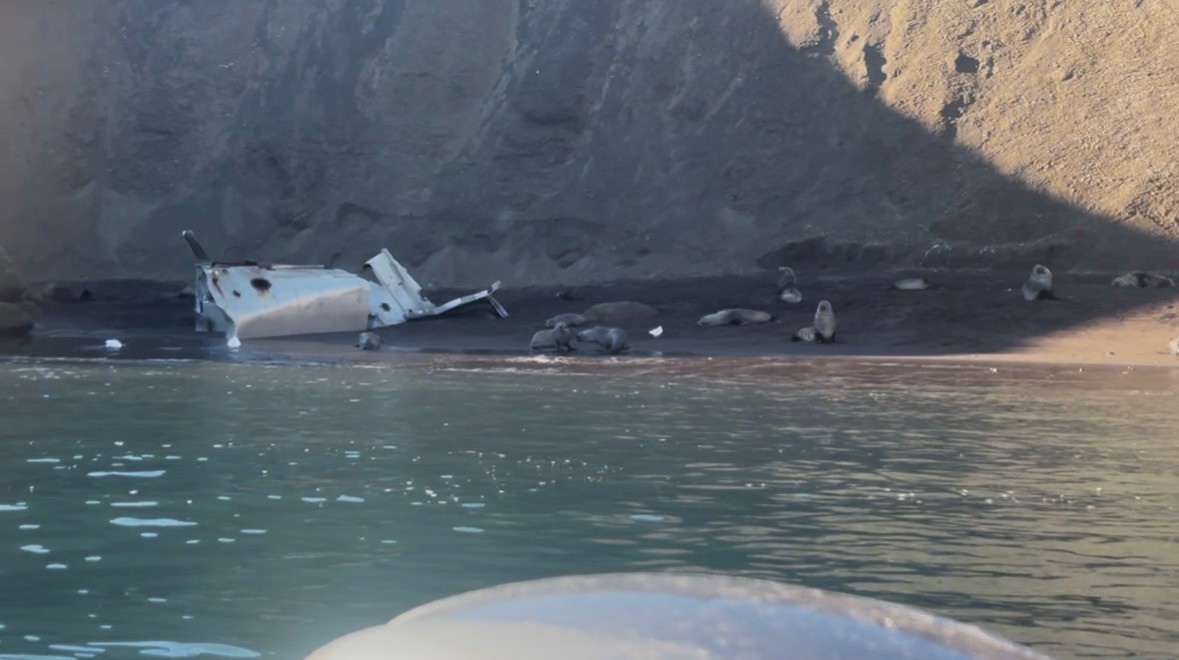
軽くホラーでした。やはり南極を探検する難易度は天文学的なものなのだなと再認識させられました。というか、横の墜落跡に目もくれず喧嘩に明け暮れるアザラシたちは見ていて面白かったです。
帰りはドレイク海峡という、世界でもっとも荒れる海域として有名な海峡なので、身構えていたのですが、びっくりするほどおとなしかったので少し拍子抜けでした。大人しかったといいましても船体の揺れがちょっとしたジェットコースター気味になっていたことと、普段全く酔わない体質なのになぜか気分が悪くなったことと、まあ普通の海の大人しさではなかったです。ちなみに去年の航海では誰も立てなくなって食材や物があちこちに飛び回っていたようです。その動画を見せてもらいましたが普通に怖かったです。この帰り道をたどって改めて1800年代とかに「探検しようぜ!」とか言ってコンディションが何倍もひどい木造の船でドレイク海峡を越え、南極点に到達して見せた先人達がどれほどすごいかを思い知らされました。あらゆる援助の見込みもない最果ての地へ乗りだした先達には、もはや畏敬の念以外何も抱けません。
さて、春の南極旅行でのあらましはこれくらいのものでしょうか。ほかにもいろいろとカヌーを漕いだり、野生のシャチを見たり、極寒の海に飛び込んで凍えたり、話せばきりがないのでここらで切り上げようと思います。本当に貴重な体験をさせてもらったと思います。
東 藍
Hello! This is Akira Azuma from the 2nd year student. It’s been quite a while since this happened so it may feel a bit off-season, but I would like to talk about my activities over spring vacation. I may only hope you give this article a read and find yourself enjoying it.
This spring break, I was allowed the chance to go see Antarctica by my fearless mother. What comes to mind when you hear “Antarctica”? An unexplored land? The southernmost edge of the world where extreme cold has swallowed countless adventurers and expeditions? At the very least, it’s not somewhere you’d casually decide to visit during spring break. In fact, many people might think it’s too dangerous for anyone except professional explorers. I used to think that too. But surprisingly, traveling to Antarctica is much easier than you may expect. Of course, it’s still more difficult when compared with visiting other places, but Antarctic and Arctic tourism actually exists as a proper industry, which was quite surprising. You don’t have to belong to a university research team or anything like that. I remember being unable to keep myself from questioning my mother’s sanity for a while.
Given the nature of the Antarctic land, you can’t explore the deep interior like the researchers stationed there, but even so, there’s a wide range of things you can do—visiting islands around the Antarctic coast or even briefly landing on the continent itself. Some companies offer rather dull plans where you just stay on a cruise ship and look at Antarctica from nearby waters, but the company we used—QUARK expeditions—provided us with many extraordinary experiences. We jumped into the freezing Antarctic sea, saw whales and penguins up close, went canoeing, and did many other activities. In this piece, I’d like to introduce some of those experiences.
The most memorable part of my trip was definitely seeing whales. When people say they’ve seen whales at sea, you usually imagine spotting them blowing water from a sightseeing boat. But whales are actually very curious creatures, and they often came toward us instead. We rode small inflatable boats to observe them, which may have contributed to their curiosity—but even so, they approached us and encircled us the entire time we were out there. I just realized, but that kind of sounds like they were trying to intimidate us, but they never contacted the boat, so I think I’ll believe that they were simply curious about our unusual presence.
We had several opportunities to observe these adorable whales. There were various kinds. One particularly memorable whale was a baby whale, playing around its sleeping mother. It was very curious, swimming up to us and playfully slapping its tail on the surface to splash water. It was so amusing and adorable. The funny thing was that our guide lamented the most when it was time for us to return to the ship. I guess the experience stays the same no matter how many times you see whales up close.
In another encounter, we had two whales approach us so close that I felt I could touch them if I reached out. I probably could have. It was one of the most mystical experiences I’ve had in my life. Being surrounded by icebergs while whales spouted water so close by was an entirely different kind of awe-inspiring experience compared to seeing whales in an aquarium.
For my in-ship experiences, when we weren’t out exploring, we were given lectures aboard the ship about the Antarctic explorers, glacier movement, and various other topics. We also learned about the wildlife we encountered that day, —the species and their characteristics—covering a wide range of subjects related to Antarctica.
So far, I’ve mainly talked about whales, but of course, they weren’t the only animals we saw. We also encountered many penguins and seals. I mean, this is Antarctica, going on a trip here and not seeing any penguins is like sandwiches without bread. Unlike in aquariums, the seals gave off a much more predatory and ferocious impression, probably because we saw them hunting penguins. When they catch one, they started to toss it into the air and play with it. To call this experience unsettling would be an understatement, those adorable bounce bags were absolutely owning the penguins.
The penguins, on the other hand, were absolutely adorable—no complaints there. Especially the younger ones, around a year old, those guys are very curious. Some of them were fascinated by the stakes placed to mark the point where we shouldn’t tread past, and started pecking at them eagerly—it was incredibly cute.
This is the little one, by the way. Yes—absolutely adorable.
There were also penguins that were blankly staring at each other’s face. Watching them just staring blankly was oddly therapeutic to see.
In addition to wildlife, Antarctica also offered us breathtaking scenery. My personal favorite was Deception Island, which is a volcanic island. What made the island so special is that about 10,000 years ago, a volcanic eruption formed a caldera, giving it a horseshoe shape. The volcano is still very active, and the geothermal heat creates hot springs. In other words, it’s like Sakurajima in Antarctica. There were also ruins of an old whaling station which was later converted into a British research base. Depending on the time of day, geothermal steam rises in large amounts, creating an incredibly surreal, almost otherworldly landscape.
It felt like something straight out of Silent Hill. Penguins and seals were active even in this eerie environment. In the distance, there was what looked like a storage facility for whale oil, and even further back on the left—though hard to see—there is an aircraft hangar that waIt felt like something straight out of Silent Hill. Penguins and seals were active even in this eerie enviros used for weather observation. Along the coast, various objects were scattered around, including a partially buried vehicle with only the hood, handles, and part of the front seat sticking out. Freaky. It truly felt like stepping into another world.
There were even remnants of penguins that had been eaten—honestly, a bit gruesome. And if that wasn’t odd enough, there was also an airplane wreck. It looked like it was straight out from a movie.
It reminded me just how incredibly difficult it must have been to explore Antarctica. Meanwhile, the seals in this picture were just fighting each other next to these wrecks, completely ignoring them, was quite the spectacle to see.
On the way back, we crossed the Drake Passage, known as one of the roughest seas in the world. I had braced myself for the worst, but surprisingly, it was quite calm—or at least calmer than expected. That said, the ship still rocked like a mild roller coaster, and I felt a little seasick despite normally never getting motion sickness. The crew were surprised; relieved would be the word most fitting. So, I asked them if it was usually that bad. They showed me a video from last year’s voyage. Yes, it was THAT bad. Compared to the video from last year— where no one was even able stand or move at all, and objects flying everywhere—it was relatively tame, you could move around as you wished, but it still was not exactly calm. Seeing videos from that voyage was honestly terrifying. Especially if you count the fact that it took us around 2 days to cross the passage. We were just happy that our kitchen was even able to function during the duration after seeing the video.
This return journey made me deeply appreciate the explorers of the 1800s, who crossed the Drake Passage in far worse conditions aboard wooden ships, with little hope of assistance, and still managed to reach the South Pole. I can only feel immense respect for their courage.
I guess that sums up my Antarctic spring break. There were many other experiences too—canoeing, spotting wild orcas, diving into icy waters—but I’ll stop here before this gets too long. It was truly an invaluable experience. I don’t think I want to cross the Drake passage again though.
Akira Azuma
こんにちは!1年生の矢野 優花です。今回は、先日国際高専の白山麓キャンパスに訪れてくれた、アメリカミズーリ州の6人の留学生について書きたいと思います!
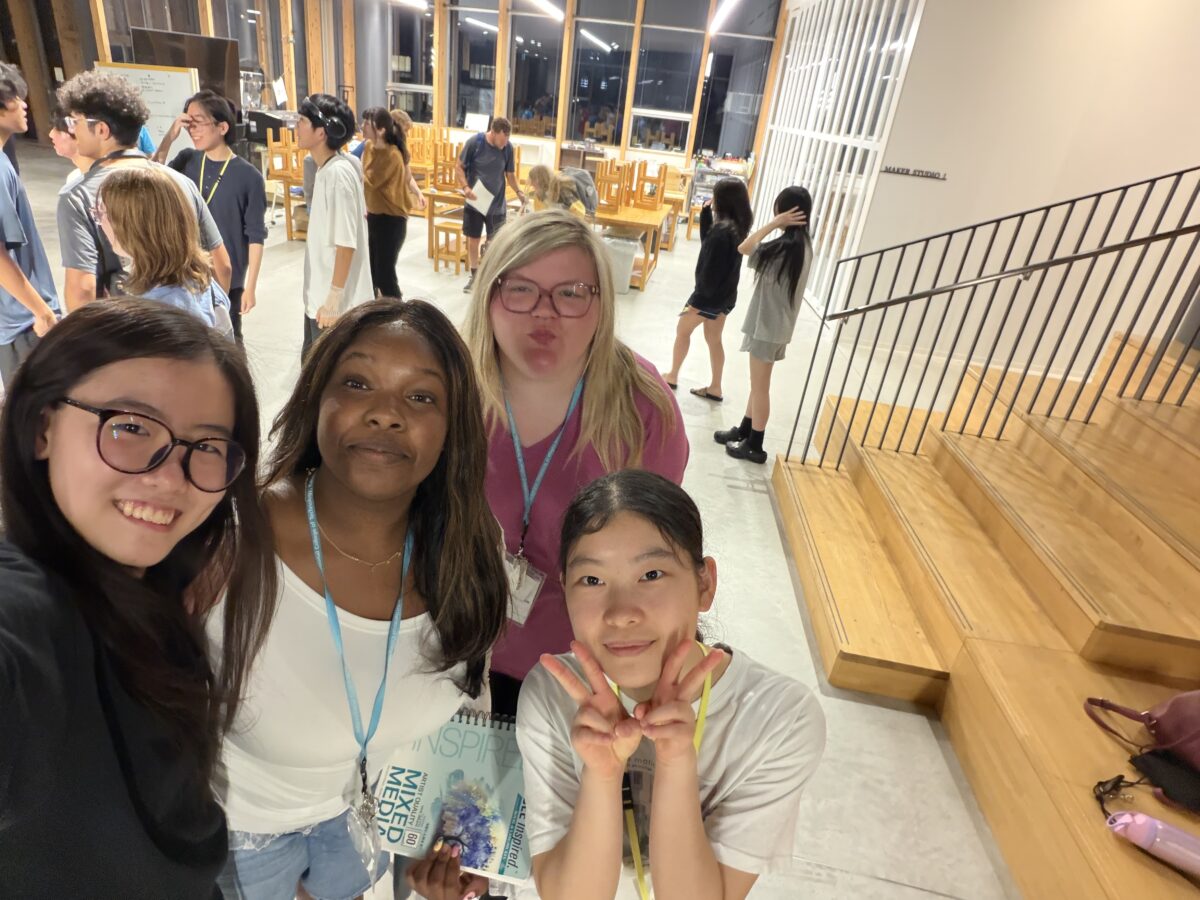
初日、私たちはバディとしてアメリカの留学生をどきどきしながら待っていました。どんな人たちがくるんだろう、友達になれるかな、と不安もありましたが、それよりも楽しみが勝っていました。実際会ってみると、みんな身長が高く、同い年なのが不思議になりました。しかし、全員フレンドリーですぐに打ち解けることができました。一日目からユニットのみんなで自己紹介をし、多くの話をしました。
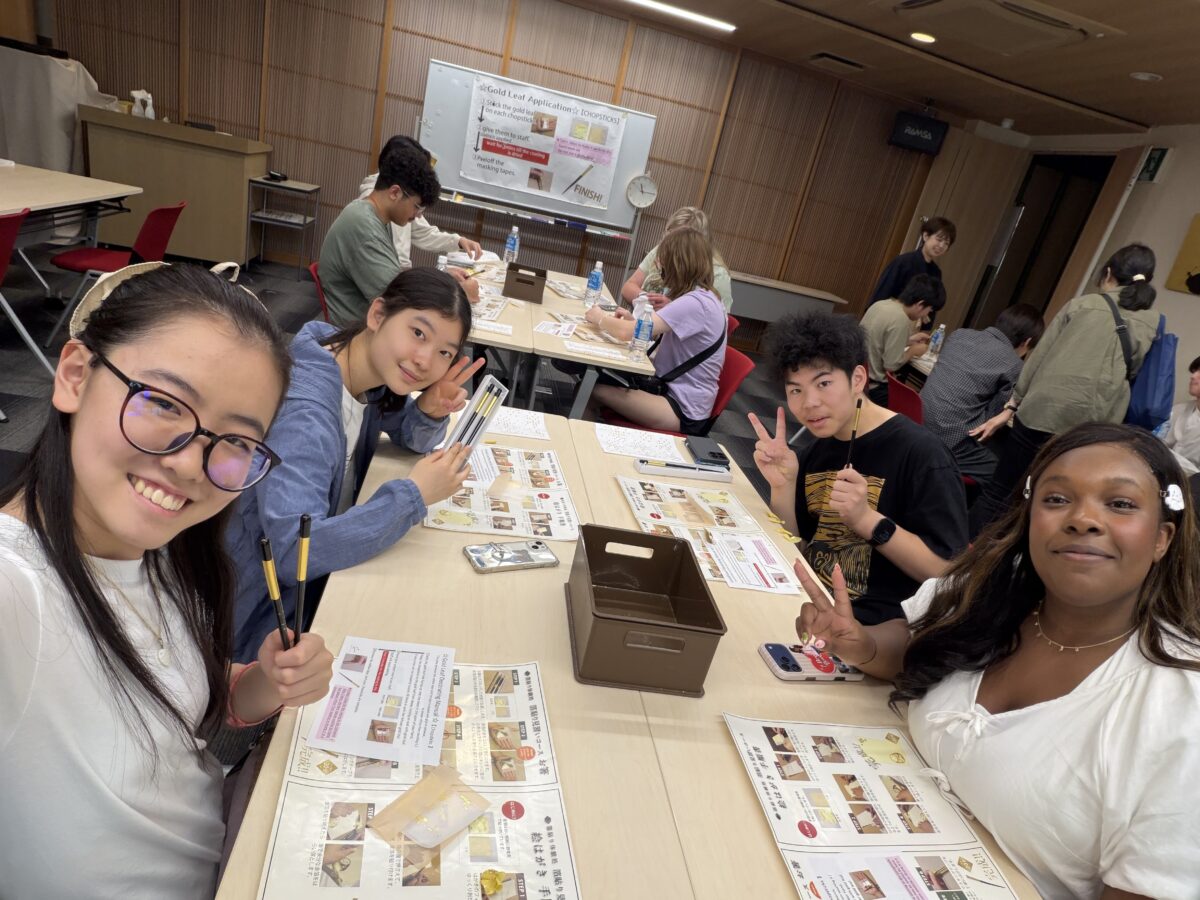
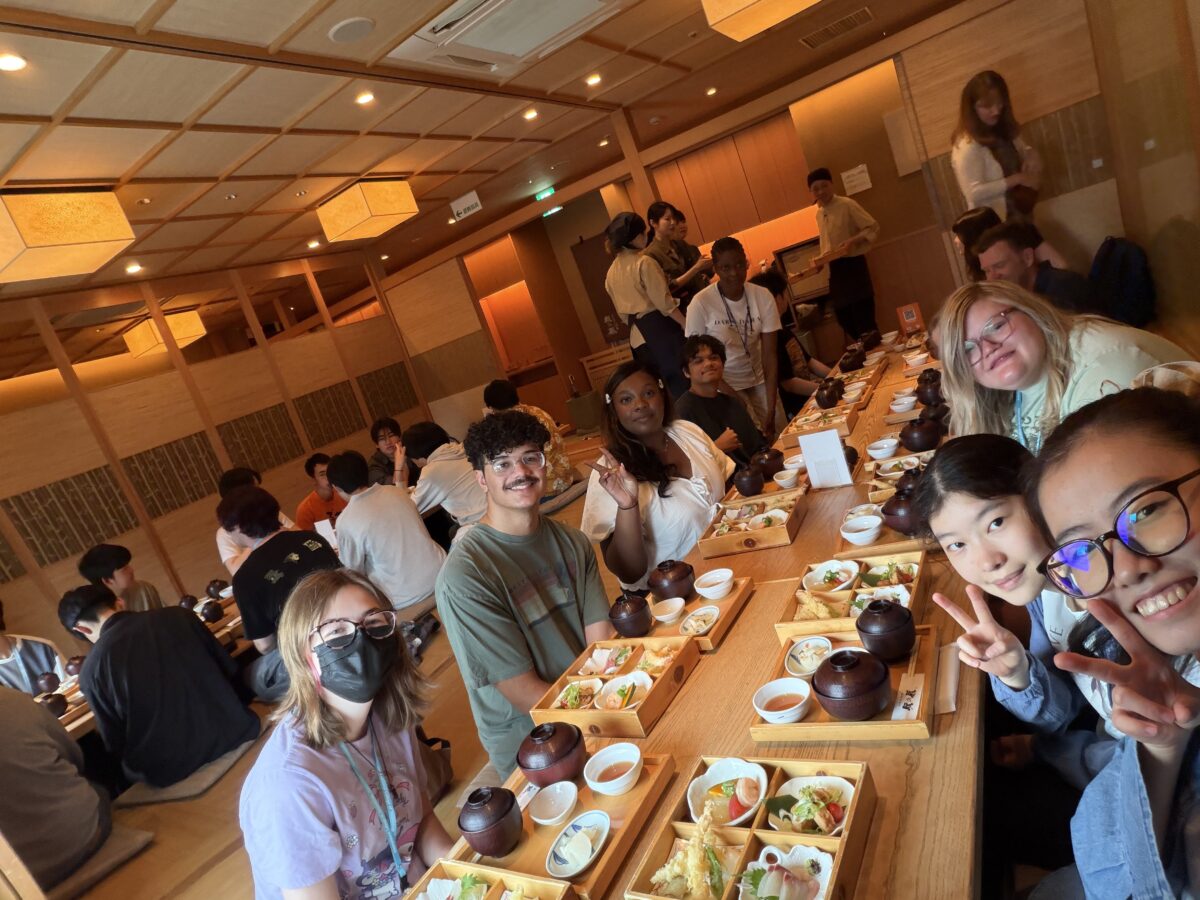
金沢観光では箸に金箔をはったり兼六園にいったり様々な体験や観光地に訪れることができました。私自身も金沢観光をしたことがなかったので、観光地の説明がうまくできなかったのが悔しかったのですが、アメリカ留学生とともに新しいことを一緒に学びました。次は今回の知識を生かして金沢のいいところたくさん紹介したいです。そして、この体験を通してアメリカの生徒と友情を深めることができました。
最も印象に残ったことは、最終日にみんなで遊んだUNOです。大人数でチームを組んだのですが、とても盛り上がり、最終的にはみんな笑いすぎて声がかれそうな状態になっていました。UNOなどの世界共通のゲームは人を結びつけることができると思いました。
今回の交流を通して様々なことを学ぶことができ、アメリカの生徒たちともたくさん仲良くなることができました。金沢についてあまり知らなかったため、金沢観光で観光地などの説明ができなかったのが悔しかったです。次は今回の知識を生かして金沢のいいところたくさん紹介したいです。
矢野 優花
Hello! My name is Yuka Yano and I am a 1st year student at International College of Technology, Kanazawa. In this article, I will write about the time when six American students came to our Hakusanroku campus.
On the first day, we were nervously waiting for the American students to arrive. What will they be like? Would we be able to become friends? Whilst we were nervous, the excitement was winning. Once we met them, we were surprised by how tall they were. However, we were soon able to become friends with them. From the first day, we introduced ourselves in our unit and talked a lot about our interests.
During the Kanazawa tour, we were able to visit various tourist spots and experienced a vast array of things. Since I had never gone around Kanazawa, I was learning about the city with the American students at the same time. Though this experience, we were able to make bonds with the Americans.
I especially remember the time when we played UNO. We made groups with many people and everyone was hyped up during the game. In the end, everyone was laughing until their throats hurt. I think worldwide games such as UNO can create connections between people.
Throughout this experience, I was able to learn various things and create friendships with the American students. Next time I hope to be able to explain the aspects of Kanazawa to the American students with more detail.
Yuka Yano
こんにちは。国際理工学科2年の石原田 海秀です。突然ですが、みなさんは2年生の「エンジニアリングデザインⅡ」という授業についてご存じでしょうか?エンジニアリングデザインⅡでは、休耕田で紅はるか(サツマイモ)を育てて「高専紅はるか」というオリジナルブランドで収益の黒字化を目指しているアグリビジネス班と、その「高専紅はるか」を育てている畑をサルなどの野生動物から守るテック班という二つの班に分かれて活動しています。私は今年、テック班として一年間活動したので、今回は2025年度のテック班の活動について紹介したいと思います。
テック班は、テクノロジーを使って高専紅はるかを育てている畑を野生動物の被害から守るために、IoT班、ドローン班、ローバー班の3つに分かれて活動し、獣害対策システムの完成を目指しています。
獣害対策のシステムとしては、畑をIoT班の作ったシステムを使って野生動物の動きを監視して、そこからLINEなどのメッセンジャーを使いドローンを飛ばしてサルなどの野生動物を撃退することを目標としています。また、雨などによりドローンが安全に飛行できない時にはローバーと呼ばれる車輪で動くロボットで野生動物を撃退することも目指しています。
IoT班
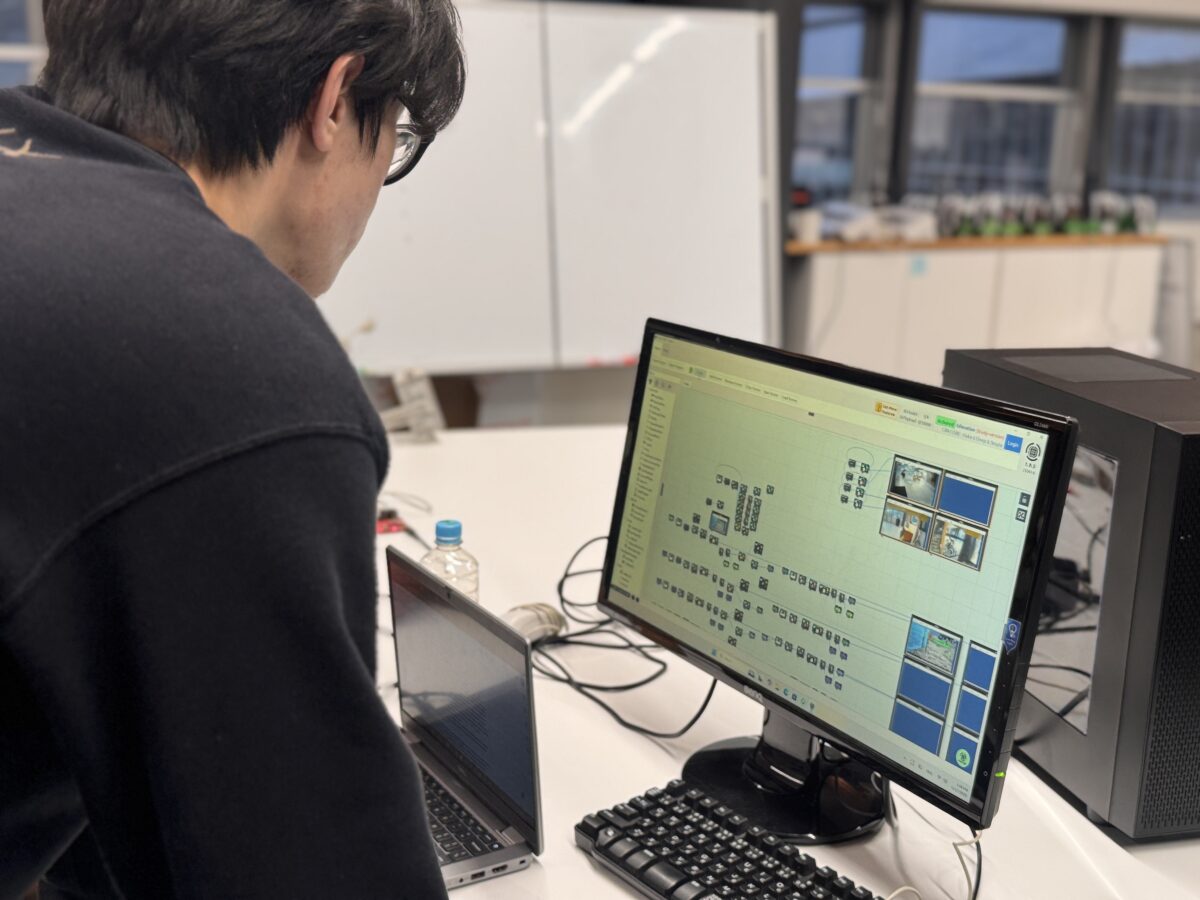
IoT班の目標は、畑の状況を獣害対策システムを使ってユーザーに伝えるためのシステムを作り、ローバーやドローンといった他のシステムと繋げる役割を果たすことです。昨年度まではLINEのお知らせ機能を使っていましたが、サービス終了に伴い、それができなくなってしまったので、お知らせ機能をLINE以外のサービスで使えるようにしました。今年度は時間の都合上、実際に活用できるかを確かめることができなかったので、来年度から日常生活での有用性について検討を続けていく必要があります。
ドローン班
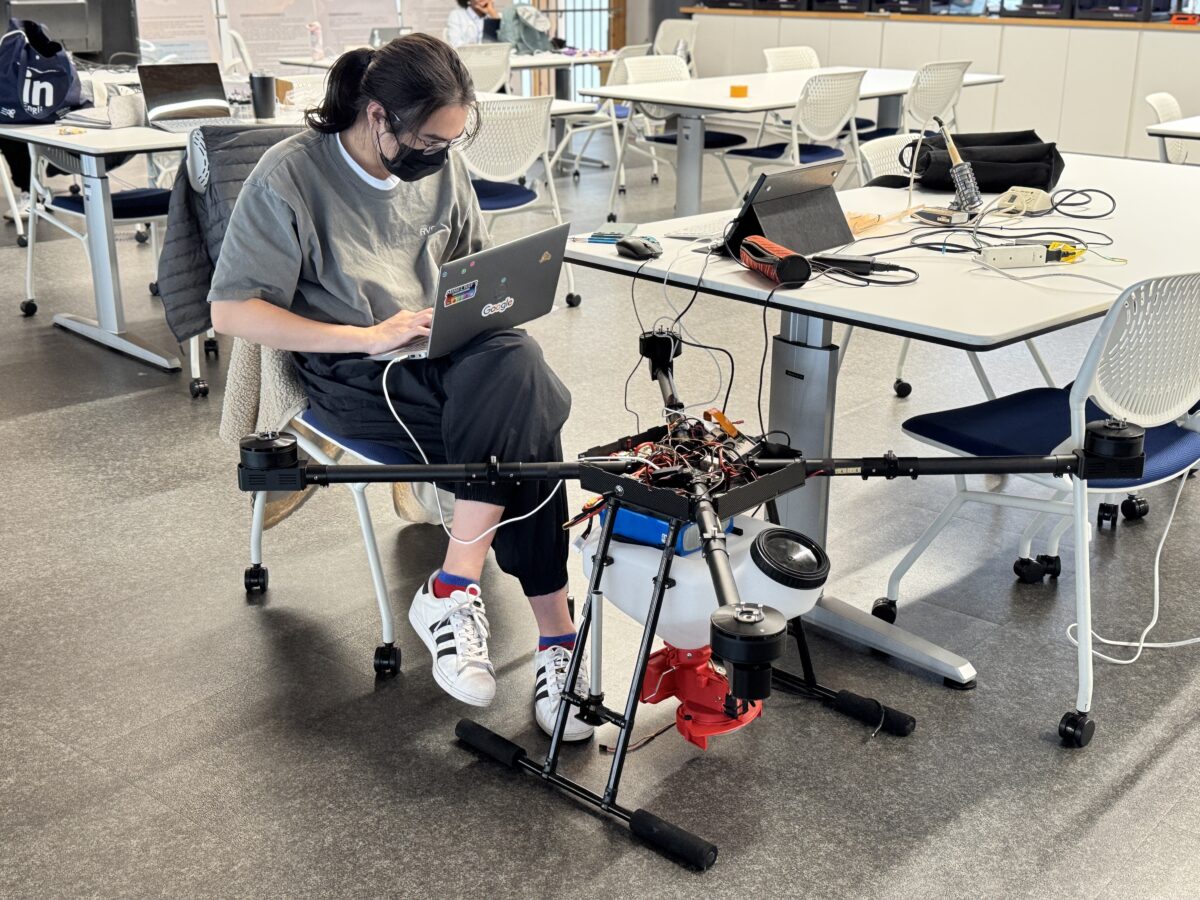
ドローン班の目標は、IoT班が構築したシステムから指令を受けてドローンを飛行させ、獣害対策をすることです。
今年度は獣害対策のために農業用ドローンを使うという先輩たちのアイデアを引継ぎました。その過程でドローンの飛行制御をするパーツのプログラムの自由度が低いという課題を見つけました。その問題を解決するために農業用ドローンの制御パーツを交換しました。今後はカメラから外の状況を把握してドローンを飛行させるシステムを確立していく必要があります。
ローバー班
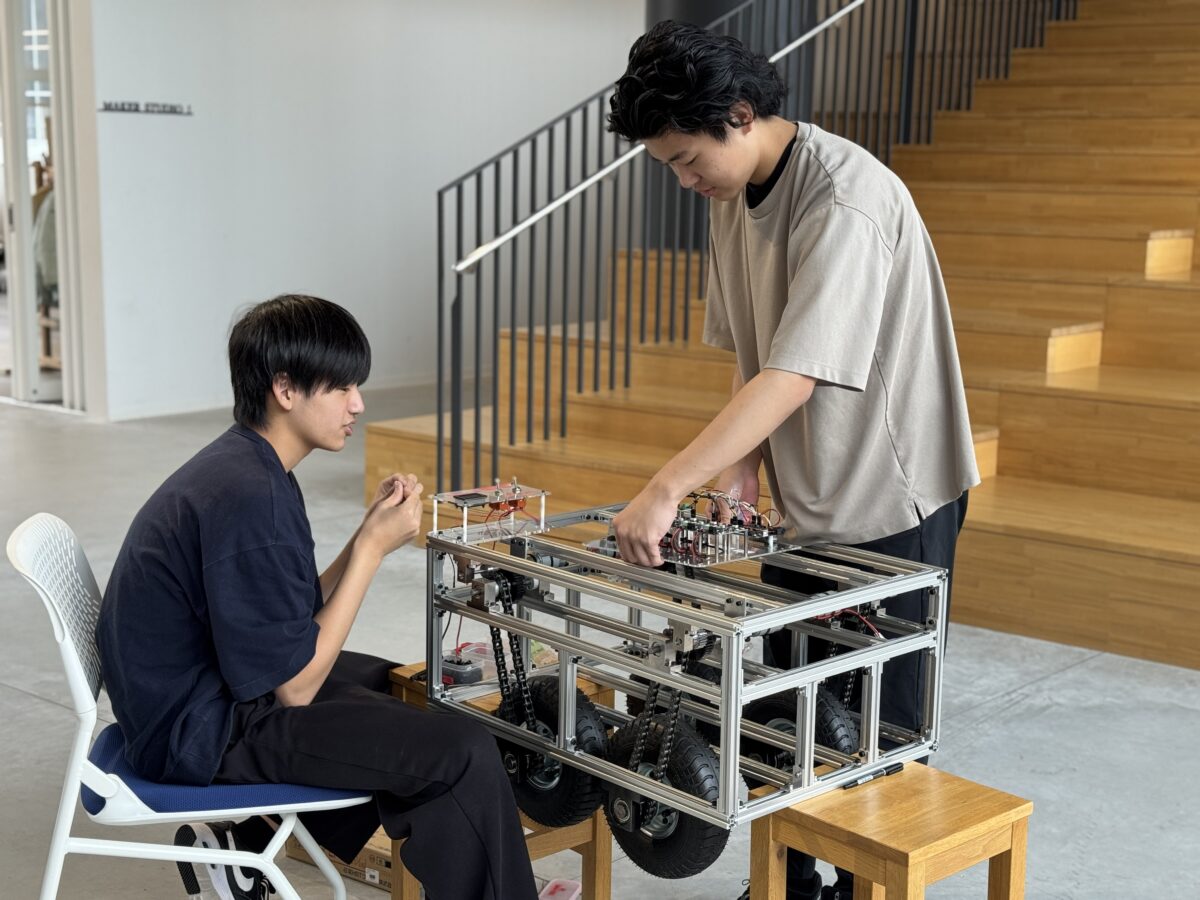
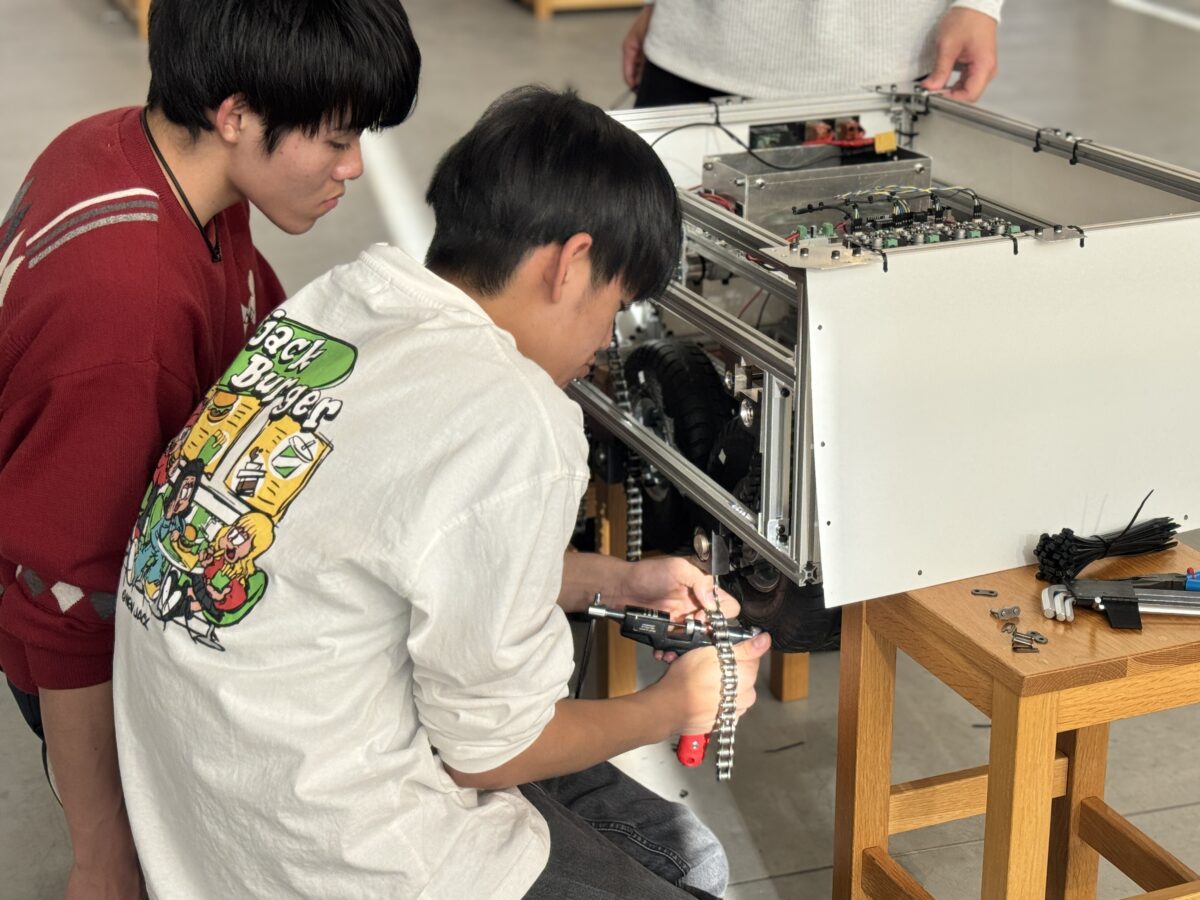
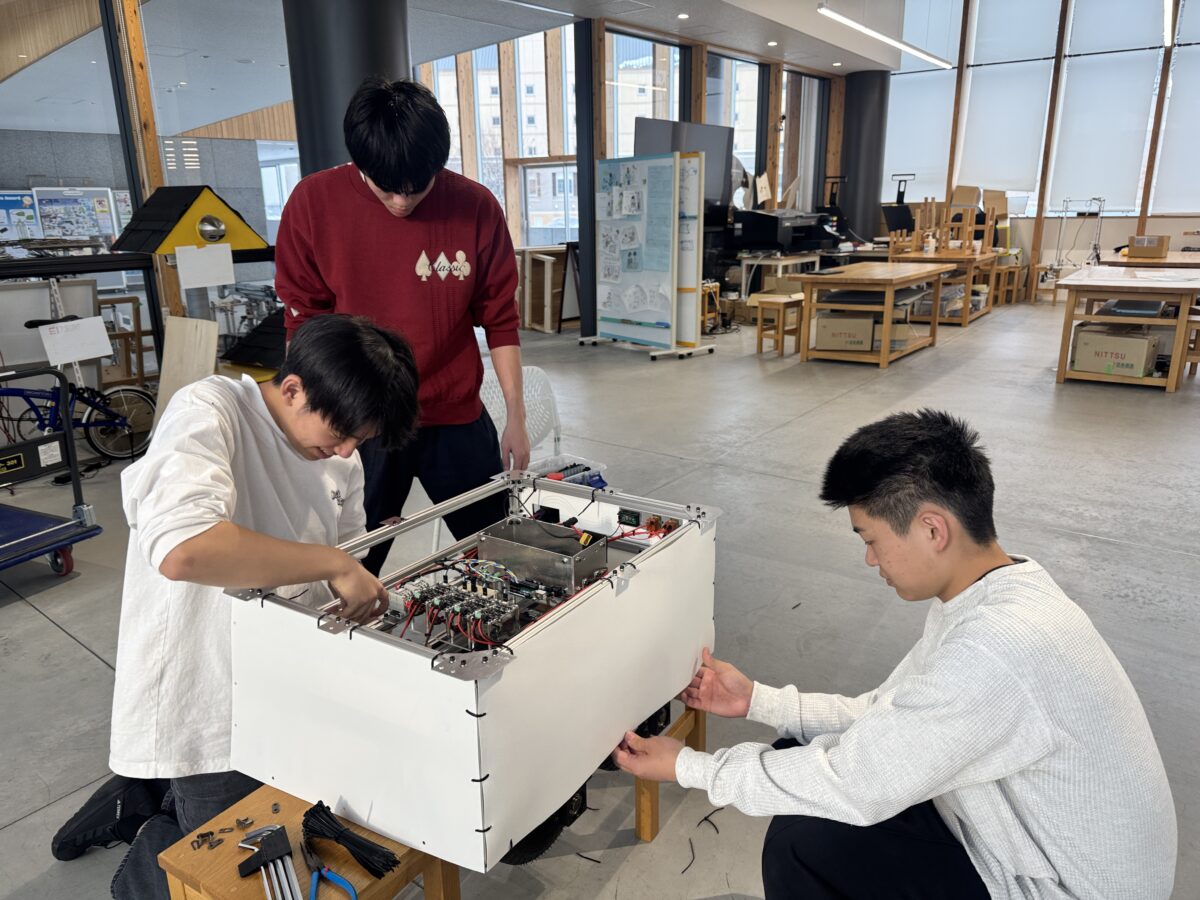
ローバー班は、雨天時など天候が悪くドローンが飛ばせない場合の獣害対策に向けて、昨年度から活動が始まったものです。今年度は先輩方から受け継いだローバーを改良・改善していくという形で取り組んでいました。物理や数学の授業、日々の課外活動などから得た知識を活用しながら、後学期にはローバーの目的である雨天時の走行のために防水カバーの制作を行いました。防水カバーを作るという初めての挑戦に、いろいろ苦戦しましたが先生や学生同士での話し合いを通じてプロトタイプを作ることができました。来年度は、防水カバーの性能向上やIoT班やドローン班との連携に挑戦してほしいです。
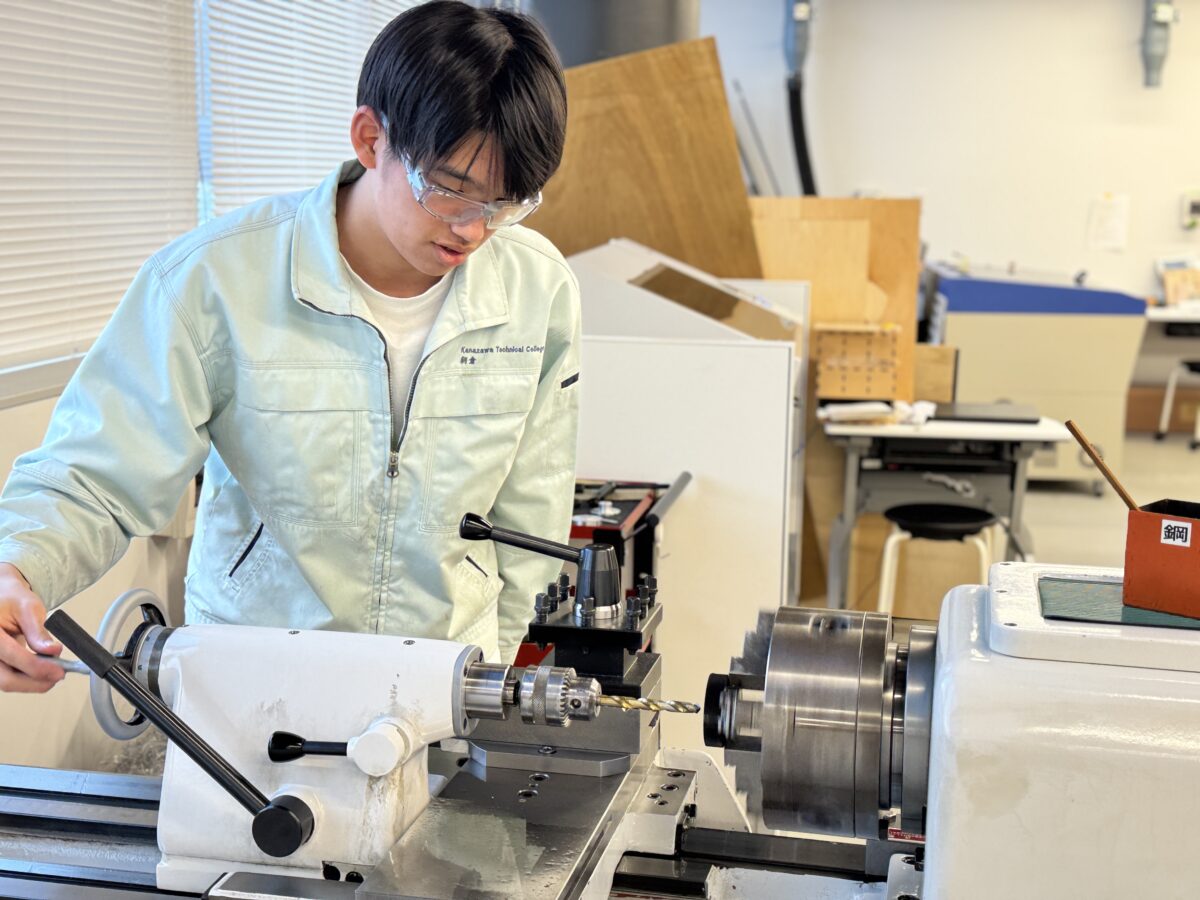
私は、この中でもローバー班に所属していました。昨年度の先輩から受け継いだローバーは移動速度が速く、車輪を固定しているねじが緩んでしまう問題があったので、今年度は防水カバーの取り付け以外に、その問題を解決すべくモータを減速させることになり、減速機の設計を私が担当しました。私は、ロボコン活動にも所属していて主に電気系の作業を担当していたので、普段していない機械設計には苦労しました。減速の設計では、まずローバーをどのぐらいの速度で移動させたいかを決め、そのためにはモータをどれぐらい減速させる必要があるのか、ギヤを選定しどのように配置にすればいいのかということを考えることに苦戦しました。その過程で機械設計の基本を学べたと思うので、この経験をこれからのエンジニアリングデザインや課外活動などに活かしていきたいです。
今年度のエンジニアリングデザインⅡの成果が後輩たちに受け継がれて、獣害対策システムの機能が完成することを期待しています。
石原田 海秀
Hello. My name is Kaishu Ishiharada, and I am a 2nd year student at ICT. I want to talk about our class, "Engineering Design II." In this class, we have two teams. The Agri-Business team grows "KOSEN Beniharuka" sweet potatoes to make a profit. The Tech team uses technology to protect the farm from wild animals like monkeys. I am a member of the Tech Team.
The Tech group has three teams: IoT, Drone, and Rover. We want to make a system to protect the farm. First, the IoT system watches for monkeys. Then, it sends a message to the user’s phone. After that, we use a drone to drive the animals away. If it is raining and the drone cannot fly, we use a robot called Rover.
IoT team
The IoT team makes the communication system. This year, they changed to a new message service because the old message service went out of service. They built the new system, but next year they need to test it more to see if it is useful in daily life.
Drone team
The Drone team uses drones to stop the animals. This year, they changed some parts on the drone. The old parts were difficult to program, so they put in new parts that were easier to program to better control the drone. In the future, they want the drone to fly and use its camera.
Rover team
The Rover team started last year. We use the rover when the weather is bad. This year, we improved the rover using what we learned in math and physics classes. In the second semester, we made a waterproof cover for the rain. It was a new challenge and very difficult, but we made a prototype after talking with our teachers and classmates.
I was a member of the Rover team and helped design the reduction gear. The old rover was too fast, and the vibration loosened the screws. So, I designed gears to make the motor slower. I am usually on the Robocon team and work on electronics, so mechanical design was hard for me. I had to choose the right gears and think about the velocity. It was difficult, but I learned the basics of mechanical design. I want to use this experience in my future work.
I hope the next students will continue our work and complete the system. Thank you for reading.
Kaishu Ishiharada