




Engineering Design (ED)
エンジニアリングデザイン(ED)

こんにちは。白山麓高専事務室の間加田 侑里です。今回は2026年7月24日(金)に行われたエンジニアリングデザインⅠA(1年生)の最終ポスター発表について紹介します。
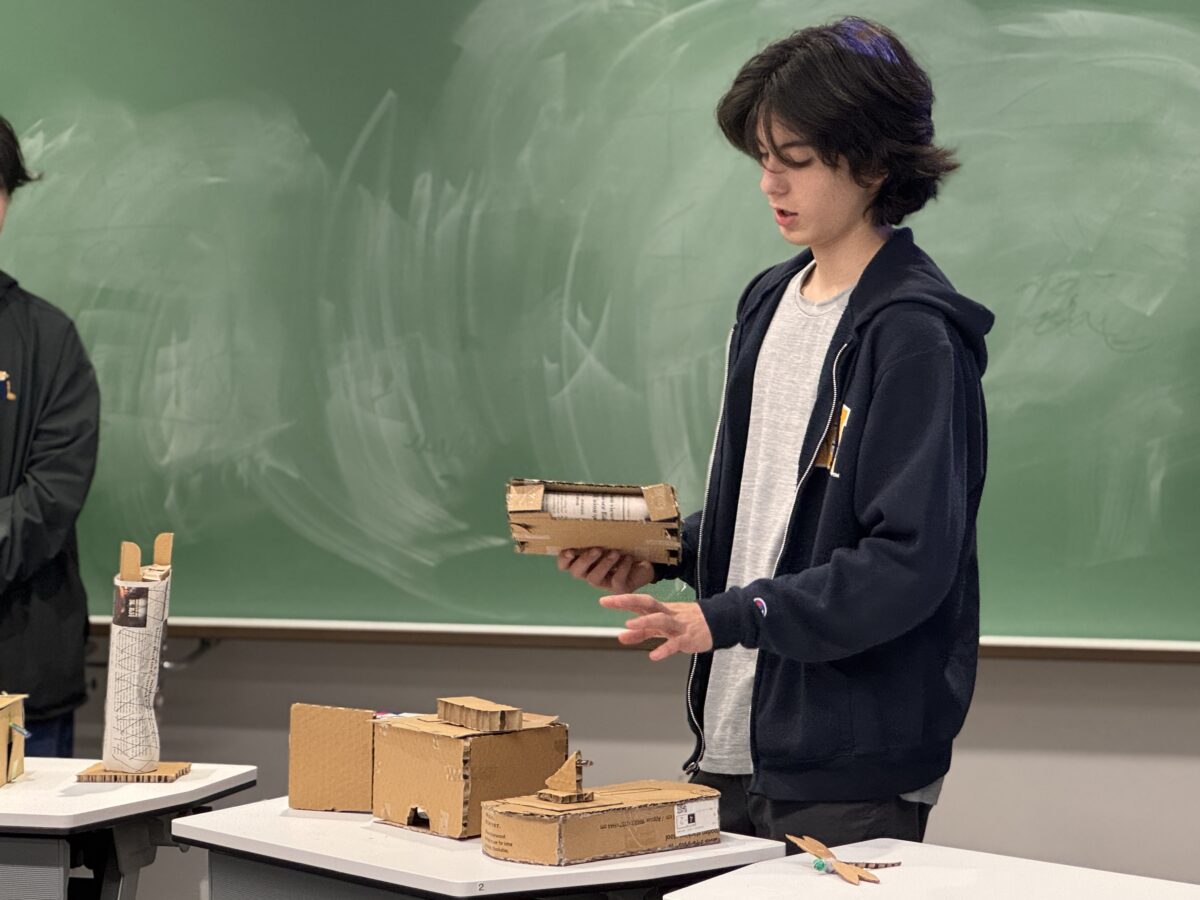
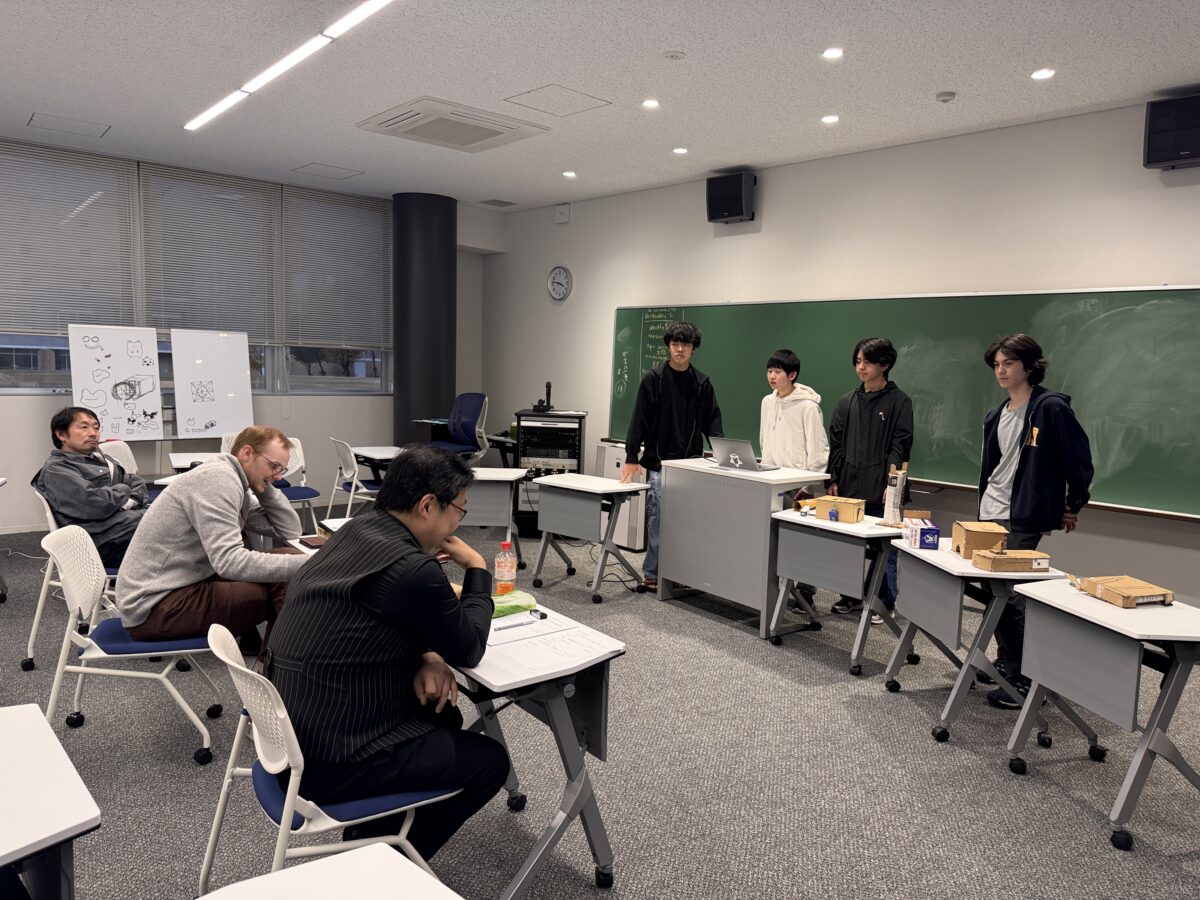
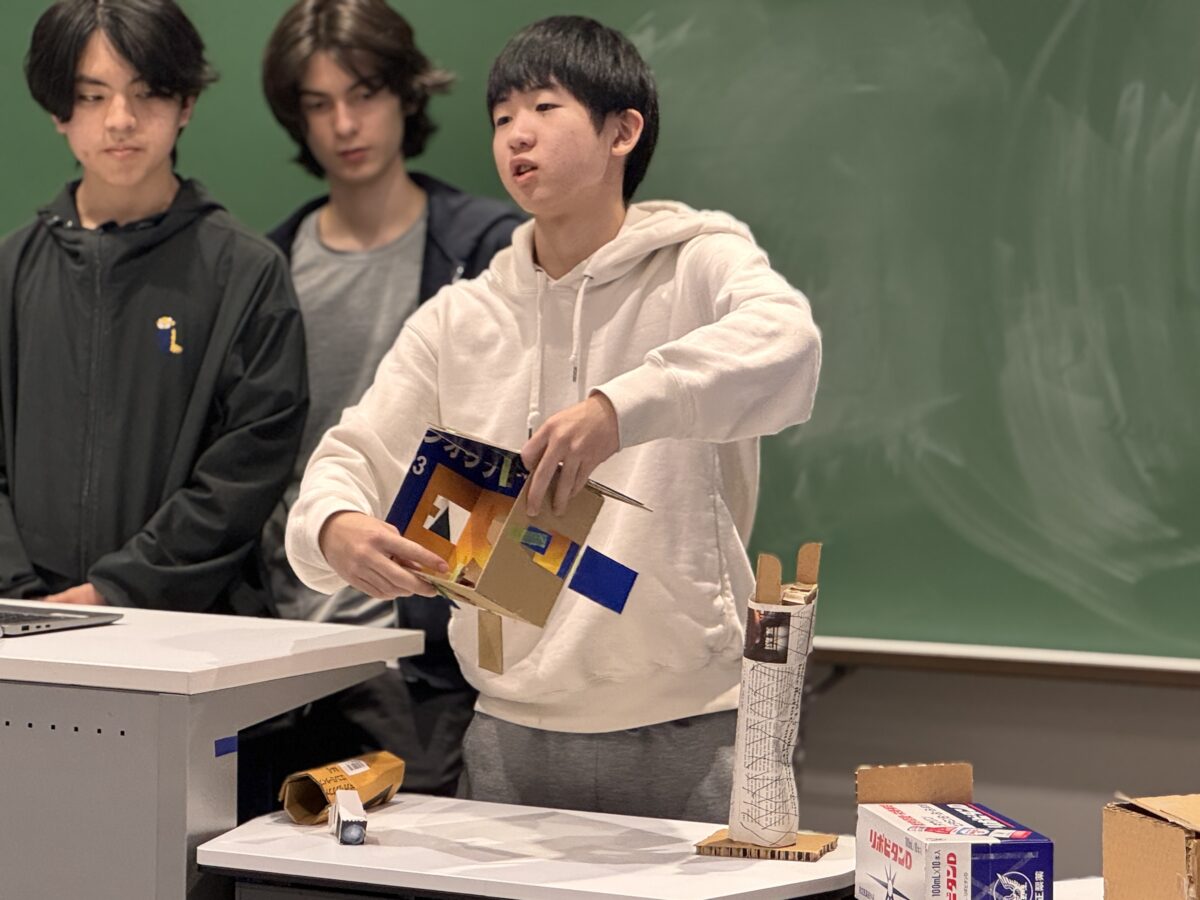
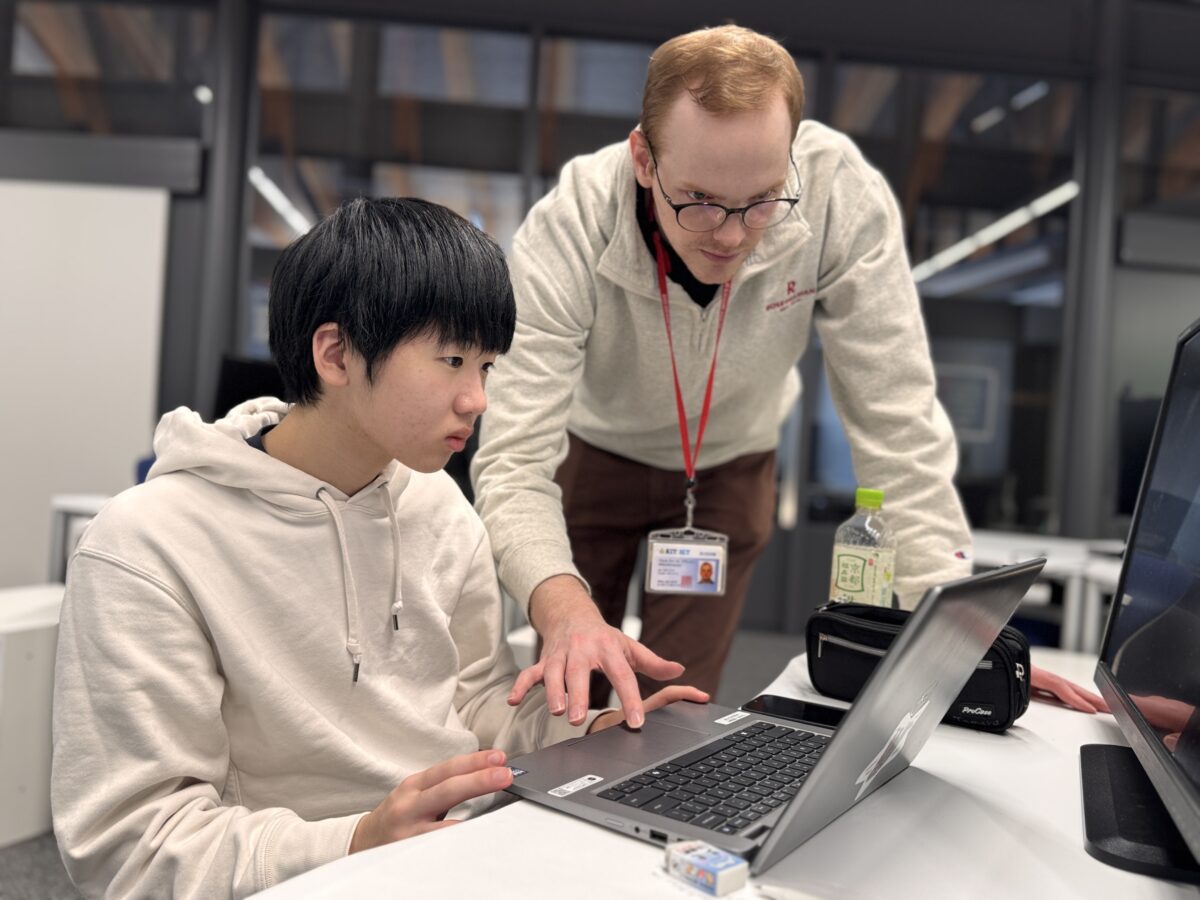
1年生が履修するエンジニアリングデザインⅠAの授業では、日常生活の問題を発見し、その解決策を考えるためのプロジェクト活動を行います。学生たちは基礎知識や手法を学びながら、アイデアを素早く試作し、カタチにすることで価値を創造する楽しさを体験します。
1年生の課題は、「毎日使う最悪のもの」をチームでリデザインし、その不便な点を解決することでした。学生たちは、寮や学生生活の中で不便に感じるさまざまなアイテムに注目しました。学生たちが製作したプロトタイプは下記の通りです。
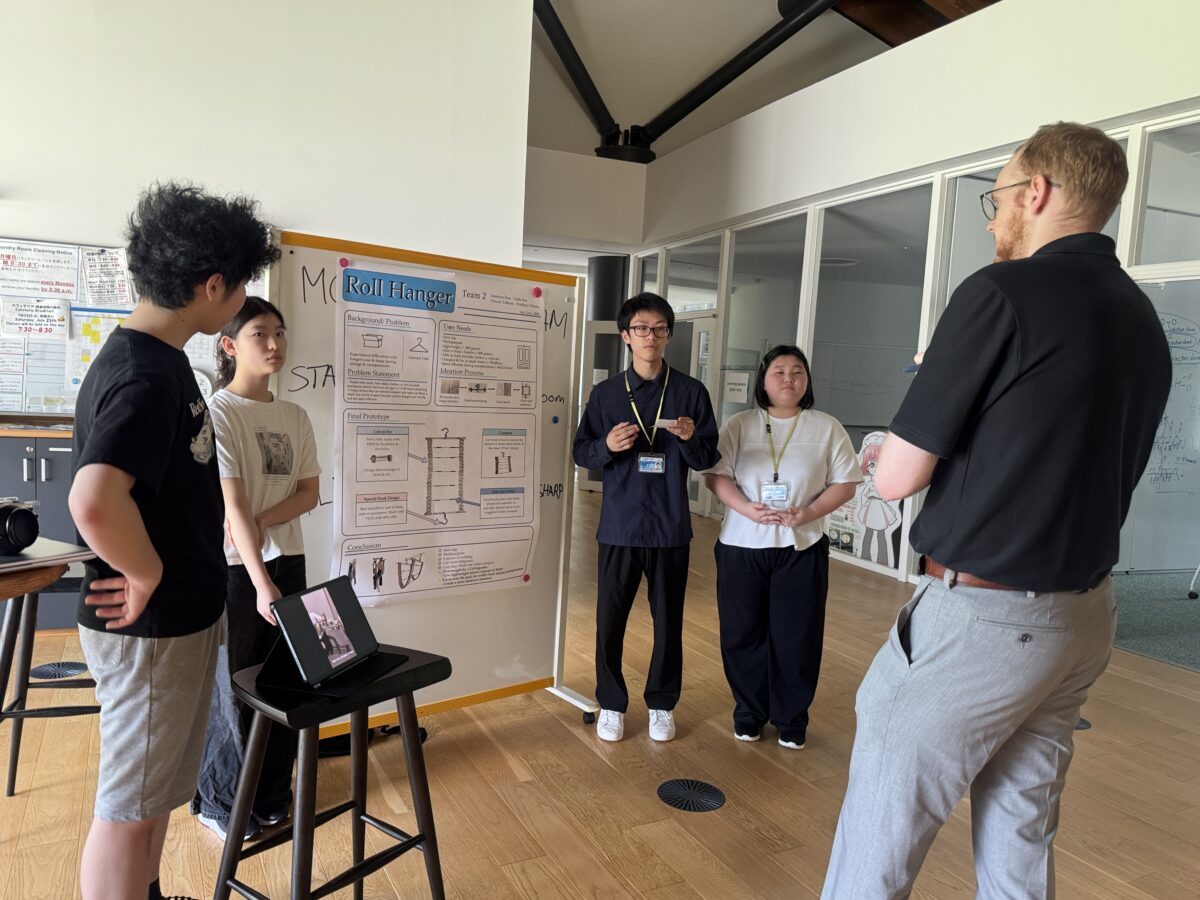
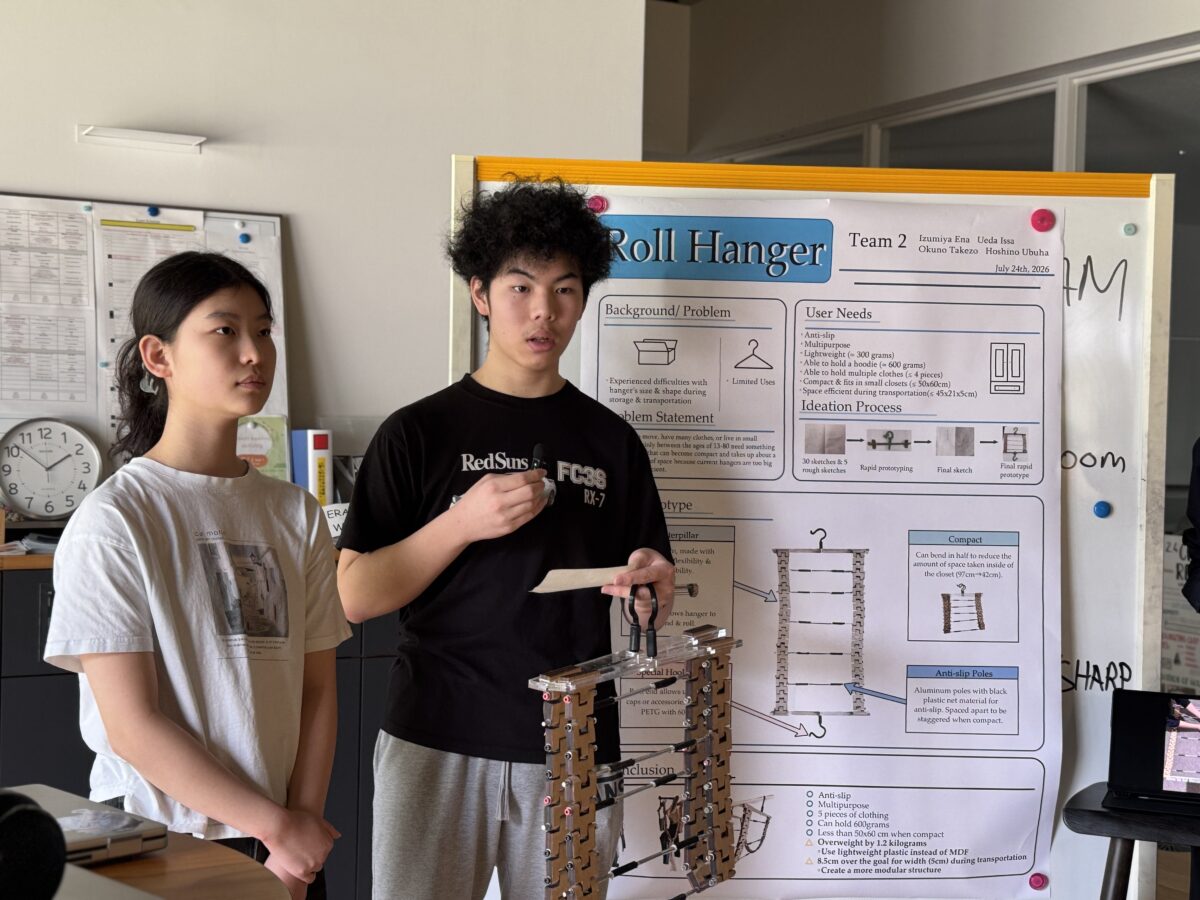
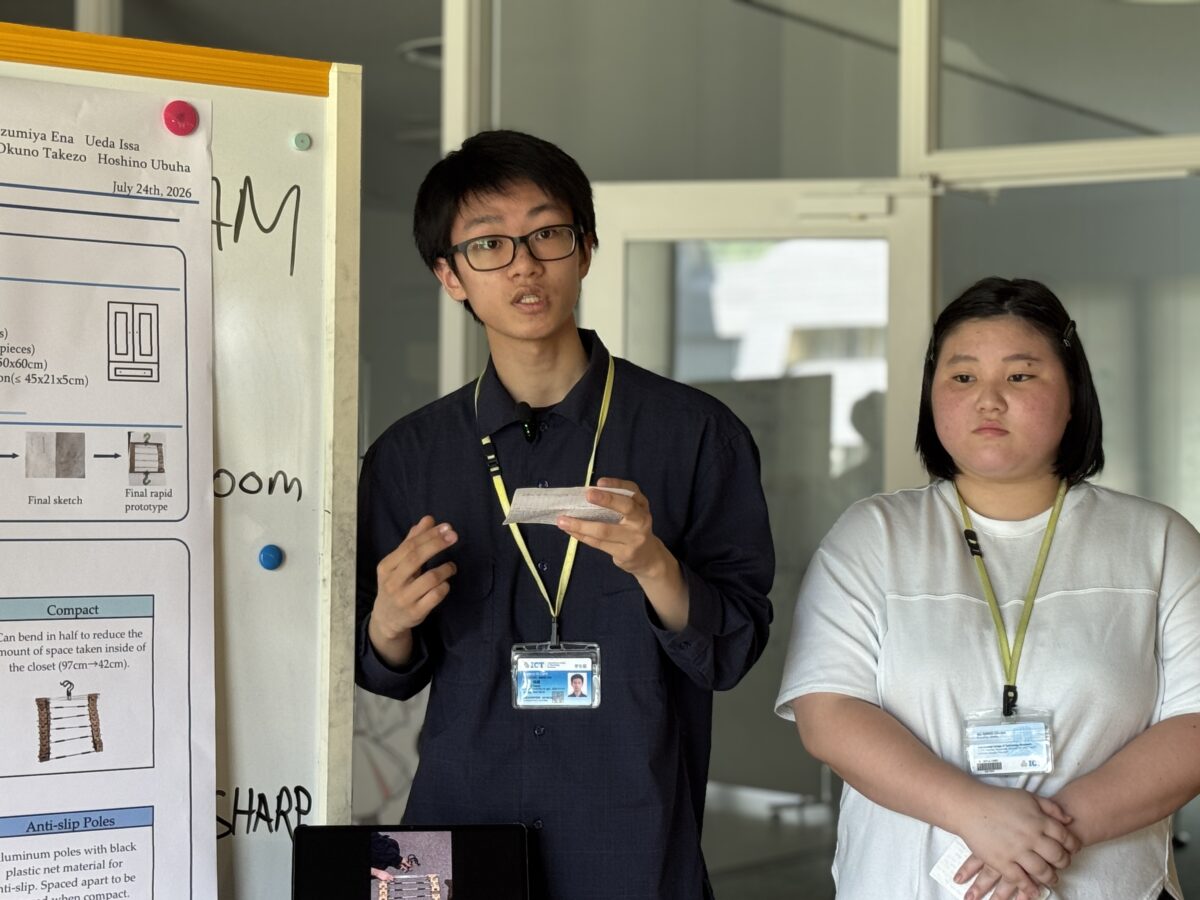
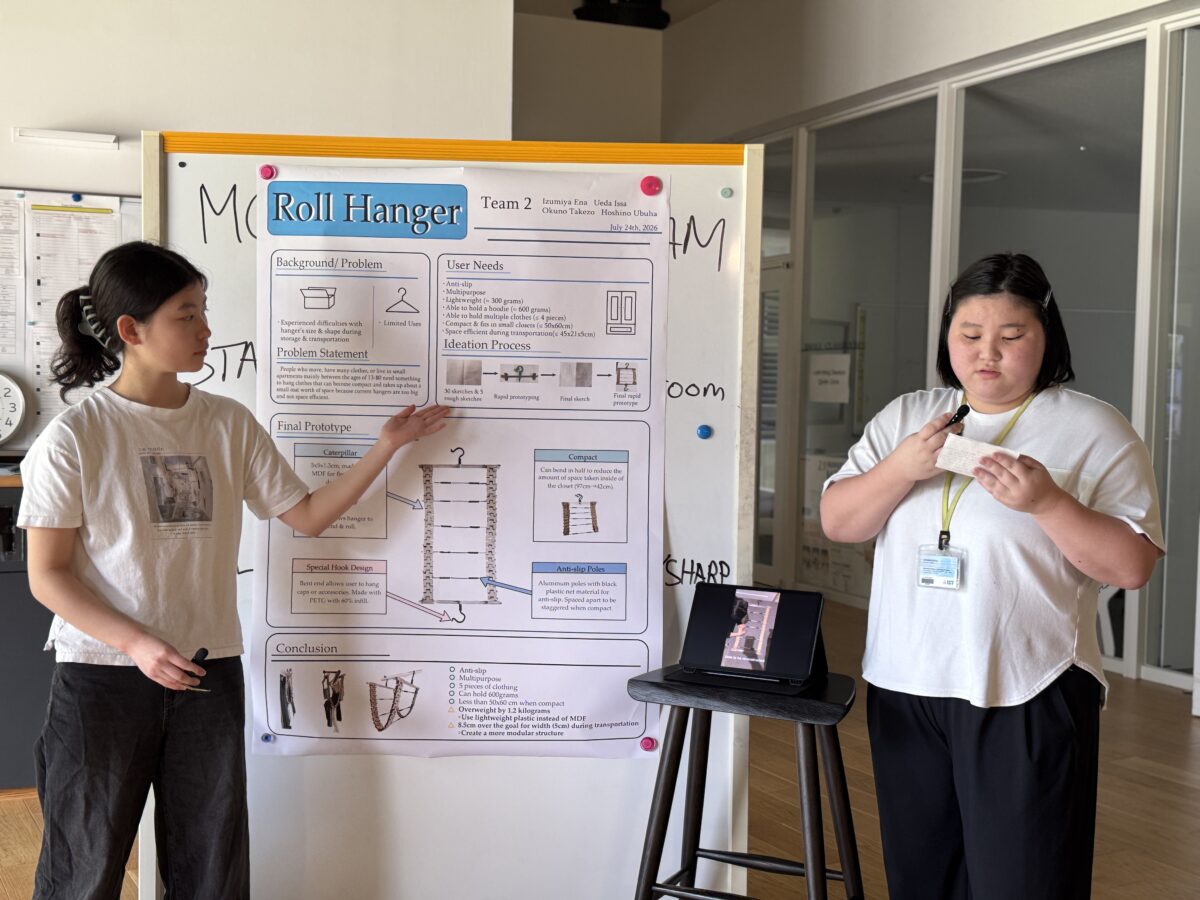
Roll Hangers
このグループは、寮生活を通じて、ハンガーのサイズや形状が原因で収納スペースを確保しにくいという課題に着目しました。そこで、折り曲げたり丸めたりすることでコンパクトに収納できるハンガーを製作しました。持ち運びやすさを重視した設計となっており、引っ越し時の荷物のかさばりを軽減することができます。
Blackboard Eraser Attachment
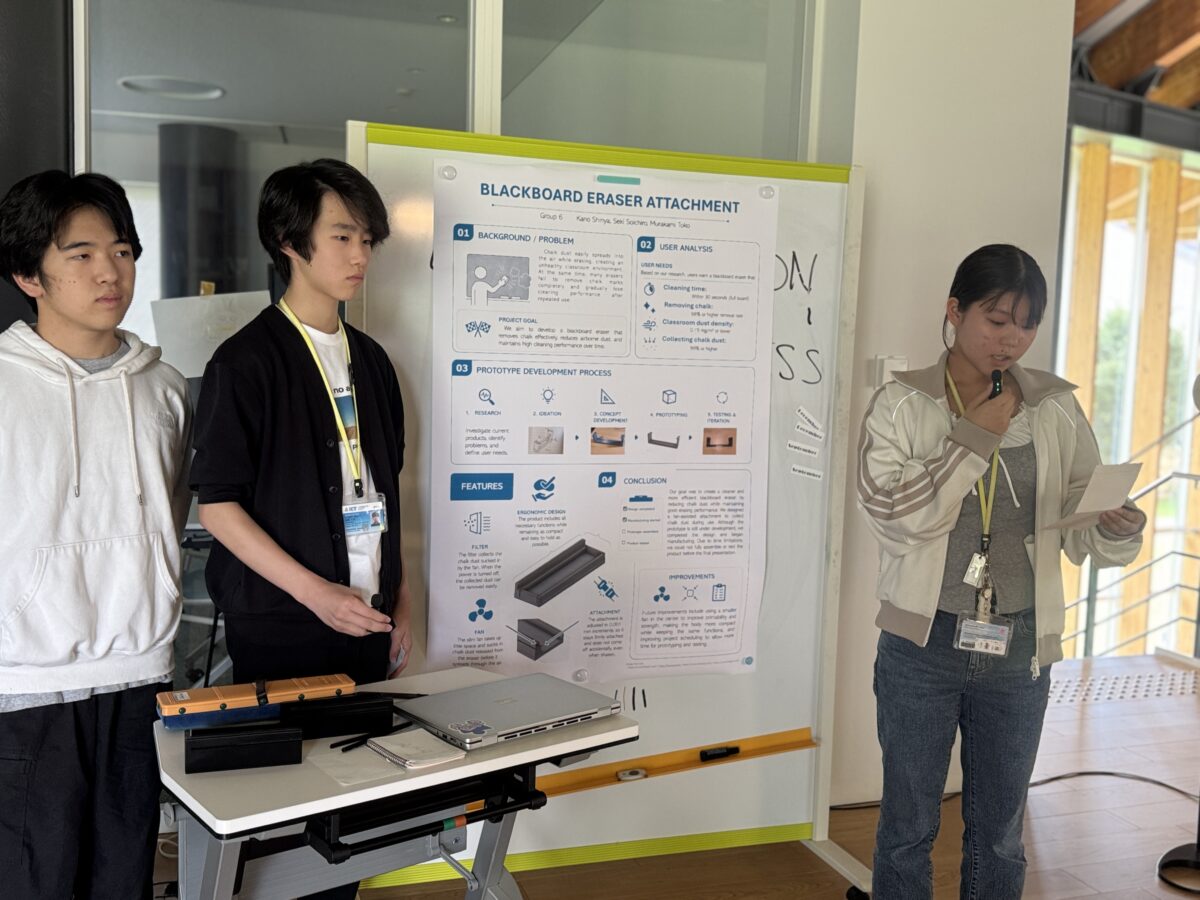
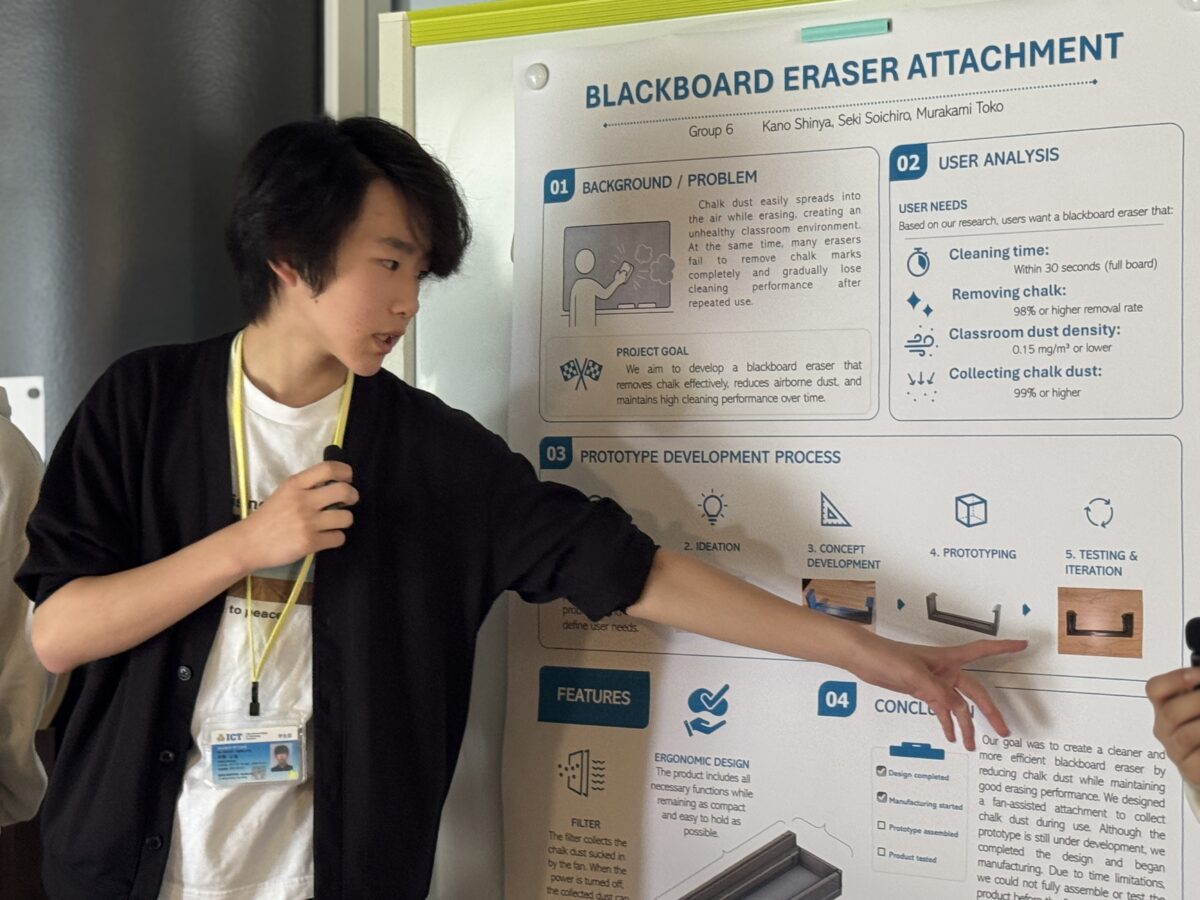
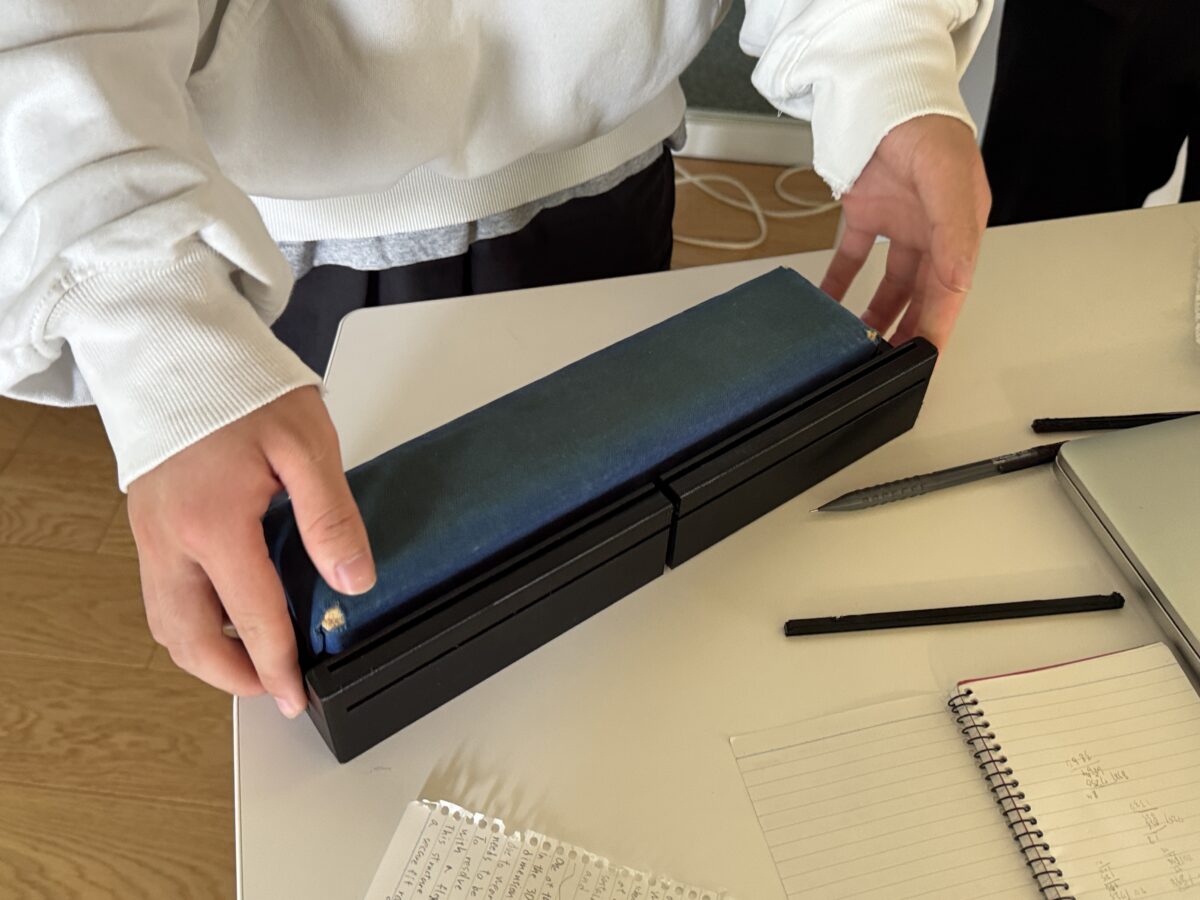
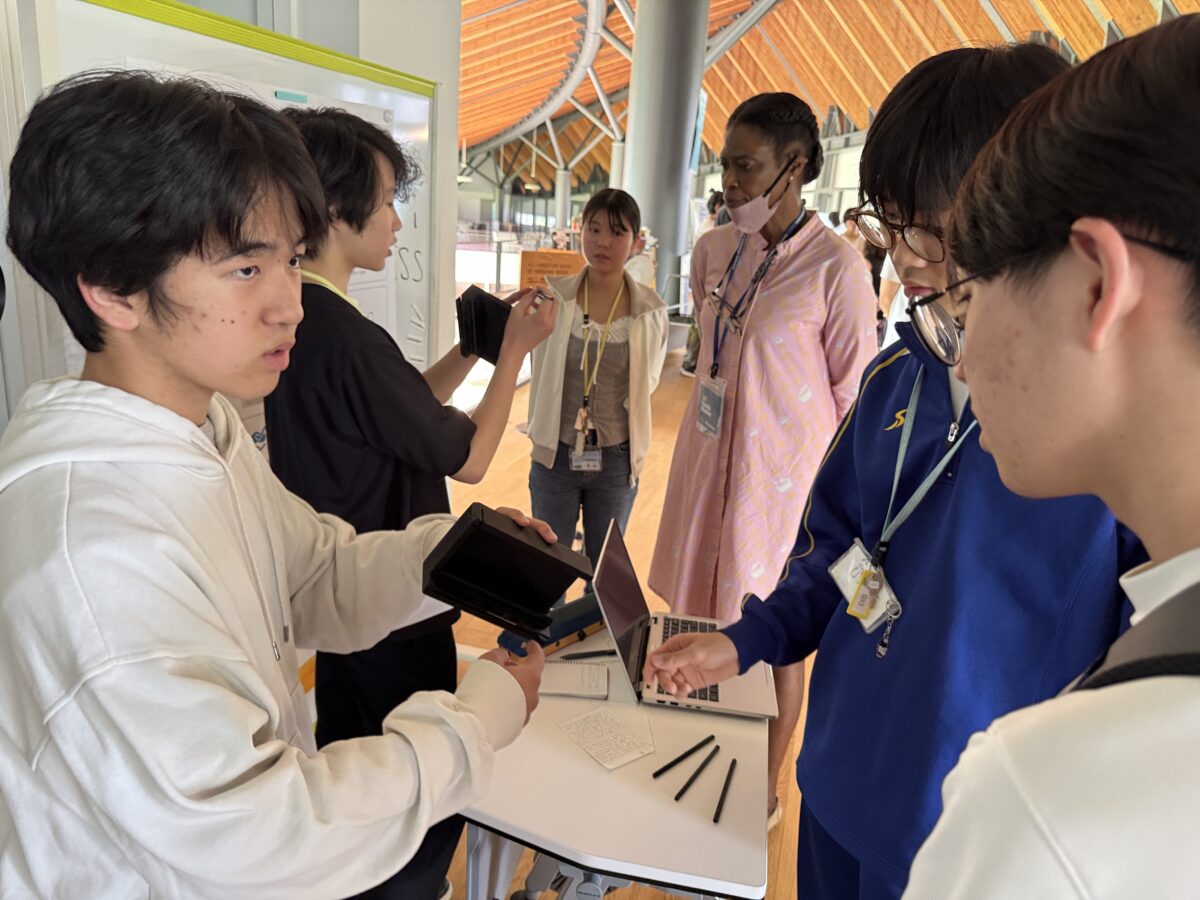
このグループは、黒板のチョークを消す際に粉塵が空気中に舞い上がり、教室環境が不衛生になるという課題に着目しました。そこで、素早く確実に板書を消しながらチョークの粉を効果的に回収し、空気中への拡散を防ぐ黒板消しアタッチメントを製作しました。アタッチメント内部にはフィルターとファンを組み込み、吸い込んだ粉塵を回収することで、高い清掃性能と快適な教室環境の実現を目指しました。
Attachment for Table
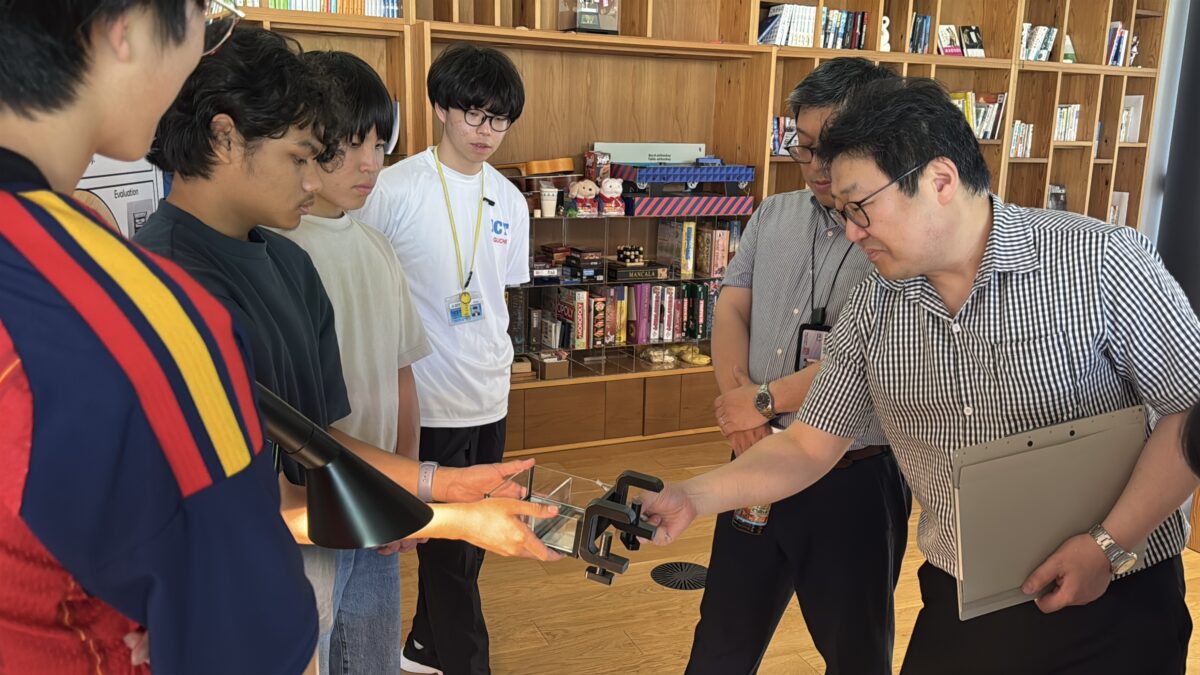
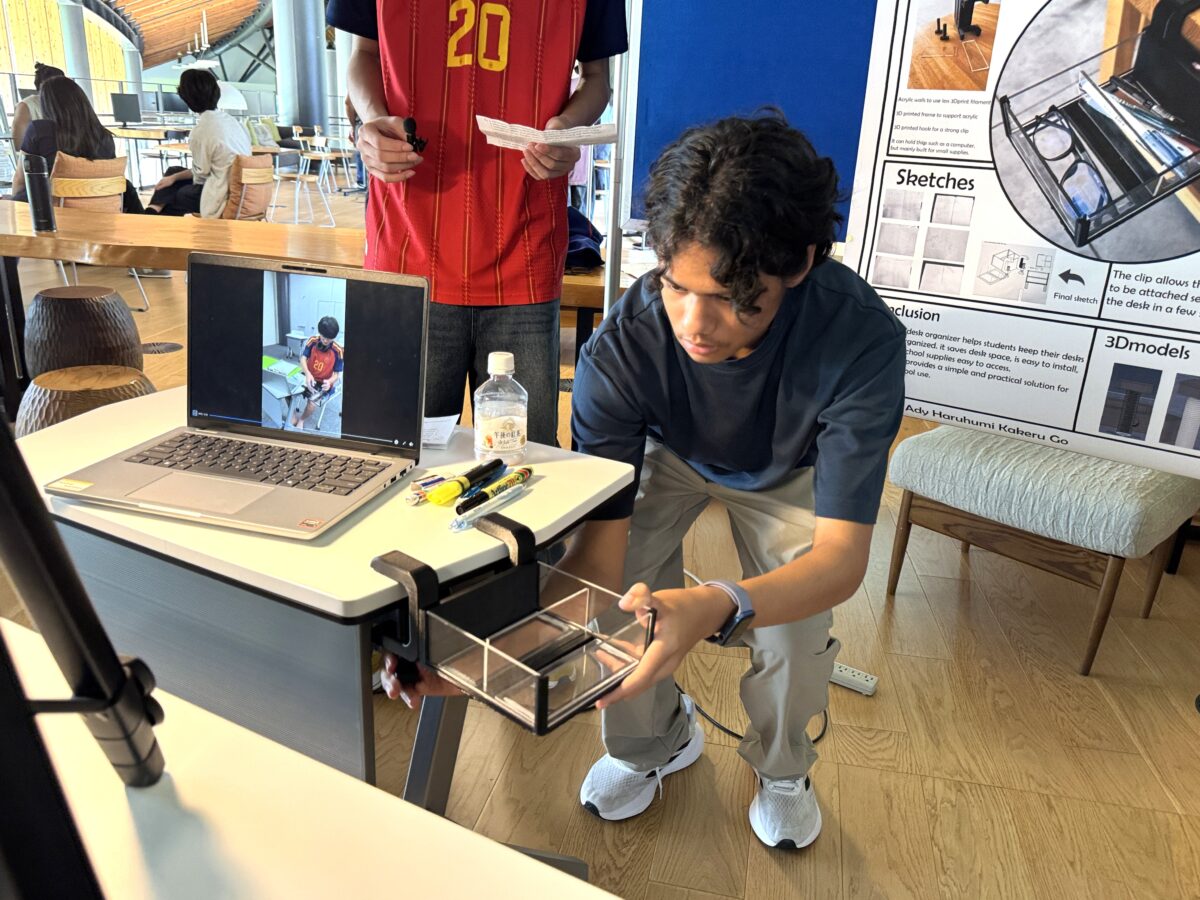
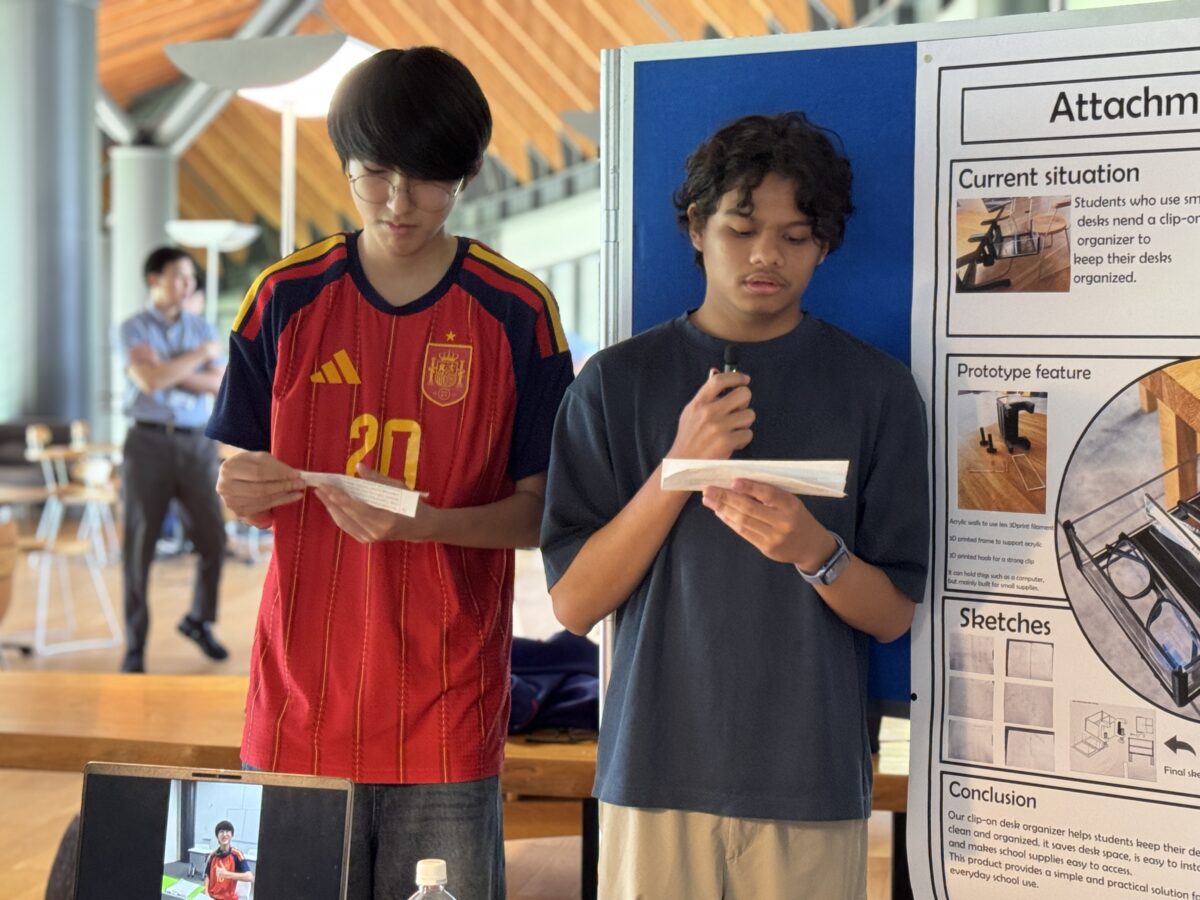
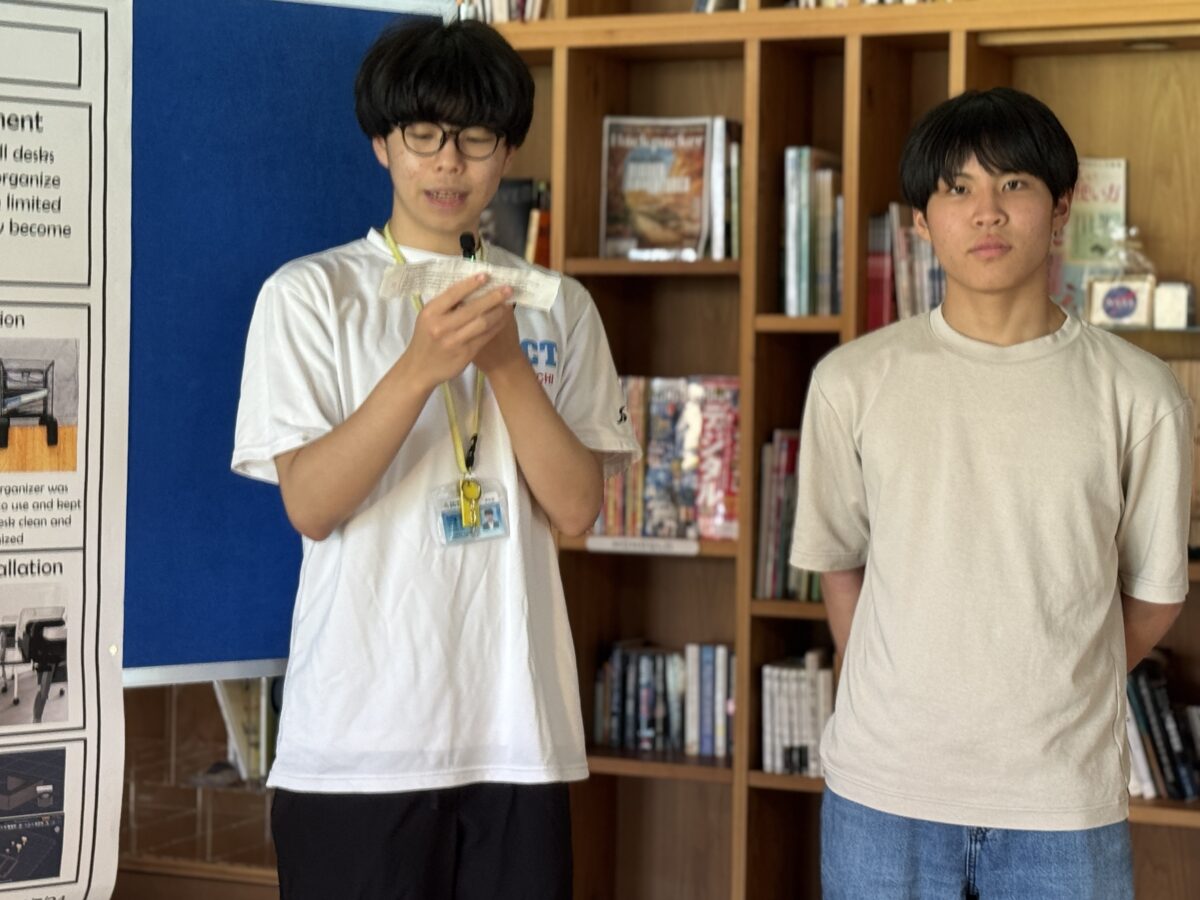
このグループは、学生が使用する机のスペースが限られているため、小物が机から落ちたり、作業スペースが不足したりするという課題に着目しました。そこで、机に取り付けられるクリップ式のデスクオーガナイザーを製作しました。小物を整理して収納できるため、机上のスペースを有効に活用することができます。
Cable Organizer
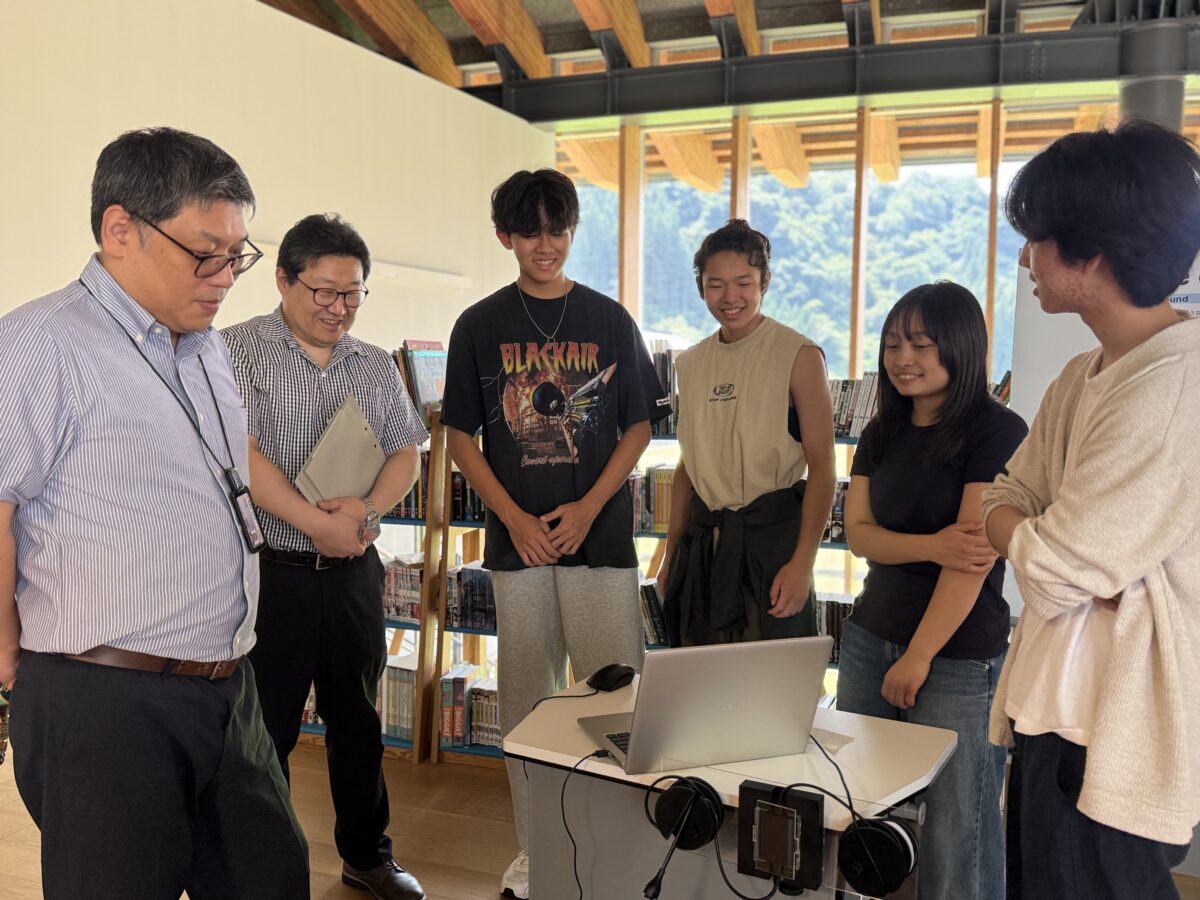
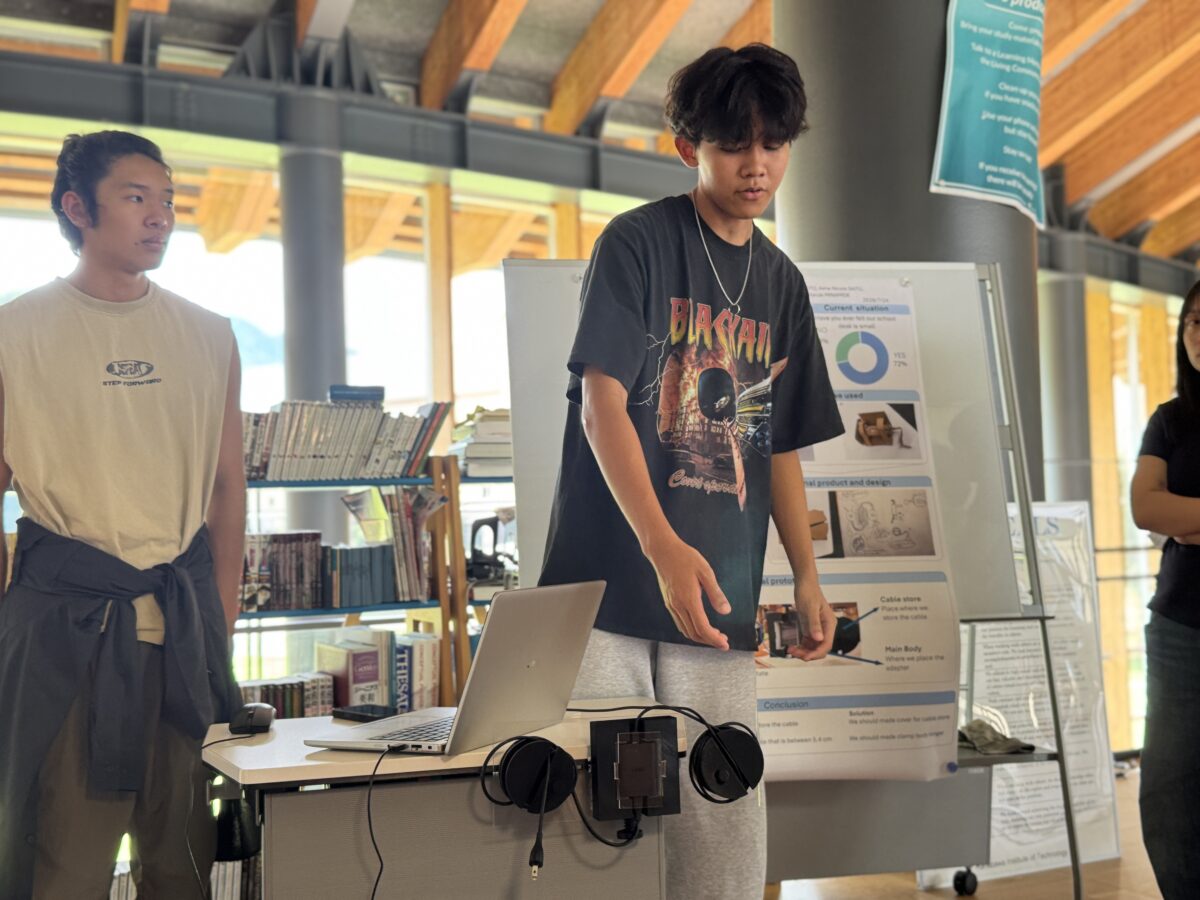
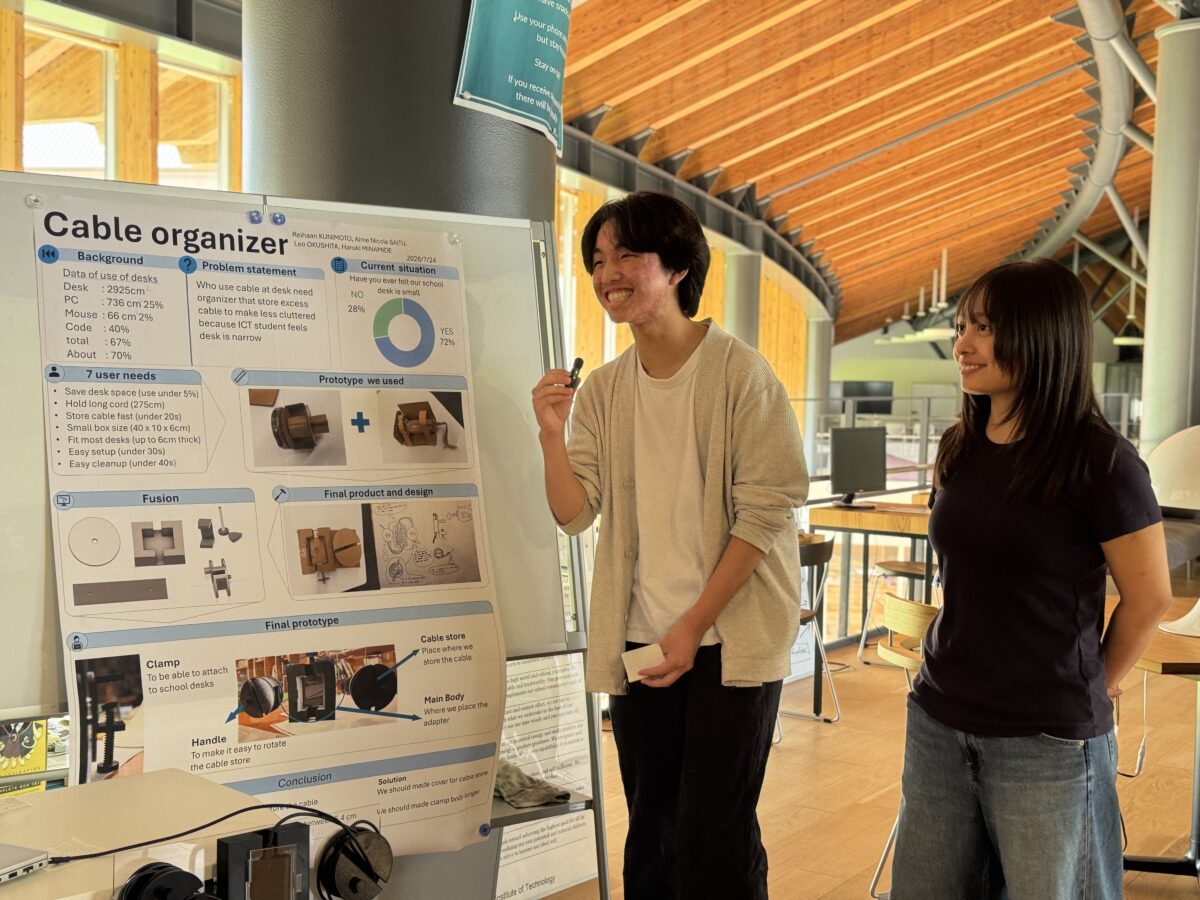
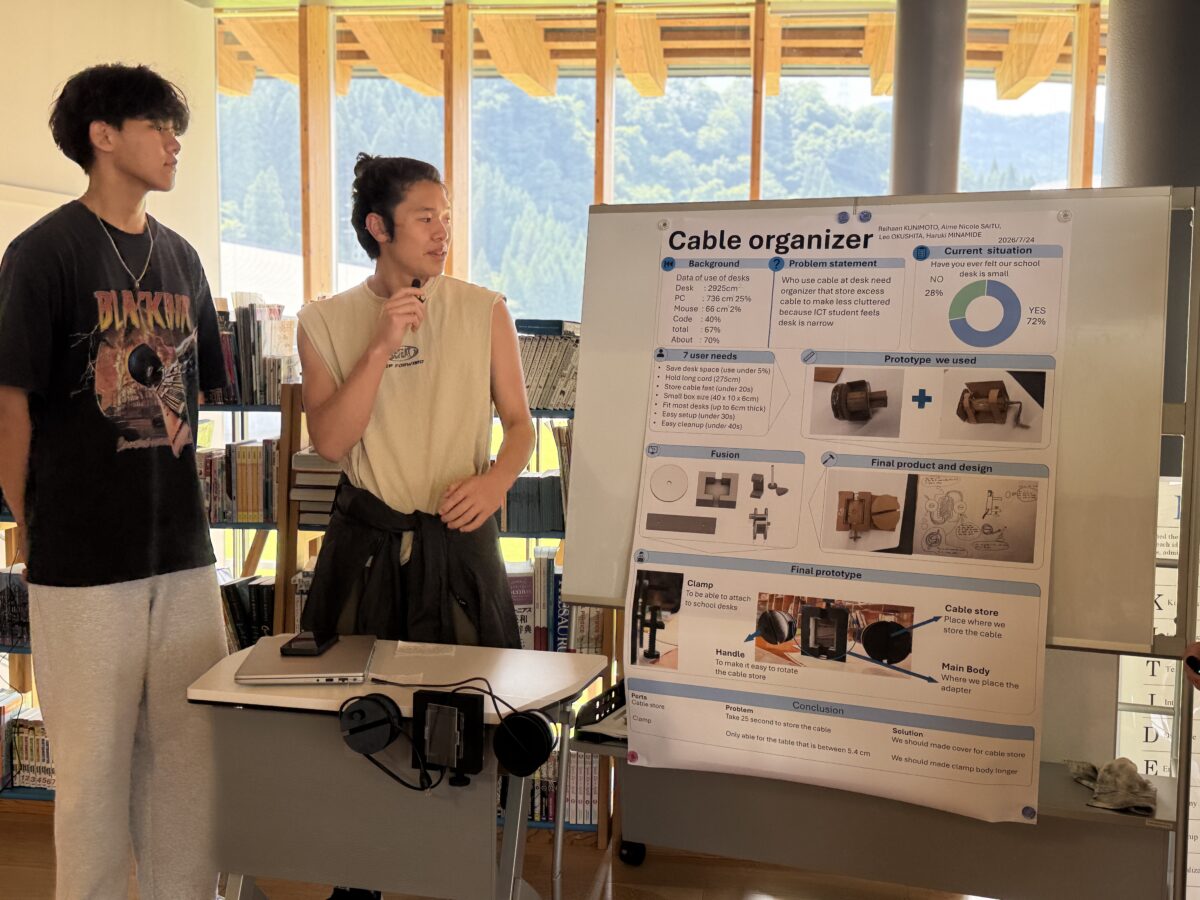
このグループは、学生が机上でパソコンのケーブルやアダプターを使用する際、配線が乱雑になり作業しにくいという課題に着目しました。そこで、ケーブルやアダプターを整理して収納できる収納付きケーブルオーガナイザーを製作しました。机に取り付けられる構造となっており、配線の長さを調節し、作業スペースを広く確保することができます。
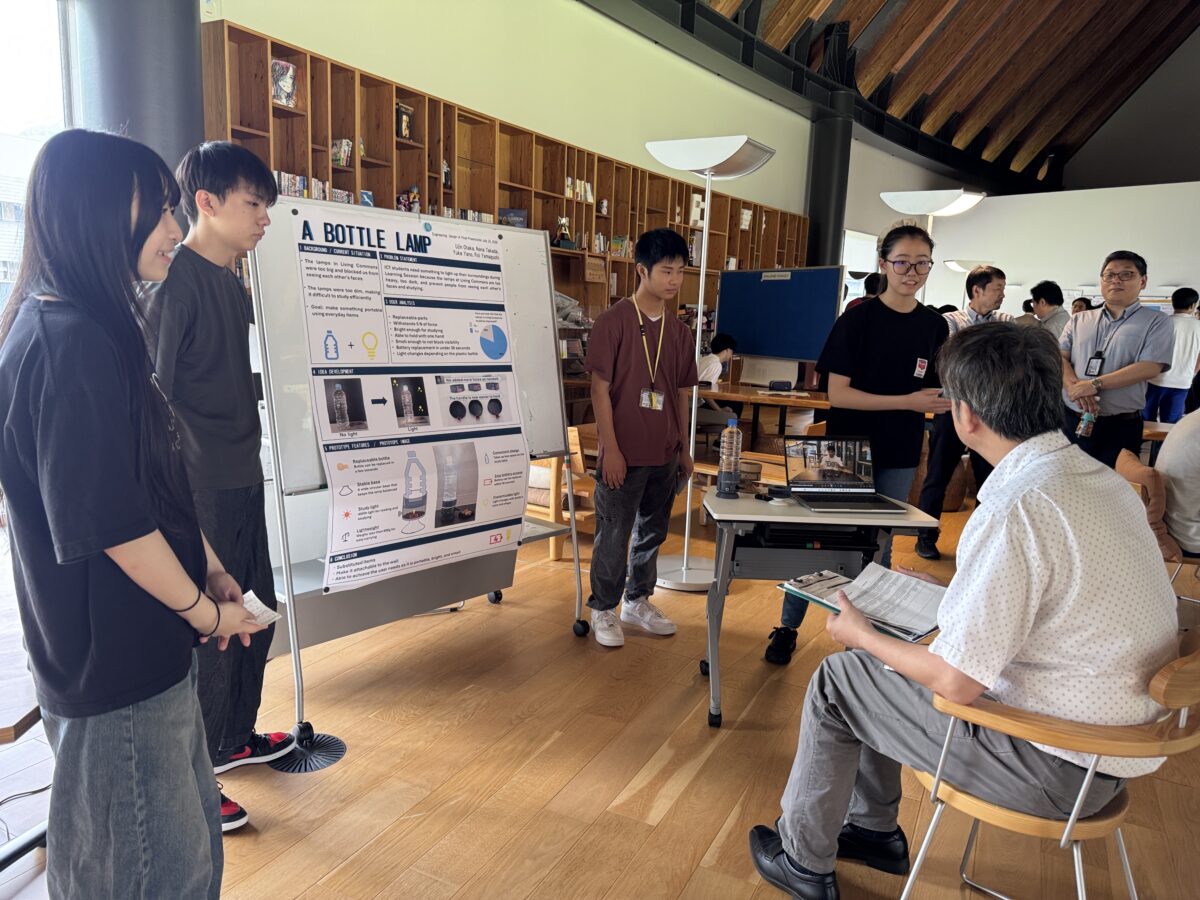
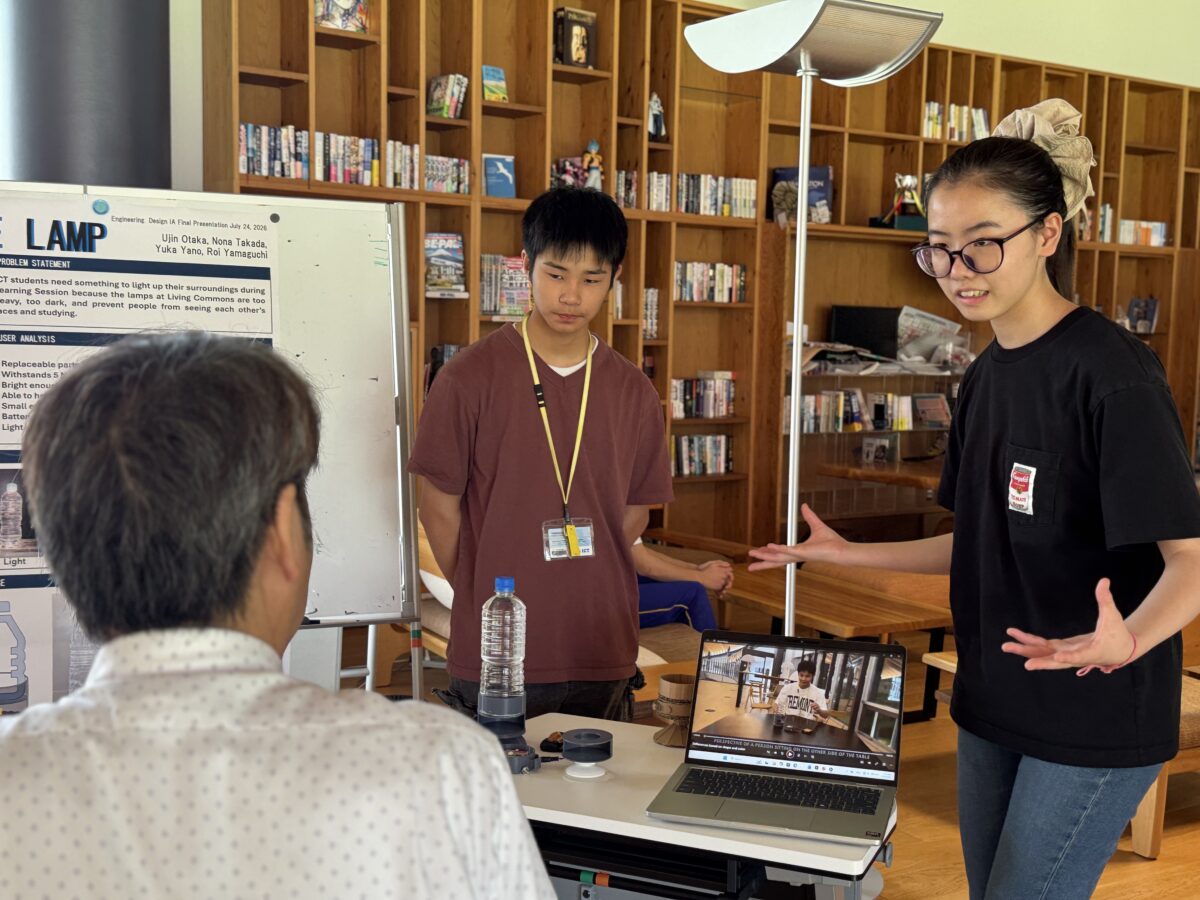
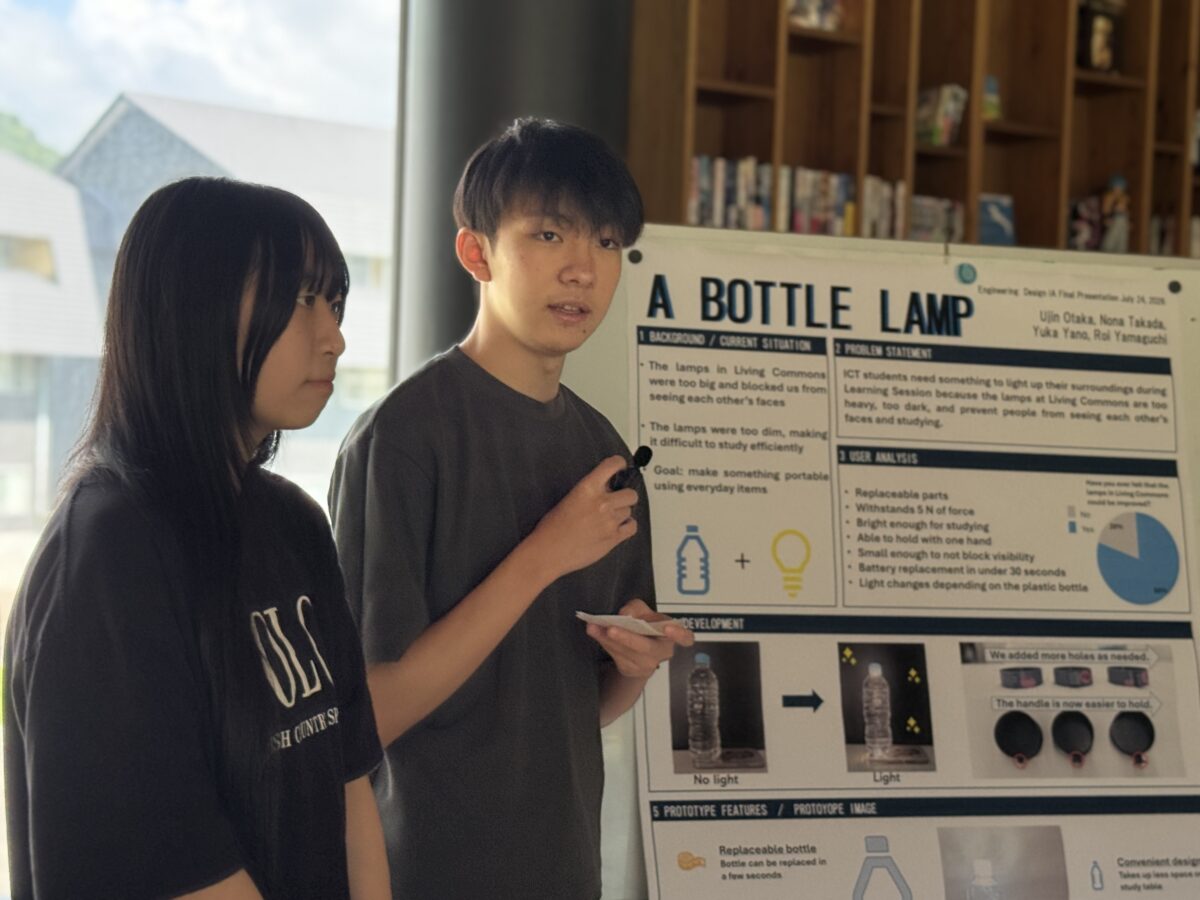
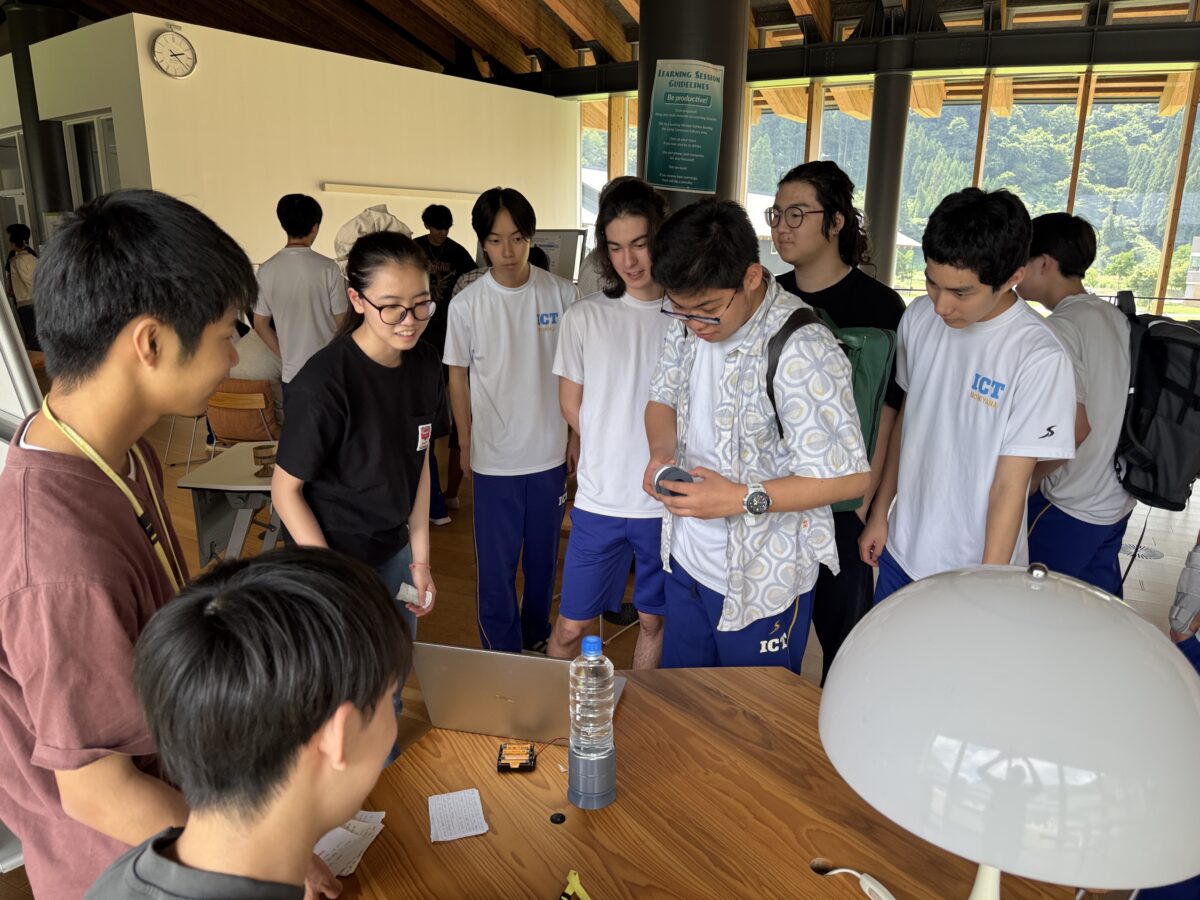
Bottle Lamp
このグループは、リビングコモンズの照明が大きすぎて周囲の友人の顔が見えにくいことや、照度が不足していて効率的な学習がしづらいことを課題として捉えました。そこで、軽量で持ち運びが容易な照明装置を製作しました。この装置は下部から光を照射し、上に置いたペットボトル内の水の反射を利用して光を拡散させます。装置がコンパクトであるため、友人の顔が見え、周囲を明るく照らすことが可能となり、学習時やコミュニケーション時に改善がされました。
On-time Laundry
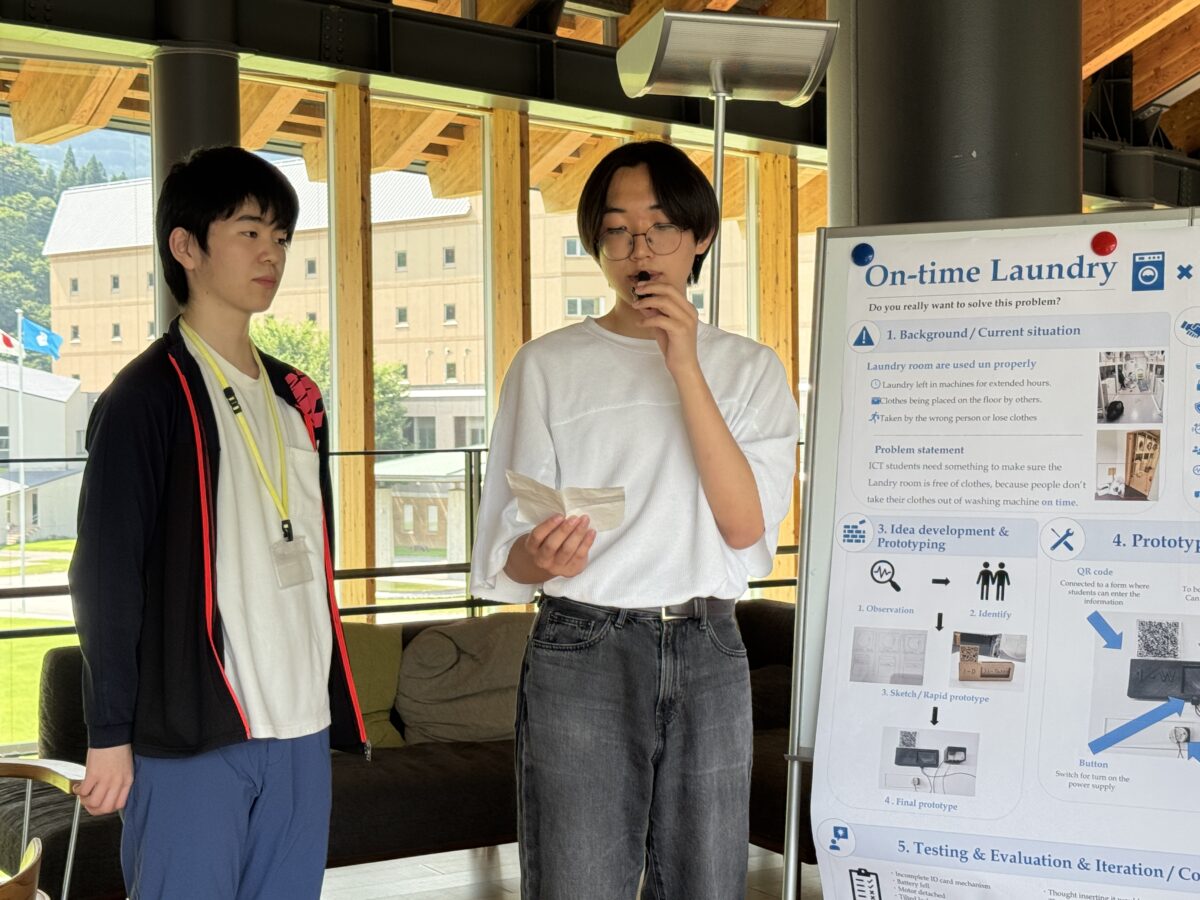
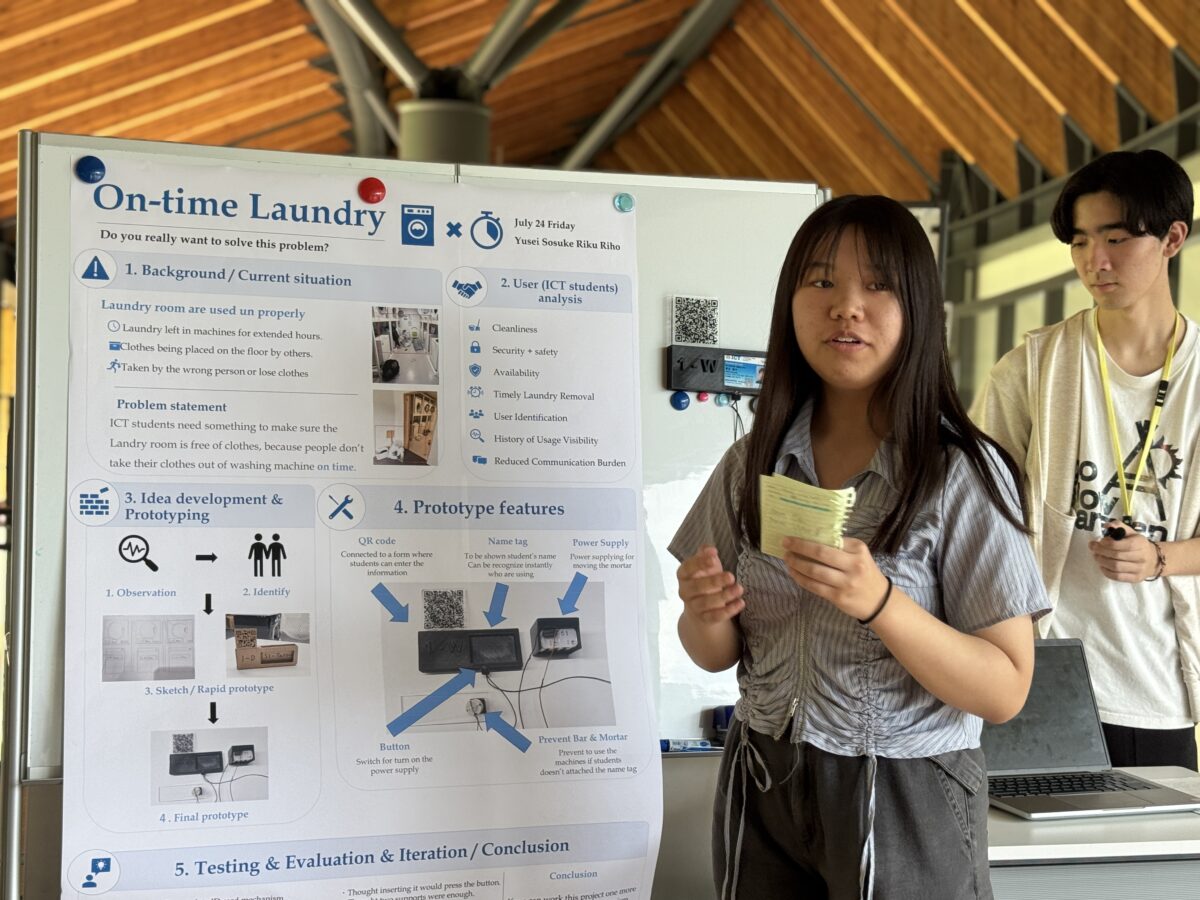
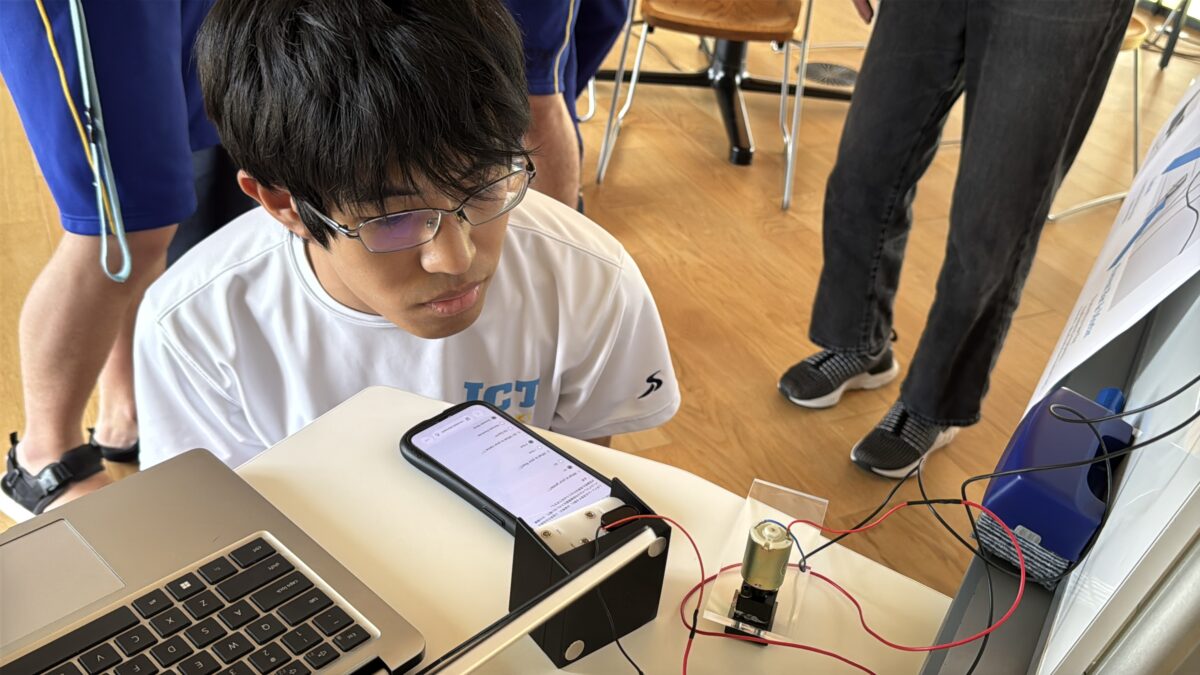
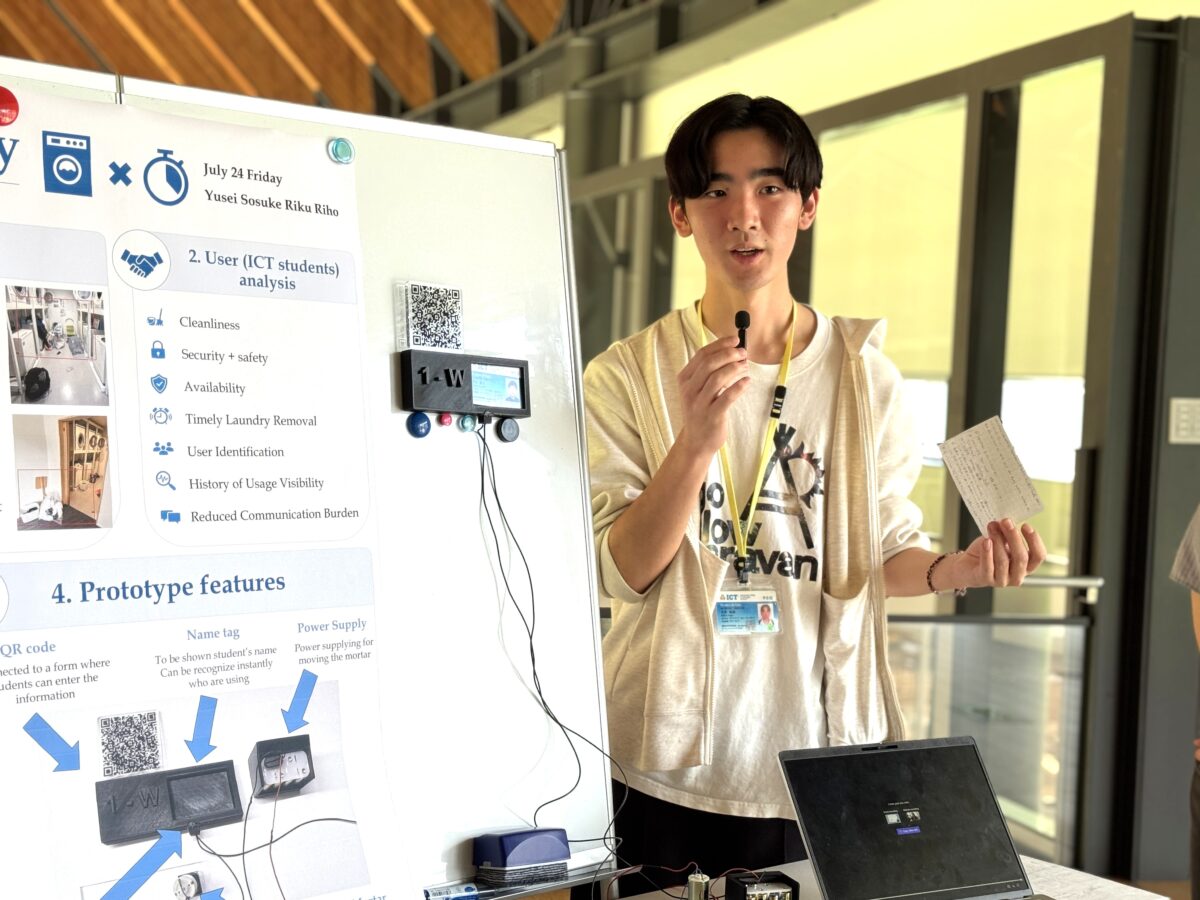
このグループは、学生寮に設置されている洗濯機の利用において、洗濯終了後も洗濯物を取り出さない利用者がいるため、他の学生がすぐに使用できないという課題に着目しました。そこで、学生証とQRコードを活用した洗濯機管理システムを提案しました。学生証をかざすことで洗濯機のロックが解除されて利用できるほか、QRコードを読み取ることで空いている洗濯機の状況や現在の利用者を確認することができます。
学生たちは今回のプロジェクトを通して、課題発見からアイデア創出、試作、発表までの一連のプロセスを体験しました。日常の「不便」に目を向け、それを改善するための提案を形にした経験は、今後の学習やものづくり活動にも大きく生かされることでしょう。
間加田 侑里
Hello, this is Yuri Makada from the Hakusanroku office. I would like to write about the final poster presentations in the Engineering Design IA (1st year) held on July 24th, 2026.
Engineering Design IA is a course in which 1st year students engage in project-based activities to identify problems in everyday life and develop solutions to address them. While learning fundamental design methods and concepts, students experience the excitement of creating something new by rapidly prototyping their ideas and bringing them to life.
For this project, students were challenged to redesign “the worst thing they use every day” and improve it. The teams focused on a variety of items that they found frustrating in the dormitory and the classroom. The prototypes they developed are introduced below.
Working in teams, students identified problems encountered in their daily lives and developed innovative solutions. Throughout the project, they learned design-thinking methods and gained hands-on experience in creating prototypes that addressed real-world challenges.
Roll Hanger
This group focused on the difficulty of storing hangers efficiently due to their size and shape. To solve this issue, they designed a hanger that can be folded and rolled up for compact storage. The lightweight and portable design makes it easier to carry during moves and helps reduce the amount of space required for storage.
Blackboard Eraser Attachment
This group addressed the problem of chalk dust being dispersed into the air when erasing a blackboard, creating an unhygienic classroom environment. They developed a blackboard eraser attachment that effectively collects chalk dust while quickly and thoroughly erasing the board. The device incorporates a filter and fan system that captures airborne dust, contributing to improved cleanliness and a more comfortable learning environment.
Attachment for Table
This group recognized that students often have limited desk space, causing small items to fall off the desk and reducing the available workspace. To address this issue, they created a clip-on desk organizer that can be attached to a table. The organizer provides additional storage space for small items and helps students make more effective use of their desks.
Cable Organizer
This group focused on the clutter caused by computer cables and adapters on students’ desks. They designed a cable organizer with built-in storage that keeps cables and adapters neatly arranged. The organizer can be attached to a desk, allowing users to manage cable length efficiently and maintain a larger and more organized workspace.
Bottle Lamp
This group identified two issues in the Living Commons: the existing lighting fixtures were so large that they make it difficult for students to see the faces of friends nearby, while also failing to provide sufficient illumination for effective studying. To address these issues, they developed a lightweight, portable lighting device. The lamp shines light upward through a water-filled plastic bottle, using reflection and diffusion to spread light throughout the surrounding area. Its compact design improves visibility for communication while creating a brighter environment for studying.
On-time Laundry
This group focused on a common problem in the student dormitory: some students leave their laundry in the washing machine after the cycle has finished, preventing others from using the machines promptly. To solve this issue, they proposed a washing machine management system that utilizes student ID cards and QR codes. Students can unlock a washing machine using their ID card, while QR codes allow users to check machine availability and identify current users. The system aims to improve washing machine use efficiency and reduce waiting times.
Through this project, students experienced the entire design process, from identifying problems and generating ideas to prototyping and presenting their solutions. By focusing on everyday inconveniences and transforming them into practical innovations, they developed valuable skills that will support their future learning and engineering activities.
Yuri Makada

こんにちは。校長の鹿田 正昭です。
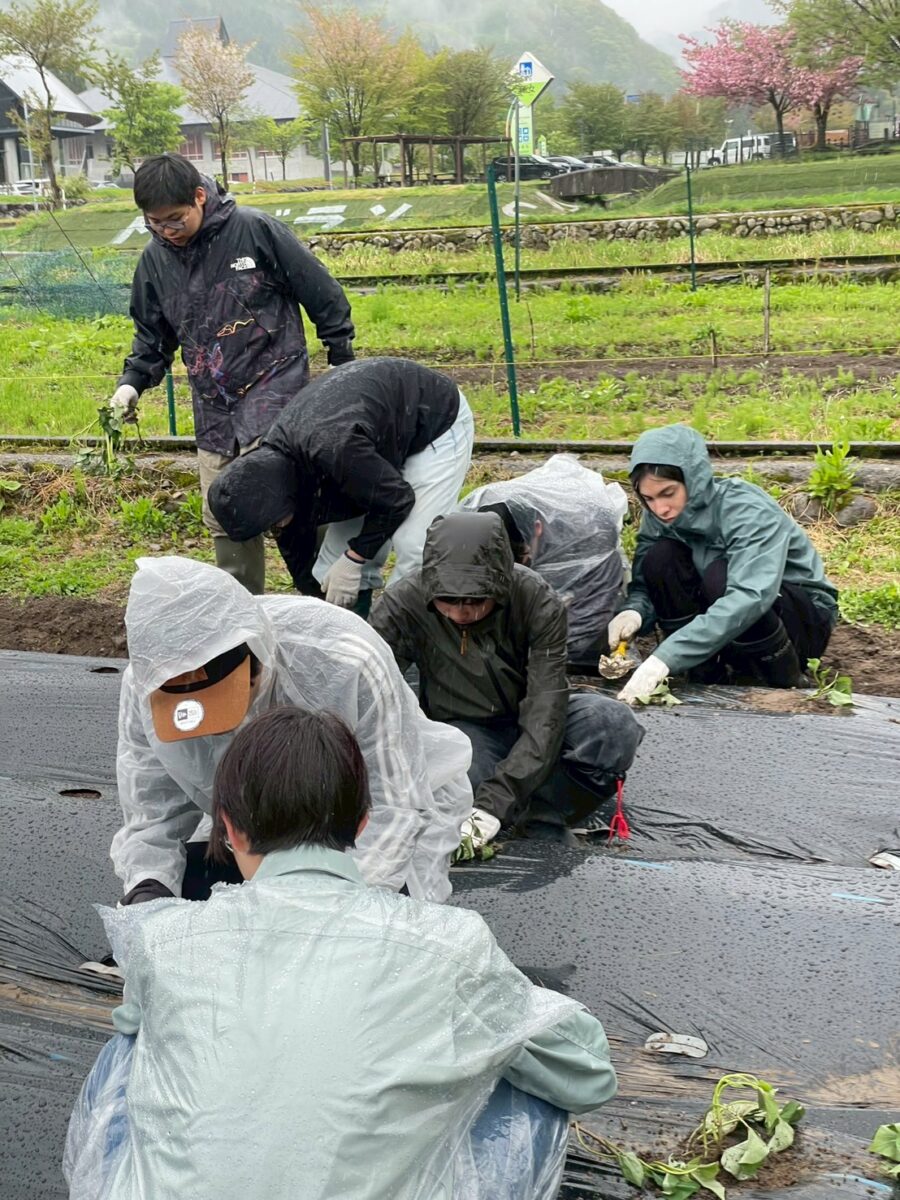
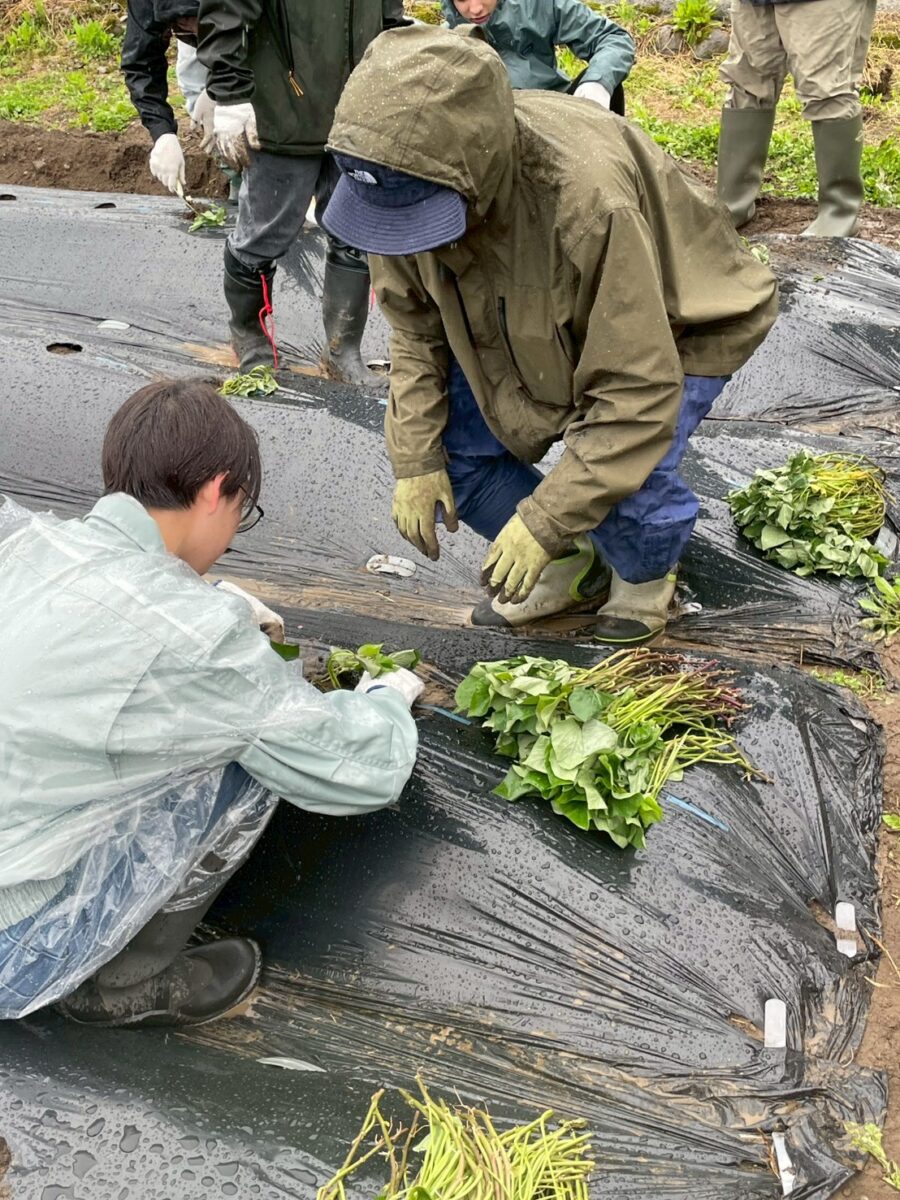
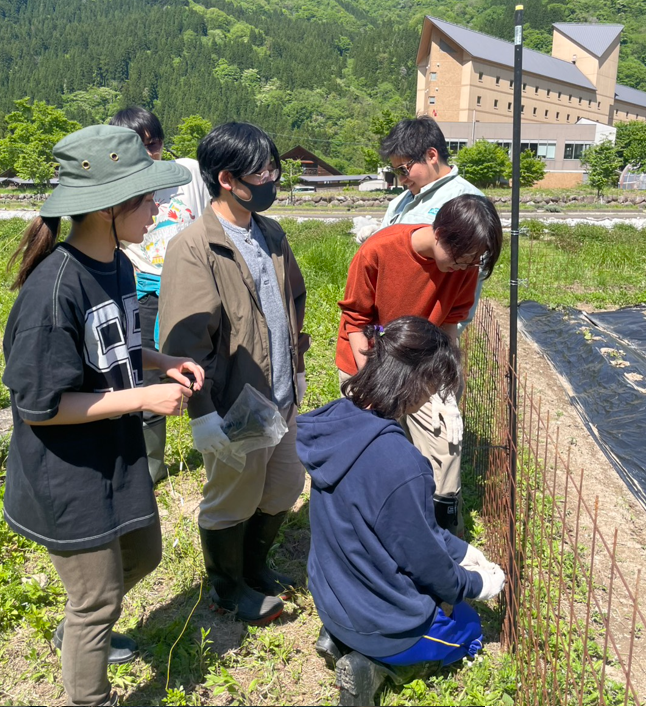
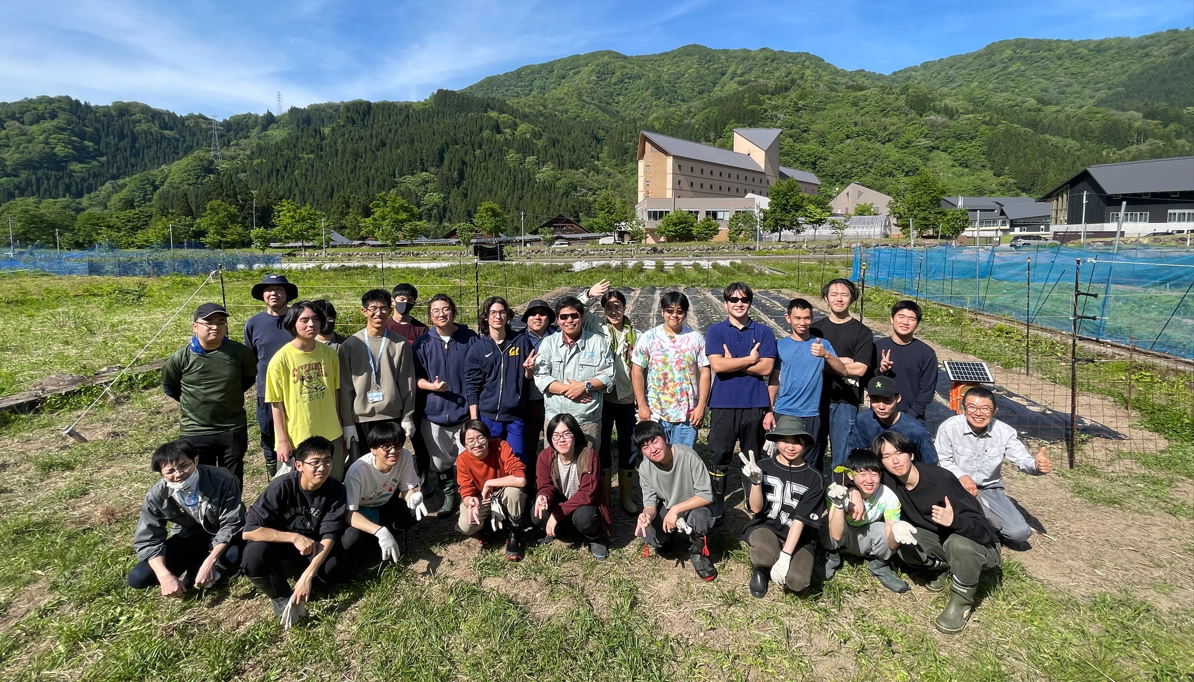
2026年4月23日(木)、今年で4回目の参加となるエンジニアリングデザインⅡ(2年生)「紅はるか」の苗植えをお手伝いしました。これまでの3回はいずれも晴天でしたが、今年はあいにくの雨となってしまいました。
また、嬉しいことに2年生の人数が多いことから、小高先生から「一人当たり10本から15本程度の植え付けでお願いします」と一人当たりの本数制限のお話がありました。初めての年(3年前)は苗床1列全部を1人で植えました。今回はあいにくの雨でしたが、人数が多いこともあってスムーズに作業が進み、植え付けは50分程度で終わりました。
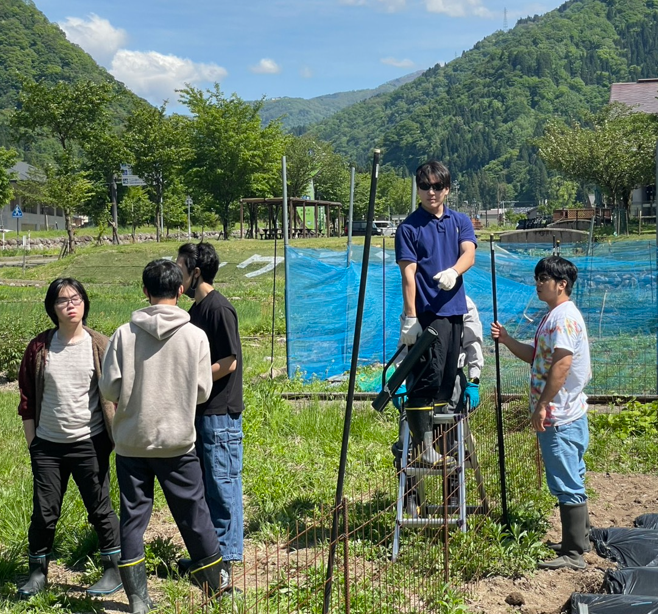
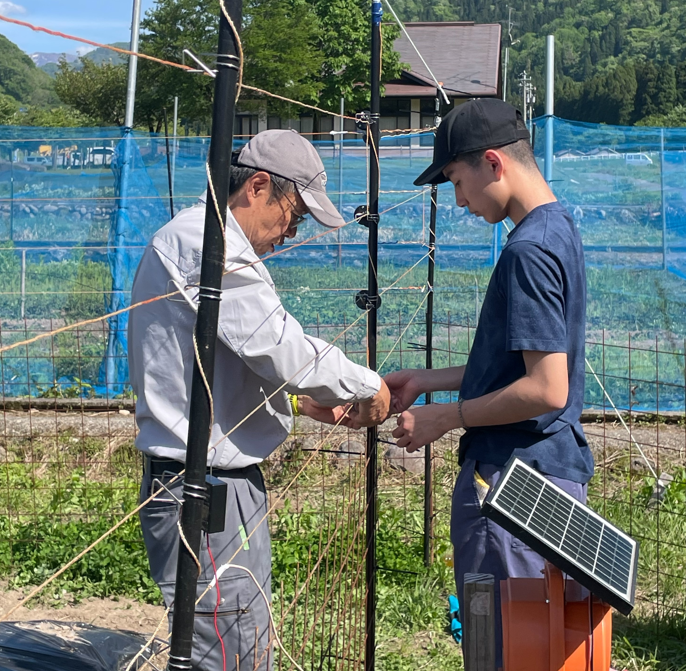
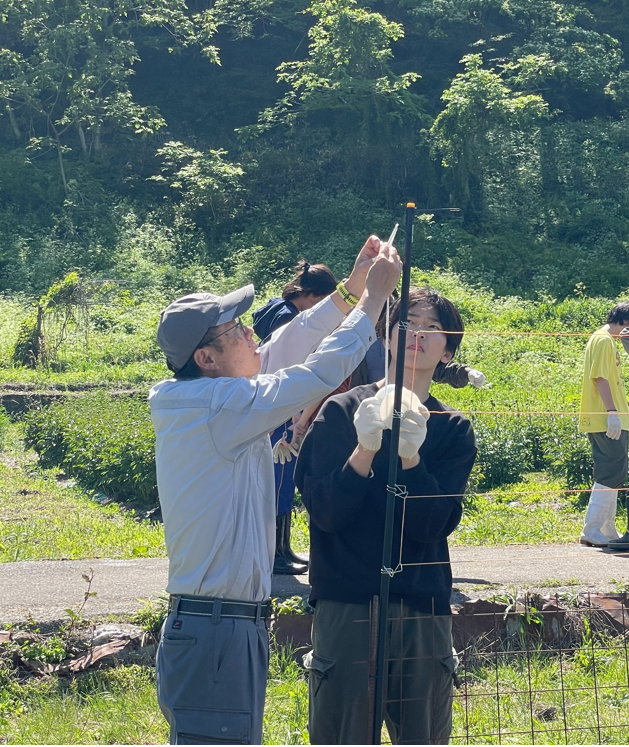
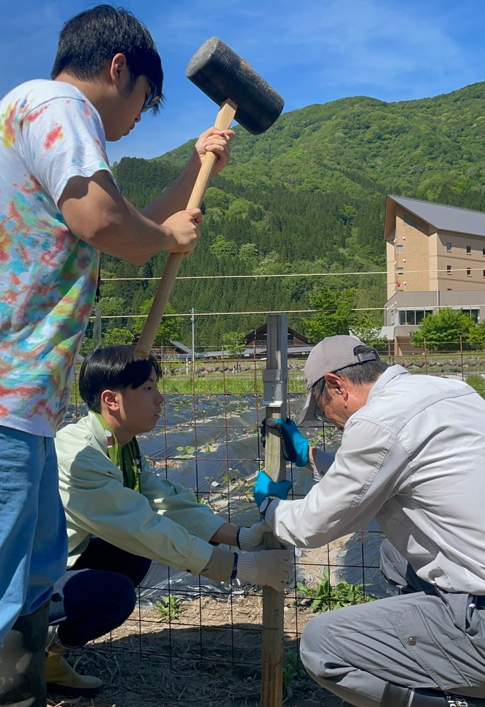
私は苗付けが終わったところで引き上げましたが、電気柵の設置も順調に進んでいるように見えました。晴れの場合には苗植え直後に散水する必要がありましたが、今年は自然の散水がありましたので、その分も時間の節約になったようです。今年も順調に育ってくれることを期待しています。秋の収穫も参加したいと思っています。
恒例ですが、11月7日(土)、8日(日)に白山麓キャンパスでオープンキャンパスを開催します。これに合わせて焼き芋販売が「道の駅瀬女」で行われる予定です。お時間があれば、ぜひ「道の駅瀬女」まで足を伸ばしてみてください。
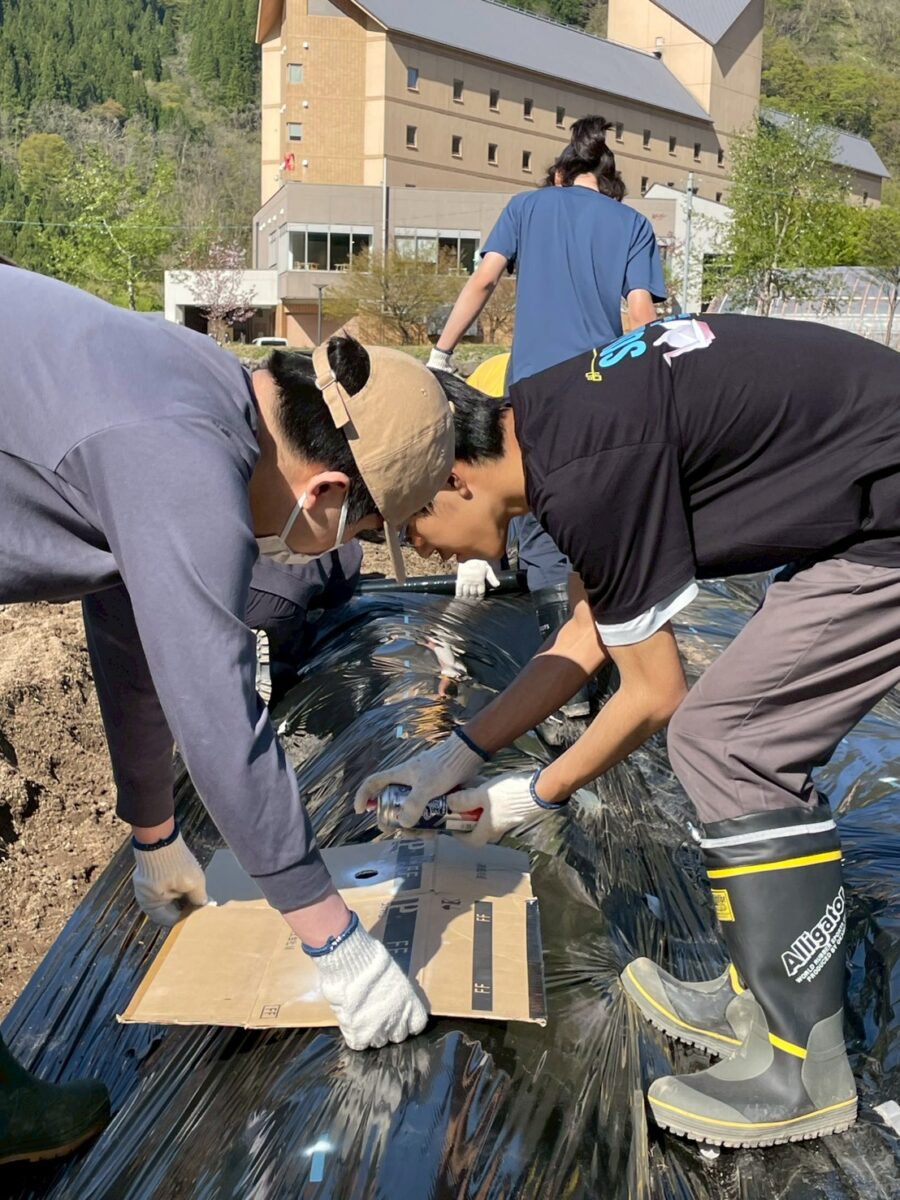
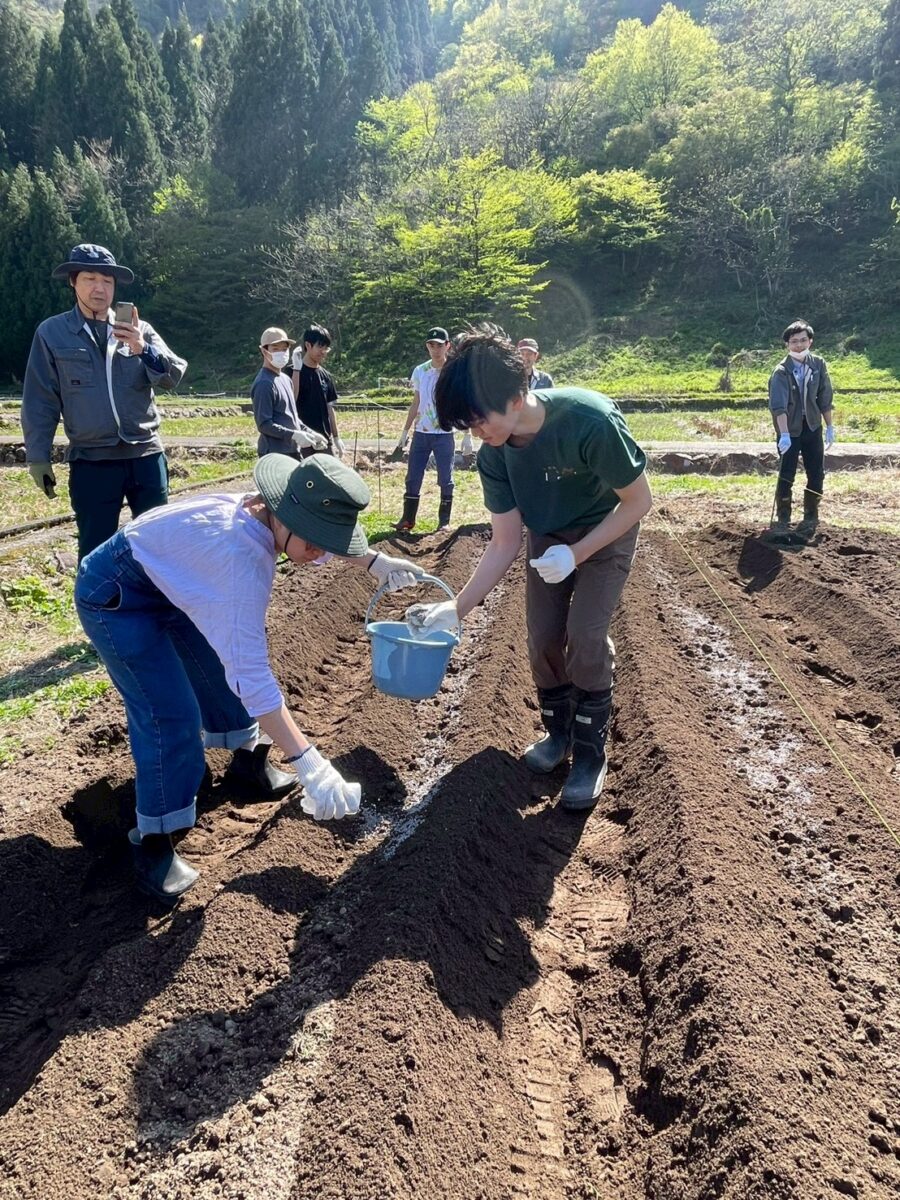
2026年4月16日(木)土作りや畝作り
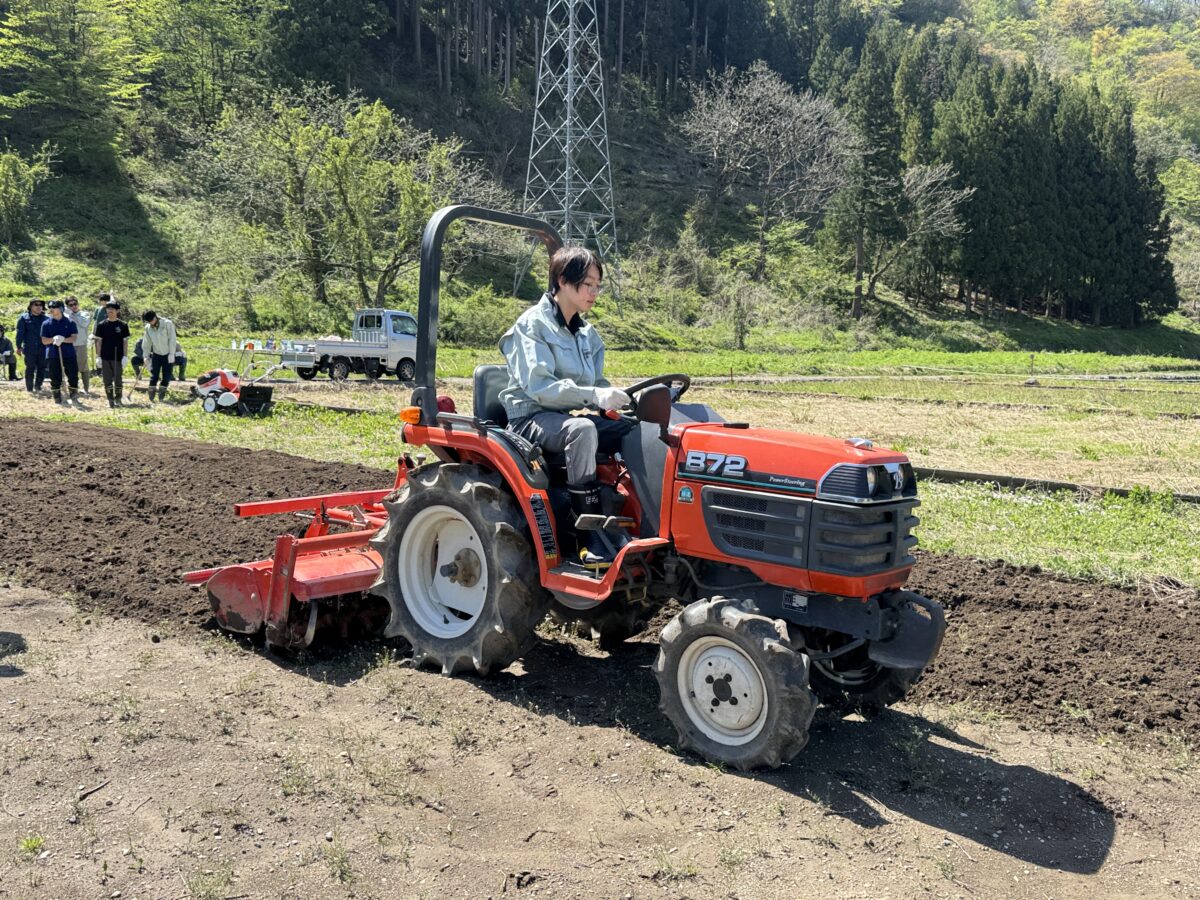
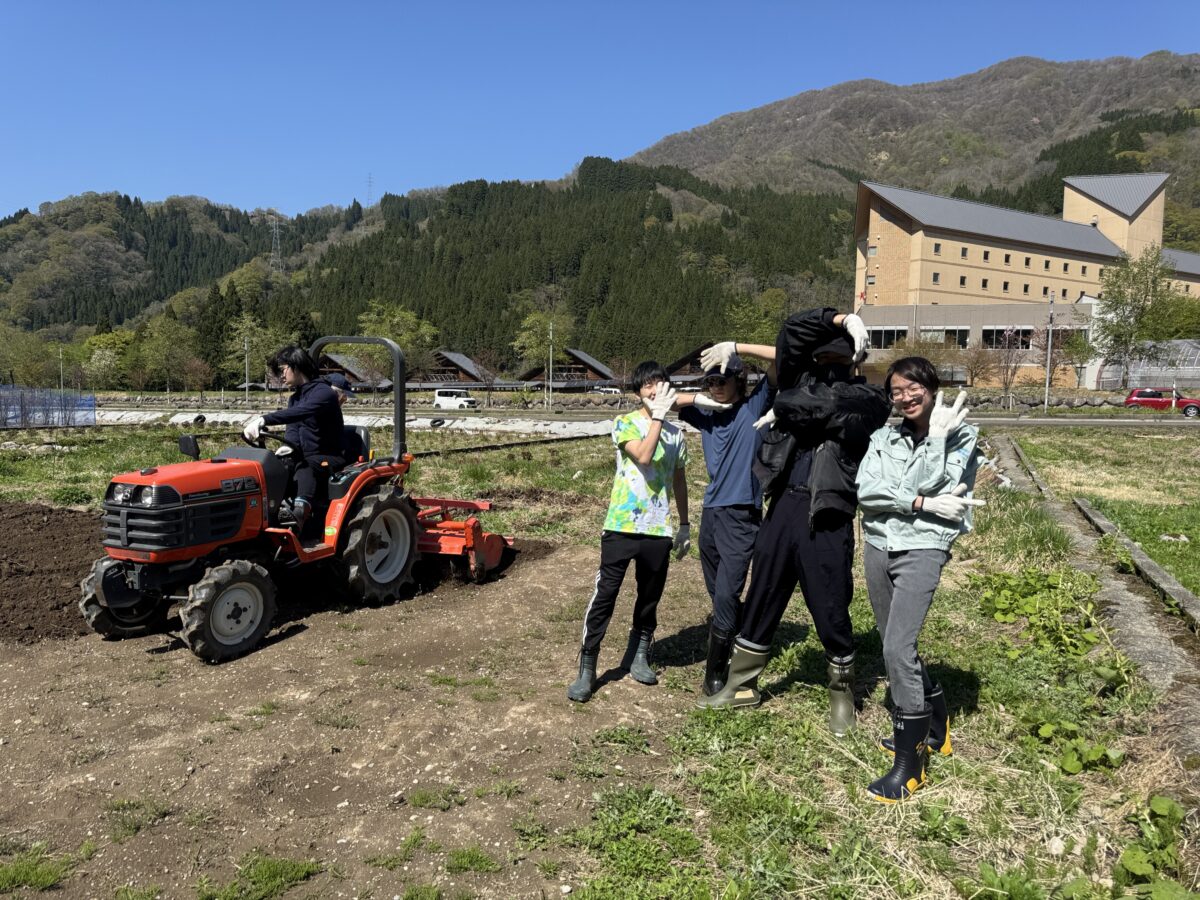
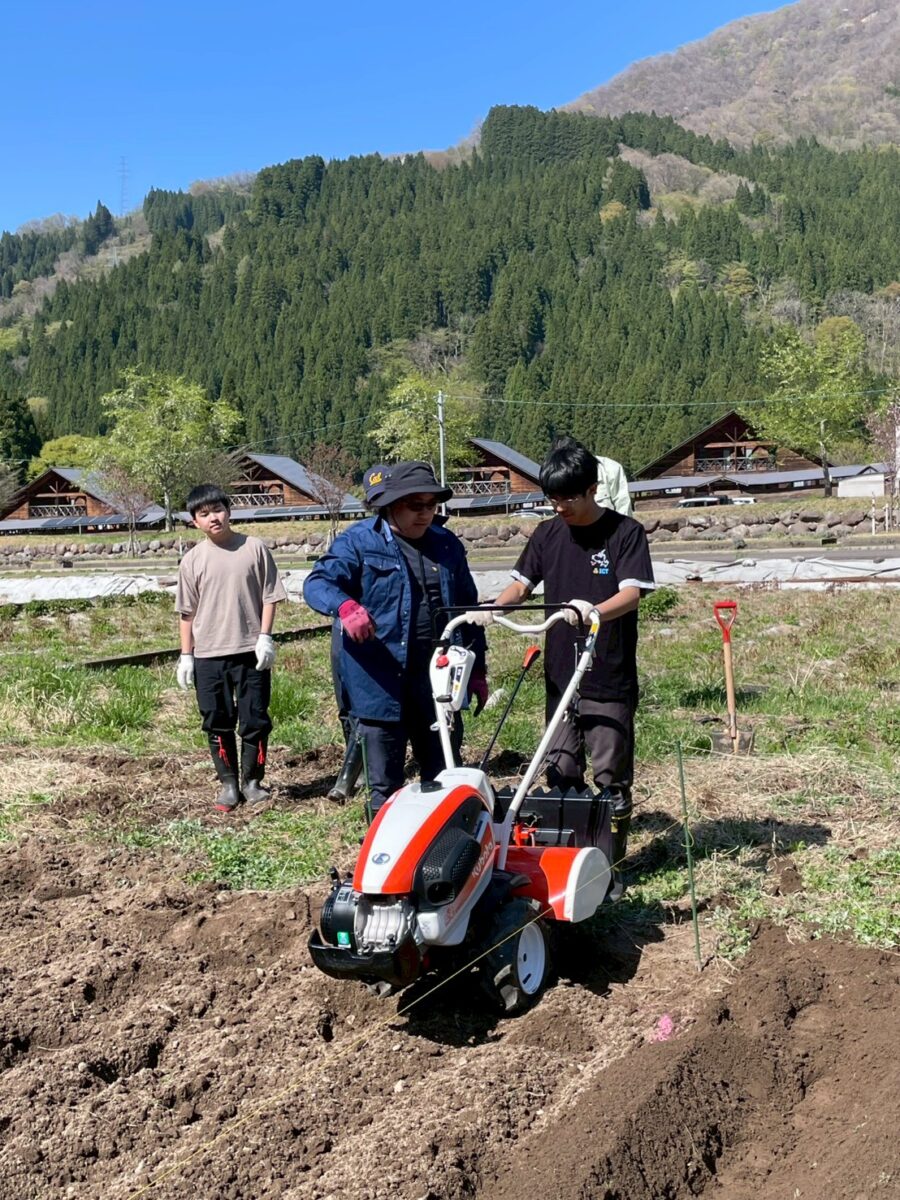
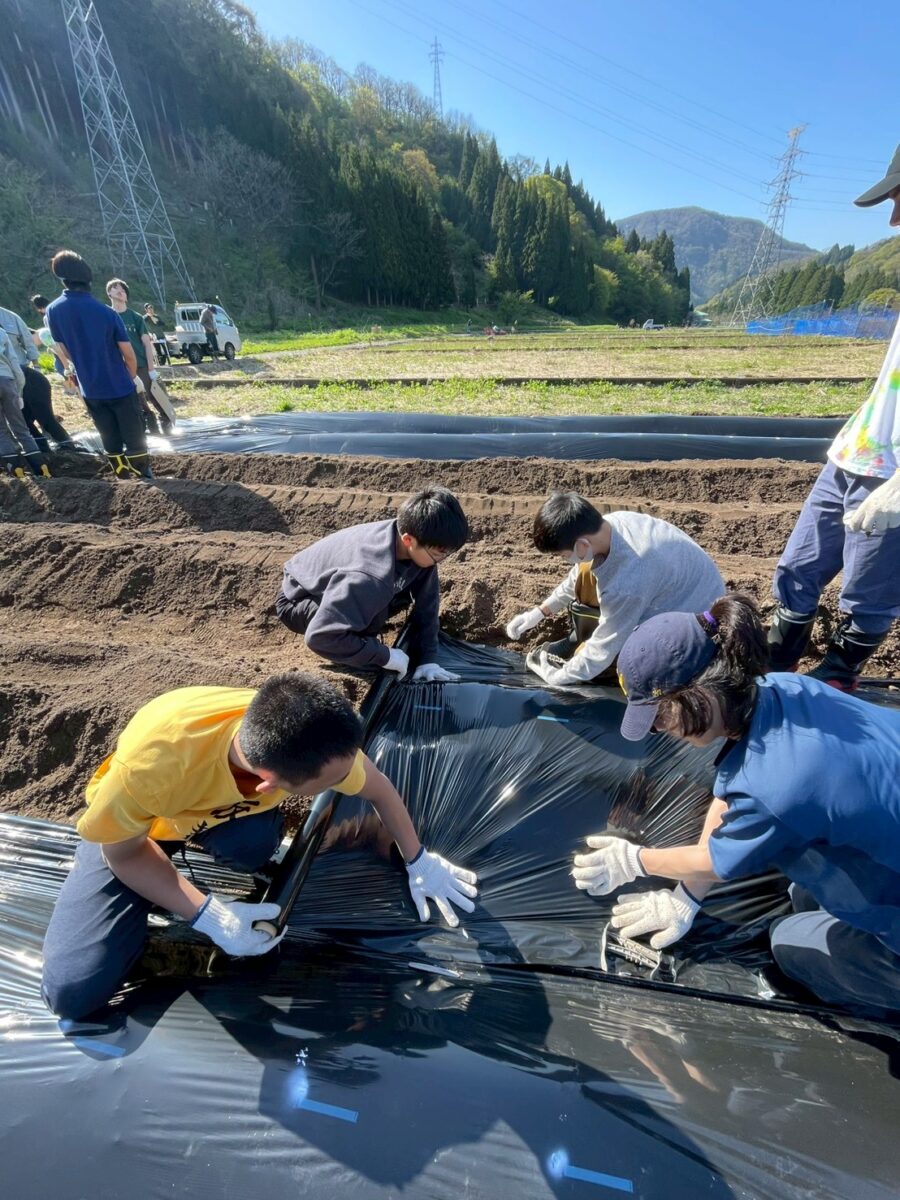
2026年4月23日(木) 「紅はるか」苗の作付け土作りや畝作り
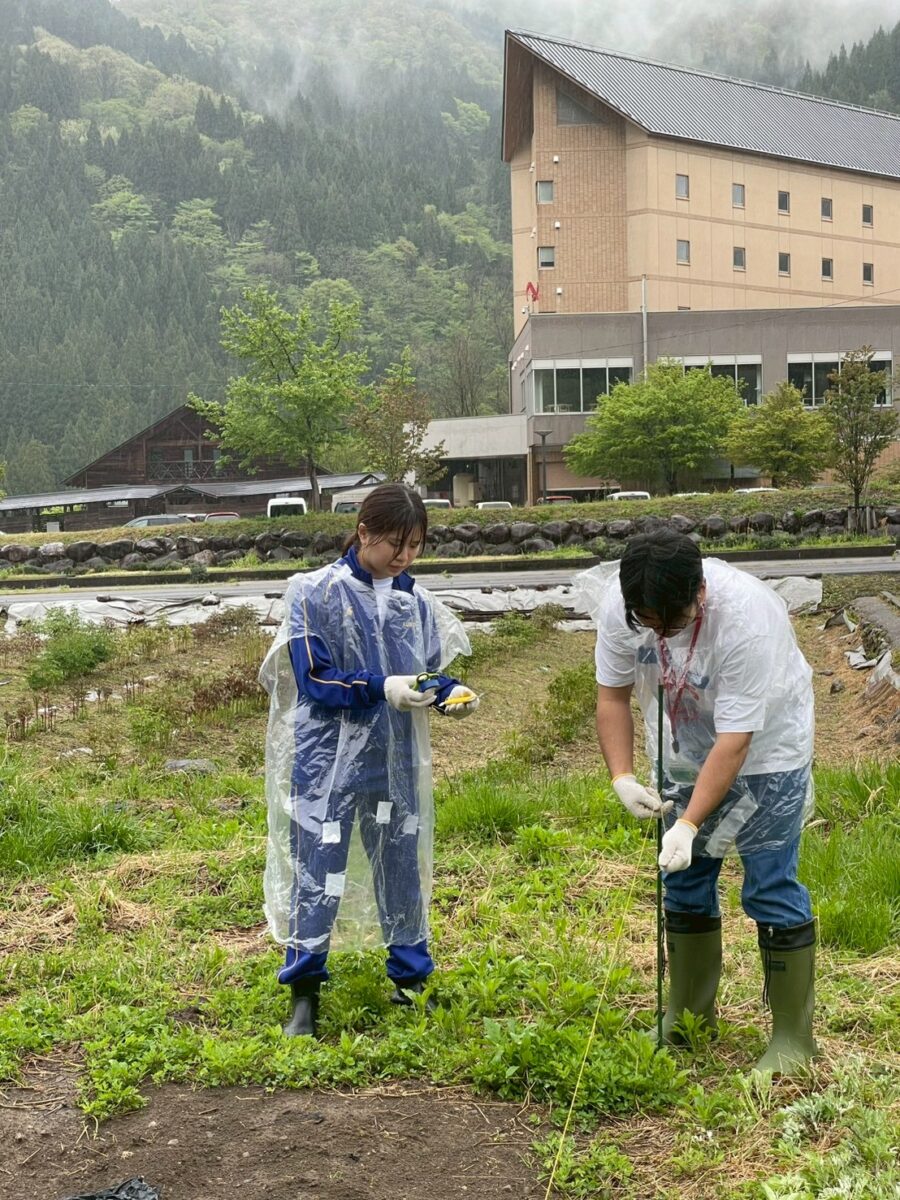
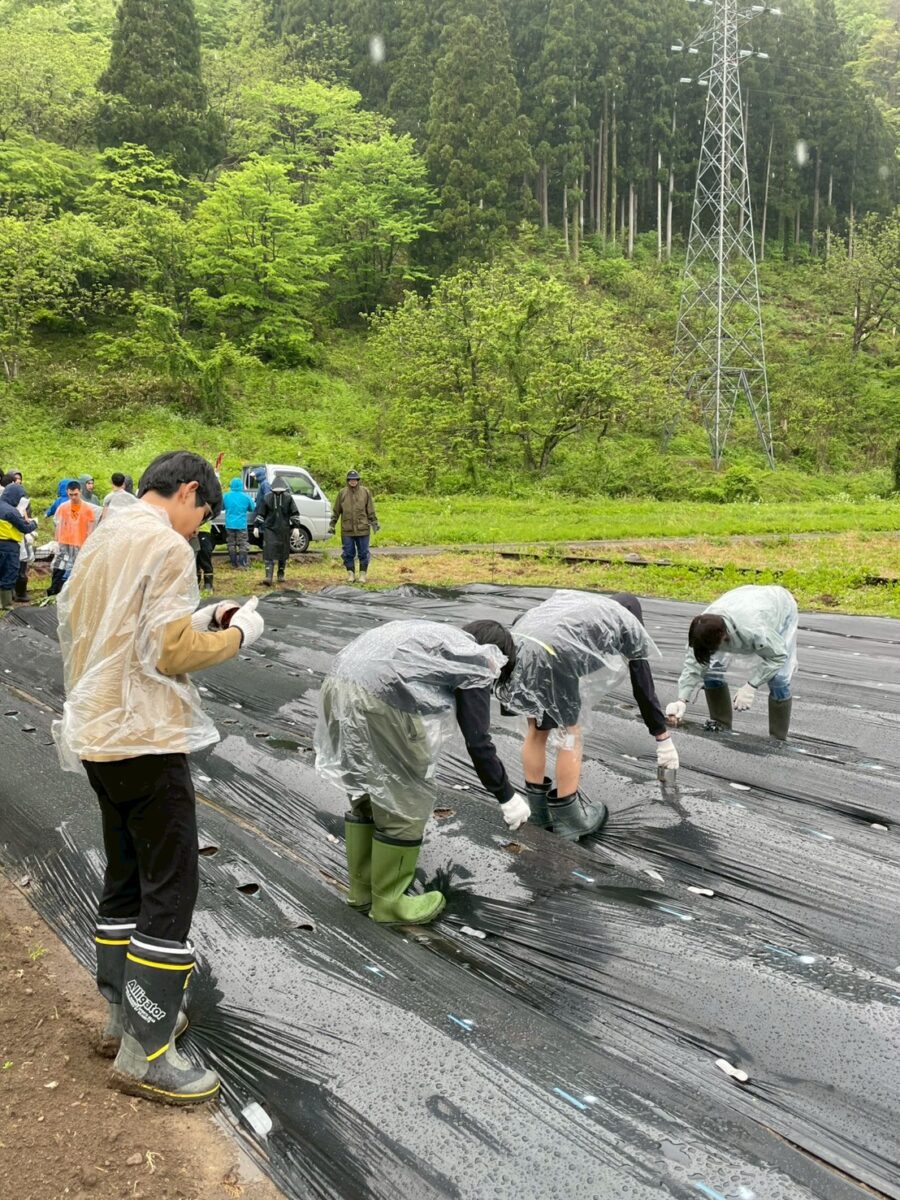
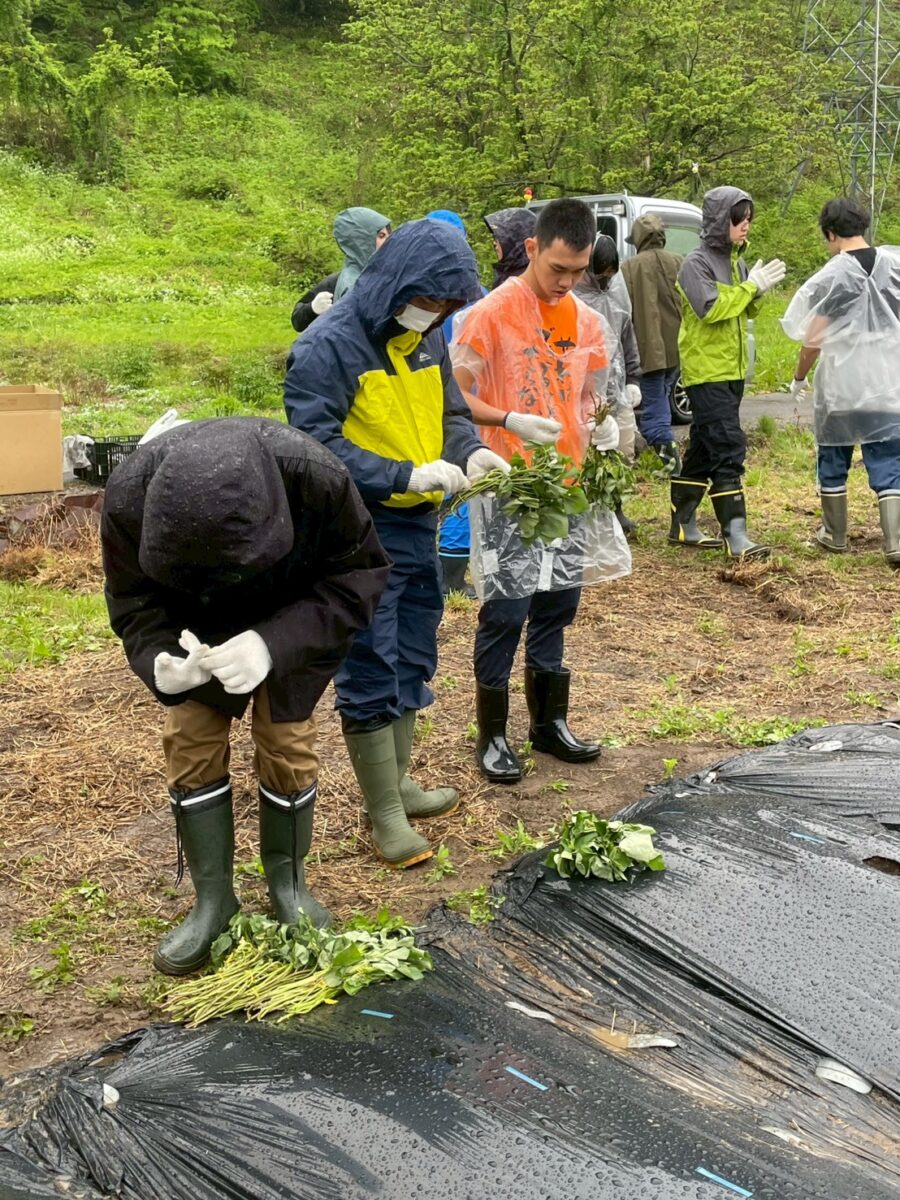
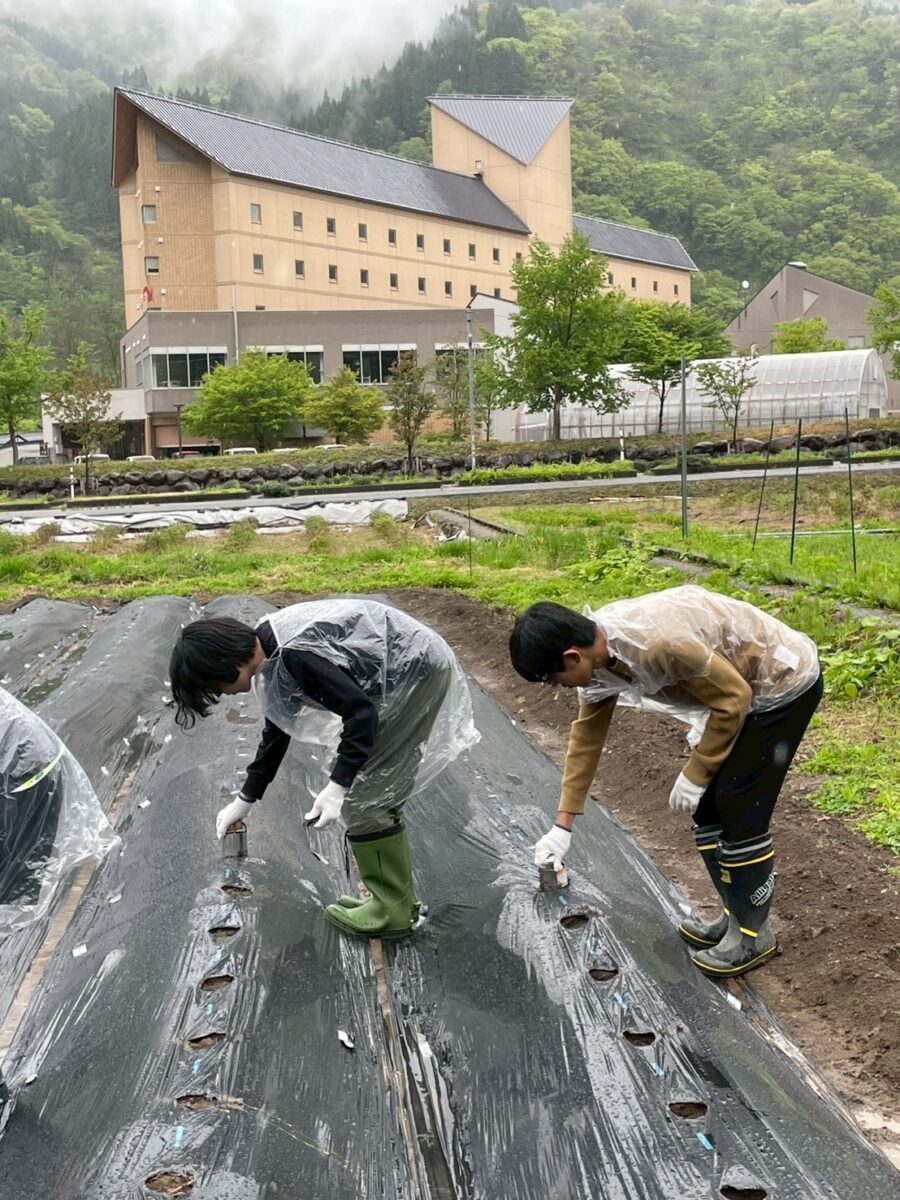
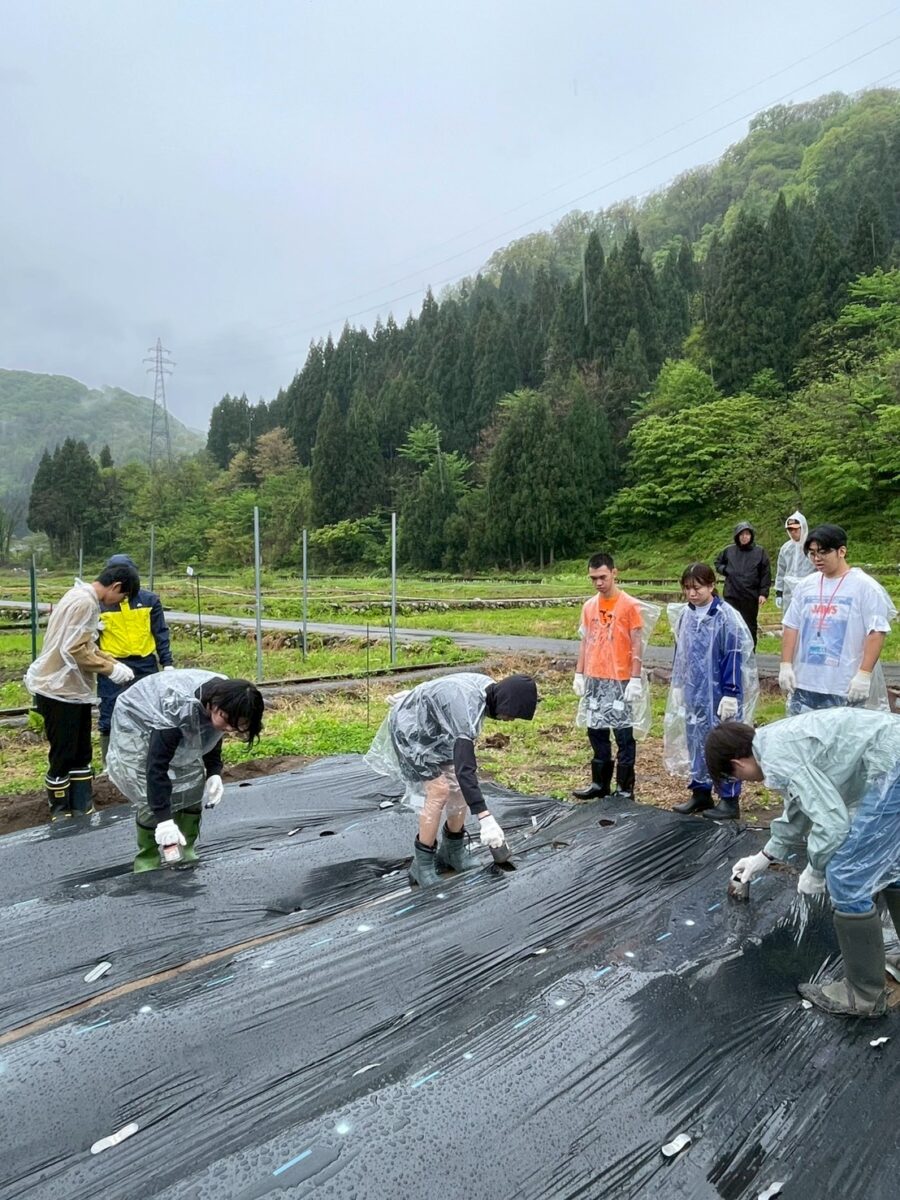
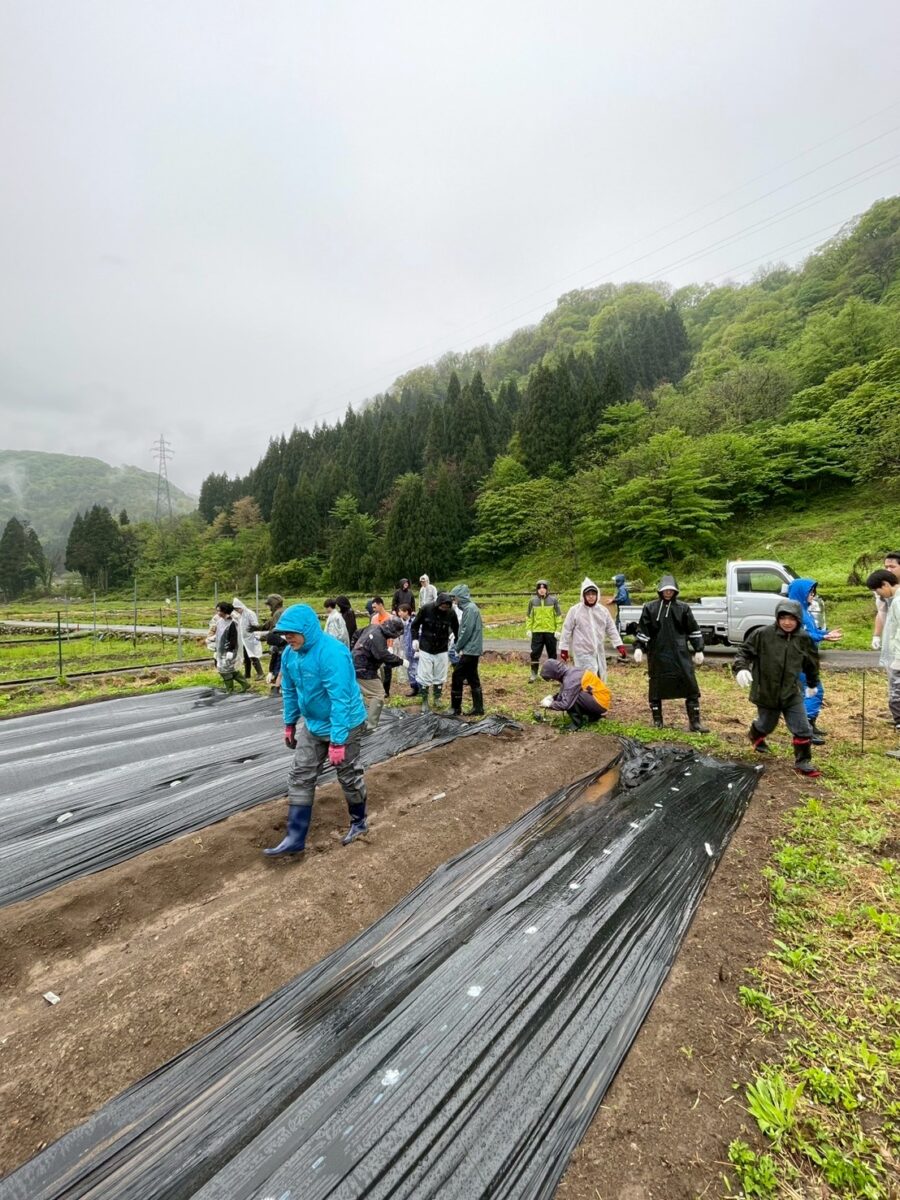
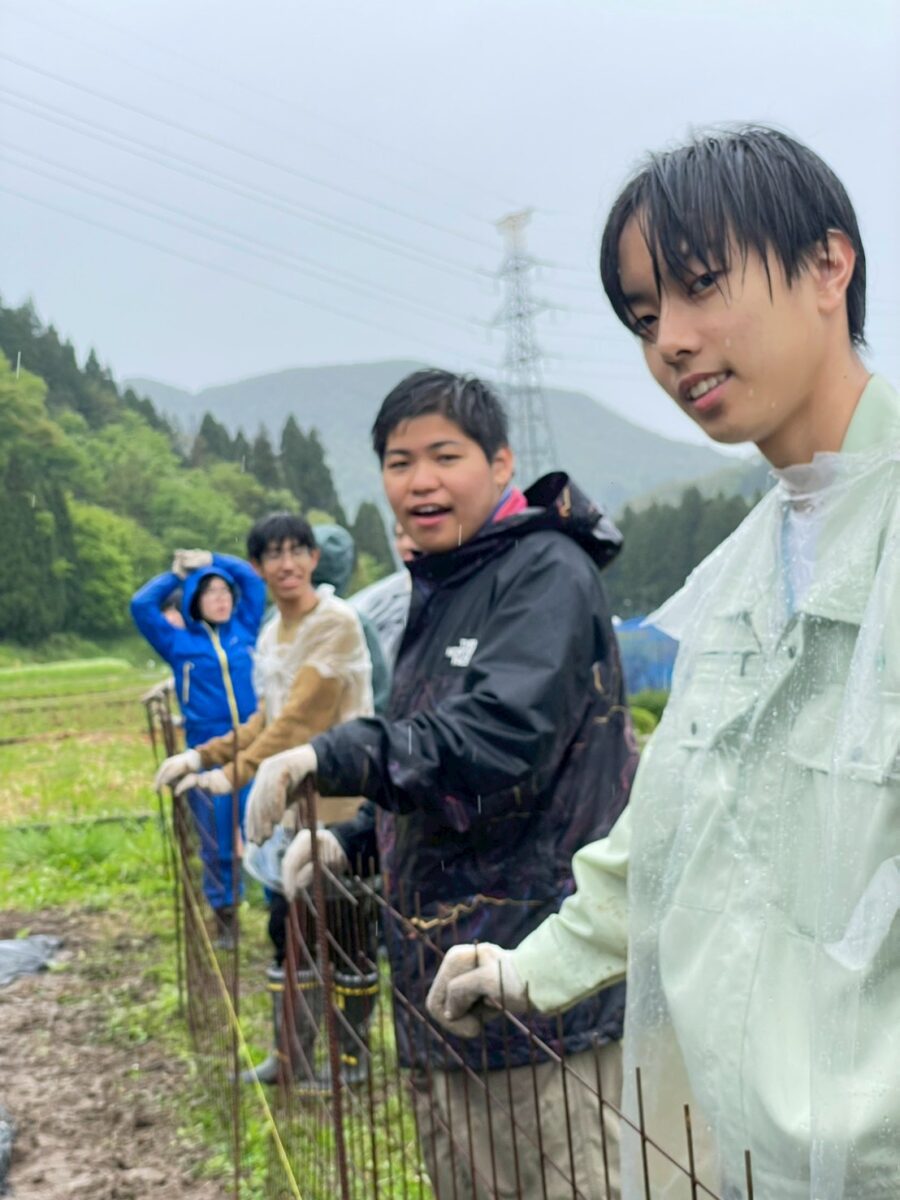
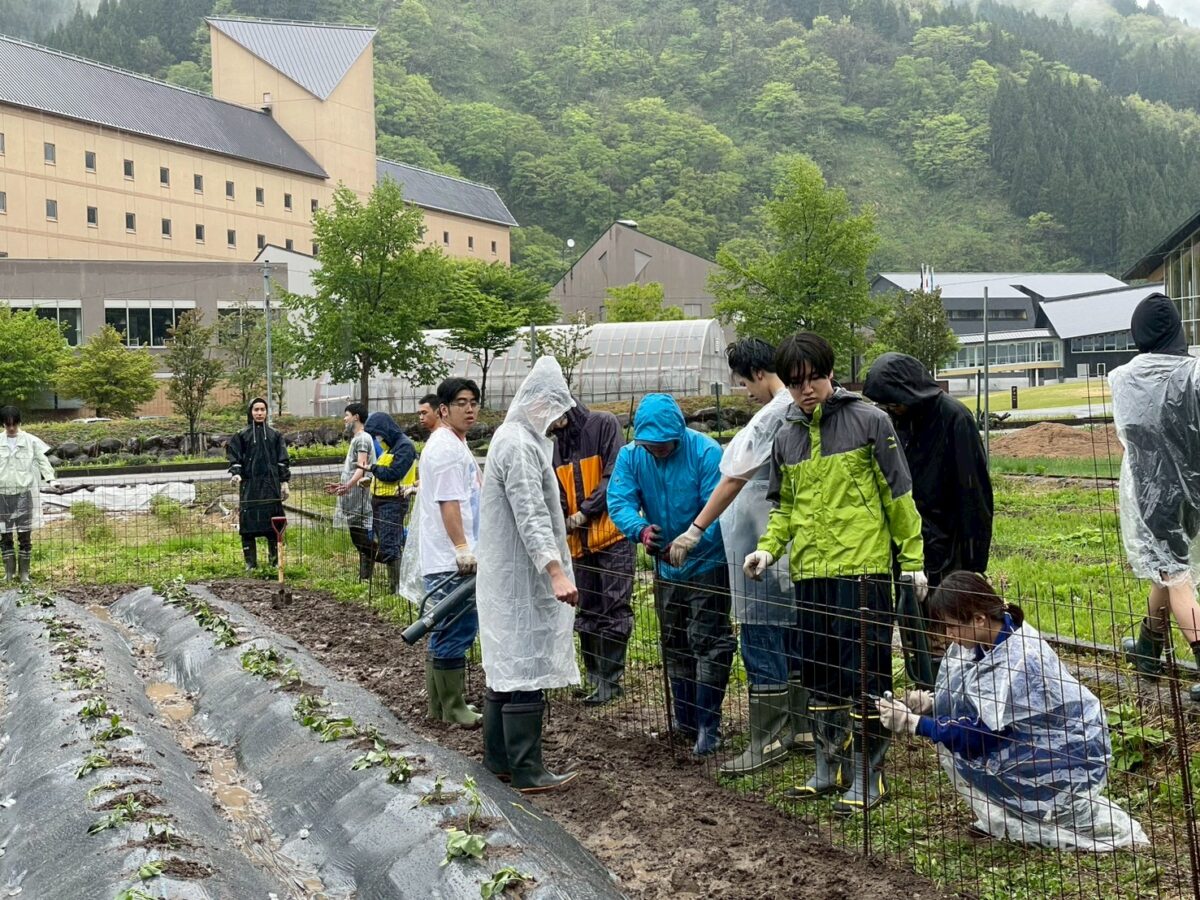
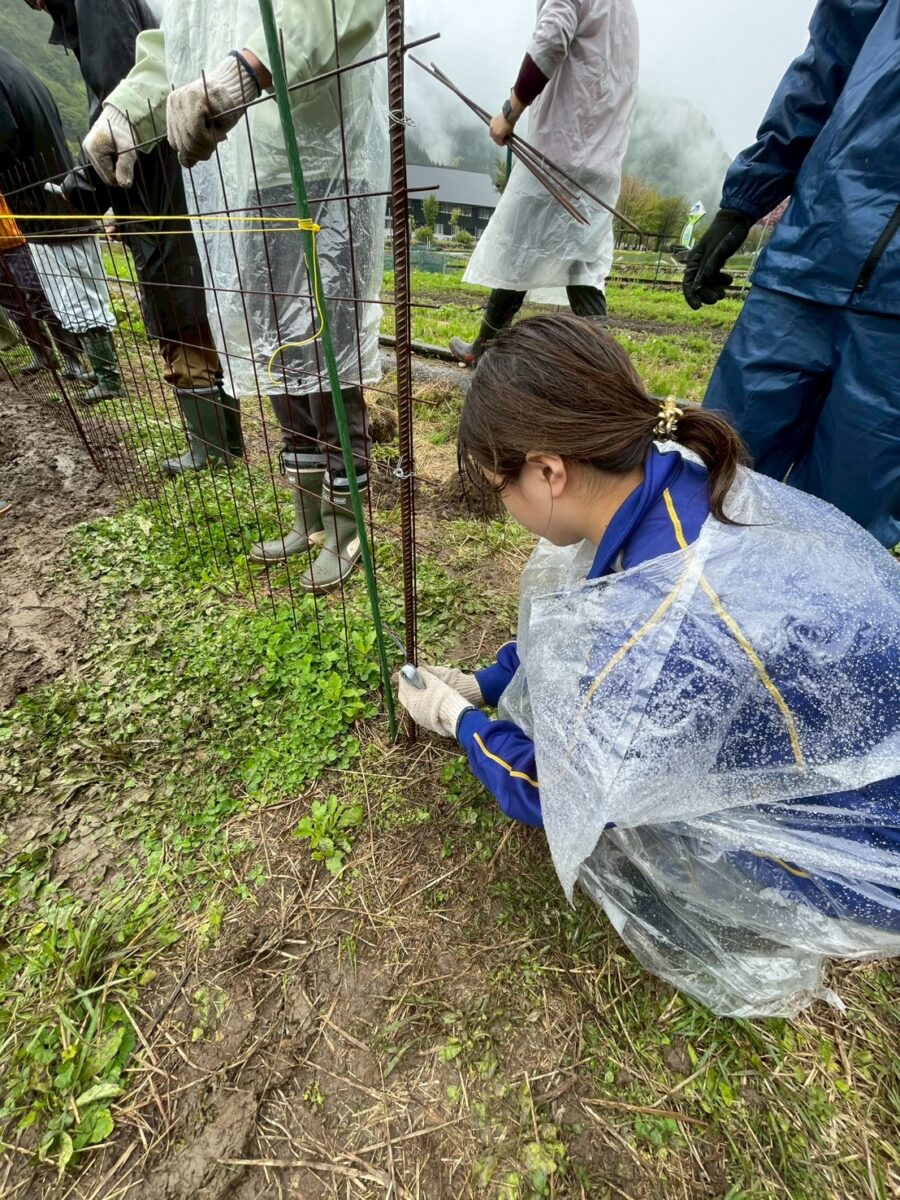
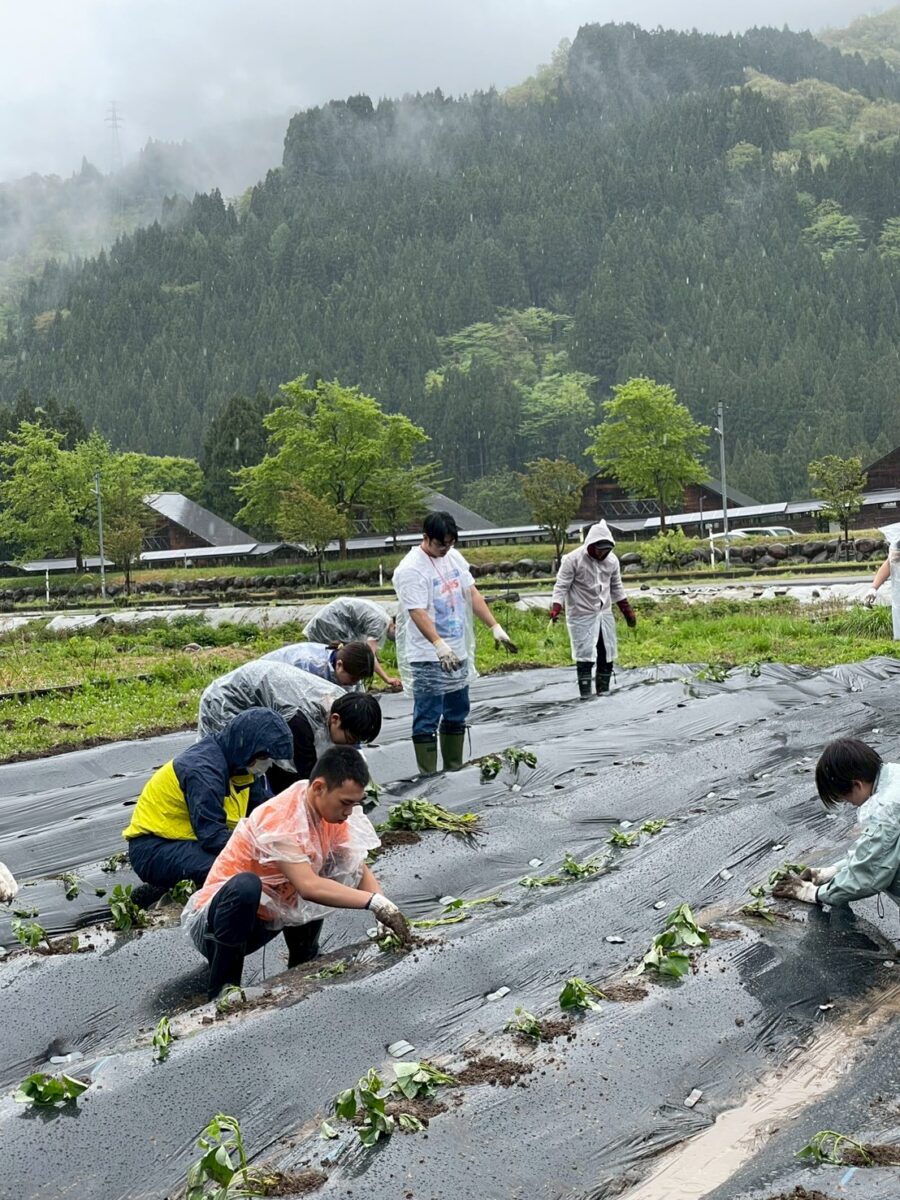
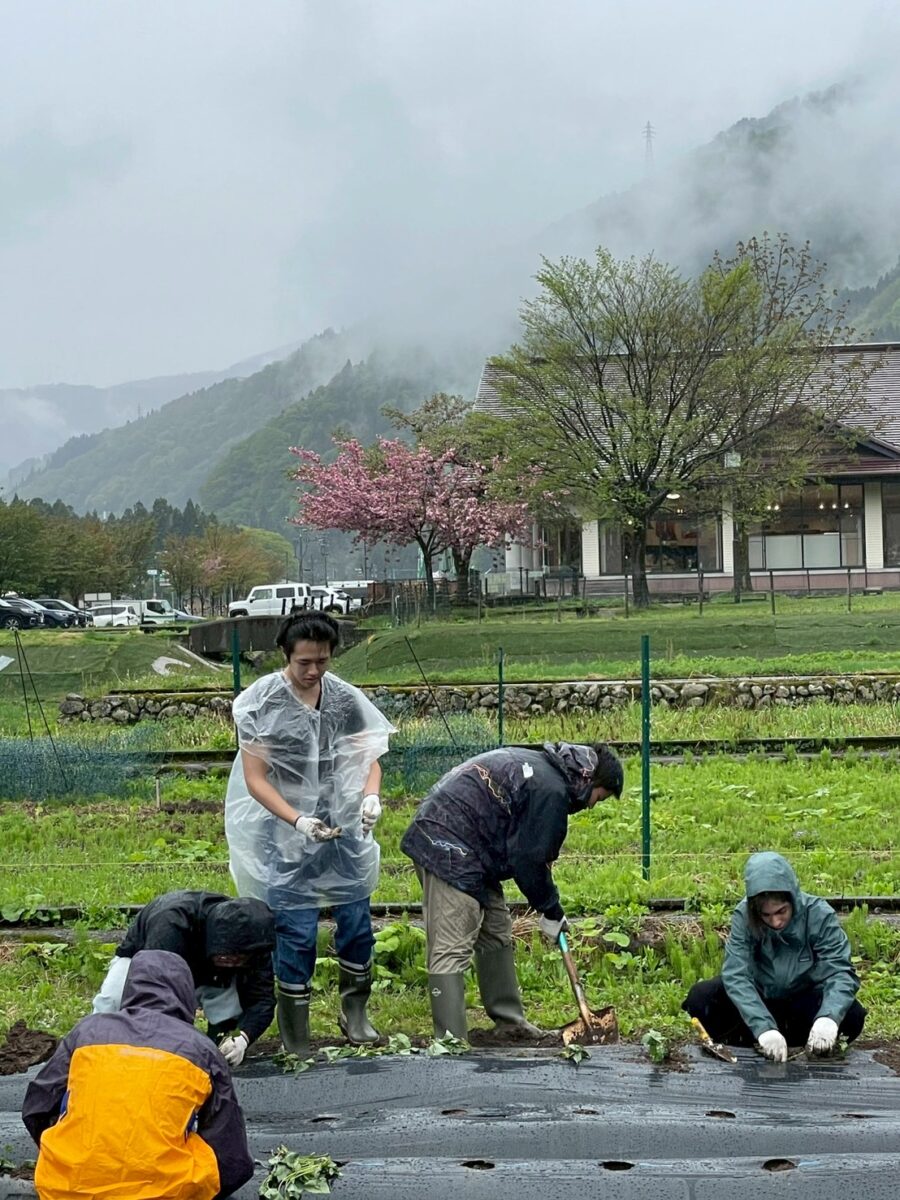
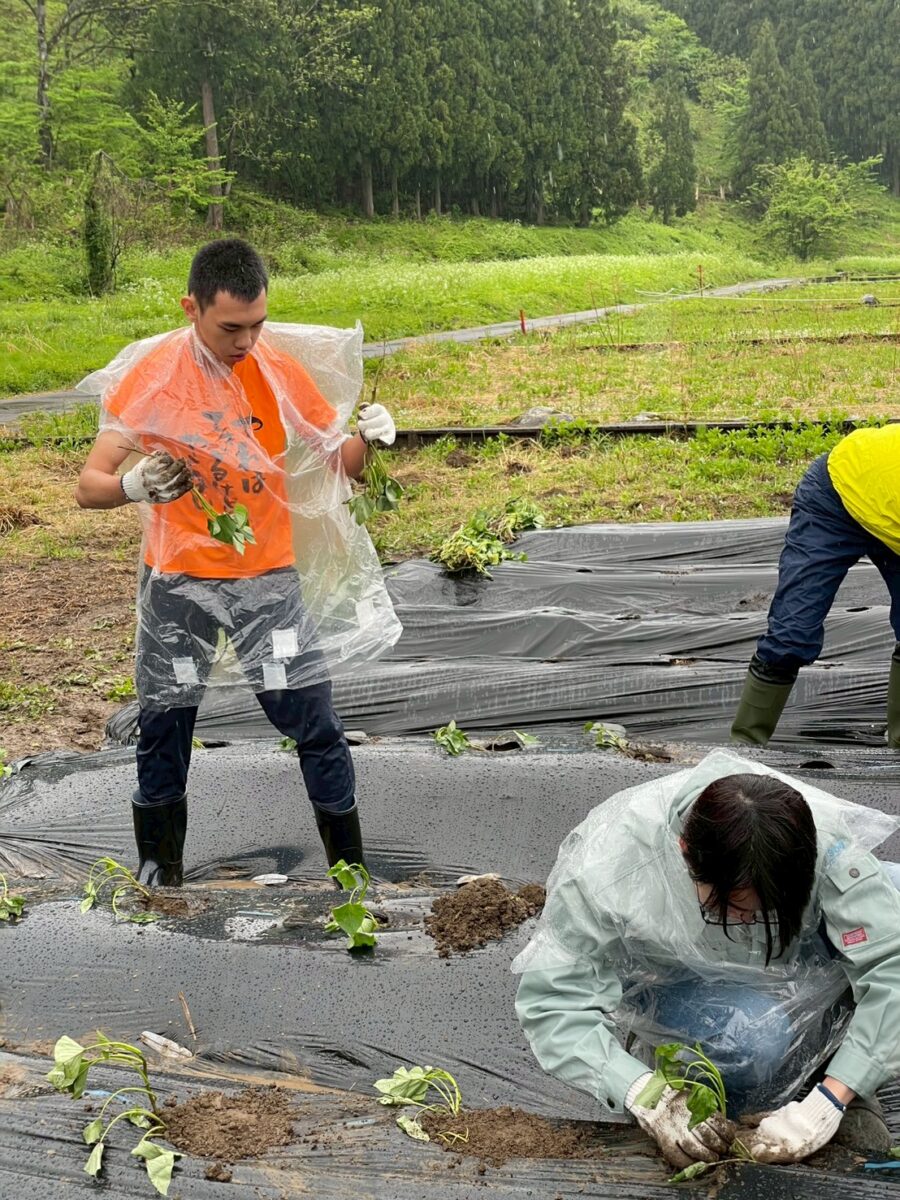
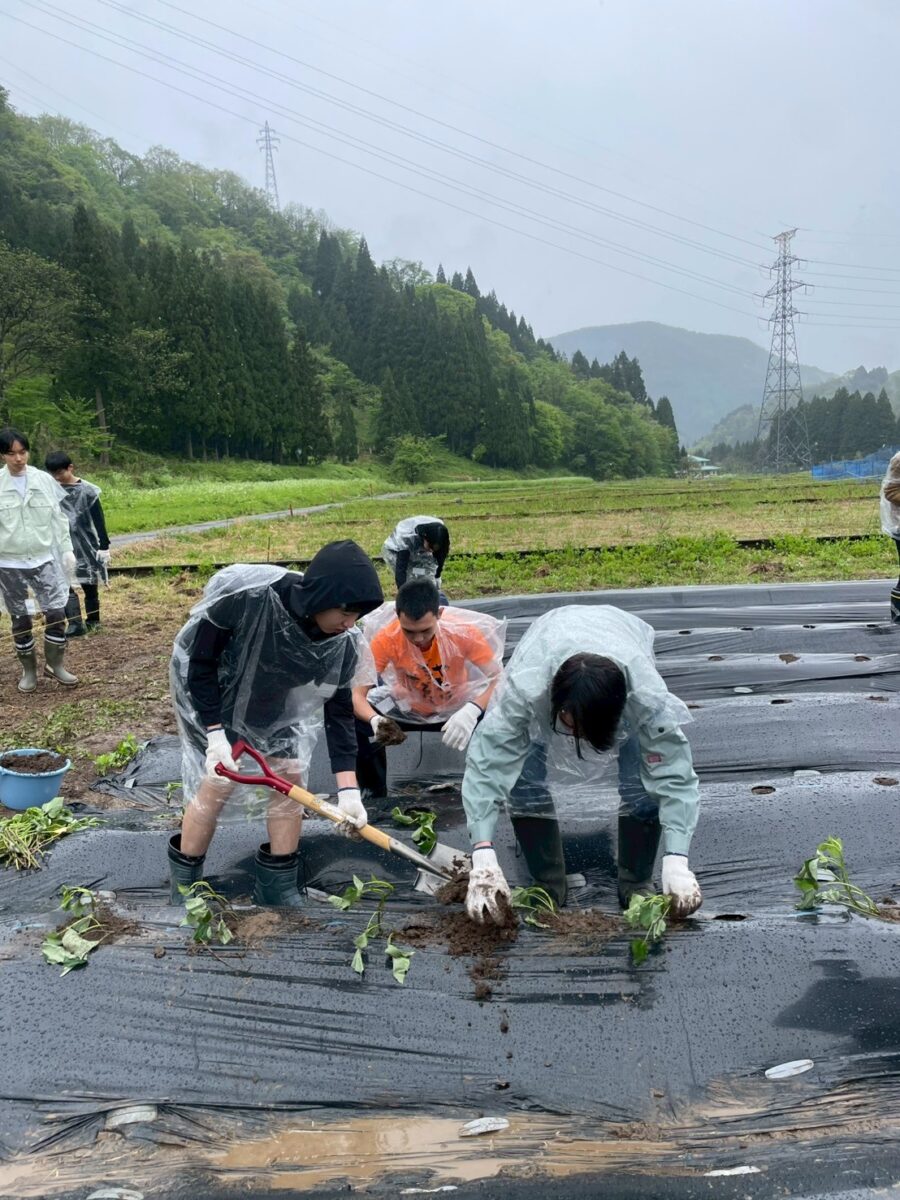
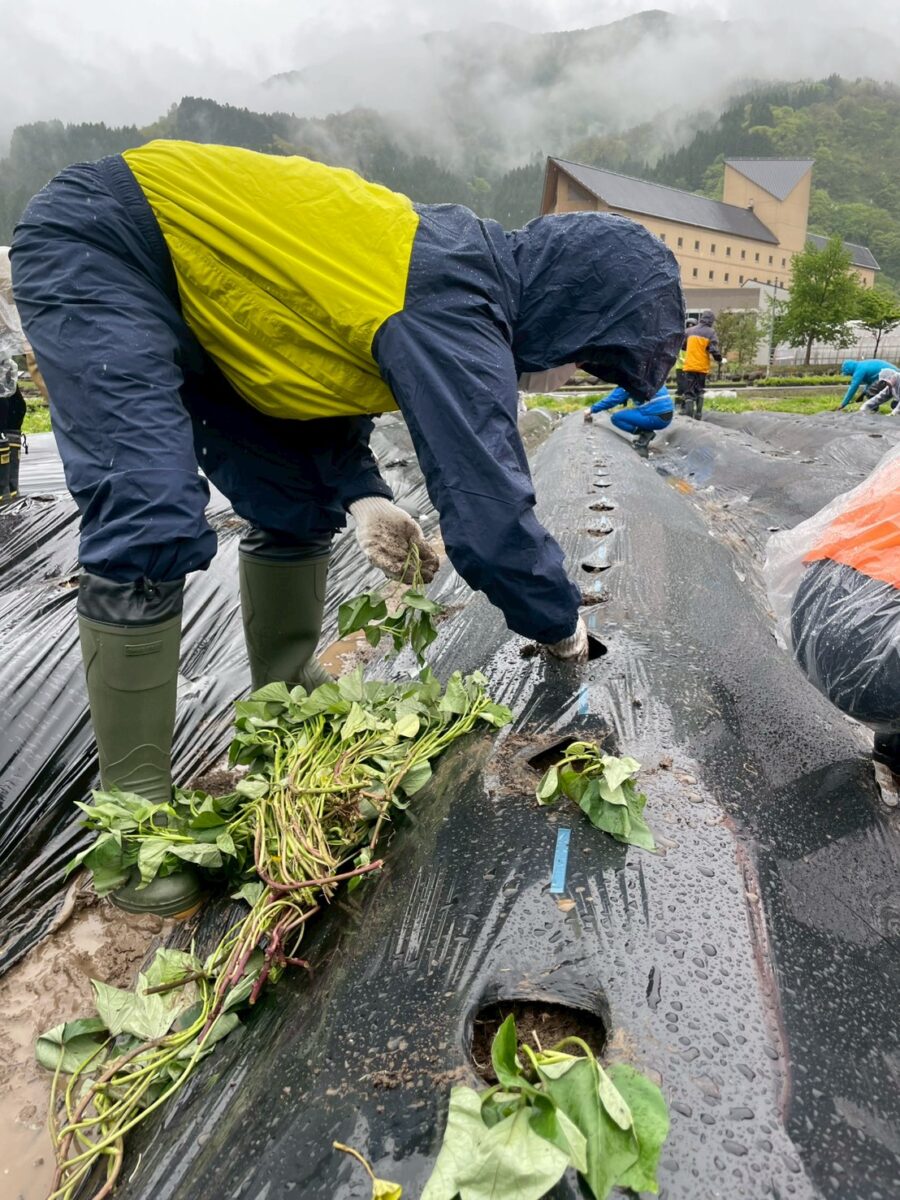
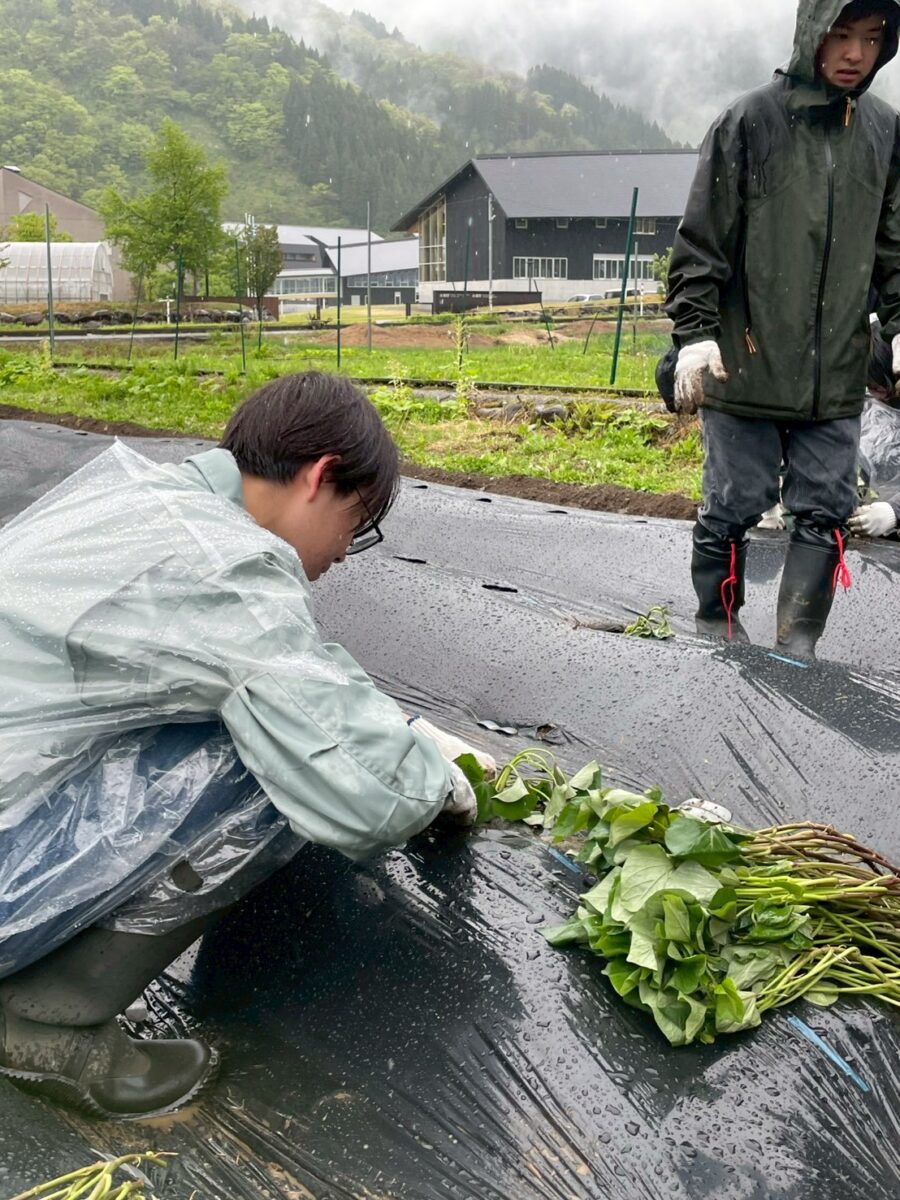
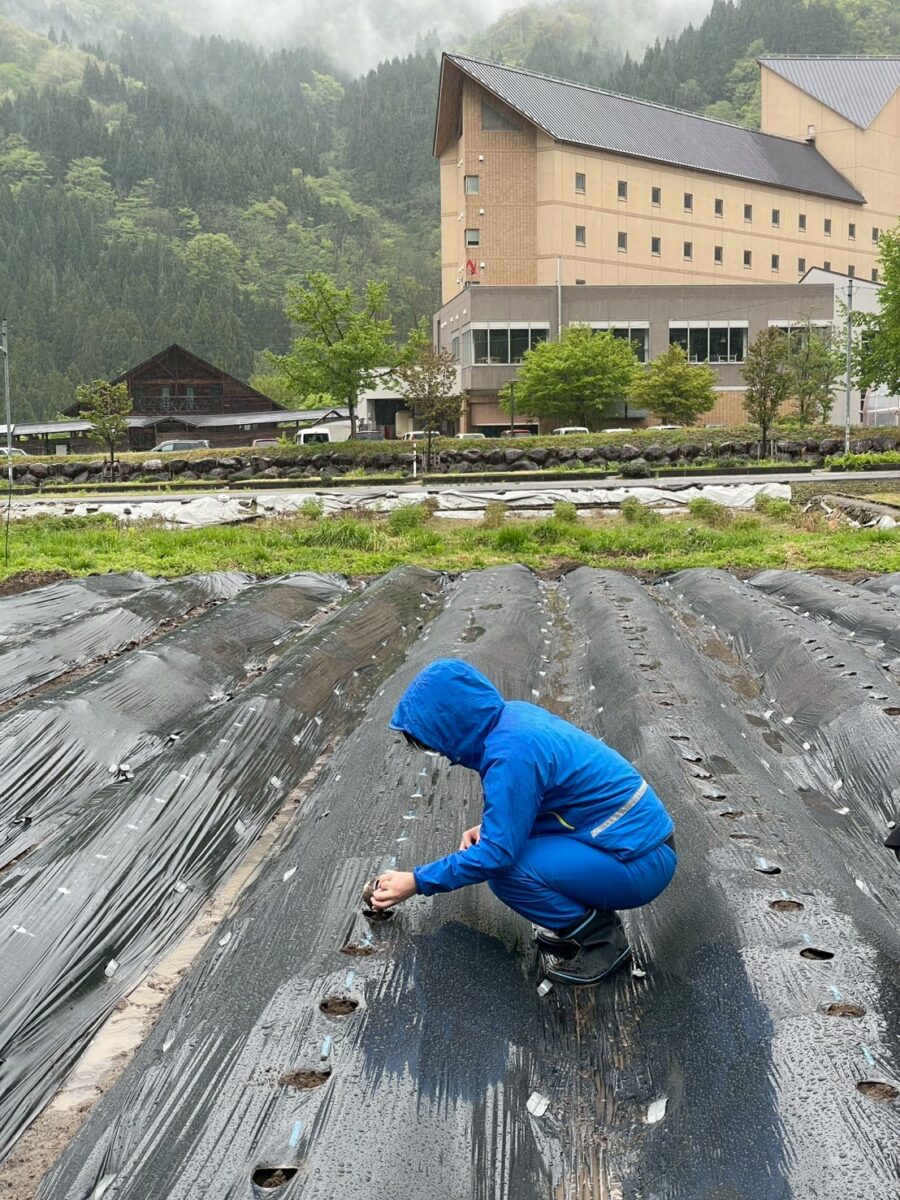
2026年5月7日(木)畑の周りに猿の侵入を防ぐための電気柵を設置
鹿田 正昭
Hello. I am Masaaki Shikada, ICT President.
On Thursday, April 23rd, 2026, I helped with the planting of Beni Haruka sweet potato seedlings as part of Engineering Design II (2nd year students), marking my fourth year participating in this activity. While the previous three years were all blessed with fine weather, unfortunately this year we had rain.
I was also pleased to see that, because of the large number of 2nd year students, Kodaka sensei requested that each student plant approximately 10 to 15 seedlings. In the first year (three years ago), one person planted an entire row of the nursery bed alone. Although we had rain this time, the work progressed smoothly thanks to the larger number of students, and the planting was completed in about 50 minutes.
I left shortly after the seedling planting was finished, but the installation of the electric fence also appeared to be proceeding without any problems. In sunny weather, watering is necessary immediately after planting; however, this year the rain provided natural watering, which seemed to save time as well. I hope, once again this year, that the seedings will grow well. I would also like to take part in the harvest in autumn.
As is customary, an Open Campus will be held at the Hakusanroku Campus on Saturday, November 7th, and Sunday, November 8th. To coincide with this event, roasted sweet potatoes are scheduled to be sold at the Sena Roadside Station. If you have time, please consider stopping by the Sena Roadside Station on either of those days.
Thursday, April 16th, 2026
Soil preparation and digging rows for planting.
Thursday, April 23rd, 2026
Planting Beinharuka soil and ridges for planting Beniharuka seedlings.
Thursday, May 7th, 2024
Electric fence installed around fields to prevent monkeys from entering.
Masaaki Shikada
こんにちは。国際理工学科2年の石原田 海秀です。突然ですが、みなさんは2年生の「エンジニアリングデザインⅡ」という授業についてご存じでしょうか?エンジニアリングデザインⅡでは、休耕田で紅はるか(サツマイモ)を育てて「高専紅はるか」というオリジナルブランドで収益の黒字化を目指しているアグリビジネス班と、その「高専紅はるか」を育てている畑をサルなどの野生動物から守るテック班という二つの班に分かれて活動しています。私は今年、テック班として一年間活動したので、今回は2025年度のテック班の活動について紹介したいと思います。
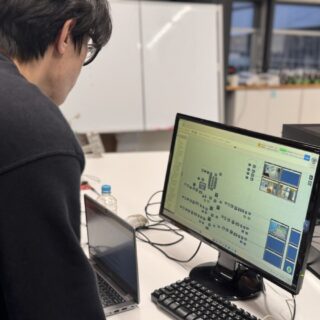
テック班は、テクノロジーを使って高専紅はるかを育てている畑を野生動物の被害から守るために、IoT班、ドローン班、ローバー班の3つに分かれて活動し、獣害対策システムの完成を目指しています。
獣害対策のシステムとしては、畑をIoT班の作ったシステムを使って野生動物の動きを監視して、そこからLINEなどのメッセンジャーを使いドローンを飛ばしてサルなどの野生動物を撃退することを目標としています。また、雨などによりドローンが安全に飛行できない時にはローバーと呼ばれる車輪で動くロボットで野生動物を撃退することも目指しています。
IoT班
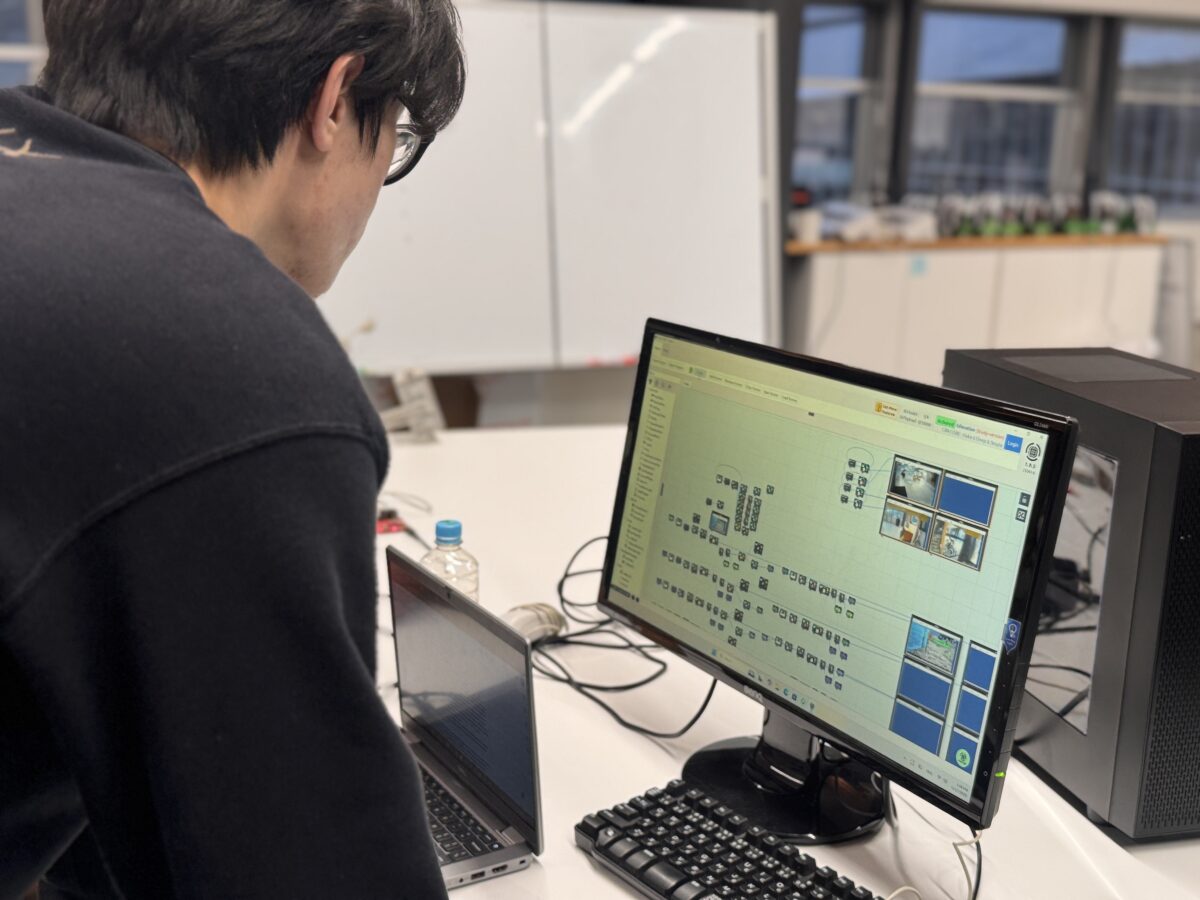
IoT班の目標は、畑の状況を獣害対策システムを使ってユーザーに伝えるためのシステムを作り、ローバーやドローンといった他のシステムと繋げる役割を果たすことです。昨年度まではLINEのお知らせ機能を使っていましたが、サービス終了に伴い、それができなくなってしまったので、お知らせ機能をLINE以外のサービスで使えるようにしました。今年度は時間の都合上、実際に活用できるかを確かめることができなかったので、来年度から日常生活での有用性について検討を続けていく必要があります。
ドローン班
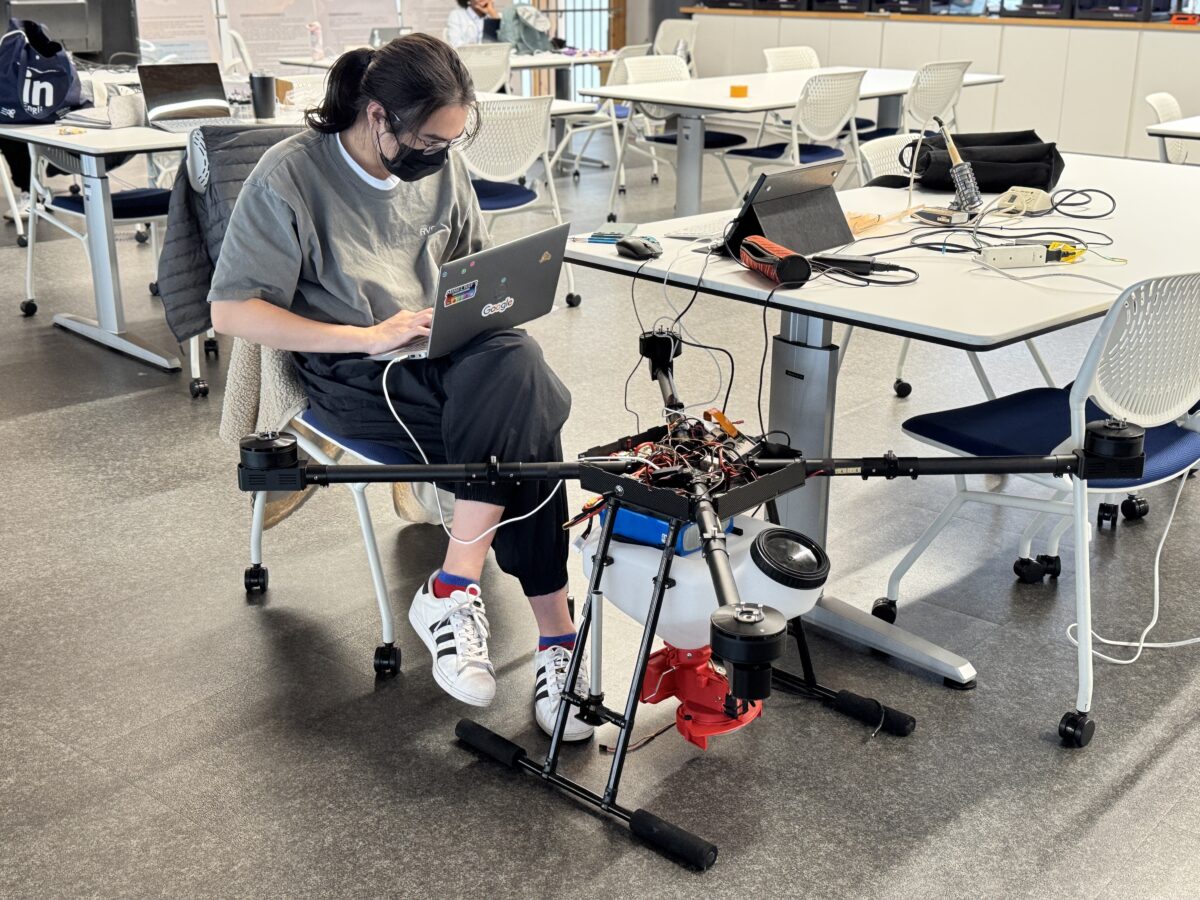
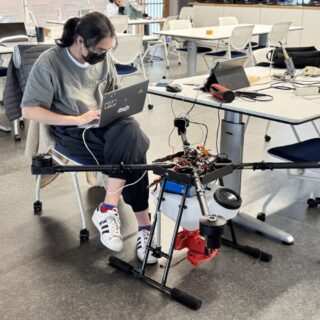
ドローン班の目標は、IoT班が構築したシステムから指令を受けてドローンを飛行させ、獣害対策をすることです。
今年度は獣害対策のために農業用ドローンを使うという先輩たちのアイデアを引継ぎました。その過程でドローンの飛行制御をするパーツのプログラムの自由度が低いという課題を見つけました。その問題を解決するために農業用ドローンの制御パーツを交換しました。今後はカメラから外の状況を把握してドローンを飛行させるシステムを確立していく必要があります。
ローバー班
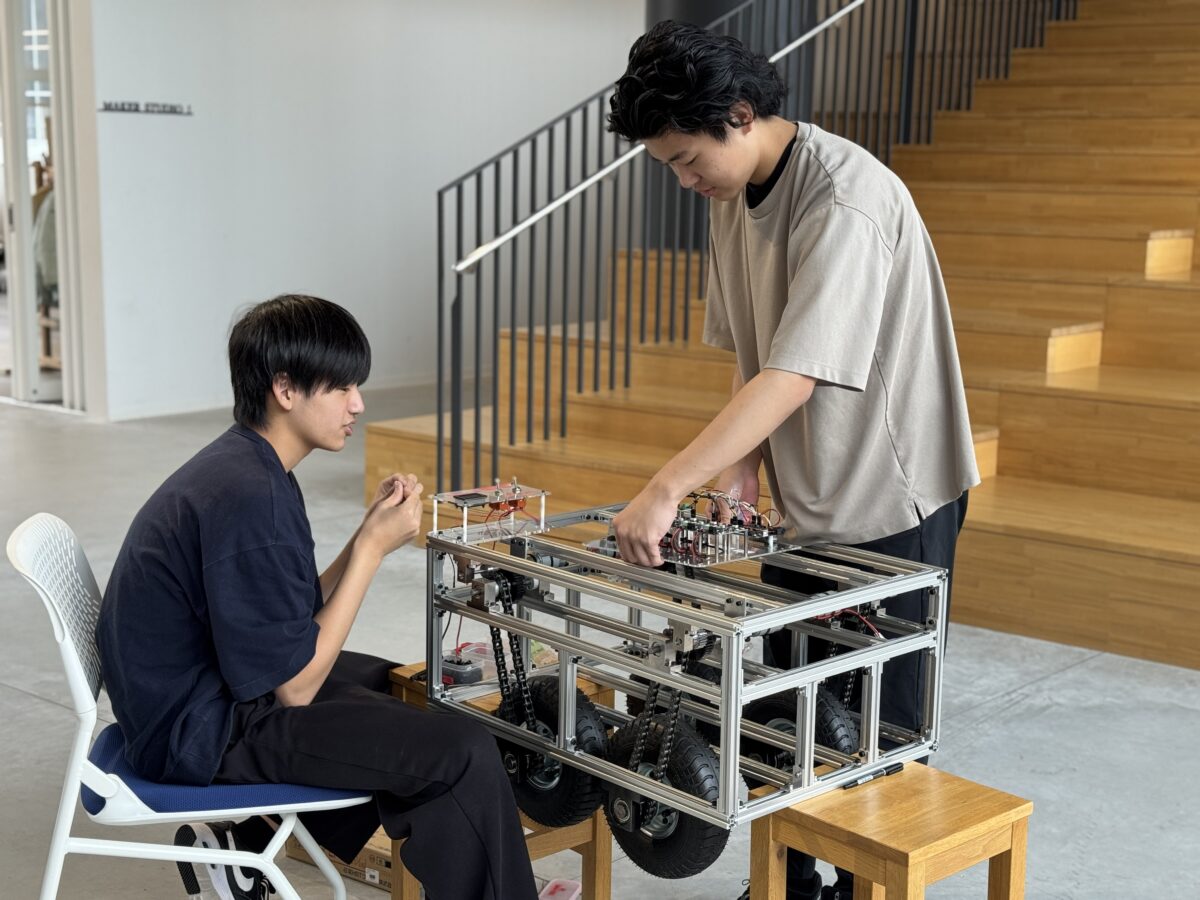
ローバー班は、雨天時など天候が悪くドローンが飛ばせない場合の獣害対策に向けて、昨年度から活動が始まったものです。今年度は先輩方から受け継いだローバーを改良・改善していくという形で取り組んでいました。物理や数学の授業、日々の課外活動などから得た知識を活用しながら、後学期にはローバーの目的である雨天時の走行のために防水カバーの制作を行いました。防水カバーを作るという初めての挑戦に、いろいろ苦戦しましたが先生や学生同士での話し合いを通じてプロトタイプを作ることができました。来年度は、防水カバーの性能向上やIoT班やドローン班との連携に挑戦してほしいです。
私は、この中でもローバー班に所属していました。昨年度の先輩から受け継いだローバーは移動速度が速く、車輪を固定しているねじが緩んでしまう問題があったので、今年度は防水カバーの取り付け以外に、その問題を解決すべくモータを減速させることになり、減速機の設計を私が担当しました。私は、ロボコン活動にも所属していて主に電気系の作業を担当していたので、普段していない機械設計には苦労しました。減速の設計では、まずローバーをどのぐらいの速度で移動させたいかを決め、そのためにはモータをどれぐらい減速させる必要があるのか、ギヤを選定しどのように配置にすればいいのかということを考えることに苦戦しました。その過程で機械設計の基本を学べたと思うので、この経験をこれからのエンジニアリングデザインや課外活動などに活かしていきたいです。
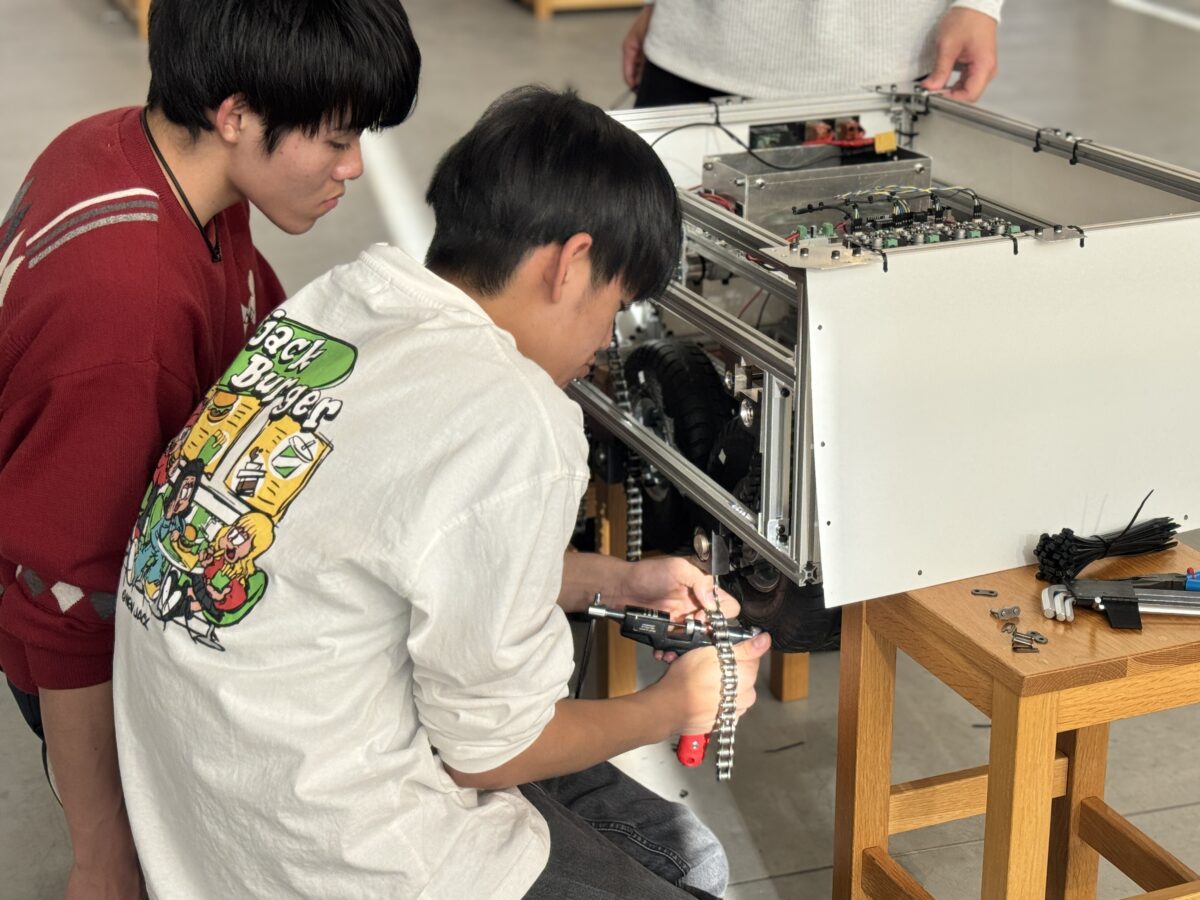
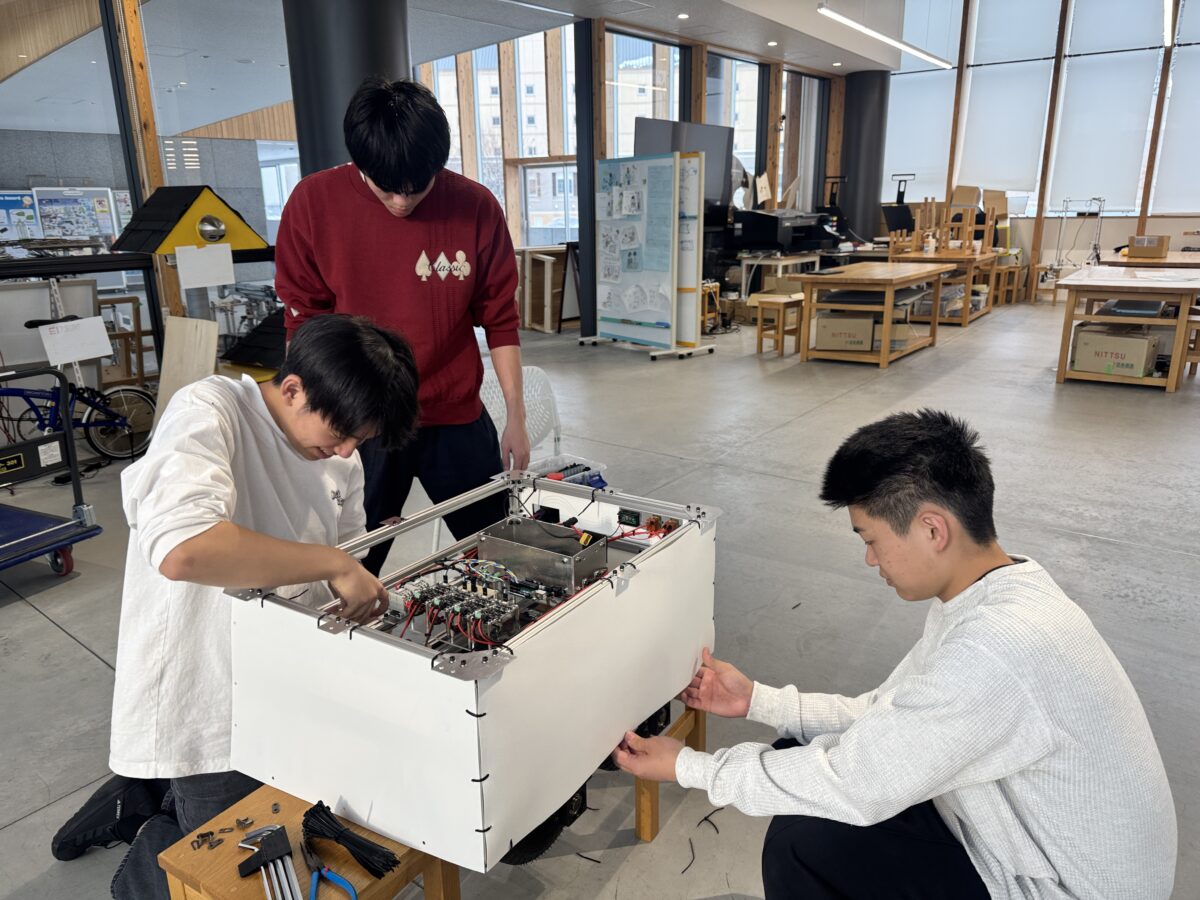
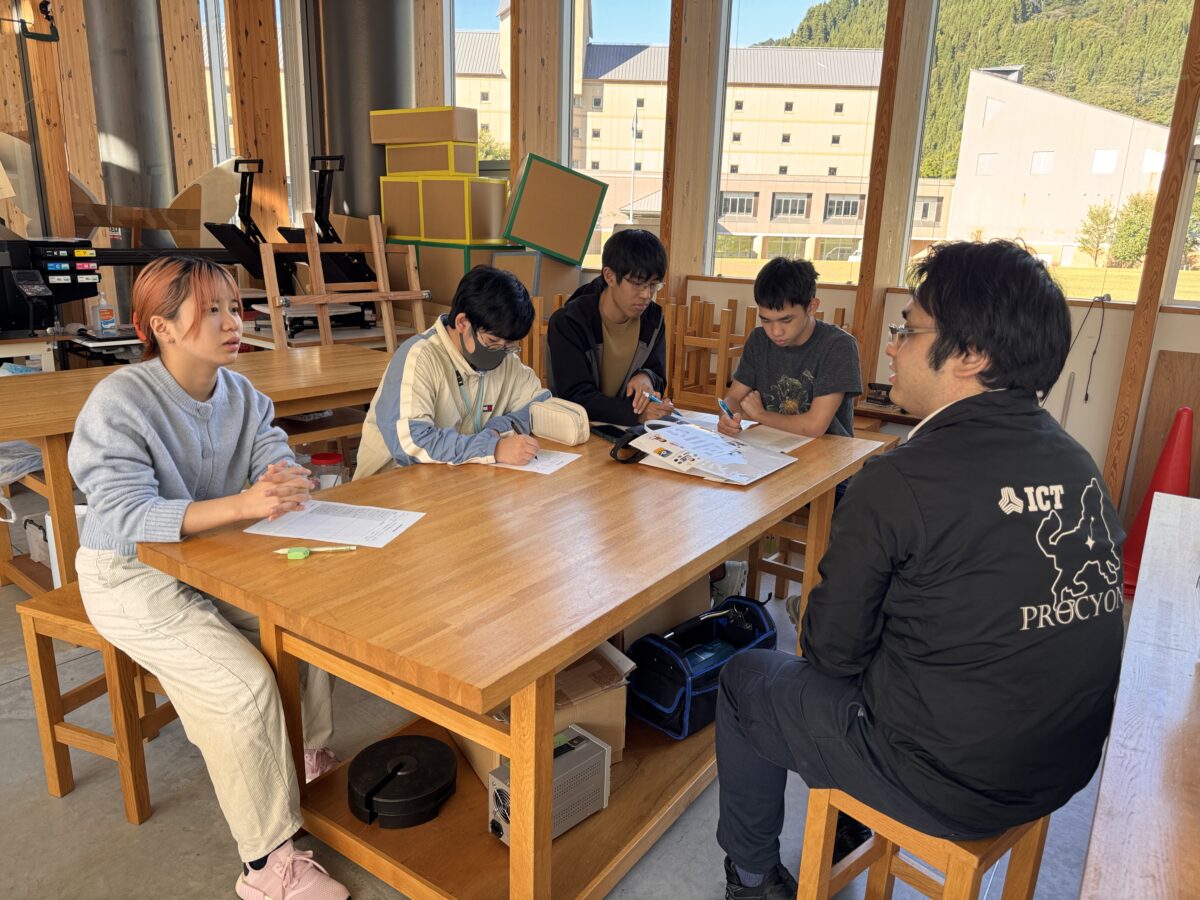
今年度のエンジニアリングデザインⅡの成果が後輩たちに受け継がれて、獣害対策システムの機能が完成することを期待しています。
石原田 海秀
Hello. My name is Kaishu Ishiharada, and I am a 2nd year student at ICT. I want to talk about our class, "Engineering Design II." In this class, we have two teams. The Agri-Business team grows "KOSEN Beniharuka" sweet potatoes to make a profit. The Tech team uses technology to protect the farm from wild animals like monkeys. I am a member of the Tech Team.
The Tech group has three teams: IoT, Drone, and Rover. We want to make a system to protect the farm. First, the IoT system watches for monkeys. Then, it sends a message to the user’s phone. After that, we use a drone to drive the animals away. If it is raining and the drone cannot fly, we use a robot called Rover.
IoT team
The IoT team makes the communication system. This year, they changed to a new message service because the old message service went out of service. They built the new system, but next year they need to test it more to see if it is useful in daily life.
Drone team
The Drone team uses drones to stop the animals. This year, they changed some parts on the drone. The old parts were difficult to program, so they put in new parts that were easier to program to better control the drone. In the future, they want the drone to fly and use its camera.
Rover team
The Rover team started last year. We use the rover when the weather is bad. This year, we improved the rover using what we learned in math and physics classes. In the second semester, we made a waterproof cover for the rain. It was a new challenge and very difficult, but we made a prototype after talking with our teachers and classmates.
I was a member of the Rover team and helped design the reduction gear. The old rover was too fast, and the vibration loosened the screws. So, I designed gears to make the motor slower. I am usually on the Robocon team and work on electronics, so mechanical design was hard for me. I had to choose the right gears and think about the velocity. It was difficult, but I learned the basics of mechanical design. I want to use this experience in my future work.
I hope the next students will continue our work and complete the system. Thank you for reading.
Kaishu Ishiharada
こんにちは。白山麓高専事務室の間加田 侑里です。2026年1月30日(金)に行われたエンジニアリングデザインIB(1年生)の最終発表について紹介します。
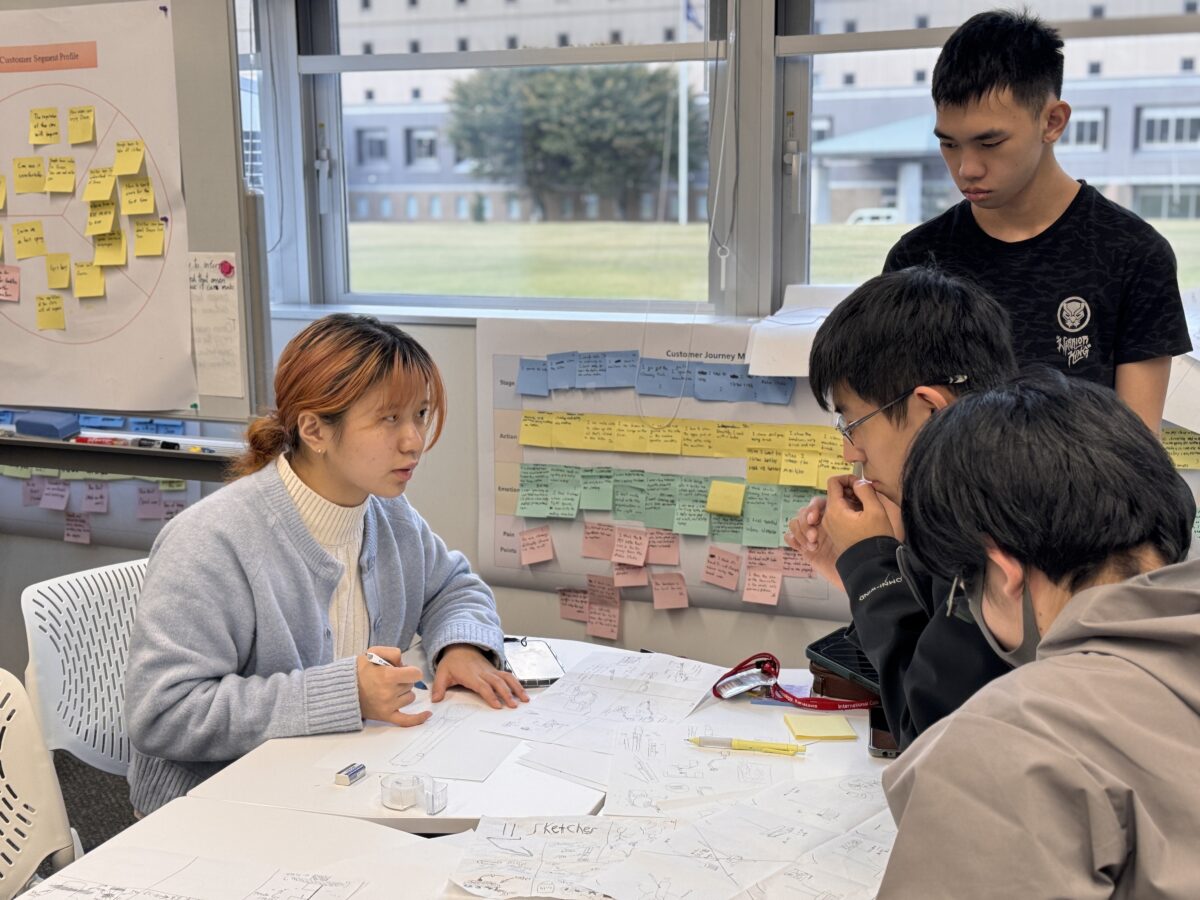
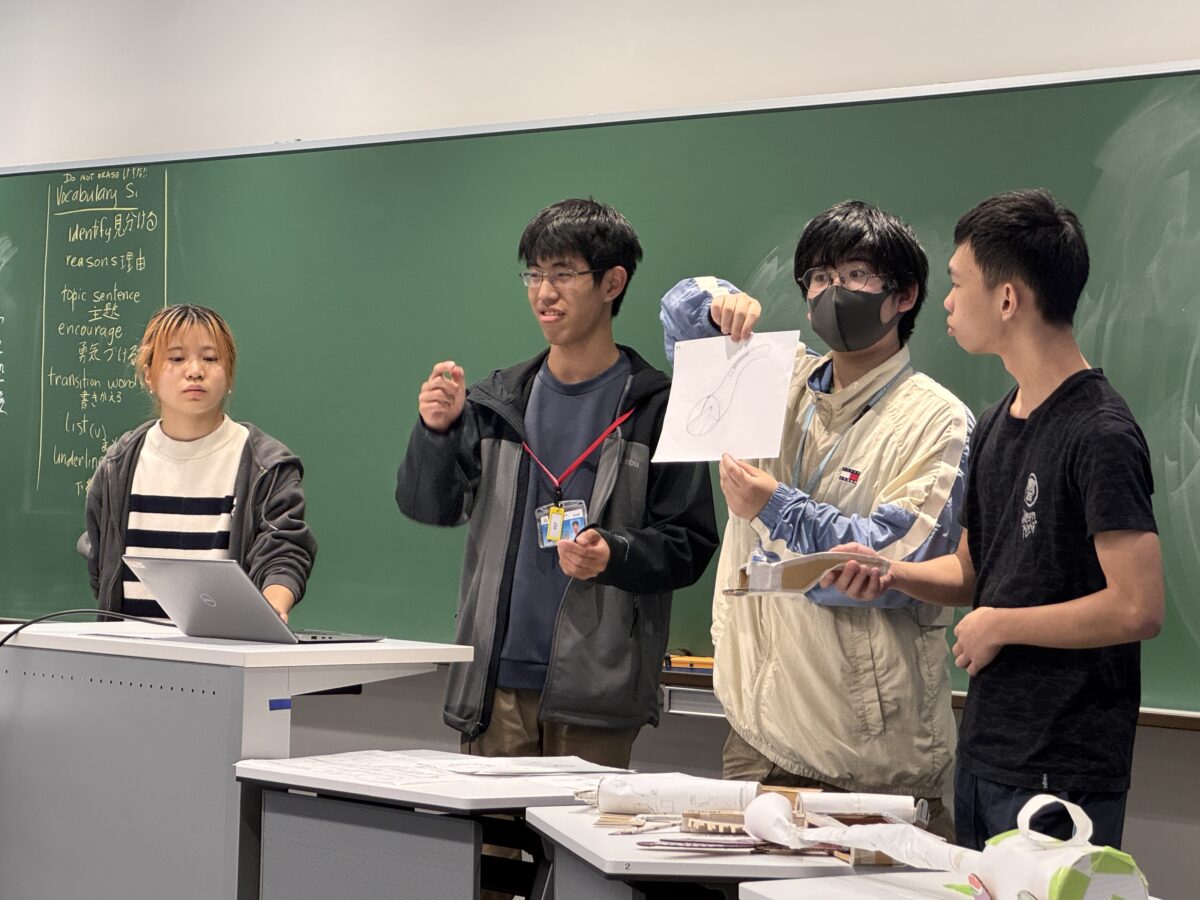
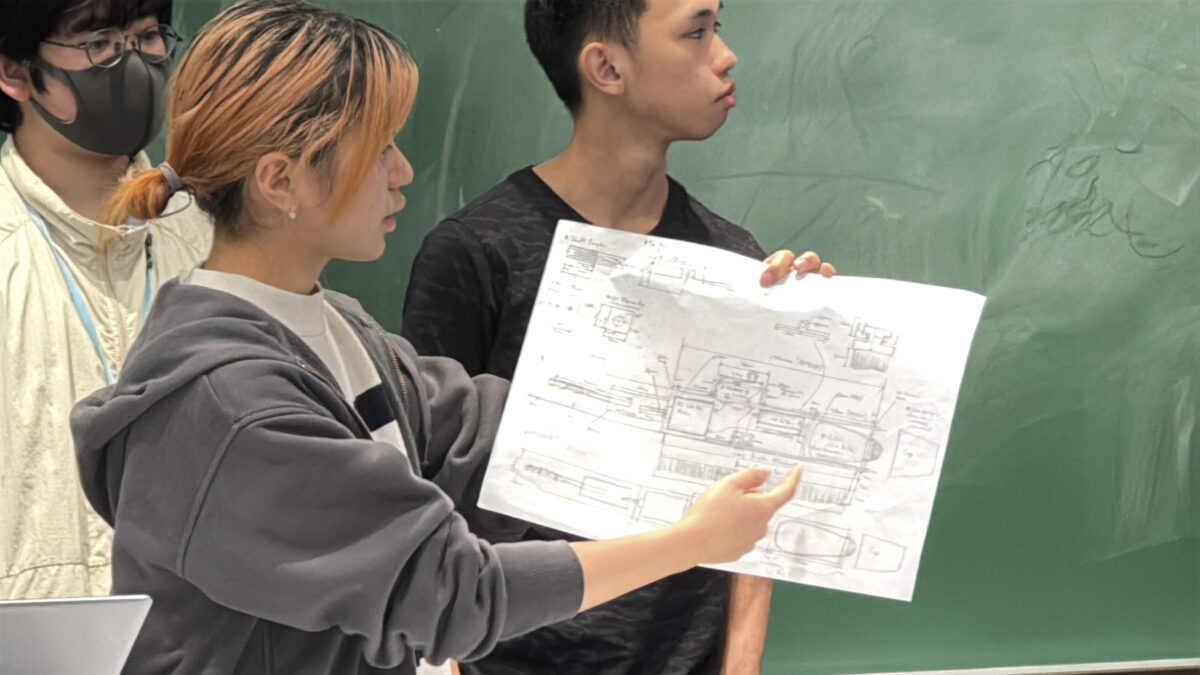
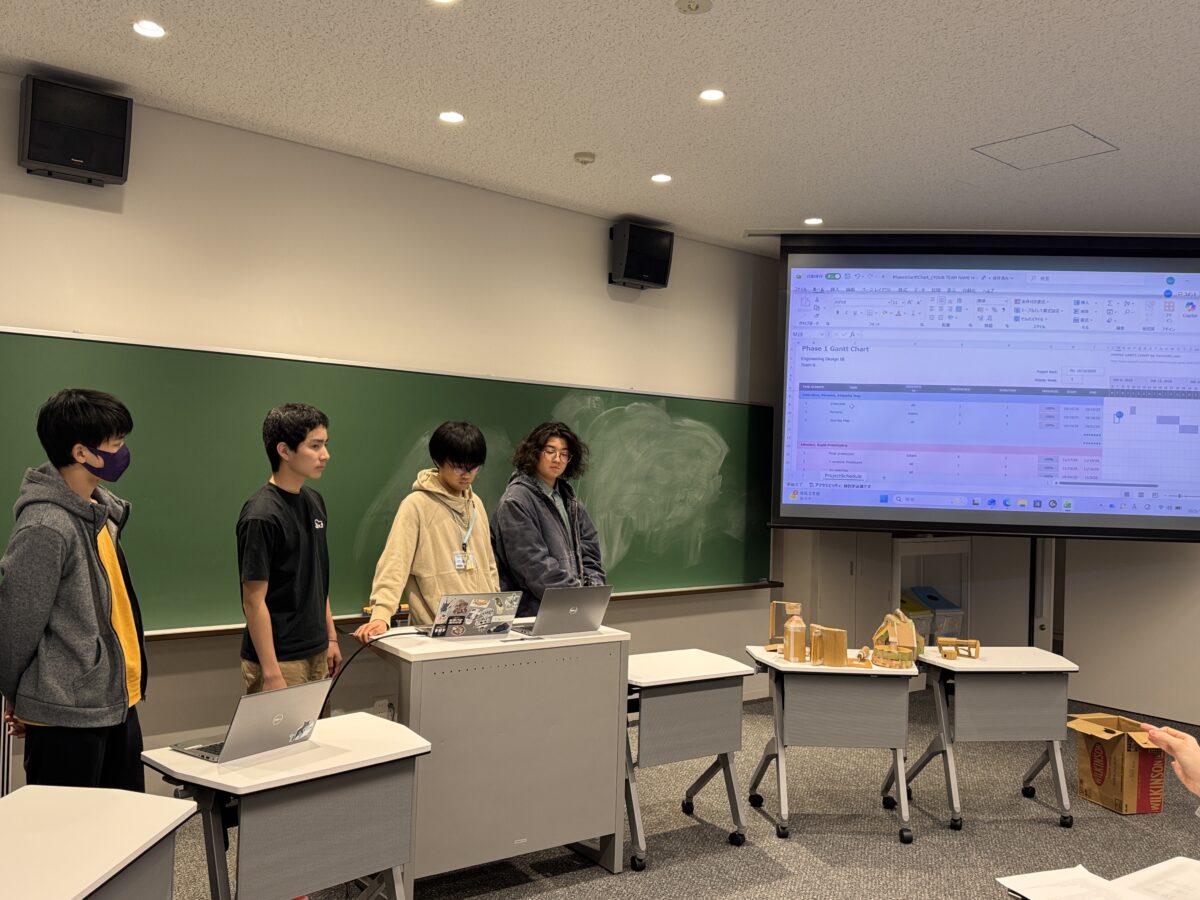
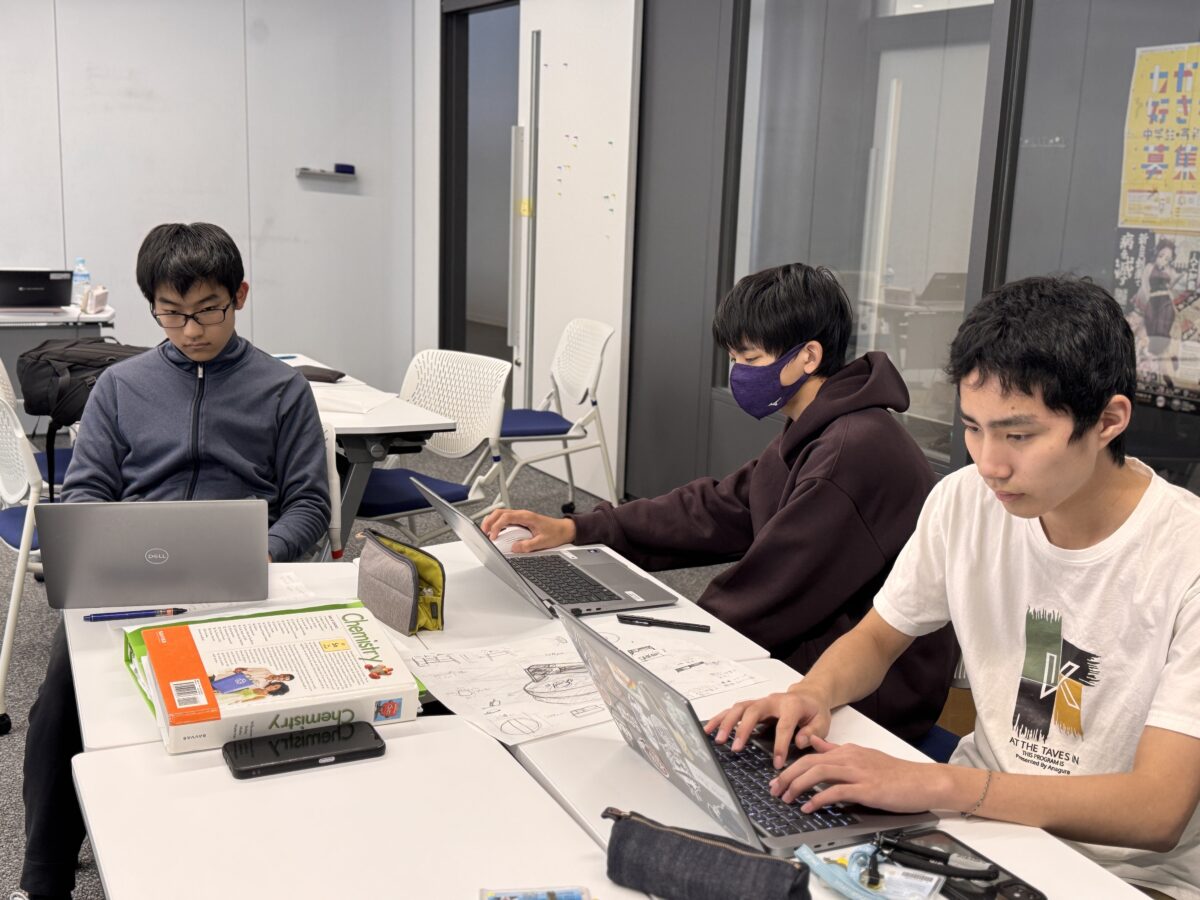
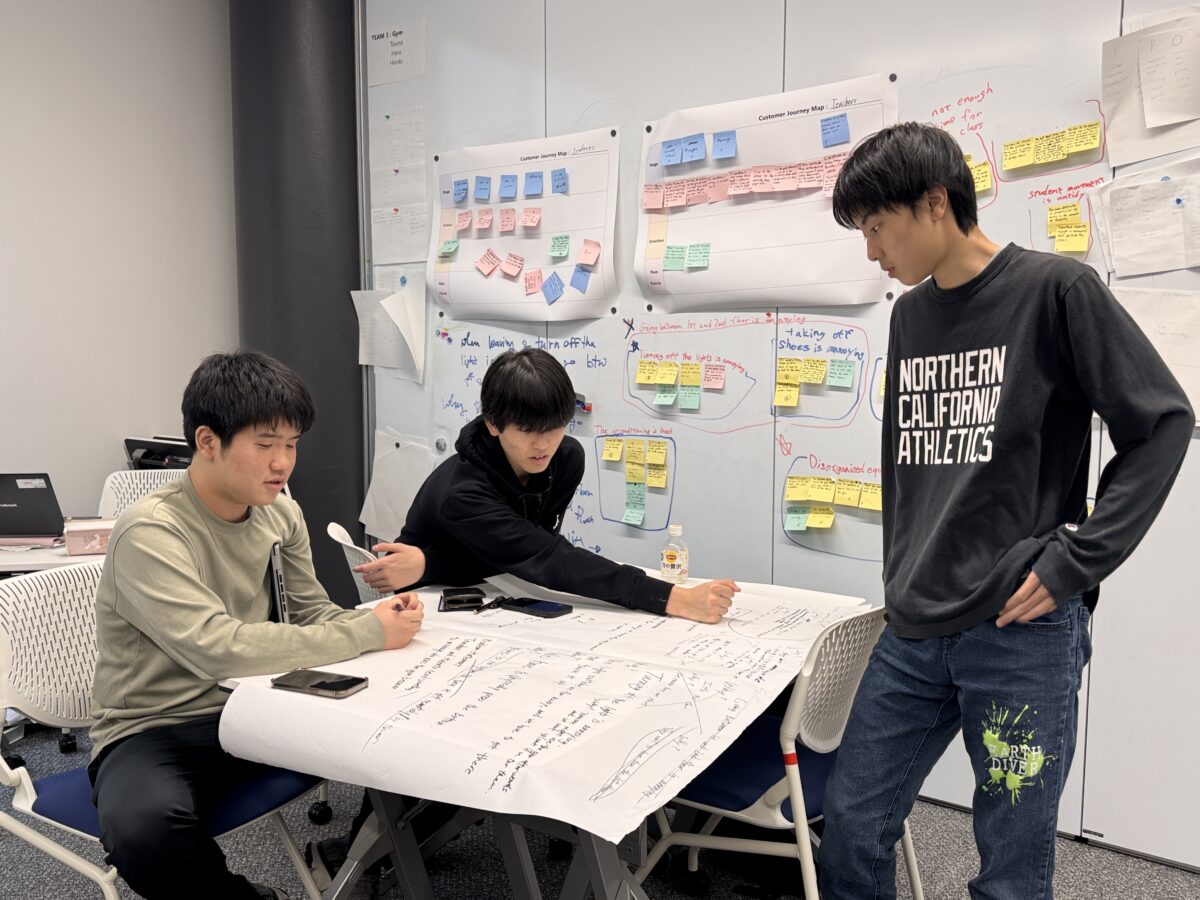
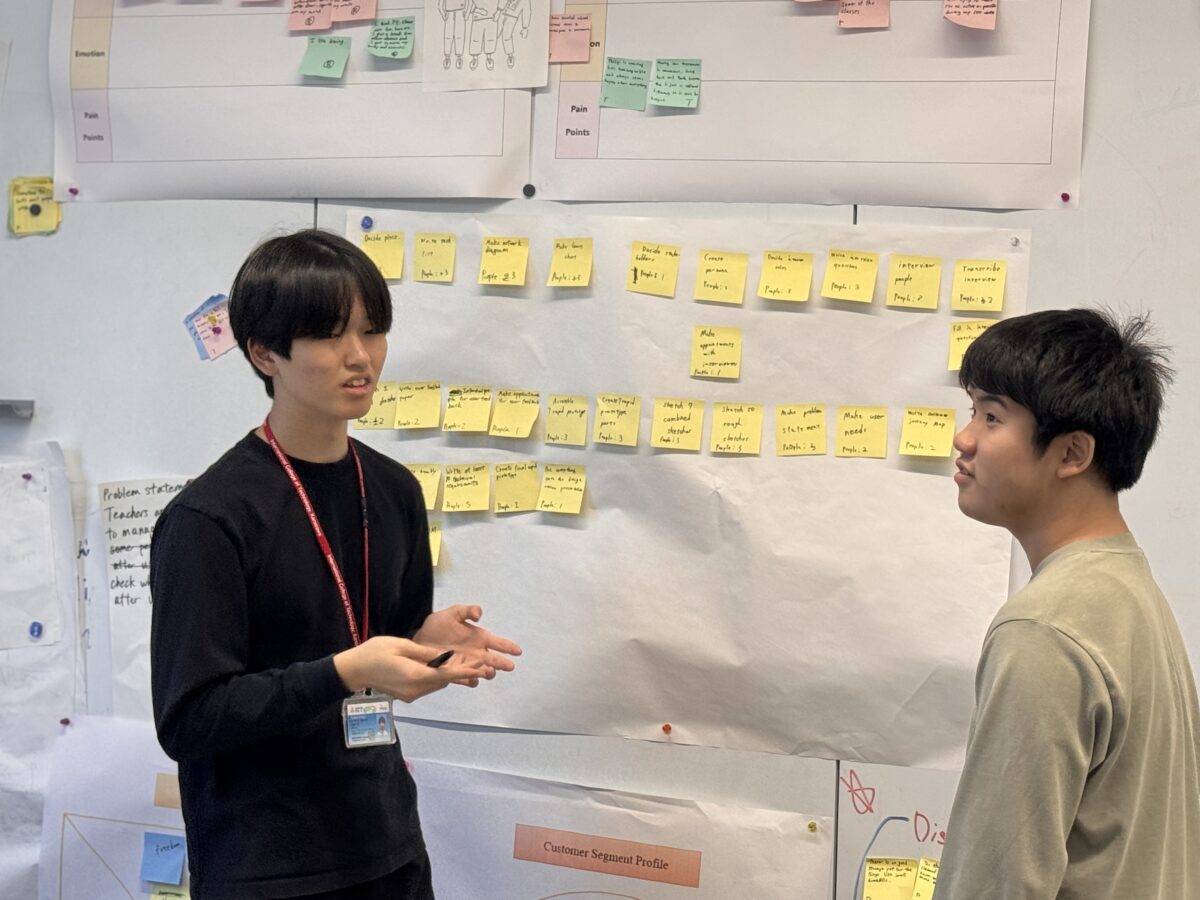
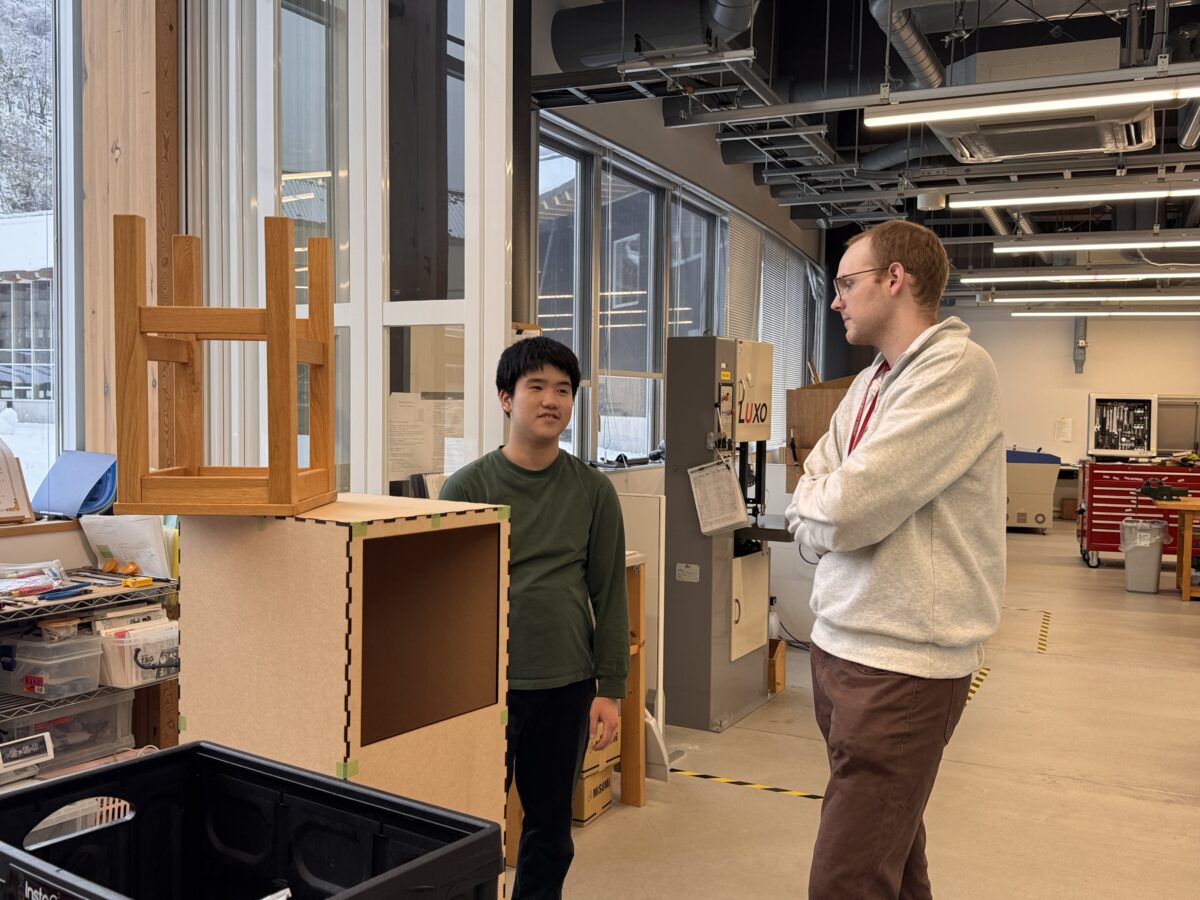
1年生のエンジニアリングデザインIでは、「人に役立つものづくり」を目標にして1年間授業に取り組んできました。学生たちは6つのチームに分かれて、ターゲットユーザーへのインタビュー調査などを通して、そこに潜む問題や要望に対して解決する装置等を製作して、プレゼンテーションに挑みました。
課題発見するターゲットとして温泉施設「比咩の湯」及び「体育館」、「メーカースタジオ」、「実験室」から6チームに分かれて問題解決に挑みました。
【メーカースタジオ:ピカピカ Cleaner】
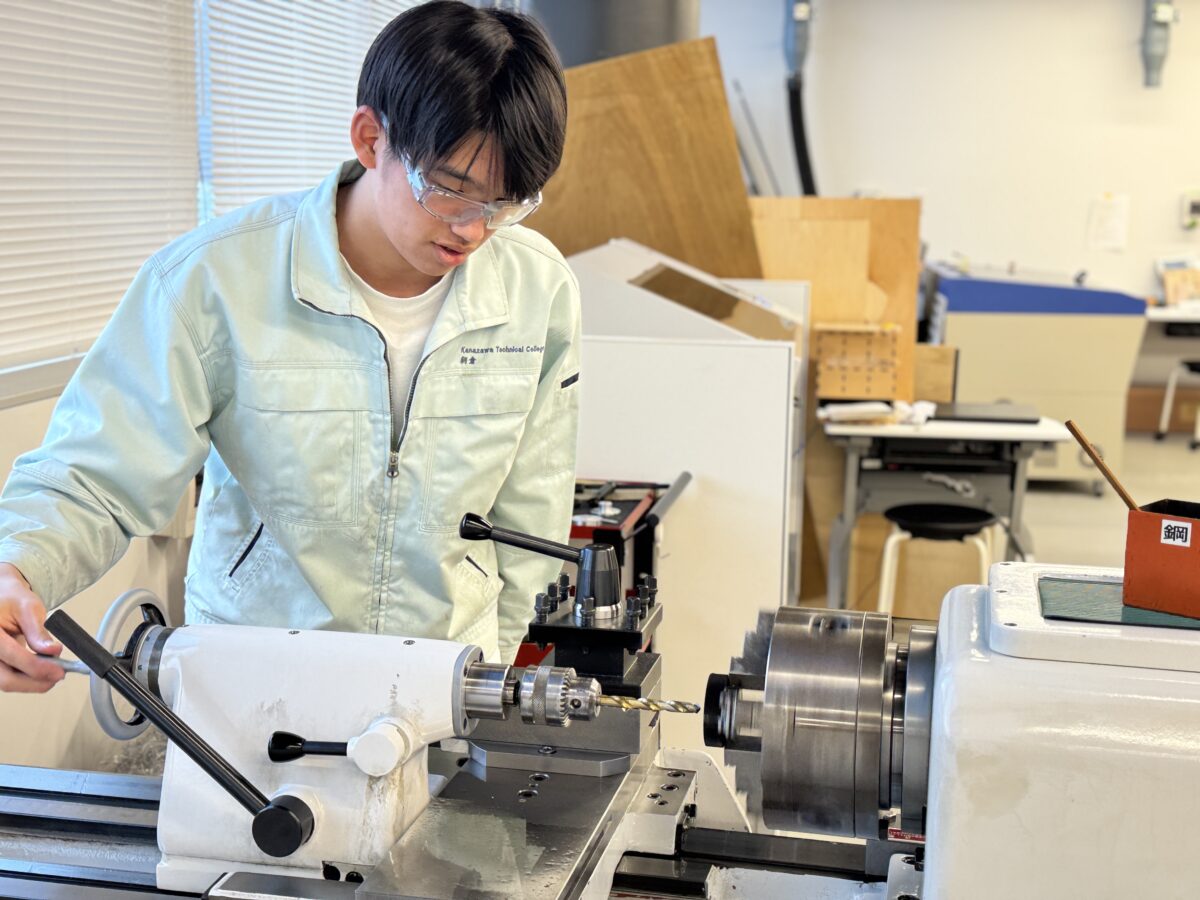
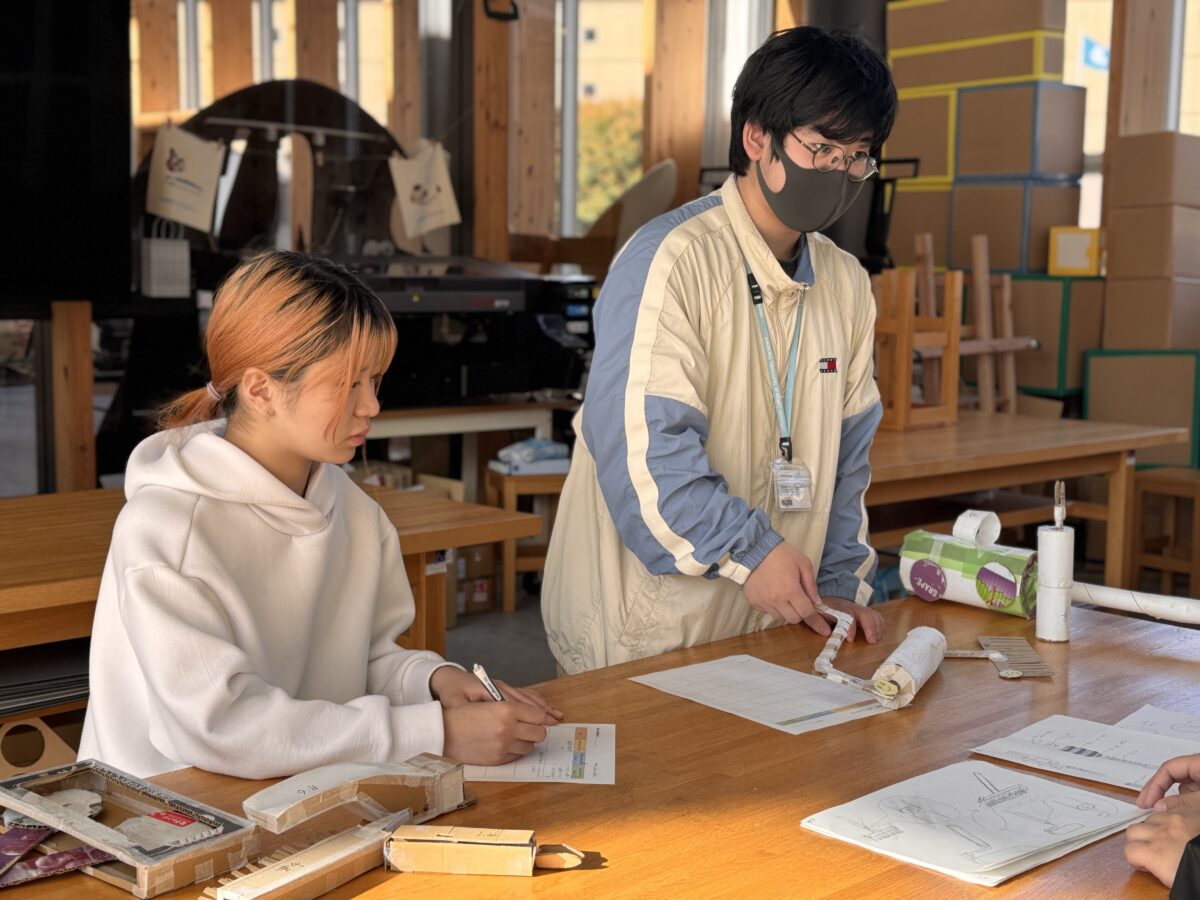
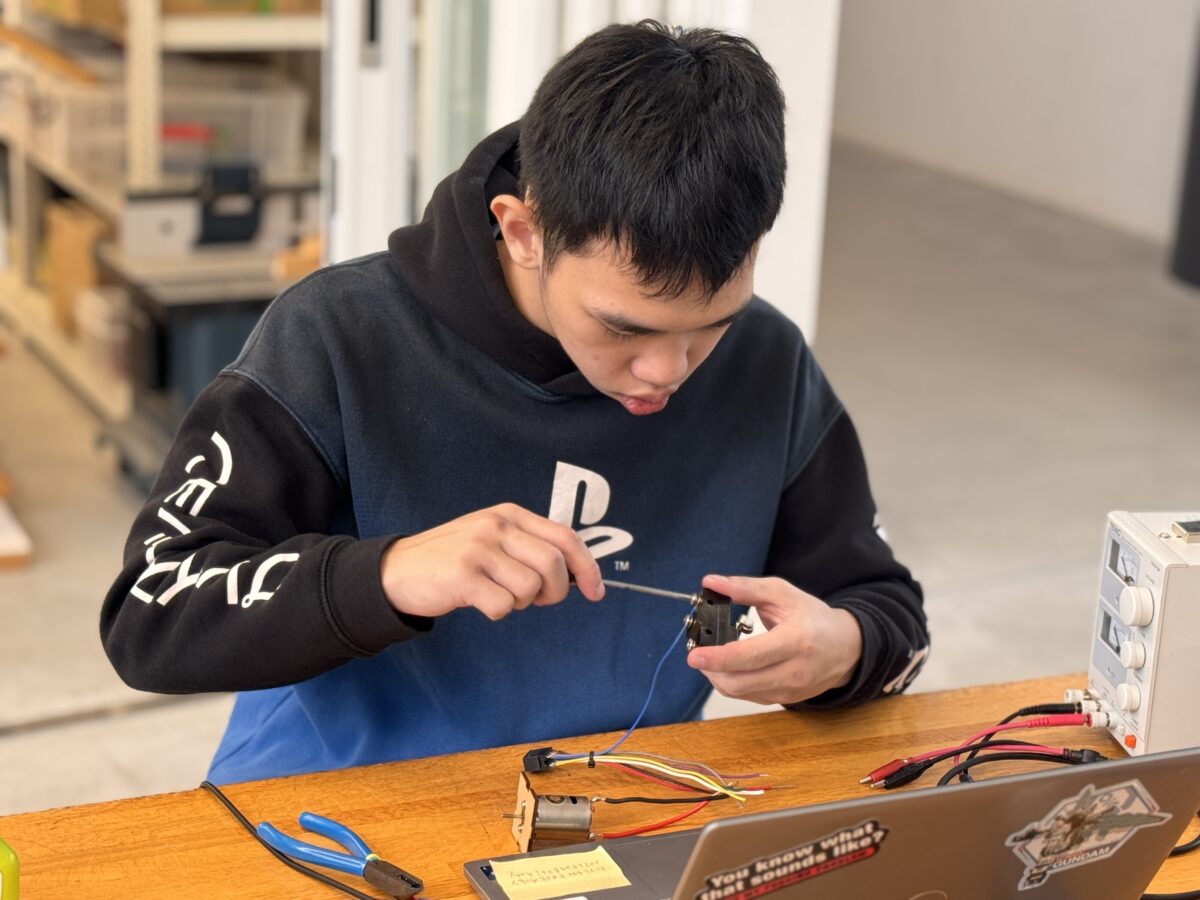
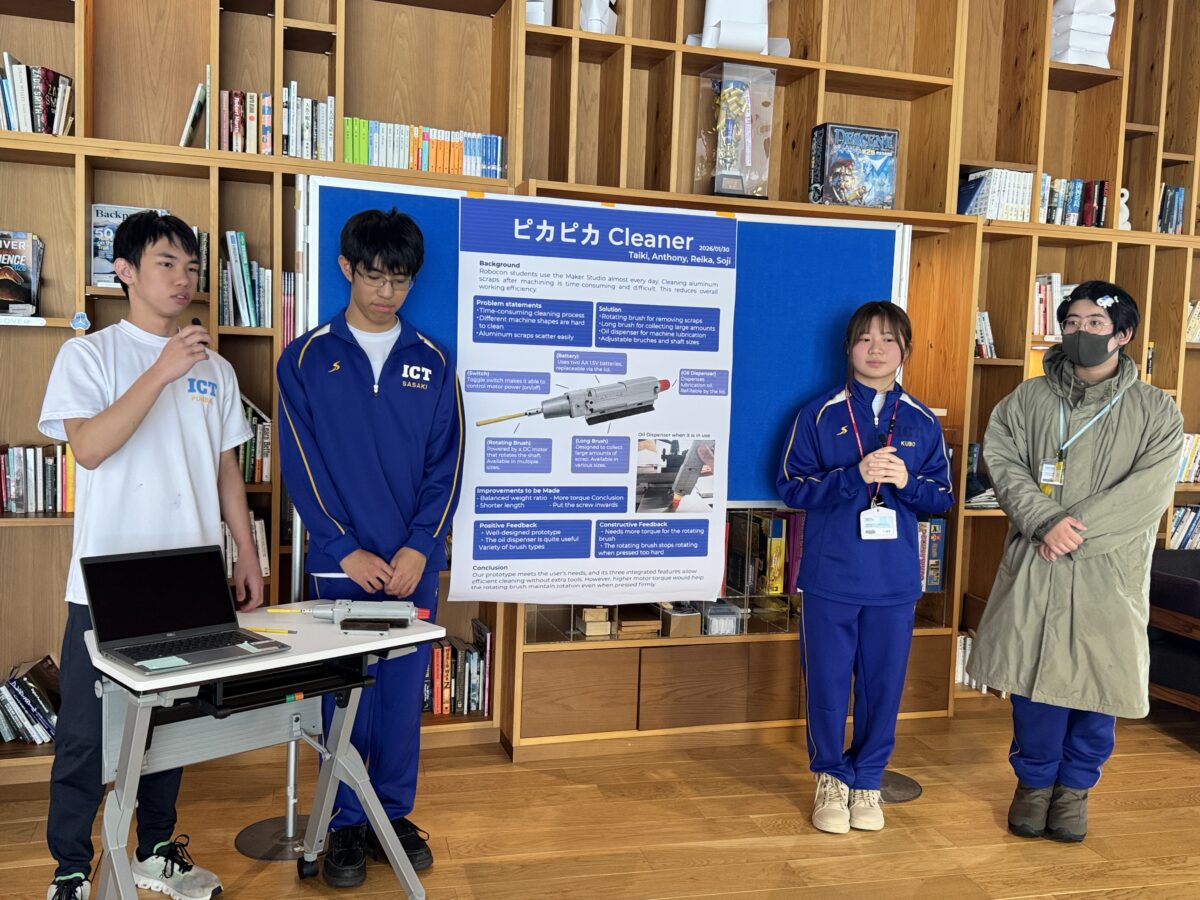
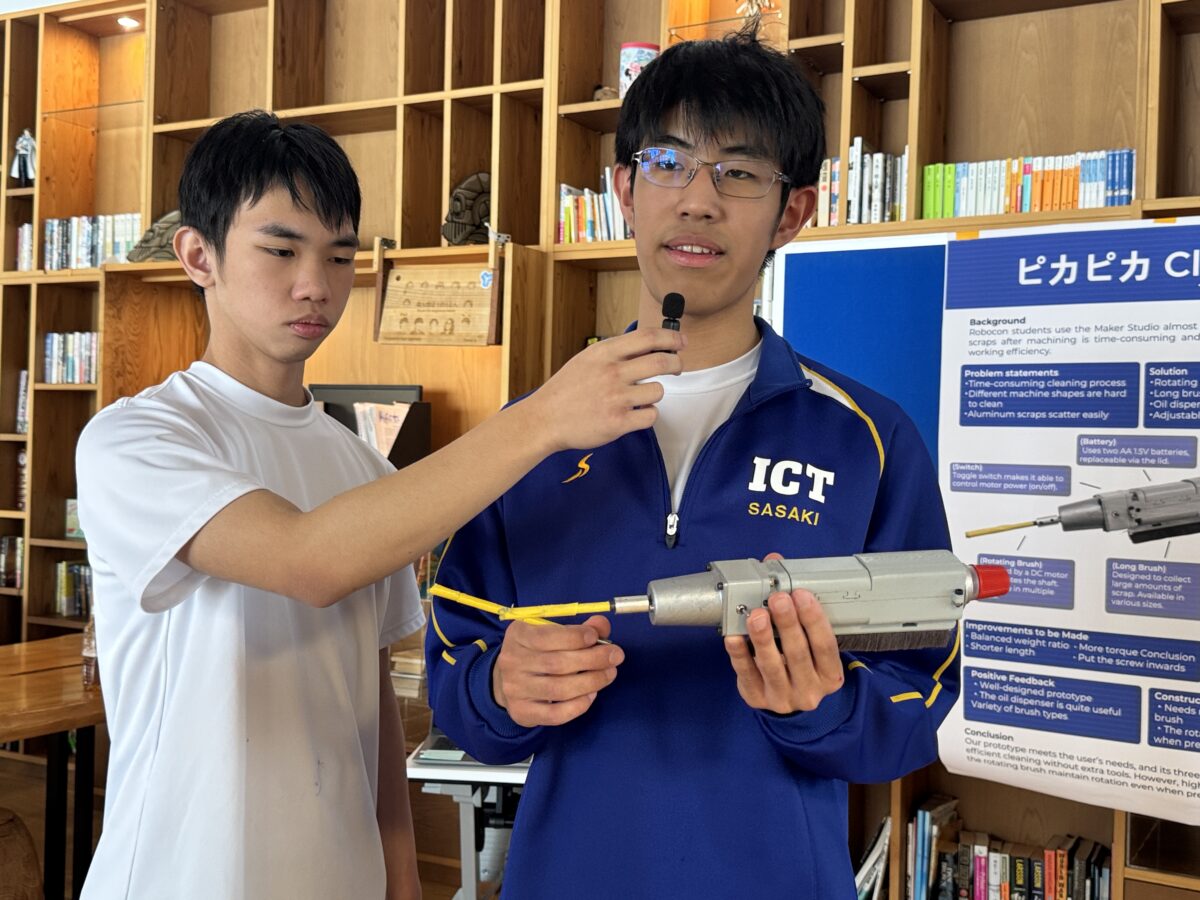
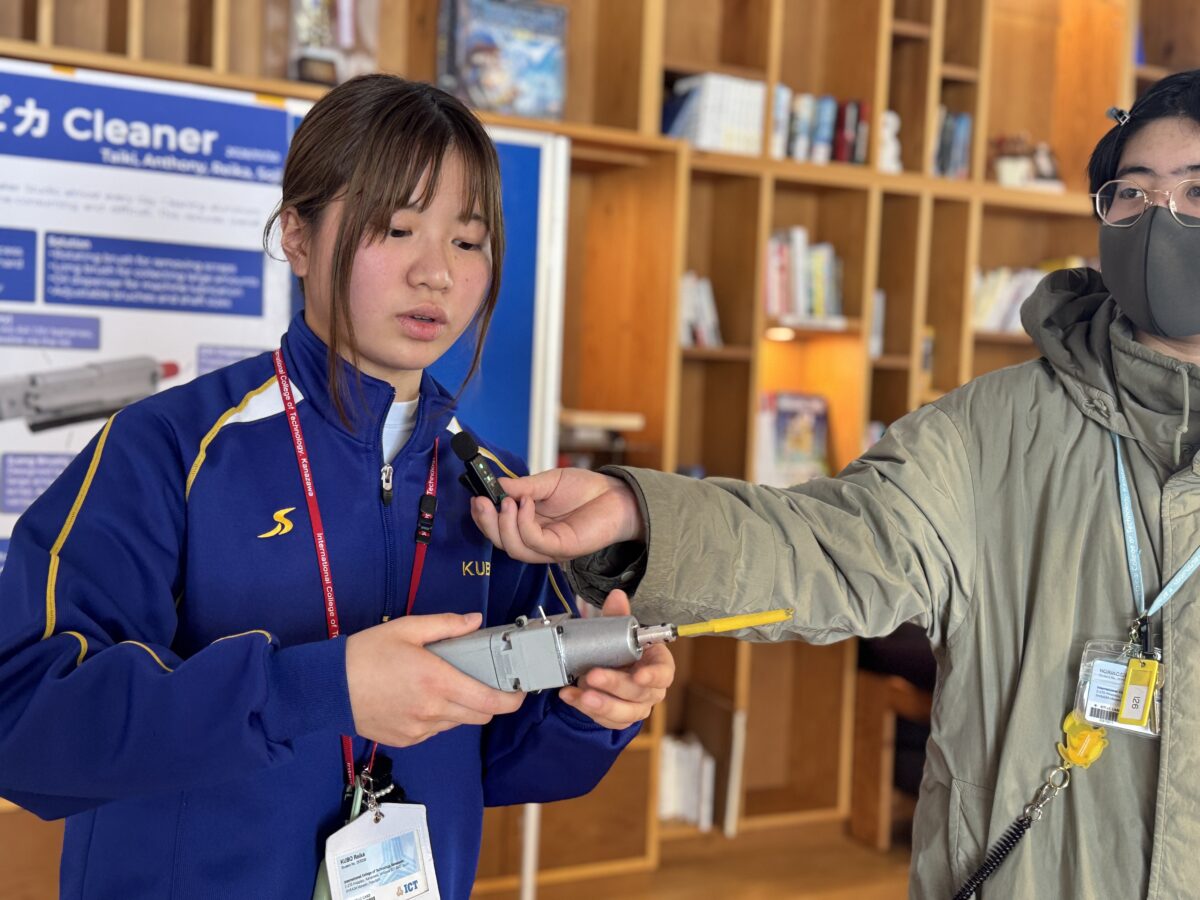
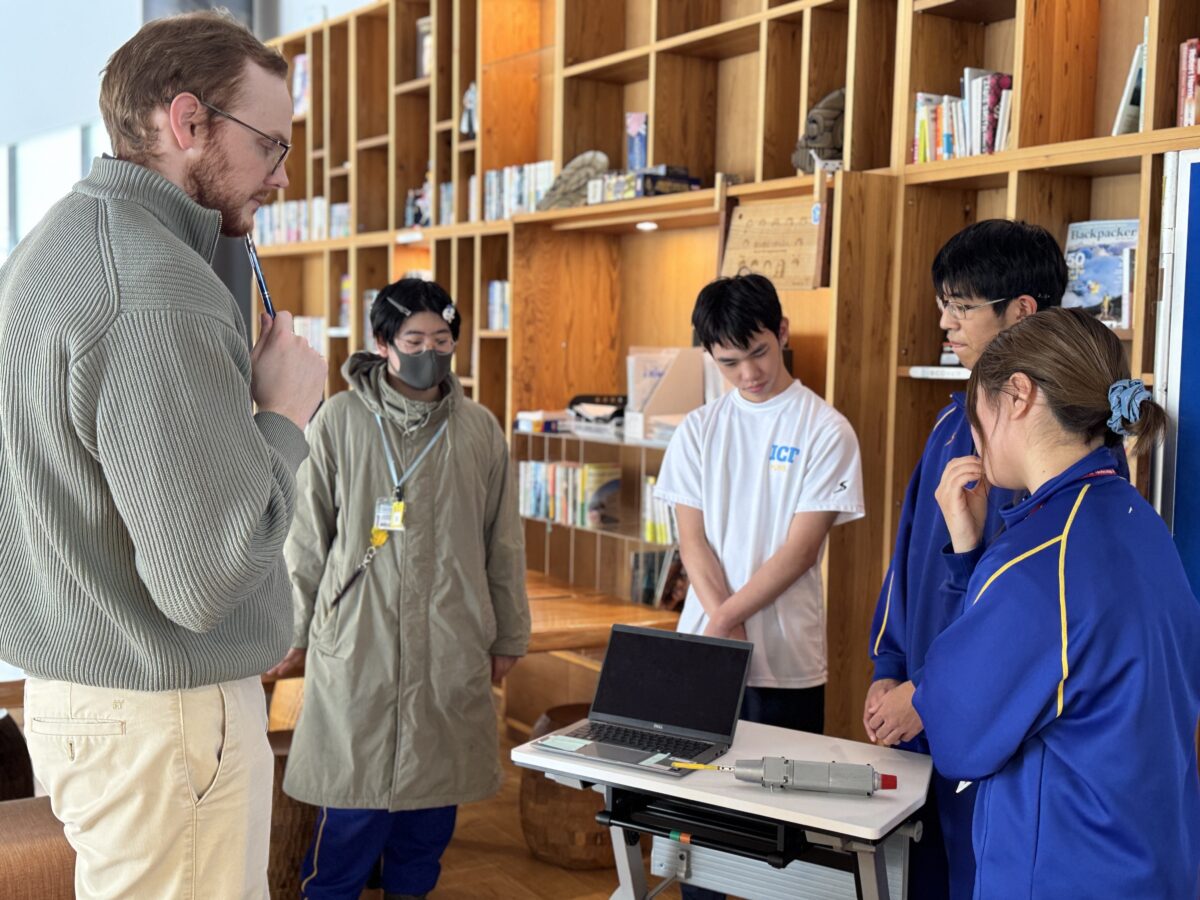
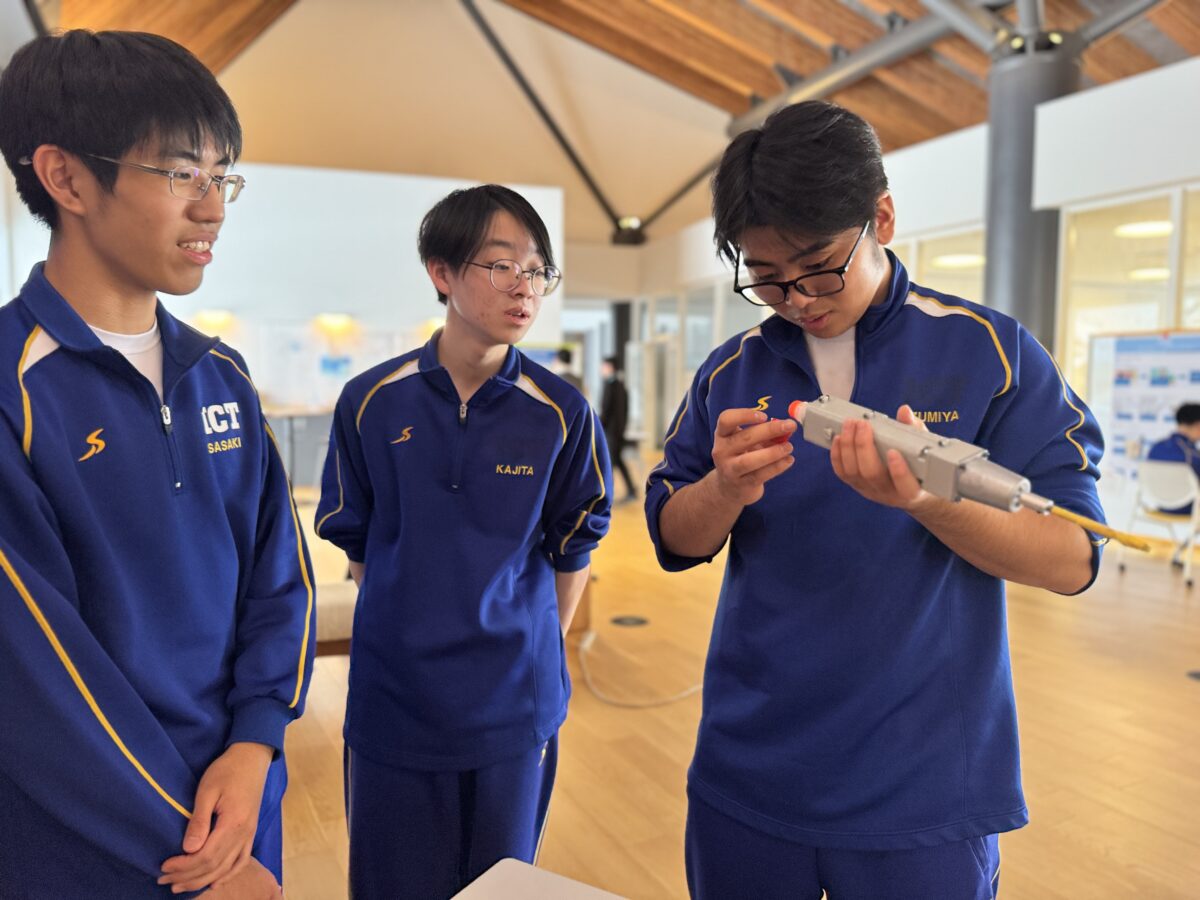
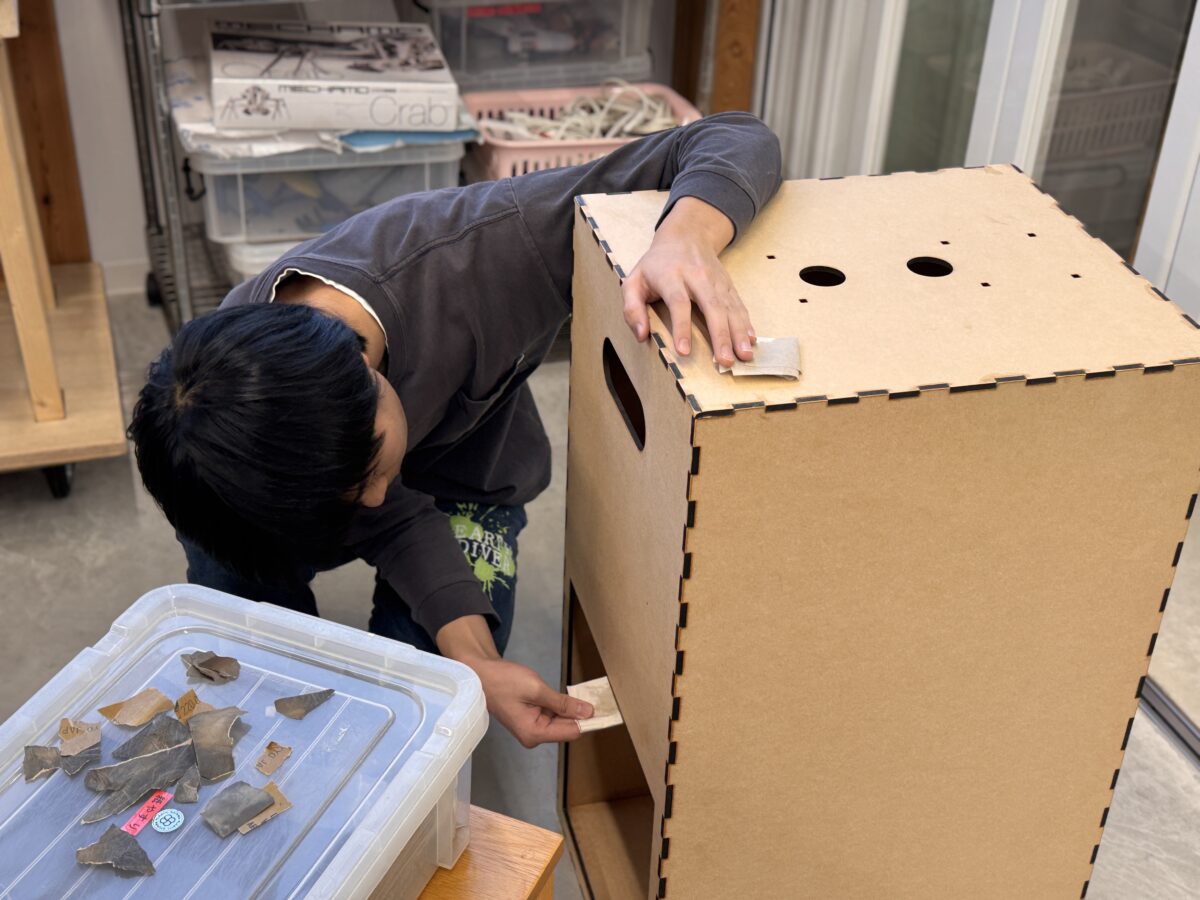
このチームは、メーカースタジオにある工作機械を清掃するための「ピカピカクリーナー」を製作しました。本校にはモノづくりのための施設としてメーカースタジオと呼ばれるスペースがあります。ロボコン活動を行う学生たちは、ほぼ毎日メーカースタジオを利用しています。そのため、メーカースタジオを管理する教員や学生にとっては、工作機械の形状によって清掃に時間や手間がかかることが課題となっていました。そこで学生たちは、回転ブラシ、ロングブラシ、潤滑装置の3つの機能を備えた清掃器具を開発しました。
回転ブラシ:ブラシを取り付けて回転させる構造になっており、細かな切りくずを掻き出して隅々まで清掃できます。
ロングブラシ: 細かい切りくずを集めるためのブラシで、用途に合わせて2種類のサイズを用意しています。
潤滑装置: 工作機械に潤滑油を吐出・補充する機能を備えており、機械の動作を滑らかにし、寿命や加工精度を維持するために重要な役割を果たします。
普段は工作機械の箇所ごとに適した清掃用具を使い分けていましたが、学生たちが製作した「ピカピカクリーナー」を使うことで、追加の工具を使わずに、より効率的な清掃が可能になりました。
【実験室:Lab Helper】
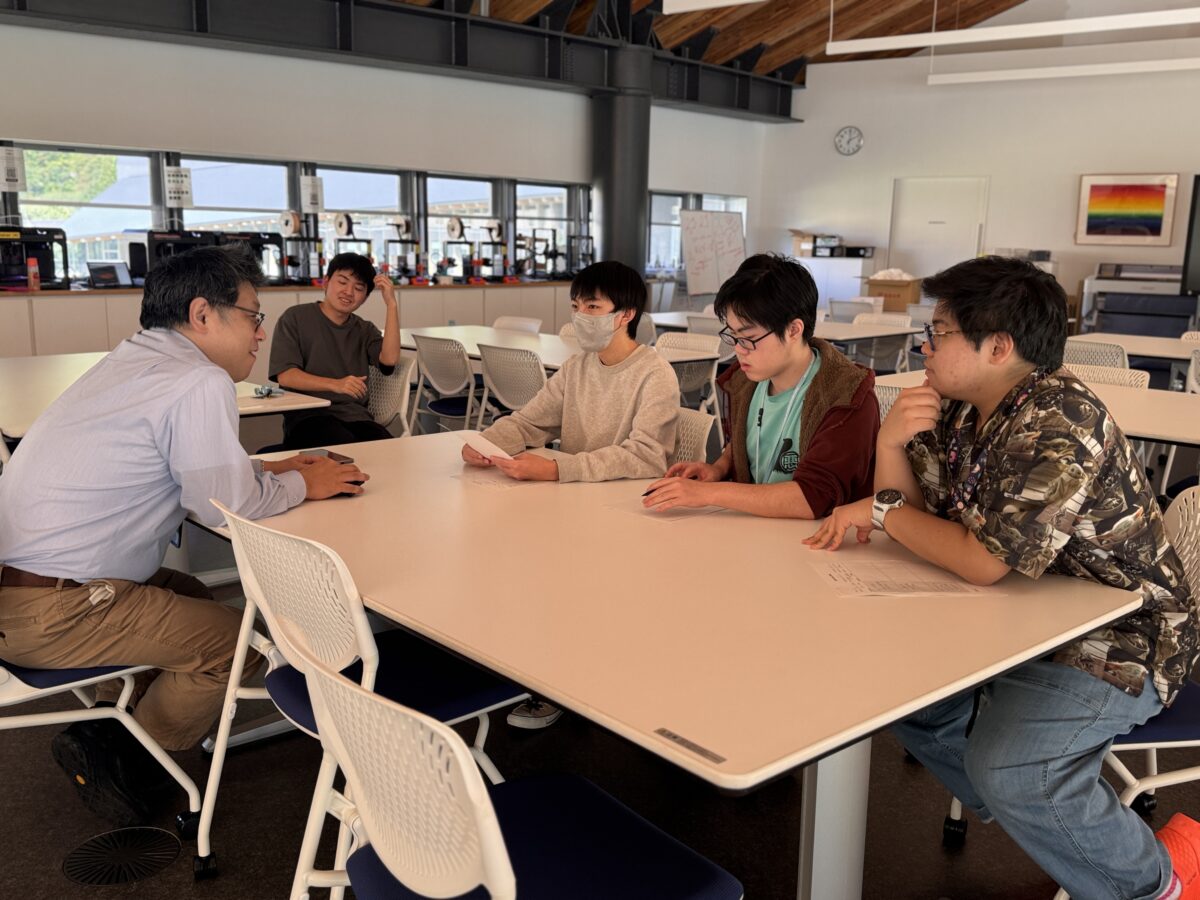
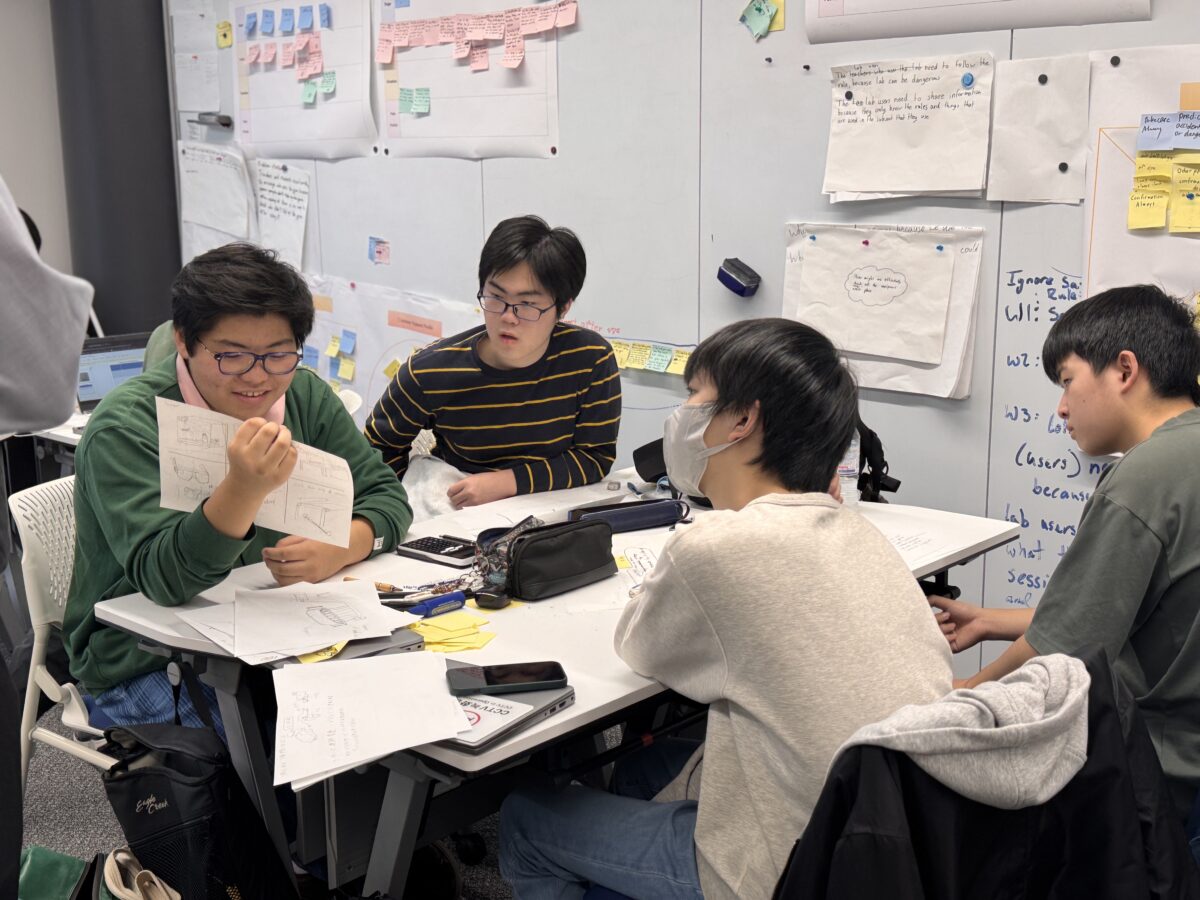
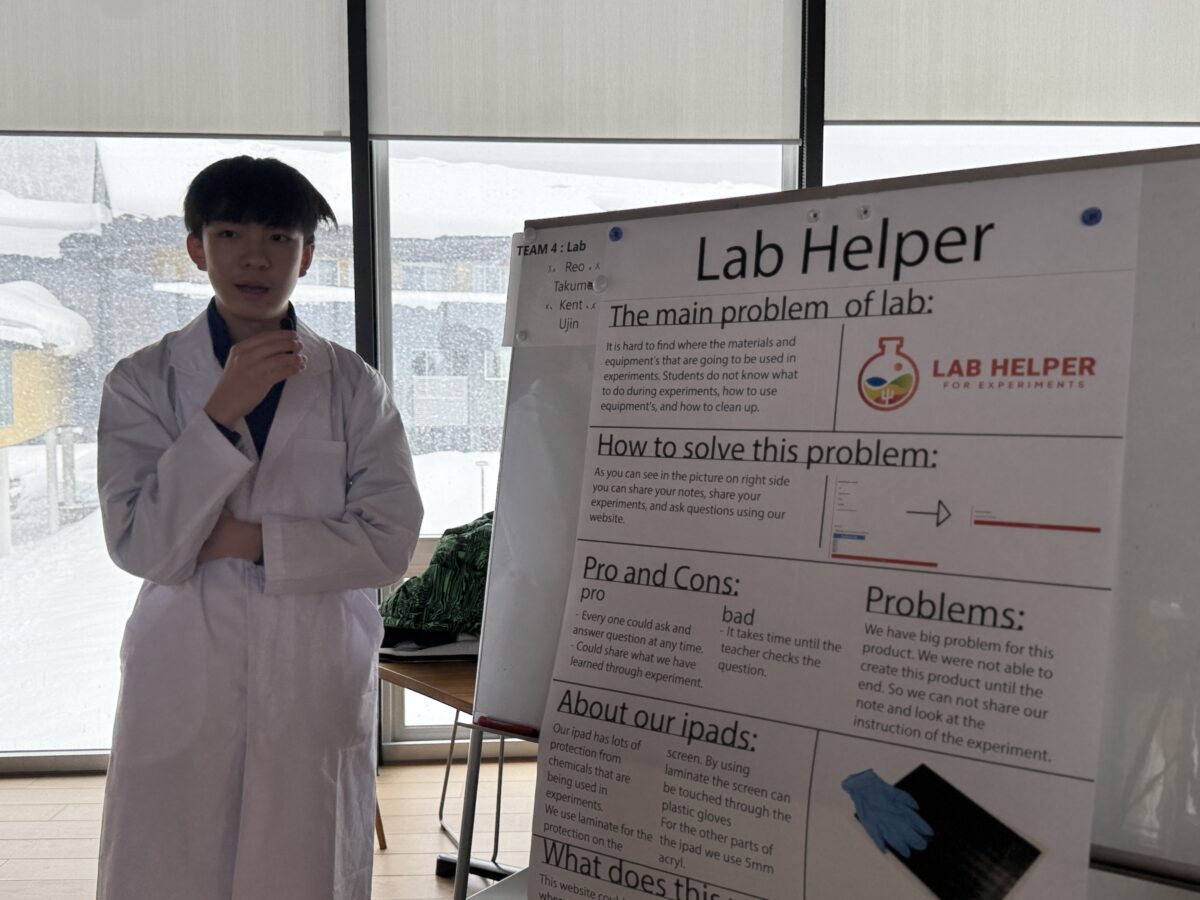
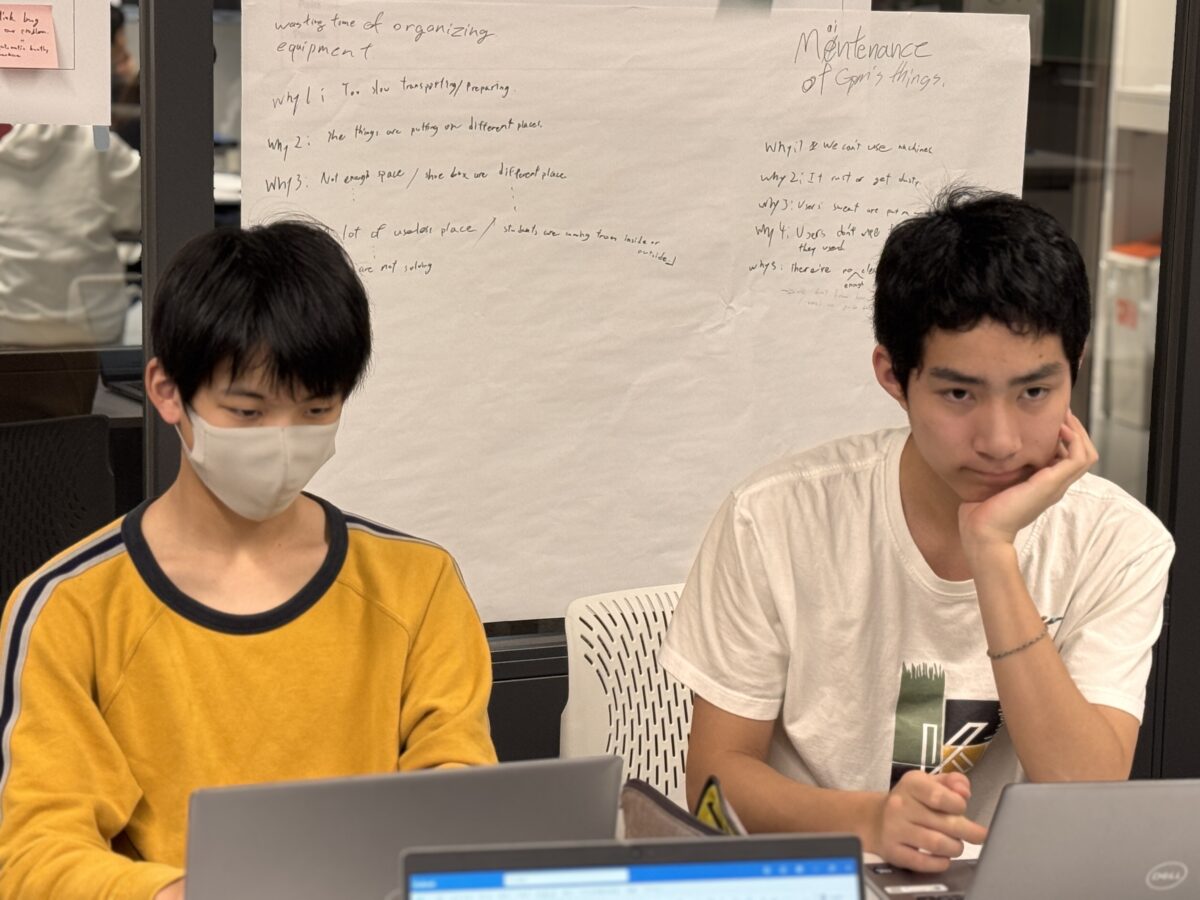
このチームは、実験室を管理している化学科目担当の教員にインタビューを行いました。その結果、学生たちは実験室で使用する器具の使い方や置き場所、片付けの手順、さらには実験の方法が分からず、同じ質問を何度も化学科目担当のナグワ・ラシィド先生に尋ねたり、ナグワ先生の手が空くまで待たなければならないことが問題であることが分かりました。
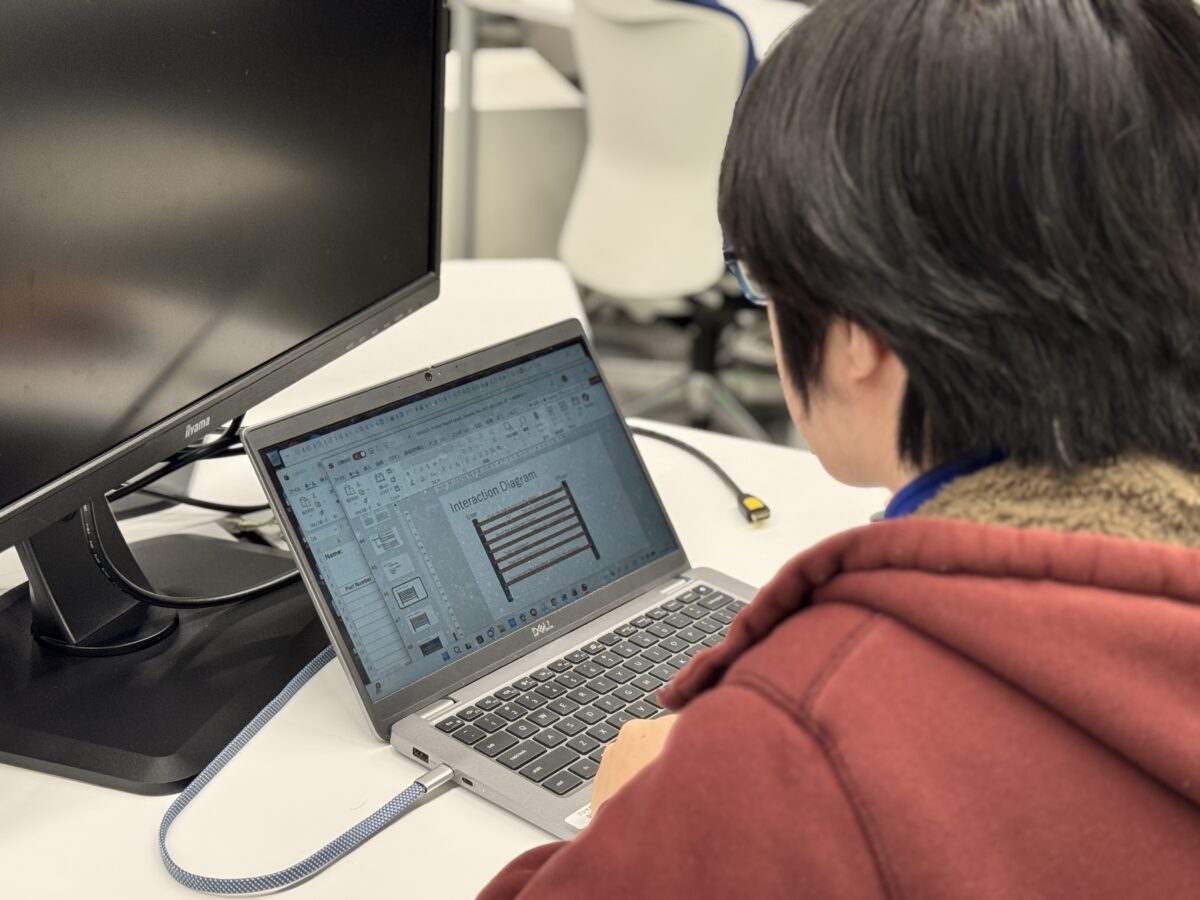
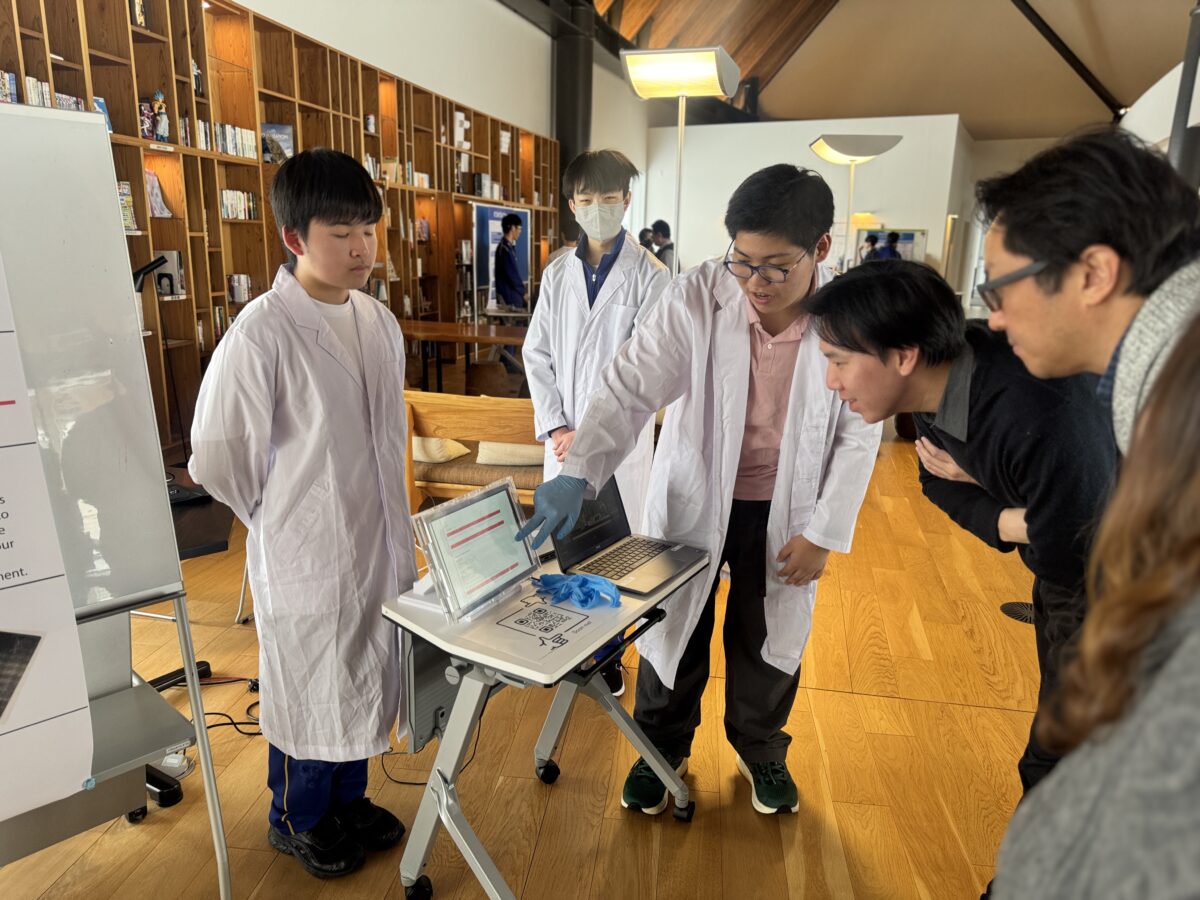
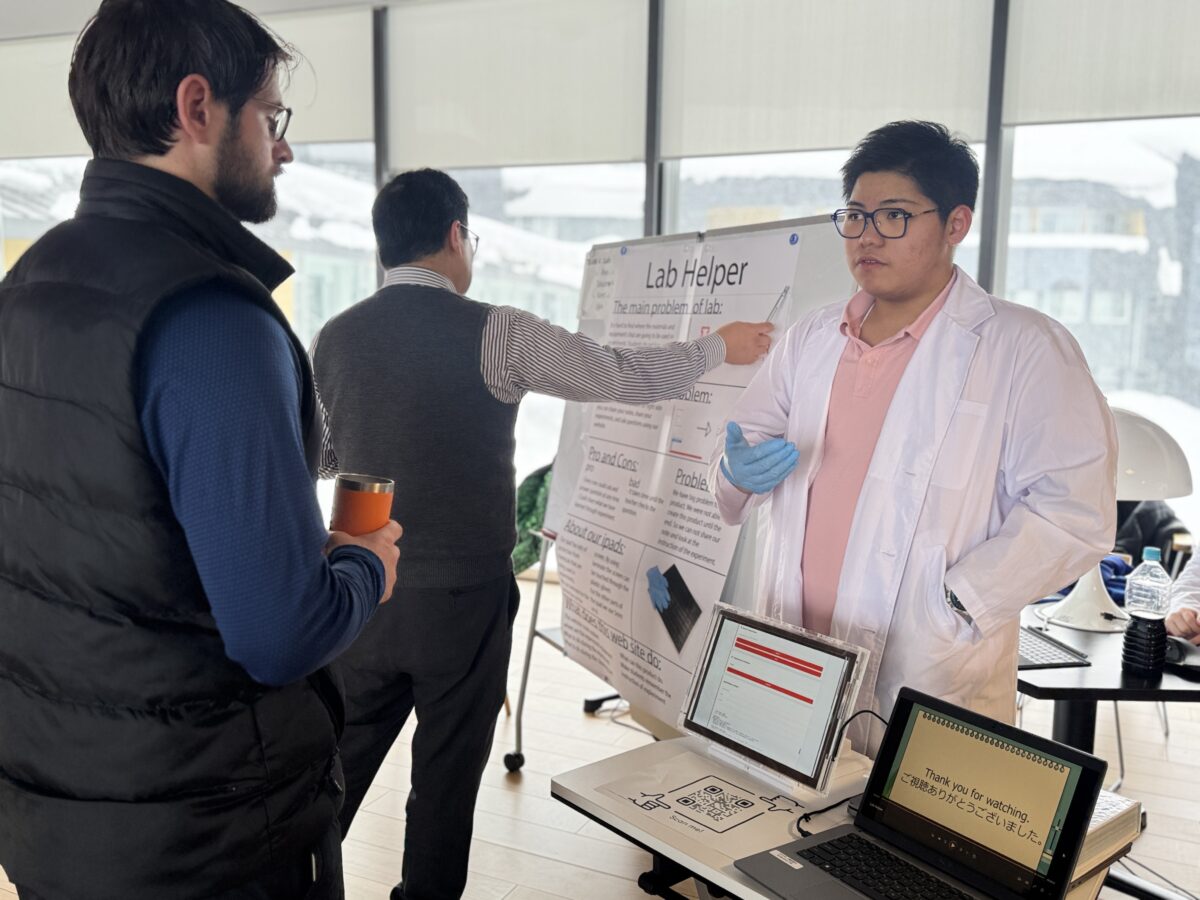
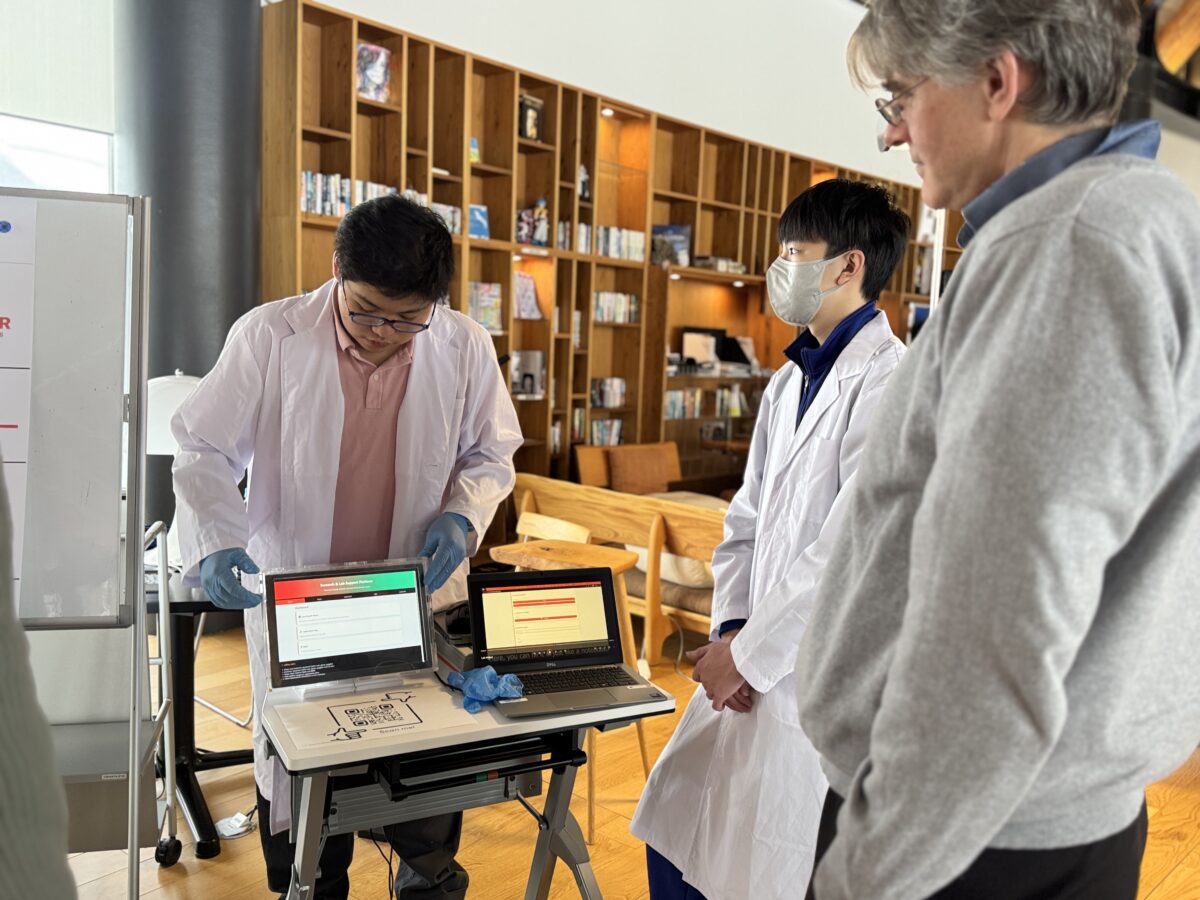
そこで学生たちは、必要な情報を一括して確認できるウェブサイトを制作しました。このウェブサイトでは、実験を行う際の注意点や手順を共有できるほか、学生が先生へ直接質問を投稿することもできます。また、実験を通して学んだ内容を記録・共有できる機能もあり、学生同士が知識を共有し合える仕組みになっています。 さらに、実験中でも安全に操作できるように、タブレット端末 のケースにはアクリル素材を使用しており、実験用手袋をしたままでも画面操作が可能です。
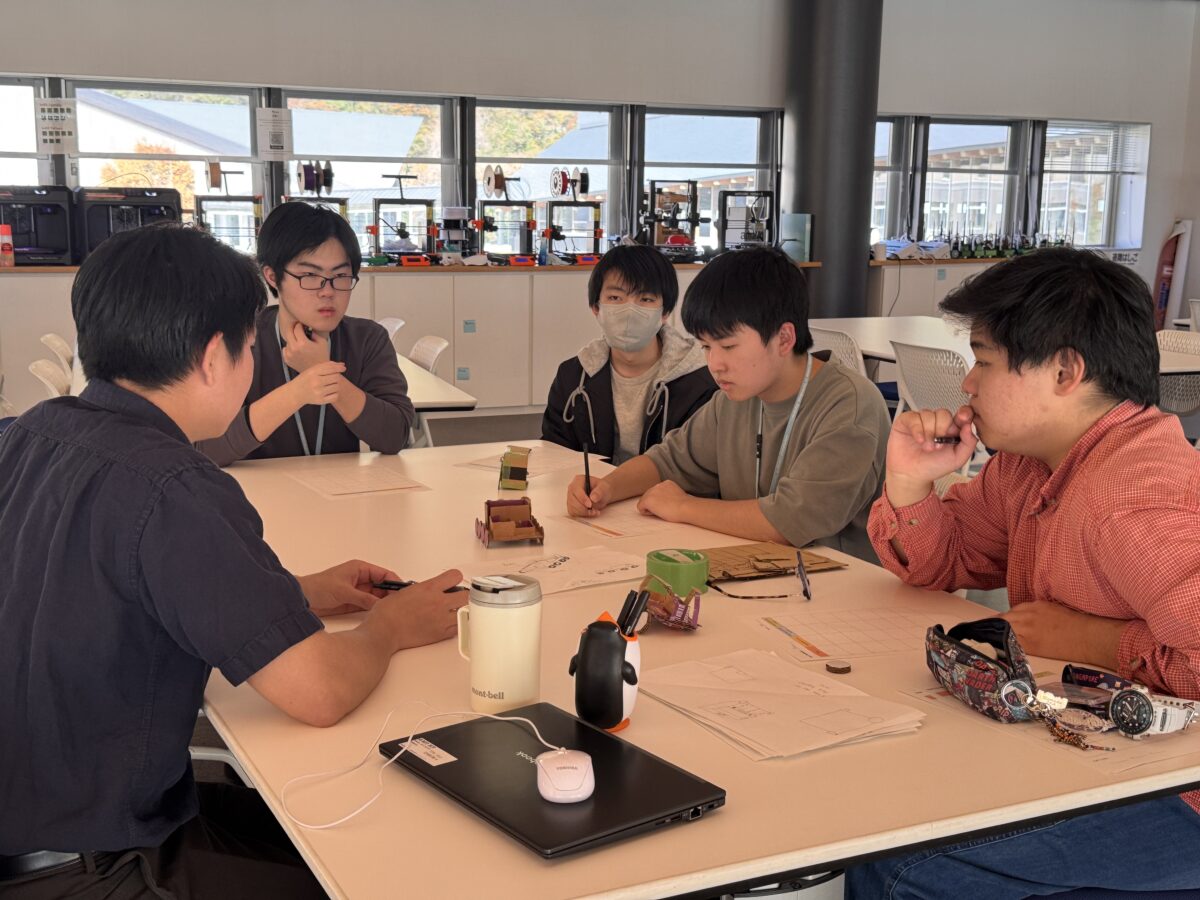
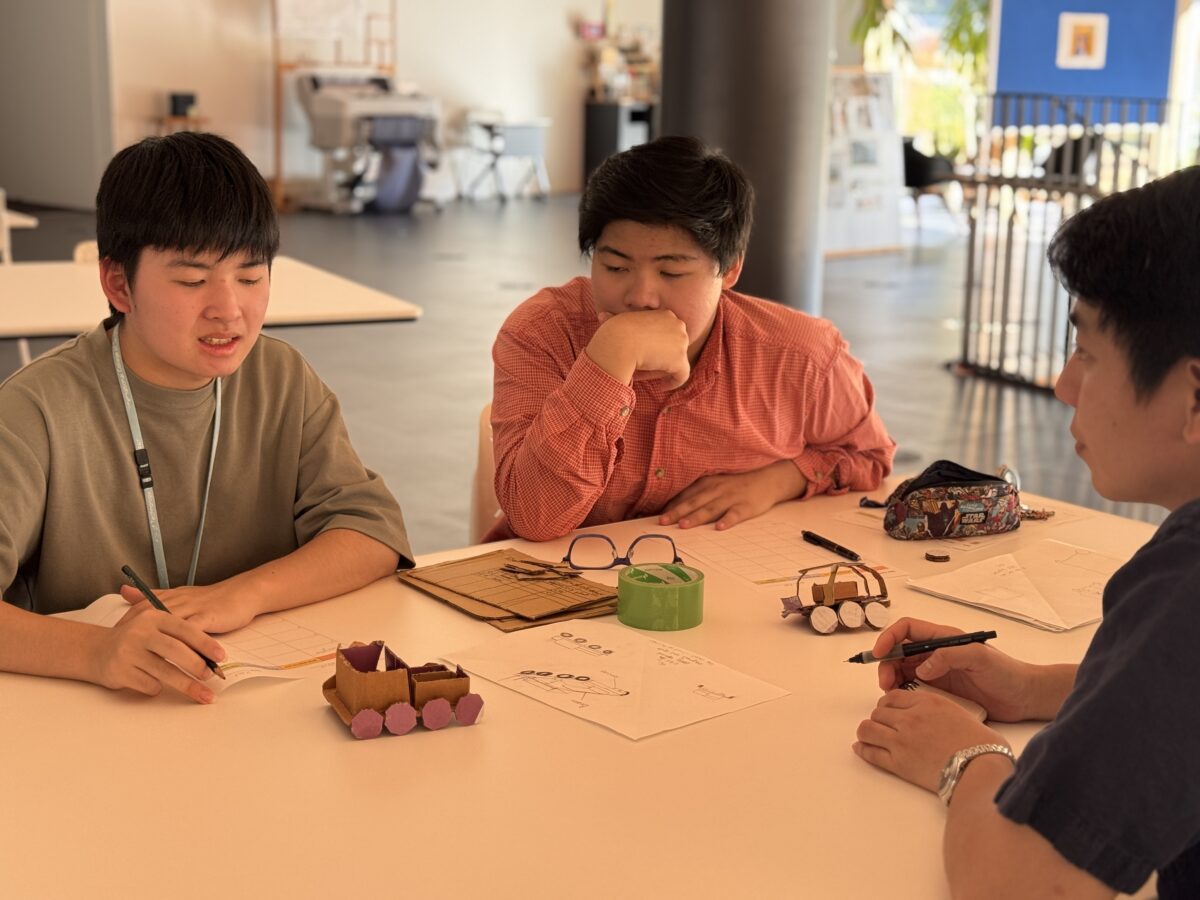
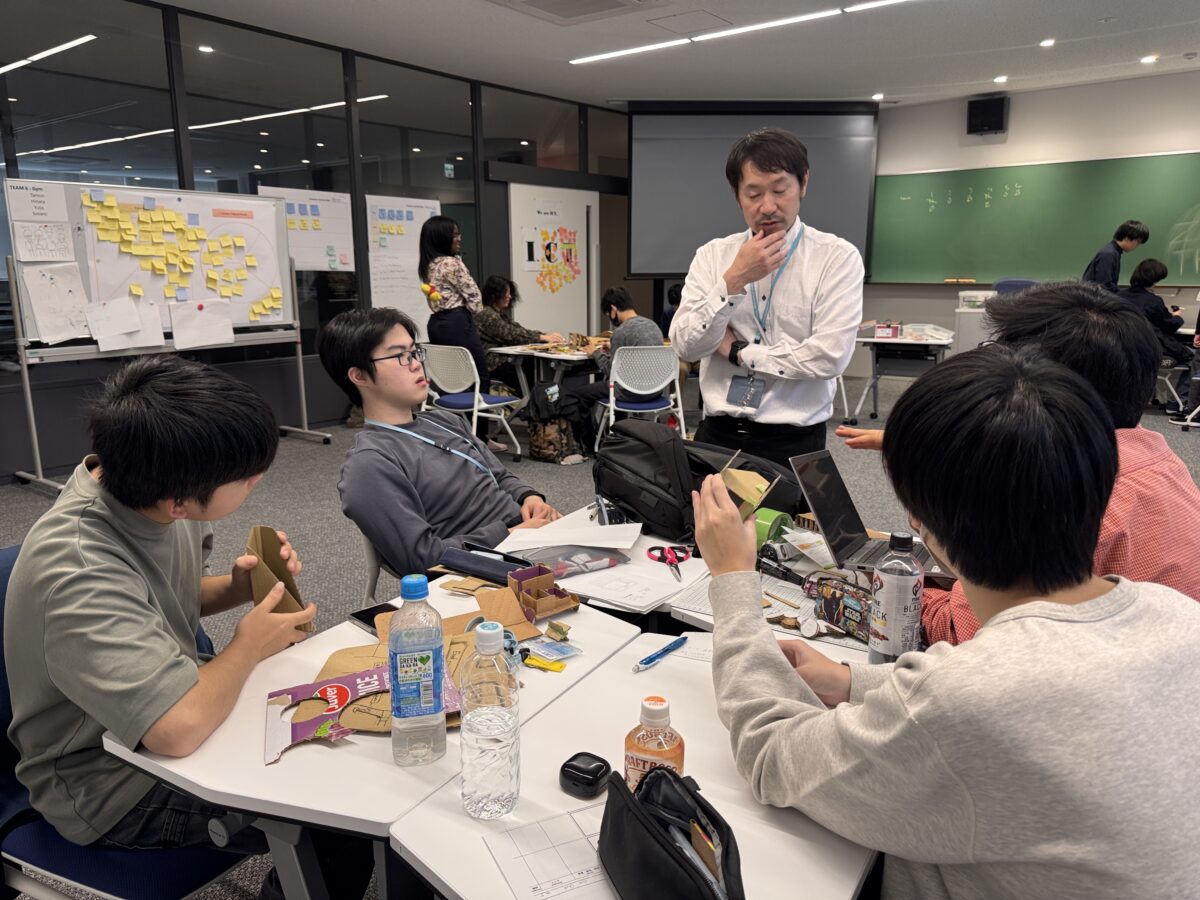
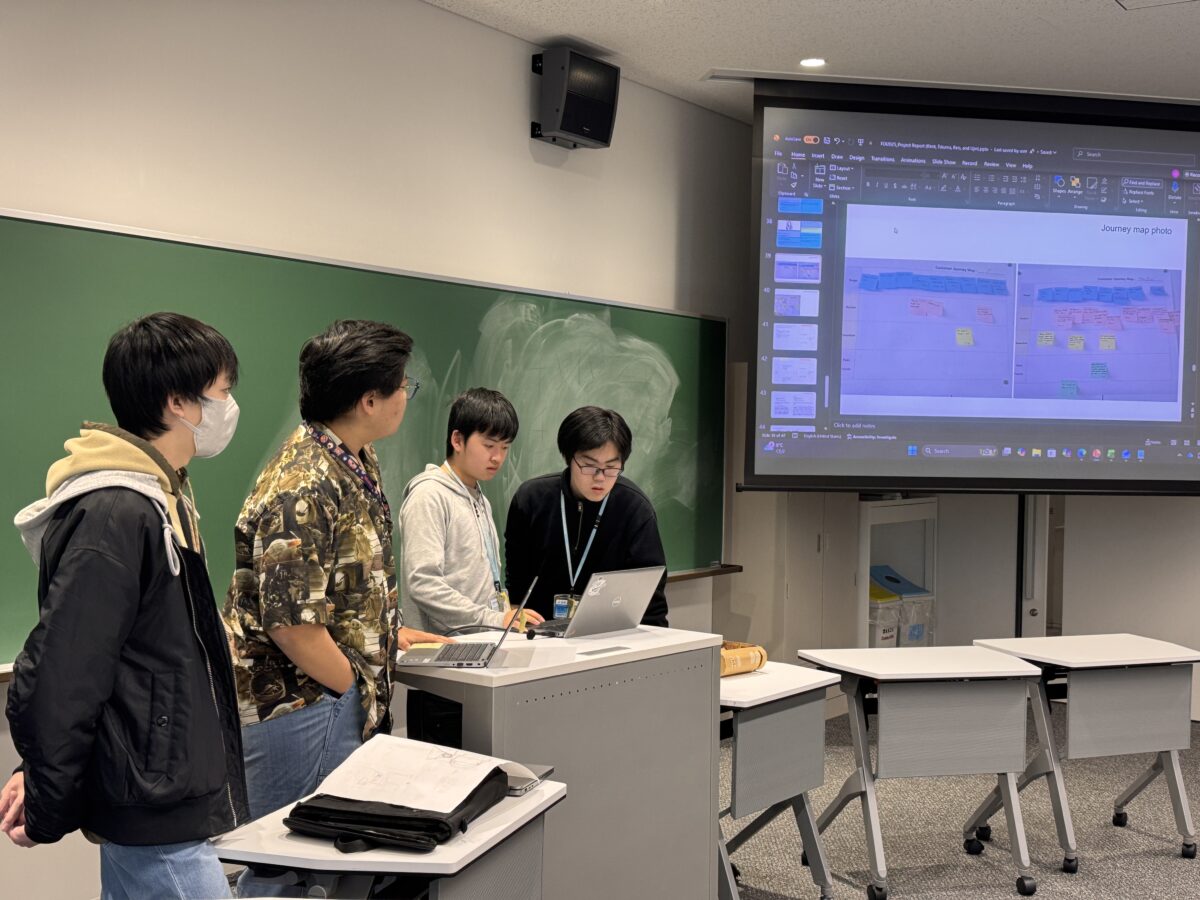
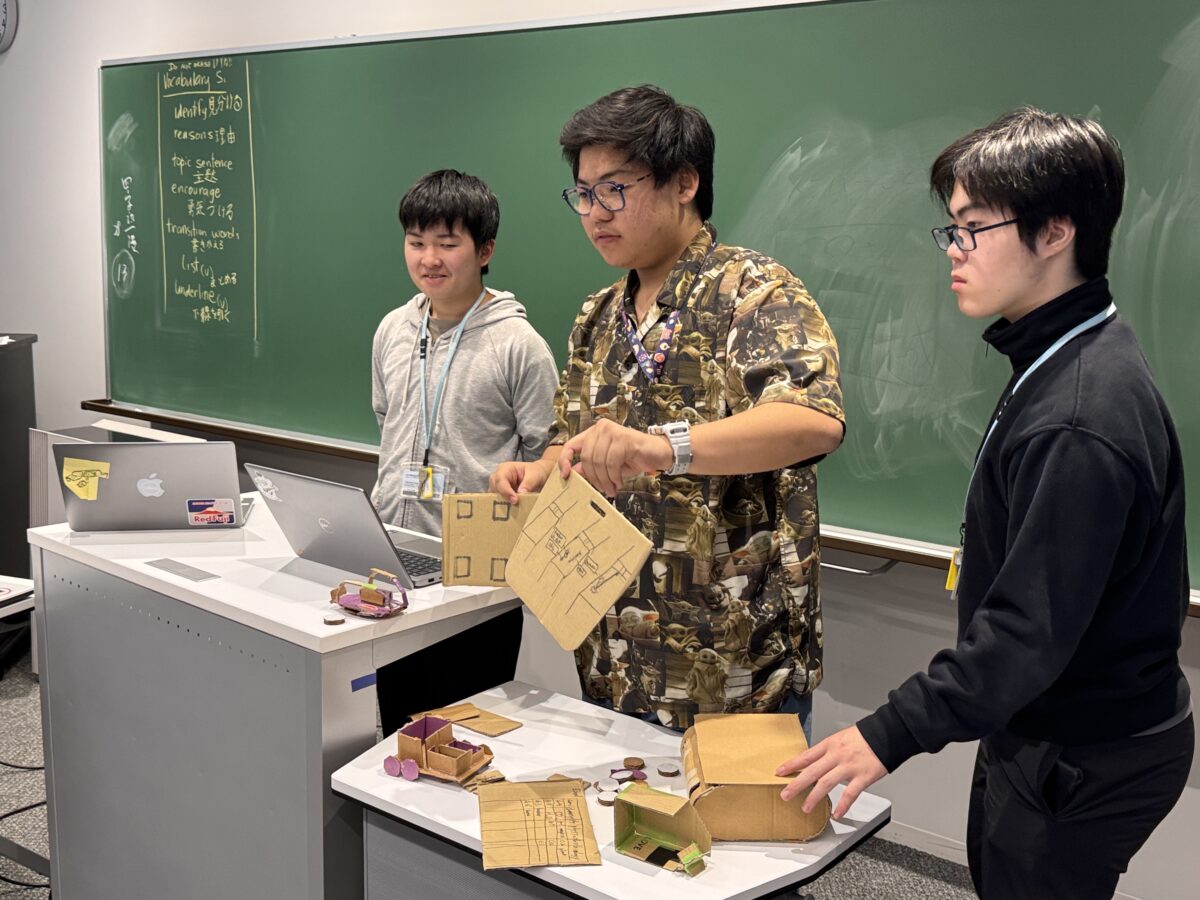
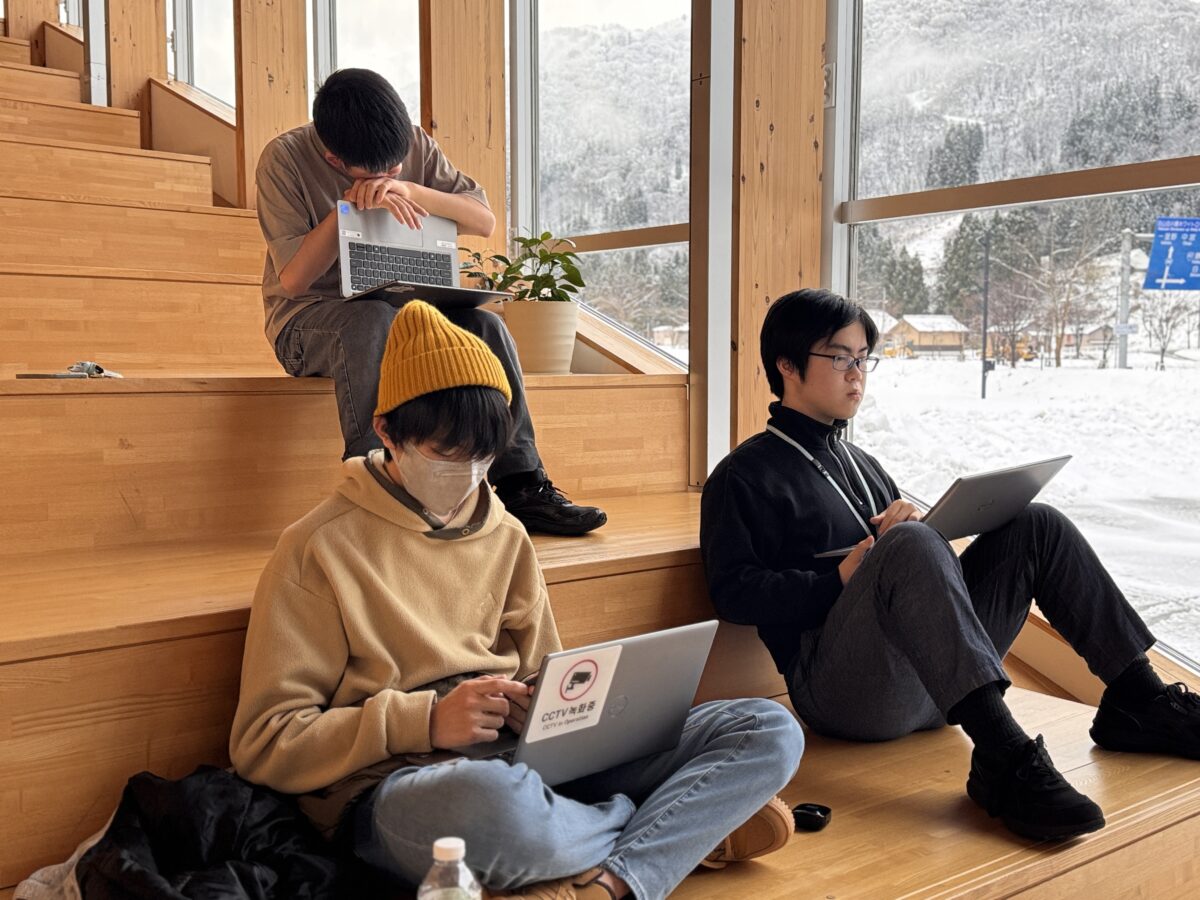
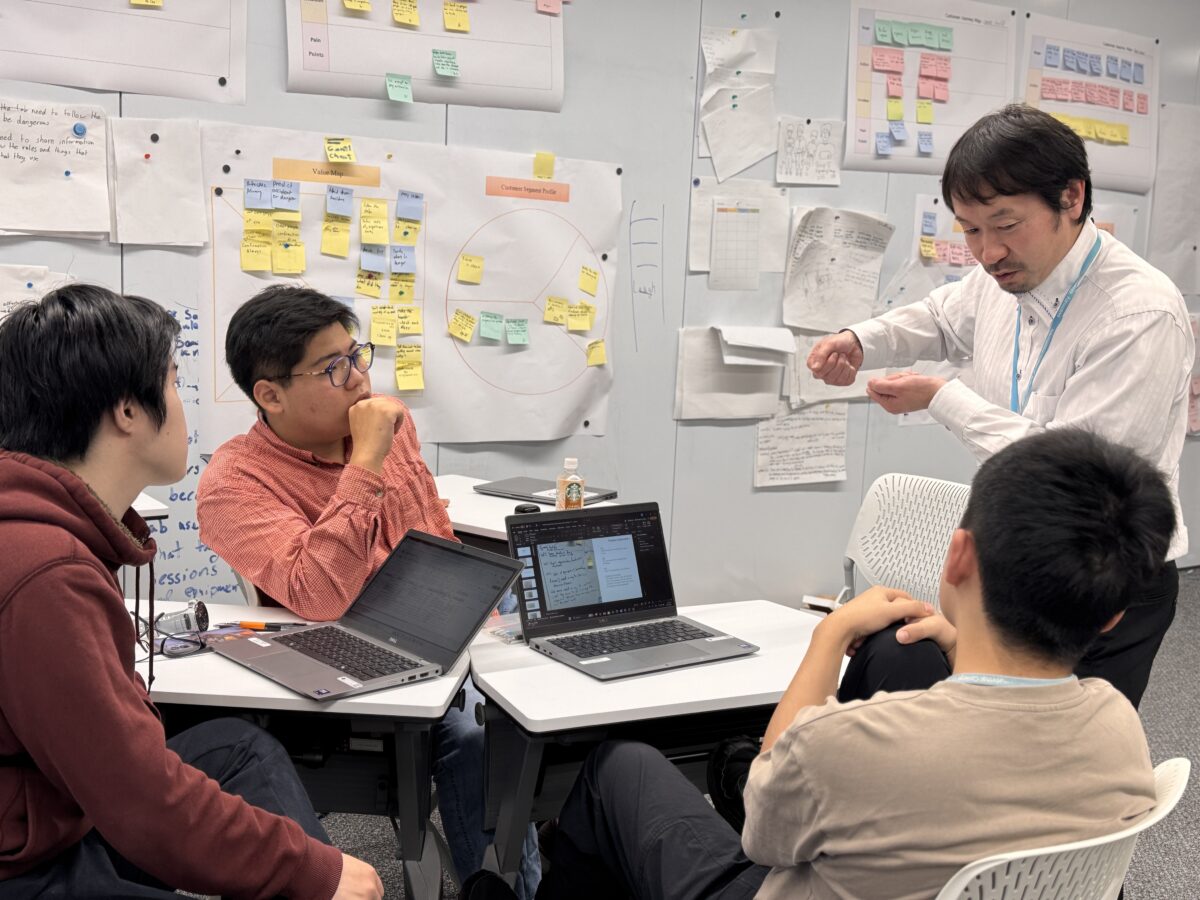
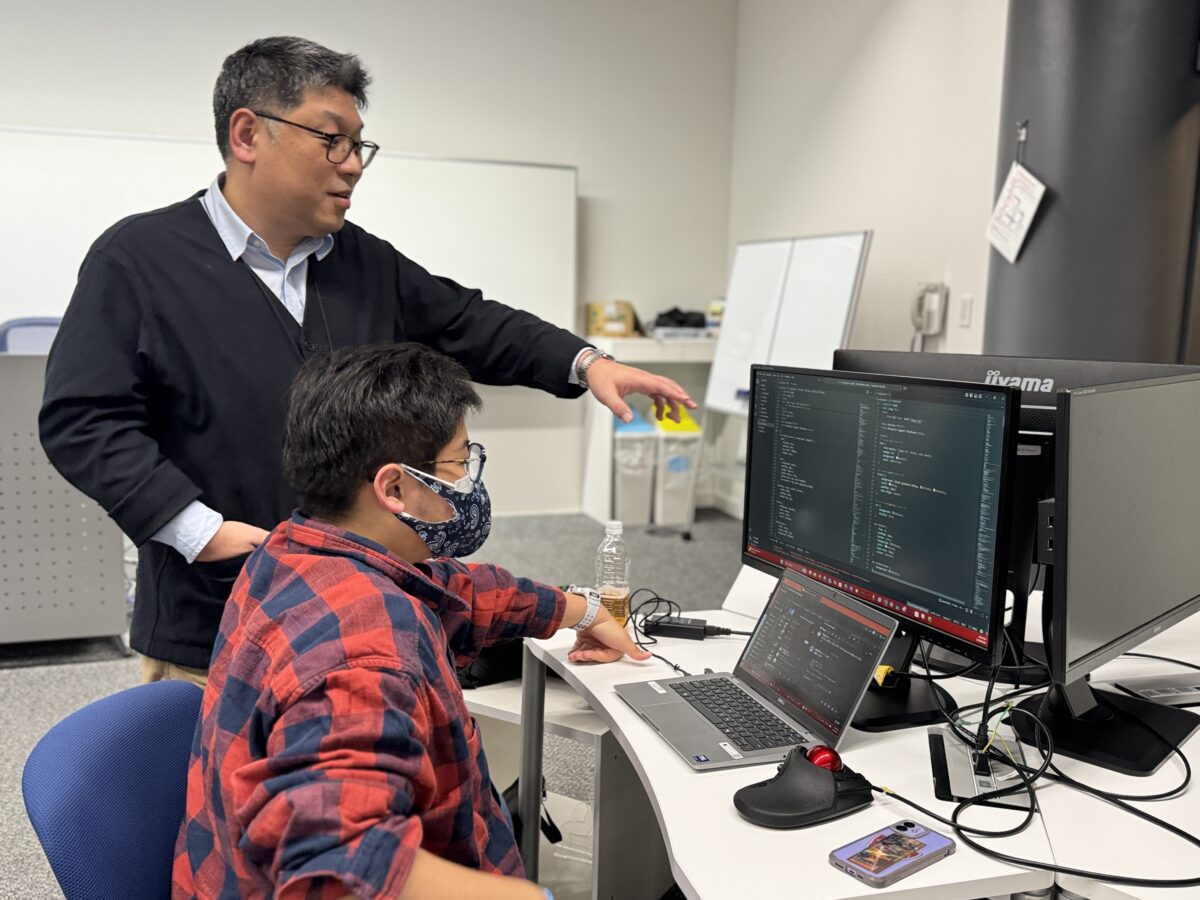
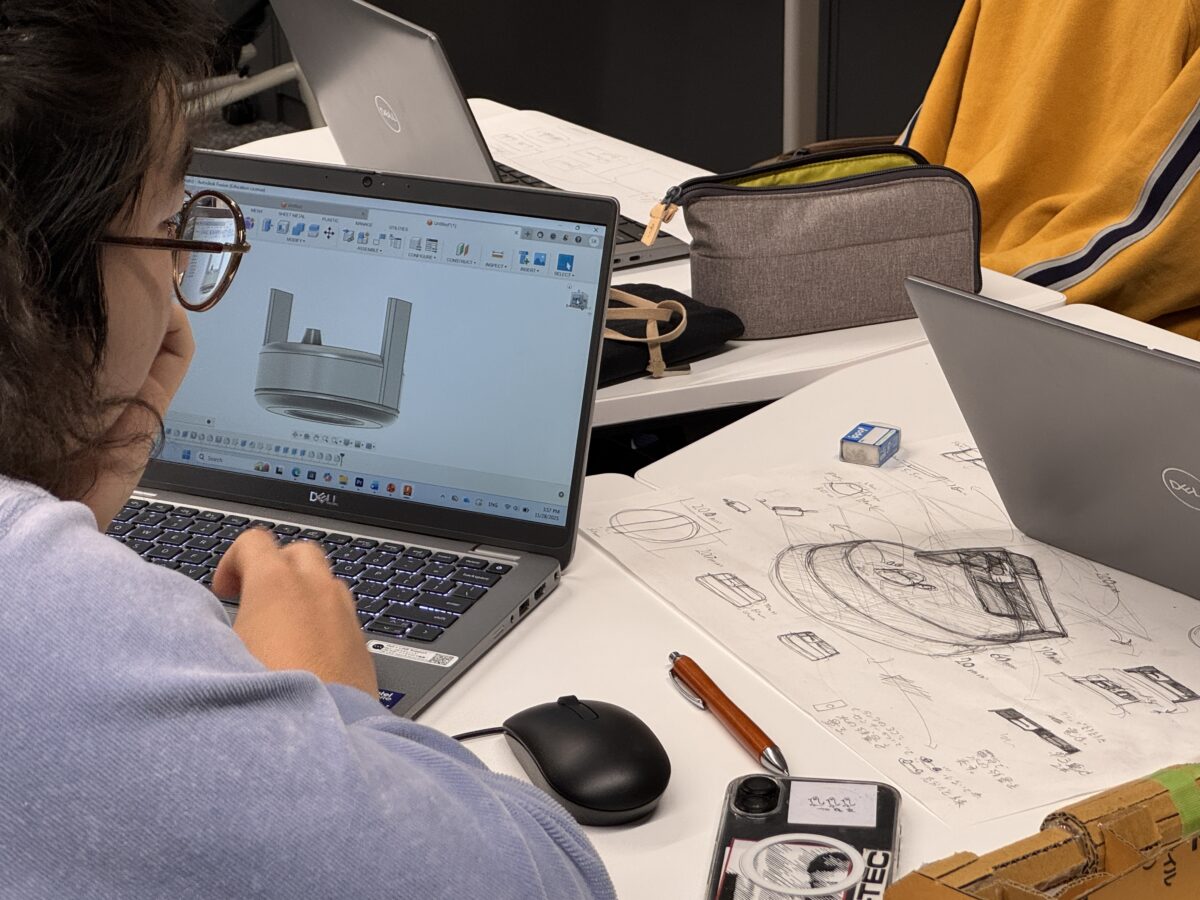
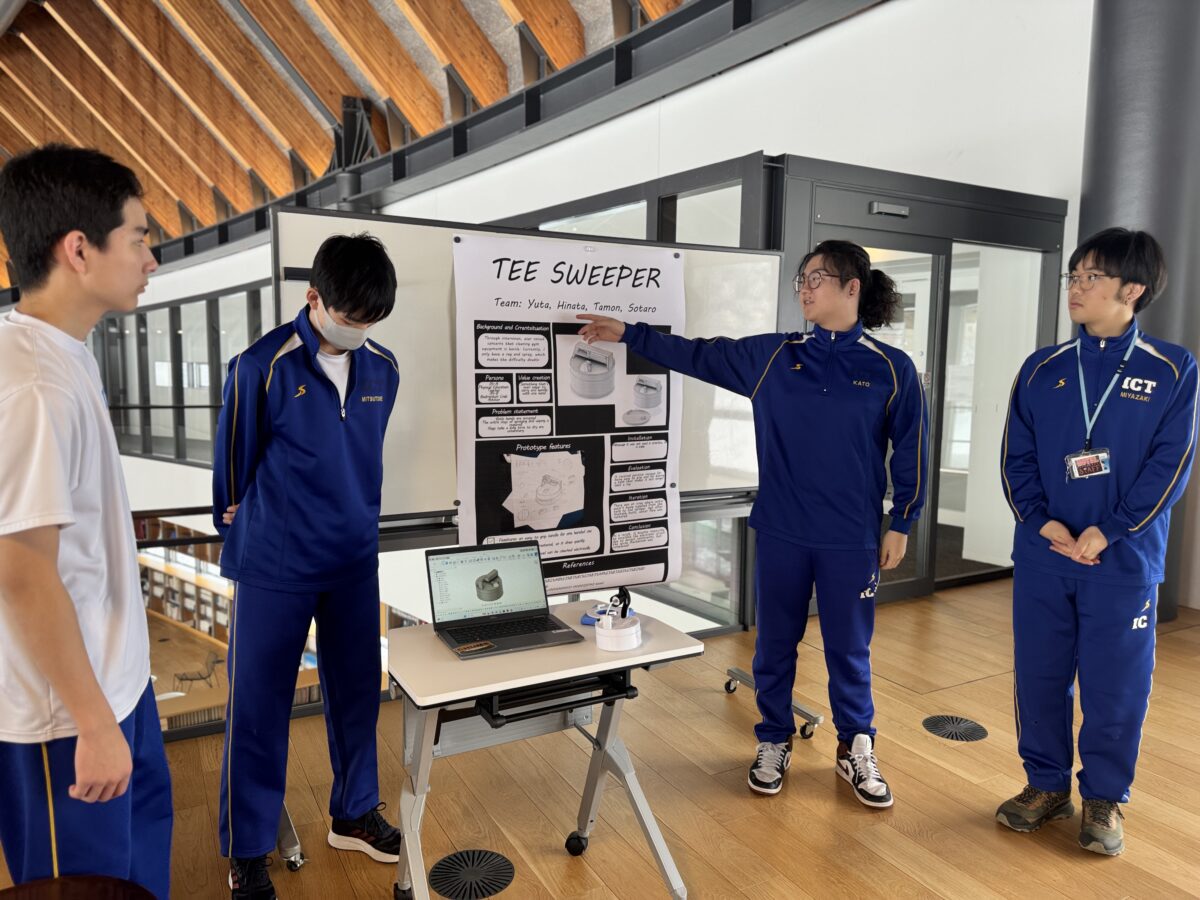
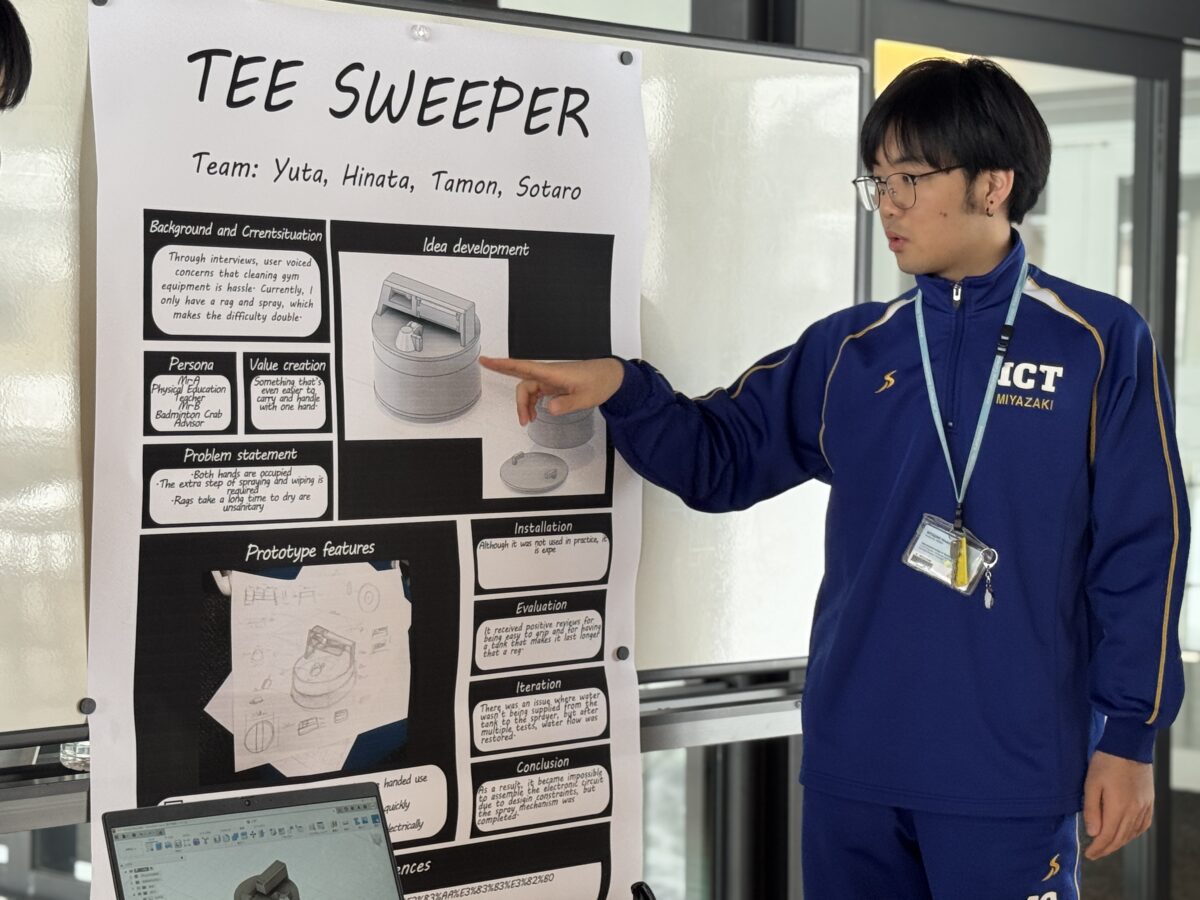
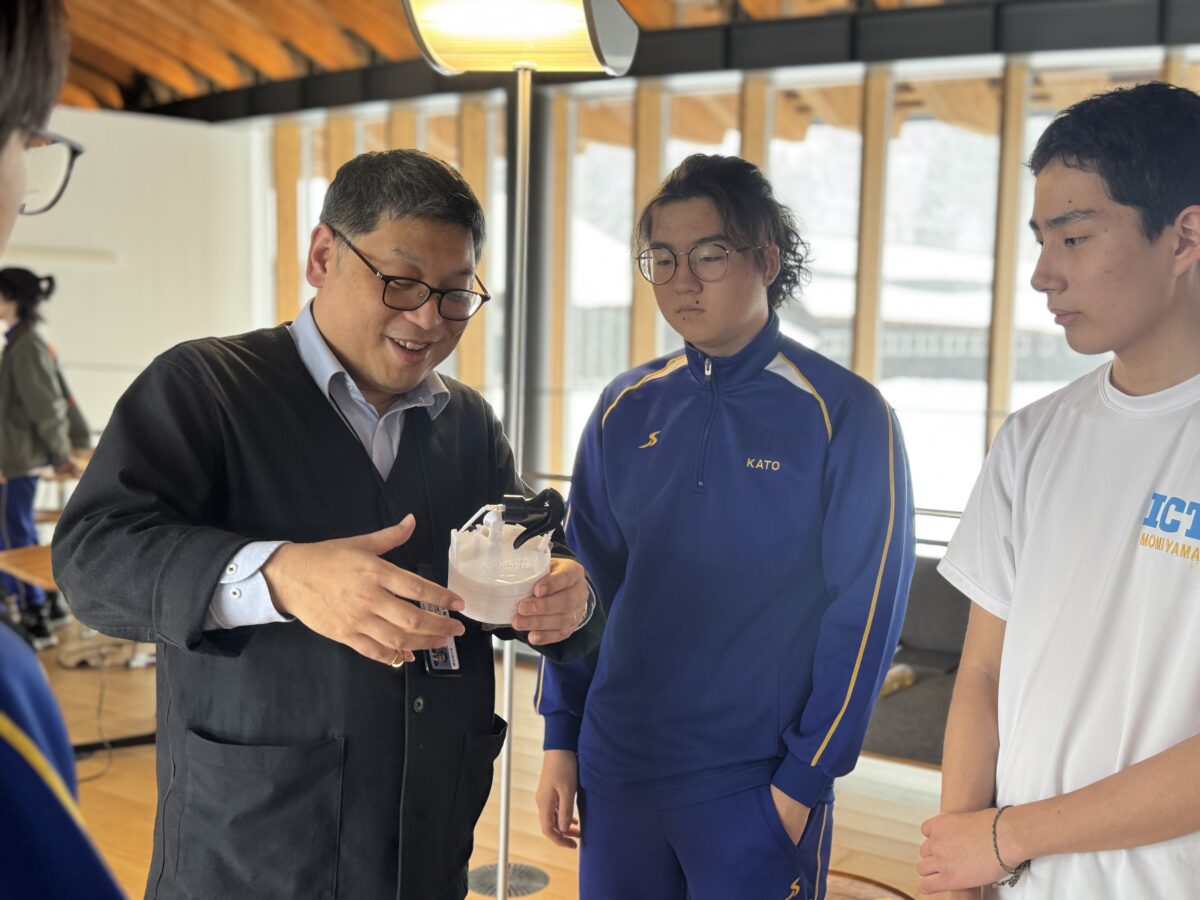
【体育館:TEE SWEEPER】
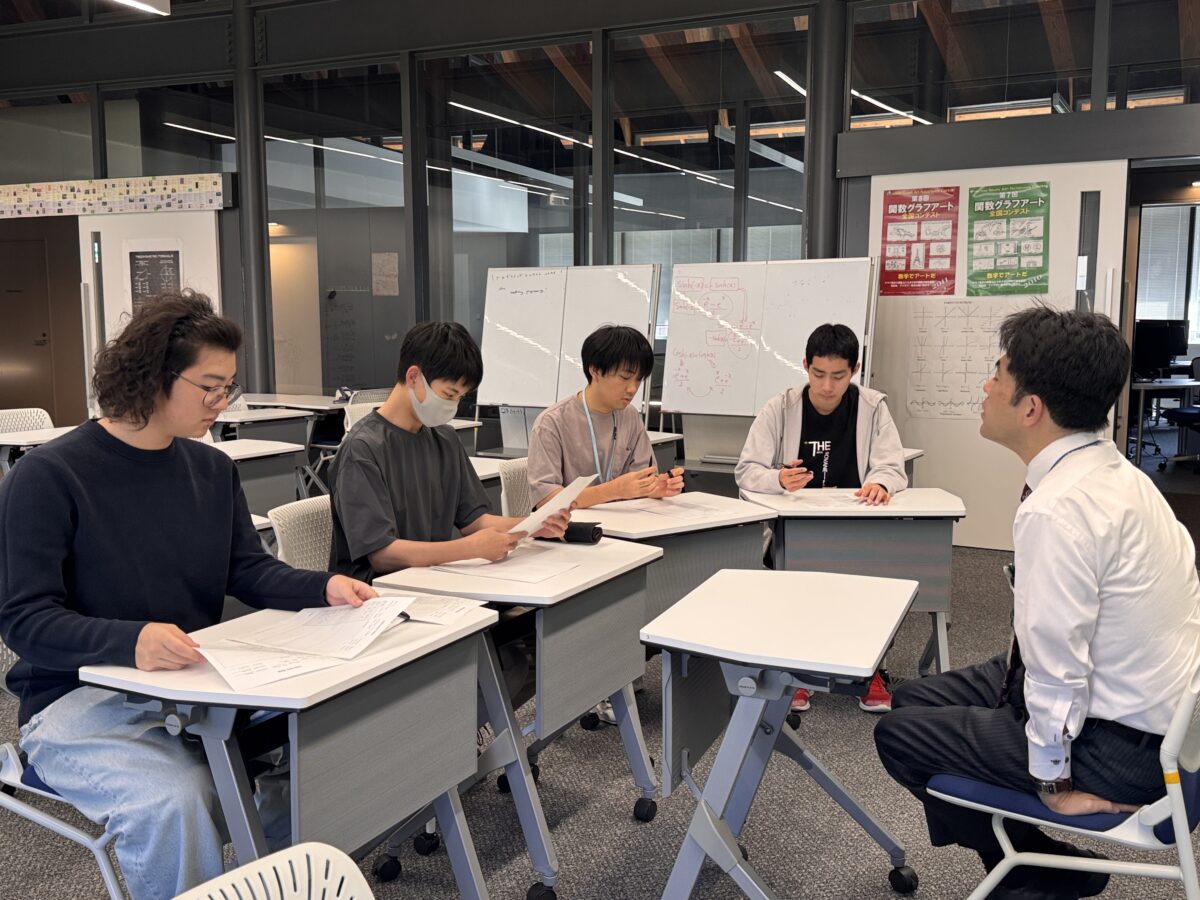
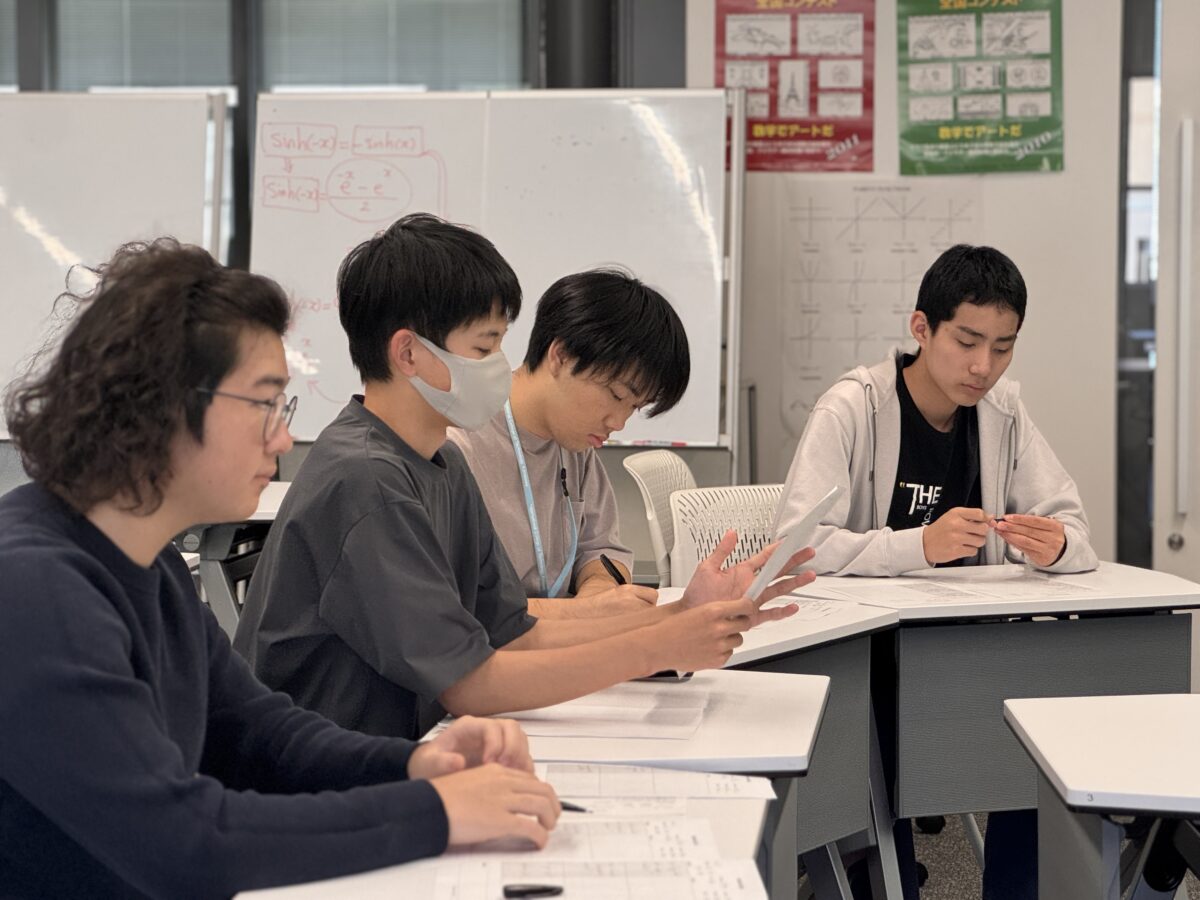
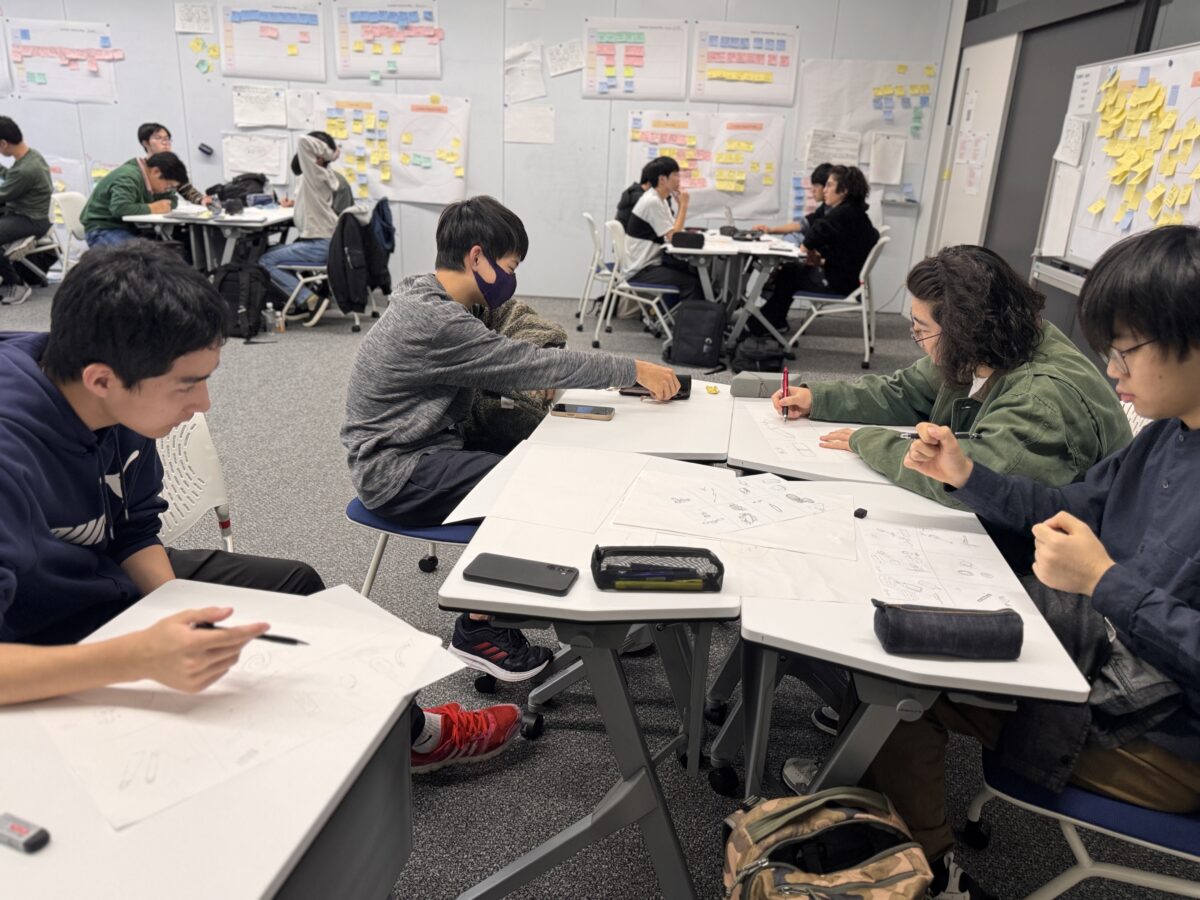
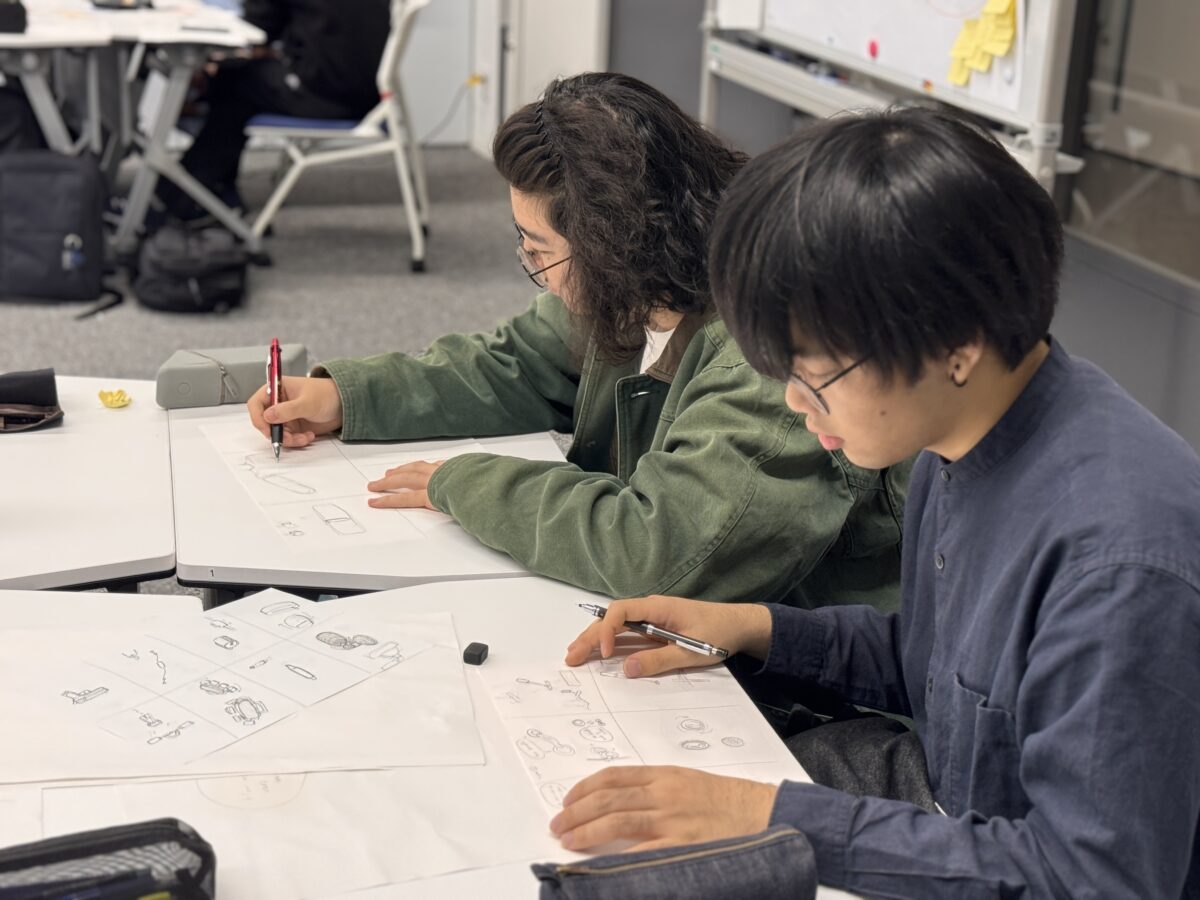
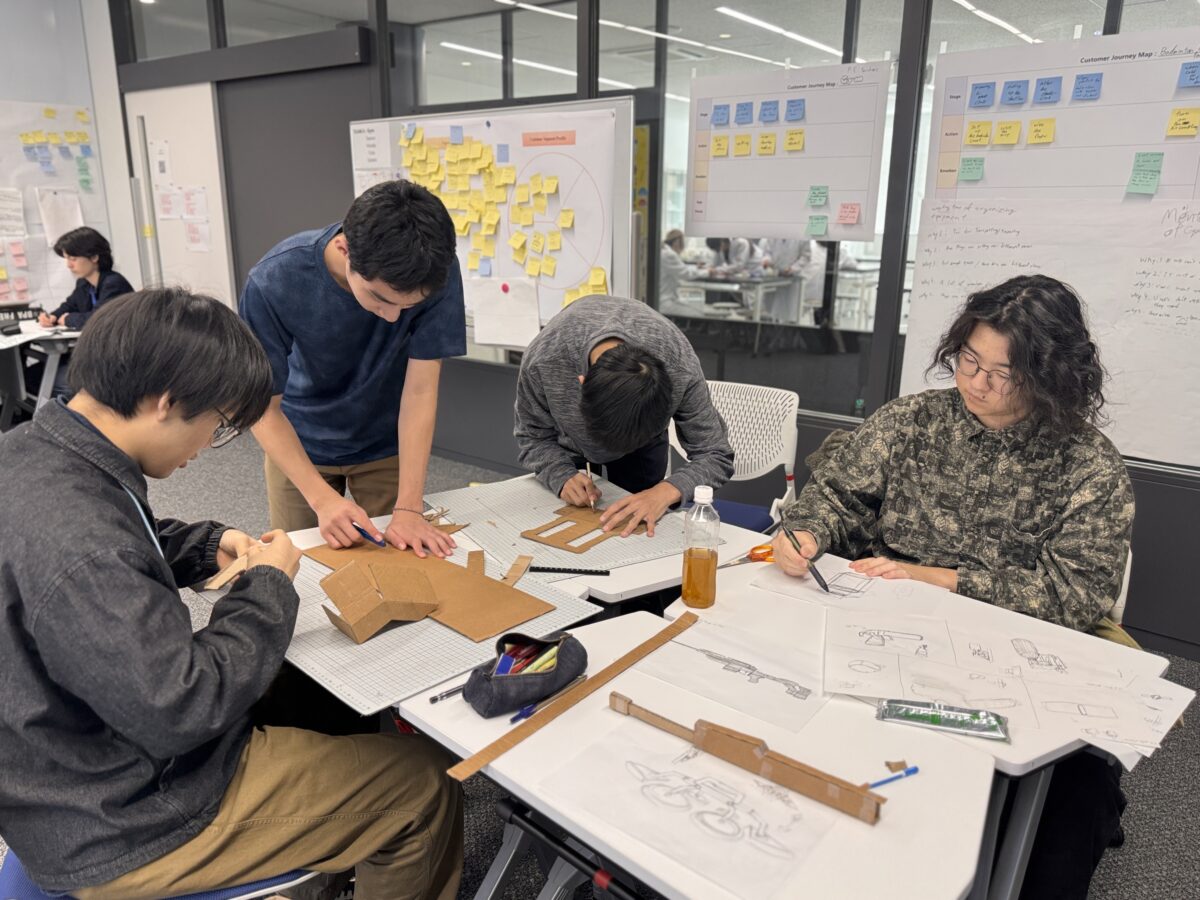
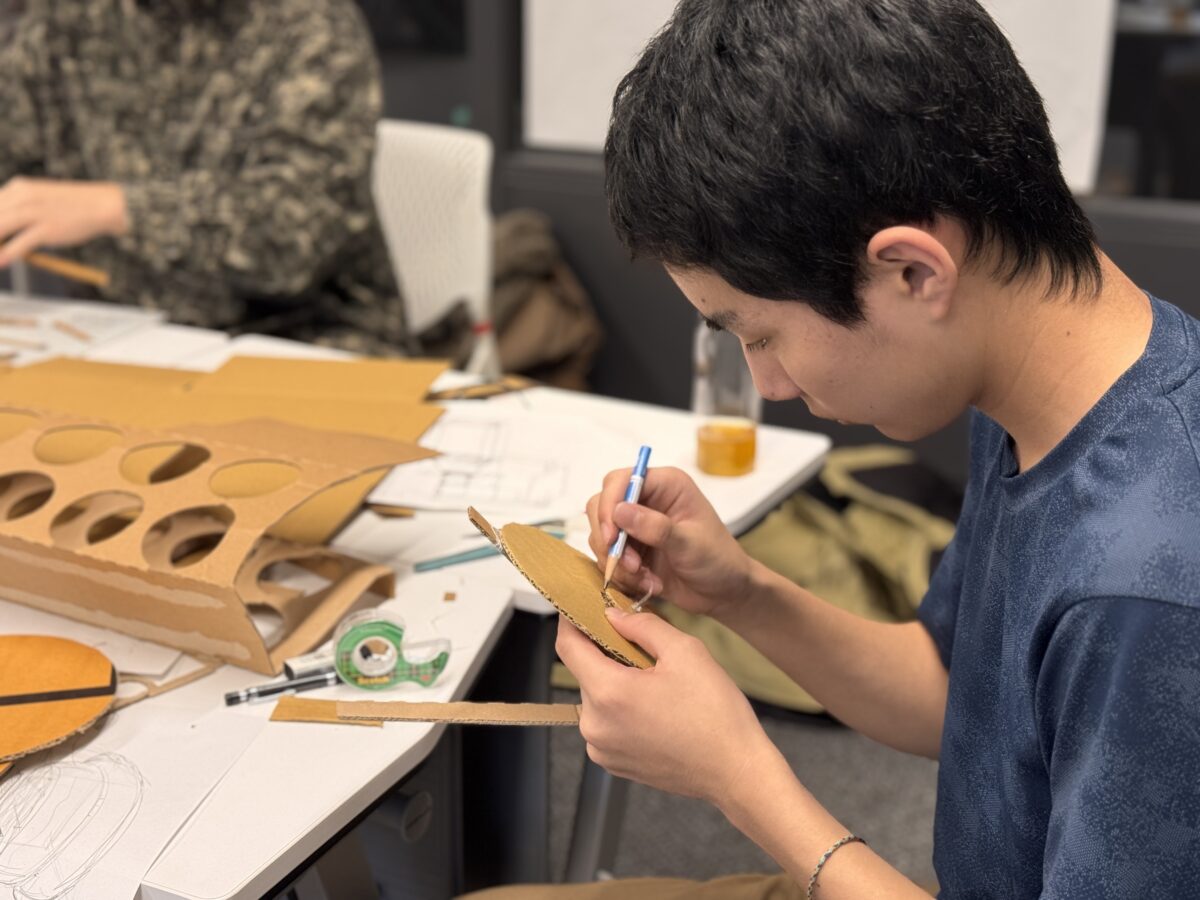
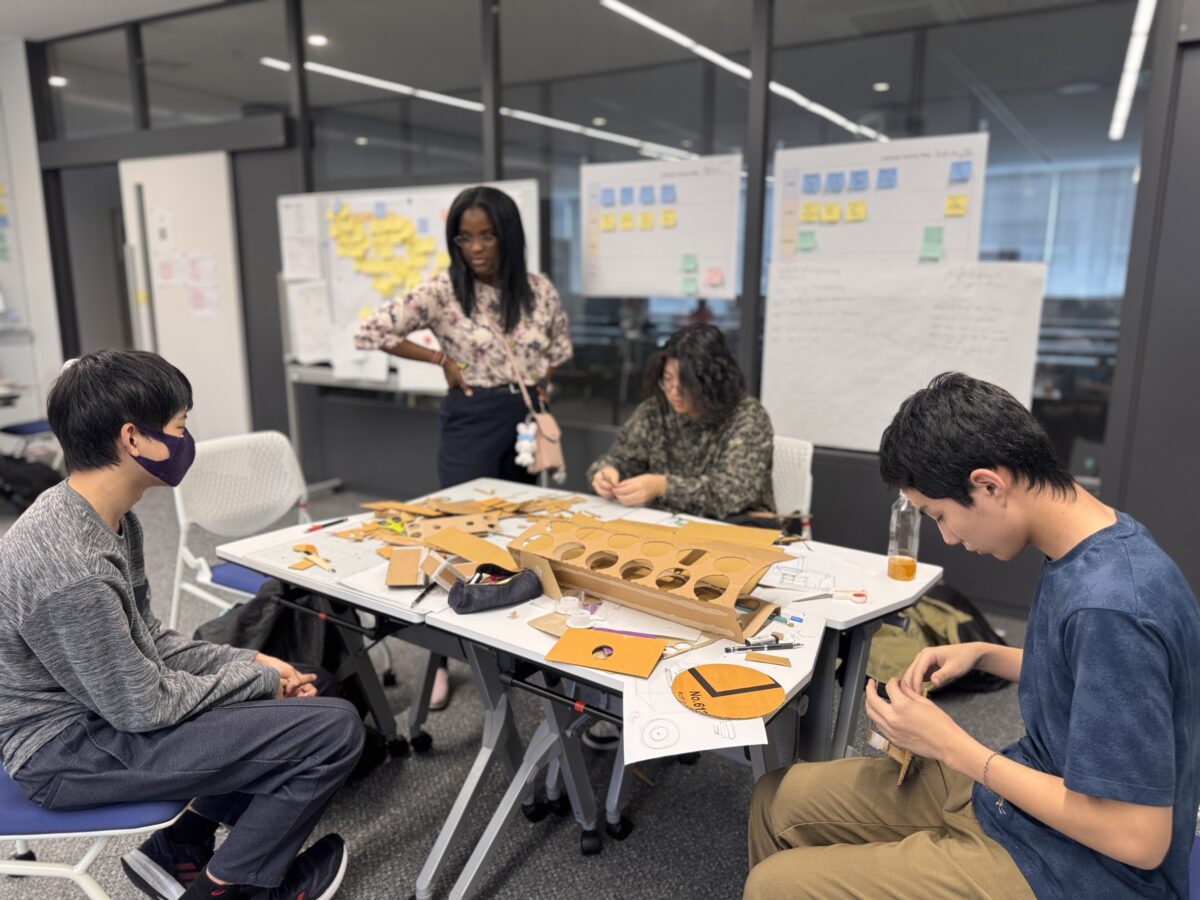
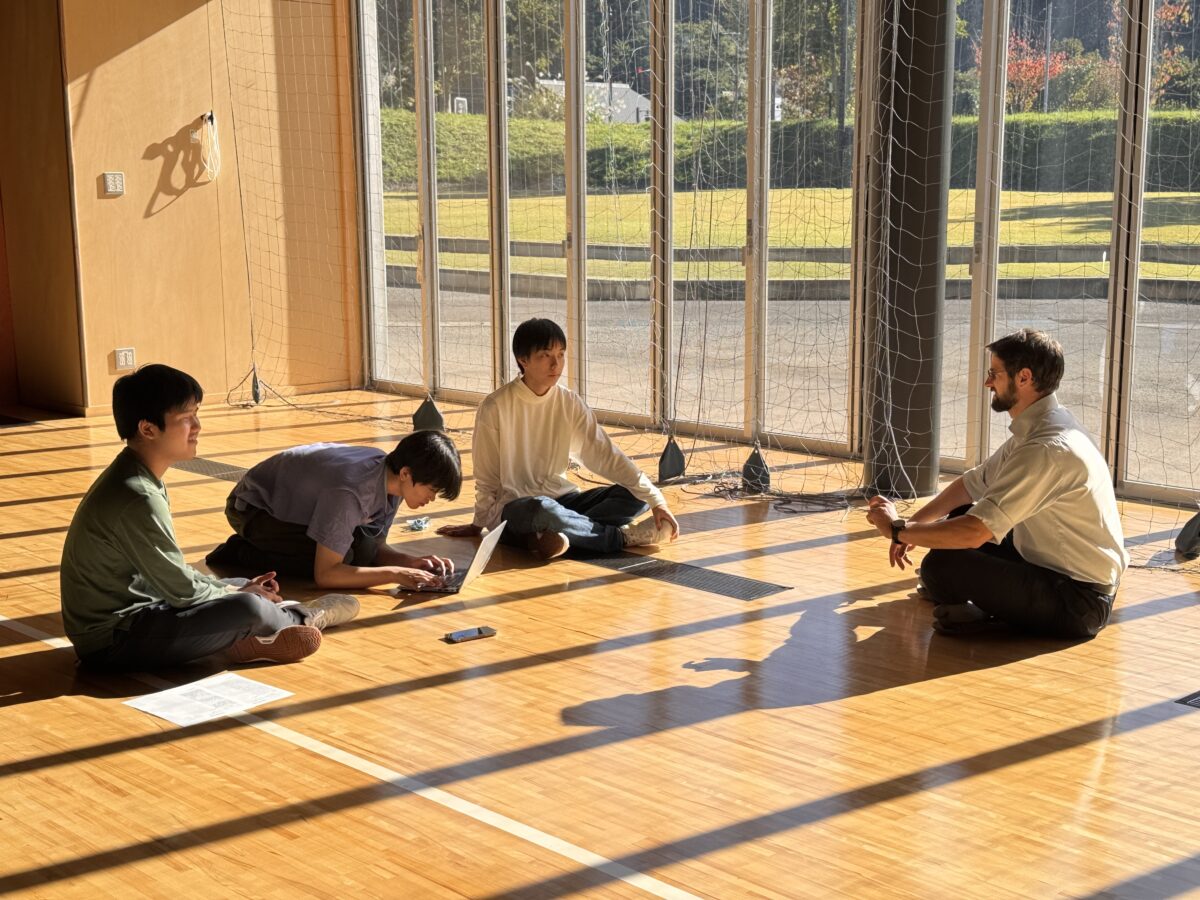
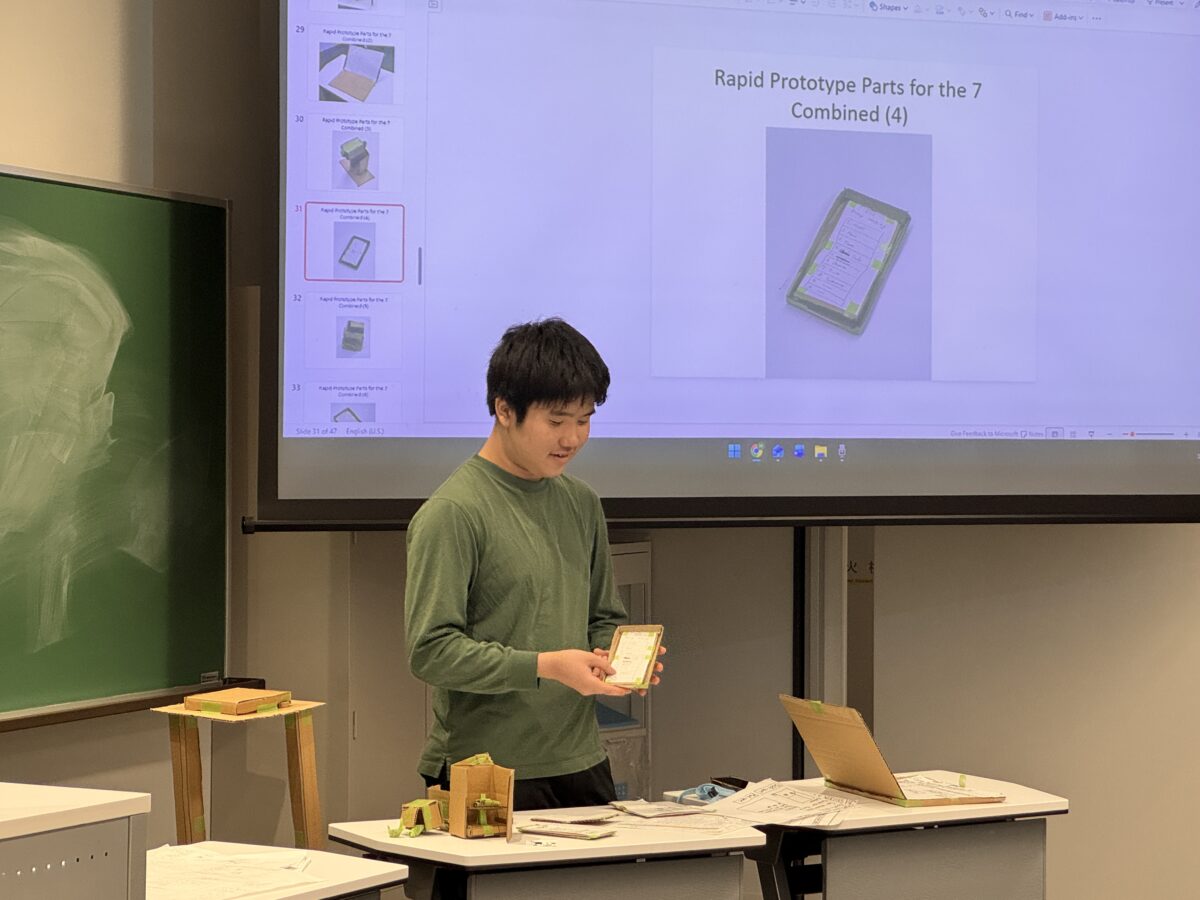
このチームは、体育科目担当のフィリップ・ケザウ先生にインタビューを行いました。その結果、トレーニングジムに設置されているトレーニング機器を清掃する際、雑巾とスプレーを別々に使用する必要があるため両手がふさがって扱いにくいこと、また雑巾が乾きにくく不衛生になりやすいことが課題として挙げられました。
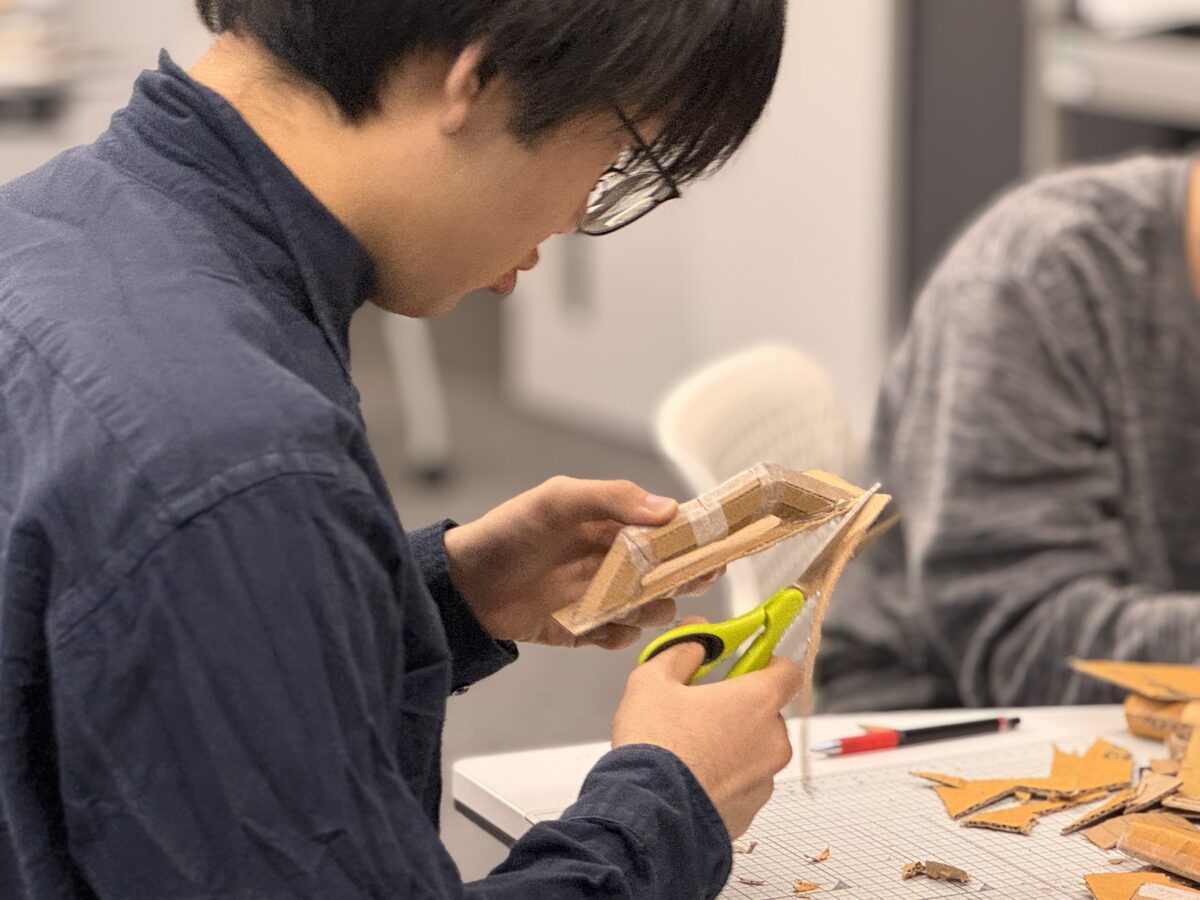
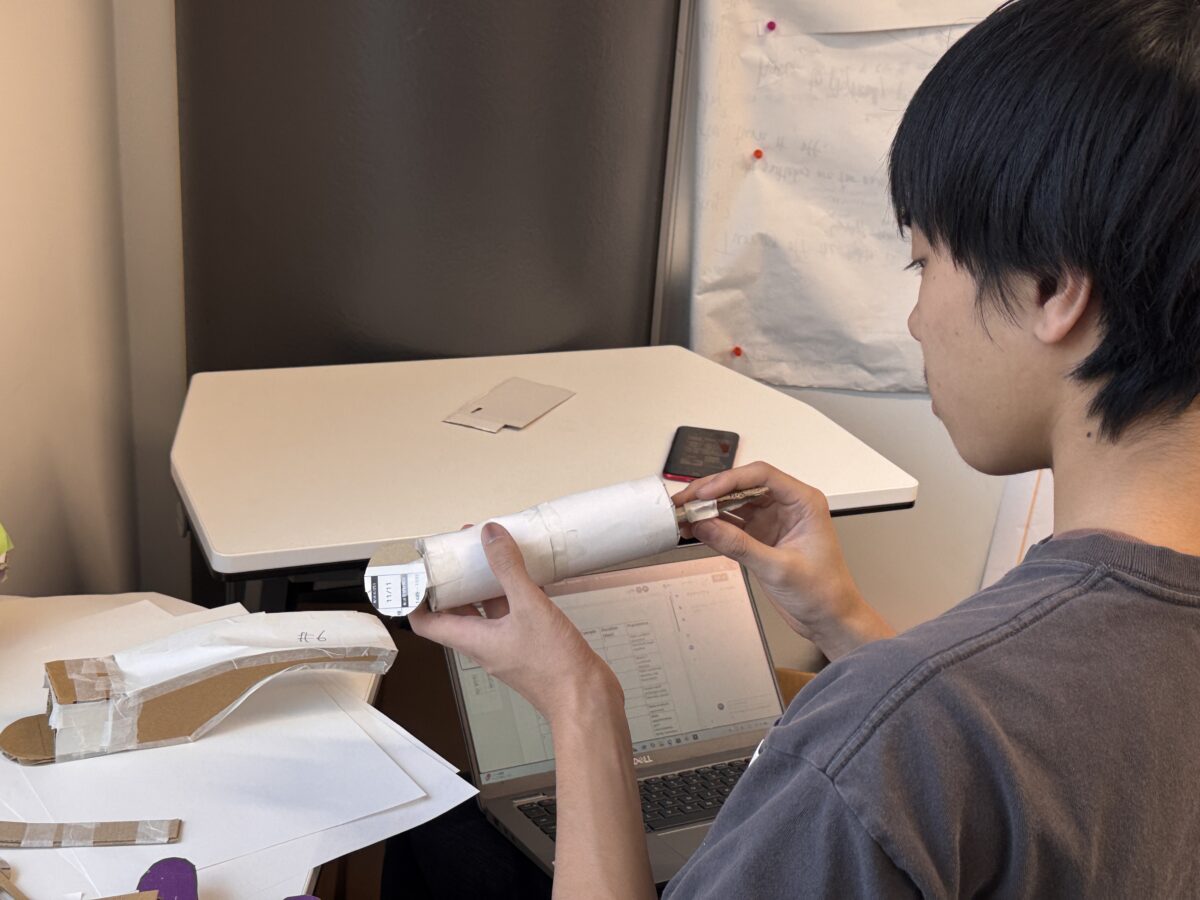
そこで学生たちは、スプレーと雑巾を一体化し、持ち運びやすい清掃機器を製作しました。片手で使えるように握りやすいハンドルを採用し、拭き取り部分には乾きが早いスポンジを装着しました。さらに、スプレーの残液が自動的に補充される仕組みも開発し、より効率的で衛生的な清掃道具を提案しました。
【体育館:PYM】
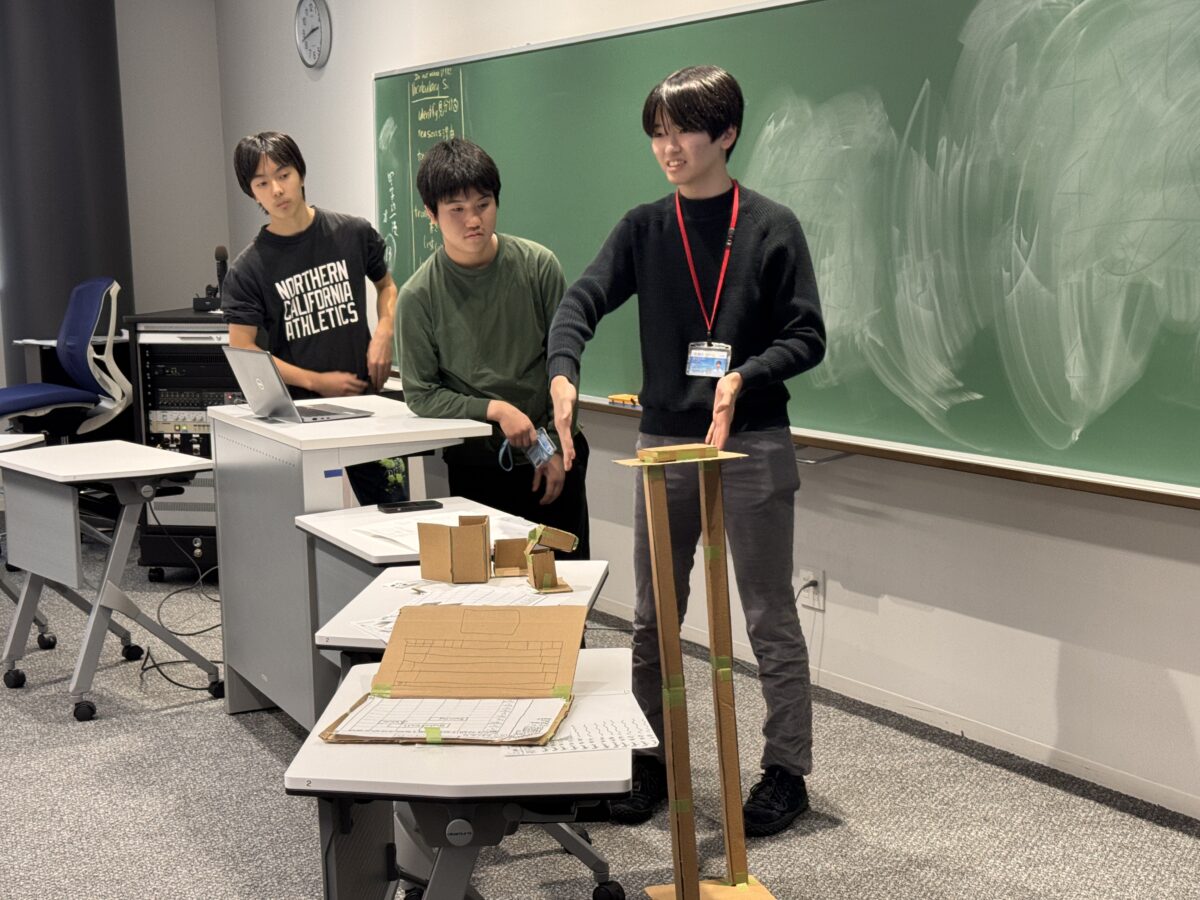
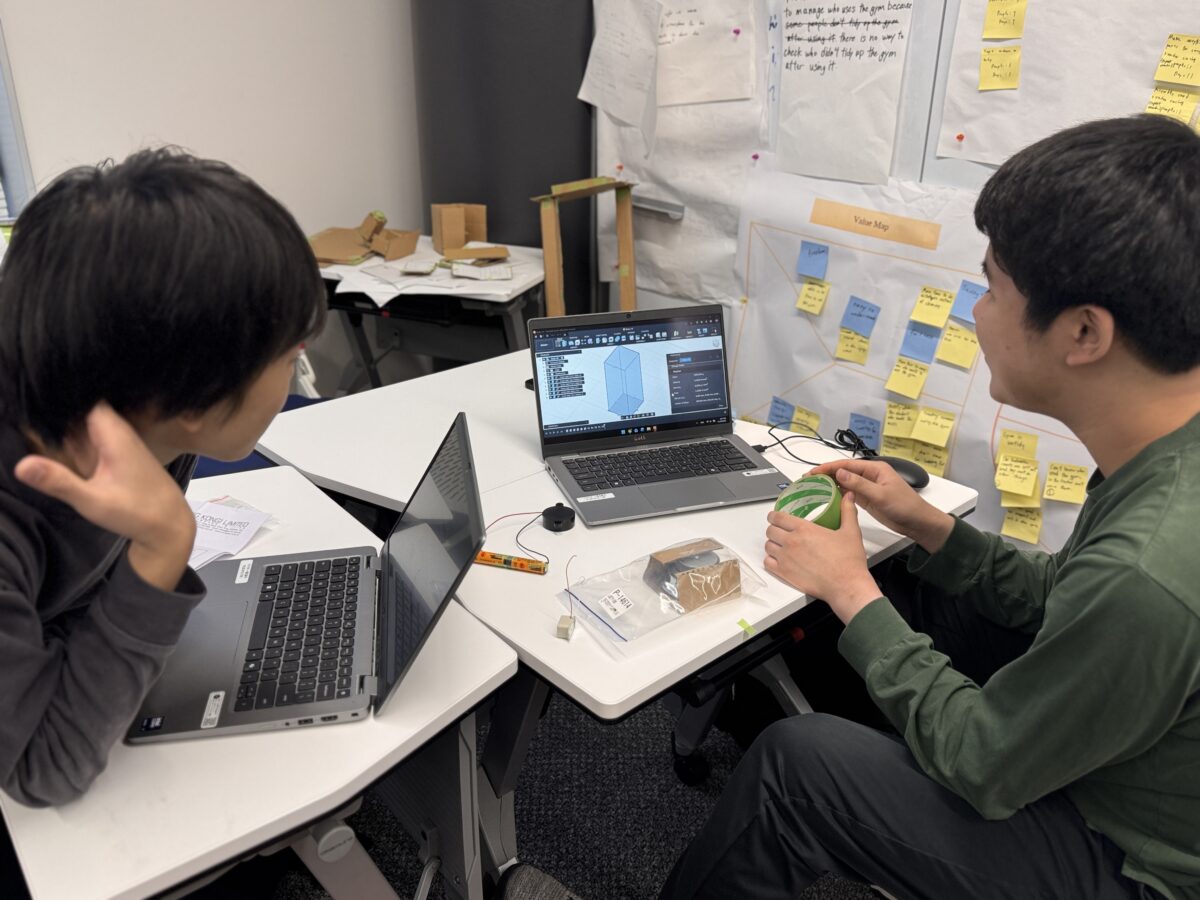
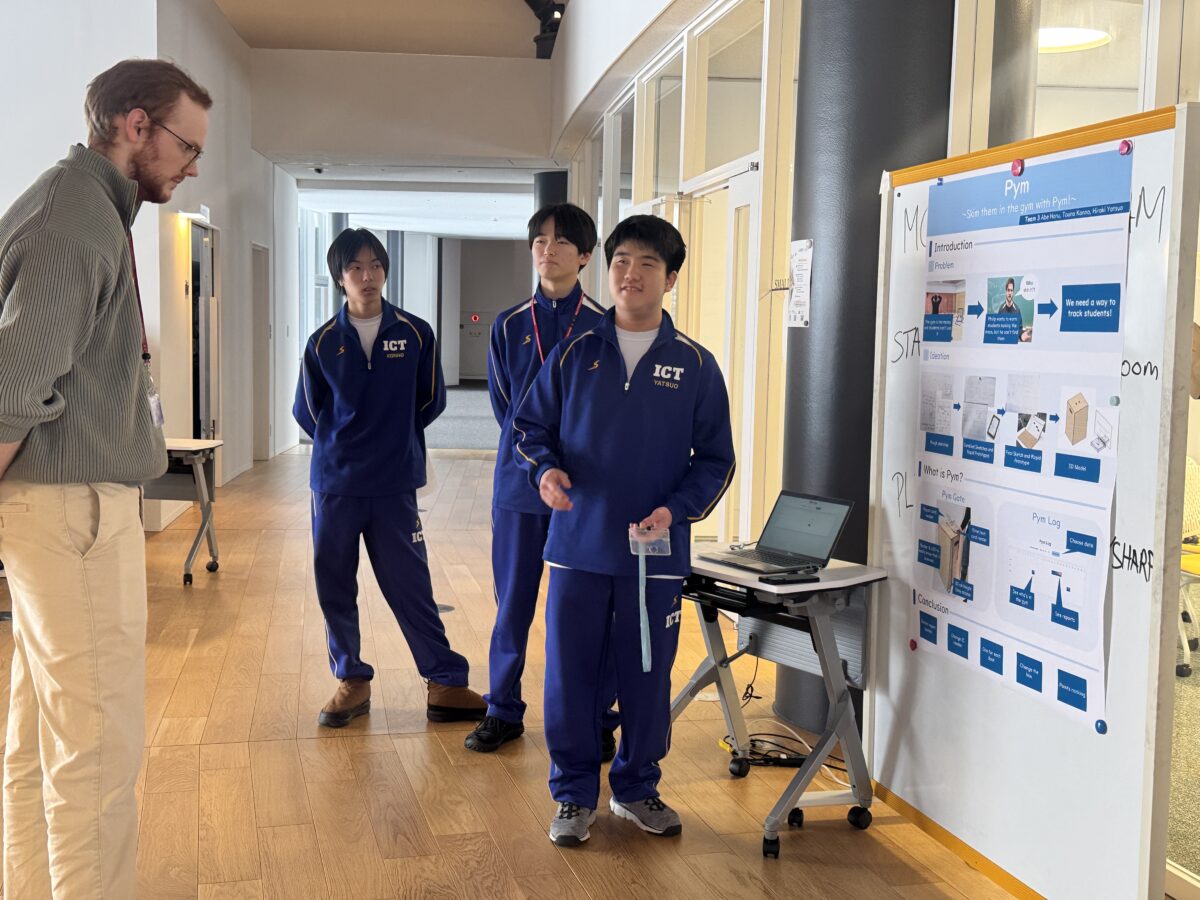
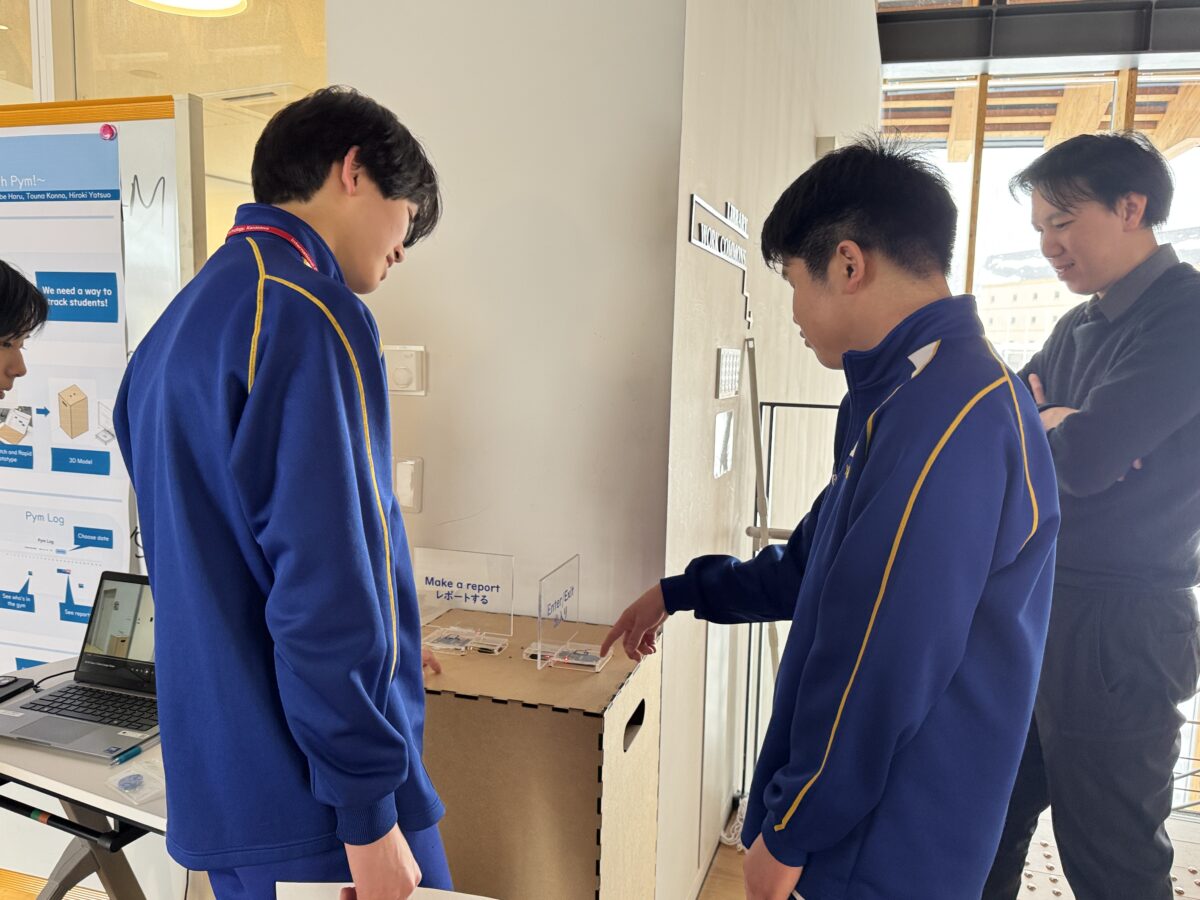
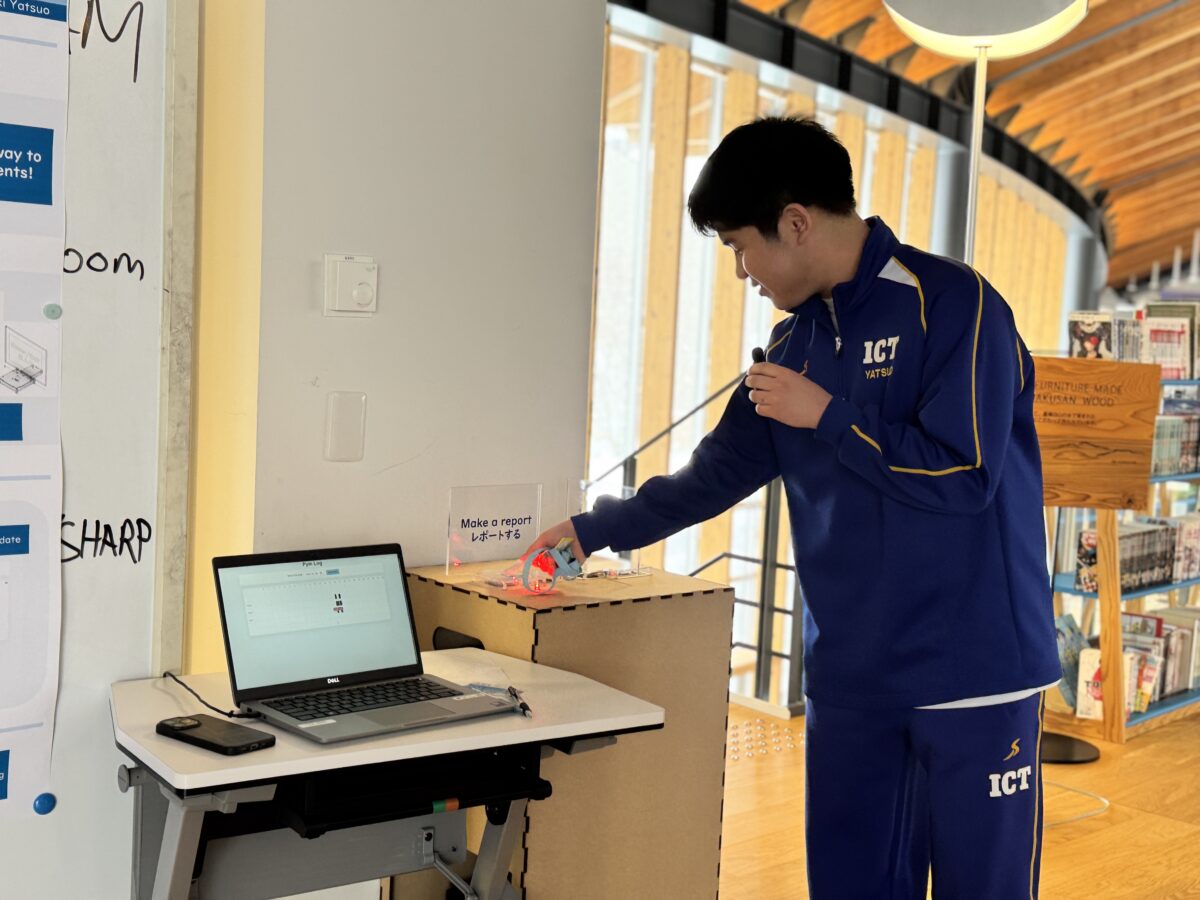
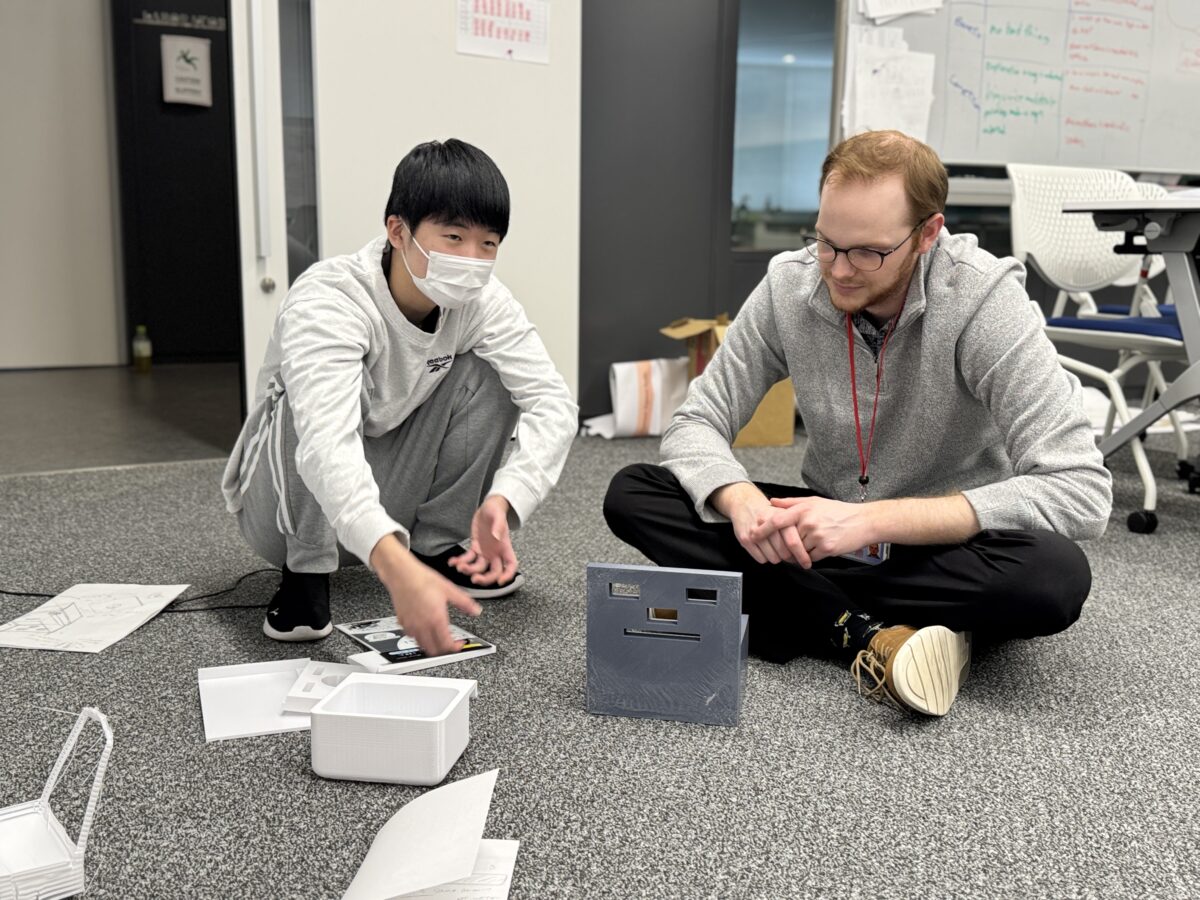
このチームは、フィリップ先生に、体育館で発生している問題についてインタビューを行いました。その結果、体育館が散らかっていて学生が使用できない状況があるにもかかわらず、誰が散らかしたのかを特定できないため、利用状況を追跡できる仕組みが必要であるという課題が明らかになりました。
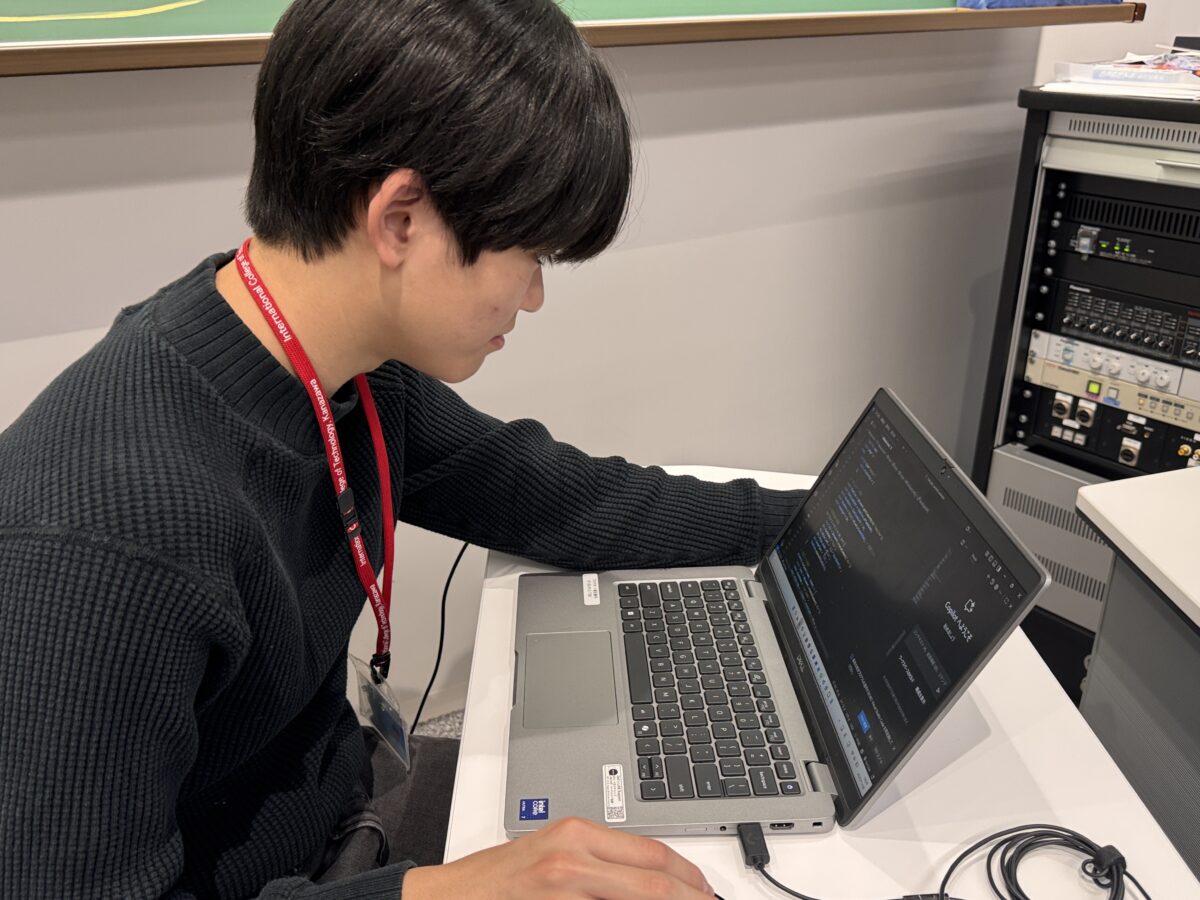
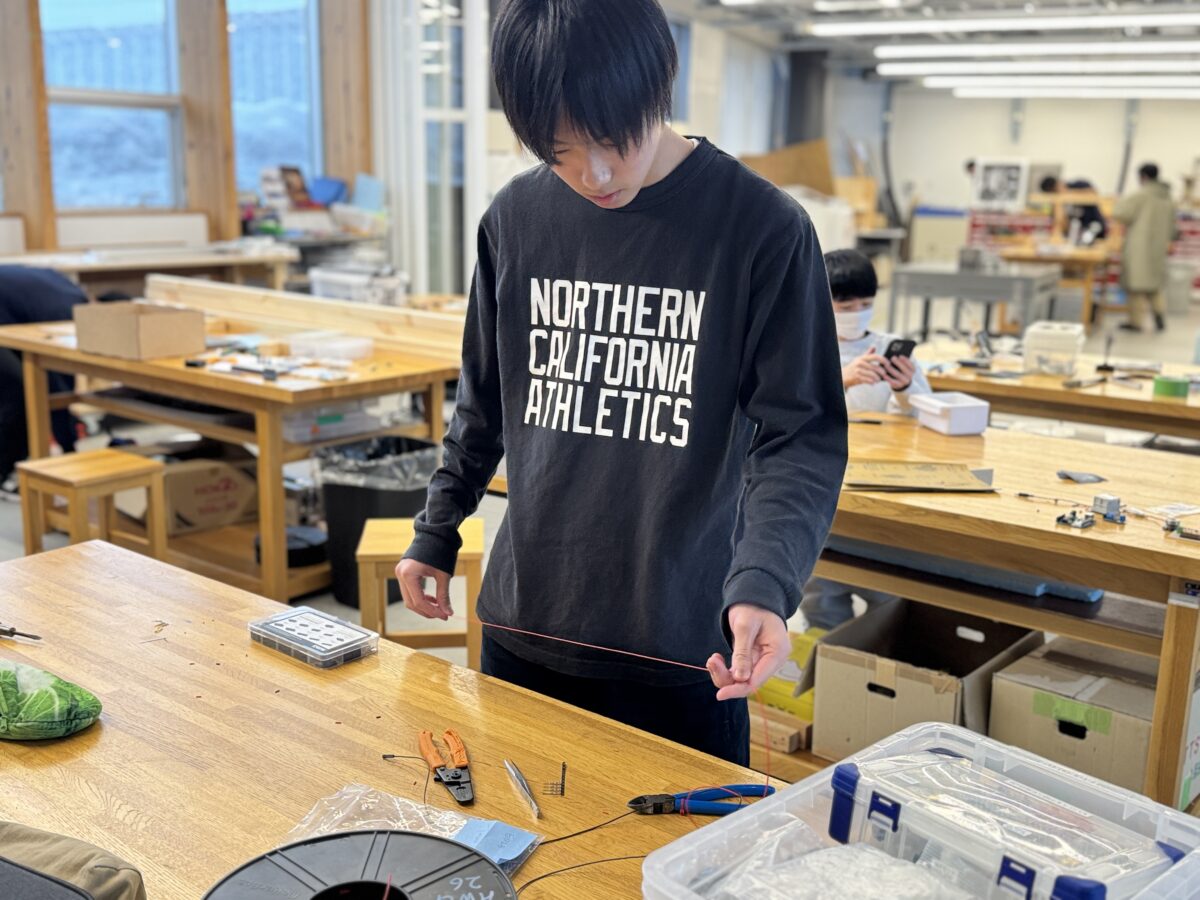
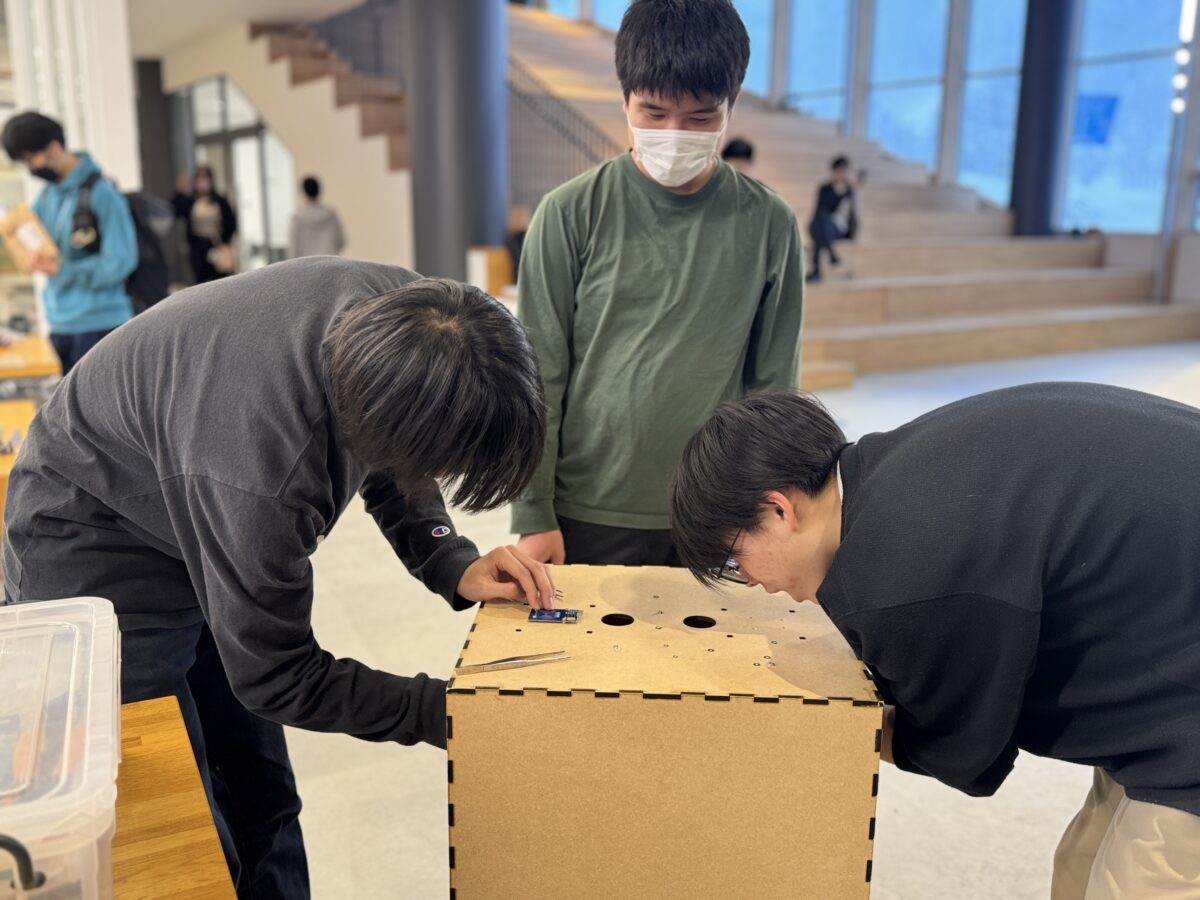
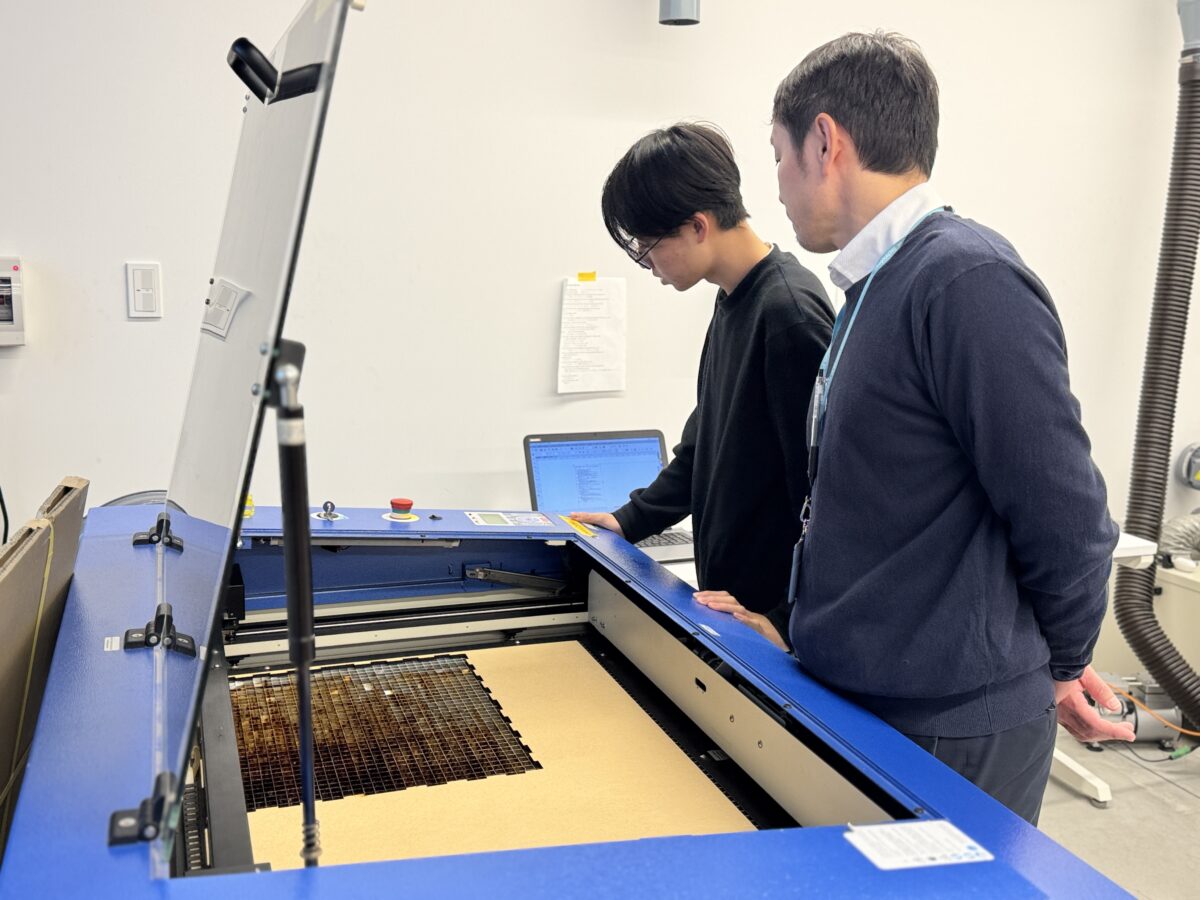
そこで学生たちは、体育館の入退室を管理する追跡システムを製作しました。体育館を利用する学生が入館認証カードをかざすとブザーとLEDが点滅してスキャン完了が分かる仕組みになっています。また、学生が入館認証カードをかざしやすいように、レーザーカッターを使用して高さ80cmの専用スタンドも製作しました。さらに、認証時には、ウェブサイトに利用者の名前が自動的に登録され、どの学生がいつ体育館を利用したのかを確認できるシステムが組み込まれています。これにより、体育館の利用者を追跡することが可能になりました。
【温泉施設「比咩の湯」:Bye-Bye Stink Bugs】
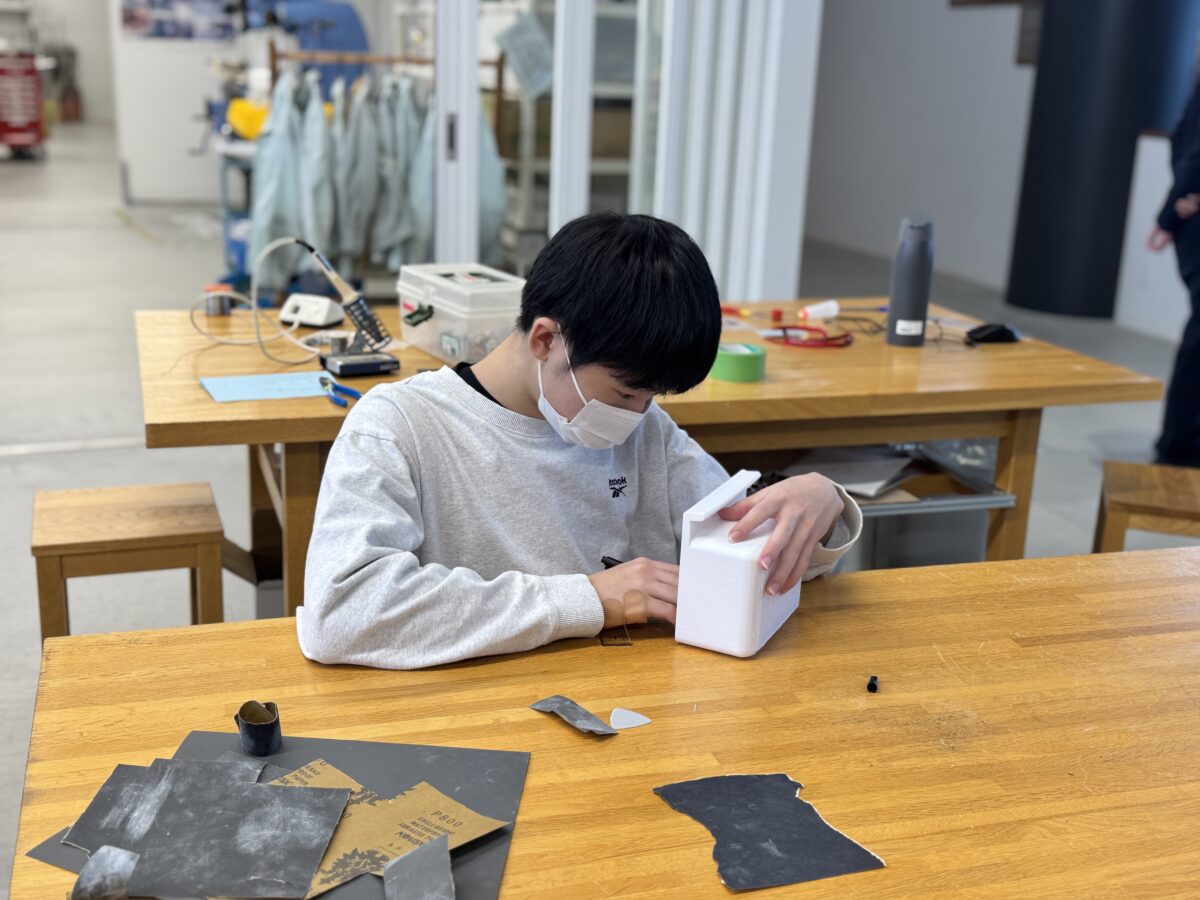
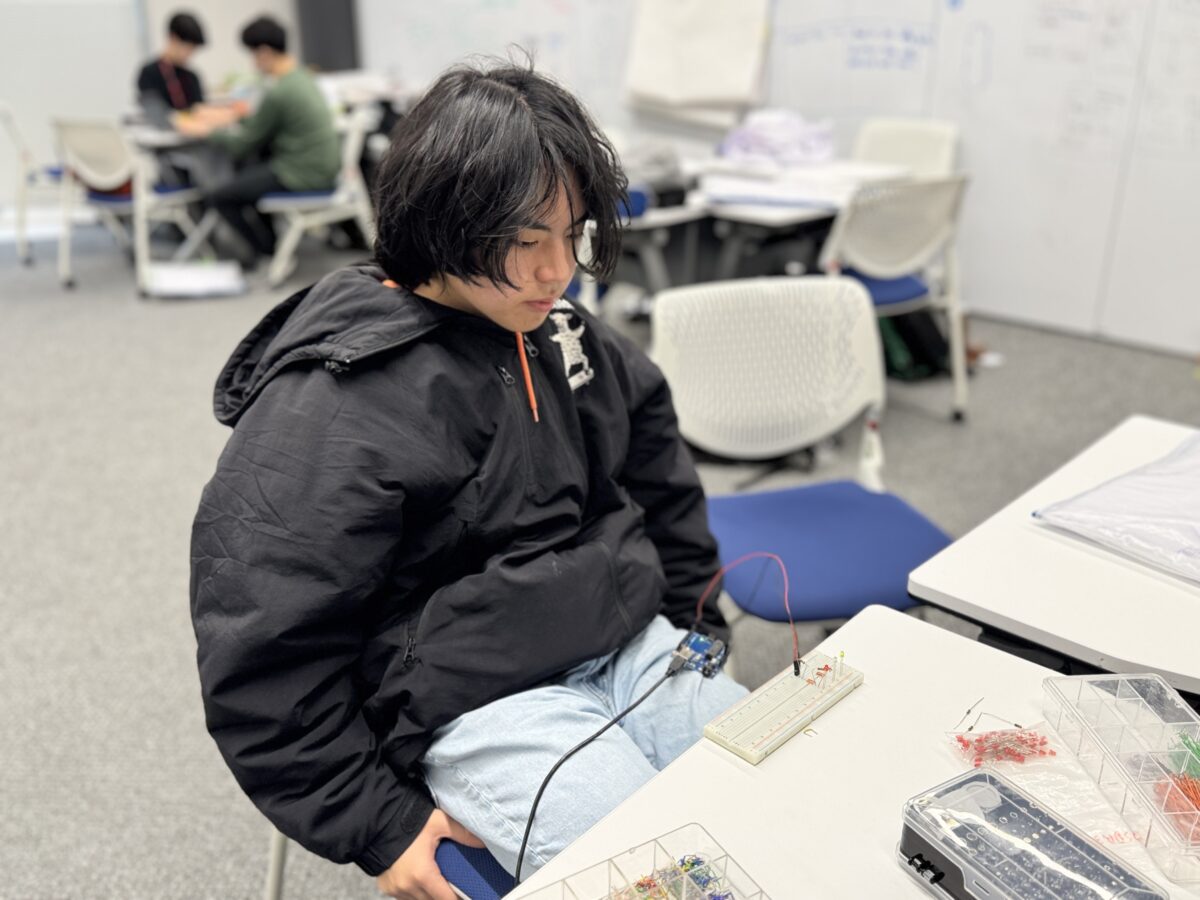
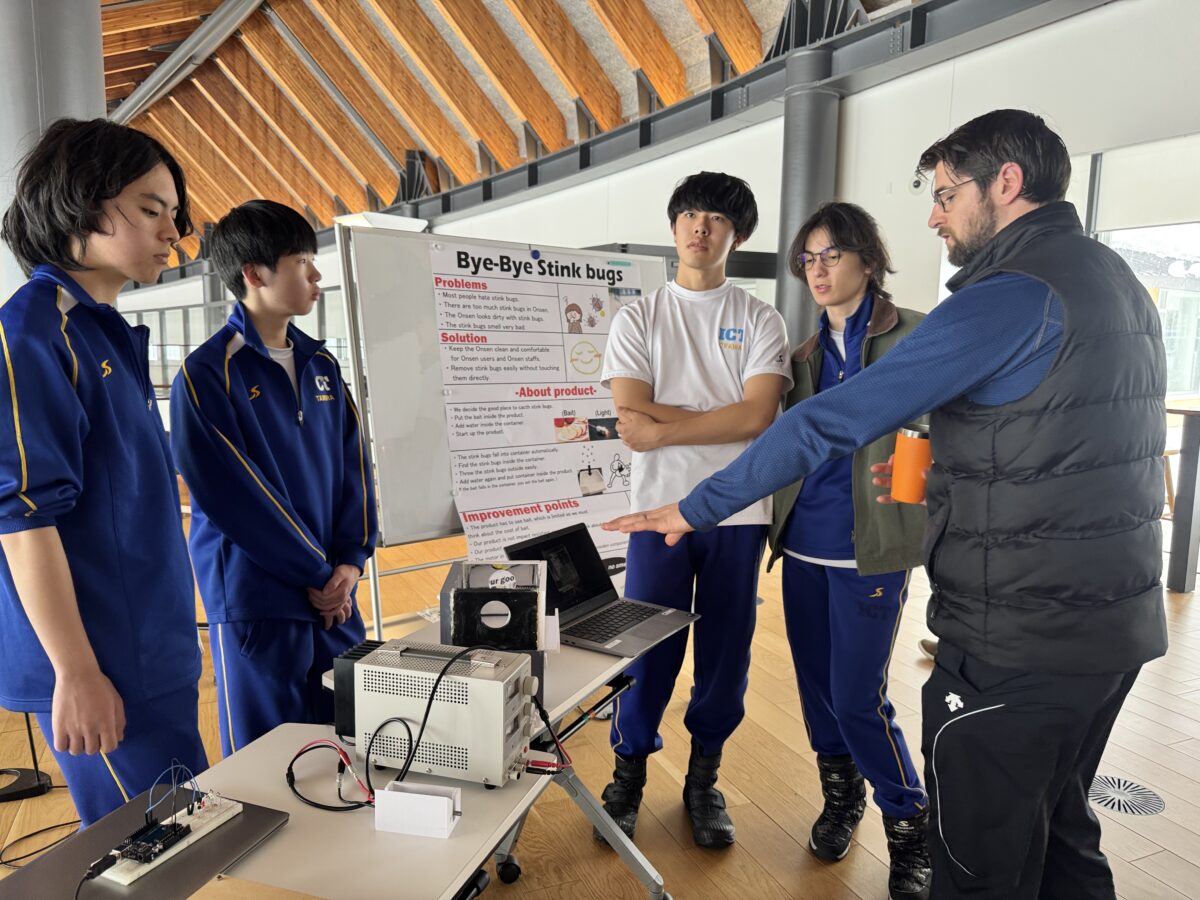
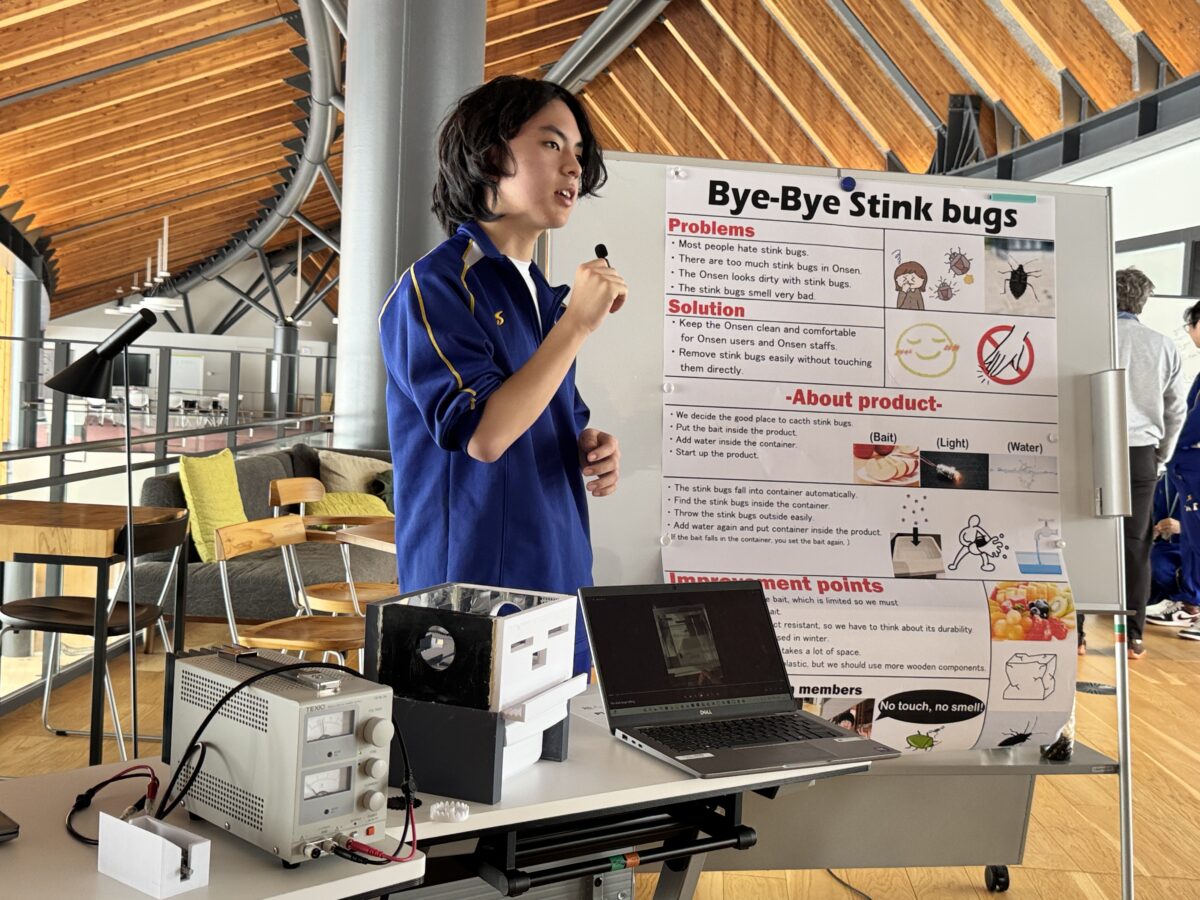
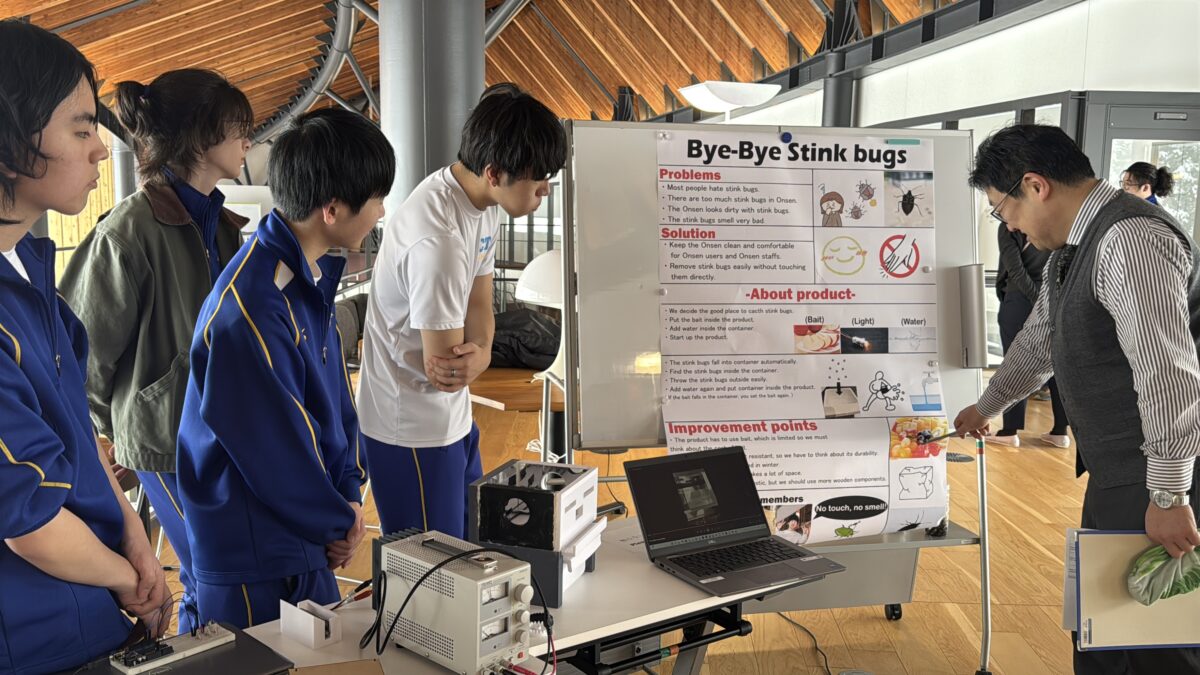
このチームは、温泉スタッフへのインタビューや温泉施設の観察を通して、学生たちは館内に潜むカメムシの問題に着目しました。カメムシは山間部に多く生息し、暖かい場所を好む習性があります。また、独特の臭いを放つため、利用者やスタッフにとって不快な存在となります。
そこで学生たちは、温泉を清潔で快適に保つために、カメムシに直接触れることなく簡単に取り除ける装置を開発しました。この装置では、カメムシが好む柑橘類を内部に入れておびき寄せます。2重構造になっている中央のフタがスライドし、誘引されたカメムシが内部の水の中に落ちる仕組みになっています。
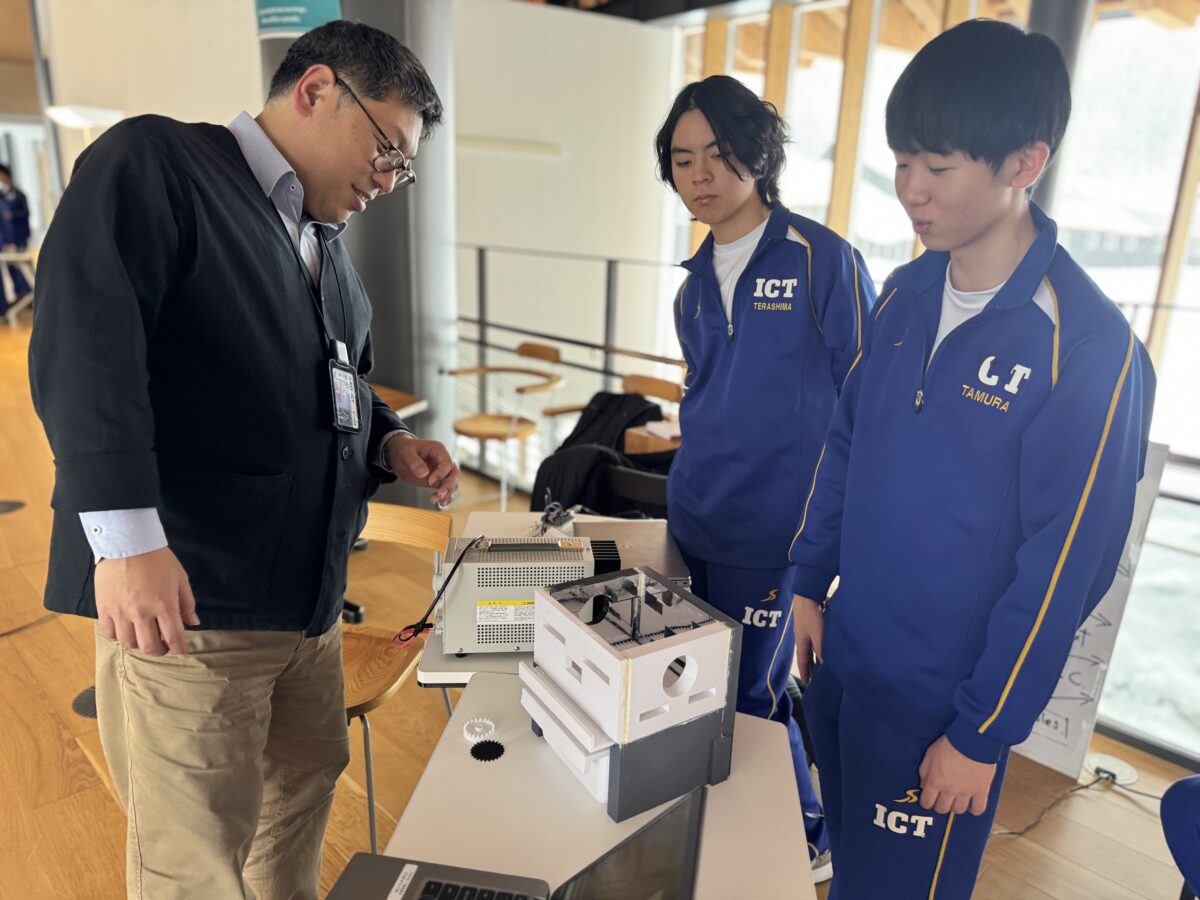
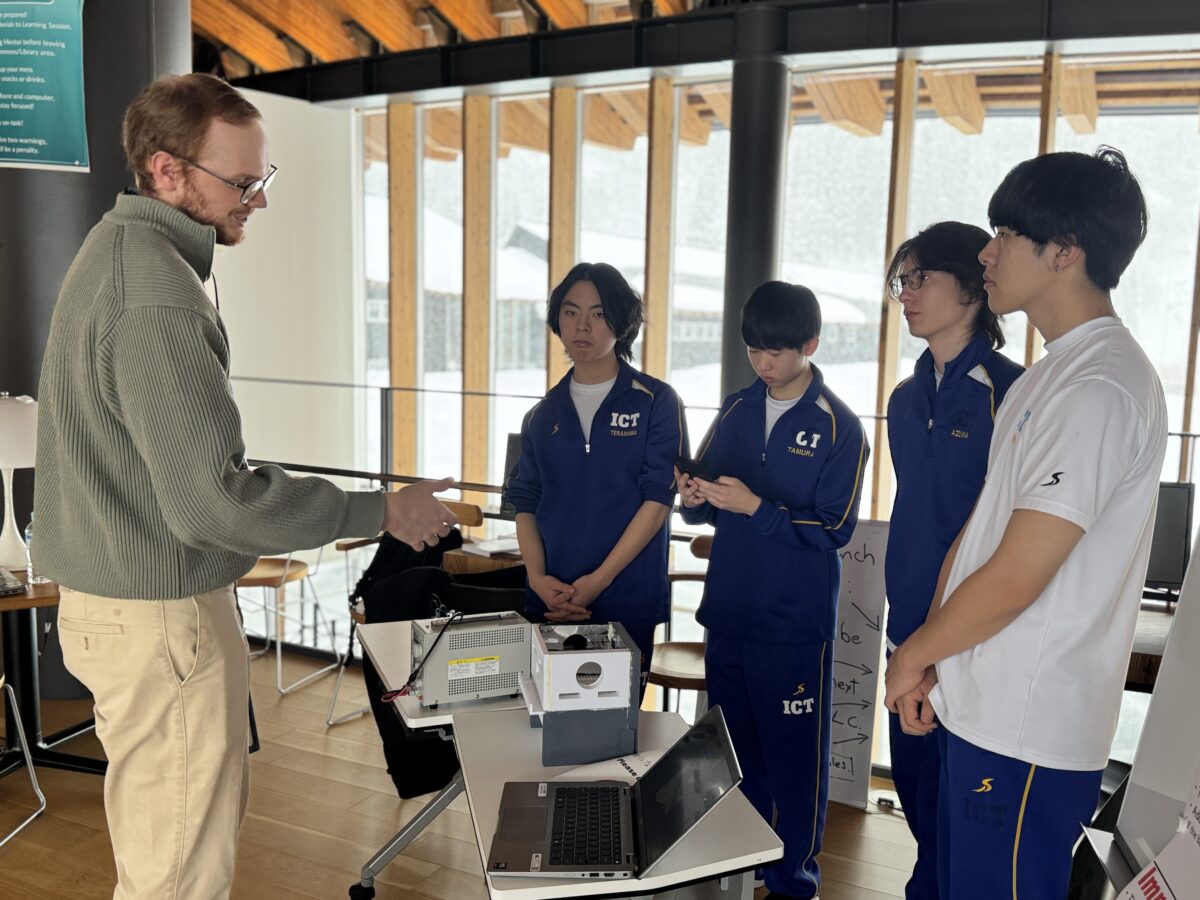
【温泉施設「比咩の湯」:温泉館内3Dモデル】
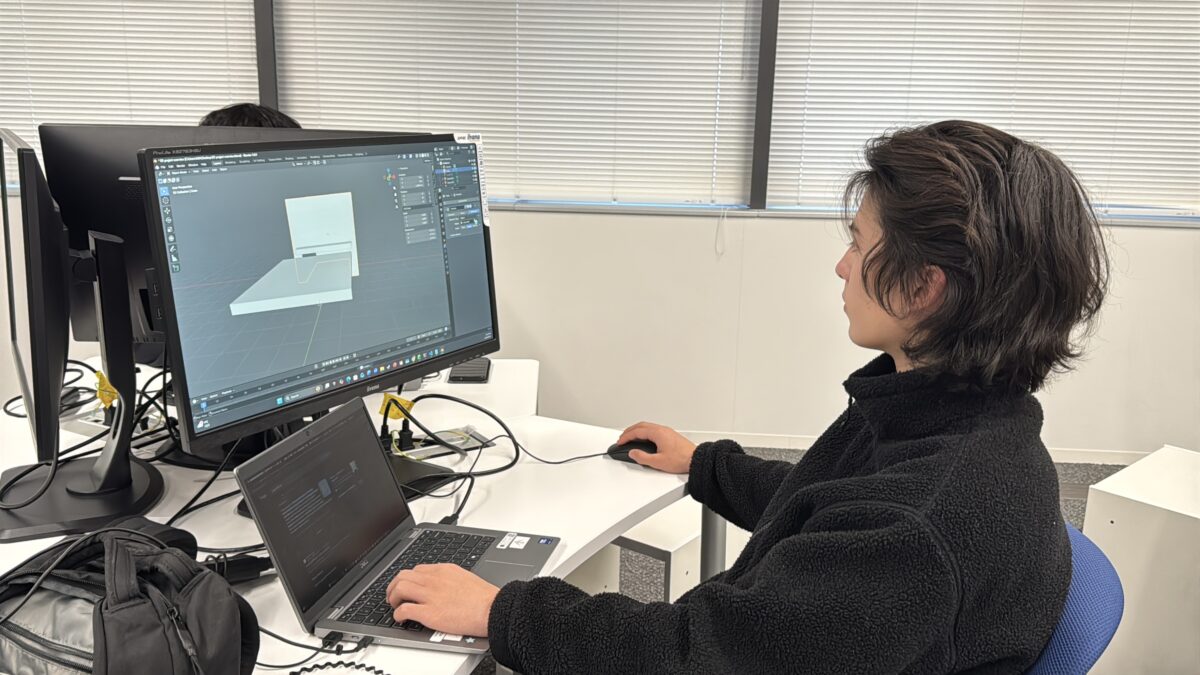
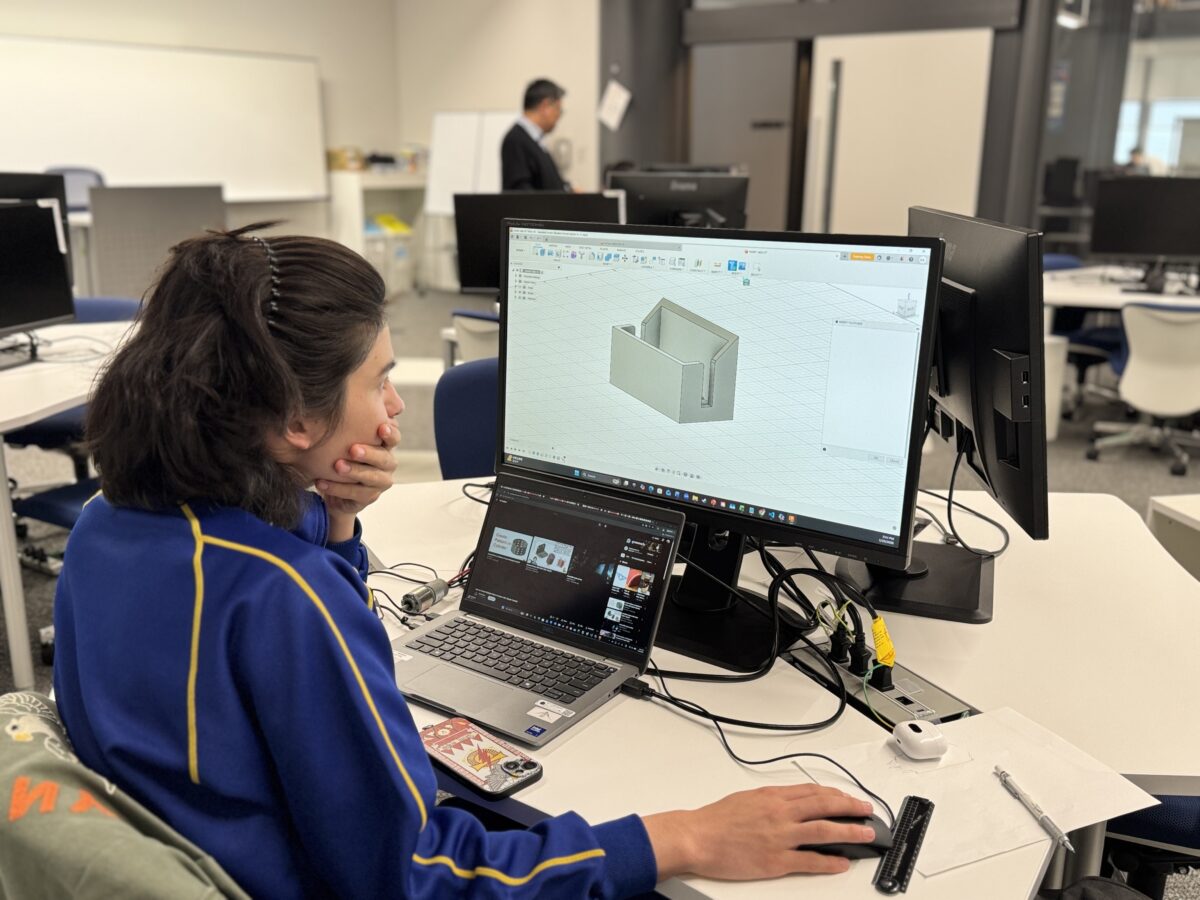
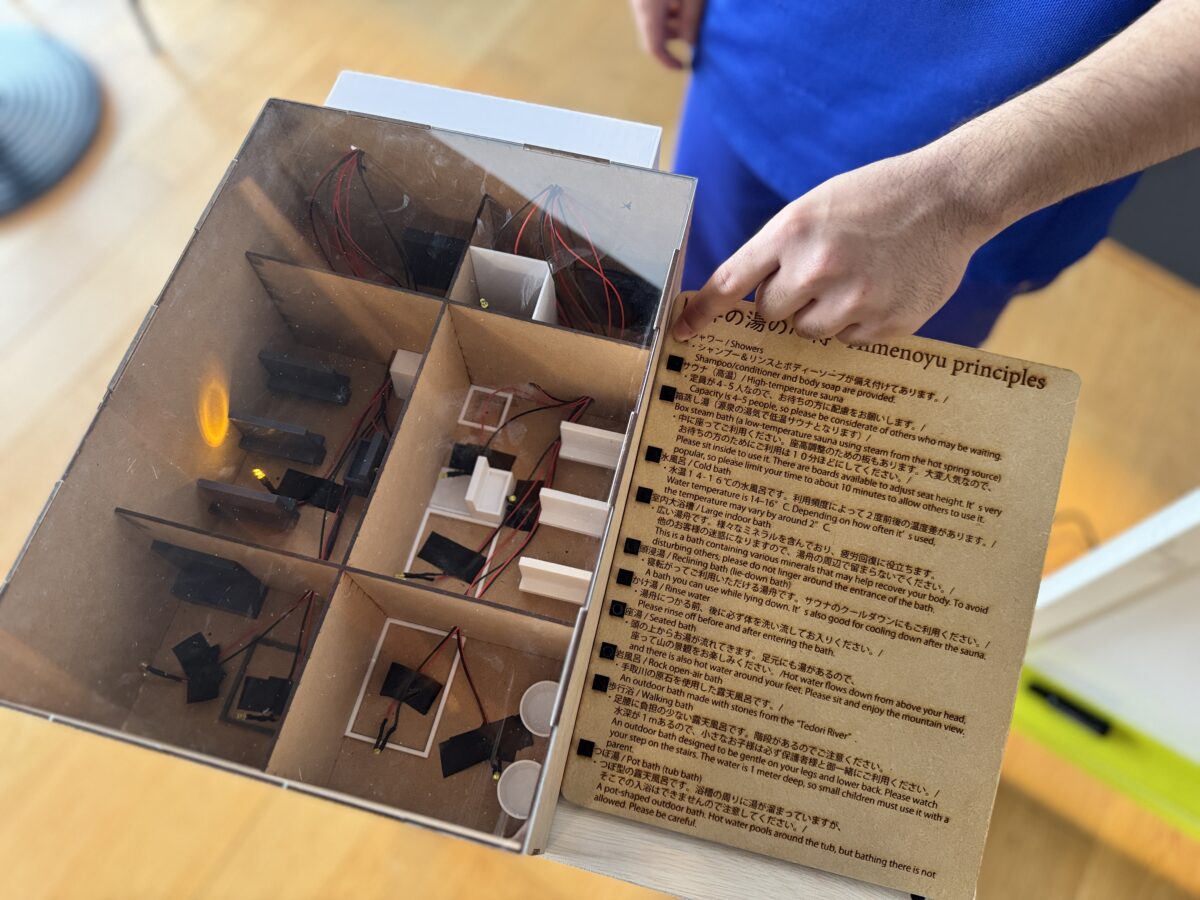
このチームは、温泉スタッフへのインタビューや温泉施設の観察を通して、温泉を利用したことがない人や、海外からの利用客に対し、温泉の使い方を効率的に伝える方法が必要であることに着目しました。
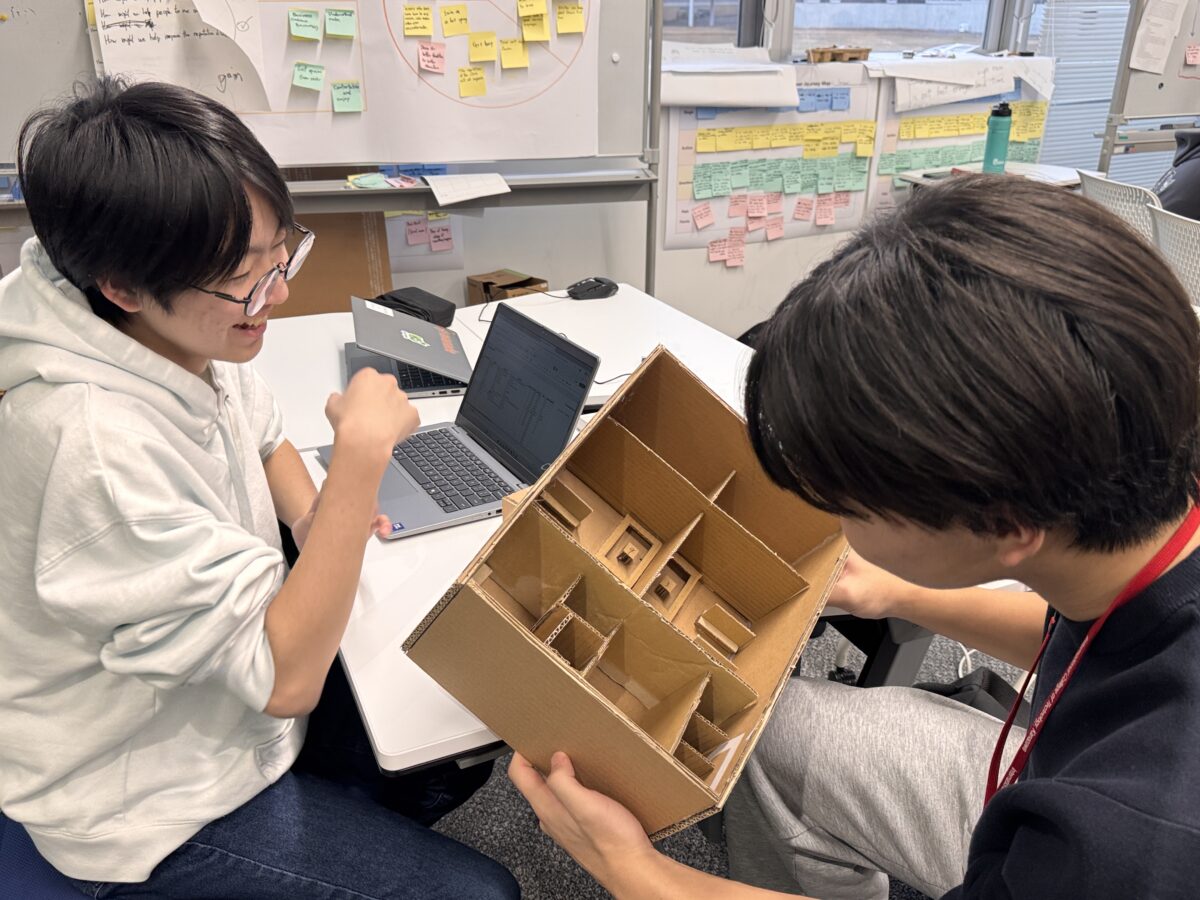
そこで学生たちは、温泉施設をモデル化して視覚的に分かりやすく示し、日本語と英語による案内を付けることで、誰でも理解しやすい説明ツールを製作制作しました。また、施設説明のボタンを押すとLEDが点滅し、温泉施設内のレイアウトや設備の位置が一目で分かるようになっています。
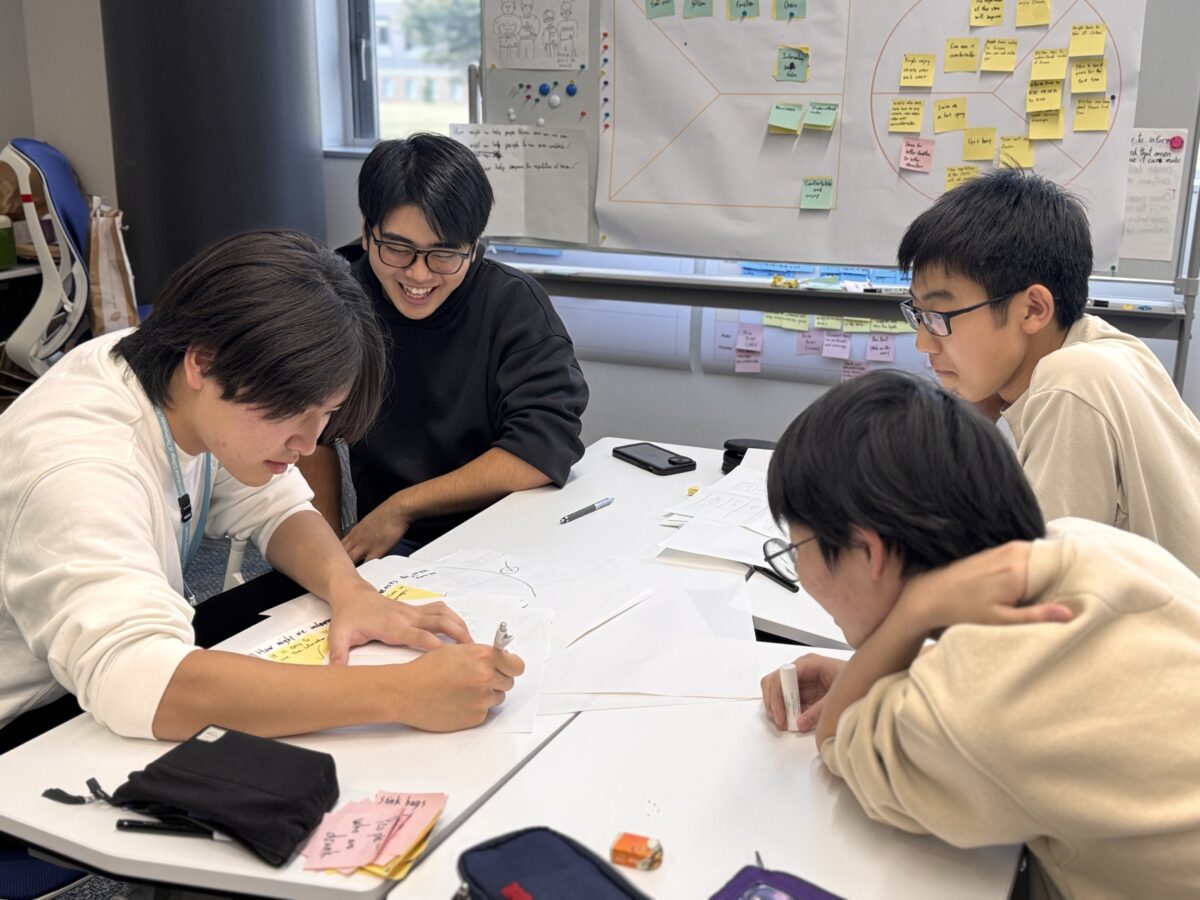
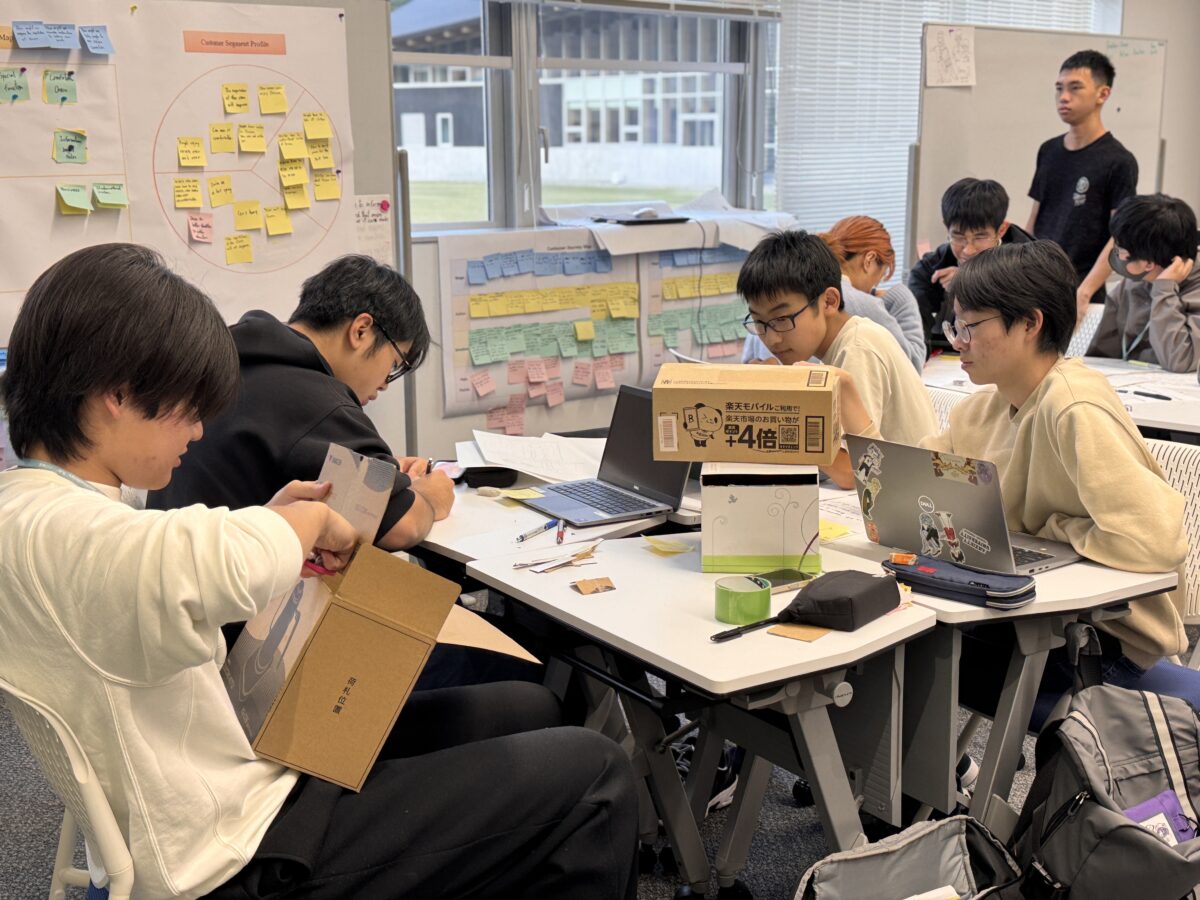
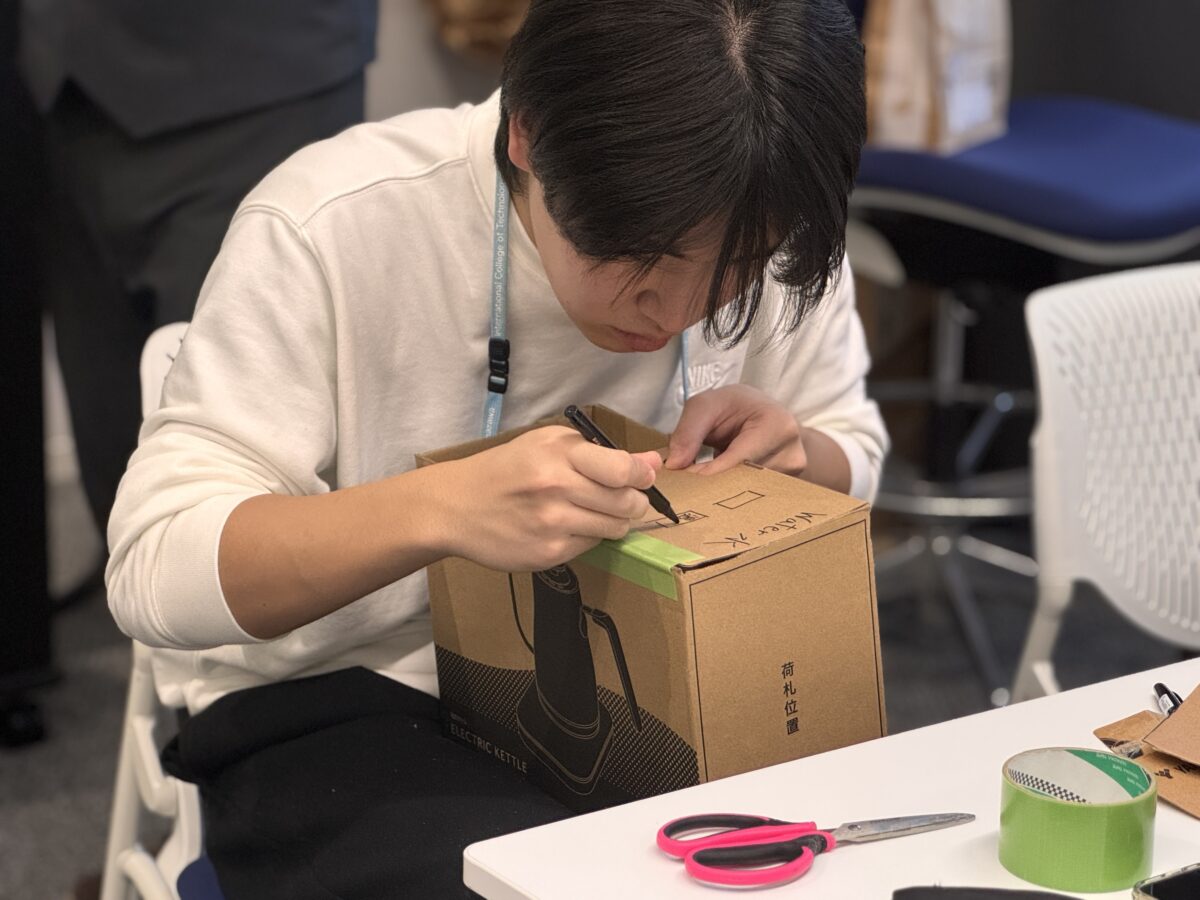
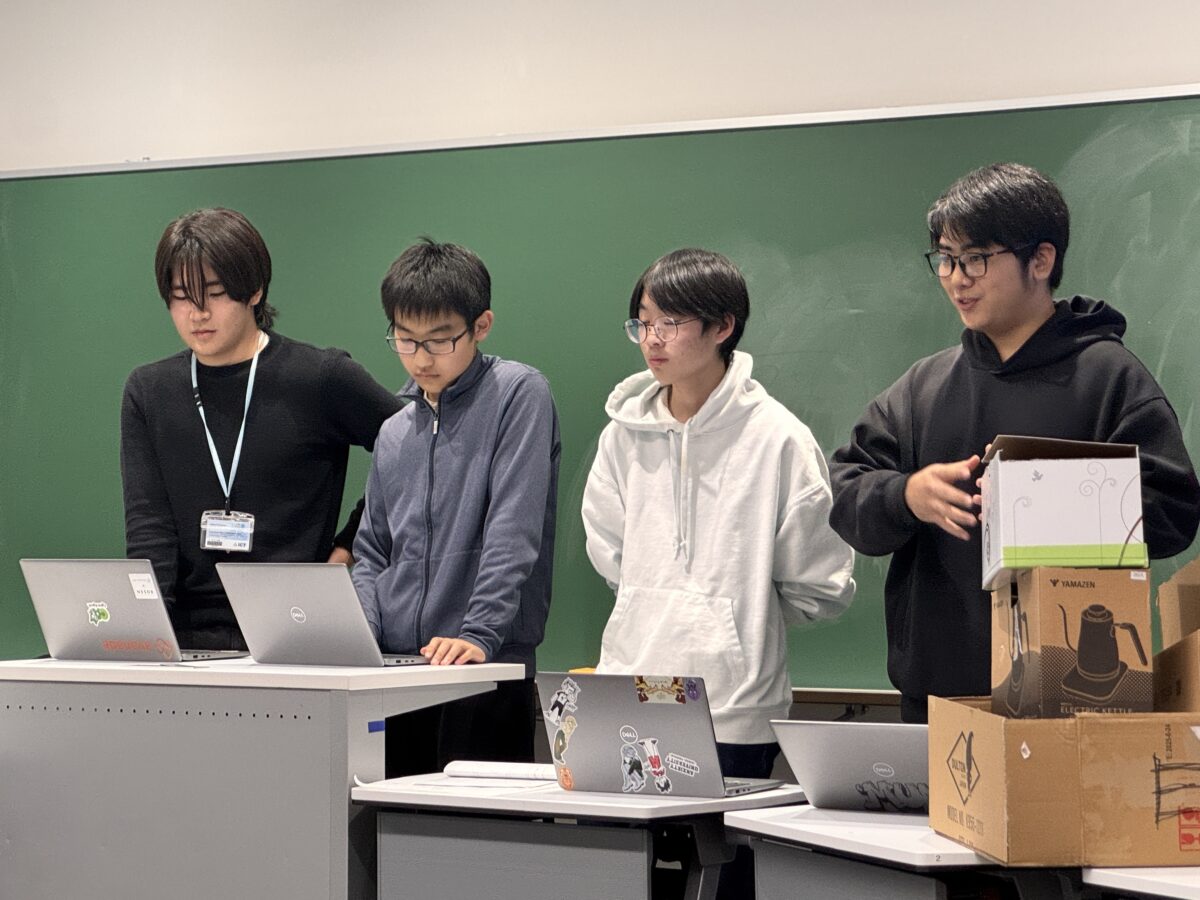
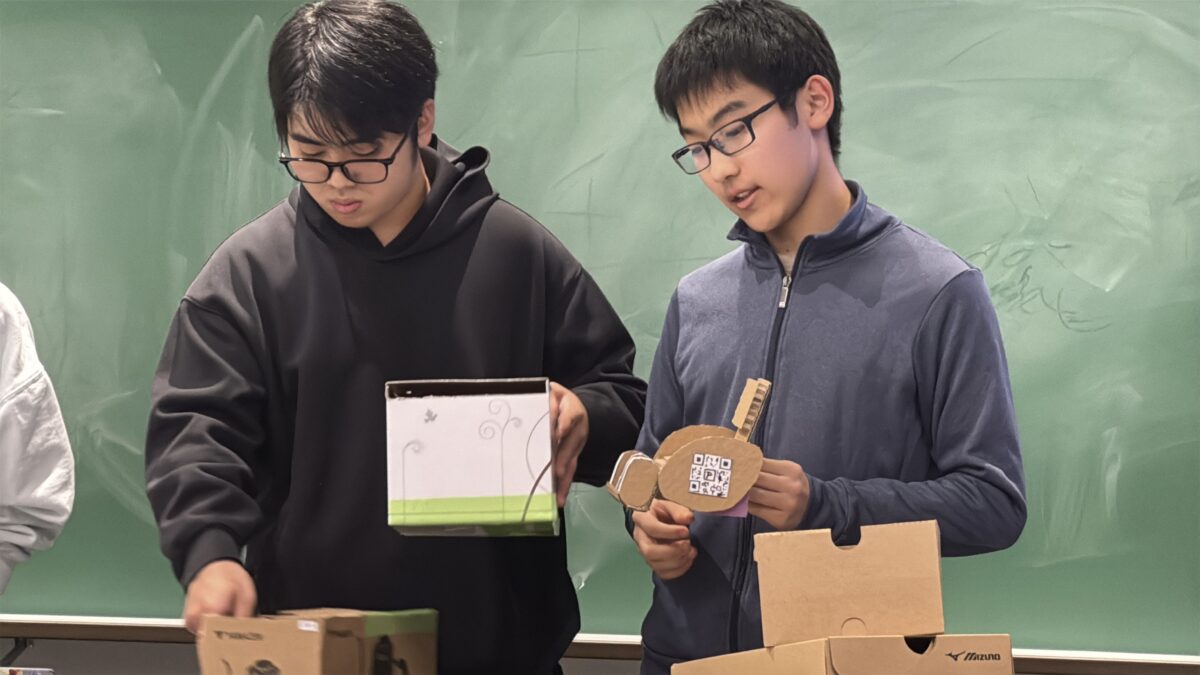
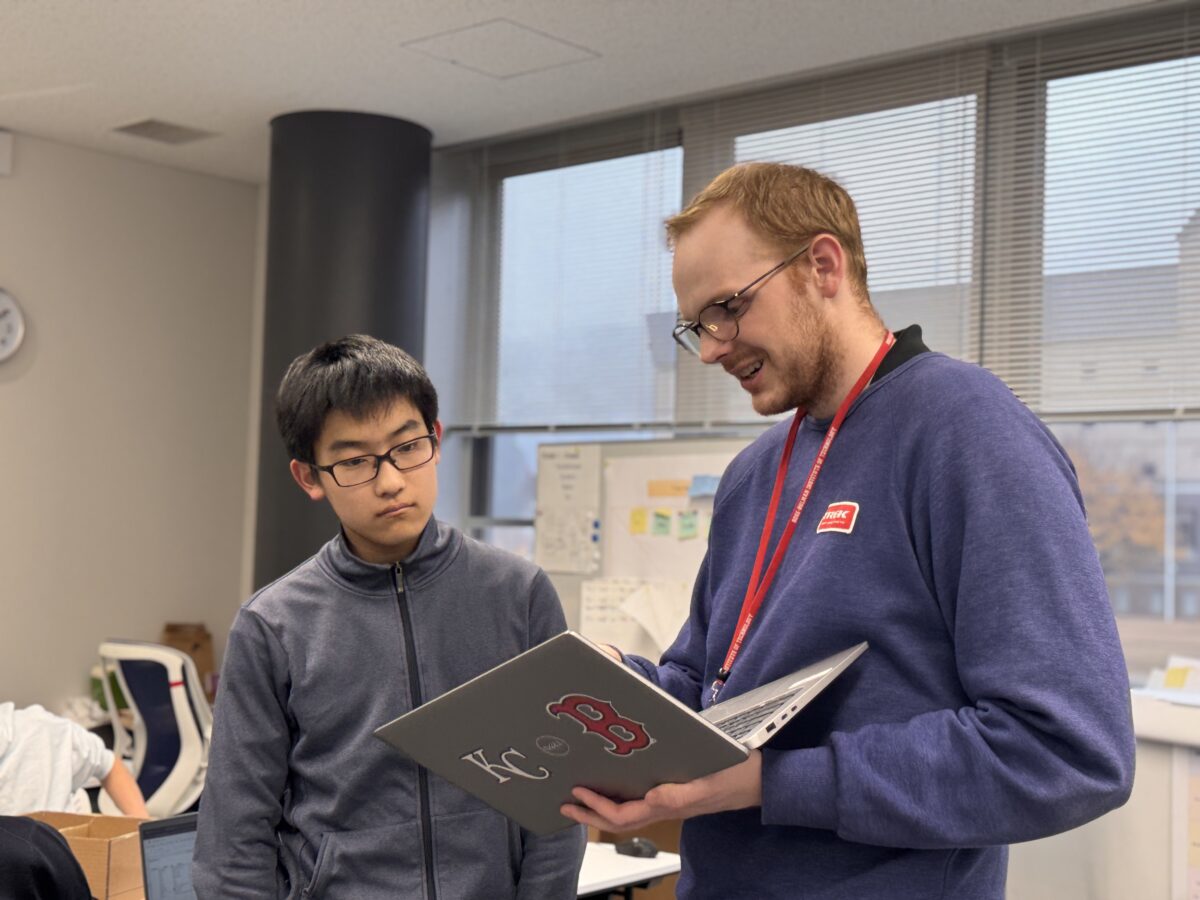
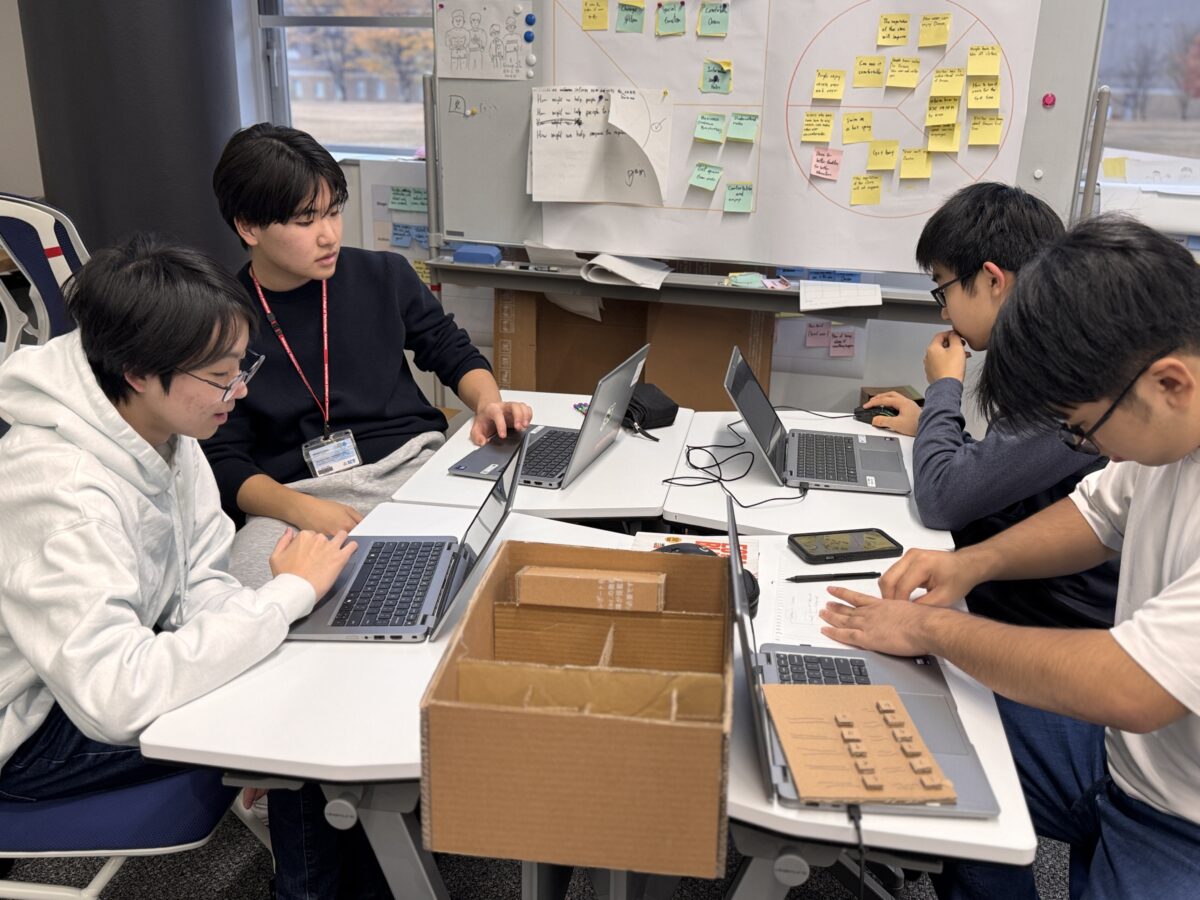
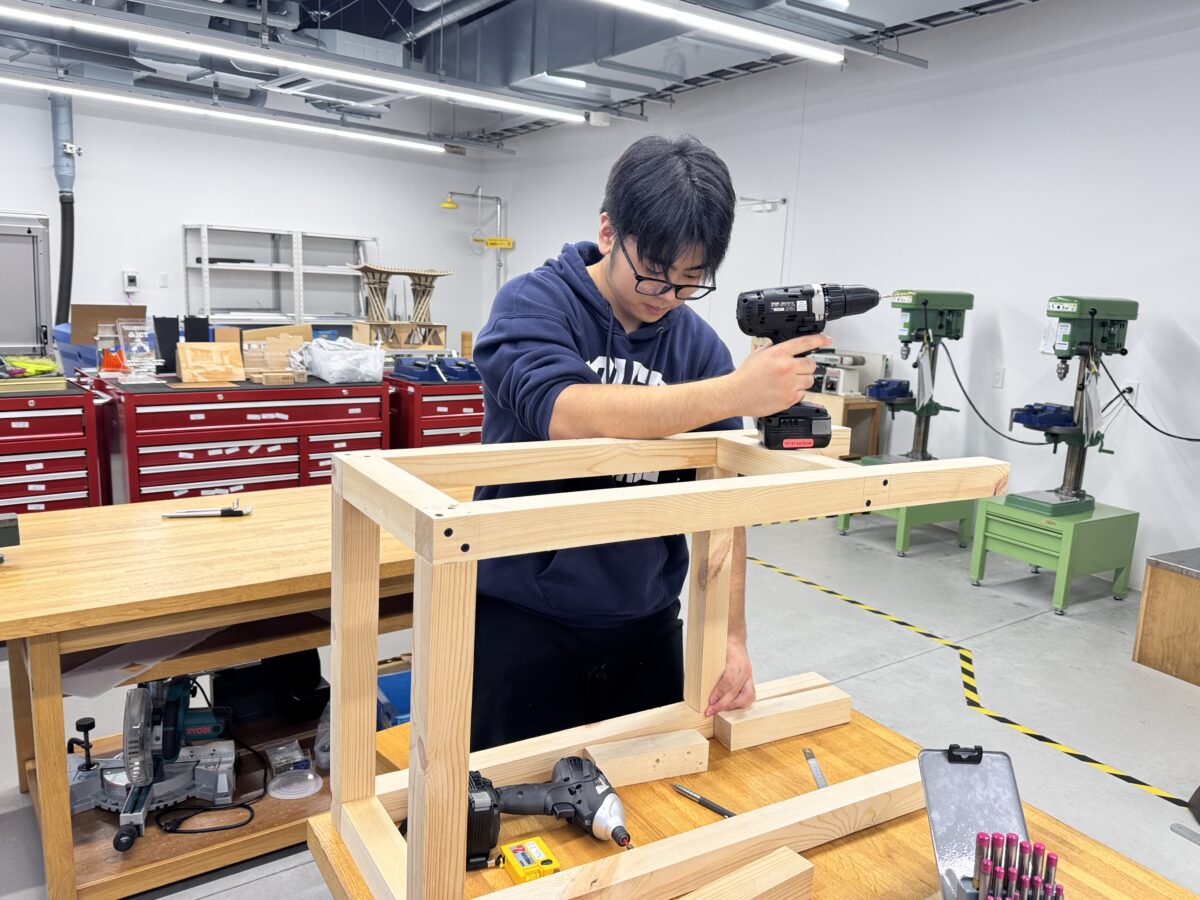
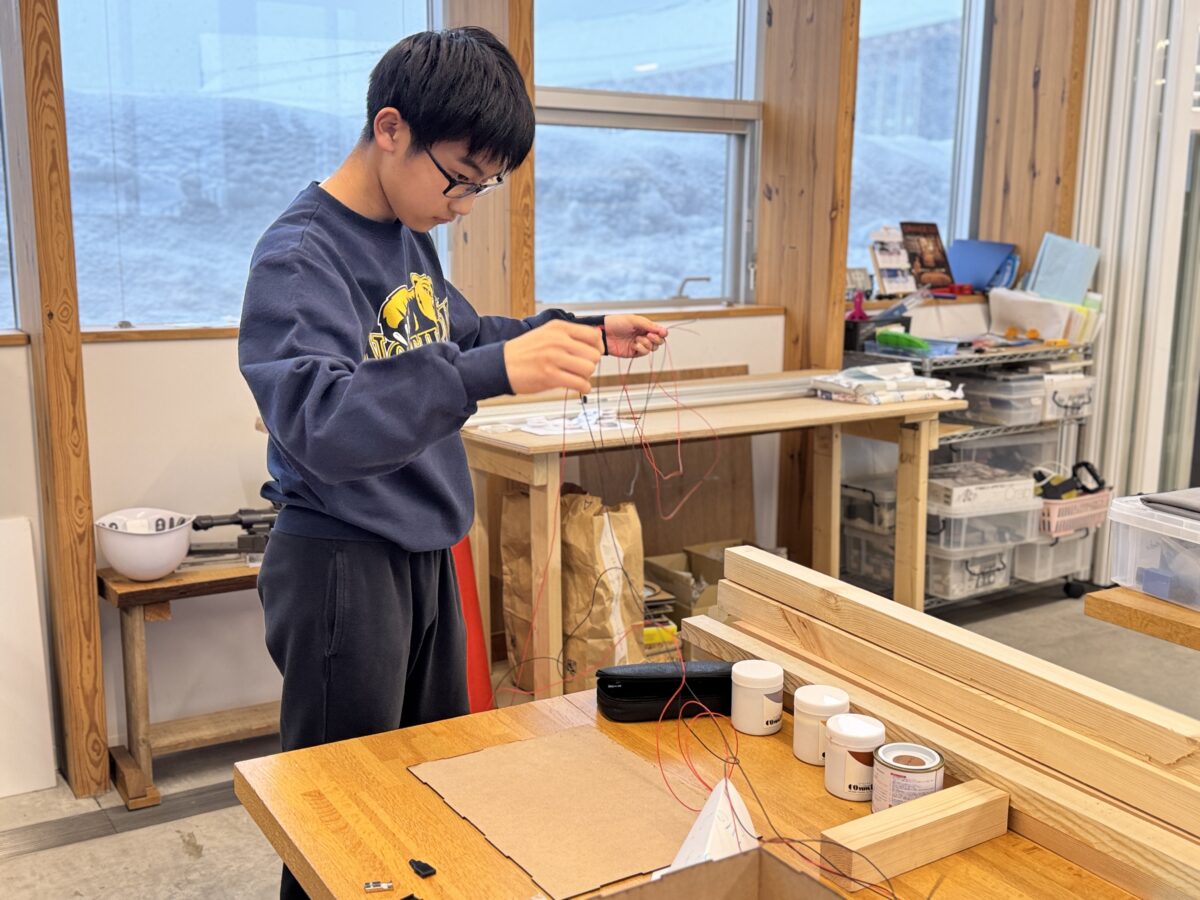
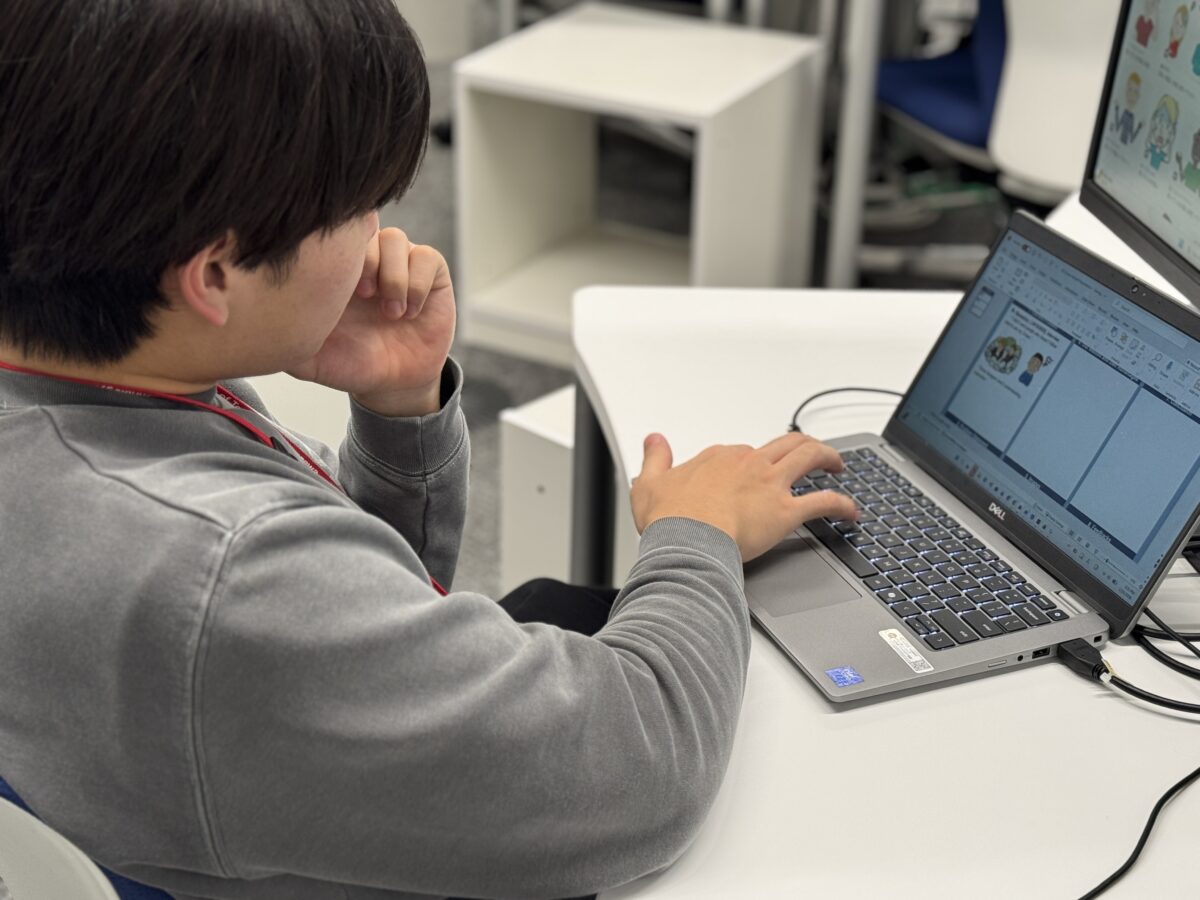
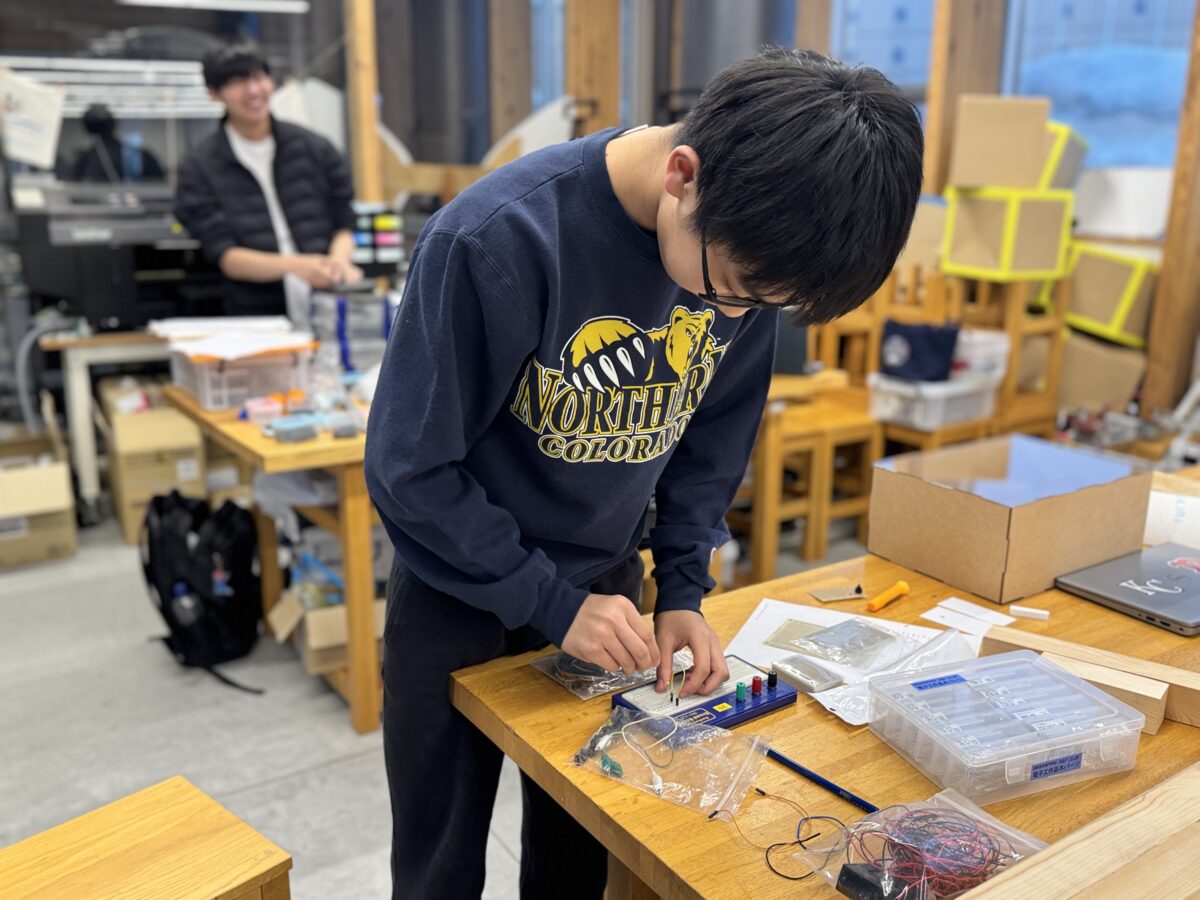
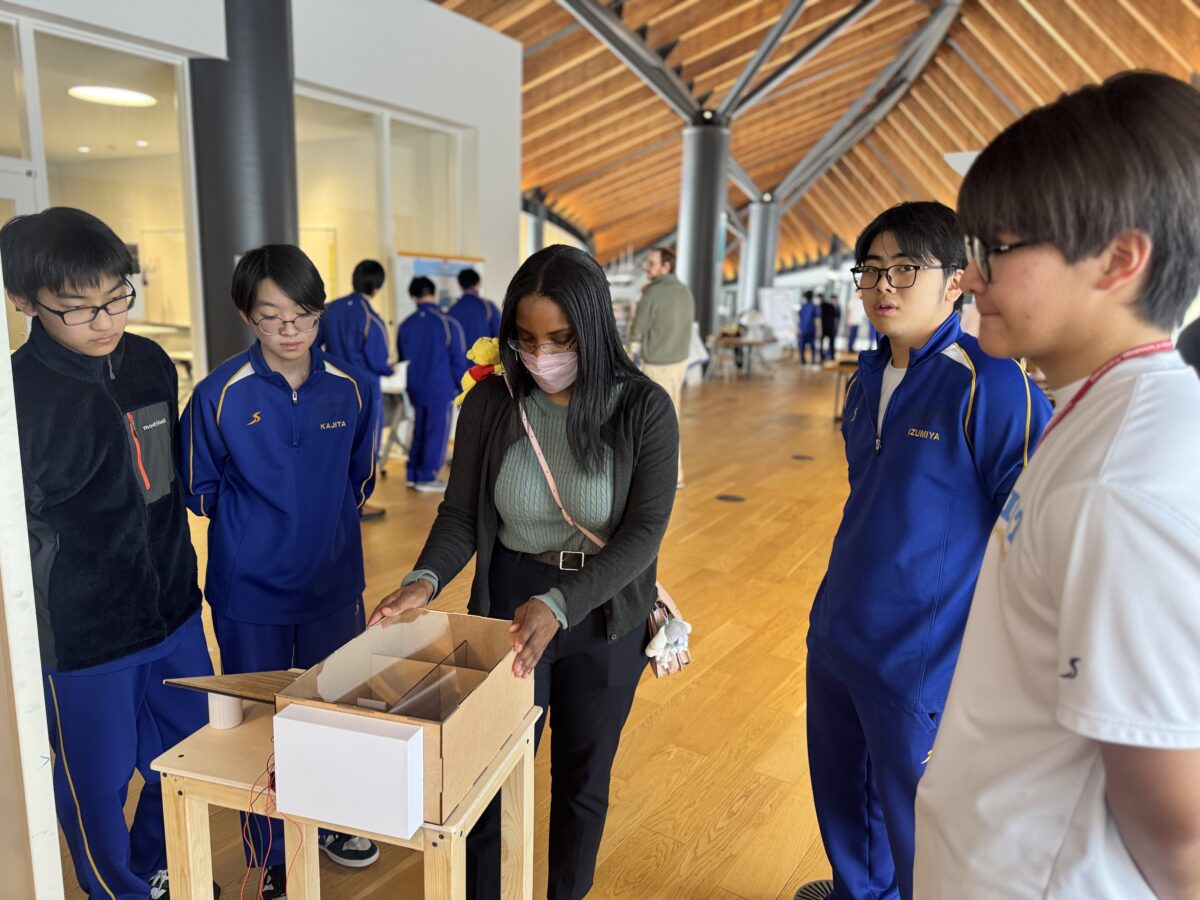
前学期のチームプロジェクトでは、学生たちは日常生活を観察し、「毎日使っている中で最も不便だと感じるもの」を特定し、その個人的な課題を解決する方法を考案しました。プロジェクトの過程では、グループ内で意見の違いやさまざまな問題に直面し、それらを受け入れながら協働する力を身につけることができたと思います。 後学期では、新たなチーム編成のもと、前学期に得た経験を活かし、自分には何ができるのか、どのような場面で力を発揮できるのかを理解したうえで、それぞれが持つ強みを活かして取り組むことができたのではないでしょうか。
来年度のエンジニアリングデザインでの学生たちの活躍が楽しみです。
間加田 侑里
Hello! This is Yuri Makada from the Hakusanroku office. Today, I would like to introduce the final presentations of the 1st year Engineering Design IB course, held on Friday, January 30th, 2026.
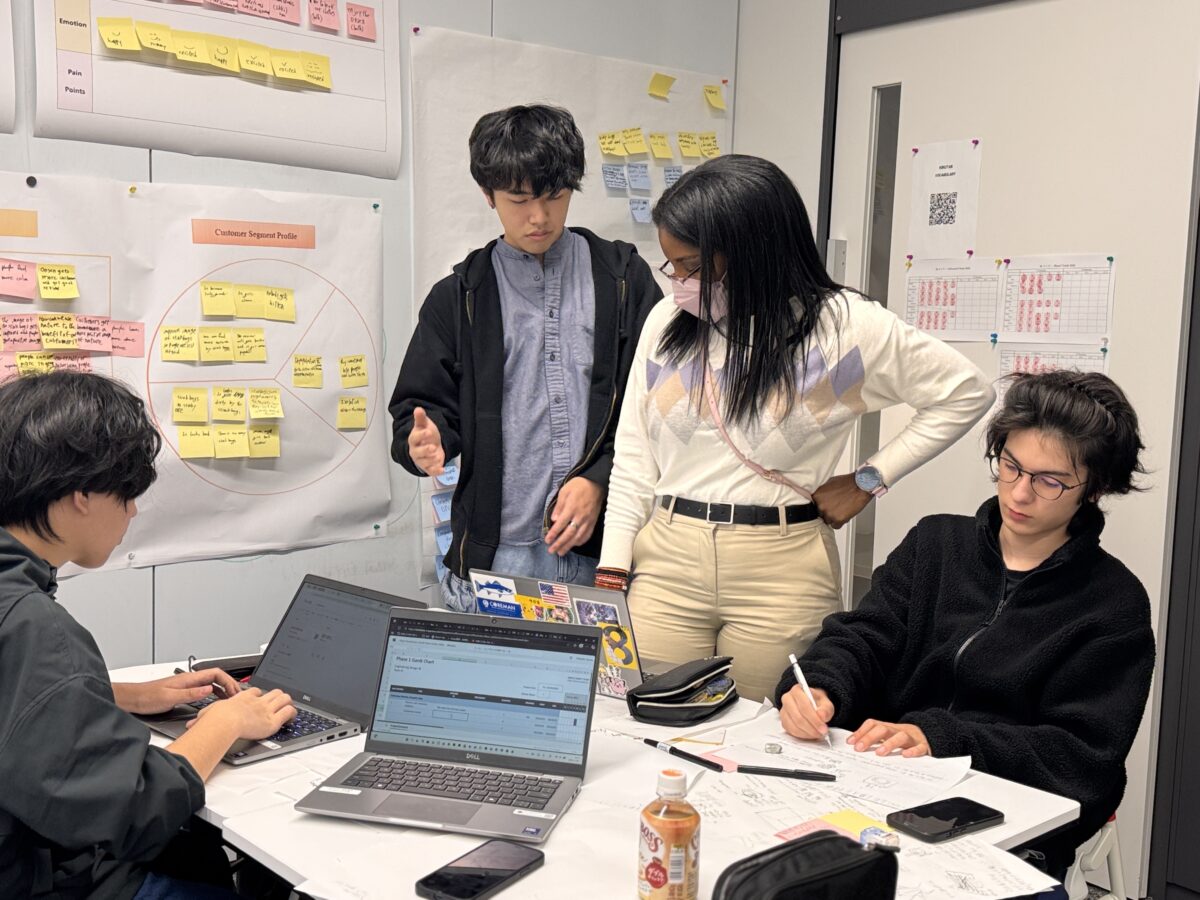
In the 1st year Engineering Design I course, students spent the entire year working toward the goal of creating things that are useful to people. In the second semester, students were divided into six teams. Through interviews with target users and other research activities, they identified underlying problems and needs, developed devices to solve them, and presented their ideas.
The six teams chose their project topics from the following facilities: the hot spring “Hime no Yu,”, the school gym, the Maker Studio, and the laboratory.
【Maker Studio: Pika-Pika Cleaner】
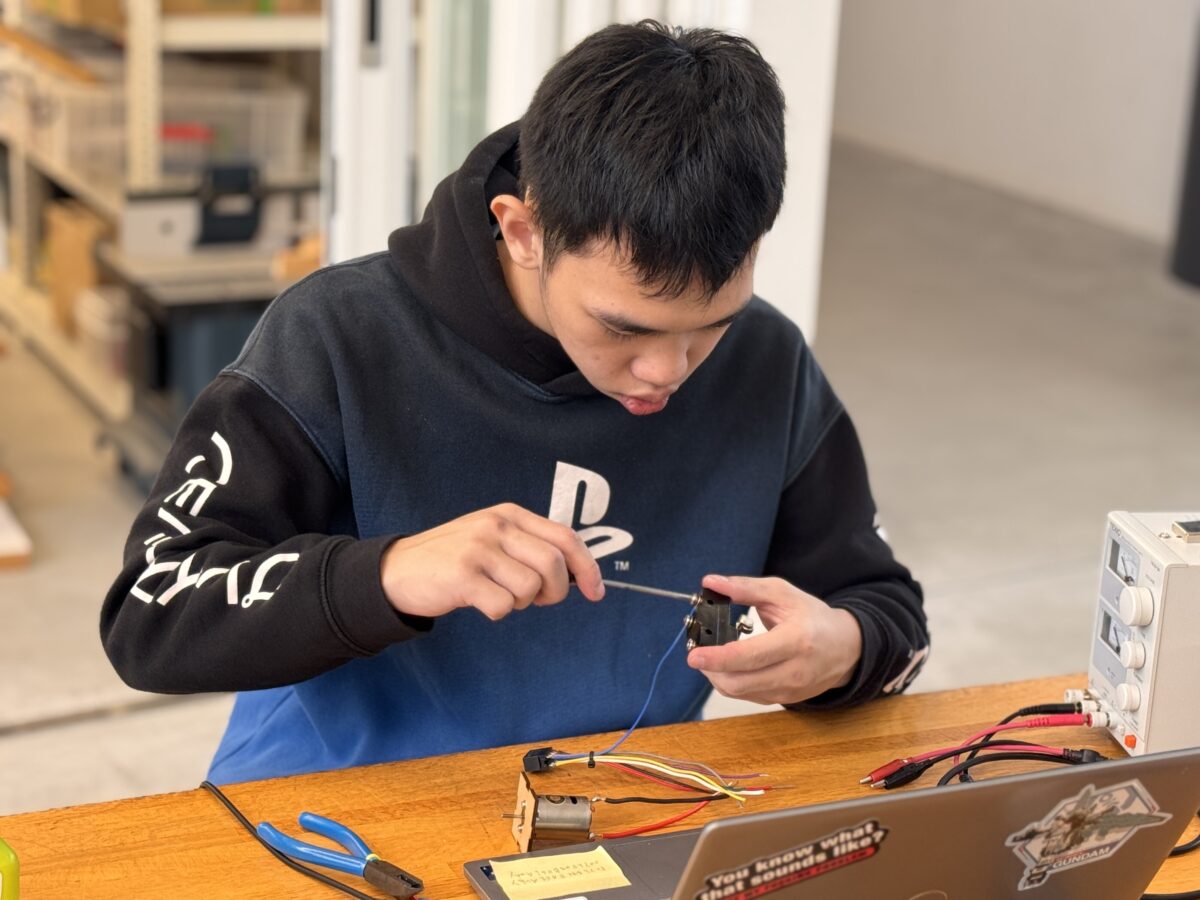
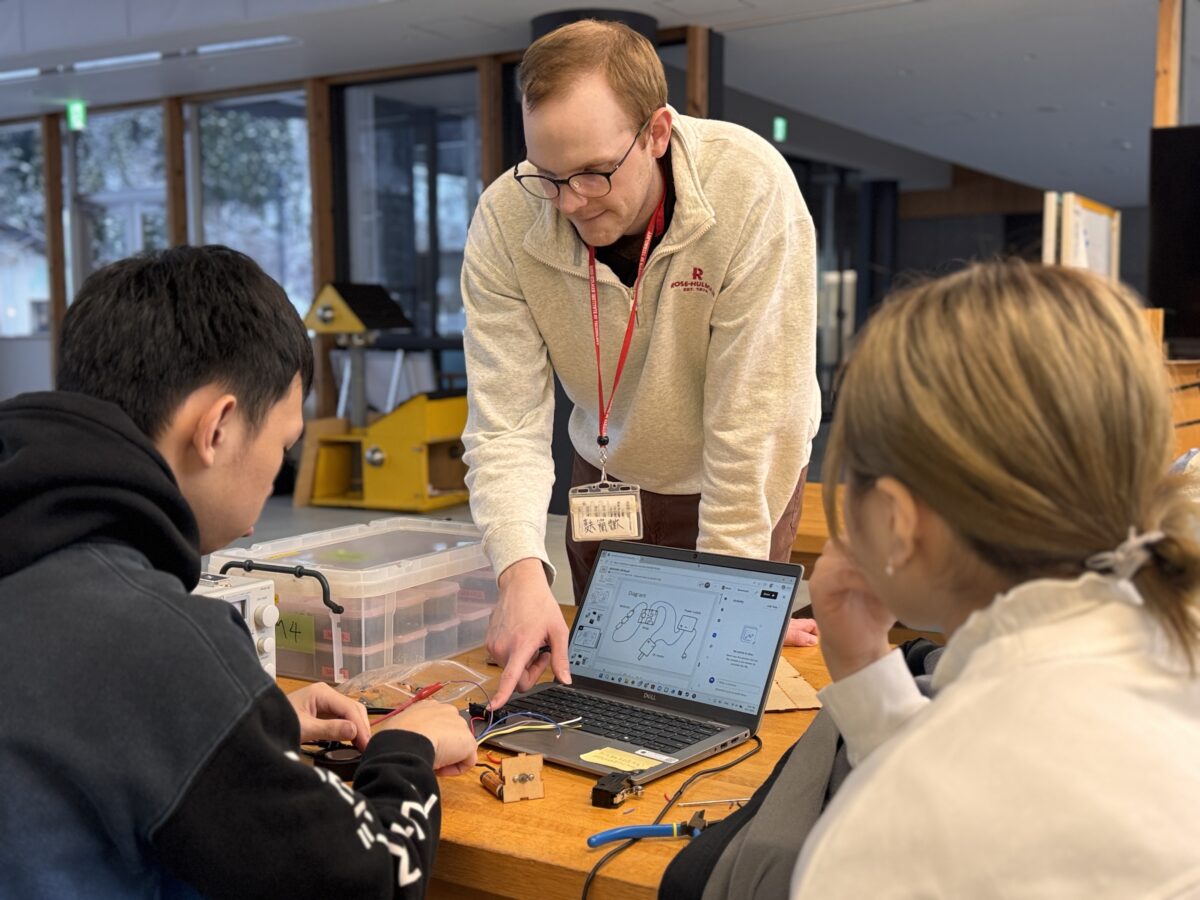
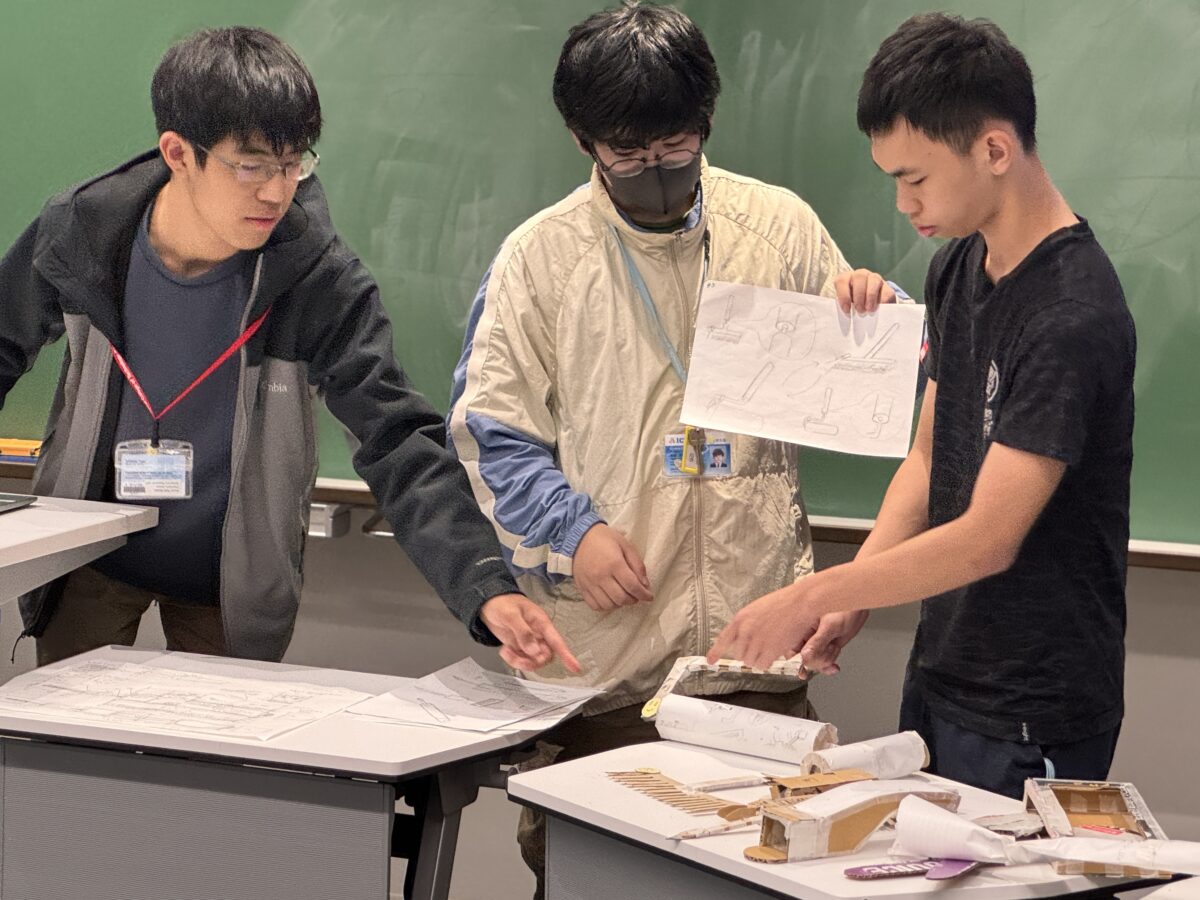
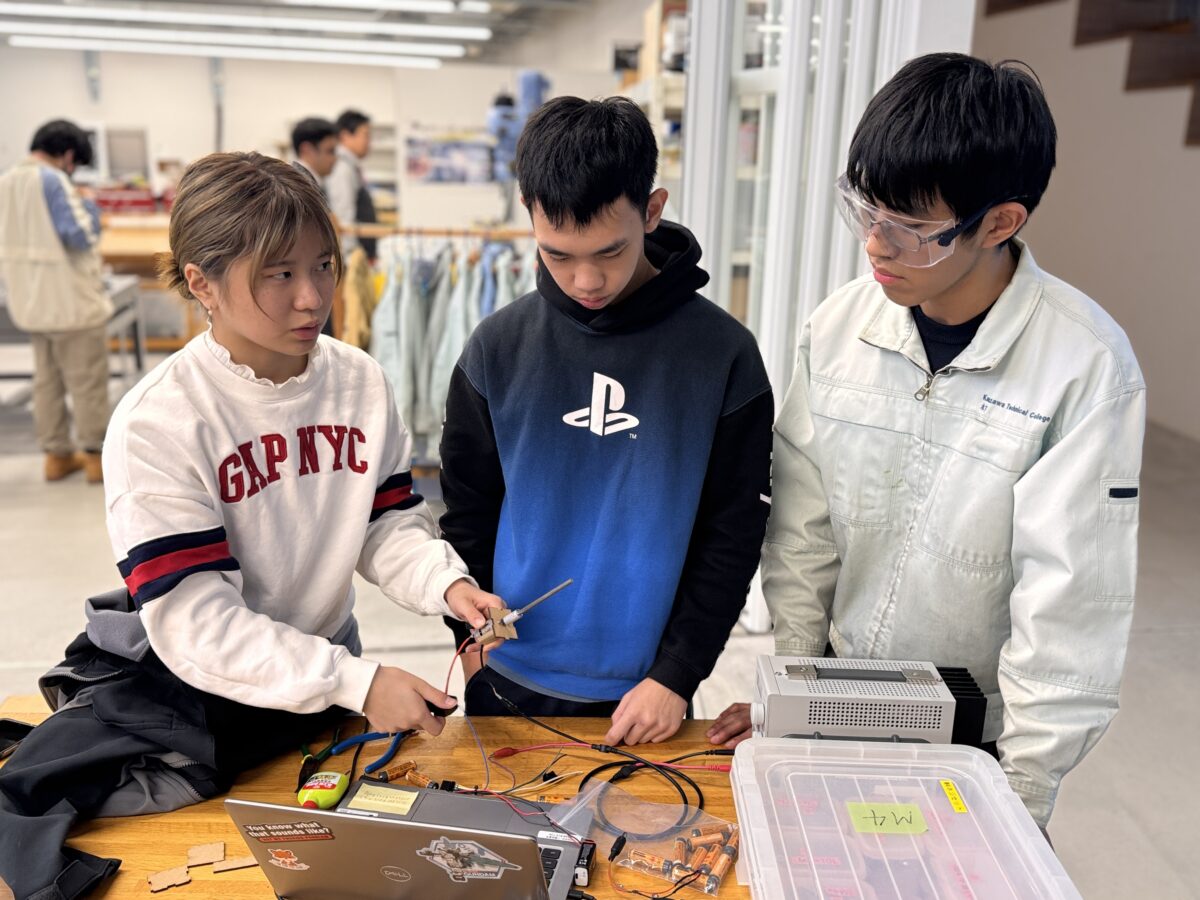
This team developed the Pika-Pika Cleaner, a cleaning device for the various machines in the Maker Studio. The Maker Studio is where students work on a variety of manufacturing and robotics activities. Students who are involved in Robocon use it almost every day.
Because of the wide variety of machine shapes and mechanisms, cleaning them requires significant time and effort, which has been an issue for both faculty and students who manage the space. To solve this problem, the team created a cleaning device equipped with three tools:
Rotating Brush: A spinning brush is attached allowing fine debris to be removed even from hard to reach areas.
Long Brush: Available in two sizes to collect scattered debris efficiently.
Lubrication Unit: Dispenses and replenishes machine oil, helping maintain machine performance, longevity, and precision.
Previously, users had to switch between different tools depending on the machine part they were cleaning. With the Pika-Pika Cleaner, it is possible to use a single device to clean machine parts more efficiently.
【Laboratory: Lab Helper】
This team interviewed with the faculty member in charge of the chemistry course, who manages the laboratory. They found that students often asked the same questions repeatedly, such as how to use equipment, where items were stored, how to clean up after experiments, or what procedures to follow. This often required students to wait until the instructor was available.
To solve this issue, the team created a website that consolidates all essential laboratory information in one place. On this website, users can check safety precautions and procedures for conducting experiments, and students can also submit questions directly to the instructor. In addition, it includes a feature that allows students to record and share what they learned during experiments, enabling them to exchange knowledge with one another. Furthermore, to ensure safe operation during experiments, the tablet case is made of acrylic, allowing students to use the touchscreen even while wearing laboratory gloves.
【Gym: TEE SWEEPER】
This team interviewed Health and Physical Education instructor Philip Cadzow sensei. Through the interview, they identified several issues related to cleaning the training equipment in the gym. Users had to hold a cloth and a spray bottle separately, making the cleaning process inconvenient because both hands were occupied. In addition, the cloths did not dry quickly, which made them unhygienic.
To address these problems, the students developed a portable cleaning device that integrates the spray bottle and the wiping tool into a single unit. They designed an easy to grip handle for one handed use and attached a fast drying sponge to the wiping section. Furthermore, they created a mechanism that automatically refills the remaining spray liquid, resulting in a more efficient and hygienic cleaning tool.
【Gym: PYM】
This team interviewed Philip sensei about the issues occurring in the gymnasium. Through the interview, they discovered that although the gym was sometimes left in a messy state and could not be used by other students, it was impossible to identify who had caused the mess. Therefore, a system to track gym usage was needed.
To solve this problem, the students developed a tracking system that manages entries and exits from the gym. When a student holds their ID card over a scanner, a buzzer and LED light indicate that the scan has been completed. To make the scanning process easier, the team also used a laser cutter to create a dedicated 80cm tall stand for mounting the card reader. Furthermore, when a student scans their card, their name is automatically recorded on a website, allowing users to check who used the gym and at what time. This system made it possible to track gym usage accurately.
【Hot Spring “Hime no Yu”: Bye-Bye Stink Bugs】
This team focused on the issue of stink bugs inside the hot spring facility, based on interviews with the staff and observations of the site. Stink bugs are commonly found in mountainous areas and are attracted to warm places. Because they emit a strong and distinctive odor, they can be unpleasant for both guests and staff.
To keep the facility clean and comfortable, the students developed a device that allows stink bugs to be removed easily without having to touch them directly. The device uses fruit, which stink bugs are attracted to, as bait placed inside the container. After this, a double layered sliding lid mechanism then causes the stink bugs to fall into a water chamber below.
【Hot Spring “Hime no Yu”: 3D Facility Model】
This team learned from interviews with the hot spring staff and on-site observations that there was a need for a clear and effective way to explain how to use the hot spring facility especially for people who have never visited a hot spring before and for international guests.
The students created an easy-to-understand explanatory tool by modeling the layout of the onsen facility and presenting it visually. They also added guidance in both Japanese and English so that anyone can understand it easily. A visitor to the onsen can consult a list and if they have questions about a specific part they can press a button next to the item on the list that relates to the question. Then an LED light flashes to indicate where in the layout of facility is related to the guidance. The LED light also indicated the location of various amenities within the onsen. In addition to providing useful information about the onsen, it also allows users to understand the layout of the onsen at a glance.
In the previous semester’s team project, the students observed their daily lives and identified “the item they use every day that they find the most inconvenient.” They then devised ways to solve those personal challenges. Throughout the project, they encountered differences of opinion and various difficulties within their groups, and I think they developed the ability to collaborate while accepting and working through those challenges.
In the second semester, with newly formed teams and the experience gained from the first semester, the students were able to better understand what they could contribute and in what situations they could make the most of their strengths. They worked together in ways that allowed each student to utilize their individual abilities effectively.
I look forward to seeing how the students will continue to grow and what they will achieve in next year’s Engineering Design course.
Yuri Makada
こんにちは!国際高専2年の万江 琴莉です。
今回私は、エンジニアリングデザインIIB(以下ED)の授業の一部を紹介します。
はじめに、2年生のEDでは、地域活性化を目的とした活動を行っています。その中で私たちは紅はるかを畑で栽培し、ビジネスを学びながら道の駅・瀬女で焼き芋販売などを行ってきました。そして新たな販路拡大を目的に、大野のKuru,ru.さんとのコラボで11月末に高専紅はるかの壺焼き芋の販売やオリジナルグッズを販売しました。
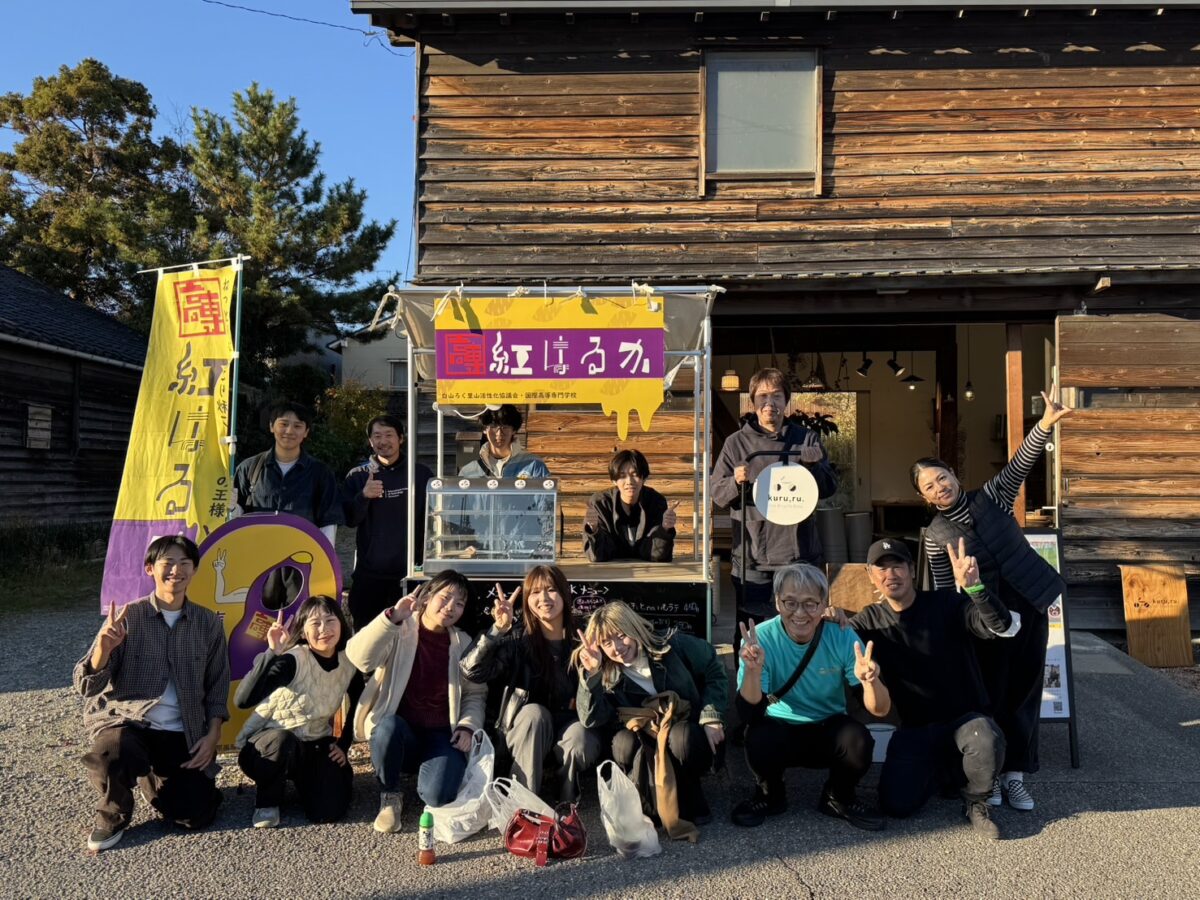
EDの高専紅はるかのプロジェクトは2期生の先輩から改良を重ね受け継がれていましたが、コラボなどこのような取り組みは初めてで、緊張もありながらも、コラボ用の新ロゴを作ったり、グッズを増やしたりと、とても力を入れ取り組んでいきました。
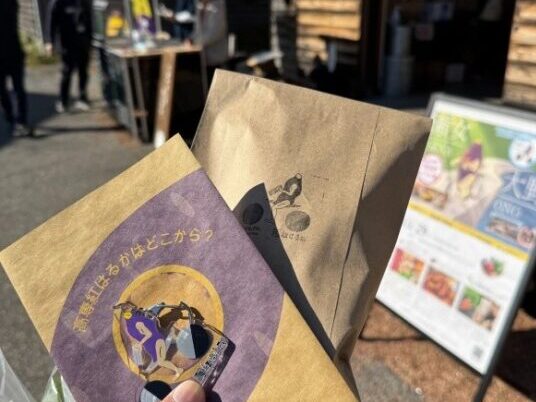
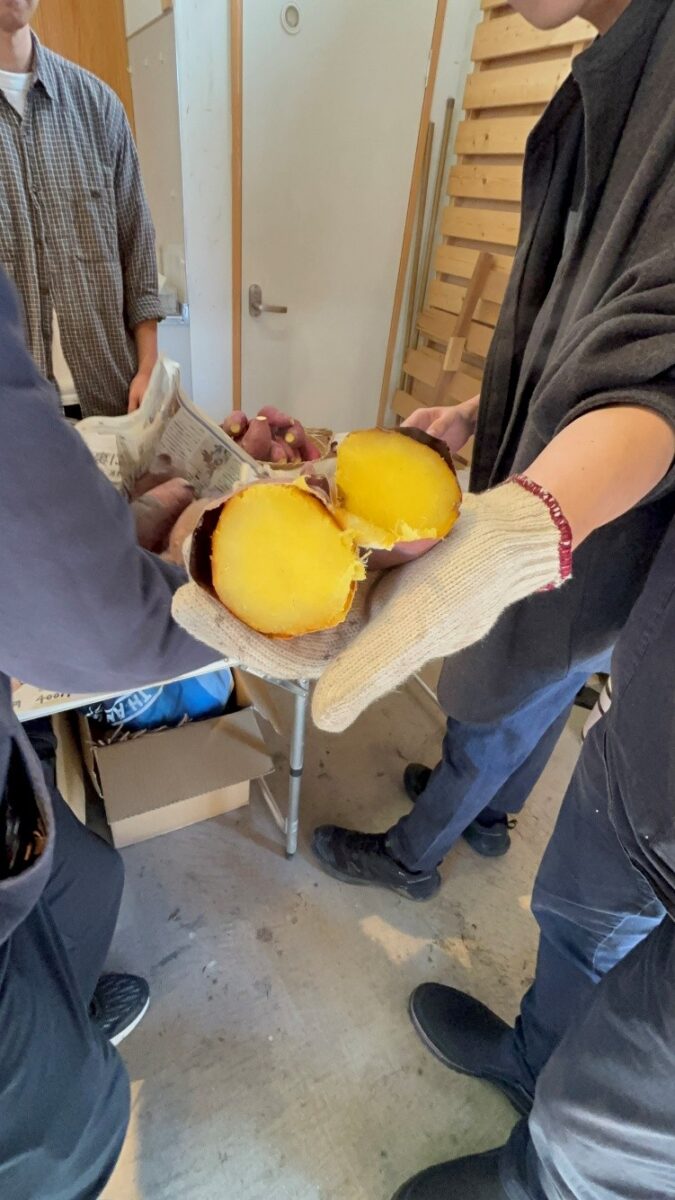
Kuru,ru.さんは壺焼きで焼き芋を作っていて、今回はそちらをお借りして高専紅はるかを壺焼きで販売しました。私たちも試食をしたのですが、同じ紅はるかでもよりねっとりしていて甘く、普通の焼き方と壺焼きの違いをとても感じました。
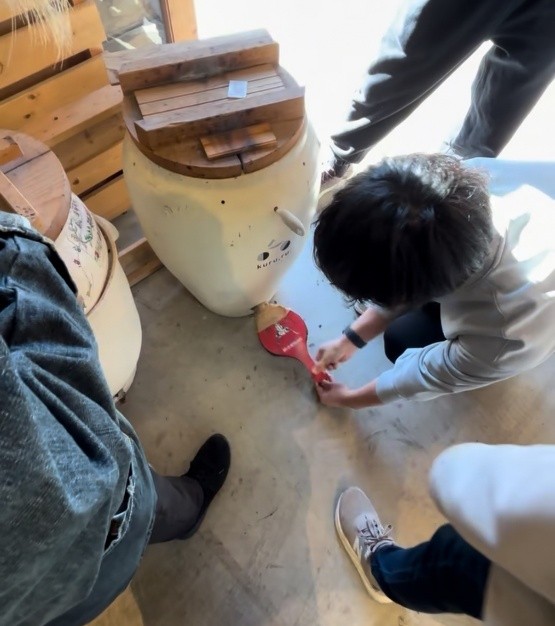
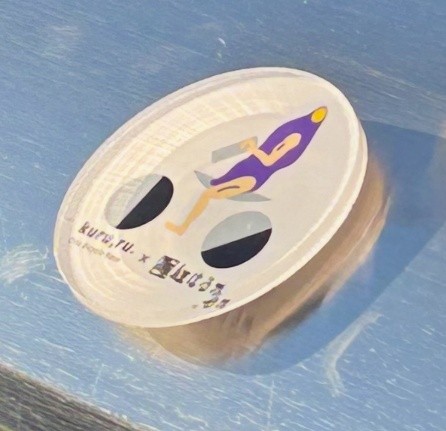
そして、今回は道の駅・瀬女での販売から改良を行い、グッズをカプセルトイとして販売しました。そこでお店に来てくれた子供たちが「これが当たってほしい!」「この子可愛い!」と盛り上がりながらカプセルトイを回してくれたり、焼き芋だけではなく高専紅はるかのキャラクター達自体の認知が増えたことがブランド強化に繋がりとても嬉しく思いました。また、お店に来てくださった方々もお芋だけではなく国際高専自体にもとても興味を持ってくださり、大野にも私たちの取り組みや高専自体の情報も発信することができ、お互いの地域の話ができる機会となり、貴重な交流の機会となりました。
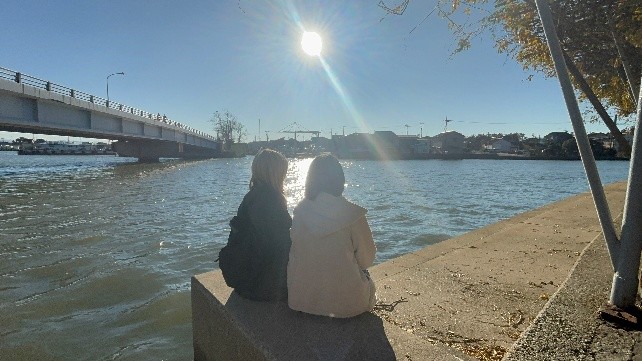
余談ですが、交代で販売を行っていたため休憩のタイミングで大野を散策する時間がありました。Kuru,ru.の方がレンタルサイクルをお貸ししてくださり、海沿いをサイクリングしたり、大野で有名な醤油ソフトを食べてきました。そこで大野ならではの観光ができて、改めて「新しい場所に私たちの高専紅はるかを広げることができたな」と思いました。
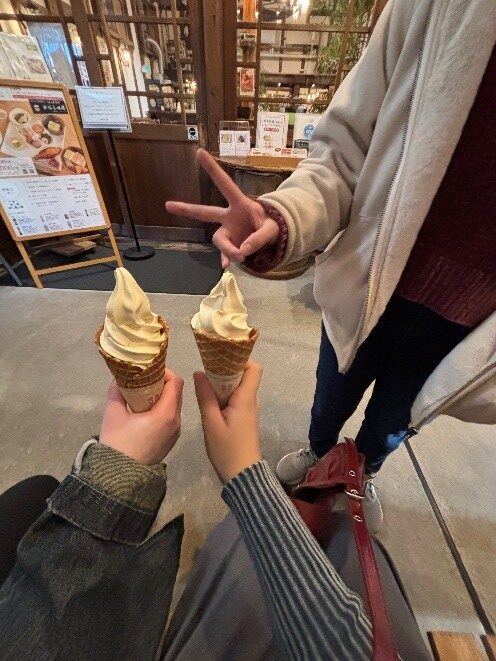
ビジネス班として直接地域活性化の貢献や高専生の間に販売活動を経験出来てよかったです。
Kuru,ru.の皆様は、お店に来られた方々と積極的にコミュニケーションを取ったり、私たちにもとても親身に壺焼きやお芋を焼くときの工夫を教えてくださったり、お話をしてくださりました。同じ地域活性化の目的を持ちながら、様々な方々と交流することを楽しんでいる姿勢をみて、このようにただ販売をするだけではなく、少しでも交流をすることがお互いの地域について知り合う機会になり、コミュニケーションを取ることの大切さに気付きました。今回の学びをこれからの地域活性化の活動につなげたいと思います。白金祭でも焼き芋販売をしたり、来てくださった方向けの特別メニューを考えました。いろんな人に喜んでもらえてうれしかったです!
万江 琴莉
Hello! I'm Kotori Mae, a 2nd year student at the International College of Technology.
This time, I'd like to introduce part of our Engineering Design IIB (ED) class.
First, in the 2nd year ED course, we engage in activities aimed at regional revitalization. As part of this, we cultivated Beni Haruka sweet potatoes in the fields and learned about business while selling roasted sweet potatoes at the Roadside Station Sena. Then, aiming to expand new sales channels, we collaborated with Kuru,ru. in Ono to sell Kosen Beni Haruka sweet potatoes baked in clay pots and original goods at the end of November.
The Kosen Beni Haruka project in ED has been passed down and refined by seniors from the second cohort, but initiatives like collaborations were new to us. Despite some nerves, we put a lot of effort into creating a new logo for the collaboration and expanding our merchandise lineup.
Kuru,ru. specializes in clay pot-baked sweet potatoes, and this time we borrowed their method to sell Kosen Beni Haruka sweet potatoes baked in clay pots. We sampled them ourselves and found that even though they were the same Beni Haruka variety, they were creamier and sweeter, really highlighting the difference between regular baking and pot baking.
Furthermore, building on improvements made since our sales at Roadside Station Sena, we sold merchandise as capsule toys this time. Seeing the children who came to the store excitedly saying, “I hope I get this one!” or “This one's cute!” while excitedly spinning the capsule toy machines. Seeing increased recognition not just for the baked sweet potatoes but for the Kosen Beni Haruka characters themselves really boosted the brand, which made us very happy. Also, the people who visited our shop showed great interest not only in the sweet potatoes but in the ICT itself. We were able to share information about our initiatives and the college in Ono, creating opportunities to talk about each other's regions and fostering valuable exchanges.
As a side note, since we took turns selling, we had time to explore Ono during breaks. The folks at Kuru,ru. lent us rental bikes, so we cycled along the coast and tried Ono's famous soy sauce soft serve. Experiencing this unique Ono tourism made me realize anew, “We've successfully spread our Kosen Beni Haruka brand to a new place.”
As the business team, it was rewarding to directly contribute to regional revitalization and gain sales experience while still in technical college school. The Kuru,ru. staff actively communicated with customers visiting the shop. They also kindly shared tips with us about pot-roasting and roasting sweet potatoes, engaging in conversations. Seeing their attitude of enjoying interactions with various people while sharing the same goal of regional revitalization made me realize that simply selling isn't enough. Even small exchanges create opportunities to learn about each other's regions and highlight the importance of communication. I want to apply this lesson to our future regional revitalization activities. We also sold roasted sweet potatoes at the Platinum Festival and came up with special menu items for our visitors. I was really happy that so many people enjoyed it!
Kotori Mae