




Faculty
学科
-
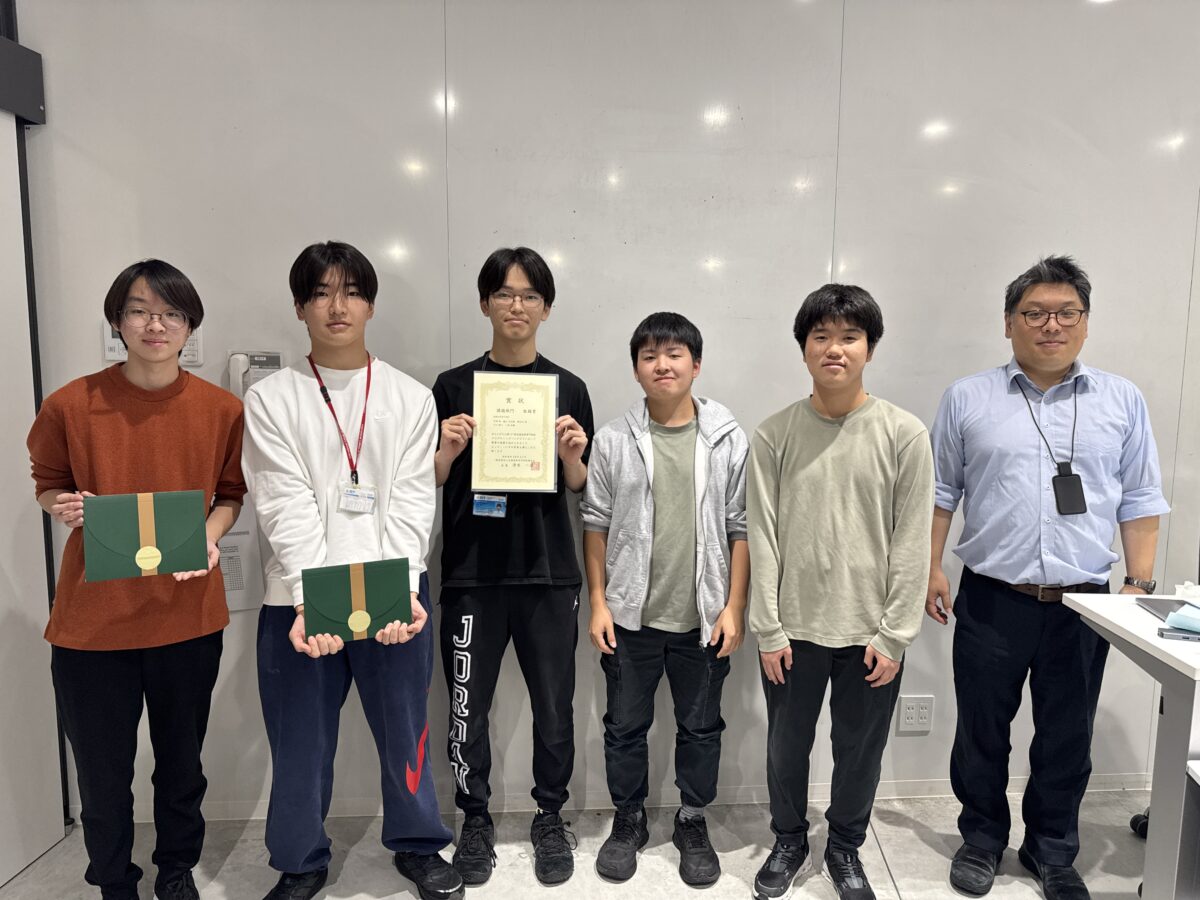
Animalarm「Animalarm」:左から2年生 鍜治田さん、樋口さん、阿部さん、川口さん、八尾さん、そして顧問の伊藤先生
-
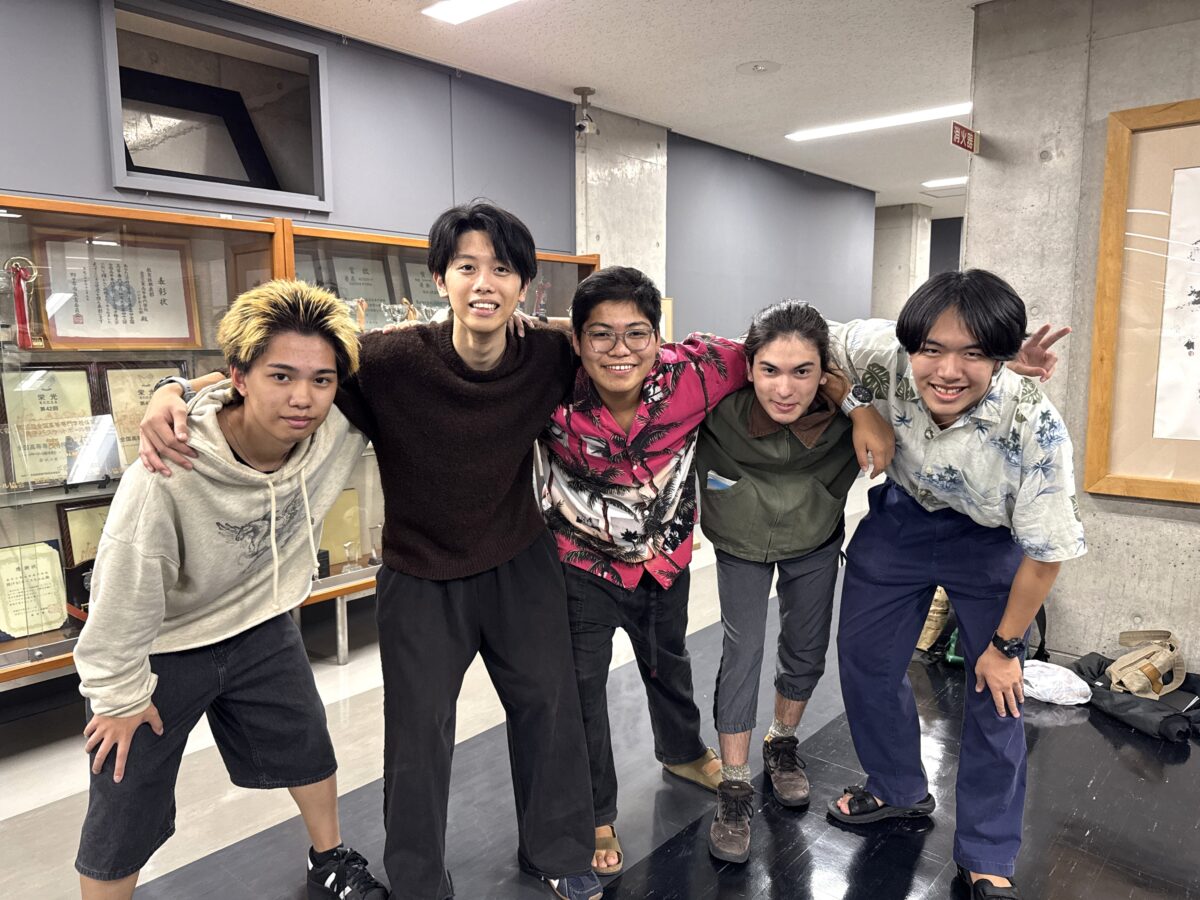
TAS-MIRU「タスみる」:左から4年生 角さん、江口さん、2年生 坂井さん、東さん、大澤さん

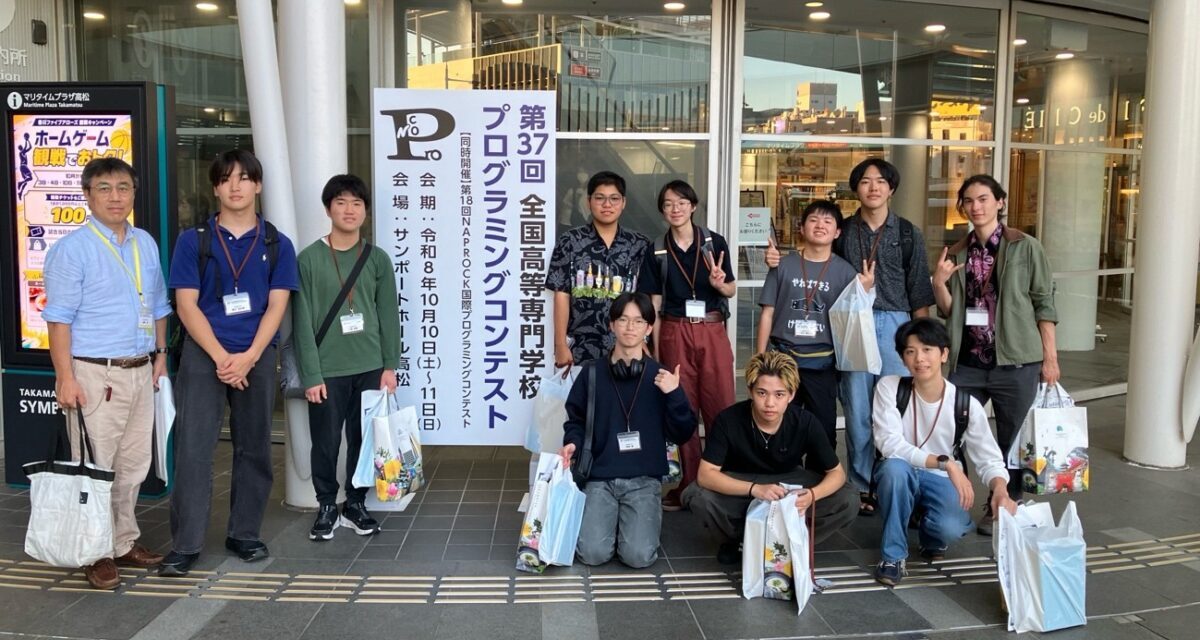
みなさん、こんにちは。デザイン&ファブリケーションクラブ(略してデザファ部)の顧問をしている伊藤 周です。今日は、先日行われました「第37回全国高等専門学校プログラミングコンテスト香川(高松)大会」についてお話しします。
通称、高専プロコンと呼ばれるこの大会は全国の高専生が情報通信技術(ICT)のアイデアと実現力を競い合う公式コンテストで、高専ロボコンなどと並ぶ大規模で歴史のある大会です。コンテストには、与えられたルールやテーマに沿ったプログラムによるチーム対抗の「競技部門」、毎年設定される共通のテーマに基づいた作品で競う「課題部門」、学生自身が自由なテーマで発想した独創的なソフトウェア・システムで競う「自由部門」の3つの部門があります。
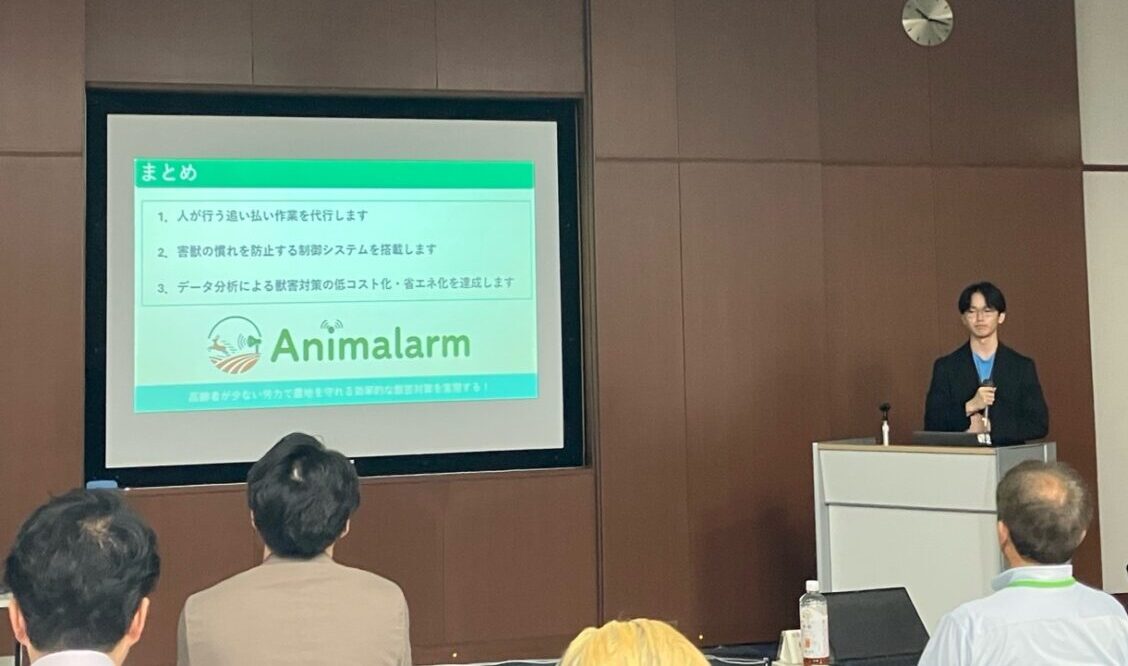
阿部 晴さんが「Animalarm」について発表
今回国際高専からは課題部門に2チーム出場することができました。4年生の江口 太一さん、角 隼さん、2年生の東 藍さん、坂井 麗央さん、大澤 凱さんの4年・2年混合チームで作ったのが「タスみる」です。簡単に説明しますと、「タスみる」はプロジェクトなどの活動において仕様書とチームメンバーのスキルセットを入力することで最適なタスクの割り振りを作成するシステムです。
2年生の阿部 晴さん、川口 健人さん、鍛治田 湊さん、樋口 洸太朗さん、八尾 拓樹さんの2年生チームで作ったのが「Animalarm」というシステムです。「Animalarm」は複数のスピーカーを畑に設置し、遠くから順番に鳴らすことで、接近する野生動物を追い払い、農作物を獣害から守るシステムです。
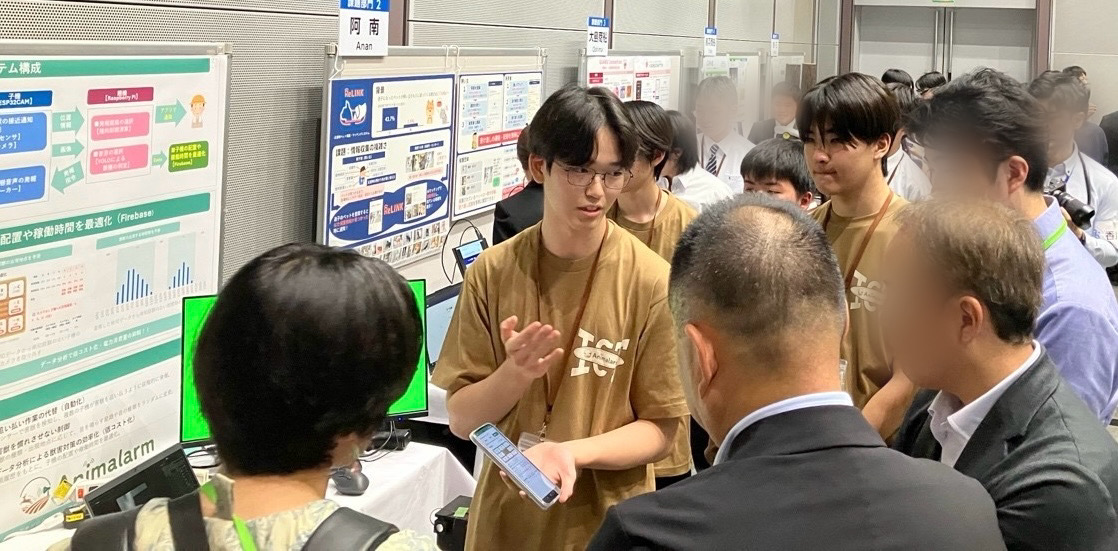
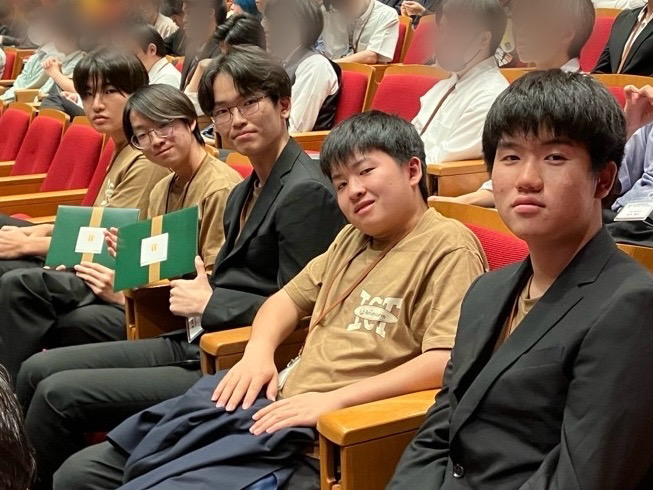
プレゼン発表やデモ審査の結果、残念ながら「敢闘賞」に留まりました(敢闘賞は本選に出場した全チームがもらえます)が、学生たちは一生懸命に準備を行い、当日も積極的に来場者や企業の方を相手に自分たちの製作したシステムを説明していました。また、他の高専の発表を聞きに行ったり、企業ブースの人と積極的に交流したりしていました。学生たちに取っては滅多にない機会になりますので、とてもいい刺激になったのではないかと思います。実際に学生たちが「〇〇(企業名)の人と話して面白かったです!」や「〇〇高専の発表すごかったですよ!」と教えてくれました。また、そのおかげで今大会も「名刺クエスト」(名刺を多く集めることを目的とした大会内のミニゲーム)では上位を取ることができました。
私は国際高専のプロコン委員として、学生の本選出場をずっとサポートしてきましたが、やはり高専プロコンは面白い大会です。他高専の学生たちの発表はユニークで面白いですし、企業の人の熱を感じることができるからです。近年は高専生の就職市場での価値がどんどん高まっており、企業の方と話すとそれが如実に感じられます。学生たちには、自分たちの現在地と将来の可能性を感じてもらいたいと思っています。
来年は久留米高専主幹で行われます。ぜひ来年もチャレンジして本選出場できるよう、頑張ってほしいですね!
伊藤 周
-
Animalarm「Animalarm」:左から2年生 鍜治田さん、樋口さん、阿部さん、川口さん、八尾さん、そして顧問の伊藤先生
-
TAS-MIRU「タスみる」:左から4年生 角さん、江口さん、2年生 坂井さん、東さん、大澤さん
Hello everyone! My name is Meguru Ito, and I am the advisor of the Design & Fabrication Club, or “Dezafa Club” for short. Today, I would like to share our experience at the recently held 37th National College of Technology Programming Contest in Kagawa (Takamatsu).
Commonly known as the KOSEN Programming Contest, this is an official competition where KOSEN students from across Japan compete using their ideas and skills in information and communication technology. Along with competitions such as the KOSEN Robot Contest, it is one of the largest and longest-running competitions for KOSEN students. The competition consists of three categories. The Competition Category is a team-based programming competition in which students compete according to a given set of rules or themes. In the Challenge Category, students develop projects based on a theme that changes each year. Finally, the Free Category allows students to create original software and systems based on themes of their own choosing.
This year, two teams from ICT participated in the Challenge Category. The first team, consisting of 4th year students Taichi Eguchi and Hayato Sumi, and 2nd year students Akira Azuma, Reo Sakai, and Kai Osawa, developed a system called “TAS-MIRU.” TAS-MIRU is a system designed to help teams assign tasks more effectively during projects. By entering a project specification and information about each team member’s skill set, the system generates an optimal distribution of tasks.
The second team, made up of 2nd year students Haru Abe, Kent Kawaguchi, So Kajita, Kotaro Higuchi, and Hiroki Yatsuo, developed a system called “Animalarm.” Animalarm is a system designed to protect crops from wildlife damage. Multiple speakers are placed around a field and activated in sequence, starting with the ones farther away, to drive approaching wild animals away from the crops.
Following the presentations and demonstration judging, both teams were given the Encouragement Award, which is presented to all teams that advance to the final round. Although we had hoped for a higher award, the students worked incredibly hard to prepare for the competition. At the event, they enthusiastically demonstrated and explained their systems to visitors and company representatives. They also attended presentations by students from other KOSEN schools and actively interacted with people at corporate booths. Opportunities like this do not come along very often, so I believe the experience provided our students with a great deal of inspiration. In fact, some of the students came up to me afterward and said things like, “It was really interesting talking with someone from XX company!” and “The presentation by XX KOSEN was amazing!” Thanks to their enthusiasm for meeting people, our students also ranked highly in the “Business Card Quest,” a small event within the competition where participants try to collect as many business cards as possible.
As ICT’s Programming Contest advisor, I have been supporting our students as they work toward reaching the national competition. And each time, I am reminded of just how exciting the KOSEN Programming Contest is. The presentations by students from other KOSEN schools are always unique and fascinating, and you can also feel the enthusiasm of the companies taking part in the event. In recent years, the value of KOSEN students in the job market has continued to grow, and this becomes especially clear when speaking directly with company representatives. I hope experiences like this will give our students a chance to understand both where they stand today and how much potential they have for the future. Next year’s competition will be hosted by National Institute of Technology, Kurume College.
I hope our students will take on the challenge again next year and work hard to make it to the national competition!
Meguru Ito

 こんにちは。白山麓キャンパスのラーニングメンター、シャーデー・モーアです。今回は、この場を借りて公式の「ICTハウスシステム」の正式発表と紹介をしたいと思います。
白山麓キャンパスでは、この2年半にわたり、寮生活を送る学生を対象にハウスシステムを運用してきました。この制度は、1年生と2年生が共通の目標に向かって協力し、学期を通じて行った善行や成果に対して「ハウスポイント」という形で評価・報酬を得られるようにするために作られたものです。学生は4つのハウスに分けられます。そして、各ハウスには「ヘッドオブハウス」と呼ばれるラーニングメンターがおり、そのハウスに所属する学生を統括しています。学生は、以下のような活動によってハウスポイントを獲得できます。
- 宿題を終え、ラーニングメンターに提出・確認してもらう
- 白山麓キャンパス内の清掃を行う
- ラーニングメンターが実施する指定ワークショップに参加する
- 学習教材の整理・点検活動に協力する
- その他、模範的な行動や功績が認められる場合
一方で、次のような行動には減点が課されます。
- ラーニングセッションへの遅刻
- ロールコール(点呼)への不参加
- 自分で使用した場所の片付けをしない
- 私物やゴミを放置する
- その他、ラーニングメンターが不適切と判断した行動
学生たちは学期を通してハウスの仲間と協力し、できるだけ多くのポイントを獲得(または失わないよう努力)して、学期末に最も多くのポイントを獲得したハウスとなり、「ICTハウスカップ」の優勝を目指します。また、各学期終了後には、次の学期に向けて学生はランダムに別のハウスへ再編成されます。
これまでのハウスシステムでは、世界的に有名な小説・映画シリーズに登場する4つのハウスを利用していました。しかし、この仕組みを永続的に使い続けることはできず、より白山麓キャンパス独自の制度として発展させる必要がありました。そこで2025年の前学期の終わりに、学生たちにアンケートを実施し、白山麓地域に生息しており、キャンパス周辺でも見られる動物の中から好きなものを選んでもらいました。
候補には、
- カメムシ
- ツキノワグマ
- カエル
- イヌワシ
- カモシカ
などが含まれていました。学生たちから最も支持された4種類の動物を、新しいハウスのシンボルにすることが企画の目的でした。その結果、選ばれた4つの動物は以下の通りでした。
- キツネ
- ニホンザル
- イヌワシ
- オコジョ
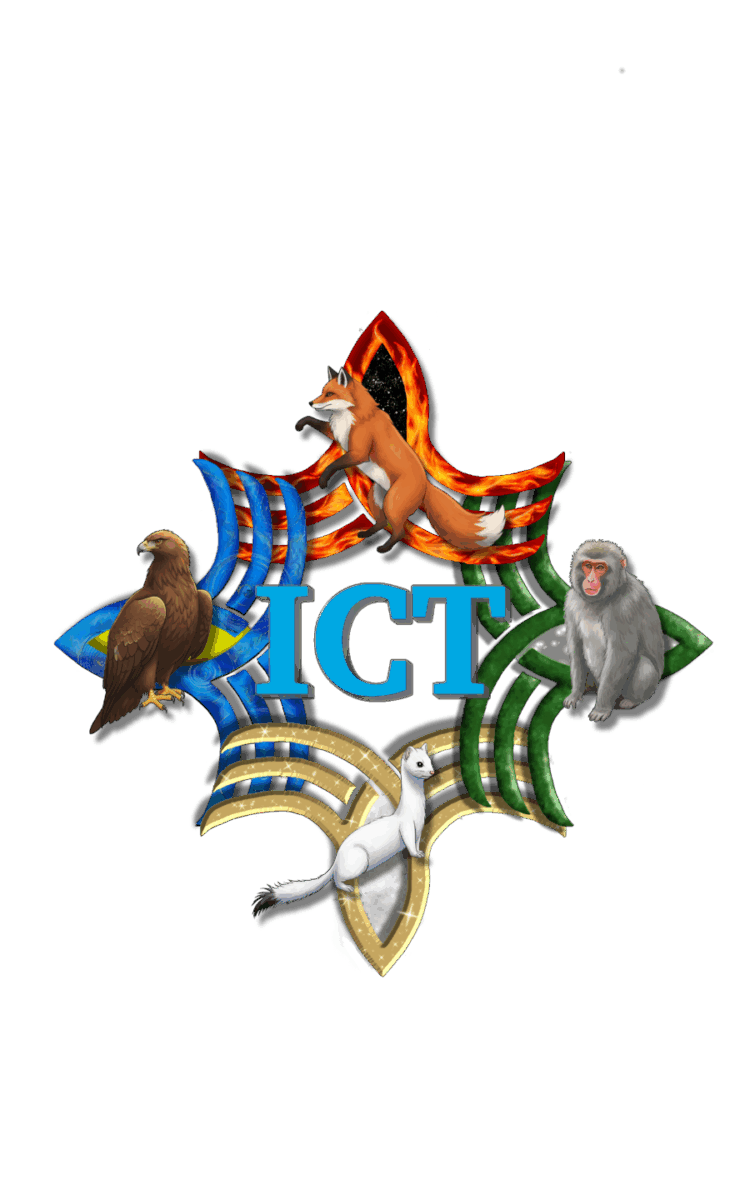
そして私は、それらを基に新しいハウスクレスト(紋章)のデザイン制作に取りかかりました。新しいハウスのデザインは統一感を持たせるとともに、ICTらしさと学生たちが親しんできた従来のハウスシステムの雰囲気を残したいと考えました。 ロゴについては、ICTの公式ロゴを連想させながらも独自性のあるものを目指しました。制作には長い時間を要しましたが、2025年前学期終了から2026年前学期開始までの期間をかけて、ついに新しいハウスロゴが完成し、学生たちへ公開する準備が整いましたので、皆さんにも正式にお披露目します!
それでは、ICT白山麓キャンパスの4つのハウスをご紹介します。
最初のハウスはSoragle(ソレグル)です。
 名前の由来
Sora(空)+(ワシ)
シンボル動物
イヌワシ
メインカラー
青
サブカラー
金
属性(エレメント)
水
方角
西
象徴する特性
勇気と革新性
ヘッドオブハウス
クリシア
次のハウスはMonkage(モンカゲ)です。
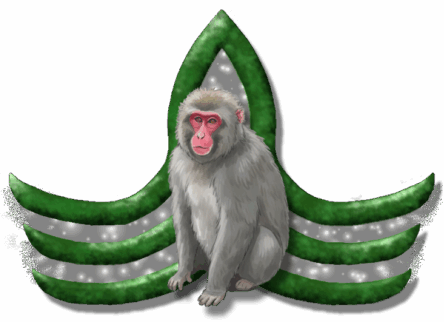
名前の由来
Monkey(サル)+(影)
シンボル動物
ニホンザル
メインカラー
緑
サブカラー
銀
属性(エレメント)
土
方角
東
象徴する特性
粘り強さとチームワーク
ヘッドオブハウス
ドミソン
3番目のハウスはVixtsune(ヴィックツネ)です。
 名前の由来
Vix(の略)+(キツネ)
シンボル動物
キツネ
メインカラー
赤
サブカラー
黒
属性(エレメント)
火
方角
北
象徴する特性
知恵と好奇心
ヘッドオブハウス
ダイアン
最後のハウスはFuwapaw(フワパー)です。

名前の由来
Fuwafuwa(ふわふわ)+(足・肉球)
シンボル動物
オコジョ
メインカラー
黄
サブカラー
白
属性(エレメント)
光
方角
南
象徴する特性
高潔さと逆境に負けない強さ
ヘッドオブハウス
シャーデー
これら4つの個性豊かなハウスを作ることで、学生たちが「これは自分たちの学校ならではの文化であり、誇りに思える特色だ」と感じてくれることを期待しています。
ICTでハウスシステムを導入して以来、学生たちの態度や人間性には目に見える変化がありました。学生たちはハウスポイントを失うことを嫌がりますが、それが責任感や協調性を育む大きな動機付けとなっています。また、ICTの1年生・2年生からのフィードバックも非常に好意的です。学期末アンケートでは、「来学期以降もハウスシステムを継続したい」と回答する学生が毎回96%以上に達しています。
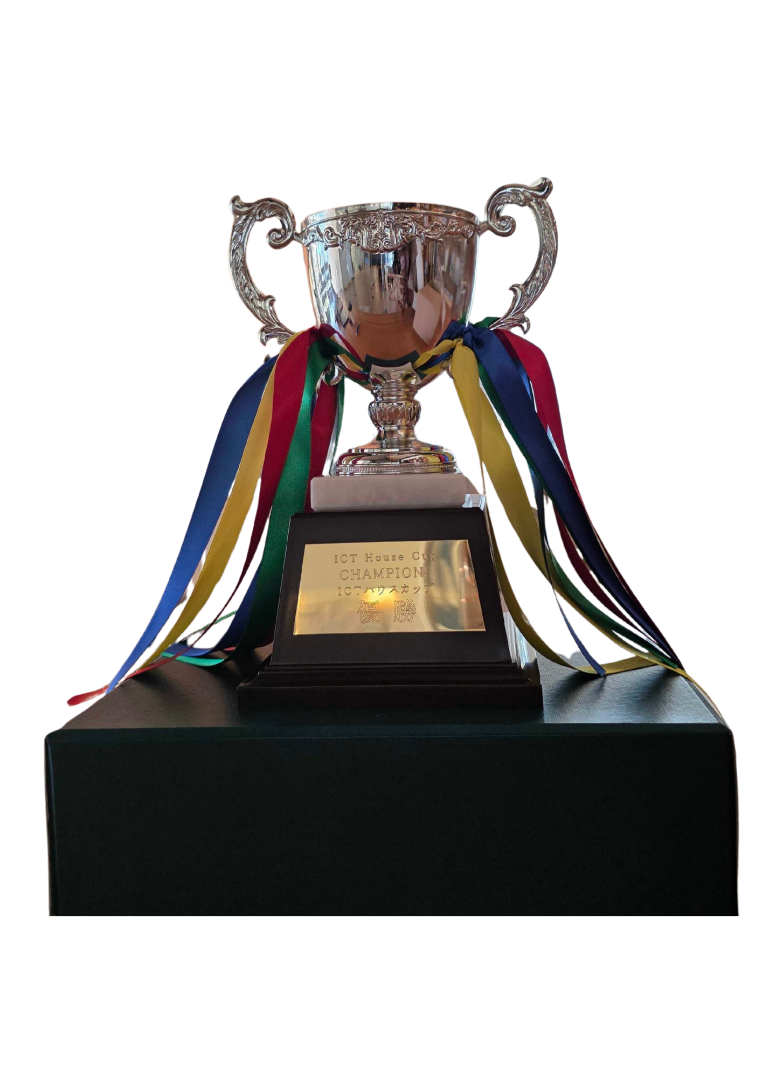
2026年前学期からの公式なICTハウスシステムの導入に伴い、学生たちにとって、それはさらに重要な意味をもつようになりました。学期終了時点で最も多くのポイントを獲得したハウスは、学期末パーティーにおいて、ラーニングメンターが提供する特別メニューの中から好きな食事を選ぶことができます。これは、学期を通じた努力に対する報酬として与えられるものです。そして今学期からは、それに加えて正式な「ハウスカップトロフィー」が授与されます。優勝したハウスは、トロフィーに取り付けられるペナントリボンに自分たちの名前を記すことができ、そのトロフィーは皆が見られるようにキャンパス内に展示されます。
私たちラーニングメンターは、1年生と2年生全員が今後もICTハウスシステムを楽しみ、そこから多くのことを得てくれること、そして、ICTにおいて生産的で思いやりがあり、周囲の助けとなるような学生として成長し続けてくれることを願っています。
シャーデー・モーア
Hello! This is Sade Moore a Learning Mentor at Hakusanroku Campus. I want to take this journal as an opportunity to talk about and hard launch the official International College of Technology House System!
At Hakusanroku Campus for the past two and a half years, we have been utilizing a House System for the students who reside here. This House System was created as a way for the 1st year and 2nd year students to work together for a common goal and get rewarded for the good deeds and accomplishments that they do throughout the semester at Hakusanroku Campus by collecting House Points. The students are split between four Houses and each House is led by their Head of House, which is a Learning Mentor who oversees those students who are in their House. Students can earn various amounts of House Points by finishing and completing homework assignments and showing it to a Learning Mentor, cleaning up around Hakusanroku Campus, attending designated workshops that the Learning Mentors put on throughout the semester, volunteering for organization checks of their school materials with a Learning Mentor, or any good merit that a Learning Mentor may see a student exhibit. Students can also get demerits and lose points for any negative aspects of their behavior such as, being late to Learning Session, not attending their Roll Calls, not cleaning up after themselves and leaving their materials, possessions, and trash unattended around the campus, or any other negative demerits that a Learning Mentor may take notice that a student has done. Together, in their house, over the semester they have to work together to collect and earn (or lose) as many House Points as possible, in order to be the House with the most House Points at the end of the semester and thus winning the ICT House Cup. After each semester, the students will randomly be placed in a different House for the next semester.
In the semesters past, the ICT House System utilized the four Houses from a well-known book and movie franchise. However, obviously this system couldn’t be used forever, and there was a need to make the House System more tailored to being an ICT House System. Therefore, at the end of the 2025 1st Semester, we surveyed the students and asked them to choose between a list of animals that are endogenous to Hakusaroku and live around Hakusanroku Campus such as, kamemushi, Asian black bear, frog, golden eagle, kamoshika, etc. The thought was, the 4 animals that the students liked the most would go towards being the animals that would be the symbols of the new ICT Houses. The four winning animals of this survey ended up being: fox, Japanese monkey(macaque), golden eagle, and the stoat. From there, I went to work and began to design the new House Crests.
I wanted the design for the new Houses to be cohesive and also indicative of ICT and the House System that the students were already used to using beforehand. For the logo I wanted to create something that was similar to the logo used officially for ICT, but still unique and different, and although it took a lot of time, between the end of the 1st Semester of 2025 and the start of the new 1st Semester of 2026, the new House logos were finally completed and ready to be unveiled to the students, and now we can reveal them to everyone else!
The first House I will be introducing is Soragle
Name origin: Sora (sky)+ Eagle
Representative animal: Golden Eagle
Main Color: Blue
Secondary Color: Gold
Element: Water
Cardinal Direction: West
Defining Characteristics: Bravery and Innovation
Head of House: Krishia
Now to introduce, Monkage house
Name origin: Monkey + kage (shadow)
Representative animal: Japanese monkey (macaque)
Main Color: Green
Secondary Color: Silver
Element: Earth
Cardinal Direction: East
Defining Characteristics: Grit and Teamwork
Head of House: Domyson
The next House to be introduced is Vixtsune.
Name origin: Vix (short for vixen) + kitsune (fox)
Representative animal: Fox
Main Color: Red
Secondary Color: Black
Element: Fire
Cardinal Direction: North
Defining Characteristics: Cleverness and Curiosity
Head of House: Dianne
Last but not least, introducing Fuwapaw house.
Name origin: Fuwafuwa (fluffy) + paw
Representative animal: Japanese stoat
Main Color: Yellow
Secondary Color: White
Element: Light
Cardinal Direction: South
Defining Characteristics: Nobility and Resilience
Head of House: Sade
With these four distinct Houses created it was the hope that our students could feel like this is actually their school’s own identity and is in fact a unique characteristic that they can feel proud of. Since implementing the House System at ICT, there has been a marked difference in the demeanor and character of our students. Even though they hate losing points for their Houses, it gives them a sense of responsibility and teamwork that they can strive for throughout the semester and the overall feedback from our ICT 1st and 2nd year students has been overwhelmingly positive for the House System. At the end of each semester, we give a survey to the students and ask them if they want to continue to utilize the ICT House System and we consistently get over a response of over 96% of the students wanting to continue the House System into the next semester.
With the launching of the official ICT House System from the 1st Semester of 2026, the stakes are even higher for the students. The House that accumulated the most points by the end of the semester usually gets to choose between a special meal of their choice provided by the Learning Mentors at the end of the semester party each semester for all of their hard work. From this semester though, there is now an official House Cup Trophy that the winning House can win and write their names on the pennant ribbon which will be attached to the House Cup Trophy and displayed on the campus for everyone to see. It is our hope that all of the 1st year and 2nd year students continue to enjoy and get value out of the ICT House System in the future and through the ICT House System will become and remain productive, caring, and helpful students at ICT.
Sade Moore
 皆様、こんにちは。国際高等専門学校(ICT)国際理工学科講師のアピラク・サンゲンチャイです。私は現在、ICTの教員として勤務しています。また、タイのラジャマンガラ工科大学ランナー校(RMUTL)の卒業生でもあります。そのような立場から、RMUTLとICTとの関係が発展していく過程を見守り、またその一端に携わることができたことを大変うれしく、光栄に感じています。
私とICTとのつながりは、RMUTLで電子工学分野の技術教育を学んでいた学生時代に始まりました。当時、金沢工業高等専門学校(現在のICT)とのLearning Express(LeX)プログラムに参加し、デザイン思考を学びながら、日本人学生とともに地域課題の解決に取り組みました。この経験を通じて、課題解決能力が向上しただけでなく、国際協働の重要性や楽しさを学ぶことができました。
その後、2017年には金沢工業大学(KIT)が実施するさくらサイエンスプログラムに参加し、日本の教育や研究活動、先端技術に直接触れる機会を得ました。この経験を通じて、RMUTLとKIT、ICTとの交流の歴史や相互協力の意義について理解を深めることができました。そして、このような継続的な交流が、現在の連携の発展につながっていることを強く実感しました。
長年にわたり積み重ねられてきた取り組みは、この協力関係の礎となっています。教職員や学生による継続的な交流、教育活動や研究に関する意見交換、さらには文化交流を通じて、相互理解と信頼は着実に深まってきました。私自身も2020年にICTへ着任して以来、教員としてこの関係の発展に携わることができることを大変うれしく感じています。
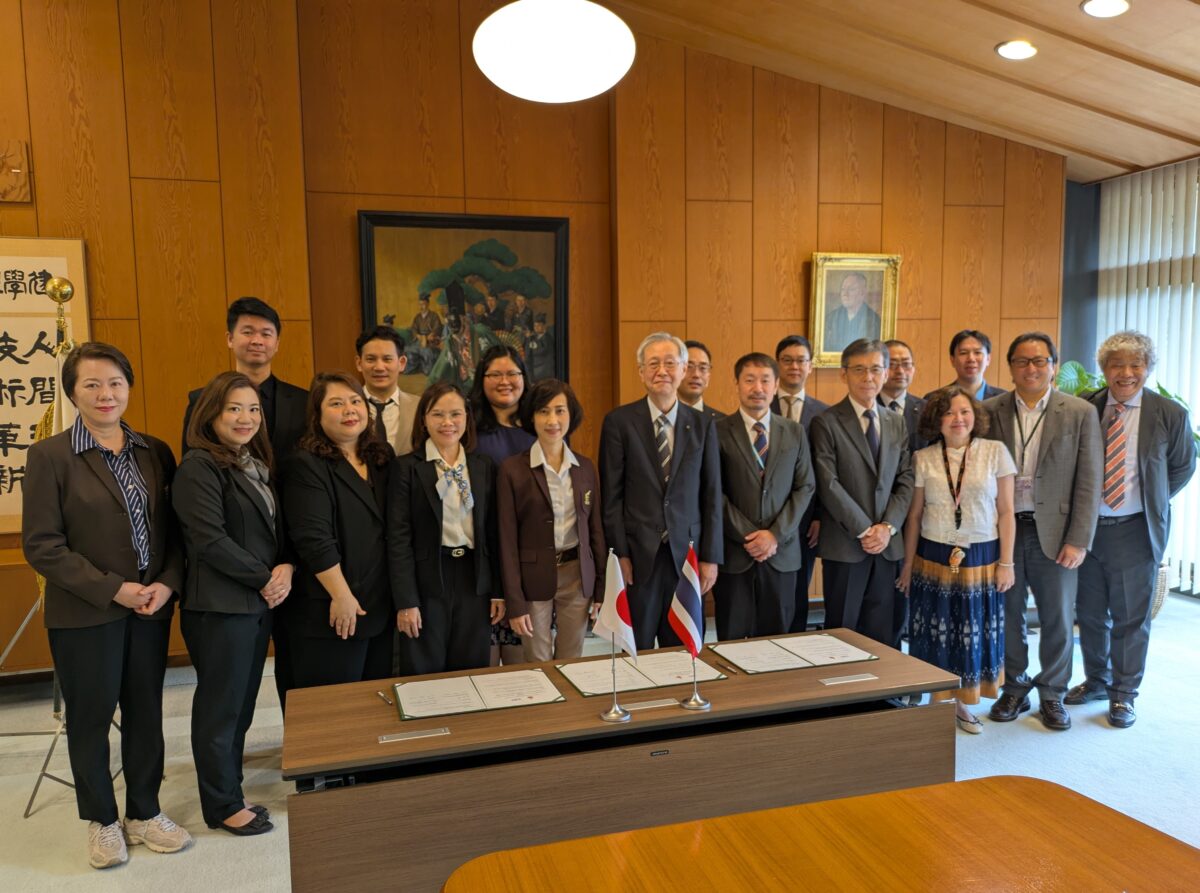
そして2026年9月15日、RMUTLとICTは正式に学術交流協定覚書(MoU)を締結しました。私にとって、このMoU締結は単なる形式的な合意ではありません。これまで築かれてきた交流と協力、そして多くの関係者による努力と経験が形となった大きな節目であると感じています。この重要な場に立ち会い、その瞬間を見届けることができたことを大変光栄に思います。
今回のMoUは、学生交流、共同学術活動、共同研究、文化・体験型学習プログラムなど、幅広い分野での連携を推進するための枠組みとなります。今後は、学生が互いの国や文化について学び合う機会がさらに増えるとともに、教員間の教育・研究面での協力も一層活発になることを期待しています。
また、このパートナーシップが短期交換留学プログラム、国際的なプロジェクト型学習、デザイン思考ワークショップ、工学・技術分野における共同研究、さらには文化体験プログラムなどを通じて、さらに発展していくことを願っています。これらの活動は学術交流を強化するだけでなく、学生たちが国際的な視野を養い、生涯にわたる友情や人的ネットワークを築く貴重な機会にもなるはずです。
私自身、この交流を通じて多くの学びと成長の機会を得てきました。学生時代から続くこのご縁の中で、現在は教員としてその発展に携わることができることを大変光栄に感じています。今年締結されたMoUが、今後の新たな挑戦と有意義な協力の礎となり、多くの学生や教職員に長期的な恩恵をもたらすことを心より願っています。
アピラク・サンゲンチャイ
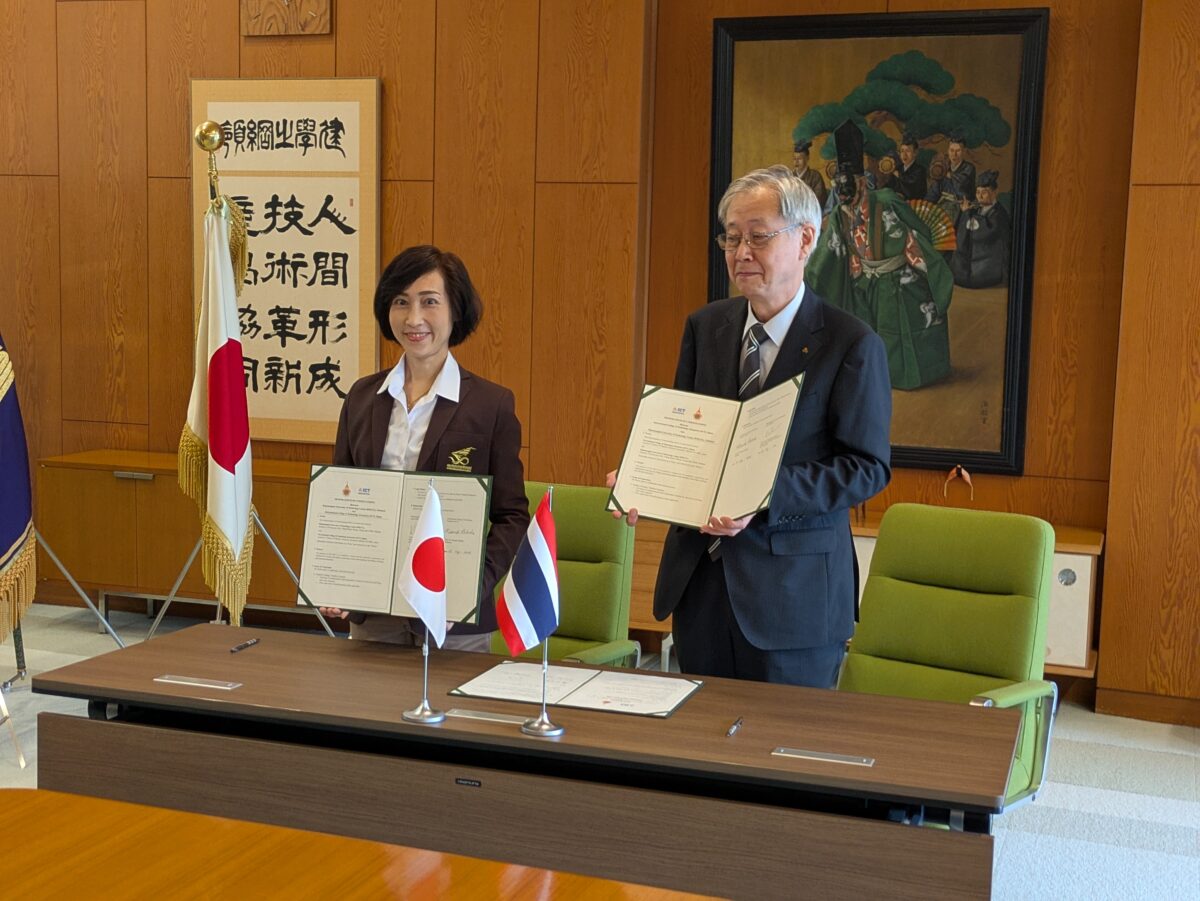
Dr. Kanthana Ditkaew, RMUT representative, and Masaki Shikada, President of ICTRMUT代表 Dr. Kanthana DitkaewとICT 鹿田正昭校長
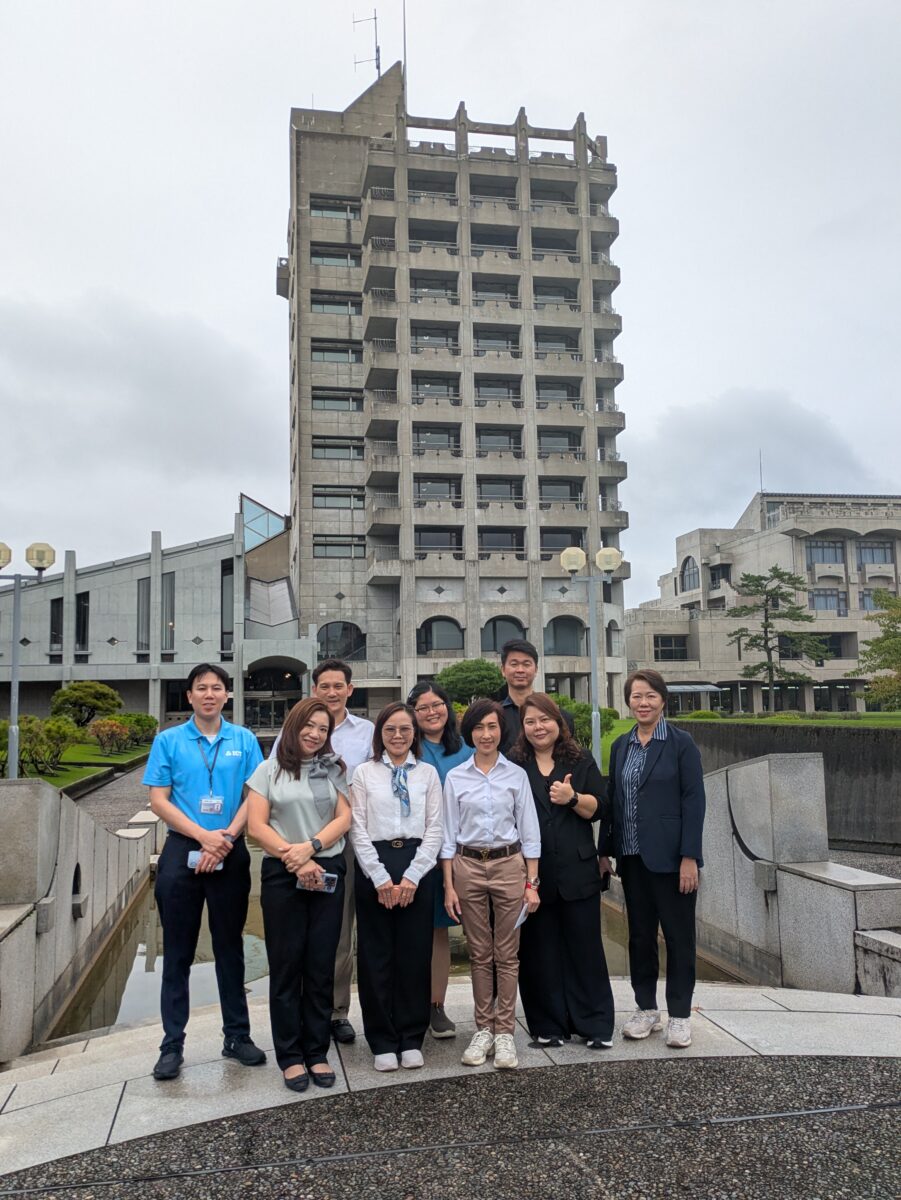
With the RMUTL delegationRMUTL訪問団の皆様とともに
This is Apirak Sang-ngenchai, and I am currently a lecturer at ICT. As an alumnus of Rajamangala University of Technology Lanna (RMUTL), Thailand. I feel fortunate to have witnessed and contributed to the development of the relationship between RMUTL and ICT.
My journey began as a student at RMUTL, studying Technical Education in Electronic Engineering. I participated in the Learning Express (LeX) program with Kanazawa Technical College (KTC), which became ICT, Kanazawa. I learned Design Thinking and worked with Japanese students on community projects. This enhanced my problem-solving skills and introduced me to international collaboration.
In 2017, I visited Japan through the Sakura Science Project at Kanazawa Institute of Technology (KIT), gaining exposure to Japanese educational practices, research, and innovation. It deepened my understanding of the friendship and cooperation between RMUTL, KIT, and ICT.
These exchanges laid the foundation for stronger academic ties between our institutions. Over the years, faculty members, staff, and students from both sides continued to build mutual trust and understanding through educational activities, research discussions, and cultural programs. When I joined ICT in 2020, I was pleased to contribute to this longstanding relationship from a new perspective as a faculty member.
A significant milestone was achieved on September 15, 2026, when RMUTL and ICT officially signed a Memorandum of Understanding (MoU). For me, this was more than just a formal agreement. It reflected years of collaboration, exchanges, and shared experiences between our institutions. I was honored to support this important event and to witness the beginning of the next chapter of our partnership.
The MoU provides a framework for future cooperation in several important areas, including student exchanges, joint academic activities, collaborative research, and cultural and experiential learning programs. We hope to create more opportunities for students to study and learn from each other's cultures, while also encouraging faculty members to work together on educational and research initiatives.
Looking ahead, I would like to see the partnership develop through activities such as short-term exchange programs, international project-based learning, Design Thinking workshops, collaborative research in engineering and technology, and cultural immersion programs for students from both countries. These activities will not only strengthen academic cooperation but also help students develop global perspectives and lifelong international friendships.
As someone who has benefited greatly from the relationship between RMUTL, KIT, and ICT, I am proud to have been part of this journey. I sincerely hope that the MoU signed this year will serve as a foundation for many new opportunities and meaningful collaborations in the future, bringing lasting benefits to students, faculty members, and both institutions for years to come.
Apirak Sang-ngenchai
Dr. Kanthana Ditkaew, RMUT representative, and Masaki Shikada, President of ICTRMUT代表 Dr. Kanthana DitkaewとICT 鹿田正昭校長
With the RMUTL delegationRMUTL訪問団の皆様とともに

こんにちは。国際高専の白山麓キャンパスで英語を教えているジェームス・テイラーです。今回、夏休みに行われたイベントについてお話したいと思います。
2026年8月18日(火)、白峰で子供向けのイングリッシュカフェを開催しました。このイベントは、尾口コミュニティセンターと白峰コミュニティセンターが共同で実施している交流行事で、今年は白峰小学校から7人(全校生の半分以上です!)とかわちこども園から1人が参加し、彼らの保護者や弟・妹達も見学者として参加してくれました。
今年も8月はとても暑かったのですが、幸い白峰コミュニティセンターのスタッフの方が参加者全員のためにアイスを持ってきてくれました!まずアイスクリームを食べながら、僕が3冊の英語の絵本を読みました。1冊目は「Leo the Late Bloomer」(作:ロバート・クラウス)です。この本は、他の子たちより成長が遅いライオンのレオ君のお話しで、みんな成長するペースが違うので心配はいらないというメッセージが込められています。2冊目は「The Smartest Giant in Town」(作:ジュリア・ドナルドソン)です。新しく買ったオシャレな服を、困っている友達にあげる巨人のお話です。そして3冊目は「They All Saw a Cat」(作:ブレンダン・ウェンゼル)です。同じ1匹の猫でも、生き物によって見え方が違うというお話です。これらの絵本には、子どもたちだけでなく大人にとっても大切なメッセージが込められています。
次は体を動かすゲームの時間です。子供たちは、椅子取りゲーム(音楽が流れている間は円形に並べられた椅子の周りを歩いたり踊ったりして、音楽が止まったら座るゲーム)をしました。椅子の数は毎回子どもの人数より1つ足りないため、毎回誰か1人がアウトになります。子どもたちは、楽しすぎてこのゲームを3回もしました!
最後に少し特別なルールのあるビンゴゲームをしました。それは、子どもたちがゲームをする前に自分のビンゴカードを作らなければいけないというルールです。子どもたちは、3冊目の絵本「They All Saw a Cat」に出てきた動物の英語名を学んでから、僕が言った動物の絵をビンゴカードの好きなところに描きました。そして、カードを完成させた後でビンゴゲームを楽しみました!コミュニティセンターのスタッフの方々が、参加した子どもたち全員のために景品とイベント後に持って帰るプレゼントまで準備してくださいました。
今年も白峰の子どもたちと一緒に楽しい時間を過ごせました。準備や運営に尽力してくださった尾口コミュニティセンターと白峰コミュニティセンターのスタッフの皆さんのおかげで、とてもいいイベントになりました。心より感謝いたします。
ジェームス・テイラー
Hello everyone. I’m James Taylor, one of the English teachers at ICT Hakusanroku Campus. In this journal, I’d like to tell you about an event I held during the summer holiday.
On Tuesday, August 18th, 2026, I went to Shiramine to lead an English Café event for local children, organised by the Oguchi and Shiramine Community Centres. This year, we had seven children from Shiramine Primary School (that’s more than half of the school population!) and one child from Kawachi Nursery, along with some parents and young siblings of participants who watched.
August was very hot this year, but luckily the Shiramine Community Centre staff had brought ice creams for everyone, so we started by eating them while I read a few stories: “Leo the Late Bloomer” by Robert Kraus, about a lion who learns much more slowly than everyone else, but since everyone learns at their own pace, it doesn’t matter; “The Smartest Giant in Town” by Julia Donaldson, which is about a giant who buys new clothes but then gives them away to help his friends; and “They All Saw a Cat” by Brendan Wenzel, which shows how different creatures view the same cat. Each of these books has an important message for children (and adults).
Next, it was time to move around, so we played musical chairs: the children walked or danced around a circle of chairs while the music played and had to sit down when the music stopped. There was always one chair too few, so someone was always eliminated. The children enjoyed it enough to play three times!
Finally, we played bingo, but with a slight twist: the children had to make their own bingo cards before we could play! We used the animals from “They All Saw a Cat”, learnt the names in English, and then the children filled in the spaces on their bingo cards by drawing each animal that I said. After that, we could play! The Community Centre staff prepared prizes for everyone, along with extra presents to take home at the end.
As always, it was fun to spend time with the children in Shiramine, and I’m grateful to the staff of the Oguchi and Shiramine Community Centres for their hard work organising everything.
James Taylor
アントニーさんと歩く
ポーリン・ベアード
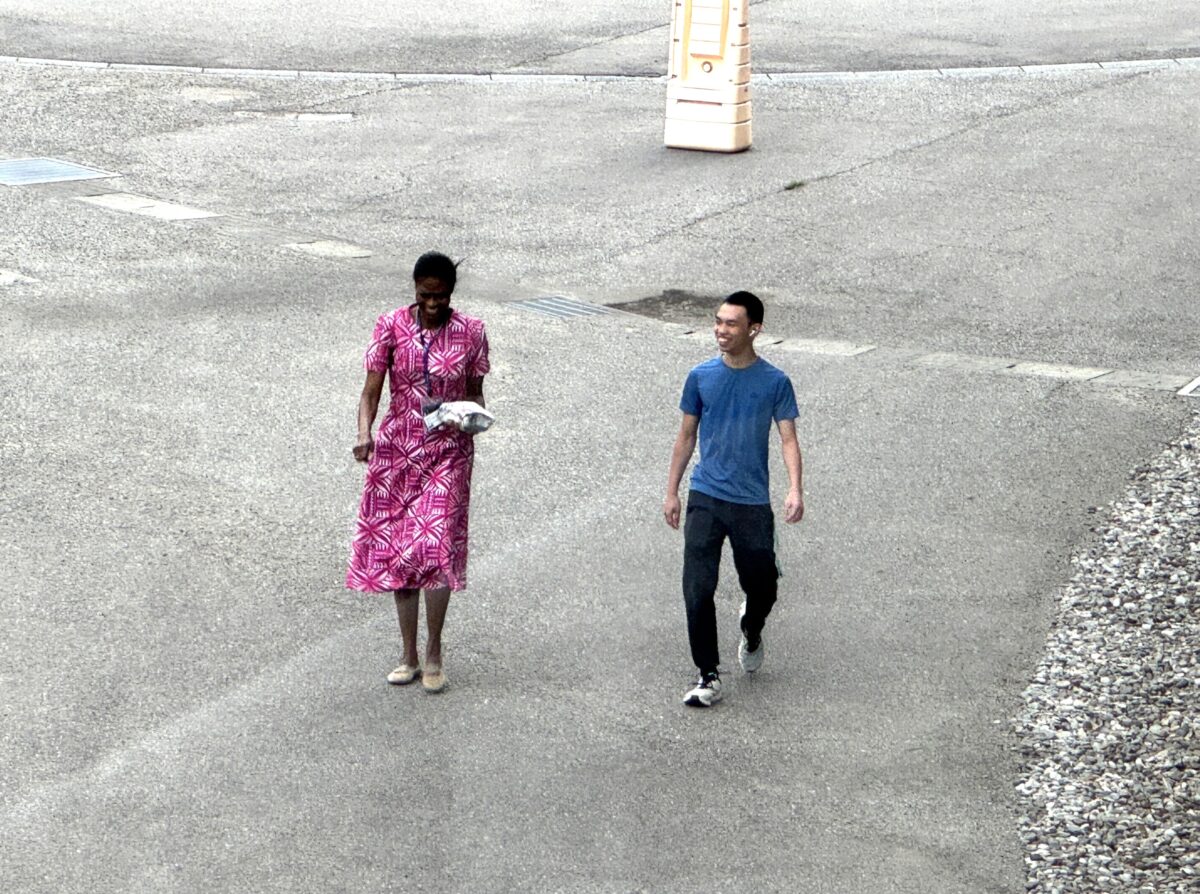
国際高専では、学生一人ひとりが「SHINE IN YOUR OWN WAY(自分らしく輝く)」ことを大切にしています。今回は、そのような学生の一人を紹介したいと思います。
彼の名前はプルバ・アントニーさん。2年生の学生です。平日の午後4時45分頃になると、ほぼ毎日のようにキャンパス内を歩いている彼の姿を見かけることができます。体育館、寮、温泉、食堂、本館、校舎を巡るコースを何周も歩いています。
最初は、ただ彼が歩いていることに気づいただけでした。しかし、ある日曜日に私も一緒に歩いてみることにしました。歩きながら話をしているうちに、彼がこの時間を利用してインドネシアにいるお母さんと電話をしていることを知りました。それ以来、私たちは平日の放課後を中心に、ときには週末にも一緒に歩くようになりました。彼のおかげで、「歩くこと」の価値に改めて気づかされたのです。
本校には、バスケットボールやバドミントンなどのスポーツで活躍する学生もいれば、学業で優れた成果を上げる学生もいます。アントニーさんもそうした活動を楽しみ、勉学にも励んでいることでしょう。しかし、私の目を引くのは彼のシンプルな日課を続ける姿勢です。午後4時45分頃から、夕食のために食堂が開く午後6時30分頃まで、彼は黙々とキャンパスを歩き続けます。最も多く歩いた日には、なんと17周もしたそうです。私たちも何度か、散歩を終えたその足で直接食堂へ向かい、夕食を共にしました。
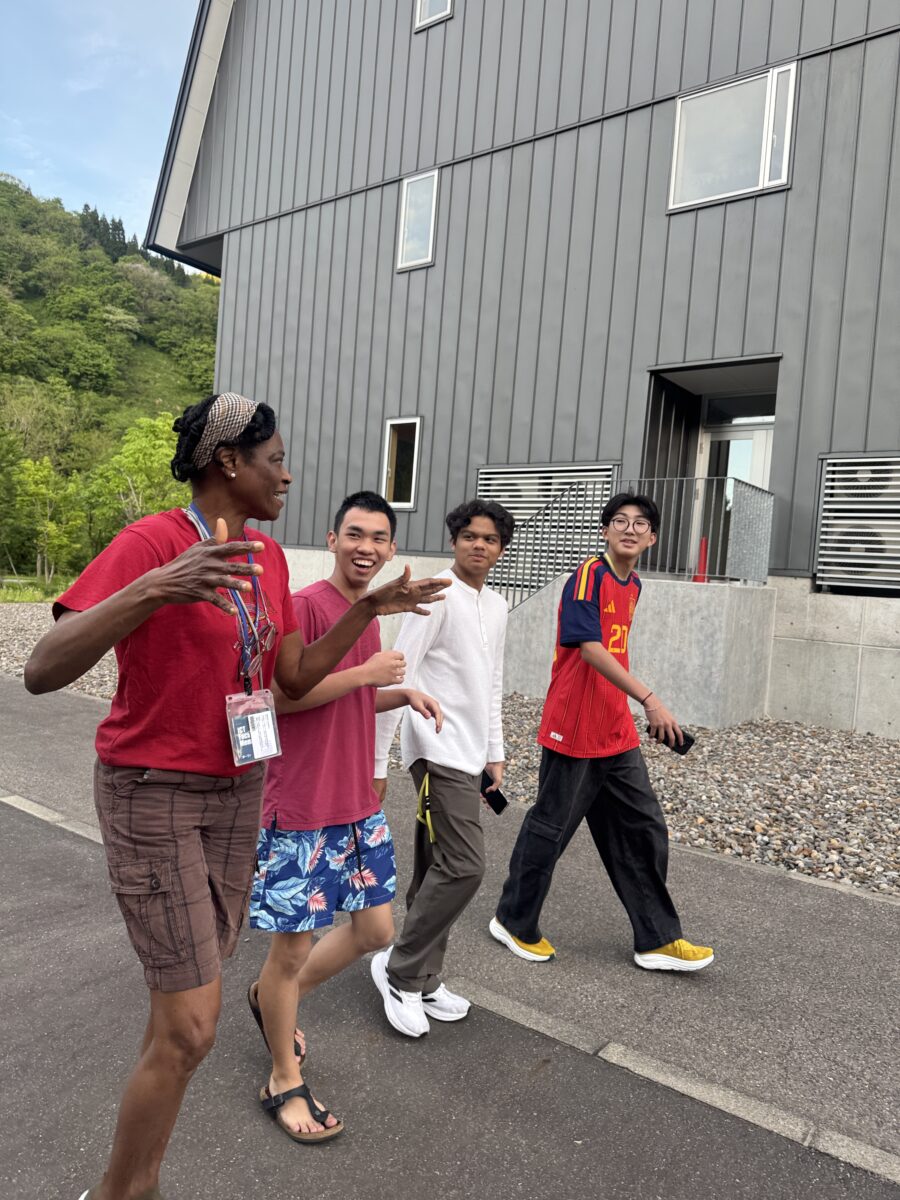
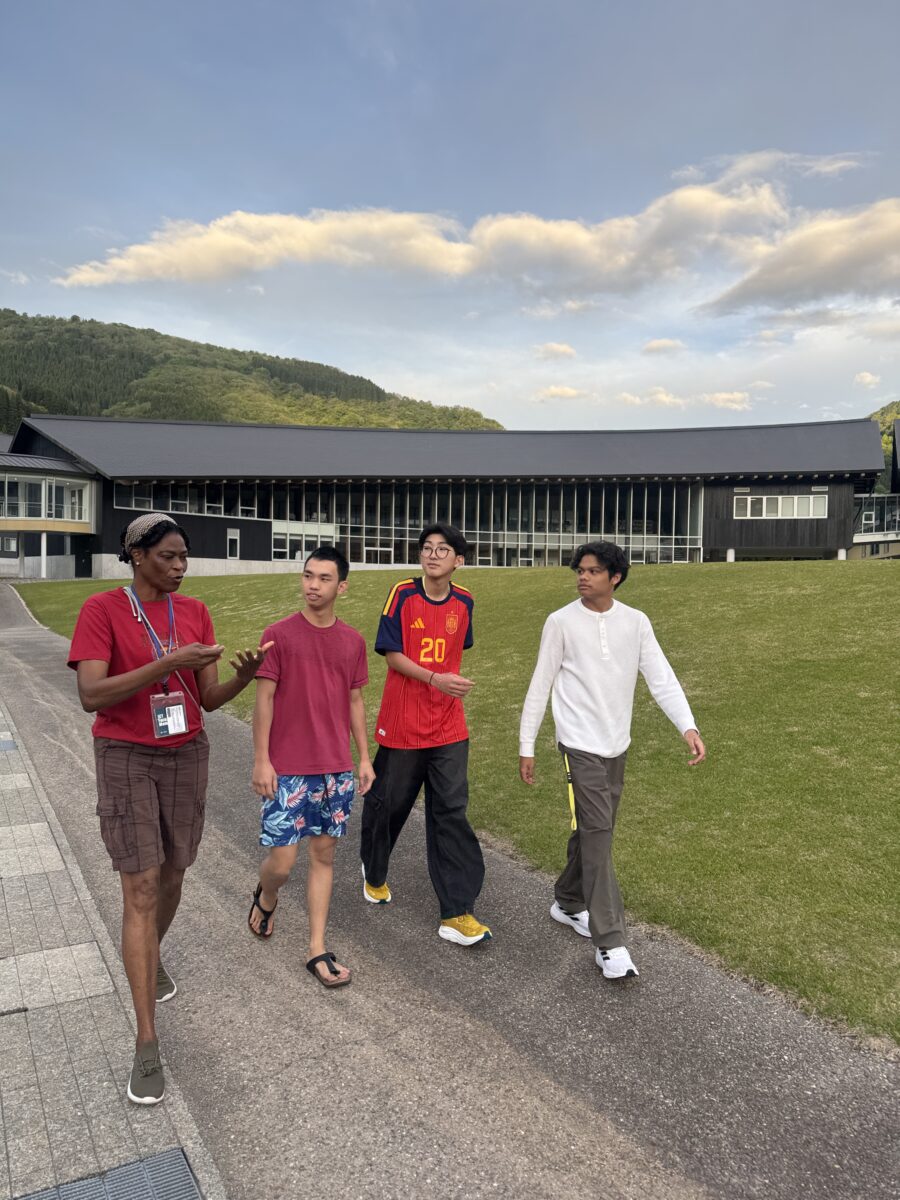
私がこの習慣を始めたきっかけを尋ねると、アントニーさんの答えは意外にもとてもシンプルなものでした。「毎日歩こうと思った特別なきっかけはありません。ただ、お母さんに電話したり音楽を聴いたりして、一人の時間を過ごしたかったのです。座っていると退屈だったので、歩いて体を動かそうと思いました。」彼にとって、この散歩の時間は故郷とのつながりを感じる時間でもあります。「一番信頼している母と、インドネシア語で話したかったのです。」
この2か月の間には、ほかの学生たちも時折私たちの散歩に加わってくれました。歩きながらの会話は自然と広がり、家族のこと、趣味、将来の夢、悩み、そして日常の出来事など、さまざまな話題について語り合います。ときには、何周もほとんど言葉を交わさず、静かな時間を楽しむこともあります。
アントニーさんは、散歩の一番の魅力について次のように話してくれました。「体を健康に保ちながら、どんなことでも気軽に話せるところです。また、将来的にはもっと多くの学生に参加してほしいと願っています。みんなで健康を維持しながら、たくさんの話を共有できたらいいなと思います。」彼と歩く時間は、単なる運動以上の意味を持っています。それは友情を育み、自分自身を見つめ直し、人とのつながりを感じる時間です。一見すると何気ない散歩ですが、実はとても意義深い活動なのです。彼は、自然の中で過ごし、山の新鮮な空気を楽しみ、健康的な習慣を続けながら、家族や友人との会話を大切にするという、もう一つの充実したキャンパスライフのあり方を静かに示してくれています。
最後に、私は彼に「歩くのは退屈だと思っている人へ何か伝えるとしたら?」と尋ねました。すると彼は笑顔でこう答えました。「歩けることに感謝してください。誰もが当たり前に歩けるわけではないのですから。」
国際高専では、学生一人ひとりが自分らしく輝くことを応援しています。
私は、アントニーさんがまさにその姿を体現していると思います。
ポーリン・ベアード
Walking With Anthony
By Dr. Pauline Baird
At ICT, students are encouraged to "SHINE IN YOUR OWN WAY." Let me introduce one such student.
His name is Anthony Purba, a 2nd year student. On almost any weekday at about 4:45 p.m., you can find him walking around campus. His route takes him past the gymnasium, the dormitories, the onsen, the cafeteria, the main office building, and the school building—circling the campus again and again.
At first, I simply noticed him walking. Then one Sunday, I decided to join him. As we walked, I discovered that he often uses this time to call his mother in Indonesia. Since then, we have walked together after school on most weekdays and occasionally on weekends. Anthony has made walking something worth noticing.
Many students shine in sports such as basketball and badminton, while others excel in academics. Anthony may enjoy those activities too and do well in his studies, but what stands out to me is his commitment to a simple daily habit. From approximately 4:45 p.m. until 6:30 p.m., when the cafeteria opens for dinner, he walks steadily around campus. On his busiest day, he completed 17 laps. More than once, we have ended our walk by heading directly from the pathway into the cafeteria for our evening meal.
When I asked Anthony how this routine began, his answer was surprisingly simple.
"Nothing inspired me to start walking every day," he explained. "I just wanted to spend time on my own by calling my mom or listening to music. Sitting made me feel bored, so I decided to make my body move by walking."
For Anthony, the walk is also a chance to stay connected with home.
"I wanted to talk with someone I trusted the most in Indonesian," he said.
Over the past two months, a few other students have joined us from time to time. As we walk, our conversations wander naturally through topics such as family, hobbies, future dreams, personal challenges, and everyday life. Sometimes, we spend several laps simply enjoying the quiet.
Anthony says what he enjoys most is "talking about any topic while keeping my body fit." He hopes more students will join in the future so they can "share a lot of stories while keeping our body sustained."
Walking with Anthony becomes more than physical activity; it becomes a time for friendship, reflection, and connection. What appears to be an ordinary walk is, in fact, something quite meaningful. Anthony is quietly demonstrating another way to experience campus life—by spending time outdoors, enjoying the fresh mountain air, maintaining a healthy routine, and making space for conversations with family and friends.
When I asked Anthony what he would say to someone who thinks walking is boring, he smiled and replied,
"Be grateful to have the ability to walk. Not all people can enjoy what you have."
At ICT, students are encouraged to shine in their own way.
I believe Anthony is doing exactly that.
By Dr. Pauline Baird