




Other Classes
その他の活動
 こんにちは、白山麓高専事務室の間加田 侑里です。今回は2月に課外授業で行った様々なワークショップについて紹介します。
Hello, this is Yuri Makada from the Hakusanroku office. Today, I would like to introduce some activities held in February.
ワールドランゲージ
2月8日(火)に外国人教員による特別外国語講座が行われました。アラー先生とナグワ先生によるアラビア語、ハズワン先生によるマレー語、アピラク先生によるタイ語、ドーサフ先生によるフランス語の4つの言語から学生たちは2つ選択し受講しました。学生たちは未知の言語を学べる機会とあって、好奇心でいっぱいでした。講座では簡単な挨拶、名前の書き方、伝統的な遊びを体験し、多様な文化に親しみました。学生たちは普段英語で授業を行っているので、英語以外の言語に目を向ける貴重な機会となりました。
World Languages
On Tuesday, February 8th, special foreign language classes were held. Students could choose two of the following four languages to study: Arabic by Alaa sensei (Prof.) and Nagwa sensei (Prof.), Malay by Hazwan sensei (Prof.), Thai by Apirak sensei (Associate Lecturer), and French by Dorsaf sensei (Prof.). The students were full of curiosity at the opportunity to learn about unknown languages. In the courses, they learned simple greetings, how to write their names, played traditional games, and learned about other cultures. Usually, students take most of their classes in English, so this was a good opportunity for them to learn about other languages and cultures.
-

アラビア語講座
-

マレー語講座(伝統的な遊びを学んでいる様子)
-

タイ語講座
-

フランス語講座


英語の日
2月18日(金)に「英語の日」という英語科の教員とラーニングメンターが計画したゲームや活動を通して英語に触れるイベントが行われました。
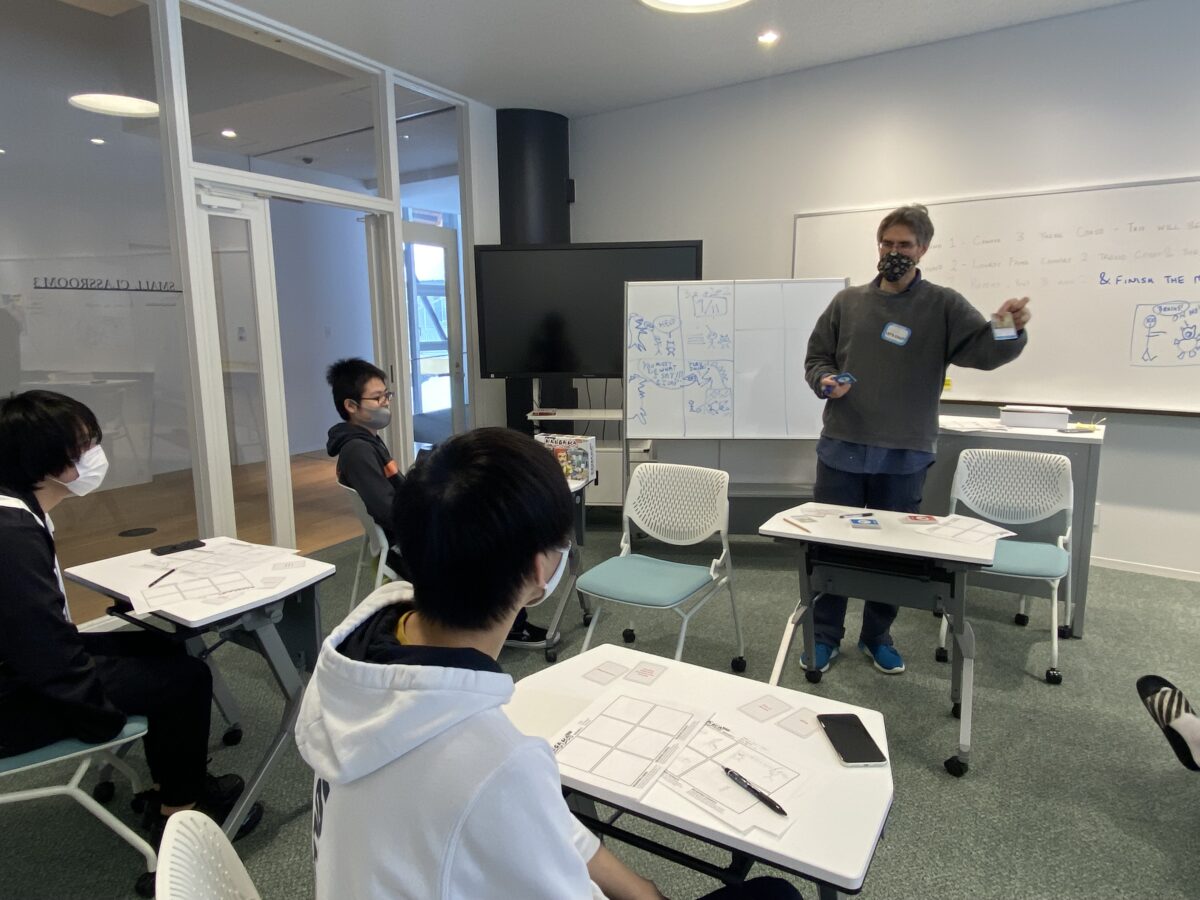
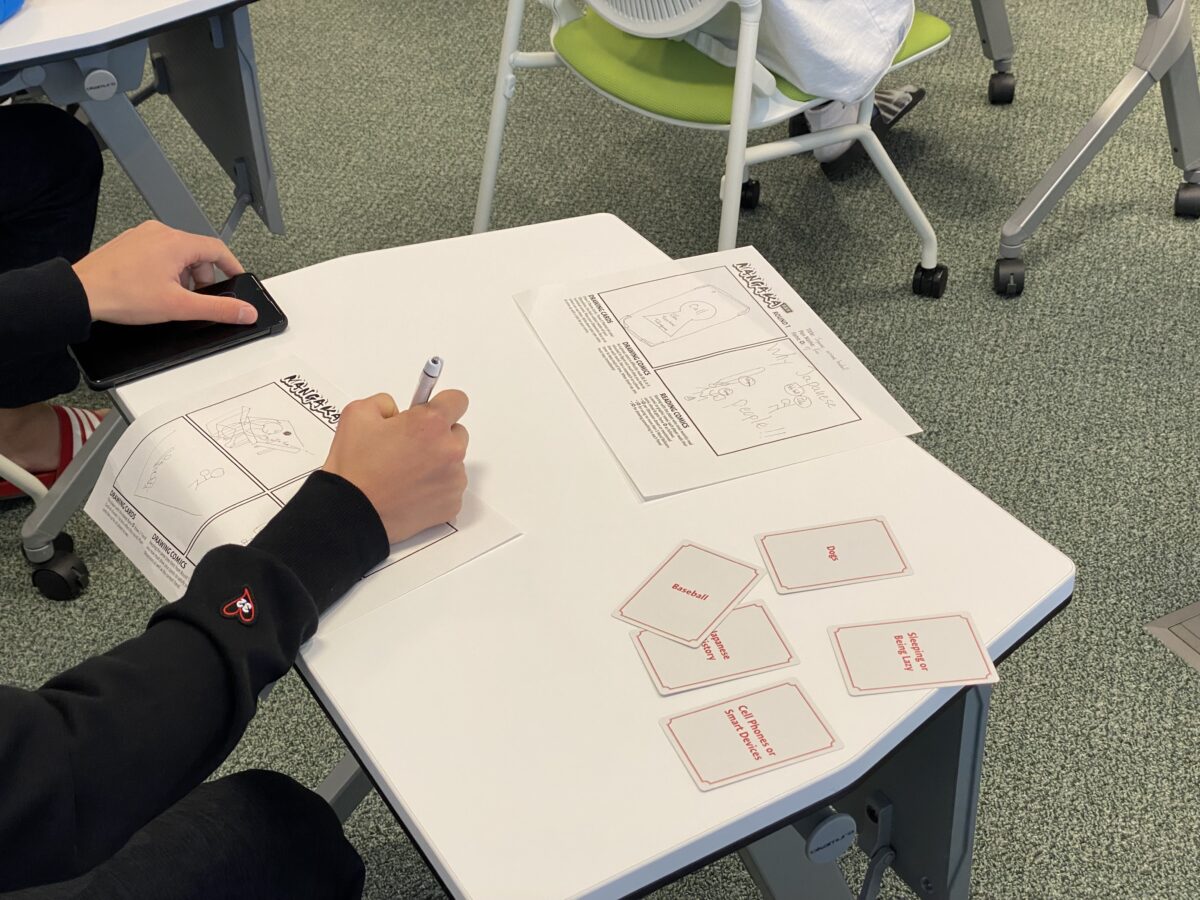
まずは、少人数で様々なゲームが行われました。「Choose your own adventure」という動画を鑑賞しながら物語を選択し、それによりエンディングが変わる選択型ゲーム、お題に沿って漫画を描きながらバトルする「MANGAKA」ゲーム、お互いの正体を探り合う会話型のパーティーゲーム「Spy-Fall 2」が行われました。色々なゲームを英語で体験し、楽しい時間となりました。
次に「英文句読点ゲーム」が行われました。これは英語の教員によって作成された不完全な英文法に句読点や感嘆符などを付け加え、正しい英文を作るゲームです。正解者は、紙の王冠に句読点や感嘆符などが貼られ、素敵な王冠を作り上げました。また料理が得意なエドワード先生は景品としてクッキーを学生にプレゼントしました。
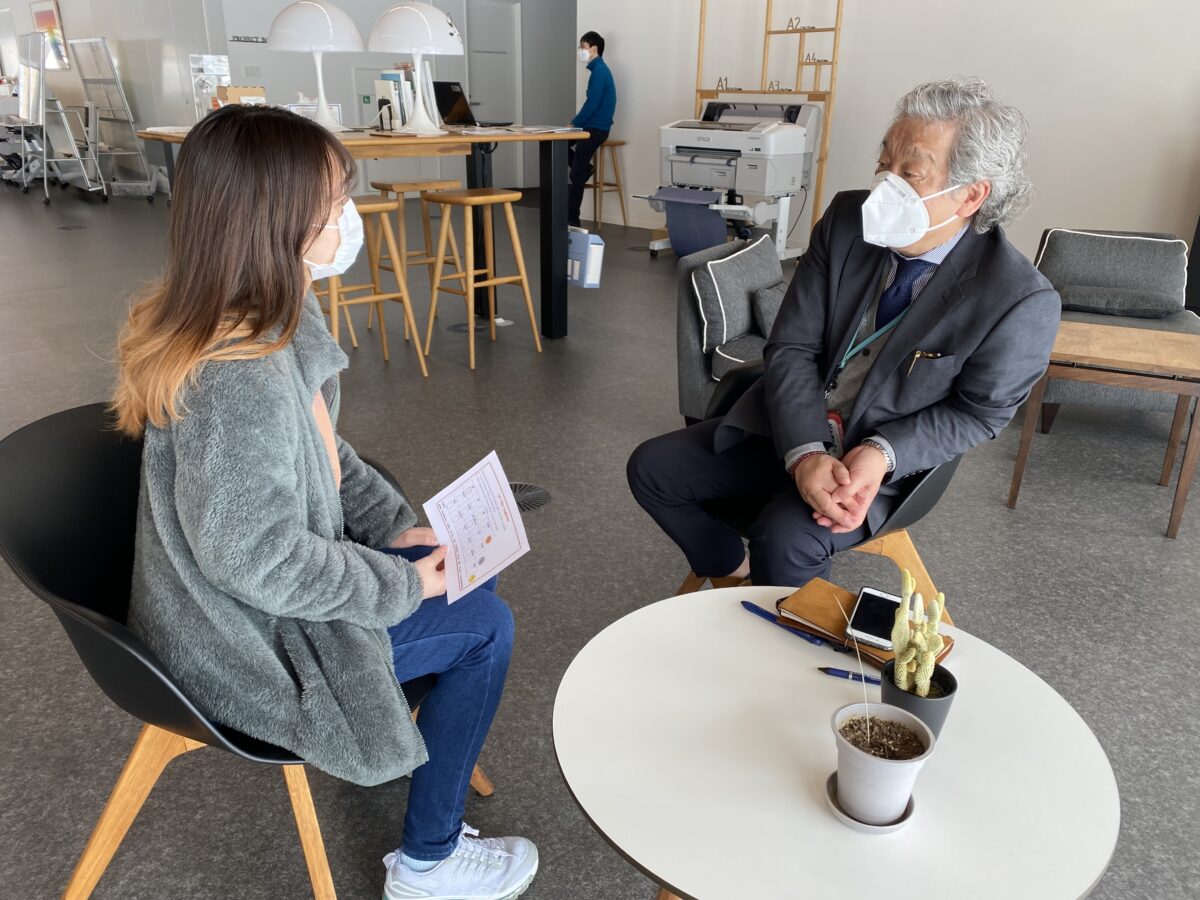
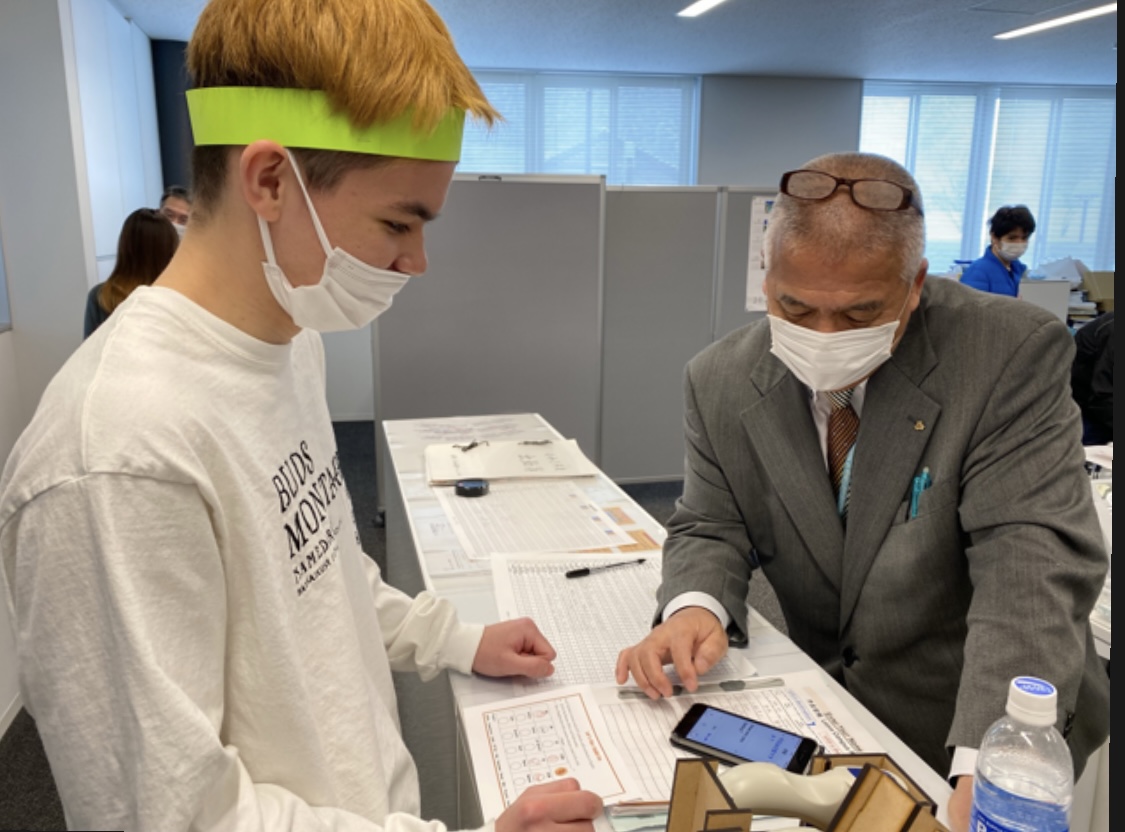
その後、「Let‘s Chat」という学生たちが教職員に英語でインタビューし、スタンプを貯めてミッションをクリアしていくイベントが行われました。教職員たちは翻訳機を使ってでも、必ず英語で返答しなければならず、清掃員、警備員、看護師、職員らはこの日のために心構えをしていました。学生たちは教職員に趣味、経験、家族、ICTでの生活について質問し、英語でのコミュニケーションを楽しみました。学生たちは教職員のことを知る良いきっかけになったのではないでしょうか。
午後からは、体育館で学生と教員の合同チームで障害物競争が行われました。まず「目隠し迷路ゲーム」では、各チームの教員が目隠しをし、学生たちから英語で指示を受けながら前進し、ゴールを目指しました。床にテープで貼られた迷路の道から1ミリでも外れると、スタート地点に戻らければならなかったので、学生たちは慎重に教員に指示を出していました。次に「障害物伝言ゲーム」が行われました。ハードルなど障害物が用意され、先にある英文の記憶をする必要があったのですが、走っているうちに伝言を忘れてしまう学生が続出し、最終的には伝言がうまく伝わらなかったチームが続々と現れました。最後にエドワード先生が制作したオリジナルの「ツイスターゲーム」が行われました。ユニークなポージングが生まれ、笑いが絶えない時間となりました。そして優勝チームには、校長先生から景品としてお菓子が贈られました。
このイベント終了後、学生たちから「楽しかった!」との声がありました。学生たちは英語を用いた様々な活動を通し、キャンパス内で多くの教職員とコミュニケーションを図れたのではないでしょうか。
English Day
On Friday, February 18th, an English Day was held by the English Department faculty members and Learning Mentors, so students could participate in English games and activities.
First, three different games were played in small groups. One was game called Choose Your Own Adventure, in which students made choices in a story while watching a video. Each choice changed the direction of the story so that many different endings were possible. Another game was MANGAKA, in which students battled each other while creating an original manga according to a theme. The last game was a conversational party game called Spy-Fall 2. In this game participants tried to figure out each other's identities. Students played these games in English and had a great time.
Next was the English Punctuation Party. In this game, students had to add punctuation to a sentence in order to produce a correct sentence. For correct answers, students received cookies from Edward sensei (Prof.), who is an excellent cook, and were able to make a paper crown with exclamation marks and apostrophes pasted on them. Each student made their own lovely crown.
Later, there was an event called Let's Chat. Students interviewed teachers and staff members in English, accumulating stamps to complete their missions. Staff members had to respond in English, even if they had to use a translator, and the cleaners, security guards, nurses, and office staffs had prepared themselves for this day. The students enjoyed communicating with the teachers and staff members in English, asking them questions about their hobbies, experiences, families, and life at ICT. It was a good opportunity for the students to get to know more about the teachers and staff members
In the afternoon, a team obstacle race was held in the gymnasium, with teams composed of both students and teachers. First, an obstacle course message game race was held, in which students had to memorize English sentences at the end of an obstacle course, and return to communicate the sentences to their team - hurdles and other obstacles were prepared, but many students forgot their messages while running, and in the end, many teams failed to communicate their messages quickly enough. Next, a blindfold maze game was held, in which the teacher in each team was blindfolded, and instructed in English by the students, to navigate the maze to reach the goal. The teacher had to return to the starting point if they stepped outside the taped path by even a millimeter, so students carefully gave instructions to the teachers. Finally, an original Twister game was created by Edward sensei, that produced unique poses and lots of laughter. The winning team received sweets as a prize from President Barksdale.
After this event, the students said, "That was fun!". I hope that the students were able to communicate with teachers and staff members on campus through various activities using English.
-

「Choose your own adventure」
-

「Spy-Fall 2」
-

「MANGAKA」
-

「MANGAKA」


-

インタビュー用紙
-

句読点や感嘆符が付いている王冠を付けて清掃員にインタビューする様子
-

校長先生に英語でインタビュー
-

副校長先生にインタビュー
-

インタビュー中
-

インタビュー中
-

インタビュー中
-

インタビュー中
-

インタビュー中
-

翻訳機を使ってインタビュー中
-

看護師さんにインタビュー中
-

警備員さんにインタビュー中
-

ツイスターゲーム
-

ツイスターゲーム
-

目隠し迷路ゲーム
-

目隠し迷路ゲーム
-

目隠し迷路ゲーム






2年生を送る会
2月28日(月)に白山麓キャンパスで寮生活を終える2年生の送別会が行われました。まずは1年生から2年生にメッセージカードを送り、2年生は下級生にお別れの言葉を述べました。そして2年間の活動を振り返るスライドショーを鑑賞し、思い出に浸りました。最後に、2年生担任の潟辺先生がお別れの言葉を述べ、2年生のキルパラーニ アニッシュさんによるピアノ演奏と小髙先生の指揮の元、全員で「旅立ちの日に」を合唱しました。
新3年生では、新たな生活が始まります。今後の新型コロナウイルスの感染状況は予測できませんが、状況が緩和され、少しでも早くニュージーランドのオタゴ・ポリテクニクへ留学に行けることを願います。3年生に進級する皆さんの活躍がより一層楽しみです。
Farewell party for 2nd year students
On Monday, February 28th, a farewell party was held for 2nd year students who will finish their dormitory life at the Hakusanroku Campus. First, the 1st year students sent message cards to the 2nd year students, and the 2nd year students made good bye speeches to the 1st year students. Then, we watched a slideshow of pictures taken during the two years they were here. Finally, 2nd grade homeroom teacher Katabe sensei (Prof.) gave his farewell speech, and all the students sang a song together accompanied on the piano by 2nd grade student Anish Kirpalani and conducted by Kodaka sensei (Prof.).
The new 3rd year students will begin their new life. We cannot predict the future status of the spread of COVID-19, but I hope that the situation will calm down and that they will be able to go to Otago Polytechnic in New Zealand to study as soon as possible.
-

1年生から2年生にメッセージカードを渡す様子
-

スライドショー鑑賞
-

「旅立ちの日に」合唱


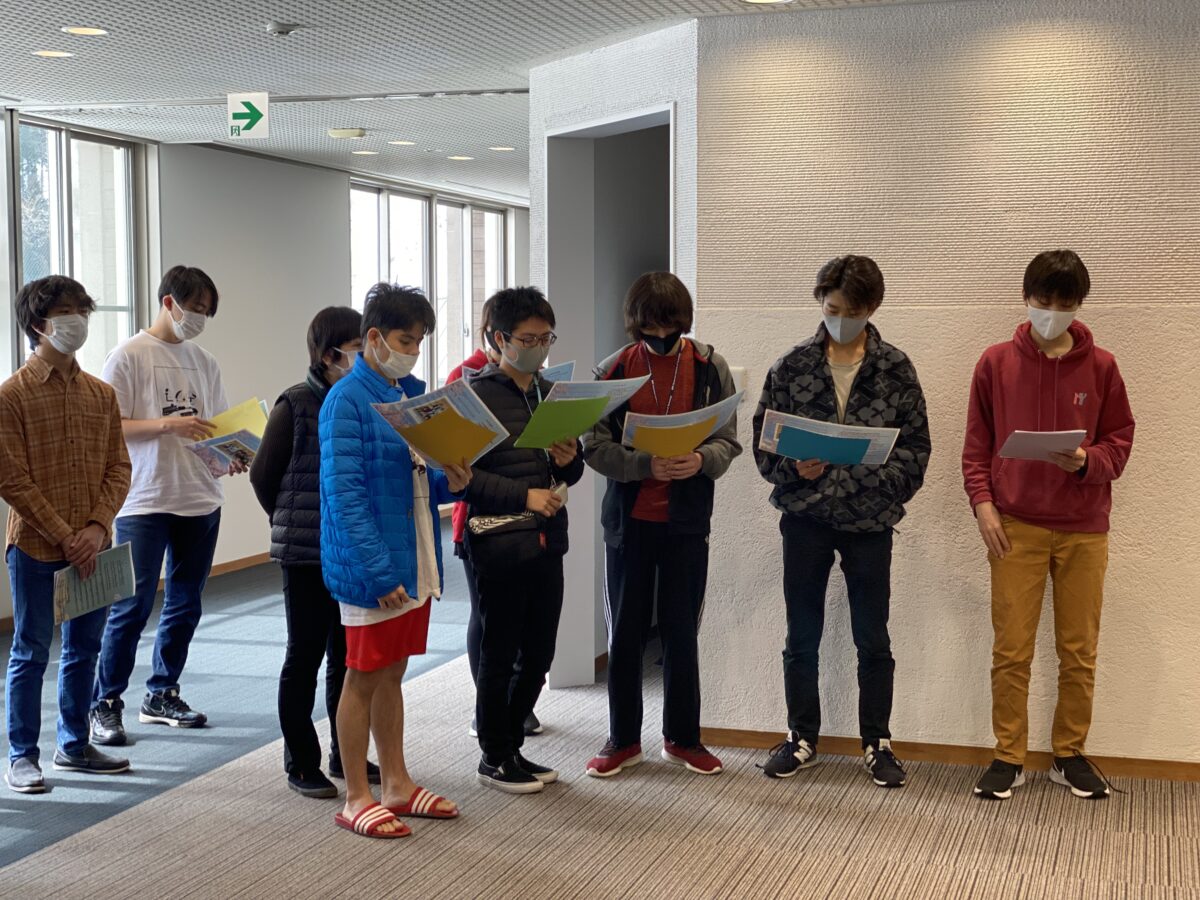
間加田 侑里
こんにちは、白山麓高専事務室の間加田 侑里です。今回は2月に課外授業で行った様々なワークショップについて紹介します。
Hello, this is Yuri Makada from the Hakusanroku office. Today, I would like to introduce some activities held in February.
ワールドランゲージ
2月8日(火)に外国人教員による特別外国語講座が行われました。アラー先生とナグワ先生によるアラビア語、ハズワン先生によるマレー語、アピラク先生によるタイ語、ドーサフ先生によるフランス語の4つの言語から学生たちは2つ選択し受講しました。学生たちは未知の言語を学べる機会とあって、好奇心でいっぱいでした。講座では簡単な挨拶、名前の書き方、伝統的な遊びを体験し、多様な文化に親しみました。学生たちは普段英語で授業を行っているので、英語以外の言語に目を向ける貴重な機会となりました。
World Languages
On Tuesday, February 8th, special foreign language classes were held. Students could choose two of the following four languages to study: Arabic by Alaa sensei (Prof.) and Nagwa sensei (Prof.), Malay by Hazwan sensei (Prof.), Thai by Apirak sensei (Associate Lecturer), and French by Dorsaf sensei (Prof.). The students were full of curiosity at the opportunity to learn about unknown languages. In the courses, they learned simple greetings, how to write their names, played traditional games, and learned about other cultures. Usually, students take most of their classes in English, so this was a good opportunity for them to learn about other languages and cultures.
-
アラビア語講座
-
マレー語講座(伝統的な遊びを学んでいる様子)
-
タイ語講座
-
フランス語講座
英語の日
2月18日(金)に「英語の日」という英語科の教員とラーニングメンターが計画したゲームや活動を通して英語に触れるイベントが行われました。
まずは、少人数で様々なゲームが行われました。「Choose your own adventure」という動画を鑑賞しながら物語を選択し、それによりエンディングが変わる選択型ゲーム、お題に沿って漫画を描きながらバトルする「MANGAKA」ゲーム、お互いの正体を探り合う会話型のパーティーゲーム「Spy-Fall 2」が行われました。色々なゲームを英語で体験し、楽しい時間となりました。
次に「英文句読点ゲーム」が行われました。これは英語の教員によって作成された不完全な英文法に句読点や感嘆符などを付け加え、正しい英文を作るゲームです。正解者は、紙の王冠に句読点や感嘆符などが貼られ、素敵な王冠を作り上げました。また料理が得意なエドワード先生は景品としてクッキーを学生にプレゼントしました。
その後、「Let‘s Chat」という学生たちが教職員に英語でインタビューし、スタンプを貯めてミッションをクリアしていくイベントが行われました。教職員たちは翻訳機を使ってでも、必ず英語で返答しなければならず、清掃員、警備員、看護師、職員らはこの日のために心構えをしていました。学生たちは教職員に趣味、経験、家族、ICTでの生活について質問し、英語でのコミュニケーションを楽しみました。学生たちは教職員のことを知る良いきっかけになったのではないでしょうか。
午後からは、体育館で学生と教員の合同チームで障害物競争が行われました。まず「目隠し迷路ゲーム」では、各チームの教員が目隠しをし、学生たちから英語で指示を受けながら前進し、ゴールを目指しました。床にテープで貼られた迷路の道から1ミリでも外れると、スタート地点に戻らければならなかったので、学生たちは慎重に教員に指示を出していました。次に「障害物伝言ゲーム」が行われました。ハードルなど障害物が用意され、先にある英文の記憶をする必要があったのですが、走っているうちに伝言を忘れてしまう学生が続出し、最終的には伝言がうまく伝わらなかったチームが続々と現れました。最後にエドワード先生が制作したオリジナルの「ツイスターゲーム」が行われました。ユニークなポージングが生まれ、笑いが絶えない時間となりました。そして優勝チームには、校長先生から景品としてお菓子が贈られました。
このイベント終了後、学生たちから「楽しかった!」との声がありました。学生たちは英語を用いた様々な活動を通し、キャンパス内で多くの教職員とコミュニケーションを図れたのではないでしょうか。
English Day
On Friday, February 18th, an English Day was held by the English Department faculty members and Learning Mentors, so students could participate in English games and activities.
First, three different games were played in small groups. One was game called Choose Your Own Adventure, in which students made choices in a story while watching a video. Each choice changed the direction of the story so that many different endings were possible. Another game was MANGAKA, in which students battled each other while creating an original manga according to a theme. The last game was a conversational party game called Spy-Fall 2. In this game participants tried to figure out each other's identities. Students played these games in English and had a great time.
Next was the English Punctuation Party. In this game, students had to add punctuation to a sentence in order to produce a correct sentence. For correct answers, students received cookies from Edward sensei (Prof.), who is an excellent cook, and were able to make a paper crown with exclamation marks and apostrophes pasted on them. Each student made their own lovely crown.
Later, there was an event called Let's Chat. Students interviewed teachers and staff members in English, accumulating stamps to complete their missions. Staff members had to respond in English, even if they had to use a translator, and the cleaners, security guards, nurses, and office staffs had prepared themselves for this day. The students enjoyed communicating with the teachers and staff members in English, asking them questions about their hobbies, experiences, families, and life at ICT. It was a good opportunity for the students to get to know more about the teachers and staff members
In the afternoon, a team obstacle race was held in the gymnasium, with teams composed of both students and teachers. First, an obstacle course message game race was held, in which students had to memorize English sentences at the end of an obstacle course, and return to communicate the sentences to their team - hurdles and other obstacles were prepared, but many students forgot their messages while running, and in the end, many teams failed to communicate their messages quickly enough. Next, a blindfold maze game was held, in which the teacher in each team was blindfolded, and instructed in English by the students, to navigate the maze to reach the goal. The teacher had to return to the starting point if they stepped outside the taped path by even a millimeter, so students carefully gave instructions to the teachers. Finally, an original Twister game was created by Edward sensei, that produced unique poses and lots of laughter. The winning team received sweets as a prize from President Barksdale.
After this event, the students said, "That was fun!". I hope that the students were able to communicate with teachers and staff members on campus through various activities using English.
-
「Choose your own adventure」
-
「Spy-Fall 2」
-
「MANGAKA」
-
「MANGAKA」
-
インタビュー用紙
-
句読点や感嘆符が付いている王冠を付けて清掃員にインタビューする様子
-
校長先生に英語でインタビュー
-
副校長先生にインタビュー
-
インタビュー中
-
インタビュー中
-
インタビュー中
-
インタビュー中
-
インタビュー中
-
翻訳機を使ってインタビュー中
-
看護師さんにインタビュー中
-
警備員さんにインタビュー中
-
ツイスターゲーム
-
ツイスターゲーム
-
目隠し迷路ゲーム
-
目隠し迷路ゲーム
-
目隠し迷路ゲーム
2年生を送る会
2月28日(月)に白山麓キャンパスで寮生活を終える2年生の送別会が行われました。まずは1年生から2年生にメッセージカードを送り、2年生は下級生にお別れの言葉を述べました。そして2年間の活動を振り返るスライドショーを鑑賞し、思い出に浸りました。最後に、2年生担任の潟辺先生がお別れの言葉を述べ、2年生のキルパラーニ アニッシュさんによるピアノ演奏と小髙先生の指揮の元、全員で「旅立ちの日に」を合唱しました。
新3年生では、新たな生活が始まります。今後の新型コロナウイルスの感染状況は予測できませんが、状況が緩和され、少しでも早くニュージーランドのオタゴ・ポリテクニクへ留学に行けることを願います。3年生に進級する皆さんの活躍がより一層楽しみです。
Farewell party for 2nd year students
On Monday, February 28th, a farewell party was held for 2nd year students who will finish their dormitory life at the Hakusanroku Campus. First, the 1st year students sent message cards to the 2nd year students, and the 2nd year students made good bye speeches to the 1st year students. Then, we watched a slideshow of pictures taken during the two years they were here. Finally, 2nd grade homeroom teacher Katabe sensei (Prof.) gave his farewell speech, and all the students sang a song together accompanied on the piano by 2nd grade student Anish Kirpalani and conducted by Kodaka sensei (Prof.).
The new 3rd year students will begin their new life. We cannot predict the future status of the spread of COVID-19, but I hope that the situation will calm down and that they will be able to go to Otago Polytechnic in New Zealand to study as soon as possible.
-
1年生から2年生にメッセージカードを渡す様子
-
スライドショー鑑賞
-
「旅立ちの日に」合唱
間加田 侑里
こんにちは。白山麓高専事務室の間加田 侑里です。今回は歴史文化(英語)ⅠBの授業で行われた最終発表について紹介したいと思います。
1年生が履修する歴史文化(英語)IBでは、世界の歴史的な出来事のつながりを調べ、分析した結果、自分の考えや発見したことを発表します。今回は技術とイノベーション、成長と持続可能性に関連する「進歩」について橋谷 龍斗さんとサンサル・セルゲレンさんが発表を行いました。
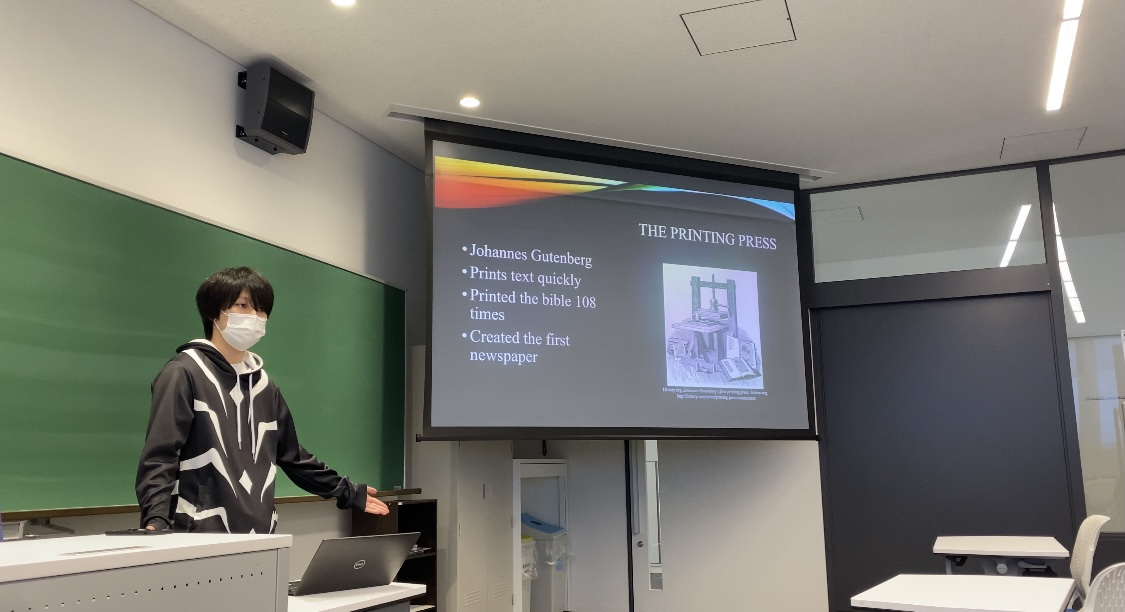
龍斗さんは、まず技術とイノベーションについて、印刷機を取り上げ、その技術革新による進化が、印刷物の入手スピードの向上につながっていることを発表しました。成長と持続可能性については、ハードパワーとソフトパワーに着目し、ハードパワーのように、他の国の企業・組織の状況や生活に深く直接的に影響を与えるのではなく、あまり攻撃的ではなく協力的で、多くの場合、双方にとってメリットのあるソフトパワーの方が互いの関係性と平和な状況が長続きするため、効果的だと発表しました。
担当のエドワード・バスクェル先生は、発表時間が予定より短縮されたにも関わらず、メモなどを一切見ることなく上手く発表できており、内容をしっかり理解していることが見て取れたと感心していました。
サンサルさんは、技術とイノベーションのテーマについて、大航海時代の原動力となった帆やコンパスが、ヨーロッパを変えていっただけではなく、アメリカ大陸の発見によって先住民やアフリカ人にも悪い方向へ大きな影響を与えたことを例として、イノベーションとテクノロジーが社会や文化の大きな変化につながっていることを発表しました。
エドワード先生は、的確に歴史的観点を捉え、自身の意見を長いエッセイで書いたことについて、課題として求めていた以上に理解と深堀がされており、限られた時間の中で素晴らしいチャレンジ精神を見せてくれたと感心していました。
龍斗さんとサンサルさんの発表は素晴らしく、自分の考えを簡潔にまとめ、分かりやすく発表していました。これからの成長がより一層楽しみです。
間加田 侑里

Hello. I'm Yuri Makada from the Hakusanroku office. Today, I would like to introduce the final presentation given in the History and Culture (English) IB class.
In History and Culture (English) IB, which is taken by first-year students, they research and analyze the connections between historical events in the world, and then present their ideas and findings. This time, Ryuto Hashiya and Sansar Sergelen gave presentations on "progress" as it relates to technology and innovation, growth and sustainability.
Ryuto presented about technology and innovation, focusing on printing presses and how their evolution through technological innovation has led to printed materials being available more quickly. About growth and sustainability, he focused on hard power and soft power, saying that instead of hard power, which deeply and directly affects the conditions and lives of companies and organizations in other countries, soft power, which is less aggressive, more cooperative, and in many cases more beneficial to both sides, is more effective because it extends relationships and peaceful conditions.
Assistant Professor Edward Basquill, who was in charge of this class, was impressed by the fact that even though Ryuto’s presentation time was shorter than planned, it had almost no effect on the quality of his presentation, which shows he really understood what he was saying.
Sansar presented on the theme of technology and innovation, using the example of how the sails and compasses that powered the Age of Exploration not only changed Europe, but with the discovery of the Americas by Europeans, there were negative effects on both indigenous peoples in the Americas as well as Africans. He presented how innovation and technology have led to major changes in society and culture.
Assistant Professor Edward was impressed with Sansar's understanding and depth of reasoning from the accurately captured historical information and the writing of his own opinions in a long essay, which showed a deeper explanation than the assignment called for, but Sansar showed a spirit of challenging himself in such a wonderful way.
Ryuto and Sanser's presentations were excellent, concisely summarizing their ideas and presenting their ideas in an easy-to-understand manner. I am looking forward to their further growth.
Yuri Makada
こんにちは。白山麓高専事務室の間加田 侑里です。今回は歴史文化(英語)ⅠBの授業で行われた最終発表について紹介したいと思います。
1年生が履修する歴史文化(英語)IBでは、世界の歴史的な出来事のつながりを調べ、分析した結果、自分の考えや発見したことを発表します。今回は技術とイノベーション、成長と持続可能性に関連する「進歩」について橋谷 龍斗さんとサンサル・セルゲレンさんが発表を行いました。
龍斗さんは、まず技術とイノベーションについて、印刷機を取り上げ、その技術革新による進化が、印刷物の入手スピードの向上につながっていることを発表しました。成長と持続可能性については、ハードパワーとソフトパワーに着目し、ハードパワーのように、他の国の企業・組織の状況や生活に深く直接的に影響を与えるのではなく、あまり攻撃的ではなく協力的で、多くの場合、双方にとってメリットのあるソフトパワーの方が互いの関係性と平和な状況が長続きするため、効果的だと発表しました。
担当のエドワード・バスクェル先生は、発表時間が予定より短縮されたにも関わらず、メモなどを一切見ることなく上手く発表できており、内容をしっかり理解していることが見て取れたと感心していました。
サンサルさんは、技術とイノベーションのテーマについて、大航海時代の原動力となった帆やコンパスが、ヨーロッパを変えていっただけではなく、アメリカ大陸の発見によって先住民やアフリカ人にも悪い方向へ大きな影響を与えたことを例として、イノベーションとテクノロジーが社会や文化の大きな変化につながっていることを発表しました。
エドワード先生は、的確に歴史的観点を捉え、自身の意見を長いエッセイで書いたことについて、課題として求めていた以上に理解と深堀がされており、限られた時間の中で素晴らしいチャレンジ精神を見せてくれたと感心していました。
龍斗さんとサンサルさんの発表は素晴らしく、自分の考えを簡潔にまとめ、分かりやすく発表していました。これからの成長がより一層楽しみです。
間加田 侑里
Hello. I'm Yuri Makada from the Hakusanroku office. Today, I would like to introduce the final presentation given in the History and Culture (English) IB class.
In History and Culture (English) IB, which is taken by first-year students, they research and analyze the connections between historical events in the world, and then present their ideas and findings. This time, Ryuto Hashiya and Sansar Sergelen gave presentations on "progress" as it relates to technology and innovation, growth and sustainability.
Ryuto presented about technology and innovation, focusing on printing presses and how their evolution through technological innovation has led to printed materials being available more quickly. About growth and sustainability, he focused on hard power and soft power, saying that instead of hard power, which deeply and directly affects the conditions and lives of companies and organizations in other countries, soft power, which is less aggressive, more cooperative, and in many cases more beneficial to both sides, is more effective because it extends relationships and peaceful conditions.
Assistant Professor Edward Basquill, who was in charge of this class, was impressed by the fact that even though Ryuto’s presentation time was shorter than planned, it had almost no effect on the quality of his presentation, which shows he really understood what he was saying.
Sansar presented on the theme of technology and innovation, using the example of how the sails and compasses that powered the Age of Exploration not only changed Europe, but with the discovery of the Americas by Europeans, there were negative effects on both indigenous peoples in the Americas as well as Africans. He presented how innovation and technology have led to major changes in society and culture.
Assistant Professor Edward was impressed with Sansar's understanding and depth of reasoning from the accurately captured historical information and the writing of his own opinions in a long essay, which showed a deeper explanation than the assignment called for, but Sansar showed a spirit of challenging himself in such a wonderful way.
Ryuto and Sanser's presentations were excellent, concisely summarizing their ideas and presenting their ideas in an easy-to-understand manner. I am looking forward to their further growth.
Yuri Makada
こんにちは。白山麓高専事務室の間加田侑里です。今回は1年生ビジュアルアーツⅠの授業で行われた作品発表について書きたいと思います。
ビジュアルアーツⅠでは、美術、工芸、デザインなどに触れ、芸術への知識と感性を高め、創作活動を通して発想力・表現力を養います。手を使って考えるプロセスを通じ、新たな気づき・思考の深化を図ります。
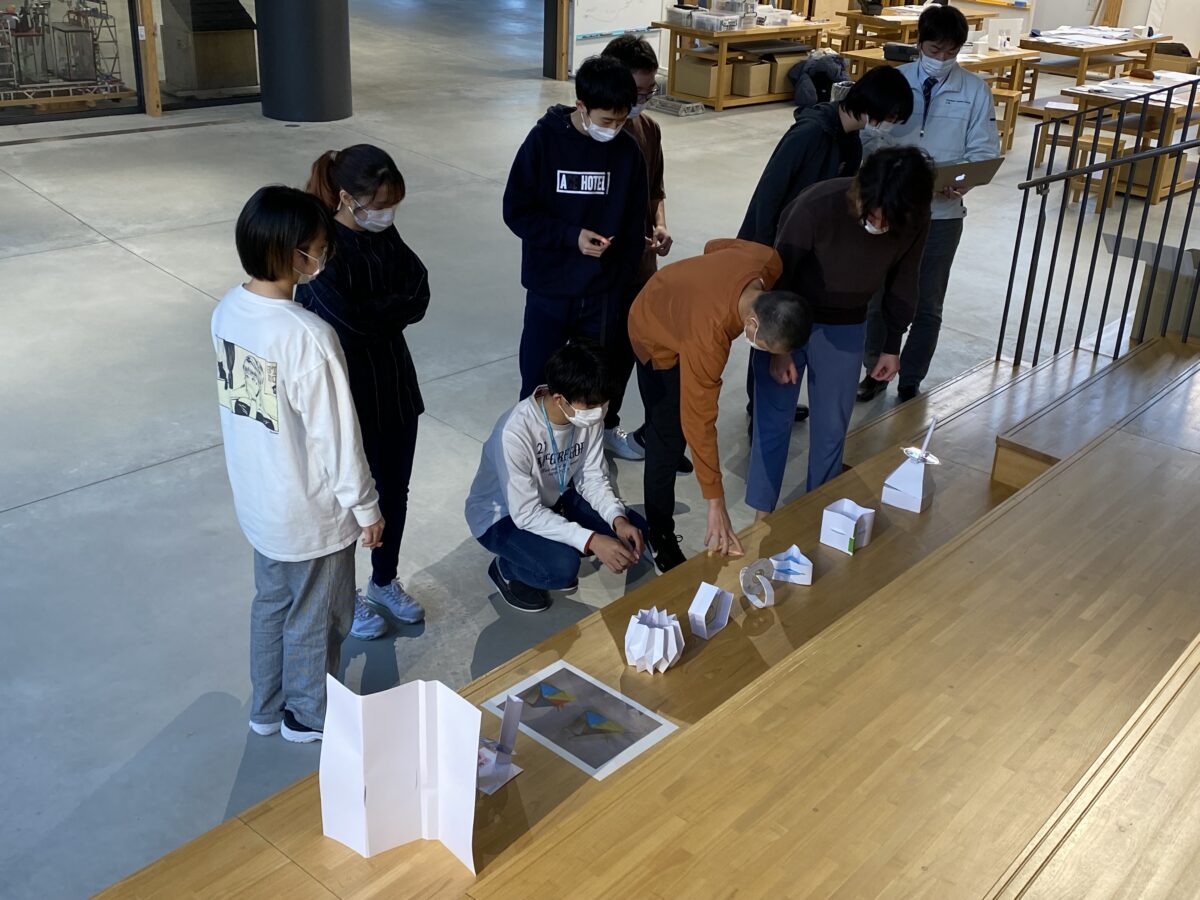
今回は「CDのホールド機能とその構造を考える」という課題で、紙を使ってCDを空中に保持し、あらゆる方向に傾けてもCDが外れない構造体を制作するという条件のもと、課題に取り組みました。
学生たちは、紙の素材と特徴から前提条件を満たす合理的な形状を模索しながら、制作を進めました。今回の課題では、ものを創造する表現者が制作意図をしっかり持つことが重視されており、自らの作品の意図について、一人ひとりが発表を行いました。
このビジュアルアーツは2年生まで実施されます。担当の小髙先生によると、授業では一貫して多くの視点からモノ・コトを観察し、そこから発想し価値を導き出していきます。創造性豊かな表現ができることや、創造に必要なマインドを育むことも目指しているとのことです。
間加田 侑里

Hello! It’s Yuri Makada from the Hakusanroku office. Today I would like to write about the presentations the first year students made in their Visual Arts I class.
In Visual Arts I, students learn about fine arts, crafts, and design processes to enhance their artistic knowledge and sensibility, and to cultivate their ability to think and express themselves through creative activities. Through the process of thinking with their hands, we aim to develop new awareness and deepen their thinking.
This time, the task was "A structure that will hold a CD." The requirement was to use paper to build a structure that would hold a CD in the air and create a structure that would hold a CD even if it was tilted in any direction.
The students proceeded with their work while searching for a rational shape that would satisfy the prerequisites based on the material and characteristics of paper. This assignment emphasized that an expressive artist who creates something must have a clear intention for creating it, and each student gave a presentation on the intention behind their own work.
The Visual Arts courses are offered to both first and second year students. According to Professor Kodaka, who is in charge of the classes, the aims are to consistently observe ideas and things from many perspectives and to derive ideas and values from them. The goal of these classes is for students to develop the ability to express themselves creatively and to nurture the mindset necessary for creativity.
Yuri Makada
こんにちは。白山麓高専事務室の間加田侑里です。今回は1年生ビジュアルアーツⅠの授業で行われた作品発表について書きたいと思います。
ビジュアルアーツⅠでは、美術、工芸、デザインなどに触れ、芸術への知識と感性を高め、創作活動を通して発想力・表現力を養います。手を使って考えるプロセスを通じ、新たな気づき・思考の深化を図ります。
今回は「CDのホールド機能とその構造を考える」という課題で、紙を使ってCDを空中に保持し、あらゆる方向に傾けてもCDが外れない構造体を制作するという条件のもと、課題に取り組みました。
学生たちは、紙の素材と特徴から前提条件を満たす合理的な形状を模索しながら、制作を進めました。今回の課題では、ものを創造する表現者が制作意図をしっかり持つことが重視されており、自らの作品の意図について、一人ひとりが発表を行いました。
このビジュアルアーツは2年生まで実施されます。担当の小髙先生によると、授業では一貫して多くの視点からモノ・コトを観察し、そこから発想し価値を導き出していきます。創造性豊かな表現ができることや、創造に必要なマインドを育むことも目指しているとのことです。
間加田 侑里
Hello! It’s Yuri Makada from the Hakusanroku office. Today I would like to write about the presentations the first year students made in their Visual Arts I class.
In Visual Arts I, students learn about fine arts, crafts, and design processes to enhance their artistic knowledge and sensibility, and to cultivate their ability to think and express themselves through creative activities. Through the process of thinking with their hands, we aim to develop new awareness and deepen their thinking.
This time, the task was "A structure that will hold a CD." The requirement was to use paper to build a structure that would hold a CD in the air and create a structure that would hold a CD even if it was tilted in any direction.
The students proceeded with their work while searching for a rational shape that would satisfy the prerequisites based on the material and characteristics of paper. This assignment emphasized that an expressive artist who creates something must have a clear intention for creating it, and each student gave a presentation on the intention behind their own work.
The Visual Arts courses are offered to both first and second year students. According to Professor Kodaka, who is in charge of the classes, the aims are to consistently observe ideas and things from many perspectives and to derive ideas and values from them. The goal of these classes is for students to develop the ability to express themselves creatively and to nurture the mindset necessary for creativity.
Yuri Makada
 3年生が「生活と文化」の学外授業で、銭屋五兵衛記念館およびヤマト醤油味噌の糀パークを訪れました。
銭屋五兵衛は、江戸時代後期に活躍した北前船の豪商です。記念館内には、銭屋五兵衛が書き記した「年年留」、当時使われていた羅針盤や遠眼鏡等の文化財のほか、実物の1/4サイズの北前船「常豊丸」の模型もあり、当時の航海を疑似体験できました。鎖国していた頃にオーストラリア南方のタスマニアやアメリカまで渡ったという外国貿易説もあり、ポーリン先生も驚かれていました。(ポーリン先生への英語通訳は井上くん、佐藤くんが担当してくれました。ありがとう!)
次に、金沢港近くのヤマト醤油味噌糀パークへ訪れました。
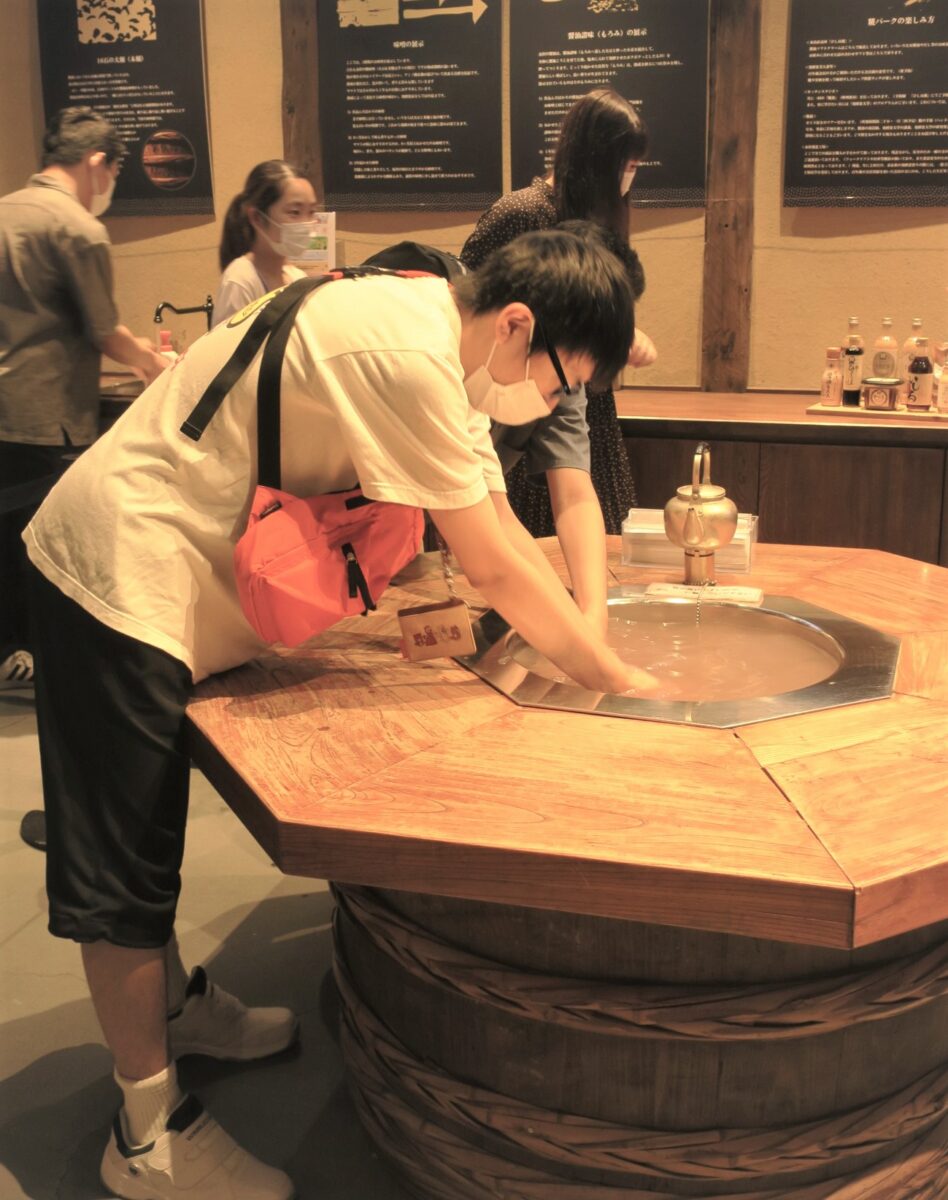
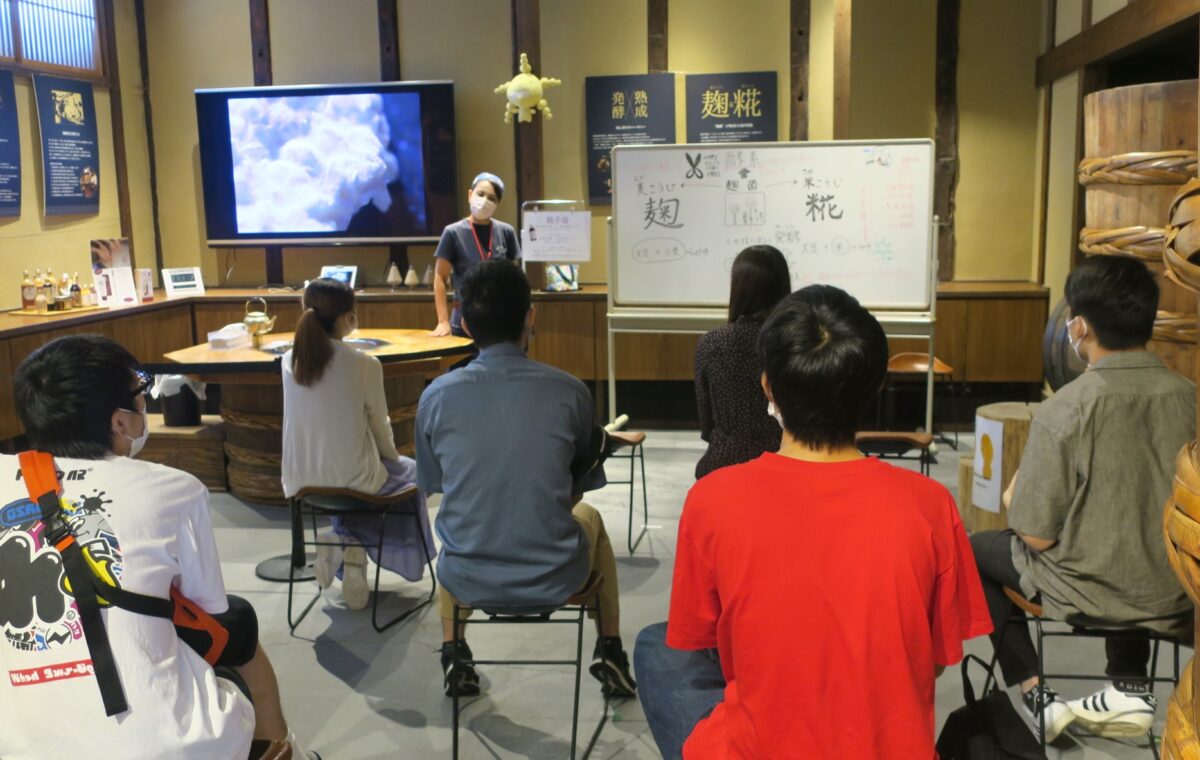
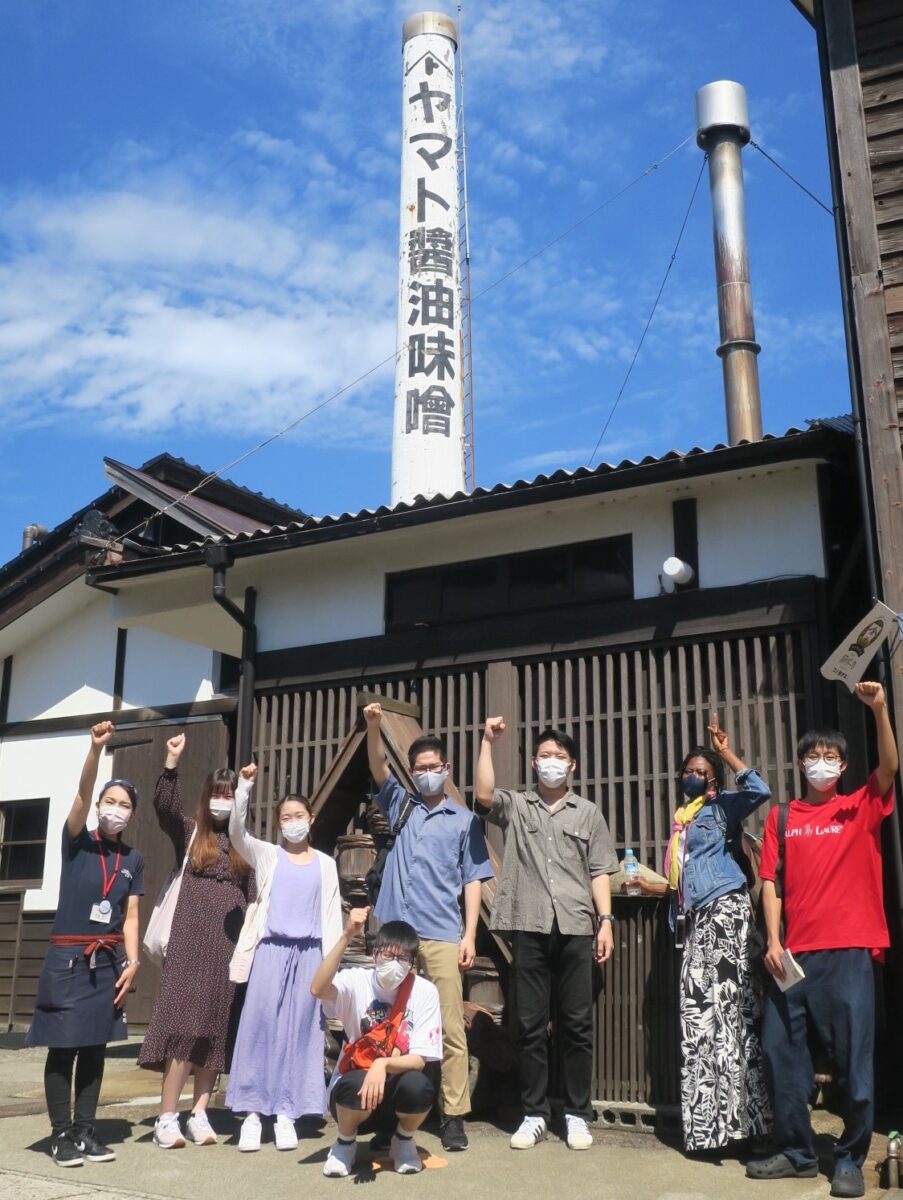
糀が入ったお湯でハンドバスをしたり(手がすべすべになって一同感動!)、熟成期間の異なる味噌の香りや味を比べたり、五感を刺激する食文化体験を楽しみました。6ヶ月熟成の味噌は淡い色合いでやさしい甘みがあり、1年熟成の味噌は深みのある香りとコクがあります。糀は先人たちによって永く守られてきた「国菌」で、糀を用いた味噌は、カビ、酵母菌、細菌のすべてを含む優れた発酵食品だそうです。8ヶ月熟成の味噌をお土産にいただた学生は、さっそく豚汁を作ると意気込んでいました。帰りには創業時に使用していたというボイラーや煙突、帆船から荷下ろししたという大野川河口、そして日本海を眺めながら、北前船隆盛の頃に思いを馳せました。
身近な食べ物を題材に、菌というミクロな視点からも、また物流の歴史というマクロな視点からも日本の食文化を捉え直すことができた学外授業でした。
黒田 譜美
-

帆船の模型(許可を得て撮影)
-

「このお風呂に入りたい」
-

糀の解説を聞き入る
-

「糀だいすき~」

The third-year students visited the Zeniya Gohei Memorial Museum and the Yamato Soysause & Miso Kouji Park as part of the Global Life and Culture class.
Zeniya Gohei was a successful merchant who sailed the Japan Sea during the late Edo period. The museum displays his handwritten journal, antique items such as compasses and telescopes, and a 1/4 scale model of his Kitamae-bune cargo ship “Jyohou-maru”, so you could get a picture of what it was like at the time. There are theories suggesting that Zeniya Gohei sailed to Tasmania and even America during the period of isolation; which Pauline sensei was surprised to hear. (Inoue-kun and Sato-kun translated for her. Thank you!)
Next, we visited the Yamato Soysause & Miso Kouji Park near Kanazawa Port. (*Kouji = malted rice or other grains) We bathed our hands in warm kouji water (it makes your skin silky smooth!) and compared smell and taste of miso with different fermentation periods. It was an opportunity to experience kouji and miso with all five senses. The six-month-old miso was a paler color and gently sweet compared to the one-year-old miso, which was rich in flavor and in smell. Kouji is a national fungus that the Japanese have passed down threw the ages. Miso created with kouji is an excellent fermented product that includes mold, yeast fungus, bacteria all in one. The students received eight-month-old miso as a souvenir and immediately declared that they planned to make “tonjiru” (miso soup with pork and vegetables). On the way home, we viewed old boilers, chimneys, Ono River estuary where merchants used to unload their cargo, and the Japan Sea; and imagined the days when Kitamae-bune cargo ships sailed the ocean.
The topic was a familiar food we eat every day. However, the educational content scaled from small microorganisms to large topics such as trading and history. It was a beneficial trip that let us rethink the culture of food in Japan.
Fumi Kuroda
3年生が「生活と文化」の学外授業で、銭屋五兵衛記念館およびヤマト醤油味噌の糀パークを訪れました。
銭屋五兵衛は、江戸時代後期に活躍した北前船の豪商です。記念館内には、銭屋五兵衛が書き記した「年年留」、当時使われていた羅針盤や遠眼鏡等の文化財のほか、実物の1/4サイズの北前船「常豊丸」の模型もあり、当時の航海を疑似体験できました。鎖国していた頃にオーストラリア南方のタスマニアやアメリカまで渡ったという外国貿易説もあり、ポーリン先生も驚かれていました。(ポーリン先生への英語通訳は井上くん、佐藤くんが担当してくれました。ありがとう!)
次に、金沢港近くのヤマト醤油味噌糀パークへ訪れました。
糀が入ったお湯でハンドバスをしたり(手がすべすべになって一同感動!)、熟成期間の異なる味噌の香りや味を比べたり、五感を刺激する食文化体験を楽しみました。6ヶ月熟成の味噌は淡い色合いでやさしい甘みがあり、1年熟成の味噌は深みのある香りとコクがあります。糀は先人たちによって永く守られてきた「国菌」で、糀を用いた味噌は、カビ、酵母菌、細菌のすべてを含む優れた発酵食品だそうです。8ヶ月熟成の味噌をお土産にいただた学生は、さっそく豚汁を作ると意気込んでいました。帰りには創業時に使用していたというボイラーや煙突、帆船から荷下ろししたという大野川河口、そして日本海を眺めながら、北前船隆盛の頃に思いを馳せました。
身近な食べ物を題材に、菌というミクロな視点からも、また物流の歴史というマクロな視点からも日本の食文化を捉え直すことができた学外授業でした。
黒田 譜美
-
帆船の模型(許可を得て撮影)
-
「このお風呂に入りたい」
-
糀の解説を聞き入る
-
「糀だいすき~」
The third-year students visited the Zeniya Gohei Memorial Museum and the Yamato Soysause & Miso Kouji Park as part of the Global Life and Culture class.
Zeniya Gohei was a successful merchant who sailed the Japan Sea during the late Edo period. The museum displays his handwritten journal, antique items such as compasses and telescopes, and a 1/4 scale model of his Kitamae-bune cargo ship “Jyohou-maru”, so you could get a picture of what it was like at the time. There are theories suggesting that Zeniya Gohei sailed to Tasmania and even America during the period of isolation; which Pauline sensei was surprised to hear. (Inoue-kun and Sato-kun translated for her. Thank you!)
Next, we visited the Yamato Soysause & Miso Kouji Park near Kanazawa Port. (*Kouji = malted rice or other grains) We bathed our hands in warm kouji water (it makes your skin silky smooth!) and compared smell and taste of miso with different fermentation periods. It was an opportunity to experience kouji and miso with all five senses. The six-month-old miso was a paler color and gently sweet compared to the one-year-old miso, which was rich in flavor and in smell. Kouji is a national fungus that the Japanese have passed down threw the ages. Miso created with kouji is an excellent fermented product that includes mold, yeast fungus, bacteria all in one. The students received eight-month-old miso as a souvenir and immediately declared that they planned to make “tonjiru” (miso soup with pork and vegetables). On the way home, we viewed old boilers, chimneys, Ono River estuary where merchants used to unload their cargo, and the Japan Sea; and imagined the days when Kitamae-bune cargo ships sailed the ocean.
The topic was a familiar food we eat every day. However, the educational content scaled from small microorganisms to large topics such as trading and history. It was a beneficial trip that let us rethink the culture of food in Japan.
Fumi Kuroda
3年生が「生活と文化」の学外授業で洞谷山永光寺(とうこくさん ようこうじ)を訪れ、参禅体験を行いました。
永光寺は曹洞宗のお寺です。白木造りの山門をくぐると、さっそく僧侶の方々とすれ違い、学生たちは少々緊張したようでした。方丈様より合掌や叉手(さしゅ)、歩き方など基本的な作法を教わった後、本堂に移り、座禅の心構えや座り方についての講義を受けました。そして、文殊菩薩座像が安置された僧堂に移り、40分ほど座禅を行いました。壁に向かい、鐘の音や小鳥のさえずりを感じながら、姿勢や呼吸を整えることで心を整えることを試みました。
終えてから、
「足がしびれた。毎日しないと」と苦笑いの井上くん。
「10分くらいだと思った」とすっきりした表情の畠中くん。
「座ることに意味があるのかな」と興味が尽きないようすの佐藤くん。
「僕のとき、強く打ってください」と事前に手加減なしの警策(きょうさく)をお願いしていた加藤くんは、「めちゃくちゃ痛かった」と言いつつも笑顔でした。
最後に、お茶とお菓子をいただきながら、方丈様よりお話がありました。
いのちはいのちから生まれ、言葉があって「わたし」があり、そしてその「わたし」は一回きりなのだ、というお話でした。そして、
古池や蛙飛びこむ水の音
よく見れば薺(なずな)花咲く垣根かな
いずれも有名な芭蕉の句ですが、これは一体何を伝えているのか、という「宿題」をいただきました。
短い時間でしたが、日常を離れ、自然と歴史を感じながら、静かに自分を見つめ直した学外授業でした。
黒田 譜美
-

山門にて集合写真
-

本堂にて座禅の講義を受ける
-

参禅風景
-

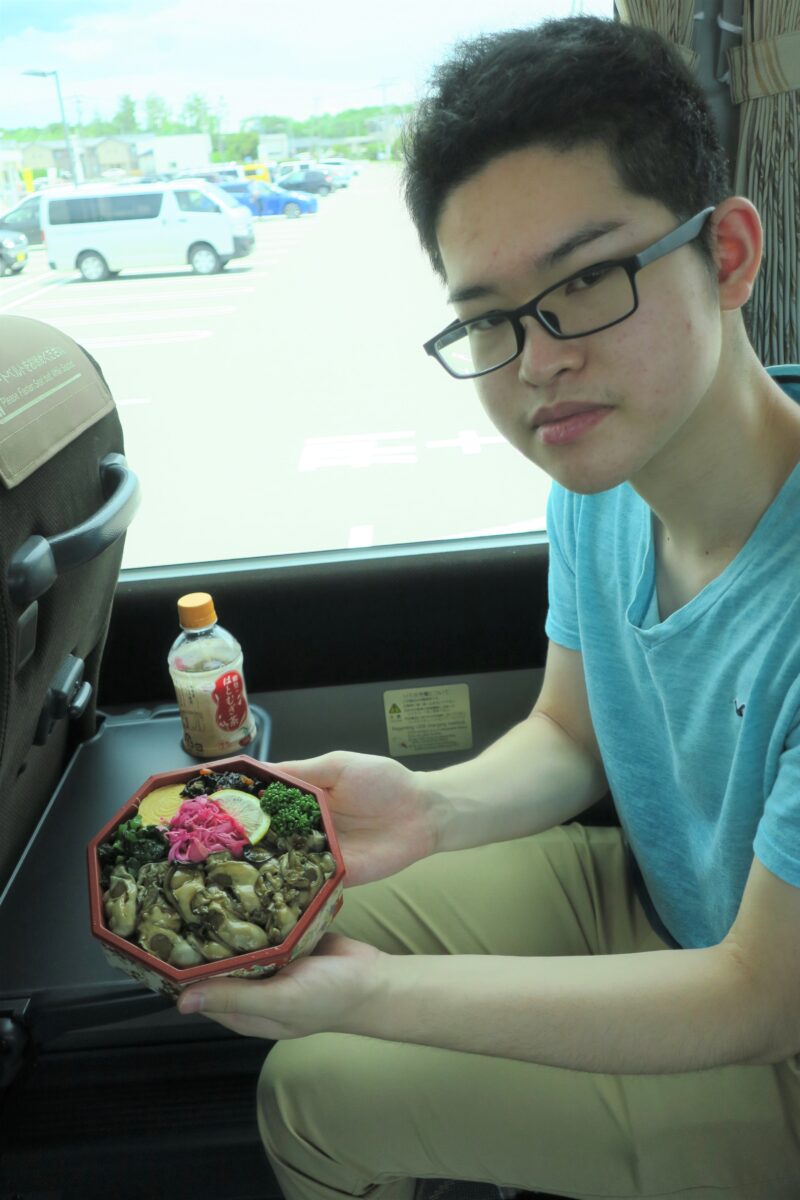
道の駅千里浜にてお腹も満たす


The third year students visited Dokosan-Yokoji temple as fieldwork to practice Zen meditation for their Global Life and Culture class.
Yokoji is a temple of the Soto school. After walking through the wooden sanmon (main gate), we passed many Buddhist monks and I could sense the students nervousness. We learned basic manners from Mr. Manjo such as the correct hand positions for praying and meditating, and how to walk. Then, we returned to the main temple and listened to a lecture about the correct mindset and how to sit. Finally, we moved to the monastery that holds the Buddhist statue Monju-Bosatsu (文殊菩薩座像) and meditated for forty minutes. The students' goal was to find peace in their heart by sitting while facing the wall, appreciating the sound of the bell and birds, and concentrating on their posture and breath.
Some comments by the students after the meditation:
Inoue-san said "My legs are stiff. I need to do this more often" with a wryly smile.
Hatanaka-san looked refreshed and said "It only felt like 10 minutes"
Sato-san was still contemplating the experience and voiced the question "I wonder what the purpose of sitting is?"
Kato-san, who requested "Don't hesitate to strike me harder when its my turn" later remarked that "It hurt A LOT" with a big smile on his face as always.
Afterward, we drank tea and ate sweats, and listened to Majo-san talk about how life is born from life, words exist, therefore "I" am, and that "I" exists only once. Also the following haiku:
careful watching_
shepherd’s purses in bloom
under the hedge
a sound of a frog
jumping into water_
the old pond
Both are famous haikus by Basho. We were given the homework to contemplate what he wanted to convey with them.
It was a short field trip, but the students were able to leave their busy routine to appreciate nature and history, and observe themselves within.
Fumi Kuroda
3年生が「生活と文化」の学外授業で洞谷山永光寺(とうこくさん ようこうじ)を訪れ、参禅体験を行いました。
永光寺は曹洞宗のお寺です。白木造りの山門をくぐると、さっそく僧侶の方々とすれ違い、学生たちは少々緊張したようでした。方丈様より合掌や叉手(さしゅ)、歩き方など基本的な作法を教わった後、本堂に移り、座禅の心構えや座り方についての講義を受けました。そして、文殊菩薩座像が安置された僧堂に移り、40分ほど座禅を行いました。壁に向かい、鐘の音や小鳥のさえずりを感じながら、姿勢や呼吸を整えることで心を整えることを試みました。
終えてから、
「足がしびれた。毎日しないと」と苦笑いの井上くん。
「10分くらいだと思った」とすっきりした表情の畠中くん。
「座ることに意味があるのかな」と興味が尽きないようすの佐藤くん。
「僕のとき、強く打ってください」と事前に手加減なしの警策(きょうさく)をお願いしていた加藤くんは、「めちゃくちゃ痛かった」と言いつつも笑顔でした。
最後に、お茶とお菓子をいただきながら、方丈様よりお話がありました。
いのちはいのちから生まれ、言葉があって「わたし」があり、そしてその「わたし」は一回きりなのだ、というお話でした。そして、
古池や蛙飛びこむ水の音
よく見れば薺(なずな)花咲く垣根かな
いずれも有名な芭蕉の句ですが、これは一体何を伝えているのか、という「宿題」をいただきました。
短い時間でしたが、日常を離れ、自然と歴史を感じながら、静かに自分を見つめ直した学外授業でした。
黒田 譜美
-
山門にて集合写真
-
本堂にて座禅の講義を受ける
-
参禅風景
-
道の駅千里浜にてお腹も満たす
The third year students visited Dokosan-Yokoji temple as fieldwork to practice Zen meditation for their Global Life and Culture class.
Yokoji is a temple of the Soto school. After walking through the wooden sanmon (main gate), we passed many Buddhist monks and I could sense the students nervousness. We learned basic manners from Mr. Manjo such as the correct hand positions for praying and meditating, and how to walk. Then, we returned to the main temple and listened to a lecture about the correct mindset and how to sit. Finally, we moved to the monastery that holds the Buddhist statue Monju-Bosatsu (文殊菩薩座像) and meditated for forty minutes. The students' goal was to find peace in their heart by sitting while facing the wall, appreciating the sound of the bell and birds, and concentrating on their posture and breath.
Some comments by the students after the meditation:
Inoue-san said "My legs are stiff. I need to do this more often" with a wryly smile.
Hatanaka-san looked refreshed and said "It only felt like 10 minutes"
Sato-san was still contemplating the experience and voiced the question "I wonder what the purpose of sitting is?"
Kato-san, who requested "Don't hesitate to strike me harder when its my turn" later remarked that "It hurt A LOT" with a big smile on his face as always.
Afterward, we drank tea and ate sweats, and listened to Majo-san talk about how life is born from life, words exist, therefore "I" am, and that "I" exists only once. Also the following haiku:
careful watching_
shepherd’s purses in bloom
under the hedge
a sound of a frog
jumping into water_
the old pond
Both are famous haikus by Basho. We were given the homework to contemplate what he wanted to convey with them.
It was a short field trip, but the students were able to leave their busy routine to appreciate nature and history, and observe themselves within.
Fumi Kuroda