




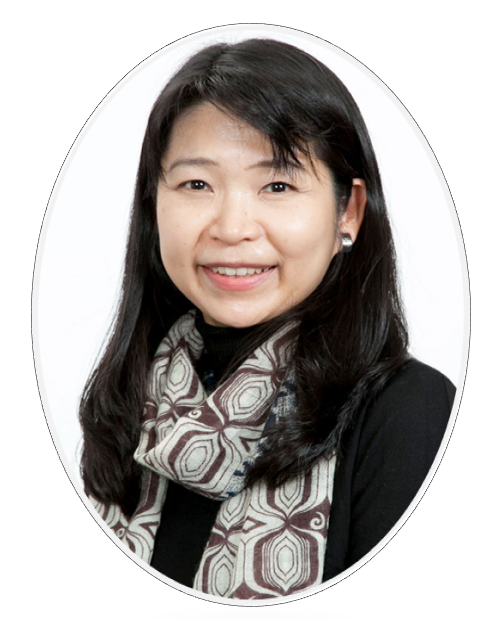
 Hello, I am Takako Utsunomiya, the teacher overseeing the Ikebana club. At the Kanazawa Campus, where the 4th- and 5th-year students study, we offer an extracurricular Ikebana activity. The participating students receive instruction twice a month from Ms. Howa Minamikawa, a member of the Eighth Division of the Sogetsu School’s Ishikawa Branch. This year, four students—three from the 4th year and one from the 5th year—are taking part in the club.
As we begin our Ikebana activities for the second semester, I would like to reflect on what our 4th- and 5th-year students accomplished during the first semester and highlight their involvement in the club.
[May]
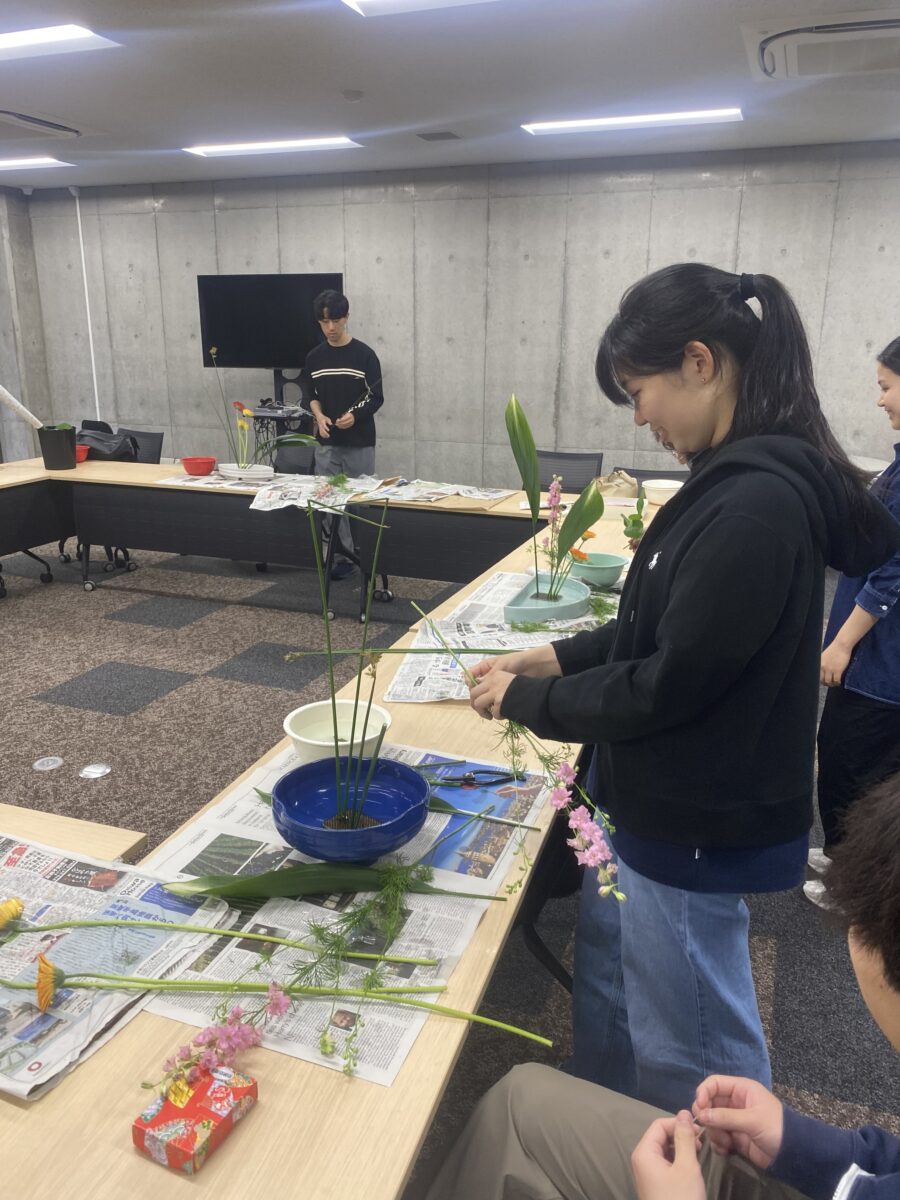
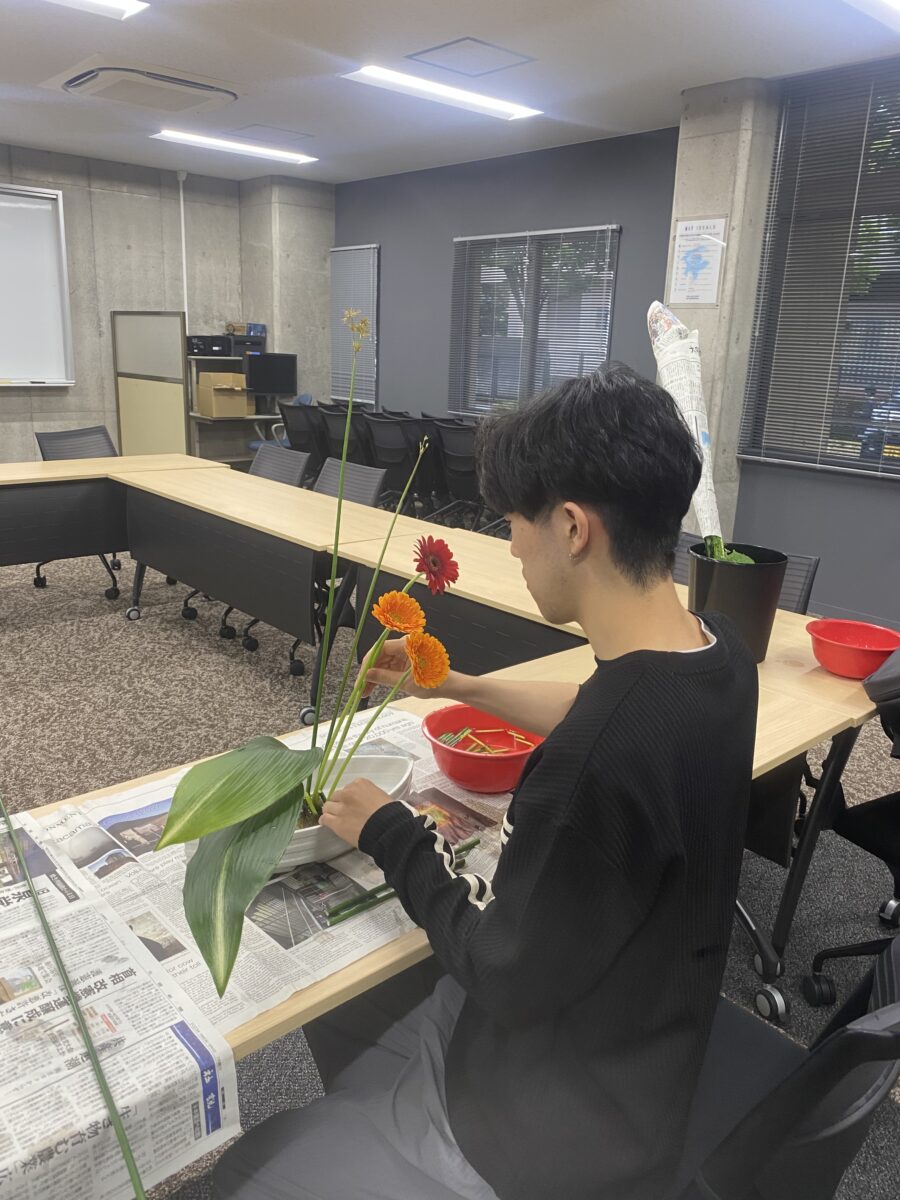
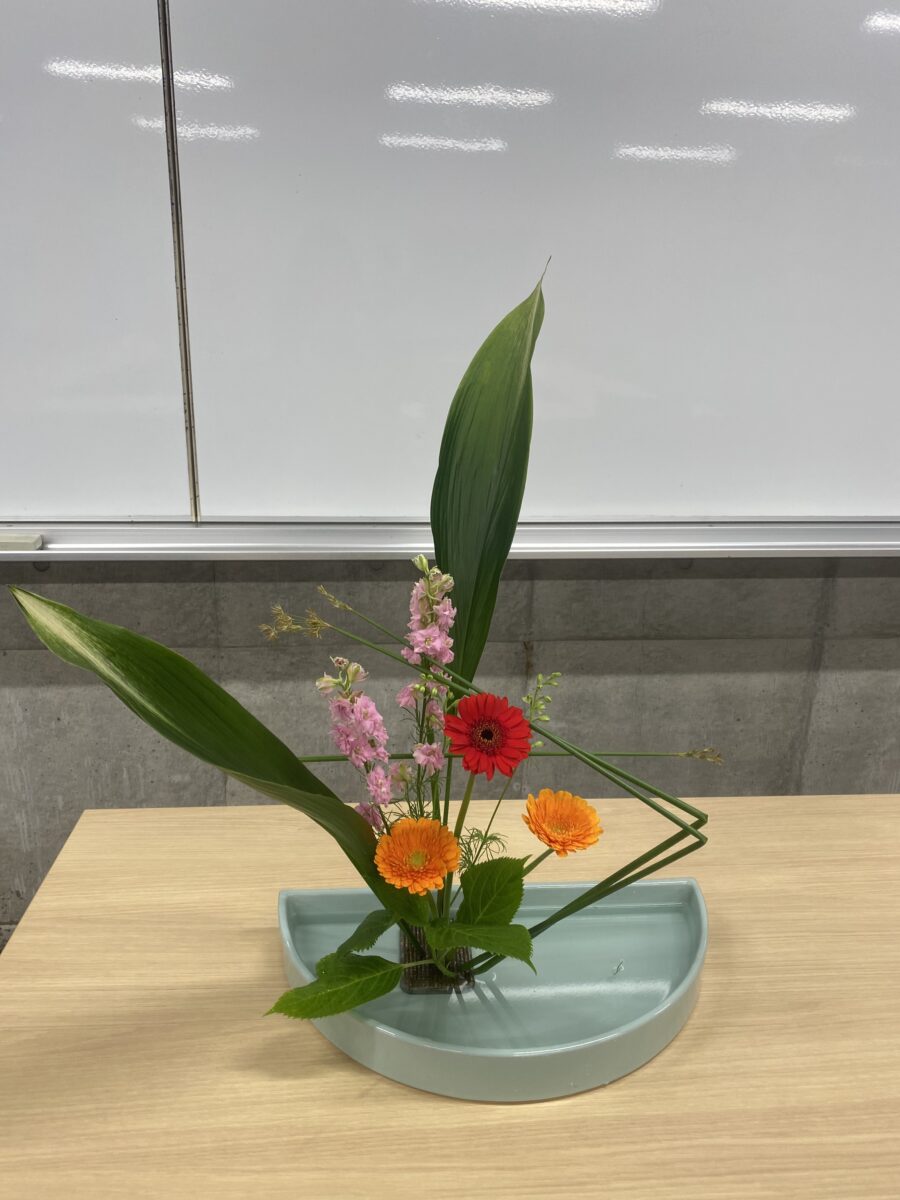
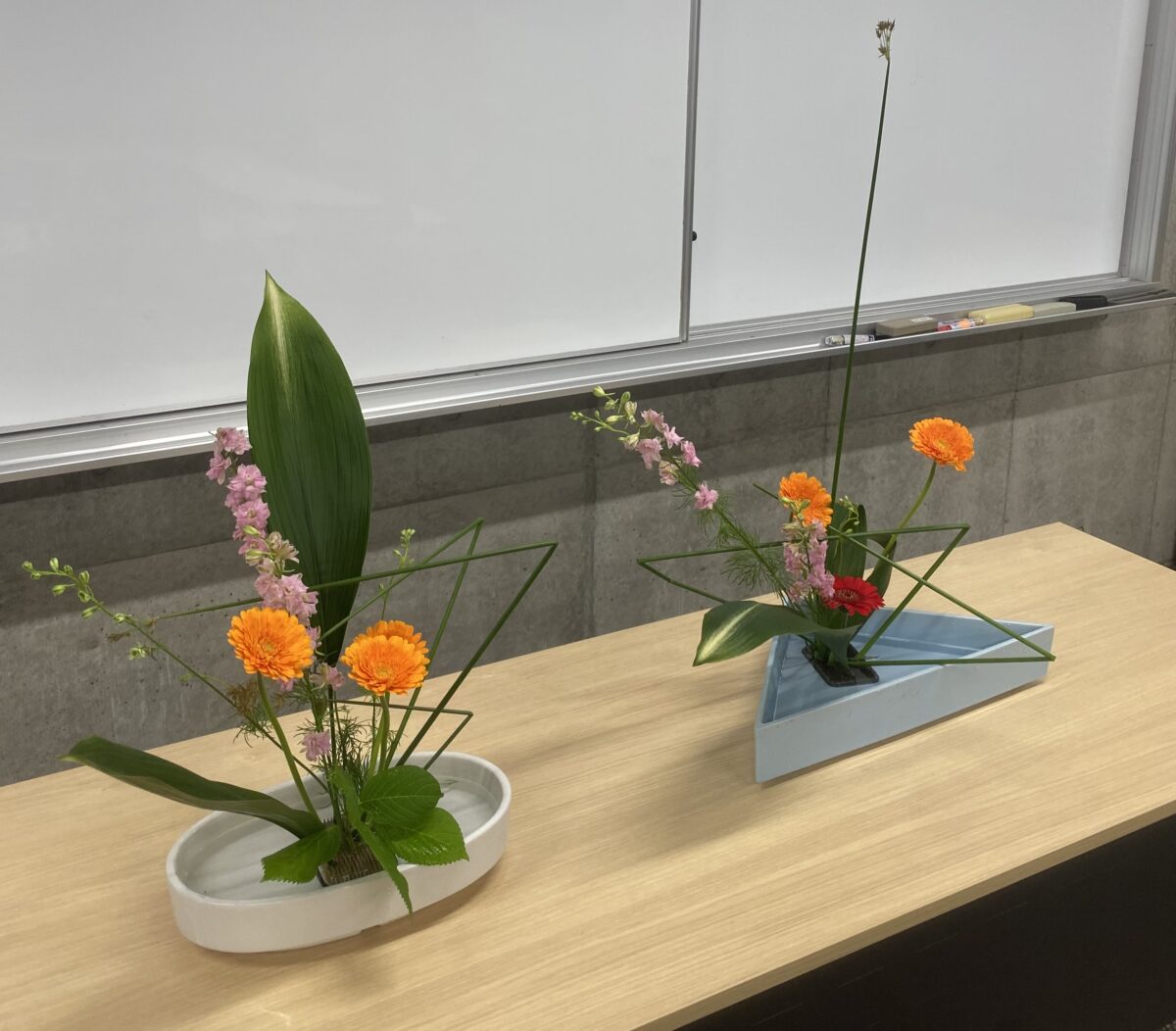
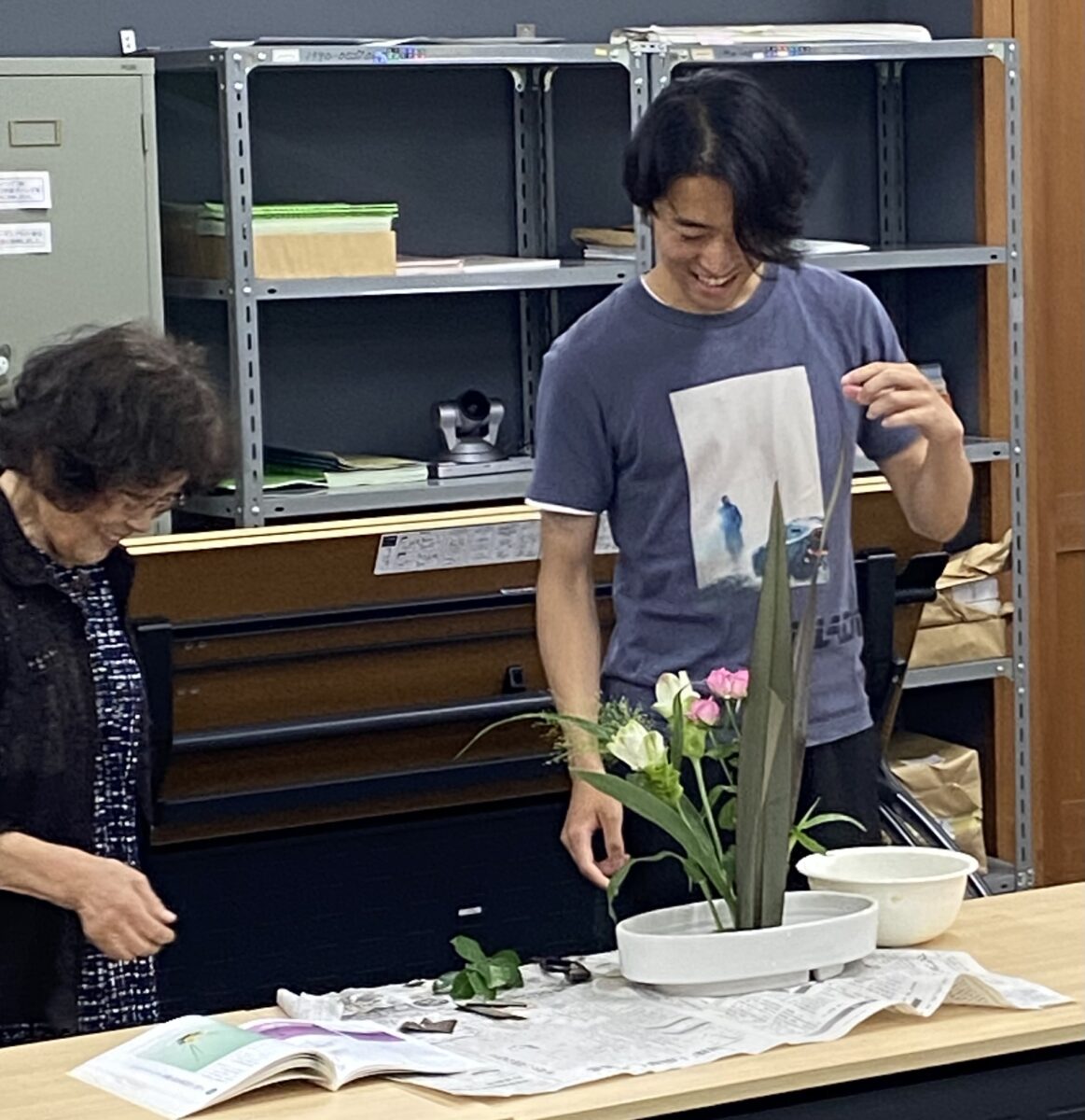
The fourth‑year students used the flower shears with surprising skill for beginners, and Ms. Minamikawa (Ikebana instructor) even complimented their work. Their faces were full of concentration as they planned their designs. The fifth‑year student quietly focused on his own arrangement while warmly welcoming the younger members.
[June]
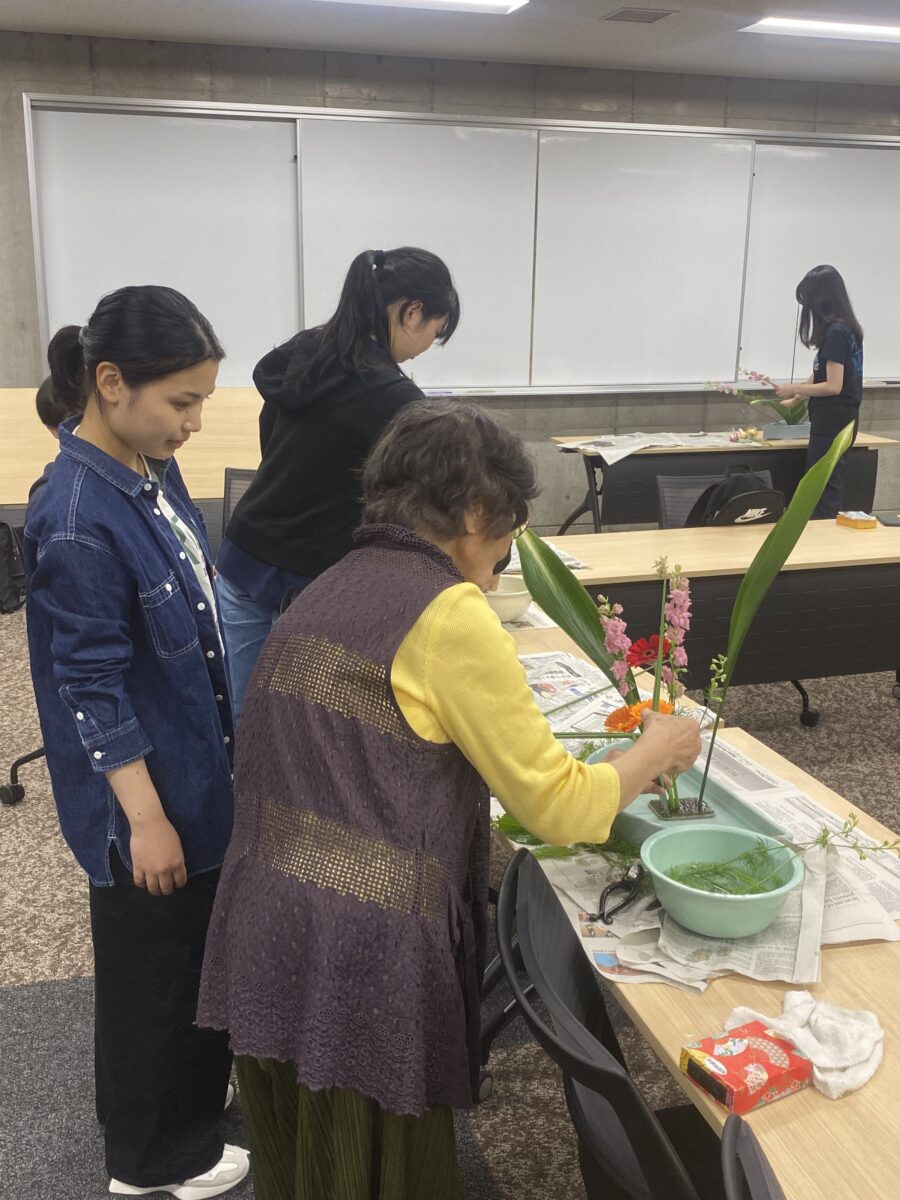
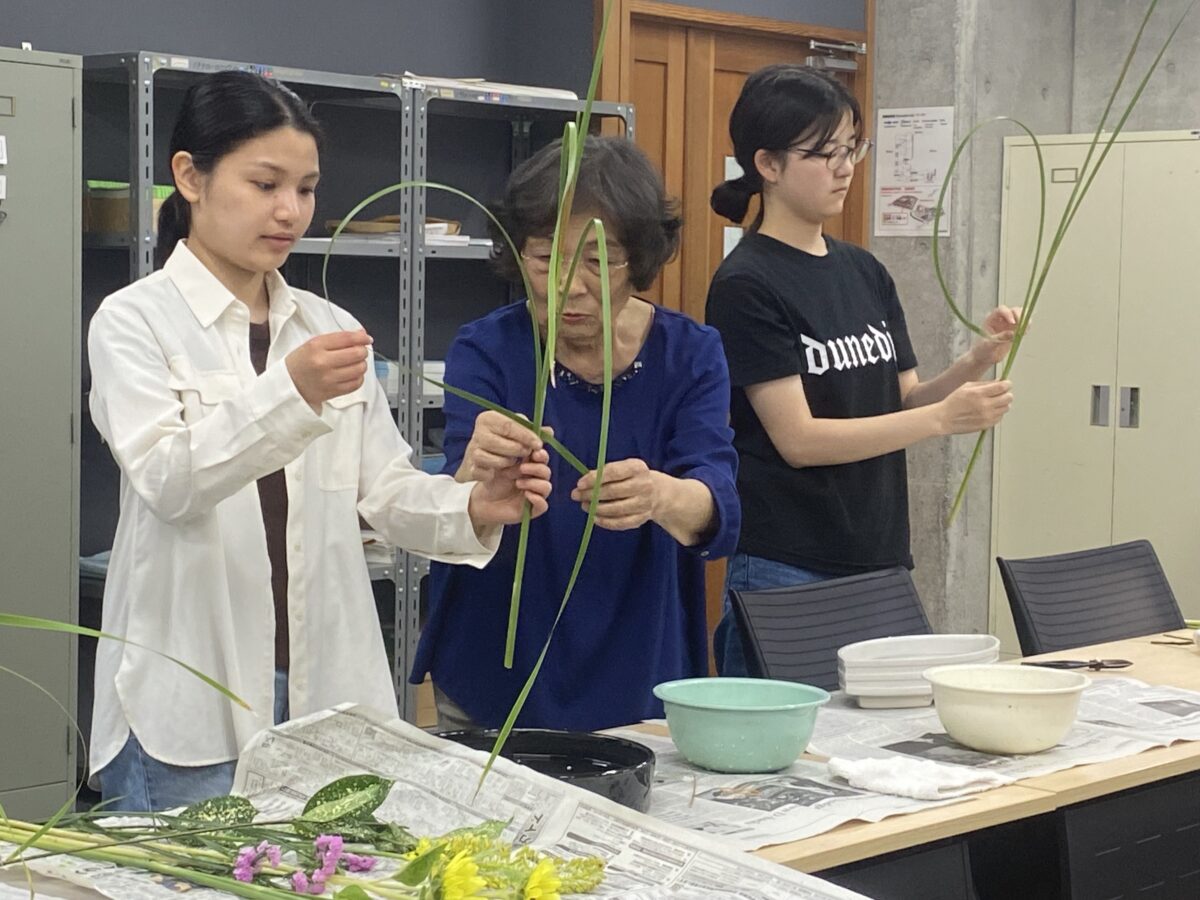
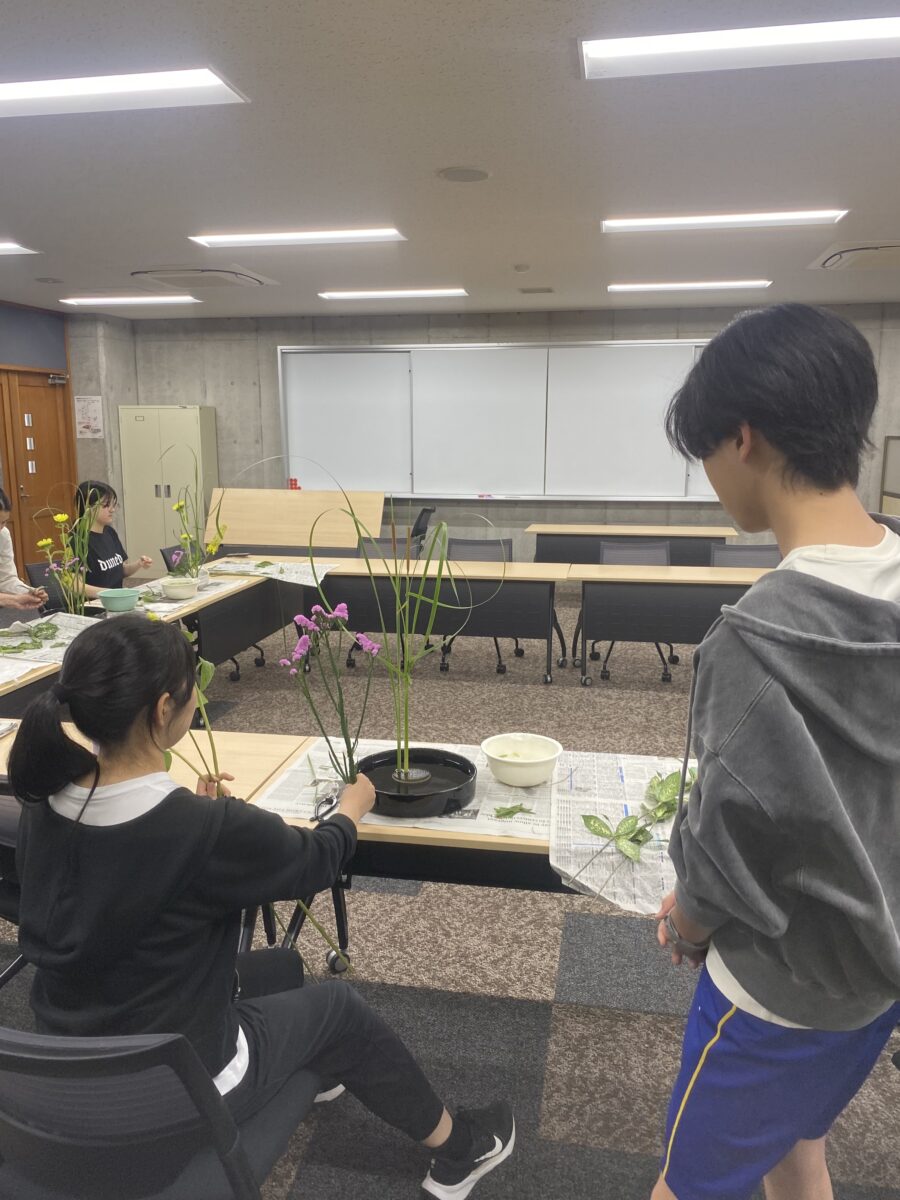
One student quietly focused on her flowers, others asked the teacher for advice, and still another enjoyed lively conversation with classmates as she decided on her designs. There were many different paths to creating a piece, each one unique to the student.
[July ①]
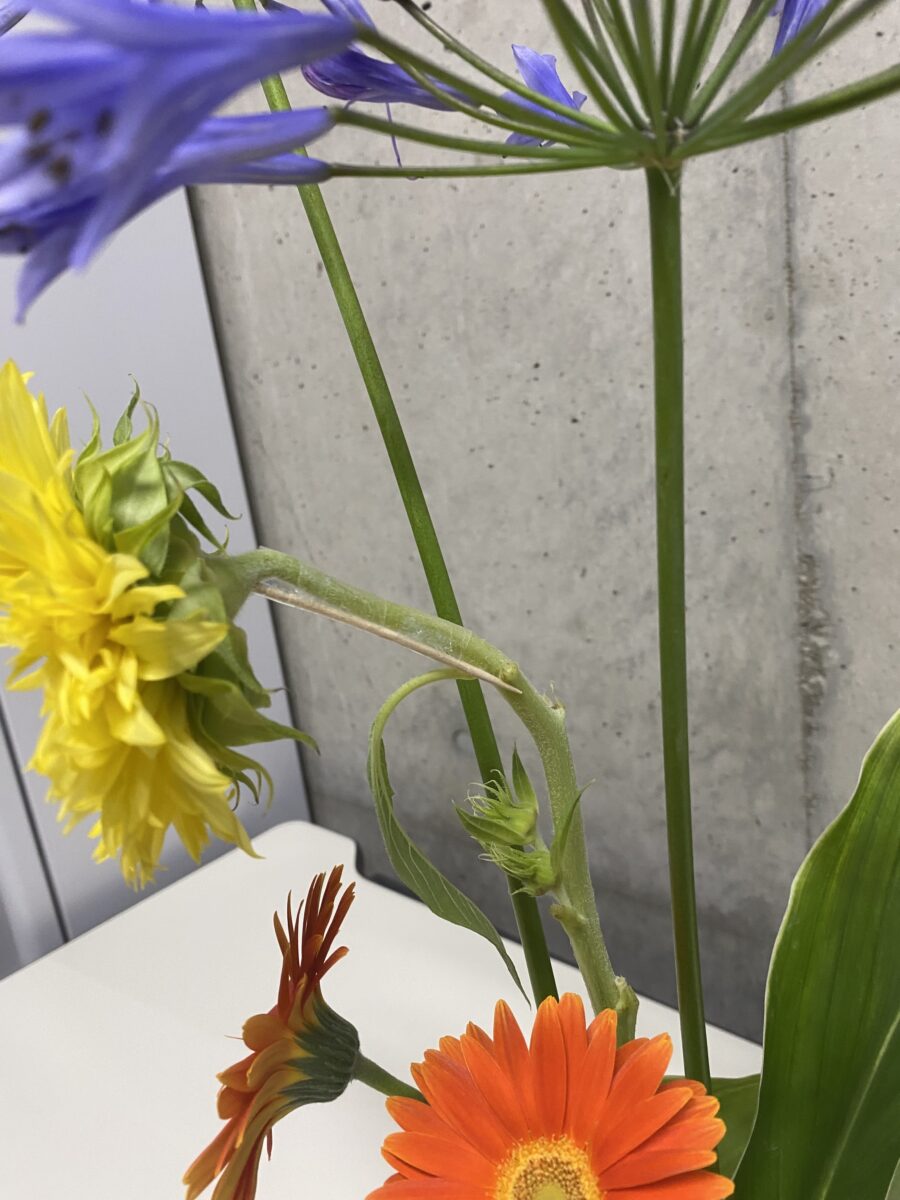
The sunflower’s head was simply too heavy. Even so, driven by the desire to make it face upward, the student kept trying different ideas. Did you notice the toothpick quietly supporting it in the photo? That small touch speaks volumes about her dedication to the piece.
[July ②]
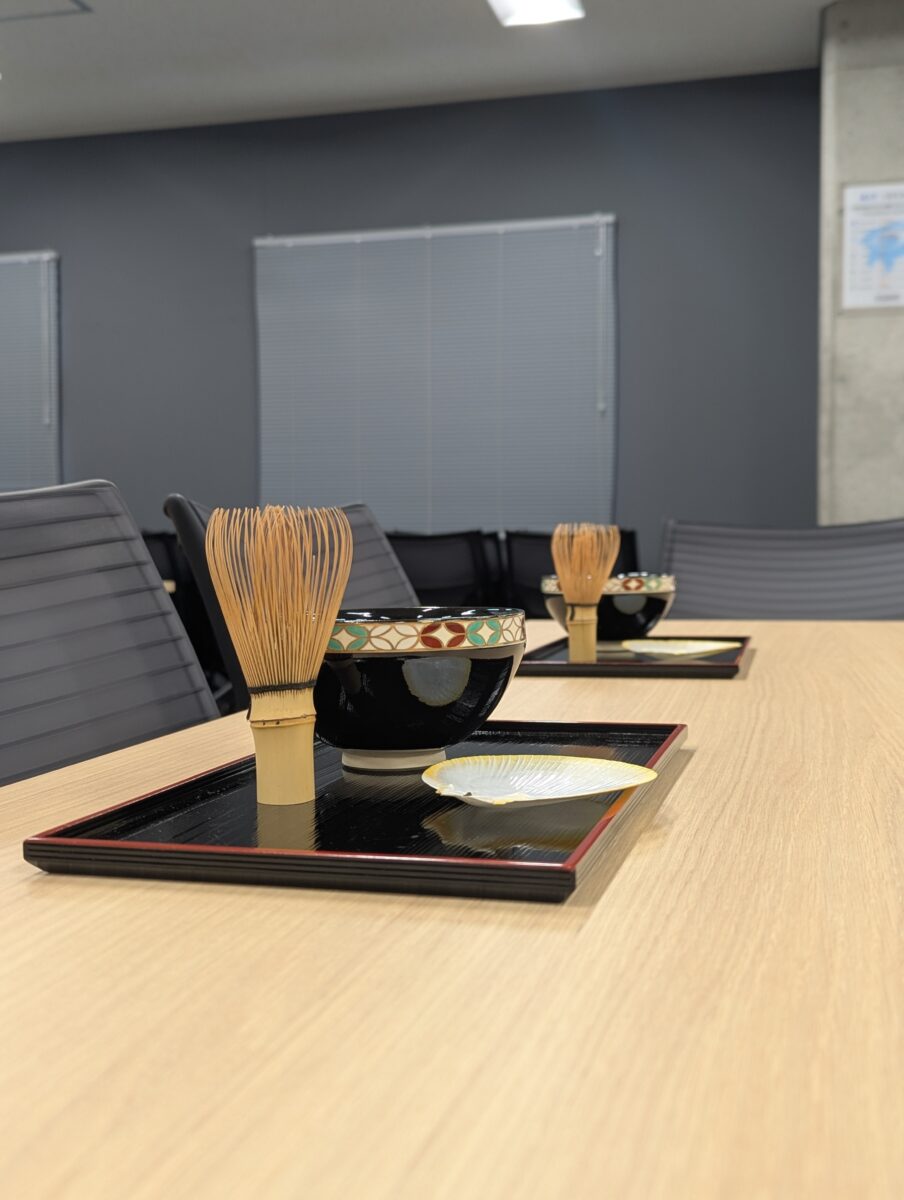
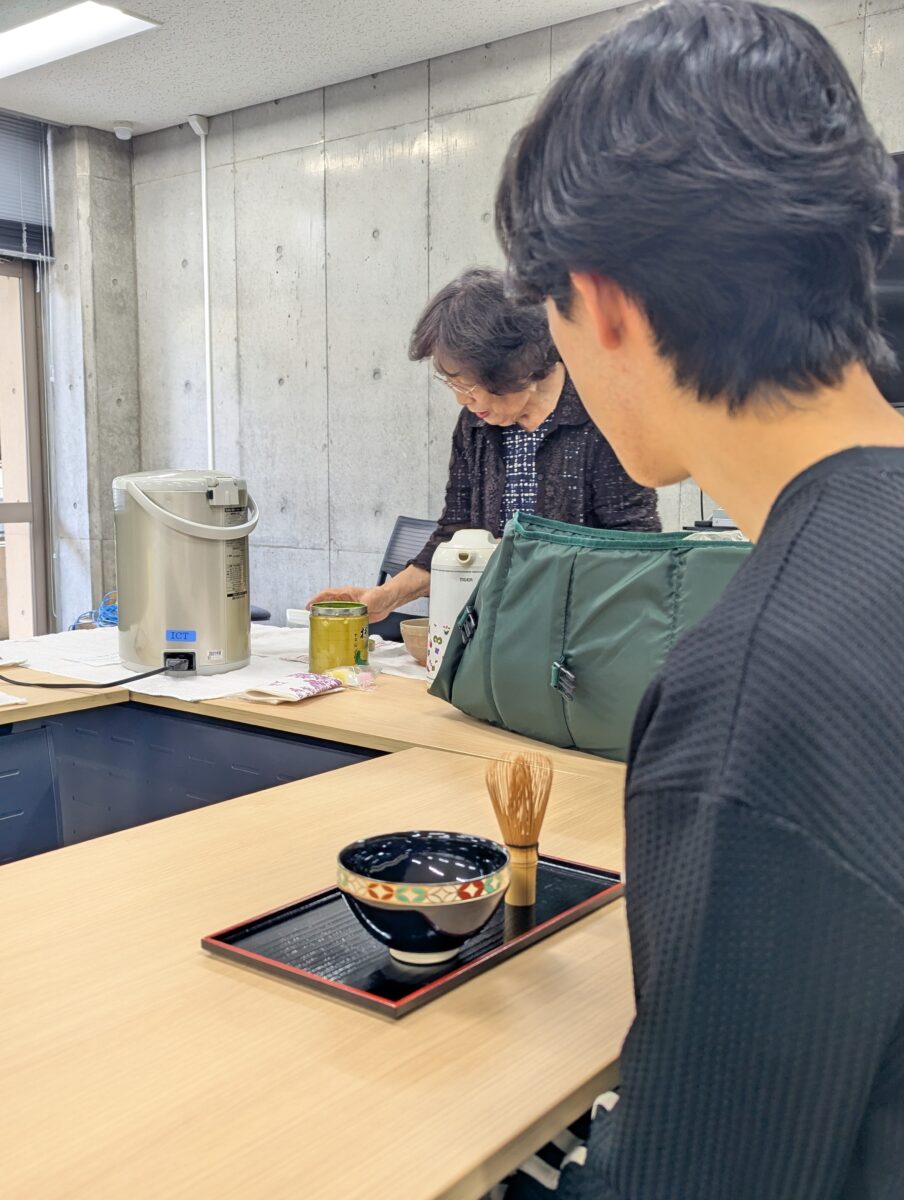
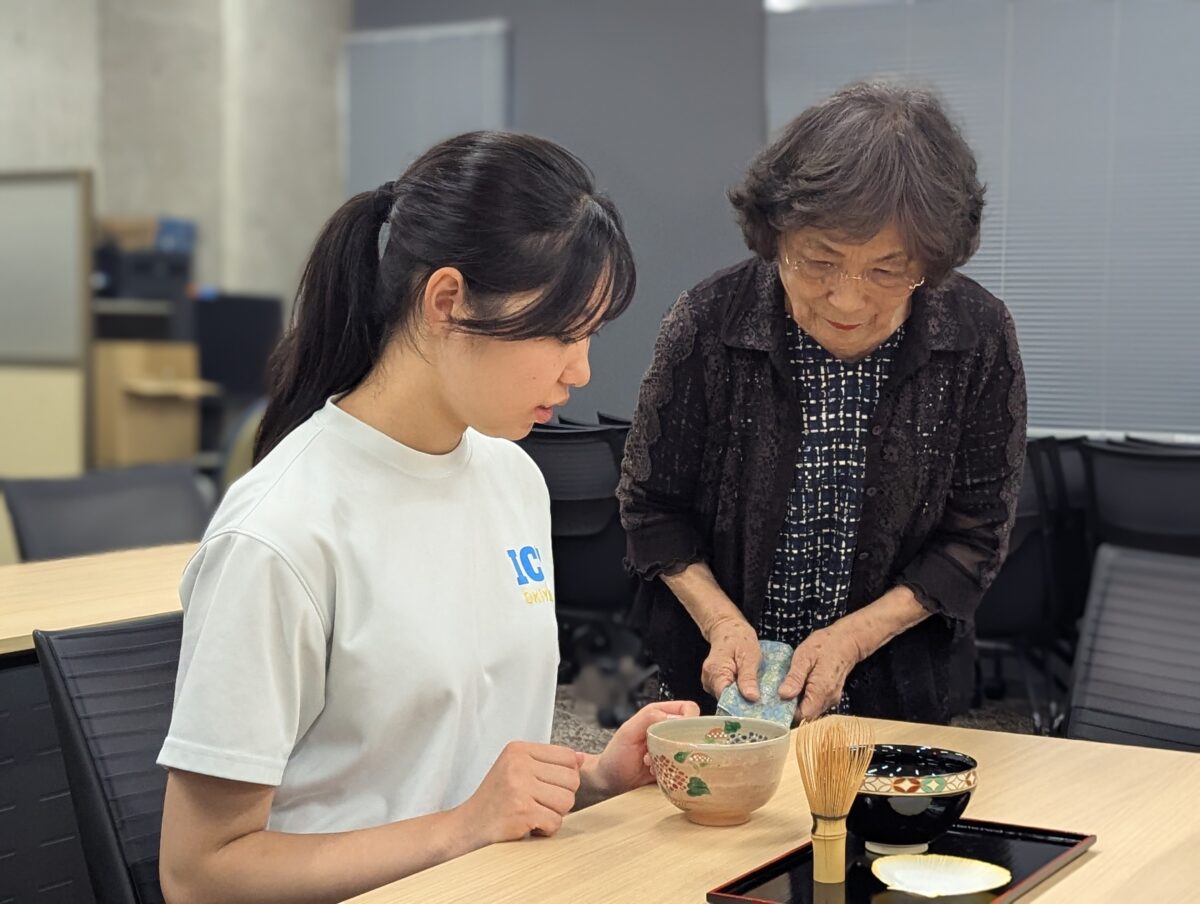
Ms. Minamikawa, our Ikebana instructor, is also a certified Urasenke tea ceremony teacher. She kindly arranged an opportunity for the 4th- and 5th-year students to experience the tea ceremony, and we were served higashi sweets from “Yoshihashi” in Higashiyama, Kanazawa.
[July ③]
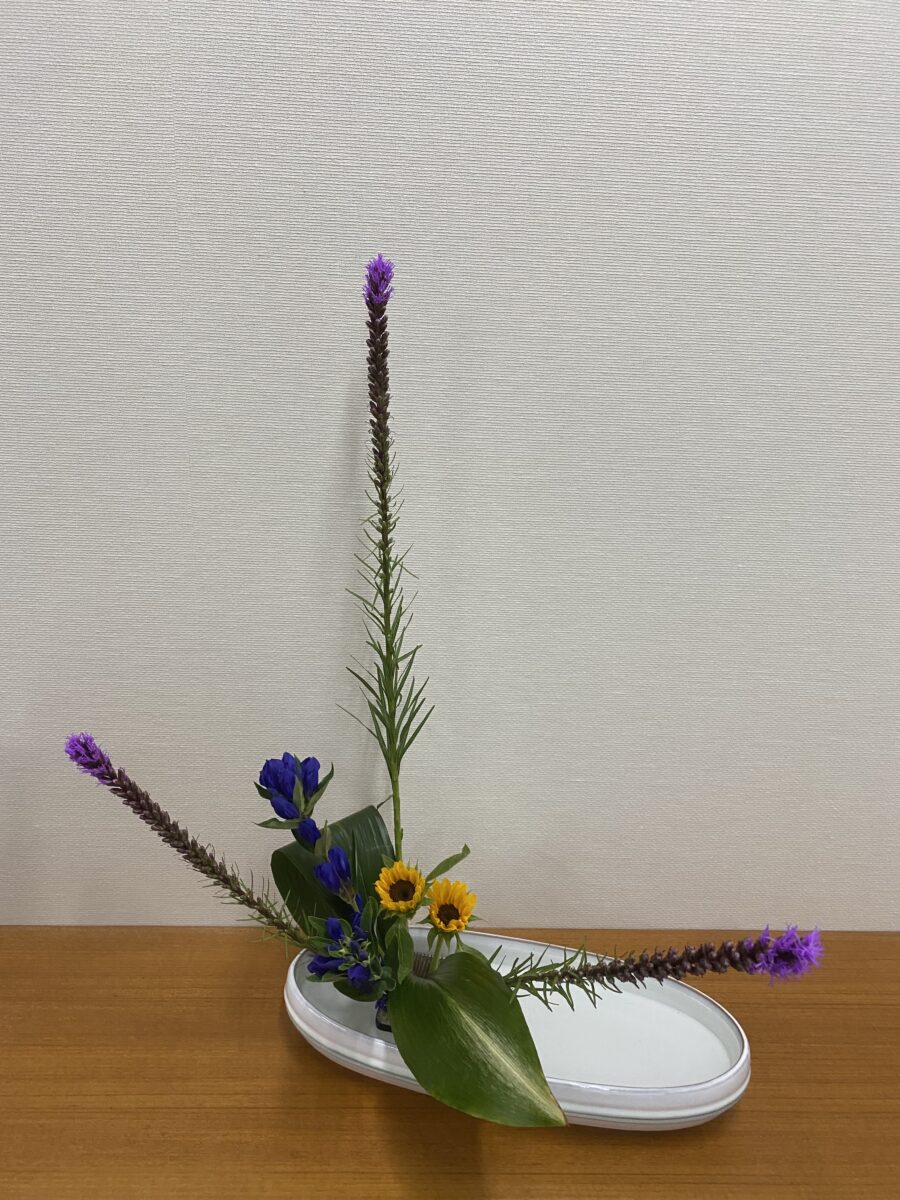
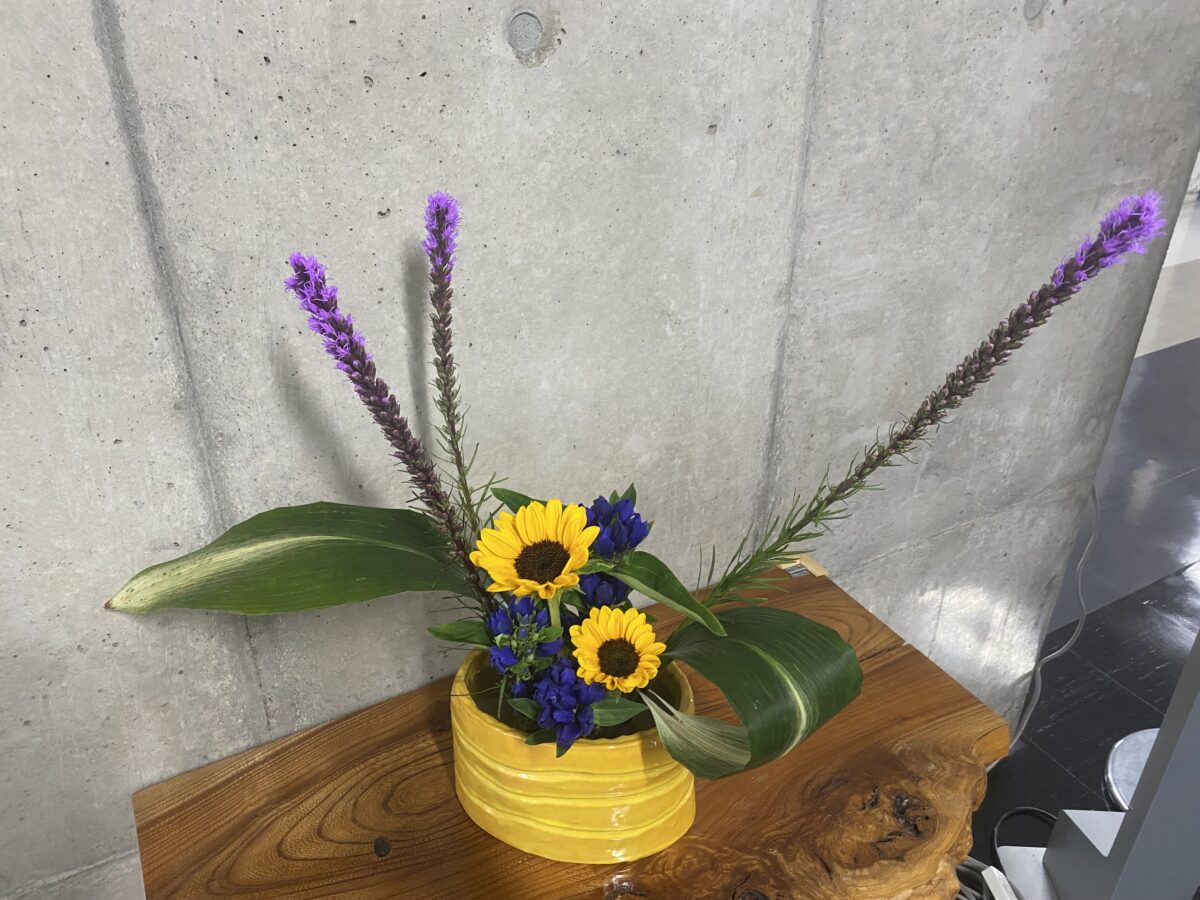
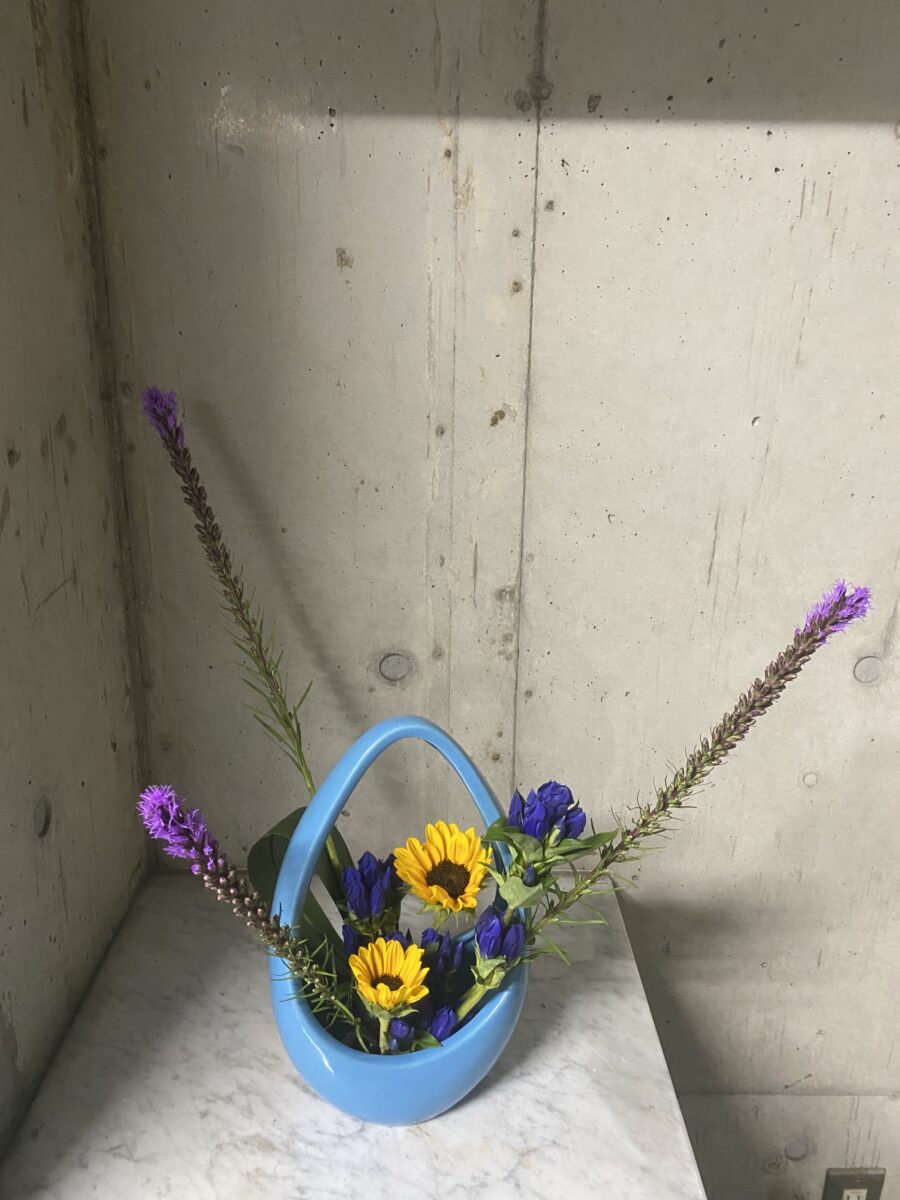
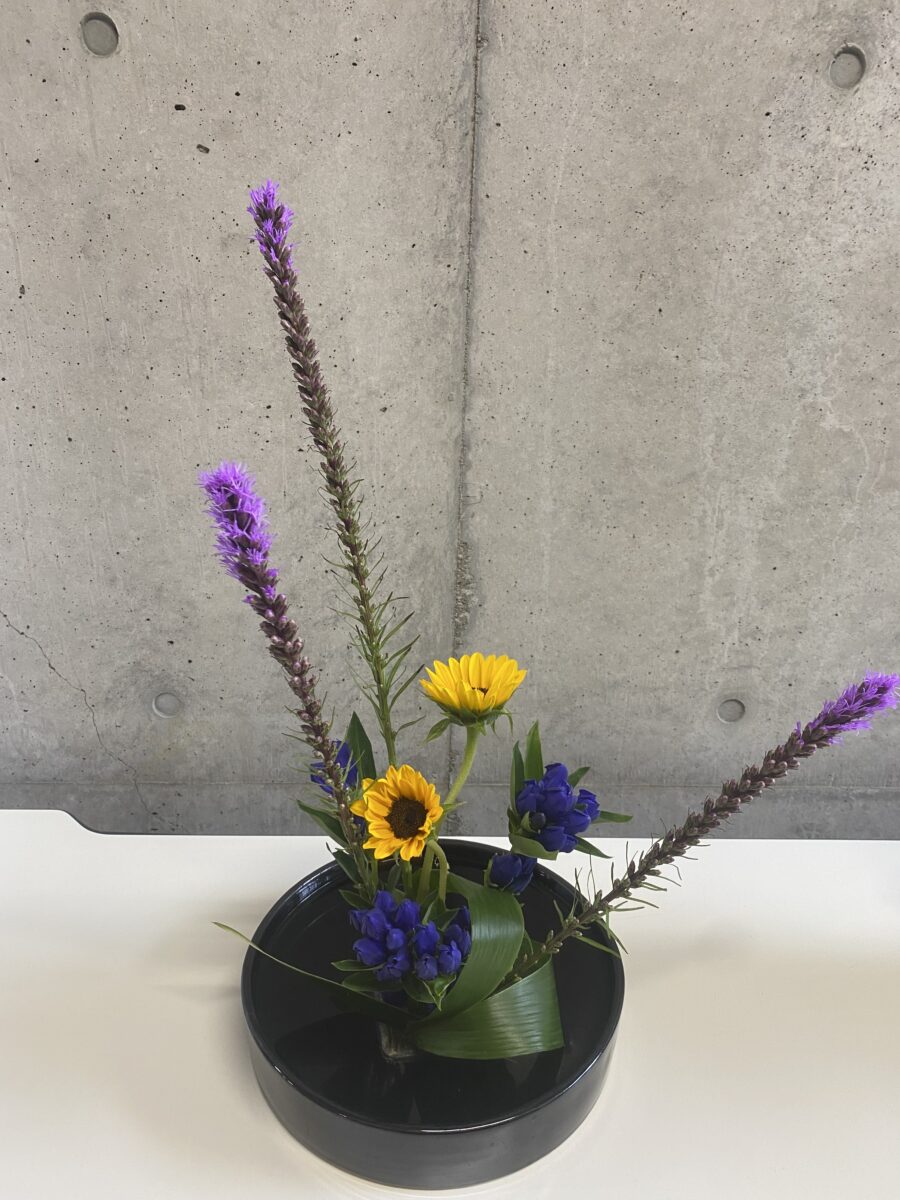
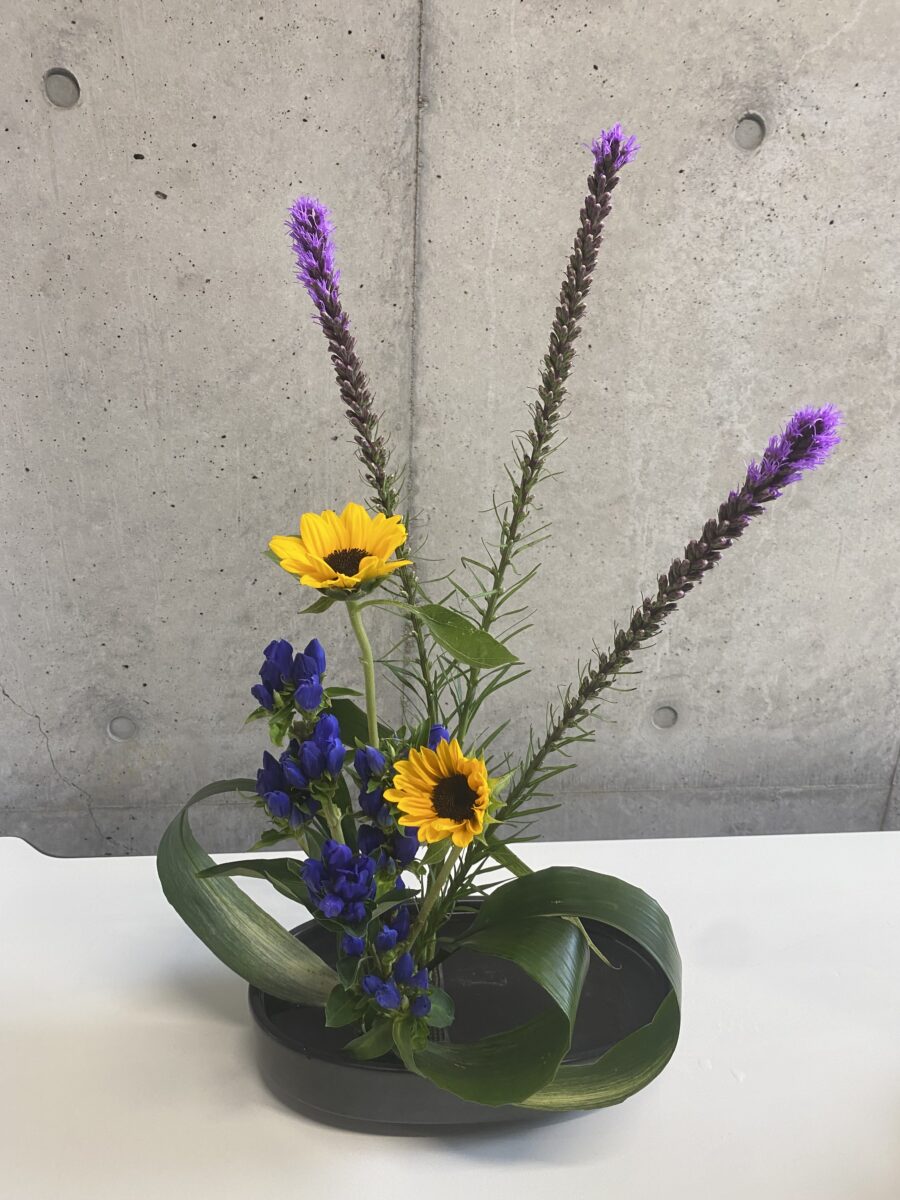
Students’ Ikebana works are displayed in various locations, including the president’s office, the main entrance of the ICT, and the space beneath the staircase. Recently, the students have started to concentrate on their own display sites.
[October]
The 4th- and 5th-year students have been given the opportunity to participate in the Sogetsu 100th Anniversary Ikebana Exhibition, “Creating Together, Connecting to the Future,” and to showcase their work in the Mirai Corner.
(Our sincere thanks to everyone at the Sogetsu Ikebana Association, Ishikawa Branch.)
The exhibition will be held from October 10 (Sat.) to 12 (Mon.) at the 21st Century Museum of Contemporary Art, Kanazawa, Basement Level 1, People’s Gallery B. If you happen to be in the area, we would be delighted if you could stop by and take a look at the students’ work.
https://www.sogetsu.or.jp/events/local/816652/
Ikebana Club
Takako Utsunomiya
 Hello! This is Sade Moore a Learning Mentor at Hakusanroku Campus. I want to take this journal as an opportunity to talk about and hard launch the official International College of Technology House System!
At Hakusanroku Campus for the past two and a half years, we have been utilizing a House System for the students who reside here. This House System was created as a way for the 1st year and 2nd year students to work together for a common goal and get rewarded for the good deeds and accomplishments that they do throughout the semester at Hakusanroku Campus by collecting House Points. The students are split between four Houses and each House is led by their Head of House, which is a Learning Mentor who oversees those students who are in their House. Students can earn various amounts of House Points by finishing and completing homework assignments and showing it to a Learning Mentor, cleaning up around Hakusanroku Campus, attending designated workshops that the Learning Mentors put on throughout the semester, volunteering for organization checks of their school materials with a Learning Mentor, or any good merit that a Learning Mentor may see a student exhibit. Students can also get demerits and lose points for any negative aspects of their behavior such as, being late to Learning Session, not attending their Roll Calls, not cleaning up after themselves and leaving their materials, possessions, and trash unattended around the campus, or any other negative demerits that a Learning Mentor may take notice that a student has done. Together, in their house, over the semester they have to work together to collect and earn (or lose) as many House Points as possible, in order to be the House with the most House Points at the end of the semester and thus winning the ICT House Cup. After each semester, the students will randomly be placed in a different House for the next semester.
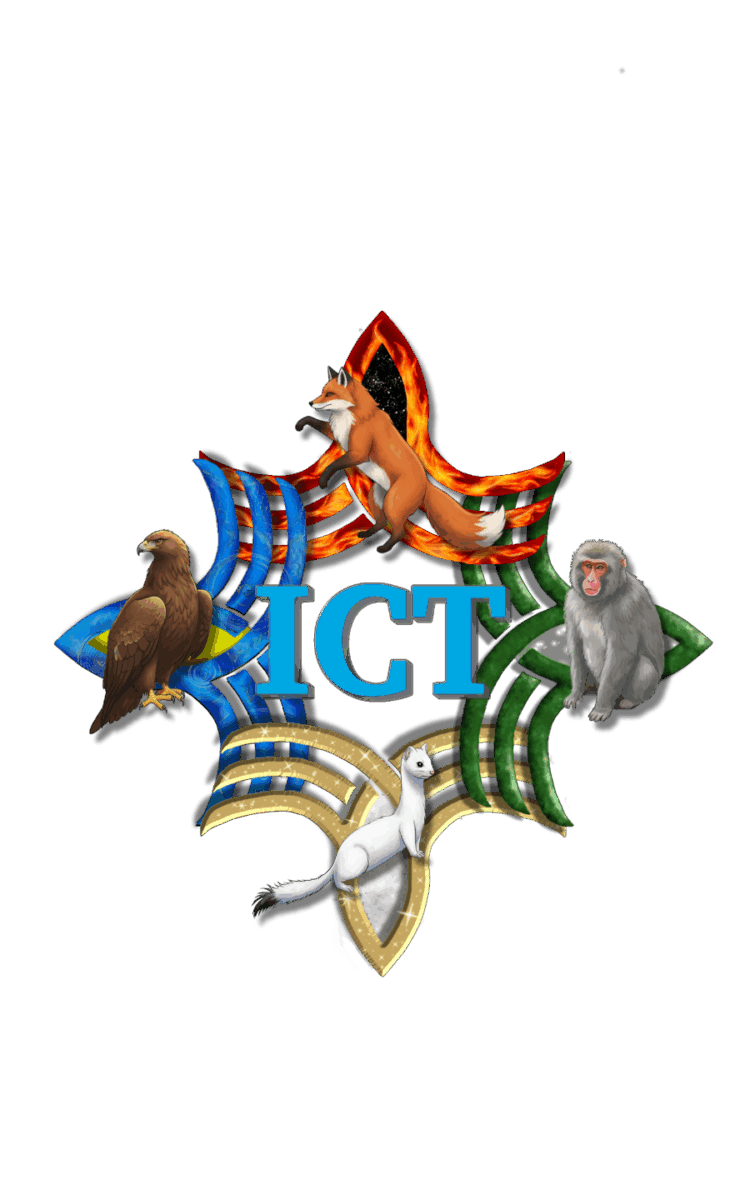
In the semesters past, the ICT House System utilized the four Houses from a well-known book and movie franchise. However, obviously this system couldn’t be used forever, and there was a need to make the House System more tailored to being an ICT House System. Therefore, at the end of the 2025 1st Semester, we surveyed the students and asked them to choose between a list of animals that are endogenous to Hakusaroku and live around Hakusanroku Campus such as, kamemushi, Asian black bear, frog, golden eagle, kamoshika, etc. The thought was, the 4 animals that the students liked the most would go towards being the animals that would be the symbols of the new ICT Houses. The four winning animals of this survey ended up being: fox, Japanese monkey(macaque), golden eagle, and the stoat. From there, I went to work and began to design the new House Crests.
I wanted the design for the new Houses to be cohesive and also indicative of ICT and the House System that the students were already used to using beforehand. For the logo I wanted to create something that was similar to the logo used officially for ICT, but still unique and different, and although it took a lot of time, between the end of the 1st Semester of 2025 and the start of the new 1st Semester of 2026, the new House logos were finally completed and ready to be unveiled to the students, and now we can reveal them to everyone else!
The first House I will be introducing is Soragle
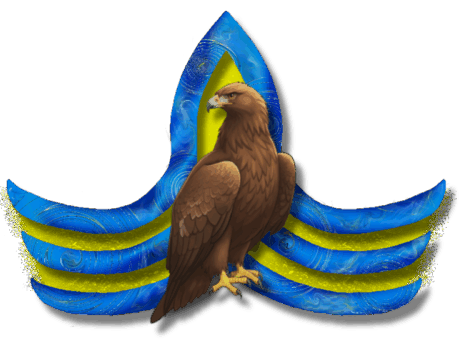
Name origin: Sora (sky)+ Eagle
Representative animal: Golden Eagle
Main Color: Blue
Secondary Color: Gold
Element: Water
Cardinal Direction: West
Defining Characteristics: Bravery and Innovation
Head of House: Krishia
Now to introduce, Monkage house
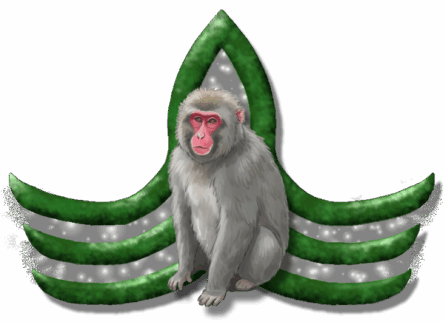
Name origin: Monkey + kage (shadow)
Representative animal: Japanese monkey (macaque)
Main Color: Green
Secondary Color: Silver
Element: Earth
Cardinal Direction: East
Defining Characteristics: Grit and Teamwork
Head of House: Domyson
The next House to be introduced is Vixtsune.

Name origin: Vix (short for vixen) + kitsune (fox)
Representative animal: Fox
Main Color: Red
Secondary Color: Black
Element: Fire
Cardinal Direction: North
Defining Characteristics: Cleverness and Curiosity
Head of House: Dianne
Last but not least, introducing Fuwapaw house.
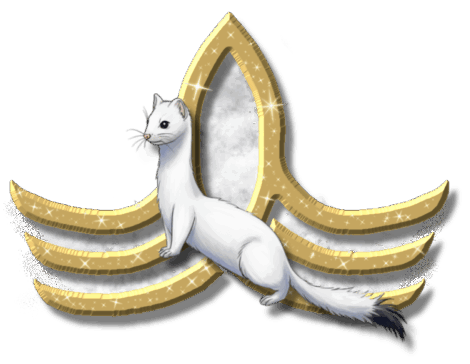
Name origin: Fuwafuwa (fluffy) + paw
Representative animal: Japanese stoat
Main Color: Yellow
Secondary Color: White
Element: Light
Cardinal Direction: South
Defining Characteristics: Nobility and Resilience
Head of House: Sade
With these four distinct Houses created it was the hope that our students could feel like this is actually their school’s own identity and is in fact a unique characteristic that they can feel proud of. Since implementing the House System at ICT, there has been a marked difference in the demeanor and character of our students. Even though they hate losing points for their Houses, it gives them a sense of responsibility and teamwork that they can strive for throughout the semester and the overall feedback from our ICT 1st and 2nd year students has been overwhelmingly positive for the House System. At the end of each semester, we give a survey to the students and ask them if they want to continue to utilize the ICT House System and we consistently get over a response of over 96% of the students wanting to continue the House System into the next semester.
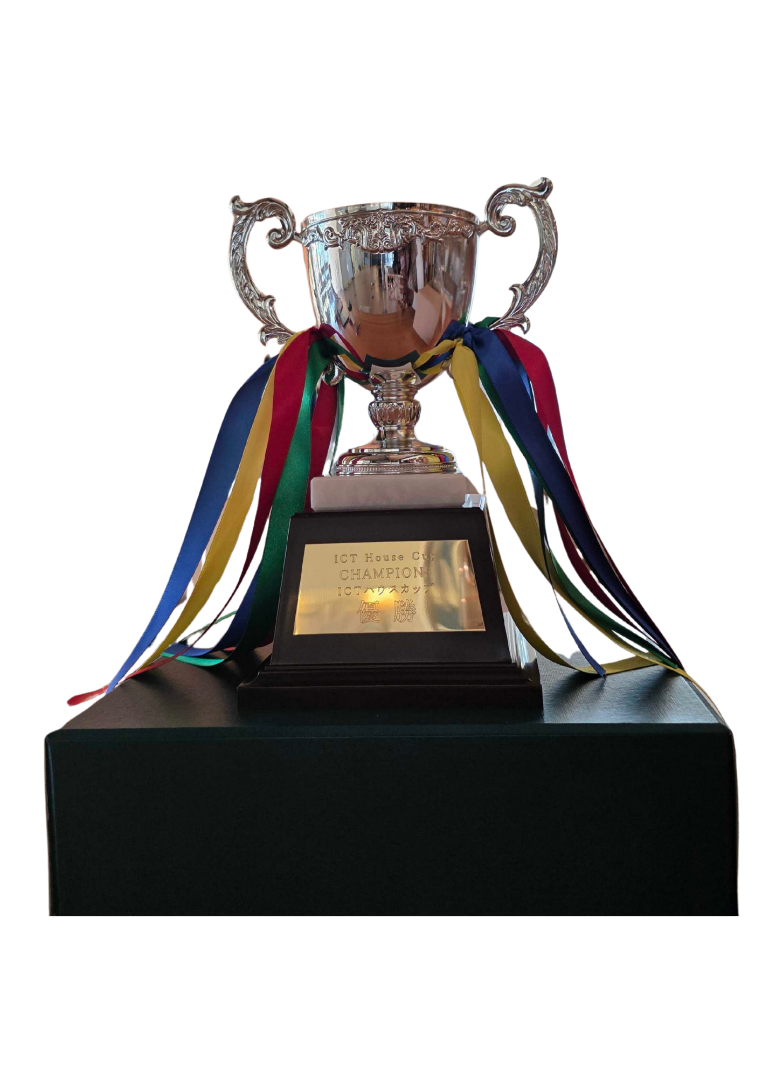
With the launching of the official ICT House System from the 1st Semester of 2026, the stakes are even higher for the students. The House that accumulated the most points by the end of the semester usually gets to choose between a special meal of their choice provided by the Learning Mentors at the end of the semester party each semester for all of their hard work. From this semester though, there is now an official House Cup Trophy that the winning House can win and write their names on the pennant ribbon which will be attached to the House Cup Trophy and displayed on the campus for everyone to see. It is our hope that all of the 1st year and 2nd year students continue to enjoy and get value out of the ICT House System in the future and through the ICT House System will become and remain productive, caring, and helpful students at ICT.
Sade Moore

This is Apirak Sang-ngenchai, and I am currently a lecturer at ICT. As an alumnus of Rajamangala University of Technology Lanna (RMUTL), Thailand. I feel fortunate to have witnessed and contributed to the development of the relationship between RMUTL and ICT.
My journey began as a student at RMUTL, studying Technical Education in Electronic Engineering. I participated in the Learning Express (LeX) program with Kanazawa Technical College (KTC), which became ICT, Kanazawa. I learned Design Thinking and worked with Japanese students on community projects. This enhanced my problem-solving skills and introduced me to international collaboration.
In 2017, I visited Japan through the Sakura Science Project at Kanazawa Institute of Technology (KIT), gaining exposure to Japanese educational practices, research, and innovation. It deepened my understanding of the friendship and cooperation between RMUTL, KIT, and ICT.
These exchanges laid the foundation for stronger academic ties between our institutions. Over the years, faculty members, staff, and students from both sides continued to build mutual trust and understanding through educational activities, research discussions, and cultural programs. When I joined ICT in 2020, I was pleased to contribute to this longstanding relationship from a new perspective as a faculty member.
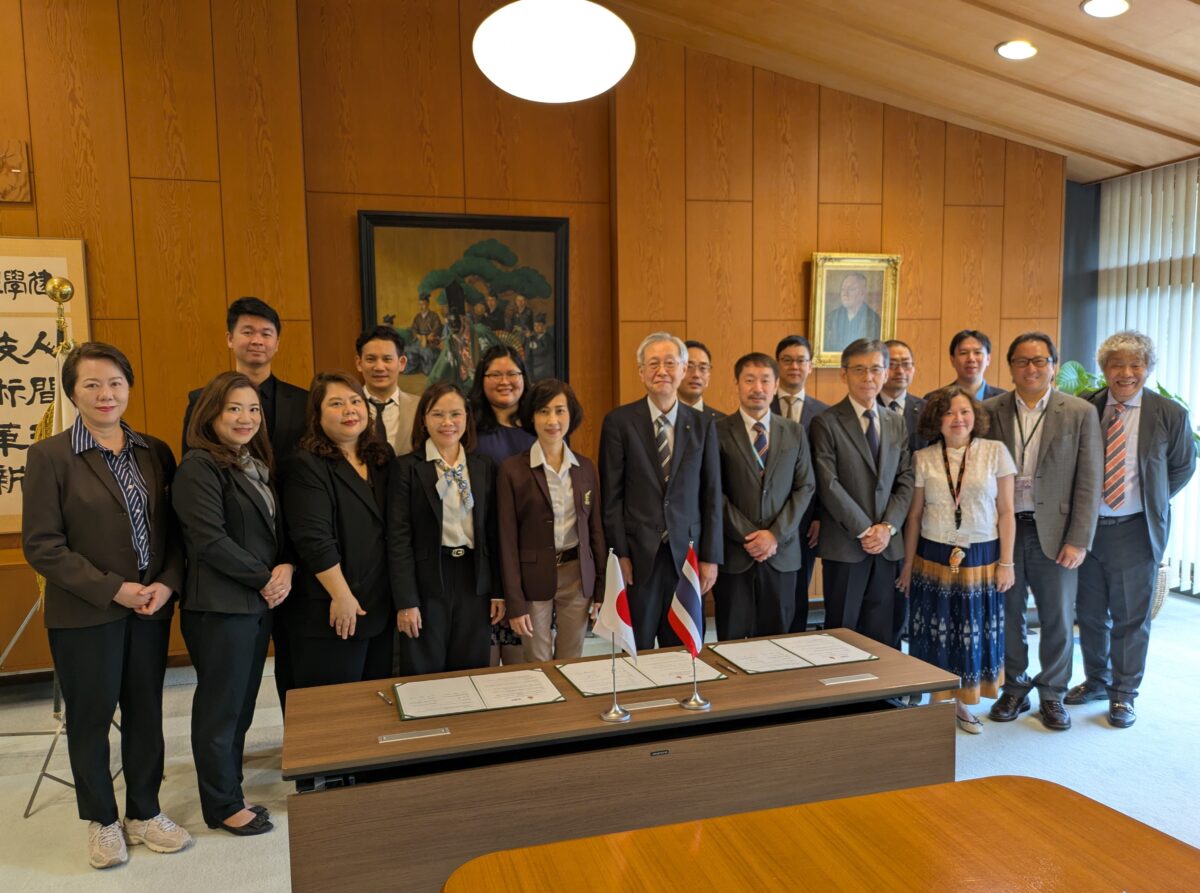
A significant milestone was achieved on September 15, 2026, when RMUTL and ICT officially signed a Memorandum of Understanding (MoU). For me, this was more than just a formal agreement. It reflected years of collaboration, exchanges, and shared experiences between our institutions. I was honored to support this important event and to witness the beginning of the next chapter of our partnership.
The MoU provides a framework for future cooperation in several important areas, including student exchanges, joint academic activities, collaborative research, and cultural and experiential learning programs. We hope to create more opportunities for students to study and learn from each other's cultures, while also encouraging faculty members to work together on educational and research initiatives.
Looking ahead, I would like to see the partnership develop through activities such as short-term exchange programs, international project-based learning, Design Thinking workshops, collaborative research in engineering and technology, and cultural immersion programs for students from both countries. These activities will not only strengthen academic cooperation but also help students develop global perspectives and lifelong international friendships.
As someone who has benefited greatly from the relationship between RMUTL, KIT, and ICT, I am proud to have been part of this journey. I sincerely hope that the MoU signed this year will serve as a foundation for many new opportunities and meaningful collaborations in the future, bringing lasting benefits to students, faculty members, and both institutions for years to come.
Apirak Sang-ngenchai
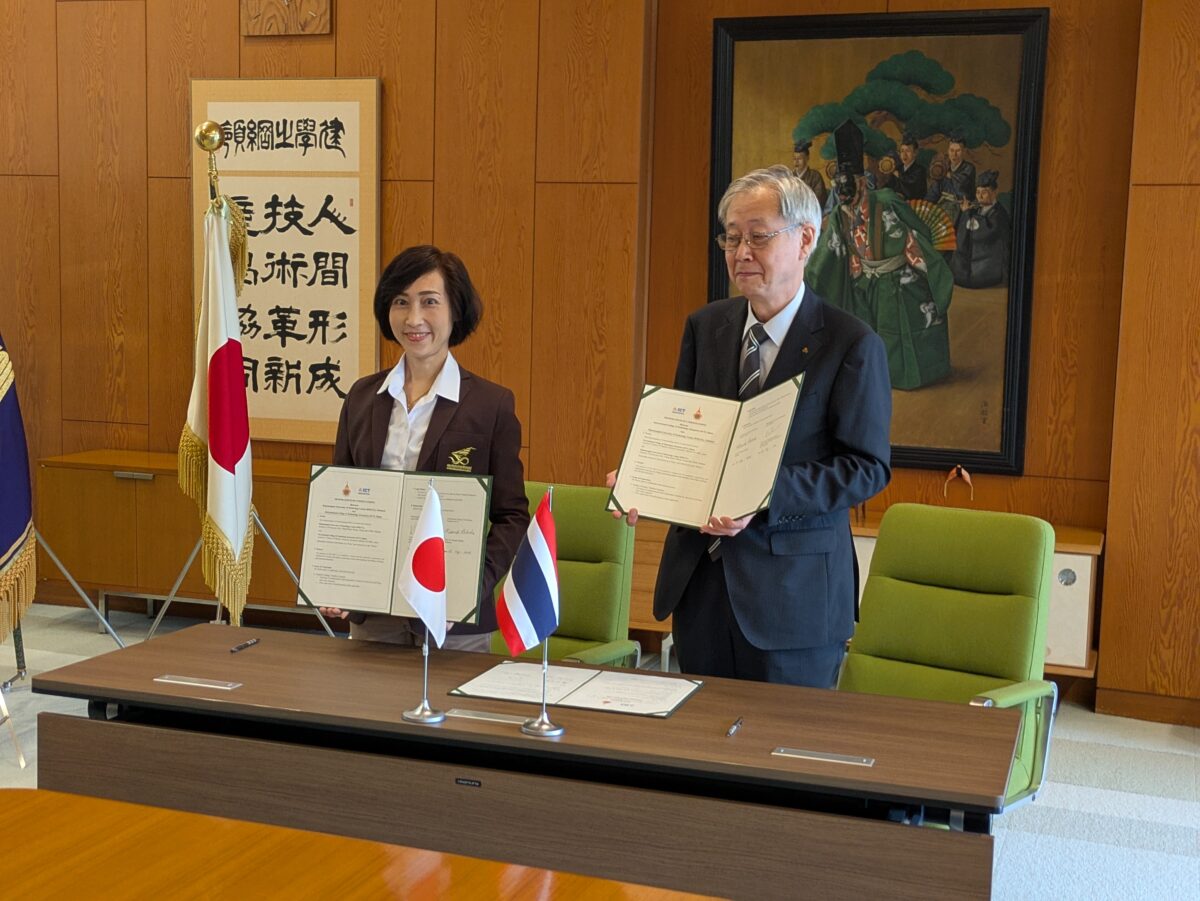
Dr. Kanthana Ditkaew, RMUT representative, and Masaki Shikada, President of ICTRMUT代表 Dr. Kanthana DitkaewとICT 鹿田正昭校長
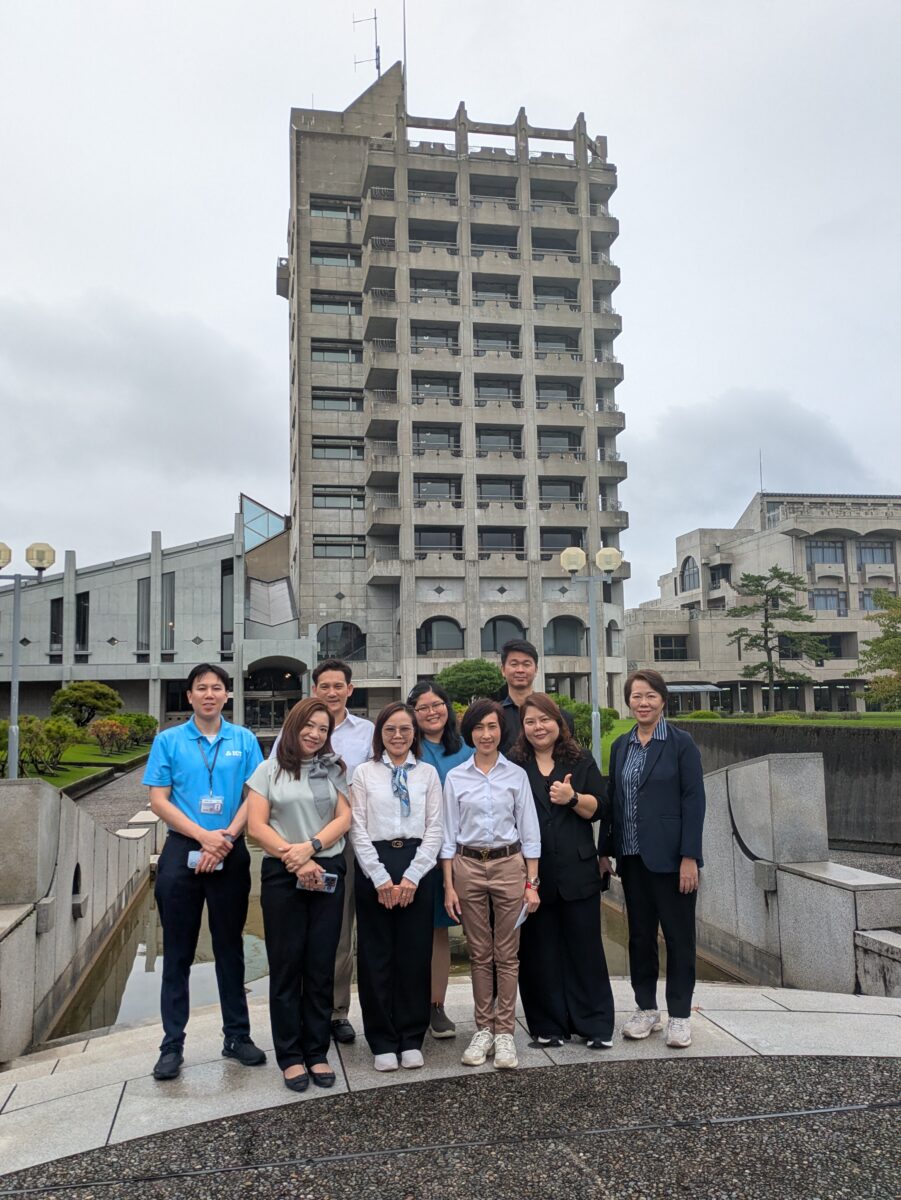
With the RMUTL delegationRMUTL訪問団の皆様とともに
 Hello. My name is Michihiro Hayashi, advisor of the Design & Fabrication Club.
On September 12 and 13, we participated in the 31st J-FACE Annual Conference of the Japanese Academy of Facial Studies, “Forum KAOGAKU 2026,” held at Kanazawa Institute of Technology.
The forum featured a wide variety of research and exhibits related to the human face. Topics included makeup, facial impressions, facial recognition, the faces of robots and animals, and portrait illustration. The conference included 29 oral presentations, 25 poster presentations, six demonstrations, and five corporate exhibits, with a total of 175 participants from across Japan.
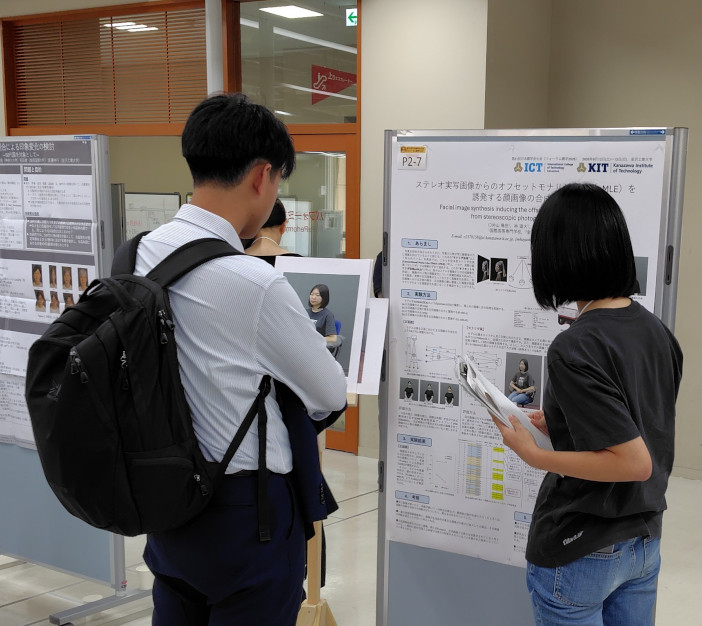
From ICT, fourth-year student Rinse Okiyama gave a poster presentation on gaze perception and the Mona Lisa effect. The title of the presentation was “Facial Image Synthesis Inducing the Offset Mona Lisa Effect (oMLE) from Stereoscopic Photographic Images.”
To briefly explain the research, when we look at a person in a photograph or painting from different angles, we may sometimes feel as though the person’s eyes continue to look directly at us. This phenomenon is commonly known as the “Mona Lisa effect.” In this study, differences between images that produce the Mona Lisa effect and those that do not were experimentally examined by processing photographs of real people.
During the summer vacation, Rinse Okiyama worked intensively on preparing for the presentation. She served as the model for the images and took part in repeated photo sessions over several days, as well as image evaluation experiments.
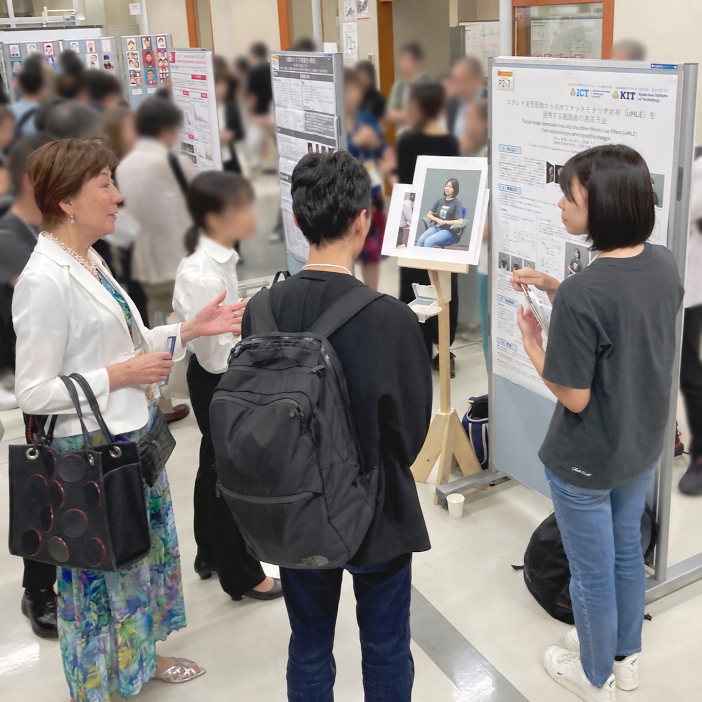
She presented the results in a poster session at the conference. Many participants came to hear about the research, and lively discussions took place in front of the poster. In everyday research activities, students mainly have opportunities to discuss their work with their supervising teachers. At the conference, however, Rinse Okiyama was able to exchange ideas with faculty members from other universities, researchers from companies, illustrators, and many other people with different perspectives.
At the closing ceremony, Rinse Okiyama received the “Suganuma Award,” named after a former president of the Japanese Academy of Facial Studies.
She also had the opportunity to have her portrait drawn by an illustrator at the venue.
This year’s conference was held locally, but I hope that in the future she will continue to take on new challenges and actively present her research not only throughout Japan, but also internationally.
Design & Fabrication Club
Advisor: Michihiro Hayashi
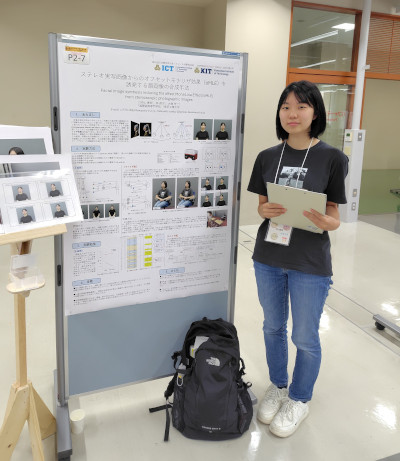
Looking a little nervous before the presentation発表前で少し緊張する様子
Explaining the research研究を説明している様子
A venue bustling with participants盛況な会場の様子
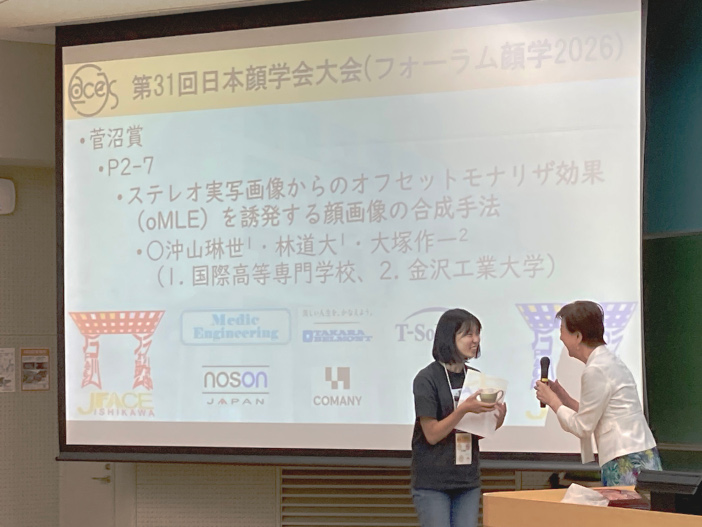
Receiving the award表彰され少し照れている様子
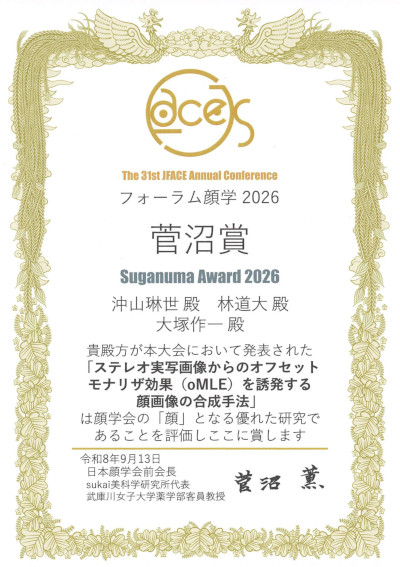
The award certificate頂いた賞状
 Hello everyone. I’m James Taylor, one of the English teachers at ICT Hakusanroku Campus. In this journal, I’d like to tell you about an event I held during the summer holiday.
On Tuesday, August 18th, 2026, I went to Shiramine to lead an English Café event for local children, organised by the Oguchi and Shiramine Community Centres. This year, we had seven children from Shiramine Primary School (that’s more than half of the school population!) and one child from Kawachi Nursery, along with some parents and young siblings of participants who watched.
August was very hot this year, but luckily the Shiramine Community Centre staff had brought ice creams for everyone, so we started by eating them while I read a few stories: “Leo the Late Bloomer” by Robert Kraus, about a lion who learns much more slowly than everyone else, but since everyone learns at their own pace, it doesn’t matter; “The Smartest Giant in Town” by Julia Donaldson, which is about a giant who buys new clothes but then gives them away to help his friends; and “They All Saw a Cat” by Brendan Wenzel, which shows how different creatures view the same cat. Each of these books has an important message for children (and adults).
Next, it was time to move around, so we played musical chairs: the children walked or danced around a circle of chairs while the music played and had to sit down when the music stopped. There was always one chair too few, so someone was always eliminated. The children enjoyed it enough to play three times!
Finally, we played bingo, but with a slight twist: the children had to make their own bingo cards before we could play! We used the animals from “They All Saw a Cat”, learnt the names in English, and then the children filled in the spaces on their bingo cards by drawing each animal that I said. After that, we could play! The Community Centre staff prepared prizes for everyone, along with extra presents to take home at the end.
As always, it was fun to spend time with the children in Shiramine, and I’m grateful to the staff of the Oguchi and Shiramine Community Centres for their hard work organising everything.
James Taylor