





Hi, my name is Ady Rohizam, and I am a 1st year student from Malaysia. During my summer break, I had the opportunity to take part in my first-ever go-kart competition on August 8th, 2026.
The event was Round 4 of the Rookie Rush Karting League 2026, organized by PROJECT KAR7ING. I competed in the Junior category. For this competition, I drove a 270cc engine (cubic centimeters) Sodi RX8 go-kart, which could reach a top speed of around 60 km/h on the straights. We were provided with separate karts for qualifying and the race.
Karting has many different types and classes of karts, and I am still very new to the sport. This was my first real experience competing on a track.
Qualifying was a difficult start for me. I struggled with the grip of the rear tires and spun out around five times. During my third hot lap, one of my friends spun in the middle of the track, and I unfortunately bumped into him. Luckily, I was not seriously injured and managed to continue.
Despite the difficult session, I qualified 11th out of 16 drivers.
Starting 11th on the grid, I was quite nervous. The red lights came on one by one. Then, suddenly, they went out. Everyone launched towards the first corner.
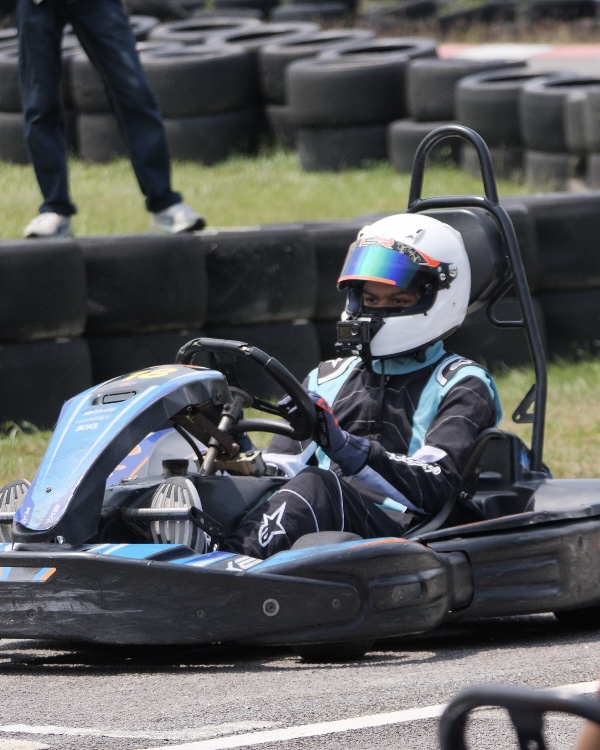
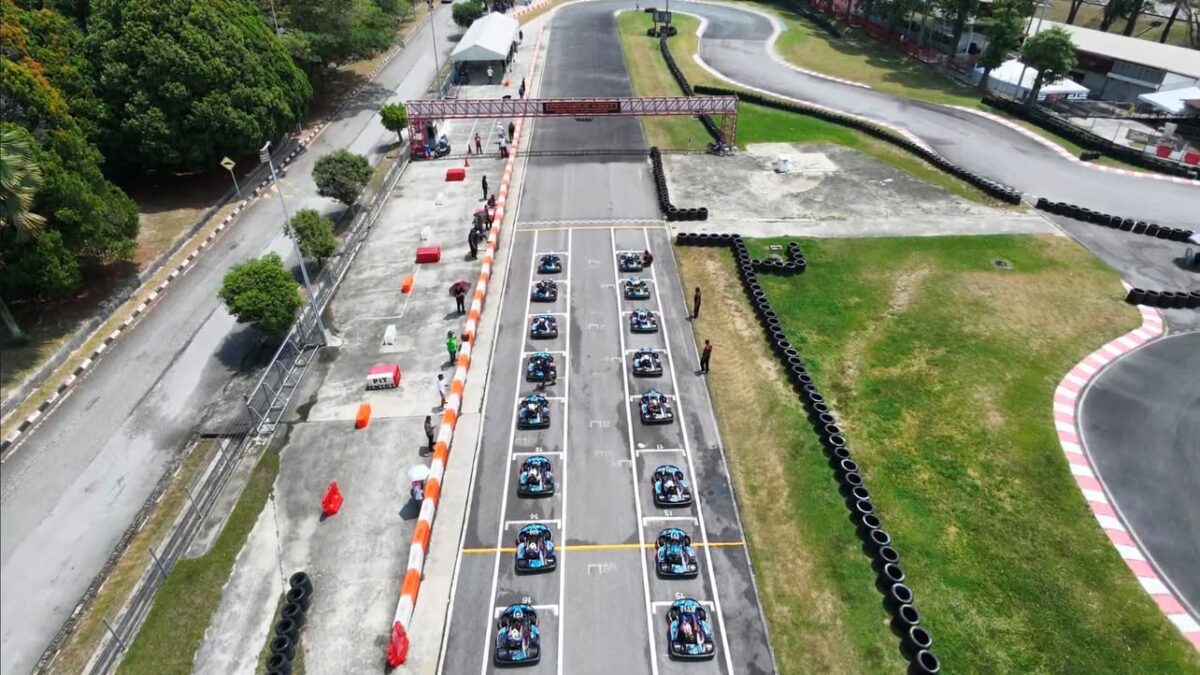
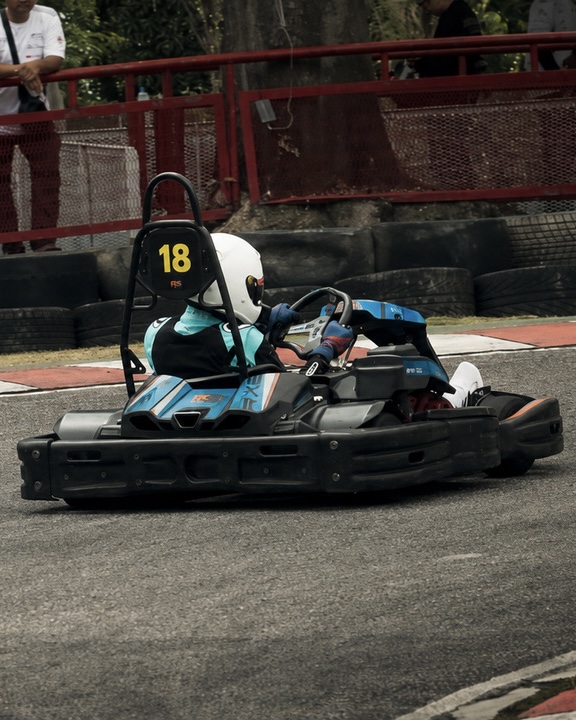
My start was slow, and I dropped four positions. I was now 15th. I kept looking for opportunities to overtake. Lap by lap, I slowly gained positions and worked my way back through the field.
Then, on the final lap, I saw an opportunity at the last corner. I stayed close behind the driver in front of me and waited for the right moment. As we approached the corner, I made my move and managed to overtake him.
I crossed the finish line in 10th place.
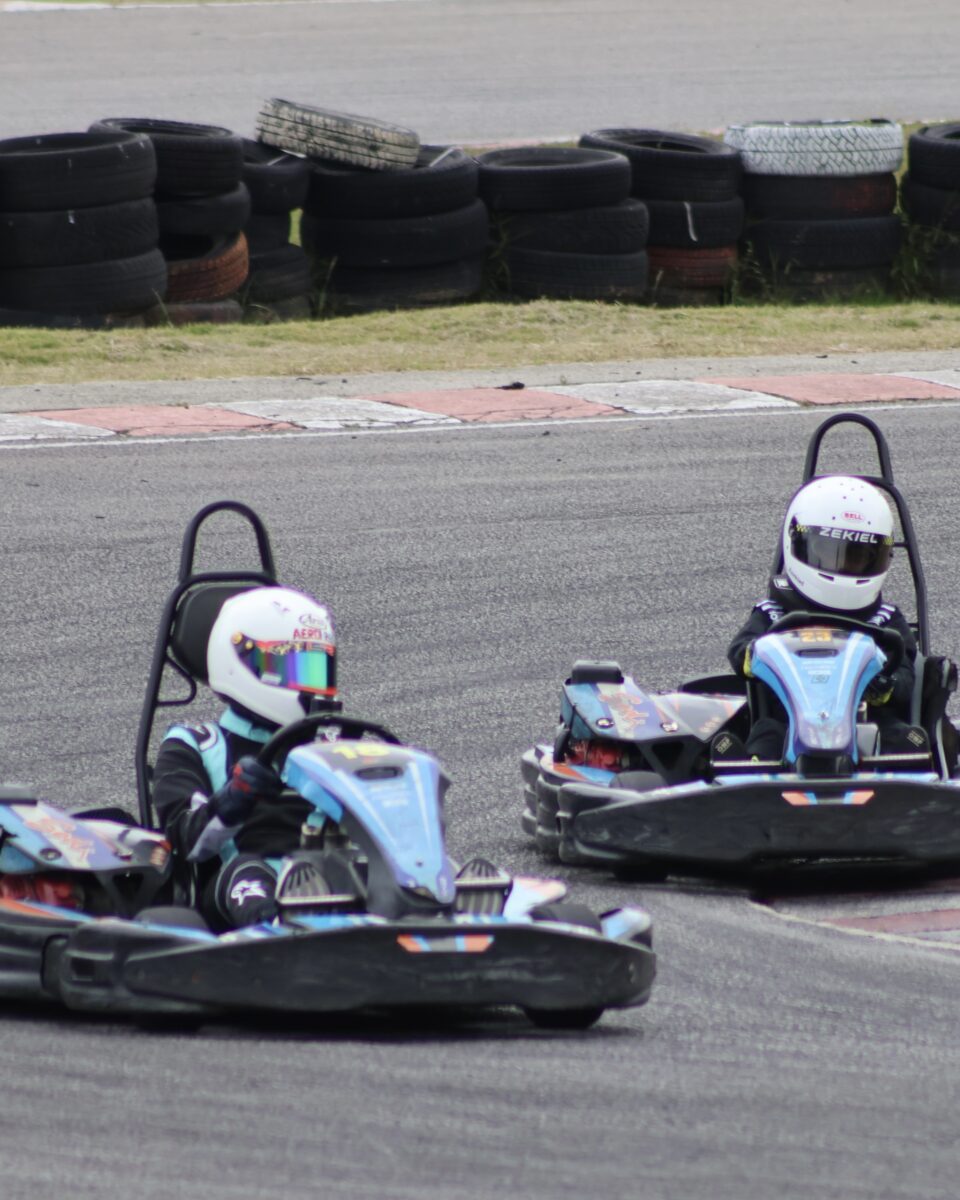
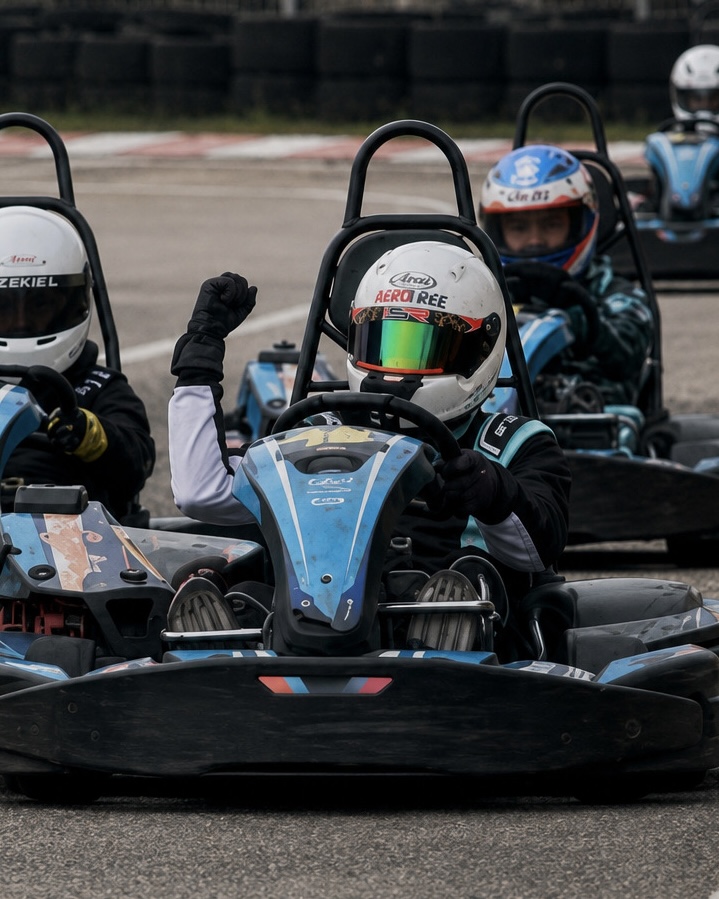
For me, this was more than just a competition. I have always wanted to experience racing, and this was my first chance to actually get on the track and compete.
I enjoyed every part of the experience, even the mistakes. The atmosphere at the track made me feel like I belonged in this community, and it made me want to race again and continue improving.
I know I still have a lot to learn. I am not an experienced karter, and I am only at the beginning of my journey. But that is what makes this experience important to me.
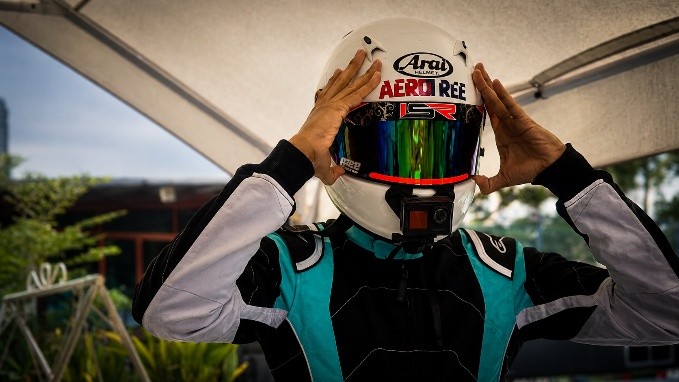
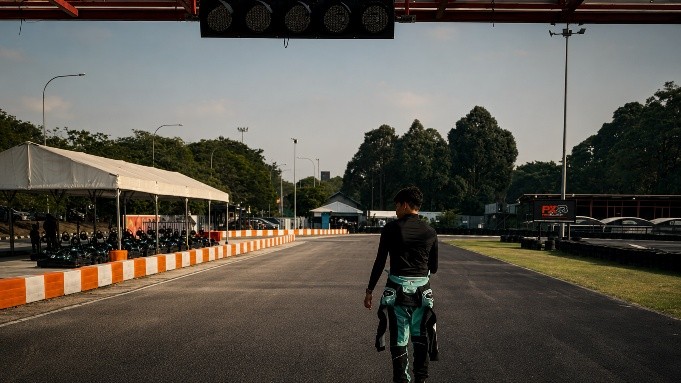
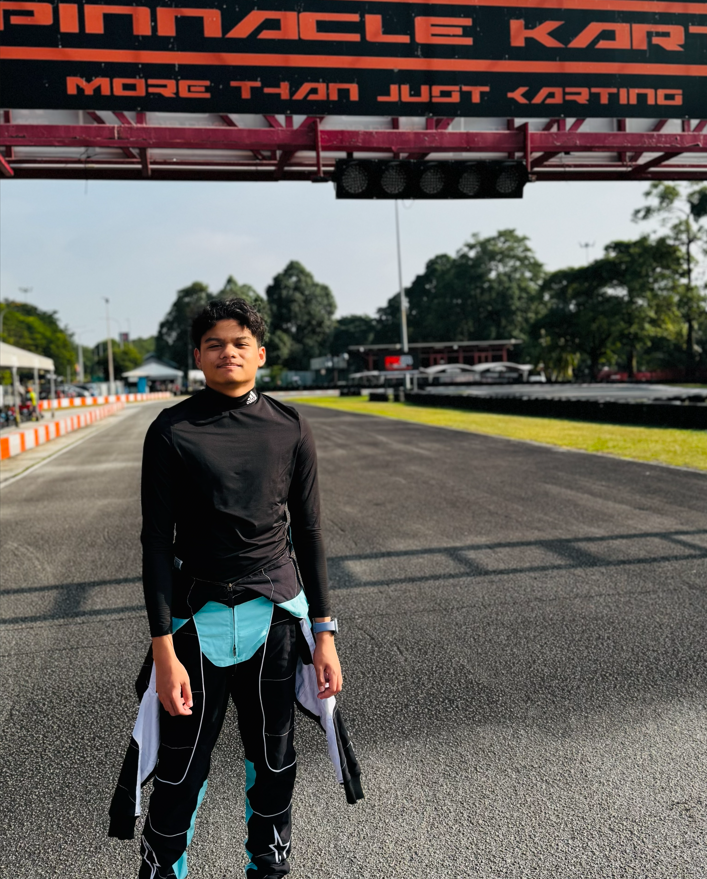
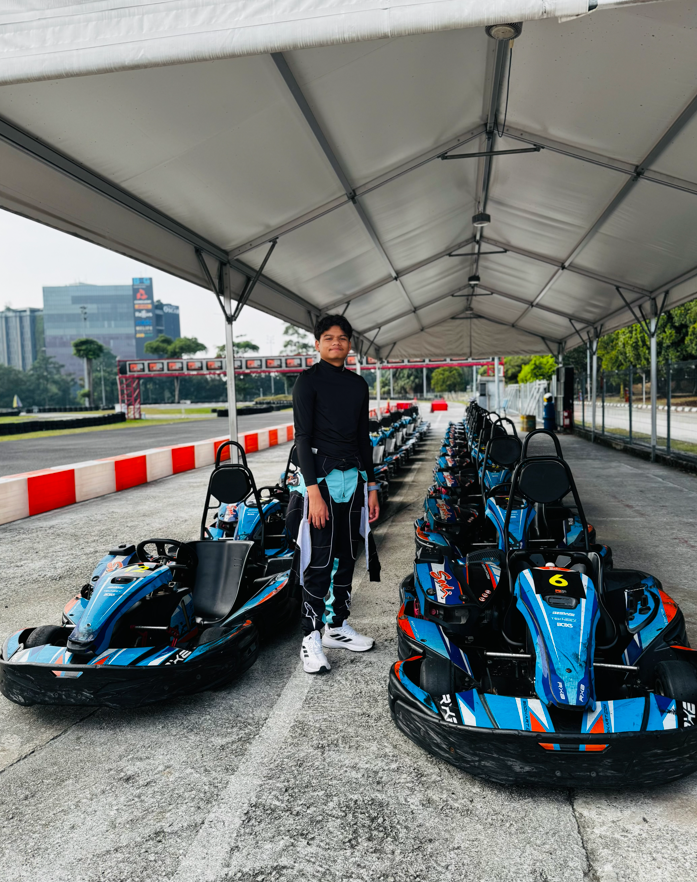
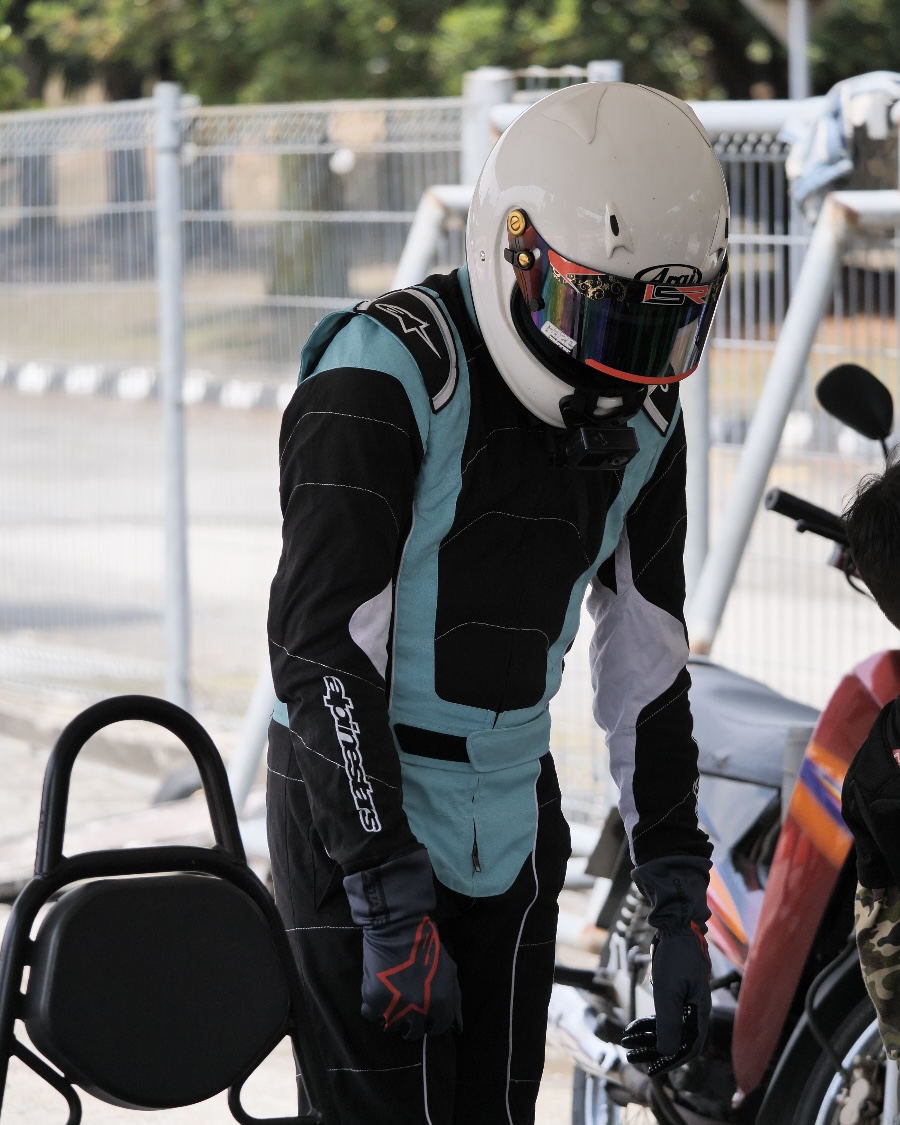
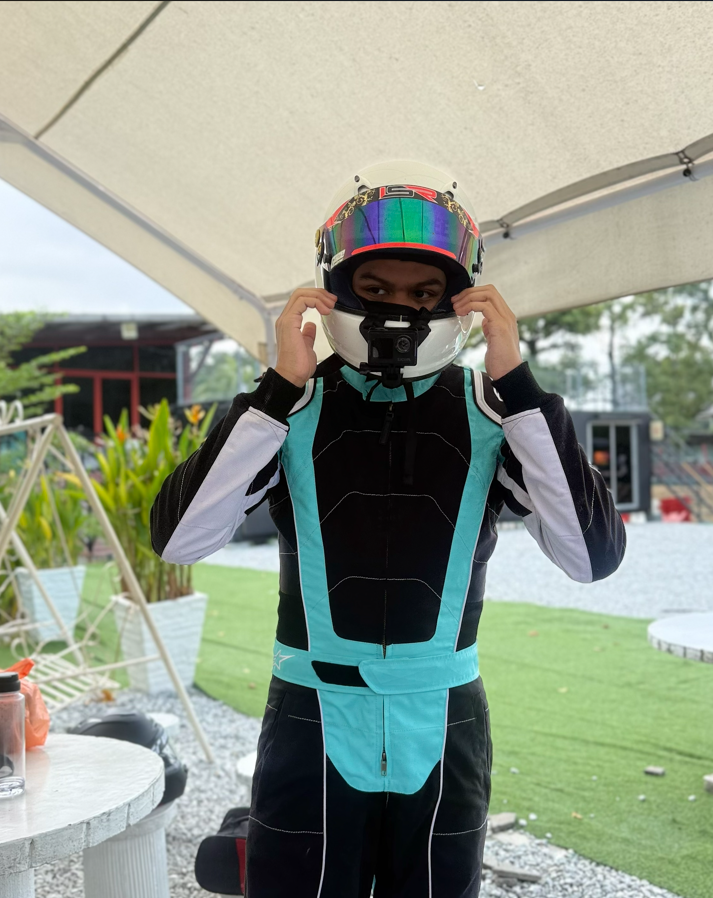
To anyone who dreams of becoming a racing driver, whether your goal is Formula racing, GT racing, or another form of motorsport, do not let your starting point stop you.
You do not have to be the fastest when you begin. You do not have to know everything. What matters is that you start, keep learning, and keep working towards your goal.
If racing is your dream, take the chance to start. You never know how far you can go until you try.
Ady Rohizam
Walking With Anthony
By Dr. Pauline Baird
At ICT, students are encouraged to "SHINE IN YOUR OWN WAY." Let me introduce one such student.
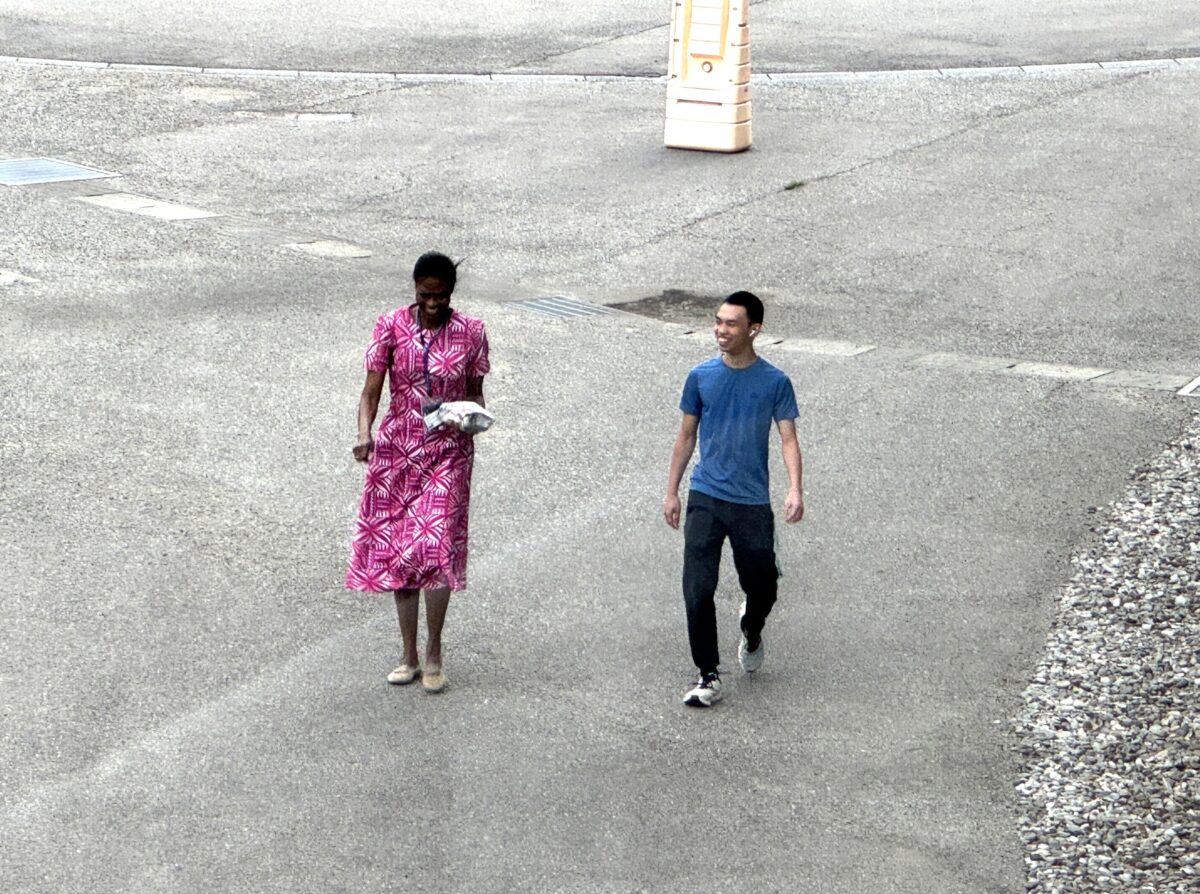
His name is Anthony Purba, a 2nd year student. On almost any weekday at about 4:45 p.m., you can find him walking around campus. His route takes him past the gymnasium, the dormitories, the onsen, the cafeteria, the main office building, and the school building—circling the campus again and again.
At first, I simply noticed him walking. Then one Sunday, I decided to join him. As we walked, I discovered that he often uses this time to call his mother in Indonesia. Since then, we have walked together after school on most weekdays and occasionally on weekends. Anthony has made walking something worth noticing.
Many students shine in sports such as basketball and badminton, while others excel in academics. Anthony may enjoy those activities too and do well in his studies, but what stands out to me is his commitment to a simple daily habit. From approximately 4:45 p.m. until 6:30 p.m., when the cafeteria opens for dinner, he walks steadily around campus. On his busiest day, he completed 17 laps. More than once, we have ended our walk by heading directly from the pathway into the cafeteria for our evening meal.
When I asked Anthony how this routine began, his answer was surprisingly simple.
"Nothing inspired me to start walking every day," he explained. "I just wanted to spend time on my own by calling my mom or listening to music. Sitting made me feel bored, so I decided to make my body move by walking."
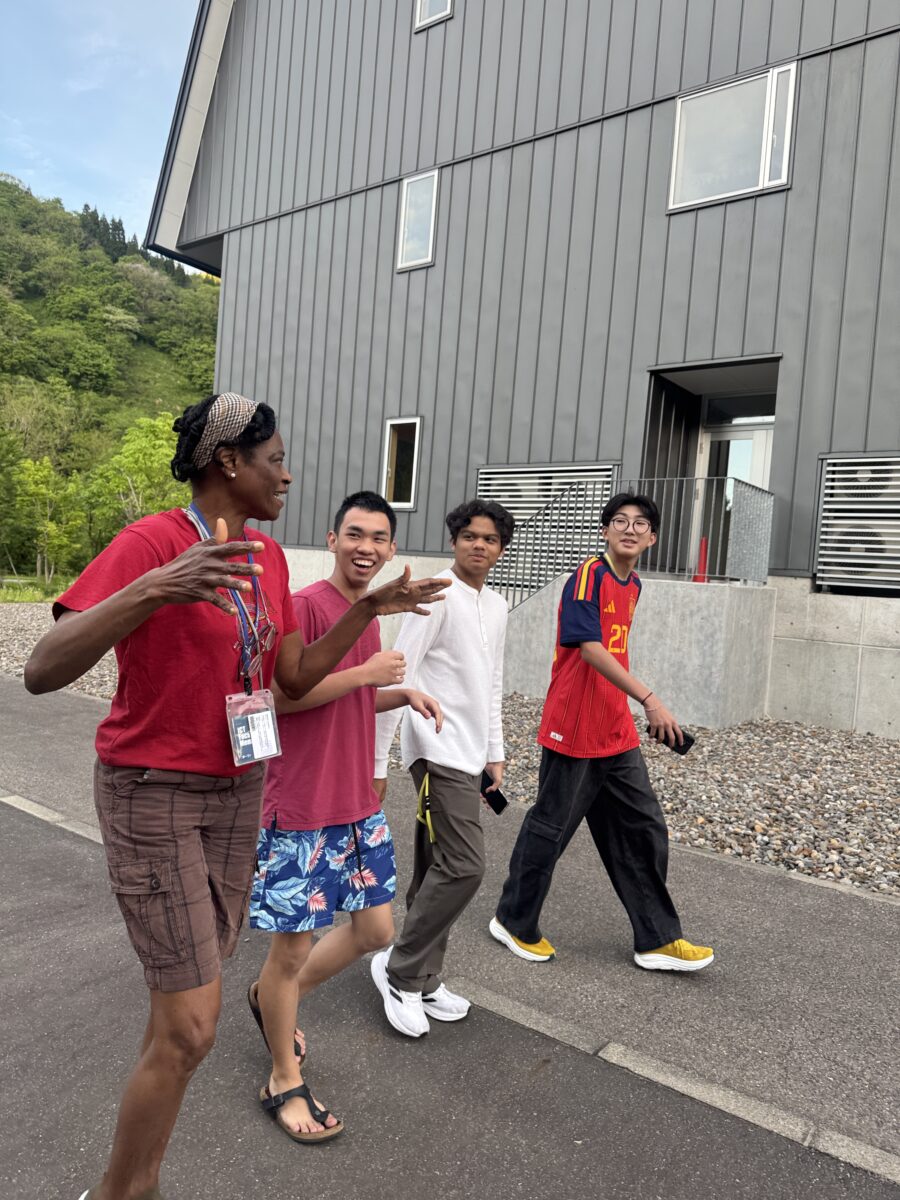
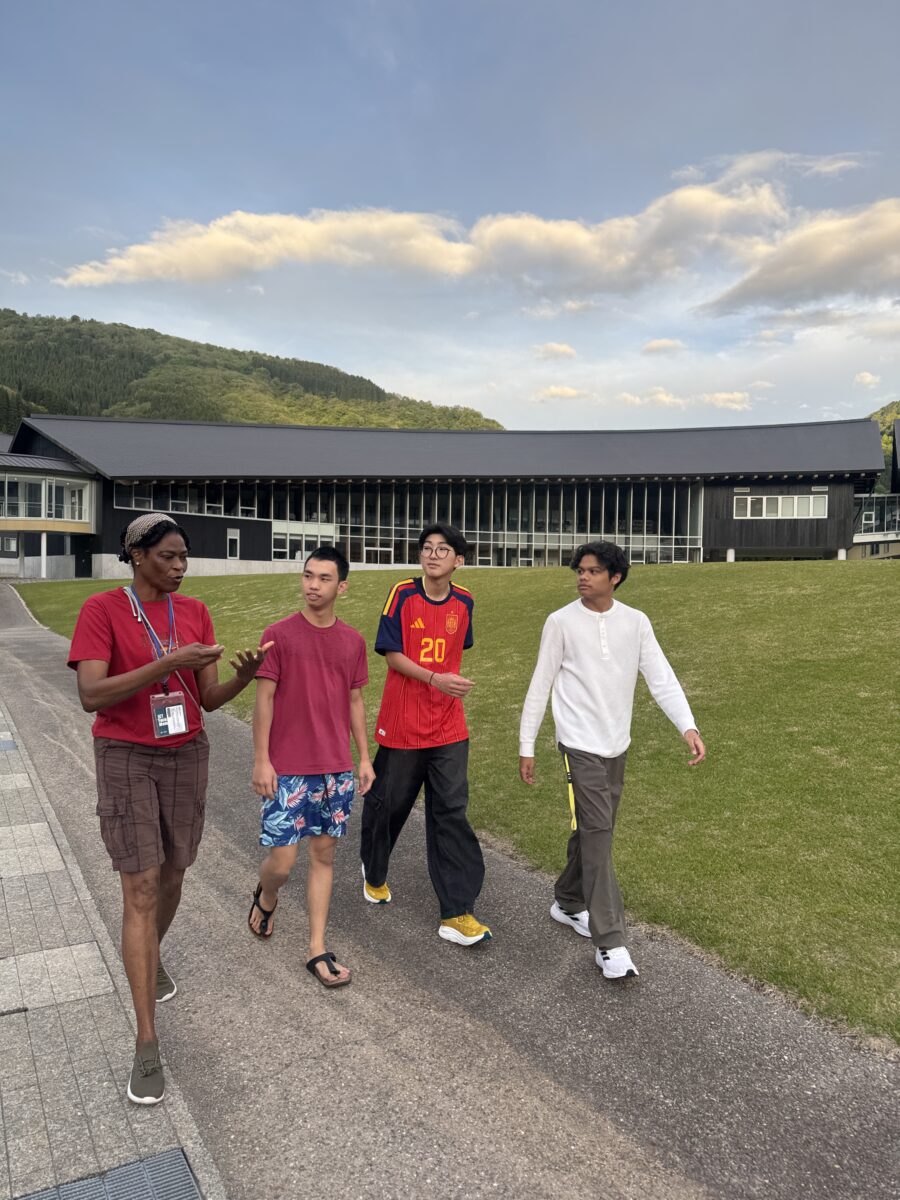
For Anthony, the walk is also a chance to stay connected with home.
"I wanted to talk with someone I trusted the most in Indonesian," he said.
Over the past two months, a few other students have joined us from time to time. As we walk, our conversations wander naturally through topics such as family, hobbies, future dreams, personal challenges, and everyday life. Sometimes, we spend several laps simply enjoying the quiet.
Anthony says what he enjoys most is "talking about any topic while keeping my body fit." He hopes more students will join in the future so they can "share a lot of stories while keeping our body sustained."
Walking with Anthony becomes more than physical activity; it becomes a time for friendship, reflection, and connection. What appears to be an ordinary walk is, in fact, something quite meaningful. Anthony is quietly demonstrating another way to experience campus life—by spending time outdoors, enjoying the fresh mountain air, maintaining a healthy routine, and making space for conversations with family and friends.
When I asked Anthony what he would say to someone who thinks walking is boring, he smiled and replied,
"Be grateful to have the ability to walk. Not all people can enjoy what you have."
At ICT, students are encouraged to shine in their own way.
I believe Anthony is doing exactly that.
By Dr. Pauline Baird
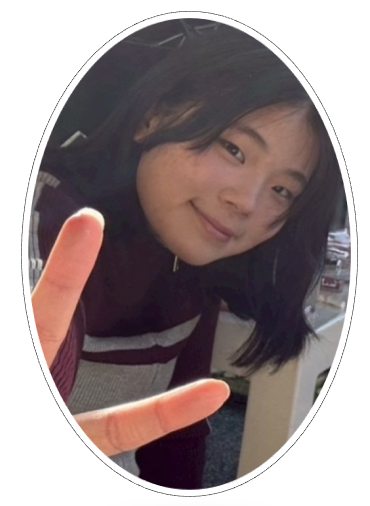 Hello everyone. My name is Ayane Ito, and I am currently spending a year studying in New Zealand.
It has been about four months since I started my life here, and living in a foreign country has gradually become part of my everyday routine. While Japan is probably entering the hottest time of the year, New Zealand is heading into the middle of winter. Whenever I talk with my friends back home, we always end up realizing how opposite our seasons are. Every time it happens, I am reminded of how far away I am from Japan. At the same time, it makes me realize that no matter how much my daily life changes, I am still very attached to my home country.
In this ICT Journal, I would like to share one of my memorable experiences during my study abroad program: my involvement with OJSA. OJSA, or the Otago Japanese Students' Association, is a student organization at the University of Otago in Dunedin. The association regularly organizes events related to Japanese culture. I joined an OJSA skating event after being invited by a friend. OJSA members include Japanese students, local people, and others who are interested in Japanese culture. Anyone can participate by paying a small fee, so I would definitely recommend it to future ICT students. It provides a great opportunity to speak English, and above all, the events are a lot of fun. If you search for OJSA on Instagram, you should be able to find more information.
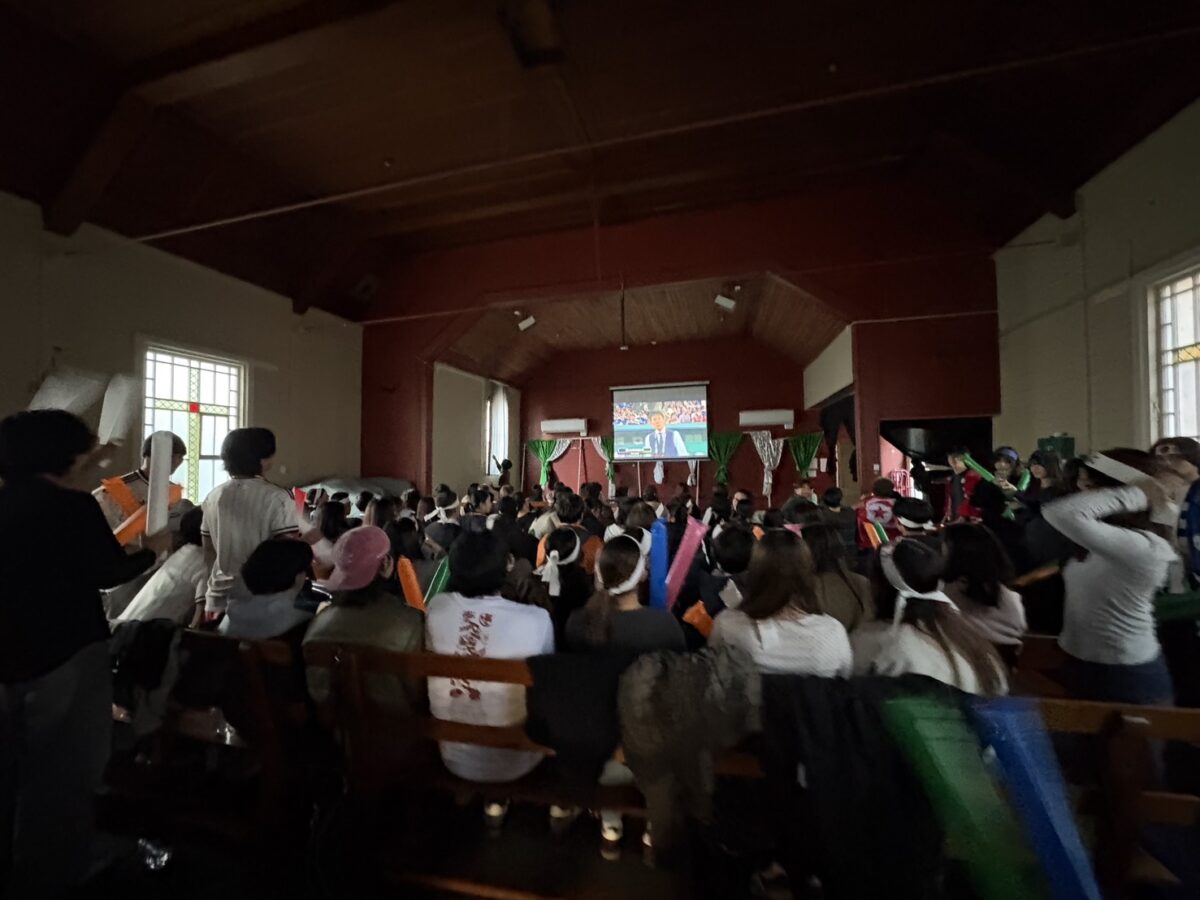
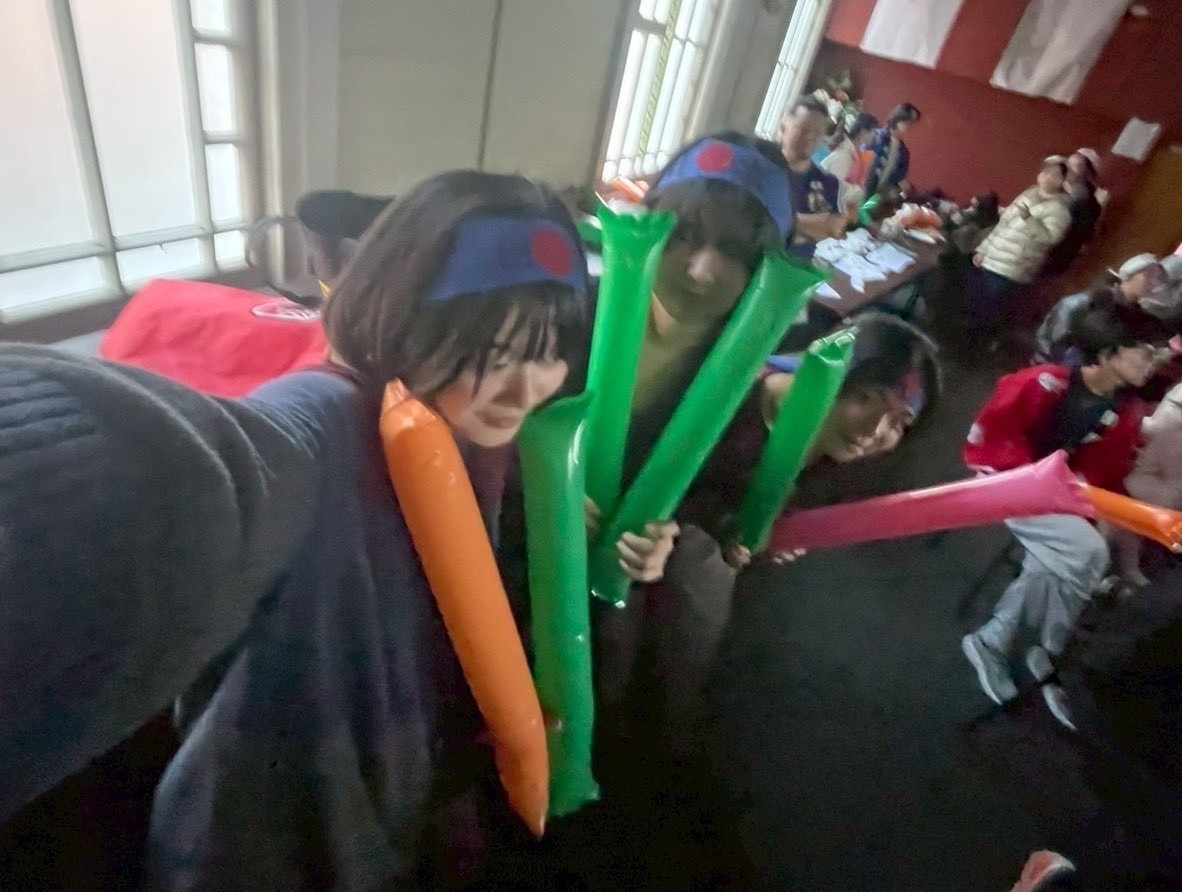
Among the events I joined, the most memorable was a viewing event for the soccer match between Japan and Tunisia. By a lucky coincidence, the president of OJSA invited me to help organize the event. Together with my classmates, Kotori and Madoka, I became part of the organizing team. We spent a lot of time discussing ways to attract participants and make the event enjoyable. After promoting it through social media and distributing flyers, we were happy to welcome around 90 people to the event.
My role was to create a presentation and a short video introducing the Japanese national team. On the day of the event, I gave the presentation together with my two classmates and the OJSA president. I had never given a presentation in English in front of such a large audience before, so I was extremely nervous. However, the atmosphere was lively, and everyone seemed to enjoy it. In the end, I was glad that I challenged myself and stepped outside my comfort zone. To make the day even better, Japan won the match by a large margin, allowing the event to end on a high note.
-
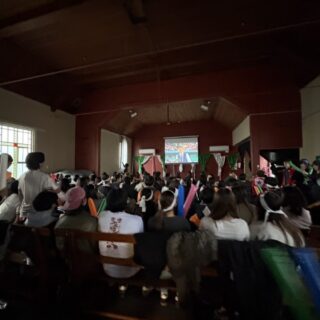
Soccer World Cup viewing event at a local church地元の教会で行われたサッカー観戦の様子
-
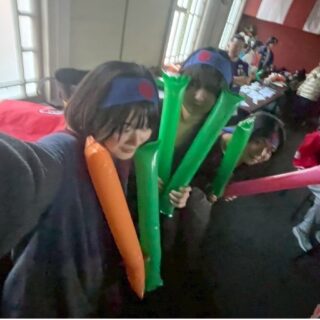
A group photo of the three of us会場でのスリーショット
Looking back, I feel incredibly fortunate to have met so many wonderful people during my time in New Zealand. The members of OJSA, my friends, my host family, and even people I happened to meet around town have all helped make my study abroad experience meaningful and enjoyable. Even when I am simply walking through Dunedin, people often greet me or start conversations, which reminds me how wonderful it is to connect with others. Recently, I have also noticed a change in myself. English, which I used to think about constantly, is gradually becoming something more natural. I can communicate more comfortably than before, and that is one of the things I am happiest about.
My study abroad journey is only halfway finished. Living in an unfamiliar place can be challenging, but it has brought me far more exciting discoveries than difficulties. I am looking forward to seeing what experiences await me in the months ahead, although I still have a little bit of anxiety as well.
I hope that my experience will be helpful for those who plan to come to New Zealand in the future.
Greetings from New Zealand,
Ayane Ito
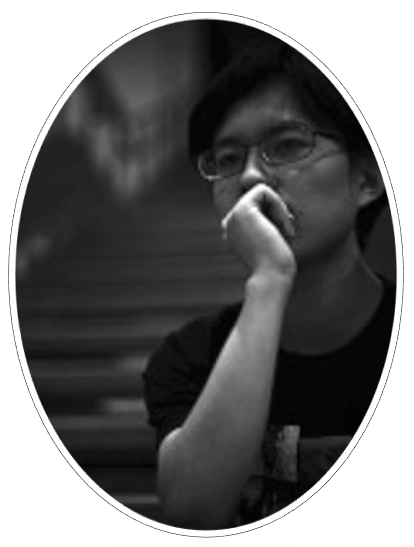 Hello! I’m Rintaro Kamoshita, a fourth-year student at the Kanazawa campus, also known as the “walking speaker.” Recently, I’ve expanded my range of activities all the way to Akihabara, where I performed my signature talk-style comedy routines with the electric town as my backdrop.
▶ AKIBA Re-ROBO FESS 2026 Participation Report
Lately, I’ve been focusing mostly on radio activities, so I’d really appreciate it if you could check those out as well. For more details, please visit our X (formerly Twitter) page via the link below:
Now, that was quite a long introduction, but today I’d like to introduce an event I recently hosted: the “Returnee Presentations: Otago Polytechnic Study Abroad Program 2025.”
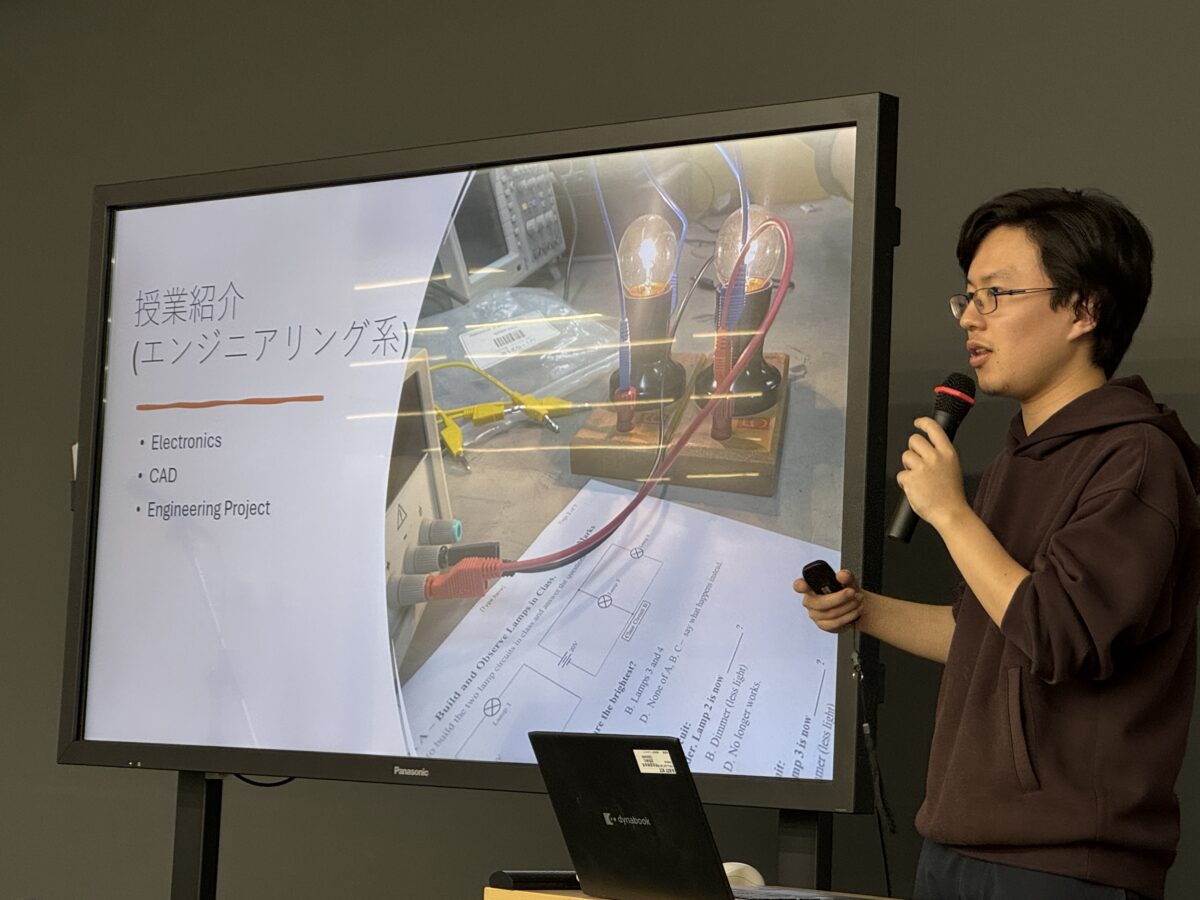
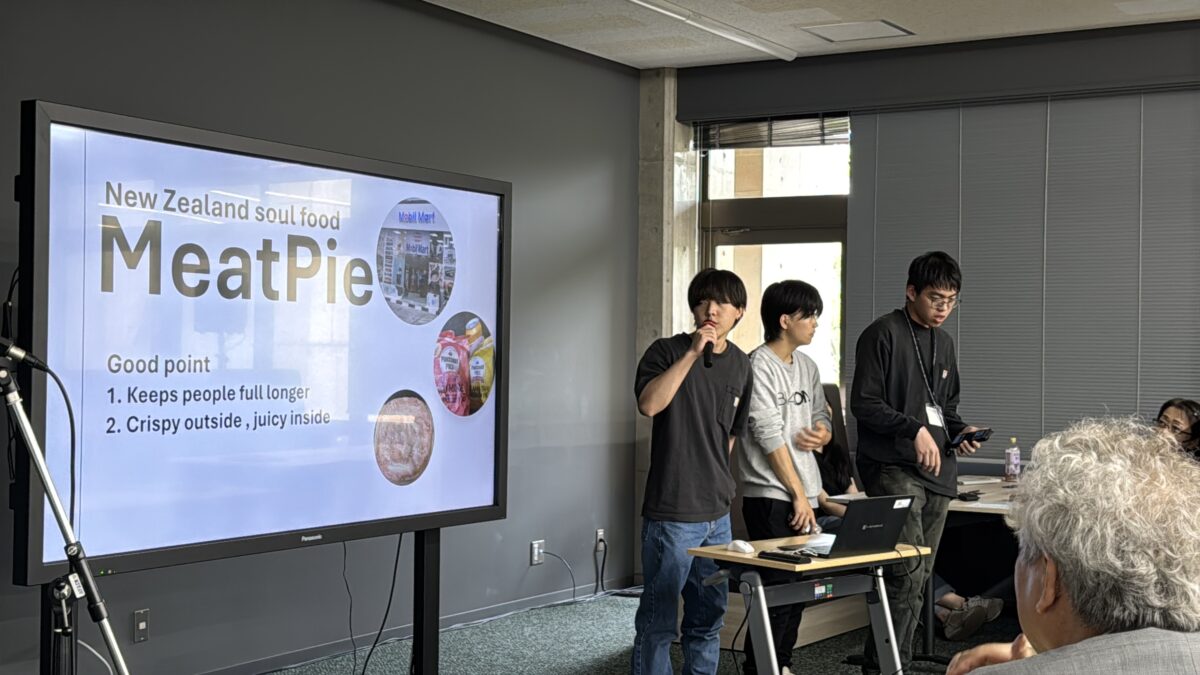
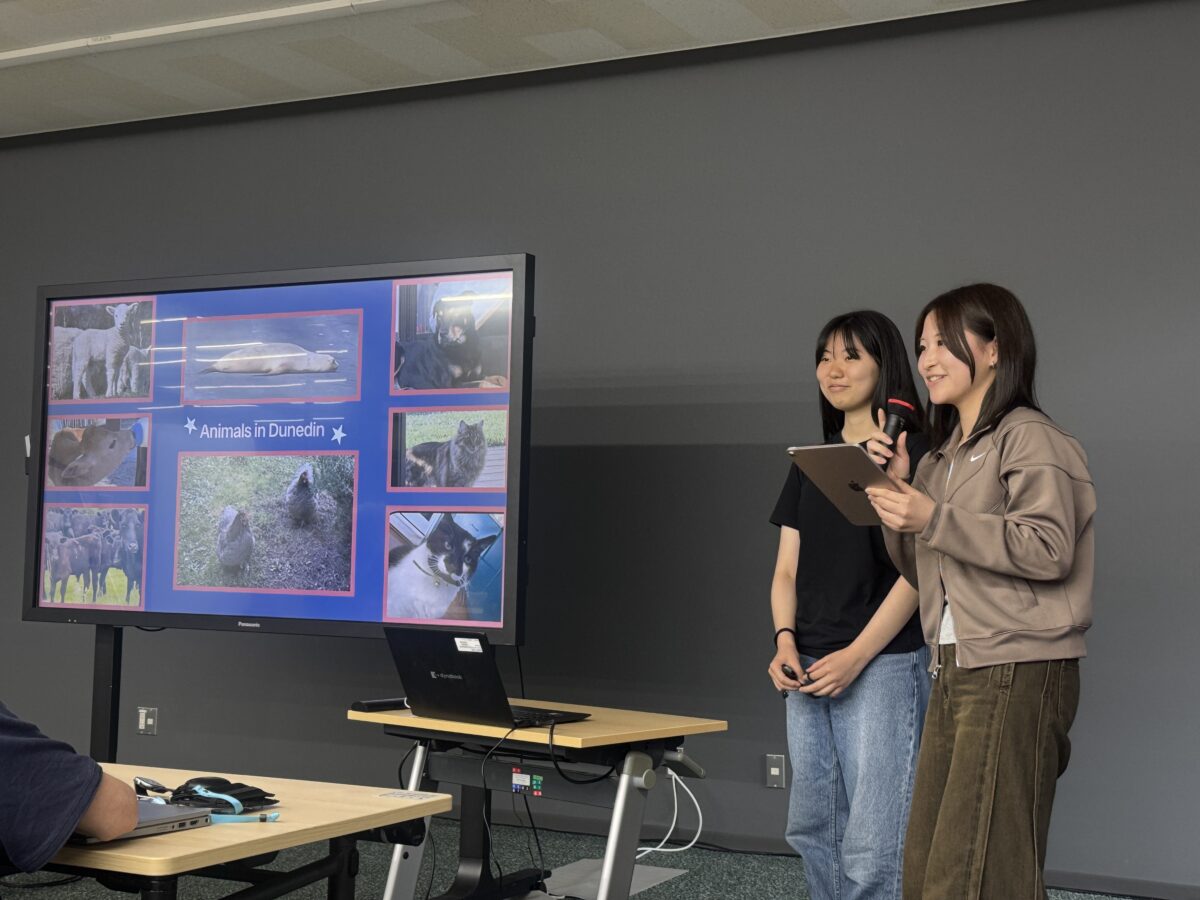
This event was an opportunity for all fourth-year students who had studied abroad in New Zealand for a year to share their experiences. They presented their memories, lessons learned, and advice for future students to parents and first and second-year students living in the dormitory in Hakusanroku Campus. The event was held on Wednesday, May 20, at the Kanazawa campus in a hybrid format, both in person and online.
During the presentations, students covered a wide variety of topics, including delicious food in New Zealand, fun travel destinations, the charm of animals such as sheep, and the beauty of the country’s vast natural landscapes. Among them, my personal favorite presentation was by a friend who introduced a Korean restaurant in New Zealand, which got a big laugh from the audience.
All presentations were delivered in English, showcasing the students’ improved language skills after their time abroad. Many of them had made remarkable progress in pronunciation, and listening to them again, I was genuinely surprised by how much everyone had grown. Some students even seemed to slip into a New Zealand accent during their presentations, which added to the atmosphere and made the event enjoyable from start to finish.
Through this event, we were able to share the journey of our one-year study abroad experience with younger students who will carry the future forward. It was truly a meaningful and rewarding time.
P.S. “Walking speaker”… that’s basically just a Walkman, isn’t it?
Rintaro Kamoshita

Hello, this is Michihiro Hayashi, advisor of the Design & Fabrication Club.
On Saturday, May 16, 2026, we participated in AKIBA Re-ROBO FESS 2026, held in Akihabara, Tokyo.
This event was organized for the first time by Akiba Tech Connect. It was created with the vision of forming a “chaotic space of technology” in Akihabara—the sacred place of hands-on manufacturing and technology—where people can freely connect and interact through technology. The event aimed to bring together participants from a wide range of backgrounds, including large corporations, startups, small and medium-sized companies, and academic institutions.
At the booth of the International College of Technology, Kanazawa, we introduced our school and the activities of the Design & Fabrication Club. Since the venue was located in the center of Akihabara and the event was held on a Saturday, there were many visitors and the venue was very lively. During the event, we gave presentations about KOSEN education and the unique initiatives of ICT.
We also realized that KOSEN is still not widely recognized among the general public, and some visitors asked us, “What is KOSEN?” On the other hand, among people involved in robotics and drone technologies, KOSEN is already well known. We strongly felt that students educated at KOSEN are highly valued as practical engineers and future leaders in the field.
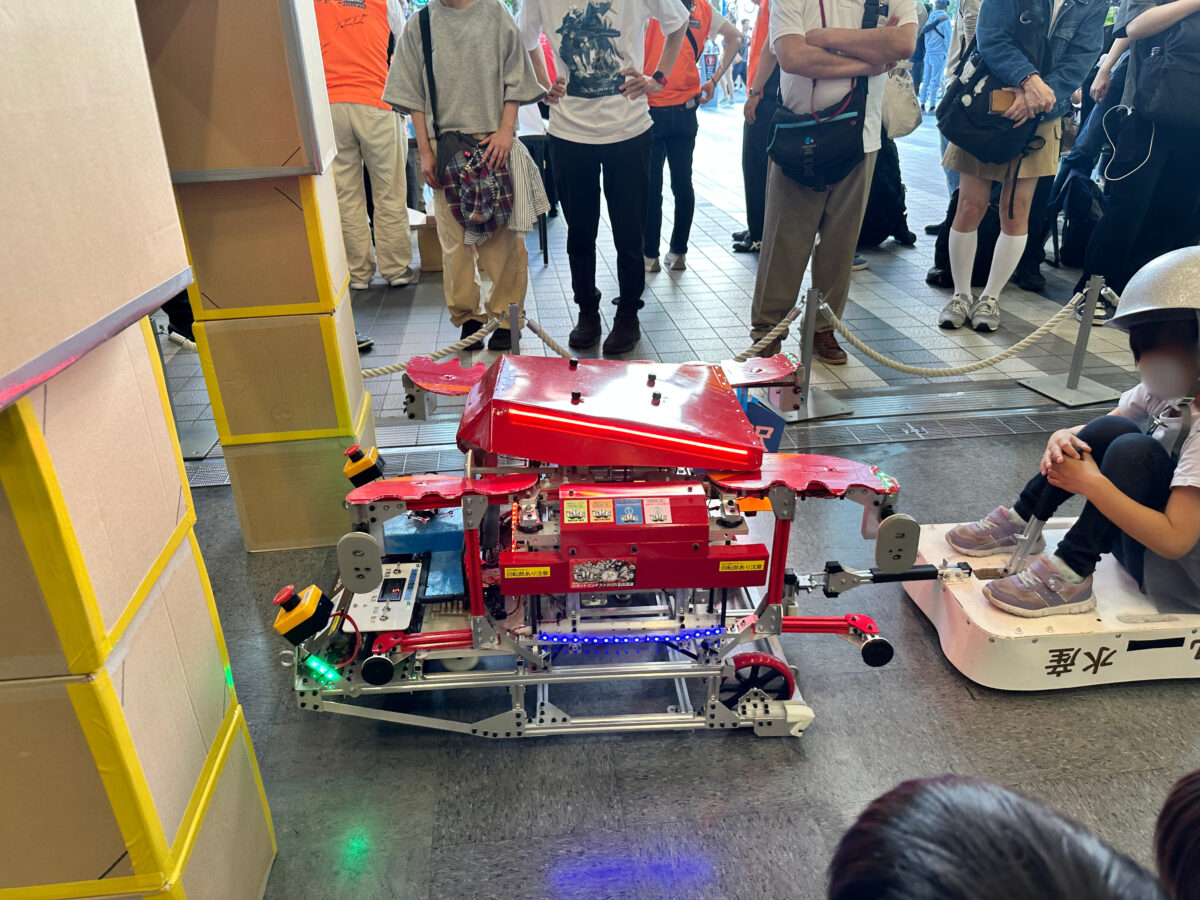
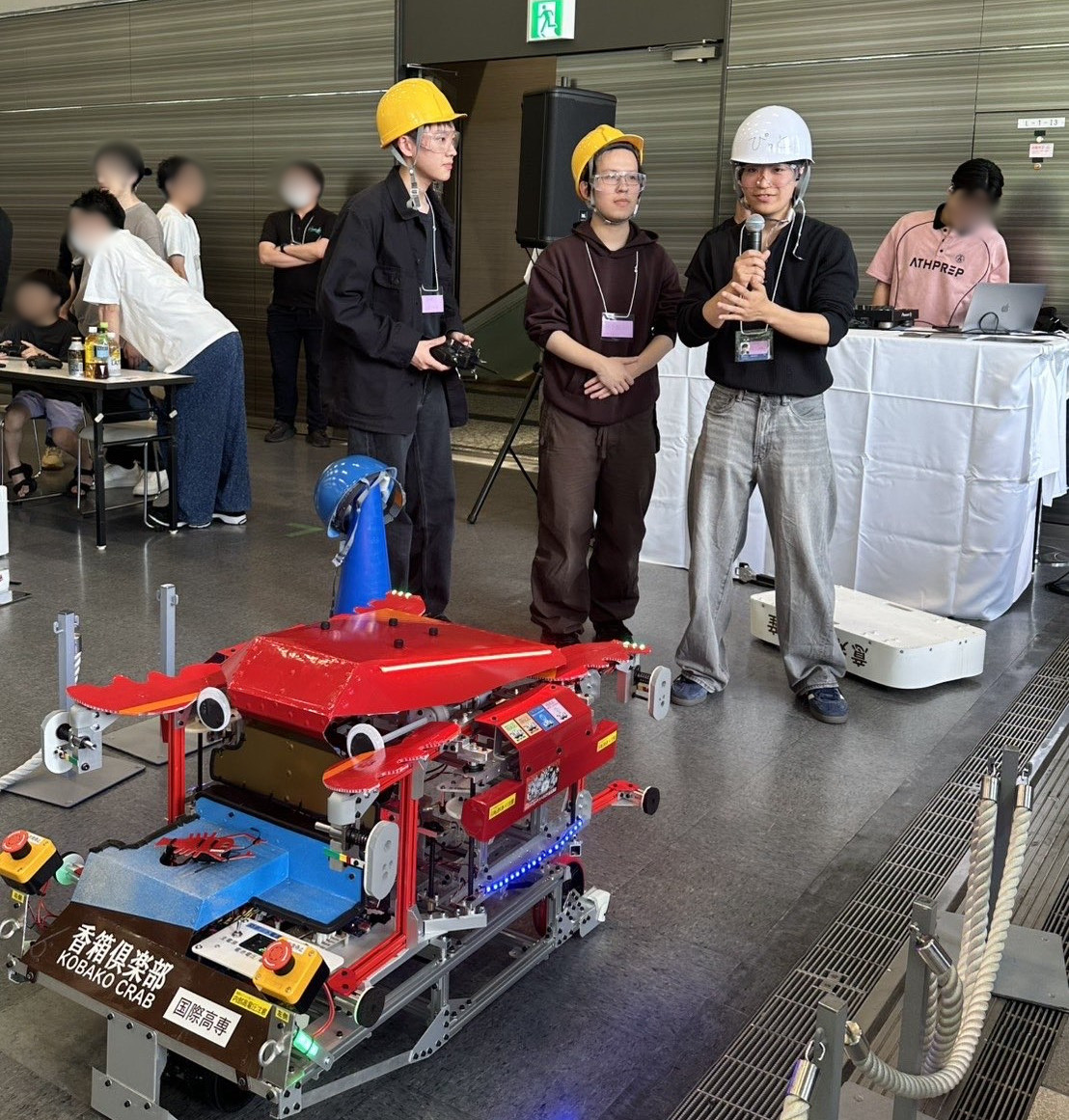
In addition to exhibition booths, the event also featured a performance stage where we demonstrated our robot. The robot we brought was “Kobako Club,” which competed in the National KOSEN Robocon Competition in 2025.
During the demonstration, the robot carried gates made of stacked cardboard boxes and pulled a cart carrying a person. After the demonstration by our students, children visiting the venue were invited to ride on the cart, and the robot pulled them around the stage.
The children wore slightly oversized helmets and experienced being pulled by a robot while holding onto the cart—something most of them were probably experiencing for the first time. At first, some of them looked nervous, but by the end they were smiling and saying, “That was fun!”
Even after the stage performance ended, many children came to our exhibition booth to see the robot more closely. They touched the robot, looked inside its mechanisms, and asked many questions to the students in charge of explanations.
We believe this experience was valuable not only for children who may become future KOSEN students, but also for our own students.
Design & Fabrication Club
Advisor: Michihiro Hayashi
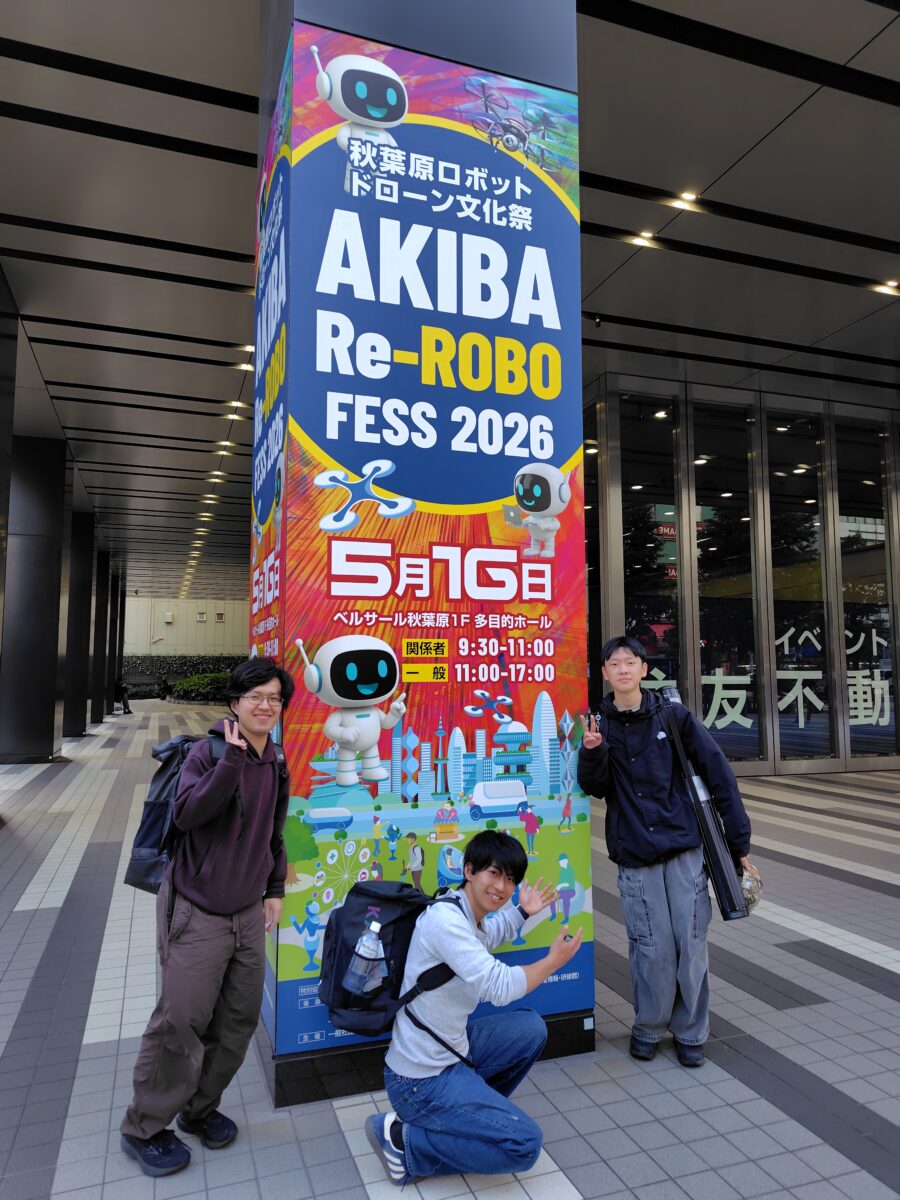
Arriving at the event venue会場到着
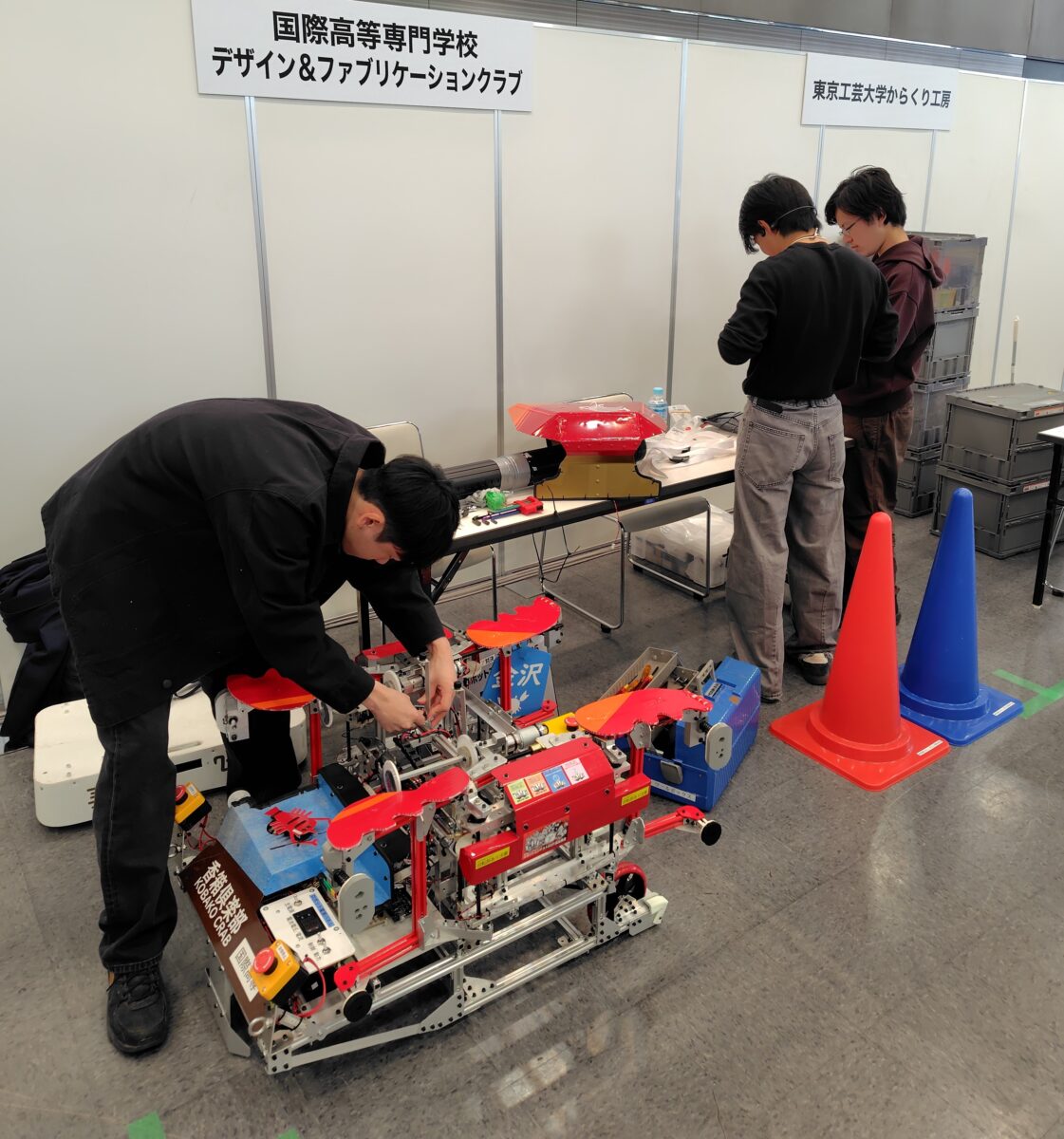
Preparing the exhibition booth展示ブース設営中
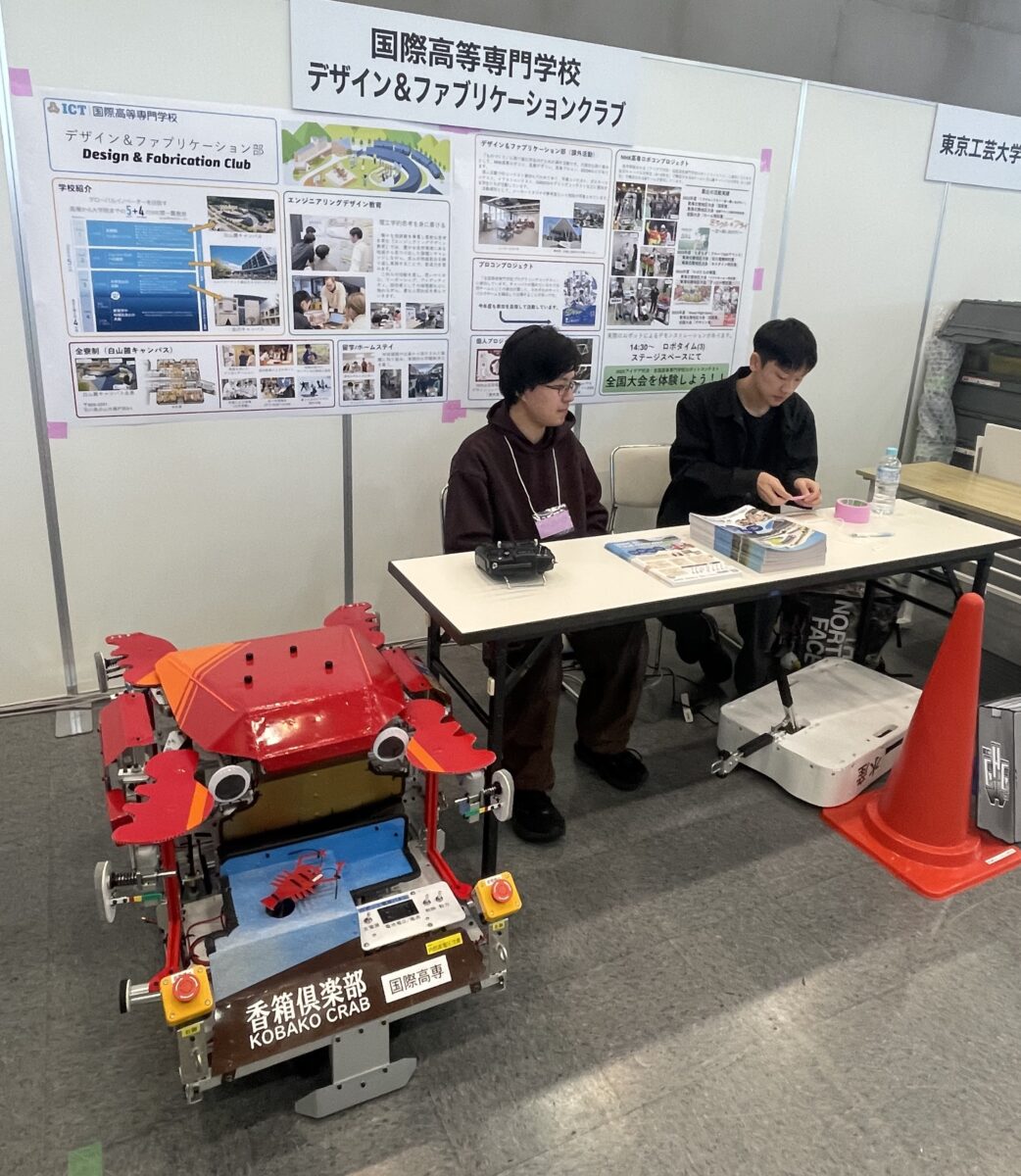
Ready to welcome visitors準備が終わって待機中
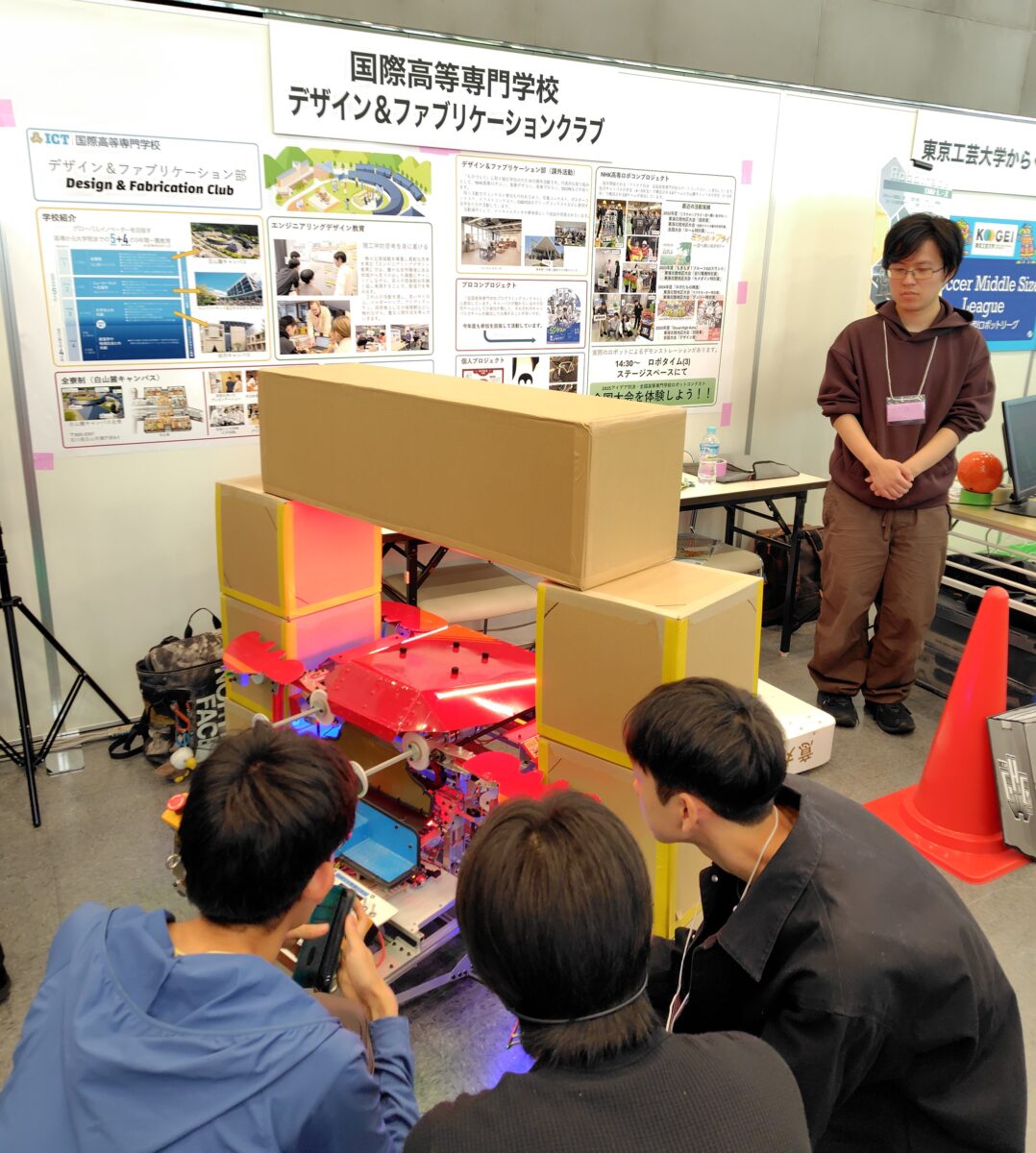
Introducing the robot to visitorsロボット解説中
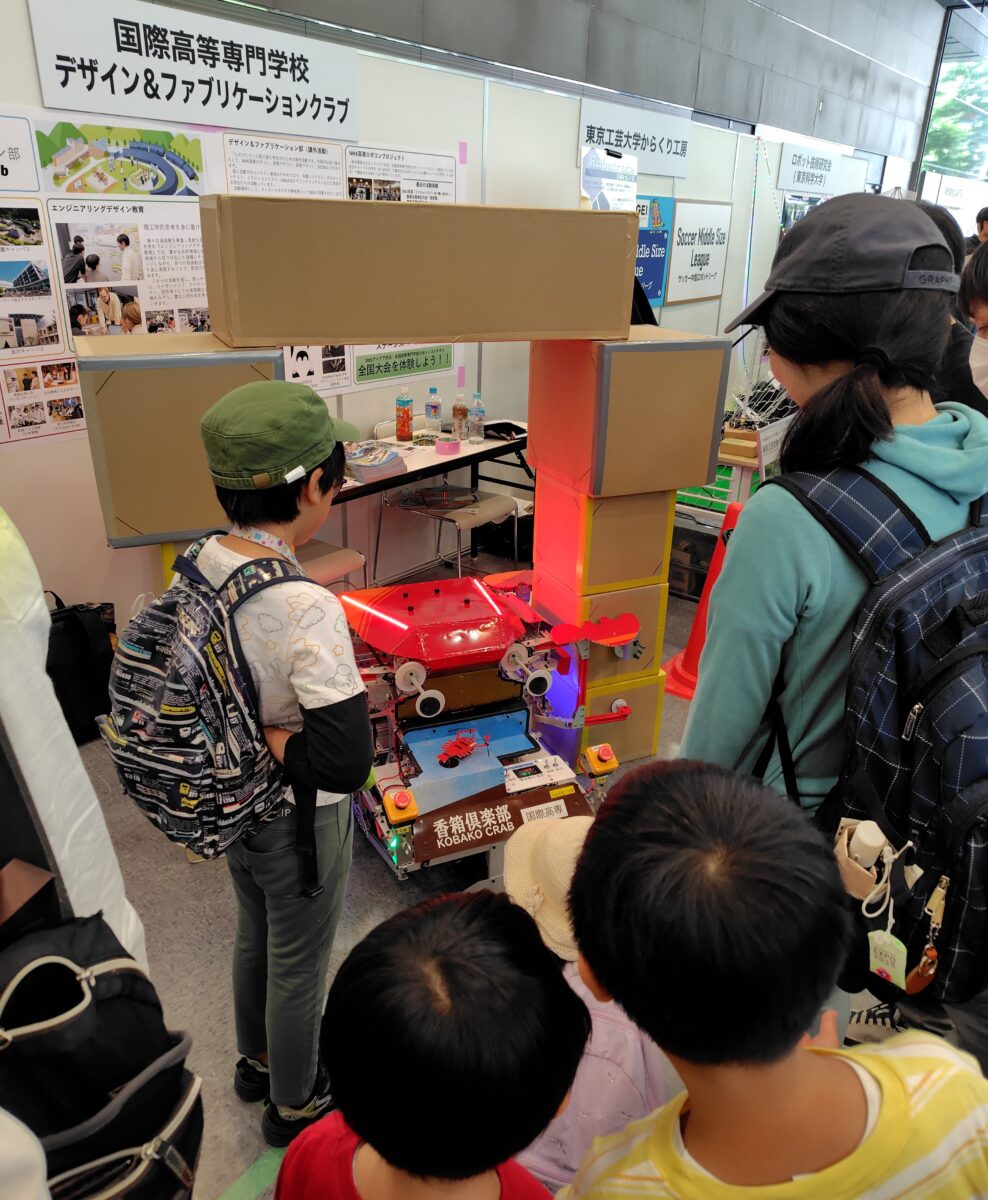
Children taking a close look at the robotロボット見学中の子供たち
Children taking a close look at the robotステージ実演で台車に乗る参加者
Students explaining the robot beside the stageステージ脇でロボットの説明をする学生