




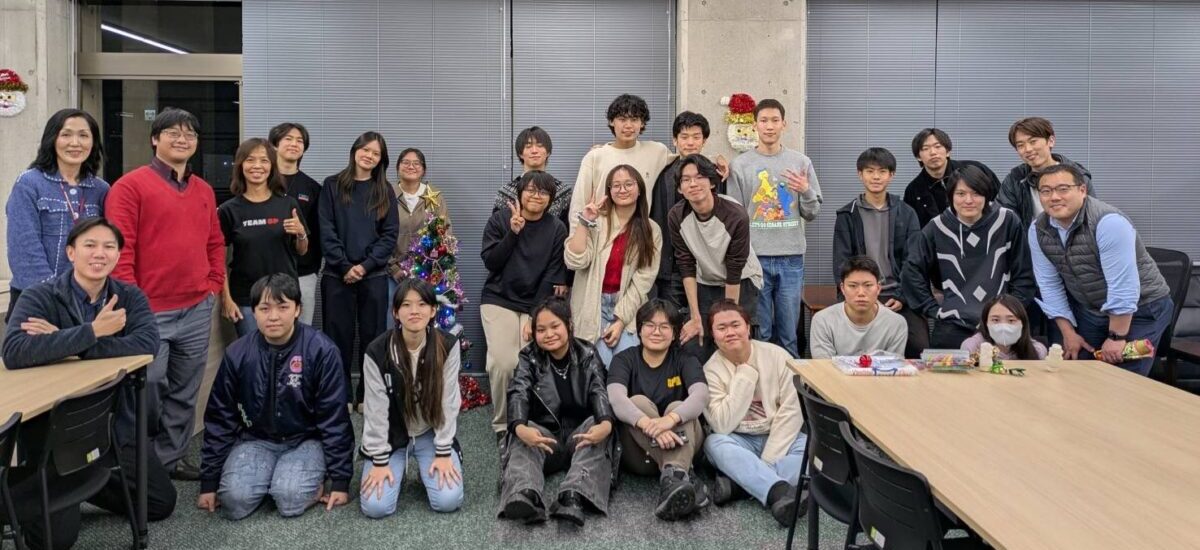

Hello, this is Justin Han. December is the time of the year when many cultures celebrate their holidays, whether it is Christmas, Hanukkah, Kwanzaa, or just beginning of a new year. Although each person and culture celebrate differently, the end of the year remains a time for celebration with friends and family.
Since December 2022, teachers at ICT Kanazawa Campus have volunteered their time and efforts to host an annual Holiday Party for students. Held during the last week of December, the party offers students and faculty a chance to celebrate together in a relaxed setting, enjoying food, drinks, and snacks while unwinding from the year’s challenges. In the spirit of international exchange, all participants are encouraged to speak English during the event.
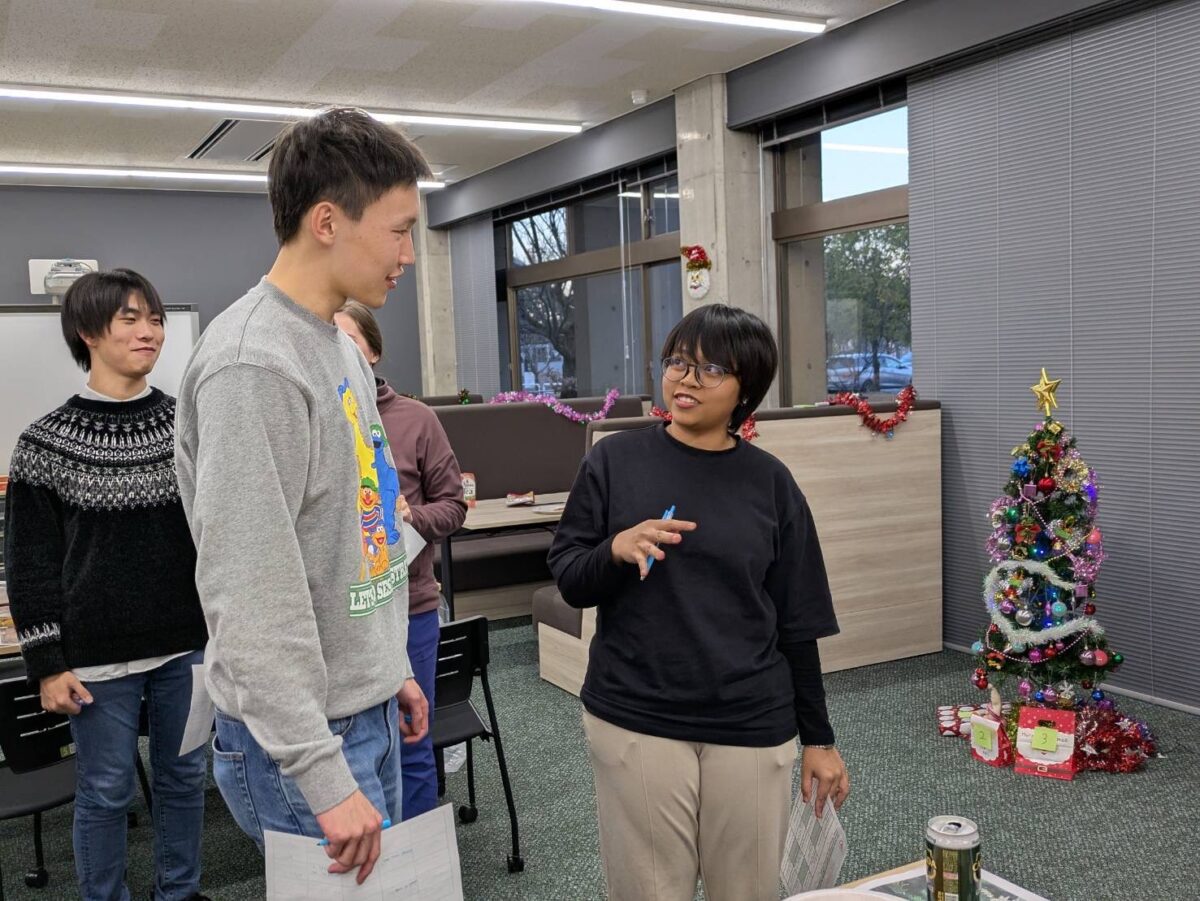
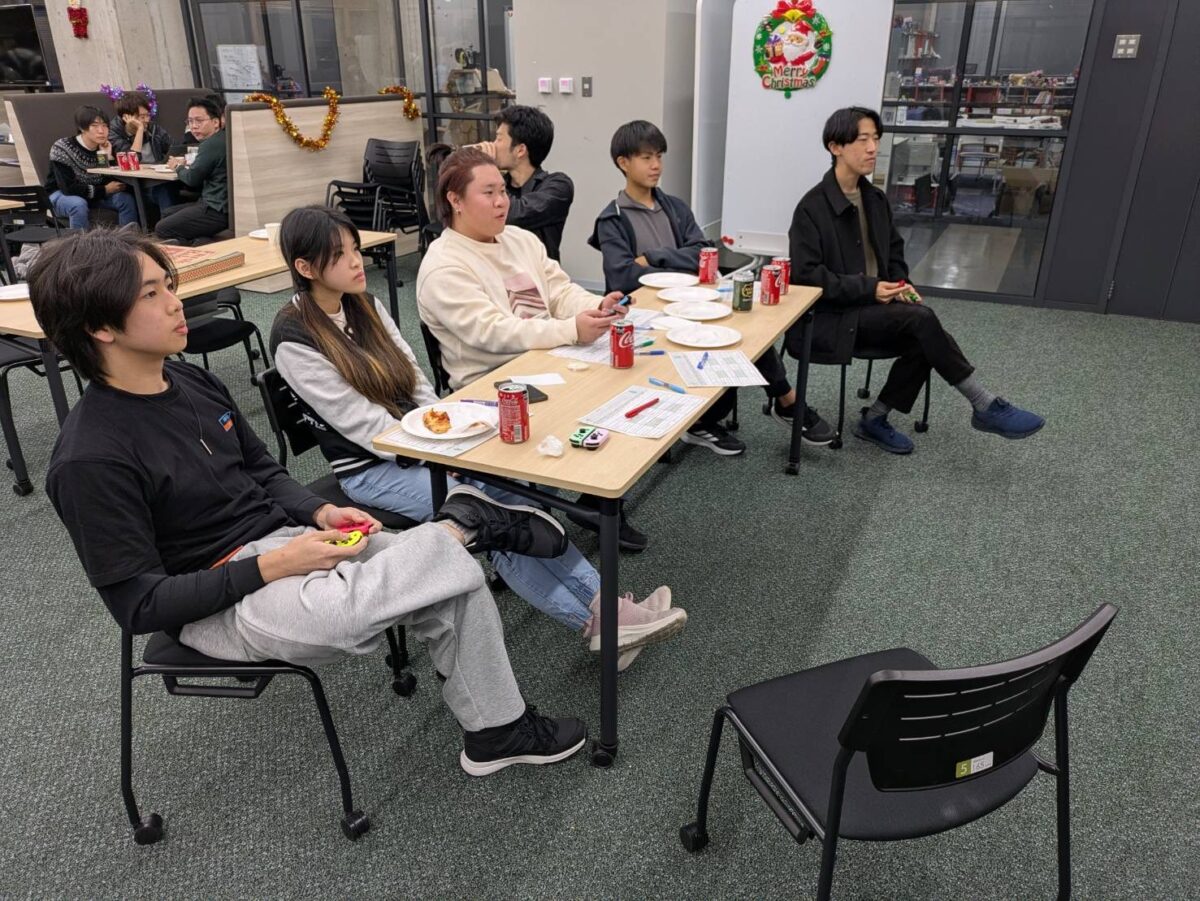
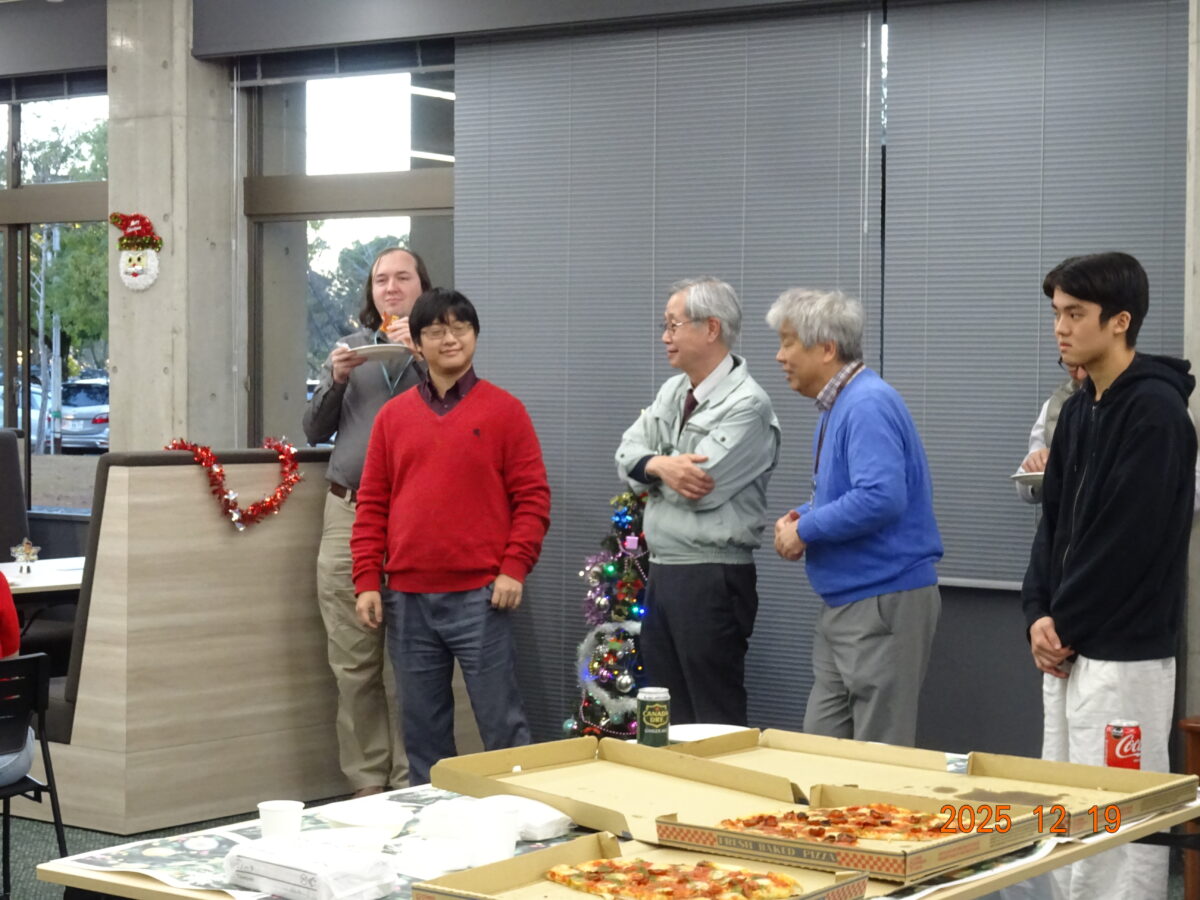
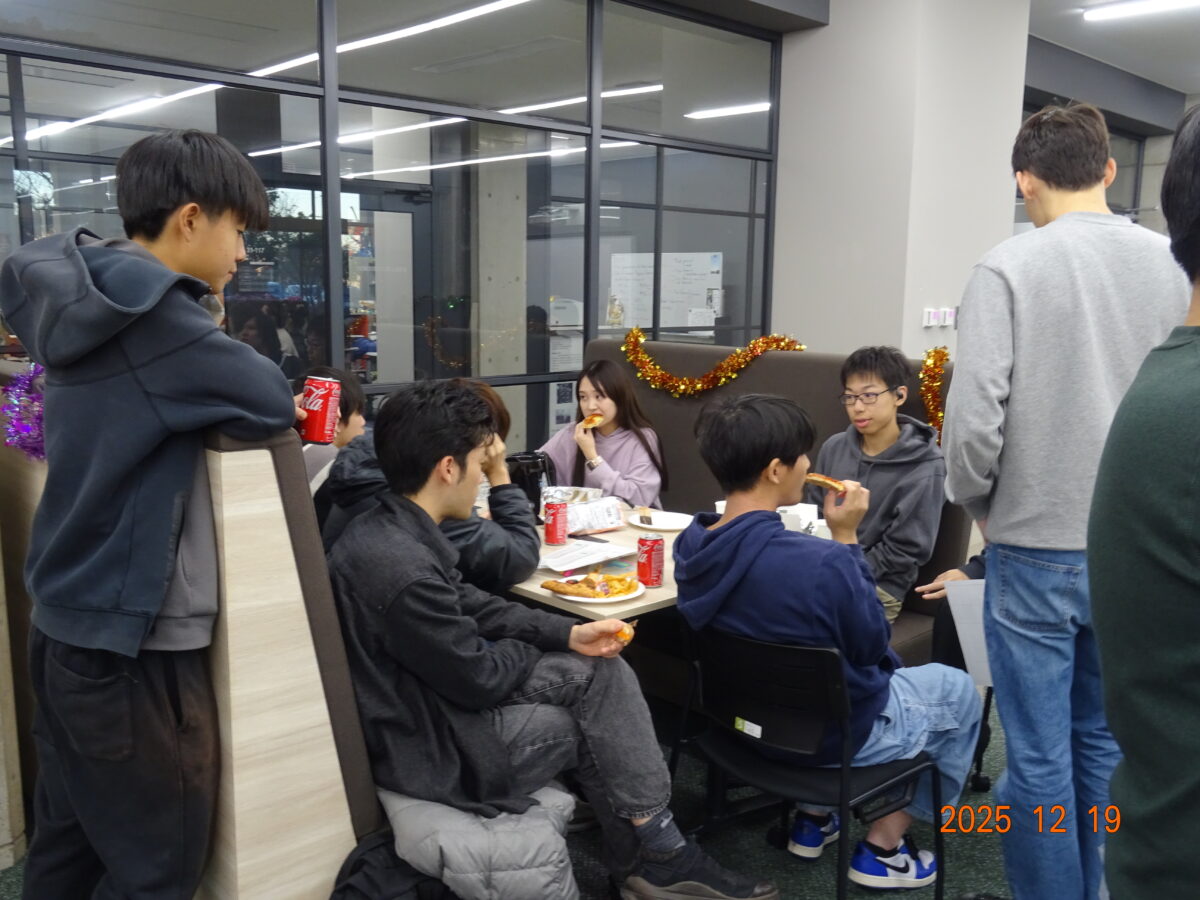
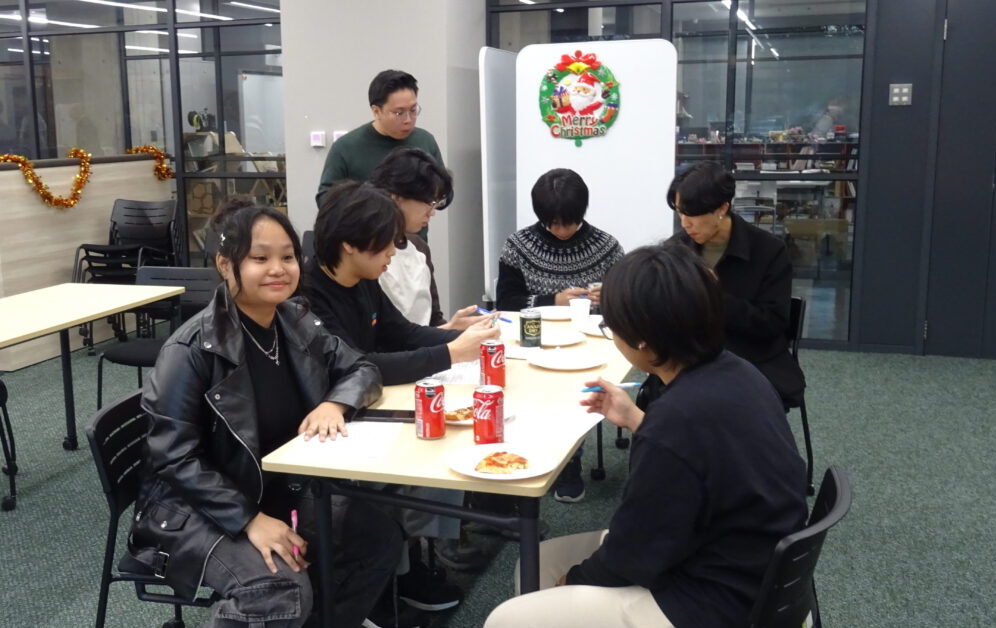
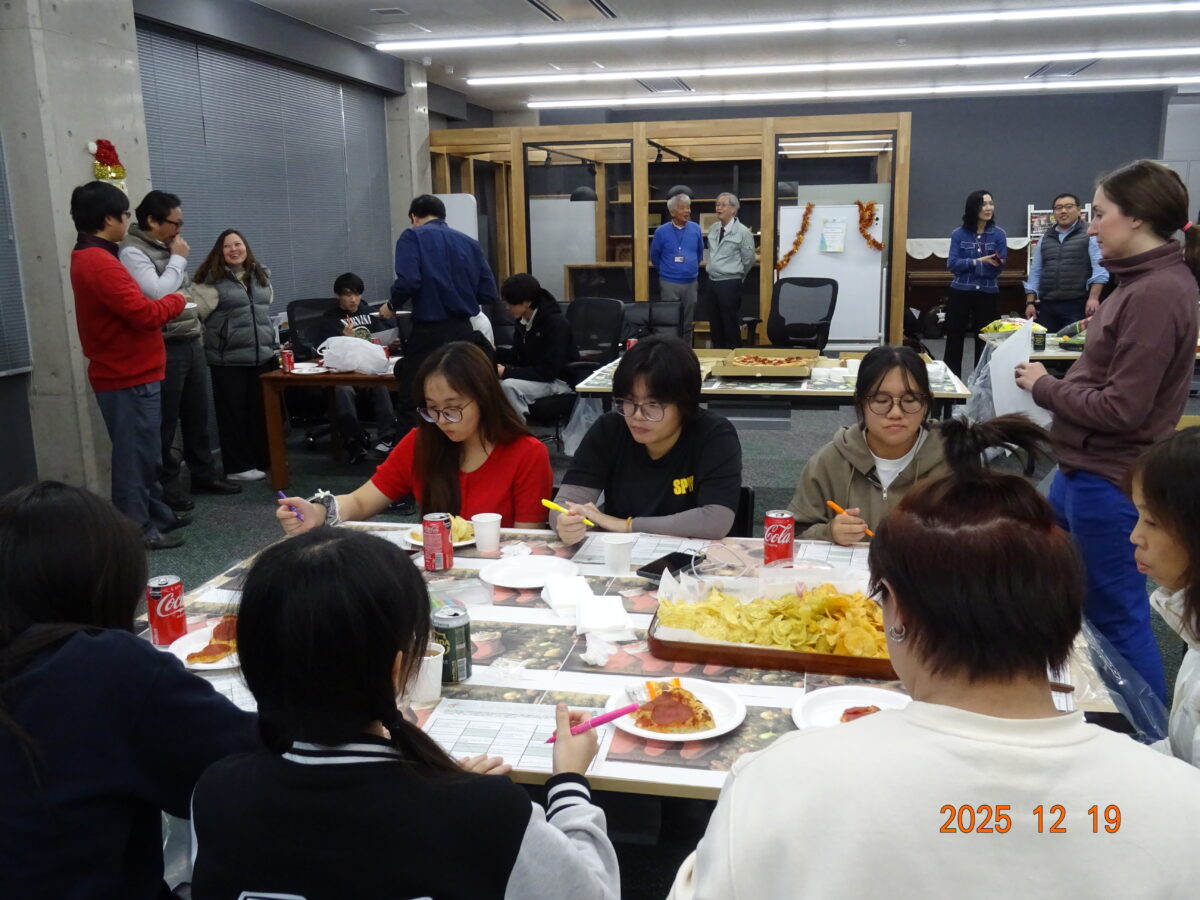
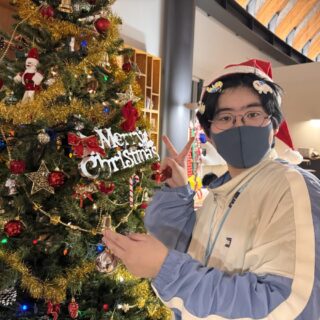
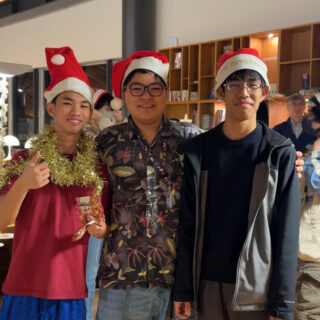
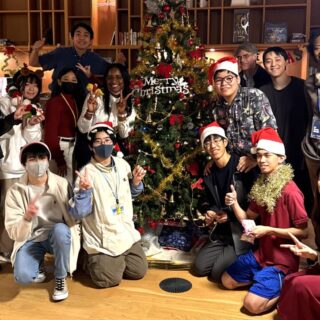
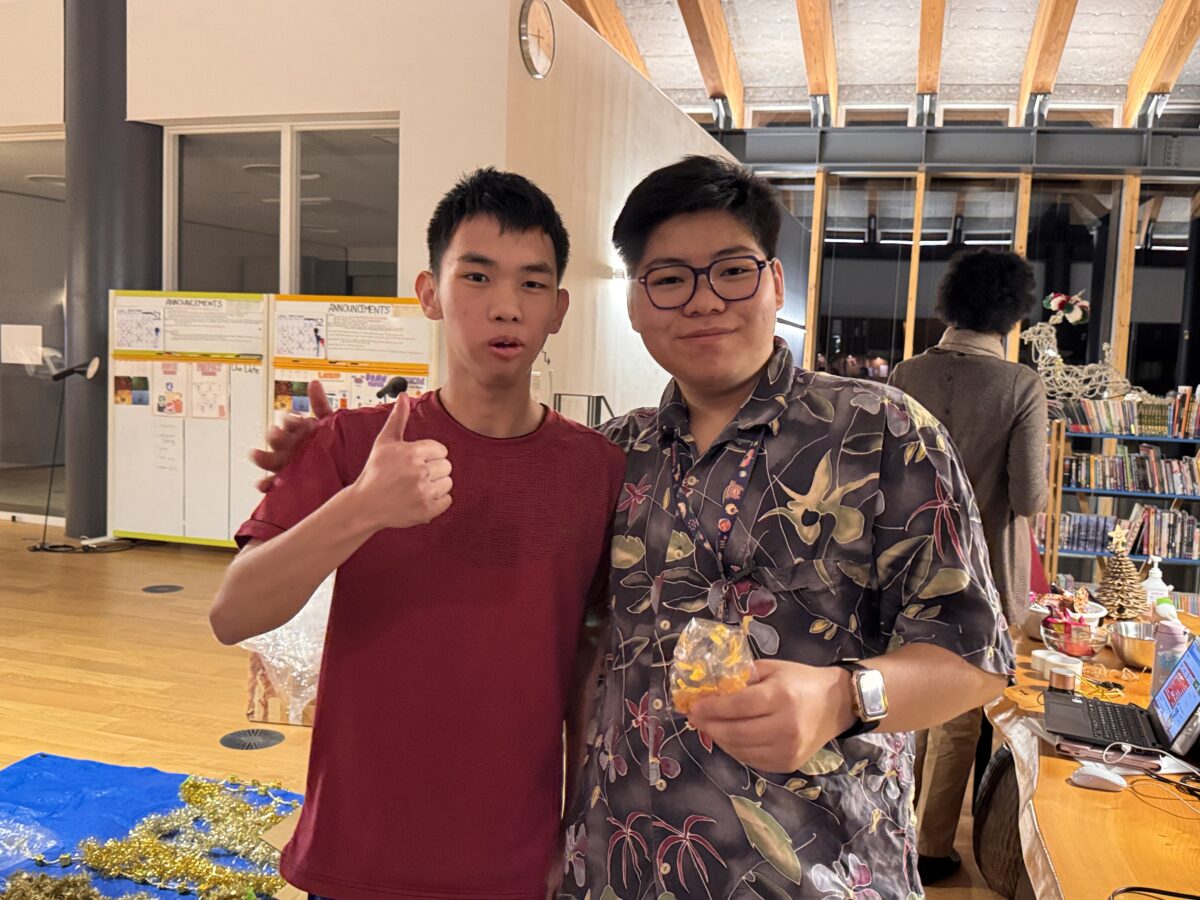
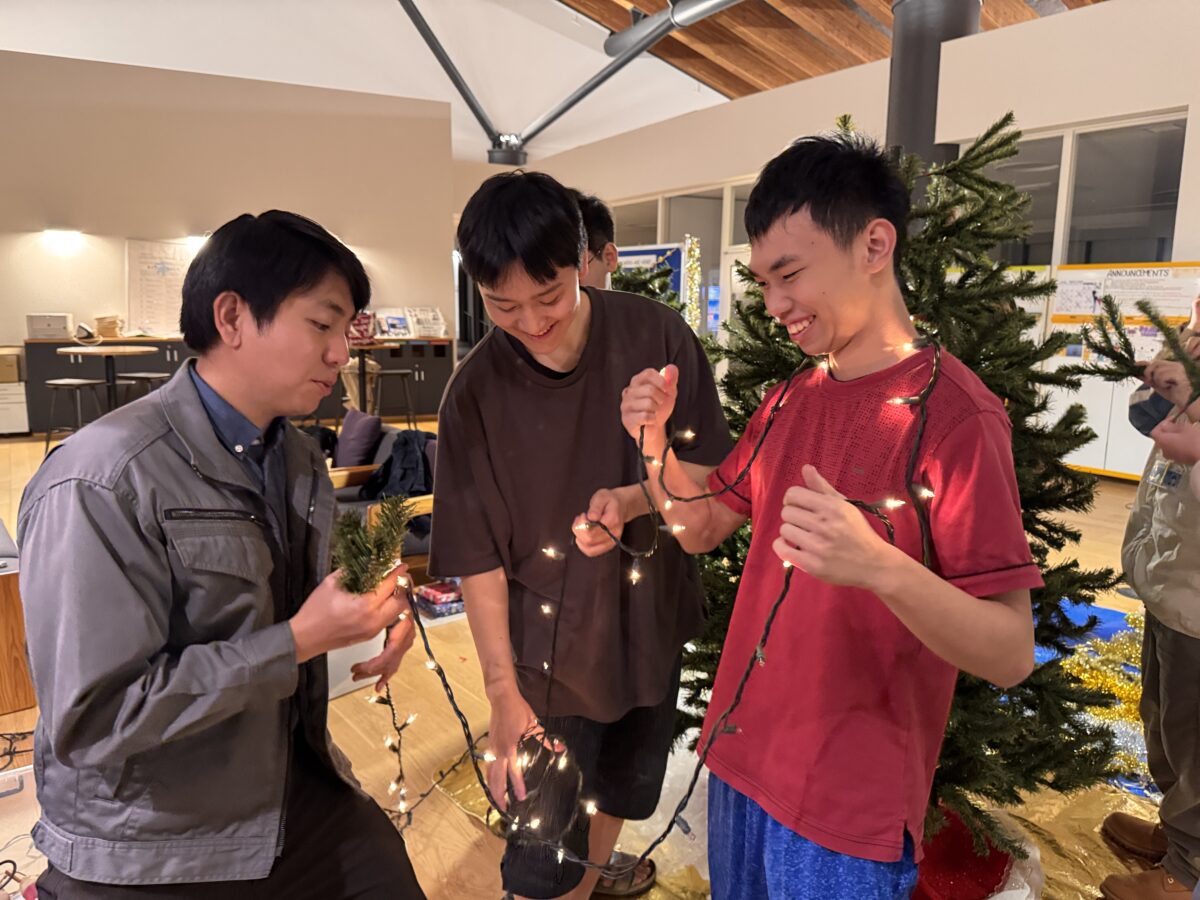
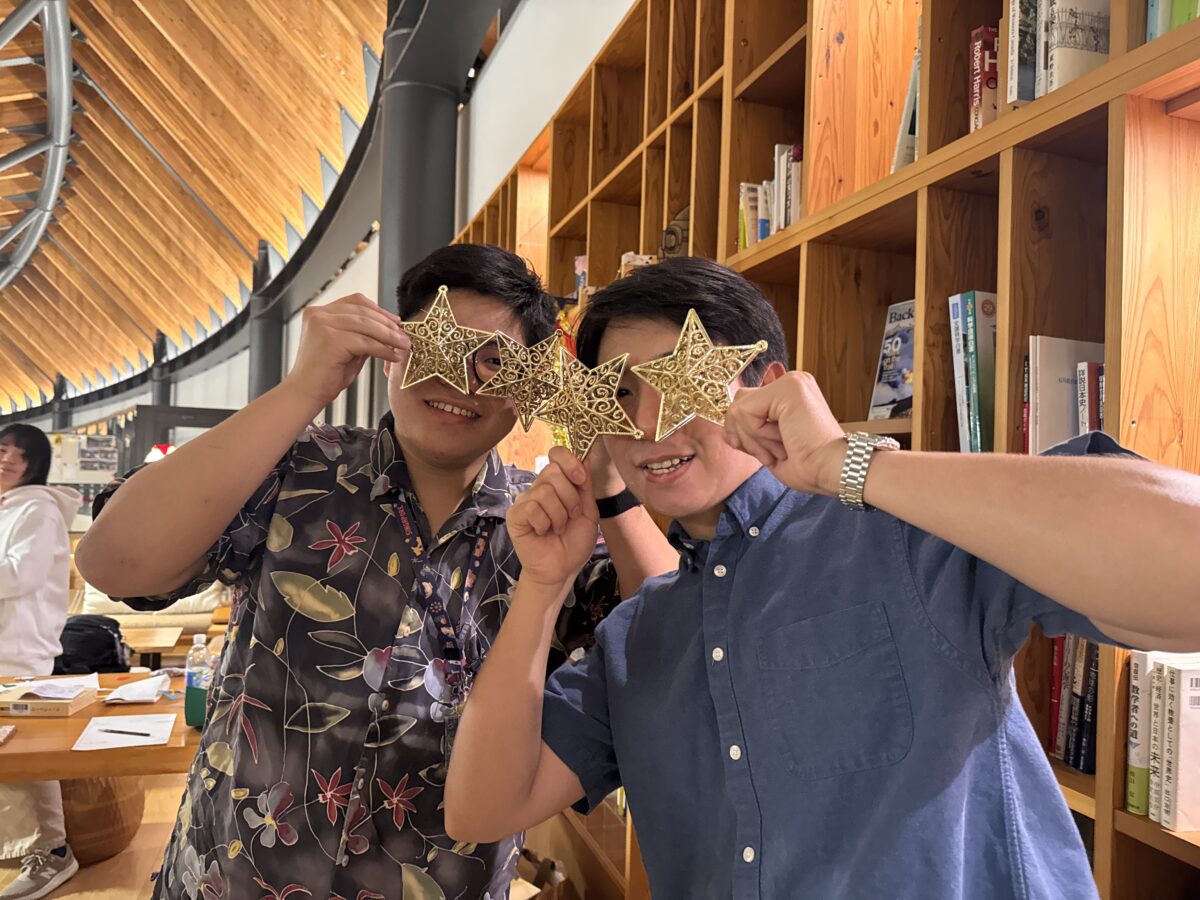
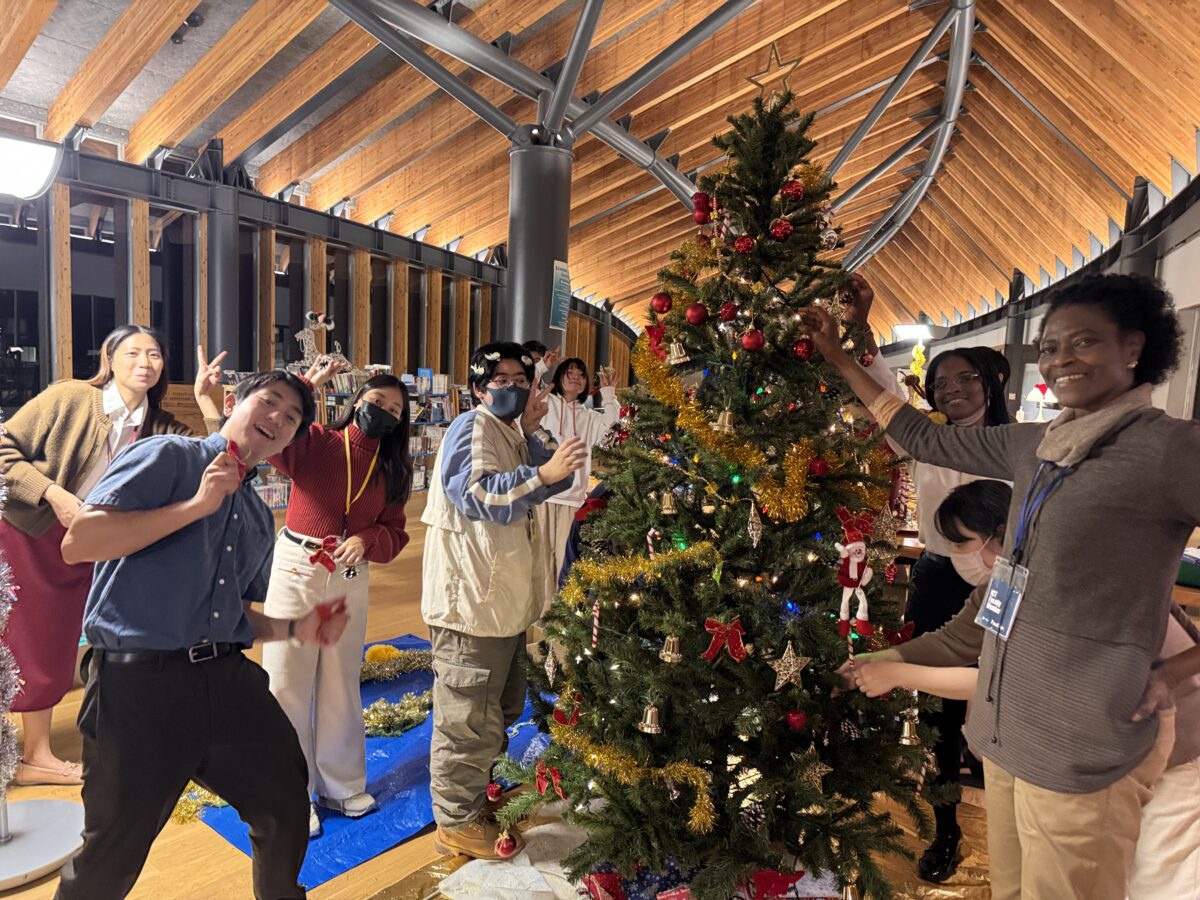
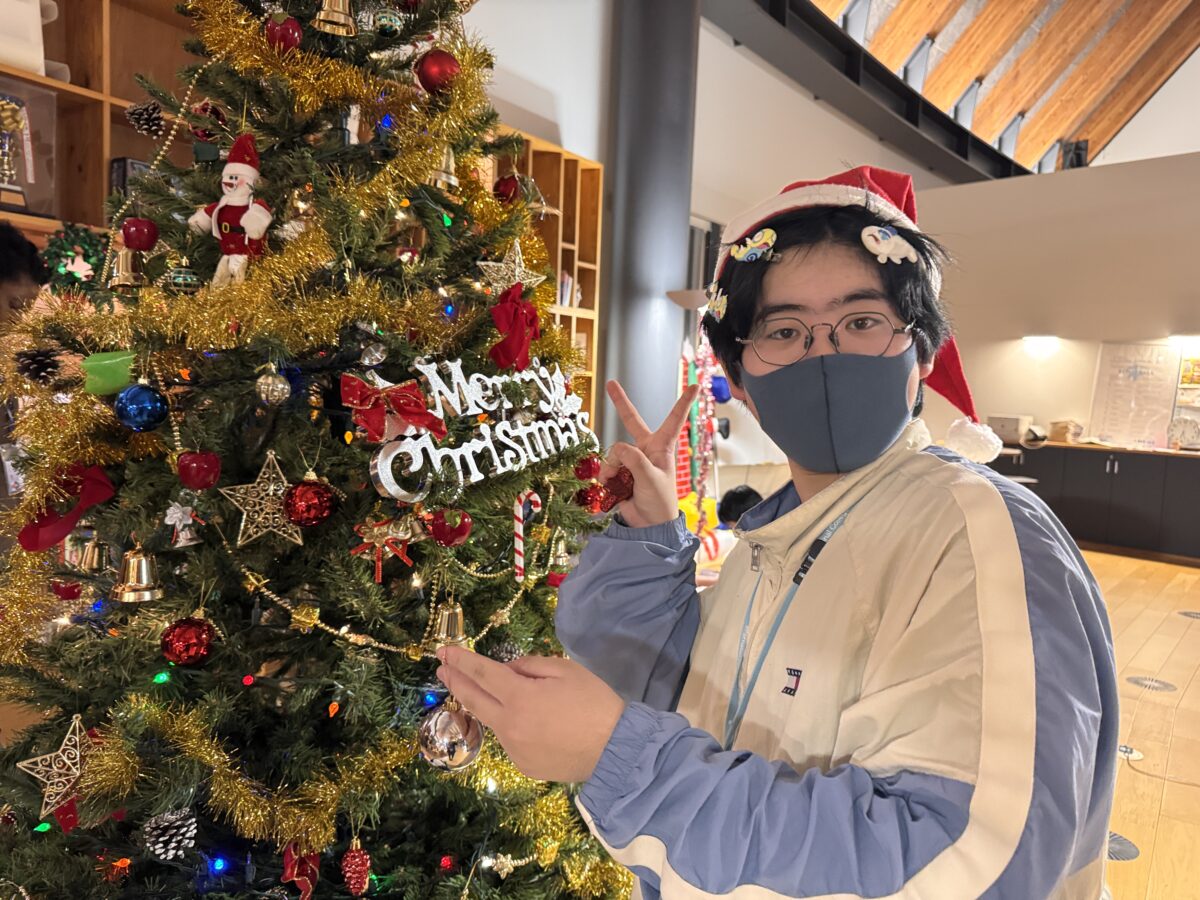
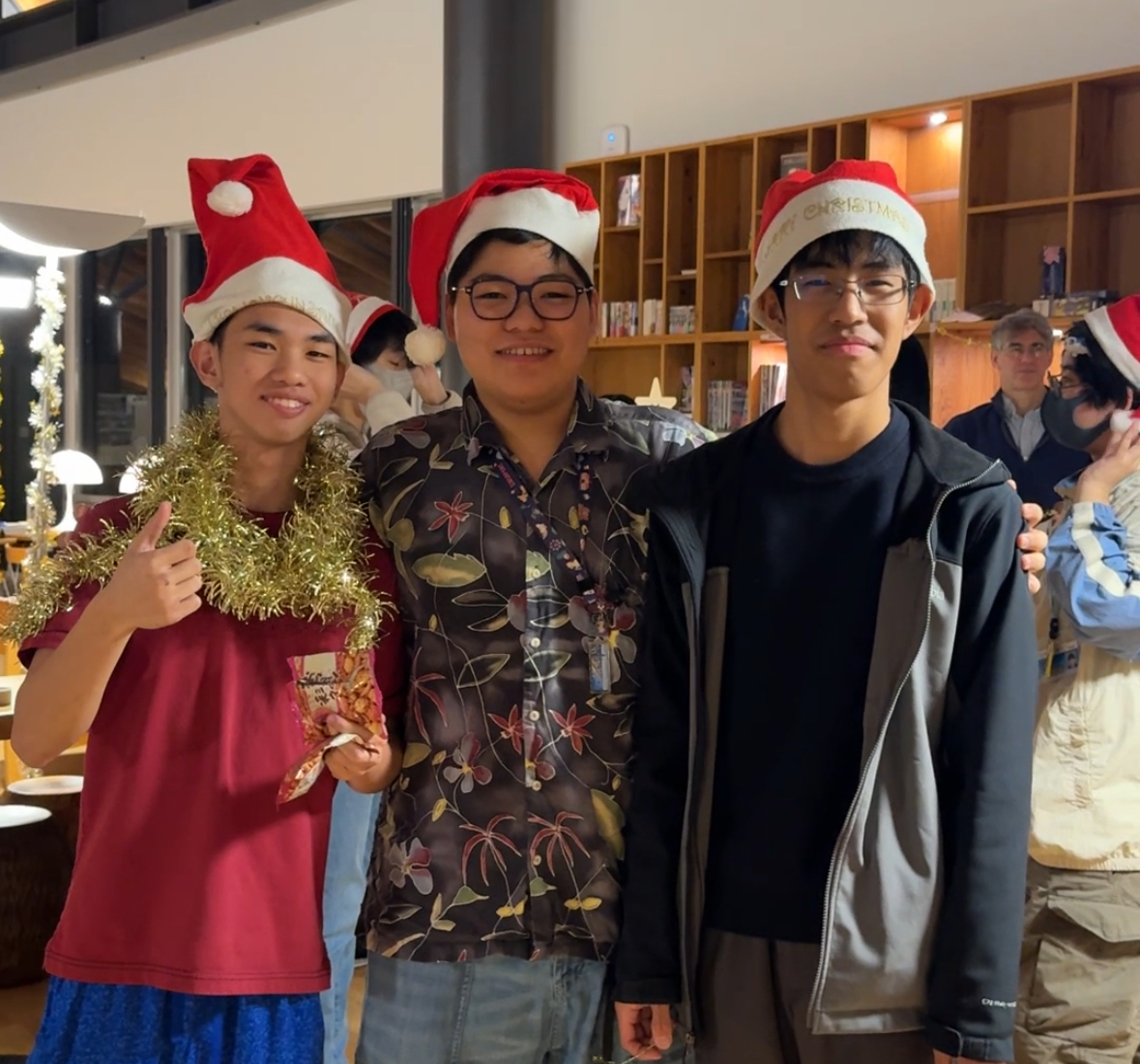
This year’s Holiday Party was held on Friday, December 19th, after classes ended with students and faculty enjoying a simple spread of pizza, potato chips, soda, and cake alongside holiday music playing in the background. As Christmas is one of the most celebrated holidays in many cultures, a Christmas tree, tinsel and other Christmas decorations adorned the room to create a festive atmosphere.

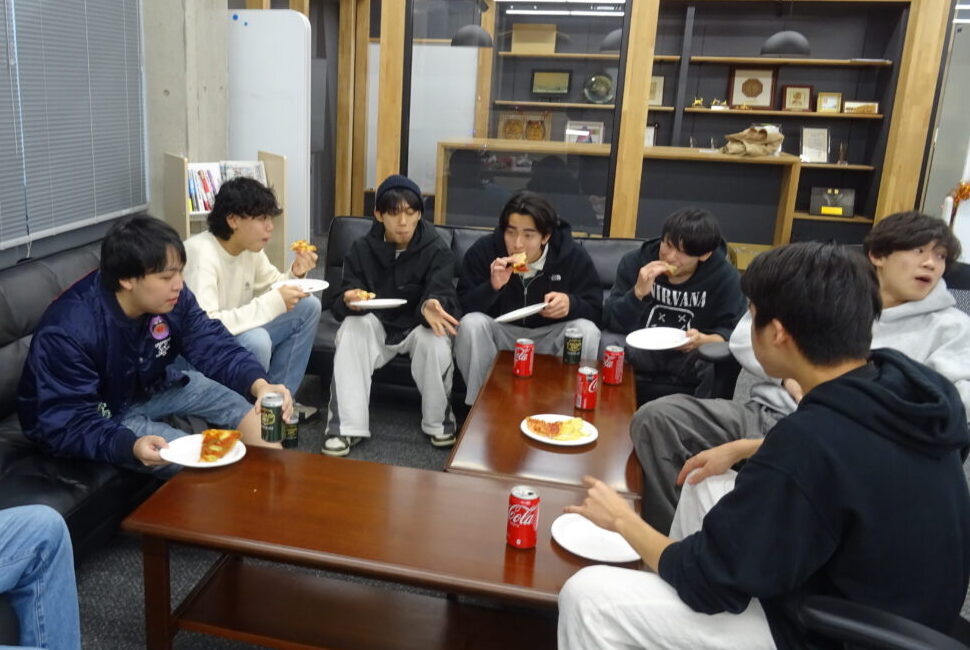
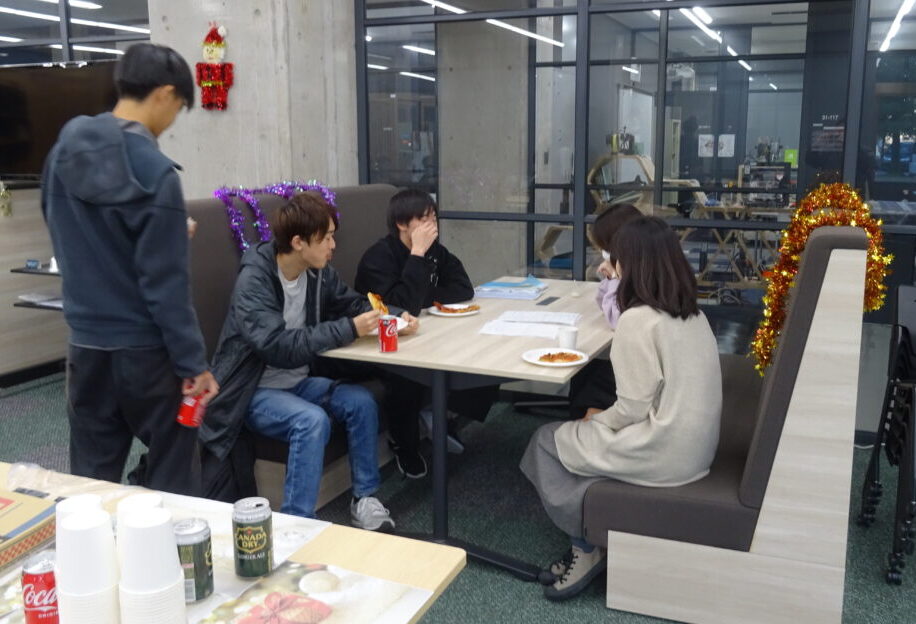
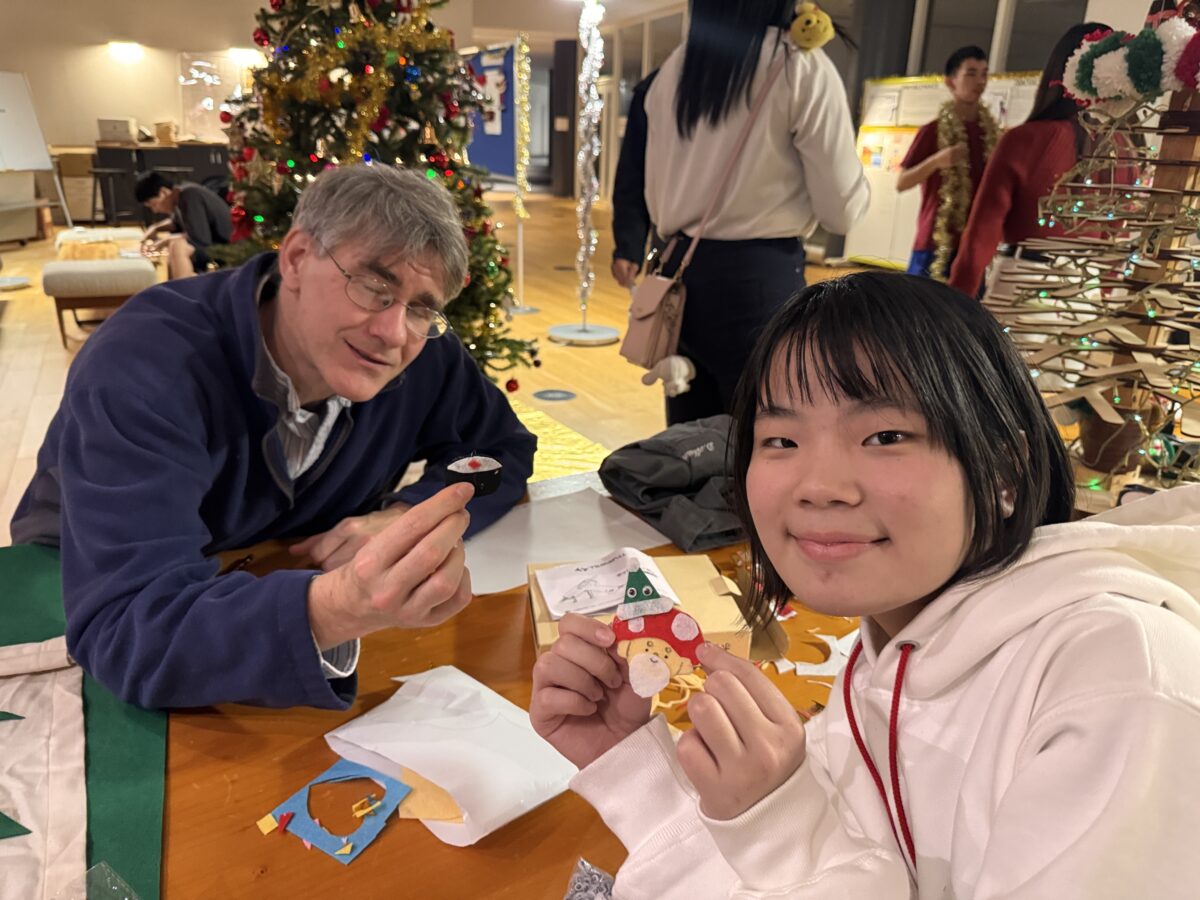
Different from previous years, this year’s event included 10 students and 2 faculty members from Singapore Polytechnic, visiting Kanazawa for the MILE program in collaboration with the International Program Center. Together with ICT students, they introduced themselves through an icebreaker game, learned about each other’s cultures, and then split into smaller groups to play simple party games.
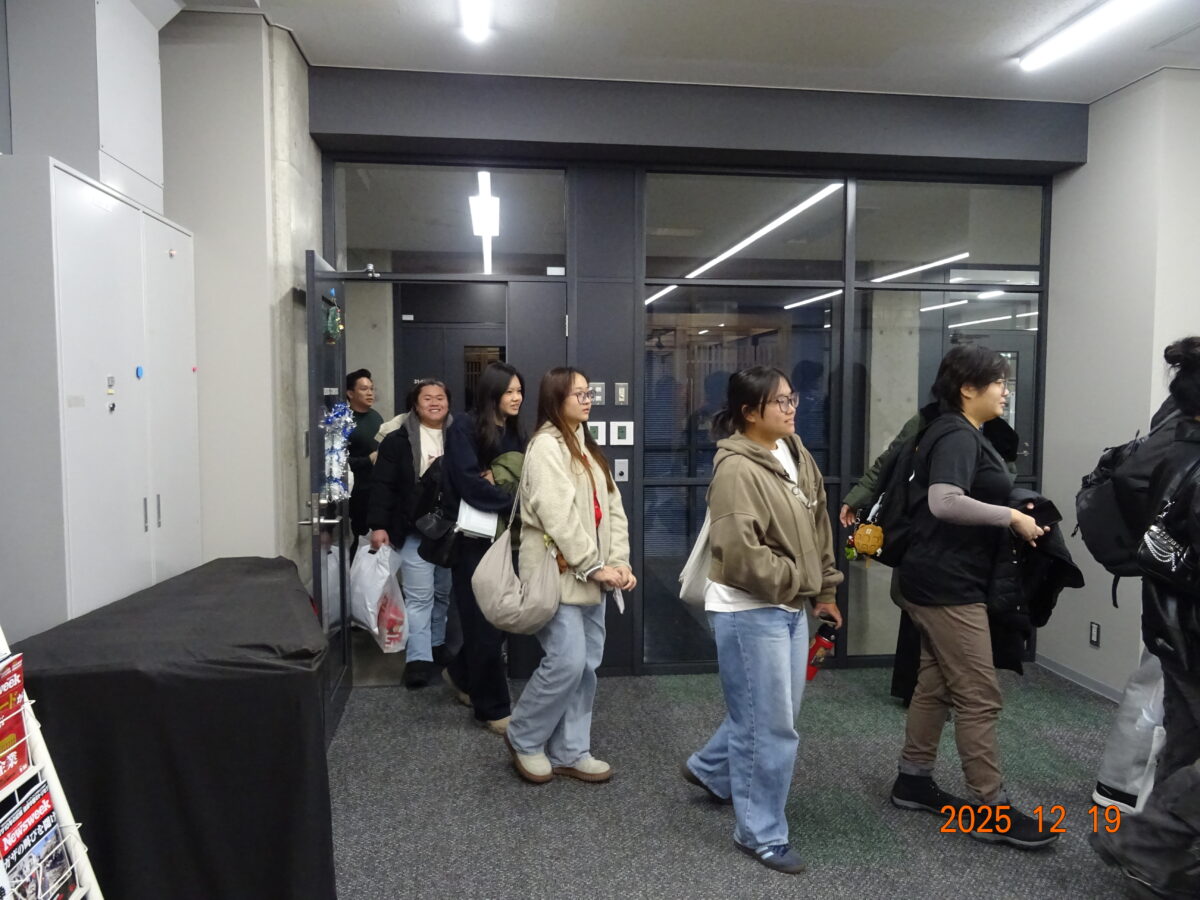
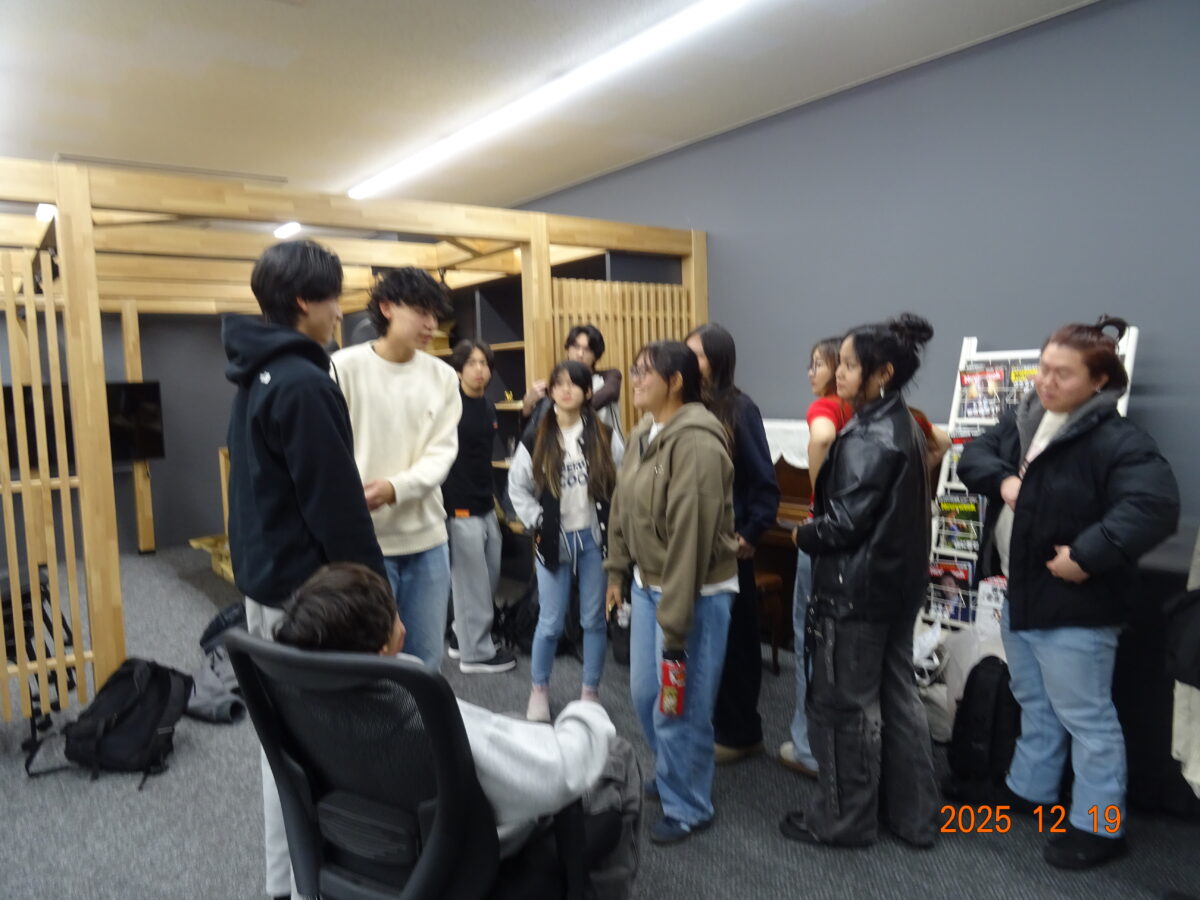
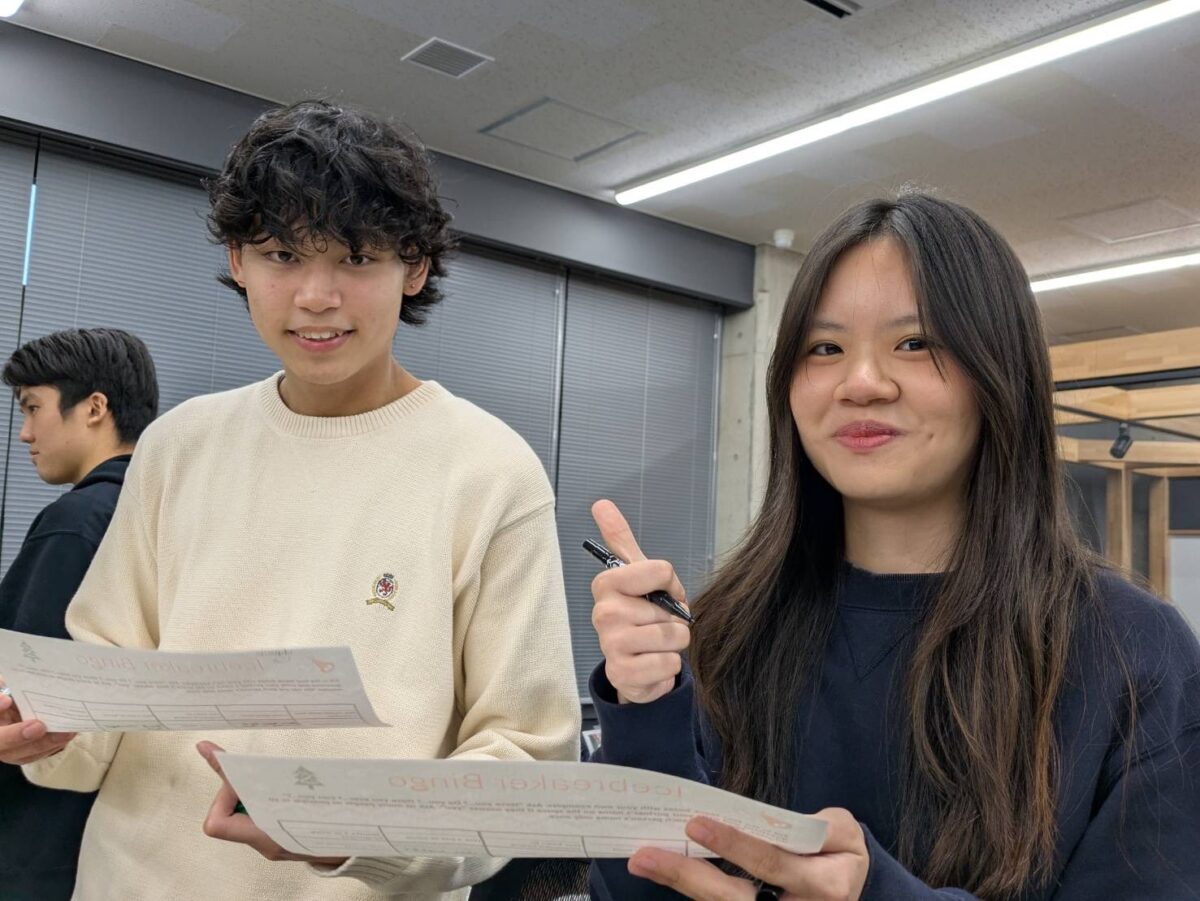
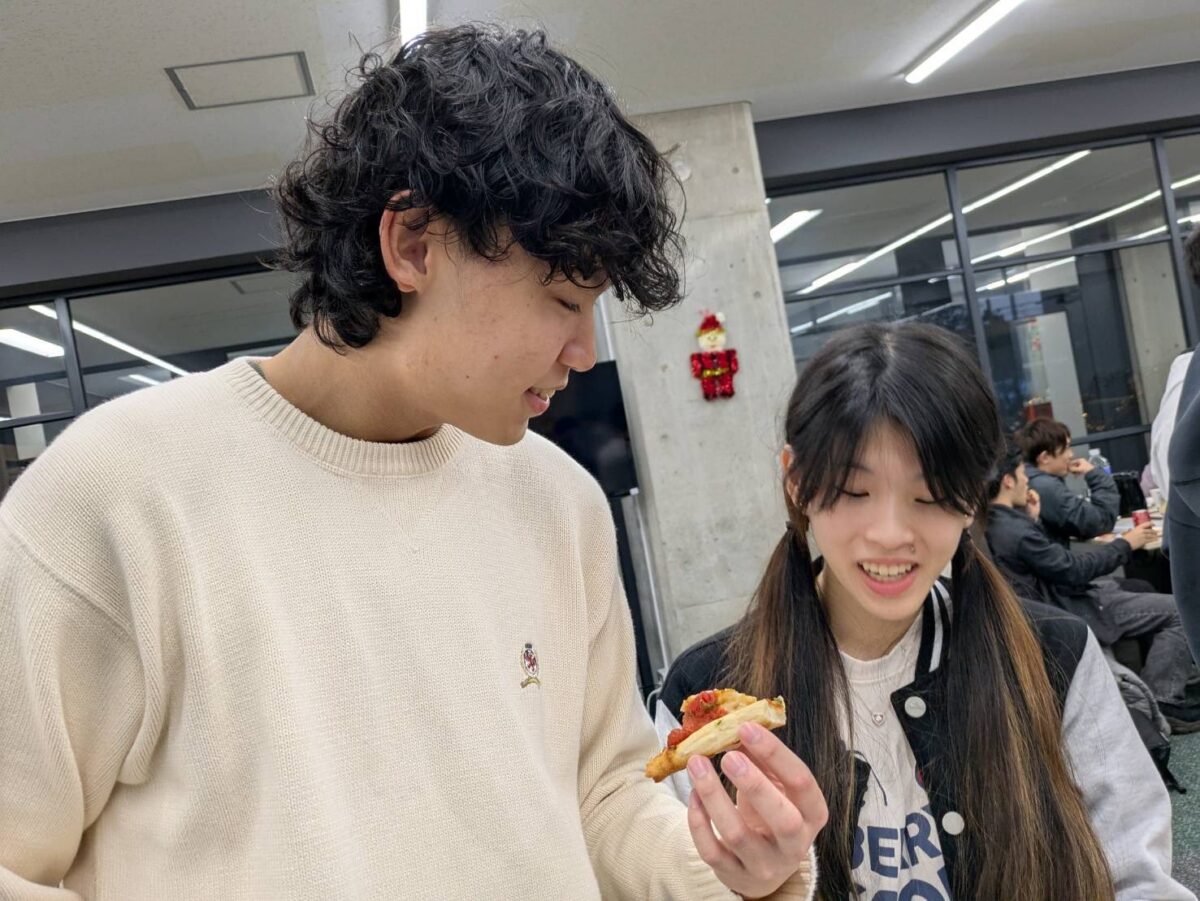
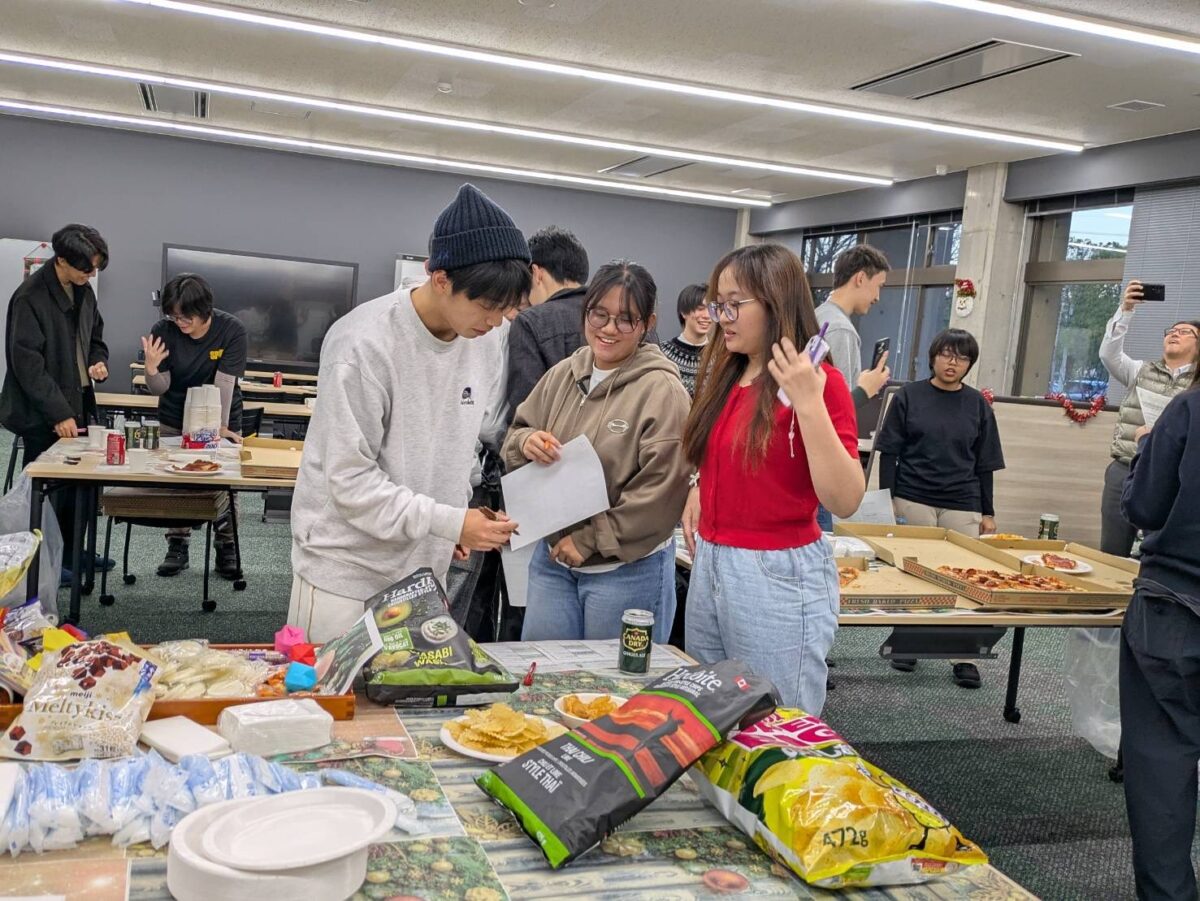
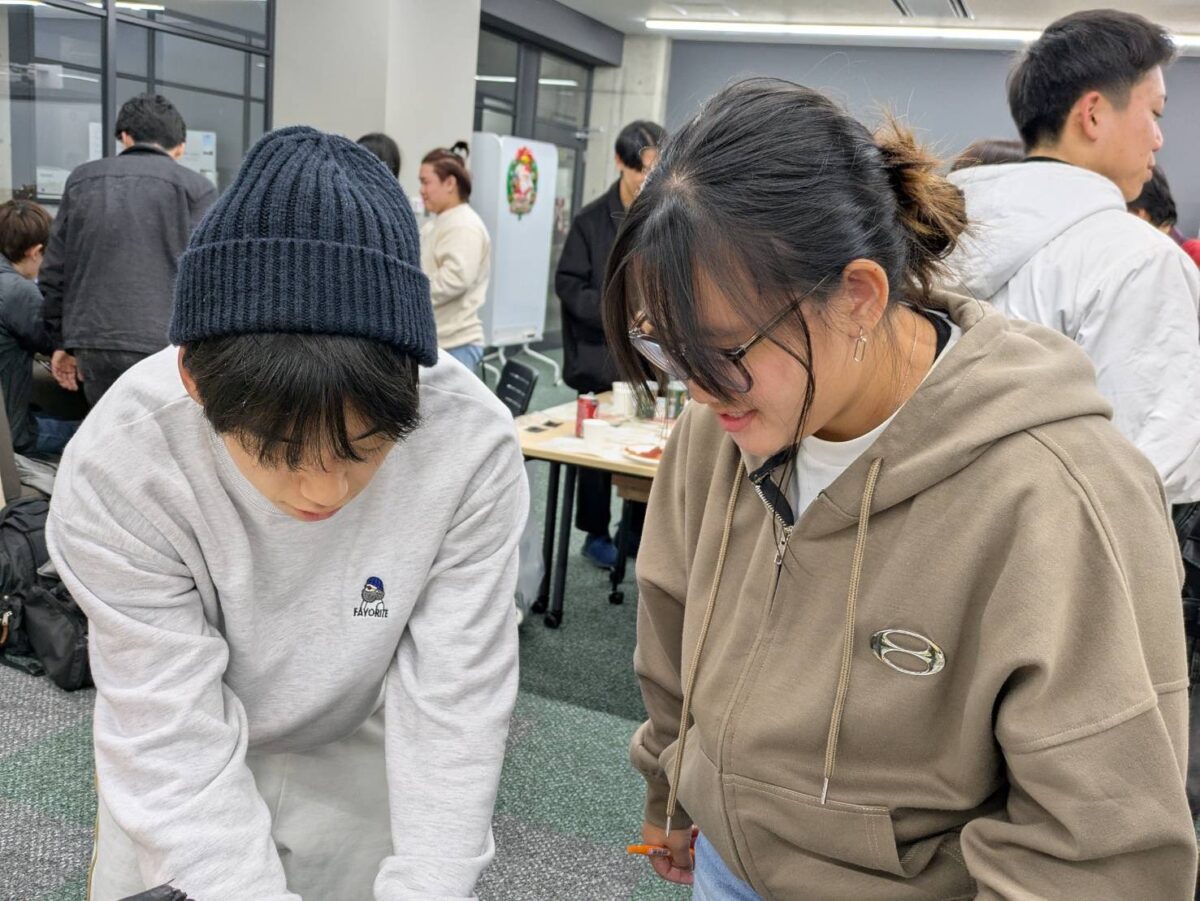
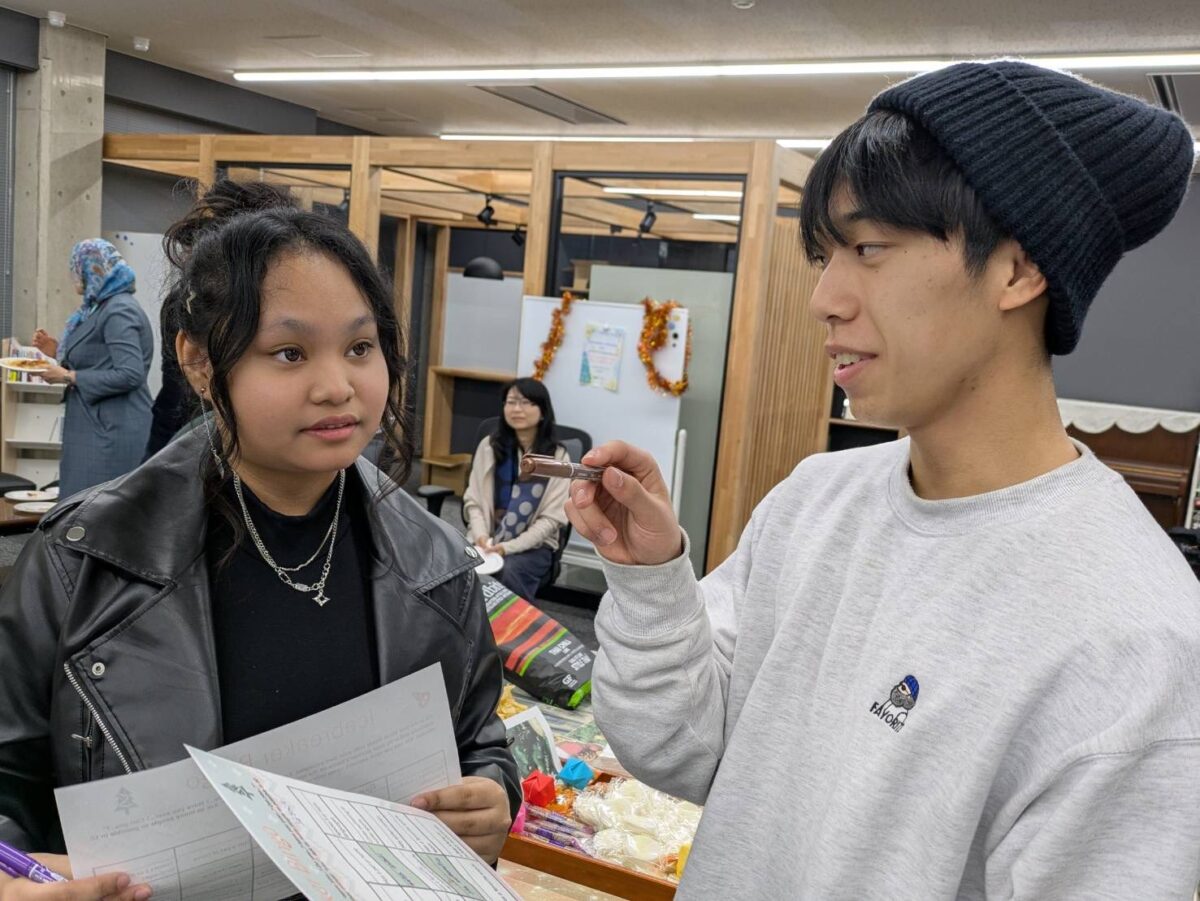
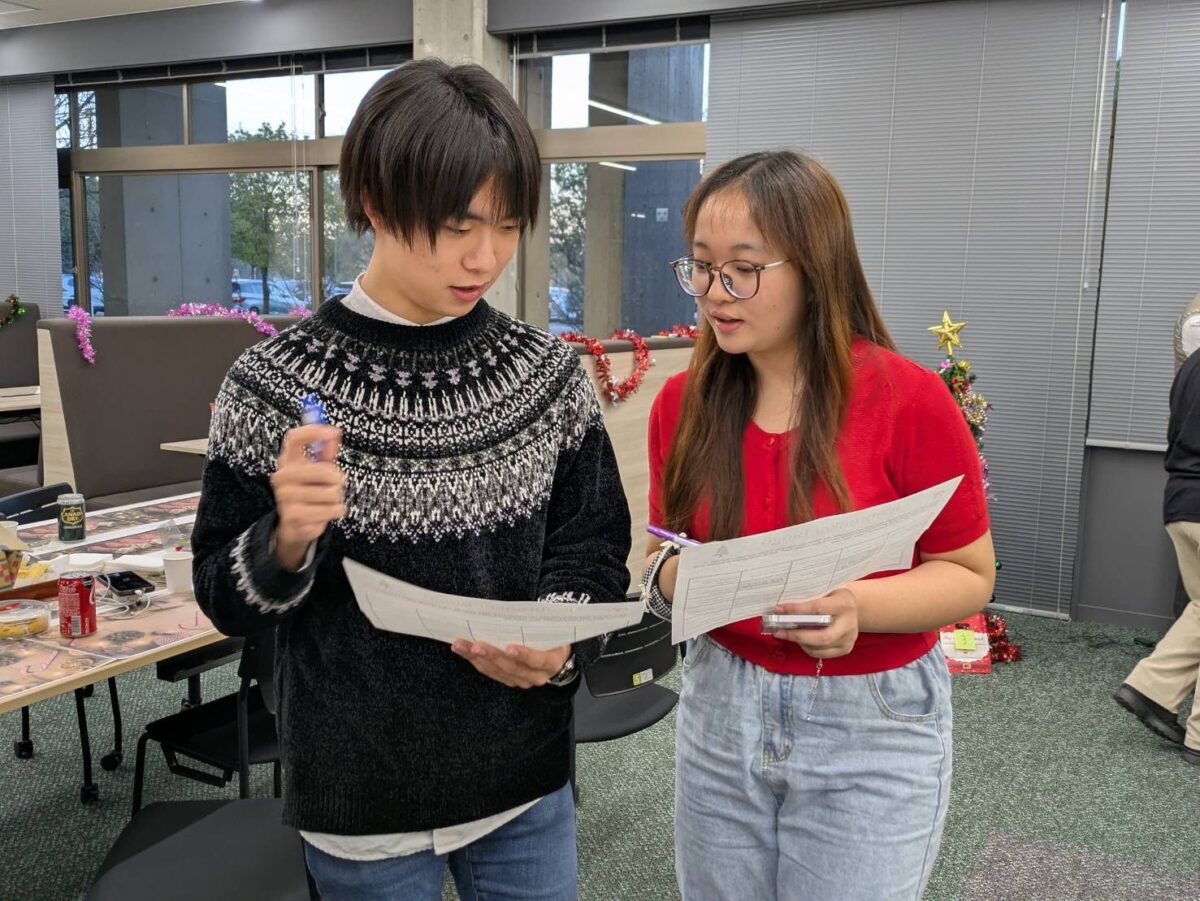
Unfortunately, after three hours of laughter and fun, the celebration came to an end as everyone parted ways. We hope that this party, even if only a little, helped everyone face the end of the year and welcome the new year with a brighter spirit.
Justin Han
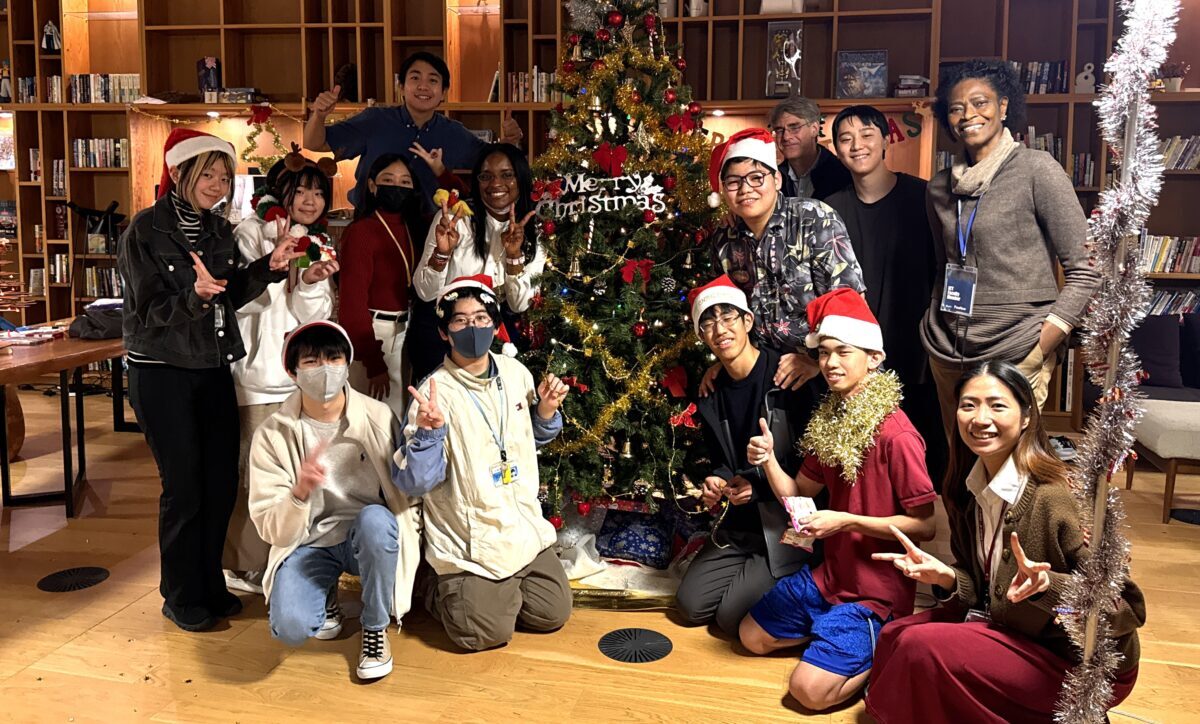
 Hello again! This is Domyson Abuan, one of the Learning Mentors at ICT Hakusanroku.
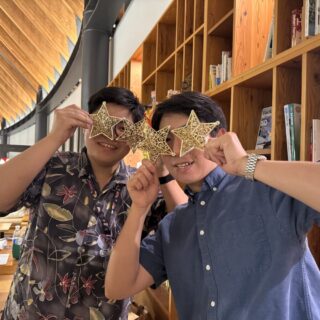
Our usual Learning Session time turned into something magical on Friday night, December 19th, 2025. The Living Commons lit up with a kind of holiday cheer that’s hard to put into words even though we also played fun game of Scrabble!
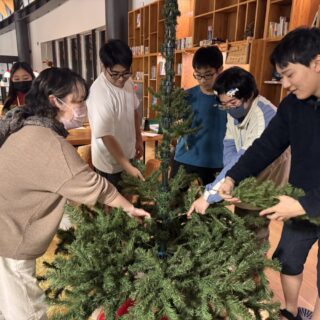
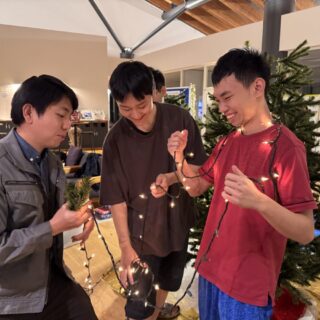
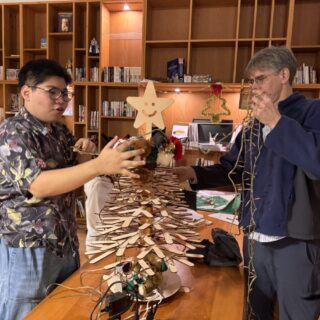
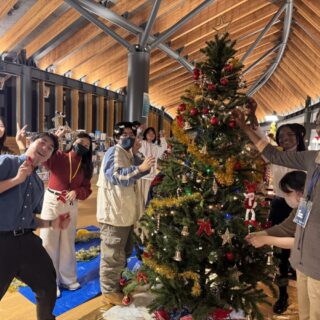
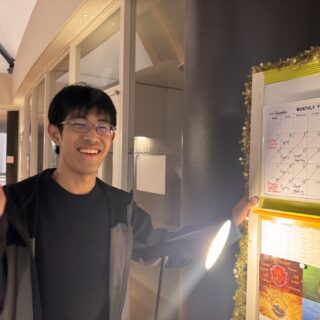
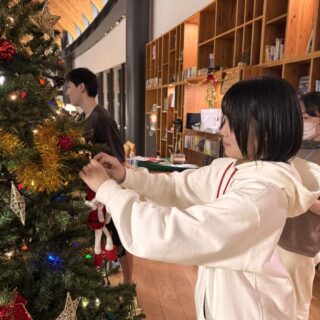
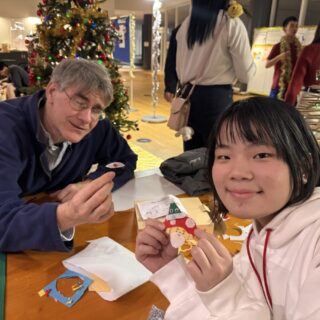
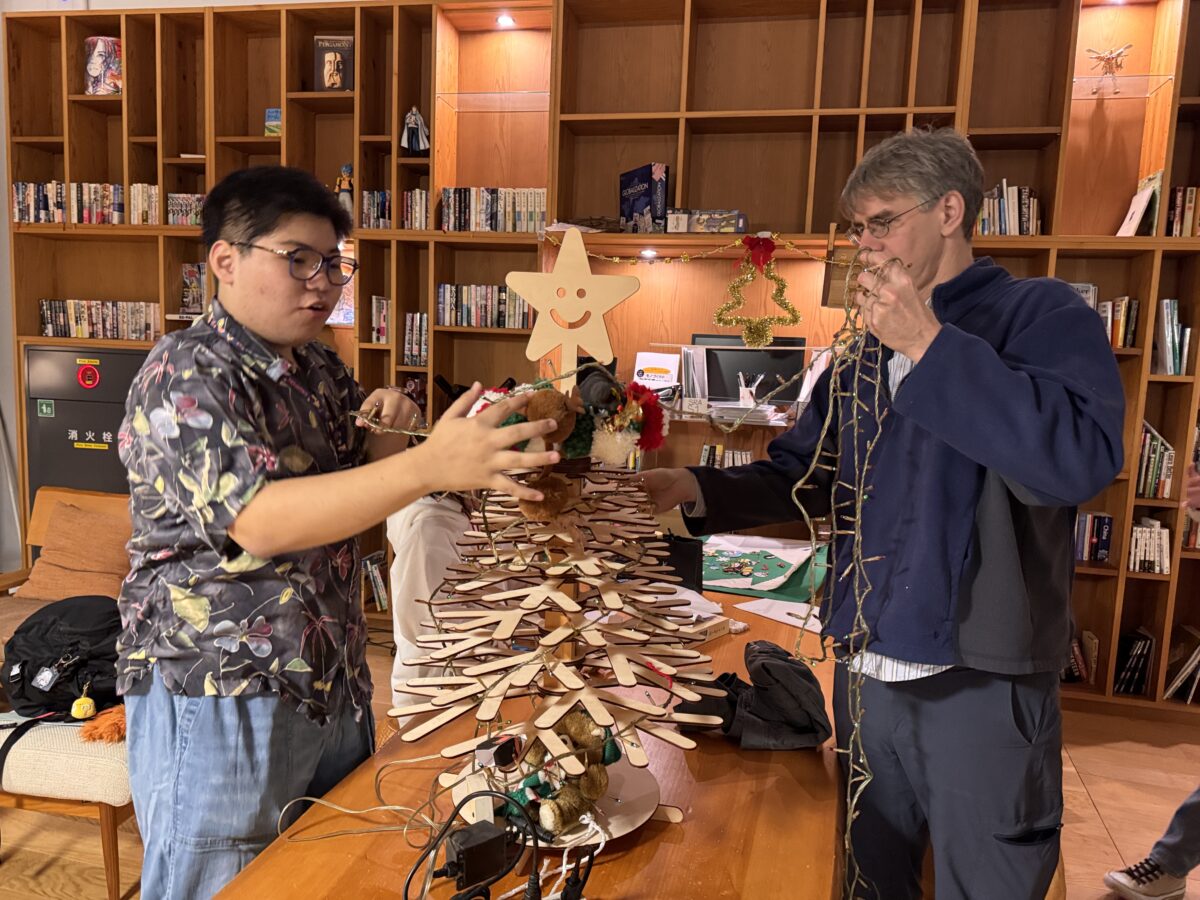
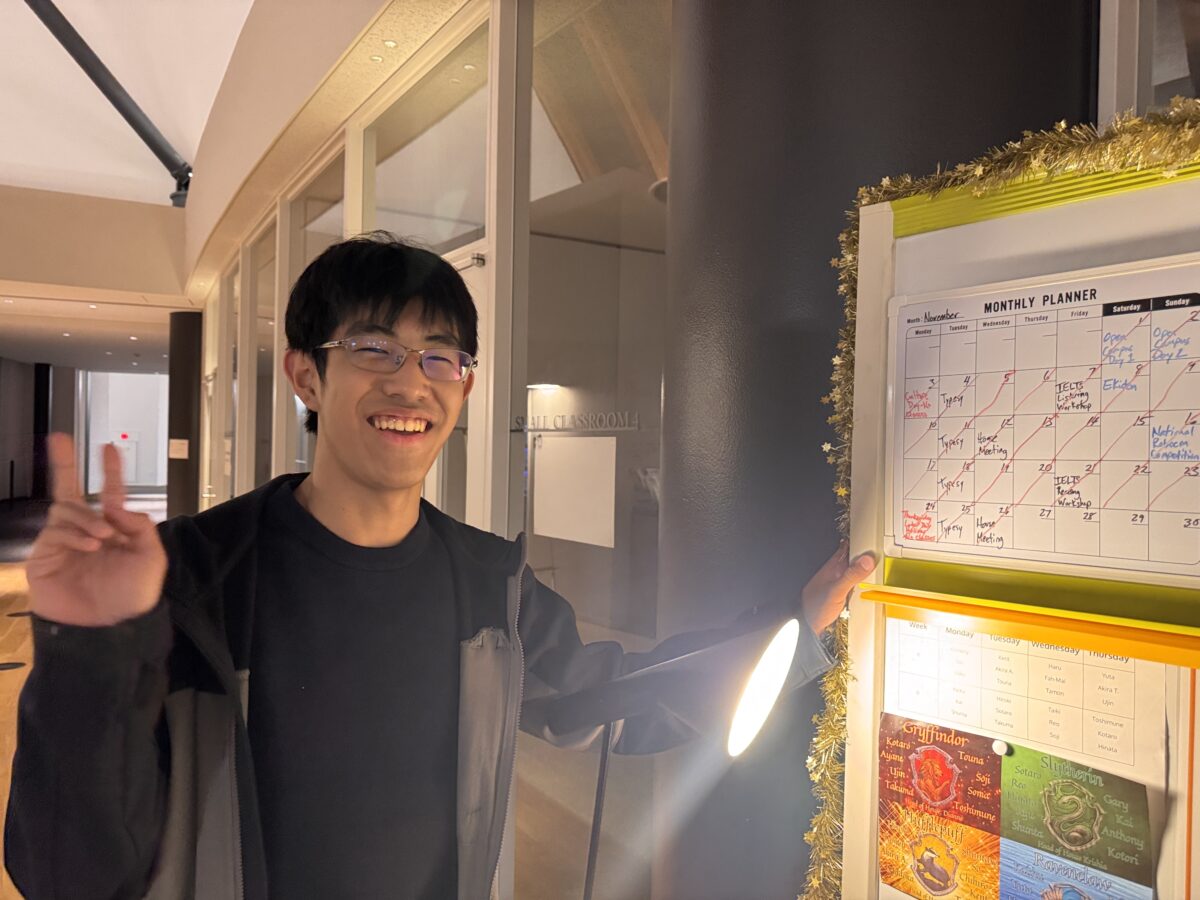
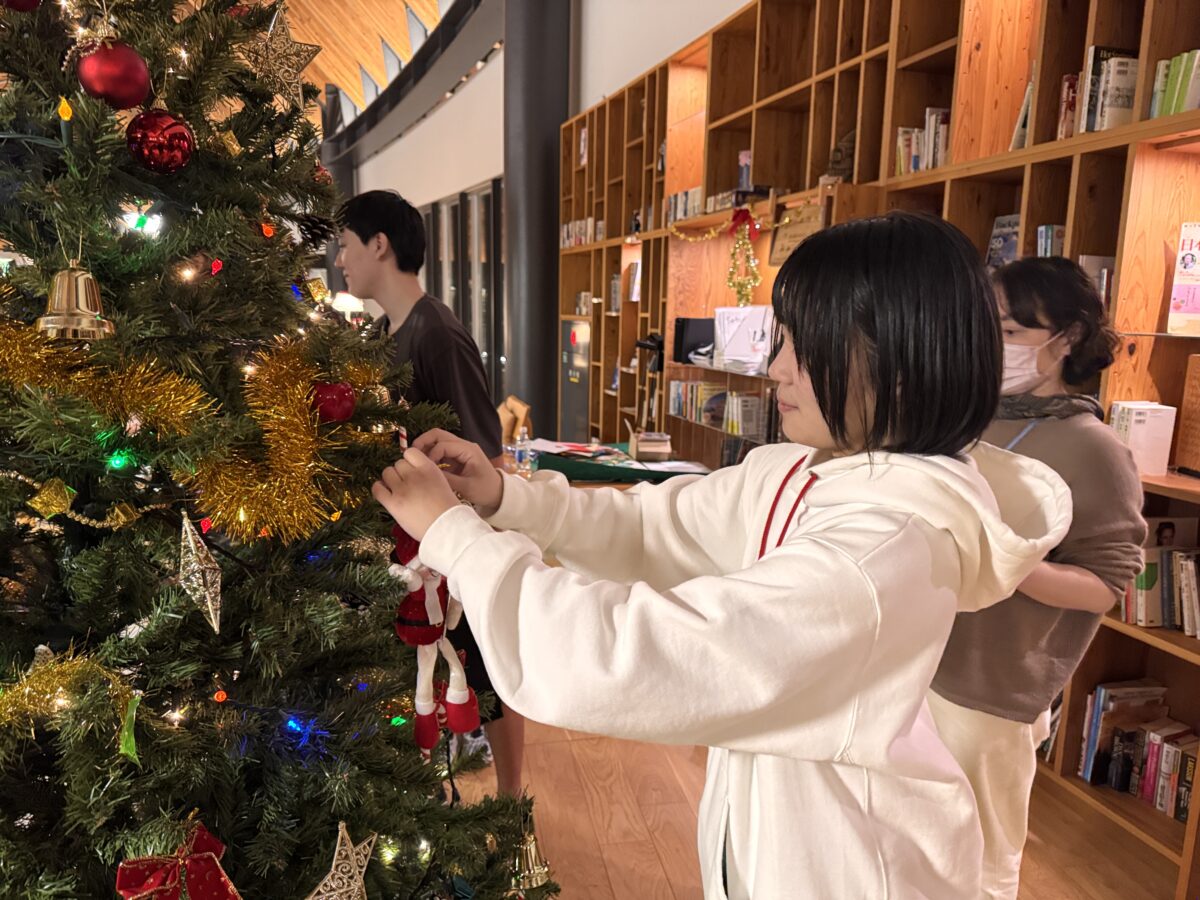
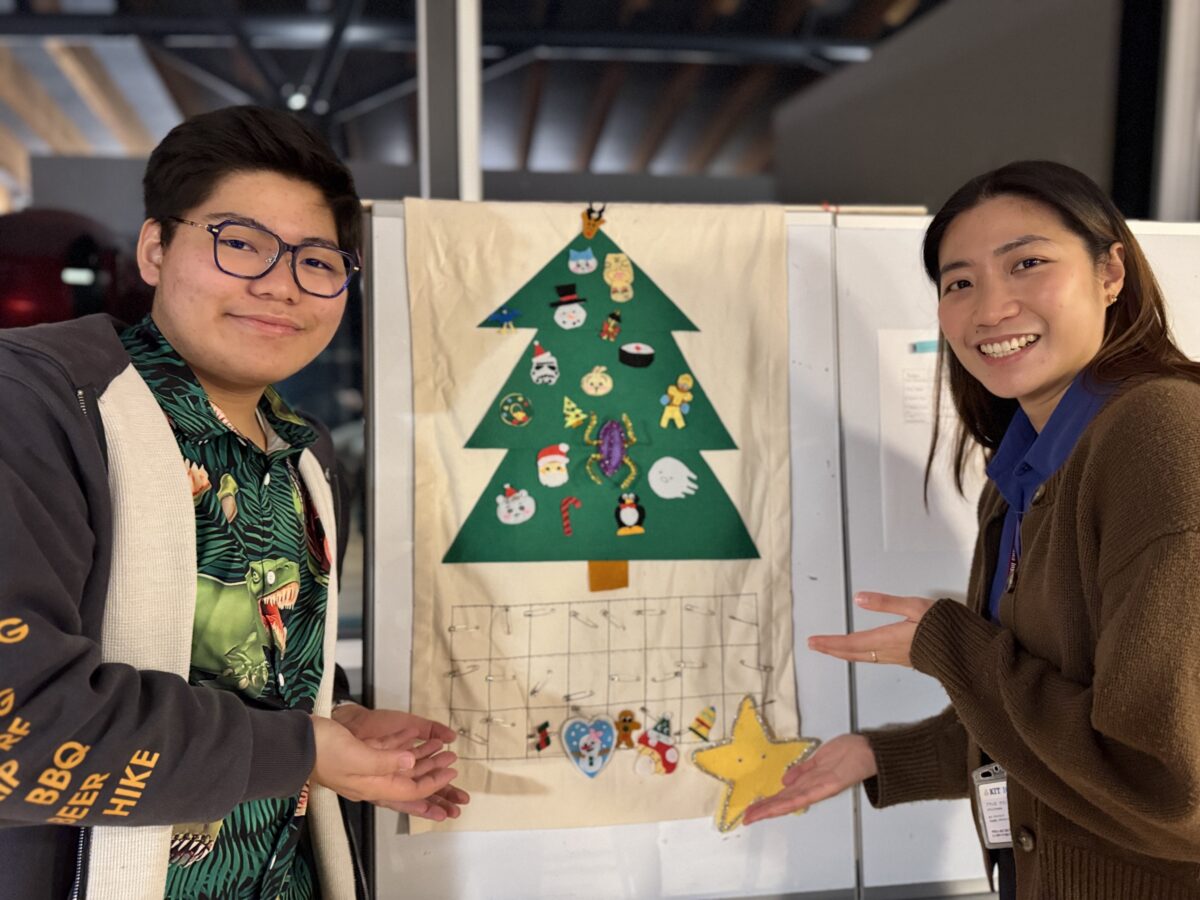
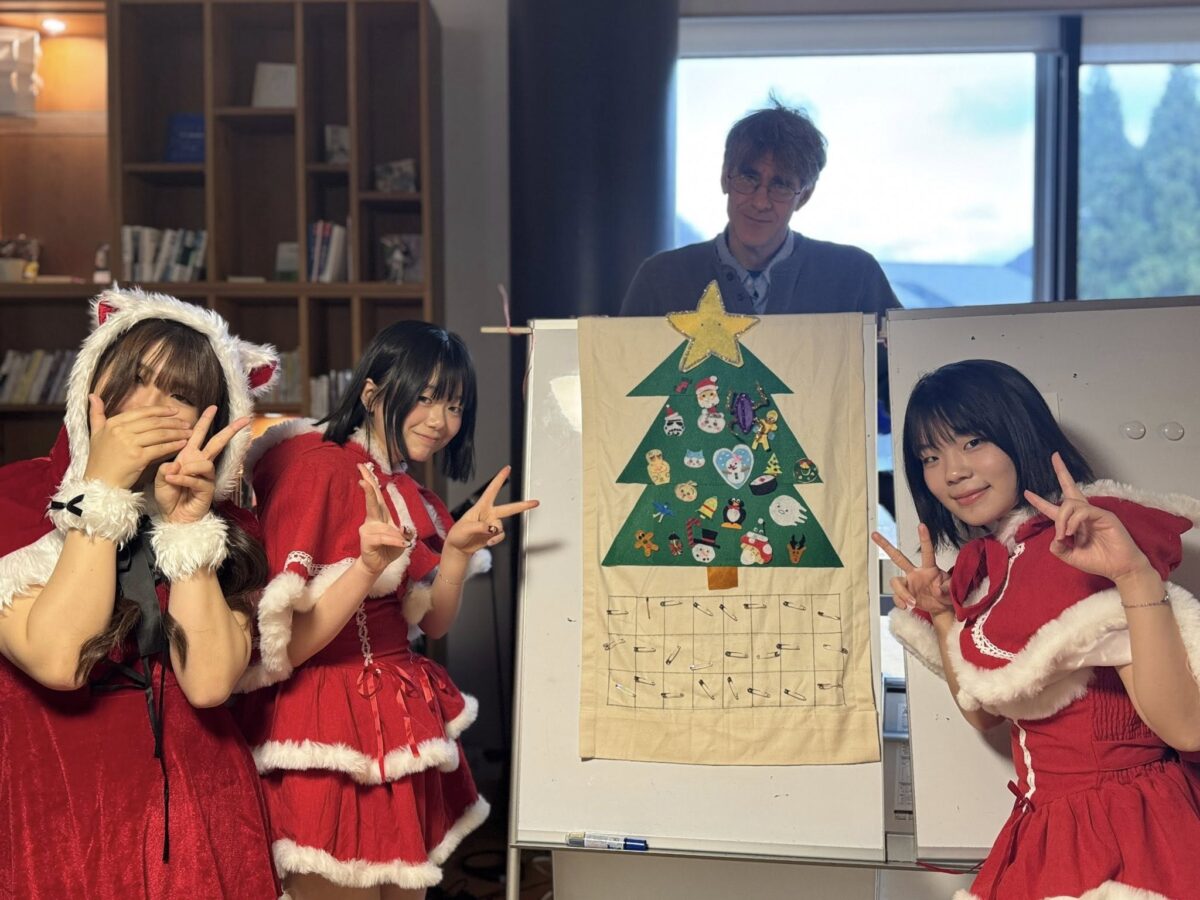
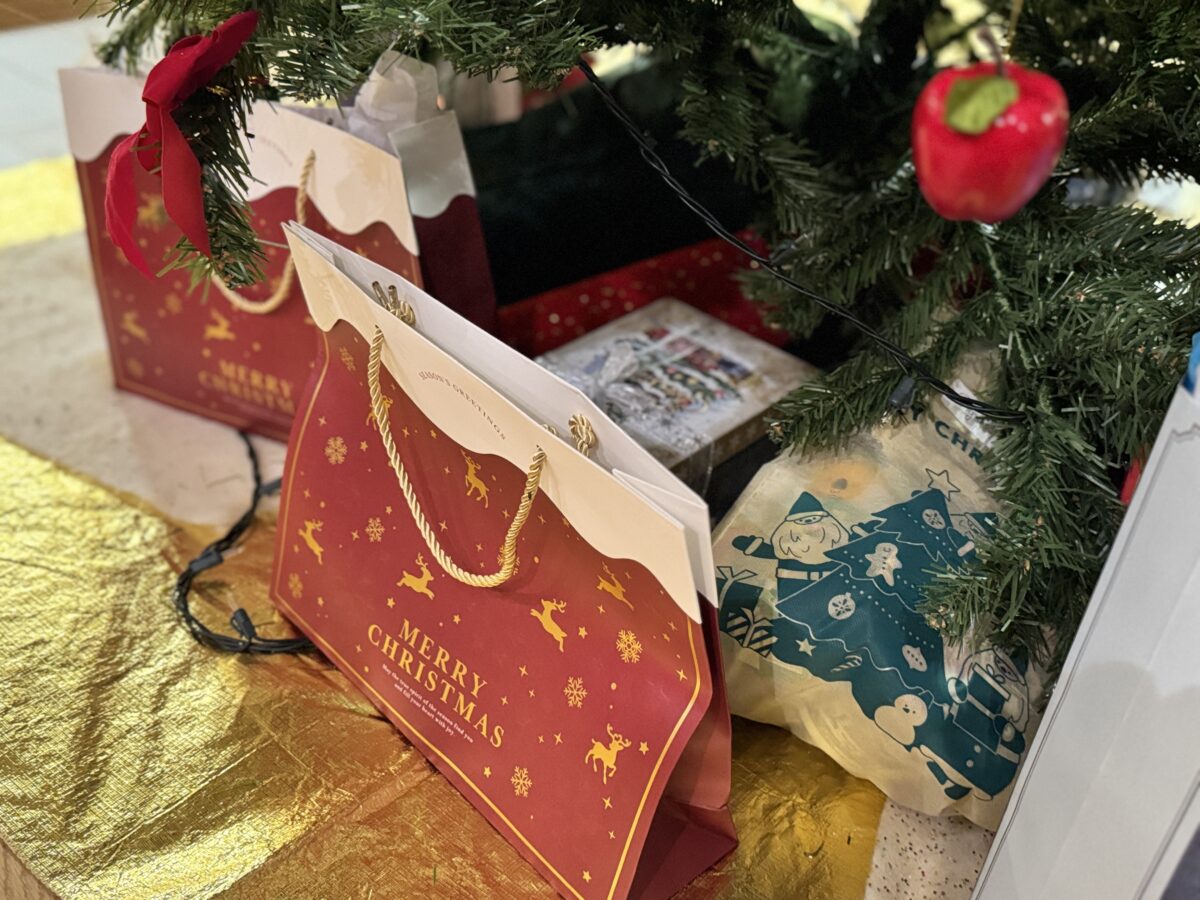
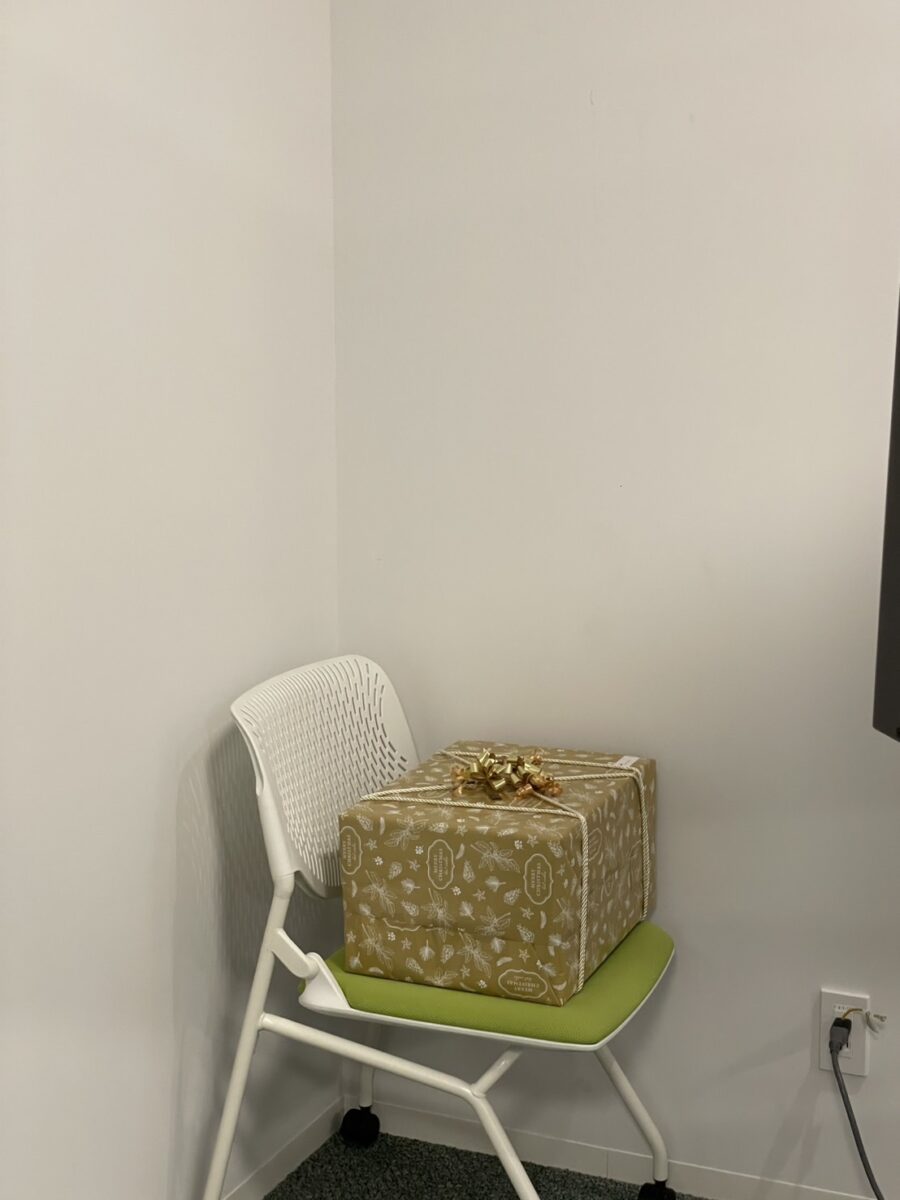
But the fun didn’t start there. In the days before the party, students helped decorate the Living Commons with colorful lights and ornaments. The biggest star was our tall Christmas tree, where students secretly placed their gifts, , trying not to get caught by their Secret Santa matches. We also made a handmade Advent calendar, adding a small surprise to each day in December. It was a slow build-up to something truly special.
-
-
-
-
-
-
-
-
-
-
-
-
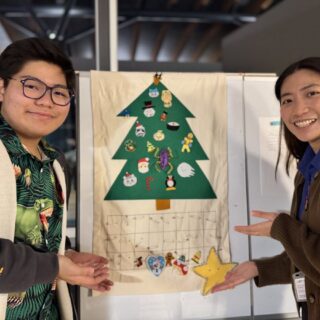
手作りの「アドベントカレンダー」
-
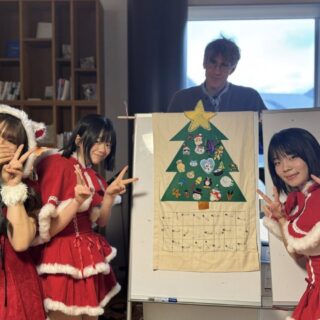
完成!
-

こっそりとプレゼントをツリーの下に置いていきました。
-
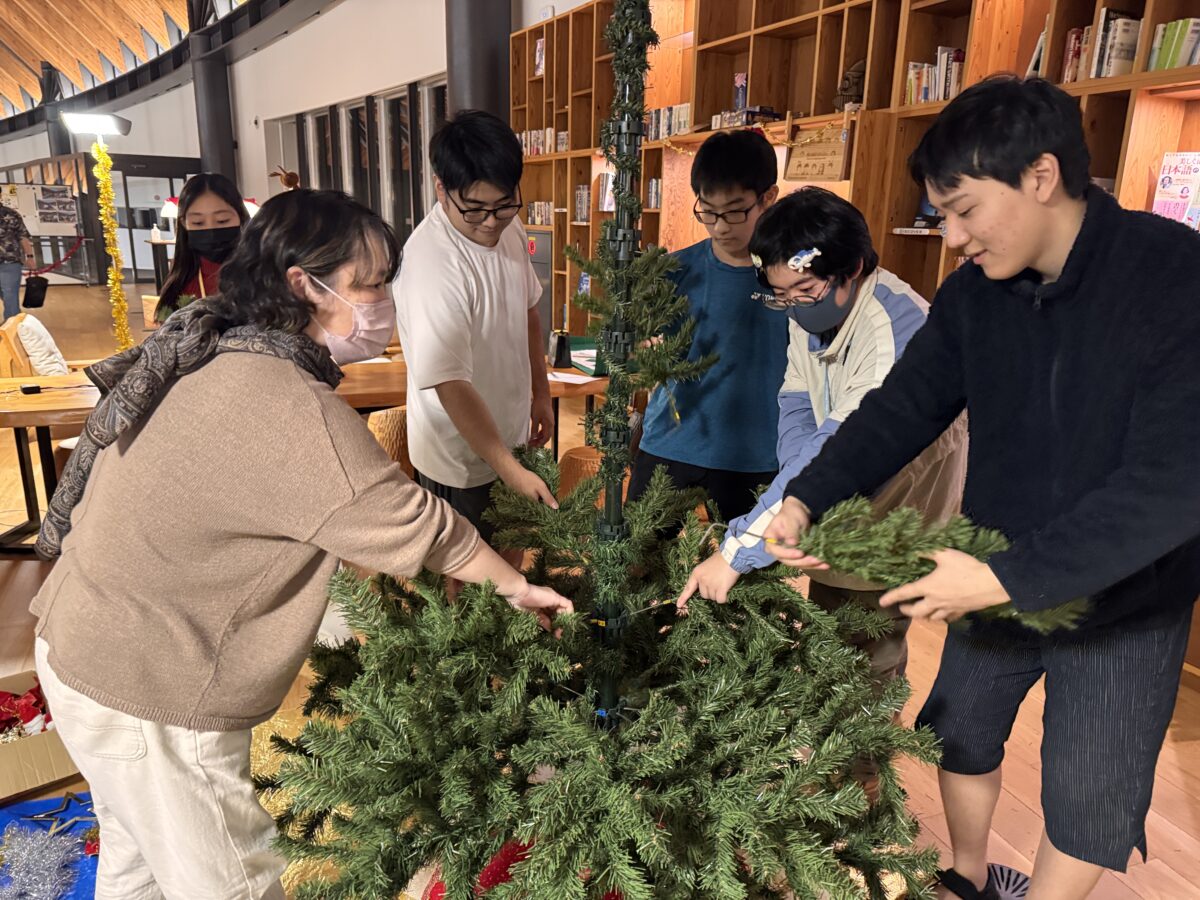
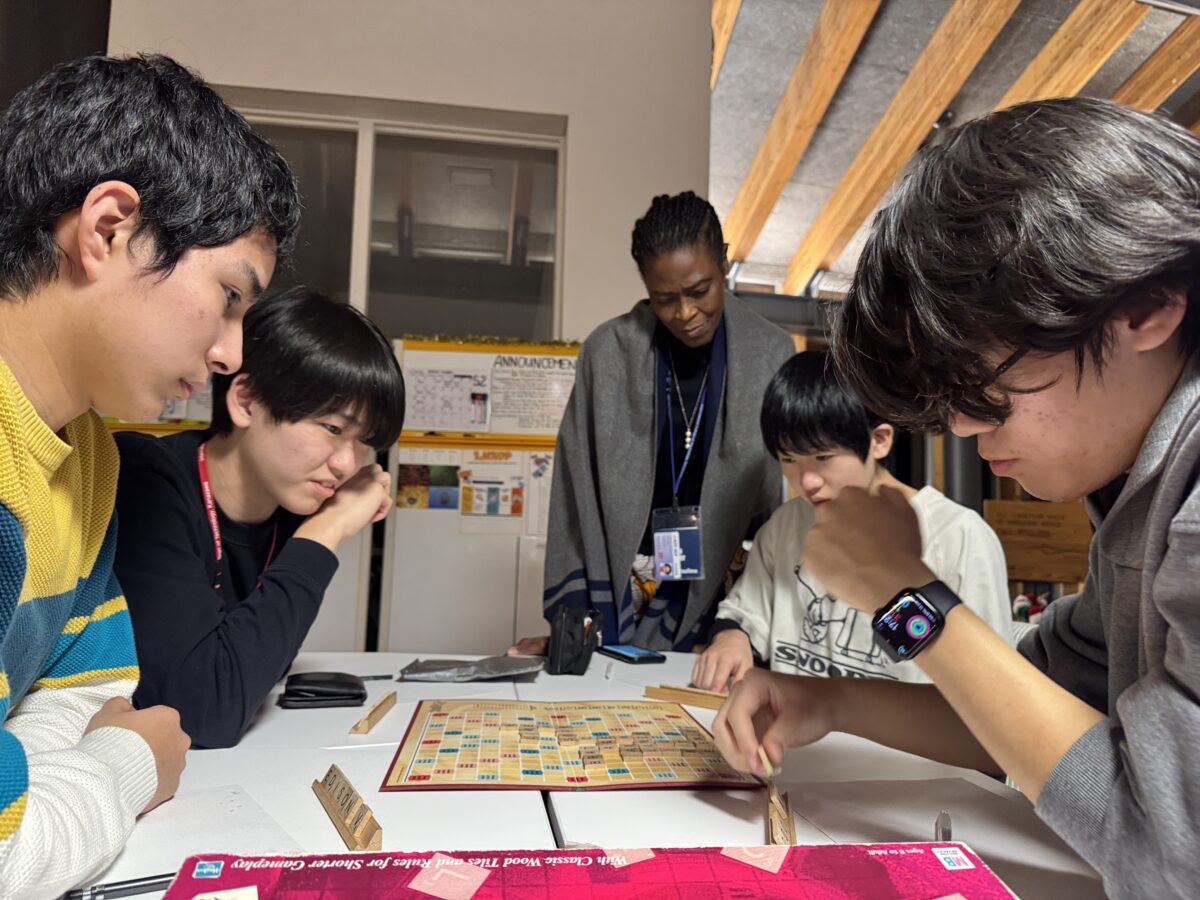
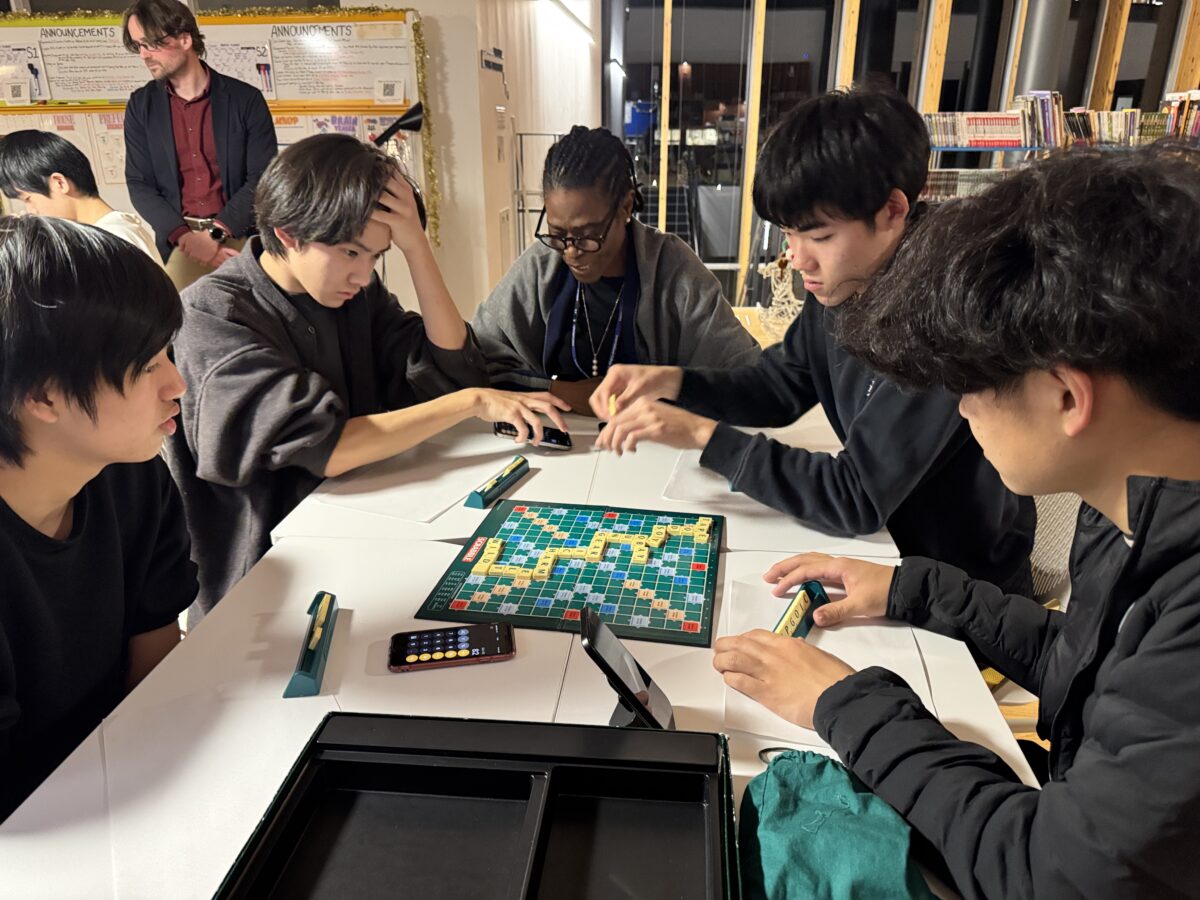
The night began with our first-ever Christmas Scrabble Tournament, led by the English department. Students from both 1st and 2nd year teamed up and got right to work, forming words faster than Santa’s elves wrapping presents. One student scored over 400 points, on their first time playing the board game! The winning team earned prizes, but honestly, everyone walked away with accomplished smiles.
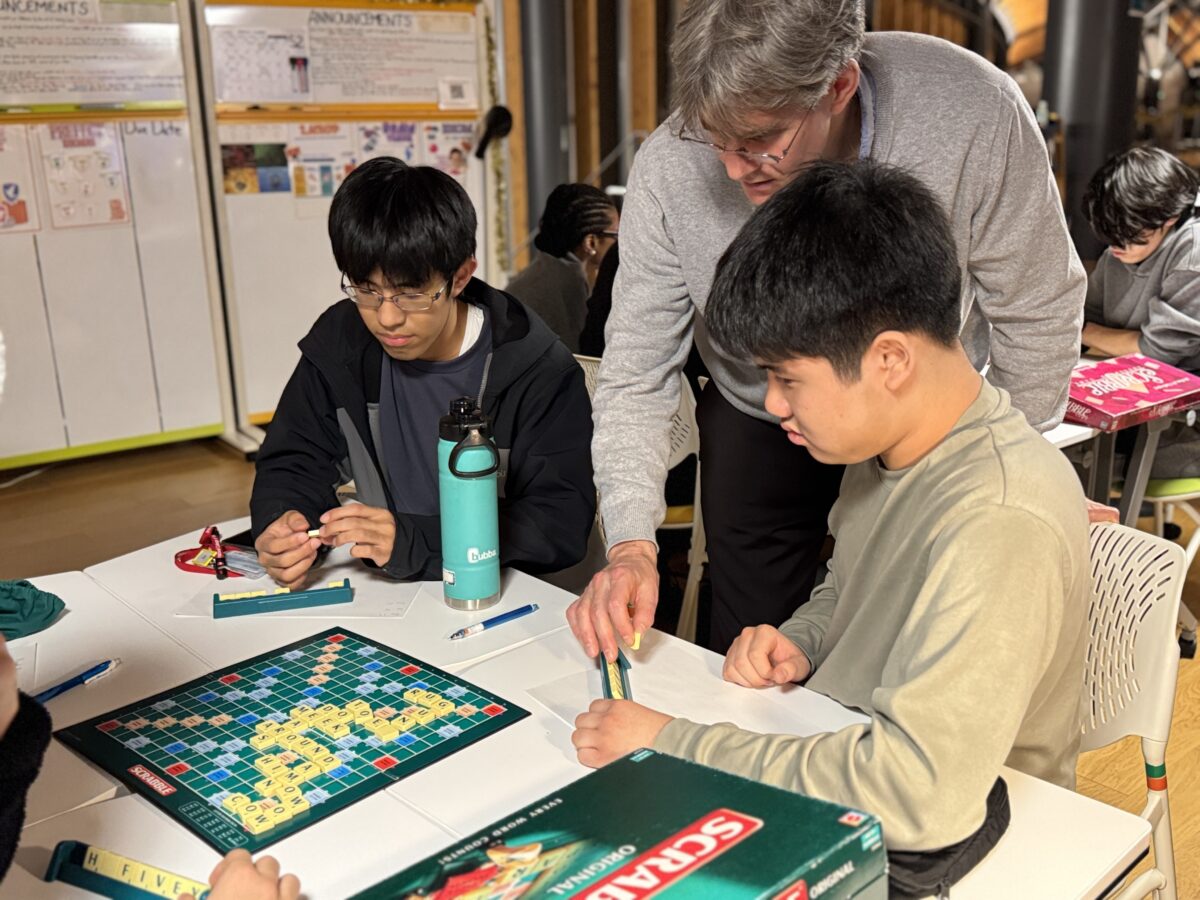
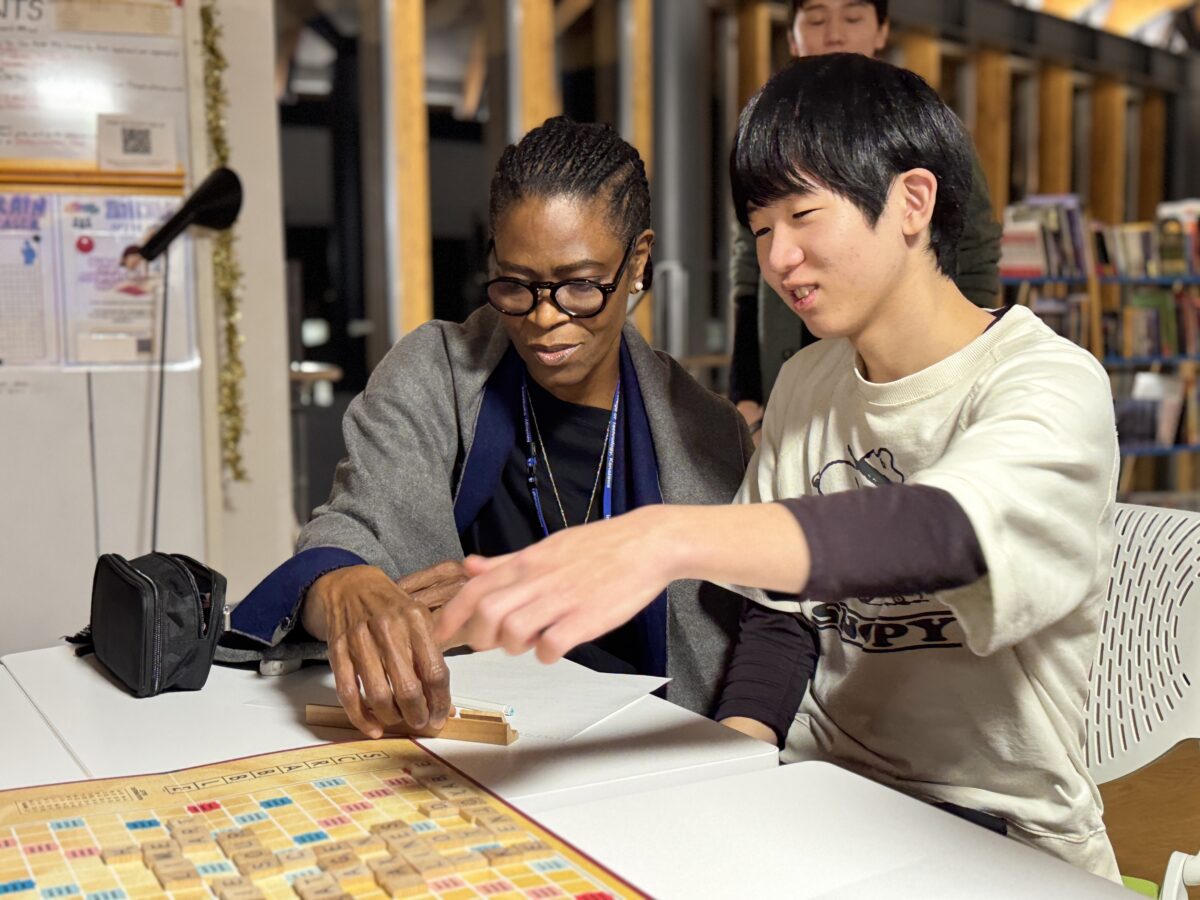
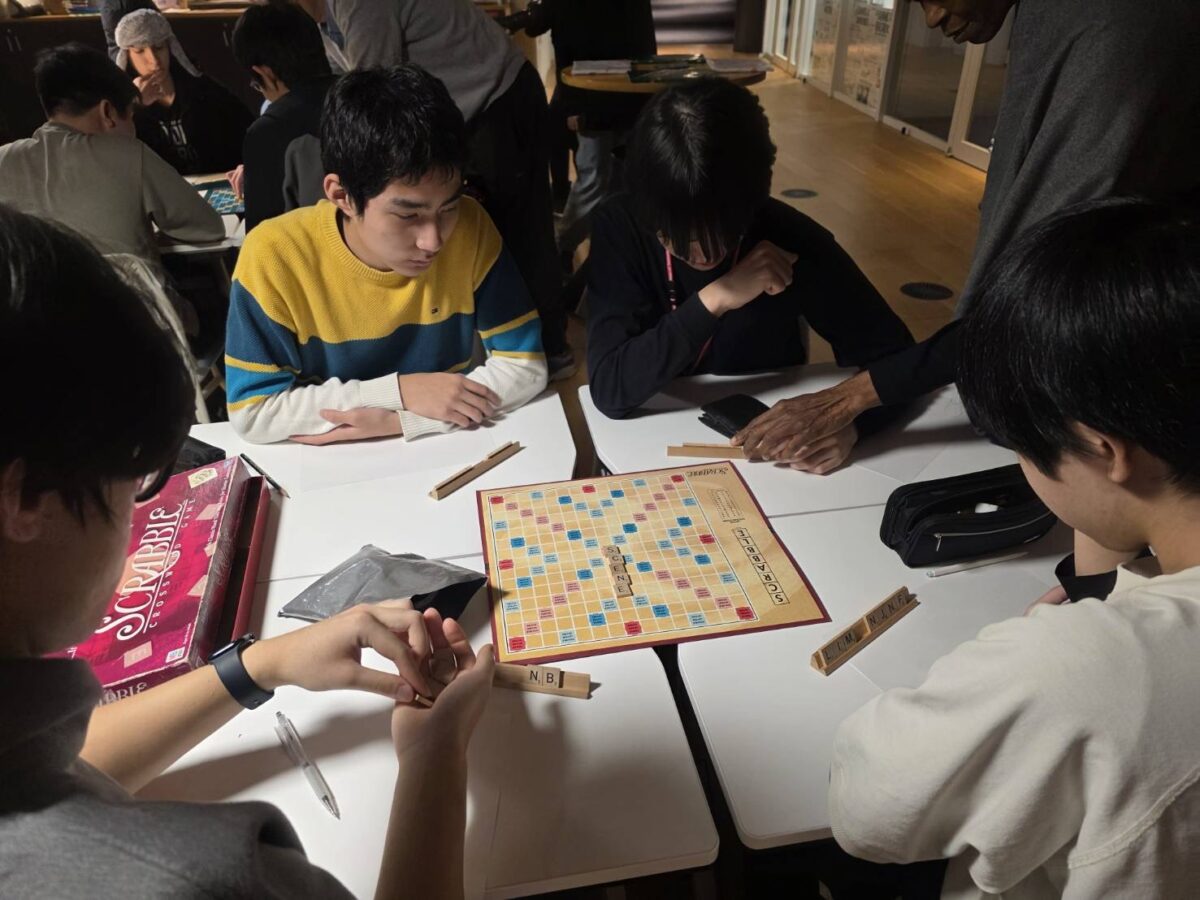
Then came the Secret Santa gift hunt. While the students were enjoying dinner, the Learning Mentors turned into sneaky elves—elves who assisted Santa Claus in making presents and pulling pranks—, gathered the gifts from under the Christmas tree, and hid them all around the Living Commons. When the students returned, the search began! There were cheers, laughter, and a few puzzled faces—mine included! I needed help finding my own gift!
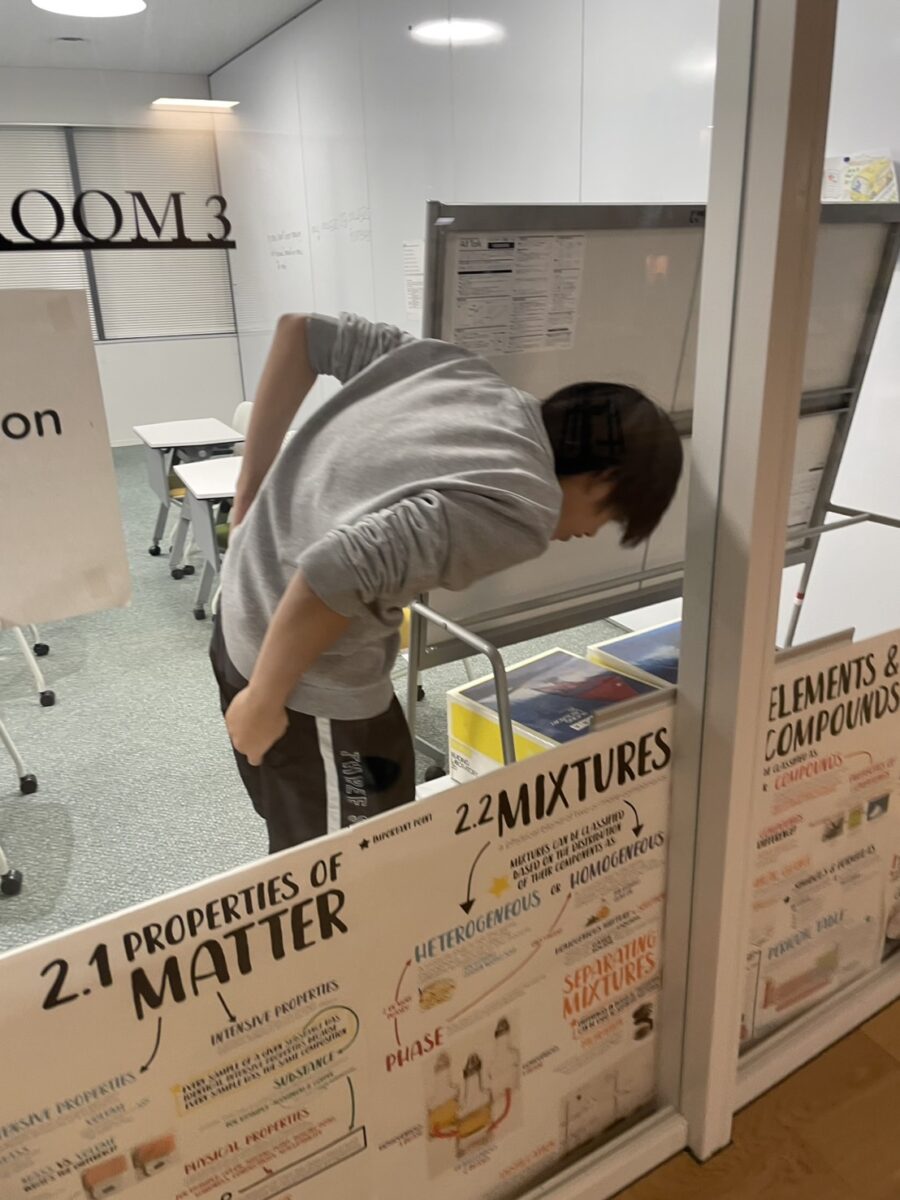
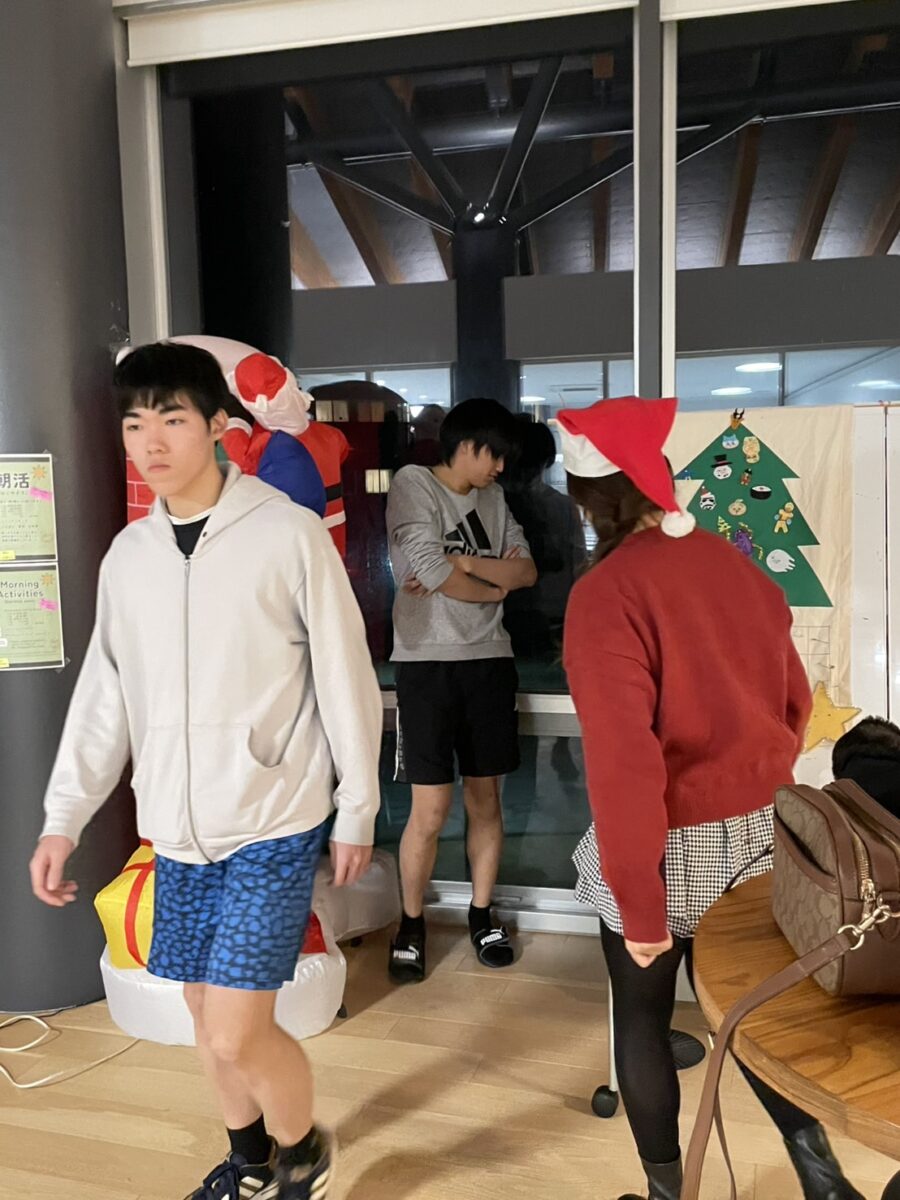
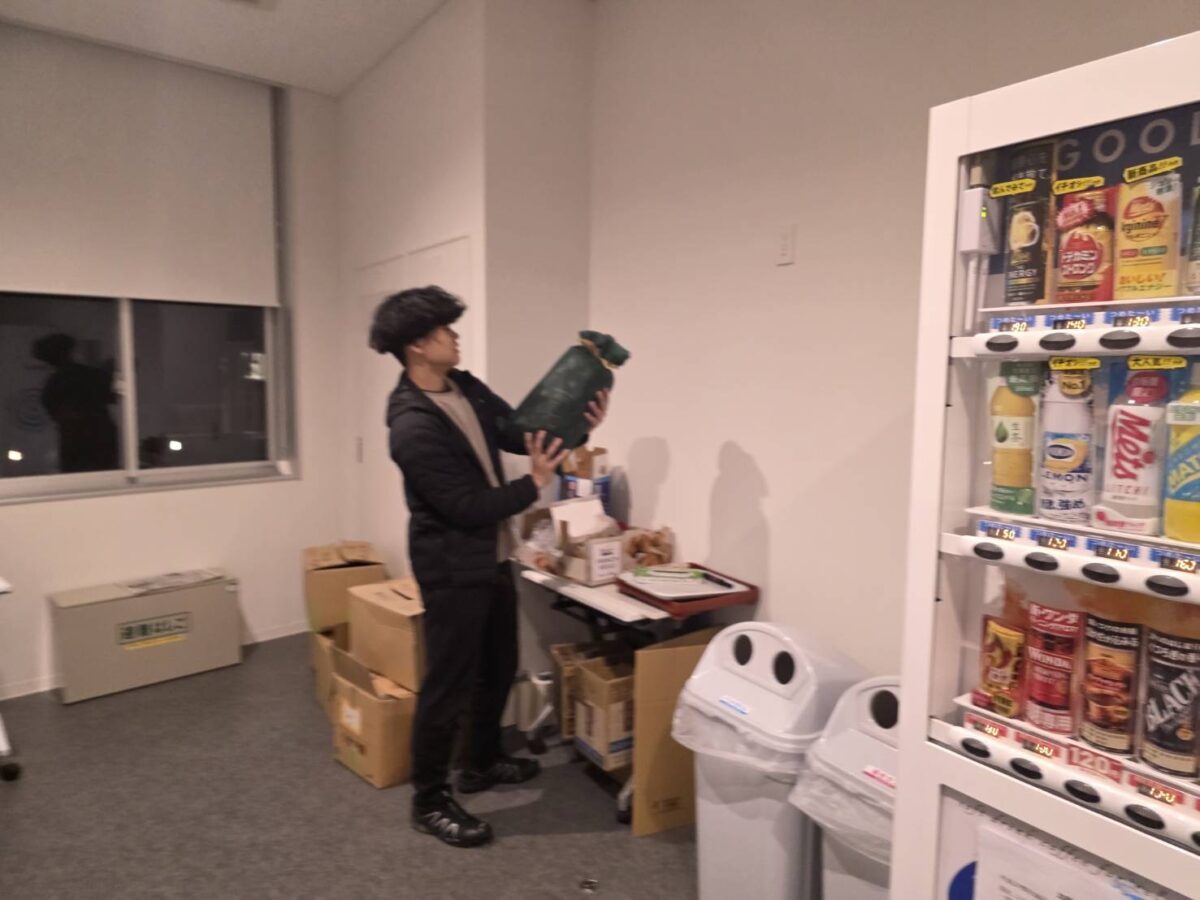
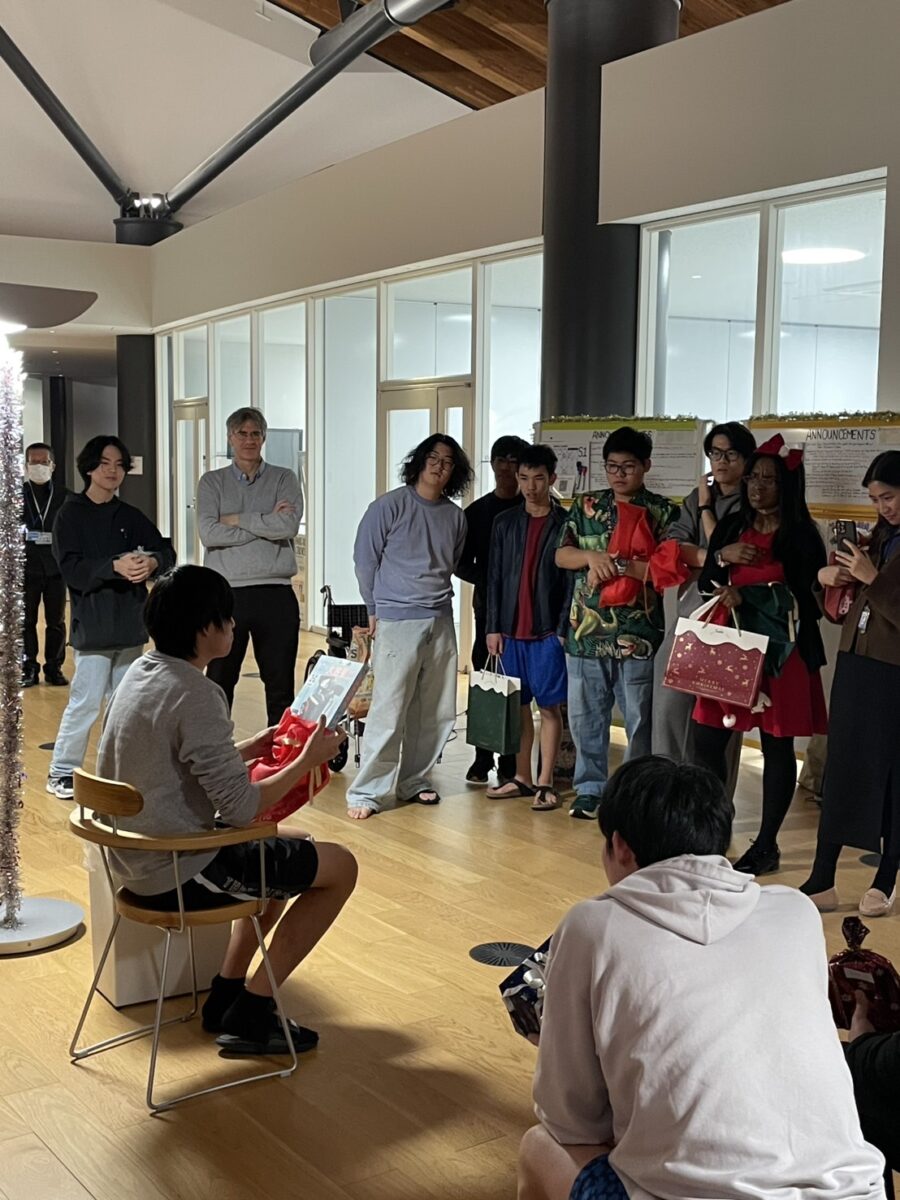
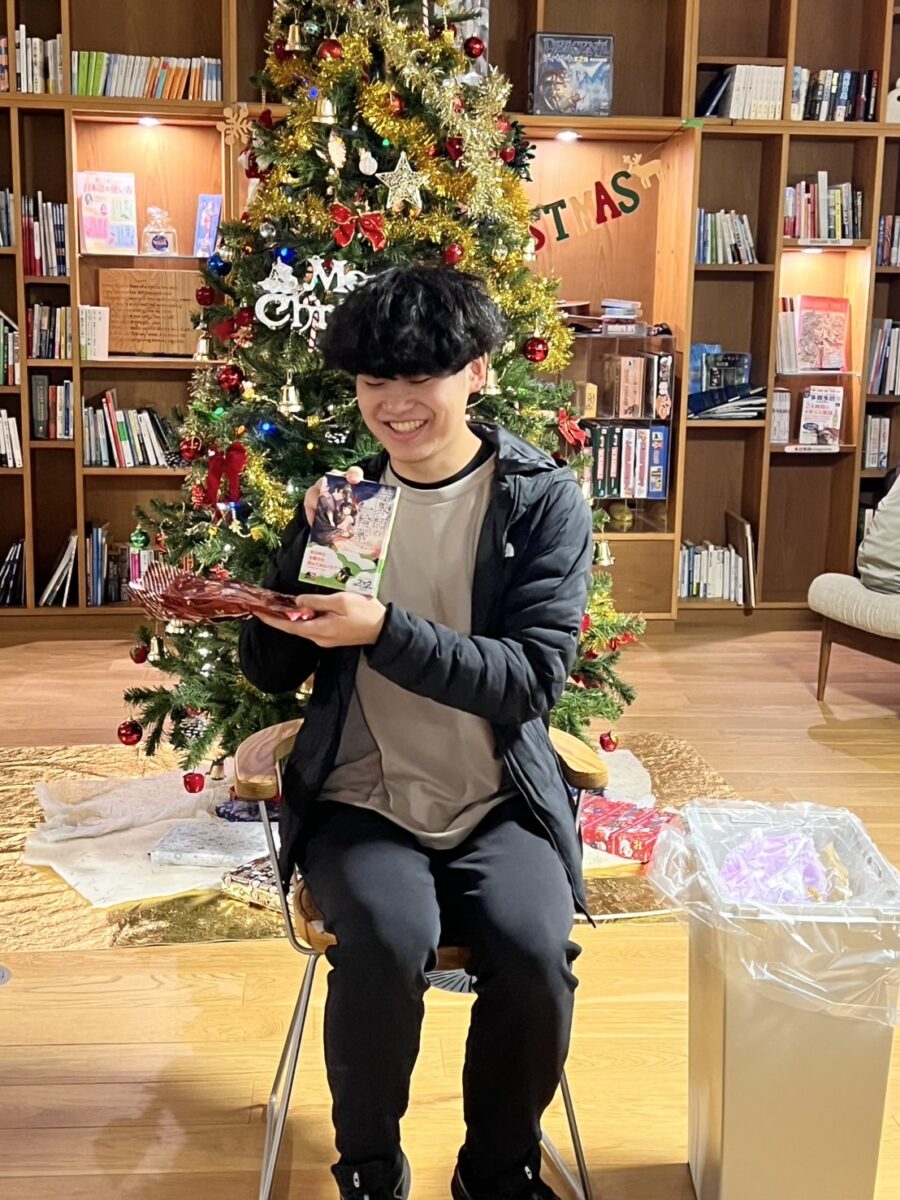
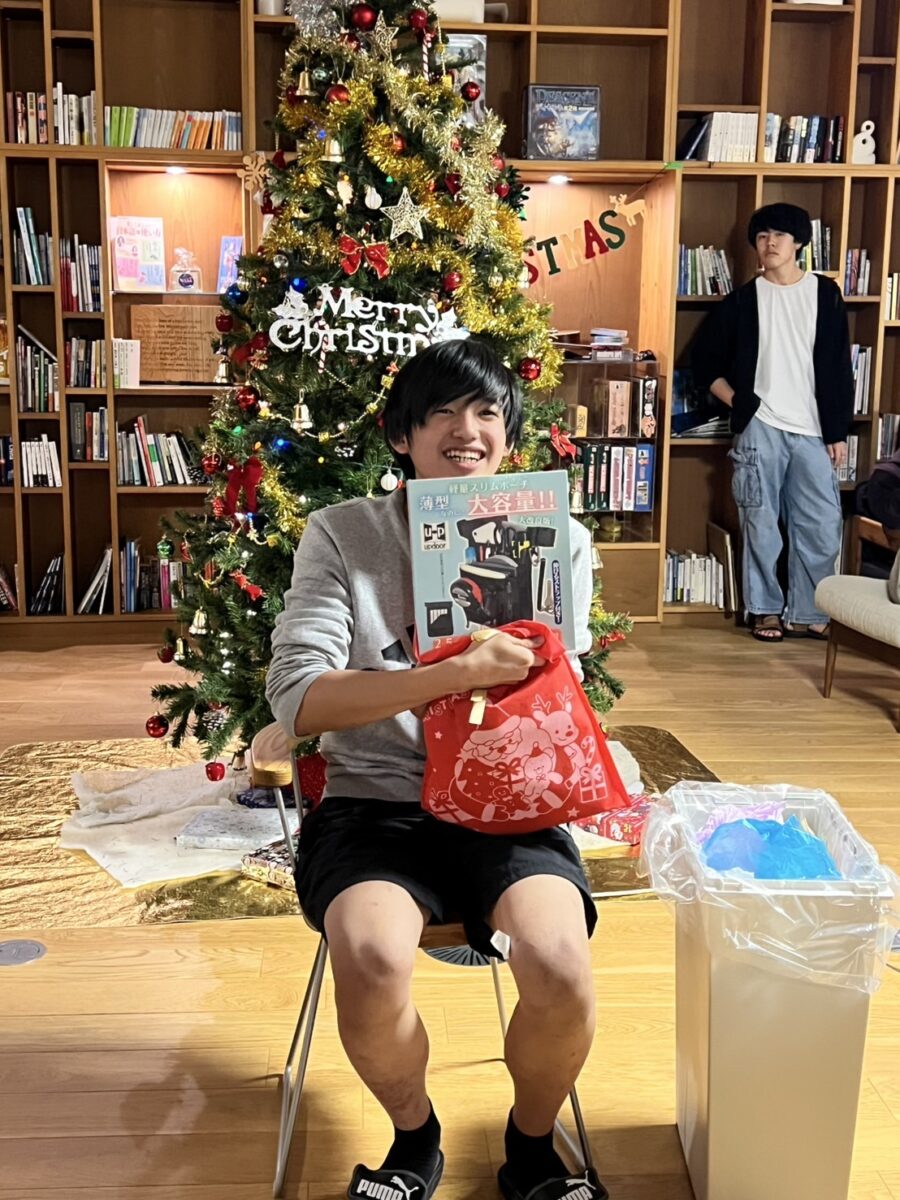
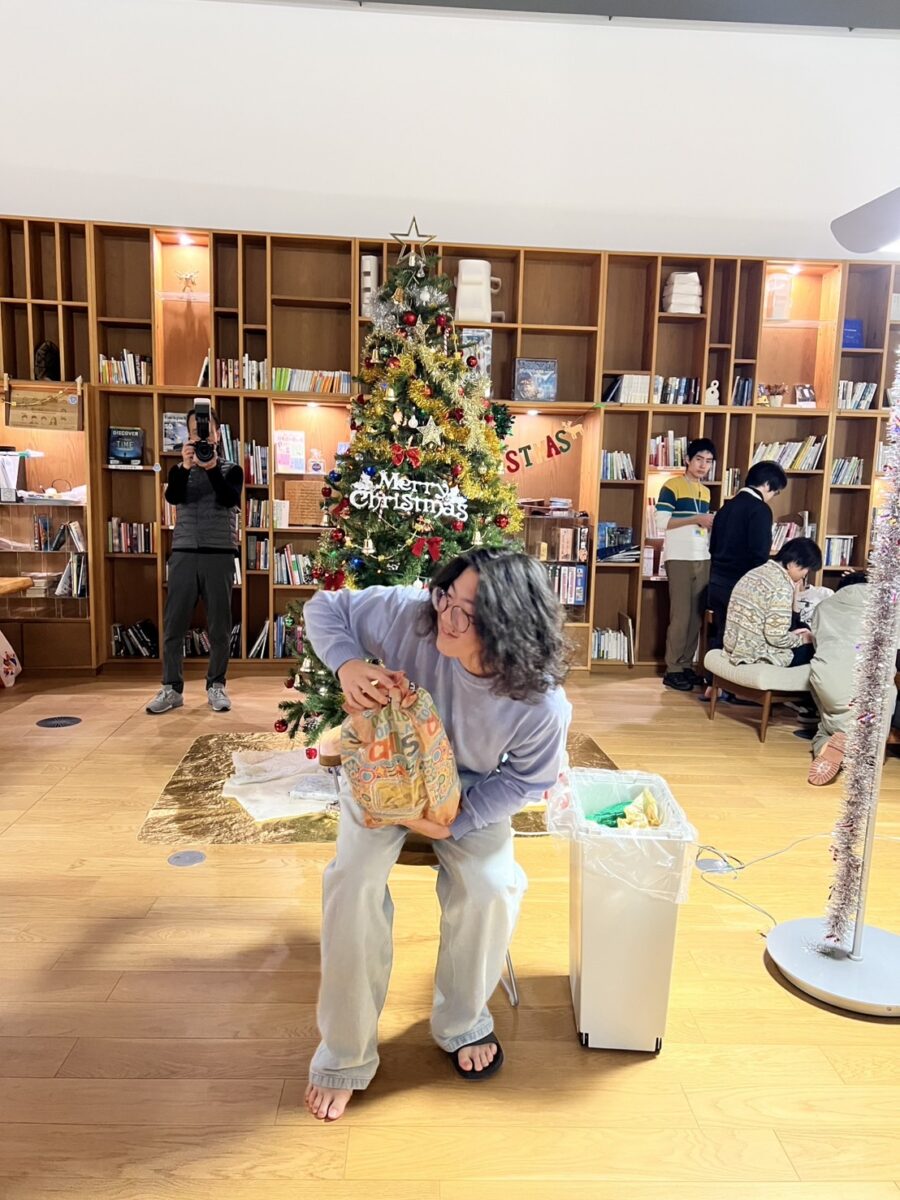
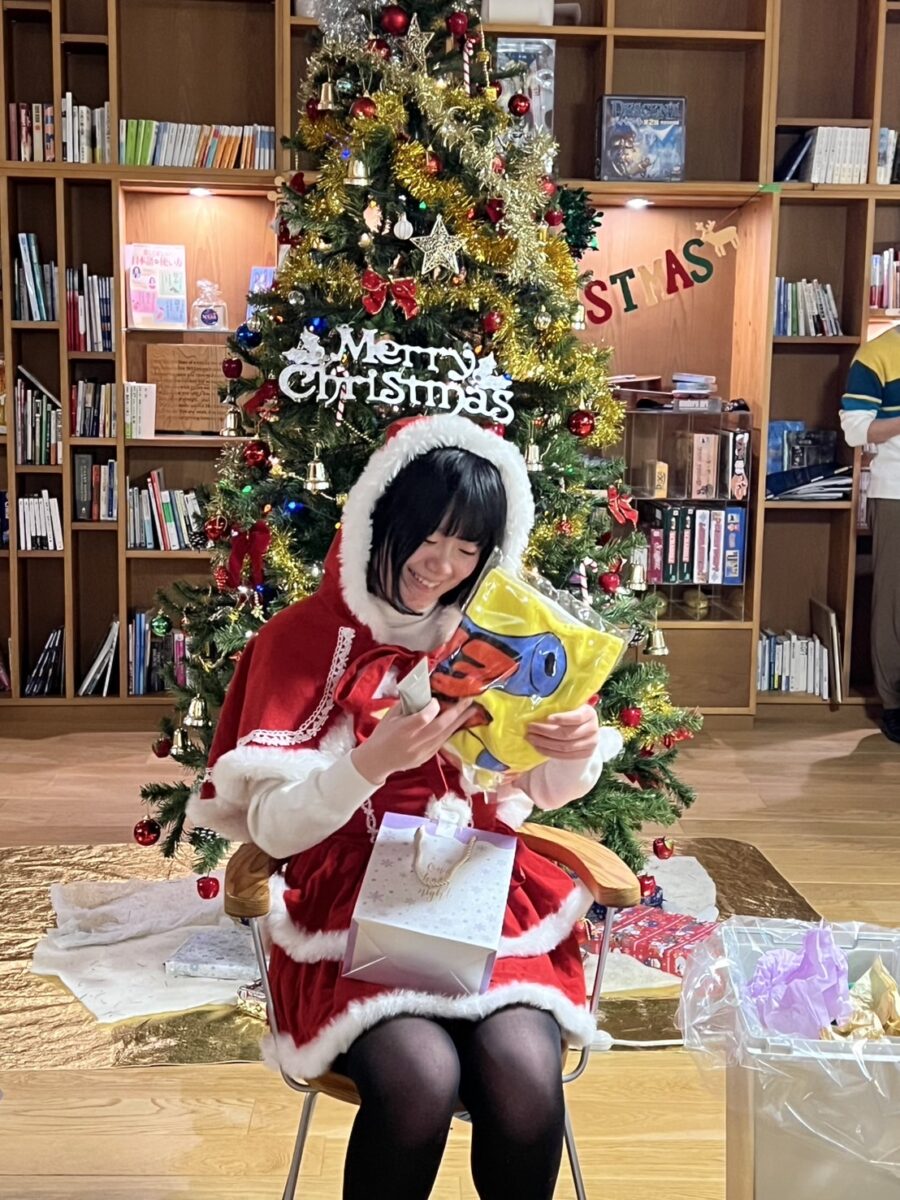
Once all the presents were found, we gathered near the tree to open them. Some students tried to guess what was inside, while others couldn’t wait and dove right in. The gifts were fun and surprising: a glowing lightsaber toy, a bag of tortillas (that the students love so much!), robotics tools, novels and other books, and cute room decorations. Everyone had something to smile about.

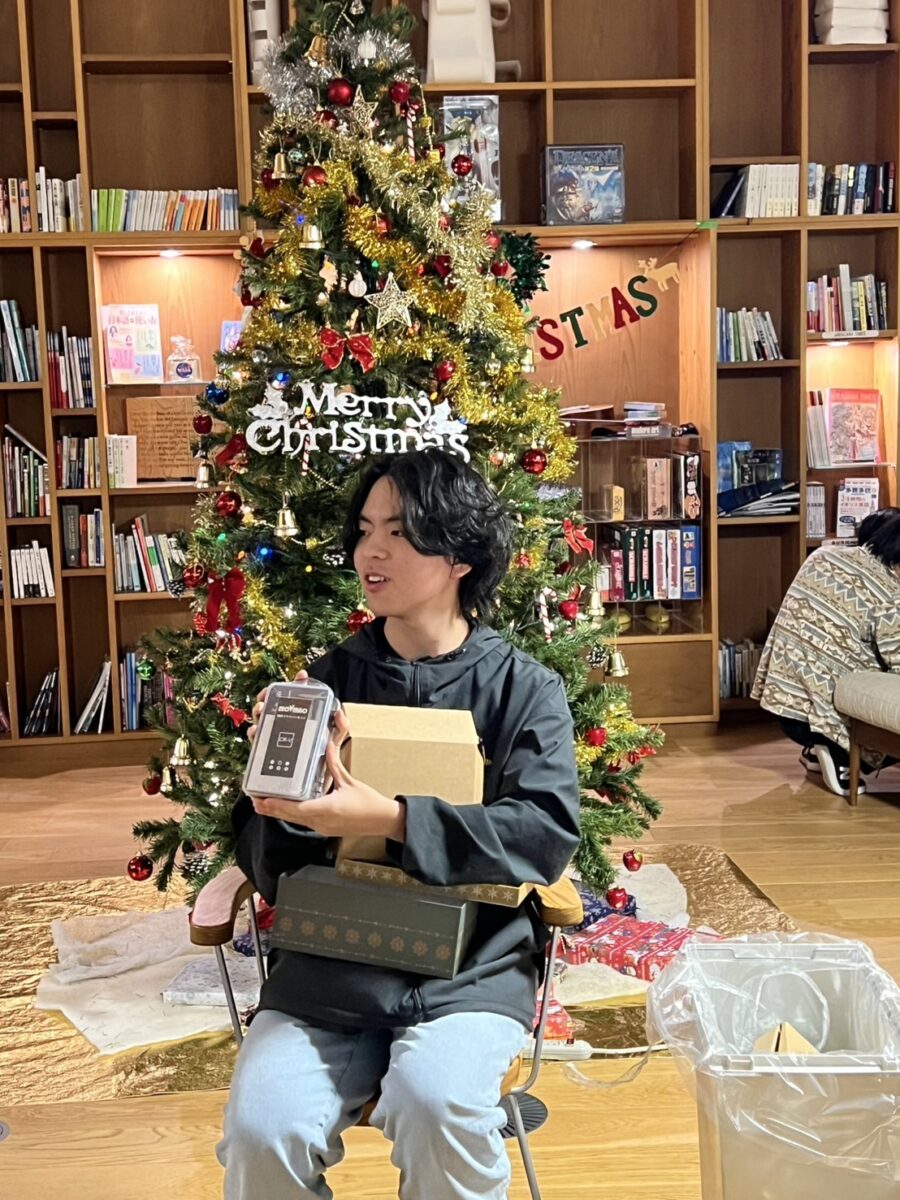

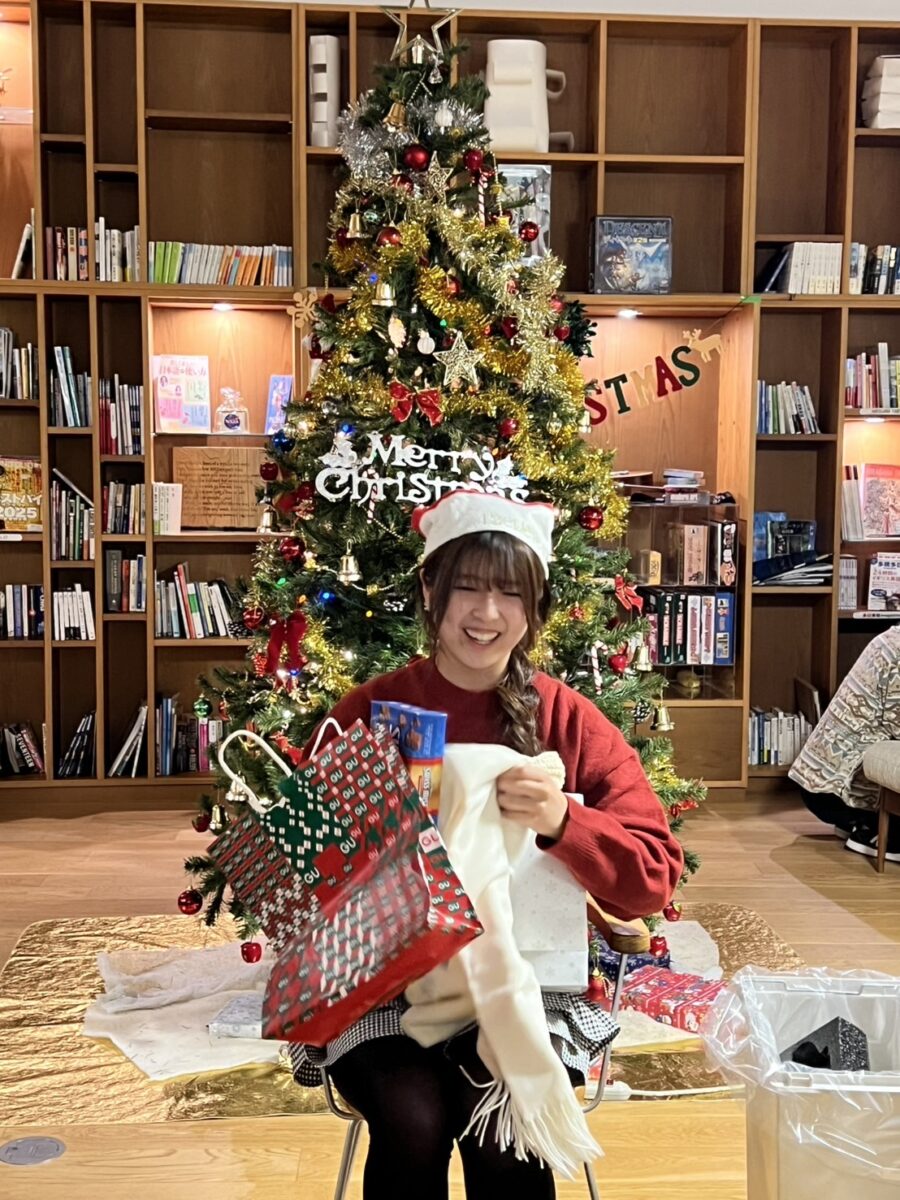
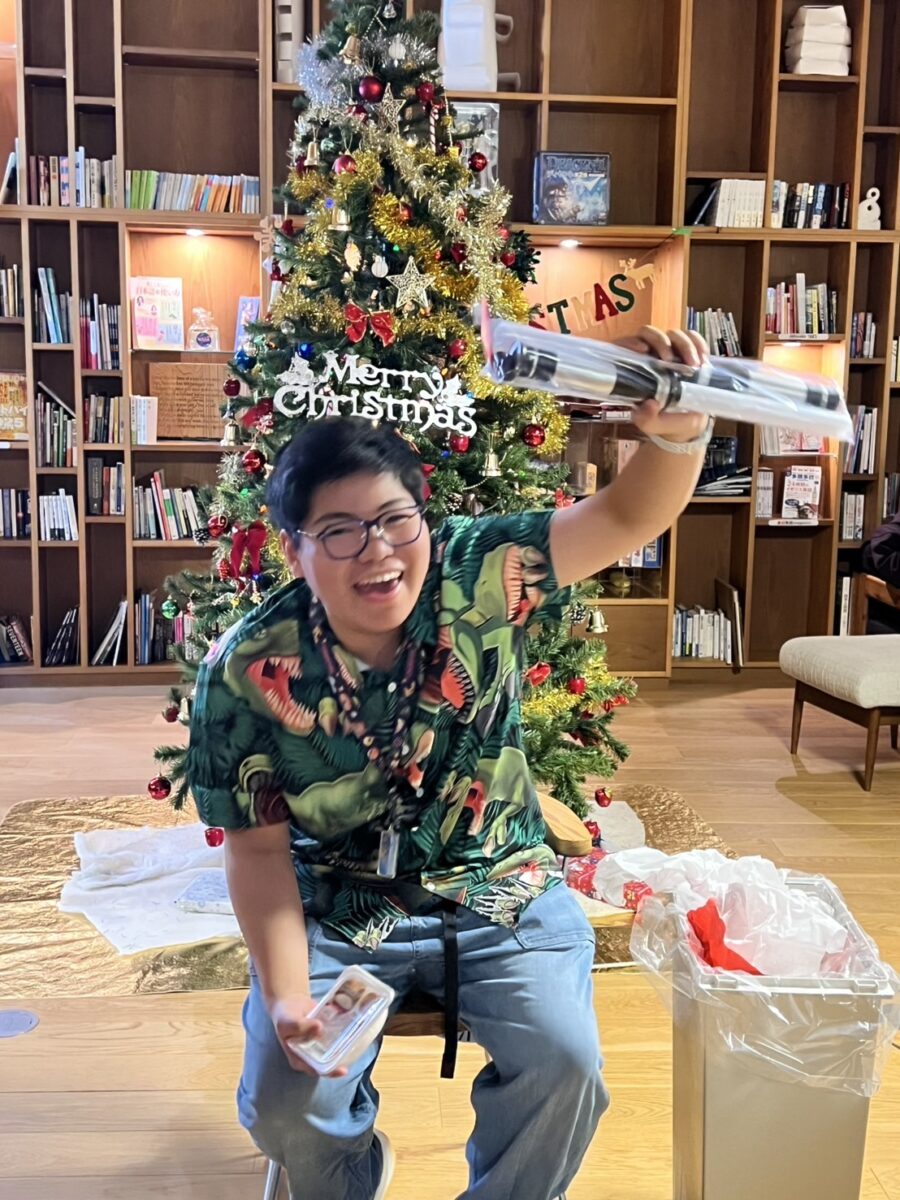
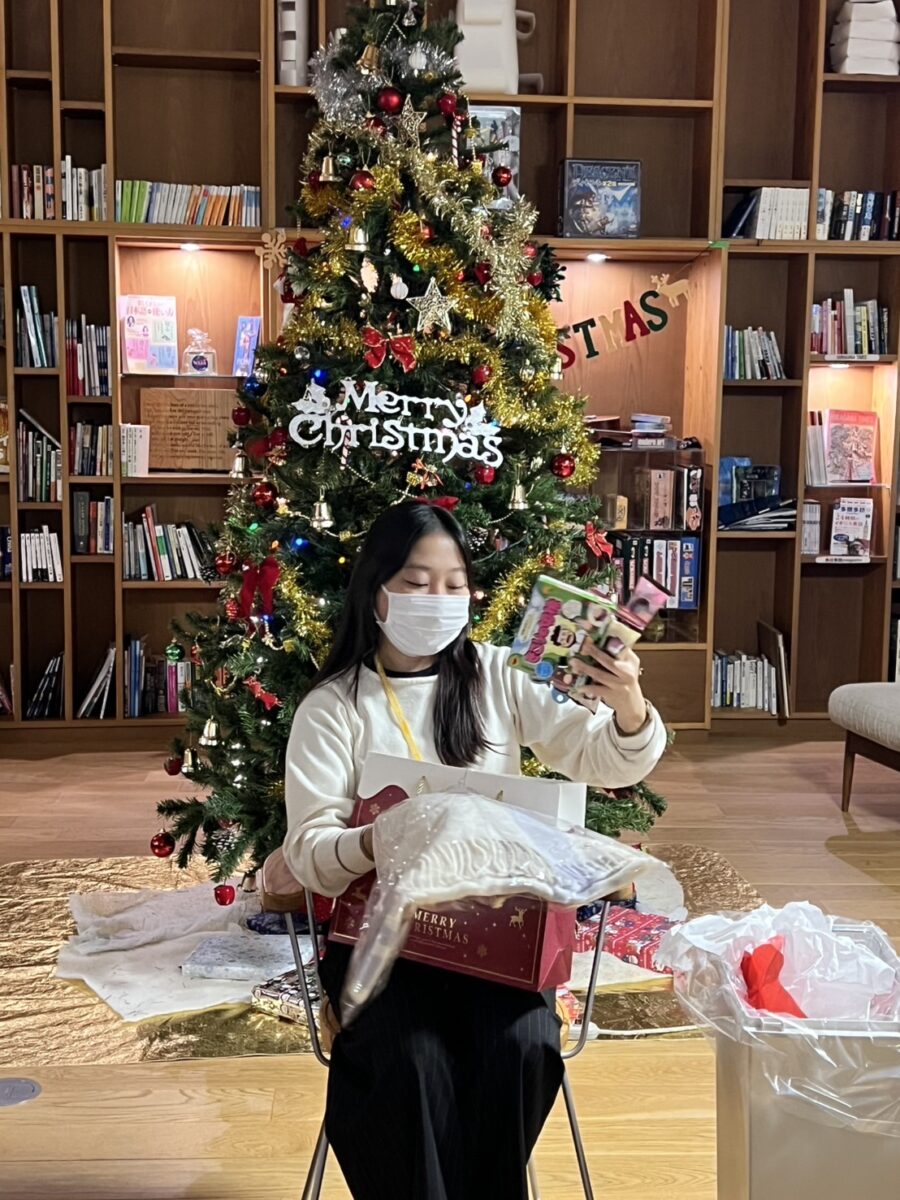
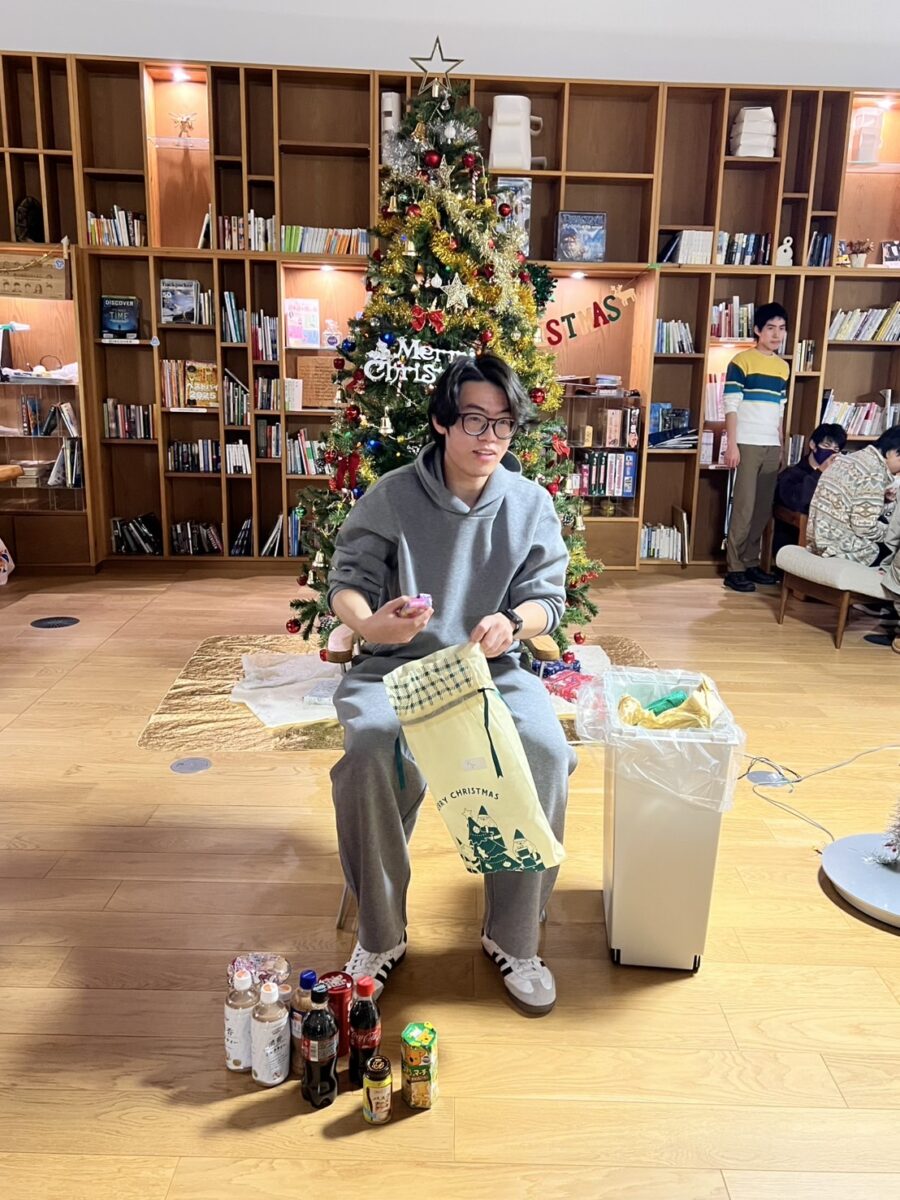
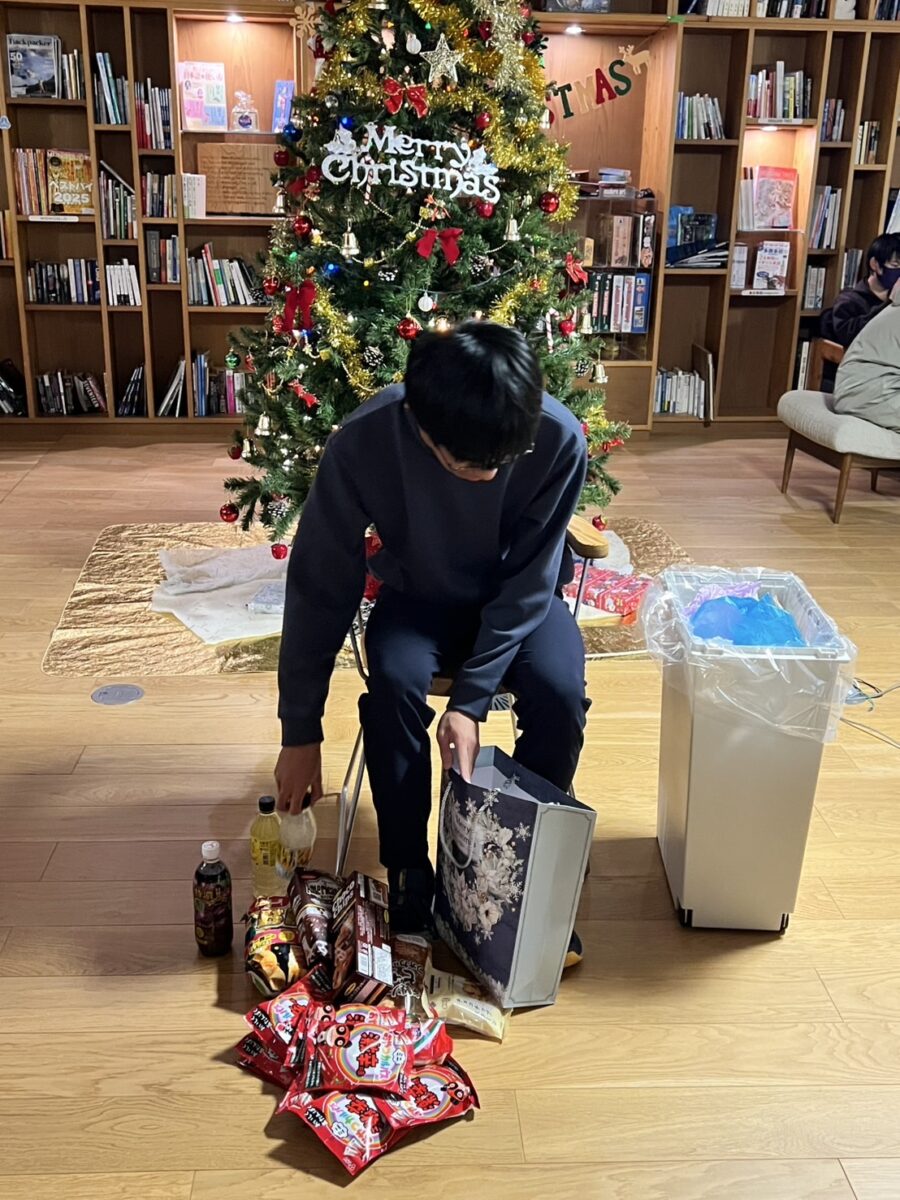
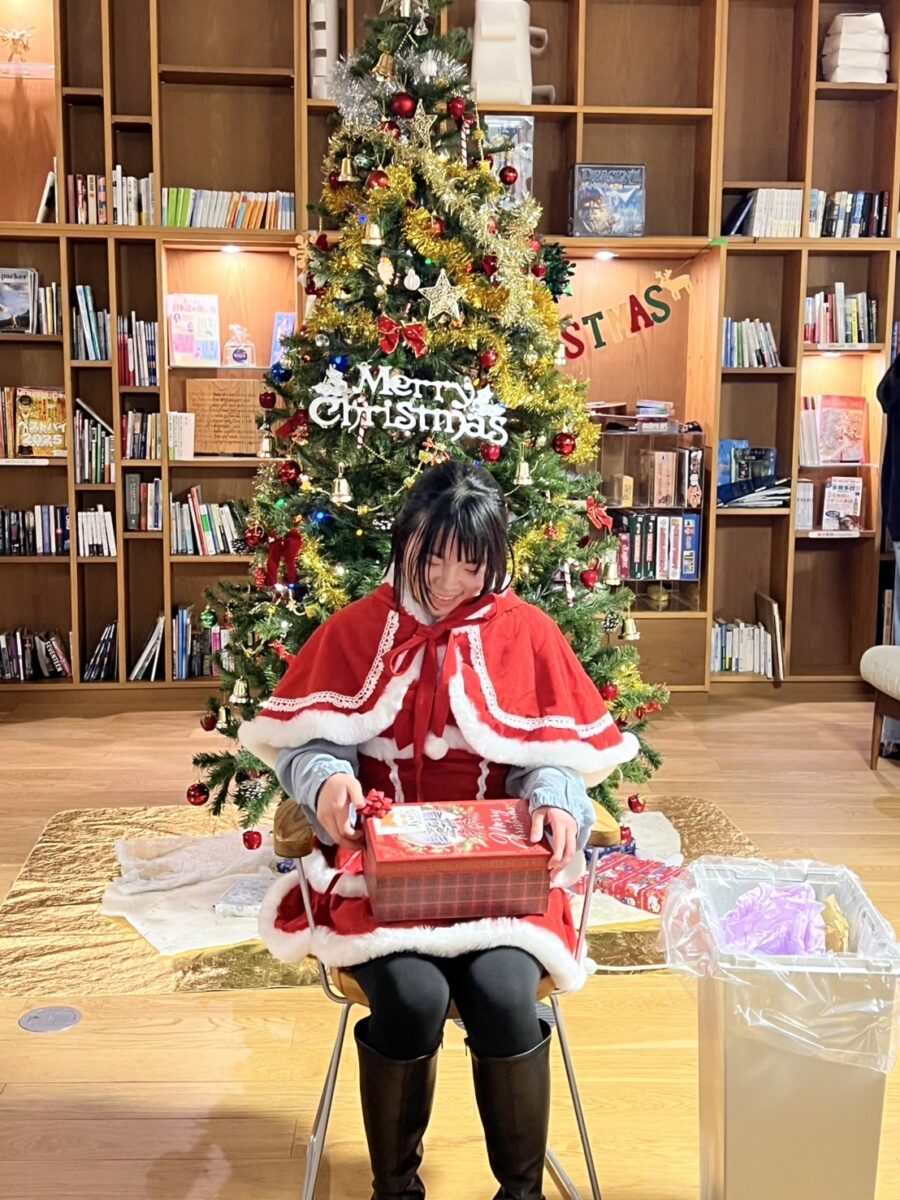
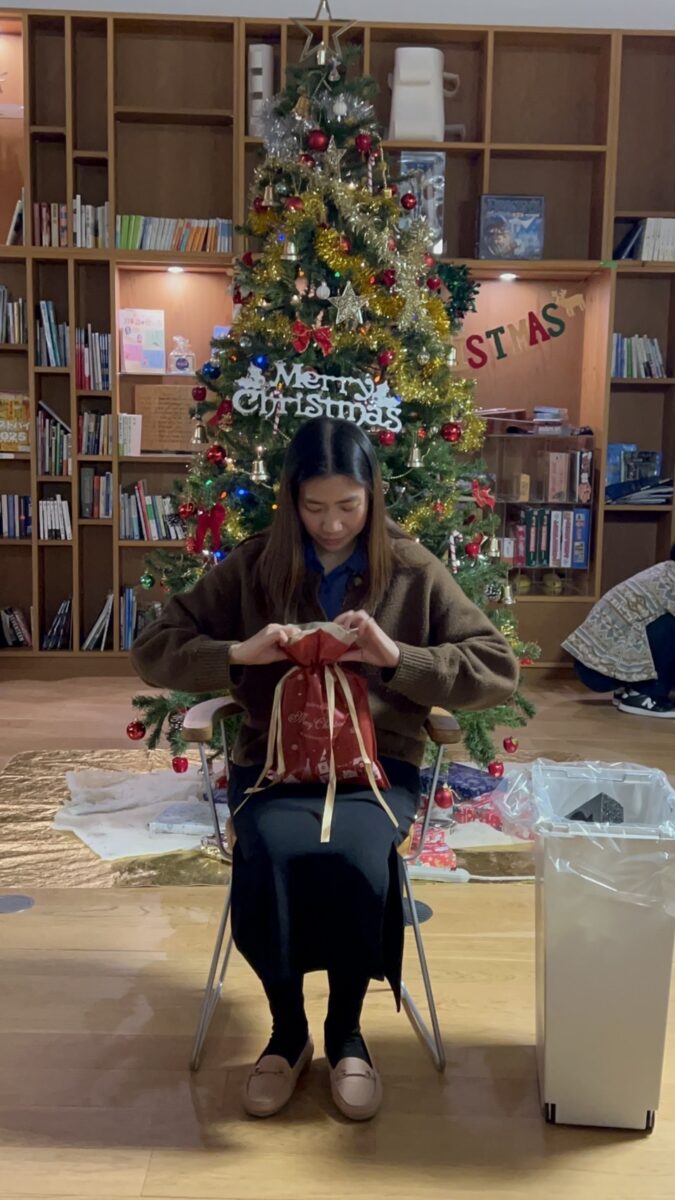
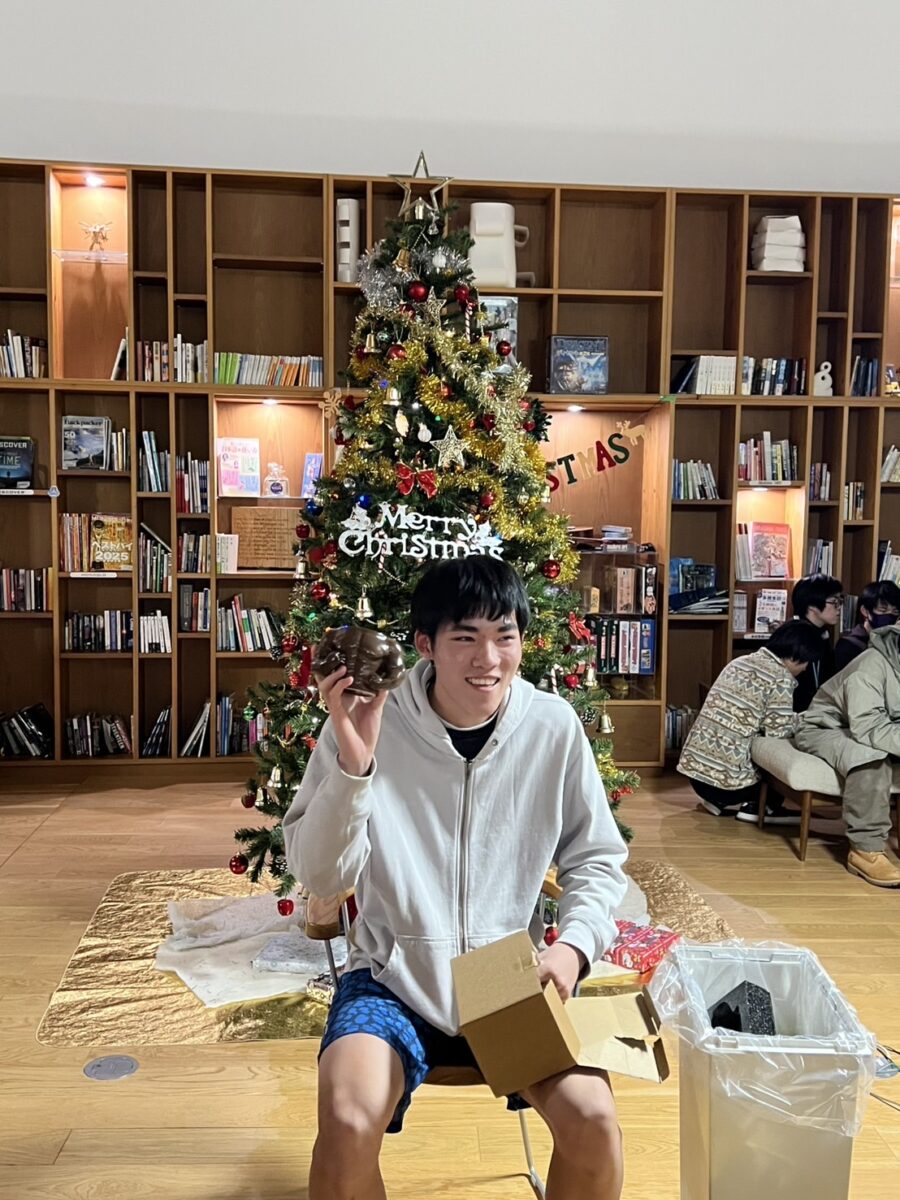
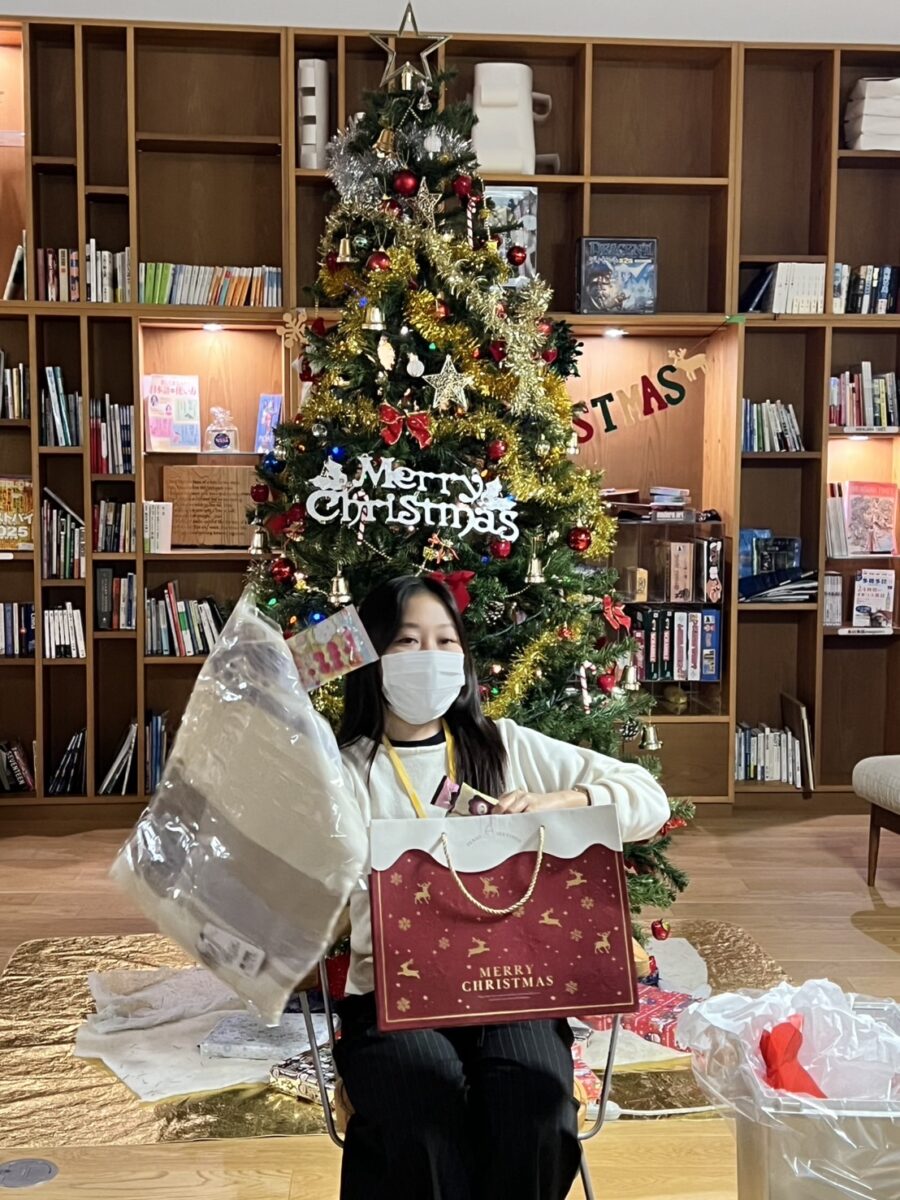
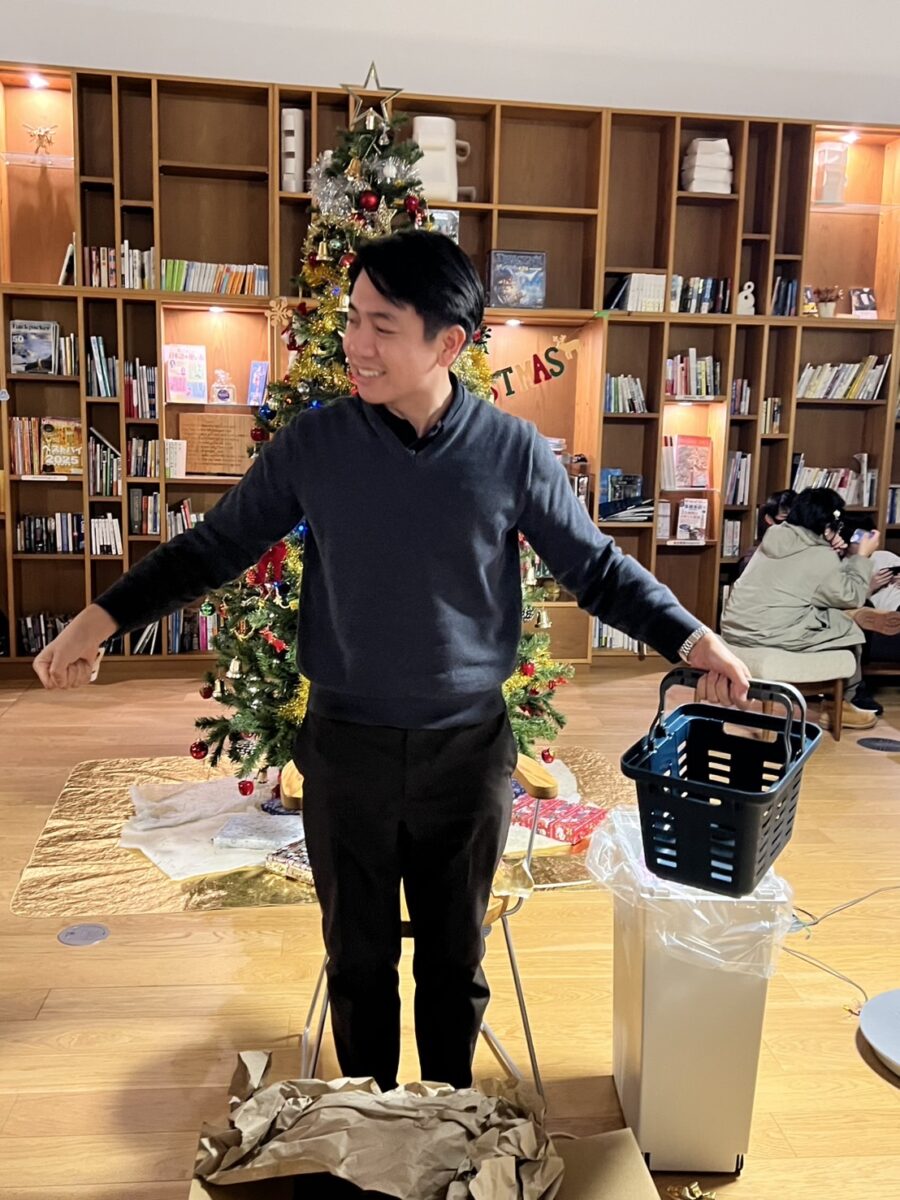
The rest of the night was a cozy mix of snacking, gaming, and simply enjoying each other’s company. Some students played video games, while others chatted over chips and cookies. No matter how they spent the evening, everyone left with a full stomach and a happy heart.
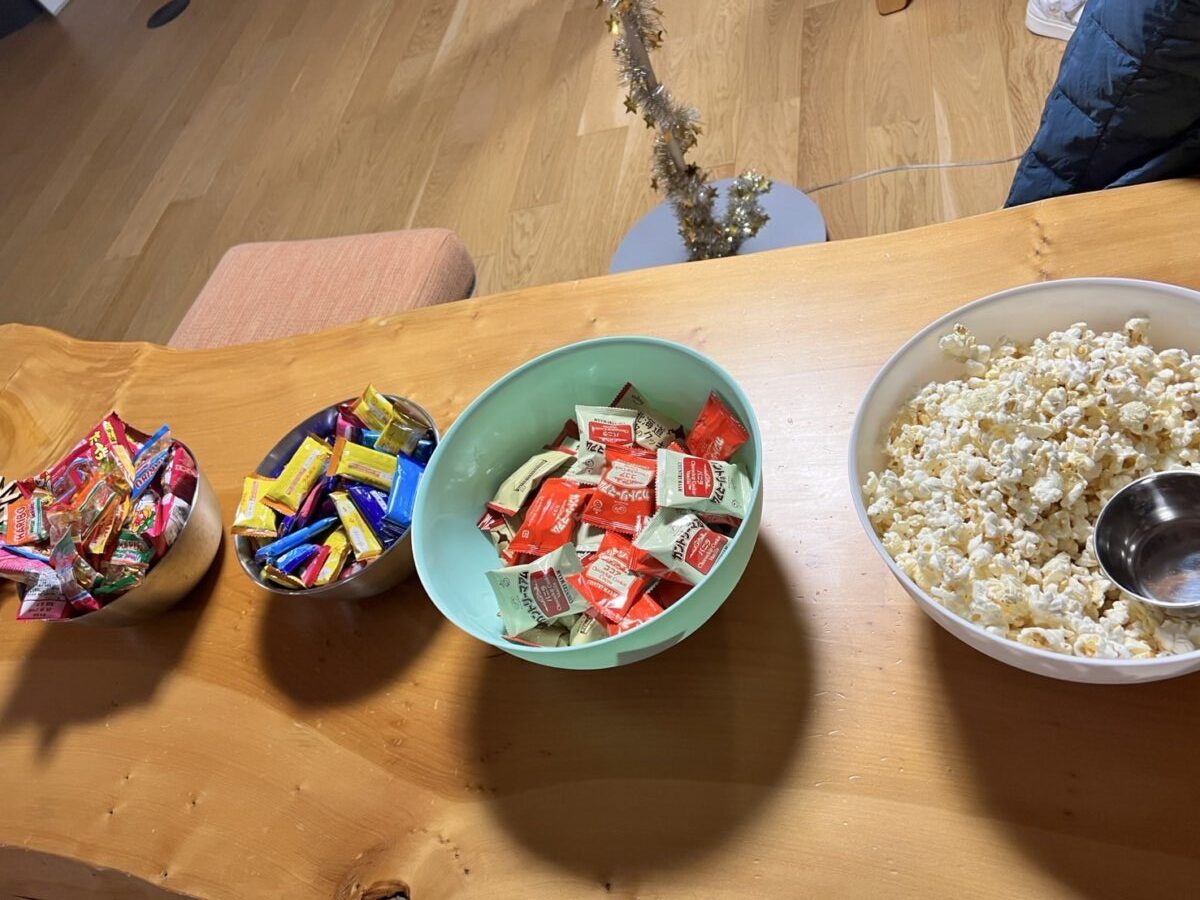
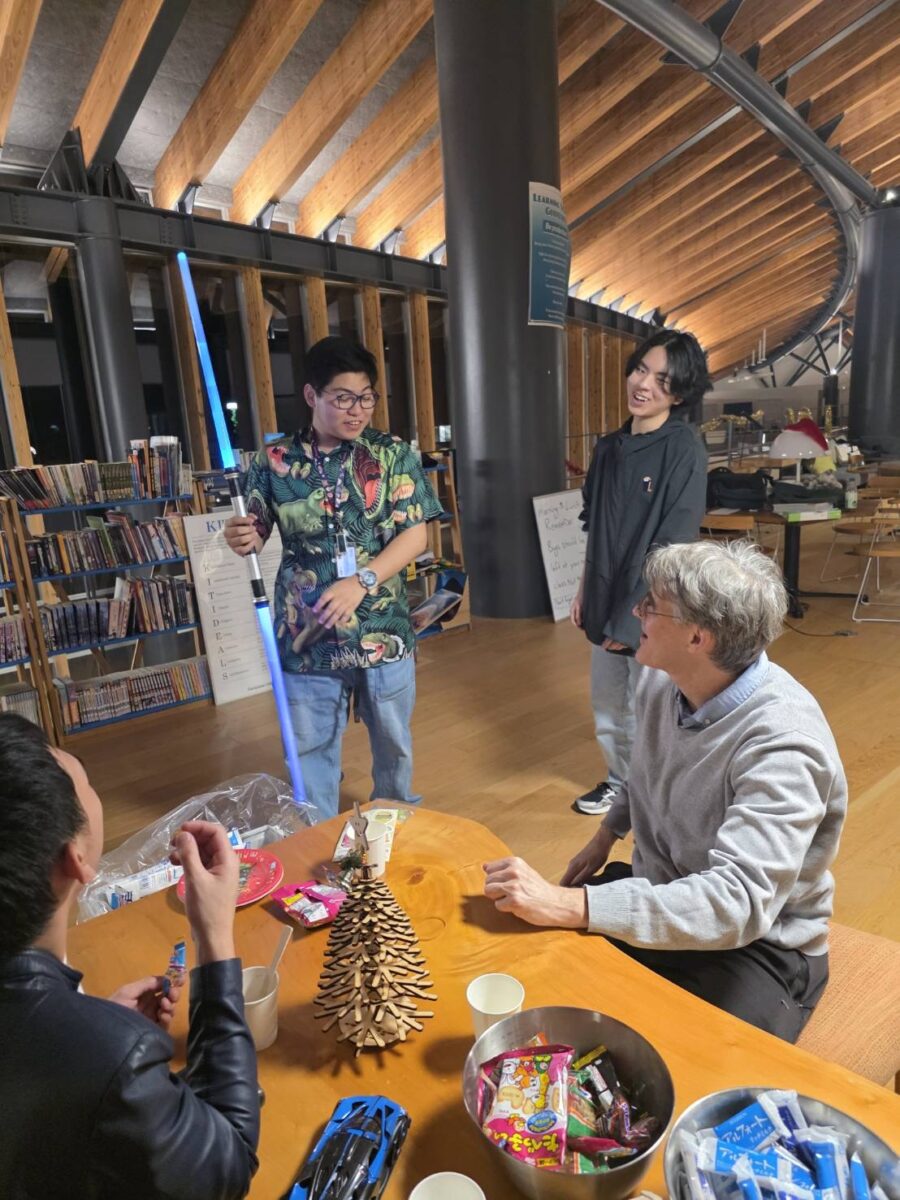
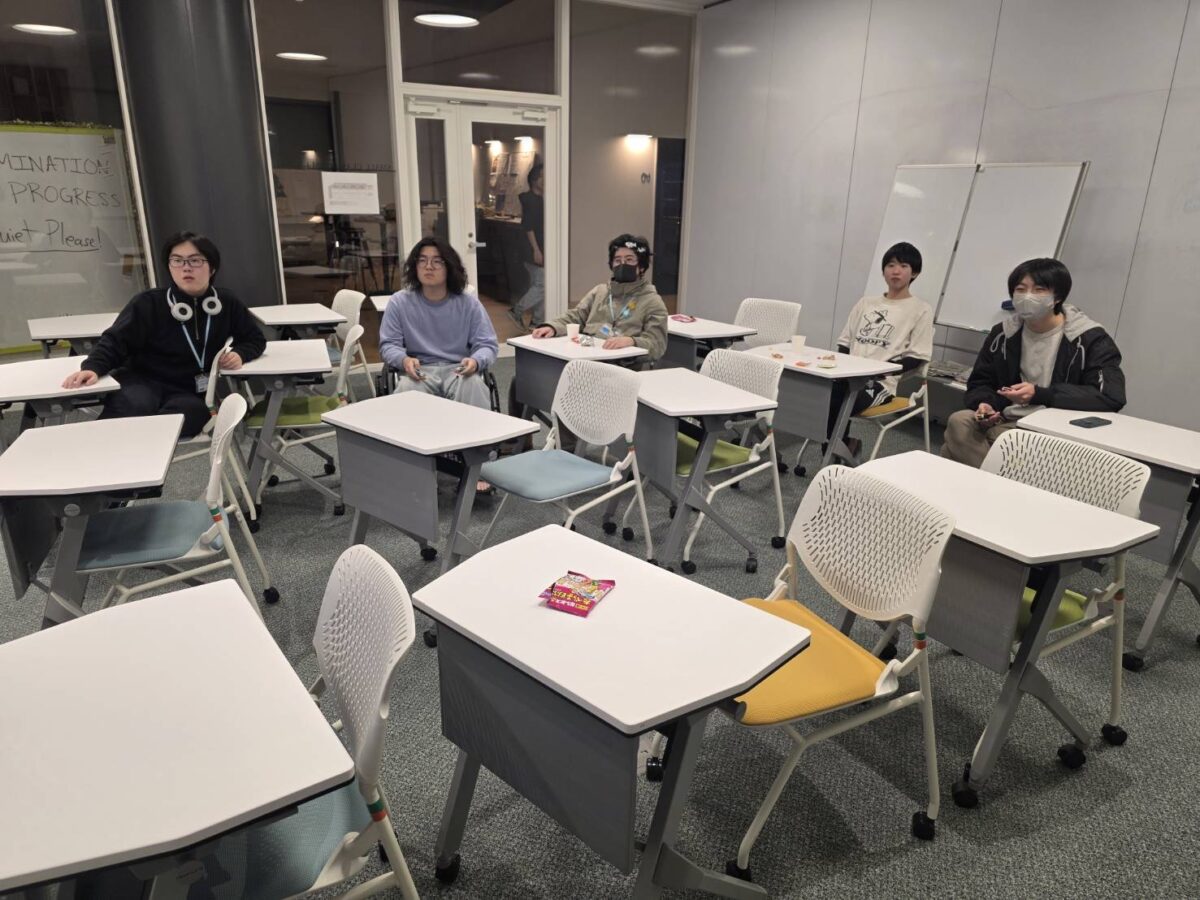
Big thanks to everyone who helped make this night so special. From decorating the tree to finding the perfect gift, every little moment added up to something unforgettable. Here’s to more word games, more surprises, and more reasons to celebrate. Merry Christmas, everyone!
Domyson Abuan
 Hello! I'm Shiyu Sano, a fourth-year student.
I would like to introduce Yumekobo, my favorite place.
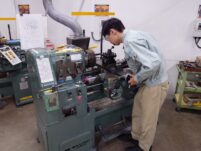
Yumekobo is a facility on the Kanazawa Campus where we can work on mechanical fabrication. It is mainly used by students of Kanazawa Institute of Technology, but ICT students like us can also use it.
There is also a place called Maker Studio V on the Kanazawa Campus where we can do mechanical work, but Yumekobo is much larger in scale. In addition, if we have the required license, we can use the facility freely during its opening hours (until 9 PM on weekdays and until 5 PM on Saturdays) even without a faculty member present.
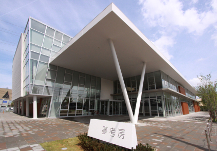
I have been a member of the Design & Fabrication Club since my first year and have been participating in the National College of Technology Robot Contest (Kosen Robocon) project. At first, I didn’t understand anything, but I gradually discovered the joy of machining parts, and I’m still completely absorbed in it today.
At Yumekobo, you can use machine tools and other equipment after completing the safety training and license training. I had also taken similar training at the Maker Studio at the Hakusanroku Campus during my first year, but the license training at Yumekobo is divided into more specialized fields, making it longer and considerably more difficult. In addition, during the first semester—when applications tend to pile up—the training sessions may be assigned by lottery, so there were times when I couldn’t take the courses as planned. Since I was working on building a robot for Kosen Robocon at the time, I felt a bit anxious.
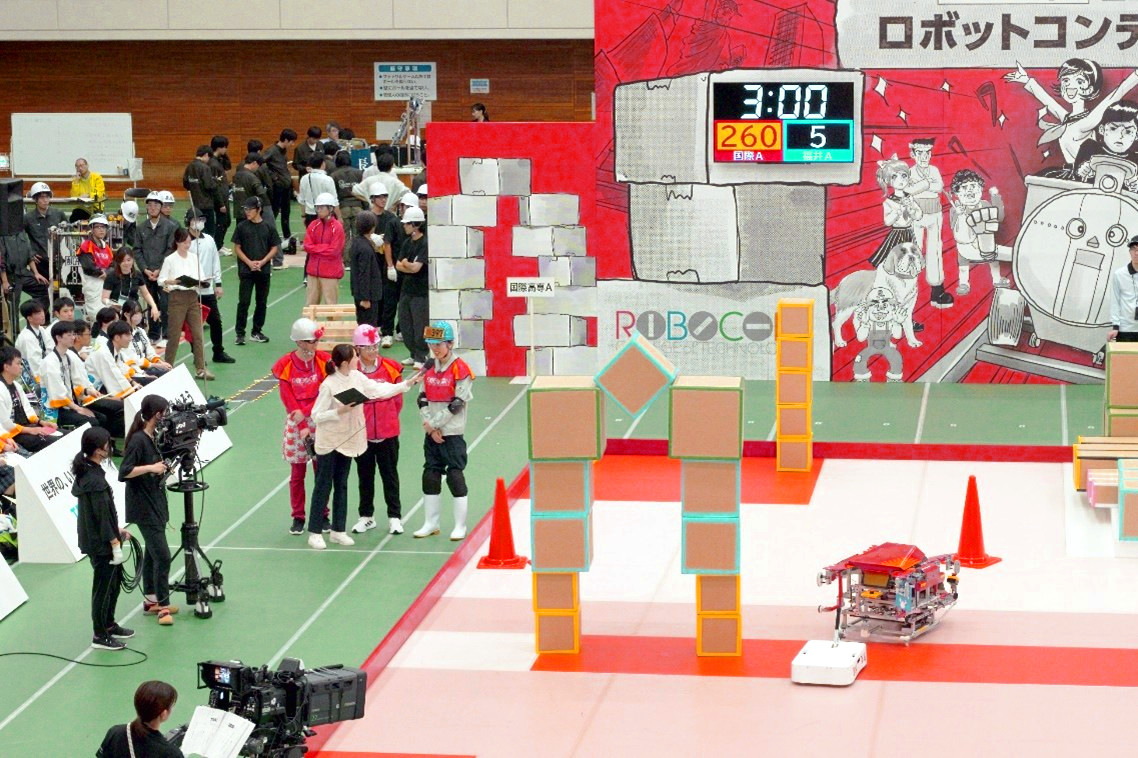
Although this is a bit of a digression, the rules for the Kosen Robocon are announced in mid‑April, the regional competitions are held in October, and the national competition takes place in mid‑November. This year’s Tokai-Hokuriku regional competition was held in Toyama City on Sunday, October 5. In the first match of the preliminary league, our robot passed through the gate without any mistakes and scored 260 points. However, in the second match, the gate collapsed, and we were eliminated from the preliminary league. But incredibly, we received the Technical Award, and thanks to the judges’ recommendation, we earned a spot in the national competition!!!
We decided to improve our robot in preparation for the national competition on Sunday, November 16. I’ll leave the detailed story to the ICT Journal written by Professor Michihiro Hayashi.
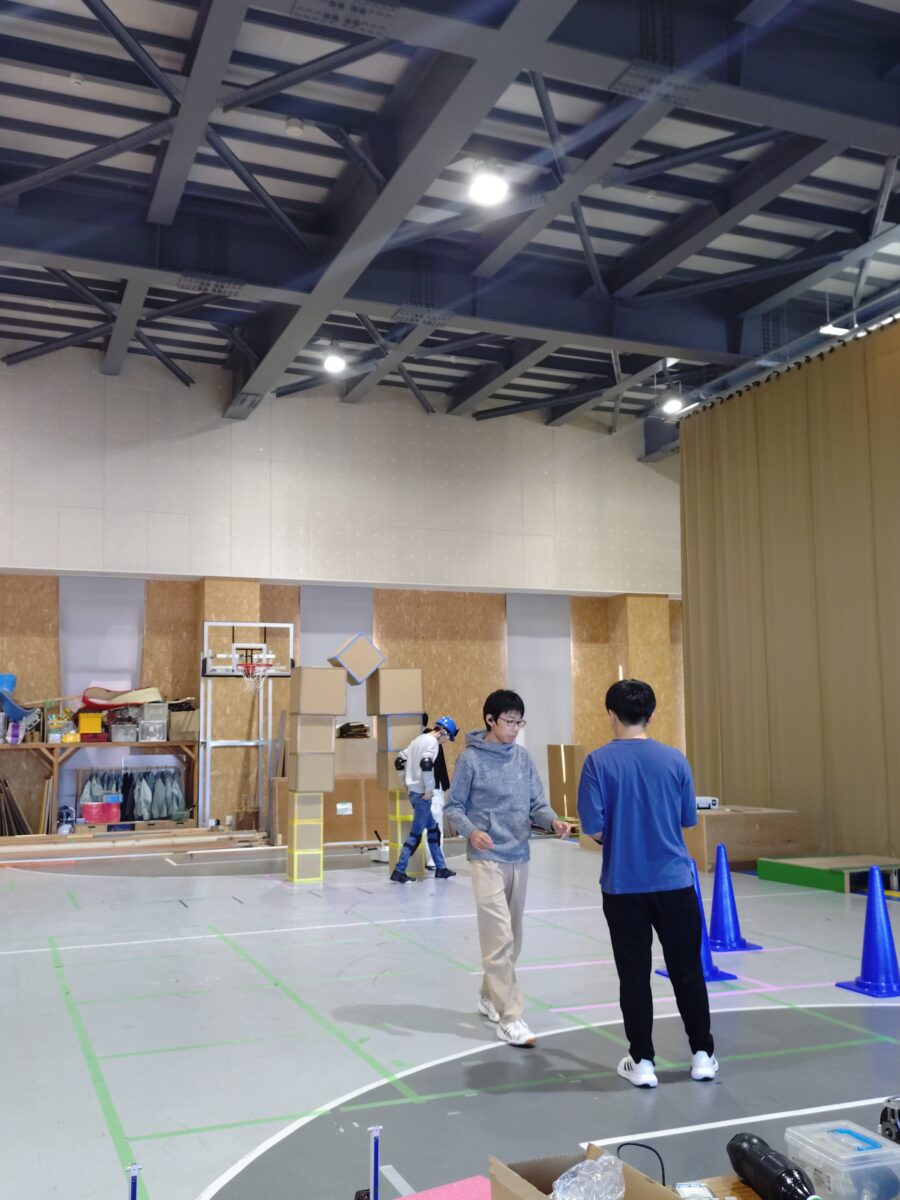
Since the building on the Kanazawa Campus where we usually practiced had a low ceiling—so low that the cardboard gate almost touched it—and the space was a bit cramped, our robot sometimes couldn’t make a clean lap around the gate. Because of this, we were allowed to practice at Yumekobo on short notice two weeks before the national competition. We were able to borrow the space normally used by the KIT Robot Project members, which allowed us to practice freely in an environment very close to actual competition conditions. Since the technicians from Yumekobo who always support us, as well as seniors from KIT came to watch, I felt a little nervous.
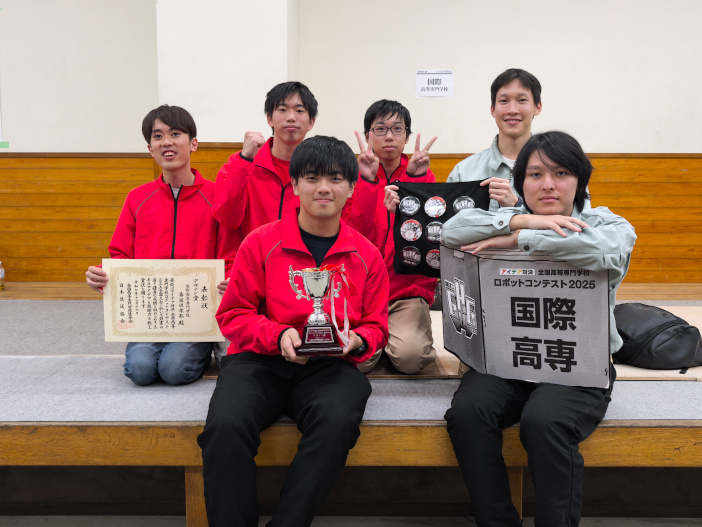
Thanks to everyone’s support, we were able to win our first match at the national competition!!! Unfortunately, we were eliminated in the second round, but we received the prestigious Design Award. Although our main team had only four members, and we caused a great deal of trouble for our advisor, Professor Hayashi (and honestly, we still are), we achieved a result we could proudly bring home. It’s no exaggeration to say that Professor Hayashi was the one who truly earned the award.
Now, I’d like to explain why Yumekobo has become my favorite place—not just a facility where we can use machine tools. In the fourth year of the ICT program, there is an internship course through which students can gain experience in places such as research laboratories and the Student Station, a hub for student interaction and information sharing at KIT. Yumekobo is also one of the possible internship placements, and I chose it without hesitation. I spent about three months doing an internship at Yumekobo, during which I also had the opportunity to help create manuals for its users. Since almost everything was new to me, it felt like I was finally able to see Yumekobo—not just from the perspective of a user, but also, even if only a little, from the perspective of those who run it. Through this experience, my awareness of machine tools and safety changed significantly. Wanting to be more deeply involved, I decided to apply to become a student staff member at Yumekobo.
Let me also explain a bit about the student staff (on‑campus internship) system. KIT operates a student staff program in which students work on campus. Those who participate not only earn income but also take an active role in improving the campus environment, making it a valuable opportunity for personal growth. There are many places to work on campus, but ICT students can only work at Yumekobo and the Student Station.
Unlike during the internship course, where I worked more like a guest or trainee, I am now working as a paid staff member. Because of that, I’m doing my best not to cause any trouble for the technicians or the senior staff.
Yumekobo student staff members wear yellow jackets while working, so we are also known as the “Yellow Staff.” Our duties cover a wide range of tasks, including reception work, inspecting machine tools, and cleaning—always making sure that students using Yumekobo can work safely and with peace of mind. I’ve also become a bit more knowledgeable about the machine tools than before, and I feel that I’ve been able to grow in my own way.
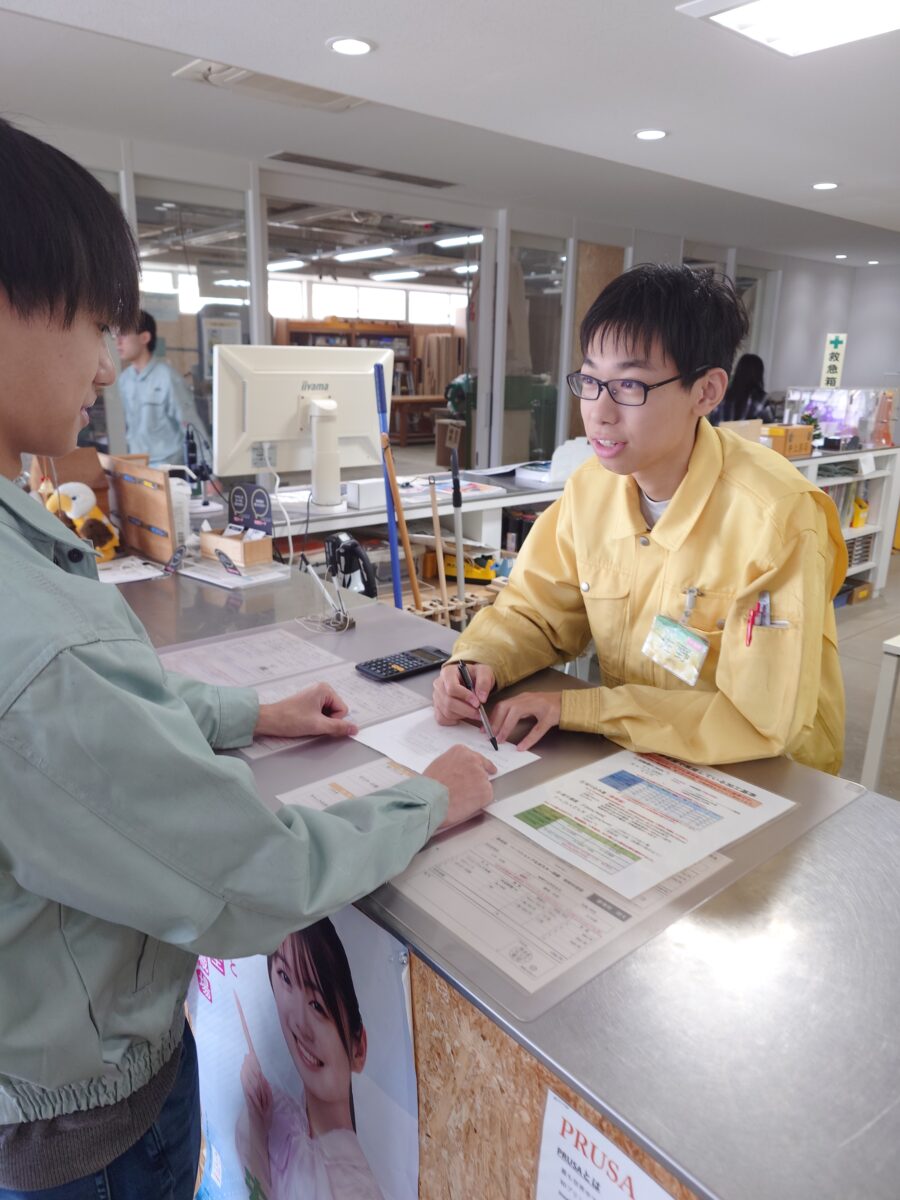
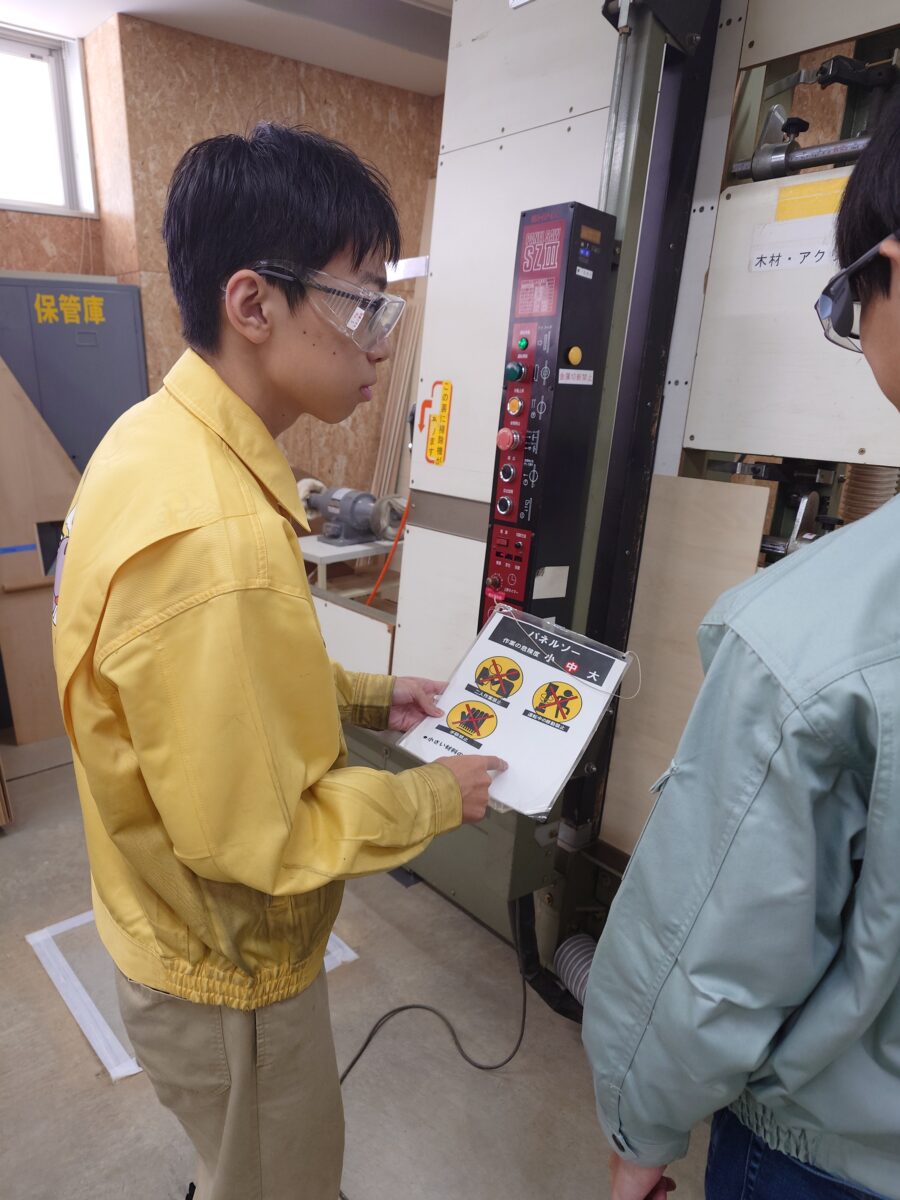
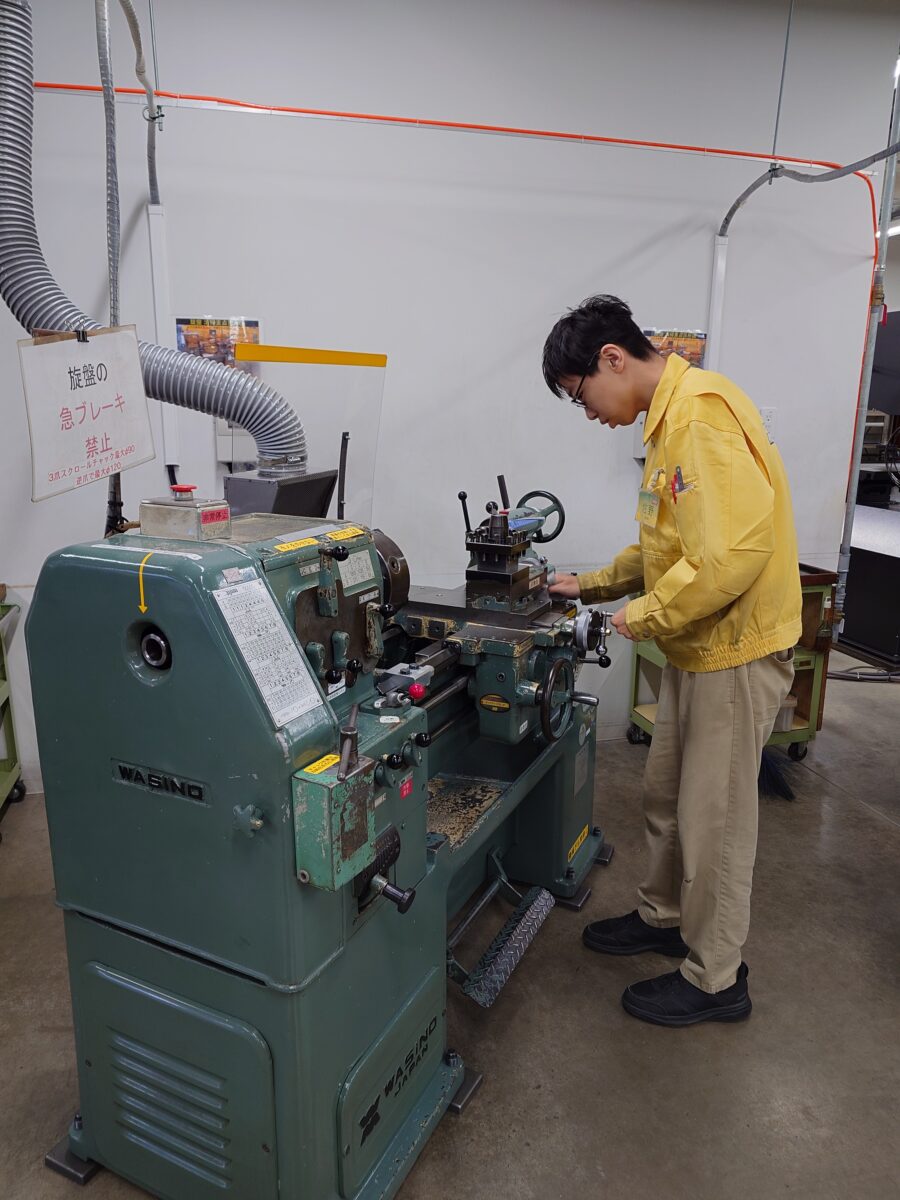
I simply enjoy machining parts, and with so many machine tools available—and the casual conversations I get to have with the technicians and senior staff—Yumekobo has become a comfortable place for me, almost a part of my daily life.
On Saturday, February 21 this year, the Yumekobo Project Presentation will be held, and the Kosen Robocon team will also have a booth. Yumekobo is also open to the public during the Kosen Festival (the school festival) held in October, so if you’re interested, please come visit. It’s a facility that’s fun to see even if you’re just looking around.
That concludes my introduction to Yumekobo, my favorite place.
Shiyu Sano
 How, I wonder, would Sei Shōnagon have enjoyed winter if she were alive today?
In this 7th December of the Reiwa era, the snow-filled early mornings feel at once nostalgic and impossibly distant.
Happy New Year. This is Rintaro Kamoshita, a 3rd year student. I returned to Japan last month.
Just as I thought I had finally parted ways with New Zealand’s lethal ultraviolet rays, I now find myself enduring the winters of Shinshu, where body, mind, and thermometer alike freeze solid. Strangely enough, there is a sense of calm in these days.
Before returning home, my family joined me in New Zealand, and together we embarked on a two-week adventure. Leaving Dunedin behind, we set out on a bold journey that explored every corner of the South Island’s natural beauty. In this journal, I would like to share the story of our very first overseas family trip, taken by the three of us. I hope that, through this small glimpse, you can feel the grandeur and magnificence of New Zealand.
Our story begins in Dunedin, the academic city where we 3rd year students live. After arriving in New Zealand, I guided my parents—bewildered by the unfamiliar land—and proudly demonstrated that even a terrible sense of direction can be cured after eight months. At my father’s request, wanting to truly feel the city I had spent those months learning from every day, we decided to stay in Dunedin for a full five nights.
During that time, I showed my parents many places dear to me: St Clair Beach, which I had visited countless times on walks; the card shop where I deepened international friendships through frequent visits, and the Otago Polytechnic campus, which I had completely claimed as my own territory over the past eight months. I also went around Dunedin’s many coffee shops with my father, comparing cup after cup. New Zealand coffee is remarkably smooth, easy to drink, and of an exceptionally high standard. Some classmates of mine only learned to enjoy coffee after coming to New Zealand. If you ever visit, I highly recommend giving it a try.
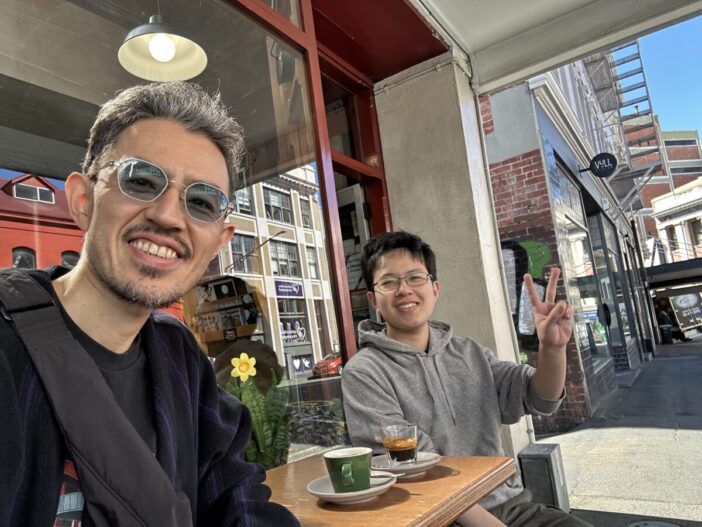
My father (on the left) and I (on the right), sipping coffee in the suburbs of Dunedin.ダニーデン郊外にてコーヒーを嗜む父(左)と私(右)
Once our days in Dunedin came to an end, our next destination was Lake Tekapo. One of New Zealand’s largest glacial lakes, Tekapo is said—according to our driver—to derive from a Māori word containing the meaning “night,” perhaps reflecting the lake’s famously beautiful starry skies. At that point, my sole purpose for the journey was seeing the stars of Tekapo; driving was merely a means of transport. That assumption was completely overturned along the way.
Our driver, a Japanese man, was an incredible storyteller. Of course, the scenery alone was more than enough to amaze us, but his New Zealand stories held my attention from start to finish. His choice of route was also perfect—rather than the standard coastal road, he took us through the mountains. The vastness—no, the overwhelming vastness—of nature stretching endlessly before us made me think, “So the scenery in Mission: Impossible wasn’t an exaggeration after all.” The five-hour journey passed like an arrow in flight.
Upon arriving in Tekapo, the sheer scale and surreal turquoise color of the lake shattered my sense of normalcy, and the first day ended with us doing little more than staring in awe. But the main event of this trip—seeing the real Milky Way—was something I absolutely could not miss. With the weather forecast declaring that the first night would be our only chance, fatigue was dismissed without negotiation. At 2 a.m. the next morning, I forced my eyes open using the vibrations of modern technology.
Even now, I remember the sensation of stepping outside half-asleep and having countless particles of light rush into my vision. I do not think I will ever attempt to describe the beauty of that night sky in words. I want you to see it with your own eyes. I will say only this: in that moment, I thought, “Ah—this is why I was given these eyes.”
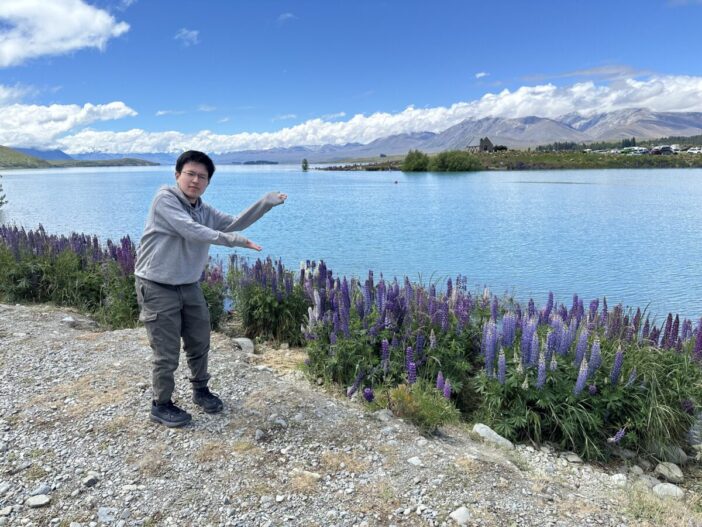
The shores of Lake Tekapo adorned with blooming lupinsルピナスが彩るLake Tekapoの畔
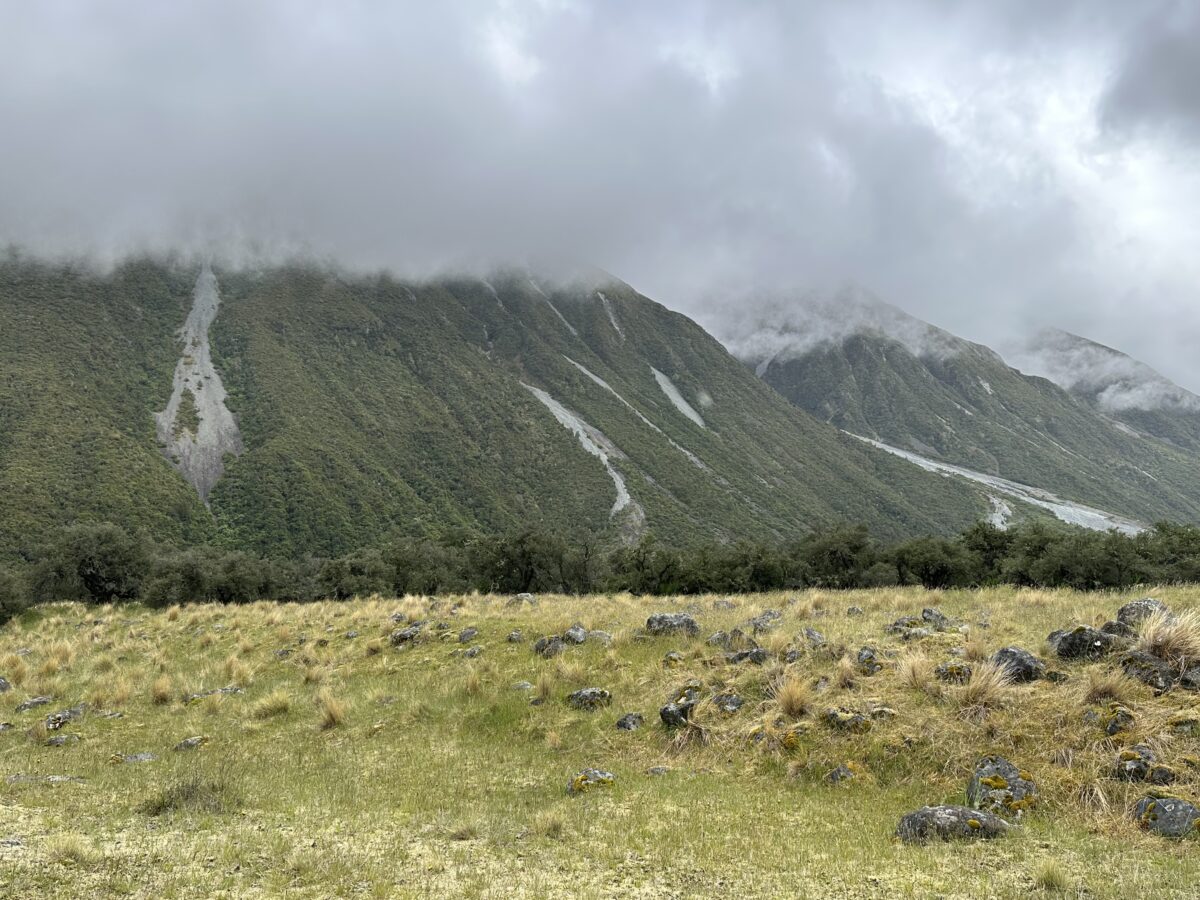
After being utterly overwhelmed by the stars, we spent our second and third days in Tekapo at an unhurried pace, savoring life there. Then, as the final great natural landmark of our journey, we visited Mt. Cook (Aoraki). Designated as a national park, it is a place where precious natural wonders gather in abundance. We walked two relatively gentle hiking trails that day.
The weather was heavily overcast, and the summit was hidden behind clouds, which initially disappointed us. However, our driver explained that “Aoraki” is a word related to clouds, and he told us Māori legends, including the story of the cloud god and the earth god being torn apart. Thanks to those stories, what could have been the worst possible weather instead felt deeply mystical.
After this, we were taken to Queenstown, then flew on to Auckland, where we did our final shopping and dining before bringing this long journey to a close.
-
Aoraki kissed by the clouds雲にキスされるAoraki
-

The gluten-free burger I had in Auckland was amazing…!オークランドで食べたグルテンフリーハンバーガー、 絶品でした!

There are three main things I wanted to convey through this journal.
First, trips like this hold deep significance: for students, they broaden one’s understanding of New Zealand beyond Dunedin; for families, they allow shared experiences and sensations through time spent together in Dunedin and amidst vast natural landscapes. For 1st and 2nd year students, as well as new arrivals planning to study abroad, I especially hope you will consider opportunities like this.
Second, Tekapo Shuttle, who took care of us from Dunedin to Queenstown, was absolutely outstanding. If you go, I strongly recommend using their service. By the way, the biggest surprise of this trip was discovering that the owner of Tekapo Shuttle is also named Rintaro—and even shares the same name origin as me, though written with different kanji. What an incredible near miss!
And finally—seriously—go see the stars at Lake Tekapo.
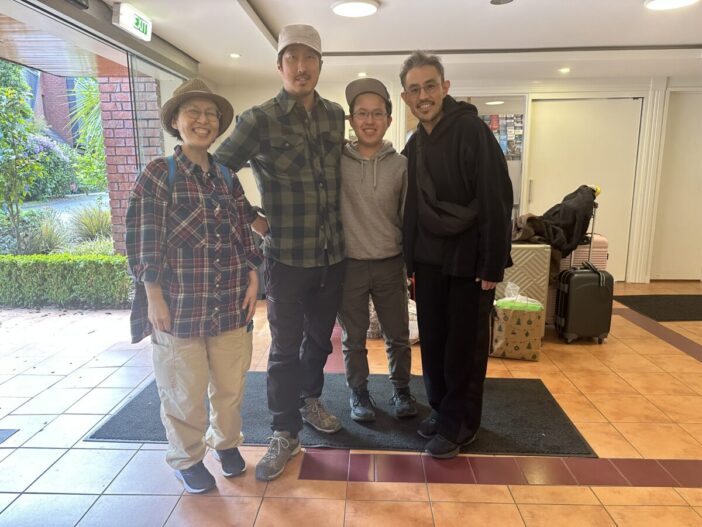
The absolutely incredible owner of Tekapo Shuttle, Rintaro (second from the left), with my family.あまりにも最高すぎたTekapo Shuttleのオーナー、Rintaroさん(左から2番目)と我が家
Before long, our 3rd year will come to an end, and our time at ICT will be more than halfway over. The speed at which life moves continues to astonish me. Living every day at a full sprint is not a bad thing—but perhaps, once in a while, it is good to stop, and lean your whole body into the vastness of nature.
I sincerely wish that this year will be a fruitful one for all of you. Until next time.
Until next time.
Rintaro Kamoshita
 こんにちは。国語科目担当の黒田です。2年生の授業で「美しいもの」を描写する課題に取り組みましたので、学生の作品をご紹介します。
まず、学生たちは下記(1)~(3)の質問に沿ってメモをとりました(実際は手書きです)。
(1)これまでに出会った「美しいもの」を書き出してください。自分が実際に触れることのできる身近なものを推奨します。
炎 線香花火 宝石 鉱物 雪 海 アクセサリー 図面 アクリルスタンド 四つ葉のクローバー
戦艦三笠 おせち うなぎ きつねうどん バスケットボール めちゃ丸い石 いい感じの木の枝…
(2)それと出会った瞬間、どのように感じましたか。五感で得たものを比喩やオノマトペを使い表現してください。
カットされたダイヤモンドのような サラサラ コン 弦のふるえが体に伝わる感じ
マットな質感 脳に電撃が走る 少し焦げた感じ 透明なお花みたいな 古びた家具のような匂い
学校にドンっと一つだけある桜の木のよう おそらく樹脂で塗り固められていてツルツルしていた…
(3)上記のメモを参考した描写文を組み入れ、かつ
――何がさて私は幸福だったのだ。
という一文で終わる物語を考えてください。
田中さんは(1)にオーロラ、アーサー王の墓、白山の紅葉などたくさん書き込んでいましたが、最終的に「ベース(ギター)」を選び、出会いの一齣を繊細に描きました。
・田中 駿太郎『ベースの前で』
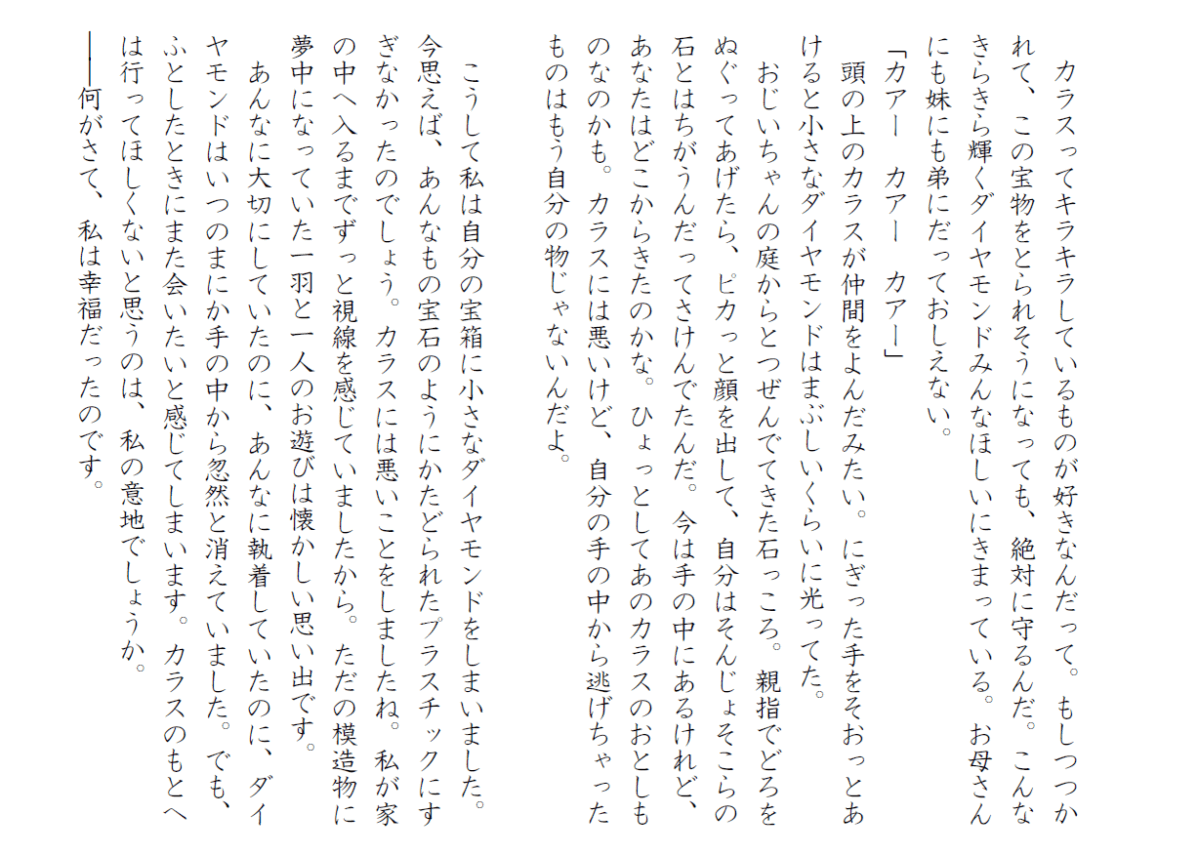
 伊藤さんは最初「宝石」や「王冠」を挙げていましたが、記憶を辿るうちに「祖父の家の庭で見つけた宝石のようなもの」を思い出しました。子どもと大人の文体を使い分け、大胆な構成になっています。
・伊藤 綾音『光る石』
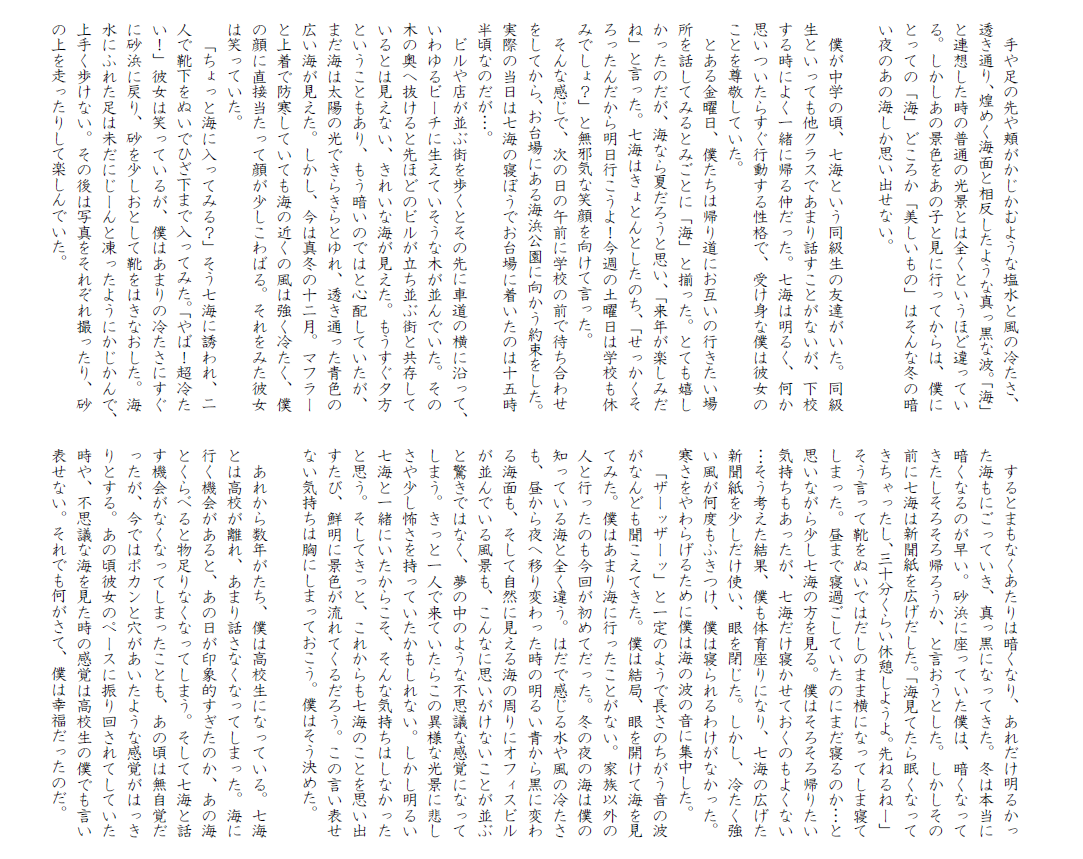
沙魚(筆名)さんは「お台場の海」。冬の夜の海を情感豊かに綴っています。
・沙魚『海』
学生たちは記憶を手繰り寄せながら、各々の「美しいもの」を丁寧に描いていました。体験を糧として、これからも新しい物語を紡いでくれたらと思います。
黒田