




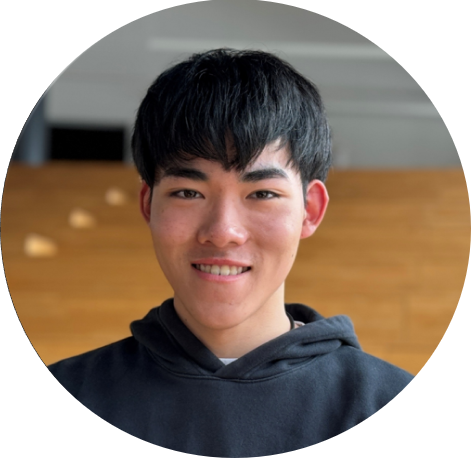
 Hello. My name is Seiya Fujiwara, and I’m a 2nd year student at the ICT living on the Hakusanroku Campus. Compared to last year, there is less snow in Hakusanroku (Foothills of Mt. Hakusan), but Mt. Hakusan is still completely white. Every morning when I wake up and look out the window, I can feel both the harshness of winter and the beauty of nature. My daily life usually consists of going back and forth between the dormitory and the campus, but I feel lucky to be able to enjoy the snowy scenery we can only see in Hakusanroku (Foothills of Mt. Hakusan) during this season.
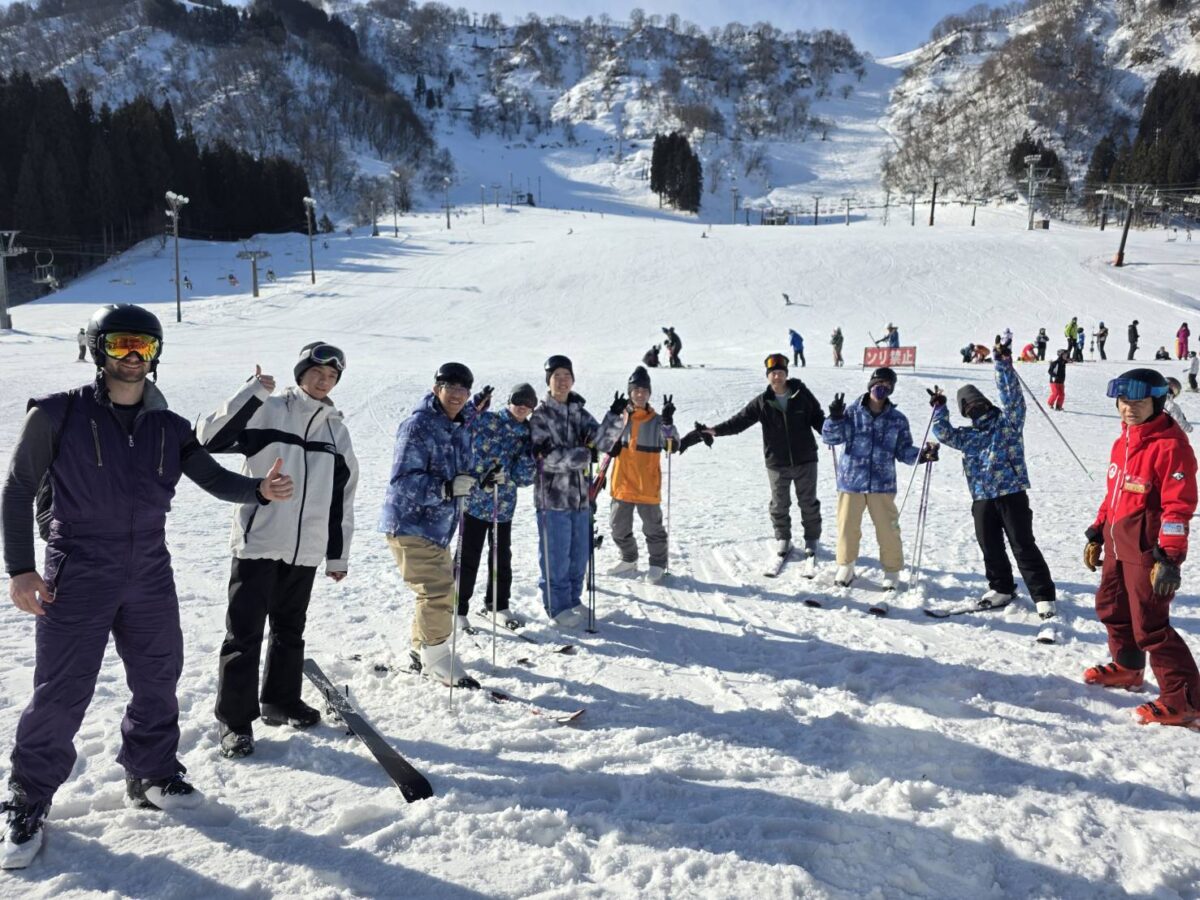
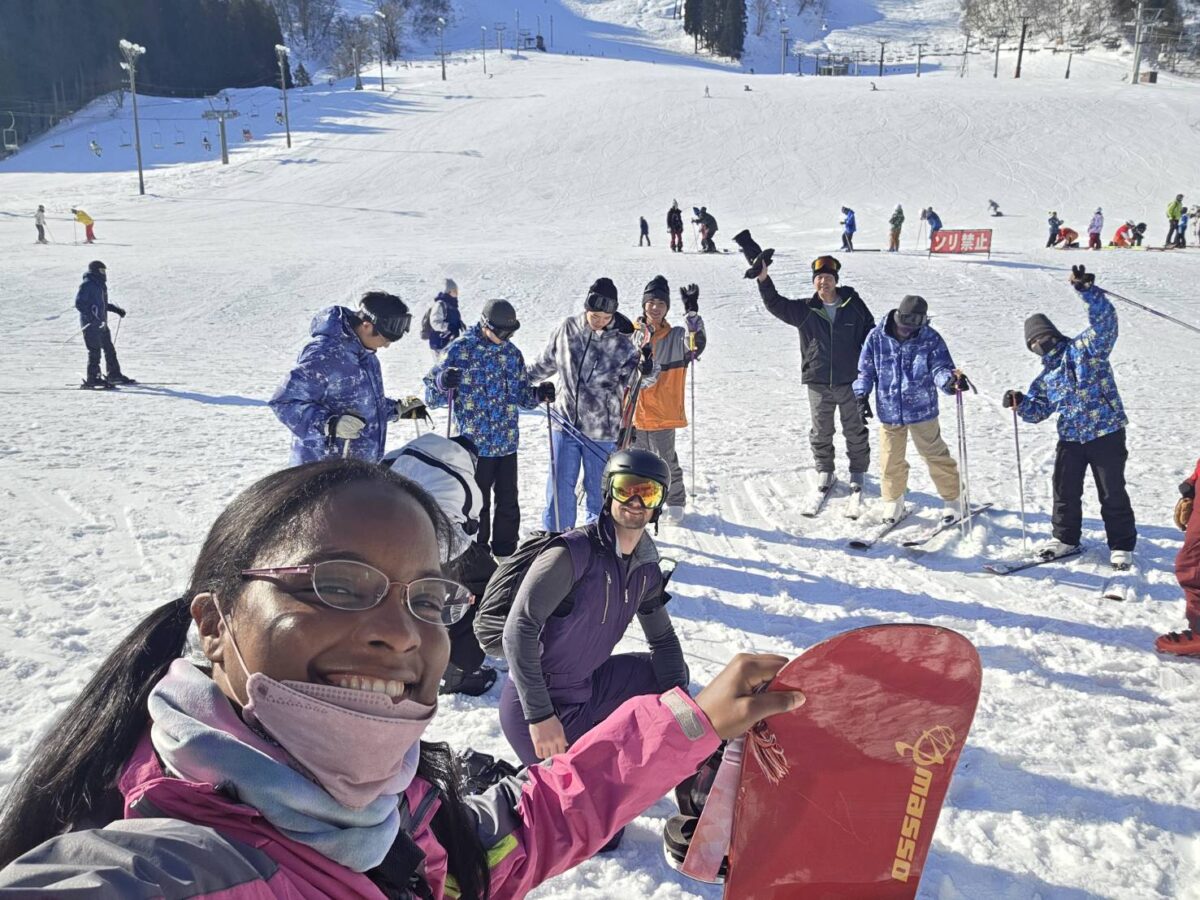
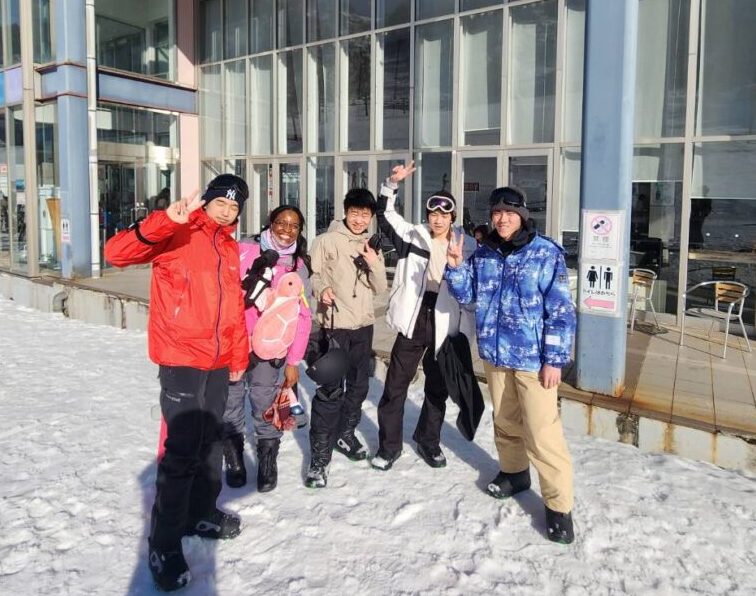 On February 14th, 2026, I went to Hakusan Ichirino Onsen Ski Resort. I didn’t go last year, so the last time I experienced winter sports in Hakusan for the first time. I have skied before, so this time I decided to try snowboarding. At first, I was worried about whether I could snowboard well, but with the help of my friends and by practicing many times, I was able to learn how to turn smoothly by noon.
After that, I tried an intermediate course. However, I couldn’t turn well on the steep slope and fell many times. Still, I didn’t give up and kept trying. Gradually, I got used to the snowboard and felt that I was improving. In the afternoon, After that, I tried an intermediate course. However, I couldn’t turn well on the steep slope and fell many times. Still, I didn’t give up and kept trying. Gradually, I got used to the snowboard and felt that I was improving. In the afternoon,
There were also many skilled people at the ski resort, and some of them were doing tricks like jumps and spins. My friends and I tried to copy them, but at first, we couldn’t do it well. However, as we kept practicing, we slowly got better. Although I’m still not very stable, I can now do simple jumps and spins. It was very fun to be able to do things that I couldn’t do before, and I became so focused that I forgot about time. It also reminded me of my usual club activities and independent badminton practice, and I once again realized the importance of continuing to practice. If I have another chance to go, I would like to try more difficult tricks.
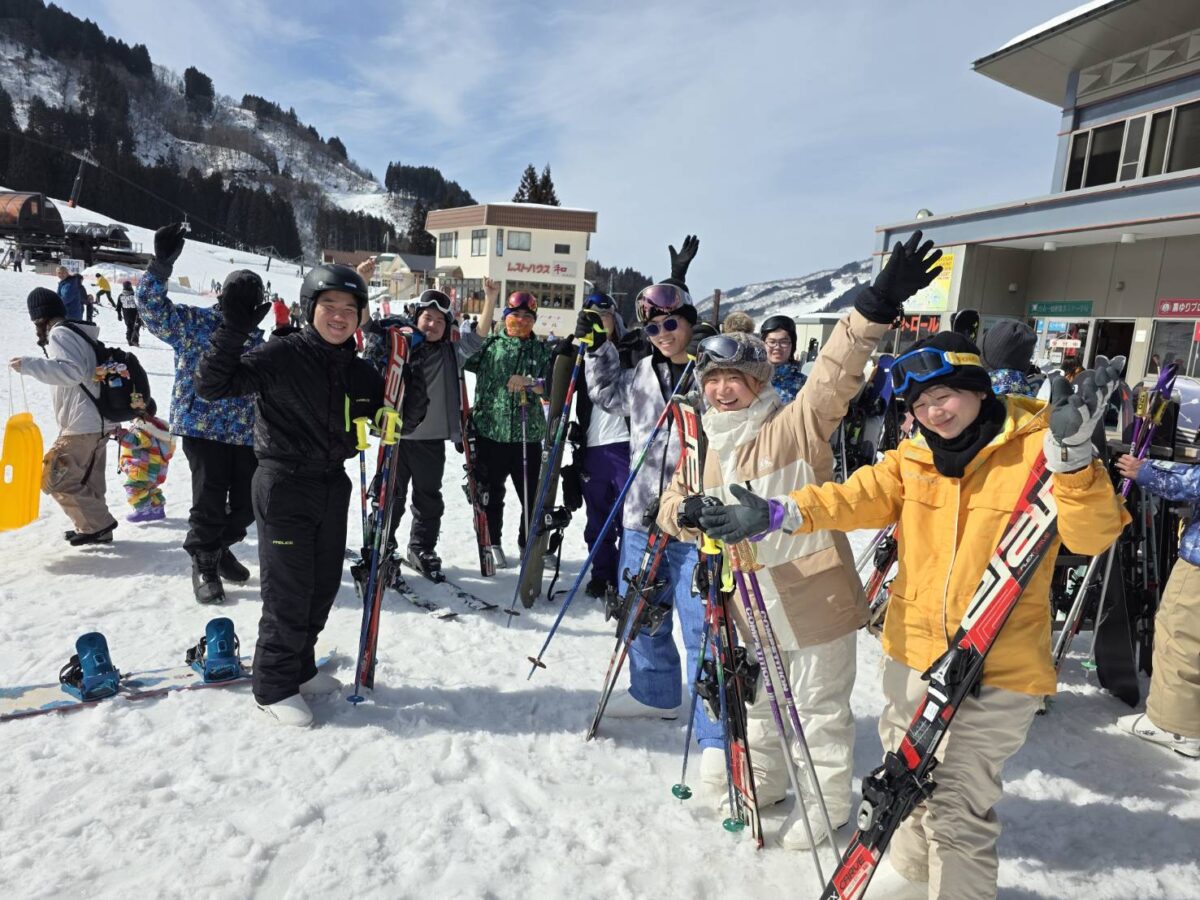
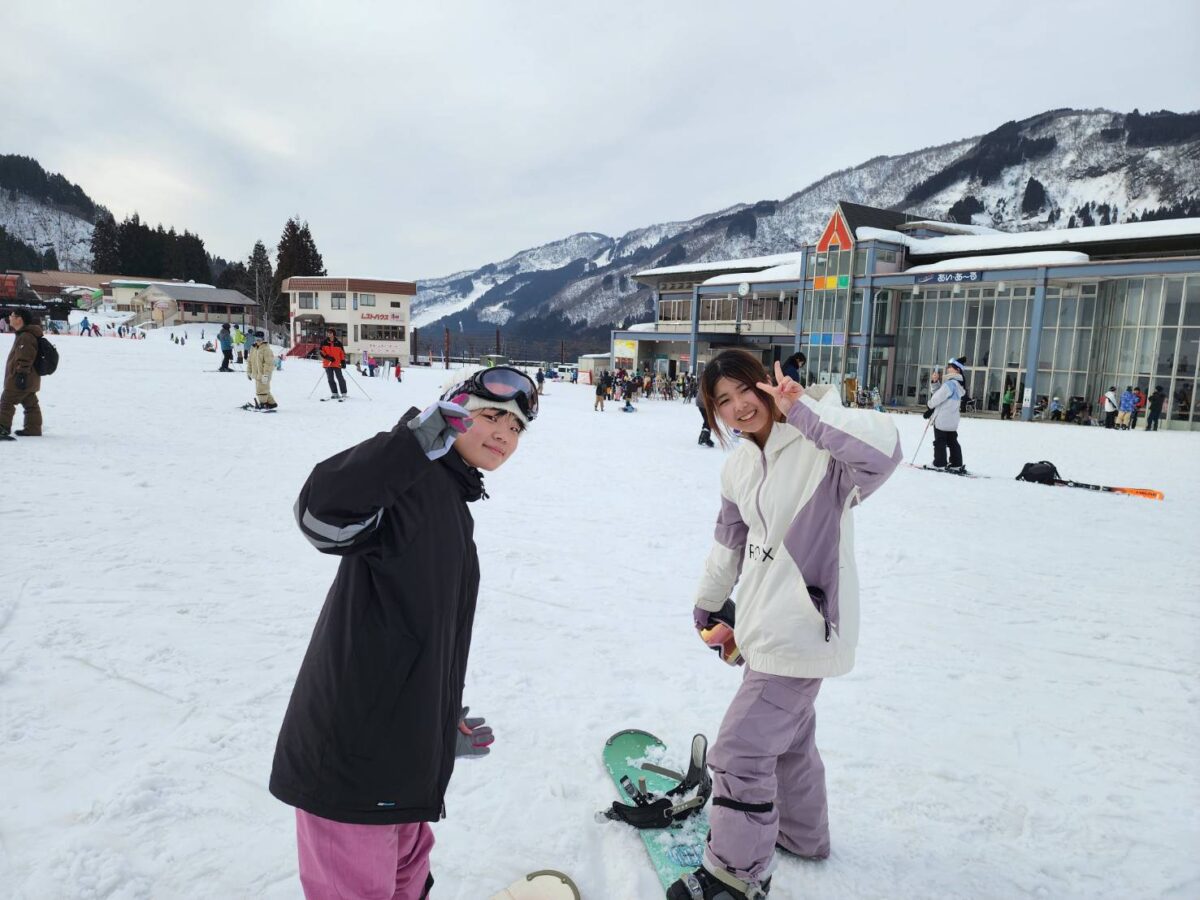
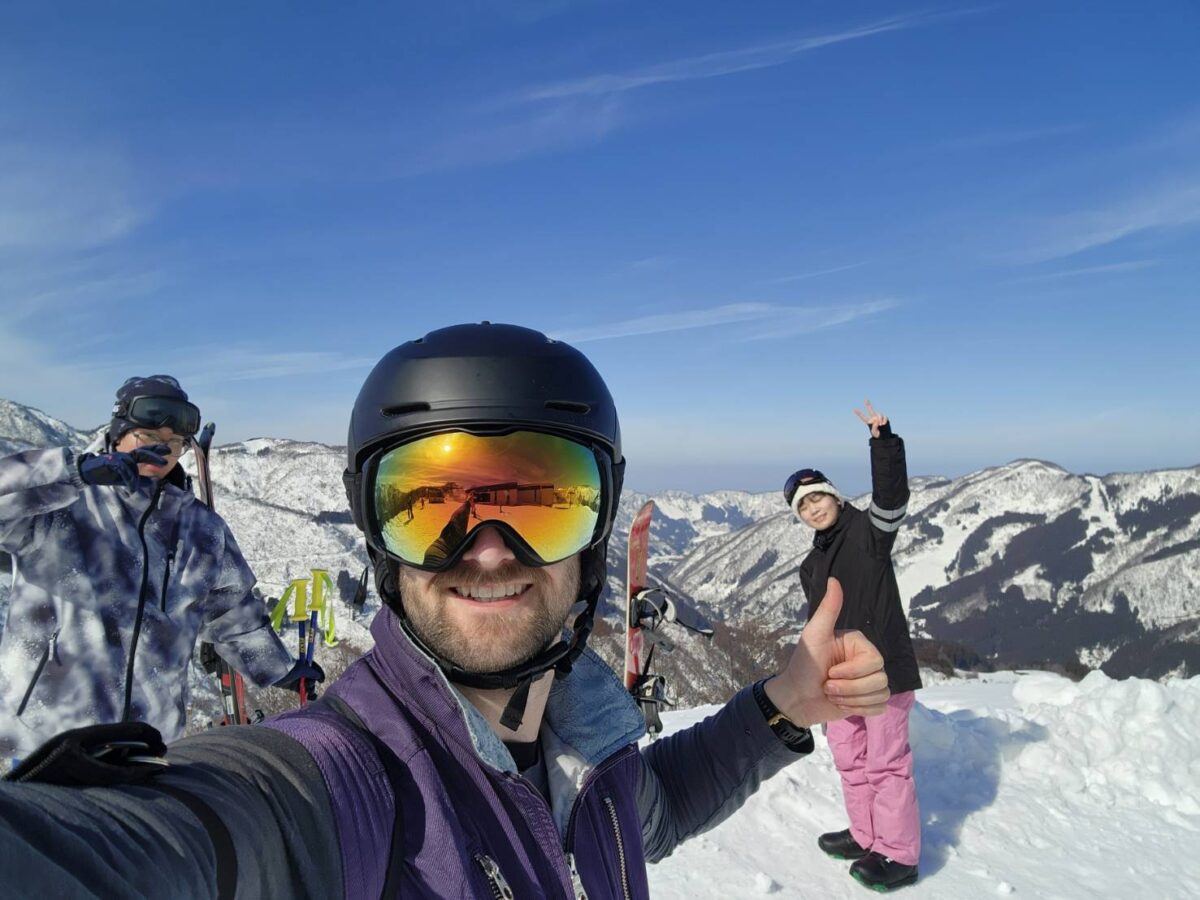
Seiya Fujiwara
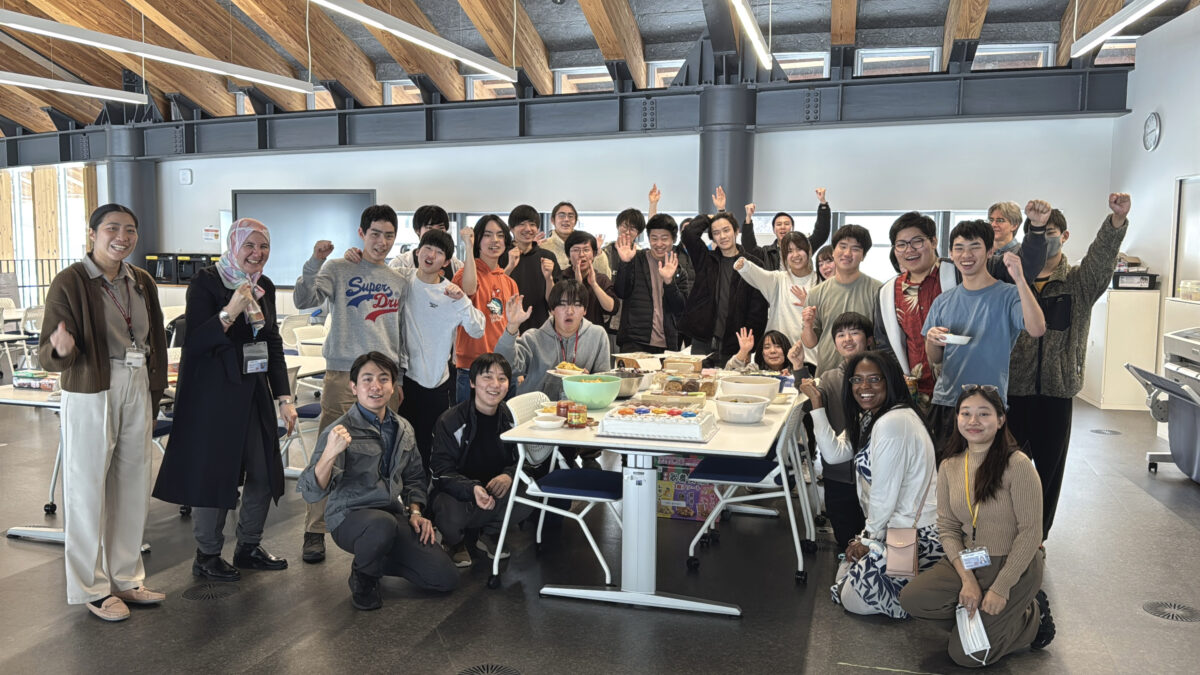

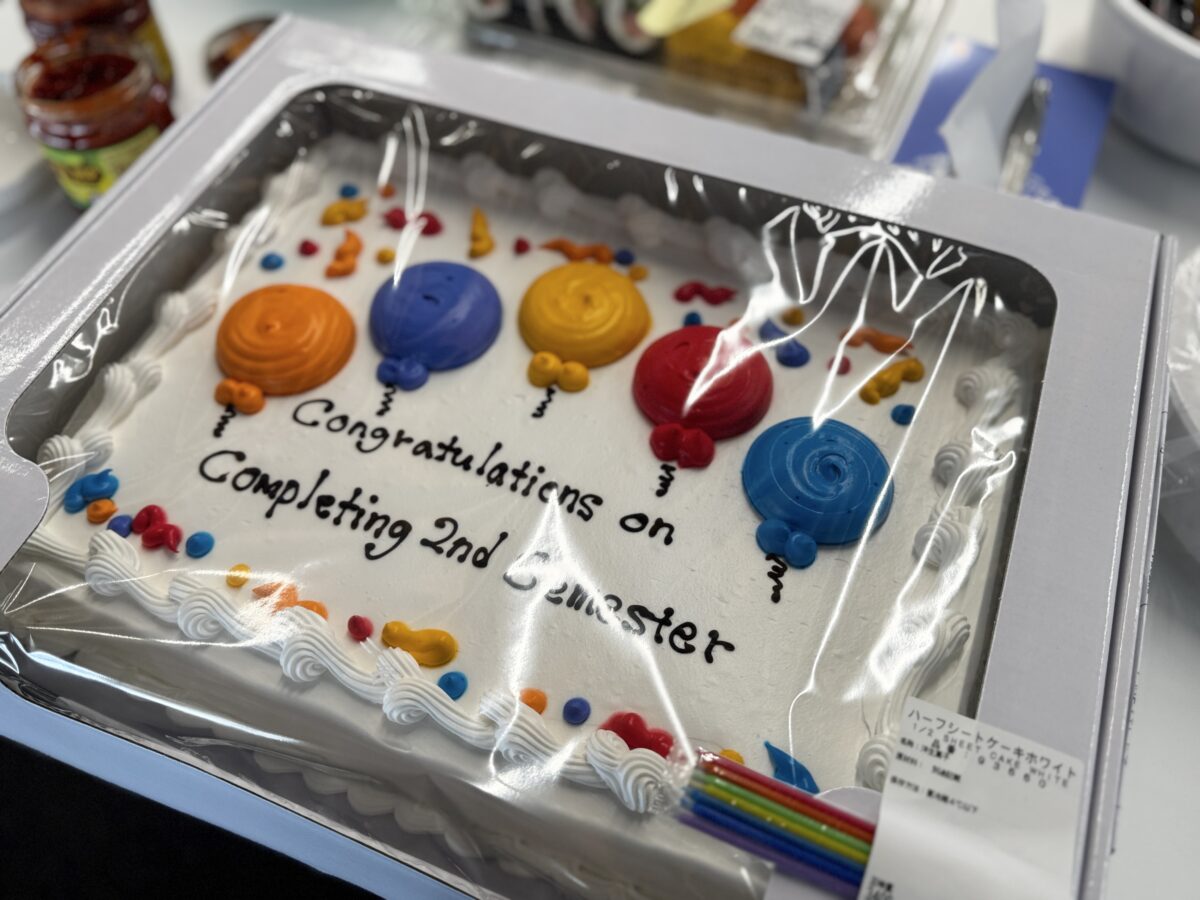
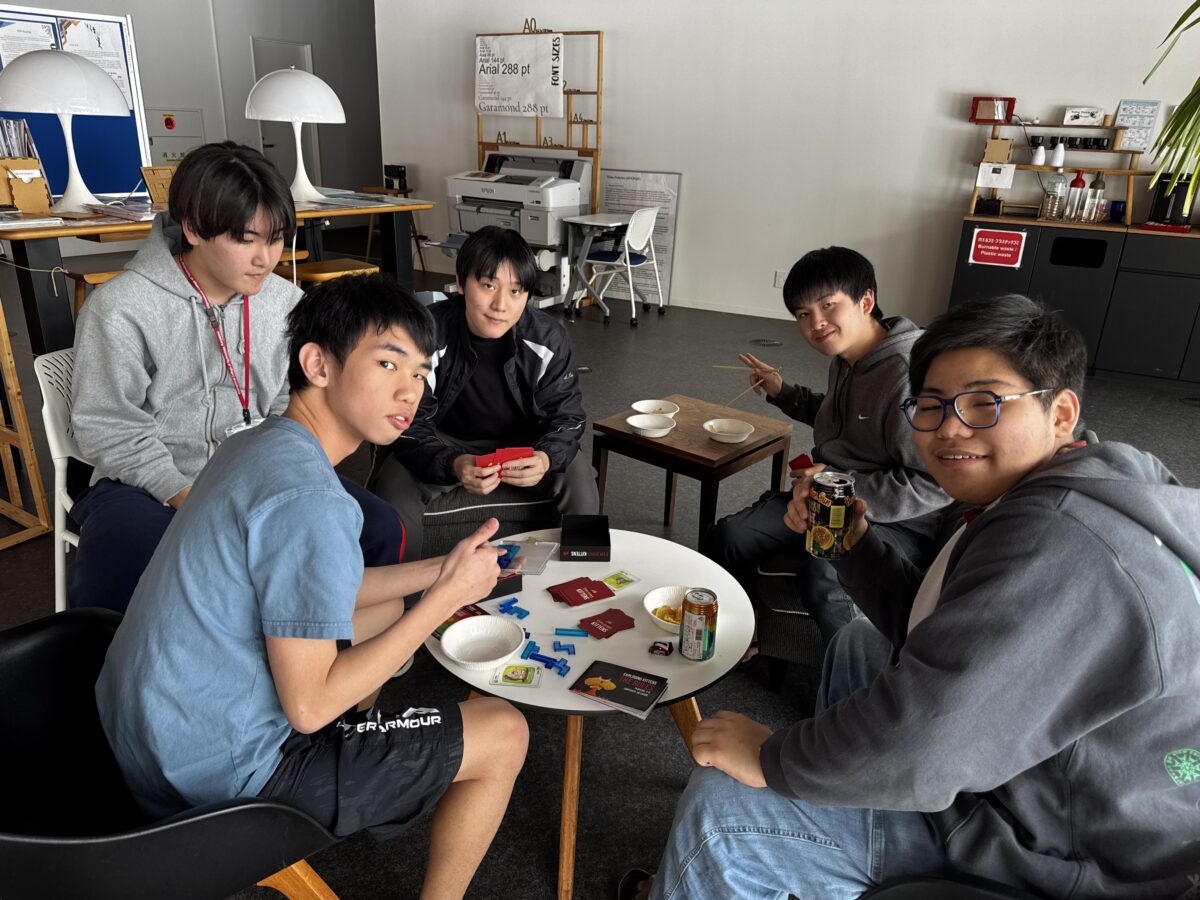
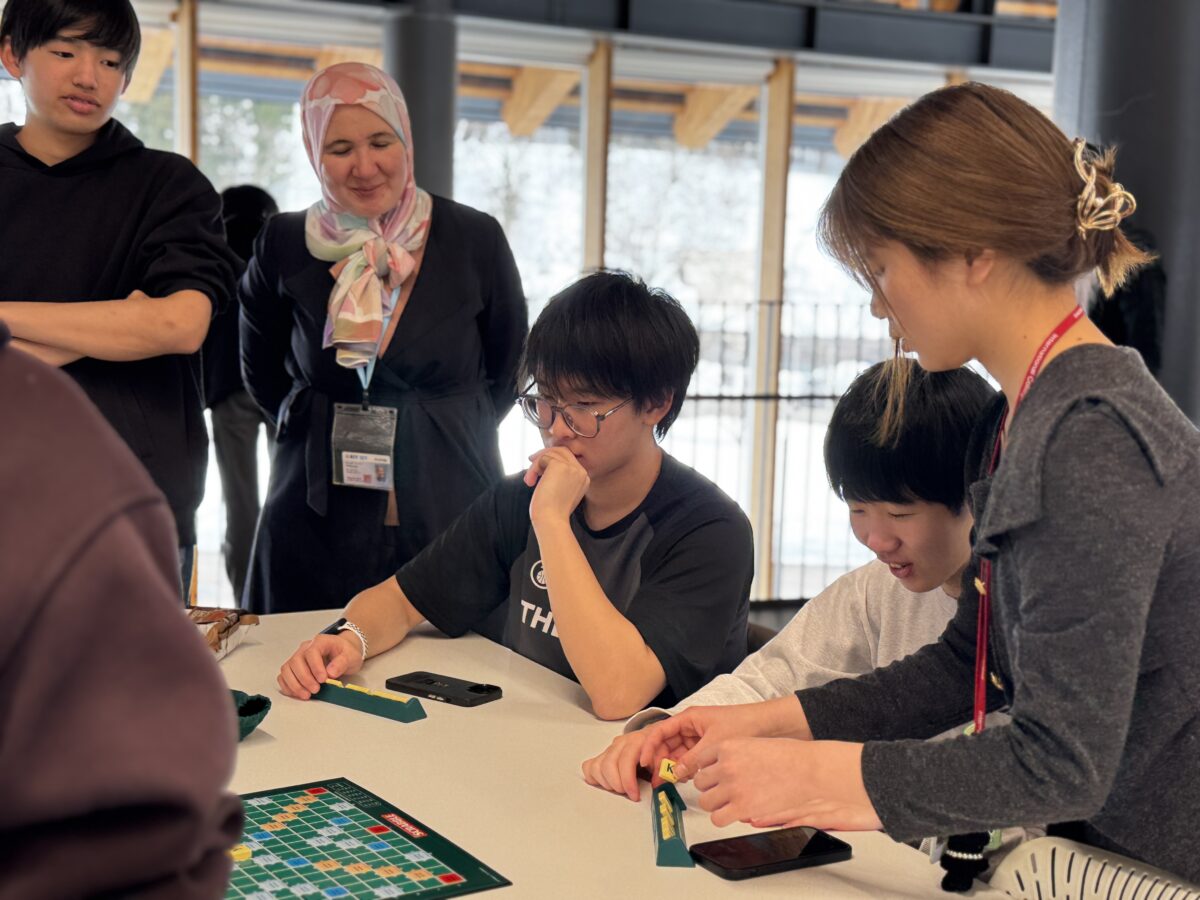
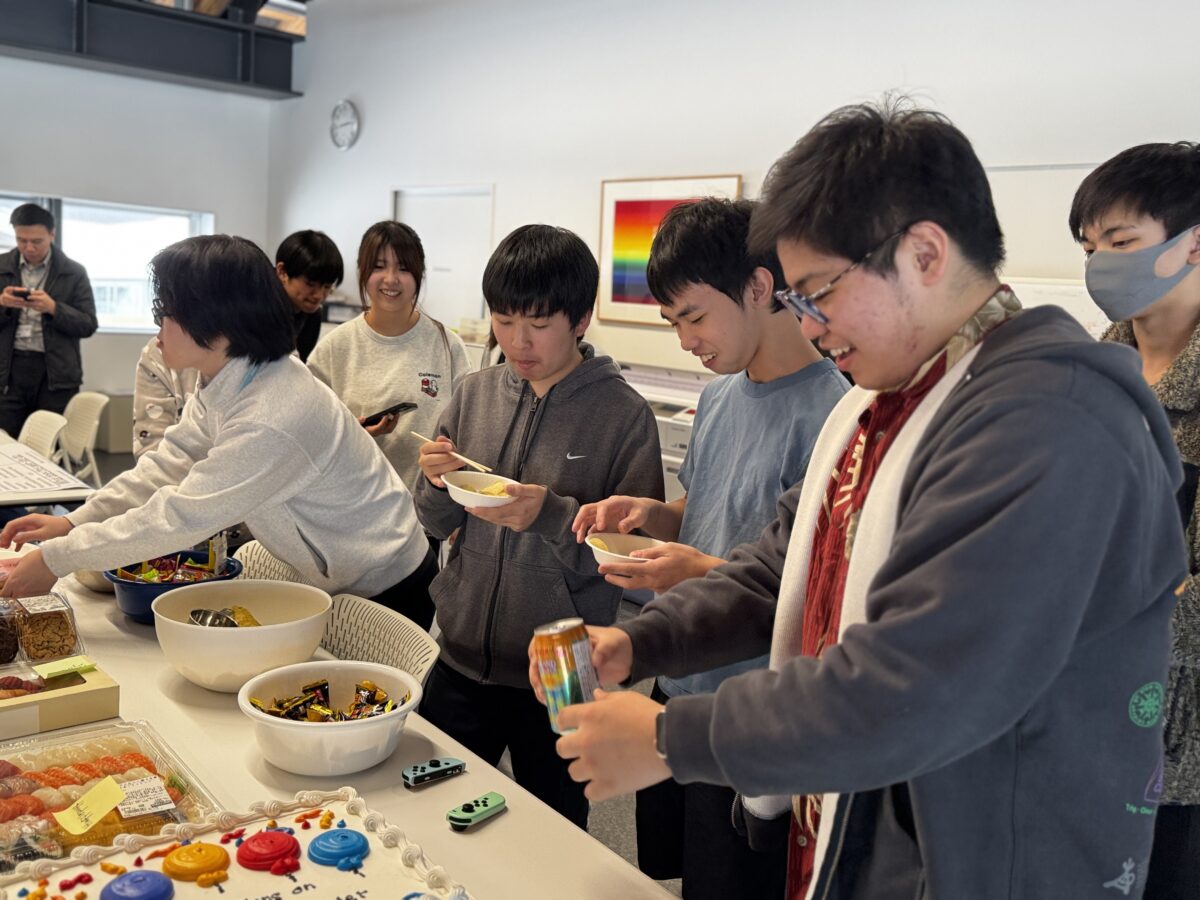
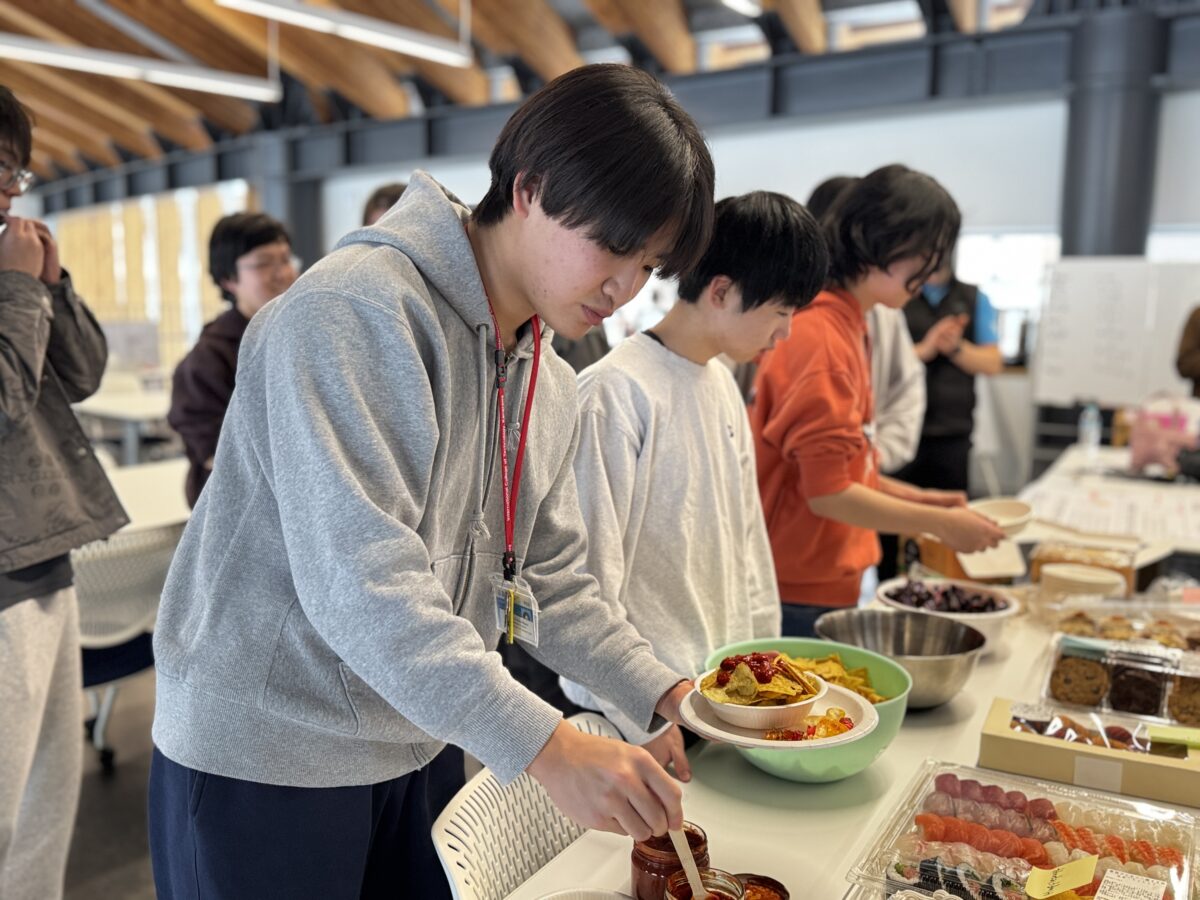
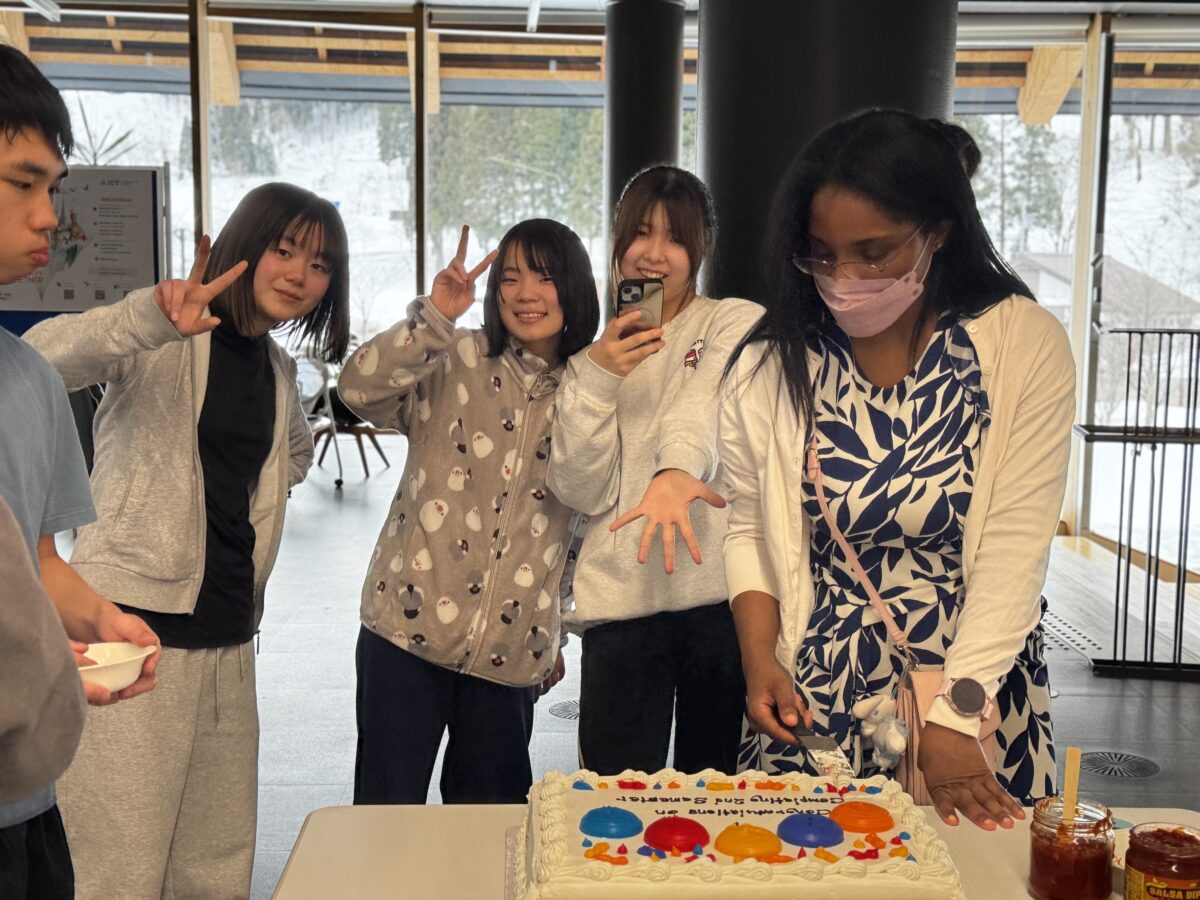
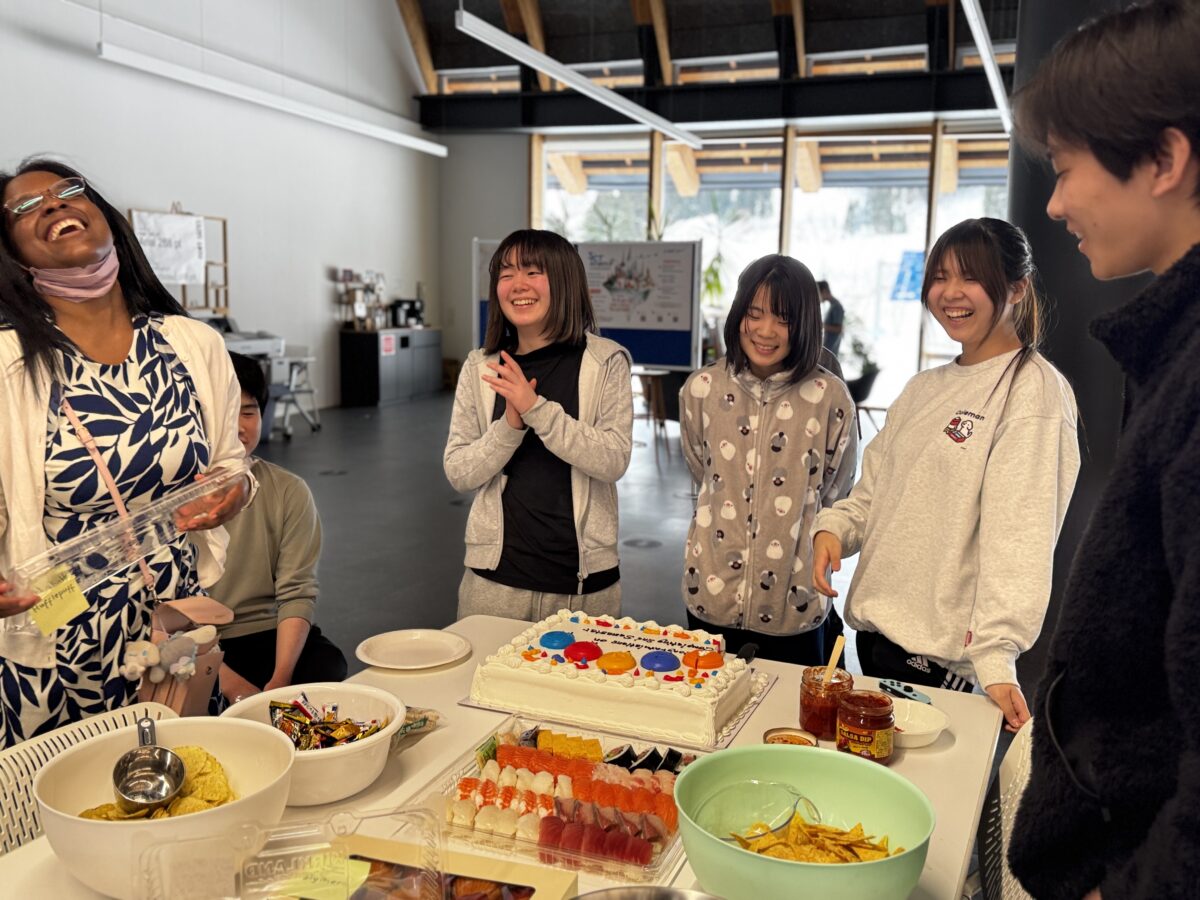
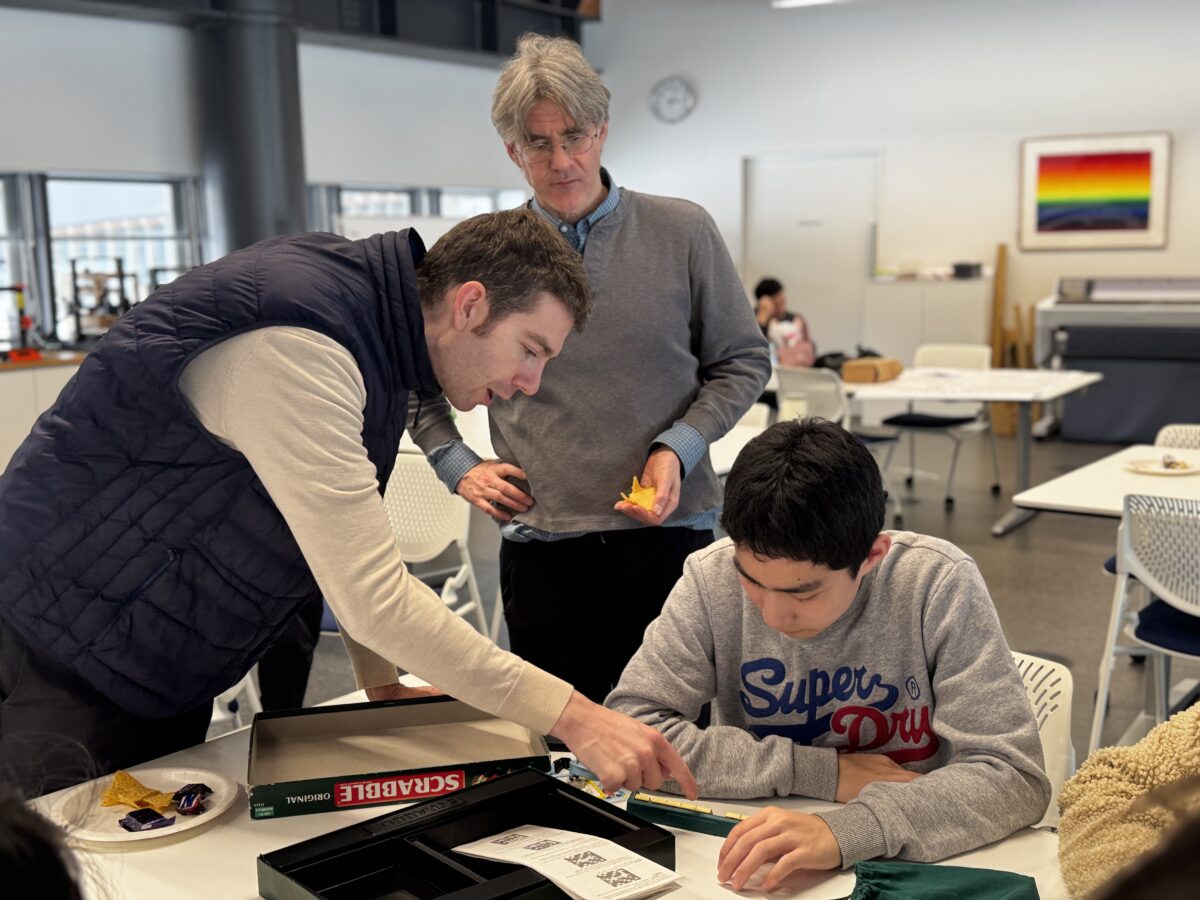
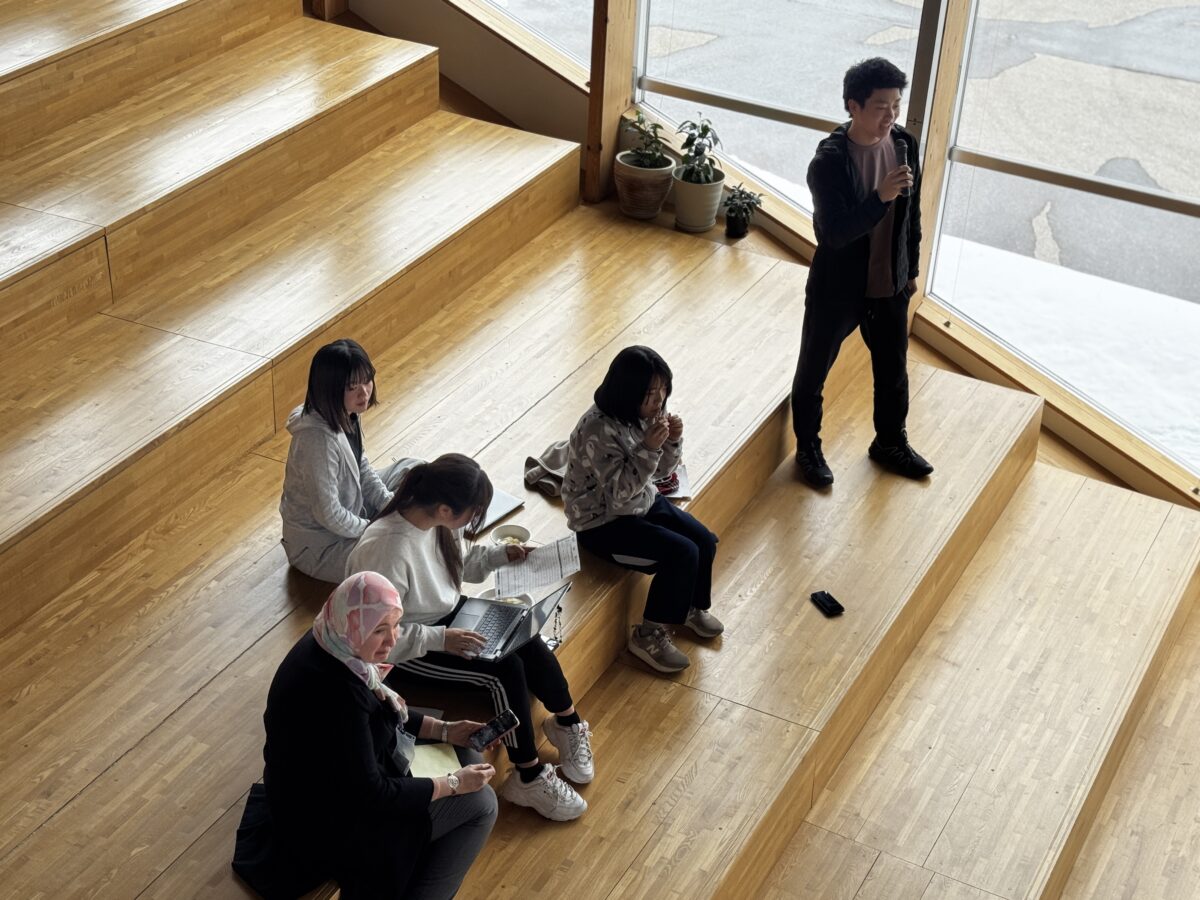
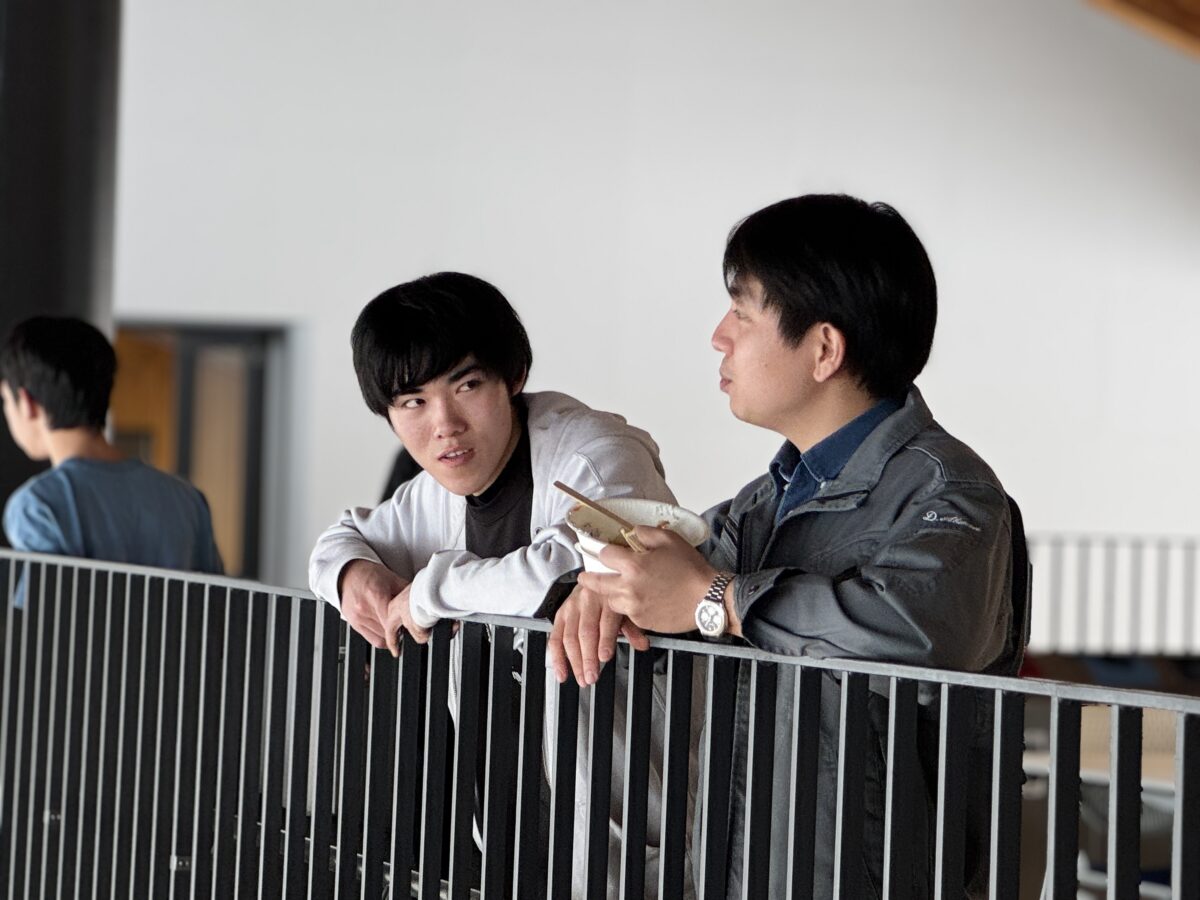
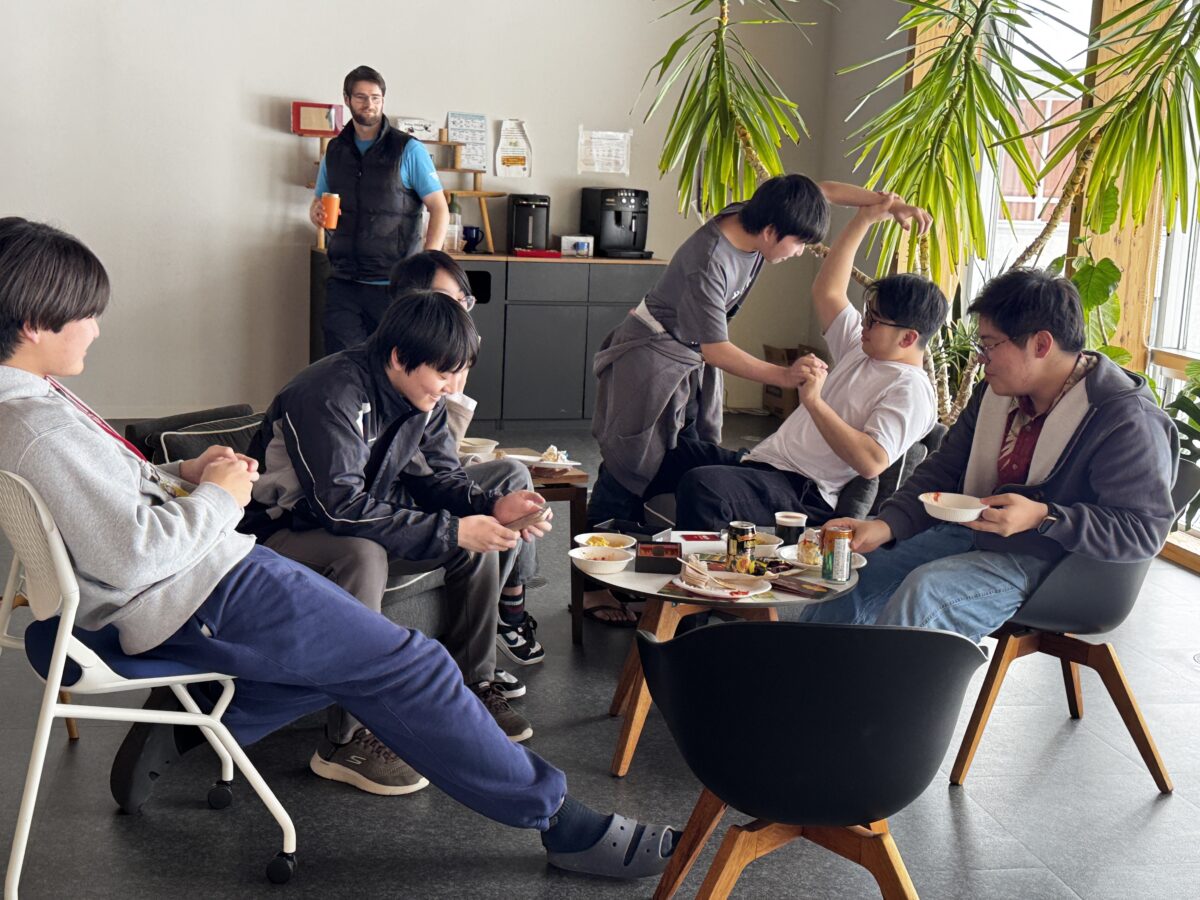
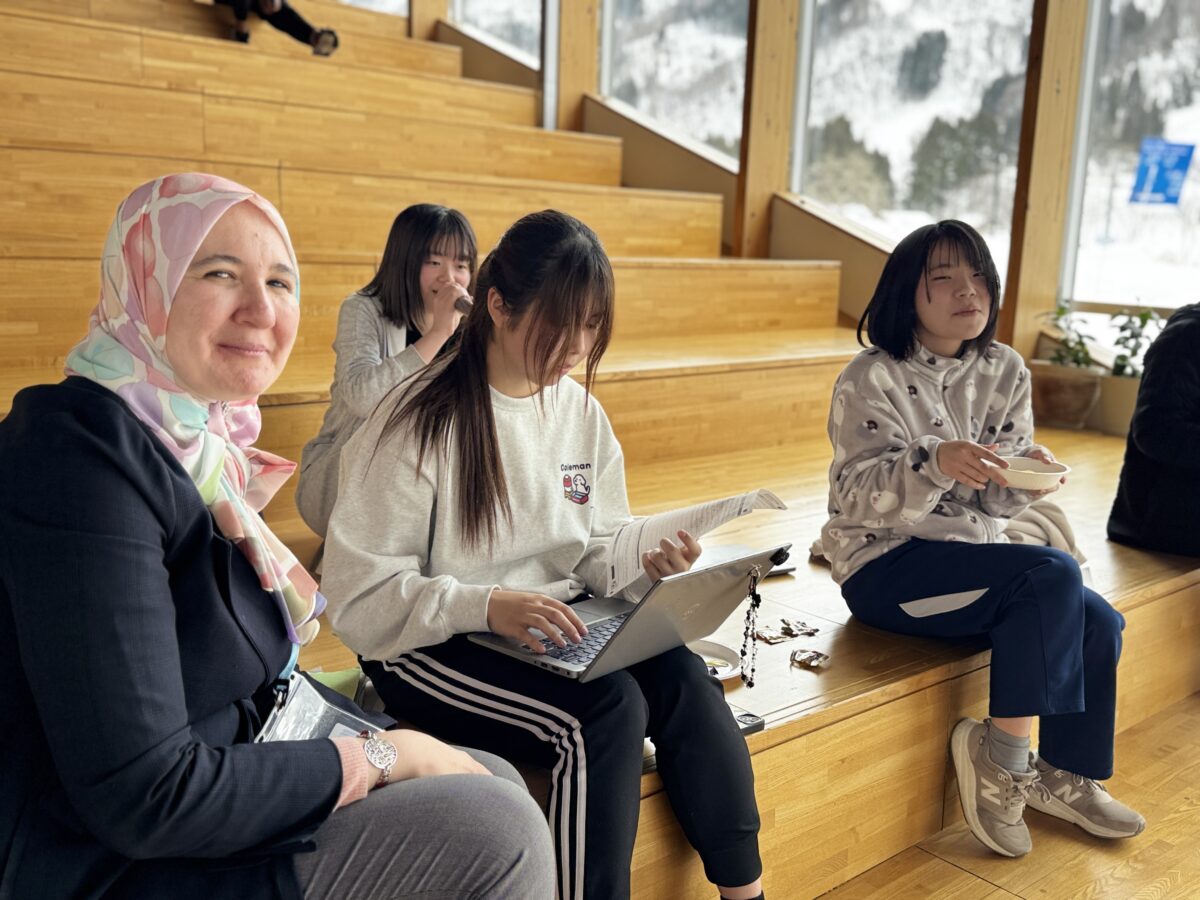
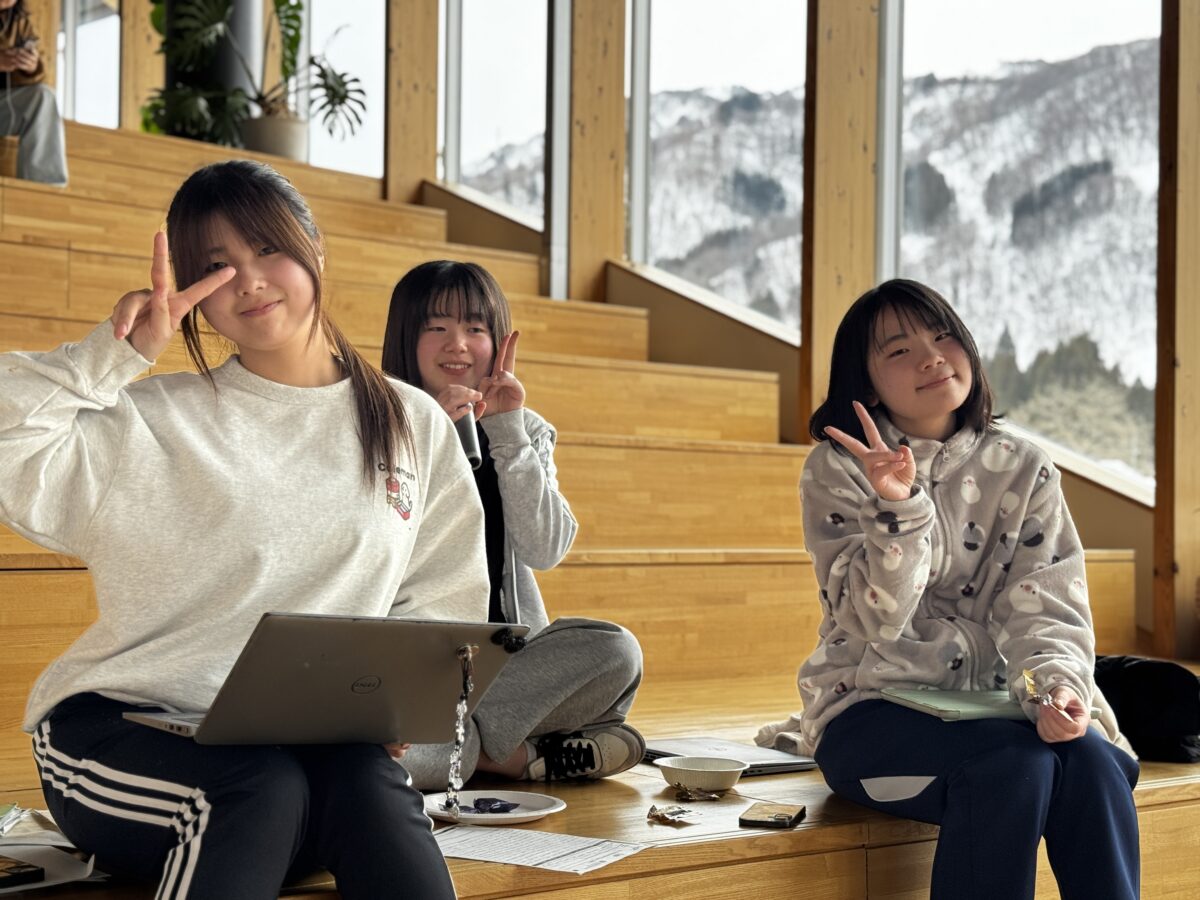
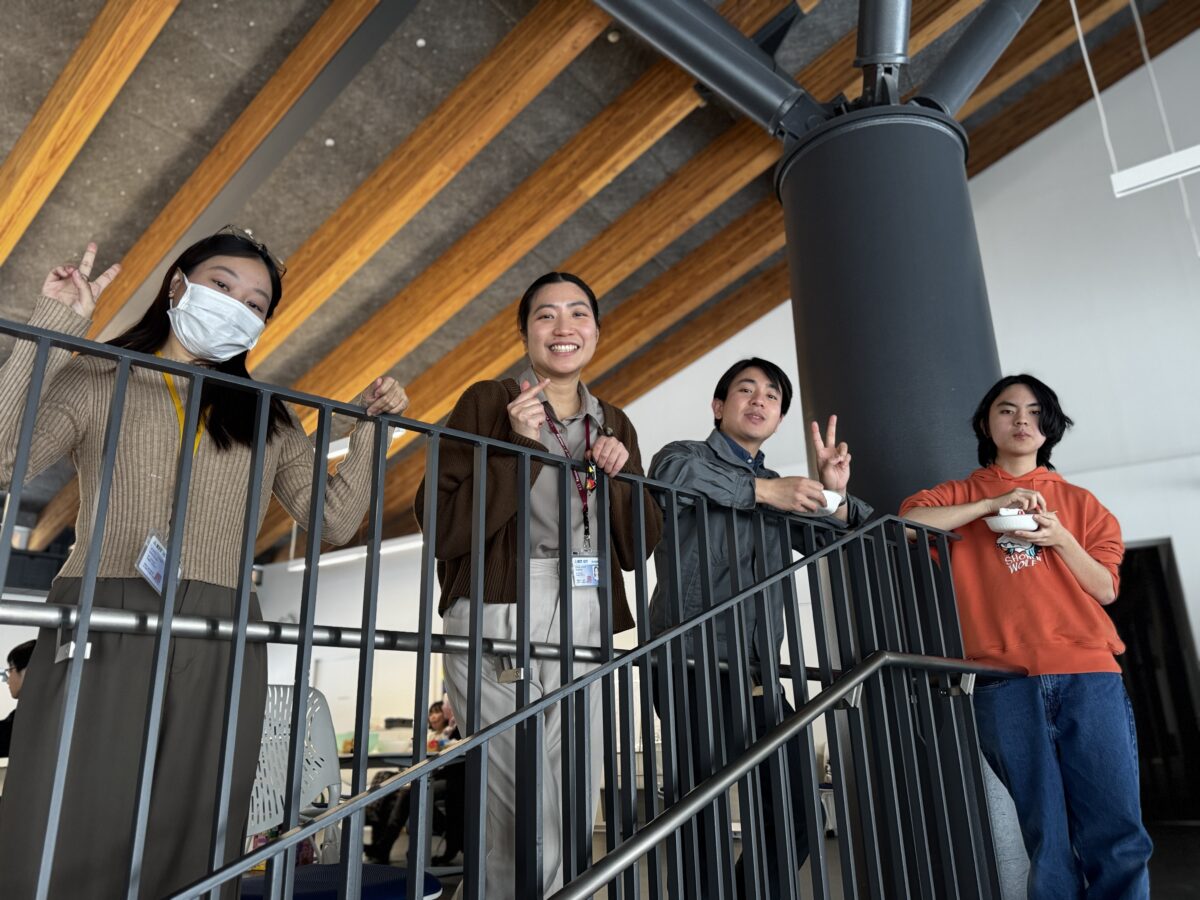
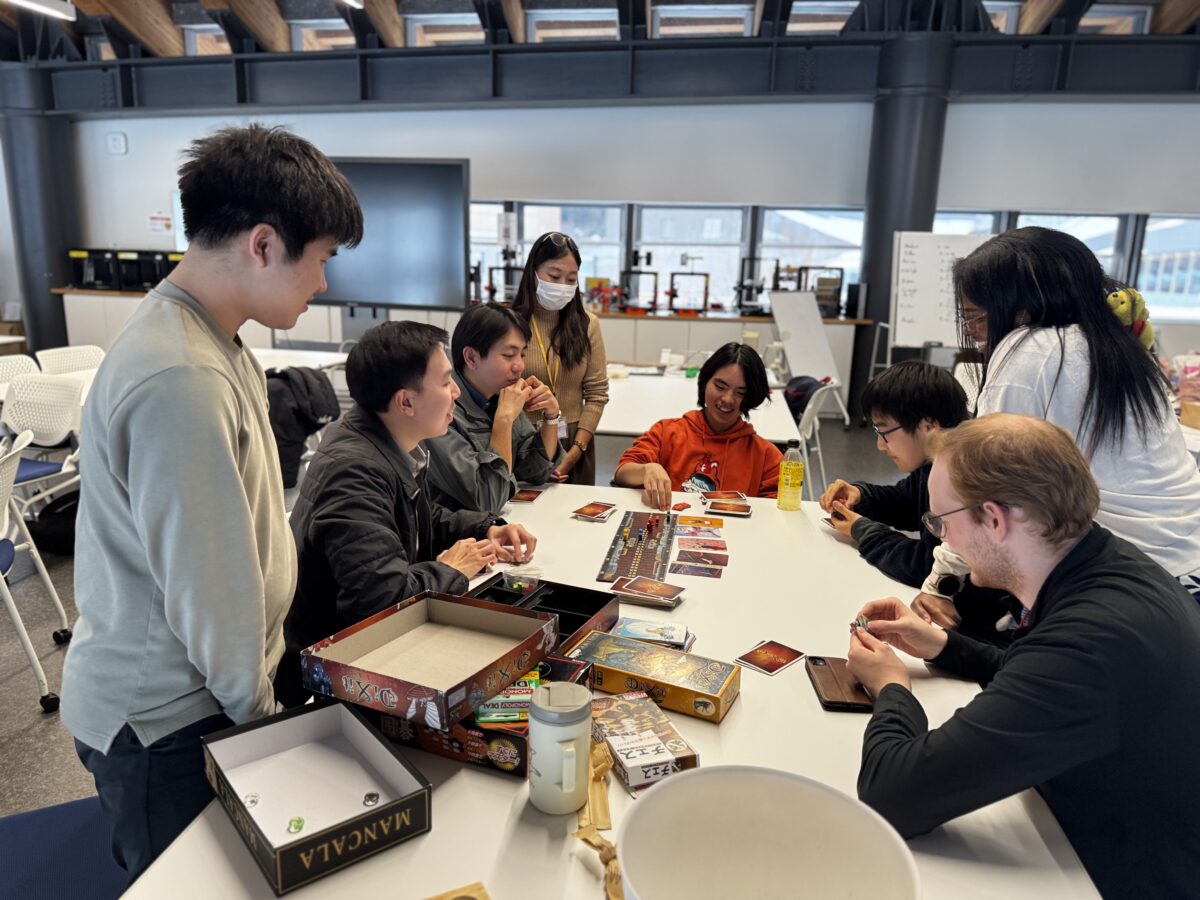
Hello! This is Sade Moore, one of the Learning Mentors at ICT’s Hakusanroku Campus. For this Hakusanroku Journal entry, I want to talk about the End of the Year Party for the students, faculty, and staff at Hakusanroku Campus that the Learning Mentors organized. This year, the party took place on Tuesday, February 10th, 2026. The reason this date was chosen was because, by this time, all of the exams for the second semester had officially concluded and the results passed back. Due to this what better way to celebrate and unwind for both students and teachers, than to have a party where everyone could play board games, eat, and have fun together.
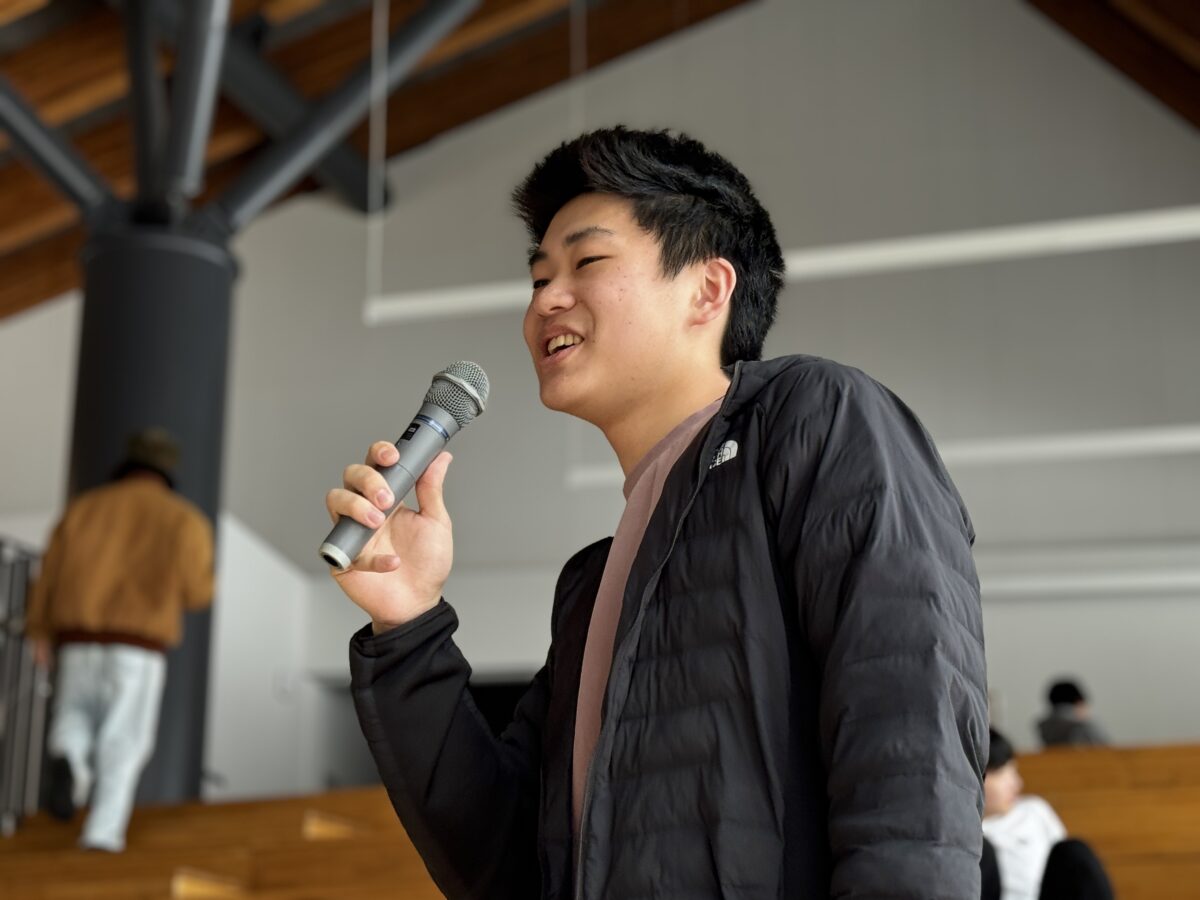
Many of the students were the first to show up and you could feel the excitement coming off of them. The End of the Year Party is one of the events that the students look forward to the most, I think, and this year was no exception. They all swarmed around the snacks and couldn’t wait to eat them. We also brought out plenty of board games and card games for everyone to enjoy and also had students and teachers sing some karaoke songs. It was really nice to see the students having fun with the teachers in a more relaxed setting and seeing everyone smiling and happy after such a stressful exam time.
Also, during the party the winner of the House Cup between the 4 separate Houses received their prize for collecting the most House Points throughout the year. The House System was built in order to build teamwork amongst the students, and they can collect points throughout the semester for completing their homework or assignments, attending workshops that the Learning Mentors conduct for them, cleaning up after themselves and others around campus, amongst other merits. The house with the most points wins at the end of the semester, and each of the 4 Houses wins a special treat for the End of the Year Party. All of the students seemed to really enjoy their special treats.
As the party drew to a close, a lot of the students kept asking if there was more and if they could stay longer because they wanted to play more games and sing more songs. Unfortunately though, with the teachers needing to get off work soon, it wasn’t possible. However, it was a great feeling to know that they enjoyed themselves and to see all of the students and other teachers’ smiling faces made all of the hard work for this semester and the past year at ICT completely worth it!
Sade Moore
 Hello everyone, and thank you for reading the ICT Journal. My name is Sena Takada, and I am a 3rd year student. Until recently, I used to count how many months it had been since I arrived in New Zealand—but now it feels faster to count how many months are left until I return to Japan.
In this journal, I would like to look back on some of my experiences during my study abroad. I hope this gives those who are considering applying to ICT even a small sense of what everyday life here feels like.
First, Dunedin, where we are currently studying, is a small city. However, it has great access to both the ocean and the hills (or mountains), so you can feel close to nature in your daily life. On a sunny day, you can go for a run on the beach and then enjoy a panoramic view of Dunedin from a scenic lookout. One of the best things about this city is that even without doing anything “touristy,” you can still find rich and beautiful scenery as part of ordinary life.
While living these kinds of days, if you travel just a little farther, you can also encounter the spectacular landscapes that represent the South Island. Around August 2025, I visited Lake Tekapo, one of the major tourist spots on the South Island, with my family who had come from Japan. As soon as we arrived, the area felt wrapped in silence and crystal-clear air. There are several restaurants and food trucks around the lake, so you can enjoy the scenery along with something to eat. We bought fish and chips from a particularly well-reviewed food truck, and it was delicious. The golden fish and chips looked perfect against the lake’s surface, whose colors kept changing from moment to moment. You can see stars from my homestay as well, but the starlit sky at Lake Tekapo—and even the stars seen from home—were both so beautiful that they were beyond comparison. It truly felt like a sky full of stars. (A perfect score ⭐)
As a side note, I use an iPhone 16 Pro to take photos of the stars. From a beginner’s perspective, the image quality is more than enough. Also, depending on the season, it seems that you may be able to see the aurora from Lake Tekapo, so I recommend aiming for that as well.
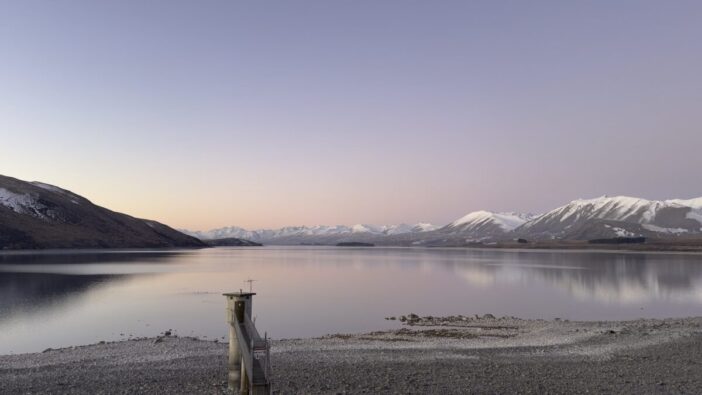
Evening view of Lake TekapoEvening view of Lake Tekapo
-

Night sky over Lake Tekapo レイク・テカポの星空
-

-

Fish and chipsフィッシュ・アンド・チップス

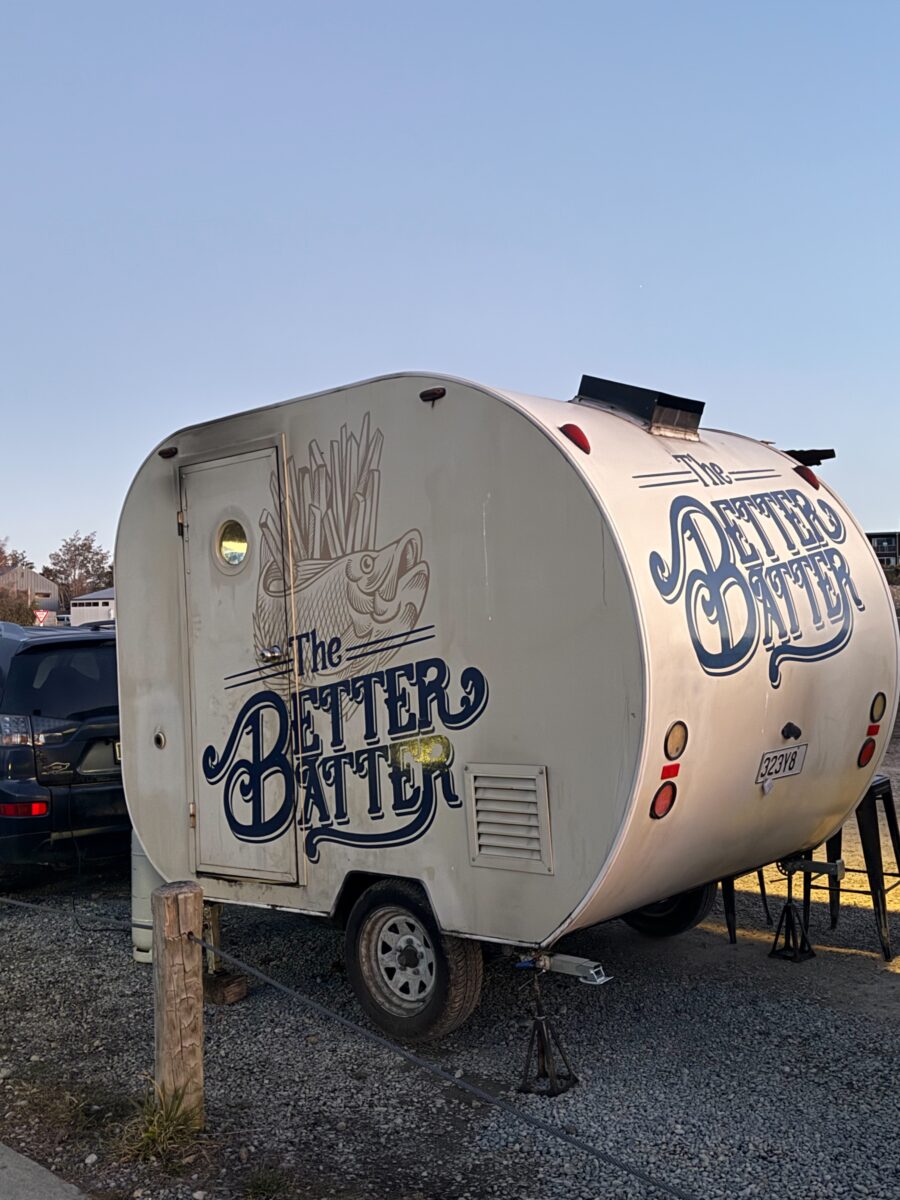

Lake Tekapo Petting Zoo
Next, many people associate New Zealand with sheep, and it didn’t take long after arriving at Dunedin Airport for me to understand why. When you drive around, you can see sheep scattered across the grasslands, and sometimes they even stare back at you. However, even though sheep stand out the most, this country is rich in biodiversity and is home to many different kinds of animals. In most households, dogs are welcomed as family members, cats are often allowed to roam freely, and in some gardens, wild hedgehogs relax as if they actually live there. That’s the kind of place it is.
Sleeping hedgehog in the garden, startled by children
By the end of January, once I had gotten used to this lifestyle, I experienced a farm stay in a place called Mosgiel, about a 20-minute drive from Dunedin. A farm stay is a style of travel where you stay on a farm and experience the daily life of the people who live and work there. It was full of “non everyday” experiences that you could never have in Japan. Since I was born and raised in Tokyo, I felt a strong contrast between what I had grown up with and what I was experiencing there.
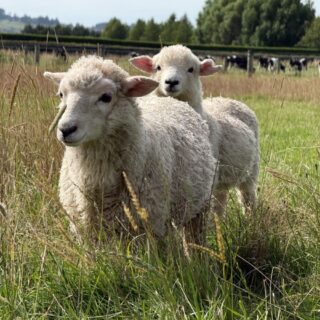
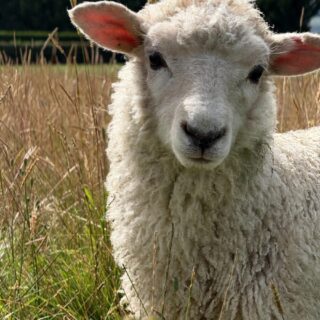
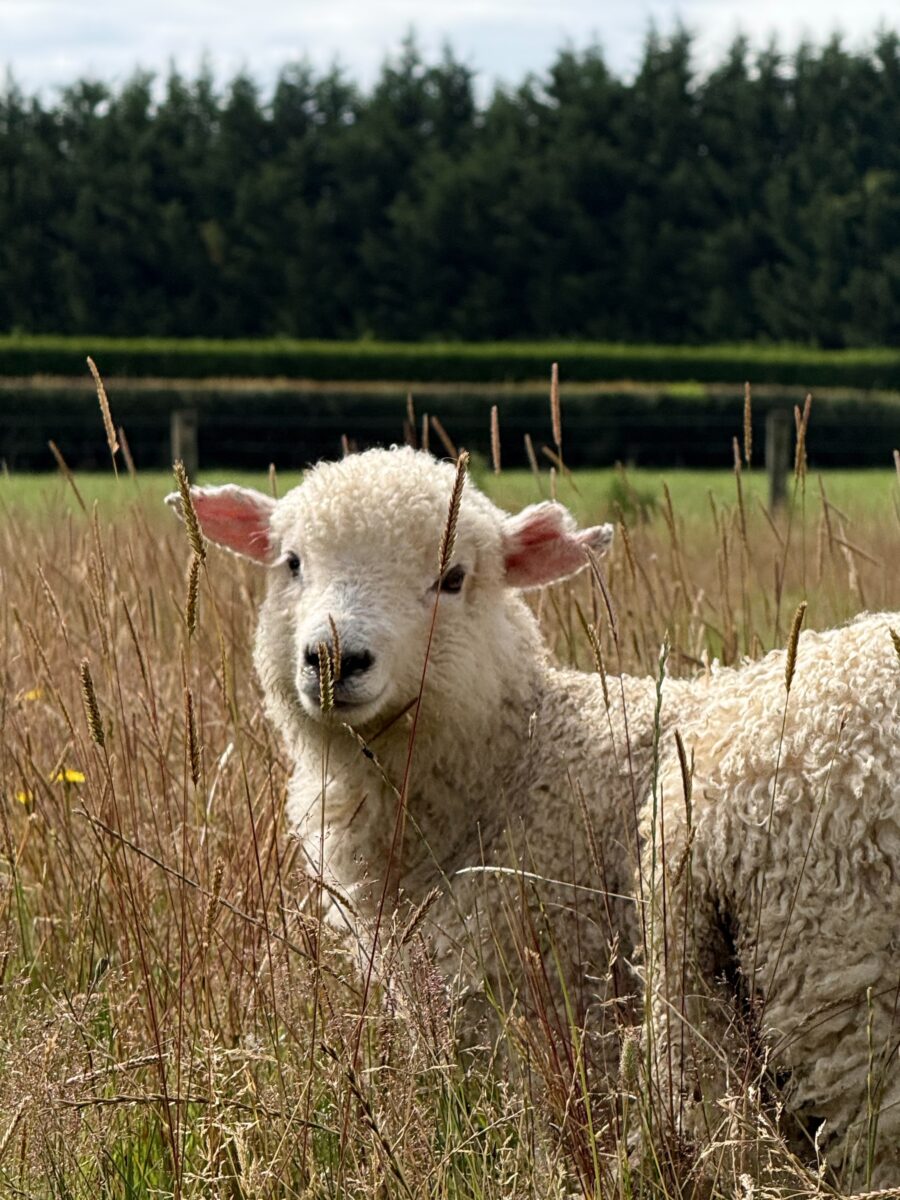
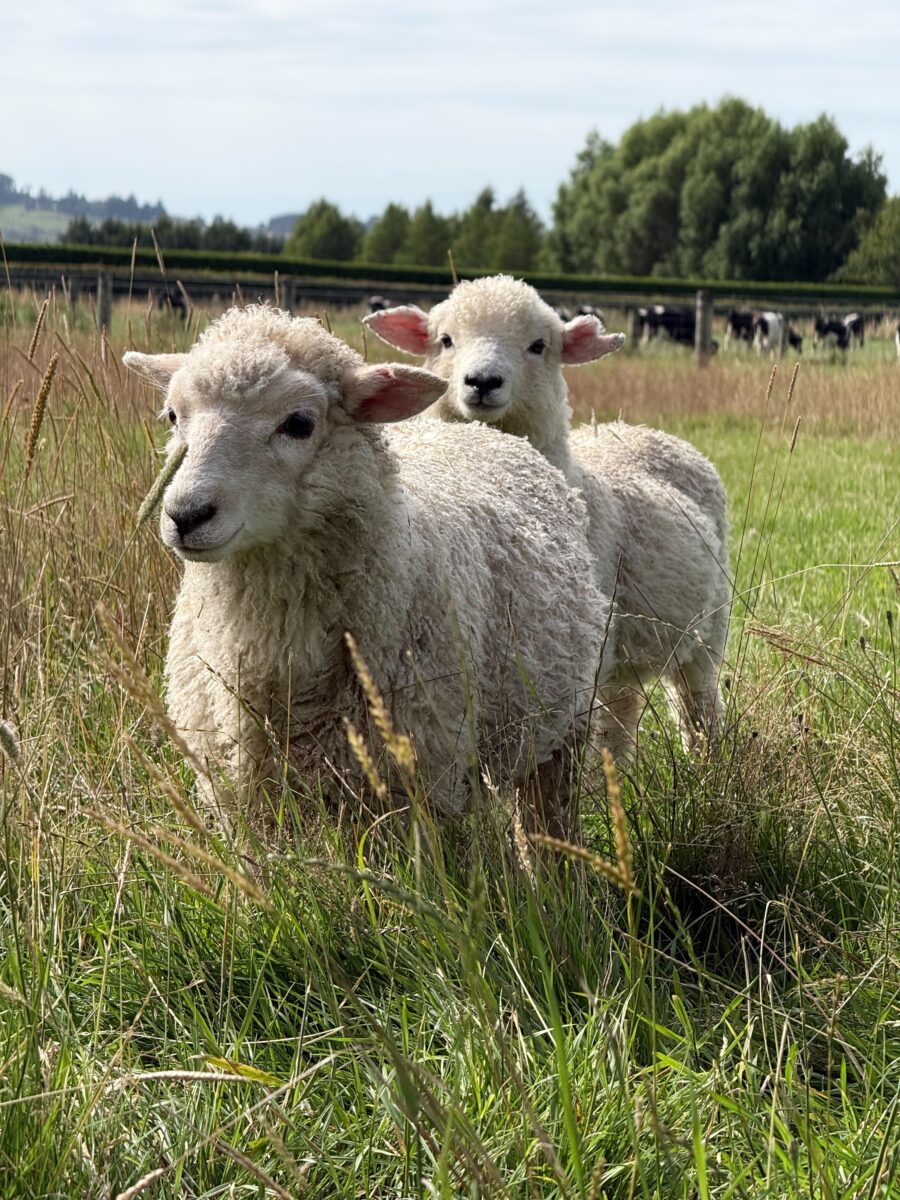
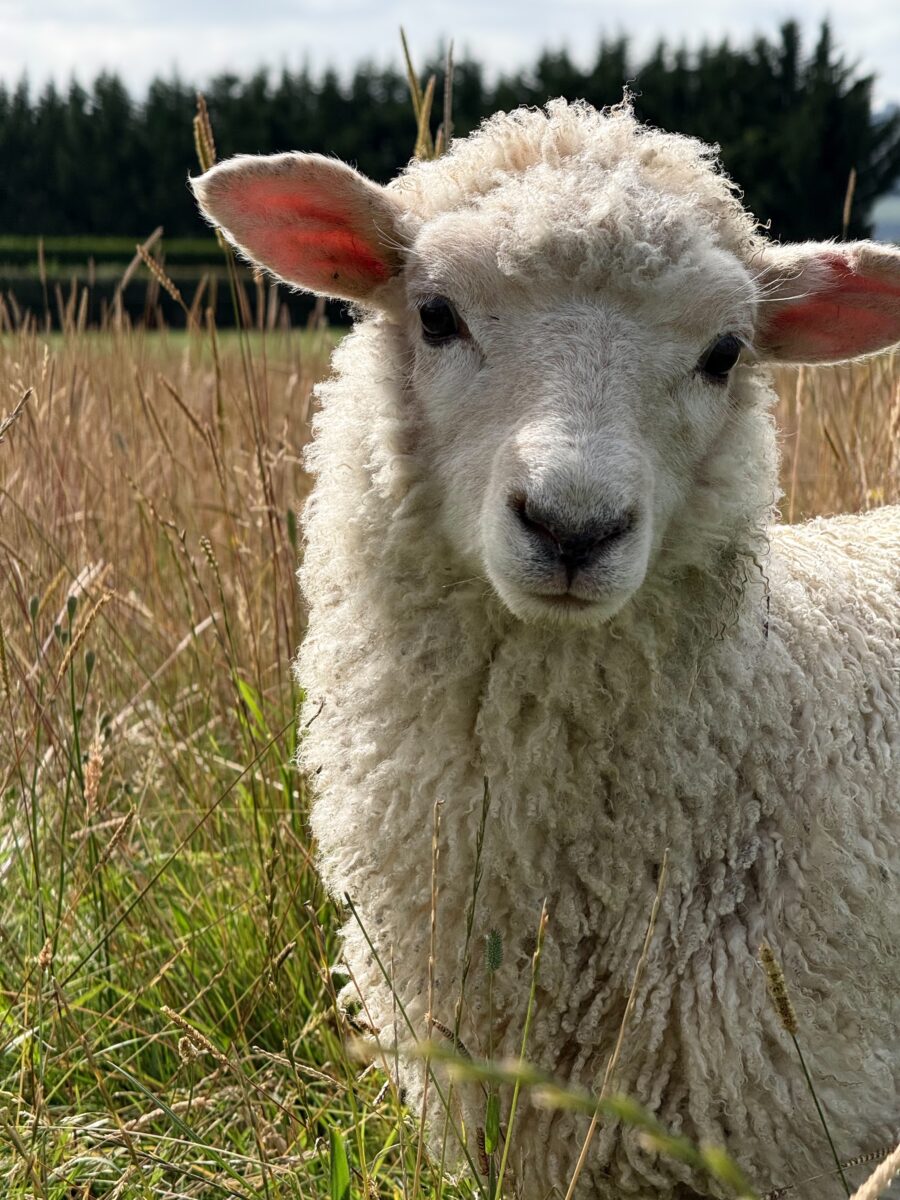
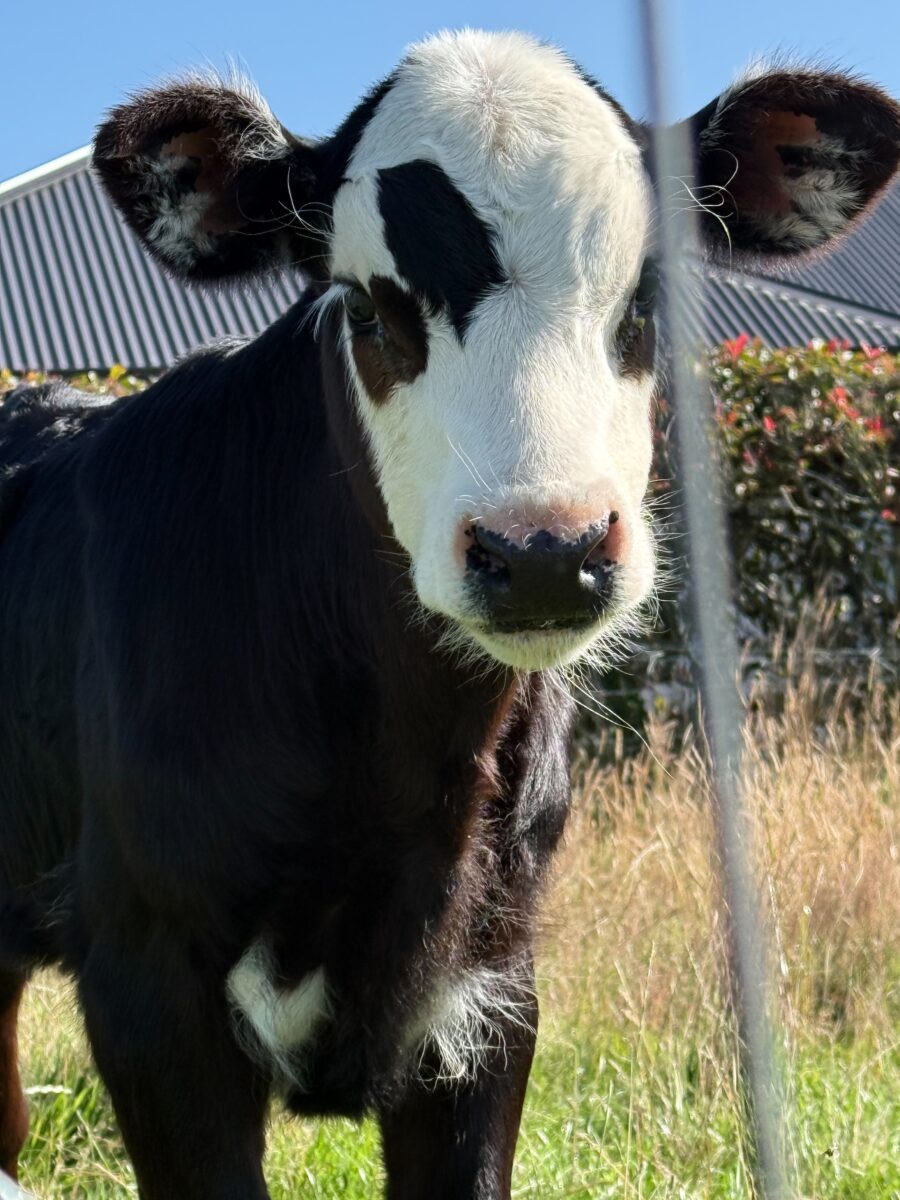
My mornings began with the view from my bed—sheep, cows, and even an “invading” rabbit in the distance. I will never forget this experience. My happiness level was so high that returning to normal society felt difficult. Across the vast farm, the deep green pasture seemed to carry a concentrated scent of grass and soil. Luckily, the owner let us observe the work they normally do, and we rode a tractor out to where the cows were. I also got to see a sheepdog working up close for the first time, which left a strong impression on me. From the way the dog responded faithfully to the owner’s signals, I could feel the accumulation of daily training.
-
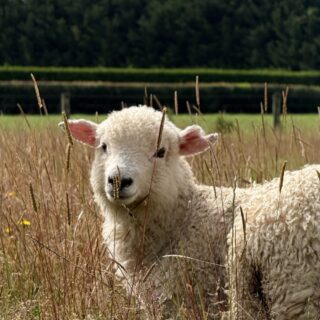
Sheep on the farm牧場の羊
-
-
-

Cows on the farm牧場の牛
-

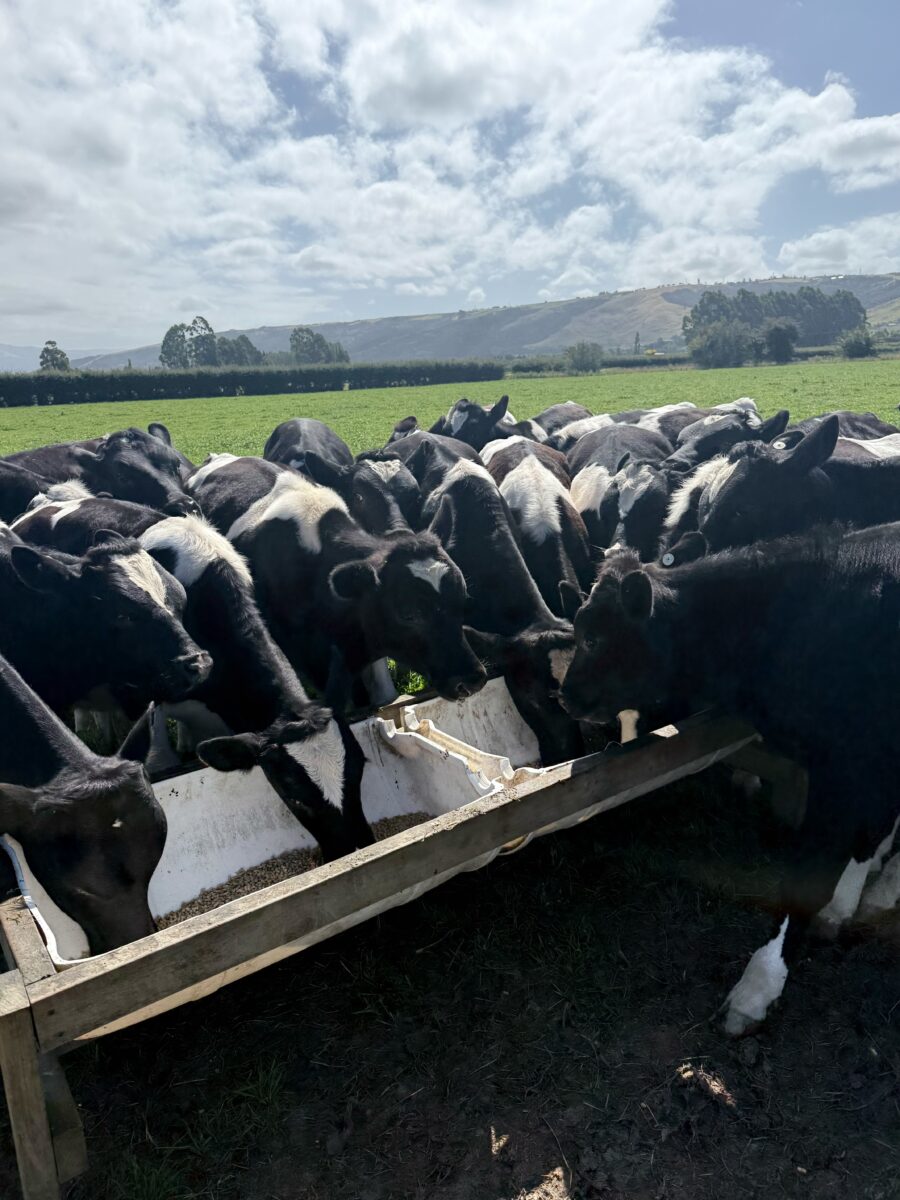
Suu the sheepdog and the cows
Suu gathering the sheep
Then, about an hour’s walk from where we stayed—past a steep hillside—there was a dog daycare facility for temporary pet boarding, so I went there out of curiosity to ask about it. It was a spacious property where about fifteen dogs could run around freely. The owner offered temporary care while owners were at work, and they were very friendly. The dogs’ playground felt like an amusement park, and honestly, it felt like a dream if I could come and play there every day. I felt like I became friends with many of the dogs.
I had heard that there is a kind of “hierarchy” in dog society, and I was thrilled to see an alpha leading the group up close. Since I rarely see so many dogs (especially large dogs) gathered together, it was fascinating. It also seemed that they were protecting a fawn that had been separated from its mother, and the little ecosystem inside the enclosure felt like its own miniature world.


Finally, one essential part of studying abroad is the host family. Depending on the family, they may even take you on trips by car. My former host family (I had to change families due to circumstances), who are Fijian, once woke me up at 3:00 a.m. and drove me from Dunedin to Nelson at the very top of the South Island (roughly equivalent to the distance from Kanazawa to Kagoshima in Japan). They were the kind of wild people who would throw pear cores out the car window while yelling, “Compost!!” They were intense, but it is a great memory. I had the chance to visit around ten different homes, and because daily life can be completely different depending on the place and the people, I think it strengthened me mentally.
In this way, I believe one of the best parts of studying abroad is experiencing cultures that you cannot truly taste in Japan. Whether good or bad, I was given the chance to re-examine my own assumptions and fixed ideas. It may be a good idea to find something you can become deeply passionate about while you are still in Japan.
This became quite long, but thank you very much for reading.
Sena Takada
-

Aurora seen from my house家から見えたオーロラ
-

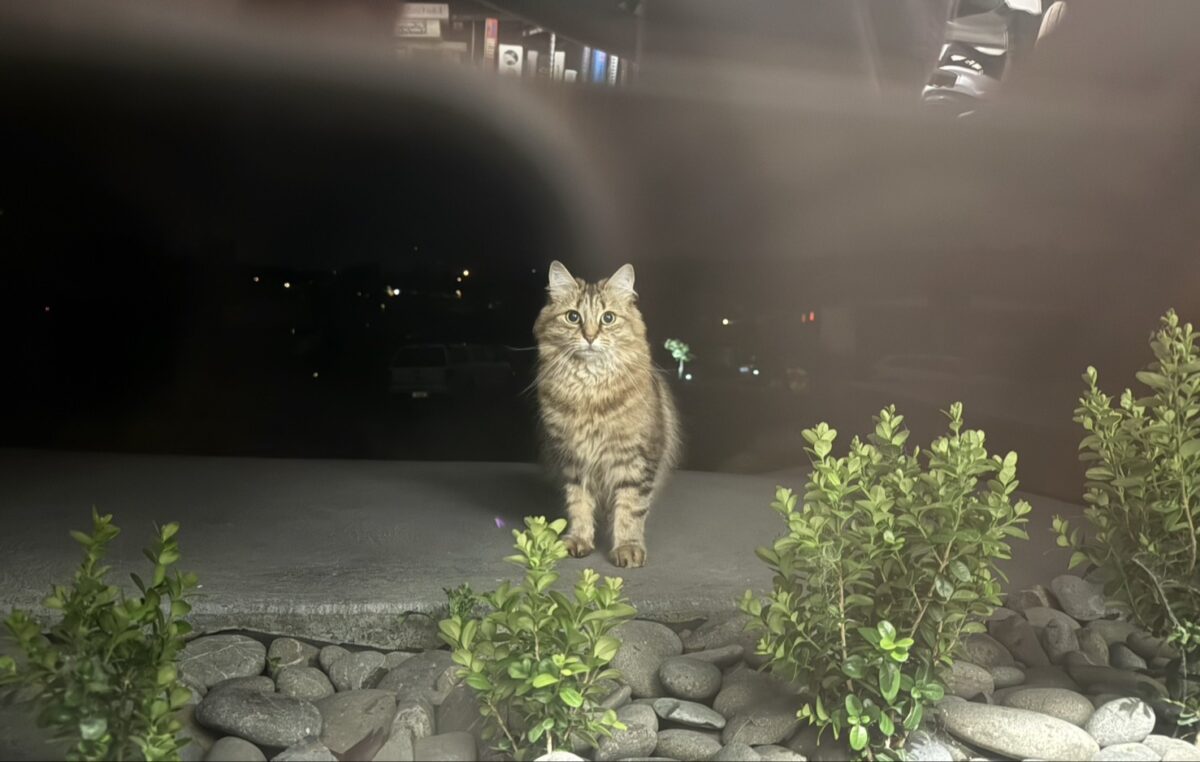
A cat who came to peek作業をしていると覗きに来た猫
-

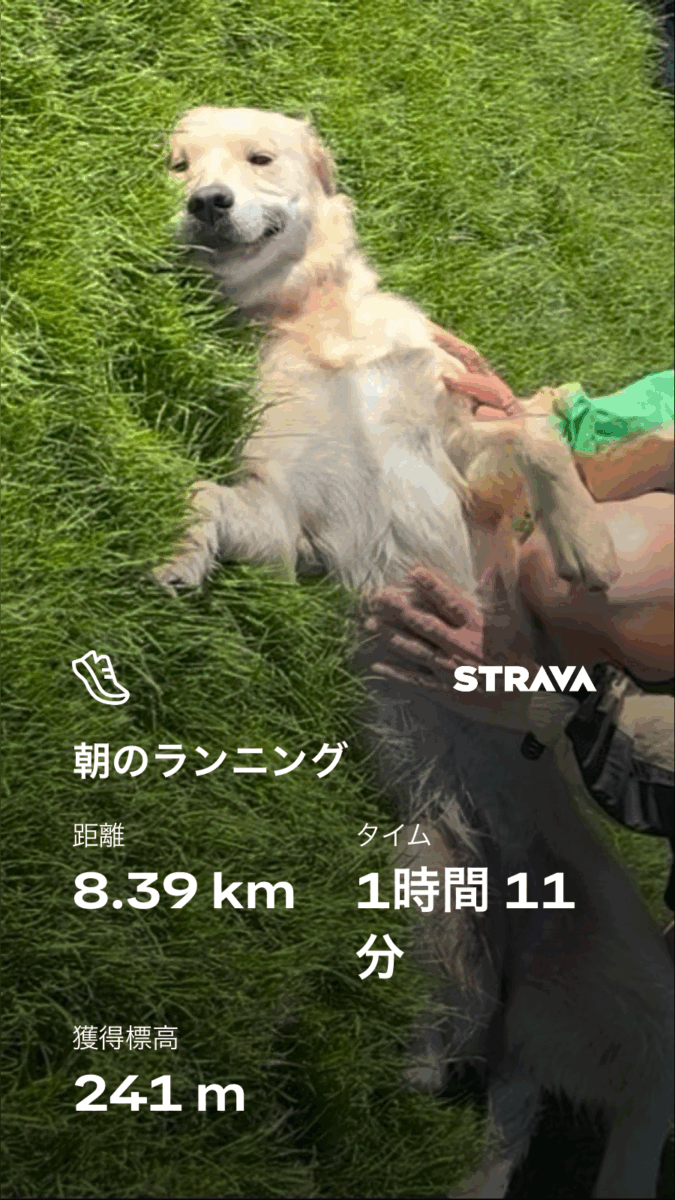
-
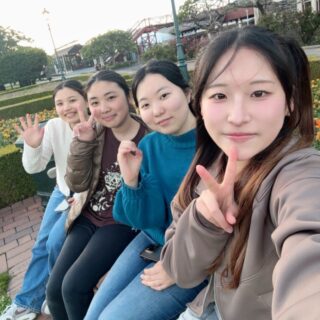
With friends before New Year’s Eve年越し前に友人と共に
-

The southernmost Starbucks in the world世界最南端のスターバックス
-
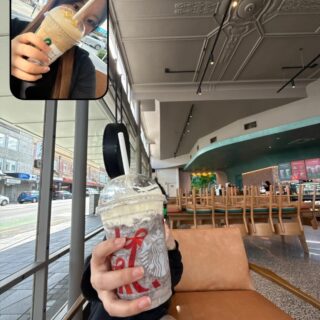
Starbucks in central Dunedinダニーデン中心地のスターバックス
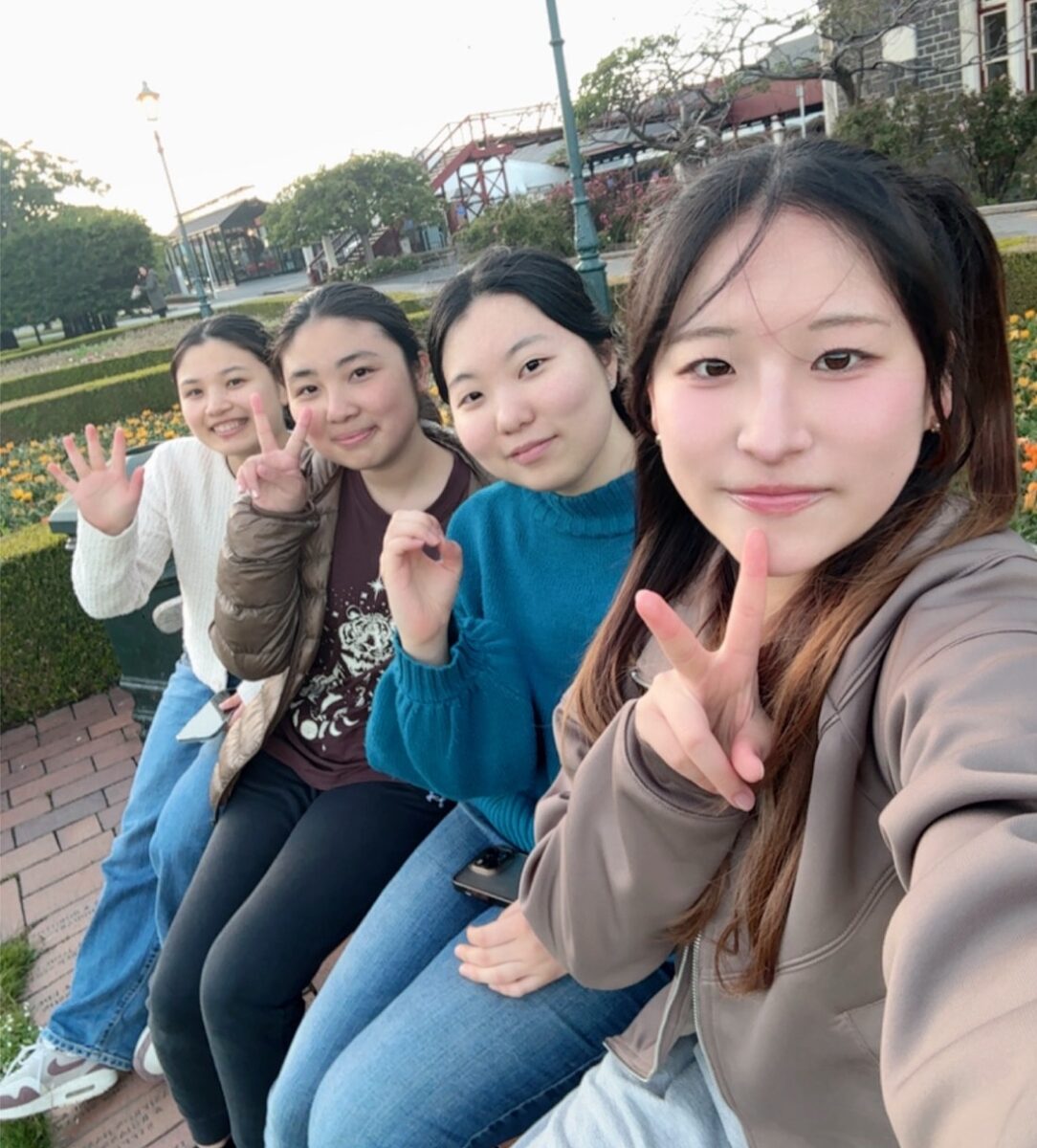
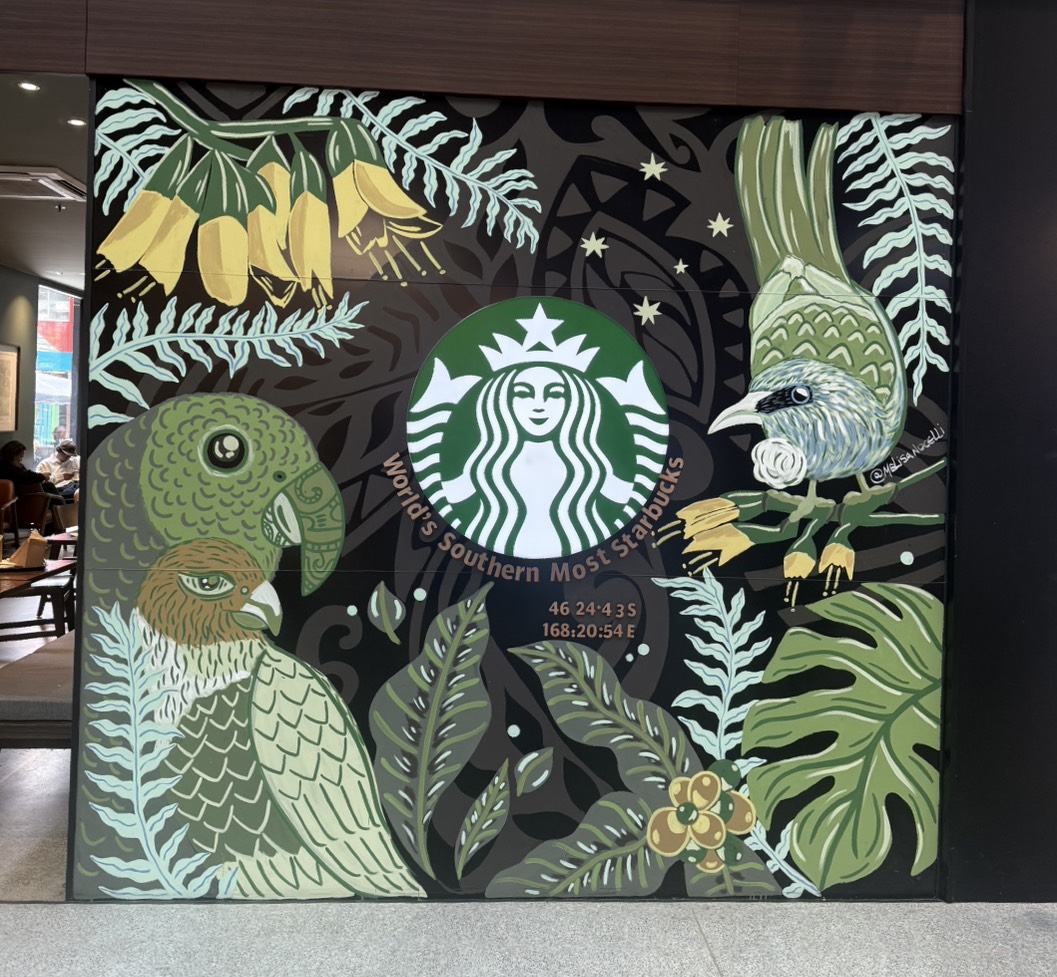
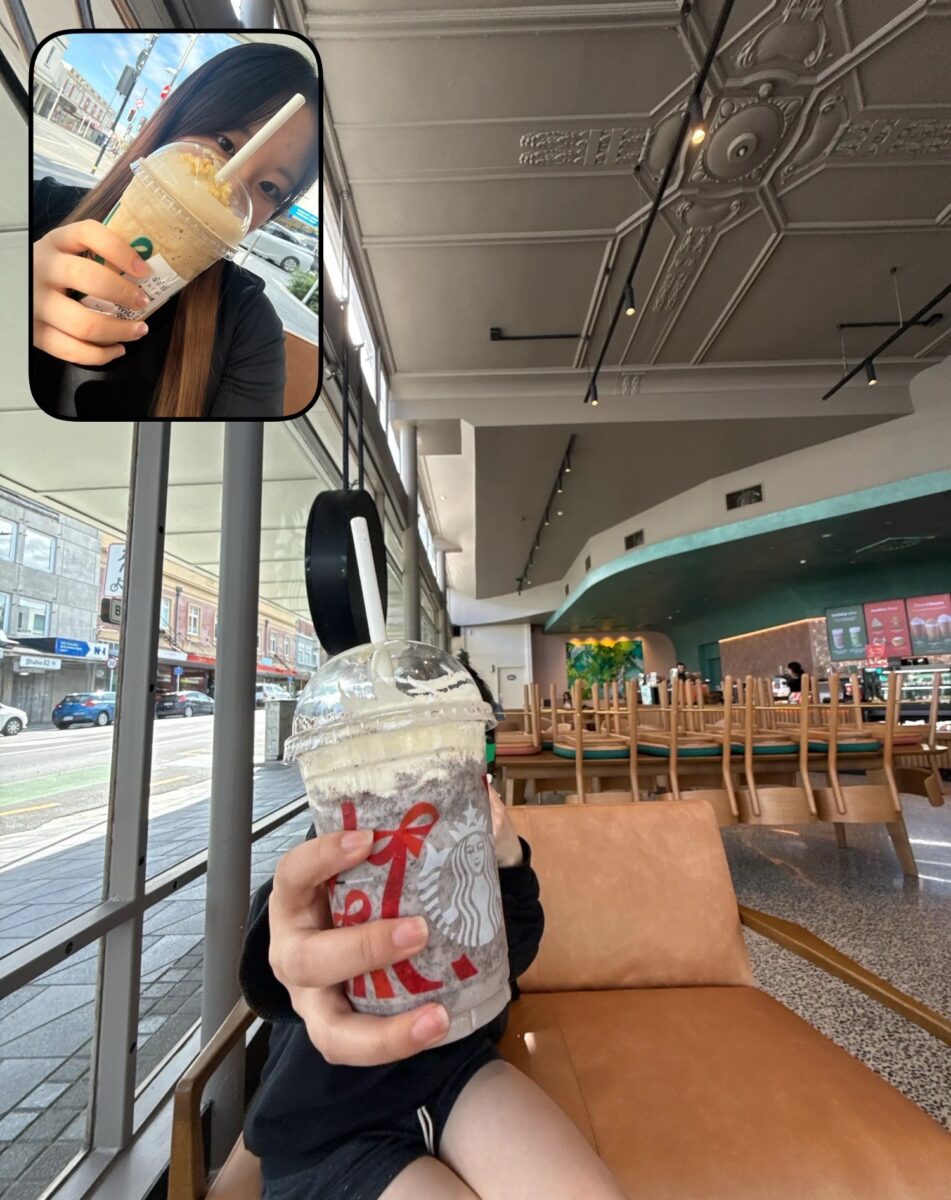
-
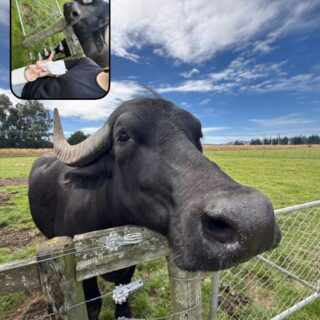
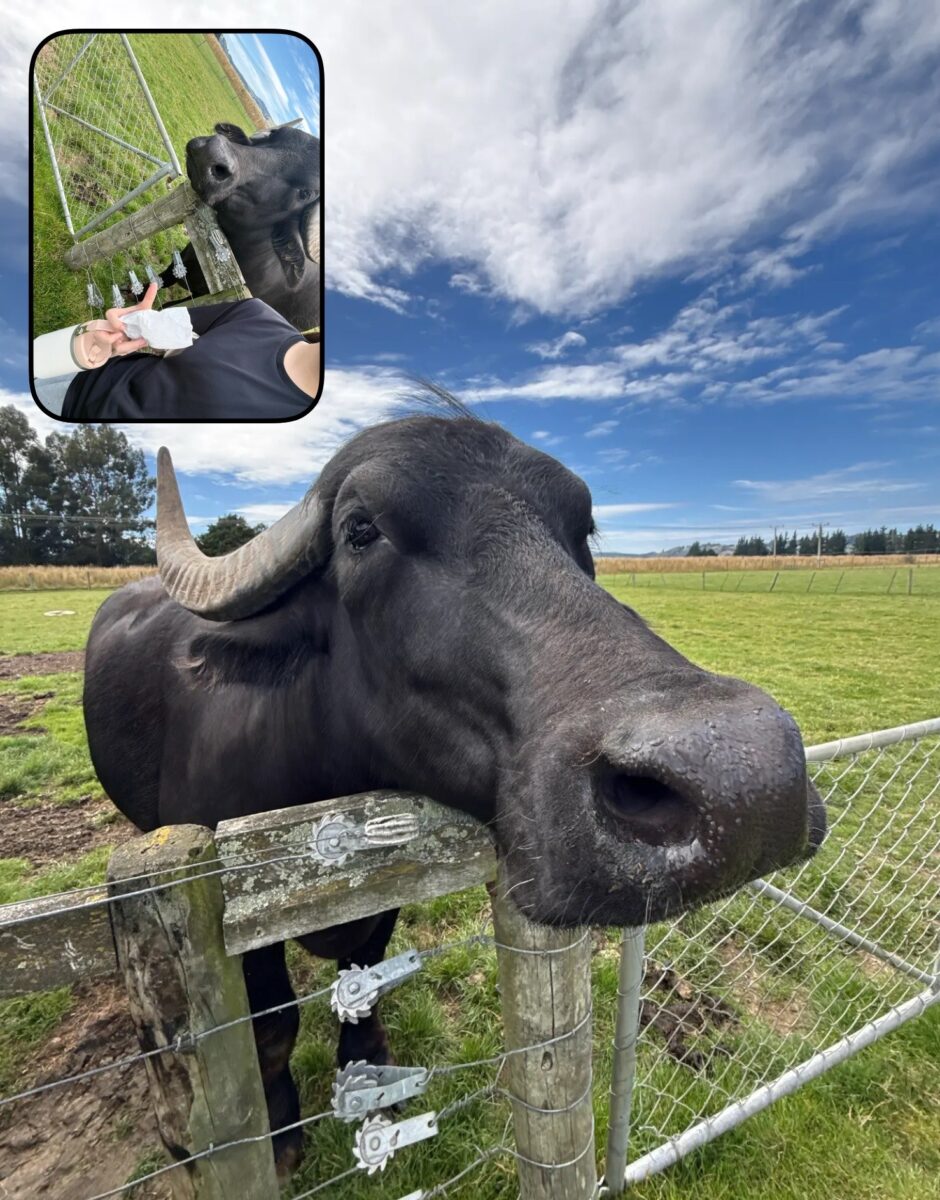
At The Animal Ark Dunedin in Mosgielモスギールにある「アニマル・アーク・ダニーデン」ふれあい動物園にて
-
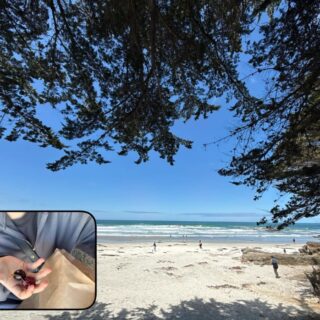
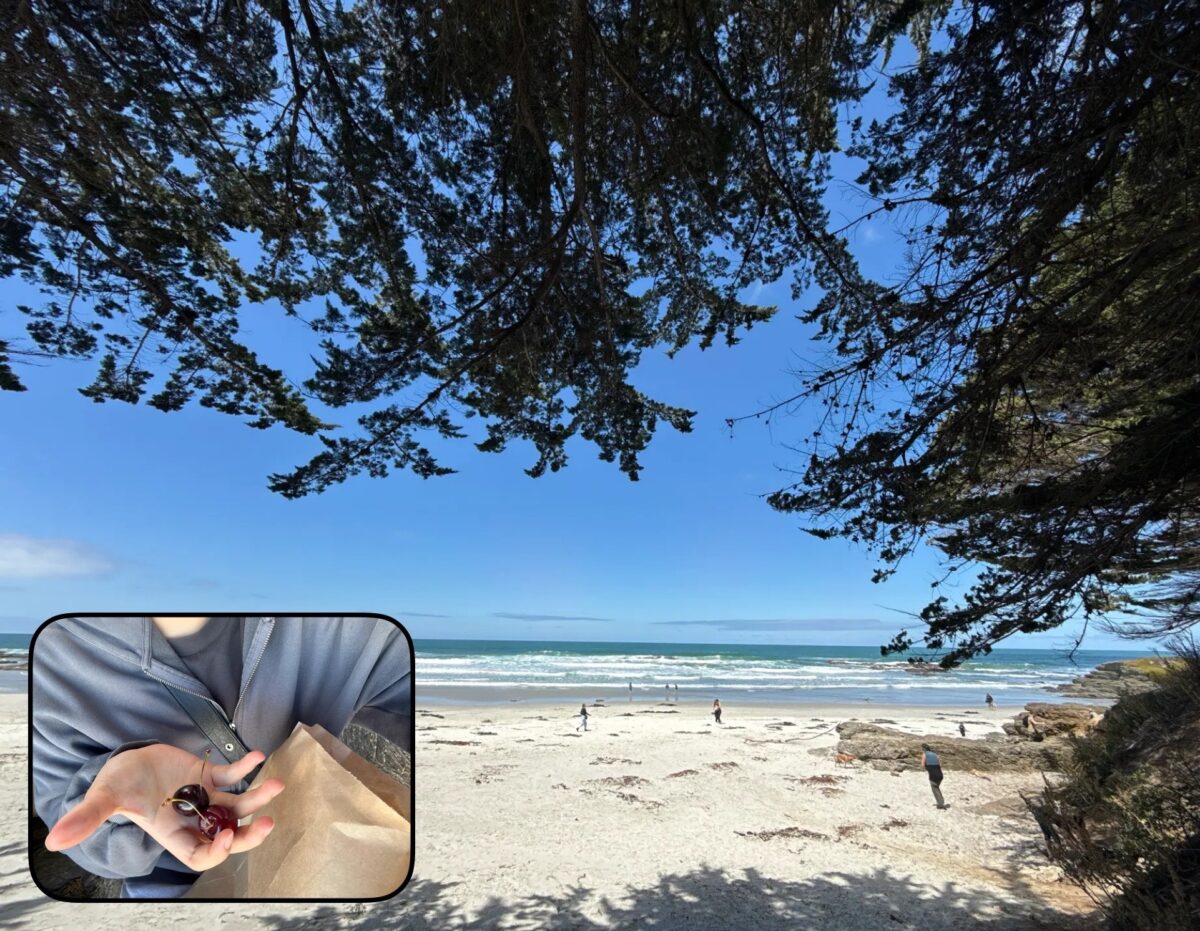
Brighton Beach and New Zealand–grown ブライトンビーチとニュージーランド産チェリー
 Hello, this is Yuri Makada from the Hakusanroku Office. Today, I would like to write about the snowball fights and other winter activities held in the Health and Physical Education course for the 1st and 2nd year students.
From Saturday, January 24th to Sunday, January 25th, 2026, a strong cold air mass covered Ishikawa Prefecture, including Hakusan City, resulting in a significant amount of snowfall within a short period. It was a “doka-yuki” a sudden, heavy snowfall, turning the entire area into a beautiful white landscape.
1st Year Students’ Snowball Fight
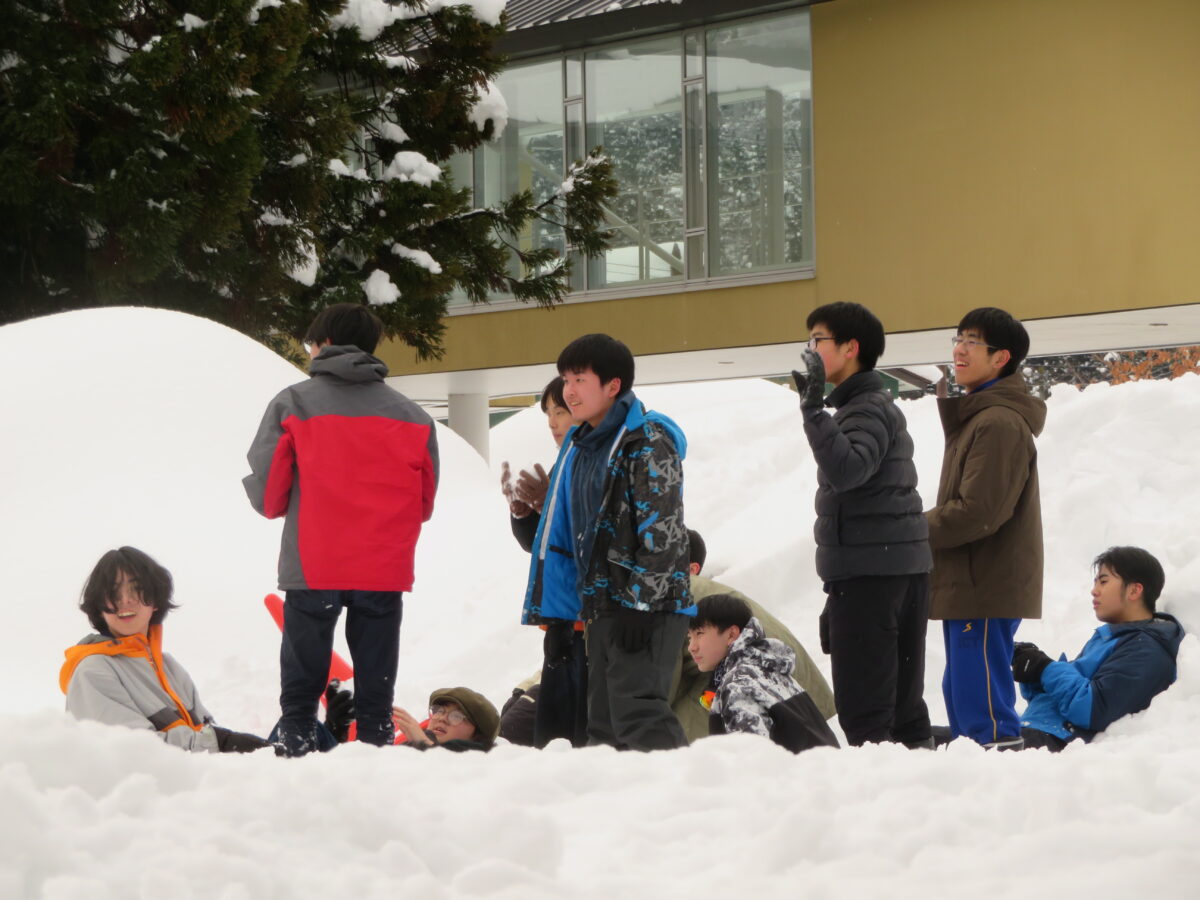
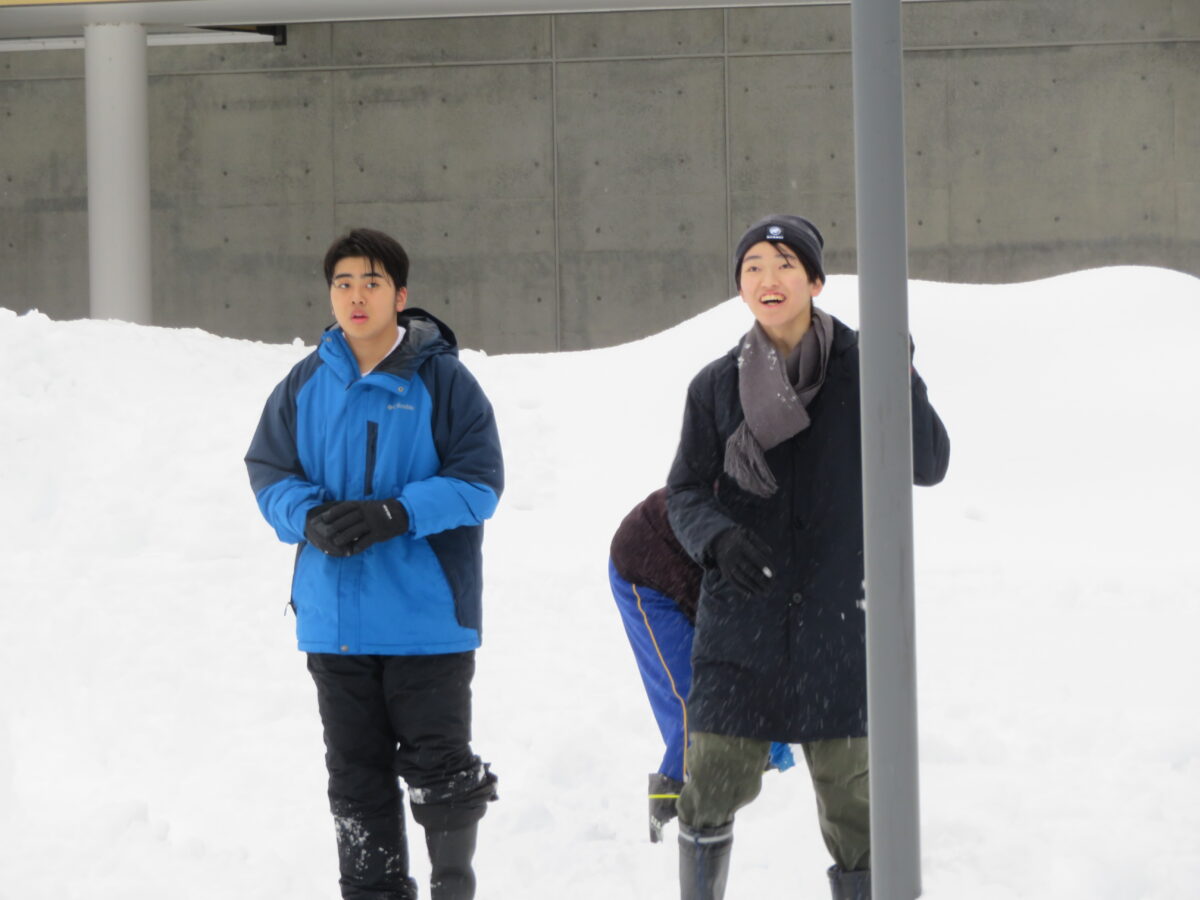
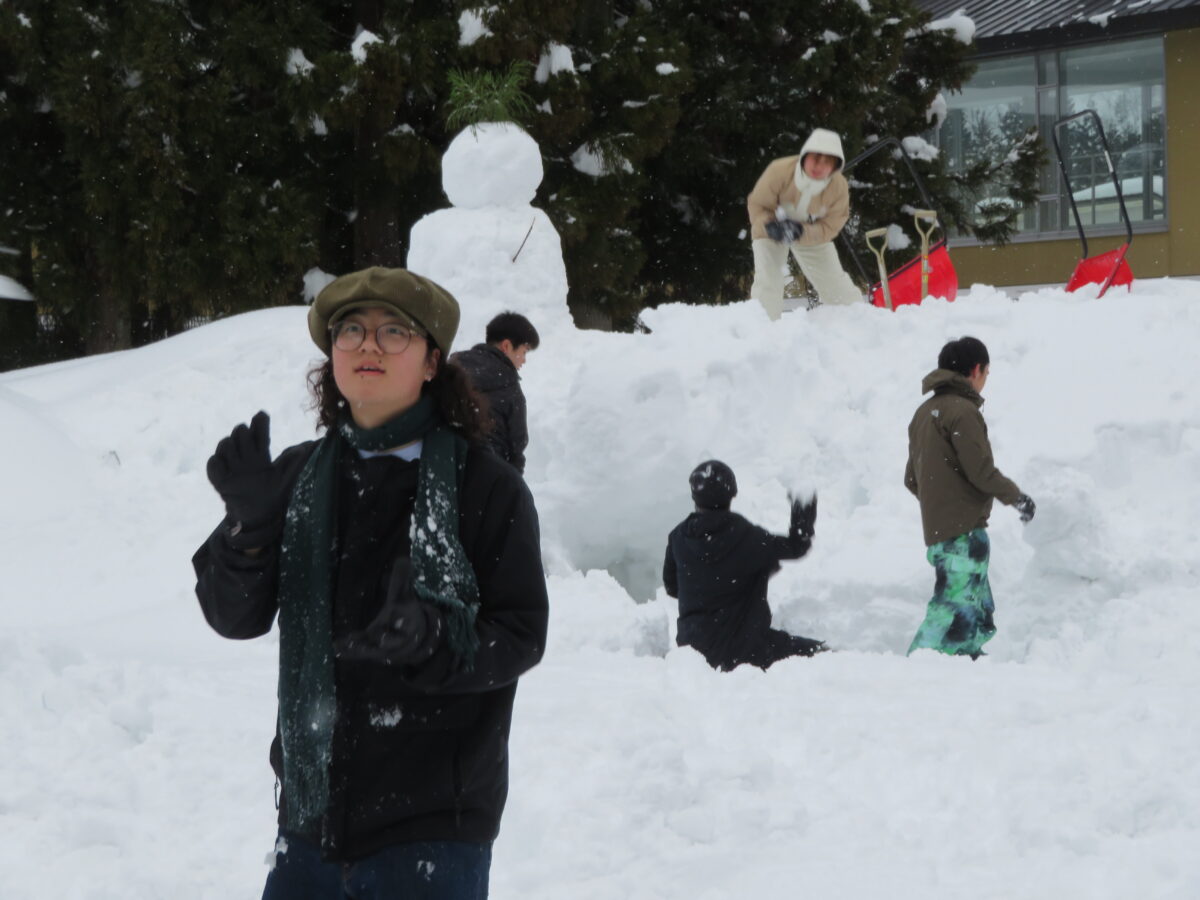
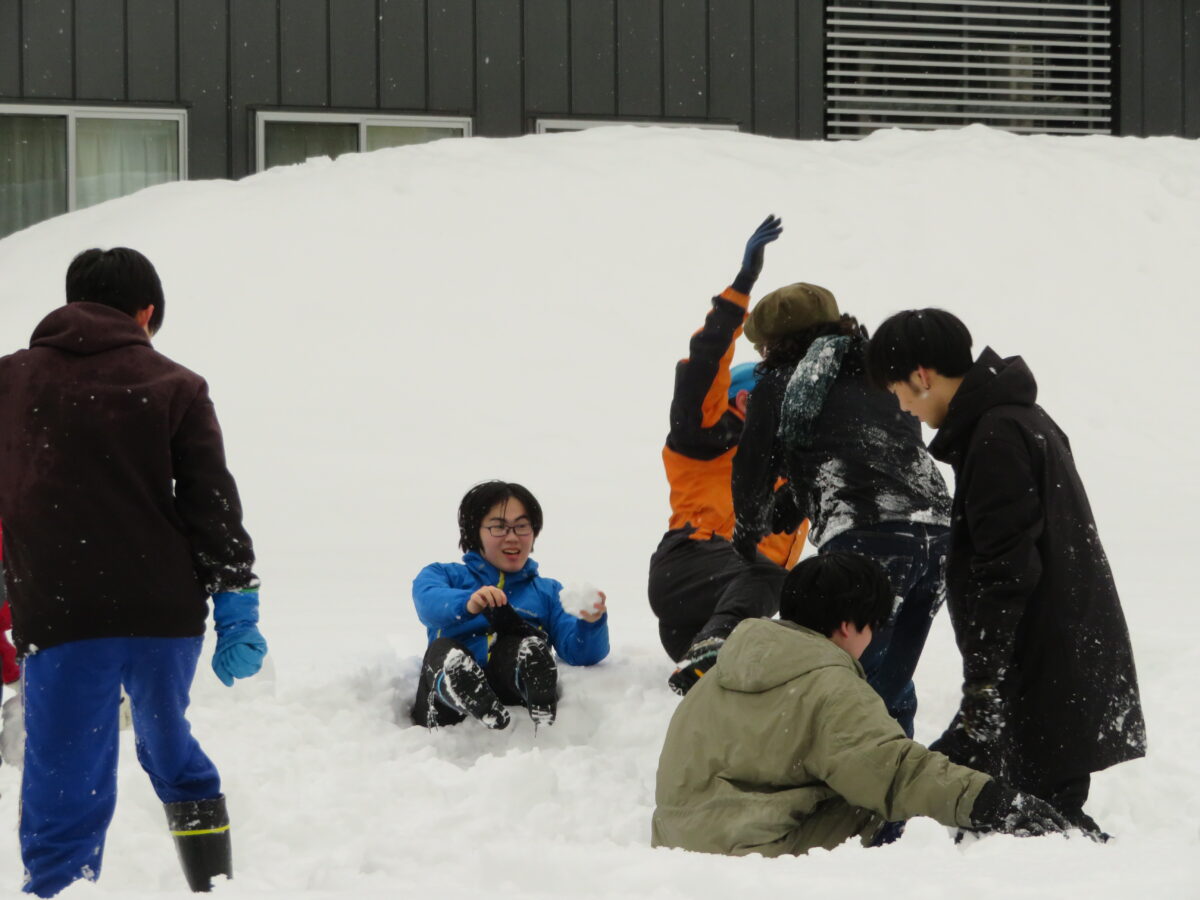
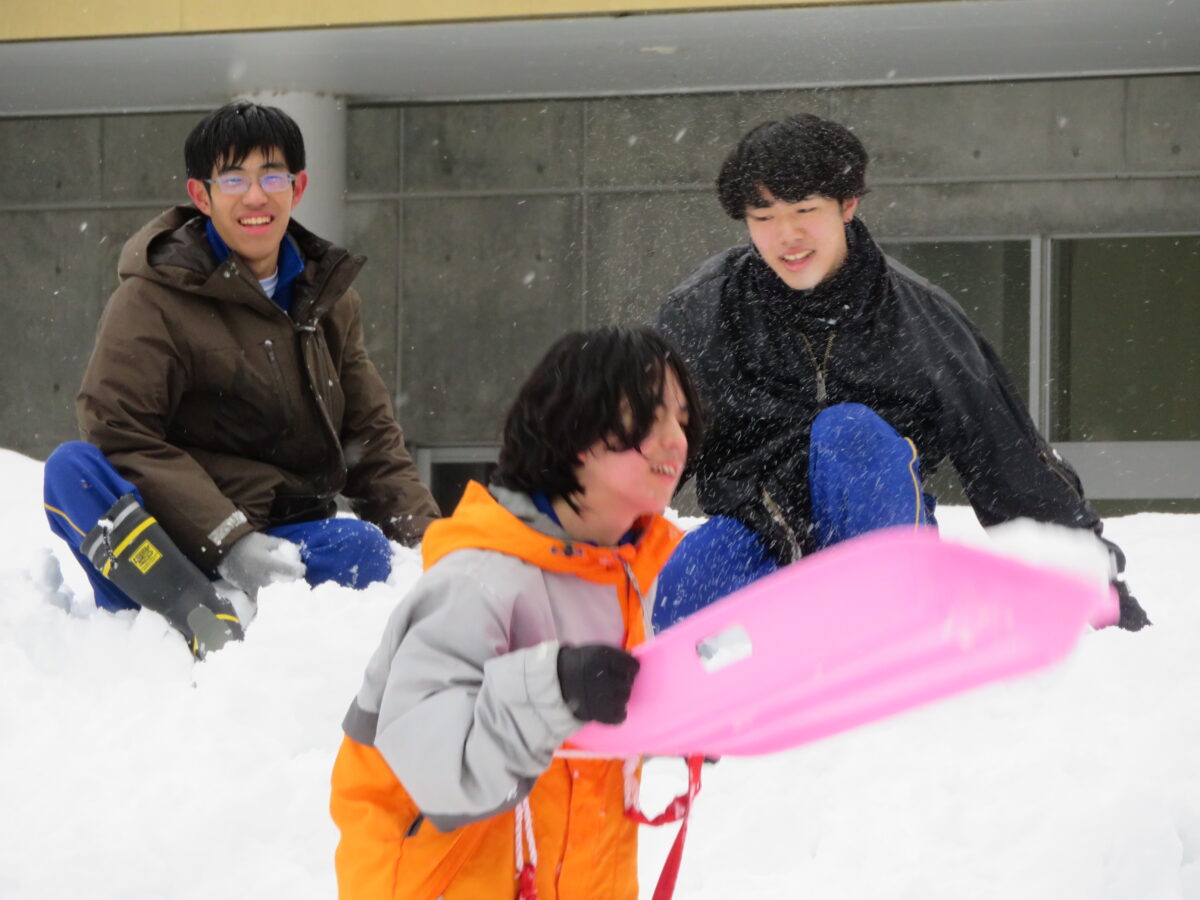
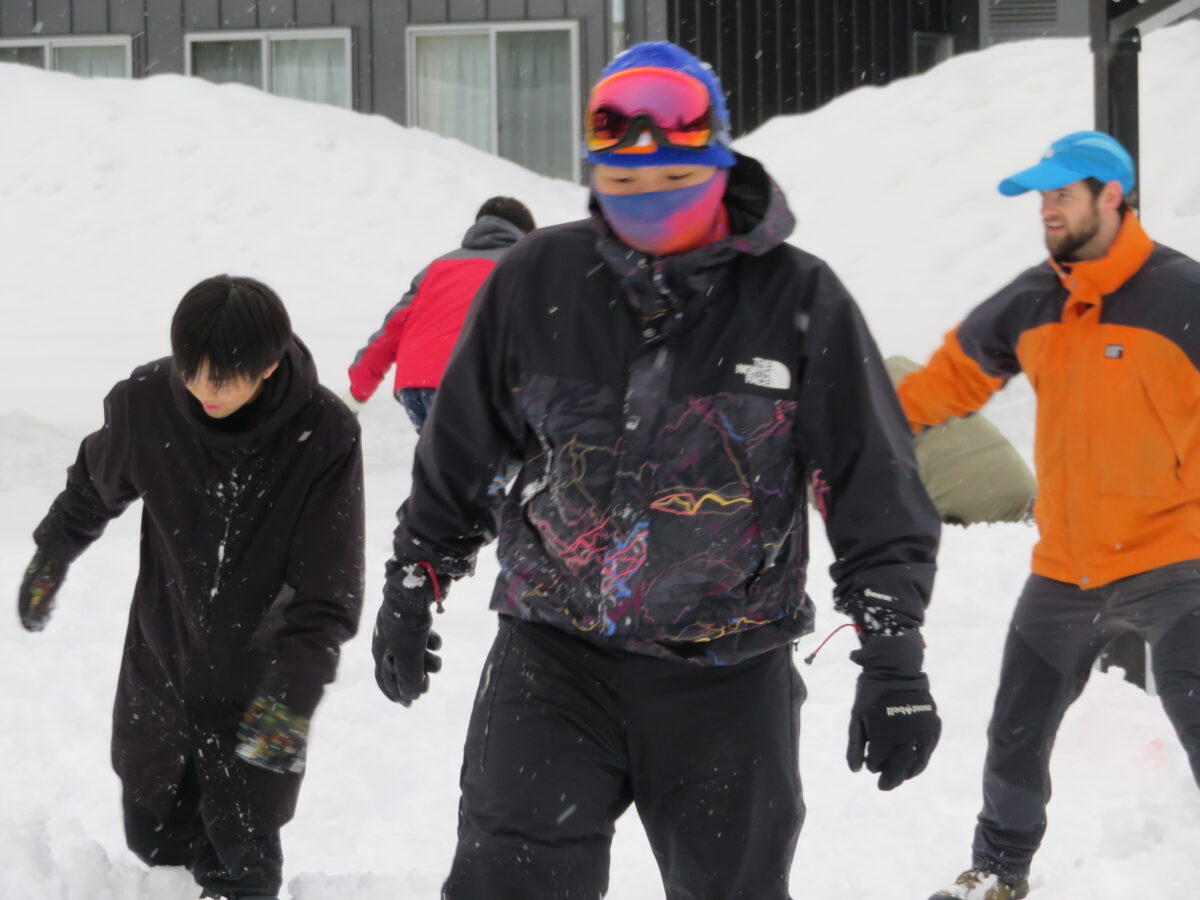
About a week later, on Monday, February 2nd, the 1st year students eagerly took part in a snowball fight in their last PE class of the semester. Each team set up a cone that they had a protect from the other team. Based on the rules of the fight, such as winning by capturing the other team’s cone and requiring students hit by a snowball to freeze for one minute, students devised strategies and began the contest.
Although both teams attempted to advance, snowballs kept hitting players one after another, slowing the game’s progress, and no winner was determined within the time limit. Despite the intense exchanges, the students’ laughter filled the field, creating a funfilled atmosphere.
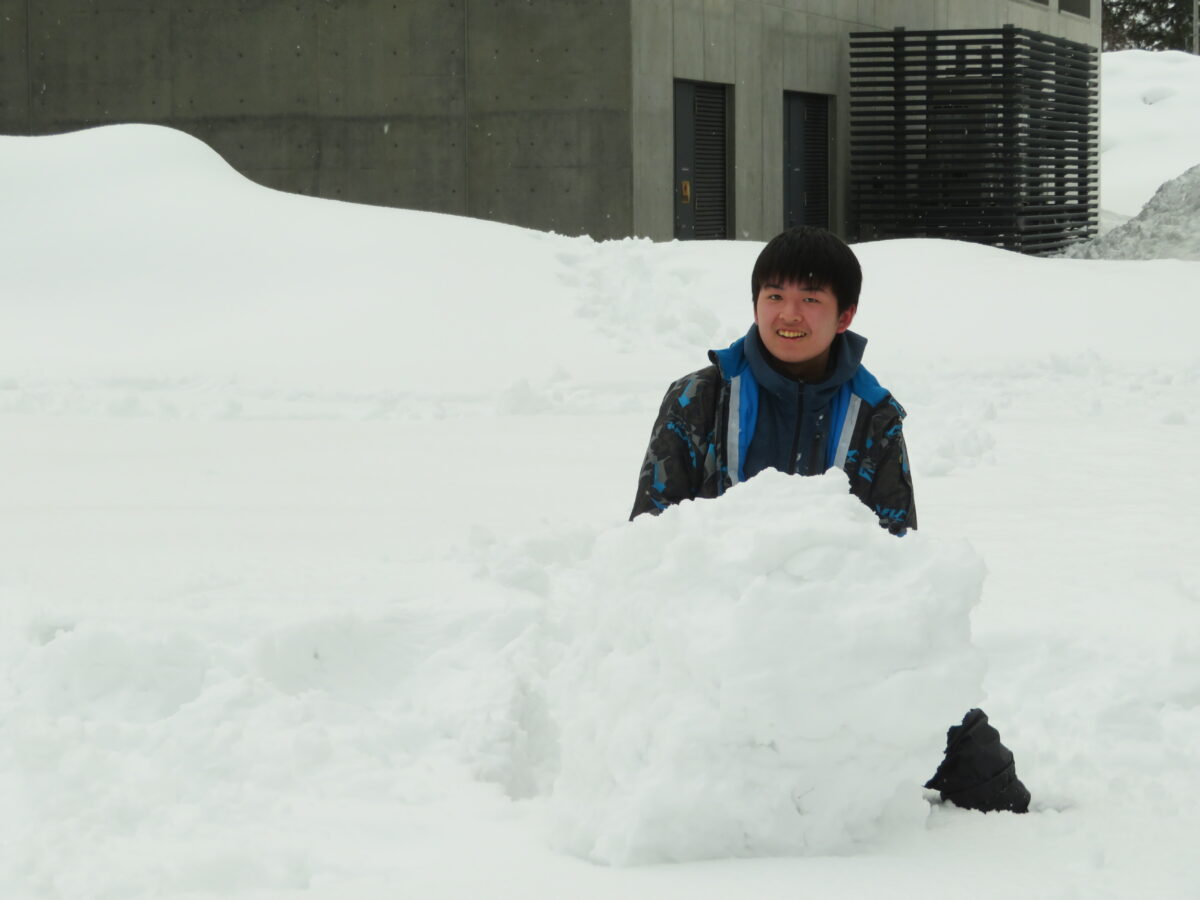
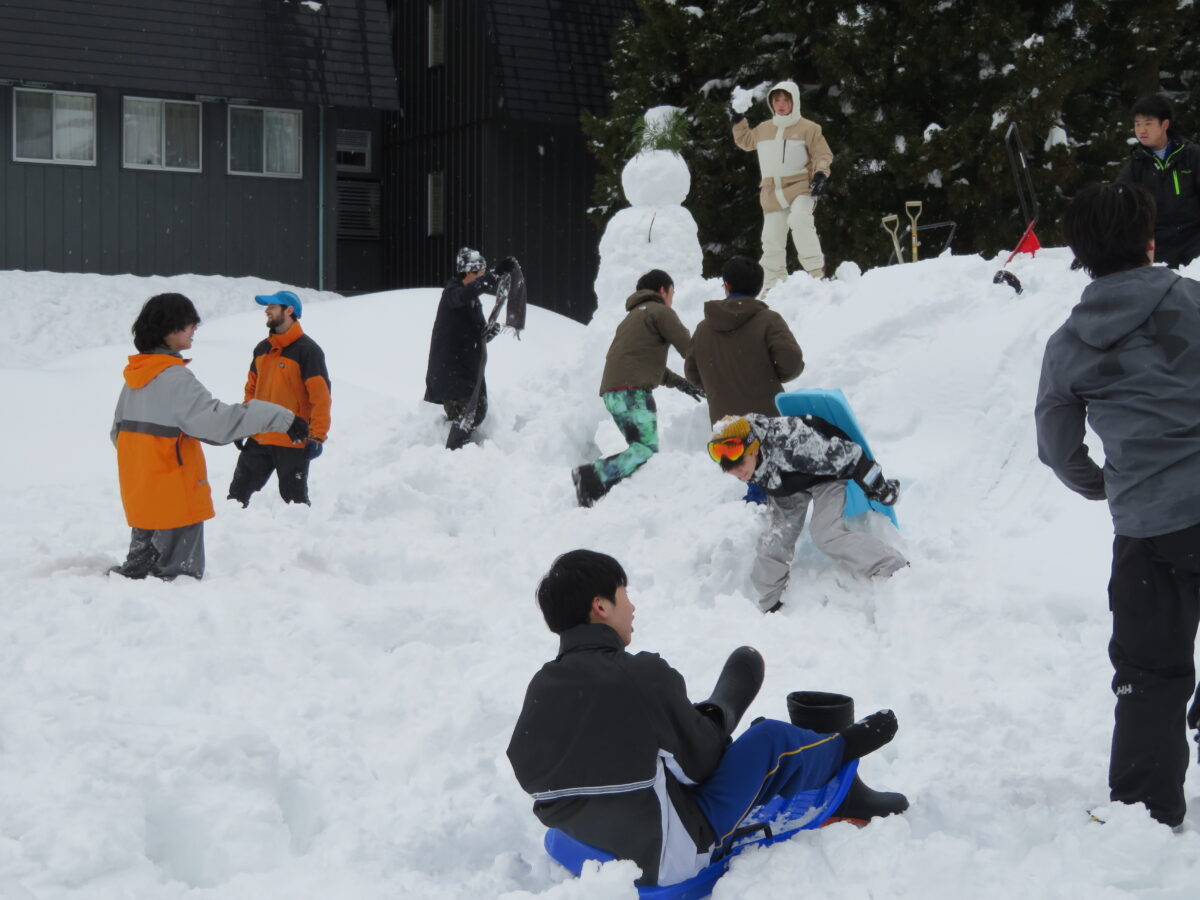
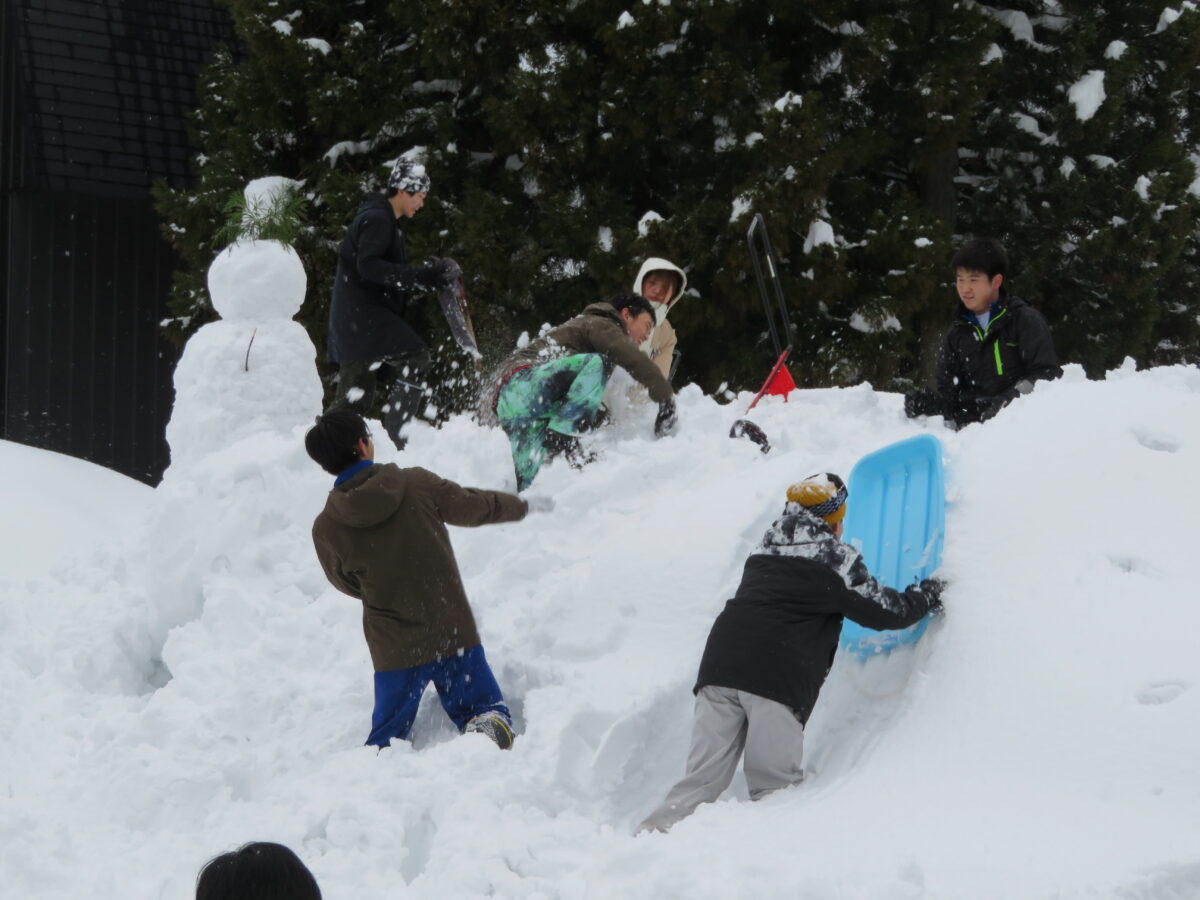
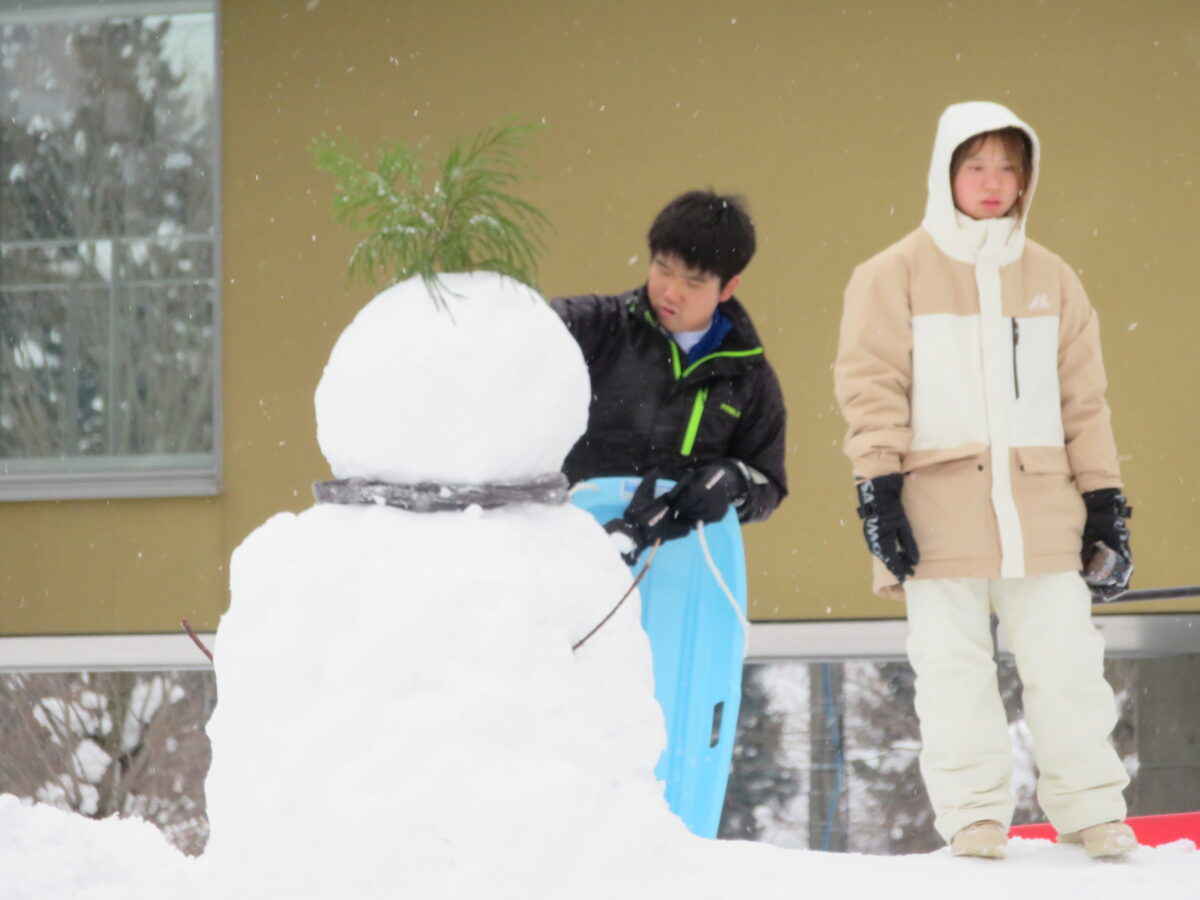
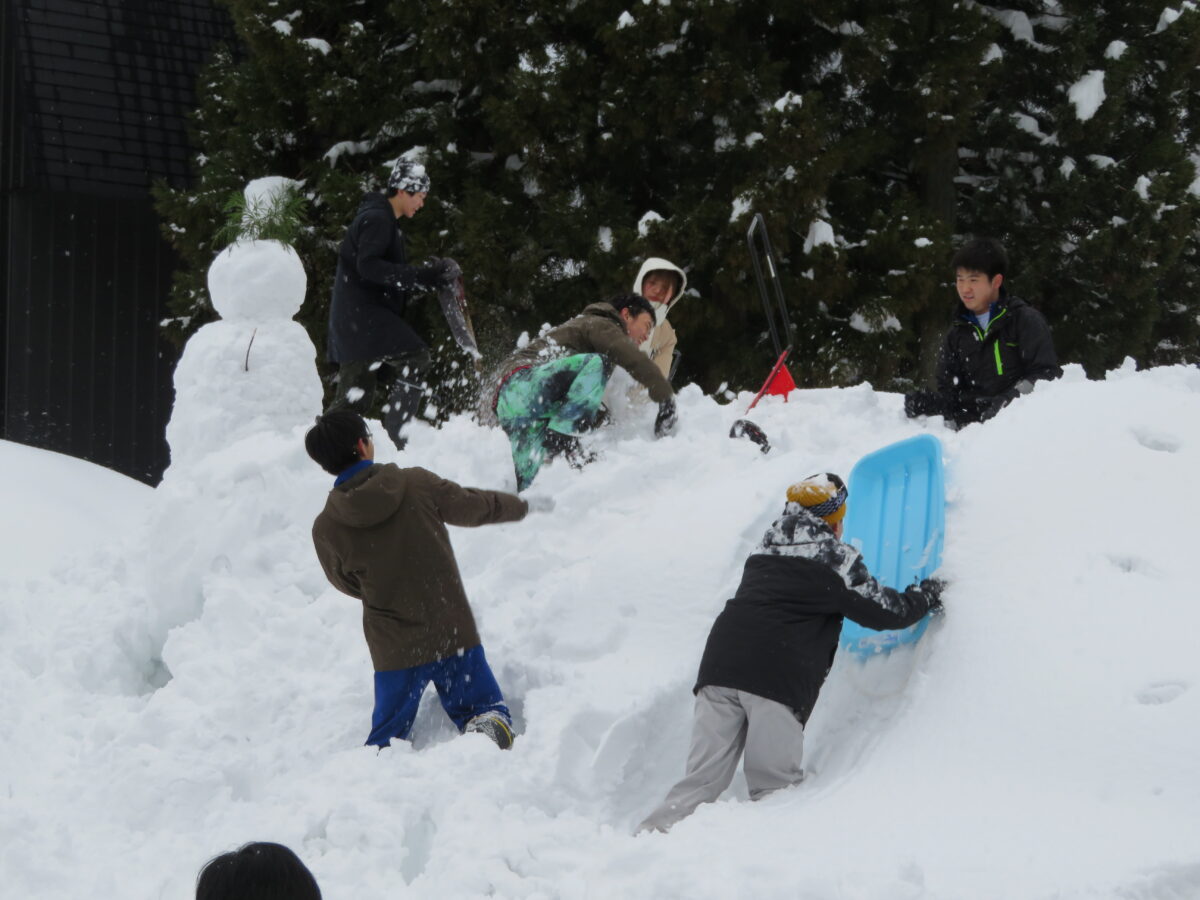
During the free play session that followed, students enjoyed throwing snowballs, building large snowmen, sledding, and having fun in the snow.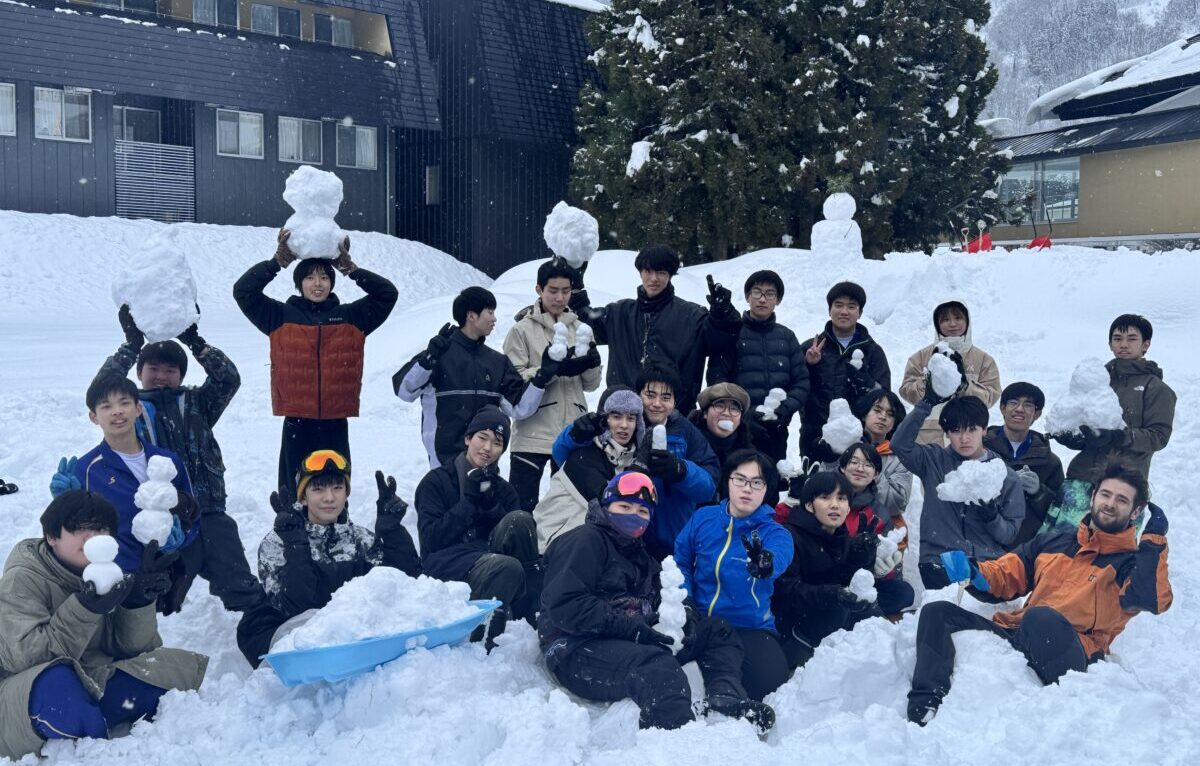
2nd Year Students Snowball Fight & Snow Slide Building
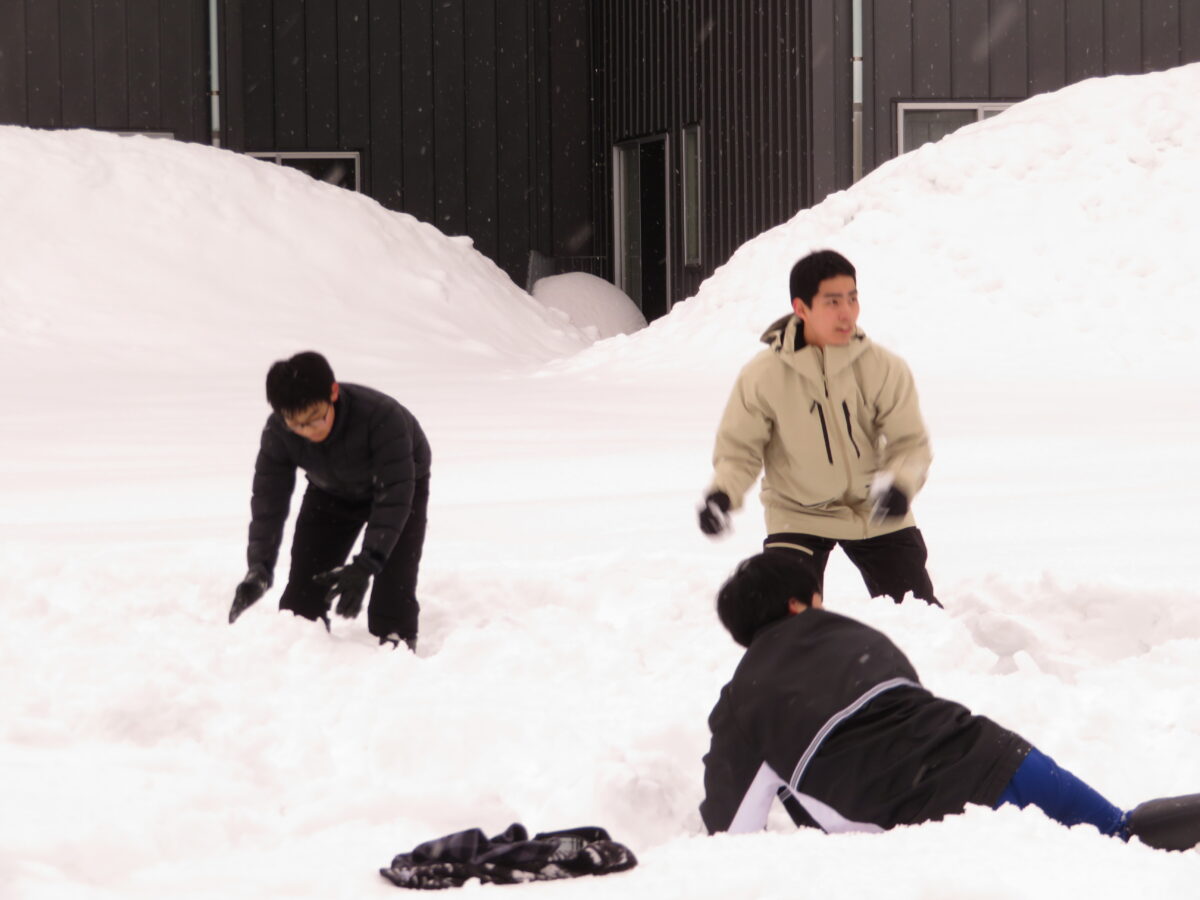
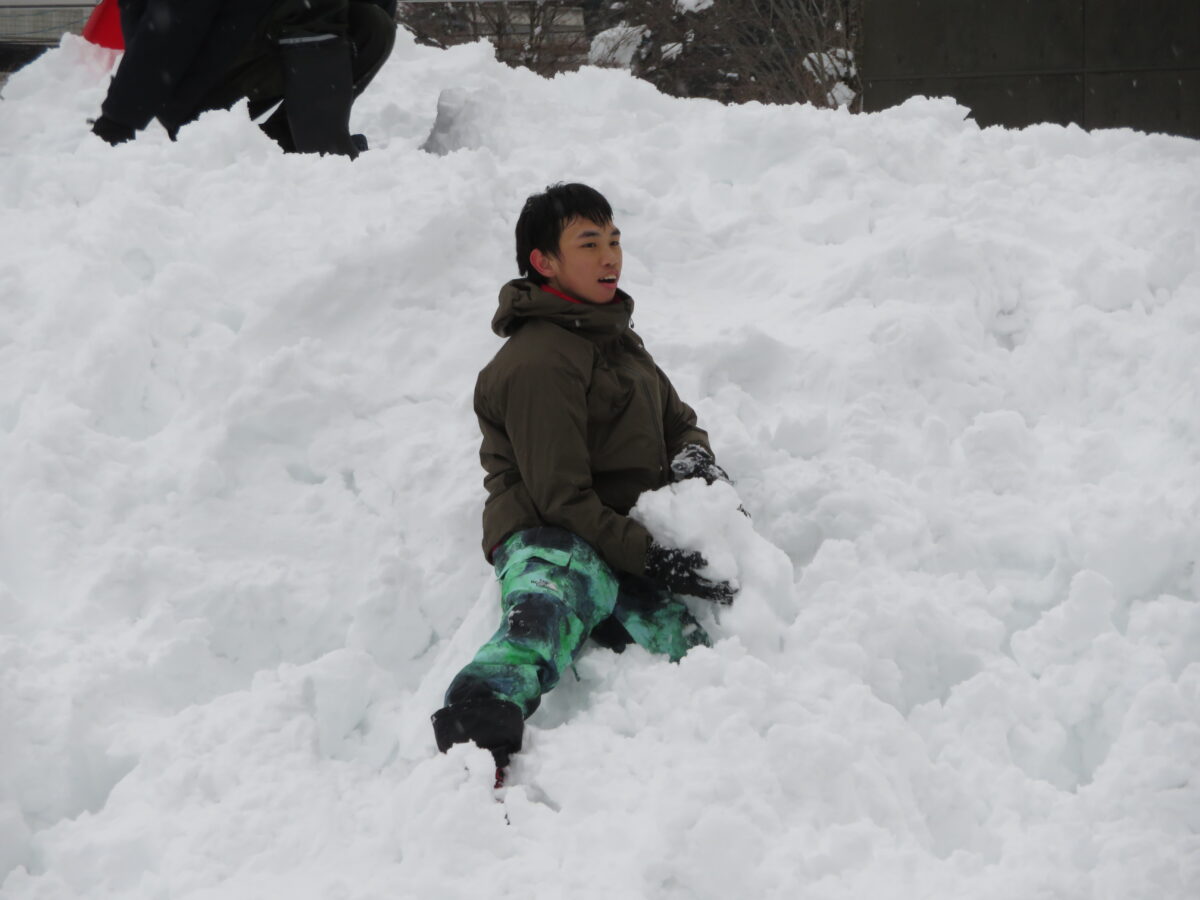
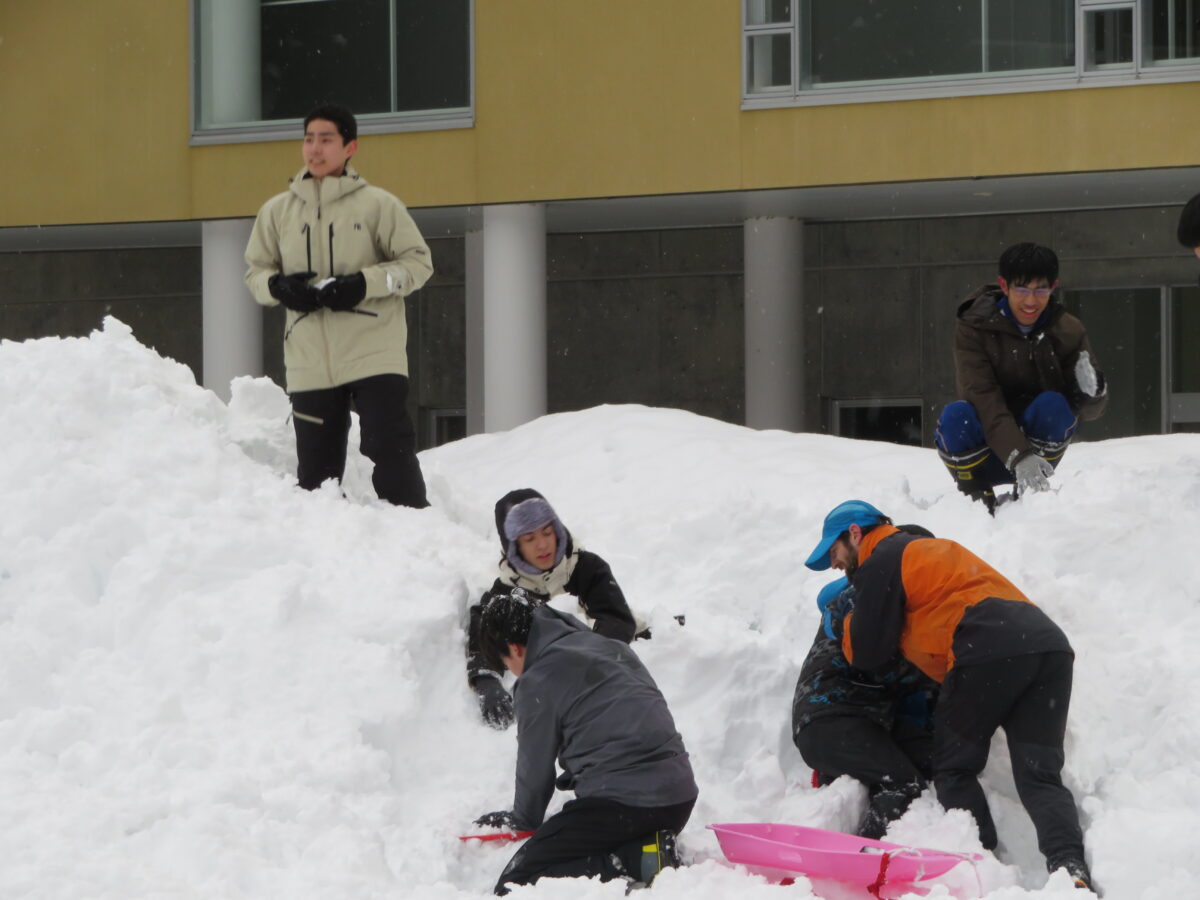
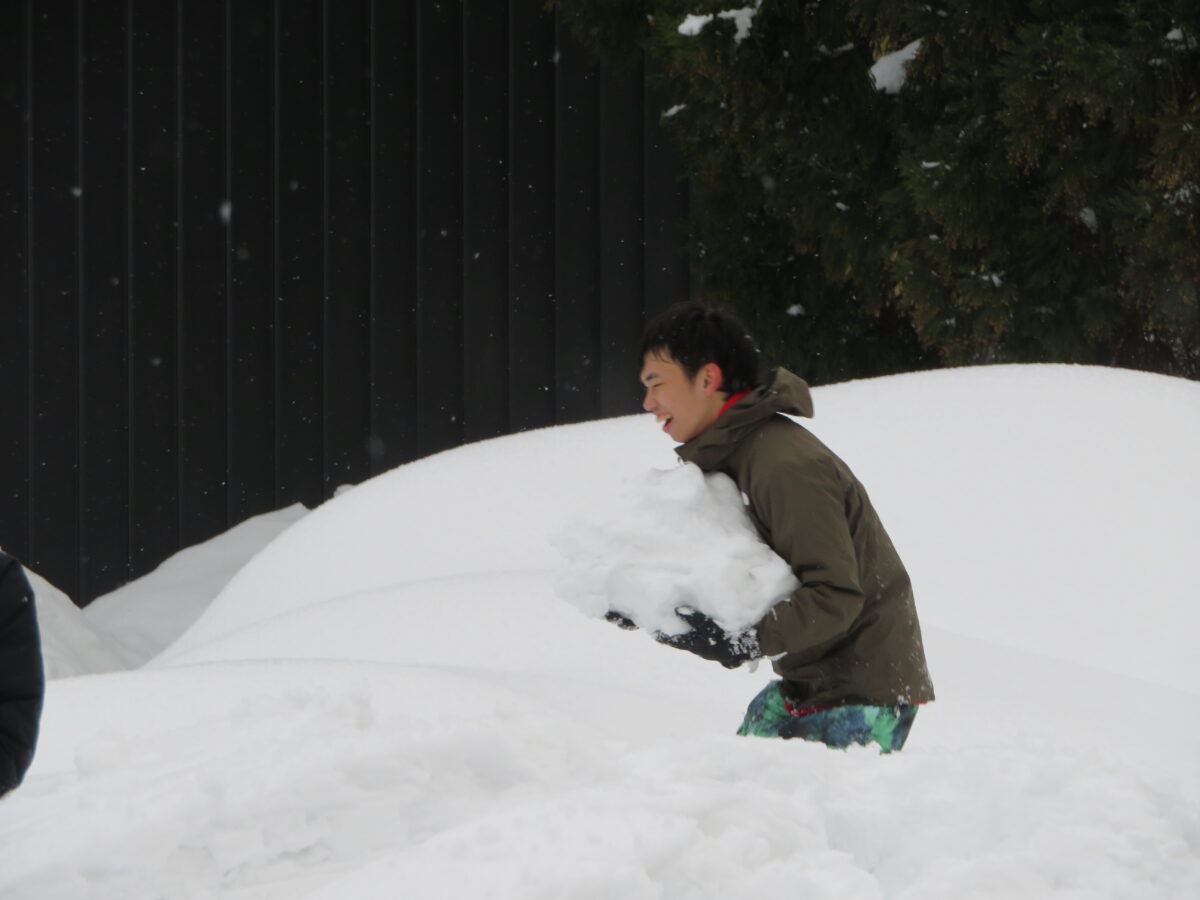
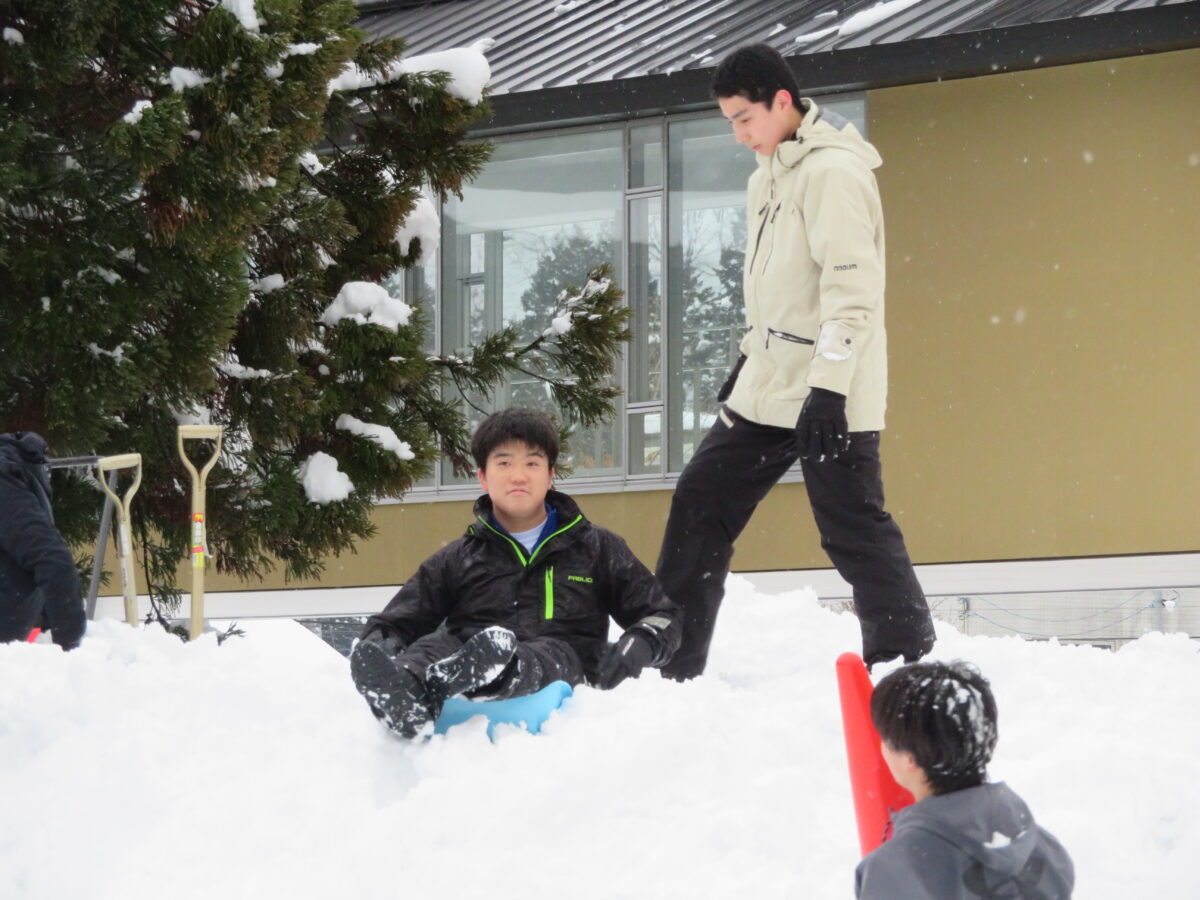
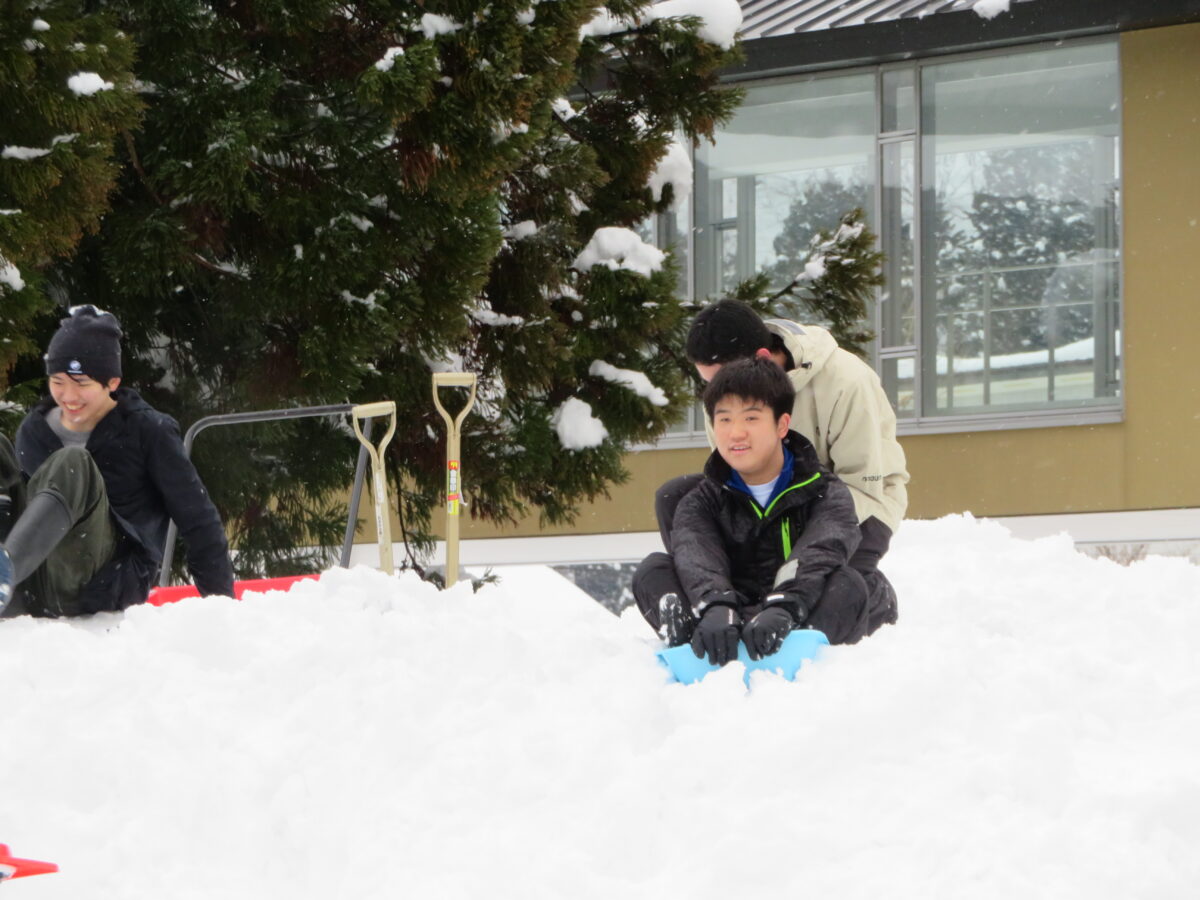
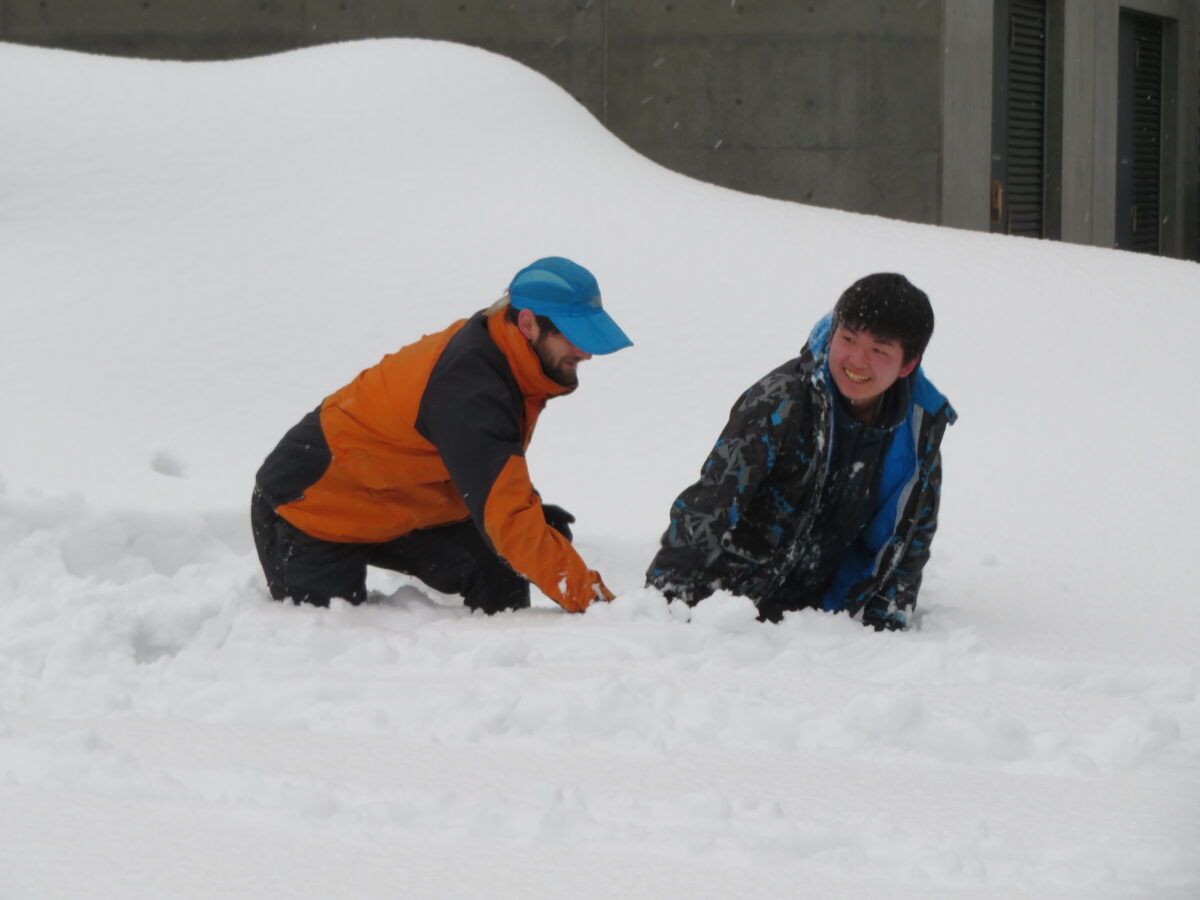
On Tuesday, February 3rd, the 2nd year students participated in a snowball fight and snow slide building. The boys’ team started with a snowball fight, first by dividing into 2 teams and then building snow walls in their territory and preparing plenty of snowballs before launching their attacks on the opposing team. Their energetic attacks made them look like little snow warriors. As they were battling Philip Cadzow sensei unexpectedly joined in the fight. With overwhelming strength, he lifted the boys one after another and tossed them into the fluffy snow, sending them running away while laughing and shouting, a scene that delighted everyone.
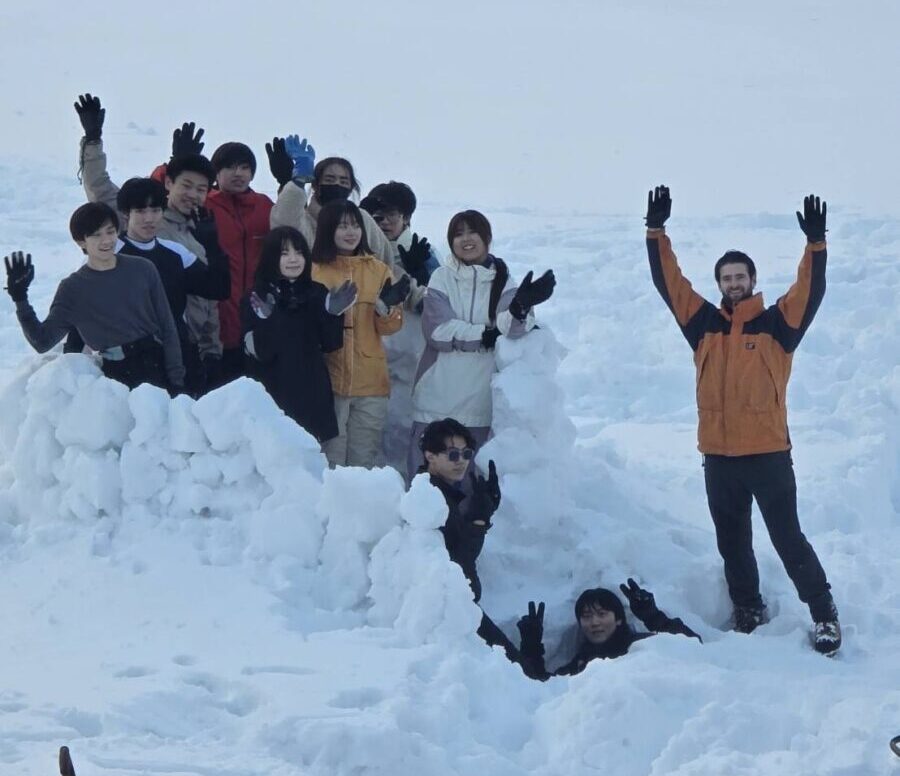
Meanwhile, the girls’ team focused on creating a snow slide. They packed the snow, carved it carefully, and shaped it until it was complete. When viewed from the front, the finished slide resembled a “Moai statue,” and its impressive craftsmanship drew surprised reactions from students and teachers alike.
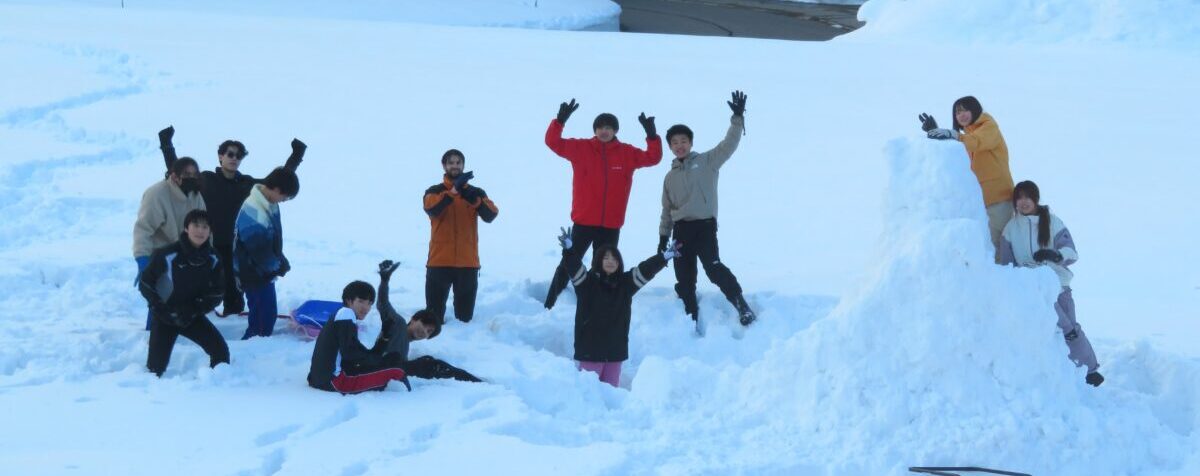
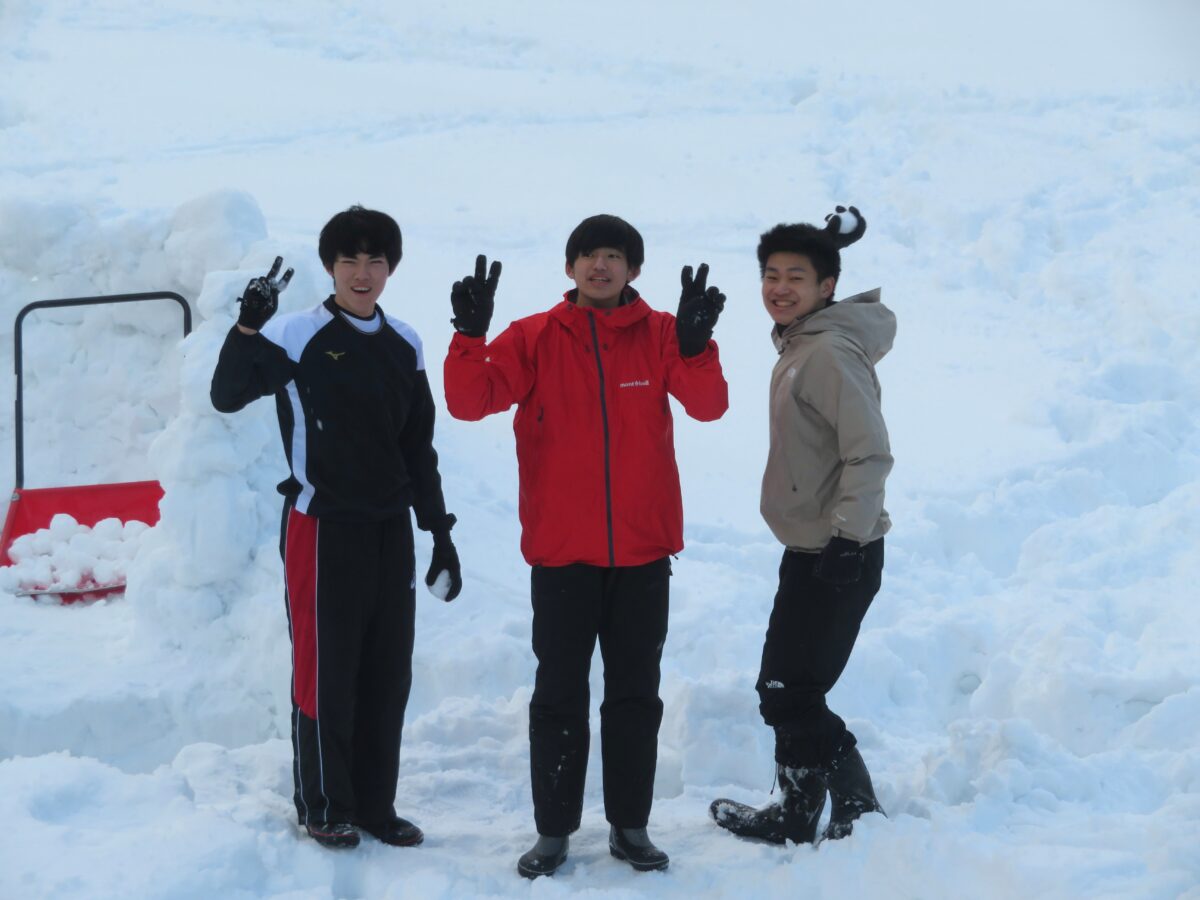
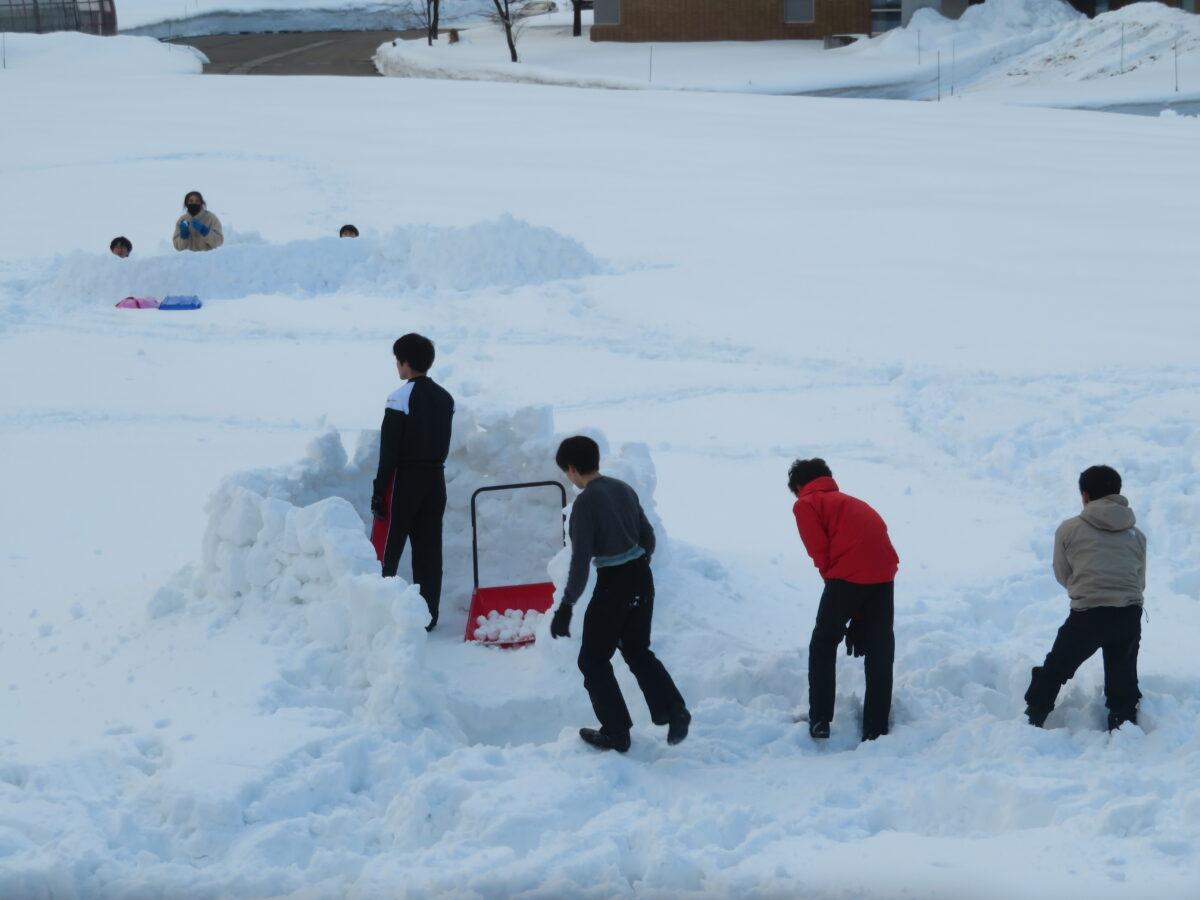
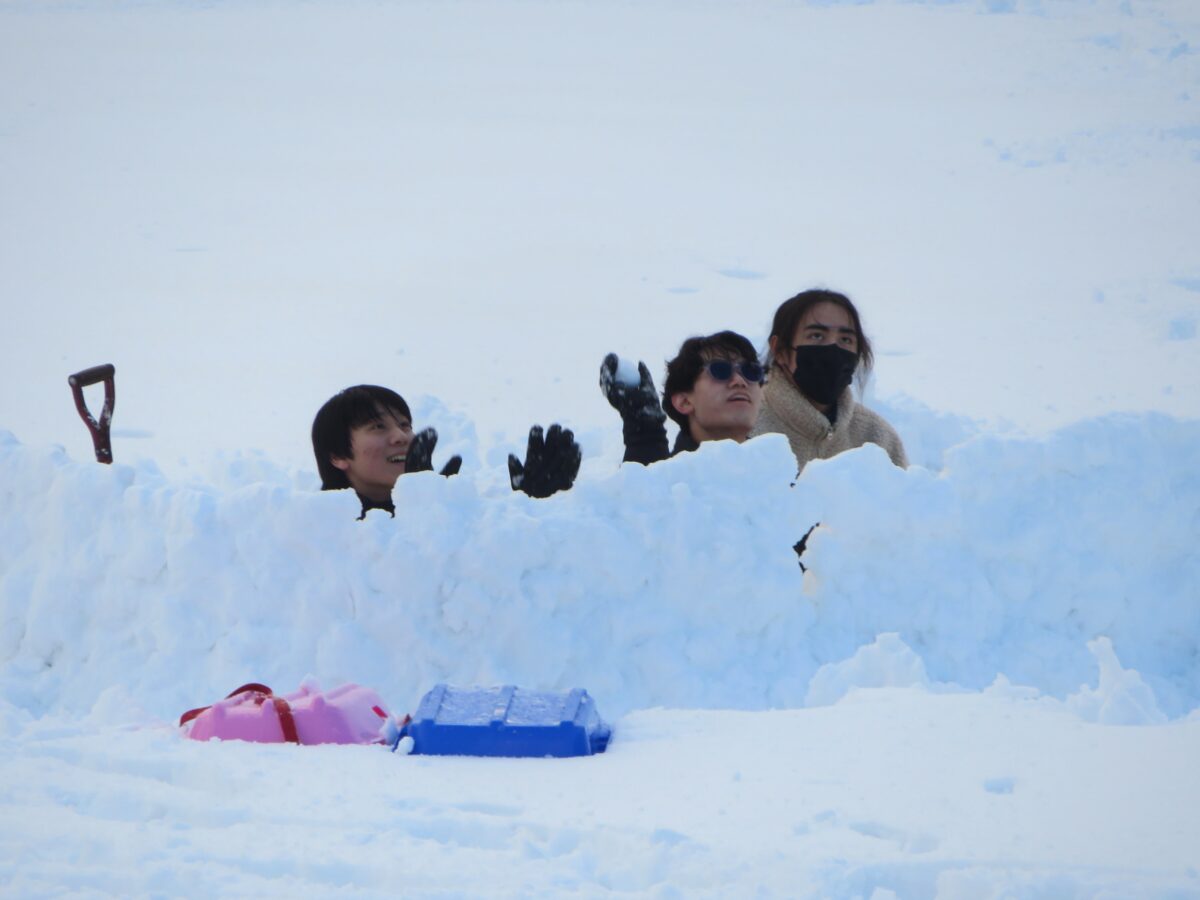
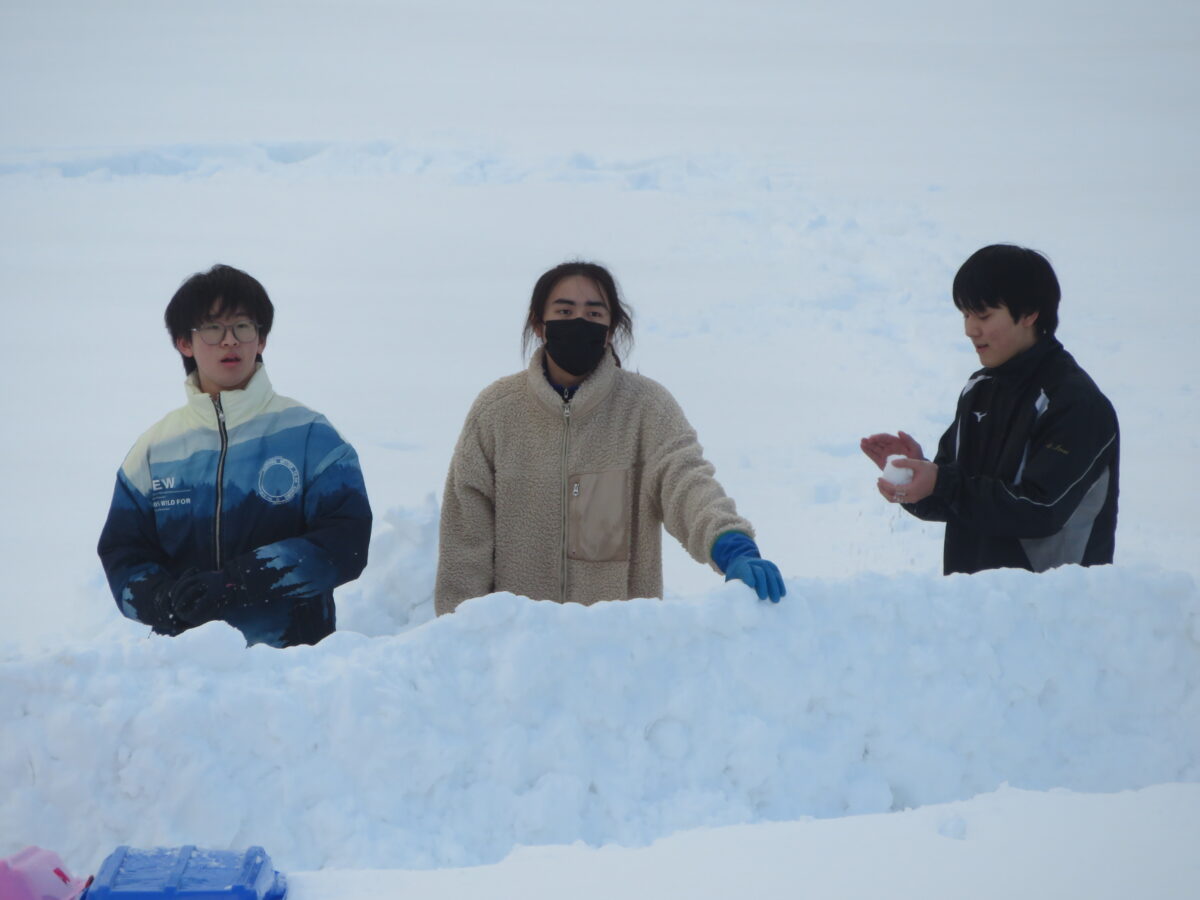
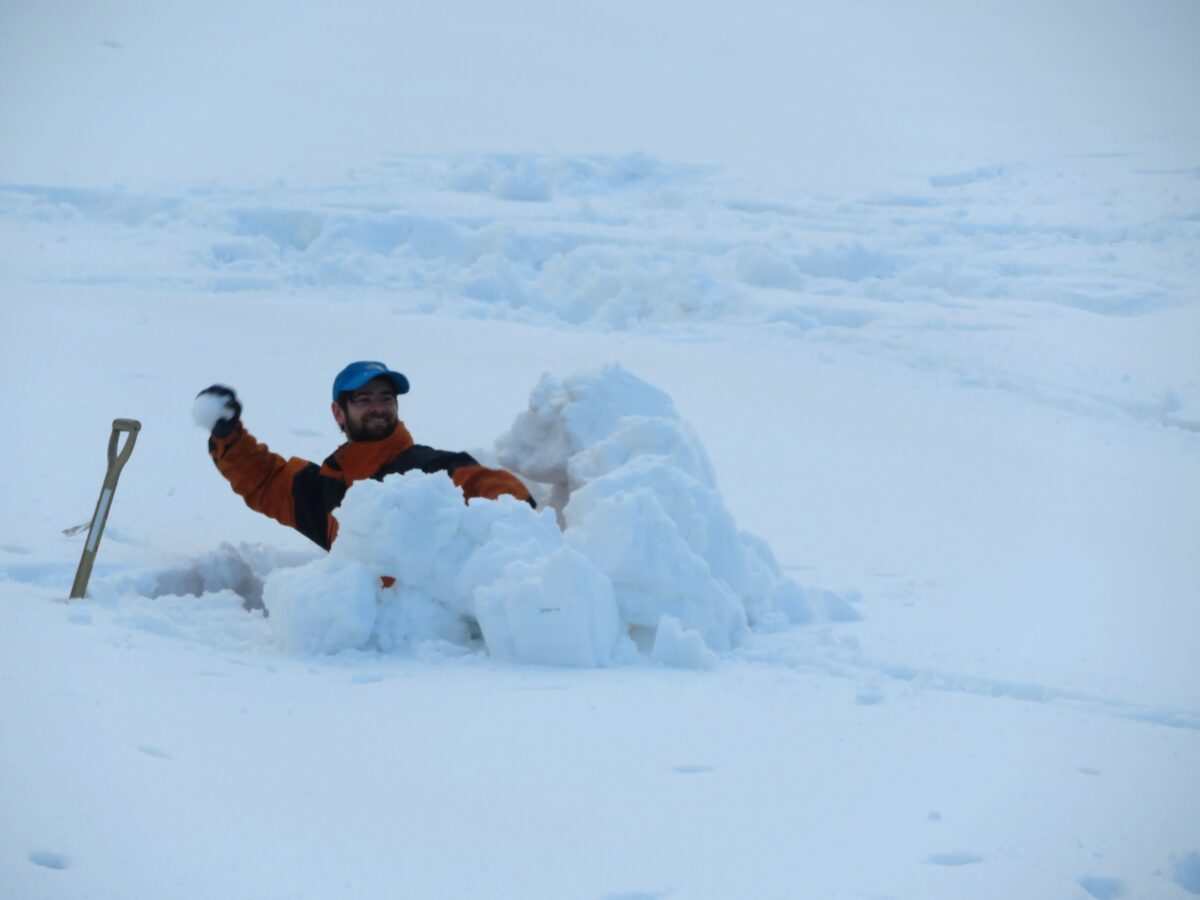
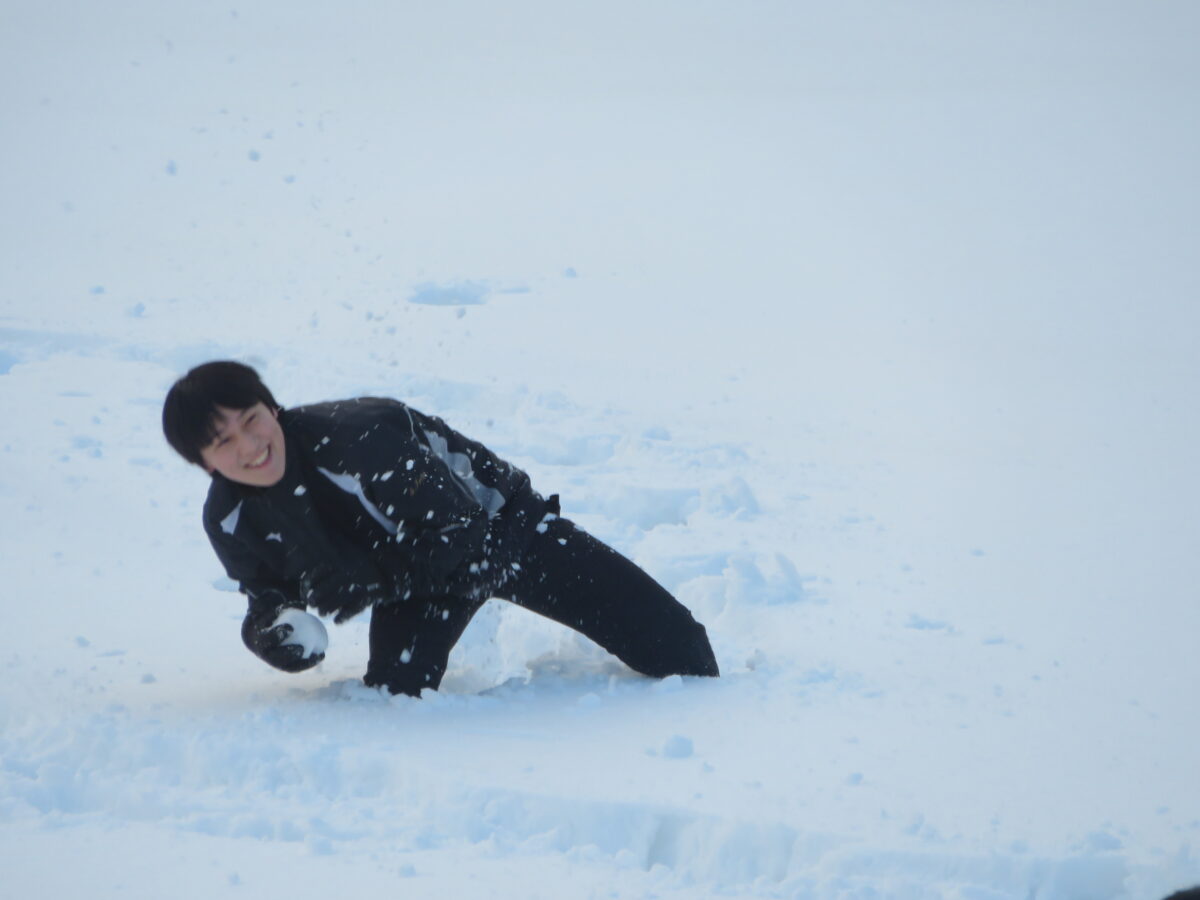
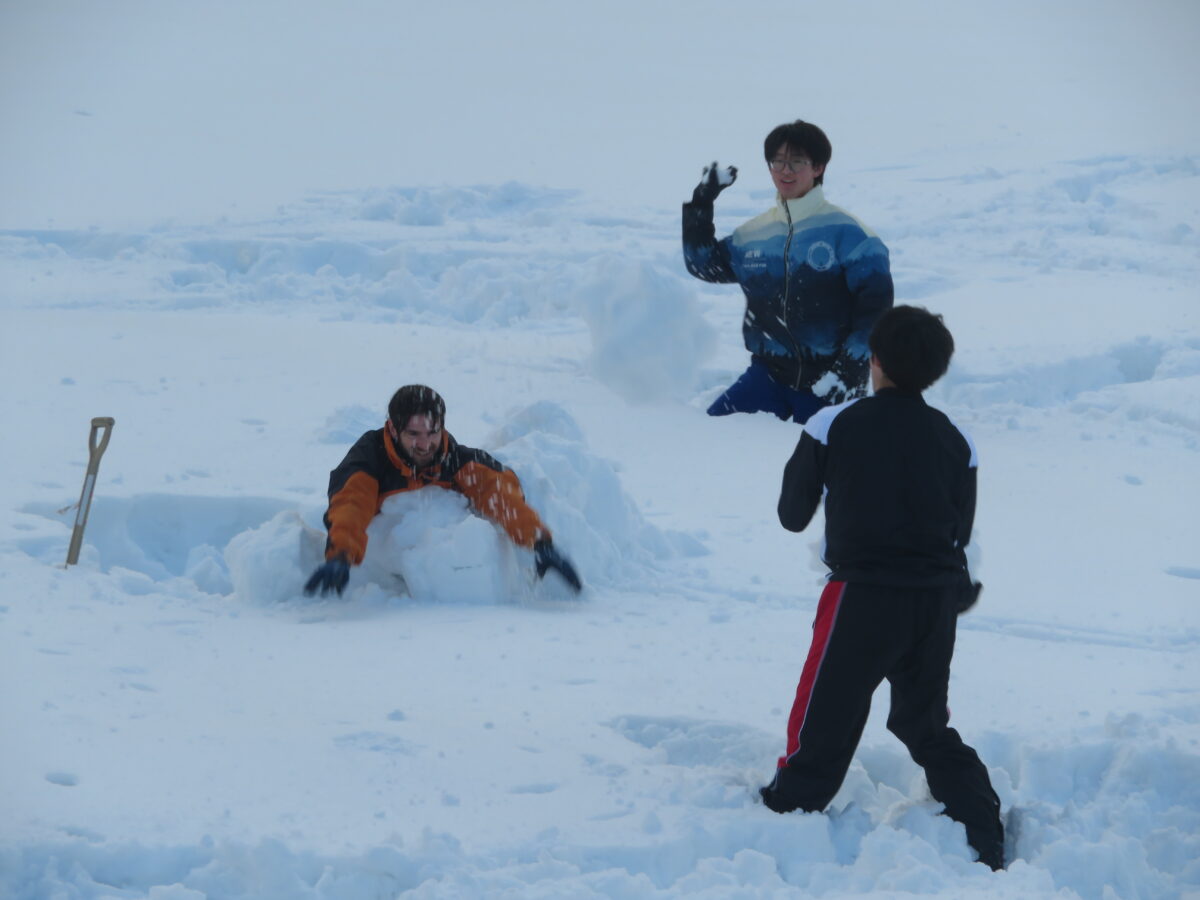
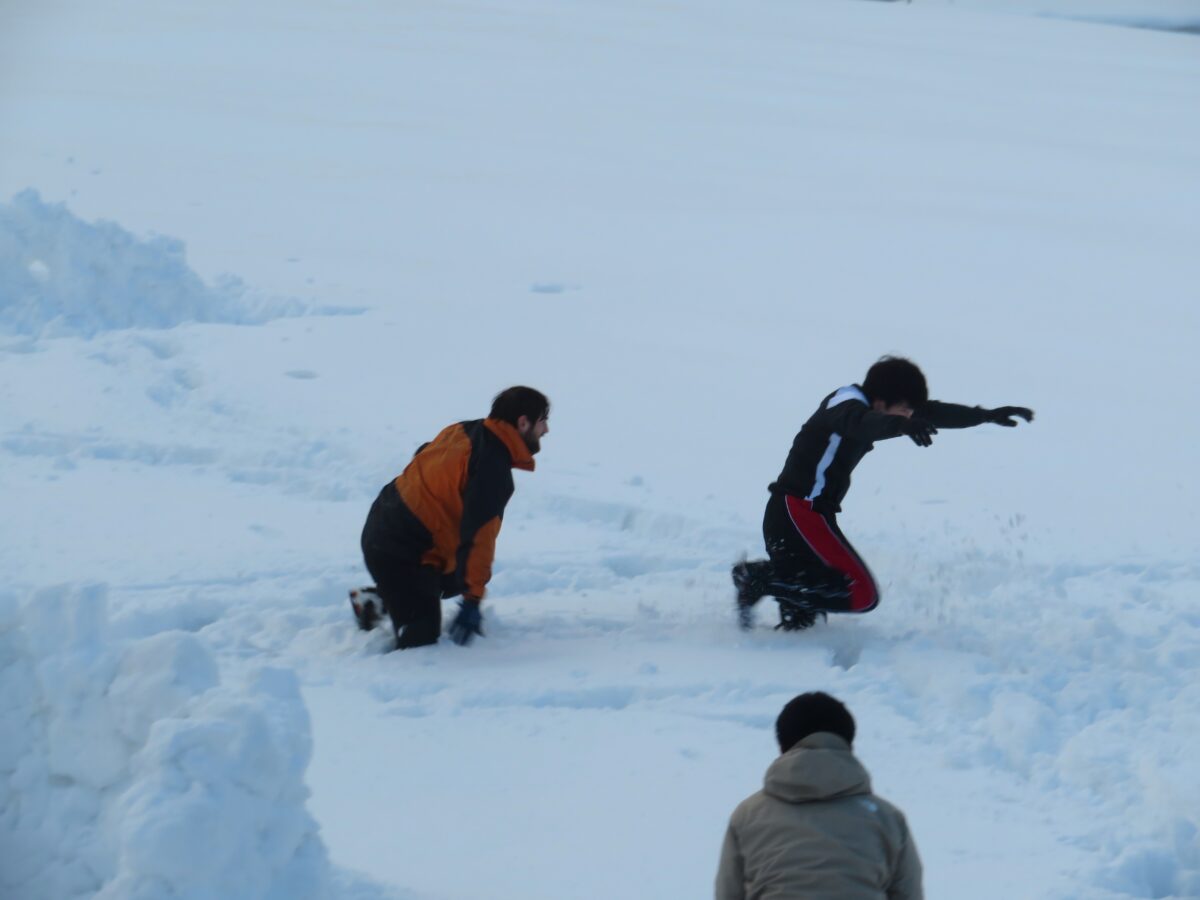
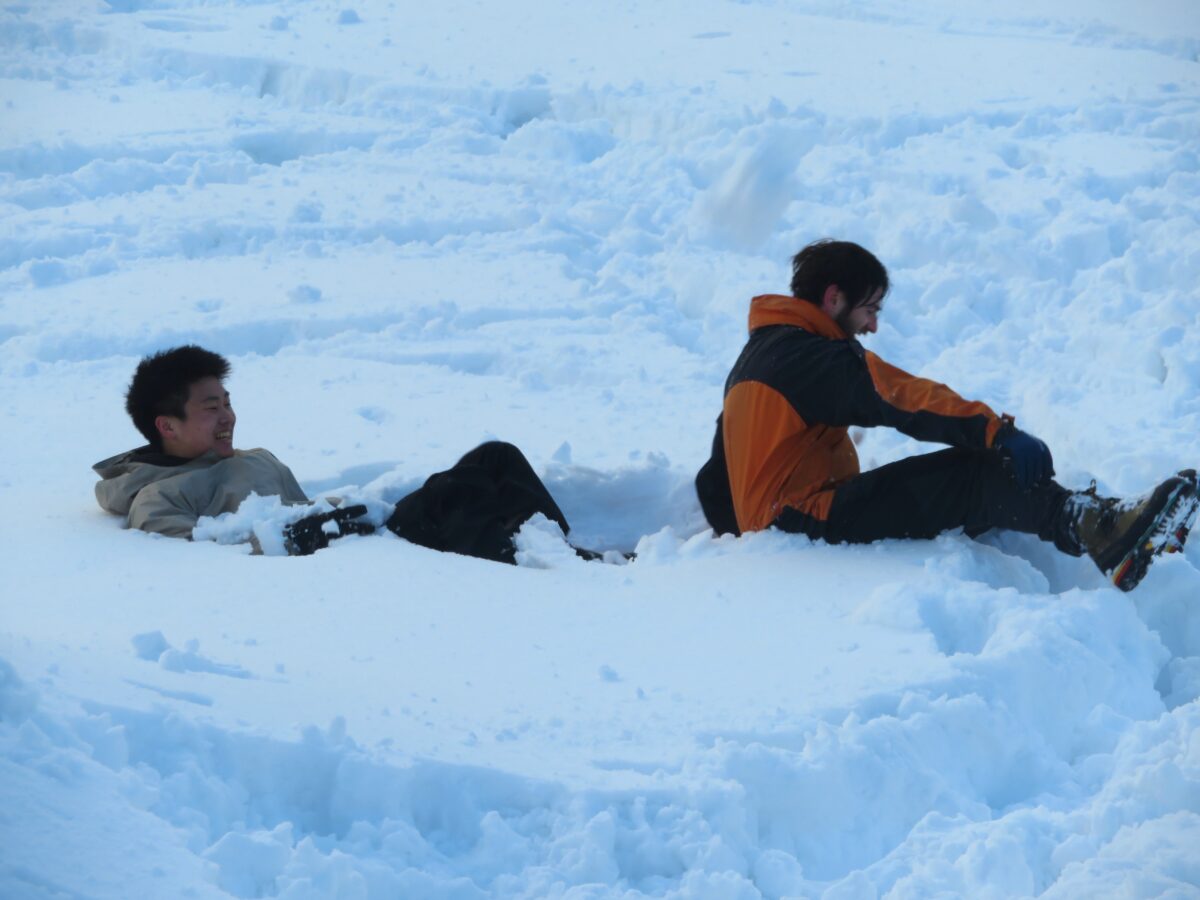
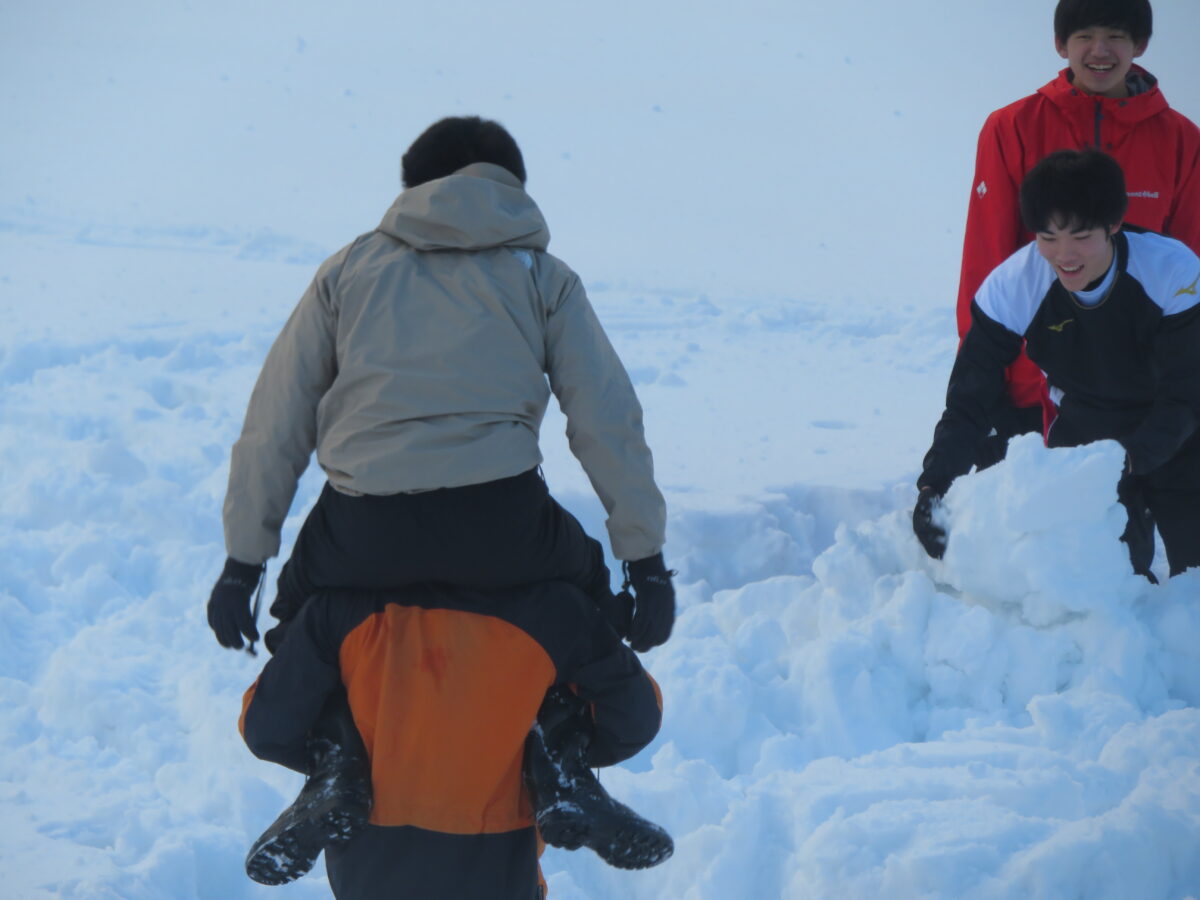
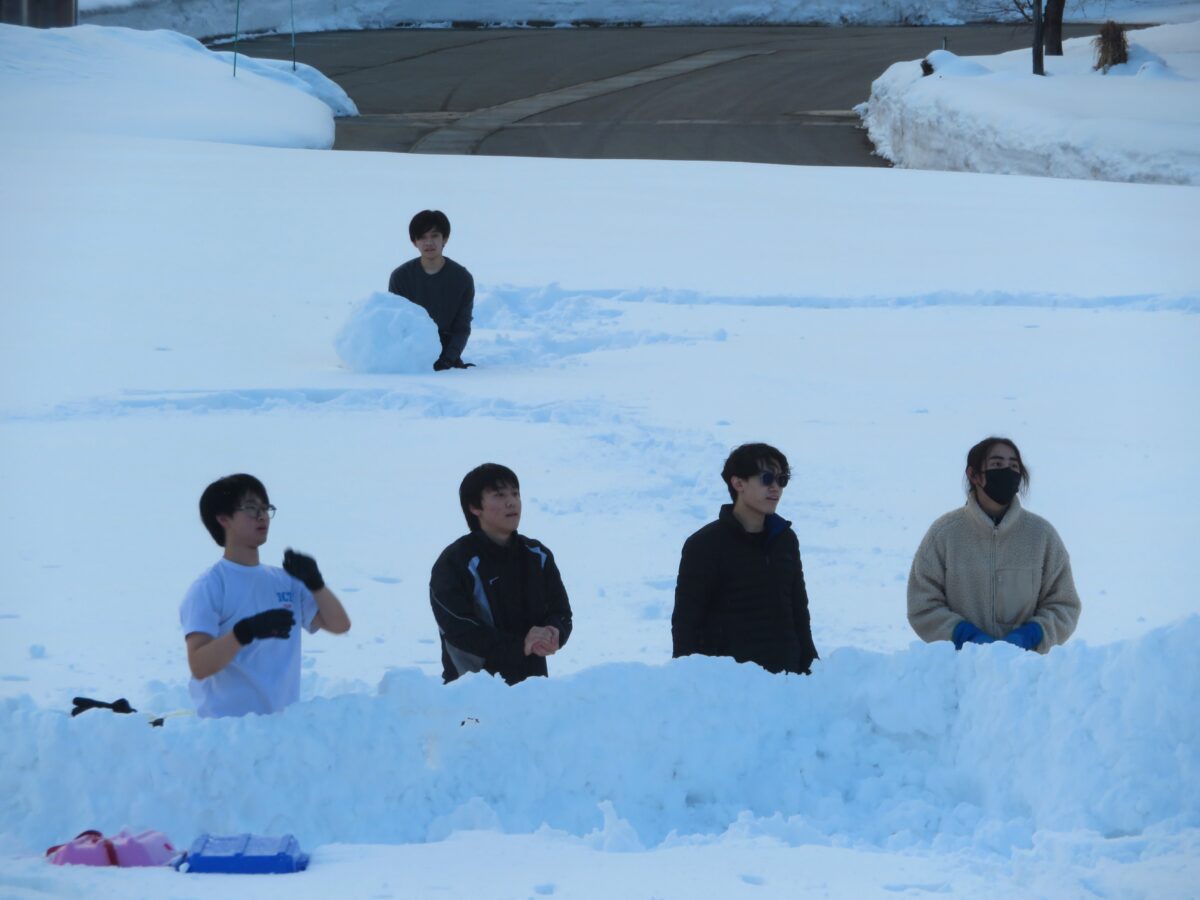
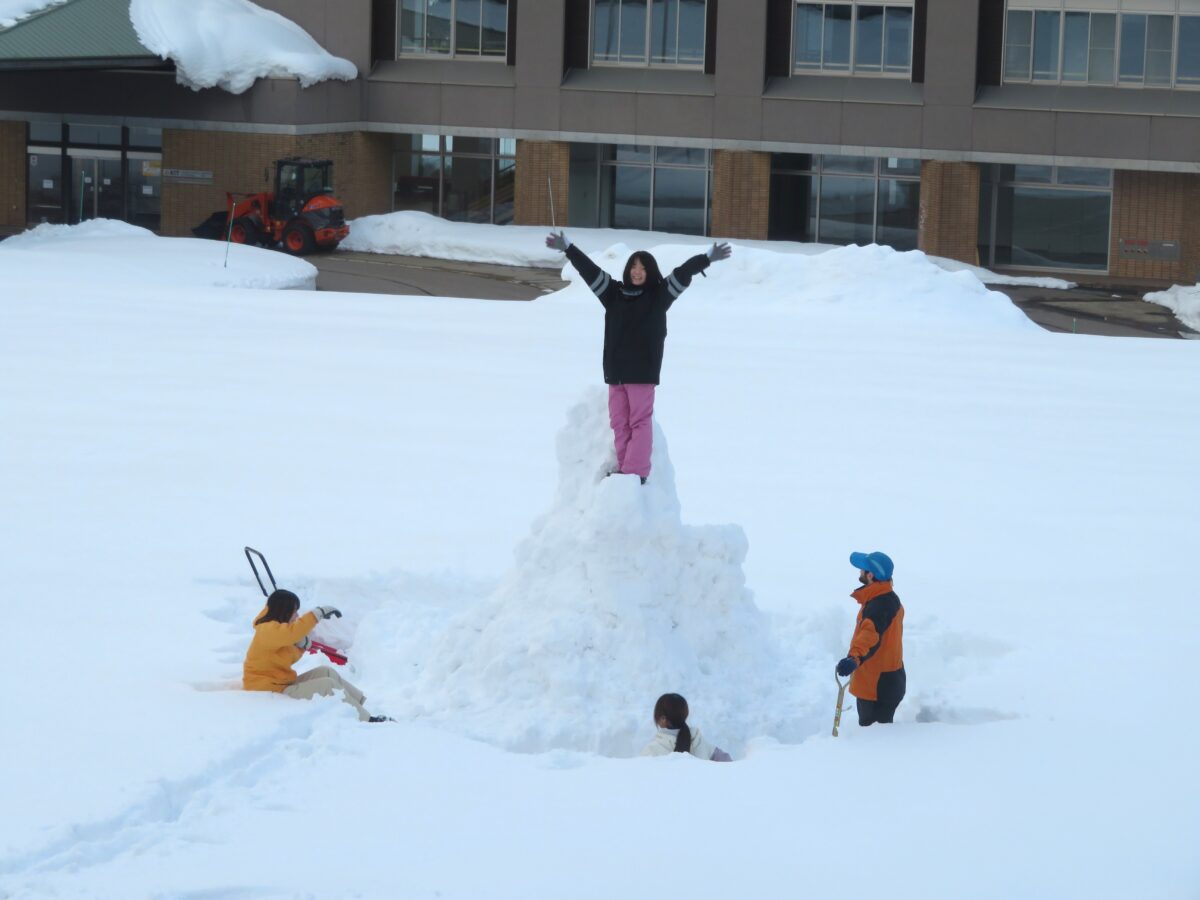
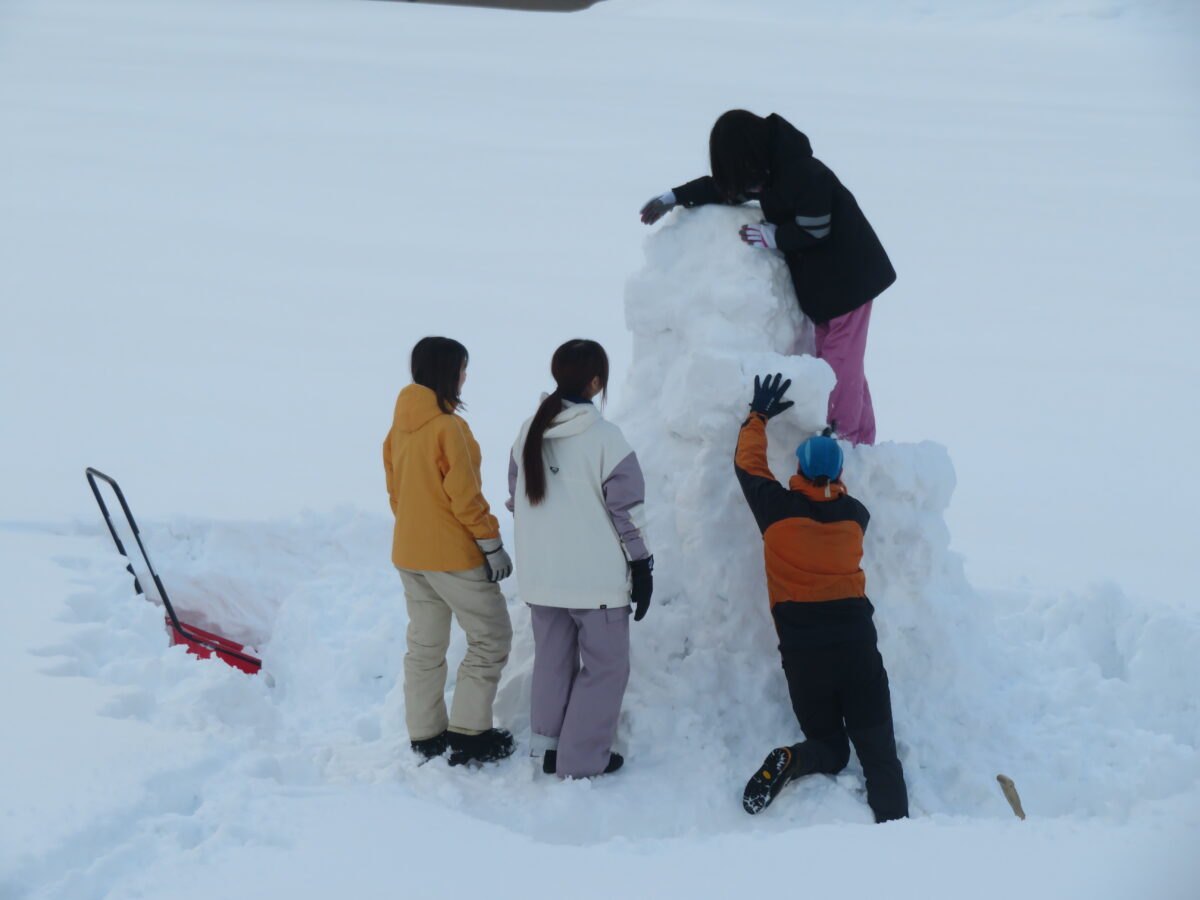
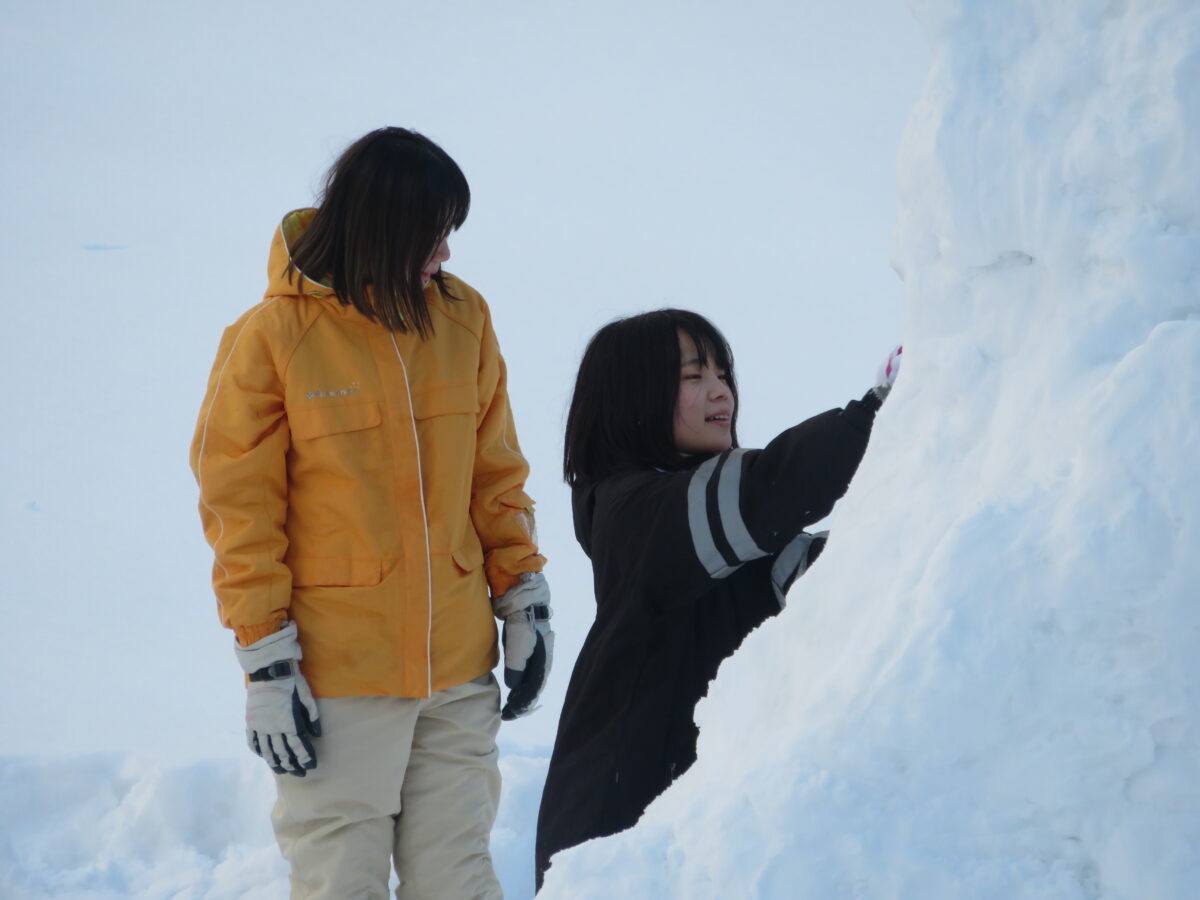
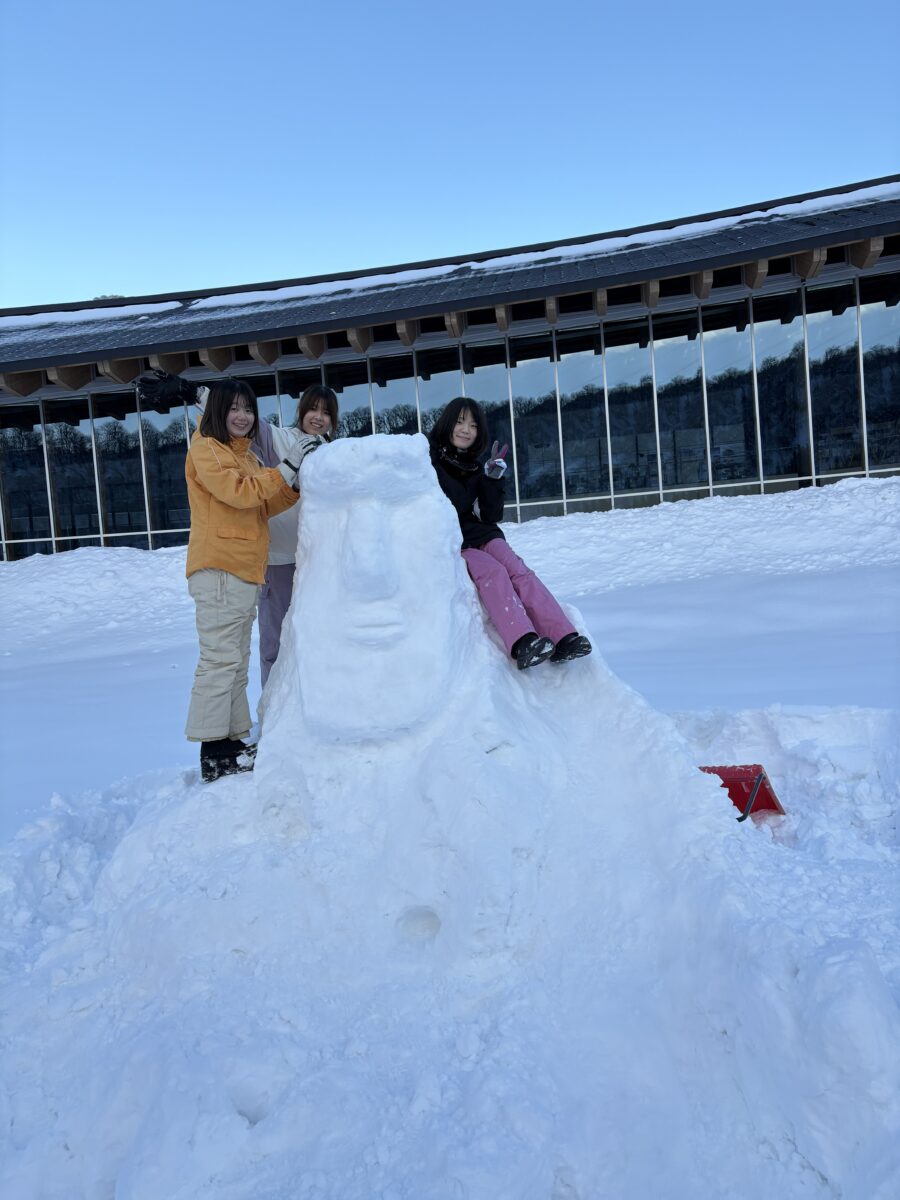
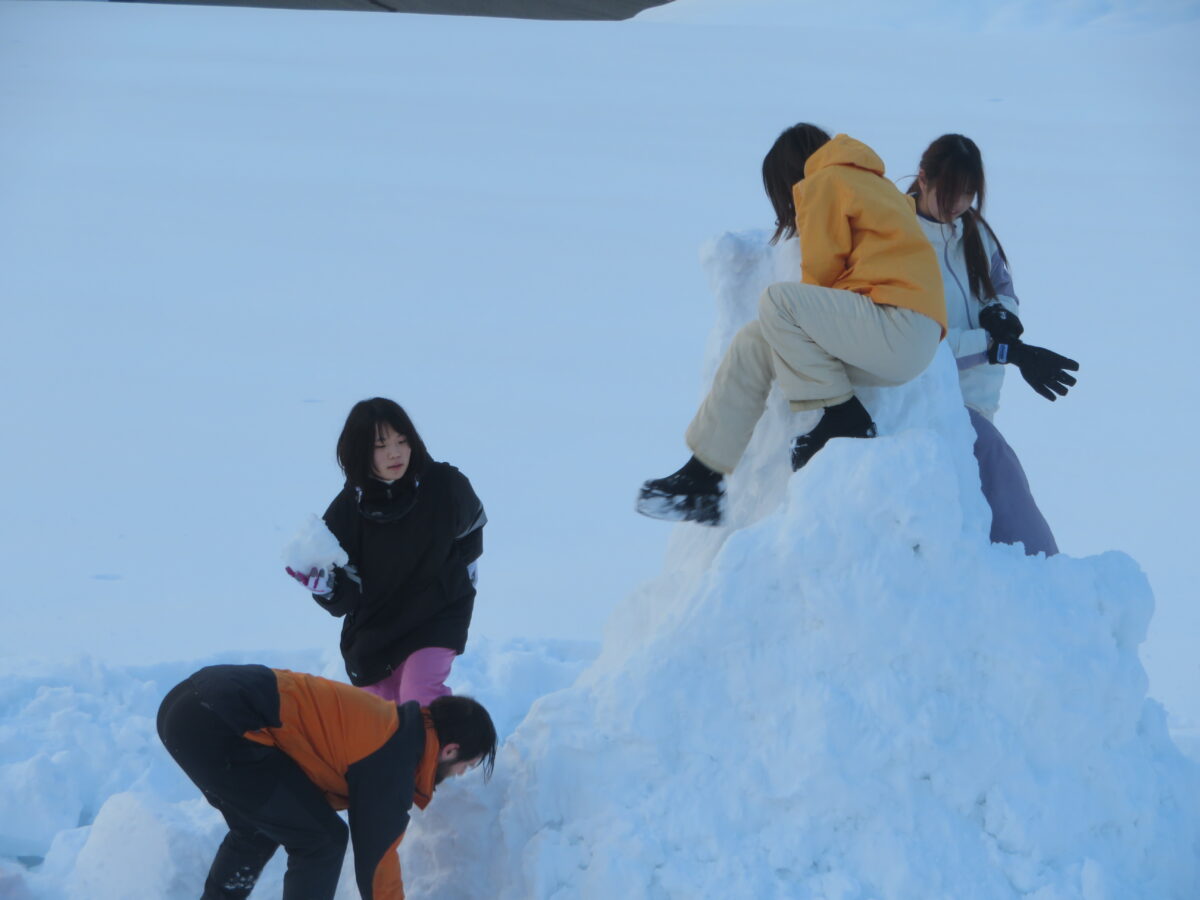
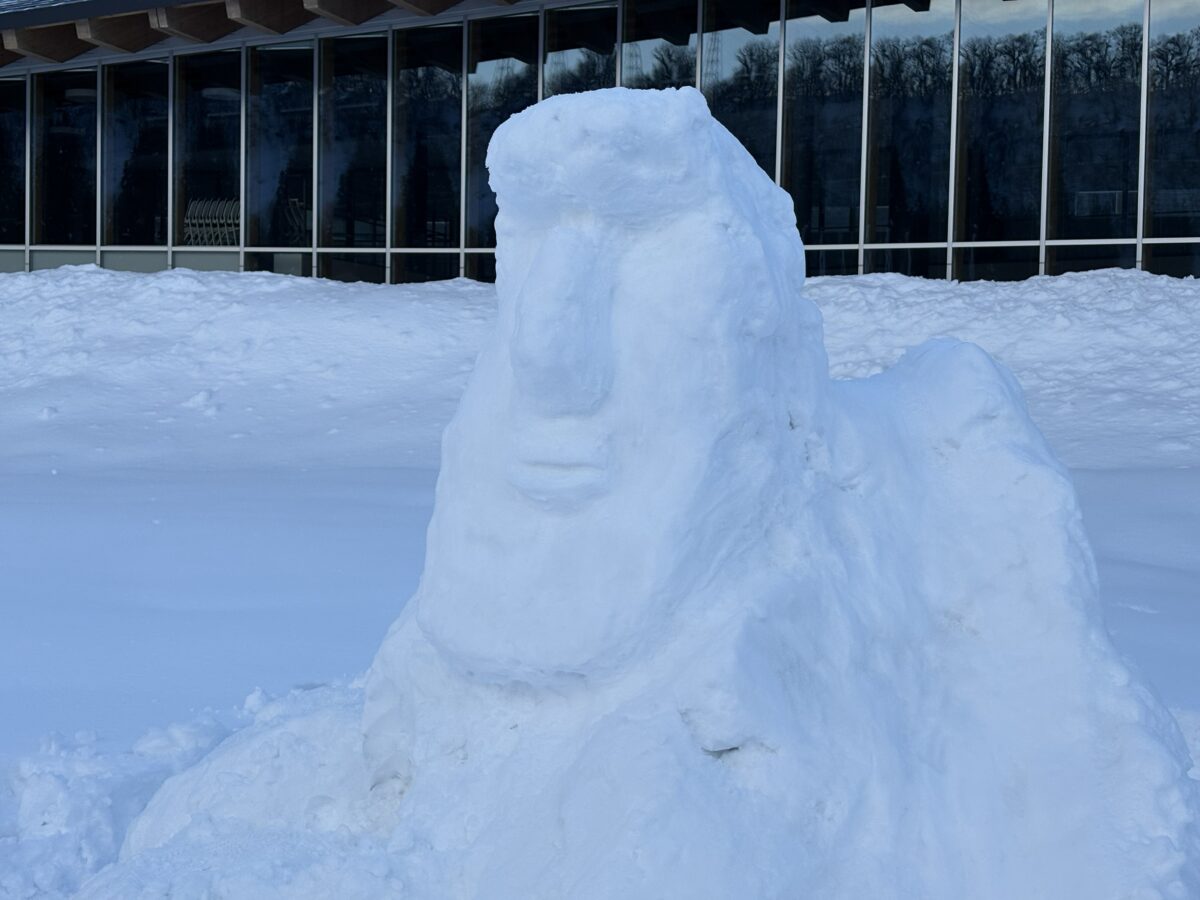
Surrounded by the rich winter nature of the HAKUSANROKU (Foothills of Mt. Hakusan) area, the students worked together, played in the snow, and spent a smile filled time together. This final Health and Physical Education course of the school year became a valuable snow country experience that strengthened relationships among students and created wonderful memories.
Yuri Makada
[動画]KOGEIデジタルアートミュージアム」展示作品より。 自在置物《Protectopus》プロジェクションマッピング
併設校の金沢工業大学 メディア情報学科・出原立子研究室の4年生5名が携わった工芸とデジタルアートを融合した展示会、「KOGEIデジタルアートミュージアム」が、2025年10月11日(土)・12日(日)の2日間、金沢市内の石川県政記念しいのき迎賓館で開催されました。
展示で特に注目を集めたのが、金工作家の古田航也氏の自在置物《Protectopus》を題材としたプロジェクションマッピング。金属ならではの精緻な可動構造と曲線美を持つ《Protectopus》(タコ)に映像が重なり、作品が呼吸し、動き出すかのような錯覚を生み出しました。
この演出を手がけたのは、国際高専を2024年に卒業し、併設校の金沢工業大学メディア情報学科3年次に編入学した徳山美結さんでした。
今年、金沢工業大学大学院への進学も決まっている徳山美結さんに話をお聴きしました。
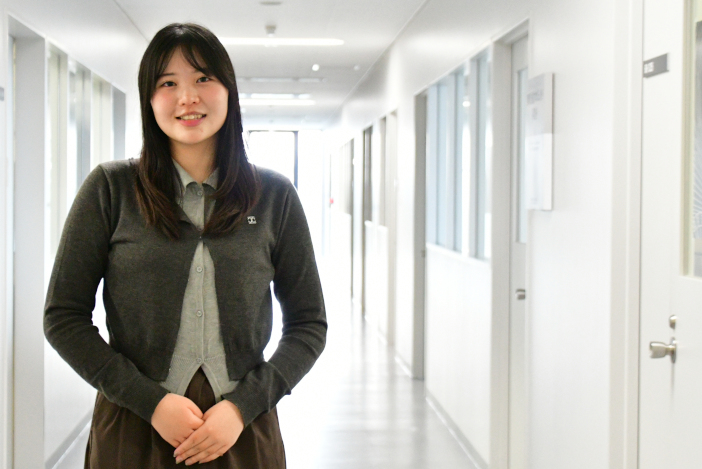
金沢工業大学メディア情報学科4年の徳山美結さん。今年、金沢工業大学大学院への進学も決まっている金沢工業大学メディア情報学科4年の徳山美結さん。今年、金沢工業大学大学院への進学も決まっている
―― そもそも金沢工業大学への編入を考えたきっかっけについて教えてください。
徳山 国際高専時代からインラタクティブなプロジェクションマッピングに興味を持っていました。
国際高専では3年生は全員1年間のニュージーランド留学を行うのですが、私が3年になった頃は世界中で新型コロナウイルス感染症が蔓延していた時期で、ニュージーランドも2020年3月に国境閉鎖を行っていました。
私たちは当時、ニュージーランドのオタゴポリテクニクの授業をオンラインで受講していました。3年生は「エンジニアリングデザインIII」という授業で課題解決に取り組むのですが、私は同級生の田中杏奈さんとで「SDGs達成に役立つプロジェクションマッピング」をテーマに、複雑なSDGsのトレードオフをプロジェクションマッピングを通じて学習できるゲームを考案しました。
このゲームは、海、森、町などを再現した人間社会のアニメーションを、白山麓キャンパスの校舎内にあるボルダリング用の壁に映し出して遊びます。プレイヤーが壁を登って該当箇所をタッチすると、トレードオフの結果が変化として反映されます。例えば二酸化炭素を減らすために風力発電所を建設すると、森林とそこに住む動物が減ってしまうという仕組みです。ゲームの開発後は、実施テストを重ねて、壁に投影されたアニメーションが見やすくなるように、カラーバランスや部屋の明るさなどを調節しました。
国際高専の3年生がNZの教授陣を前にオンラインでプレゼン
グローバル子女教育便利帳 2022.03.24
https://kikoku-benricho.com/ict-presentation-online/
また5年生の卒業研究でも田中さんとプロジェクションマッピングを使用したSDGs教材ゲーム開発に取り組みました、3年生のときに実現できなかった「触れる」プロジェクションマッピングに再度挑戦したのです。
前学期は併設校の金沢工業大学メディア情報学科の出原立子教授の指導を受けながら技術の修得に努め、人間の動きに反応するプロジェクションマッピングのプロトタイプを制作しました。そして後学期では実際に、SDGsのメリットとデメリットをダイレクトに体験できるゲームをTouch DesignerとReal Senseを用いて開発しました。デモンストレーションでは壁に映し出された映像に手でジェスチャーすることで変化が起きます。例えば電気自動車を増やせばCO2が減る一方コストは増えるトレードオフの様子が視覚的にわかるようにしました。
国際高専卒業後は、「金沢工業大学」というよりも、インタラクティブなプロジェクションマッピングができる「出原研究室」に入りたかった。だから金沢工業大学 メディア情報学科を編入先に選びました。
エンジニアリングデザインVA 前学期成果報告会
国際高専トピックス 2023年8月2日
https://www.ict-kanazawa.ac.jp/2023/08/02/24046/
5年生のエンジニアリングデザイン最終発表
国際高専トピックス2024年2月20日
https://www.ict-kanazawa.ac.jp/2024/02/20/26397/
―― 一貫しているのですね。金沢工業大学3年次編入学後はどうでしたか?
徳山 環境がガラッと変わり、新しい環境に慣れるのに大変でした(笑)
――3年次後学期に念願の出原研究室に決まりましたね。
徳山 「作品制作」という授業の中で、出原先生から「金沢市が毎年開催しているKOGEIフェスタ!が来年(2025年)に開催10周年をいう節目を迎えるにあたり、新しいこととして工芸とデジタルを組み合わせた展示を計画しているのだが、やってみないか」とお話がありました。そこで展示作品へのプロジェクションマッピングについて、見え方、見せ方について検討を行い、後学期の半年分かけプロトタイプを作りました。
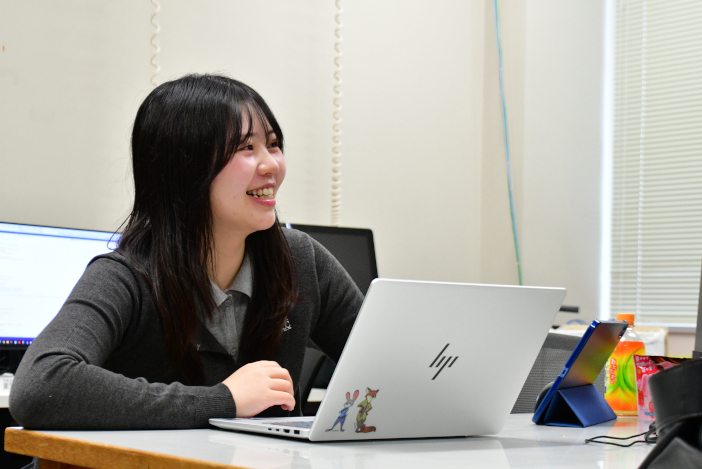
出原研究室で徳山さん(2026年1月13日)出原研究室で徳山さん(2026年1月13日)
――徳山さんは自在置物《Protectopus》(タコ)に取り組みましたね
徳山 2025年4月の段階で金沢市との話が進み、10月に実施することになったので、研究室の4年生5名で制作を進めることになりました。「金属工芸」「加賀友禅」「珠洲焼」の3点を選び、工房を訪問。作品を見せて頂いたり、触ったり、体験させていただいたりして、演出のアイデアを考え、どれにするか決めていきました(珠洲焼はオンラインで実施)。
・金属工芸:金工作家 古田航也氏
・加賀友禅:加賀友禅作家 毎田仁嗣氏・毎田健治氏
・珠洲焼:珠洲焼作家 中島大河氏
私は、インタラクティブなプロジェクションマッピングがしたかったので、どの作品が調和するのか考え、金属工芸を選びました。そして武藤慎哉さん(メディア情報学科4年)との二人で《Protectopus》(タコ)に取り組むことにしました。
――《Protectopus》(タコ)を選んだ理由は?
徳山金工作家の古田さんは鍛金・彫金と呼ばれる技法を使い銅や真鍮の板を金槌でたたき制作をされています。特に「自在置物」と呼ばれる江戸時代からある技法を使った作品づくりをされていて、「現代の自在置物」をテーマにした可動式の動物オブジェに取り組んでいます。関節があるので、本物の動物の様に動かせる仕組みになっているほか、制作した動物に甲冑を着せることで、劣悪な環境下でも生き抜いて行くための人間に対する「抵抗」と「共生」を表現しています。
特に《Protectopus》は長い「足」に一個一個関節がつけてあるので、見た瞬間「めちゃ存在感がある!」と思いました。変化していく海洋環境から身を守るため、ガスマスクを纏っているが、その一方で、人間と共生していくことを望んでいる。そういうコンセプトも興味深く感じました。
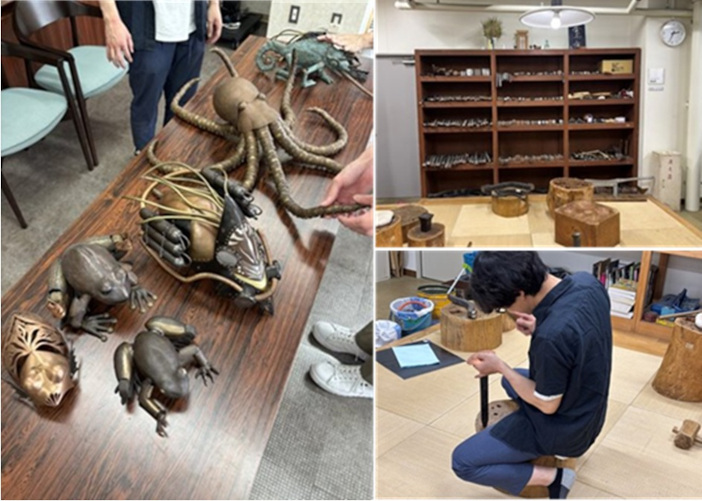
金工作家の古田さんの工房で。
《Protectopus》(タコ)は幅約70cm、高さ20cm。
一個一個の関節を曲げることができ、「めちゃ存在感がある!」とこれに決めた金工作家の古田さんの工房で。
《Protectopus》(タコ)は幅約70cm、高さ20cm。
一個一個の関節を曲げることができ、「めちゃ存在感がある!」とこれに決めた
工房を訪れ、《Protectopus》を選んだのは6月末でした。でも7月は約2週間のドイツ短期留学にも行ったので(後述)、制作は夏休み中に行いました。私はUnityを使い、C#でプログラムを書き、武藤さんはBlenderで3Dモデルを制作しました。
Unityを使ったのは、センサを使ったリアルタイム制御をしたかったからです。作家の古田さんも「動く面白さを伝えたい」と希望されたこともありました。
センサは展示台の下に据え(270度検知)、足元を検出。人を検出すると、お魚が出てきたり、タコの足からアブクが出るといったインタラクティブな作品にしました。人間とタコが同じ空間をシェアすることで、共生を体験的に伝えるインタラクションを目標にして制作しました。
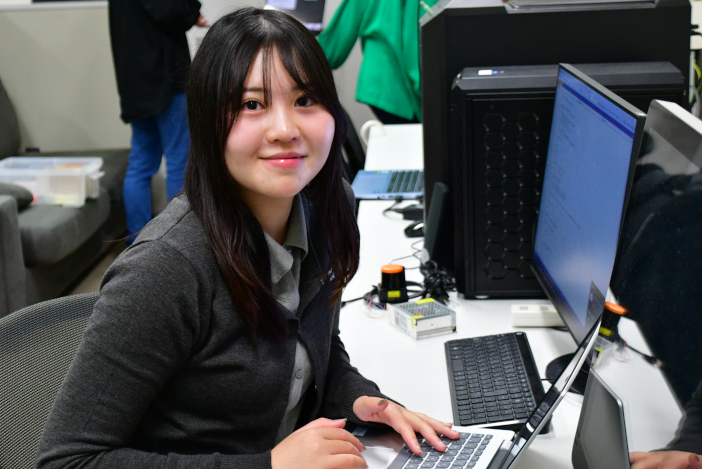
Unityを使い、C#でプログララムを記述。センサを使ったリアルタイム制御を行ったUnityを使い、C#でプログララムを記述。センサを使ったリアルタイム制御を行った
――そして「KOGEIデジタルアートミュージアム」の開催日が迫ってきました。
徳山 作品の完成はめちゃギリギリでした(笑)。出原研究室が入る金沢工業大学やつかほリサーチキャンパスの感動デザイン工学研究所1階のスタジオで予備実験を実施したのですが、スタジオでは天井からの投影まではできません。本番と同じ環境でできたのは、「KOGEIデジタルアートミュージアム」が始まる2日前の、しいのき迎賓館の会場ででした。
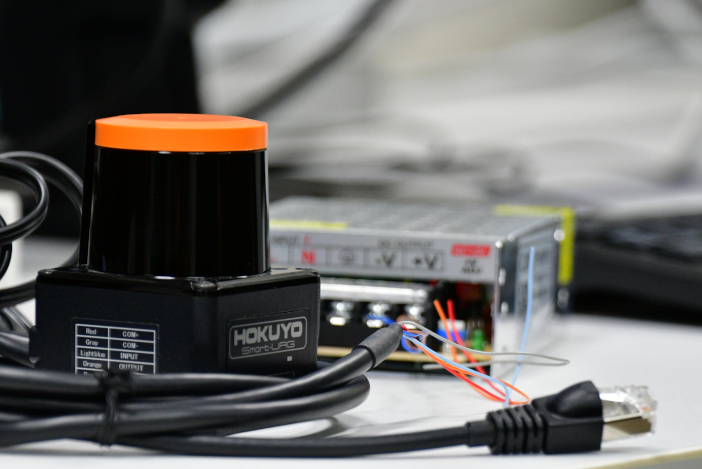
展示台の下には270度検知できるセンサを設置。人の動きでプロジェクションマッピングの映像が変化するインタラクティブな作品を目指した展示台の下には270度検知できるセンサを設置。人の動きでプロジェクションマッピングの映像が変化するインタラクティブな作品を目指した
――観覧者の反応はどうでしたか?
徳山 研究室としいのき迎賓館とでは環境が全然違うので、センサが動くかどうか、イベントが始まるまで不安でした。また観覧者がどういう反応をするのかも心配でした。
でも会期中、小さなお子さんがたくさん来てくれました。展示台が低く、小さい子は作品との距離が近く、迫力を感じたようです。またお魚がでてくることだけに興味があったのではなく、作品も見てくれました。「どうしてタコはガスマスクつけているの?」といった子供らしい質問もあり、私は「海に捨てられたゴミから自分を守るためだけれども、本当はお友達と仲良くしたいんだよ」と説明しました。同行した大人の方も「なるほど」と納得していただいたようです。
――作品制作に入る前の7月の約2週間、ドイツに留学していましたね。
徳山 実は私が3年生だった2024年の後学期、金沢工業大学のドイツの提携校・Hochschule Hamm-Lippstadt(HSHL。英語名 Hamm-Lippstadt
University of Applied Sciences)からテレサさんが留学していてからテレサさんが留学していて、仲良くなったことと、テレサさんと話す中でドイツに興味を持ったこと、そしてこれは一番の動機ですが、テレサとドイツで会いたかったからです(笑)。
あと、コロナ禍で国際高専時代にニュージーランドに行けず、不完全燃焼だったことも大きかった。
金沢工業大学にはHSHLへの短期留学プログラムとして「HSHLサマースクール」というプログラムがあり(定員2名)、応募することにしました。応募には「IELTS5.0以上」「TOEFL iBT 60以上」といったスコアが求められていましたが、国際高専で学んでいましたので、もちろんクリアしています。またこのプログラムは、菱機工業株式会社(本社 石川県金沢市)からの奨学金と「こぶし会」という金沢工大学園の同窓会からの支援金があり、ありがたかったです。
――約2週間のドイツの滞在はどうでしたか?
徳山 めちゃ濃い2週間でした。毎日、企業訪問があり、海外の企業の職種や職場の雰囲気がわかり、海外で仕事をするというイメージが具体的に持てました。また国際高専での英語の学びを実感した留学でもありました。国際高専ではSTEM科目を英語で学んできたので、専門的な英語表現や用語に慣れていましたし、専門分野が異なる企業による英語での説明についても、内容を理解することができました。 STEMの専門単語を知っていたことで、とても助けられました。
――4月からは金沢工業大学の大学院に進学予定ですね。
徳山 まず1月は今年度取り組んだインタラクティブ プロジェクションマッピングを卒業研究(プロジェクトデザインIII)としてまとめます。大学院進学後も出原研究室で研究を続けます。また機会があれば、インタラクティブな工芸アートのような作品づくりに携わりたいと思っています。