




 Hello everyone. I’m James Taylor, one of the English teachers at ICT’s Hakusanroku Campus.
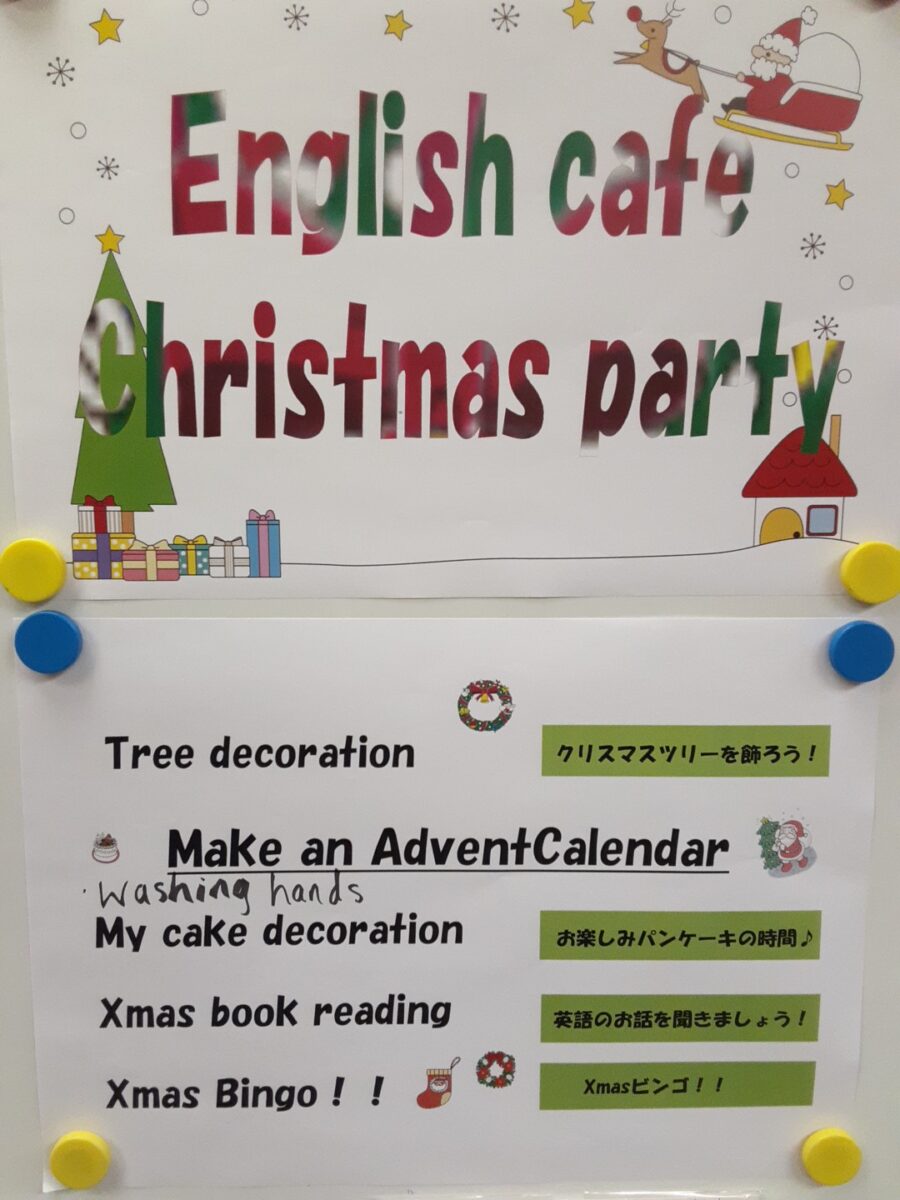
On Wednesday, December 3rd, 2025, I went to the Oguchi Community Centre to lead the annual English Café Christmas Party for local residents. This time, we had 17 children and 5 adults from the Yoshino, Oguchi, and Shiramine areas. With almost perfect timing, we had our first proper snowfall about an hour before the party began!
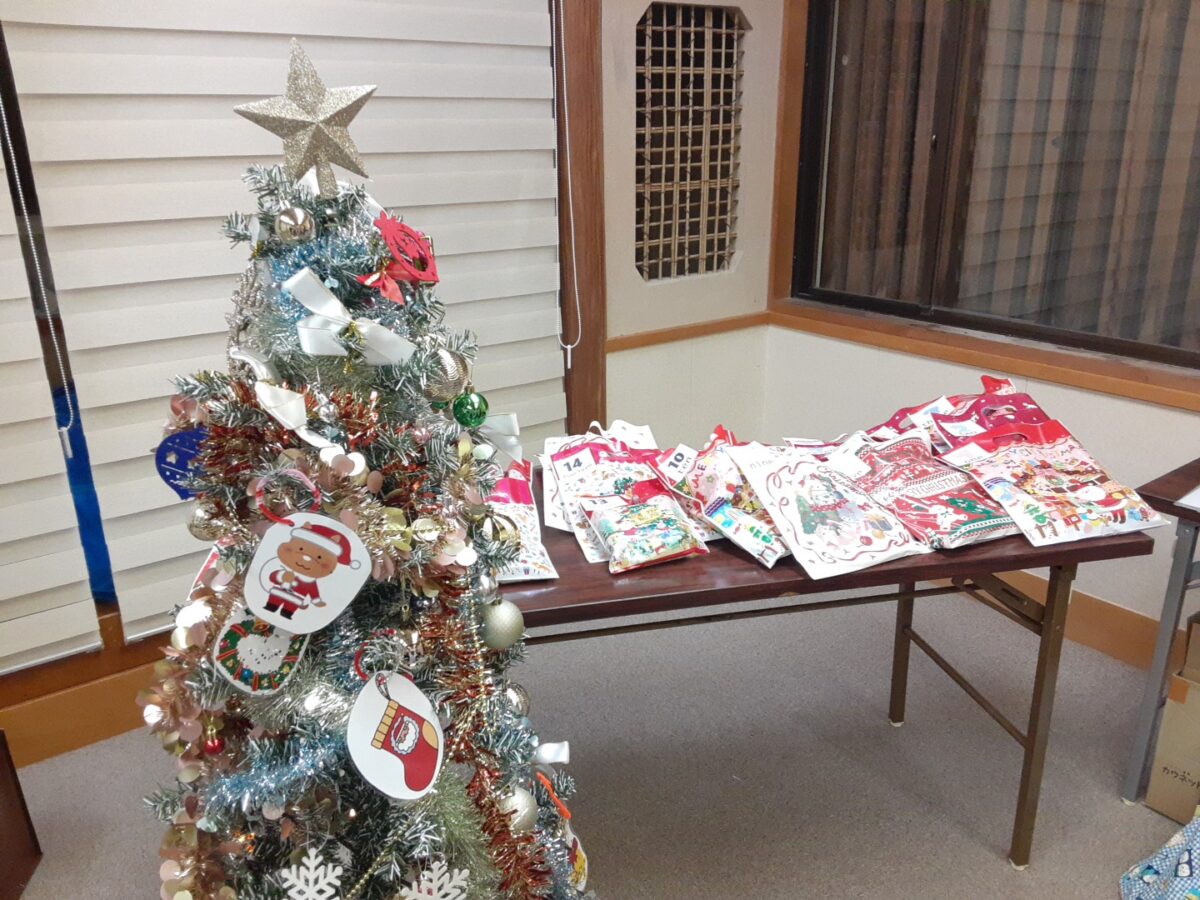
Just like every year, we started by decorating the Christmas tree. Since the older primary school children finished school a bit later than the younger ones, the younger children were able to finish decorating the tree in time for their older friends to see it when they arrived.
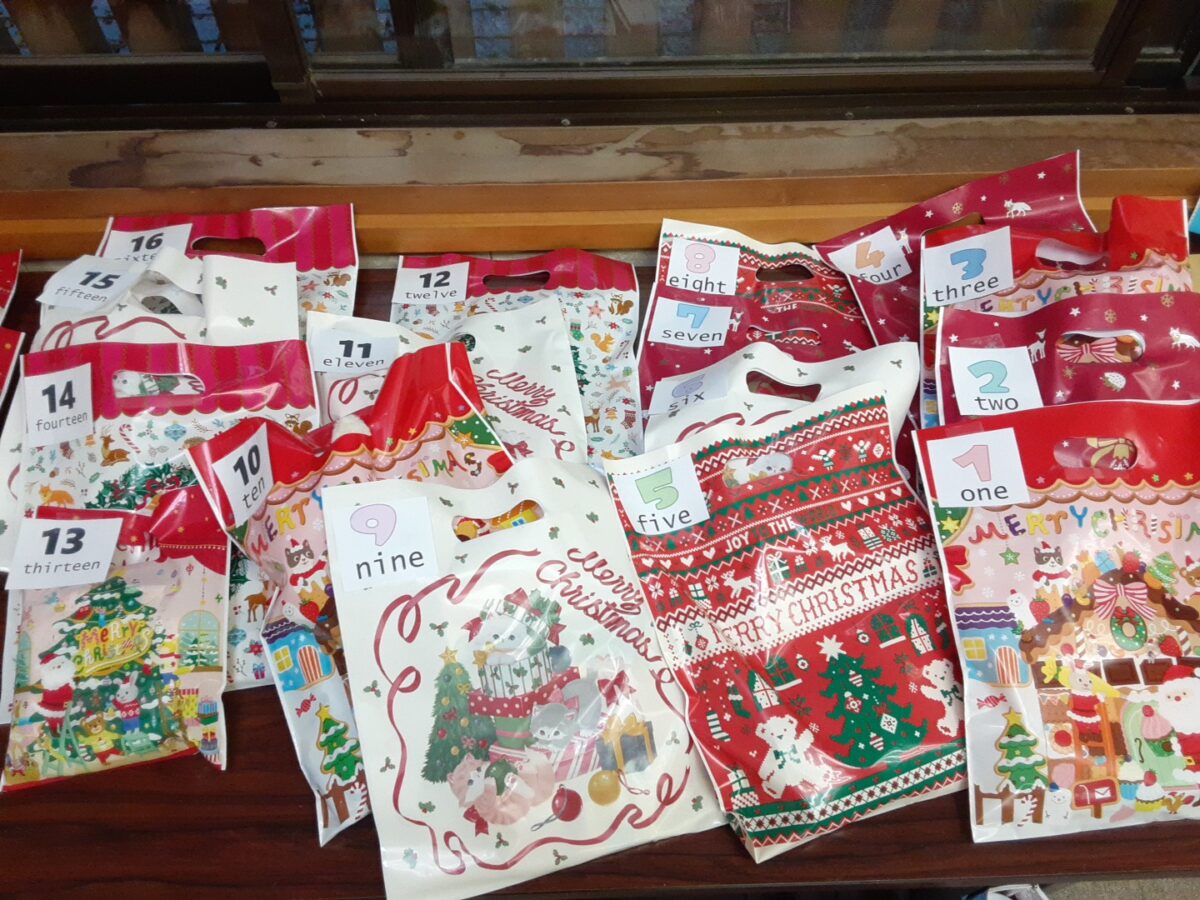
After that, everyone got the chance to make their own advent calendar. An advent calendar is a calendar with 24 or 25 doors, one for each day from the start of December to Christmas Eve or Christmas Day. Behind each door, there is usually some chocolate shaped like something Christmassy. The children at English Café were able to choose what small snacks or sweets they wanted to put behind the doors of their calendar. The advent calendars were make-it-yourself kits that the Community Centre staff bought especially for the event.
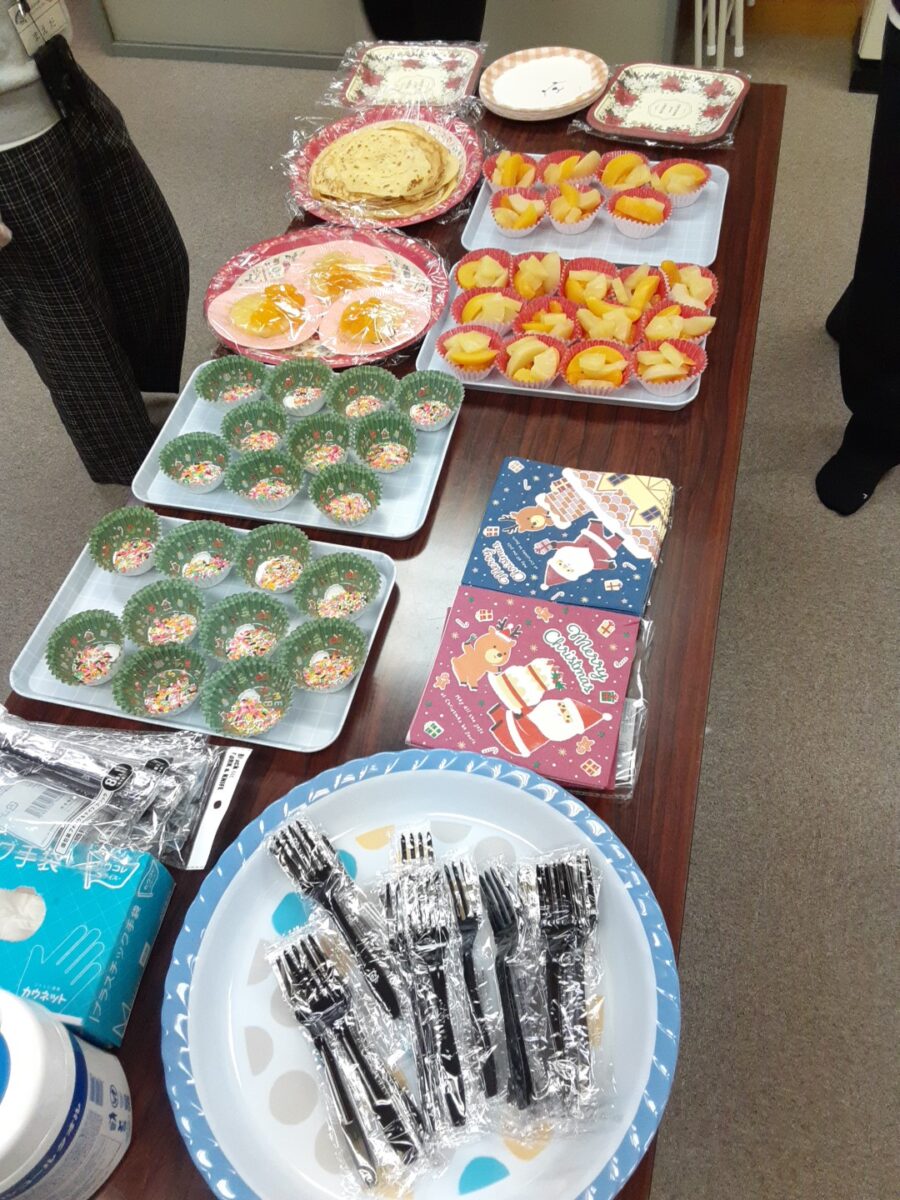
Once everyone had made their advent calendars and washed their hands, it was time to decorate some pancakes. The Community Centre staff used a British recipe and spent several hours making thin pancakes in preparation for the party, so guests were able to choose from a variety of toppings. They looked and tasted really good!
While they were eating, I read a story that was very popular when I read it to children at the Shiramine English Café in September: “Five Little Monkeys Jumping on the Bed” by Eileen Christelow.
Finally, we played Christmas-themed bingo, with prizes for everyone. Just before it was time to go home, Father Christmas came to say “merry Christmas” to everyone!
Once again, the English Café Christmas Party was an enjoyable event for children and adults, thanks mainly to the hard work and careful preparation of the Oguchi Community Centre staff, Mr. Yamashita and Ms. Nakada. I’m already looking forward to the next English Café.
James Taylor
 I am Michihiro Hayashi, a faculty advisor for the KOSEN Robocon (KOSEN Robot Contest) team. The National Competition of the KOSEN Robocon was held on Sunday, November 16th, 2025, at Ryogoku Kokugikan. Team A of ICT, mainly composed of students from Kanazawa Campus, participated in the event. This was ICT’s first appearance at the national competition in three years, since 2022.
KOSEN Robocon features a different theme every year, requiring teams to design and build new robots from scratch between the theme announcement in mid-April and the regional competition in early October. This year’s theme was “Great High Gate,” where robots had to stack cardboard boxes to create a gate and pull a cart carrying a team member through it. The higher the gate, the higher the score. At the Tokai-Hokuriku regional competition, ICT’s team “Koubako Club” won the Technical Award and advanced to the national competition via the judges’ recommendation.
For more information about the regional competition, please see the article [NHK KOSEN Robocon 2025, Tokai-Hokuriku Regional Competition].
After the regional competition, we worked on improving the robot for the nationals. First, we increased its travel speed by replacing gears and sprockets in the drive mechanism, achieving about 1.7 times faster movement. We also upgraded the claw mechanism for gripping boxes and fine-tuned the control program, doubling its speed. However, the faster movement made operation more challenging, and the student in charge of driving the robot struggled at first. To overcome this, we practiced not only on the Kanazawa campus but also at YUMEKOBO — a makerspace for students to freely create and experiment— simulating real match conditions until the operator became more comfortable with the controls.
At Ryogoku Kokugikan, the venue for the national competition, robots had to be transported between inspection areas, test runs, and waiting zones without elevators, requiring significant manpower. We asked two 5th year students who participated last year to help. Thanks to their willingness, we were able to attend the national competition as a six-member team.
In the tournament, we faced Hiroshima KOSEN’s “Itsukushima” in the first round and won 290–10. In the second round, we lost to Akashi KOSEN’s “Stackmate” 250–375. The Akashi team advanced further but was defeated by the eventual champion from Asahikawa KOSEN in the semifinals.
Roles at the national competition differed slightly from the regional event, so we asked each member for their thoughts.
Comments from Team A Members:
[Haruki Ota]
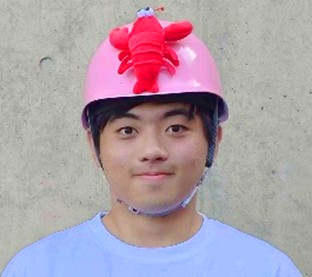
As the team leader and the operator, I found controlling the faster robot challenging. In the first match, I made a slight mistake with left and right, but overall, I managed to control the robot without any major errors.
[Haruto Shiraishi]
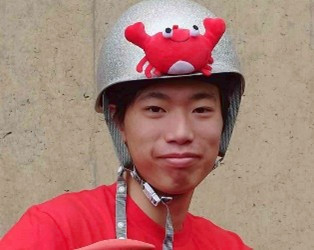 I was responsible for situational judgment and giving movement instructions. Using my experience as the operator in the regional tournament, I could make accurate decisions and guide the robot effectively.
[Imaru Oishi]

I continued riding the cart at nationals. My costume was upgraded with an original apron, giving me a market vendor look. I was happy to show off smooth movements without spinning around like some other team’s robots.
[Shiyu Sano]
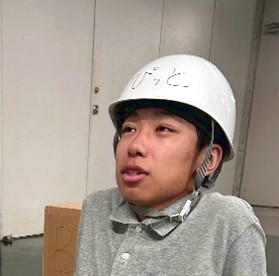 Known as “Prayer Shiyu” from the regional broadcast ending scene, I handled robot maintenance in the pit. With almost no opportunity for test runs at nationals, every adjustment and check required intense focus.
[Ryuto Hashiya]
I assisted in transporting robots and tools inside the venue. My experience from last year’s regional competition was helpful. Sharing meals with teammates in Ryogoku was also a great memory.
[Sansar Sergelen]
I helped in the pit and set up gates during the preparation time. Thanks to my height, I could place the topmost box on the gate. The yakitori in Ryogoku was delicious!
We plan to continue participating in KOSEN Robocon in the coming years. I hope that seeing the seniors’ efforts will inspire younger students to join.
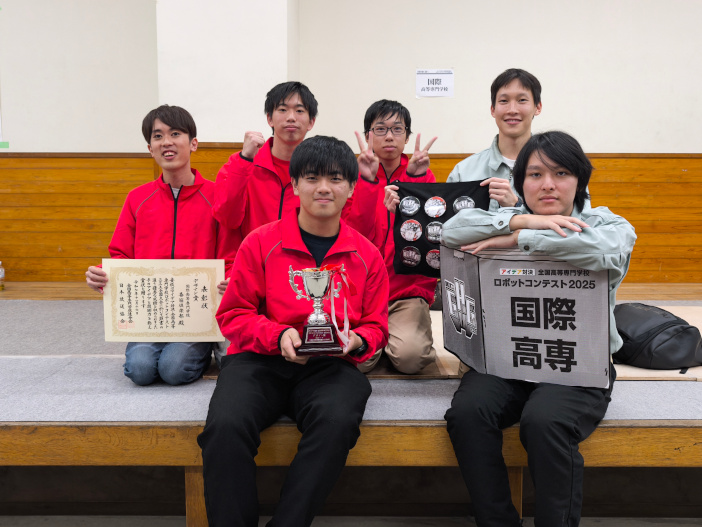
Group photo in the pit after the tournament大会終了後のピットでの集合写真
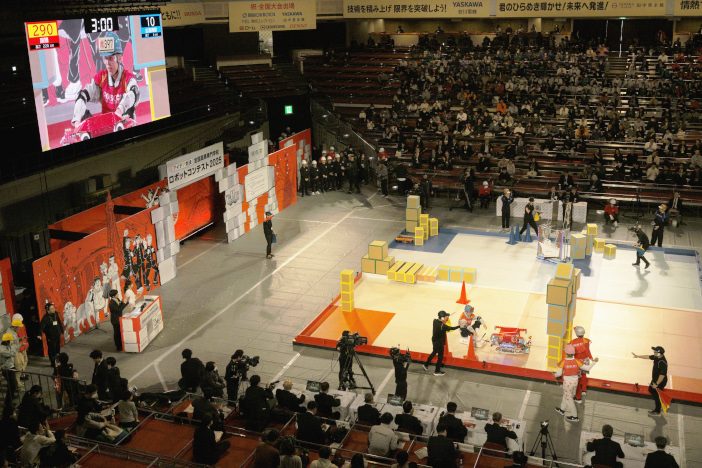
Scene from the first-round match第1回戦の試合中の様子
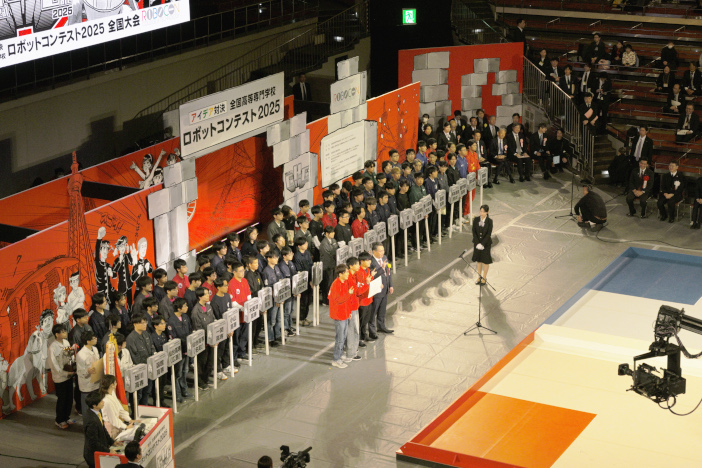
Award ceremony表彰式
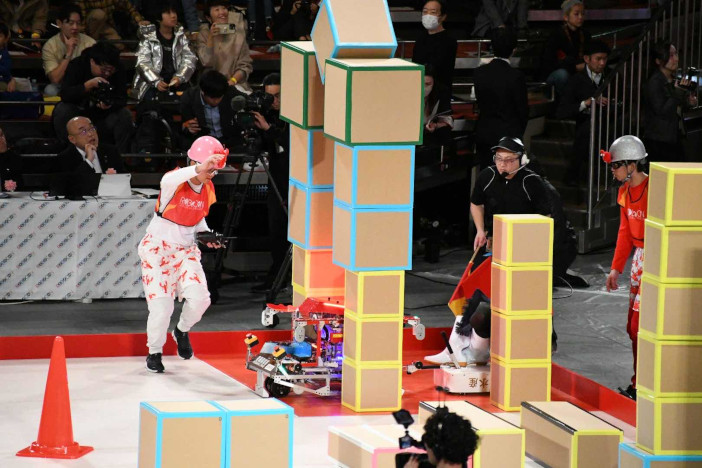
During the match (robot connected to the cart) 試合中の様子(台車との連結)
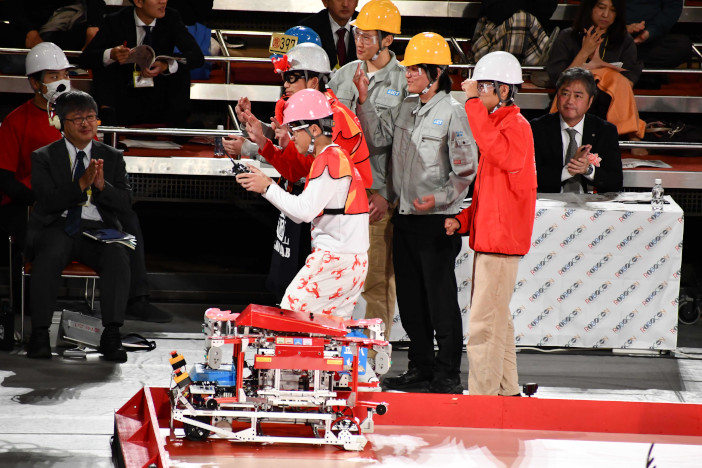
Team members gathered before the match試合前の選手集合
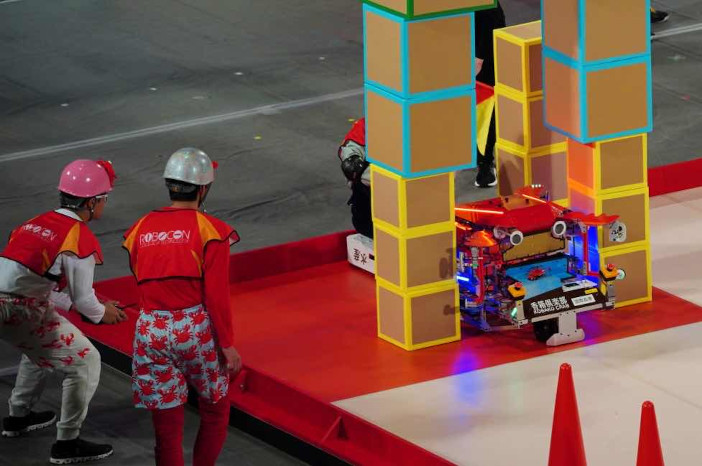
Match scene (shrimp receiving instructions from crab)試合中の様子(カニの指示を受けるエビ)
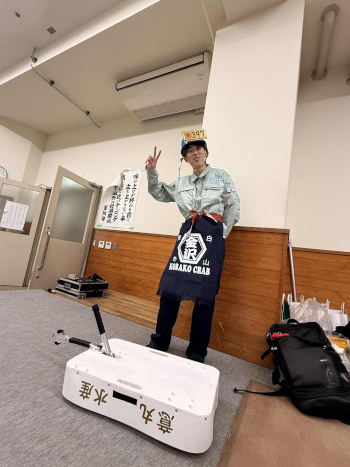
Imaru Oishi posing in the pitピットでポーズをとる大石さん
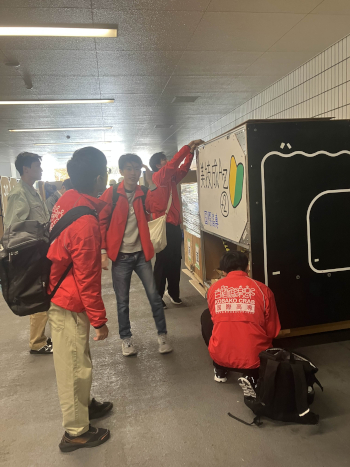
Opening the robot container upon arrival at Ryogoku Kokugikan国技館に到着したロボットのコンテナを開ける
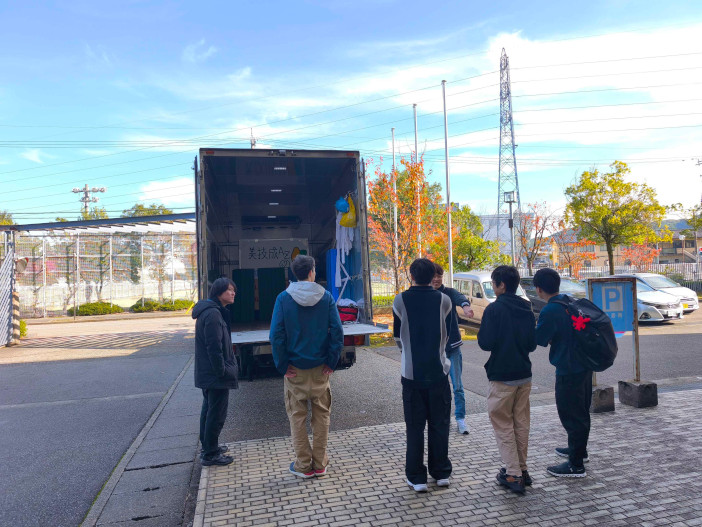
Sending off the robot from Kanazawa Campus to Ryogoku Kokugikan国技館へ出発するロボットを金沢キャンパスから見送る
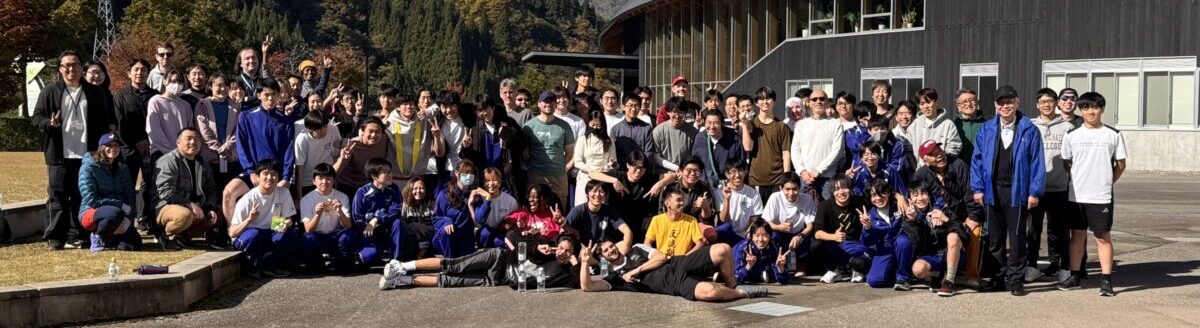

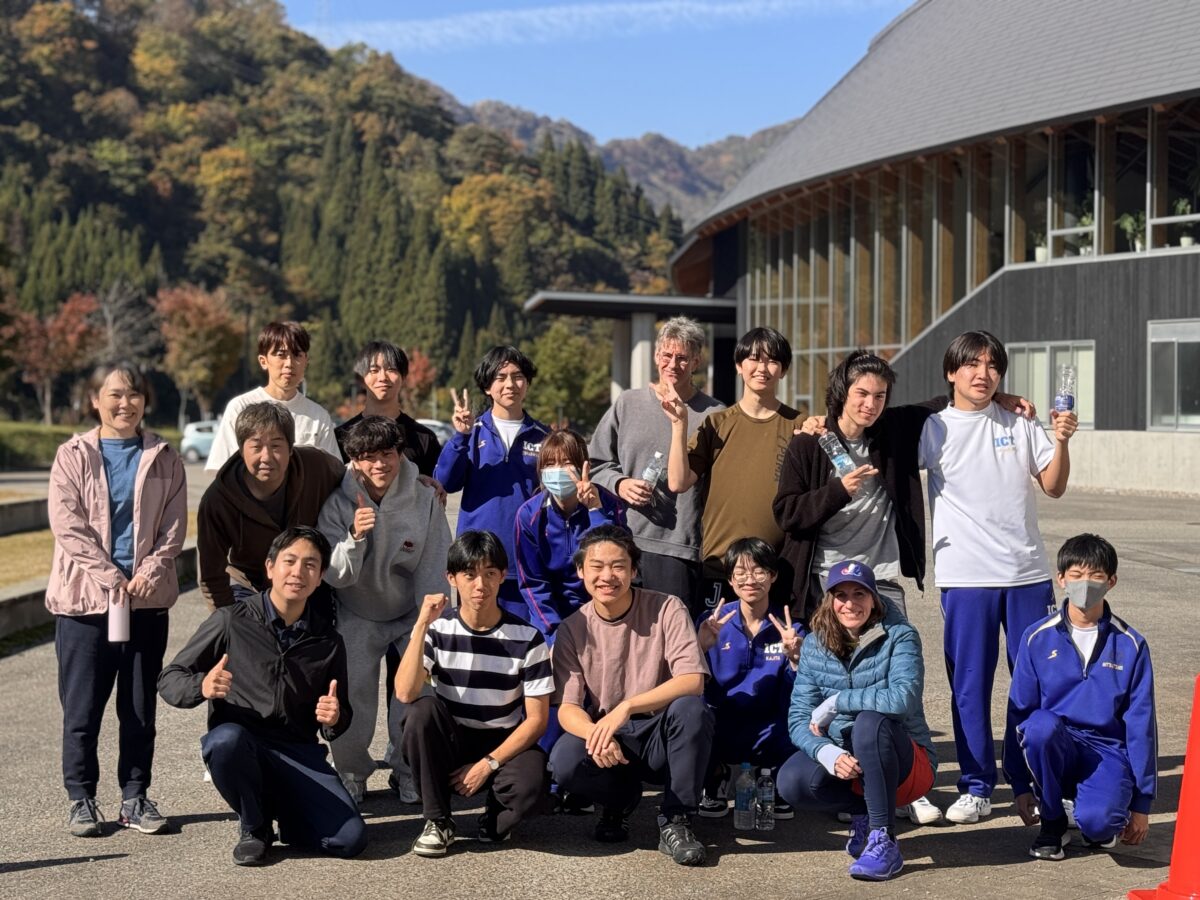
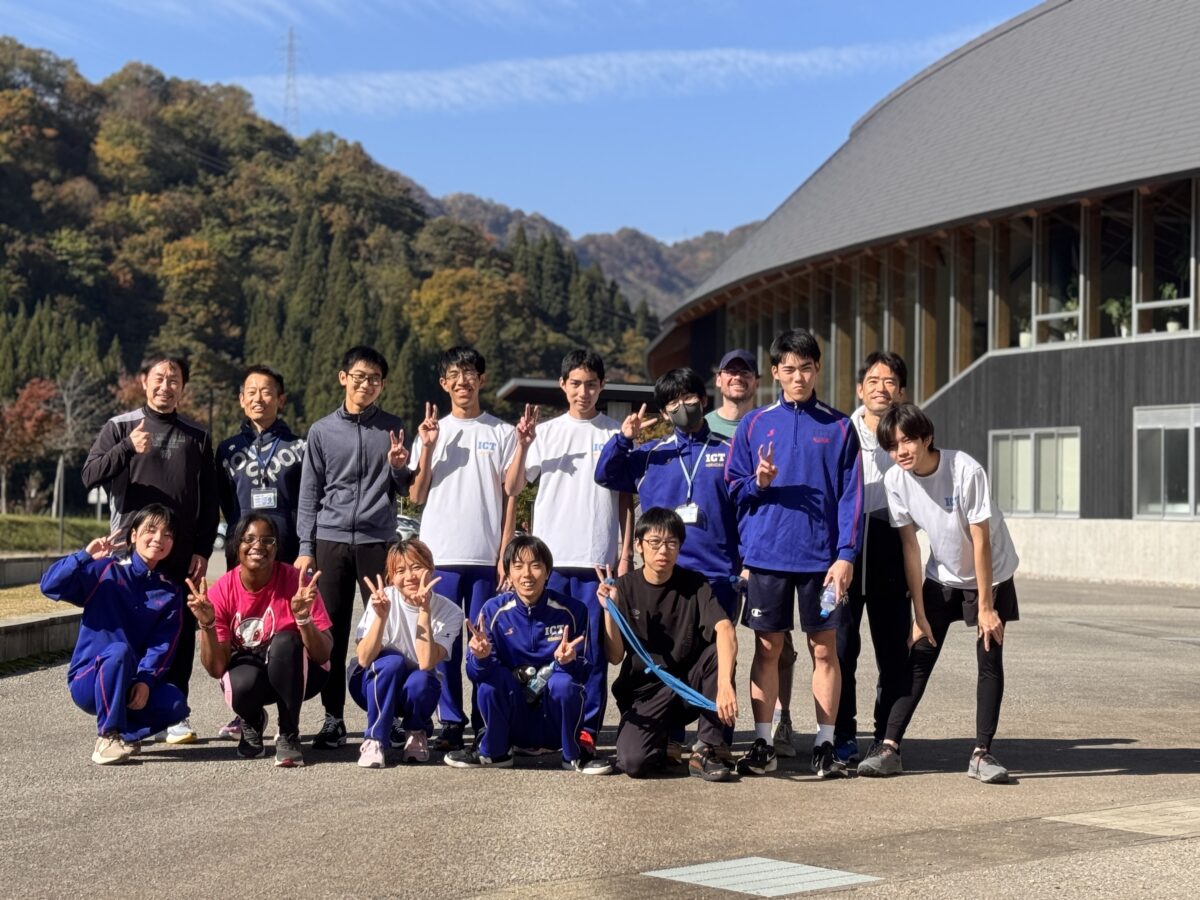
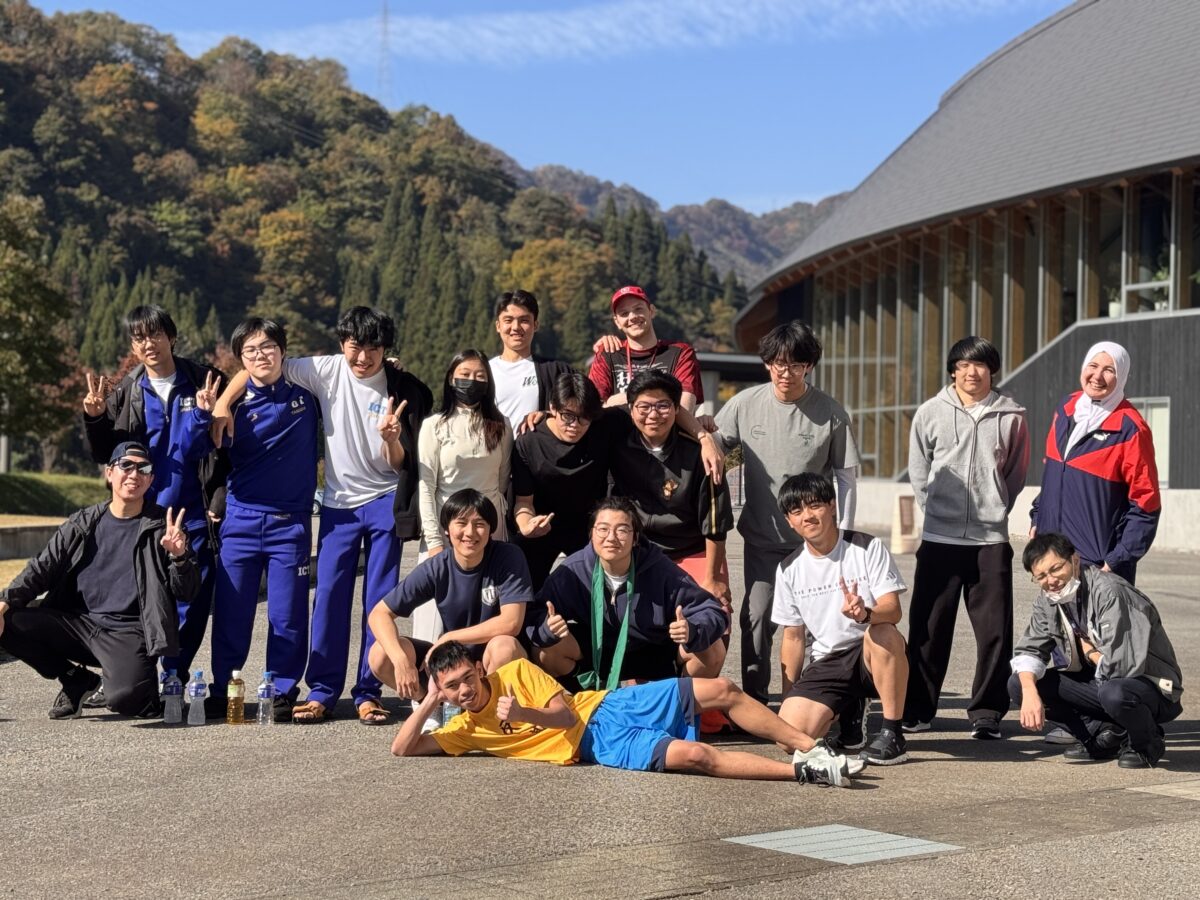
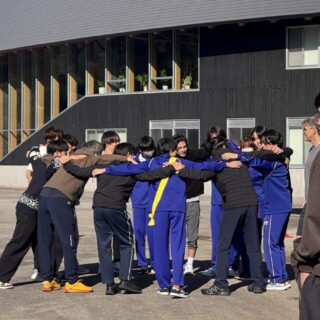
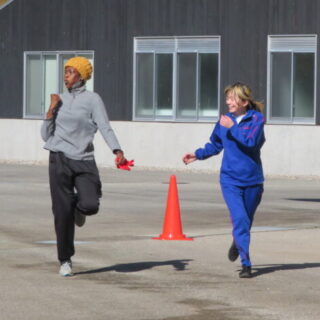
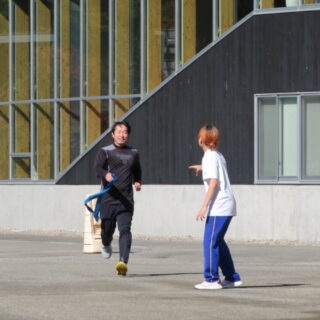
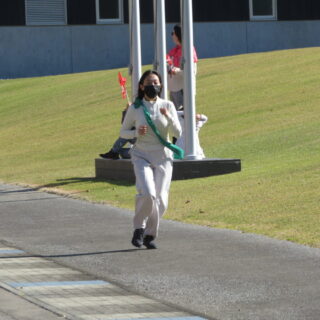
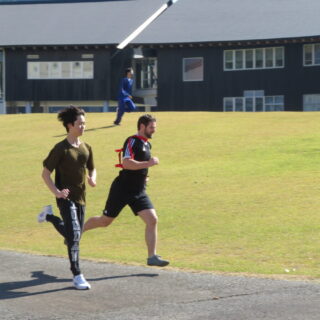
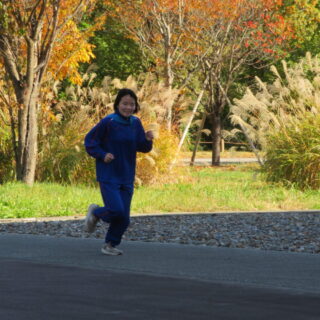
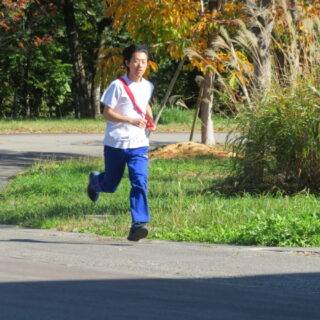
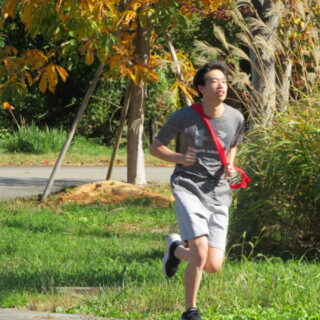
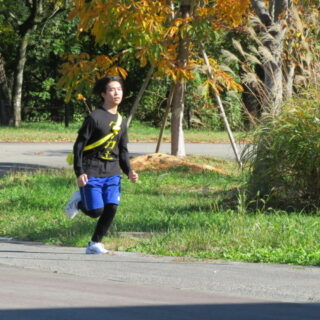
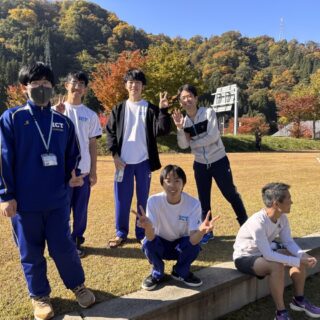
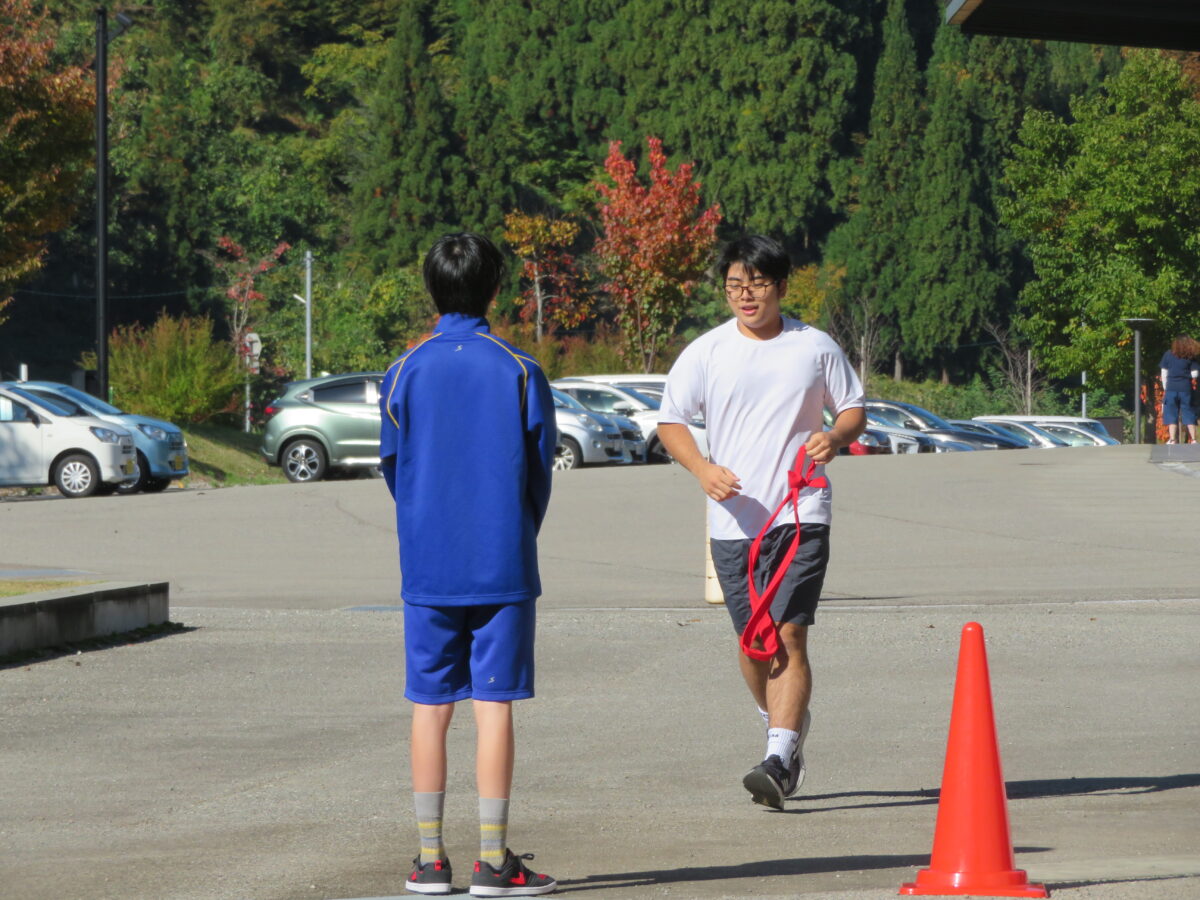
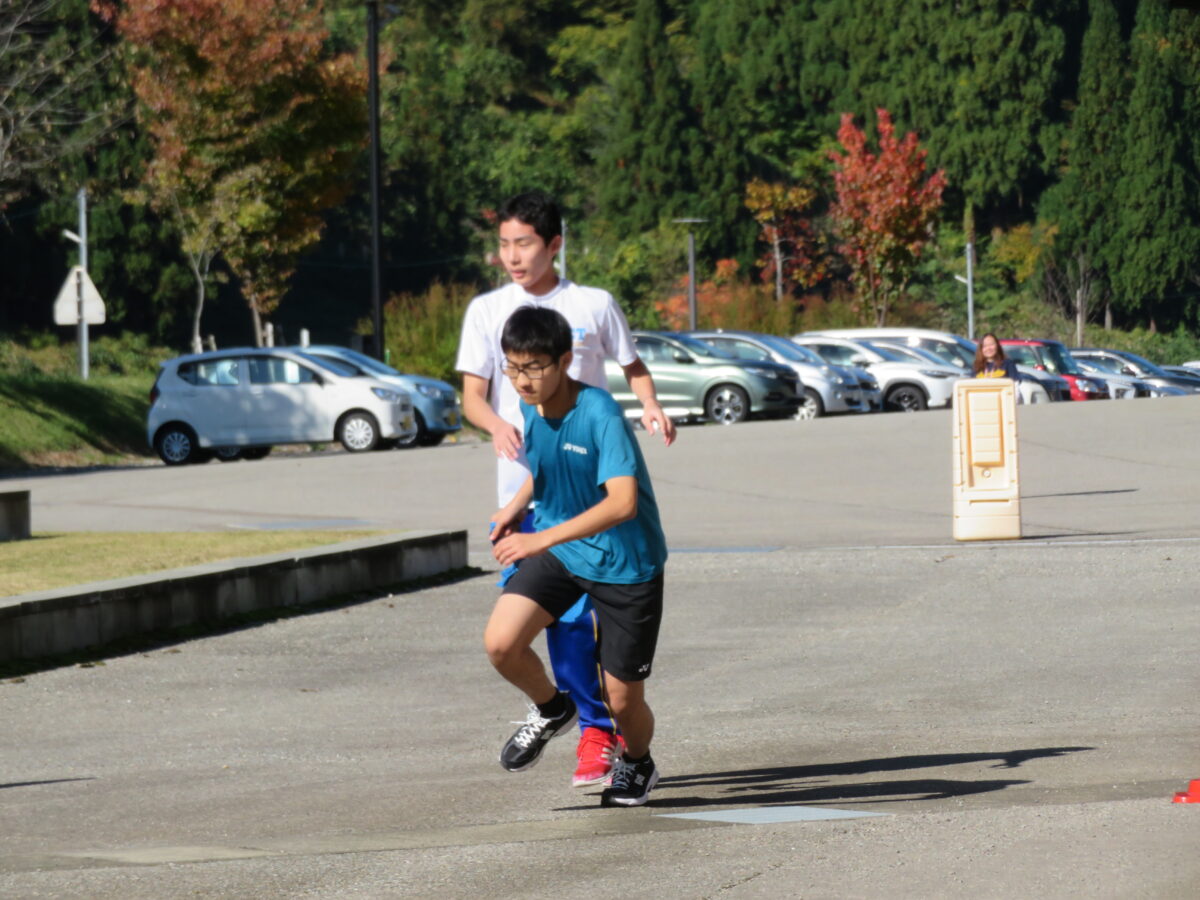
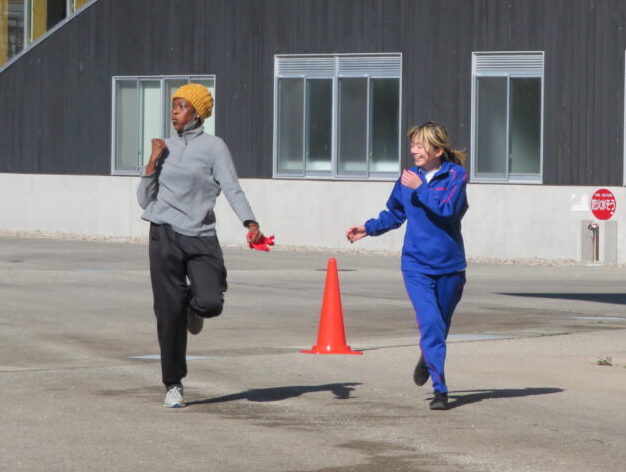
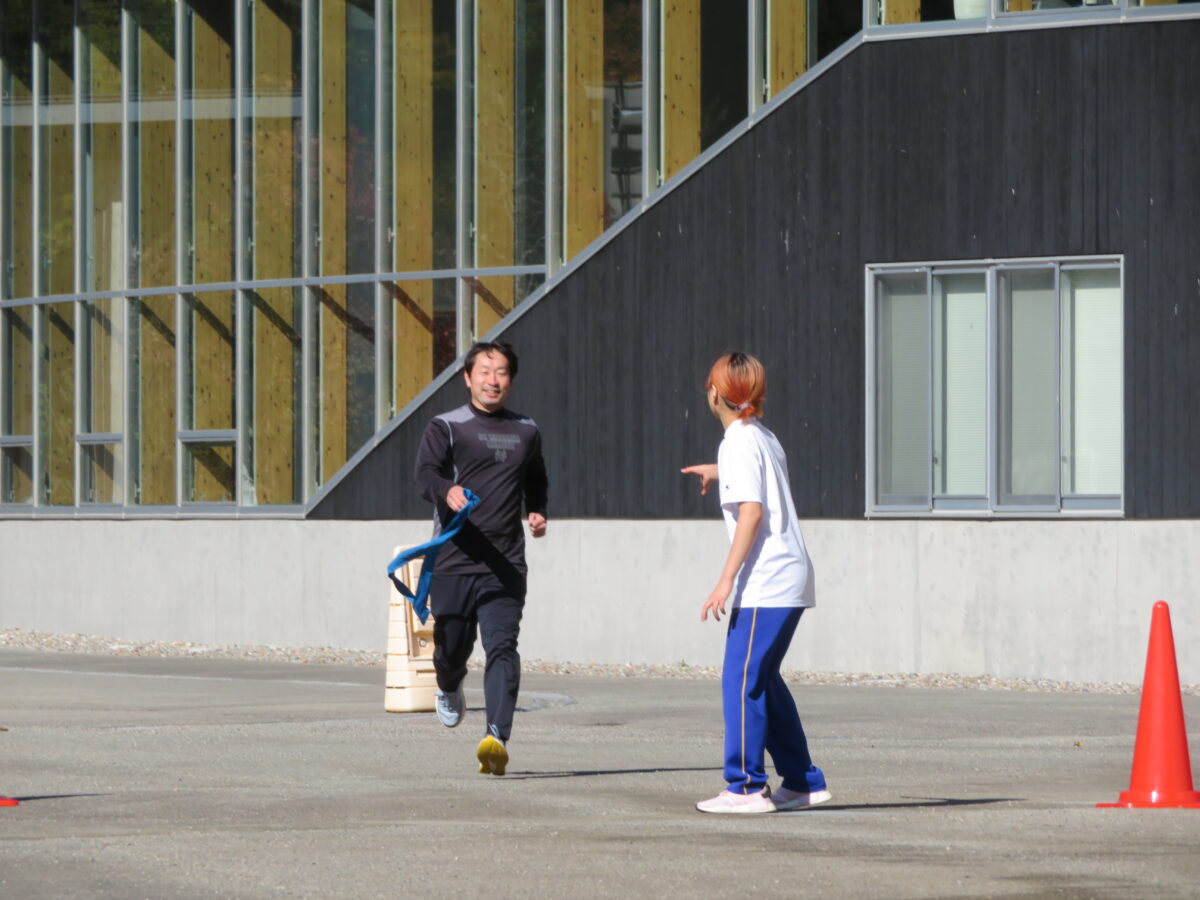
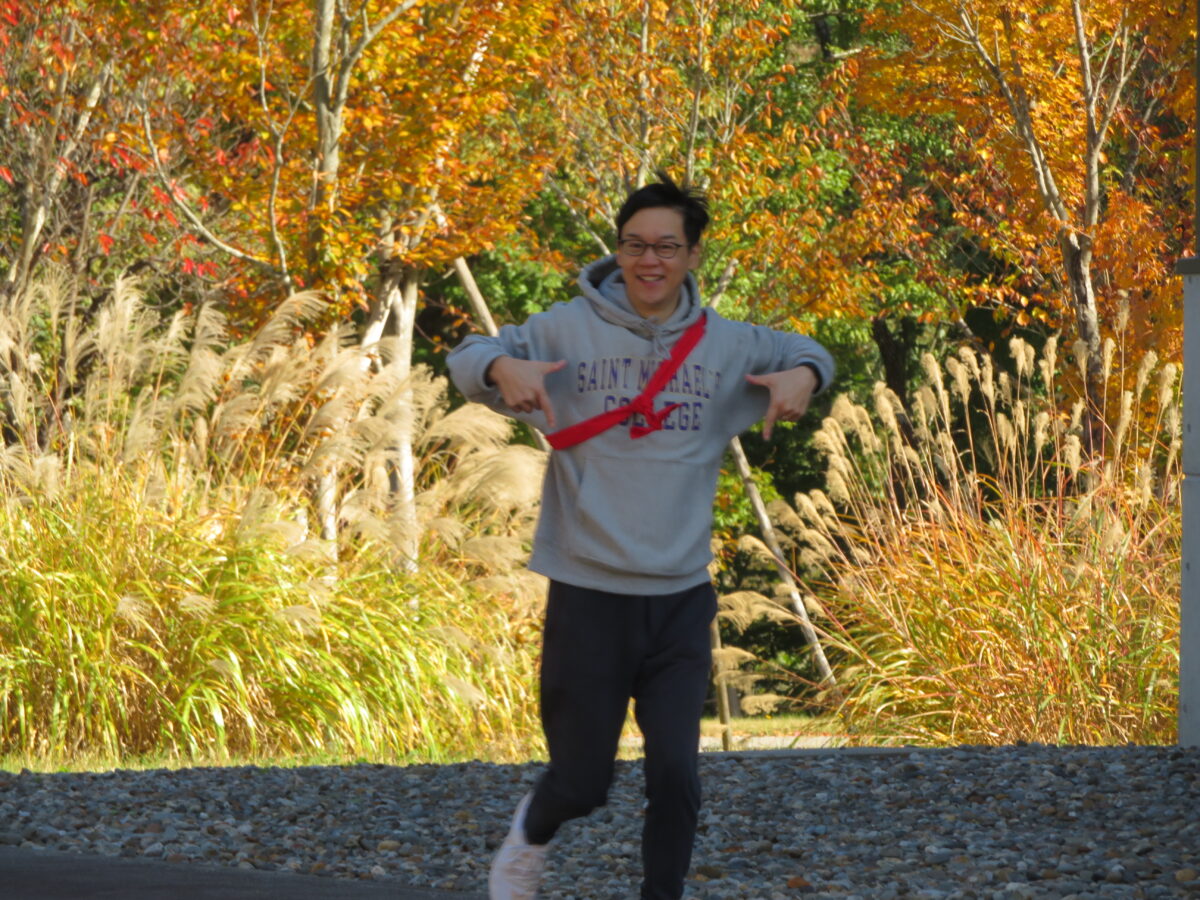
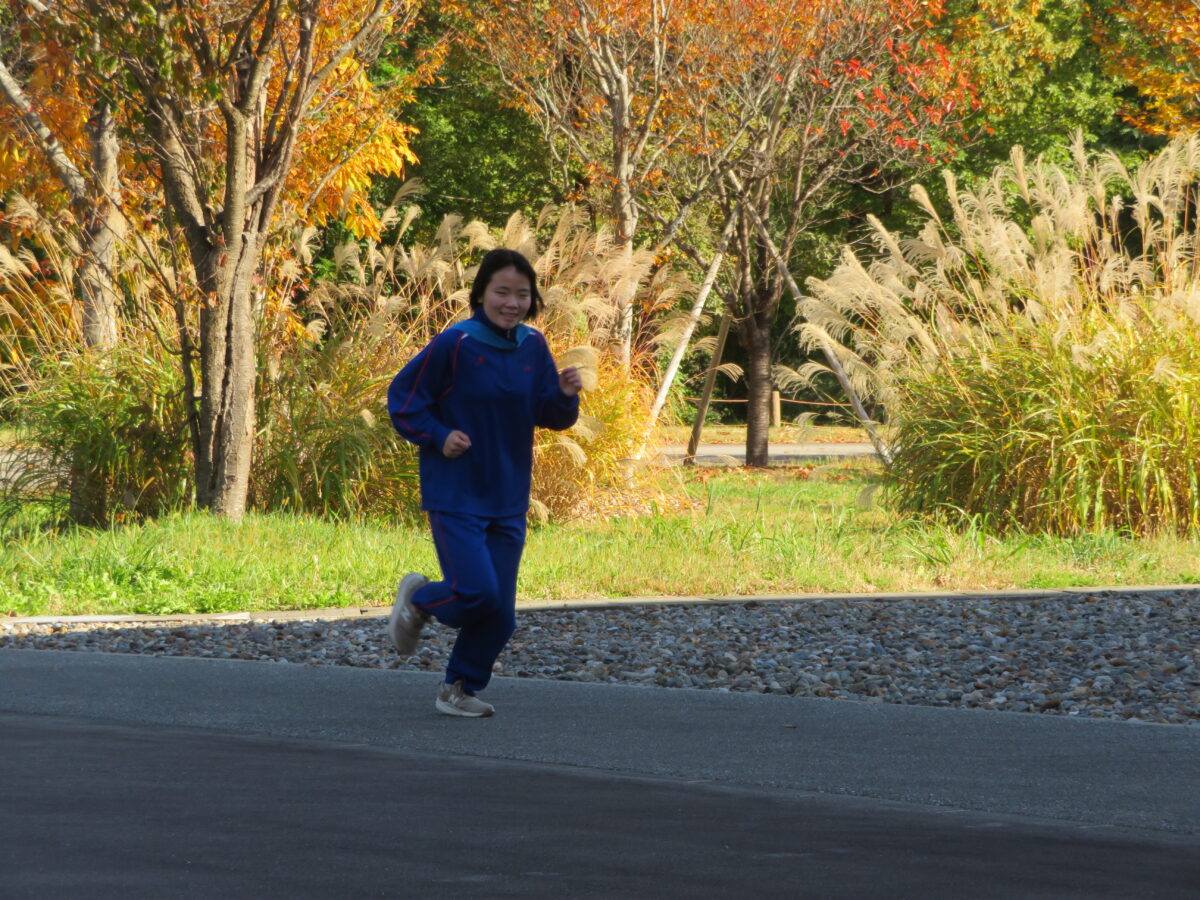
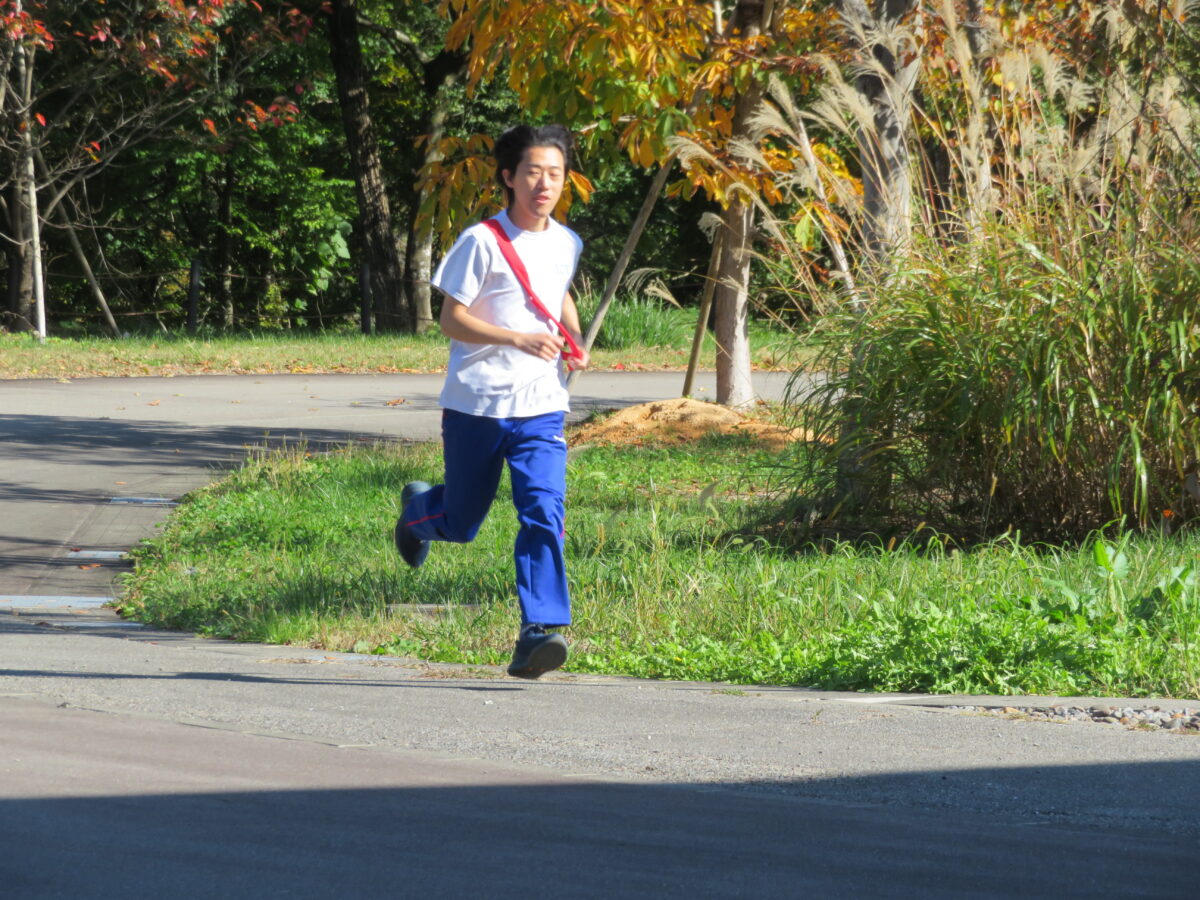
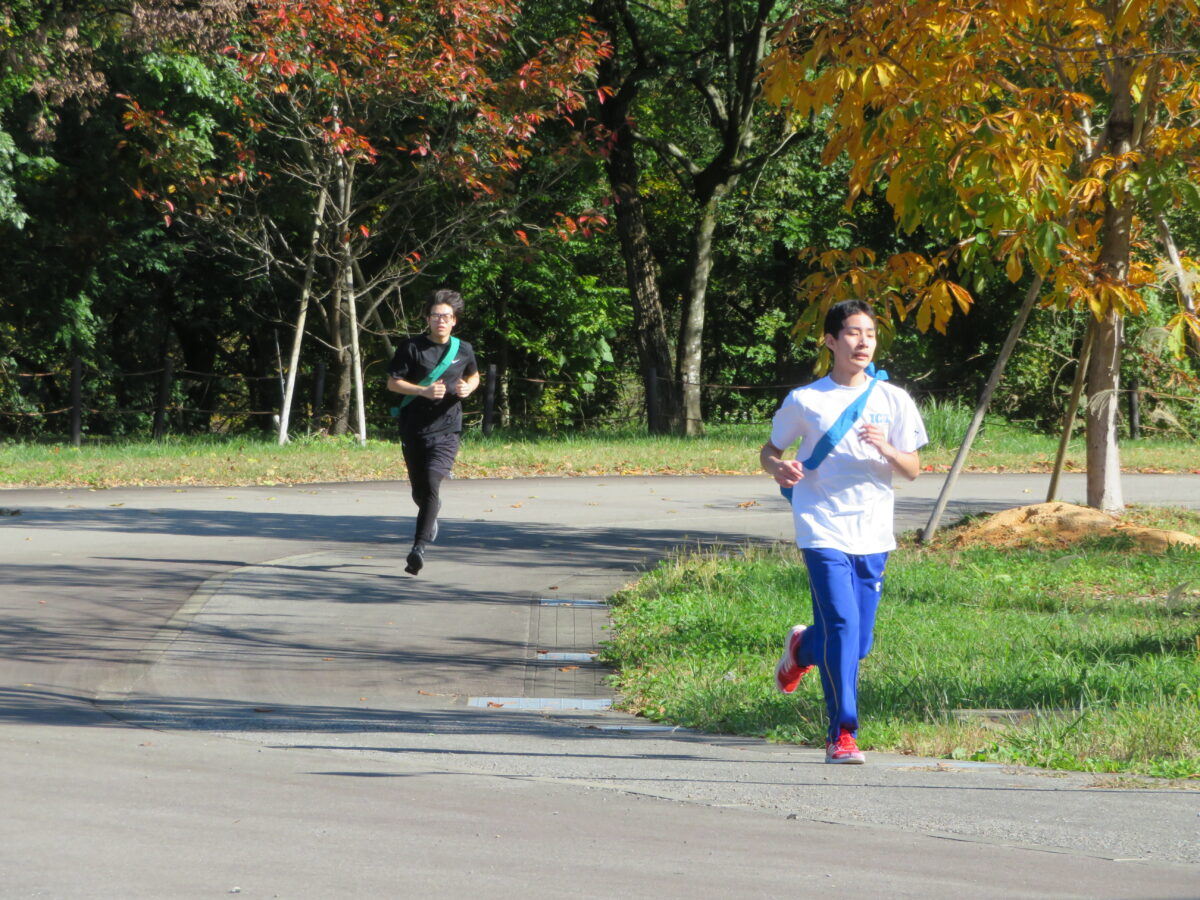
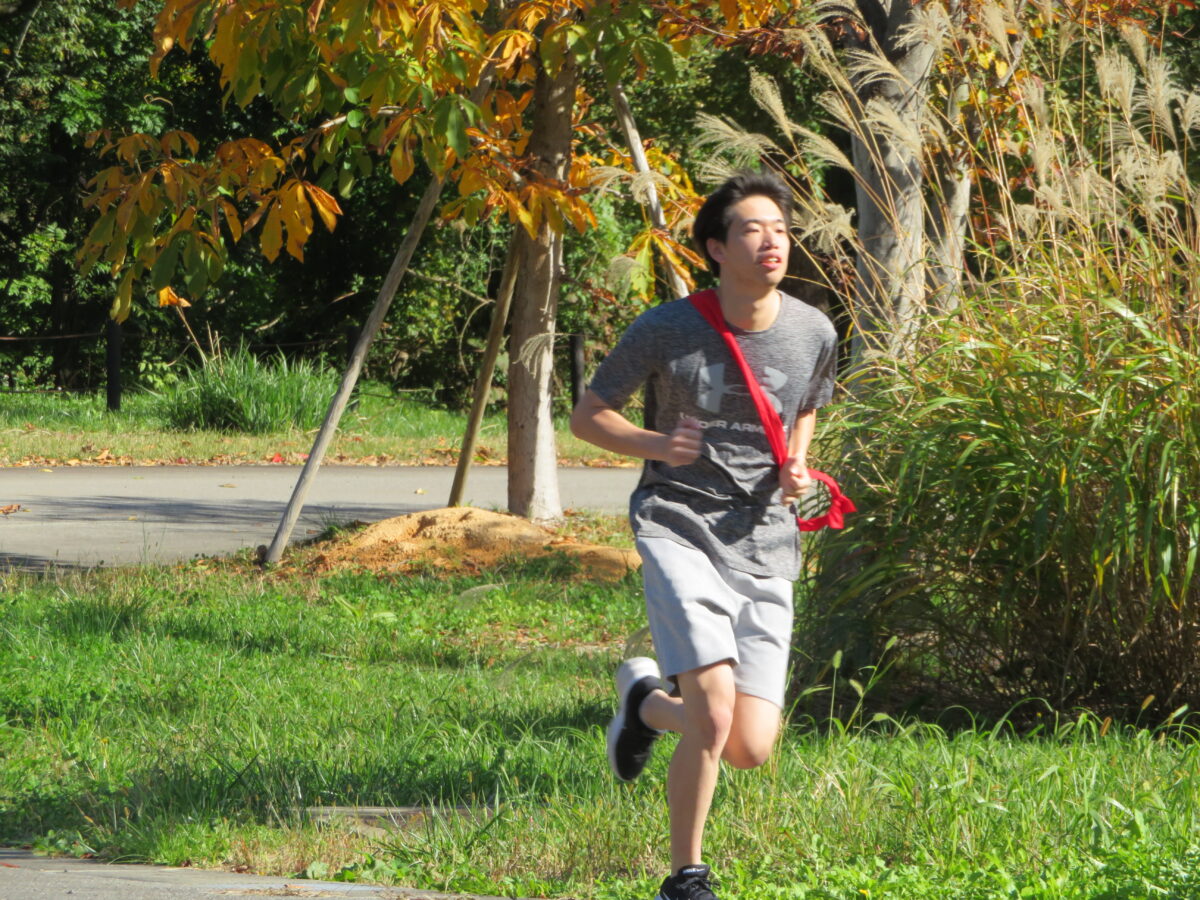
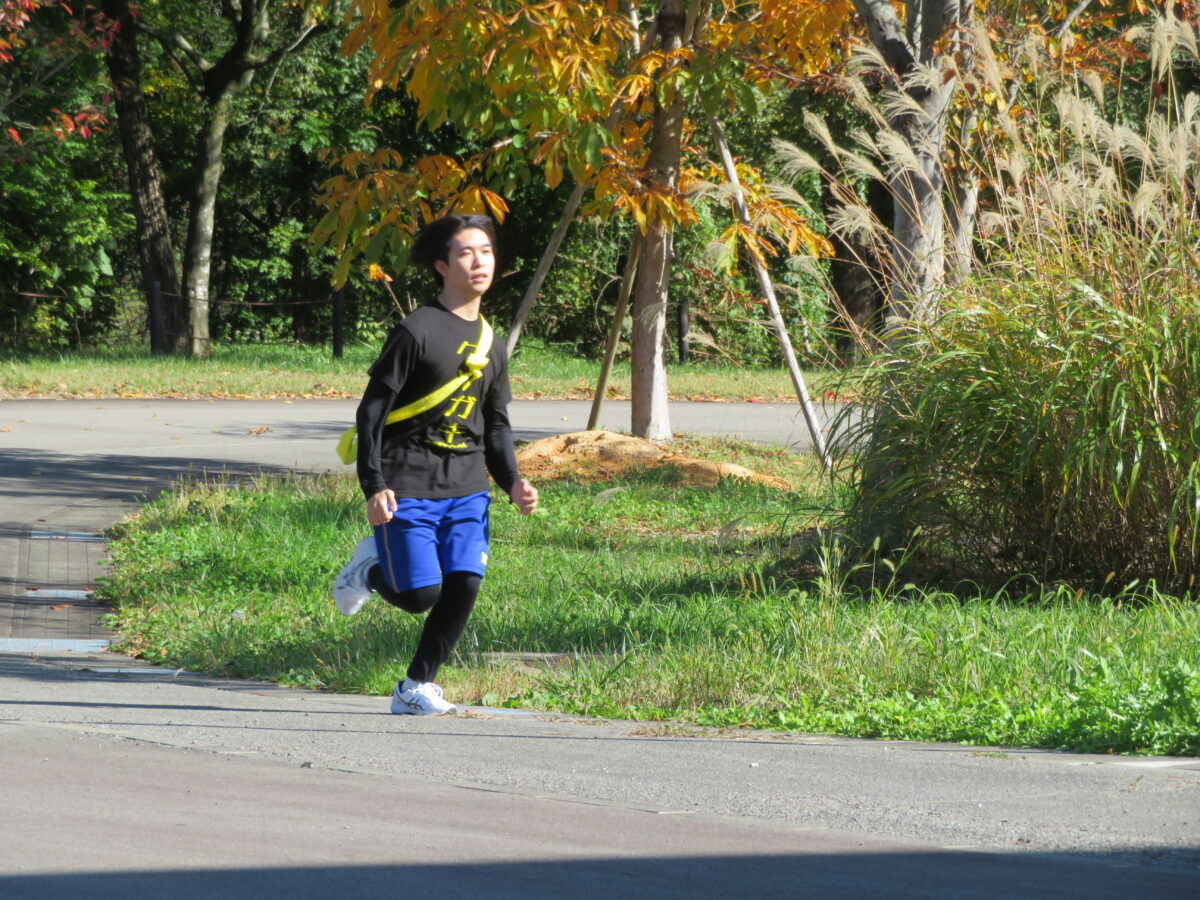
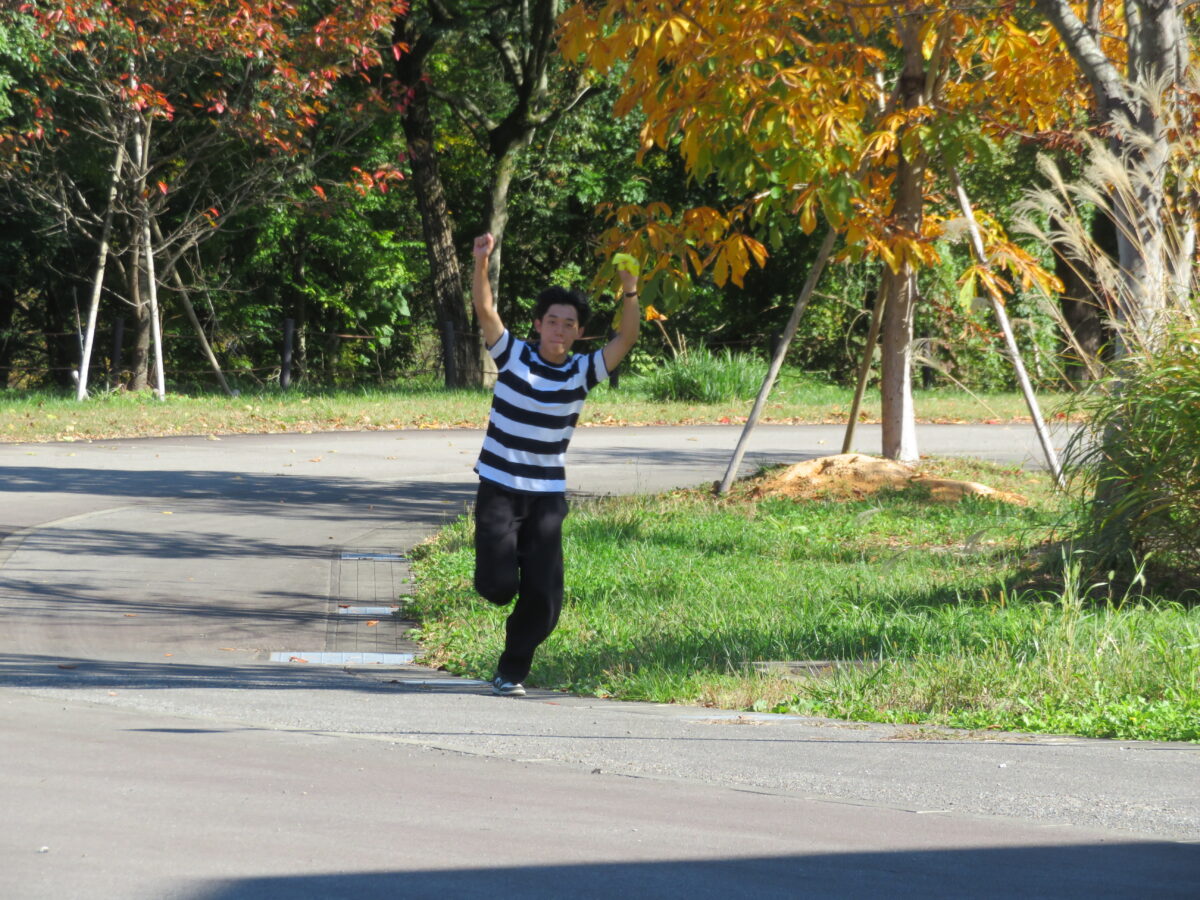
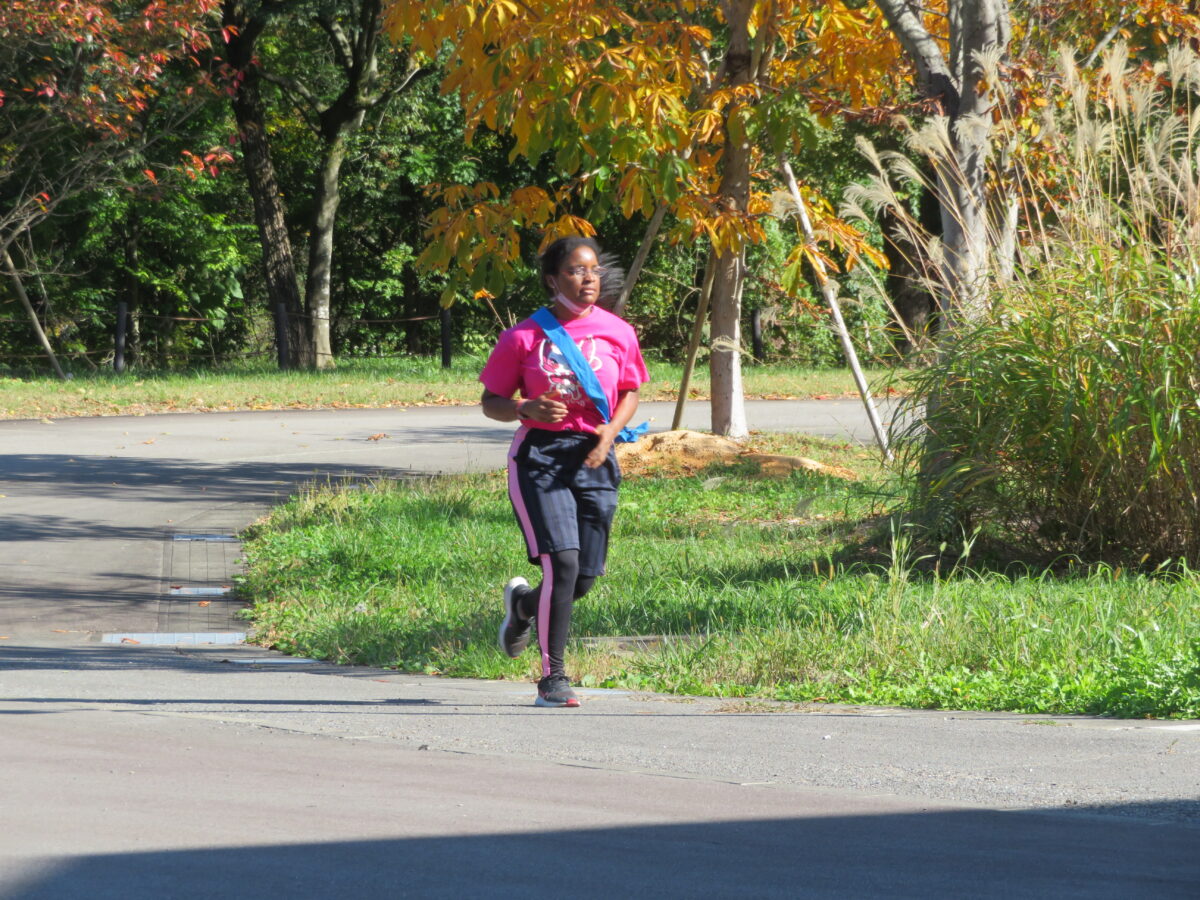
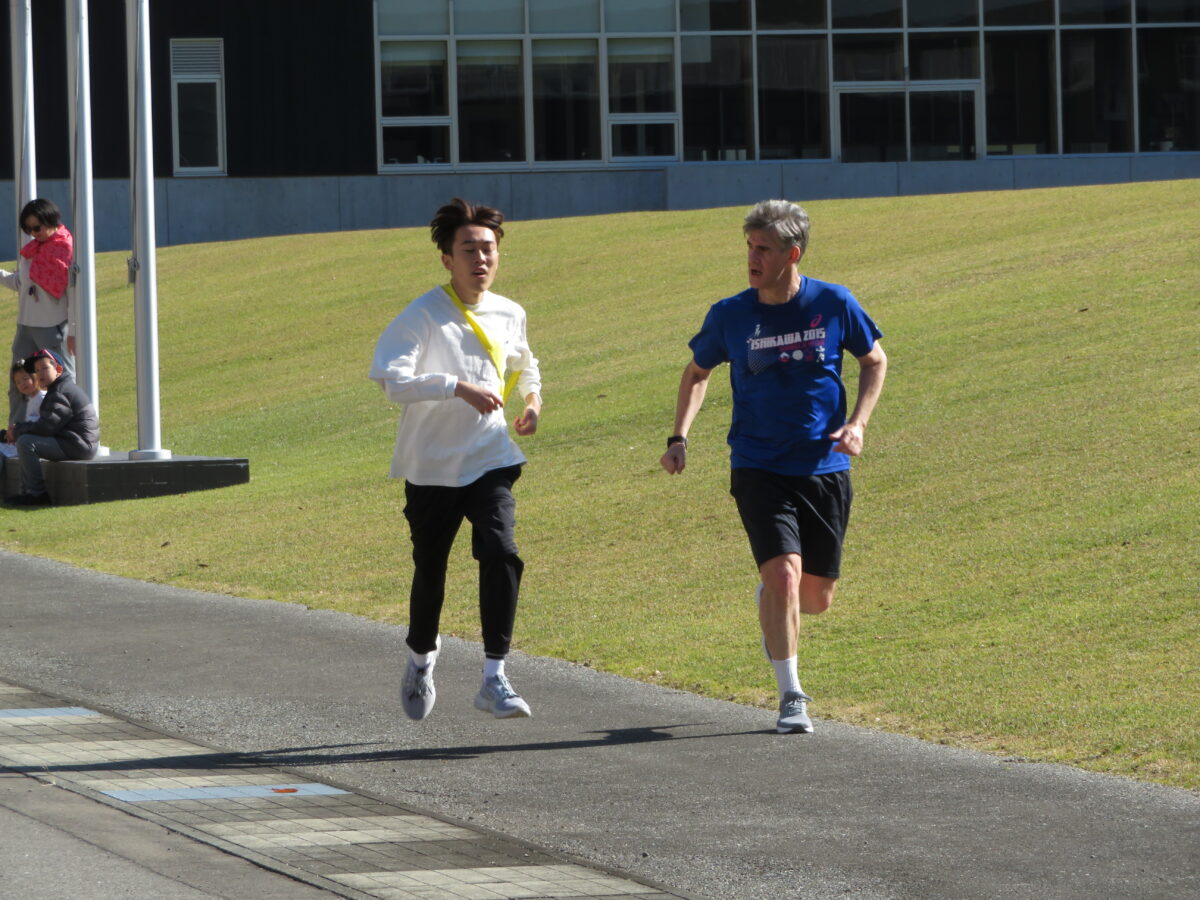
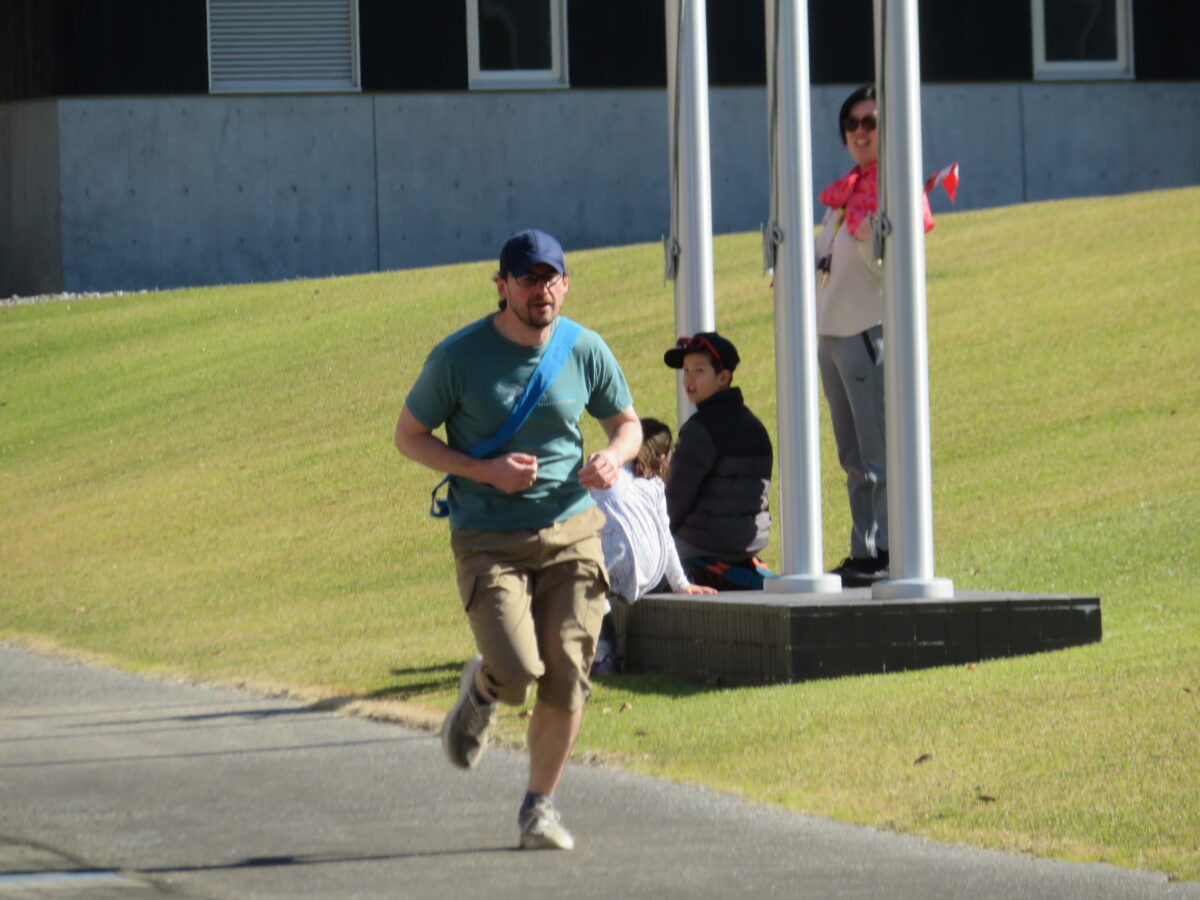
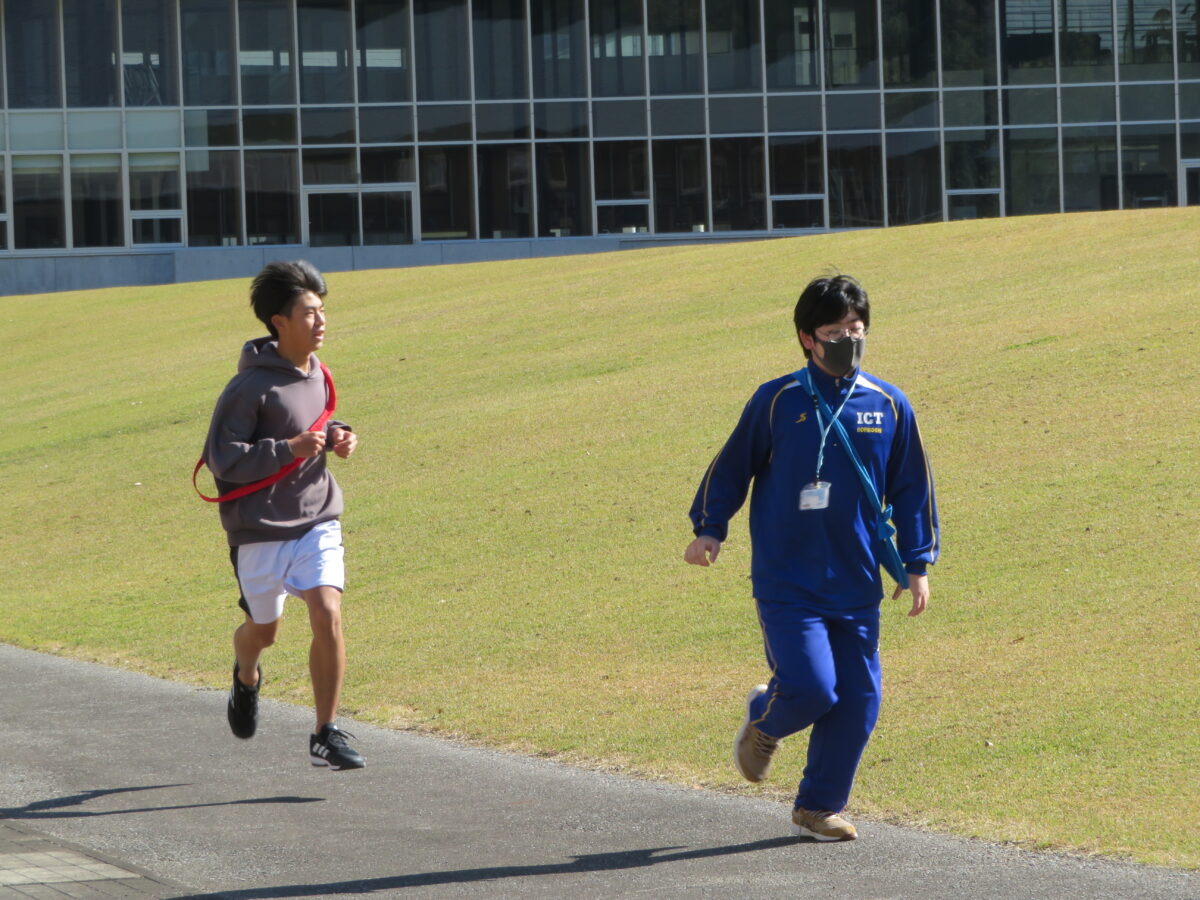
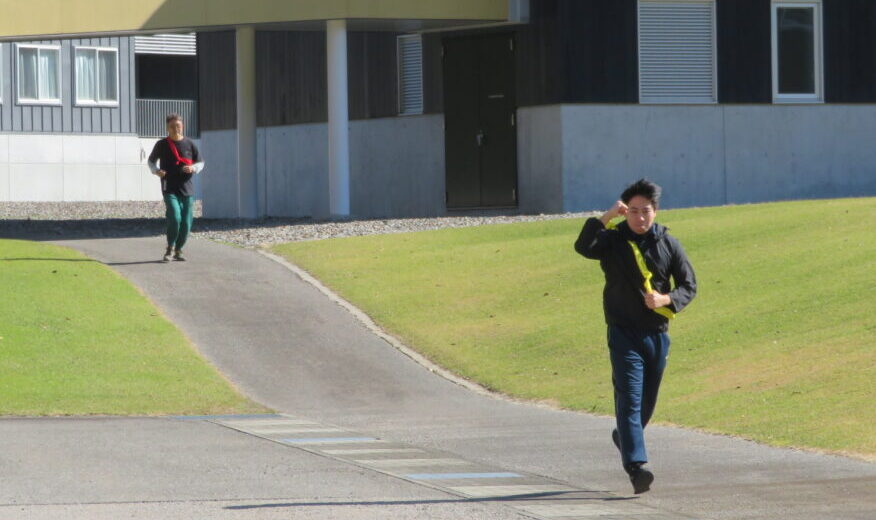
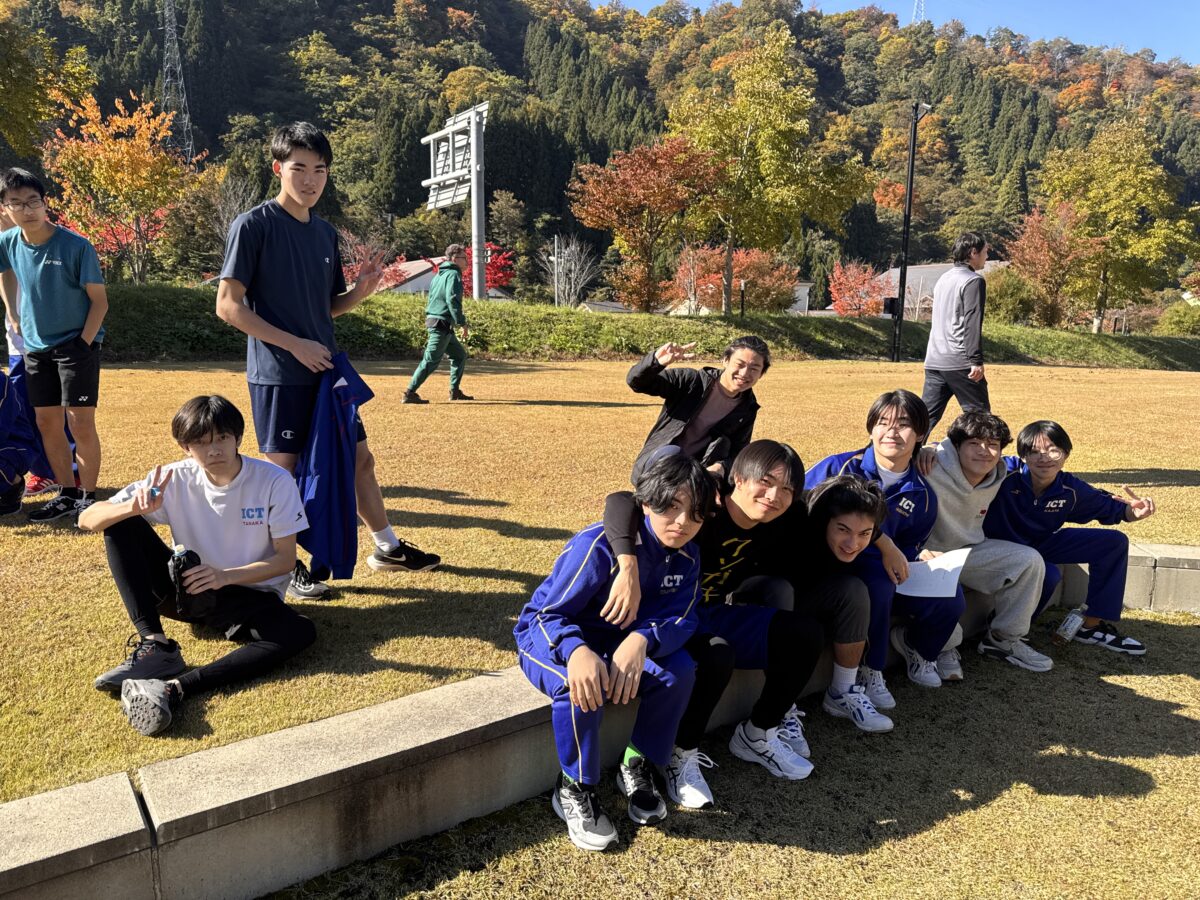
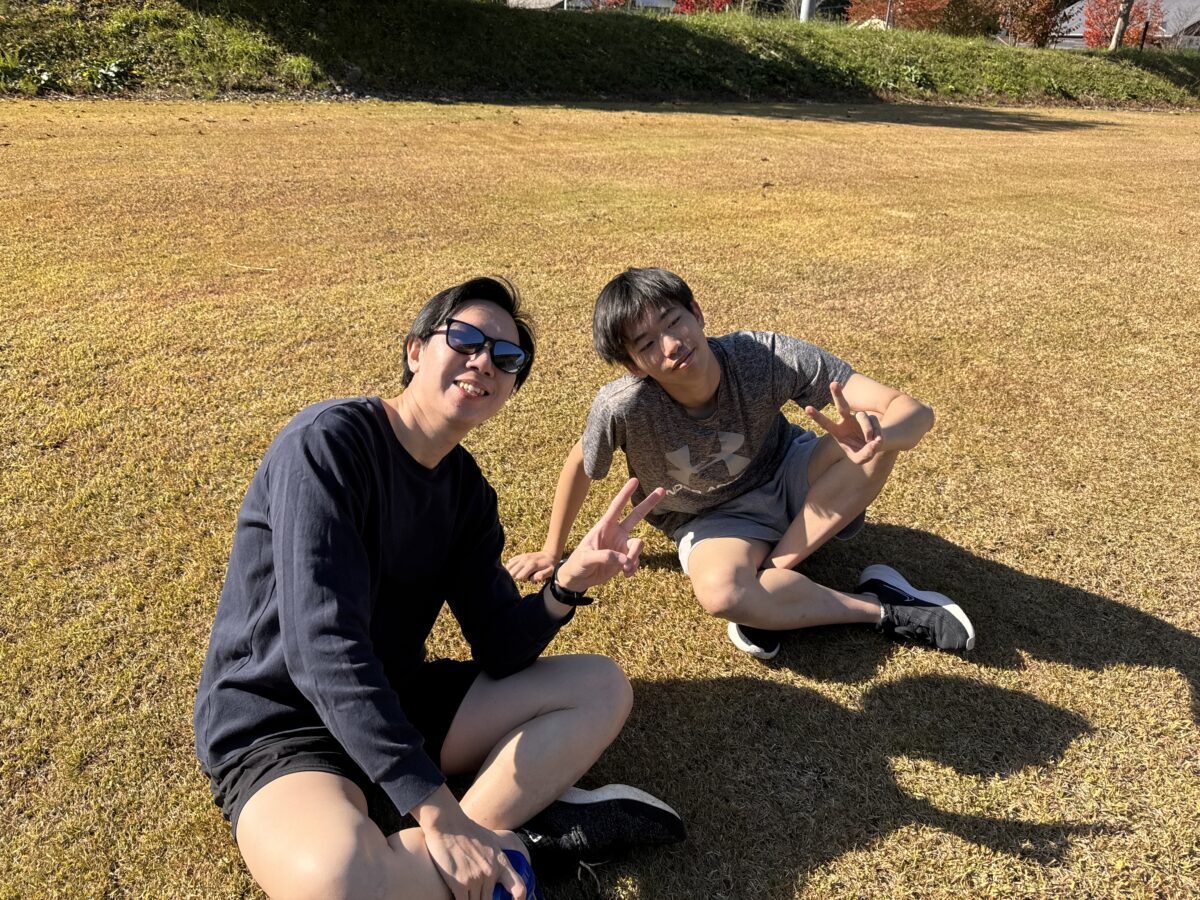
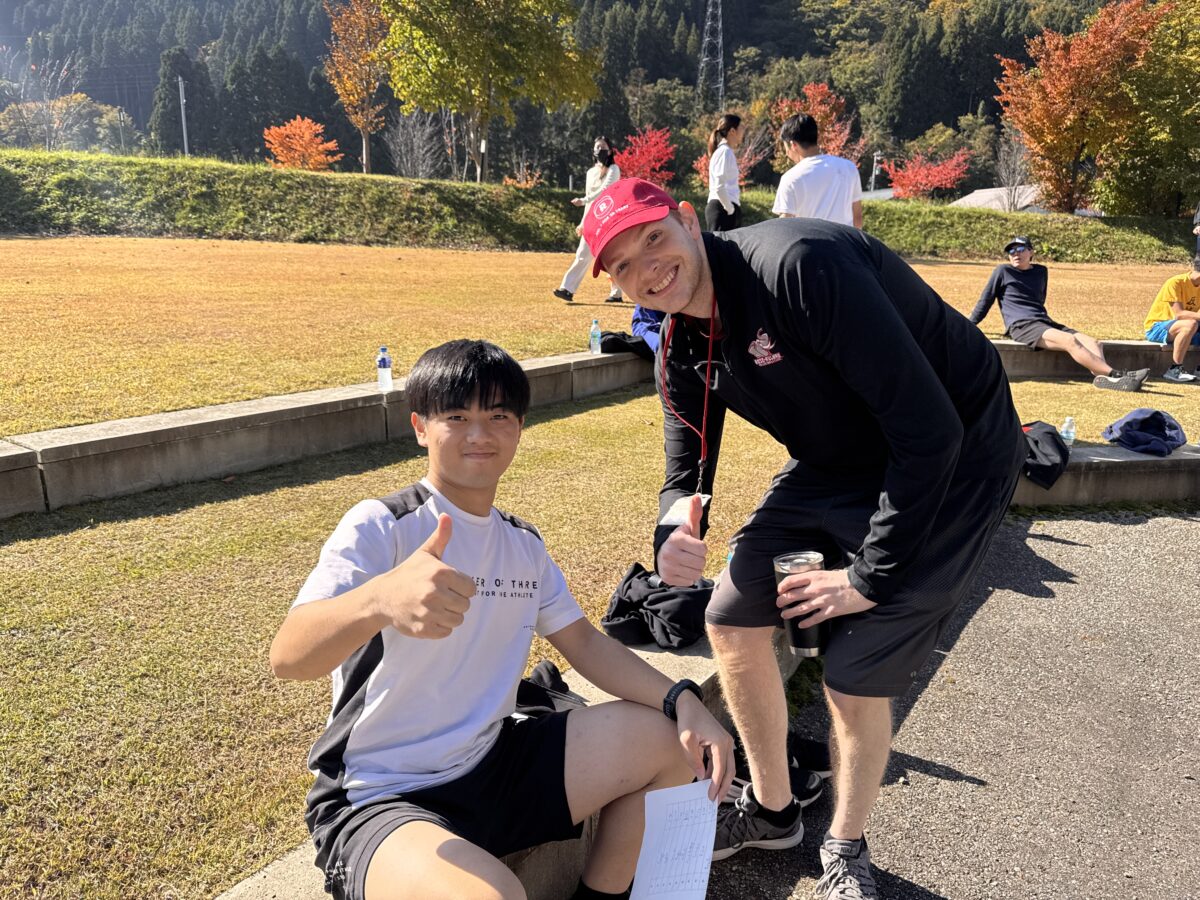
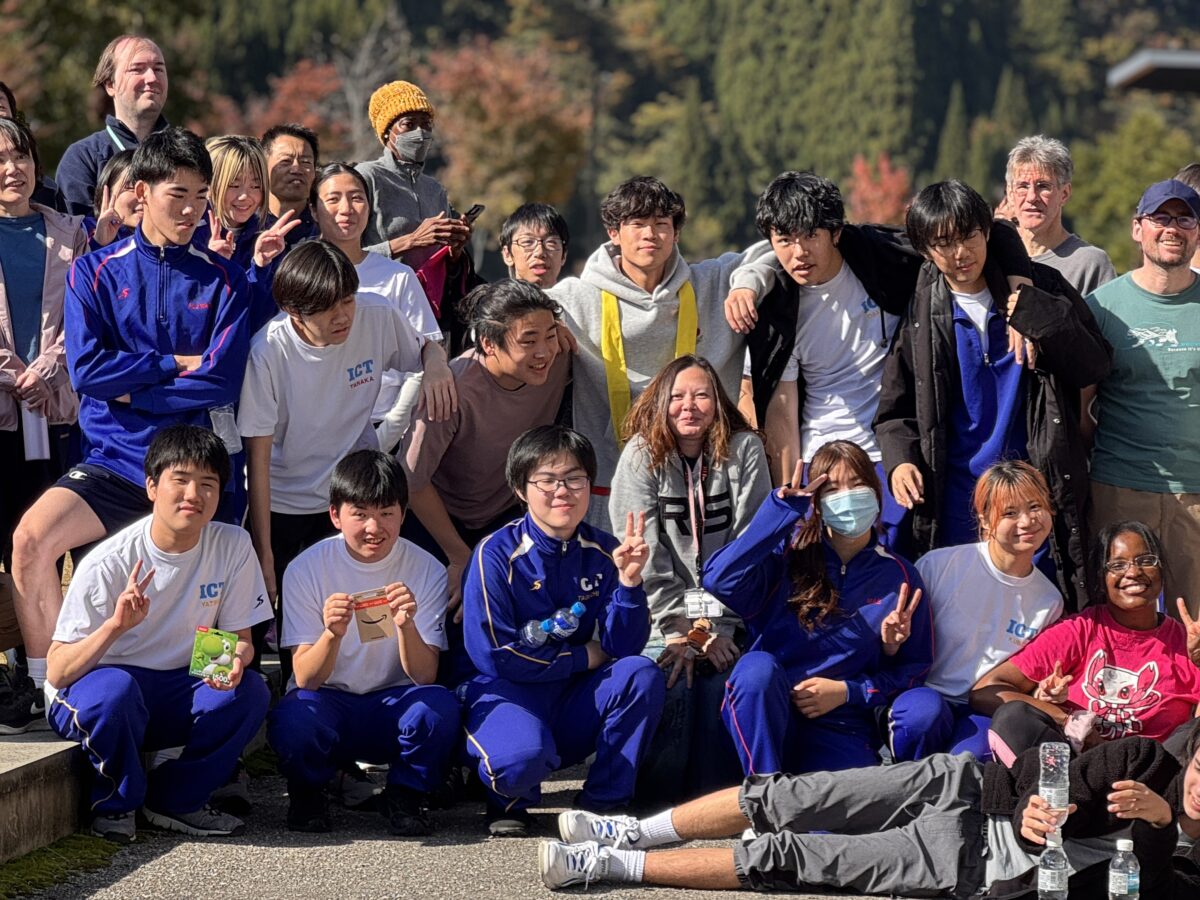
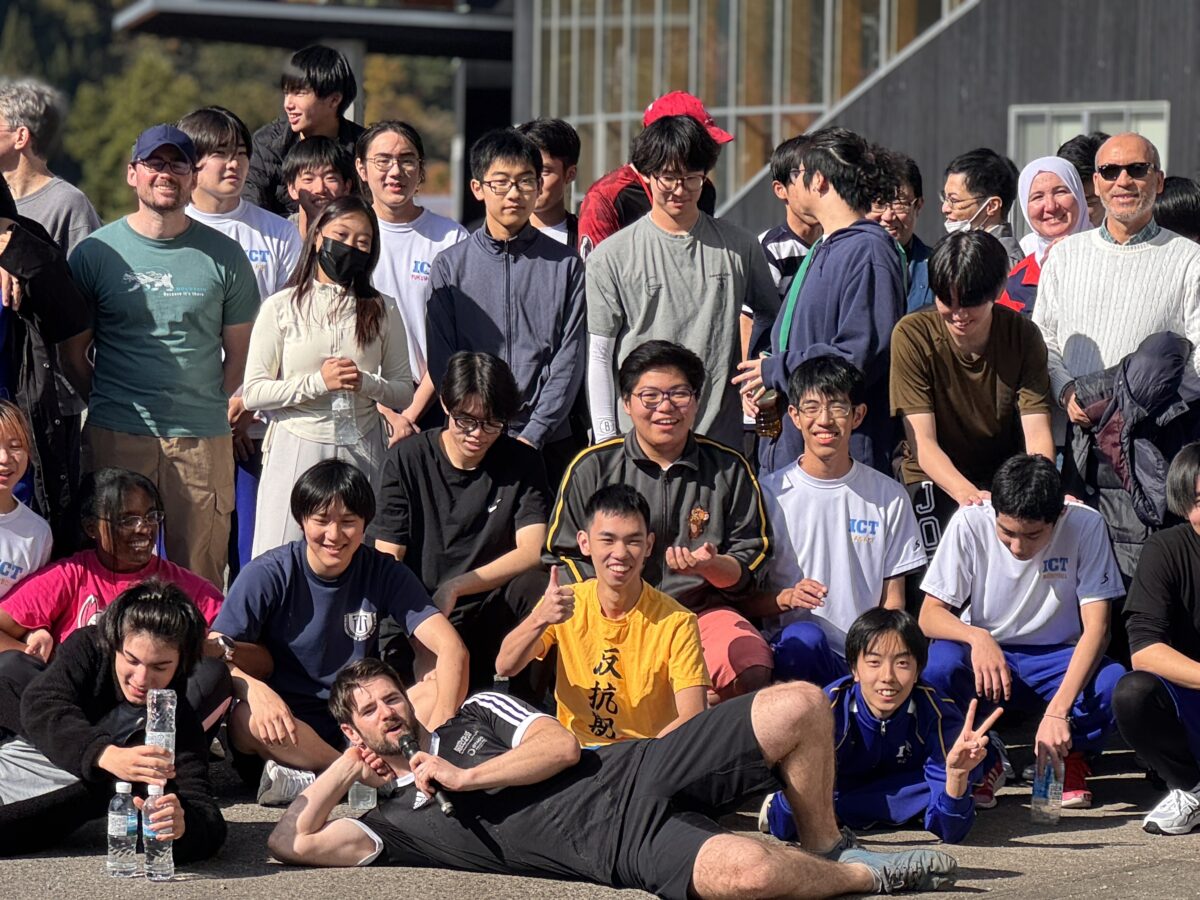
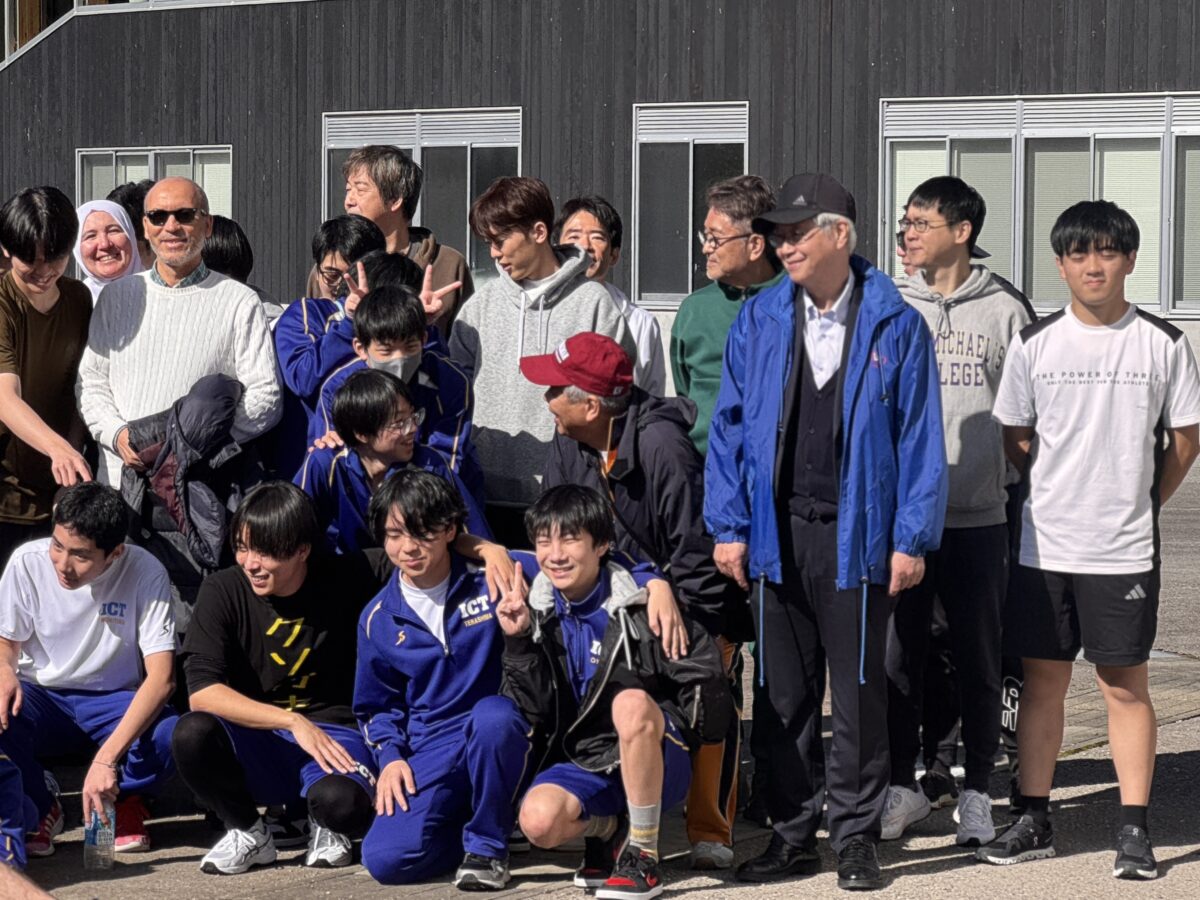
This is Philip Cadzow, one of the Physical Education Teachers on ICT’s Hakusanroku Campus. On Saturday, November 8th, 2025, the second annual Ekiden (a team relay race) was held at Hakusanroku Campus. The goal of the race was for each team of 15 members to complete 25 laps around the campus (roughly 670 m per lap). The teams were composed of students from different year levels and teachers.
The objective was not to finish in the fastest time, but to be the team that completed the laps in a time closest to their estimate. This goal system may sound confusing and overly complicated; it is certainly more so than the usual “fastest team” approach. This design was chosen for several reasons: to reduce the risk of student injuries from sudden intense movement, to relieve pressure on those who were not as fast as others, and to allow more teachers to participate without feeling bad about slowing down a team.
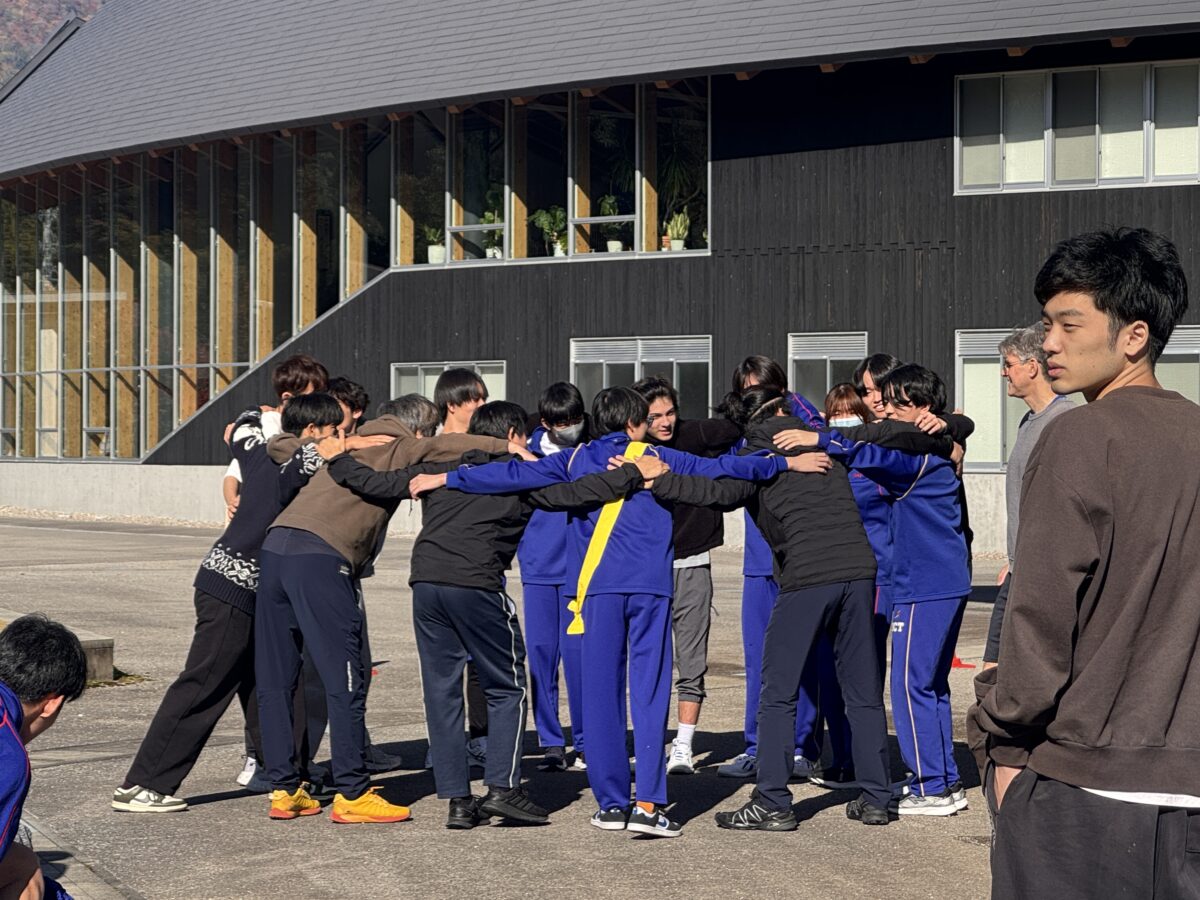
Three of the teams chose 100 minutes as their estimated time, and only one team guessed that they would finish in 86 minutes. The day had perfect weather—clear blue skies with only a cooling wind. There were no clouds, only a blue sky contrasting with the changing colors of the leaves. With everyone lined up and mixed into their teams, Yuzuki Komoto—a 4th year student—gave a very nice speech about the event being an opportunity for different year levels to mix socially. He encouraged the 1st year students, saying that while the older students may seem big and intimidating, they should not feel afraid to talk to them.
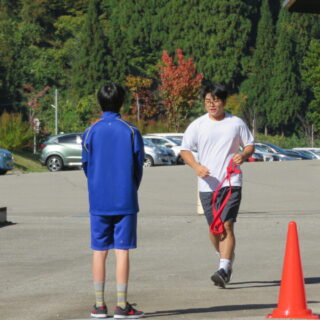
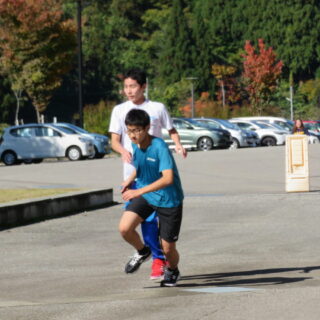
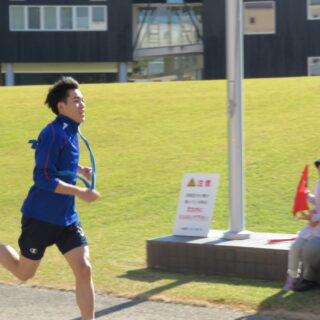
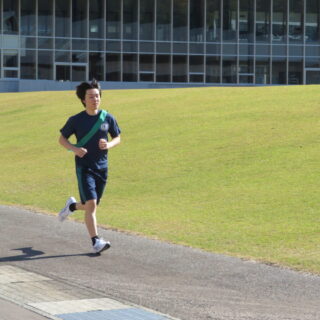
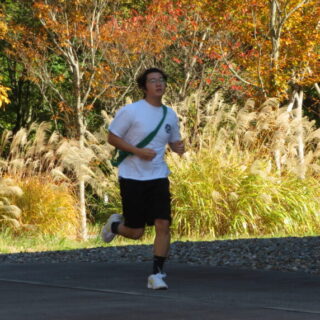
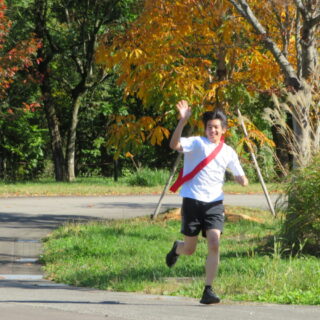
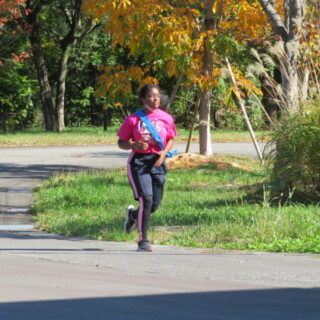
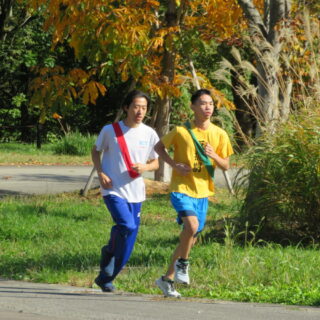
After a countdown, the teams took off sprinting! What was meant to be a challenge to guess everyone’s pace soon changed with the energy of the day. I did not expect the excitement of running to be so powerful. The first eight laps were finished in only 25 minutes. Everybody was sprinting their fastest, even though they had plenty of time. Therefore, I had to make an emergency adjustment to the times, otherwise everyone would be far off their estimated time! Therefore, the competition was changed to which team managed to get the closest to 80 minutes total time.
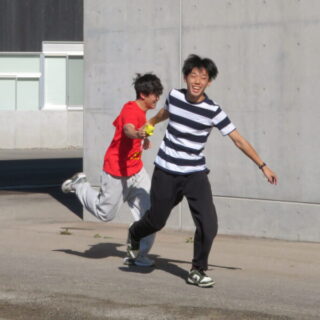
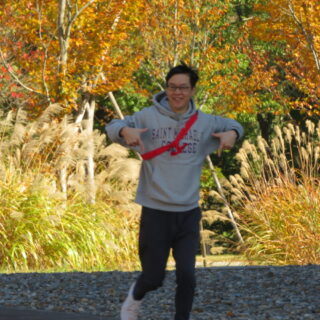
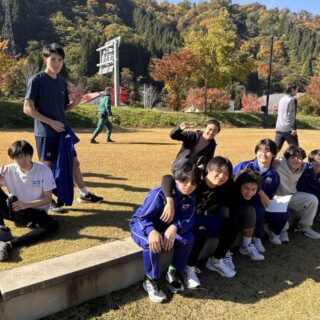
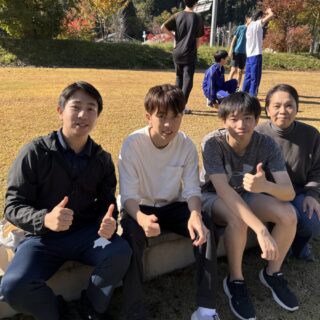
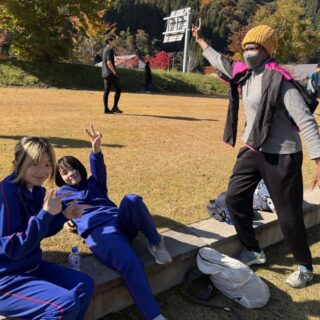
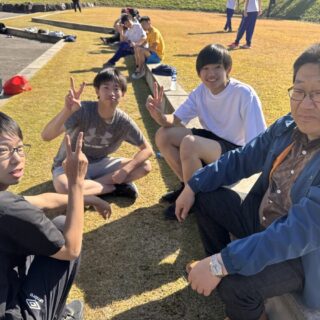
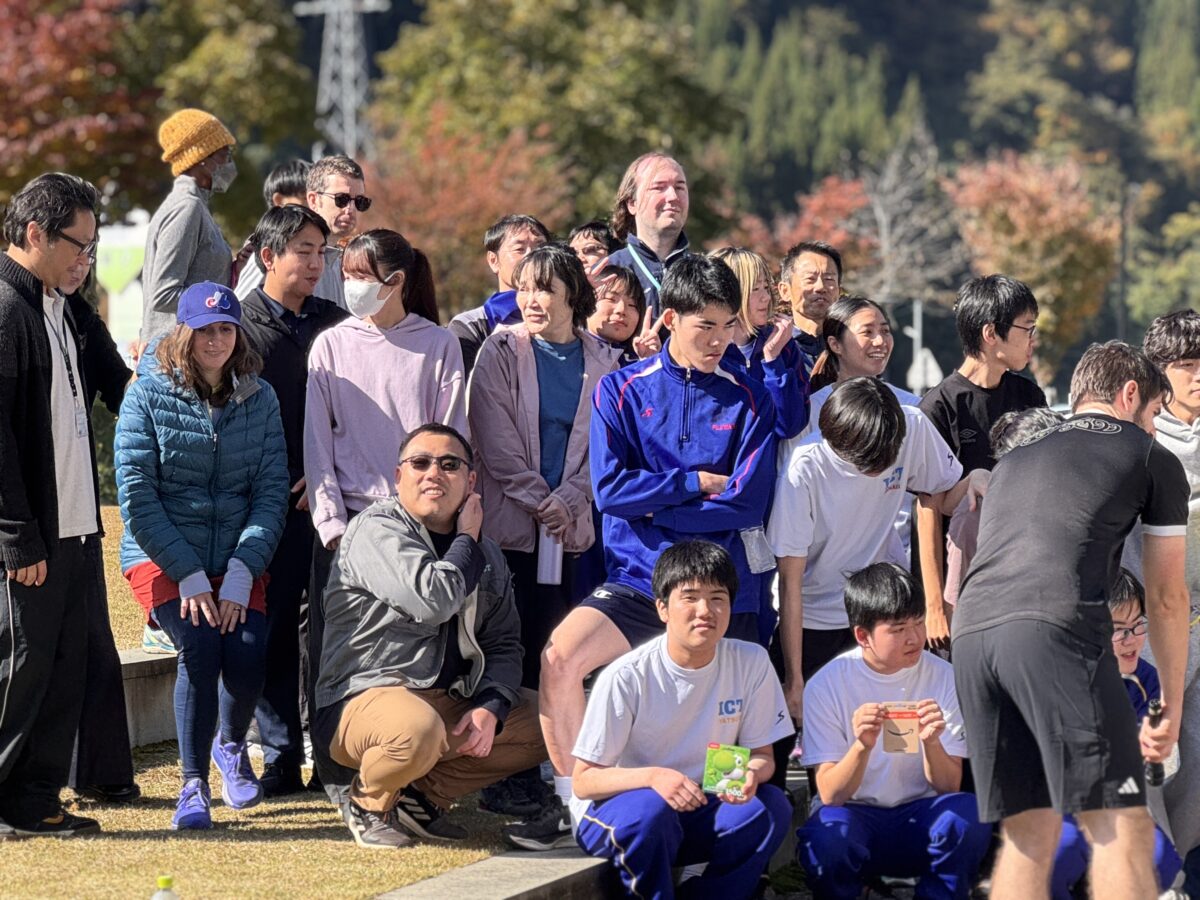
I was most impressed with the atmosphere of the event; the feeling was very friendly between all year groups, and there was plenty of cheering and general enjoyment of the day. As much as I love and enjoy movement, sometimes that passion is not embodied in the many different types of students, especially when it comes to running. So, I was very happy that the atmosphere of the day was so joyous and filled with friendly rivalry.
A spontaneous guessing game of “How many laps has Ian-sensei run?” began to develop as well, his insatiable need to run being an inspiration to the watching crowd. The race continued and each changeover was cheered; each person had their time in the spotlight. Unfortunately, this also brought some of the same injuries as last year, with ankles and lungs feeling the pressure—but in fewer numbers than last year, and it was self-inflicted rather than prescribed.
The last laps were run, and the finishing times were very close! Considering that nobody had a watch or phone to keep track of the time, this was very impressive. All teams were within 10 minutes of the 80-minute goal.
In the end, having a time goal rather than a race was less satisfying to watch at the finish, but we had fewer injuries, more teacher participation, and the students had a slightly more relaxed and fun day rather than the pressure of competition. I don’t know what next year will bring—whether the allure of competition will call me back—but this year we had wonderful weather and good people. A lovely reminder that with a separated campus, events like these are important for social bonding.

-
-

-
-
-
-
-
-
-

-
-
-
-
-
-
-

-
-

-
-
-
-

-
-
-
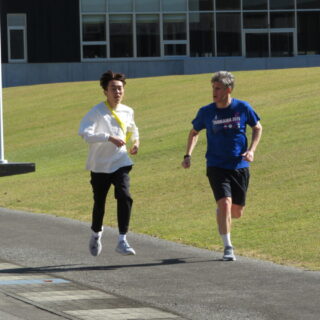
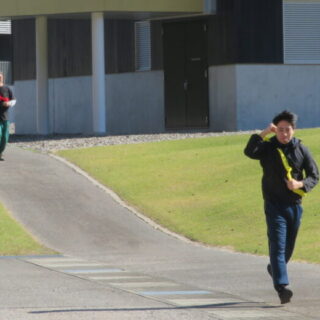
自分の順番以外でもずっと走り続けるイアン先生(右)
-

-

-
-
-
-
-
-
-

-


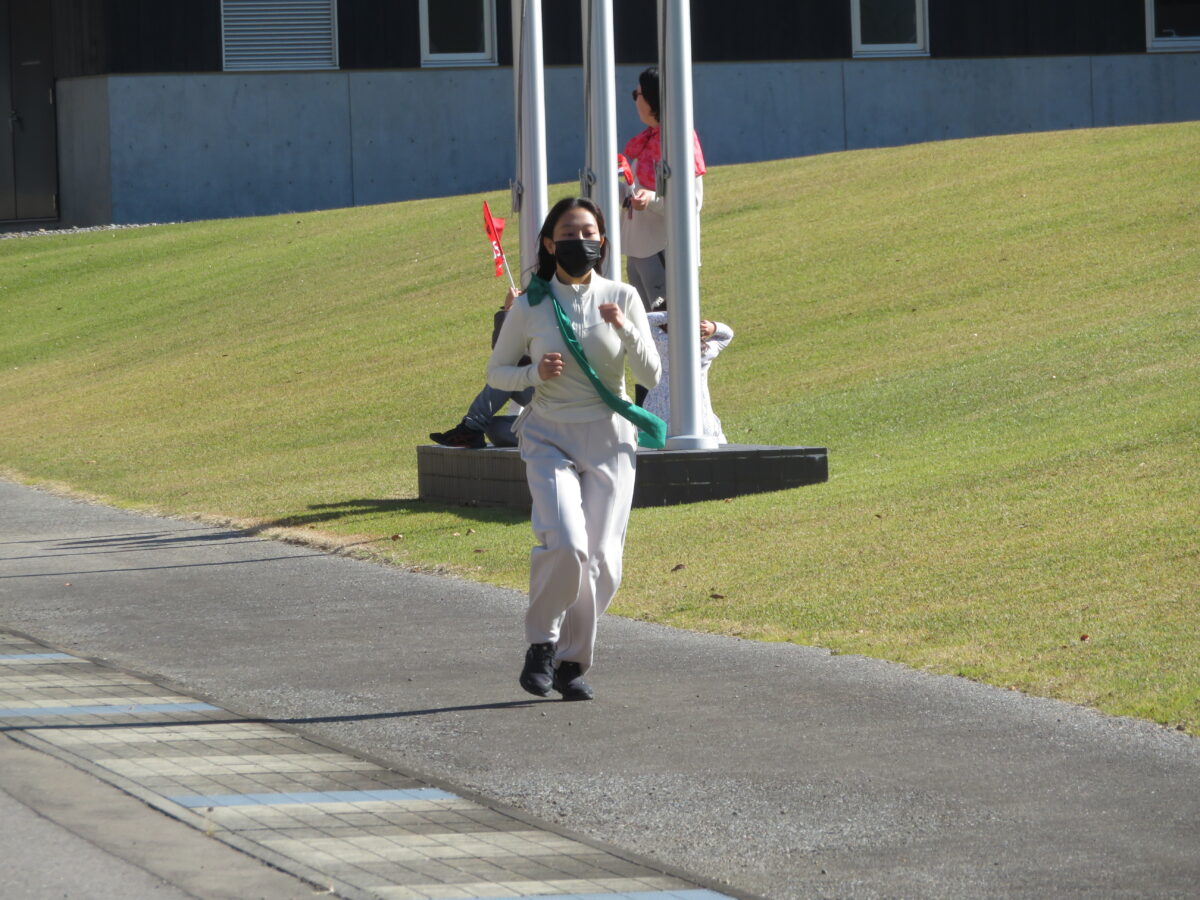
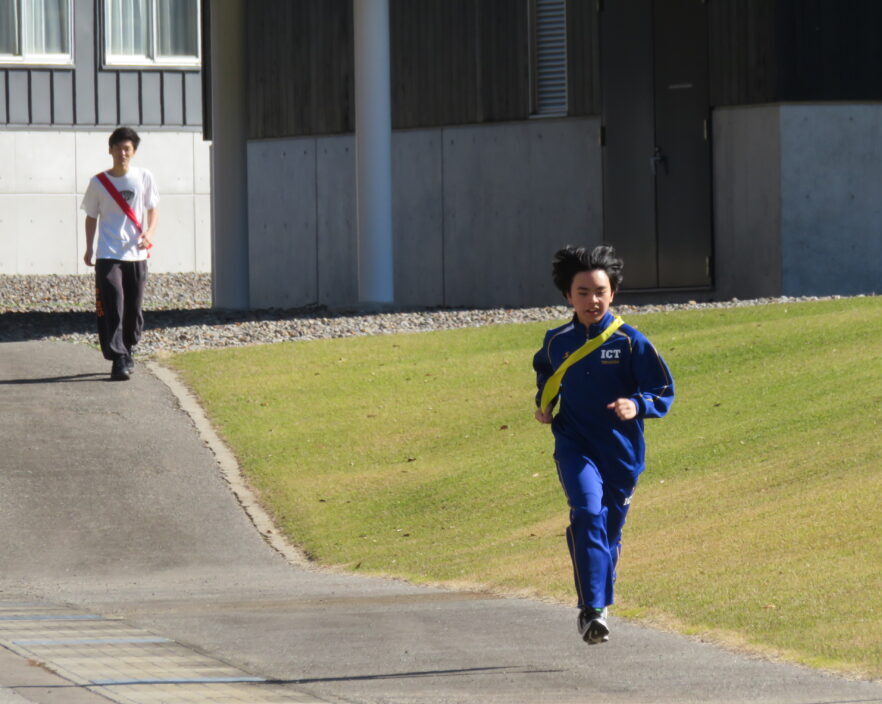
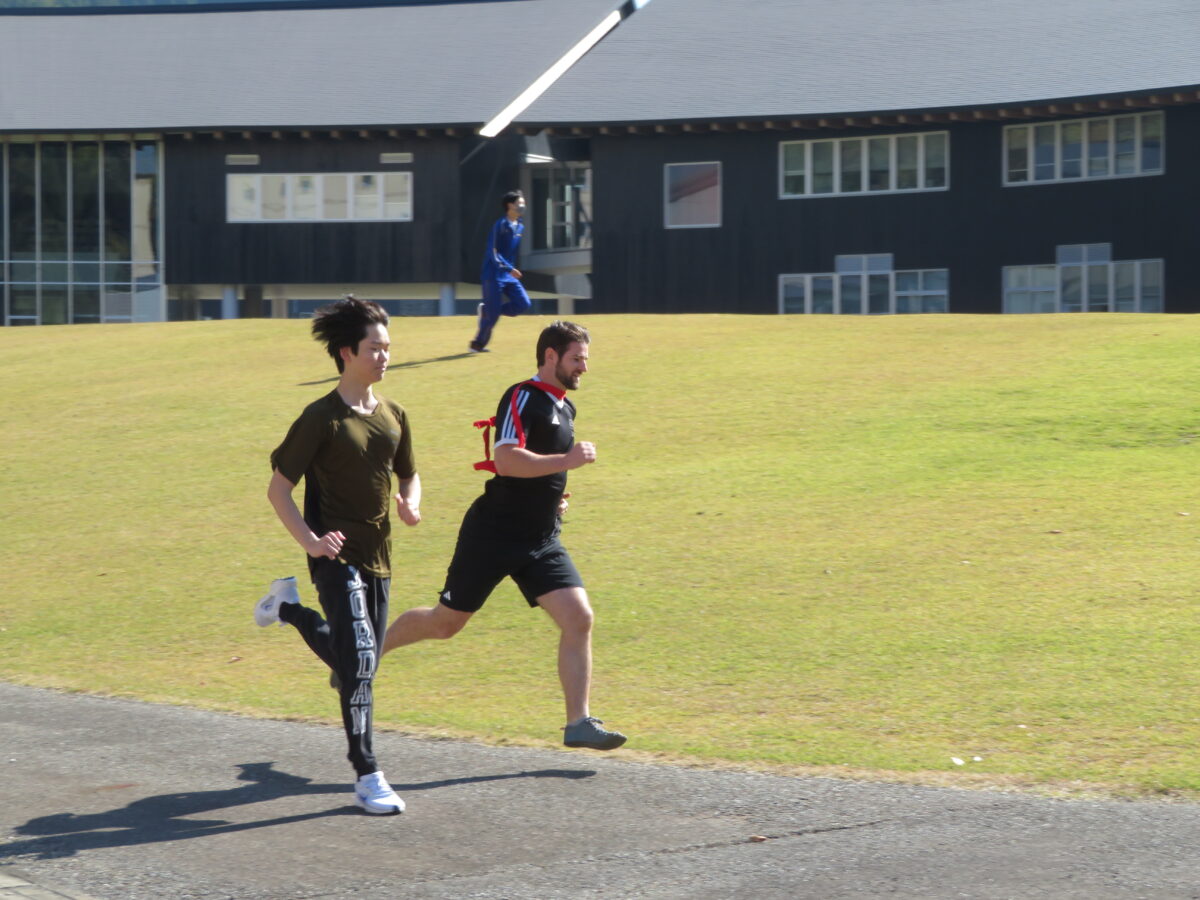

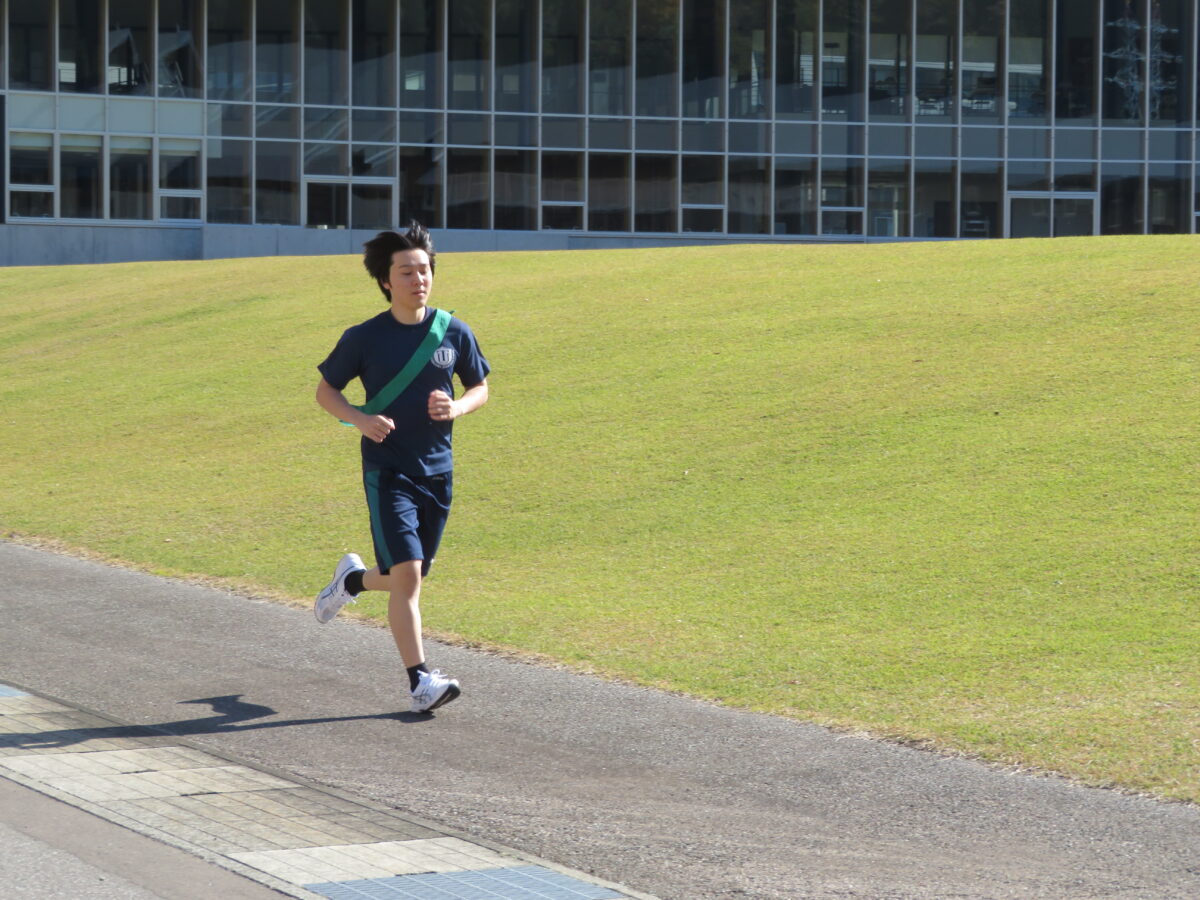







Philip Cadzow
Celebrating the Hearts Behind the Writing and the Community that Grows From It
Pauline Baird an English teacher at ICT.
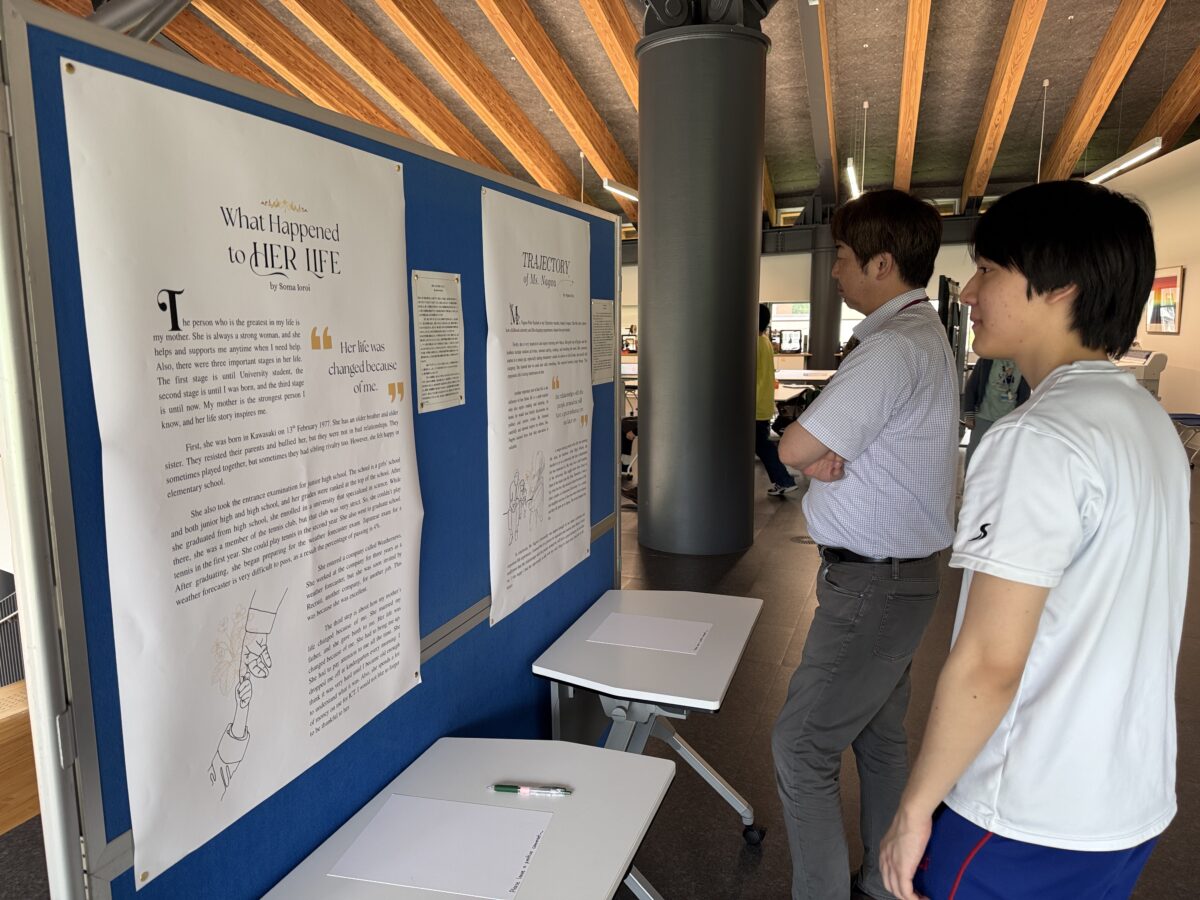
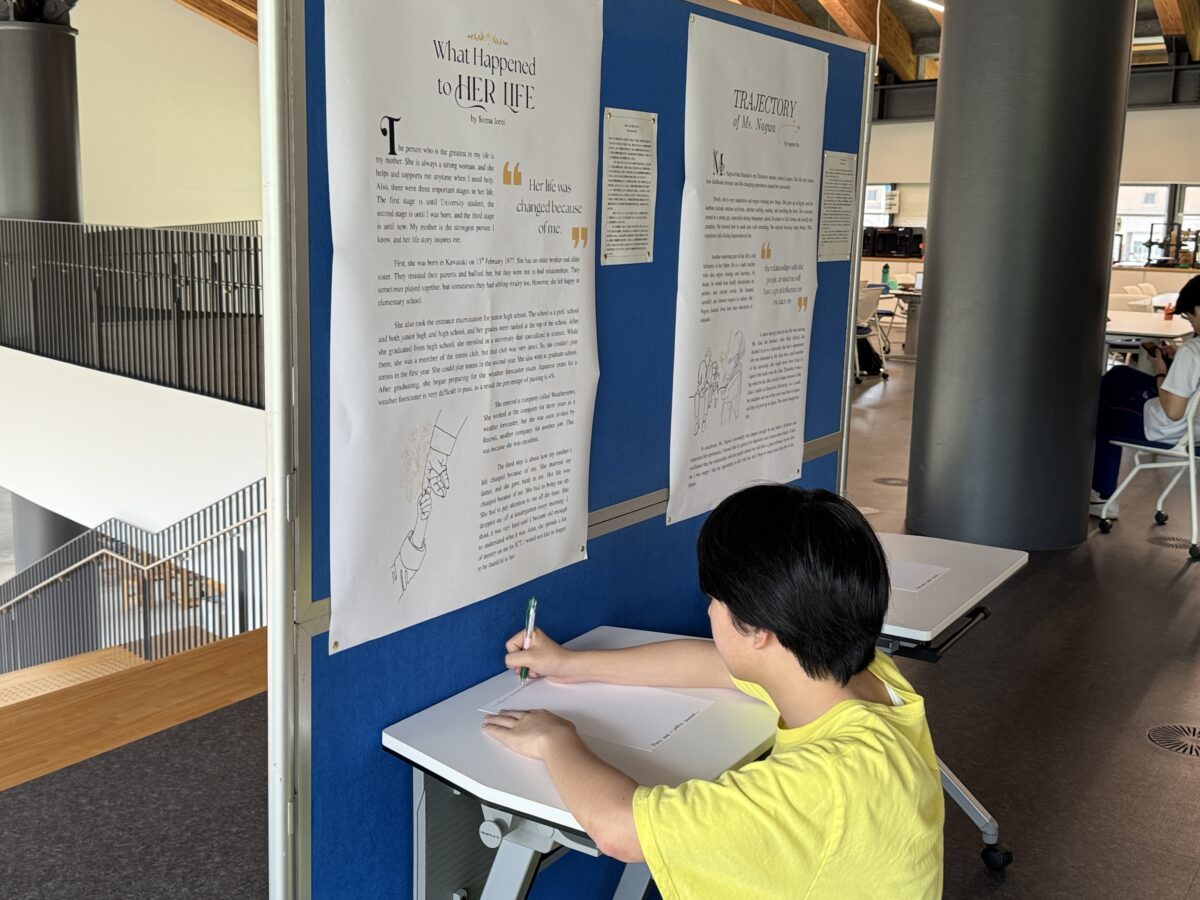
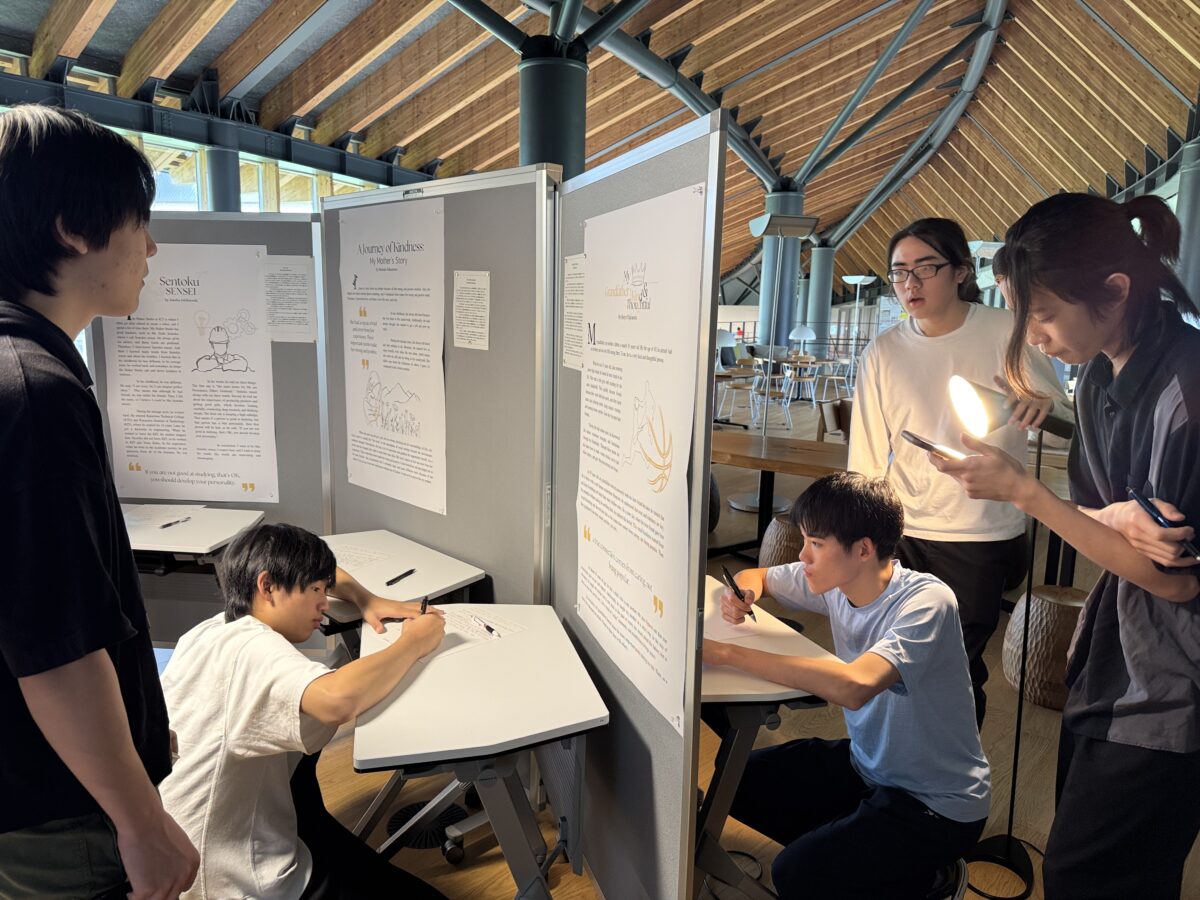
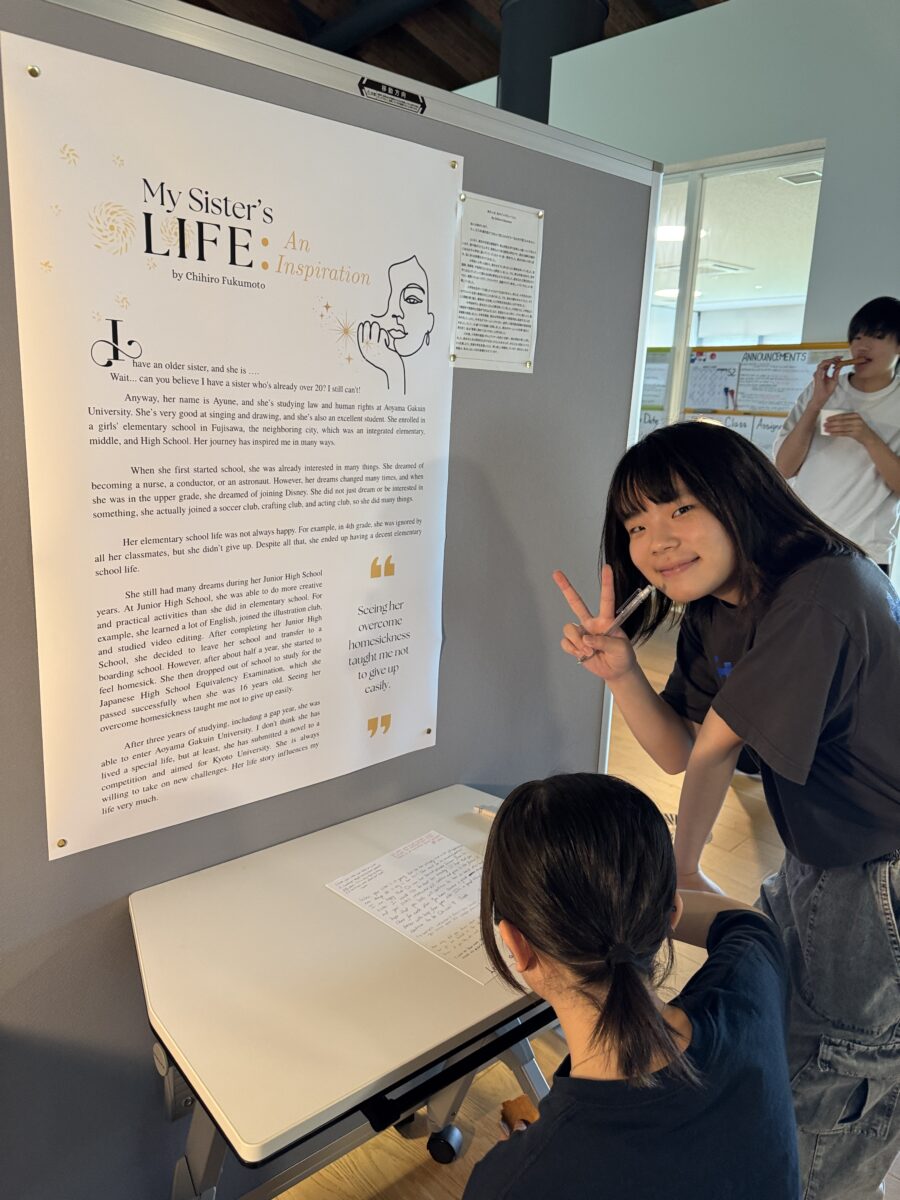
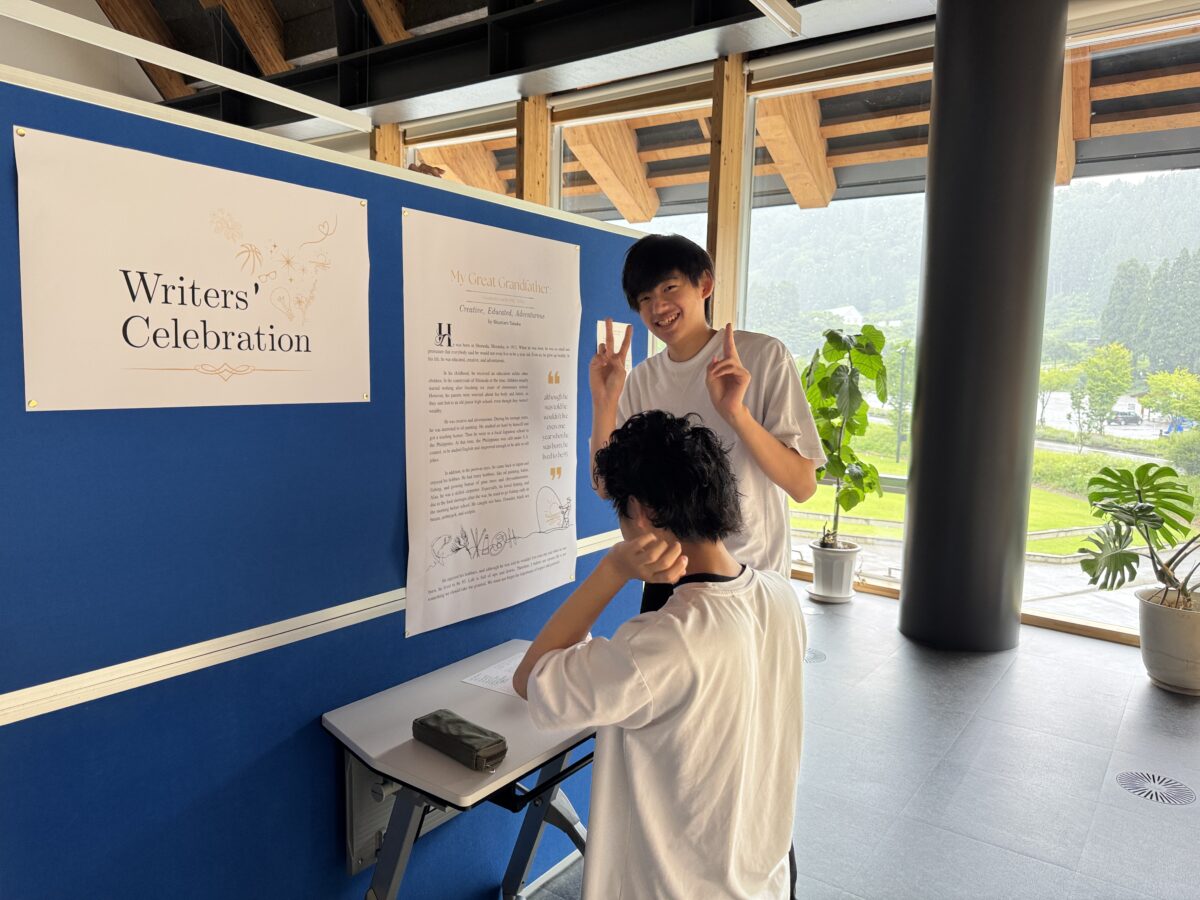
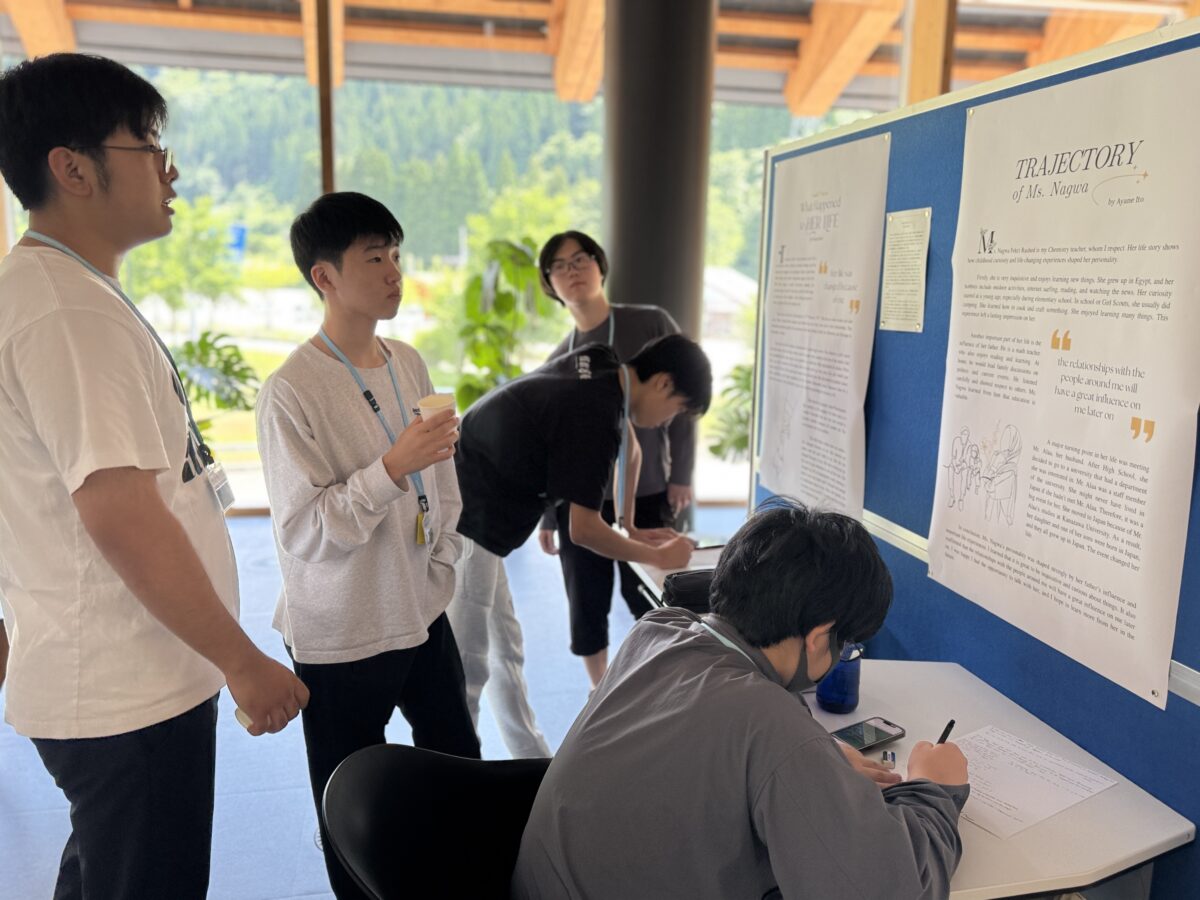
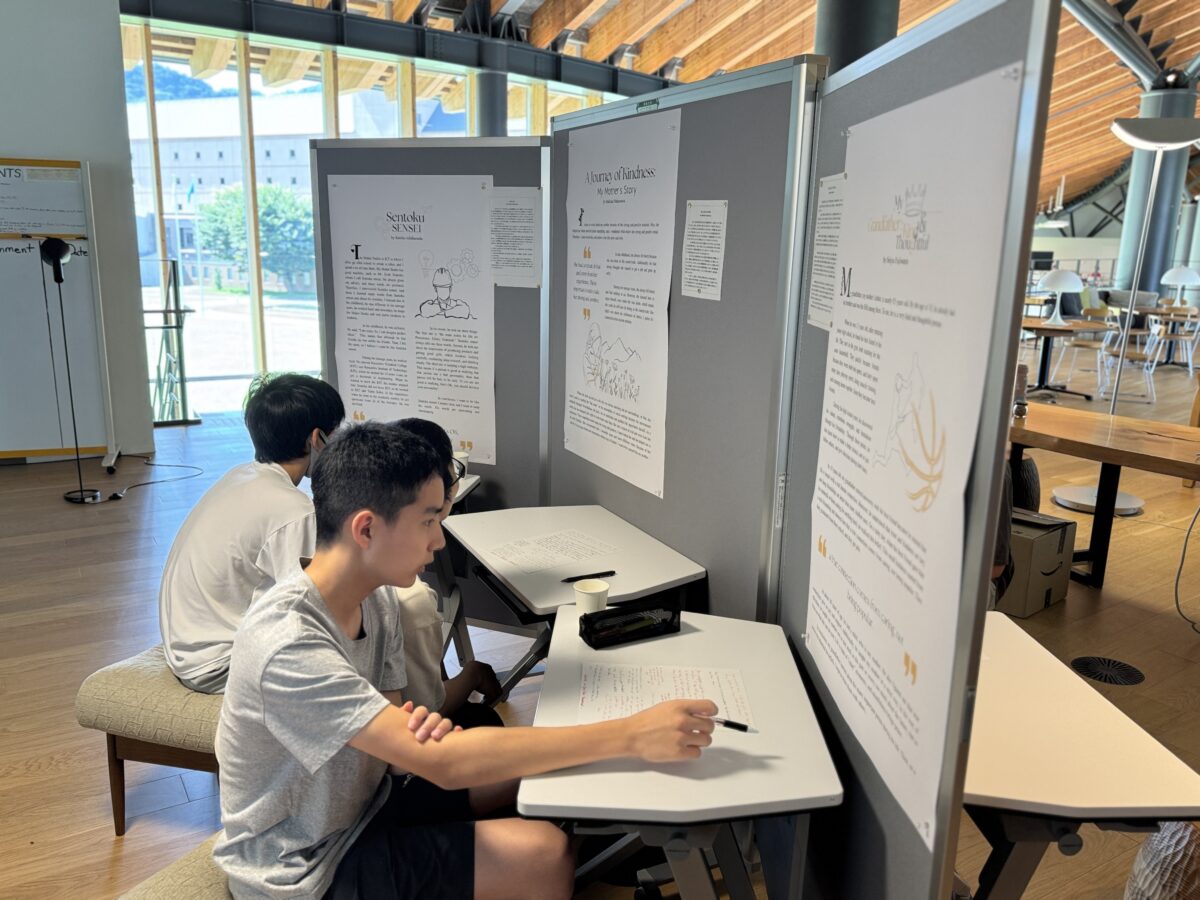
This semester, students in the 2nd Year reading and writing class interviewed people who inspired them to write a Profile Essay. Several students wrote about family members, took field notes, and drafted profile essays. The writing process itself was valuable; however, the most meaningful insights emerged during the “Writer’s Celebration” at the end. As students shared their work on bulletin boards for the entire school to read (in English and in Japanese), I began to see how family-story writing opens a unique window into students’ developing identities as writers and thinkers.
The celebration showed that students can naturally use narrative, in English, to explore personal values. As the students shared stories about grandfathers, mothers, and fathers, common themes appeared—kindness, resilience, leadership, creativity, and emotional strength. One student described how a grandfather’s small act—an umbrella given on a rainy day—touched him deeply. These stories were more than childhood memories. They were lessons passed across generations, told in the students’ own voices. Reading them reminds us that writing is not only about grammar or structure. It is also about understanding what matters and why.
During the celebration, students read comments by teachers and others with pride. They had ownership of their writing because it came from their lives. Many discovered that they could tell a meaningful story, and their classmates discovered how much we all have in common. For example, a student’s reflection on her mother’s positive mindset might echo another student’s story about his father’s compassion. It is not often that all students get to see other students’ writing. Thus, these shared moments make writing public and build a sense of community in a school that no worksheet can create.
For teachers, the celebration offered a rare window into how students think, feel, and make decisions. We learn what our students value—friendship, hard work, kindness, and family—and this helps us shape future lessons. A writer’s celebration turned a simple assignment into a shared human experience. It reminds us that when students tell their stories, they learn to see themselves as writers, and we learn to see students a little more clearly, too.
[Writer’s Celebration]
Generally, it is an event that celebrates achievements and efforts in writing, where writers encourage one another. The purpose is to publish student-writing to maintain motivation, reinforce learning, improve writing skills, and enhance the sense of accomplishment by sharing joy with peers and the school community.

Pauline Baird
 Hello,
My name is Hitomi, and I am currently on a one-year Sabbatical Training program at Otago Polytechnic in Dunedin, New Zealand. Usually, I work as an ICT staff member at the Kanazawa Campus. Now, I’m here in New Zealand with my husband, our 11-year-old daughter, and our 5-year-old son. At Otago Polytechnic, I’m studying Event Management, attending classes, and gaining practical experience through several projects and internships. These opportunities allow me to work alongside local staff and learn directly from the New Zealand work environment.
After classes on weekdays, I pick up my children from their local primary school. On weekends, our family enjoys exploring the natural beauty of Dunedin, its mountains, beaches, museums, arts, parks, and more. We also actively participate and volunteer in local community events, which have provided us with wonderful opportunities to connect with people and enrich our experience here.
In this report, I’d like to introduce some of the unique foods I’ve experienced during our stay. I hope this gives future students, their families, and anyone preparing to study abroad a glimpse into New Zealand’s food culture.
Let me start with “Fairy Bread”, a popular menu item at children’s birthday parties in New Zealand. It’s made by spreading margarine on slices of white bread and sprinkling colorful ice cream toppings (sprinkles) on top. As you can imagine, it’s sweet and crunchy, and the kids absolutely loved it. I learned the recipe from Mikayla, one of the supervisors at my internship, who’s a Dunedin local.
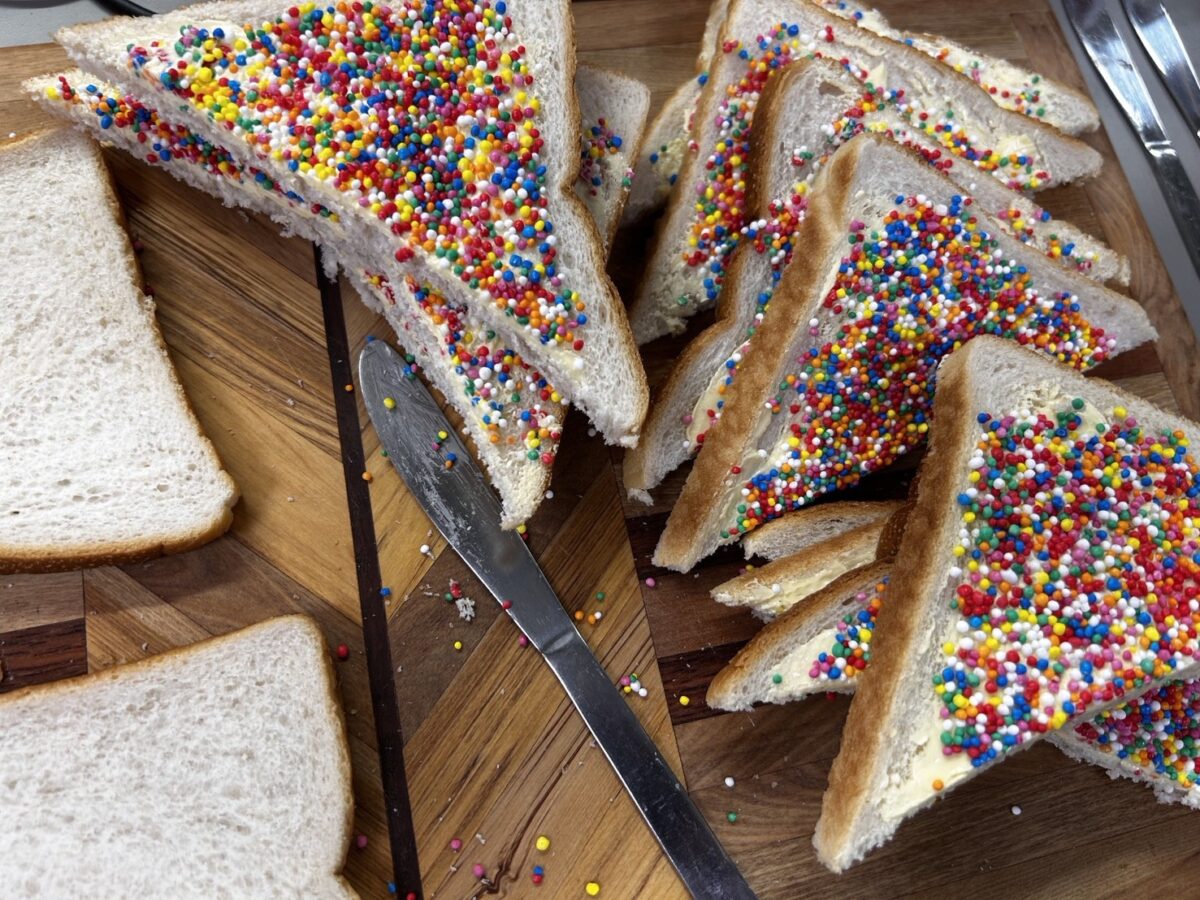
Fairy Breadsフェアリーブレッド
The next one is a classic Kiwi snack, potato chips with Kiwi Onion Dip. This dip is easy to make; just mix Nestlé’s reduced cream (a canned unsweetened cream) with powdered onion soup mix. It tastes very good, especially with salt and vinegar flavor chips, and is highly addictive. Once you start, it’s hard to stop! In New Zealand, all kinds of candy are affectionately called “Lollies”, and they’re loved by both kids and adults. In the photo, you can see colorful, chewy gummy lollies and Pineapple Lumps. These are soft pineapple-flavored candies coated in chocolate, and they’re so delicious you’ll find it hard to eat just one.
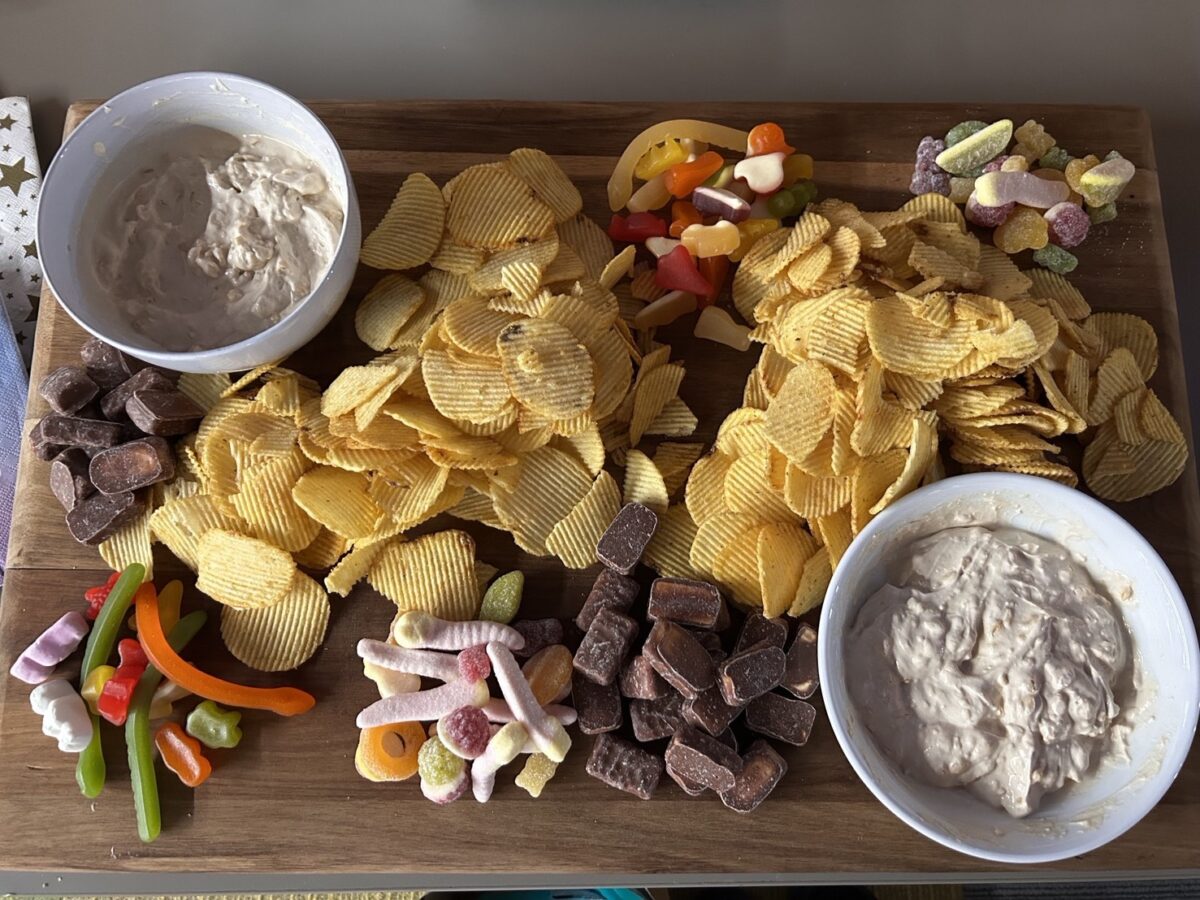
Snack Platter – Chips with Kiwi Onion Dip & Assorted Lolliesポテトチップスとディップ、キャンディの盛り合わせ
The “cheese roll” is a popular snack you can find in almost any café. It’s reasonably priced and tasty. Some are made with plain white bread. The cheese roll is found on the South Island of New Zealand, where it is loved as a kind of soul food. It’s just bread with cheese filling inside, rolled up, toasted, and topped with butter. One bite gives you a warm and happy feeling.
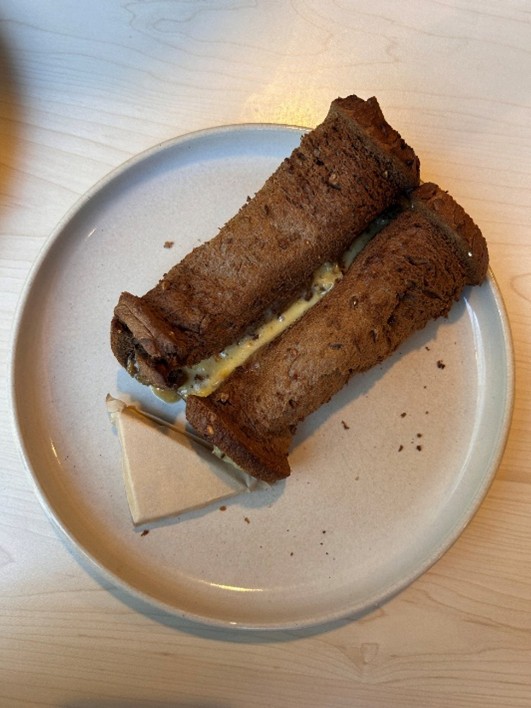
Cheese Rollsチーズロール
Here’s a Christmas meal in New Zealand. Many families celebrate Midwinter Christmas in August — the middle of winter in the Southern Hemisphere — by enjoying Christmas dinners. I was invited to a Christmas dinner hosted by my internship organization.
The dinner began with salads and bread, followed by a main course of ham, pork, and chicken served with roasted vegetables. The side was an orange-colored sweet potato called Kumara, a local favorite similar to the Japanese sweet potato. It’s widely available in supermarkets and absolutely delicious when roasted. My family enjoys eating kumara as well.
For dessert, we had “Pavlova”, a traditional New Zealand dessert said to have originated here. It’s a meringue with a crisp outer shell and soft, marshmallow-like center, topped with whipped cream and fresh seasonal fruit. It’s a festive treat that’s light and sweet. It has a familiar taste for Japanese visitors too.

Roasted potatoes and vegetables served with a fresh broccoli saladローストされたポテトやお野菜とブロッコリーサラダ
-
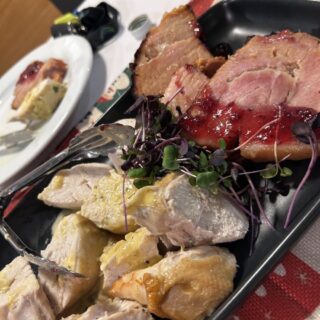
Roast ham and creamy chicken served with cranberry sauceローストハムとクリーミーチキンのクランベリーソース添え
-

Pavlova – a classic Christmas dessert in New Zealandパブロバというクリスマスに定番のデザート菓子


Finally, no visit to a New Zealand café is complete without trying a Flat White. This espresso-based drink with finely steamed milk originated in New Zealand or Australia and is a local favorite. It has less milk than a latte, allowing the rich flavor of the coffee to shine through. If you find yourself in a Kiwi café, I highly recommend giving it a try.
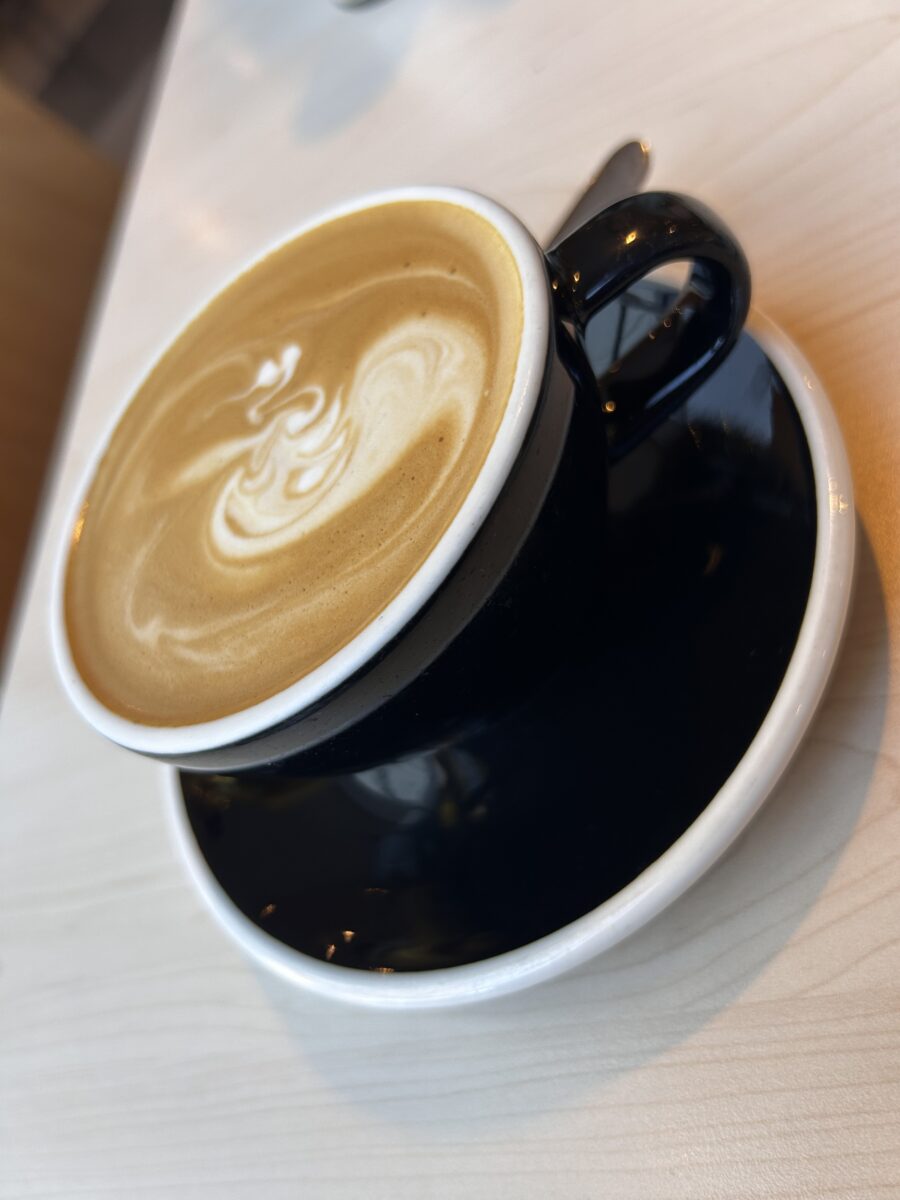
Flat Whiteフラットホワイト
Life in New Zealand has been filled with beautiful nature, warm people, and delicious discoveries. Exploring the local food culture has been one of the many joys of our stay, and I hope this journal helps future students and their families feel more connected to what awaits them here. May your own study abroad journey be just as rich, flavorful, and memorable.
Hitomi Nanto