




New Zealand
ニュージーランド

皆さんがこれを読んでいる時間に合わせて、おはようございます、こんにちは、そしてこんばんは。
僕はラパナンラット・パンタワット(リュウ)です。現在ニュージーランドに留学している3年生で、なぜかスタートアップに夢中になってしまいました。
「なぜか」と言ったのは、もし数年前の僕に「将来、大勢の人の前でステージに立って、自分のスタートアップについてピッチをするようになるよ」と言っても、きっと「そんなわけない」と思ったはずだからです。
僕は内向的な性格です。たくさんの人の前に立つことを想像するだけでも緊張しますし、その気持ちは今でも完全にはなくなっていません。
では、そんな僕がなぜスタートアップに取り組むようになったのでしょうか。
その答えを話すには、ICTに入学する前までさかのぼる必要があります。
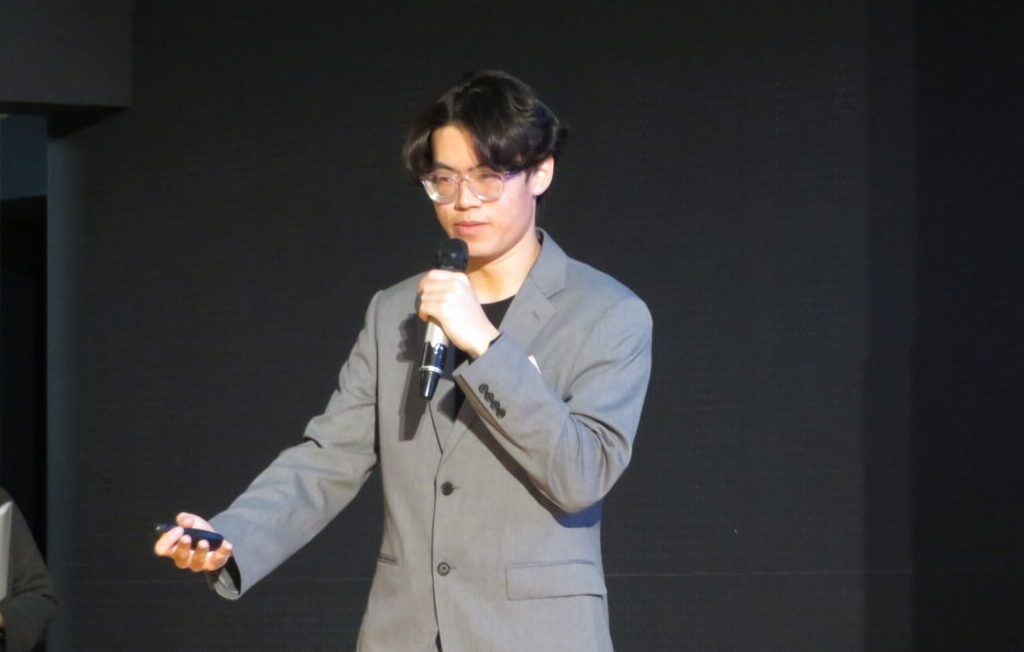 ICTに来る前の僕は、スタートアップの道に進むことなど考えたこともなく、そもそもスタートアップが何なのかさえほとんど知りませんでした。多くの高校生と同じように、ビデオゲームをしたり、ベッドでのんびり過ごしたりすることのほうにずっと興味がありました。
それが、ICTに入学して変わりました。
エンジニアリングプロジェクトやビジネスプログラム、コンテストへの参加、そして先生やメンターのサポートを通して、自分でも予想していなかったことに気づきました。
僕は、問題を解決することや、一見変わったアイデアを、人の役に立つかもしれないものへと形にしていくことが本当に好きだったのです。そして、うまくいけば少しくらいお金持ちになれるかもしれない(笑)。
気づけば、スタートアップのことが頭から離れなくなっていました。そして正直に言うと、僕はスタートアップが大好きです。
そんな経験を重ねる中で、今でも大切にしている3つの考え方を見つけました。
1つ目は、とてもシンプルです。
「すべてのアイデアはチャンスになる」
良いアイデアは、いつも都合のいいタイミングで浮かぶわけではありません。食事中かもしれないし、シャワーを浴びているとき、勉強しているとき、あるいは寝ているときかもしれません。 (僕の場合は、たいてい寝ようとしているときです。)僕が思いつくアイデアのほとんどは、最初から「良いアイデア」に見えるわけではありません。むしろ、ほとんどはかなり突拍子もないものです。でも、最初から「これはダメだ」と捨てることはしません。その代わりに、自分にこう問いかけるようになりました。「もし、こうだったら?」
その問いが、やがて僕をスタートアップコンテストへの挑戦、そして高専サミットへと導いてくれました。
サミットに参加するまで、僕がピッチを経験したのは、おそらく2、3回ほどでした。毎回違う学びがありましたが、すべてに共通していたことがあります。それは、自分のコンフォートゾーンから一歩踏み出さなければならなかったことです。
そして、高専スタートアップサミットの日がやってきました。
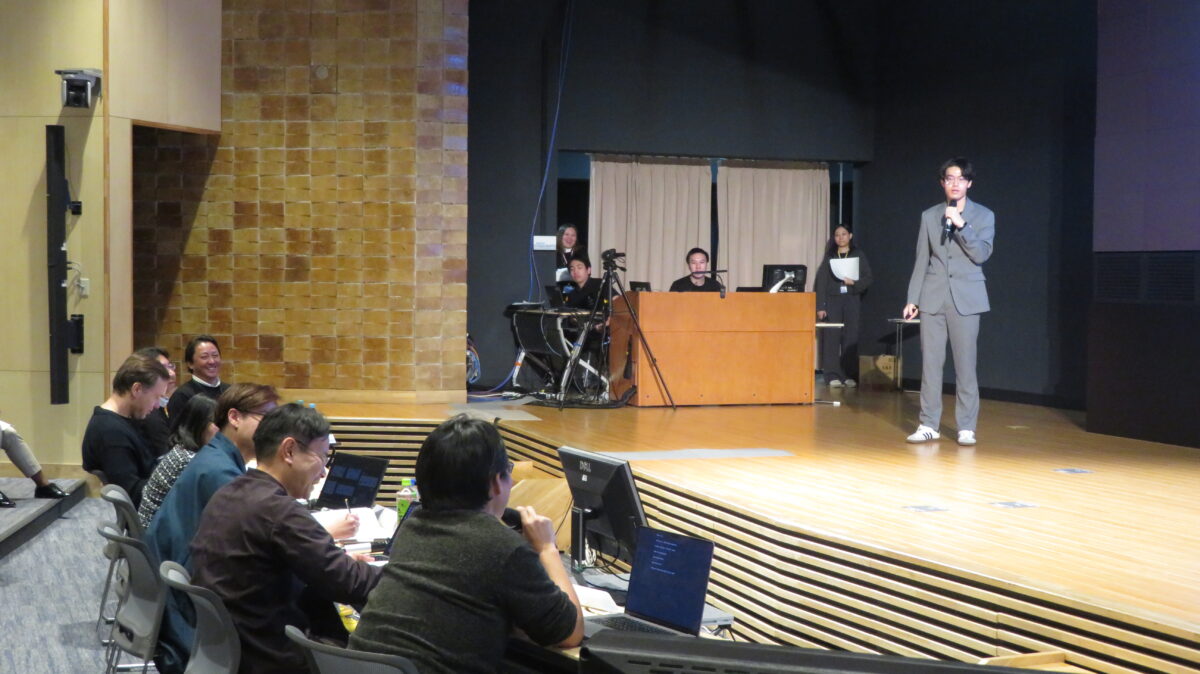 会場に着いた瞬間、僕は「ついにここまで来た」と思いました。このプロジェクトに半年間取り組んできたので、それまで費やした時間と努力が報われたように感じました。特に、そこで経験することのほとんどが僕にとって初めてだったからです。
大会初日は、参加者それぞれがポスターを掲示し、ブースを訪れた人たちに自分のアイデアを紹介する機会がありました。夜には交流イベントもあり、参加者同士でお互いを知り、ライバルたちとも自己紹介をする機会がありました。同じ情熱を持つ人たちとたくさん出会えたのは、本当に幸運だったと思います。ただ、僕の日本語力では、なかなかうまく会話をすることができませんでした。
そして2日目。いよいよ本番です。この日、僕は「Playground」というアイデアをピッチしました。ところが、僕の前に発表する予定だったチームに突然技術的なトラブルが起こり、急きょ僕が先に発表することになりました。ほんの少し順番が変わっただけに聞こえるかもしれません。でも、僕にとっては完全に想定外でした。一気に自分のリズムを崩してしまい、その後の3分間、言葉につまりながら発表することになってしまいました。
人生の中でも、最悪と言えるほどつらい経験の一つでした。
正直、とても悔しかったし、落ち込みました。この大会のために数え切れないほどの時間を使って準備してきました。交流イベントでは、同じ情熱を持つ新しい仲間にもたくさん出会いました。それなのに、ステージの上ですべてが崩れてしまったように感じました。
でも、そこで終わることはありませんでした。
ここで、僕の2つ目の考え方につながります。
「失敗を受け入れる」
僕はこれまで、数え切れないほど失敗してきました。試験で失敗したこともあります。 友達をつくるのに苦労したこともあります。 そして、ピッチでうまく話せなかったこともあります。
でも、スタートアップを通じて学んだ大きなことの一つは、失敗そのものが必ずしも問題なのではないということです。
問題なのは、その失敗から何も学ばないことです。
僕はいつも、「そこから何かを学び、同じ失敗を繰り返さなければ、失敗してもいい」と自分に言い聞かせています。
何かがうまくいかなかったとき、僕には2つの選択肢があります。その経験に落ち込んで終わるのか。 それとも、次に生かすのか。僕は後者を選びました。
この考え方のおかげで、コンテストへの向き合い方も変わりました。もちろん、1位や入賞を目指す気持ちはあります。でも、それと同じくらい、「この経験から何を学べるか」ということも、決して忘れないようになりました。
そして3つ目は、おそらく一番シンプルなことです。
「必ずフィードバックをもらう」
自分ではどれだけうまくできたと思っていても、必ず改善できるところがあります。
僕が得た最も価値のある学びの中には、コンテストで勝ったことから得たものではないものもたくさんあります。
僕のプレゼンを見て、弱点を指摘してくれた人。 自分では当たり前だと思っていたことに疑問を投げかけてくれた人。 そして、「ここはもっとこうしたほうがいい」と率直に伝えてくれた人。そうした人たちの言葉から、多くのことを学びました。
もちろん、最初は批判を受けるのがつらいこともあります。
まるで、自分のプライドの一番痛いところに、熱い針を刺されるような感覚です。
でも、批判がなければ、自分の弱点にも、改善すべきところにも気づくことができません。「自分のアイデアが一番いい」と思い込んだまま、間違った自信を持ってステージに立ち続けることになってしまいます。
ここまでの自分を振り返ってみると、僕は突然、自信に満ちた外向的な人になったわけではありません。
今でも、根っからの内向的な人間です。
プレゼンの前には今でも緊張します。 自分のアイデアが本当に良いのか、不安になることもあります。 そして、起業についても、まだまだ学ぶことばかりです。
でも一つ変わったことがあります。「居心地の悪い状況」にいることに、以前よりずっと慣れました。
ICTには、突拍子もないけれど前向きなアイデアを、最初から否定するのではなく、挑戦を後押ししてくれる環境がありました。先生やメンターは、僕に試行錯誤する機会を与えてくれました。コンテストは、失敗する機会を与えてくれました。そして高専サミットのようなイベントは、同じ情熱を持つ人たちと出会う機会を与えてくれました。
そのすべてに、心から感謝しています。
この先、自分の道がどうなっていくのかは、まだ分かりません。今持っているアイデアのいくつかは失敗するかもしれない。 もしかしたら、想像以上に大きなものになるアイデアもあるかもしれません。
でも、一つだけ分かっていることがあります。
これからも挑戦し続けたい。身の回りにある普通の問題を少し違った角度から見て、「もっと良い方法があるんじゃないか?」と問い続けたいと思っています。
そして何より、これからも自分が怖いと思う場所へ、あえて飛び込んでいきたいです。
ここまで読んでくれた皆さん、ありがとうございます。
そして、この記事を読んでいる学生の皆さん。このジャーナルが、皆さんにとって新しいことに挑戦し、自分のコンフォートゾーンから一歩踏み出すきっかけになればうれしいです。
自信がなくても大丈夫です。 (僕にもありませんでした。)
完璧なアイデアでなくても大丈夫です。 (僕のアイデアも、ほとんどそうでした。)
自分が何をしたいのか、はっきり分かっていなくても大丈夫です。 (これは僕自身の経験から言えます。)
とにかく、何かやってみてください。
失敗してみてください。
フィードバックをもらってください。
そして、もう一度挑戦してください。
僕のような内向的な人間でも、気づけばステージに立ってスタートアップについて話すようになりました。だから皆さんも、いつか自分自身に驚くようなことができるかもしれません。
では、「Ryuという内向的な学生が、どうしてスタートアップに挑戦するようになったのか?」
ここまで読んでくれた皆さんなら、もう、その答えが分かっていると思います。
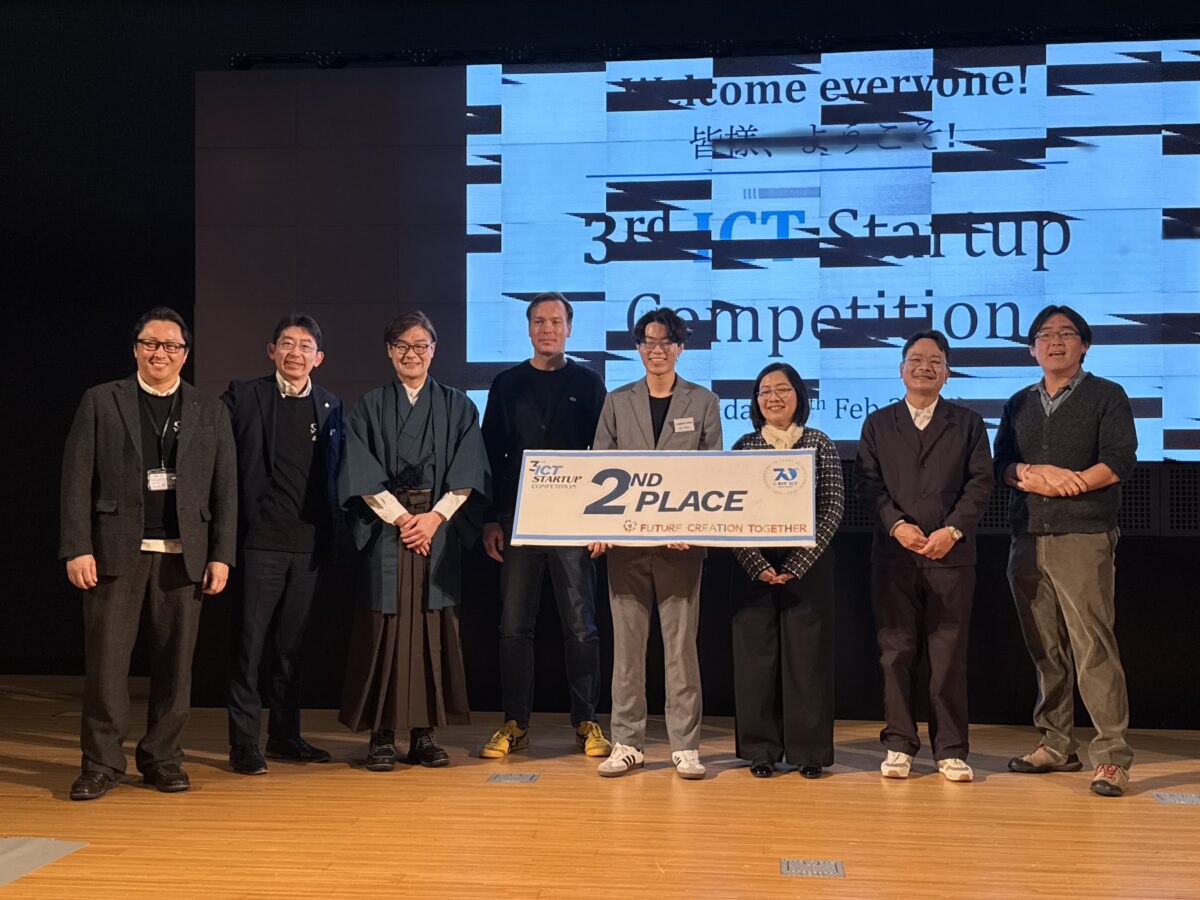
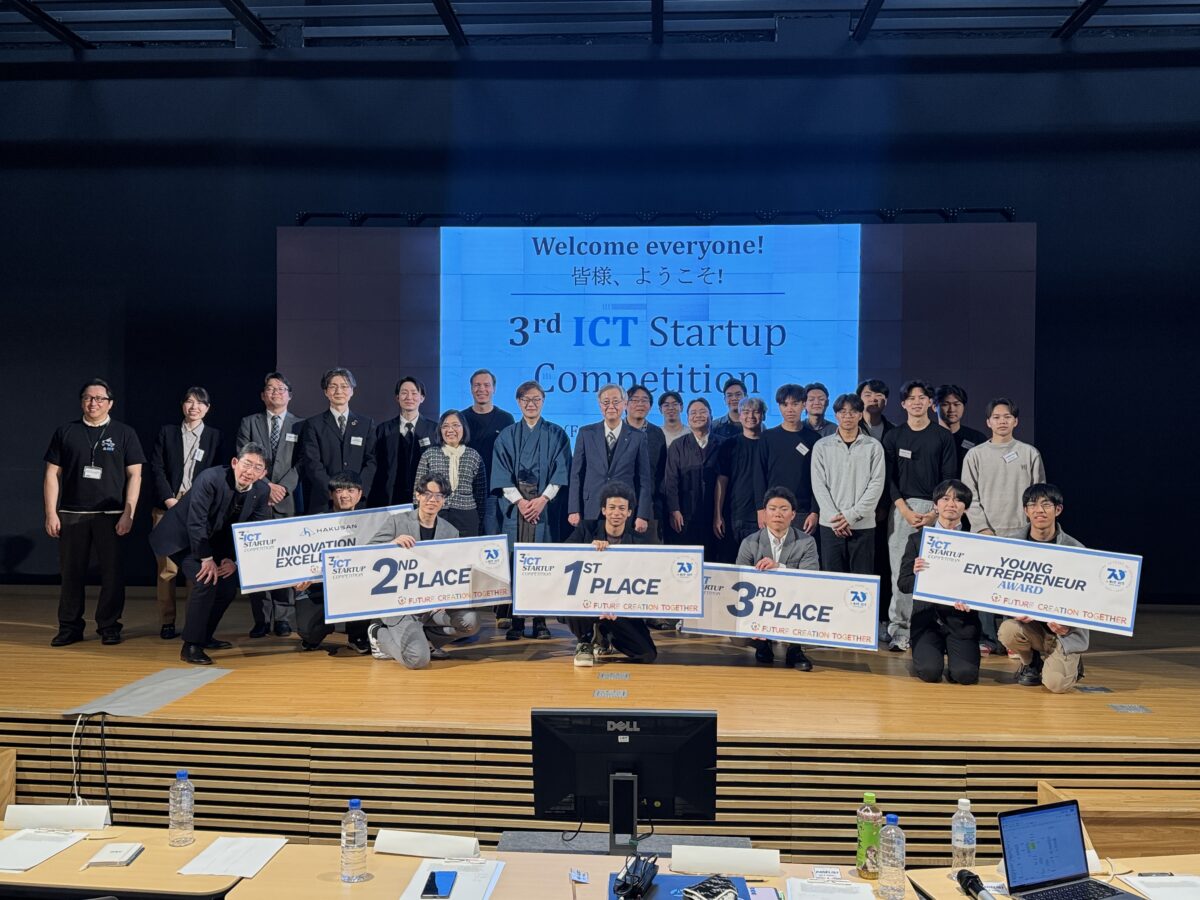
ラパナンラット・パンタワット(リュウ)
Depending on when you are reading this, good morning, good afternoon, and good evening, everyone.
My name is Lapananrat Pantawat (Ryu), a 3rd year student currently studying abroad in New Zealand who somehow fell in love with startups.
I say “somehow” because if you were to tell me a few years ago that I would voluntarily stand on a stage and pitch my startup in front of countless people, I probably would have called you crazy.
I am an introvert. Just the thought of standing in front of countless faces makes me nervous, and even today, that feeling never truly goes away.
So, how did I end up doing startups?
To answer that, we have to go back to before I came to ICT.
Before ICT, I had never considered pursuing a career in startups, nor did I have the slightest idea what startups were about. Like many other high school students, I was much more interested in video games and spending time in bed.
That changed after I came to ICT.
Through engineering projects, business programs, competitions, and the support of my teachers and mentors, I gradually discovered something I had never expected. I genuinely enjoyed solving problems and turning strange ideas into something that could potentially help people and, more or less, make me rich. I simply couldn’t get startups out of my head, and honestly, I love it.
Over time, I discovered three principles that continue to guide me today.
The first is simple:
Every idea is an opportunity.
I learned that a good idea does not always appear at the right time. You could be eating, showering, studying, or even sleeping when it comes to your mind. (Mine mostly comes when I’m trying to sleep.) Most of my ideas don’t quite seem like good ideas at first. As a matter of fact, most of them are completely ridiculous. But never once have I dismissed them immediately. Instead, I started asking myself, “What if?”
That question eventually led me to participate in startup competitions and, eventually, to the Kosen Summit.
Before attending the Summit, I only had a handful of pitching experiences, probably two or three at most. Every pitch I gave taught me something different, but they all had one thing in common: they forced me outside my comfort zone.
And then came the Kosen Startup Summit.
The moment I reached the venue, I told myself, “I finally did it.” After spending half a year working on this project, I felt that all the time and effort I had put into it had been worth it, especially since almost everything I experienced there was new to me.
On the first day of the competition, every participant had the opportunity to hang their posters and present their ideas to whoever visited their booth. That evening, there was also a networking event where participants were encouraged to get to know each other and introduce themselves to their competitors. I was really lucky to meet so many people who shared the same passion as me. However, due to my limited Japanese skills, I wasn’t really able to converse with anyone.
The second day was when the real deal took place. This was the day I pitched an idea called Playground. The team scheduled to present before me suddenly ran into a technical issue, forcing me to present ahead of them. It might have sounded like a small change, but it completely caught me off guard. I was thrown out of rhythm, and for the next three minutes, I found myself stumbling over my words.
It was one of the worst experiences of my life.
Honestly, I was disappointed and devastated. I had spent countless hours preparing for this competition. I had met so many new people who shared the same passion as me at the networking event. Yet, everything crumbled on stage. But I never stopped there.
And that leads me to my second principle:
Embrace failure.
I have failed countless times in my life. I have failed exams, struggled to make friends, and even failed to deliver a good pitch.
But one of the biggest lessons I have learned through startups is that failure itself is not necessarily the problem.
The problem is failing to learn from it.
I have always reminded myself that failure is acceptable as long as I learn from it and refuse to make the same mistake twice.
Every time something went wrong, I had a choice. I could either let the experience discourage me, or I could use it to improve.
I chose the latter.
That mindset changed the way I approached competitions. Sure, I was still aiming for first prize or a place on the podium, but the other thing I never left out of sight was the experience I could learn from.
My third principle is perhaps the simplest:
Always ask for feedback.
No matter how well you think you have done, there is always something you can improve.
Some of the most valuable lessons I have received did not come from winning competitions. They came from people who watched my presentations, pointed out my weaknesses, challenged my assumptions, and bluntly told me what I could have done better.
At first, hearing criticism can be difficult.
It’s like poking a hot needle into the most sensitive part of your ego.
But without criticism, you wouldn’t know what your weaknesses are or what you need to improve. You would continue living under the illusion that your idea was the best and carry that false confidence onto the stage.
Looking back at how I ended up here, I realize that I did not suddenly become a confident extrovert.
I am still an introvert at heart.
I still get nervous before presentations. I still have moments where I question whether my ideas are good enough. And I still have a lot to learn about entrepreneurship.
But I have become much more comfortable with being uncomfortable.
ICT gave me an environment where having crazy but still healthy ideas was encouraged rather than immediately criticized. My teachers and mentors gave me opportunities to experiment. Competitions gave me opportunities to fail. And events like the Kosen Summit gave me opportunities to meet people who share the same passion.
For that, I am incredibly grateful.
I don’t know exactly what lies beyond this journey of mine. Perhaps some of the ideas I have today will fail. Perhaps some will become something much bigger than I expect.
But I know that I want to keep trying.
I want to keep looking at ordinary problems from a different perspective and asking, “What if there was a better way?” And most importantly, I want to keep putting myself in situations that scare me.
So, for those of you who have read this far, thank you.
And to the students reading this, I hope that this journal can encourage you to try something new and step out of your comfort zone.
You don’t have to be confident. (Neither was I.)
You don’t have to have the perfect idea. (Most of mine weren’t.)
You don’t even have to know exactly what you want to do. (Speaking from experience.)
Just try something.
Fail at it.
Ask for feedback.
And try again.
Because if an introvert like me can somehow end up standing on a stage talking about startups, perhaps you can surprise yourself too.
So, how did an introvert named Ryu end up doing startups?
I think you know the answer.
Lapananrat Pantawat (Ryu)
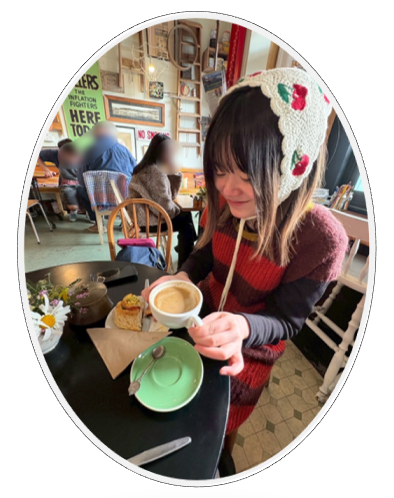 こんにちは。3年生の中澤 円香です。
日本はそろそろ涼しさが増してくる頃でしょうか。ニュージーランドでは冬が終わりに近づき、ダニーデンにも少しずつ春の気配が漂い始めています。町を歩けば桜が咲き、風にもどこか柔らかさが混じっていて、9月にもかかわらず春を先取りしたような、なんだか得をした気分になります。
さて今回は、先日ニュージーランドでラジオに出演した経験について綴ろうと思います。きっかけは友人との何気ない会話でした。「ラジオに出てみたいね」と話していたところ、それを聞いたオタゴ大学日本人学生会OJSA(Otago Japanese Students’ Association)の代表の方が、オタゴ大学で日本語を教えている晴子先生がラジオのゲストを探していると教えてくださったのです。そんなご縁があって、友人のあやね、ことりと私の3人で、ラジオに出演することになりました。
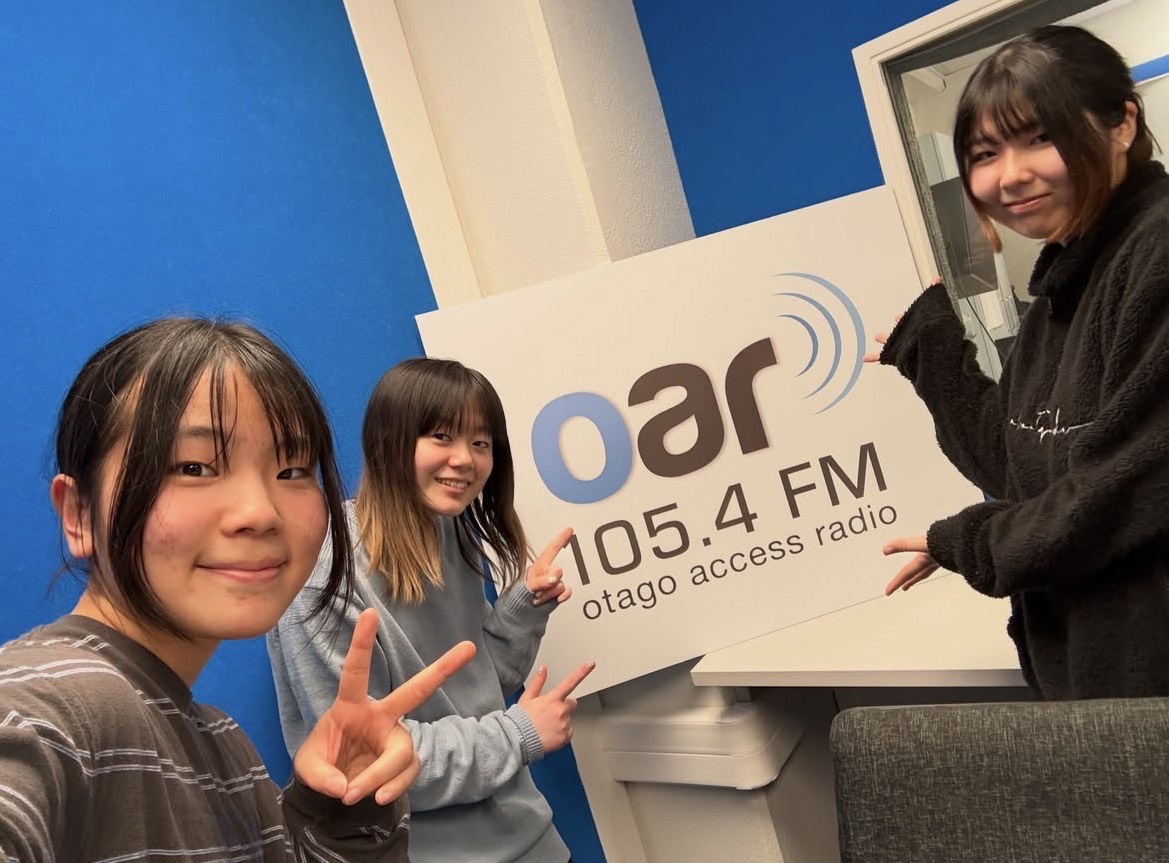
英語での出演は初めてで、決まってから当日までは正直、緊張がなかなか抜けませんでした。自分の考えを英語でどこまで伝えられるか不安もありましたが、晴子先生が丁寧に寄り添ってくださったことと、気心の知れた友達がそばにいてくれたことに、何度も助けられました。おかげで本番では思っていた以上に自然に、そして心から楽しんで話すことができました。
番組では、ニュージーランドと日本の違いや、こちらに来てから訪れた場所について、1時間ほどおしゃべりしました。普段は当たり前のように感じていた文化の違いを、改めて言葉にして誰かに伝えるというのは、思っていた以上に新鮮で、私自身にとっても発見の多い時間になりました。
気づけば収録はあっという間に終わっていました。あれほど心配していたはずなのに、振り返ればとても楽しい時間だったなと思います。ニュージーランドでラジオに出演するなんて、思ってもみなかった経験でしたが、だからこそとても貴重な1日になりました。この縁をつないでくださったOJSAの方や晴子先生、そして一緒にラジオに参加してくれた友人には、感謝の気持ちでいっぱいです。
9月なのに春の気配を感じて得をした気分になったように、今回のラジオ出演もまた、この国が思いがけず私にくれた贈り物のひとつだったように思います。これからも一つひとつの経験を大切にしながら、残りの留学生活を過ごしていきたいと思います。
中澤 円香
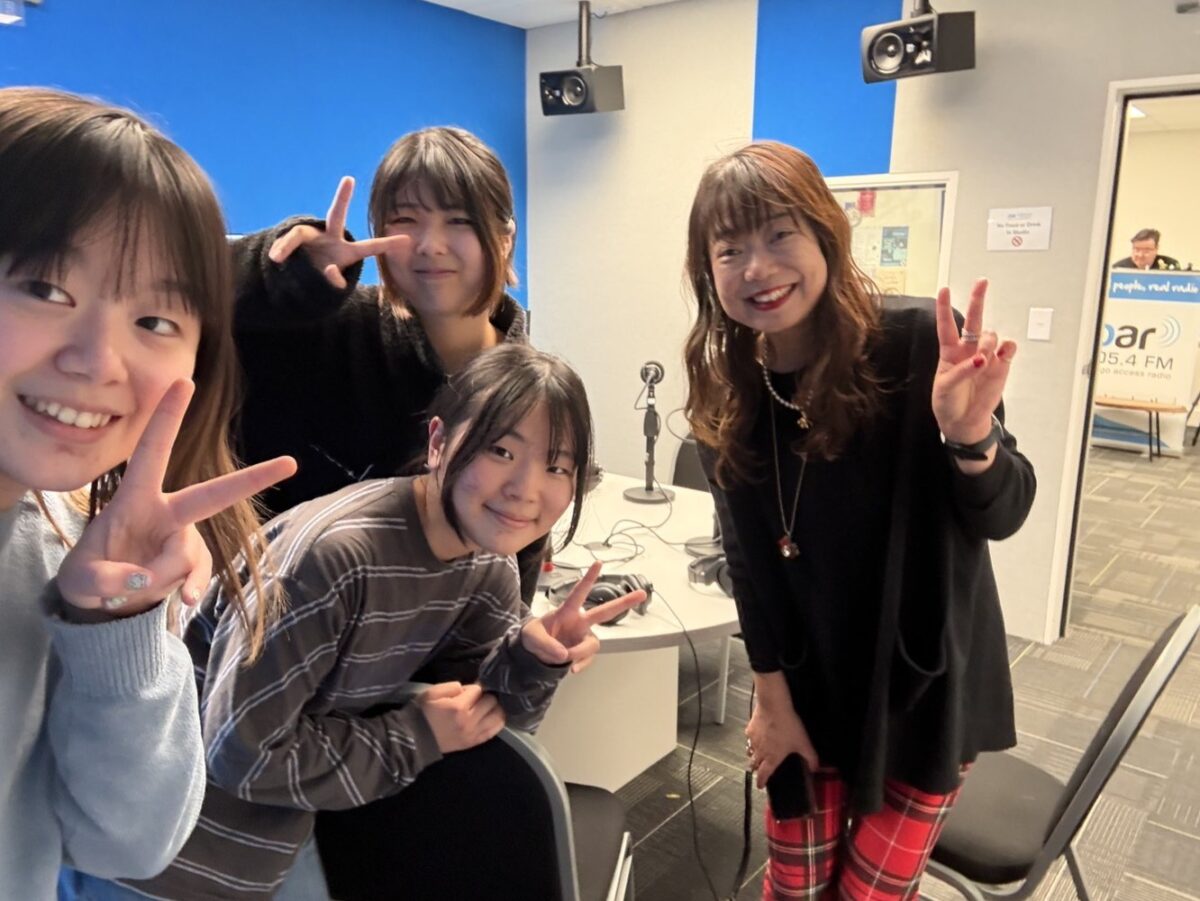
With Haruko-sensei and my friends晴子先生と友達と共に
Hi! I’m Madoka Nakazawa, a third-year student at ICT.
Can you feel summer ending in Japan? Here in New Zealand, it's a different season. Winter is ending, and spring is starting. When I walk around town, I see cherry blossoms and feel the warm wind. It is only September, but it already feels like spring. Therefore, I feel lucky to see this so early.
This time, I want to write about something different. I was on the radio here in New Zealand. It started with a simple conversation. I told a friend that I wanted to try being on the radio one day. Somehow, the president of OJSA (Otago Japanese Students’ Association) heard about this. She told me that someone was looking for people to join a radio show. Therefore, I joined the show with my classmates Ayane and Kotori.
It was my first time speaking on the radio in English, so I was nervous at first. I worried that I couldn't say what I wanted to say. However, Haruko-sensei helped us a lot before the show. My classmates were also with me, and this made me feel better. Therefore, during the show, I felt more relaxed than I expected, and I really enjoyed it.
We talked for about one hour. We talked about the differences between New Zealand and Japan, and about places we visited since coming here. It was interesting to explain things I don't usually think about. I also learned new things about my own experience.
Before I knew it, the recording was finished. I was worried before, but it turned out to be a really fun hour. I never thought I would be on the radio in New Zealand. Therefore, this was a very special experience for me. I want to thank the OJSA president and Haruko-sensei for this chance, and my classmates for doing this with me.
Madoka Nakazawa
With Haruko-sensei and my friends晴子先生と友達と共に
-

Scenic Views of New Zealandニュージーランドの風光
-

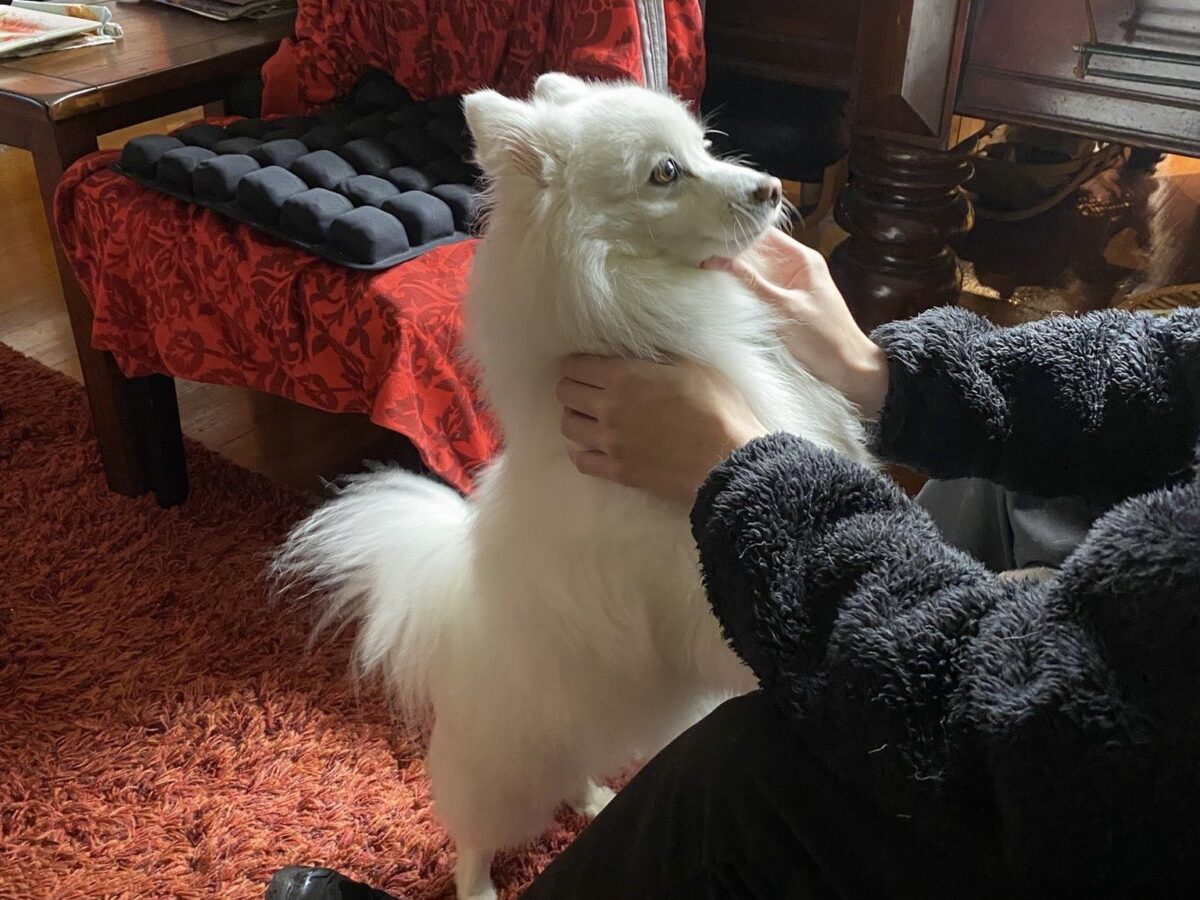
Playing with my Host Family‘s Dogホームステイの犬と戯れる筆者

 こんにちは田中 駿太郎です。私は今、絶賛ニュージーランド留学中の17歳3年生で、そろそろ18歳になるといったところでございます。そんな人生の変化が大きい時期にニュージーランドで生活しているわけですから、学ぶこともたくさんあります。もうすぐ5か月になりますが、いろんなことを学びましたし、いろんなことが変わってきました。全部を自覚しているわけではないけれど、明確に変わったなということは多々ありました。
そこで今回は一つ、「これだな」と思った考え方を伝えられたらなと思います。題して「留学だからこそ学べた言語力」です。もう先に結論です。「数字で表せない英語力をつけられるのは留学だけ」。留学では、数字では表せない英語力を学べますよ。そういったお話になります。
この考えに至るまでにはいろいろありまして、具体的なストーリーがあったわけではないのですが、一つ挙げるとするならば体調不良の時です。8月。NZは冬真っただ中。ちょっとした不注意で風邪をひいてしまったのです。その時にホストマザーに自分の体調を伝えないといけない。頭が痛くて、鼻水が出て、関節が痛いみたいなことを伝えるのが本当に大変でした。もちろん症状を指す単語を知らなかった、というのが大きいのですが、それ以上に壁になったのが言い換えです。
英語学習にはパラフレーズというテクニックがあります。簡単に言うと、英文を知っている易しい単語で言い換えるという技術です。これが私は本当に苦手でして、うまく伝わらなかったわけです。「日本語の文をそのまま英語にしたい」「ニュアンスを維持したまま英語にしたい」と思ってしまうのです。それはなぜか。物の唯一性という持論を考えてしまうからです。
皆さんが知らないものを見たとき、自分の知っているものに例えるじゃないですか。例えば、「カエルは鶏肉みたいな味がする」みたいなことを聞いたことはありませんか。でも、カエルは絶対にカエルの味じゃないですか。鶏肉なわけないじゃないですか。カエルも鶏も普段から食べる人にとっては、鶏肉は鶏肉だし、カエル肉はカエル肉なのです。
それと同じで、と言うとなんかちょっと違う気もしますが、言語も翻訳するとき、自分の言語にあるものに持ってくるわけです。Telephone=電話というのは当たり前ですが、そもそも電話は欧米で開発され、ギリシャ語の「tele(遠く)」と「phone(声)」という言葉をもじってTelephoneという言葉が生まれました。それを日本に持ってくるとき、「どう表現しようか」となり、電気を使って遠くの人と話す機械というものの要点を取って、「電話」という言葉ができたわけです。海外で telephone と言うと、やや古い固定電話を連想されることがありますが、日本で「電話」と言えば、まずスマートフォンを思い浮かべるでしょう。
このように、英語のものを直接日本語にしたものですらニュアンスに齟齬があるのですから、これが慣用句とかになるとなおのことです。つまりは、英語のコレ=日本語のコレという単純な対応ができないわけです。だからニュアンスを維持しようとすると、ある言語で作られた意味・認識・感情を分解して、別の言語の体系の中で近い形に再構成するという作業になるわけです。これはもう、言語のプロにしかできないんじゃないですか。そんなの無理でしょう、と私は思ってしまうのですよ。だからパラフレーズを苦手に感じてしまうのです。
結局はこう言えば多分伝わるだろうと妥協してしまう。それでも心のどこかでは、日本語のニュアンスをできるだけ失わずに英語に持っていきたいと考えてしまうわけです。これは英語力というより、言葉そのものをどう扱うかという感覚です。単純に日本語や英語だけの話ではなく、タイ語や中国語、アラビア語など、それぞれの文化的背景によっても変わってきます。さらに突き詰めると、同じ言語でも、その人がどこで暮らして、何を見て、誰と話してきたかによって、言葉から受け取るものは変わってくるのですよ。
他の例えを出しますと、mateという言葉。イギリス英語ではよく使われますし、アメリカ英語ならbroのような言葉があります。「友達」や「親友」のような意味ですが、親友でなくても軽い感じで使える、すごくふわっとした言葉です。そして、そのmateに対する印象も人によって違います。自分が「mate」だと思っている人が、すごく賑やかな人で、お酒を飲んで「Yo, yo, mate!」みたいな人だったら、mateに対して賑やかで溌剌とした印象を持つかもしれません。でも、自分にとってのmateは、静かに腹を割って価値観について話し合えたりする相手かもしれない。だから、人によっても意味が変わります。辞書的な意味は同じでも、その言葉から受ける距離感は人によって変わります。
つまり、言語は単純な単語と文法の集合ではないのです。言語を学ぶということは、突き詰めれば、その人の文化や環境、そしてその人自身を学ぶということなのです。その相手自身が何を見て感じて、今そこに立っているかを学ぶっていうことなのです。これが留学してからずっと伝えたかったことです。
留学中だと日本語についてもいろいろ見つめ直すことがあります。日本語でも、この人はこういう環境で、周りにこういう人がいて、そういう人たちと話してきたから、ちょっと言葉が強いかな、みたいな。それと一緒なんです。伝わる、伝わらないではなく、受け取り方や感じ方の話です。そういうことは本当に留学や渡航でしか感じられないと思います。だから単純に英語を勉強するために海外へ行くのではなく、自分が当たり前だと思っている感覚から一度外に出ることで、自分の立ち位置や、言葉と環境の関係を実感できます。私は、そういう俯瞰した視点を得ることができました。
というわけで、最初に言った「数字で表せない英語力をつけられるのは留学だけ」というのは、相手の受け取り方や、その人の言語、文化、環境、そしてその人自身のことを考え始めたときに得られる、もう一段階上の、数字じゃ測れない英語力。履歴書には載らないけれども、自分の中には絶対に価値のある力。そういう力を身につけられるのは、留学した者の特権なのではないか、という話でした。
長々とお付き合いいただき、ありがとうございました。これから留学する人や、留学に興味のある人に伝われば幸いです。
田中 駿太郎でした。
-
Scenic Views of New Zealandニュージーランドの風光
-
Playing with my Host Family‘s Dogホームステイの犬と戯れる筆者
Hello, I am Shuntaro Tanaka. I am 17 years old, a 3rd-year student currently studying in New Zealand, and I will be turning 18 soon. Living in New Zealand during this period of my life, when I am experiencing some of the biggest changes, means there are so many things to learn.
About five months have passed, and I have learned many things and changed in various ways. I might not be fully aware of all those changes, but there are definitely many moments when I clearly feel, “I have changed.” So, this time, I want to share one key idea with you. The title is “Language Skills I Could Only Learn Through Studying Abroad.” Let me give you the conclusion first: “The only way to gain English skills that cannot be measured by numbers is through studying abroad.” Studying abroad allows you to develop English skills that cannot be reflected in test scores or numerical results. That is what I would like to talk about today.
Before reaching this conclusion, many things happened. It wasn't one specific event, but if I were to pick one, it was when I got sick. It was August, the middle of winter in New Zealand. I caught a cold because I was a little careless. At that time, I had to tell my host mother about my health condition. It was really hard to explain symptoms like having a headache, a runny nose, or joint pain.
Of course, a big reason was that I didn't know the specific words for those symptoms. But an even bigger challenge was "paraphrasing" (saying things in a different way).
When learning English, there is a technique called paraphrasing. Simply put, it is a skill to rephrase sentences using easy words you already know. I was really bad at this, so I couldn't express myself well. I tended to think, "I want to change Japanese sentences directly into English while keeping the exact same nuance."
Why do I feel this way? It's because I think about my own theory: "the uniqueness of things." When people see something they don't know, they compare it to something they already know, right? For example, have you ever heard people say, "Frog tastes like chicken"? But a frog tastes like a frog, doesn't it? It cannot be chicken. For people who usually eat both chicken and frog, chicken is chicken, and frog meat is frog meat. It might be a little different, but language is similar. When we translate, we bring a word into something that matches our own language.
"Telephone = Denwa (電話)" is obvious now. But originally, the telephone was developed in Western countries, and the word "telephone" comes from the Greek words tele ("far") and phone ("voice" or "sound"). When this concept came to Japan, people thought hard about what to call it. They took the main point—"a machine that uses electricity to talk with people far away"—and created the Japanese word "denwa" (電話), which literally combines the ideas of electricity and communication. When you say "Telephone" overseas, people might strongly picture an older landline phone. But when you say "Denwa" in Japan, most people think of a smartphone. Even with a direct translation of an object like "Telephone," there is a slight gap in nuance. So, when it comes to idioms, the gap becomes even bigger.
In other words, you cannot simply match English and Japanese one-to-one. So, if you try to keep the exact nuance, you have to break down the meaning, recognition, and emotion created in one language, and rebuild them in a similar shape within the structure of another language. I end up thinking, "Isn't that something only language experts can do?" That is why I am not very good at paraphrasing.
In the end, I compromise by thinking, "If I say it this way, it will probably get across." But somewhere in my heart, I still want to translate it into English without losing the Japanese nuance as much as possible. This is not just about English ability; it is a sense of how to deal with language itself.
This isn't just about Japanese and English. It changes depending on the cultural background of Thai, Chinese, Arabic, and so on. Taking it further, even in the same language, what people receive from words changes depending on where they lived, what they saw, and who they talked with.
Let me give you another example: the word "mate." It is often used in British English, and in American English, there is a word like "bro." It means "friend" or "best friend," but it is a very broad term that you can use casually even if the person is not your best friend. Also, the impression of the word "mate" differs from person to person. If someone you consider a "mate" is a very energetic person who drinks and says, "Yo, yo, mate!", you might have a bright and energetic image of the word "mate." But for you, a "mate" might be someone with whom you can quietly open your heart and talk about values. Therefore, the feeling associated with the word changes from person to person. Even if the dictionary definition is the same, the sense of distance changes.
In short, language is not just a simple collection of words and grammar. In the end, learning a language means learning about a person's culture, environment, and identity, what they saw, felt, and how they came to stand where they are now. This is what I have wanted to say ever since I started studying abroad.
While studying abroad, there are also many times when I look back at the Japanese language. Even in Japanese, I might think, "This person grew up in this environment with these people around them, so their words sound a bit strong." It is the same thing. It is not just about whether you can communicate or not, but about how people receive words and feelings.
I believe you can truly feel these things only by traveling or studying abroad. Therefore, you shouldn't go overseas simply to study English. By stepping outside of the senses you take for granted, you can feel your own position and the relationship between language and environment.
I was able to gain this broader perspective. So, as I said at the beginning, "You can only gain English skills that cannot be measured by numbers through studying abroad." When you start thinking about how another person receives your words, their language, culture, environment, and the person themselves, you reach a higher level of English ability that cannot be measured by numbers. It won't show up on a resume, but it is definitely a valuable strength that stays with you. Gaining this ability may be one of the special privileges of studying abroad.
Thank you very much for reading this long essay. I hope this message reaches people who are going to study abroad or are interested in studying abroad.
Shuntaro Tanaka
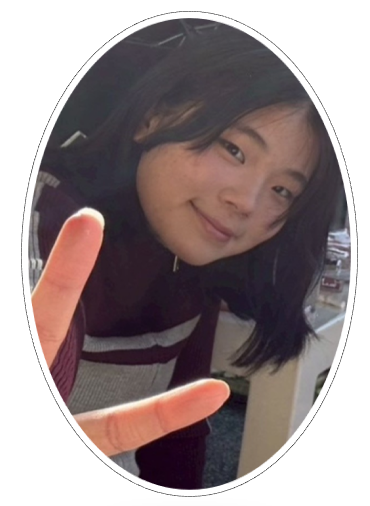 こんにちは。ニュージーランドに留学中の伊藤 綾音です。
留学開始からおよそ4か月が経ち、異国の地での生活も日常へと落ち着いてきました。日本はそろそろ暑さの厳しい時期になるころでしょうが、こちらは正反対の真冬に向かっています。日本の友達と連絡を取る際には、そのたびに、まるで初めて気づいたかのように真逆の季節を感じ、「遠くに来てしまったんだなあ」と実感します。しかし、このやり取りをするたびに、私はいくら日常が変わったとしても、自国に愛着を持つ生粋の日本人なのだと改めて見つめ直すことができるのです。
今回のICTジャーナルでは、私が留学中に体験したことのうちの一つである、OJSAでの出来事を紹介します。
初めに、OJSA(Otago Japanese Students' Association)とは、ダニーデンにあるオタゴ大学の日本人学生会です。定期的に日本文化に関するイベントなどを企画しており、私も友達に誘われてスケートイベントに参加しました。OJSAには、現地の日本人の方や日本文化に興味がある方など、さまざまな人が所属しています。参加費を払えば誰でも参加できるので、ICTの学生にもとてもおすすめです。英語で会話する機会も増えますし、何より大きなイベントは楽しいですからね。インスタグラムで検索すれば出てくると思うので、ぜひ参加してみてください。
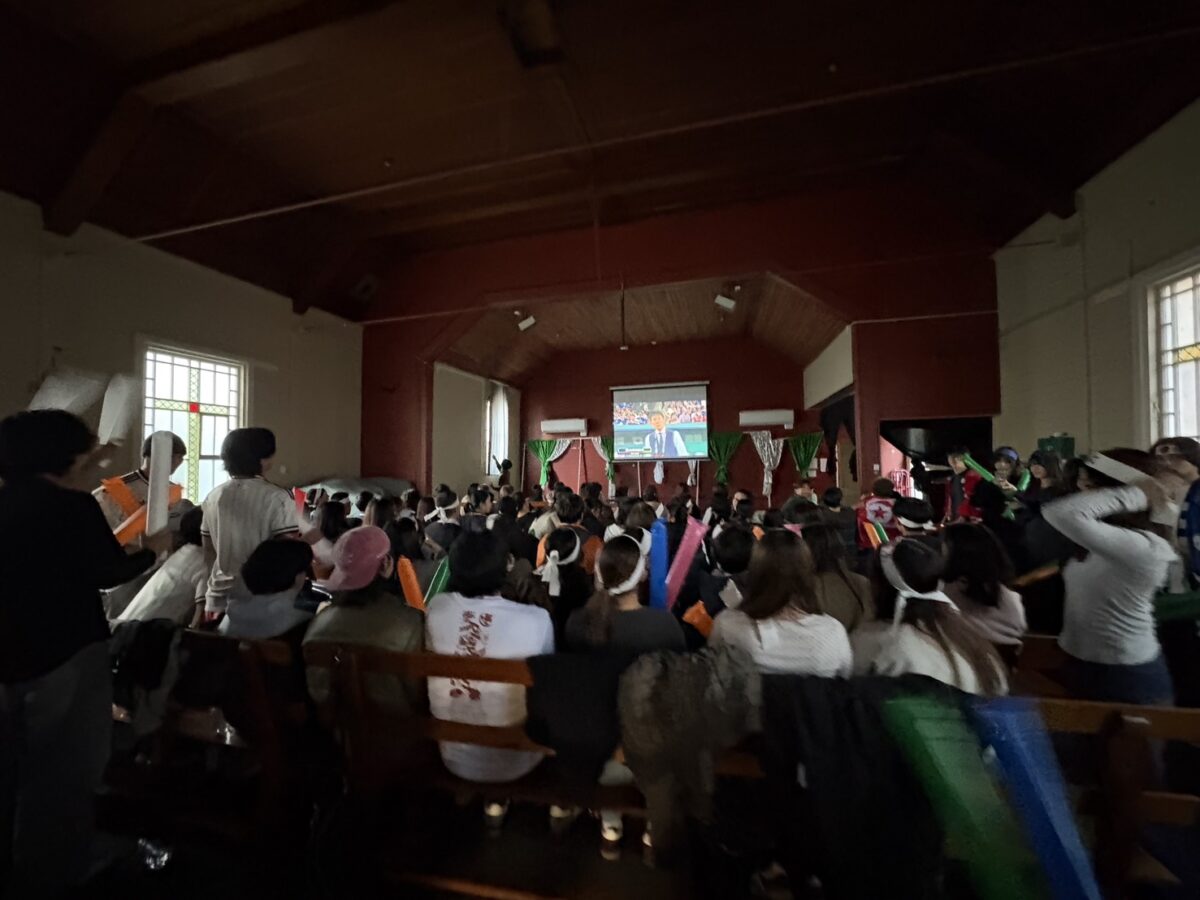
参加したイベントの中で特に印象的だったのは、日本対チュニジアのサッカーワールドカップ観戦イベントです。このイベントでは、ひょんなことからOJSAの代表の方に誘っていただき、クラスメイトのことりちゃんとまどかちゃんと共に、企画者側として参加させていただきました。どうやって集客するか、イベントをどのように盛り上げるかなどの話し合いを重ね、チラシ配りやインスタグラムでの発信を経て、およそ90人の方に参加していただくことができました。
私は当日に流すサッカー日本代表の紹介プレゼンテーションと動画の制作を担当し、クラスメイトの二人と代表の方と一緒にプレゼンを行いました。これほど大勢の人の前で英語のプレゼンをするのは初めてだったので、とても緊張しました。しかし、会場は大いに盛り上がり、皆さんが楽しんでくれたようだったので、最終的には勇気を出して挑戦してよかったと思います。無事にサッカー日本代表もチュニジアに大差で勝利を収め、最高の形でイベントを終えることができました。
-
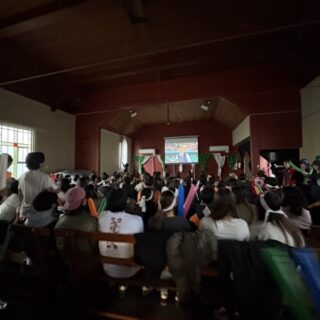
Soccer World Cup viewing event at a local church地元の教会で行われたサッカー観戦の様子
-
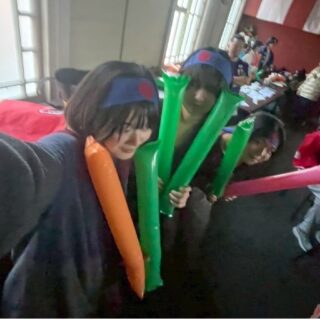
A group photo of the three of us会場でのスリーショット
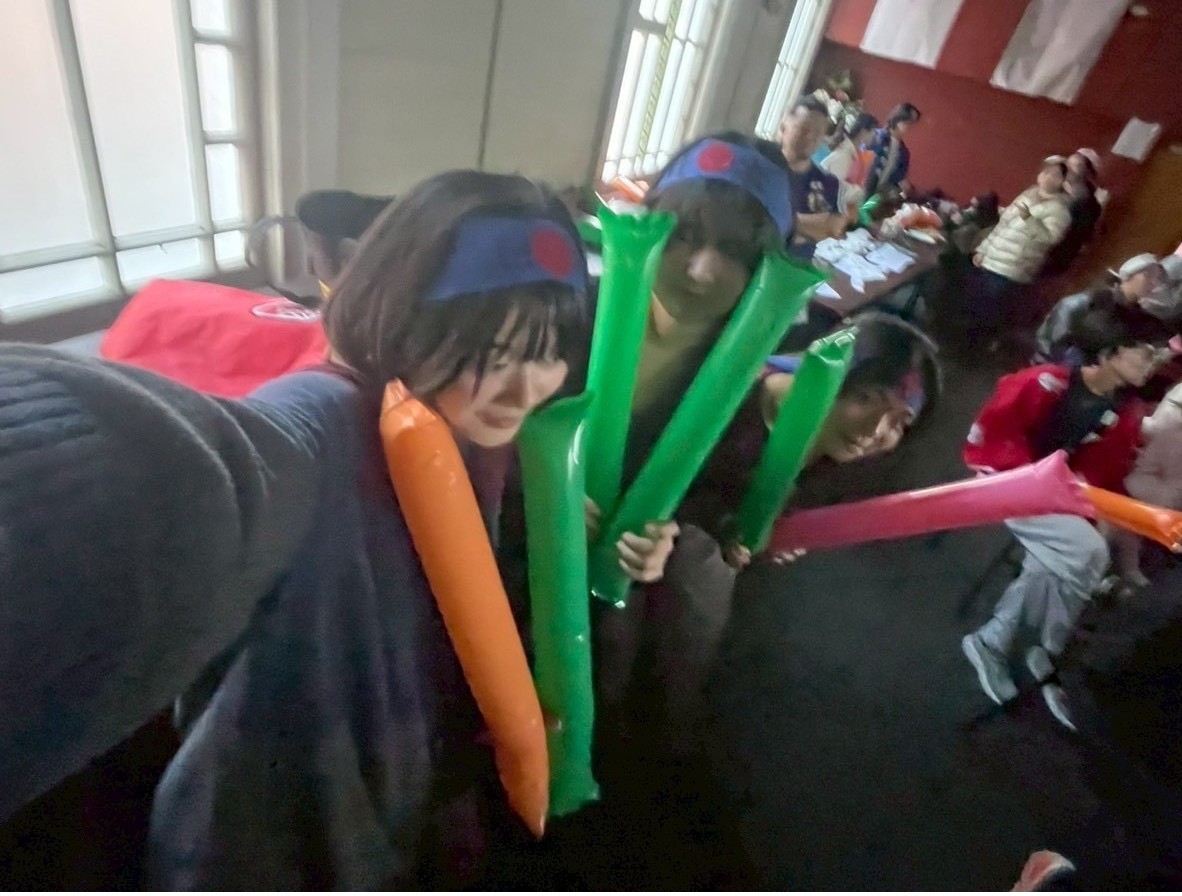
おわりに、私はOJSAのメンバーや友達、ホストファミリー、そして偶然出会った町の方々など、たくさんの人とのご縁に恵まれ、充実した留学生活を送ることができています。街を歩いているだけでも、ダニーデンの人々は気さくに声をかけてくれて、人と関わることの素晴らしさを改めて感じました。最近では、これまでずっと意識していた英語も徐々に自然に使えるようになり、気楽にコミュニケーションが取れるようになったことが、自分の中で特にうれしい変化です。
私の留学生活もまだまだ半分残っています。知らない土地で暮らすのは大変なこともありますが、それ以上に楽しい気づきがたくさんありました。これからどのようなことが私に訪れるのか、楽しみプラス不安もちょびっとです。
この文章が、今後ニュージーランドへ飛び立つ皆さんのご参考になれば幸いです。
ニュージーランドから、伊藤 綾音でした。
Hello everyone. My name is Ayane Ito, and I am currently spending a year studying in New Zealand.
It has been about four months since I started my life here, and living in a foreign country has gradually become part of my everyday routine. While Japan is probably entering the hottest time of the year, New Zealand is heading into the middle of winter. Whenever I talk with my friends back home, we always end up realizing how opposite our seasons are. Every time it happens, I am reminded of how far away I am from Japan. At the same time, it makes me realize that no matter how much my daily life changes, I am still very attached to my home country.
In this ICT Journal, I would like to share one of my memorable experiences during my study abroad program: my involvement with OJSA. OJSA, or the Otago Japanese Students' Association, is a student organization at the University of Otago in Dunedin. The association regularly organizes events related to Japanese culture. I joined an OJSA skating event after being invited by a friend. OJSA members include Japanese students, local people, and others who are interested in Japanese culture. Anyone can participate by paying a small fee, so I would definitely recommend it to future ICT students. It provides a great opportunity to speak English, and above all, the events are a lot of fun. If you search for OJSA on Instagram, you should be able to find more information.
Among the events I joined, the most memorable was a viewing event for the soccer match between Japan and Tunisia. By a lucky coincidence, the president of OJSA invited me to help organize the event. Together with my classmates, Kotori and Madoka, I became part of the organizing team. We spent a lot of time discussing ways to attract participants and make the event enjoyable. After promoting it through social media and distributing flyers, we were happy to welcome around 90 people to the event.
My role was to create a presentation and a short video introducing the Japanese national team. On the day of the event, I gave the presentation together with my two classmates and the OJSA president. I had never given a presentation in English in front of such a large audience before, so I was extremely nervous. However, the atmosphere was lively, and everyone seemed to enjoy it. In the end, I was glad that I challenged myself and stepped outside my comfort zone. To make the day even better, Japan won the match by a large margin, allowing the event to end on a high note.
-
Soccer World Cup viewing event at a local church地元の教会で行われたサッカー観戦の様子
-
A group photo of the three of us会場でのスリーショット
Looking back, I feel incredibly fortunate to have met so many wonderful people during my time in New Zealand. The members of OJSA, my friends, my host family, and even people I happened to meet around town have all helped make my study abroad experience meaningful and enjoyable. Even when I am simply walking through Dunedin, people often greet me or start conversations, which reminds me how wonderful it is to connect with others. Recently, I have also noticed a change in myself. English, which I used to think about constantly, is gradually becoming something more natural. I can communicate more comfortably than before, and that is one of the things I am happiest about.
My study abroad journey is only halfway finished. Living in an unfamiliar place can be challenging, but it has brought me far more exciting discoveries than difficulties. I am looking forward to seeing what experiences await me in the months ahead, although I still have a little bit of anxiety as well.
I hope that my experience will be helpful for those who plan to come to New Zealand in the future.
Greetings from New Zealand,
Ayane Ito
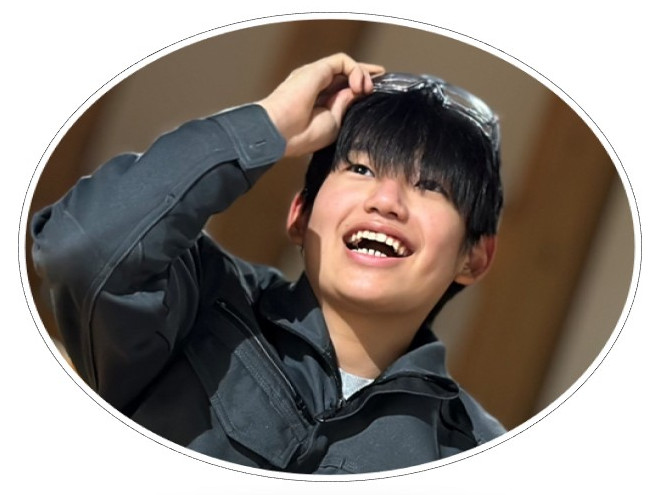 こんにちは。3年生の石原田 海秀です。ニュージーランドに来て、はや1か月が過ぎました。この1か月で、日本では感じられないことを多く経験しました。それをいくつか紹介したいと思います。ぜひ楽しんでください。
ホストファミリーとドライブ
僕のホームステイ先には、ホストファザー、ホストマザー、ホストシスター、ホストブラザー、犬、猫がいます。みんないい人たちなので、ここがホームステイ先でよかったと思う毎日です。
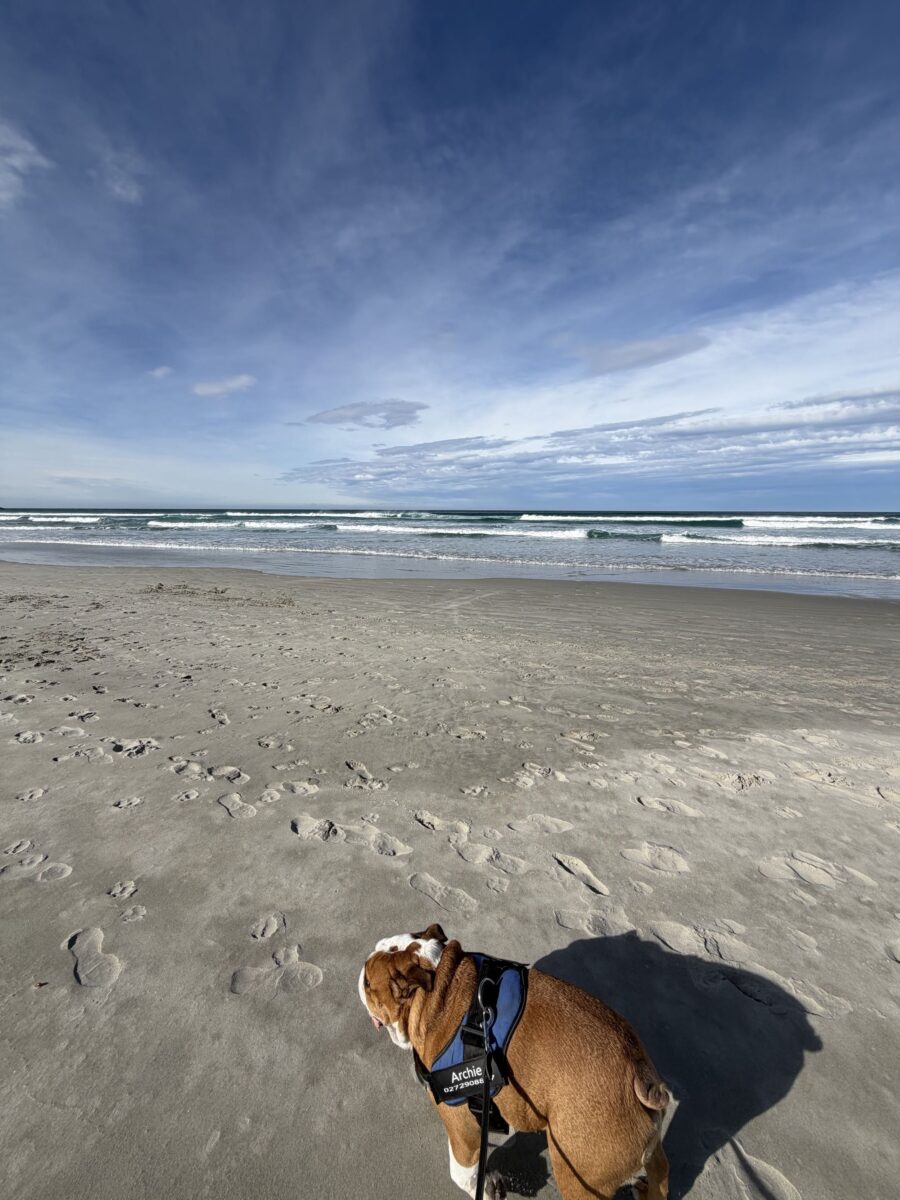
ニュージーランドでの新生活が始まって2日目の午前中に、ホストマザー、ホストブラザー、犬とビーチに行きました。僕はペットを飼ったことがなく、人生で初めての犬の散歩でした。ビーチからの眺めはものすごくきれいで、早くもニュージーランドに来たかいがあったと思いました。ダニーデンには他にもビーチがあり、夏になるとビーチに泳ぎに行ったりするようです。これから寒くなっていきますが、今から夏が楽しみです。
-

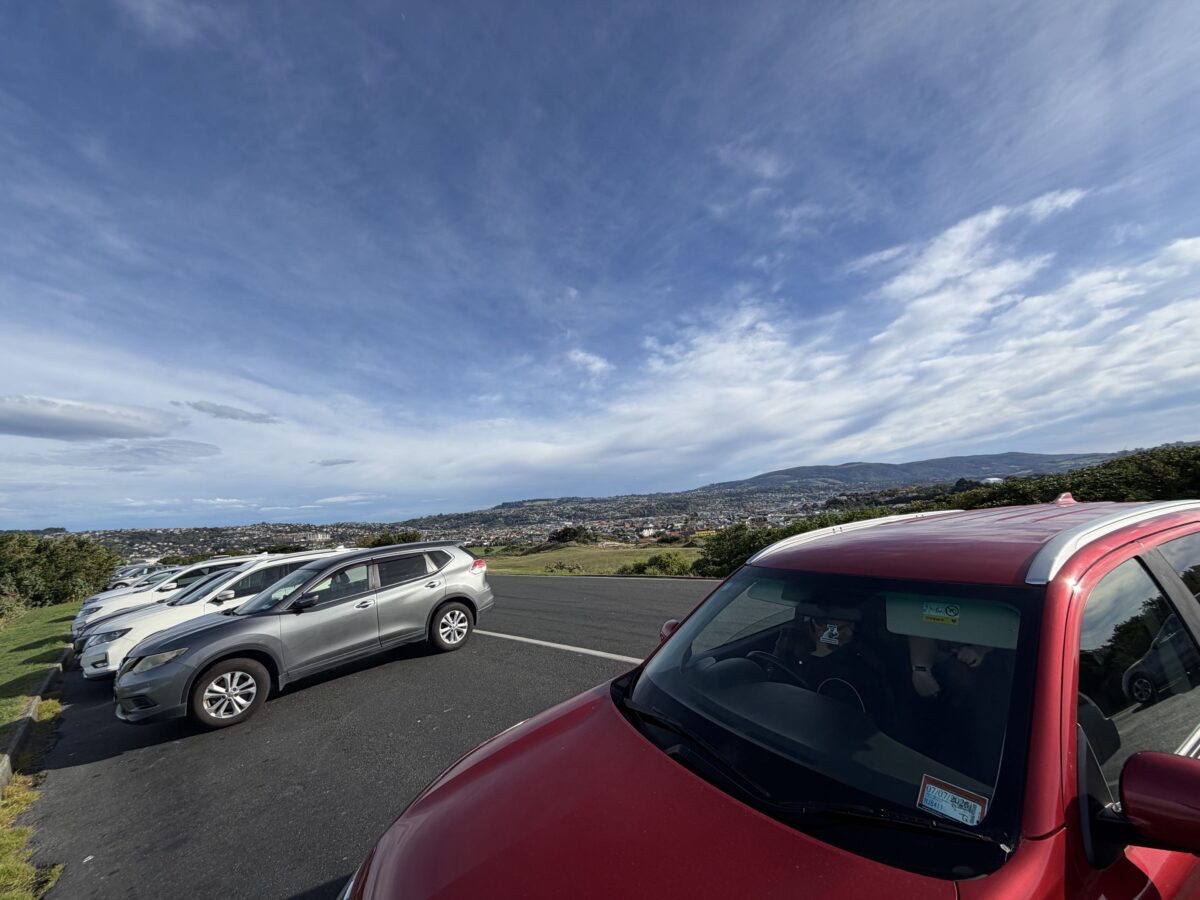
Scenery during a drive ドライブでの風景
-

My first time walking a dog人生初の犬の散歩
-

A peaceful view of the beach and ocean静かなビーチと海の風景

キャンプ
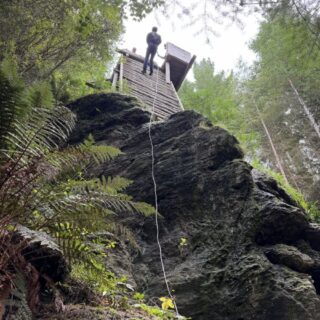
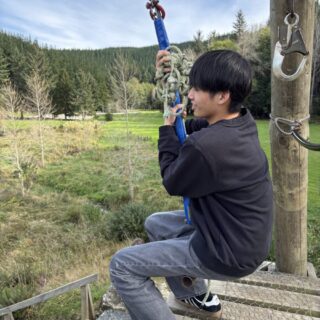
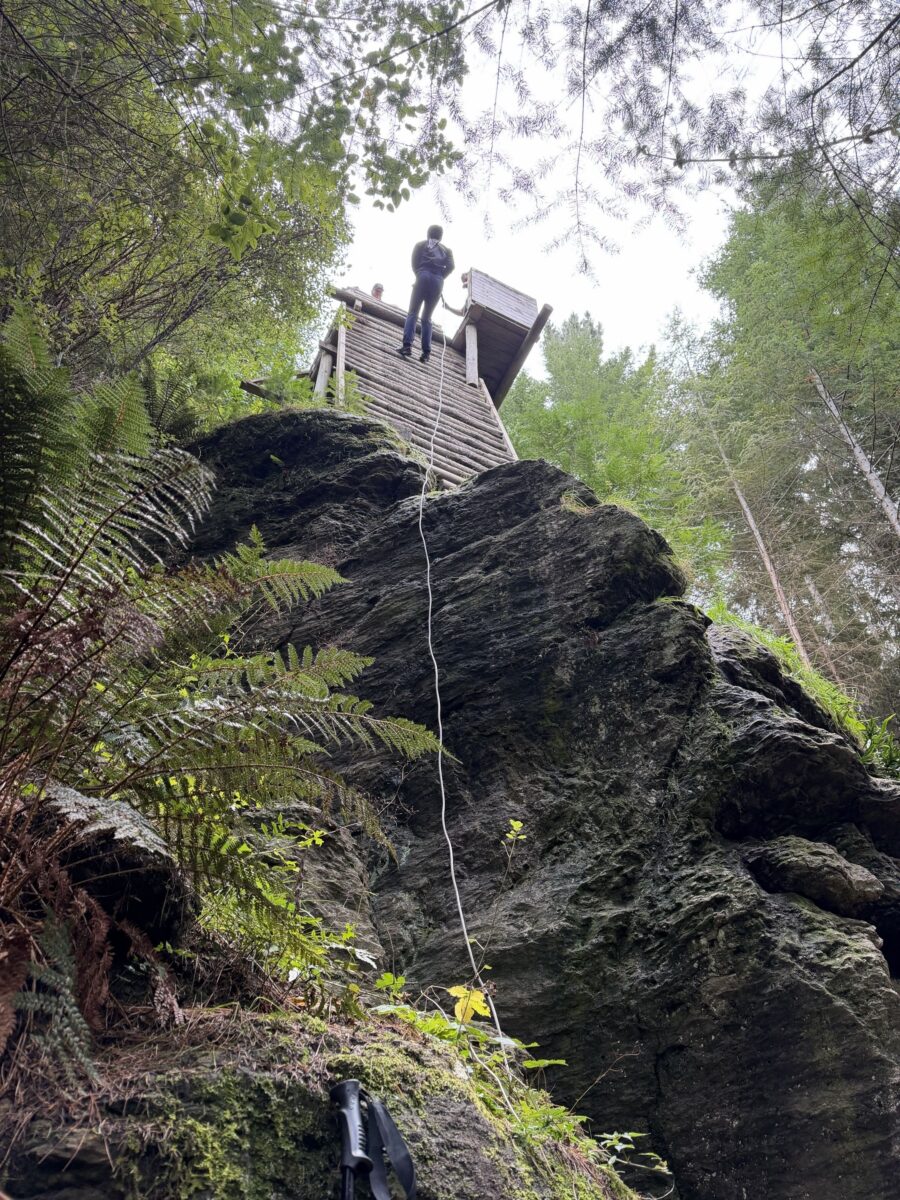
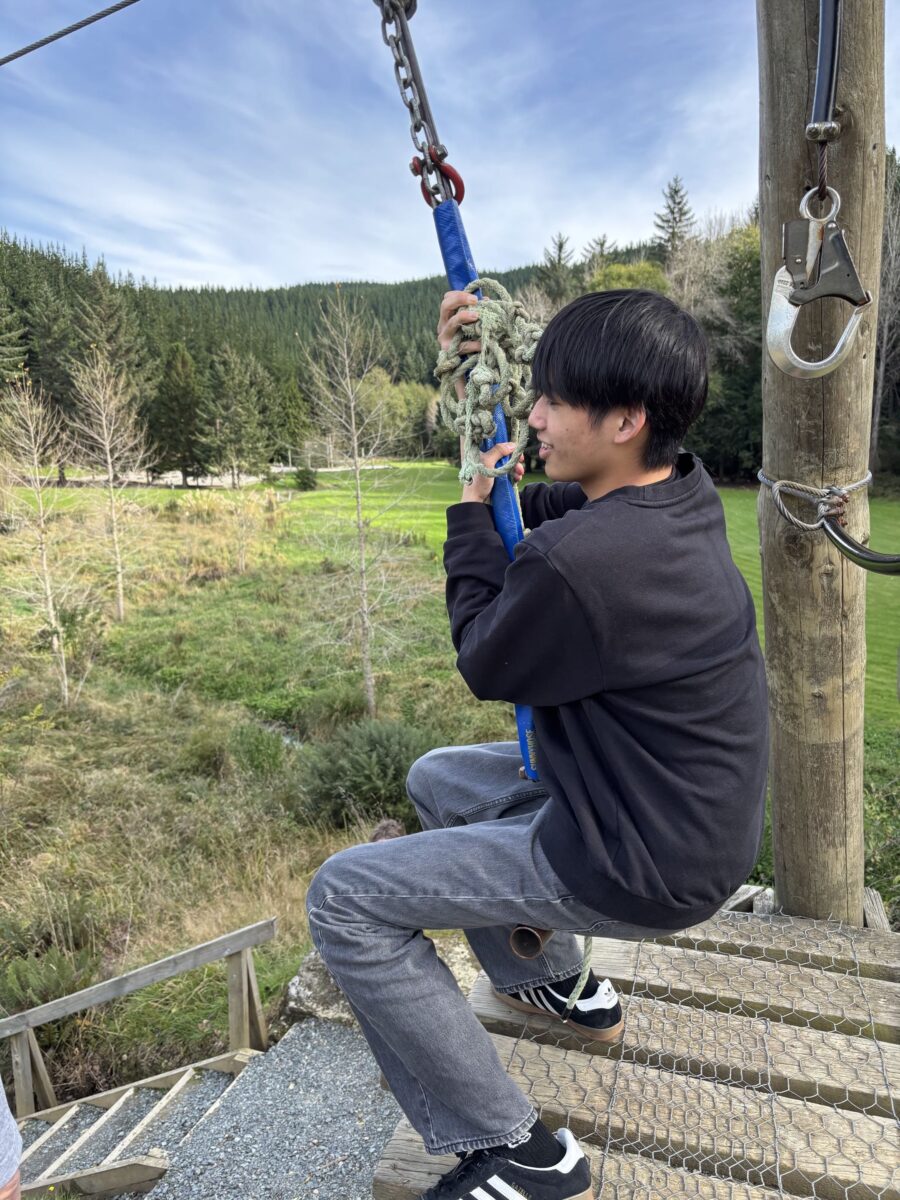
橋本 一輝くんのホストファミリーの招待で、僕のホストファミリーと一輝くんのホストファミリーでキャンプに行くことになりました。そこでは、ジップラインや、崖からロープを使った崖下りなど、珍しいアクティビティをしました。僕のホストシスターと一輝くんのホストシスターがジップラインにハマり、その付き添いをしました。その後、ホストブラザーと芝生の上でサッカーを楽しみました。
夜ご飯の後は、子どもたち全員でキャンプ場にてかくれんぼをしました。一輝くんと一緒に隠れたときに最後まで見つからず、勝つことができました。白山麓キャンパスでの「Hide and seek(かくれんぼ)」の経験がいかされたのかもしれません。
そしてホストシスターたちが寝た後、一輝くんと外で星を眺めました。ものすごくきれいな星空でした。ニュージーランドの星空には、日本の南(石垣島ぐらい南)からしか見えない南十字星が見えます。
-
Rappelling down a cliff 崖下り
-
Zipliningジップライン

Ziplining(movie)ジップライン(ムービー)
街を散策
僕たちがいるダニーデンは、12万人ほどの人口で、石川県でいうと白山市と同じくらいの規模です。ダニーデンは、オクタゴンと呼ばれるところを中心に繁華街が広がっています。僕は毎週末、街を散策しています。
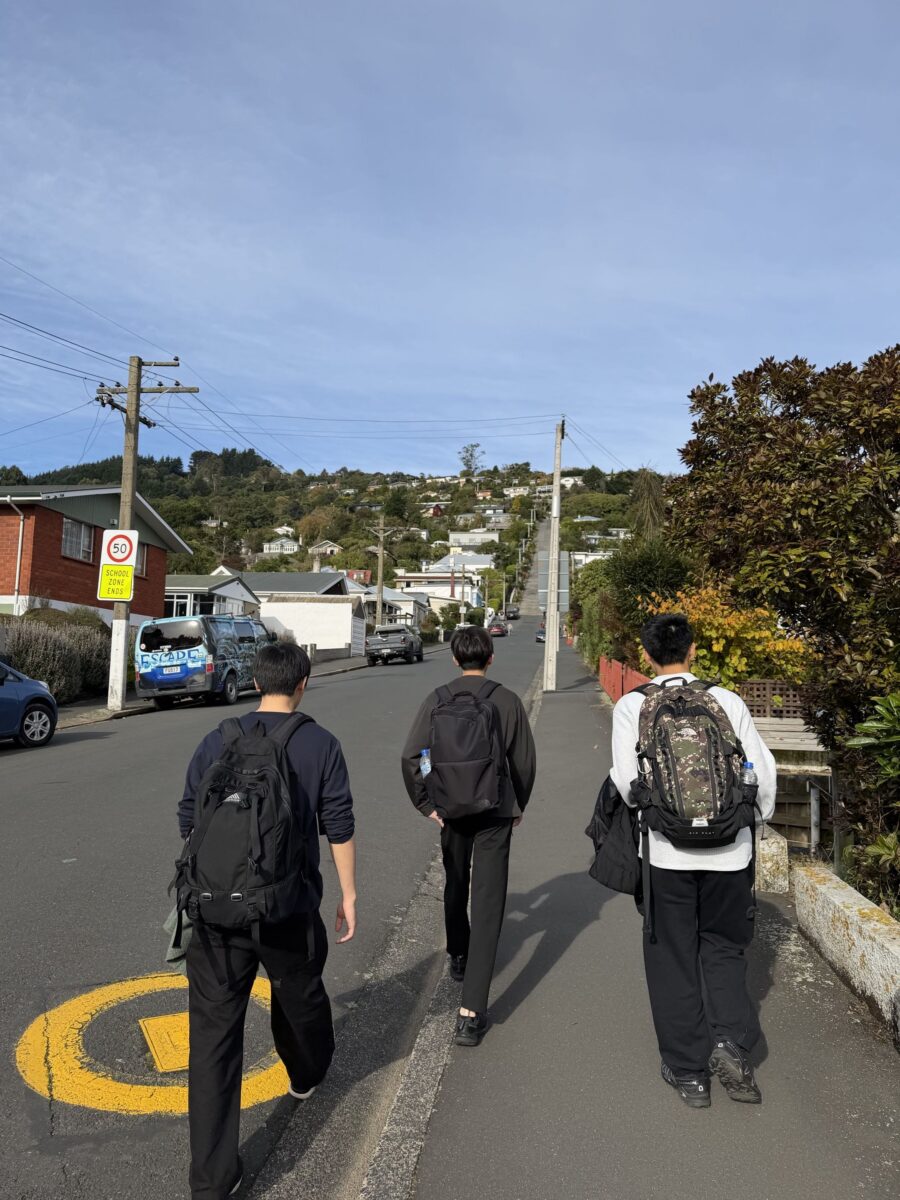
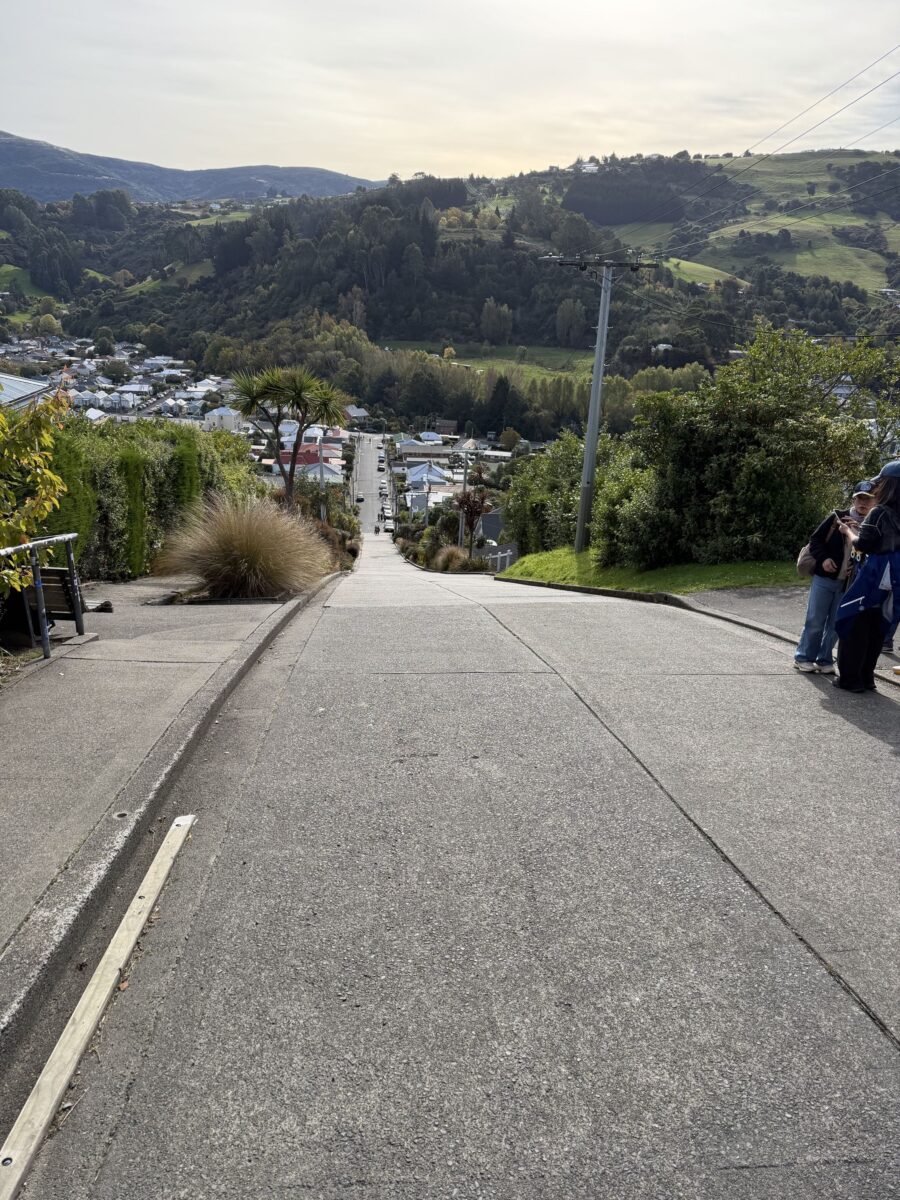
先日、街から少し離れたところにある「世界一急な坂と言われるボールドウィン・ストリート」に行きました。行く前は、どうせしょぼいだろうと思っていましたし、「近所のあの坂のほうが急じゃね」などと言っていました。しかし、いざ着くと、さすが世界一急な坂、とても急でした(ごめんなさい)。
そこで駿太郎くんと蒼天くんと「上まで走ろう!」と言って走り出しました。そのとき、周りにいた観光客の人たちが“Come on! ”と応援してくれて、「おお、海外!!」と思いながら走りました。しかし、さすが世界一で、途中で足が止まってしまいました。帰国するまでに、走って上がれるようになりたいです。
-
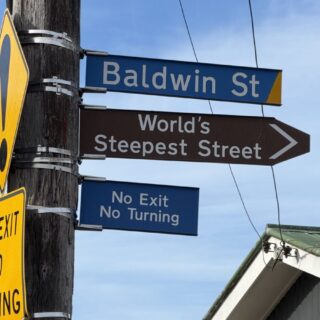
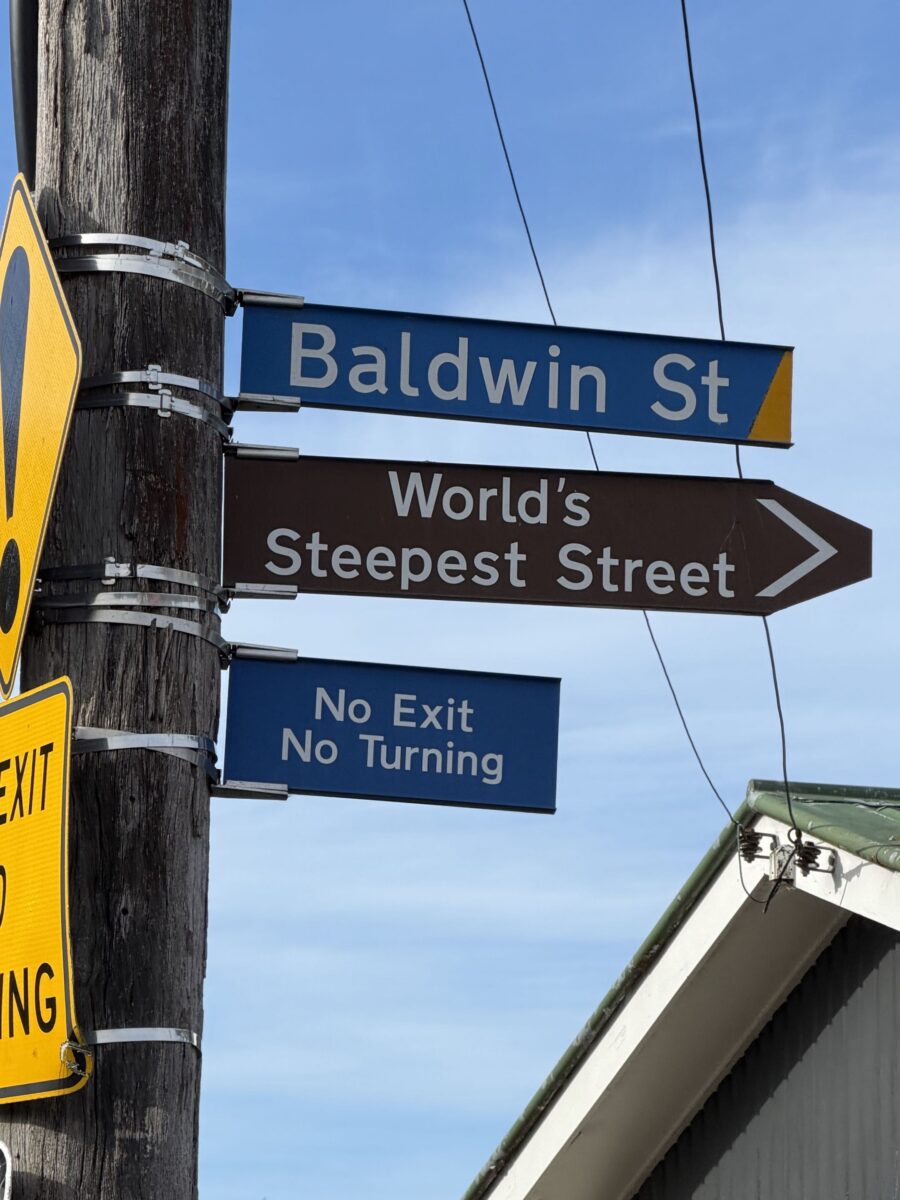
Sign of Baldwin Street, the world’s steepest street世界一急な坂「ボールドウィン・ストリート」の標識
-
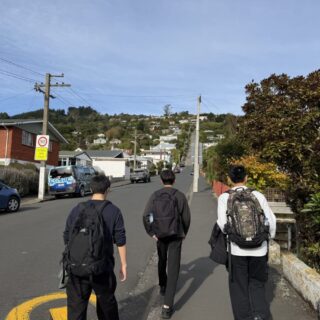
View from the bottom of the street世界一急な坂の下から撮影
-
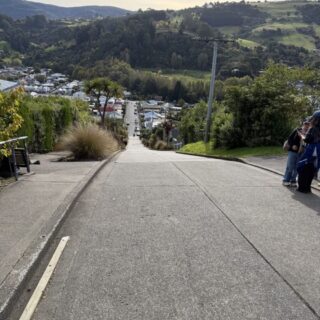
View from the top of the street坂の上から撮影
みなさん、お楽しみいただけましたでしょうか。次回もお楽しみに。それでは、また。
P.S.
ここでは書ききれなかったことをラジオで話しています。 毎週月曜日、日本で聞くことができるので、ぜひ聞いてみてください。
詳しくはこちら:https://x.com/ICTradio_Lounge
石原田 海秀
Hello! I’m Kaishu Ishiharada, a 3rd-year student. It’s already been over a month since I arrived in New Zealand. During the past month, I’ve experienced so many things that I could never experience in Japan. I want to share as many as possible with you. I hope you enjoy reading!
Driving with My Host Family
My host family is big, including a host father, host mother, host sister, host brother, a dog, and a cat. Everyone is so kind, and every day I feel very lucky to stay with them.
On the morning of my second day here, I went to the beach with my host mother, host brother, and our dog. I’ve never had a pet before, so this was the first time in my life walking a dog. The view from the beach was much more beautiful than I expected, and it already made me feel that coming to New Zealand was worth it. I heard there are other beaches in Dunedin, and people go swimming there in the summer. Although it’s starting to get colder now, I’m already looking forward to summertime!
-
Scenery during a drive ドライブでの風景
-
My first time walking a dog人生初の犬の散歩
-
A peaceful view of the beach and ocean静かなビーチと海の風景
Camping
Thanks to an invitation from Ikki Hashimoto’s host family, my host family and his went camping together. We tried some unique activities there, like ziplining and rappelling down a cliff using ropes. My host sister and his host sister really got into ziplining, so I went along with them. After that, I enjoyed playing soccer on the grass with my host brother. After dinner, all the kids, including Ikki and me, played hide-and-seek around the campsite. Ikki and I hid together, managed not to be found, and won the game! Maybe our experience playing hide-and-seek back at the Hakusanroku campus helped us win.
Once the host sisters were in bed, Ikki and I looked up at the stars outside. The starry sky was incredibly beautiful. In the night sky of New Zealand, you can see the Southern Cross, which can only be seen from the very southern parts of Japan, like Ishigaki Island.
-
Rappelling down a cliff 崖下り
-
Zipliningジップライン
Ziplining(movie)ジップライン(ムービー)
Exploring the City
Dunedin, the city we are staying in, has a population of about 120,000, which is roughly the same as Hakusan City in Ishikawa Prefecture. The downtown area spreads out around a central place called the Octagon. I explore the city every weekend.
The other day, I visited the world’s steepest street “Baldwin Street”, which is located a little outside the city center. Before going, I thought, “It’s probably not that big of a deal,” or “The hill near my house is steeper.” But once I arrived, I realized it truly deserves its title—it was incredibly steep (my apologies!).
Shuntaro, Soma, and I decided to run to the top. As we started running, the tourists around us cheered us on, shouting “Come on!” It really made me feel, “Wow, I’m abroad!” However, since it is the world’s steepest street, my legs gave out halfway up. I want to become fit enough to run all the way to the top before I return to Japan.
-
Sign of Baldwin Street, the world’s steepest street世界一急な坂「ボールドウィン・ストリート」の標識
-
View from the bottom of the street世界一急な坂の下から撮影
-
View from the top of the street坂の上から撮影
I hope you all enjoyed this journal! Look forward to the next one. See you soon!
P.S. I’m talking about more stories that I couldn’t fit into this blog on the radio. It airs every Monday and can be heard in Japan, so please check it out!
Click here for more details:https://x.com/ICTradio_Lounge
Kaishu Ishiharada