




Local Community
地域連携
 Hello, it's Jonathan, the camera man. On October 21, a group of students from the Hakusanroku campus climbed Mt. San-po-iwa-take. (三方岩岳) Sanpoiwatake is a mountain on the Hakusan-Shirakawago White Road. The White Road runs from Hakusanroku to Shirakawago in Gifu prefecture and is a popular tourist spot, especially in the autumn. The leaves were beautiful shades of red, yellow and green as we made our way up the path. This event was a collaboration with the Oguchi Community Center and some members of the local community joined us in the climb. Shinichi Hiramatsu is a specialist of this area and gave lectures about trees and animals. It took about an hour to reach the top, where we rested and ate lunch. Hiramatsu-san pointed out that we could see Mt. Hakusan's peak from Sanpoiwatake. Altogether, it was a refreshing and fun way to spend a beautiful autumn day.
Jonathan
こんにちは、ジョナサンです。10月21日(月)、白山麓キャンパスの学生と一緒に白山白川郷ホワイトロードにある三方岩岳(さんぽういわたけ)を登りました。ホワイトロードは石川県と岐阜県を結ぶ有料道路で、人気の観光名所です。特に紅葉の季節にたくさんの方が訪れます。三方岩岳の登山口はホワイトロードの途中にあります。この日は美しい赤、黄色、緑の景色の中、登山を楽しむことができました。今回の登山は尾口公民館と合同で行われ、現地のメンバーも同行しました。白山の自然に詳しい平松新一さんも同行者のひとりで、歩きながら学生に動植物のレクチャーをしていました。1時間ほどで頂上に到着し、そこで昼食を食べました。三方岩岳からは白山の頂上、御前峰を望むことができ、美しい景色を見てリフレッシュできる日となりました。
ジョナサン
-

登山口はホワイトロードの岐阜川にあります
-

紅葉に包まれて登りました
-

三方岩岳 頂上にて
-

頂上で昼食を食べました
-

解説する平松新一さん
-

三方岩岳から望む白山
Hello, it's Jonathan, the camera man. On October 21, a group of students from the Hakusanroku campus climbed Mt. San-po-iwa-take. (三方岩岳) Sanpoiwatake is a mountain on the Hakusan-Shirakawago White Road. The White Road runs from Hakusanroku to Shirakawago in Gifu prefecture and is a popular tourist spot, especially in the autumn. The leaves were beautiful shades of red, yellow and green as we made our way up the path. This event was a collaboration with the Oguchi Community Center and some members of the local community joined us in the climb. Shinichi Hiramatsu is a specialist of this area and gave lectures about trees and animals. It took about an hour to reach the top, where we rested and ate lunch. Hiramatsu-san pointed out that we could see Mt. Hakusan's peak from Sanpoiwatake. Altogether, it was a refreshing and fun way to spend a beautiful autumn day.
Jonathan
こんにちは、ジョナサンです。10月21日(月)、白山麓キャンパスの学生と一緒に白山白川郷ホワイトロードにある三方岩岳(さんぽういわたけ)を登りました。ホワイトロードは石川県と岐阜県を結ぶ有料道路で、人気の観光名所です。特に紅葉の季節にたくさんの方が訪れます。三方岩岳の登山口はホワイトロードの途中にあります。この日は美しい赤、黄色、緑の景色の中、登山を楽しむことができました。今回の登山は尾口公民館と合同で行われ、現地のメンバーも同行しました。白山の自然に詳しい平松新一さんも同行者のひとりで、歩きながら学生に動植物のレクチャーをしていました。1時間ほどで頂上に到着し、そこで昼食を食べました。三方岩岳からは白山の頂上、御前峰を望むことができ、美しい景色を見てリフレッシュできる日となりました。
ジョナサン
-
登山口はホワイトロードの岐阜川にあります
-
紅葉に包まれて登りました
-
三方岩岳 頂上にて
-
頂上で昼食を食べました
-
解説する平松新一さん
-
三方岩岳から望む白山
 Hello everyone, in my free time I like to travel to famous sightseeing spots in the area around Hakusanroku. A little while ago I went and traveled the Tateyama-Kurobe Alpine route. It is accessible from Toyama station (about 30 minutes by shinkansen from Kanazawa Station), and is a series of trains, busses and cable cars that takes you from Toyama, up to Mt. Tateyama, across to the Kurobe Dam, and finally down into Nagano. The whole crossing takes 9-12 hours one-way, but is well worth the time. As we move into winter there is a famous “snow corridor” (Yuki-no-otani) that you can walk through that looks like a canyon cut out of the snow! Why not visit it sometime?
Davis Evans
皆さん、こんにちは。私は休日を利用して白山麓近辺の有名な観光地を旅行するのが好きです。少し前になりますが、立山黒部アルペンルートへ足を運びました。富山駅(金沢駅から新幹線で約30分)からスタートし、電車、バス、ケーブルカーを乗り継いで立山を登り、黒部ダムを渡って、長野まで下るルートです。片道9~12時間くらいかかりますが、それだけの時間をかけてでも行く価値があります。冬に入りますとあの有名な雪の大谷を通ることができます。行ってみてはいかがでしょうか。
デイビス・エバンス
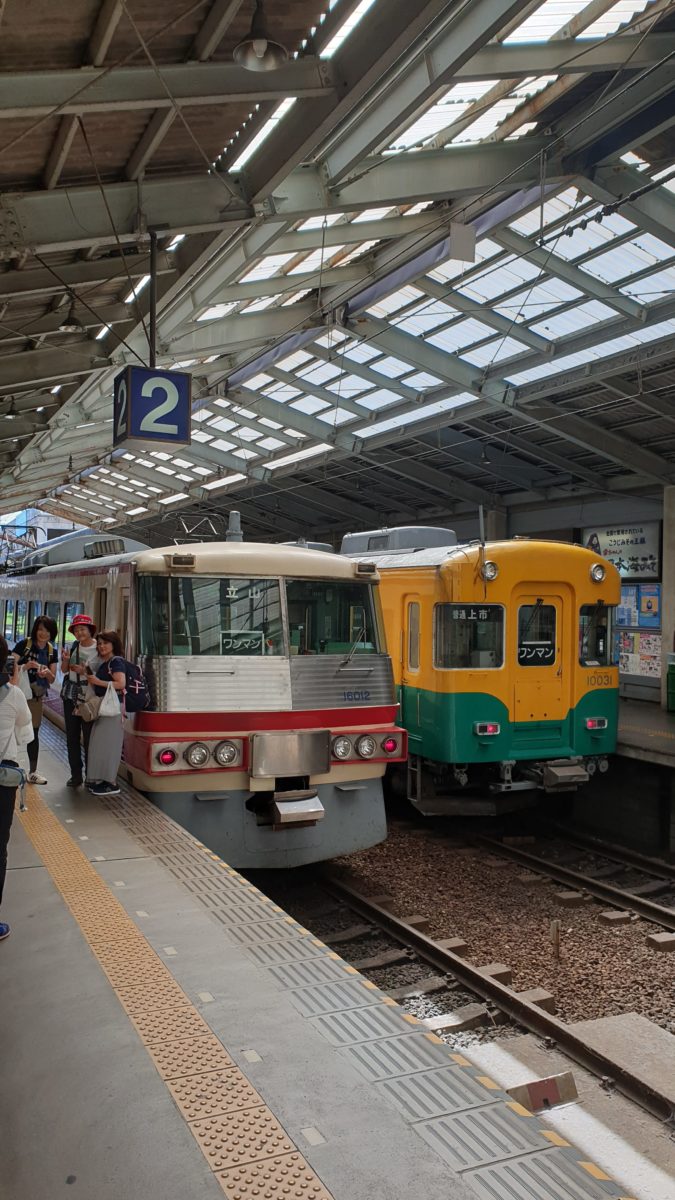


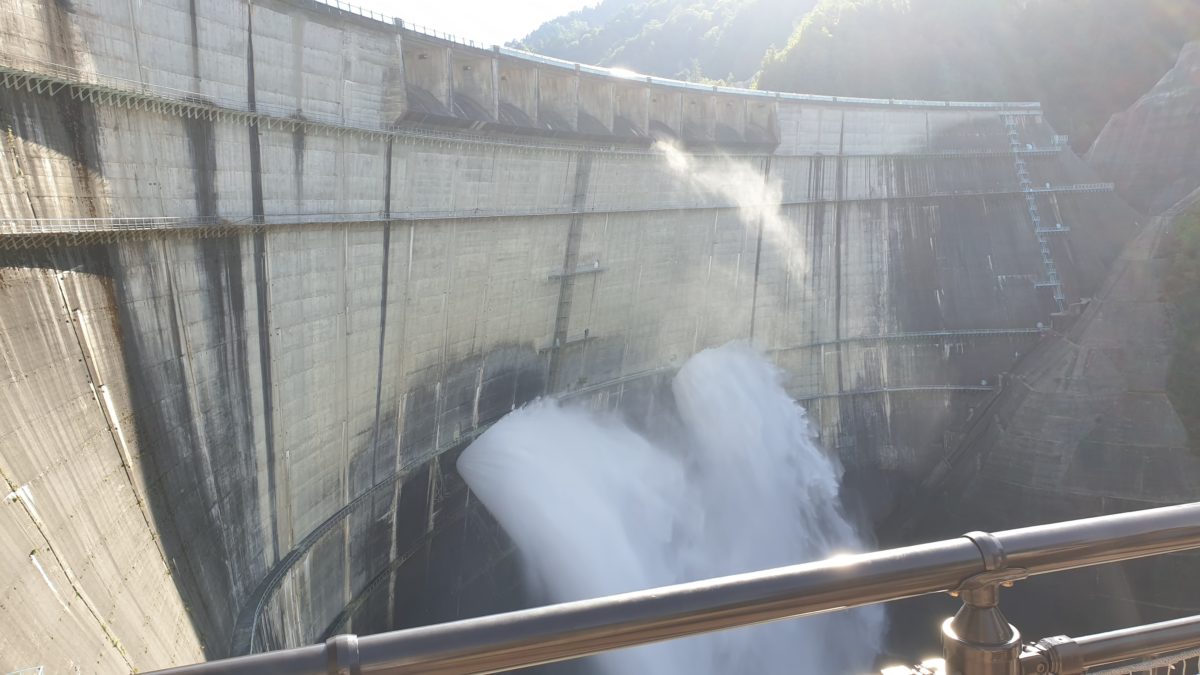

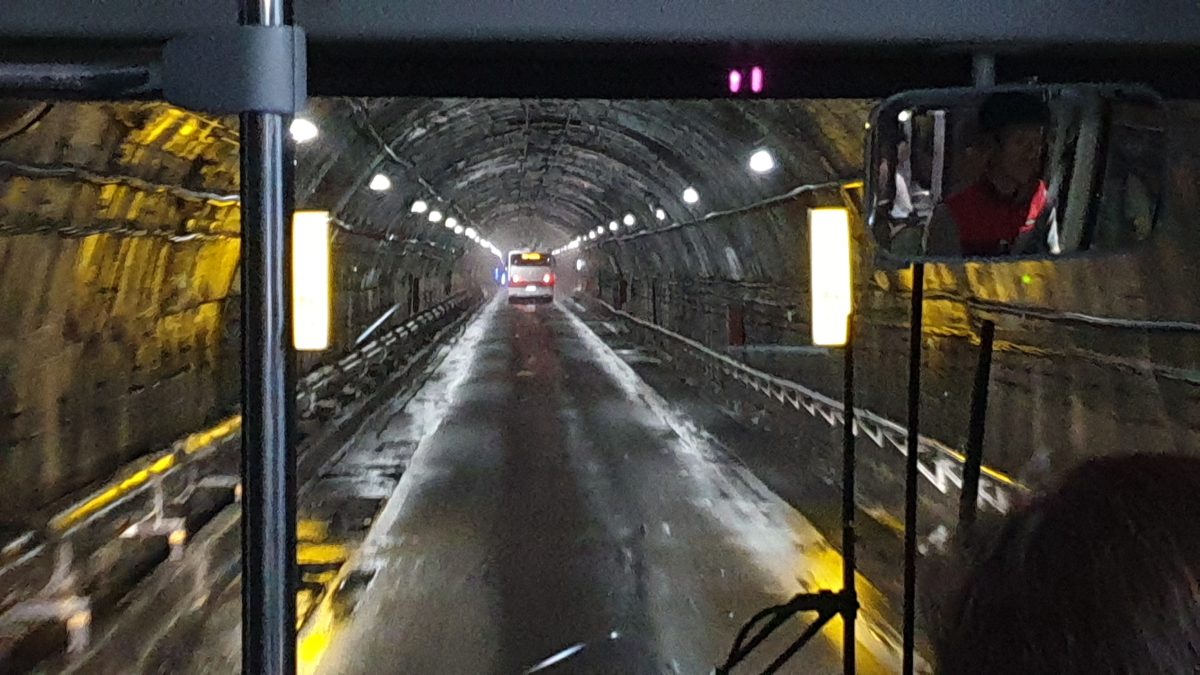

Hello everyone, in my free time I like to travel to famous sightseeing spots in the area around Hakusanroku. A little while ago I went and traveled the Tateyama-Kurobe Alpine route. It is accessible from Toyama station (about 30 minutes by shinkansen from Kanazawa Station), and is a series of trains, busses and cable cars that takes you from Toyama, up to Mt. Tateyama, across to the Kurobe Dam, and finally down into Nagano. The whole crossing takes 9-12 hours one-way, but is well worth the time. As we move into winter there is a famous “snow corridor” (Yuki-no-otani) that you can walk through that looks like a canyon cut out of the snow! Why not visit it sometime?
Davis Evans
皆さん、こんにちは。私は休日を利用して白山麓近辺の有名な観光地を旅行するのが好きです。少し前になりますが、立山黒部アルペンルートへ足を運びました。富山駅(金沢駅から新幹線で約30分)からスタートし、電車、バス、ケーブルカーを乗り継いで立山を登り、黒部ダムを渡って、長野まで下るルートです。片道9~12時間くらいかかりますが、それだけの時間をかけてでも行く価値があります。冬に入りますとあの有名な雪の大谷を通ることができます。行ってみてはいかがでしょうか。
デイビス・エバンス
 On October 1st, Koutaro Sugi, Daiko Kato and Shuntaro Sato from the year 1 Listening/Speaking class interviewed members of the community class as part of an ongoing Oral History Project for 15 minutes. Students came up with and asked questions about what this area was like before ICT. Specific questions included, “What was here (ICT Campus) before “Kanpo-no-yado” was built,” “What was here before Hakusan campus and the Sena Roadside Station (Michinoeki Sena) were built,” “How was the atmosphere around here before the Hakusanroku campus was built,” and “How has the atmosphere changed by the building of Hakusanroku campus.” Students also asked about what they wanted to come to Hakusan next.
The members of the community class were eager to participate and had a lot to say about what was here before ICT, what they want to come to this neighborhood and how monkeys get into their gardens and eat the daikons. The students found the interviews interesting and fun and Daiko said he would like to do this again.
The interviews were conducted in Japanese, but students will record a 2 to 3 minute summary of the interview in English. This summary will focus on what they found most interesting and be supported with photos. This is a new class project and is inspired by oral histories such as Studs Terkel, “Working,” The Foxfire Project and Junichi Saga, “Memories of Silk and Straw”
Ian Stevenson
10月1日、1年の杉晃太朗さん、加藤大虎さん、佐藤俊太朗さんがリスニング・スピーキングのオーラル・ヒストリー・プロジェクトとしてコミュニティクラス(地域の方々を呼んだ英会話教室)のメンバーに15分間のインタビューを行いました。学生たちは国際高専が建つ前のこの地域について質問を考え、「かんぽの里が建つ前は何がありましたか?」「白山麓キャンパスが建つ前はどんな雰囲気でしたか?」「白山麓キャンパスが建ってからの雰囲気はどう変わりましたか?」などの質問をしました。また、次に出来て欲しい施設についても聞きました。
コミュニティクラスの方々は快くインタビューに応じてくれて、白山麓キャンパスが建つ前のことや、地域に来てほしいもの、猿が庭の大根を食べてしまうことなどを話してくれました。学生たちもインタビューが面白かったようで、大虎さんはまたやりたいとまで言っていました。
インタビューは日本語でしたが、学生たちはその内容を英語で2~3分口頭でまとめたものを録画するのが課題でした。まとめには面白かった点や写真なども載せてあります。この活動はStuds Terkelの"Working"、The Foxfire Project、佐賀純一氏の霞ヶ浦風土記などの口述歴史を参考に計画しました。
イアン・スティーブンソン


On October 1st, Koutaro Sugi, Daiko Kato and Shuntaro Sato from the year 1 Listening/Speaking class interviewed members of the community class as part of an ongoing Oral History Project for 15 minutes. Students came up with and asked questions about what this area was like before ICT. Specific questions included, “What was here (ICT Campus) before “Kanpo-no-yado” was built,” “What was here before Hakusan campus and the Sena Roadside Station (Michinoeki Sena) were built,” “How was the atmosphere around here before the Hakusanroku campus was built,” and “How has the atmosphere changed by the building of Hakusanroku campus.” Students also asked about what they wanted to come to Hakusan next.
The members of the community class were eager to participate and had a lot to say about what was here before ICT, what they want to come to this neighborhood and how monkeys get into their gardens and eat the daikons. The students found the interviews interesting and fun and Daiko said he would like to do this again.
The interviews were conducted in Japanese, but students will record a 2 to 3 minute summary of the interview in English. This summary will focus on what they found most interesting and be supported with photos. This is a new class project and is inspired by oral histories such as Studs Terkel, “Working,” The Foxfire Project and Junichi Saga, “Memories of Silk and Straw”
Ian Stevenson
10月1日、1年の杉晃太朗さん、加藤大虎さん、佐藤俊太朗さんがリスニング・スピーキングのオーラル・ヒストリー・プロジェクトとしてコミュニティクラス(地域の方々を呼んだ英会話教室)のメンバーに15分間のインタビューを行いました。学生たちは国際高専が建つ前のこの地域について質問を考え、「かんぽの里が建つ前は何がありましたか?」「白山麓キャンパスが建つ前はどんな雰囲気でしたか?」「白山麓キャンパスが建ってからの雰囲気はどう変わりましたか?」などの質問をしました。また、次に出来て欲しい施設についても聞きました。
コミュニティクラスの方々は快くインタビューに応じてくれて、白山麓キャンパスが建つ前のことや、地域に来てほしいもの、猿が庭の大根を食べてしまうことなどを話してくれました。学生たちもインタビューが面白かったようで、大虎さんはまたやりたいとまで言っていました。
インタビューは日本語でしたが、学生たちはその内容を英語で2~3分口頭でまとめたものを録画するのが課題でした。まとめには面白かった点や写真なども載せてあります。この活動はStuds Terkelの"Working"、The Foxfire Project、佐賀純一氏の霞ヶ浦風土記などの口述歴史を参考に計画しました。
イアン・スティーブンソン
 「エンジニアリングデザインII」の授業で地域の活性化をテーマに課題解決をグループで行っています。「食」をテーマとした2年生4名のチームの活動として、白山麓の地元の食材の魅力を伝える試食会「たべまっし じわもん」を企画し、第1回を10月6日(日)に道の駅「瀬女(せな)」で開催しました。石川県の方言で「たべまっし=食べてみて」「じわもん=地元でとれた野菜、果物、米などの地物」のことを指します。
授業の一環として食のイベントを企画・運営することは今回が初めてで、夏休み中から学生ごとに役割を分担して、準備を進めてきました。食材の準備だけでなく、必要物品の調達やポスター、チラシの作成など、予想以上に多くの作業がありましたが、地域の方々の多大なご協力のおかげで、無事開催することができました。
今回は子岩魚の唐揚げ、岩魚のいくら丼、堅豆腐、なめこの味噌汁の4品を提供しました。山菜や岩魚(イワナ)などの白山麓の食材は道の駅瀬女でも売られていますが、実際に食べないことにはその美味しさに気付くこともありません。白山麓の食材を気軽に味わえる場、機会があれば、より多くの人がこの地に足を運ぶきっかけになり、白山麓地域の活性化につながると考えています。
今回は多くの来場者の方に味わって頂き、同時に行った食材の認知度調査のアンケートは130名以上の方に御協力頂きました。
11月2日に行われる2回目の試食会に向けて、アンケート結果を分析するとともに、イベントの運営面や接客の心構えなど反省を行い、より満足度の高いイベントになるよう、準備を進めていきたいと思います。
伊勢 大成
In the Engineering Design II class, we are doing problem solving in groups to draw more people to the local Hakusanroku area. One group consisting of four second-year students chose the theme "food" and conducted a food tasting party "Tabemasshi Jiwamon" on October 6 (Sun) at the Michi-no-Eki "Sena" across the street from ICT. "Tabemasshi Jiwamon" means "try out local food such as vegetables, fruits, or rice" in the Ishikawa dialect. It is the first time we planned and ran a food related event as part of a class and preparations started during summer vacation. Not only did we have to prepare the food, but also necessary utensils, posters, and flyers. There was much more to do than we anticipated. However, everything came together thanks to the assistance of our local helpers.
We served fired Iwana fish, Iwana roe rice bowl, Kata-dofu, and nameko mushroom miso soup. Various local Hakusanroku vegetables and Iwana fish are sold at the Michi-no-Eki but most customers do not know how good they taste. Our group aims to draw people to the area by creating a place that people can casually try Hakusanroku food.
Many people stopped by at our tent to taste the food and we gathered over 130 surveys. The group will analyse these surveys and reflect on their experience to make the second on November 2 event even better.
Taisei Ise
-

試食会の様子
-


「エンジニアリングデザインII」の授業で地域の活性化をテーマに課題解決をグループで行っています。「食」をテーマとした2年生4名のチームの活動として、白山麓の地元の食材の魅力を伝える試食会「たべまっし じわもん」を企画し、第1回を10月6日(日)に道の駅「瀬女(せな)」で開催しました。石川県の方言で「たべまっし=食べてみて」「じわもん=地元でとれた野菜、果物、米などの地物」のことを指します。
授業の一環として食のイベントを企画・運営することは今回が初めてで、夏休み中から学生ごとに役割を分担して、準備を進めてきました。食材の準備だけでなく、必要物品の調達やポスター、チラシの作成など、予想以上に多くの作業がありましたが、地域の方々の多大なご協力のおかげで、無事開催することができました。
今回は子岩魚の唐揚げ、岩魚のいくら丼、堅豆腐、なめこの味噌汁の4品を提供しました。山菜や岩魚(イワナ)などの白山麓の食材は道の駅瀬女でも売られていますが、実際に食べないことにはその美味しさに気付くこともありません。白山麓の食材を気軽に味わえる場、機会があれば、より多くの人がこの地に足を運ぶきっかけになり、白山麓地域の活性化につながると考えています。
今回は多くの来場者の方に味わって頂き、同時に行った食材の認知度調査のアンケートは130名以上の方に御協力頂きました。
11月2日に行われる2回目の試食会に向けて、アンケート結果を分析するとともに、イベントの運営面や接客の心構えなど反省を行い、より満足度の高いイベントになるよう、準備を進めていきたいと思います。
伊勢 大成
In the Engineering Design II class, we are doing problem solving in groups to draw more people to the local Hakusanroku area. One group consisting of four second-year students chose the theme "food" and conducted a food tasting party "Tabemasshi Jiwamon" on October 6 (Sun) at the Michi-no-Eki "Sena" across the street from ICT. "Tabemasshi Jiwamon" means "try out local food such as vegetables, fruits, or rice" in the Ishikawa dialect. It is the first time we planned and ran a food related event as part of a class and preparations started during summer vacation. Not only did we have to prepare the food, but also necessary utensils, posters, and flyers. There was much more to do than we anticipated. However, everything came together thanks to the assistance of our local helpers.
We served fired Iwana fish, Iwana roe rice bowl, Kata-dofu, and nameko mushroom miso soup. Various local Hakusanroku vegetables and Iwana fish are sold at the Michi-no-Eki but most customers do not know how good they taste. Our group aims to draw people to the area by creating a place that people can casually try Hakusanroku food.
Many people stopped by at our tent to taste the food and we gathered over 130 surveys. The group will analyse these surveys and reflect on their experience to make the second on November 2 event even better.
Taisei Ise
-
試食会の様子
-
 In the last couple of months I have been frequenting a small cafe in the area. Kamino Cafe is on the way to Kanazawa from school. Actually, it is right next to the strawberry farms. The cafe is a bit small but it has a welcoming atmosphere. The seating is comfortable, the food is wonderful, and the area is quiet. Moreover, the owners of the cafe are kind people and are very friendly. However, one thing that makes the cafe truly unique is the view. On a clear day, you can see Hakusan looming in the distance. Between the view, the food and the owners, the cafe has easily become one of my favorite places in all of Japan. In fact, I have recently made it a point to bring my friends and coworkers every week. Unfortunately, Kamino Cafe is only open Fridays, Saturdays and Sundays. If you get the chance to go you should. I cannot recommend it enough! See you there!
Edward Basquill Jr.
数か月前から行きつけの小さなカフェがあります。白山麓から金沢へ向かう途中、鳥越のいちご農園の近くのKAMINO cafeです。店内は広くありませんが、居心地の良い雰囲気のお店です。座席はくつろぎやすく、食べ物が美味しく、周りの環境も静かです。オーナーも優しく親切ですが、このカフェの1番の売りは窓から見える景色です。天気が良ければ遠くにそびえる白山を眺めることができます。この景色と食べ物とオーナーのおかげで日本で1番好きな場所になりました。今では毎週友達か同僚を連れていくことを習慣にしています。KAMINO Cafeは残念ながら金土日しか開店していませんが、機会があればぜひ行ってみることをお勧めします。素敵な時間を保証します!そこで会いましょう!
エドワード・バスクェル・Jr
In the last couple of months I have been frequenting a small cafe in the area. Kamino Cafe is on the way to Kanazawa from school. Actually, it is right next to the strawberry farms. The cafe is a bit small but it has a welcoming atmosphere. The seating is comfortable, the food is wonderful, and the area is quiet. Moreover, the owners of the cafe are kind people and are very friendly. However, one thing that makes the cafe truly unique is the view. On a clear day, you can see Hakusan looming in the distance. Between the view, the food and the owners, the cafe has easily become one of my favorite places in all of Japan. In fact, I have recently made it a point to bring my friends and coworkers every week. Unfortunately, Kamino Cafe is only open Fridays, Saturdays and Sundays. If you get the chance to go you should. I cannot recommend it enough! See you there!
Edward Basquill Jr.
数か月前から行きつけの小さなカフェがあります。白山麓から金沢へ向かう途中、鳥越のいちご農園の近くのKAMINO cafeです。店内は広くありませんが、居心地の良い雰囲気のお店です。座席はくつろぎやすく、食べ物が美味しく、周りの環境も静かです。オーナーも優しく親切ですが、このカフェの1番の売りは窓から見える景色です。天気が良ければ遠くにそびえる白山を眺めることができます。この景色と食べ物とオーナーのおかげで日本で1番好きな場所になりました。今では毎週友達か同僚を連れていくことを習慣にしています。KAMINO Cafeは残念ながら金土日しか開店していませんが、機会があればぜひ行ってみることをお勧めします。素敵な時間を保証します!そこで会いましょう!
エドワード・バスクェル・Jr