




Student
学生
 高専ロボコン指導教員の林道大です。2025年10月5日(日)、毎年学生たちが参加している「アイデア対決・全国高等専門学校ロボットコンテスト(高専ロボコン)」の東海北陸地区大会に、今年も金沢キャンパスからAチーム4名、白山麓キャンパスからBチーム8名の総勢12名の学生と一緒に参加してきました。高専ロボコンは毎年テーマが異なるので、毎回新しいロボットを設計・製作し、4月中旬のテーマ発表から10月の初旬の地区大会の開催までにロボットを完成させなければなりません。今年のテーマは「Great High Gate」で、ロボットが段ボール製のボックスを積み上げてゲートを作り、そこを選手が乗った台車をロボットがひいて通過するというものです。ゲートの高さが高いほど高得点が得られます。
それでは、各チームのメンバーとロボットについて紹介したいと思います。Aチームは金沢キャンパスで学ぶ4年生が4名です。チーム名は「香箱倶楽部」といいます。金沢名産のコウバコガニを模したロボットで、選手があらかじめボックスを高く積んで完成させたゲートを目的の場所まで運びます。リーダーは太田晴喜さん、操縦者は白石春翔さん、台車に乗るのは大石意丸さん、ピットが佐野獅悠さんです。大会を終えた感想を聞きました。
■太田 晴喜さん
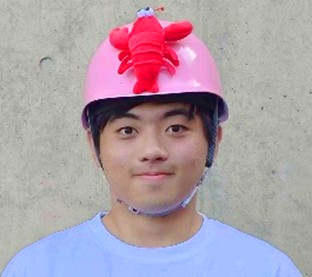 夏休み中に自動車運転免許を取得するために実家に帰っていました。その間、ロボット製作をほとんど手伝えなくて申し訳ありません。免許は取得できたので、後学期になってからはロボットに関わることができる時間も多くなり、チームの勝利に少しは貢献できたと思います。
■白石 春翔さん
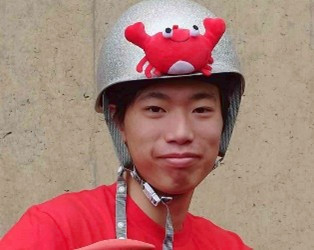 試合では緊張してロボットの操縦が少しぎこちなくなった場面もあったけれど、1試合目では目標の点数を取って勝利することができて良かったです。全国大会にも推薦され、まだまだロボコンは終わっていないので、継続して一生懸命に取り組んでいきたいです。
■大石 意丸さん
 大会ではコウバコガニを取り扱う鮮魚店の店員のコスプレをして台車に乗りました。ロボットの設計や組み立ては得意ではないのですが、軽い体重とスレンダーな体型は、ロボットが引っ張りやすかったり、ゲートを通過しやすかったりして、チームの役に立てたと思います。エキシビションで観客に手を振ったのは私です。
■佐野 獅悠さん
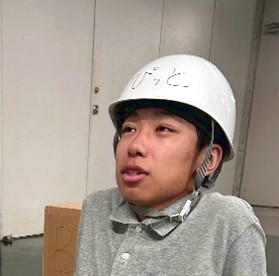 ロボットの部品製作や組み立てを担当しました。大会ではロボットの破損や動作不良など無く、順調に動作したので良かったです。地区大会の試合終了後にそれまでの疲れが出て、ピットで居眠りしてしまったのをNHKのTVカメラに撮られました。TV放送するときに使われるのですかね。
大会では予選リーグ1勝1敗で敗退しましたが、ロボットのゲート搬送機能が評価されて「技術賞」を受賞し、審査員推薦により全国大会への出場権を得ることができました。全国大会でも頑張って欲しいと思います。
Bチームは白山麓キャンパスの1、2年生です。チーム名は「はこ坊」です。港湾施設で荷役作業にあたるコンテナクレーンの機構を模したロボットです。外観も黒黄のトラマークや、赤色回転灯などで装飾されていて、働くクルマらしさが表現されています。ボックスの持ち上げ、積み上げもコンテナクレーンのように開閉するハンドと伸縮するアームで行います。地区大会は規定の8名での参加でしたが、キャンパスでのロボット製作や練習時には総勢11名の学生で活動しています。選手に選抜されなくても、裏方で支える「縁の下の力持ち」はどんなチームにも必要だと思います。チームリーダーでロボット操縦者の石原田 海秀さんと、縁の下の力持ち代表の寺嶋 明さんに、大会を終えた感想を聞きました。
■石原田 海秀さん
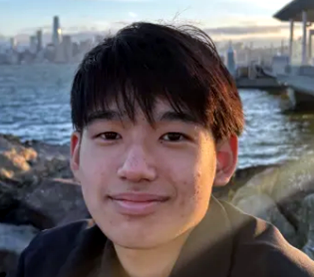 今年は、これまでの活動での反省をいかして、チームの雰囲気を良い状態に保ちながら活動することがきました。その結果、例年よりも早くロボットが完成して、練習をたくさんすることができました。そのため、今年の試合では去年ほど緊張することなくフィールドに立つことができました。それが良い結果(ベスト4)につながったと思います。来年以降も仲間と共に頑張って行きたいです。
■寺嶋 明さん
 今年は、応援団での地区大会参加になってしまい、少し悔しい部分もありましたが、応援しながら他校のロボットもたくさん観察することができて、良い経験になりました。来年以降に向けて、その経験を活かしながら、たくさんのことを学んでいきたいと思います。
大会では2勝無敗で予選リーグを通過して、決勝トーナメントへ進みました。決勝トーナメントでも勝利を続けることができたのですが、準決勝で優勝したチームに惜敗して、結果はベスト4となりました。ロボットの動作そのものは全く問題無く、全ての試合で安定していました。ロボットの操縦はとても緊張すると思いますが、担当した石原田さんも試合の緊張感のなかでミスなく操縦できていたのは、事前の練習の成果だと思います。
今年は、両チームとも比較的早い時期にロボットを動作させることができ、試合形式での練習を何度も行うことができました。練習の中で明らかになった問題点を、ロボットの改良や戦略の変更などで解決していくことができたと思います。その手法は、エンジニアリングデザインにおける製品開発手法とも共通する部分が多くありますので、授業での取り組みにも役立てられるのではないかと考えています。
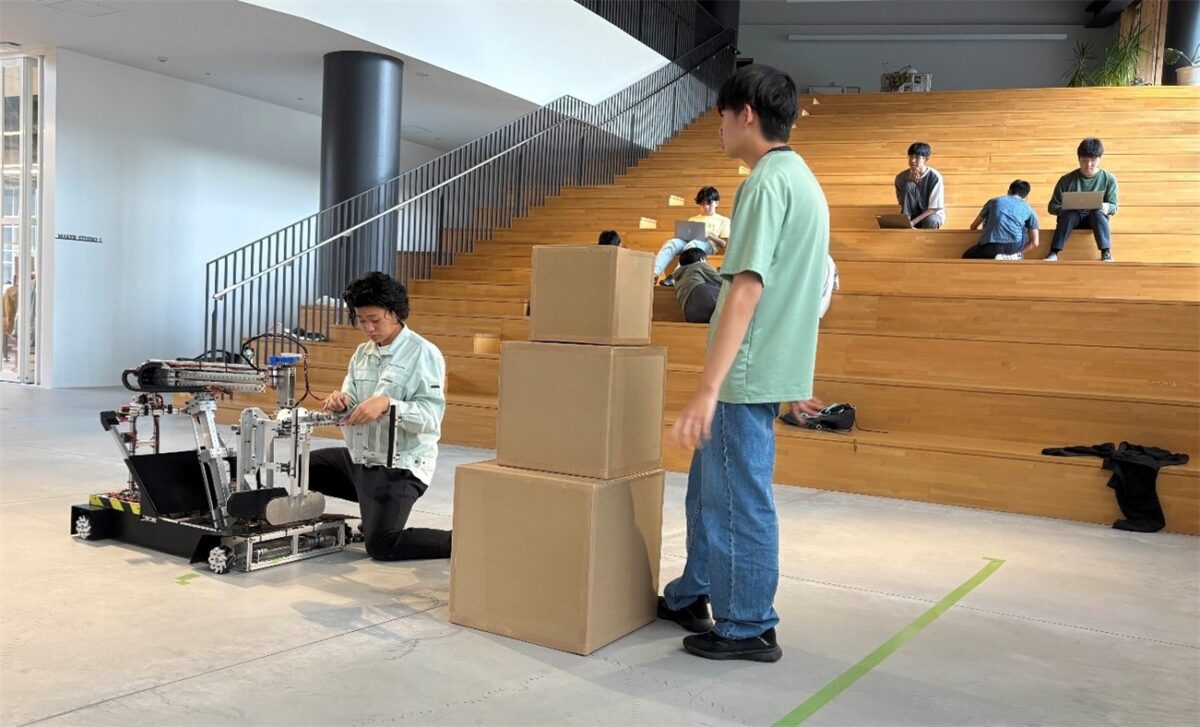
A 2nd year student adjusting the robot, watched by a 1st year student (Team B)キャンパスでロボットの調整をする2年生と見守る1年生(Bチーム)
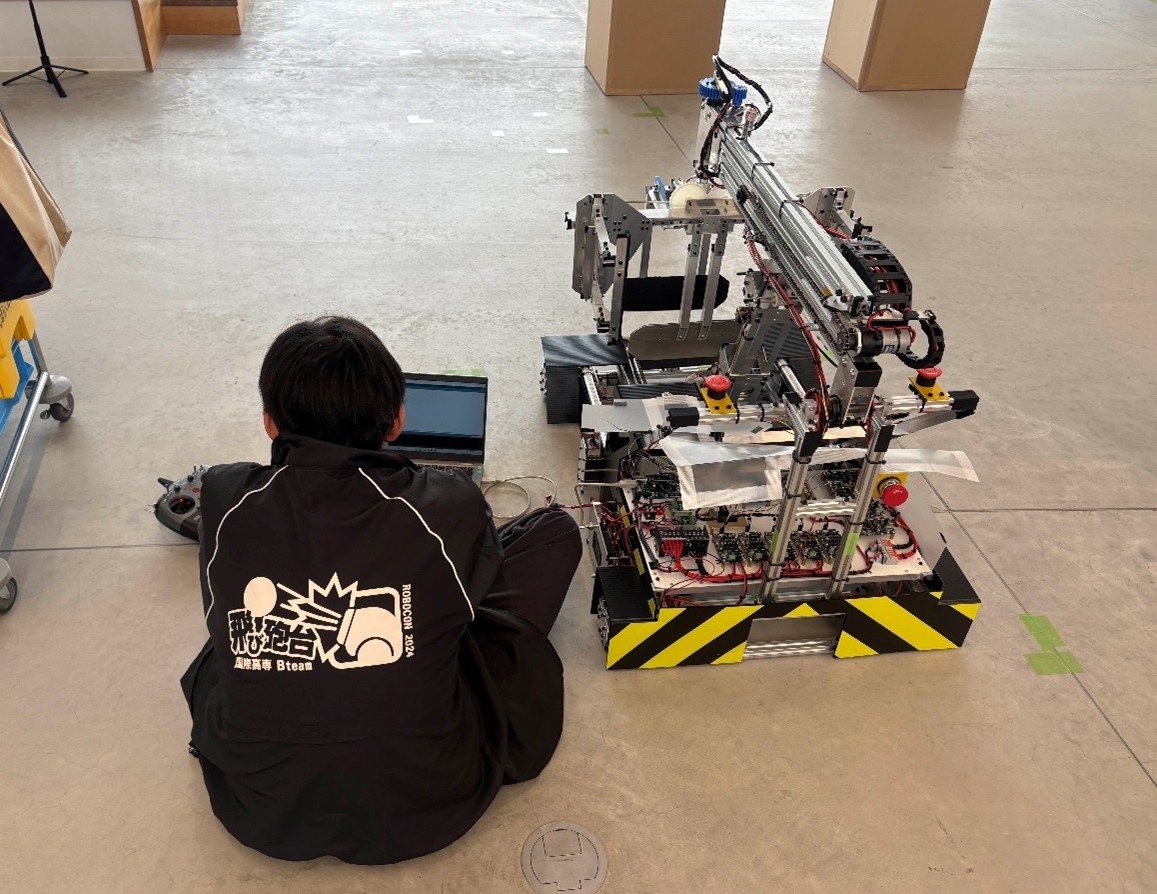
A 2nd year student in last year’s uniform adjusting the robot (Team B)去年のユニフォームを着てロボットを調整する2年生(Bチーム)
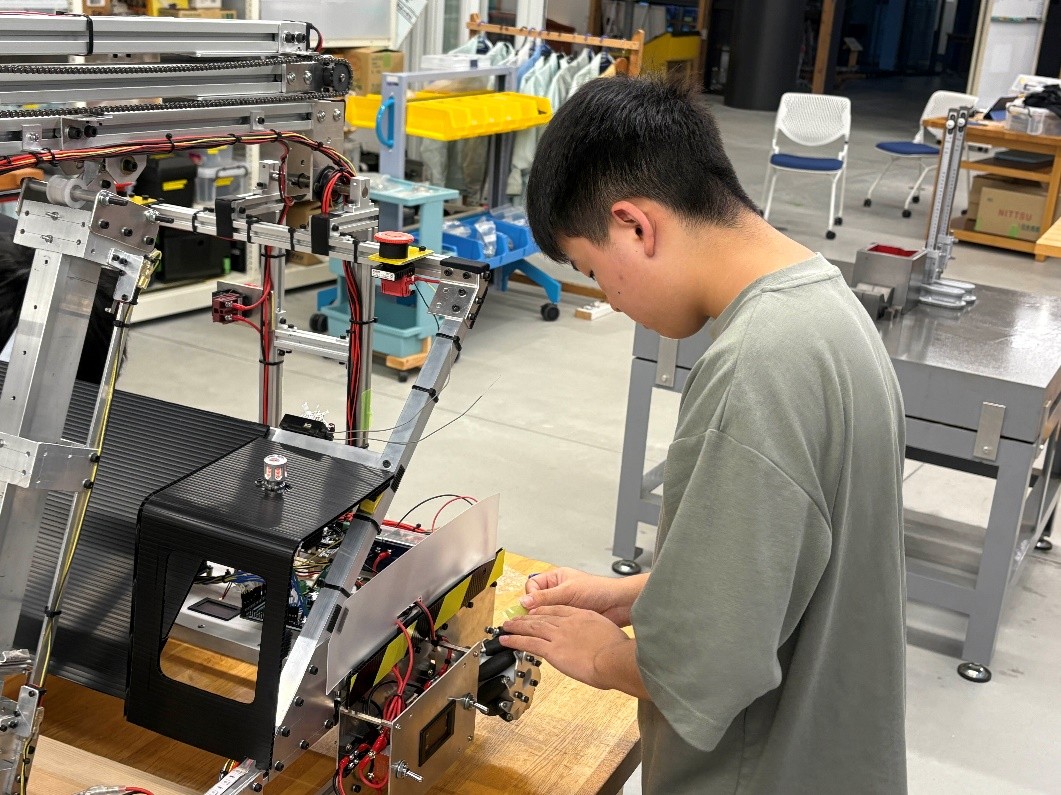
A 1st year student cleaning dirt off the tires タイヤについた汚れを取り除く1年生
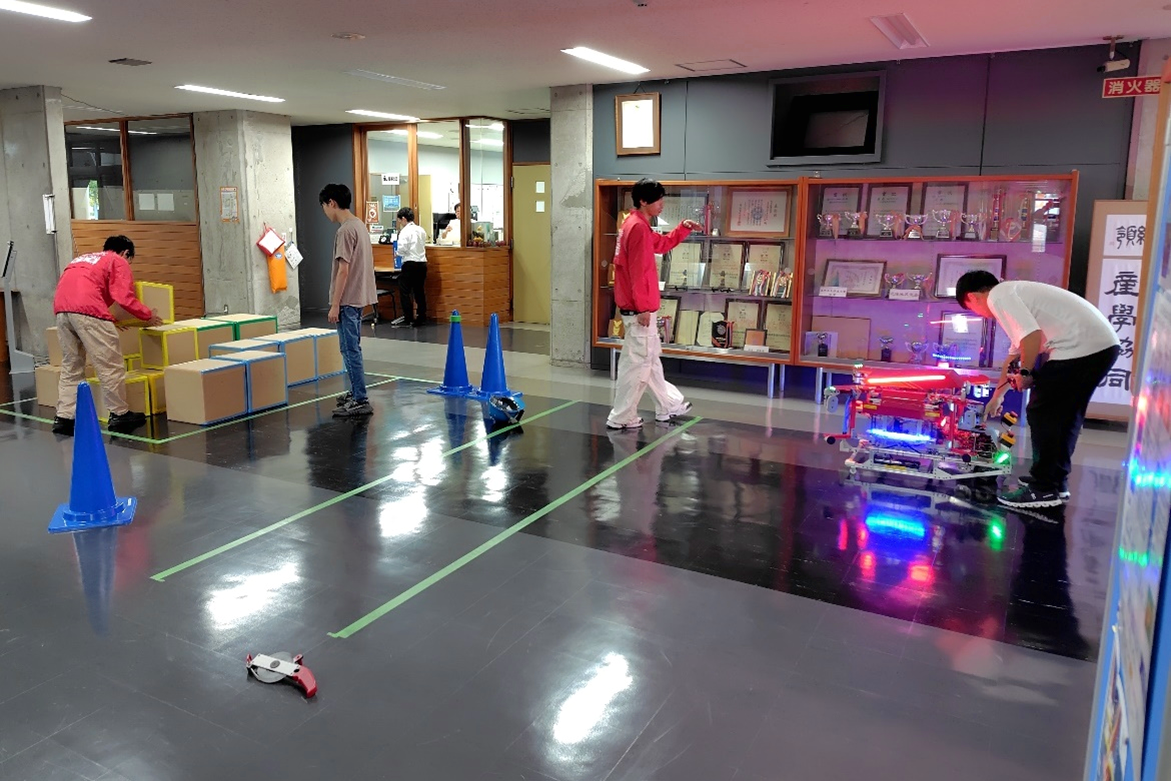
Team A practicing at the main entrance hall 正面玄関ホームで練習するAチーム

Team A being interviewed after their victory勝利チームインタビューを受けるAチーム
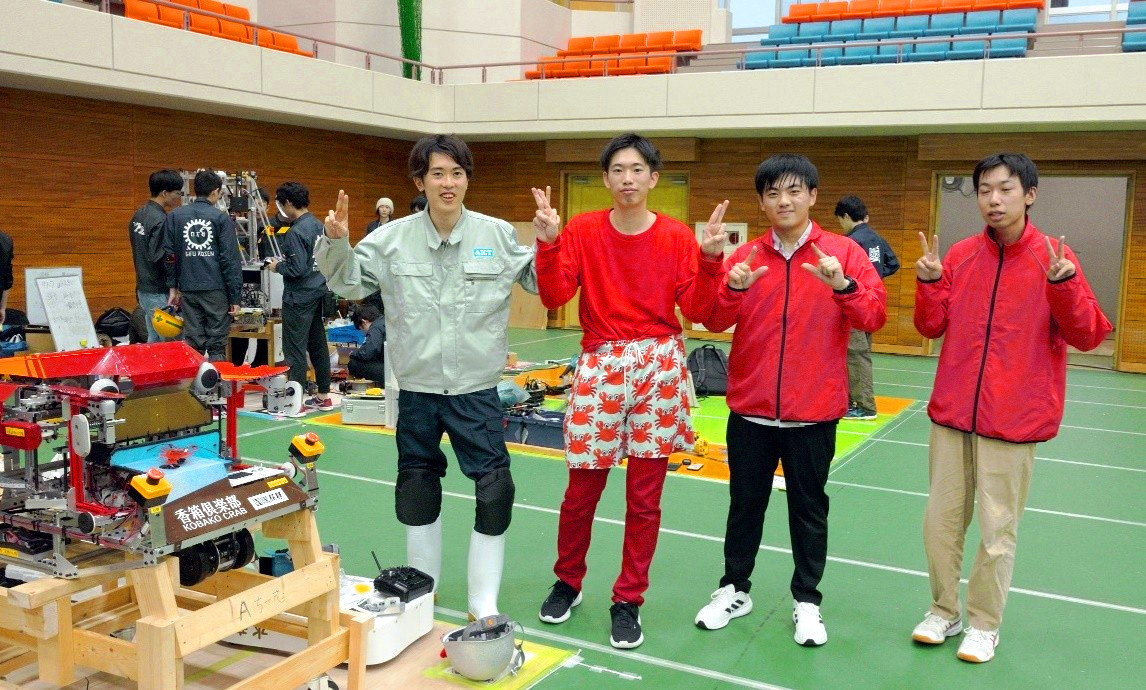
Team A looking a bit tired after the matchちょっとお疲れの様子のAチーム
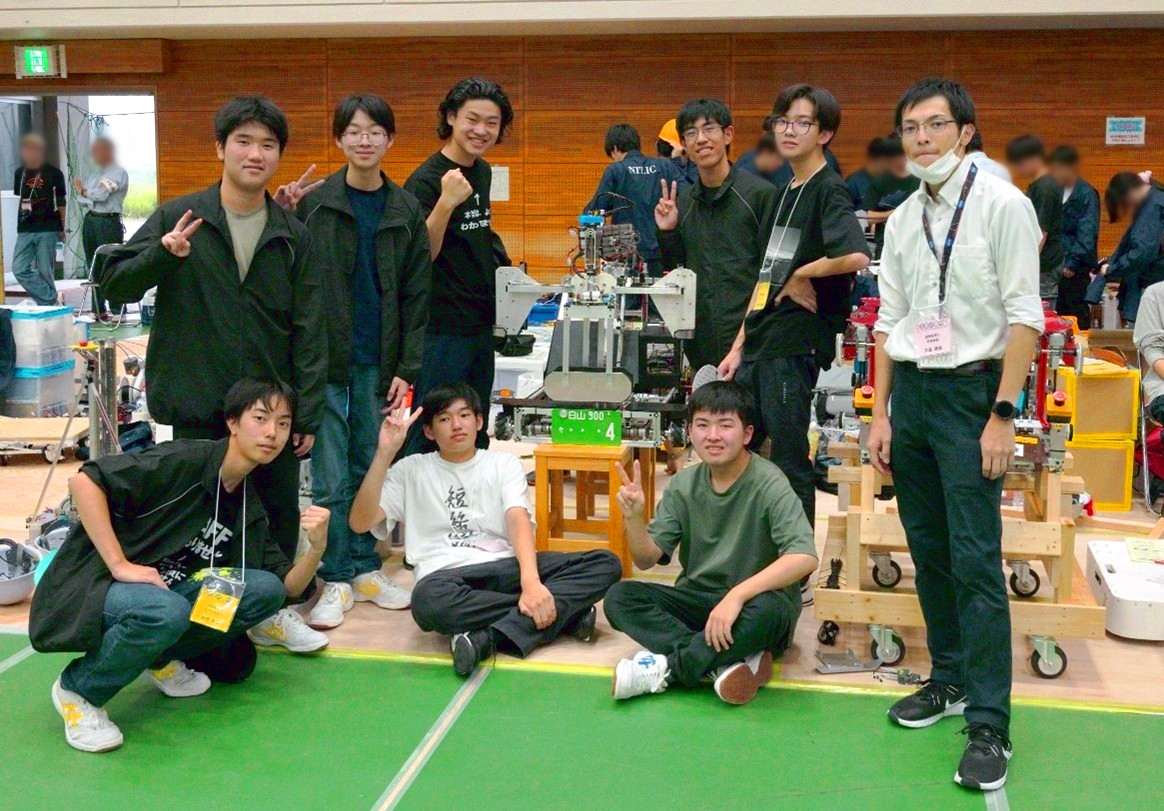
Team B celebrating their effortsがんばったBチーム
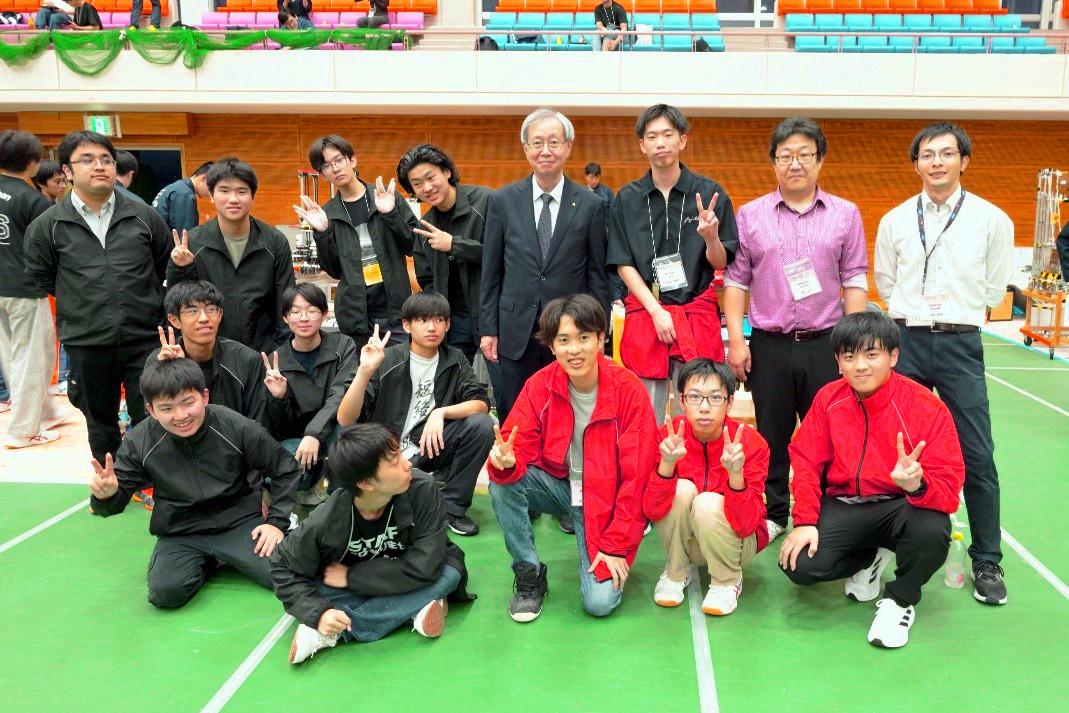
The principal surrounded by staff and participants after the competition大会終了後に関係者に囲まれる校長先生
【高専ロボコンとは】
「アイデア対決・全国高等専門学校ロボットコンテスト(高専ロボコン)」は、1988年から始まった、若い人たちに既成概念にとらわれず「自らの頭で考え、自らの手でロボットを作る」ことの面白さを体験してもらい、発想する事の大切さ、物作りの素晴らしさを共有してもらう全国規模の教育イベントです。全国の高専学生が、毎年異なる競技課題に対し、アイデアを駆使してロボットを製作し、競技を通じてその成果を競うもので、発想力と独創力を合言葉に毎年開催され、2025年で38回目を迎えました。
【NHKロボコン 東海北陸地区大会】
NHK総合テレビジョン11月8日(土)午前10:40~
※NHK ONEでもご覧いだだけます。
https://www.web.nhk/tv/an/robocon/pl/series-tep-J8Y25YN2QG/ep/8ZV3KYQ55G
I am Michihiro Hayashi, and I serve as a faculty advisor for the KOSEN Robocon (KOSEN Robot Contest) teams.
The Tokai-Hokuriku Regional Competition of the KOSEN Robocon is an annual event in which our students regularly participate, was held on Sunday, October 5th, 2025. This year, we joined the competition with a total of 12 students: four students from Kanazawa Campus as Team A, and eight students from Hakusanroku Campus as Team B.
Each year, the contest features a different theme, requiring teams to design and build entirely new robots between the theme announcement in mid-April and the regional competition in early October. The 2025 theme was “Great High Gate.” Robots were tasked with stacking cardboard boxes to form a gate, through which a cart carrying a team member would be pulled by the robot. The higher the gate, the more points awarded.
Let me introduce the teams and their robots.
Team A: Koubako Club (Kanazawa Campus)
Team A consists of four 4th year students. Their robot was inspired by the local delicacy Koubako-gani (female snow crab), and its role was to transport a pre-assembled gate of stacked boxes to a designated location. We interviewed team leader Haruki Ohta, operator Haruto Shiraishi, cart rider Imaru Oishi, and pit mechanic Shiyu Sano.
Comments from Team A Members:
[Haruki Ohta]
I returned home during summer break to obtain my driver’s license, and I regret not being able to contribute much to the robot’s construction during that time. However, after obtaining my license, I was able to dedicate more time in the second semester and feel I contributed to the team’s success.
[Haruto Shiraishi]
I was nervous during the match, and my robot operation was a bit shaky at times. Still, we achieved our target score in the first match and won. We’ve been recommended for the national competition, so I’ll continue to give it my all.
[Imaru Oishi]
I dressed as a seafood shop clerk handling Koubako-gani while riding the cart. Although I’m not skilled in robot design or assembly, my light weight and slender build helped the robot pull the cart and pass through the gate smoothly. I was the one waving to the audience during the exhibition.
[Shiyu Sano]
I oversaw manufacturing and assembling robot parts. The robot performed smoothly without any malfunctions or damage during the competition. After the matches, I was so exhausted that I fell asleep in the pit area—and was caught on NHK’s camera! I wonder if that footage will be broadcast.
Although Team A was eliminated in the preliminary league with one win and one loss, their robot’s gate transportation function was highly praised, earning them the Technical Award and a spot in the national competition. We hope they continue to excel at the national level.
Team B: Hakobou (Hakusanroku Campus)
Team B consists of 1st and 2nd year students. Their robot mimicked the mechanism of a container crane used in port cargo operations. Decorated with black-and-yellow hazard stripes and a red rotating beacon, it embodied the look of a working vehicle. The robot lifted and stacked boxes using a hand that opens and closes like a crane and an extendable arm.
Although eight members participated in the regional competition as per the rules, a total of 11 students were involved in robot development and practice. Even those not selected as players played vital behind-the-scenes roles. We interviewed team leader and operator Kaishu Ishiharada, and support member Akira Terashima.
Comments from Team B Members:
[Kaishu Ishiharada]
This year, we reflected on past experiences and maintained a positive team atmosphere. As a result, we completed the robot earlier than usual and had ample time for practice. I was less nervous during the matches, which I believe contributed to our strong performance (Top 4). I hope to continue working hard with my teammates next year.
[Akira Terashima]
Although I joined the regional competition as part of the cheering squad, which was a bit disappointing, I had the opportunity to observe many robots from other schools. It was a valuable experience, and I hope to apply what I learned in future competitions.
Team B advanced through the preliminary league undefeated and reached the final tournament. They continued to win until the semifinals, where they narrowly lost to the eventual champion, finishing in the Top 4. Their robot performed consistently and reliably in all matches. Despite the pressure, Team B operated the robot flawlessly, a testament to their thorough preparation.
This year, both teams succeeded in getting their robots operational early, allowing for repeated match-style practice. Problems identified during practice were addressed through design improvements and strategic adjustments. These approaches closely align with engineering design principles and could be effectively applied in classroom settings as well.
A 2nd year student adjusting the robot, watched by a 1st year student (Team B)キャンパスでロボットの調整をする2年生と見守る1年生(Bチーム)
A 2nd year student in last year’s uniform adjusting the robot (Team B)去年のユニフォームを着てロボットを調整する2年生(Bチーム)
A 1st year student cleaning dirt off the tires タイヤについた汚れを取り除く1年生
Team A practicing at the main entrance hall 正面玄関ホームで練習するAチーム
Team A being interviewed after their victory勝利チームインタビューを受けるAチーム
Team A looking a bit tired after the matchちょっとお疲れの様子のAチーム
Team B celebrating their effortsがんばったBチーム
The principal surrounded by staff and participants after the competition大会終了後に関係者に囲まれる校長先生
[About KOSEN Robocon]
KOSEN Robocon began in 1988. It is a nationwide educational event designed to inspire young people to think independently and experience the joy of building robots with their own hands. Each year, students from colleges of technology across Japan tackle a new challenge, using their creativity and ingenuity to design and build robots that compete in various tasks. Celebrating its 38th edition in 2025, the contest continues to emphasize the importance of original ideas and the excitement of engineering.
[NHK ROBOCON Tokai-Hokuriku Regional Competition]
TV station: NHK General TV
Date & Time: Saturday, November 8, 2025, at 10:40 AM
Note: It is also available on NHK ONE.
https://www.web.nhk/tv/an/robocon/pl/series-tep-J8Y25YN2QG/ep/8ZV3KYQ55G
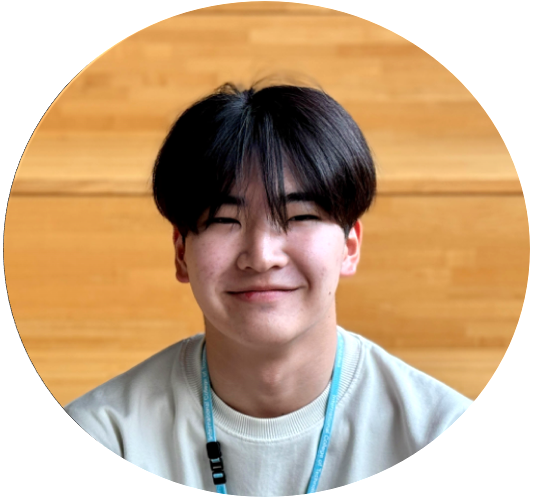
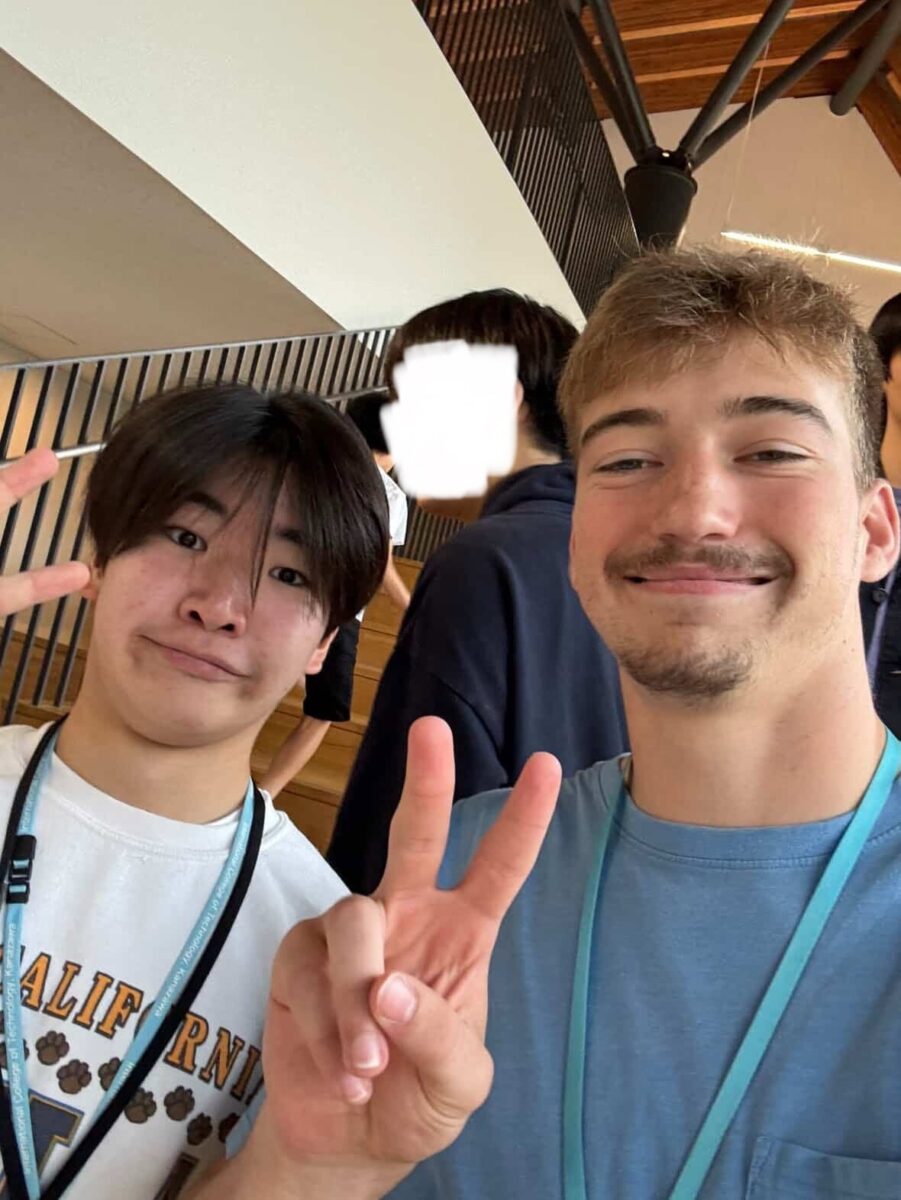 こんにちは。国際高専1年生の樋口 洸太朗です。先日アメリカのミズーリ州から5人の高校生が私たちがいる白山麓キャンパスに訪れました。今回は僕がバディとして共に生活したアイザック君との思い出を書こうと思います。
私が初めて彼と会ったのは白山麓キャンパス受け入れ初日の2025年6月7日(土)の夜です。彼の第一印象としては、背が高くて大人びていて、本当に高校生かと疑いたくなるような外見と雰囲気を醸し出していました。しかしいざ話してみると、彼は日本の文化に興味があるようで、私たちが学校について説明しているときも前のめりになって聞いてくれたり、積極的に質問したりしてくれました。
意外にも早く打ち解けられて安心した次の日、私たちは金沢へ観光に行きました。アイザック君は行き帰りのバスの中で目に付く日本の風景や物事に興味津々で、水田に生えている稲をみて綺麗と言ったり、日本とアメリカの学校生活の違いについて話したりして盛り上がりました。金沢では金沢城の敵を苦しめる設計やからくりを見て「攻めるのが難しい城だね」と言っていて、面白い視点だなと思い感心しました。観光の終盤では日本の食べ物に夢中で、金沢でお団子を食べたりセブンイレブンでおにぎりやお菓子を大量に買ったりしていました。
それからは平日に授業を一緒に受けたり、放課後にバスケットボールやアメリカンフットボールをして残りの生活を充実したものにできました。連絡先も交換したので、またどこかで会いたいです。
樋口 洸太朗
Hi, my name is Kotaro Higuchi, a 1st year student at the ICT. Recently, five high school students from the state of Missouri, USA, visited our campus. Today, I would like to share my memories with my buddy, Isaac.
I first met Isaac on the evening of Saturday, June 7th, 2025, the day they arrived at the Hakusanroku campus. My first impression of him was that he was tall and had such an adult aura, so I couldn’t believe that he is a high school student. However, when I tried to speak with him, I found out that he was interested in Japanese culture. While we were explaining our school, he listened aggressively and frequently asked questions.
I was relieved that we were able to become friends so quickly. The next day, we went on a trip to Kanazawa. During the bus ride, Isaac was curious about everything he saw in Japan. He said the rice plants growing in the paddy fields were beautiful and we had an exciting conversation about the differences between school life in Japan and America. In Kanazawa, he was impressed by the clever design of Kanazawa Castle and saying, “This castle must have been really hard to attack.” I thought that was a very interesting and unique observation. At the end of the trip, he became hooked on Japanese food, and he ate Dango and bought lots of Onigiri and snacks at 7-Eleven.
After that, we spent our weekdays together attending some classes. We also played basketball and American football after school, which made the rest of the time we shared really satisfying. I hope we can meet again someday.
Kotaro Higuchi
 こんにちは。白山麓高専事務室の間加田 侑里です。今回は、1年生の笹木 大暉さんがAutodesk Fusionを用いて制作した作品を紹介します。
「コンピュータスキルズⅠA(1年生)」の授業では、1年生が入学した直後からAutodesk Fusionを活用した3Dモデリング制作に取り組みます。この授業では、エンジニアにとって必要なコンピュータの基本的なスキルを学習します。笹木さんは、授業で学んだことをもとに、2ヶ月間かけて「V8エンジン」の3Dモデル制作に挑戦しました!その様子を動画で紹介します。どうぞご覧ください!
間加田 侑里
Hello, this is Yuri Makada from the Hakusanroku Office. This time, I would like to introduce a project created by 1st year student Taiki Sasaki using Autodesk Fusion.
In the Computer Skills IA course for 1st year students, students begin working with Autodesk Fusion to create 3D models right after entering ICT. In this class, students learn the fundamental computer skills necessary for engineers. Taiki Sasaki, a 1st year student, applied what he learned in class and spent two months creating a 3D model of a V8 engine! I've put together a video showcasing his work—please watch!
Yuri Makada
 こんにちは。白山麓キャンパスで生活している1年生の阿部 晴です。2025年6月、アメリカのコロンビア市から5人の生徒が白山麓キャンパスに来ました。今回はバディとして一緒に生活してみて感じたことなどについて書こうと思います。
6月7日(土)、アメリカの生徒が無事に白山麓キャンパスに到着しました。全員身長が高く、大人びていて驚きました。初めは緊張してしまって、なかなか英語で話しかけることが出来ませんでしたが、アメリカの生徒も日本に興味があるのか、積極的に話しかけてくれたので、緊張をほぐすことが出来ました。なかでも男子生徒3人とは日本や海外のスポーツやアニメの話で盛り上がりました。
放課後には一緒にバスケットボールをしました。背の高いアメリカの生徒がダンクをしているのを見て、僕たちは驚きを隠せませんでした。バスケの後にアメリカンフットボールをしている子がいたので少し教えてもらったのですが、とても難しく、なかなかボールを遠くに投げられませんでした。また、スポーツをした後には一緒に温泉にも行きました。
金沢観光では兼六園に行きました。自分も金沢で観光したことが少なかったため、よくわからないことも多かったですが、食べ物の買い方を教えるなどバディとしてのサポートはよくできたのではないかと思います。
今回は英語に自信がなく、緊張してしまったため、次回の機会までにもっと英語力をつけて、話せるようにしていきたいです。それではまた会いましょう!


阿部 晴
Hello. My name is Haru Abe, a 1st year student living on the Hakusanroku campus. In June 2025, five high school students from Columbia city in America visited Hakusanroku campus. This time, I will write about what I feel about living with them in ICT as study abroad buddies.
On June 7th, American students arrived at Hakusanroku campus. All the students are tall, and I was surprised by how mature they look. I was a little nervous because it was my first time meeting American students, and I couldn’t talk with them in English. But American students talked with me, perhaps because they were interested in Japan. Therefore, I was able to ease my tension. With the American students, I was able to have a lively conversation about Japanese, overseas animation, and sports.
Every after school, we played basketball together. When I saw the tall American student dunk, I was surprised. After that, because he also plays American football, he taught me how to play it. But that was very difficult, and I can’t throw as far as he does. Also, after that we went to the onsen.
For sightseeing in Kanazawa, we went to Kenroku Garden. I haven’t gone sightseeing in Kanazawa, so I’m not very sure about it. But I taught American students how to buy some food in shops, and because of that, I think that I fulfilled my buddy duties.
At the time, I didn’t have confidence, and I was nervous because I wanted to improve my English skills. Also, I want to be able to talk more with native speakers at the next opportunity. See you again!
 こんにちは。1年生の田村 駿多です。私はアメリカの生徒たちとの交流や会話を通じて、たくさんの知らないことや面白いことを知りました。ですが、私自身英語があまり得意ではないので苦労したこともありました。
まず、アメリカの生徒たちはとてもやさしくて面白かったです。特に面白かったのは、アメリカの生徒たちの、好きな食べ物についてです。寿司だったりピザだったりいろんな食べ物がありましたが、なかでも意外だったのは納豆が好きと言っていた人がいたことです。
次に私がアメリカの生徒たちと交流していく中で驚いたことは、身長がとても高いことです。私自身背が高いわけではないのでとてもうらやましいと思いました。
最後に、アメリカの生徒たちと交流するうえで大変だったことについてです。私はあまり英語が得意ではないので相手の言っていることを理解するのがとても難しかったです。そして理解したとしても相手に自分の話していることが伝わるのか?という不安もありました。ですが、わからないところは英単語を言ったりジェスチャーで伝えたりと思っていたよりも、会話が成立したので、うれしかったです。毎日話していると少しずつ話がわかるようになったので諦めずに交流を続けてよかったと思いました。


田村 駿多
Hello, I am Shunta Tamura, a 1st year student. I learned many unknown and interesting things, when I communicated with American student. However, I am not good at English, so I had a hard time.
First, the American students were very kind and funny! The most interesting part was about the favorite foods of American students. They were sushi, pizza, and many other foods, but the most surprising of all was that an American student said, “I like natto!”.
The next thing that surprised me in my interactions with American students was that most of them were so tall. I am not very tall, so I envied them.
Finally, unfortunately, I had some the difficulties in interacting with the American students. I am not very good at English, so it was very difficult for me to understand what they were saying. If I did understand them, I was also worried that they would not understand what I was saying. Luckily, I was happy because I had some good English conversations because I used English words and gestures to communicate what I couldn't tell. I am happy that I did not give up and continued talking because I could gradually understand what they were saying after talking with them every day.
Shunta Tamura