





From the left, Dorsaf sensei, Krishia sensei, Domyson sensei, Apirak sensei, Alaa sensei and Nagwa senseiFrom the left, Dorsaf sensei, Krishia sensei, Domyson sensei, Apirak sensei, Alaa sensei and Nagwa sensei
 On Thursday, February 13th, 2025, special World Language classes were held. Students could choose two of the following five languages to study: Arabic by Alaa Hussien sensei and Nagwa Fekri Rashed sensei, Chinese by Fumi Kuroda sensei, Thai by Apirak Sang-ngenchai sensei, French by Dorsaf Gatri sensei and Filipino by Krishia Atillo sensei and Domyson Abuan sensei.
Students practiced simple greetings and pronunciation, and learned about the culture and music of different counties. In addition, teachers prepared snacks or drinks from their countries allowing students to experience and enjoy new tastes and learn about other cultures.
Usually, students take most of their classes in English, so this was a good opportunity for them to learn about different languages and cultures.
@ictkanazawa 2025年2月13日(木)、白山麓キャンパス(1・2年生)で「特別外国語講座」が開催されました!学生たちは、アラビア語、タイ語、中国語、フィリピン語、フランス語の5つの言語の中から2言語を選び、挨拶の仕方や文化などを学びました🌏✨ #国際高専
♬ original sound - Music Lover - It's Aadil
Arabic by Alaa sensei and Nagwa sensei


Chinese by Kuroda sensei


Thai by Apirak sensei


French by Dorsaf sensei


Filipino by Krishia sensei and Domyson sensei


Yuri Makada
Hello, this is Yuri Makada from the Hakusanroku Office. This time, I would like to write about the Engineering Design IIB final presentation held on Tuesday, January 28th, 2025.
-

The Agribusiness Teamアグリビジネス班
-

The Tech Teamテック班
The Engineering Design IIB class, worked on problem-solving projects on the social, natural, and industrial environments of the HAKUSANROKU (Foothills of Mt. Hakusan) region. Students were divided into two teams, the Agribusiness Team and the Tech Team. I will introduce the activities that both teams have been working on.
Activities of the Agribusiness Team
The Agribusiness Team has been working on regional revitalization activities in HAKUSANROKU, including the Asagimadara (Chestnut Tiger Butterfly) marking event, roasted Kosen Beniharuka sweet potato sales, and traditional Ningyo Joruri (Puppet Theater).
Asagimadara (Chestnut Tiger Butterfly) Marking Event
In a fallow field in front of the Hakusanroku campus, Fujibakama flowers (boneset) are being cultivated to attract Asagimadara. The Agribusiness Team is working on a project to revitalize the community by making the migrating Asagimadara a valuable local resource.
This year, the Asagimadara Marking Event, organized by the Oguchi Community Development Council, the Hakusanroku Satoyama Revitalization Council, and the Asagimadara Fan Club, was held again. The Agribusiness Team participated in the event in a supporting role. The marking experience was limited to 30 participants by advance reservation, and in addition to assisting with the marking activity, the students planned events to ensure that the 30 participants could have a fuller experience. Their goal was to promote the charm of HAKUSANROKU while creating an opportunity for interaction between local residents and visitors.
To attract participants to the event, the students created promotional posters for the Asagimadara Marking Event and displayed them at Hakusan Himenoyu Onsen, Oguchi Community Center and Sena Roadside Station.
Additionally, they set up photo spots, observation areas, and rest areas, in order to promote the event on social media. They also organized various activities such as selling Asagimadara-themed merchandise, hosting a keychain-making experience using a laser cutter, and setting up a capsule toy machine. The capsule toy machine, in particular, was more popular than expected and made many visitors happy.
For more details, Arihiro Kodaka sensei, who is in charge of Engineering Design, has written about the Asagimadara Marking Event
-

Commemorative photo shootフォトスポットで記念撮影の様子
-
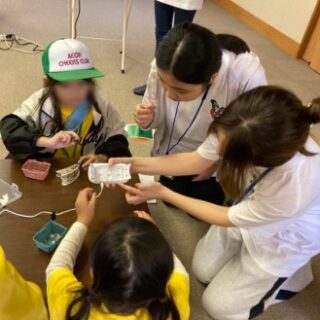
Creation of original goodsオリジナルグッズ作成の様子
-

Capsule toy machineカプセルトイ
-

Keychain-making experience using a laser cutterレーザーカッターを用いたキーホルダー作り体験


Kosen Beniharuka Sweet Potatoes Sales
The Agribusiness Team, with the cooperation of the Hakusanroku Satoyama Revitalization Council, has been cultivating Kosen Beniharuka sweet potatoes since first semester, utilizing a fallow field in front of the Hakusanroku campus. The students collaborated with the Kijitora Coffee Laboratory and Sena Road Station, aimed at revitalizing the local community by selling Kosen Beniharuka sweet potatoes that the students grew by themselves.
This year, as part of a collaboration with ICT, Kijitora Coffee Laboratory sold "Chips Benya Soft" and "Benya Soft" made with Kosen Beniharuka sweet potatoes, while Sena Road Station offered "Beniharuka Sundae" and fresh Kosen Beniharuka sweet potatoes for sale.
-

Chips Benya Softチップスべにゃソフト
-

Beniharuka Sundae紅はるかサンデー
-

Fresh Kosen Beniharuka sweet potatoes「高専紅はるか」の生芋が販売


Additionally, on Sunday, November 3rd and Monday, November 4th, 2024, the Agribusiness Team sold roasted Kosen Beniharuka sweet potatoes at the Sena Road Station store. Last year, with the aim of promoting the Kosen Beniharuka brand and building a fan base, original merchandise such as keychains and magnets featuring four mascot characters of Kosen Beniharuka were created. These were distributed for free as capsule toys to customers who purchased roasted Kosen Beniharuka sweet potatoes of a certain amount. This year, while inheriting the character goods created by last year's students, new acrylic standing figures were added to the collection.
This year, the Kosen Beniharuka sweet potato harvest was excellent, with the harvest volume approximately 1.6 times greater than last year. As a result, more Kosen Beniharuka sweet potatoes had to be sold. To promote the brand more widely and boost sales at both the Kijitora Coffee Laboratory and Sena Road Station, a campaign was implemented. Customers who purchased a certain amount of Kosen Beniharuka related products at each store were given a free exchange voucher for a capsule toy.
Last year, about 30 capsule toys were distributed, but this year, thanks to the many customers who visited the roasted Kosen Beniharuka sweet potato stand from the Kijitora Coffee Laboratory and Sena Road Station, 100 capsule toys were given out. Some customers even returned to buy other products just to get another capsule toy. Others, continuing from last year, mentioned, "We came to enjoy Kosen Beniharuka roasted sweet potatoes again this year." Ultimately, the sales were approximately 1.4 times higher than last year, and the students were able to achieve their goal of surpassing last year's sales.
-

-

-

-

-

試作中のペーパークラフト
-

-

-

-

-

Capsule toy machineカプセルトイ
-

-

Kosen Beniharuka Sweet Potatoes高専紅はるか焼芋


Ningyo Joruri (Puppet Theater)
The Higashi Futakuchi Bunya Ningyo Joruri is a traditional form of puppet theater that draws from the Joruri and Bunyabushi, which were popular before the emergence of Bunraku (puppetry). Currently, there are only four places in Japan where Bunyabushi is still being preserved, one of which exists in the Higashi futakuchi area of Hakusan City, Ishikawa Prefecture. 350 years ago, local residents went to Kyoto, studied Ningyo Joruri and brought it back to HAKUSANROKU. Even today, it remains much the same as it was back then.
With the goal of introducing this unique cultural heritage to more people and providing an opportunity for them to enjoy it, the Agribusiness Team visited the Higashi futakuchi Local History Museum, the venue for the Ningyo Joruri performances. Through interviews with them, they gathered impressions and identified challenges, using these insights to further their activities.

Ningyo Joruri paper crafts
The students planned two events to help promote and revitalize the Ningyo Joruri tradition.
The first aimed to show the appeal of Ningyo Joruri through the use of paper crafts. Students proposed offering papercraft models as souvenirs for visitors attending performances and making them available for download on a website, allowing people to enjoy them at home.
The second initiative involved expanding the distribution of promotional flyers beyond public facilities in Hakusan City and promoting the event through posters. As a result, flyers could also be distributed at Sena Road Station and the Ichirino area, which attract many tourists during the winter season for winter sports. Additionally, based on discussions with members of the preservation society, the students created a Current Status Analysis Map, summarizing the ongoing efforts to preserve and promote the tradition.
In this activity, students explored new experience possibilities with paper crafts and visualized the current state of Higashi Futakuchi Bunya Ningyo Joruri, and I believe that students were able to create opportunities for themselves to become aware of issues from a variety of perspectives. Although it was difficult to secure sufficient time for this activity at the end of the semester, students felt it was important to work together with the preservation society to think about the future of the project.
Activities of the Tech Team
The Tech Team is engaged in technological development focused on utilizing AI and IoT for wildlife monitoring and notification systems, as well as controlling drones to deter harmful animals as part of pest control measures.
In HAKUSANROKU, damage to crops by monkeys has become increasingly severe each year. To address this issue, the Tech Team has improved the accuracy of an AI-powered monkey surveillance system to over 90%, developed a function that sends notifications to farmers via LINE when monkeys are detected, and tested the effectiveness of drones in deterring them.
This year, the team was divided into three groups to explore new ways to protect farmland: the Rover Team, which developed a patrol robot capable of navigating rough terrain; the Drone Team, which tested the precision of automatic takeoff and landing for drones; and the IoT Team, which developed a system to monitor rainfall and wind speed for drone operation.
Rover Team
Newly active this year, the Rover Team worked to develop a rover that could patrol the farmland in bad weather and intimidate monkeys when drones are unable to fly because of weather conditions. The final goal is to have a rover move around the farmland automatically, but the first step is to develop a rover that can move around the uneven terrain of the farmland. The students proceeded with a detailed design based on their ideas of “what kind of rover” they wanted, such as how fast they wanted the rover to move around the field and how big and heavy they wanted it to be.
The completed rover was to be tested on farmland, but the farmland was covered with snow, so the test was conducted on campus over concrete, asphalt, and grass with a light dusting of snow on campus.
How to intimidate monkeys and how to automate the rover to travel over farmland are the next challenges.
-

Discussing ideas for roversローバーについてディスカッション
-

Rover developmentローバーの開発
-

Rover developmentローバーの開発
-

On campus test over concrete, asphalt, and grass with a light dusting of snowうっすらと雪が積もった芝生の上で走行テスト


Drone Team
The goals of the Drone Team this year were to investigate the accuracy of a drone’s GPS takeoff and landing and confirmation of system operation. Furthermore, the drone storage box was made and installed on the farmland to enable takeoff, landing, and storage of the drone.
The operation of the developed system is as follows.
1. When the AI monkey detection system recognizes the monkeys, a notification is sent to the user via LINE.
2. The user remotely opens the door of the drone storage box.
3. Under user remote control, the drone automatically takes off and circles the farmland to intimidate the monkeys.
4. After the drone circles the farmland, the drone lands on the storage box.
5. The user remotely closes the door of the storage box.
The confirmation tests were conducted on campus and confirmed the drone’s takeoff and landing accuracy. The drone storage box was controlled remotely from the cafeteria.
-

Building a drone storage boxドローン収容箱を製作
-
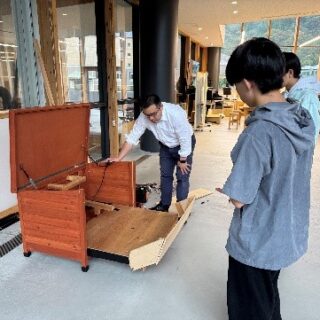
Drone storage boxドローン収容箱
-

Testing the drone’s autonomous operationドローンによる自動操作の誤差を検証中
-


IoT Team
The IoT Team is the bridge link between the user, the AI monkey detection system, and the drone or rover. When the system detects the monkeys in the farmland, the system sends information such as rainfall, windspeed, and images of the monkey to the user, and the user decides if the drone or rover is ready to operate in the farmland. These enhancements help robots avoid making decisions too quickly. Additionally, for quick maintenance, the software has also been improved to check if the system is offline, whether the internet is connected, and which camera is offline.
-

Confirmation of weather station operation昨年度組み立てたウェザーステーションの動作を確認している様子
-

Development of a new AI system to recognize monkeys猿を認識する新しいAIシステムを開発中
-

Development of a new AI system to recognize monkeys猿を認識する新しいAIシステムを開発中


Yuri Makada
 Hullo, I’m Ian Stevenson, an English teacher here at ICT.
Like the jack-o-lanterns , the tie-dye t-shirts have become an annual event at ICT. Unlike the jack-o-lanterns, the tie-dye t-shirts don’t happen at a fixed time. In the past tie-dye t-shirts have been made during Golden Week and September. This year it happened on Monday the 17th of February and Thursday the 20th February, 2025, when 13 students and 3 teachers came together at the Project Booth to make tie-dye t-shirts.
 Once people began to arrive at the Project Booth, they chose what size t-shirt they wanted (S, M, L or XXL), made an apron from a garbage bag, got a pair of gloves and got ready to make their tie-dye t-shirt. Before beginning their t-shirt, a few different styles of tie-dye were explained (dot, stripe, spiral, tape and crumple) in case they wanted include them in their own design. After that it was time to tie-dye the t-shirt.
Different people took different amounts of time to finish their t-shirt. As they finished, people hung their t-shirts up to dry and in one case, a student went off to wash their foot since they had accidentally dyed their toes green. By Wednesday, the t-shirts were dry and I washed out the excess dye from the t-shirts. If you don’t do this, then when you wash the t-shirt it will make all your white clothes multi-colored.
On Thursday, people came back to the Project Booth to pick up their t-shirts. At this point, they had the option of further customizing and personalizing their and others’ t-shirts with fabric markers. Some people were happy with the t-shirt as it was and took their t-shirt back. Some people wanted to add more to their t-shirt and either drew characters or emphasized patterns on their t-shirt, or asked someone else to do so.
It was a very messy, colorful and enjoyable time.
@ictkanazawa 2025年2月17日(月)、イアン先生主催の「タイダイ染めTシャツ作り」が開催されました!学生たちはTシャツをねじったり、くしゃくしゃにしたり、結んだりして、様々な模様に染めました。カラフルで個性的なデザインに仕上がりました🎨👕💫💕 #国際高専
♬ I WANT YOU BACK - TWICE


Ian Stevenson
 Hello, this is Kasumi Ozawa from the Study Abroad Section. I would like to share with you about the recent orientations for students studying at Otago Polytechnic in the 2025 academic year.
We held several orientations for students who will be participating in the Otago Polytechnic program next year. In February, we conducted three separate face-to-face sessions for students, and an online meeting including parents was held on Friday, February 14, 2025. The Otago Polytechnic study abroad program is for 3rd year students, with 20 students studying on-site for one year in the 2025 academic year. Our school is committed to ensuring that students are well-prepared for a safe and fulfilling experience abroad.
During the student orientation sessions, detailed explanations were provided about the curriculum at Otago Polytechnic, living rules, and key aspects of living with host families. Additionally, the importance of cultural adjustment and communication in the New Zealand lifestyle was emphasized. Living in a different culture will present unique challenges for students, but overcoming these challenges leads to significant growth and new perspectives. Teachers provided specific advice on understanding different cultures and the support system available locally. Students were reassured with the message, "While there may be more hardships than moments of happiness, the growth and joy that await after overcoming these challenges will be invaluable experiences in your life." This gave students the opportunity to reflect on how they can make the most of their new learning environment and lifestyle, fostering a sense of anticipation for their upcoming study abroad experience.

2nd year students listened attentively熱心に耳を傾ける2年生
As part of these orientations, students practiced songs, and Kentaro Takano, representing the group, practiced his speech for welcome ceremony. With each practice session, their singing and speeches gradually improved, reflecting their unity. The welcome ceremony will include traditional Maori greetings, and we look forward to the heartfelt speech and beautiful singing from our students.
The orientation session for parents covered detailed information about preparations for departure, life in New Zealand, and travel precautions. Despite the nearly two-hour-long session, parents listened attentively and asked a variety of questions. Vice President Mamoru Mukai emphasized the importance of "understanding," "accepting," and "implementing" differences when encountering different cultures. These words captured the essence of cultural exchange and deeply resonated with all participants.
With the comprehensive information provided during the orientations, students seem ready to confidently dive into their new environment. Parents also renewed their resolve to support their children's growth and were eager to assist with their study abroad experience. We can easily imagine parents and children working together to prepare for this new challenge in a foreign land during spring break.
The Otago Polytechnic study abroad orientations were highly meaningful for both students and parents. After spending two years at the beautiful Hakusanroku Campus, students will relocate to New Zealand in April to begin their new journey. We sincerely hope that they will grow significantly through various experiences and make discoveries that will shape their future. Furthermore, we believe that the challenges they face in this new environment will develop into a bright and promising path ahead.
Kasumi Ozawa

Rehearsing a song for the welcome celemony歓迎会で披露する歌の練習風景

 Hello. This is Meguru Ito, one of the physics teachers at ICT. I am going to write about the illustration workshop held on Friday, February 14th and Tuesday, 18th, 2025. In February, Hakusanroku Campus has a special period called “Extracurricular Activity Period”. During this period regular classes aren’t held and various extracurricular activities are offered instead.
For the last 2 years Mr. Ibuki Rev, an illustrator has led this workshop. Thank you Mr. Ibuki!
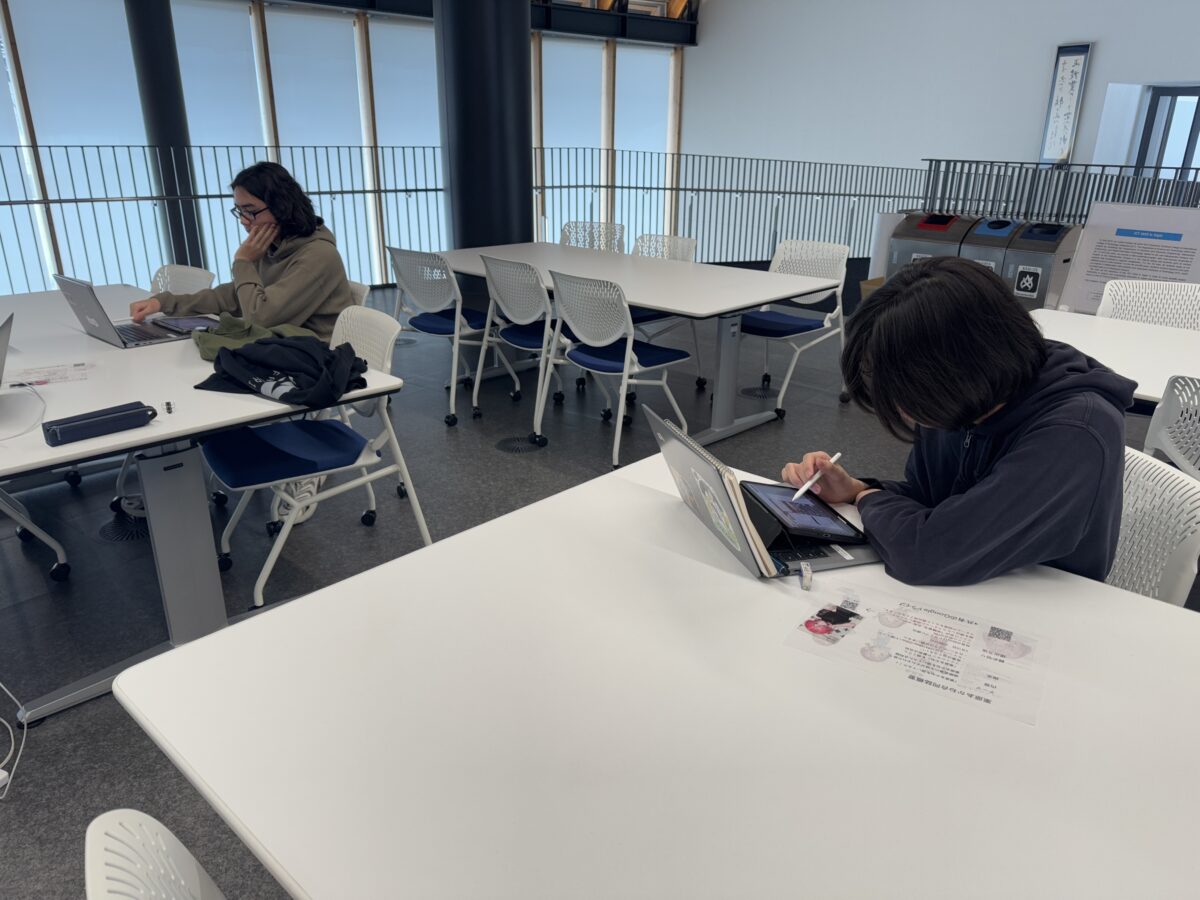
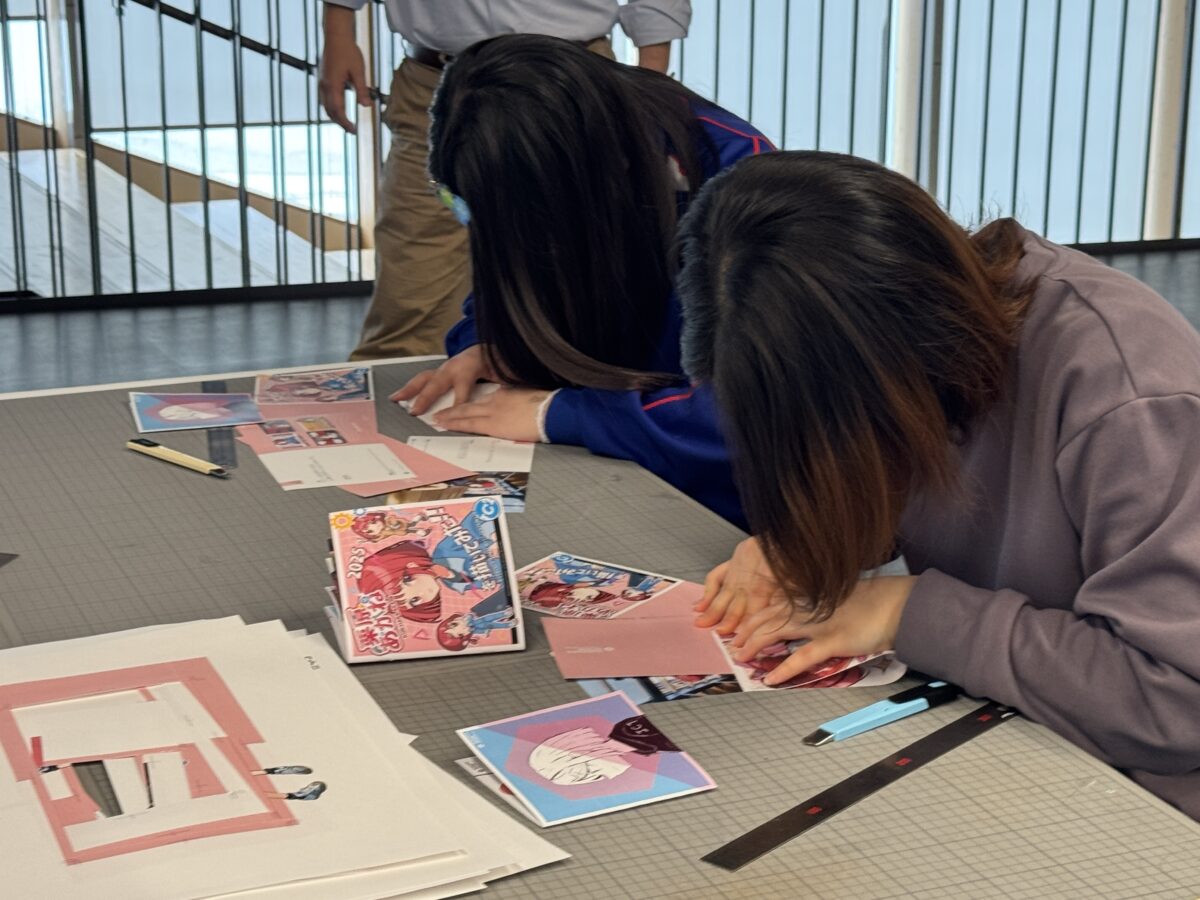
The theme of this year's workshop was self-published comics, and students created self-published comics on the theme of “Kurihara Akane chan,” an original character created at last year's illustration workshop.
On the first day, Mr. Ibuki gave a lecture on being an illustrator, developing characters, and the self-published comics medium, after that, each students created an illustration for the comic. On the second day, they compiled the date, printed the pages, and carried out the binding process. The students used a manual binding method, cutting the pages with a cutter and then stapling them together. Although they struggled with the process, they managed to create a high-quality booklet.
Many of the students who participated in this workshop enjoy drawing, and they seemed to enjoy the process of completing their illustrations as a self-published comics. Although I myself do not draw, seeing the students' eyes light up makes me glad that I organized this workshop.
Finally, I would like to thank Mr. Ibuki for his lectures over the two days! I truly appreciate his meticulous, engaging, and informative slides, as well as his kind guidance. Now, what shall we do next year?




Meguru Ito