




Campus Life
キャンパスライフ
 こんにちは、白山麓事務室の間加田 侑里です。今回は、1・2年生の保健体育で行われた雪合戦についてお話します。石川県では2025年1月7日(火)から大荒れの天気となり、7日から11日頃にかけては断続的に雪が降り、白山麓キャンパス周辺は1メートルほどの雪が積もりました。
【2年生 2025年1月23日(木)】
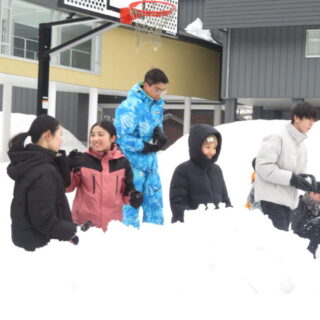
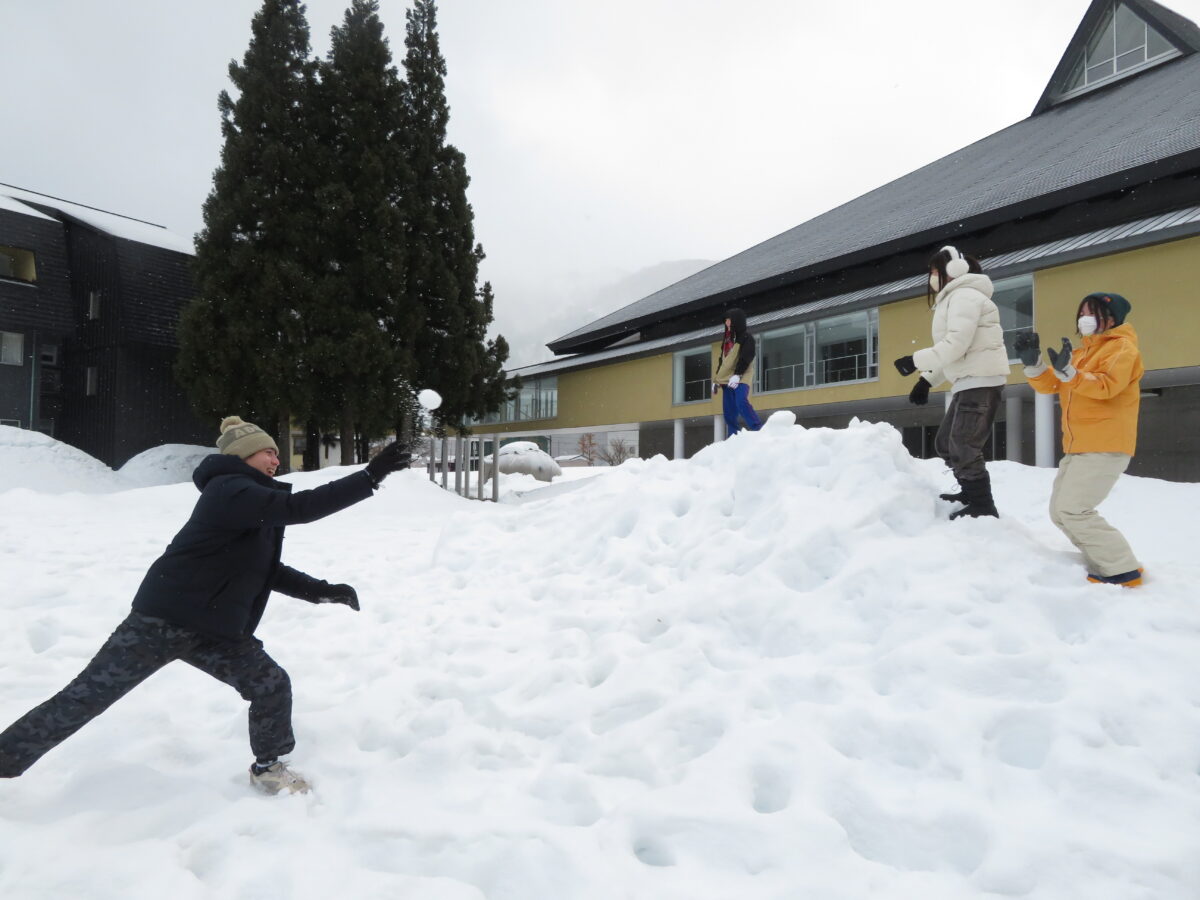
1月中旬から北陸では暖冬傾向が続き、例年なら大雪が降るこの時期ですが、この日は雨が降ったりやんだりを繰り返していました。2年生の保健体育の授業が開始する頃には、曇り空となりはじめ、さっそく雪合戦が開催されました。
学生たちは2チームに分かれ、開始の合図とともに相手チームの陣地に向かって走り出しました。前に進むたびに足が深く雪に埋まり、前進が困難な中、匍匐前進で進む学生や、ソリを使ってサーフィンのように手で雪をかきわけながら前進する学生など、様々な工夫をして全力で挑む姿は、とても楽しそうで活気にあふれていました!
次に、3名の教員(保健体育科目担当のフィリップ・ケザウ先生およびラーニングメンターのアピラク・サンゲンチャイ先生とドミソン・アブワン先生)対20名の2年生による雪合戦が行われました。開始の合図とともに、教員チームは2年生の陣地に向かって突撃しました。しかし、2年生がいろんな方面から一斉に雪玉を投げてきたため、避ける間もなくすぐに当たってしまいました。3名の教員たちは、再スタートをするために自分たちの陣地へ息を切らしながら走って戻り、2年生の陣地へと再突撃しました。これが何度も続き、教員たちもヘトヘトになったところで、作戦は変更。ソリに大量の雪玉を作り、それをもって再び2年生の陣地に向かい、次々とまとめて雪玉を投げることで何人か倒すことができていました。
終盤には、激しい雨が降り始め、雪合戦は中止となりましたが、最後まで2年生は楽しんで雪合戦をしているのが印象的でした。
-

-

Crawling forward on the snow雪の上を匍匐前進
-

-

-
-

-

-

-

Faculty making snowballs雪玉を作る教員たち
-

-

Students confronting a team of faculty members教員チームに立ち向かう学生たち
-

-

-

-

-

-

-



【1年生 2025年1月28日(火)】

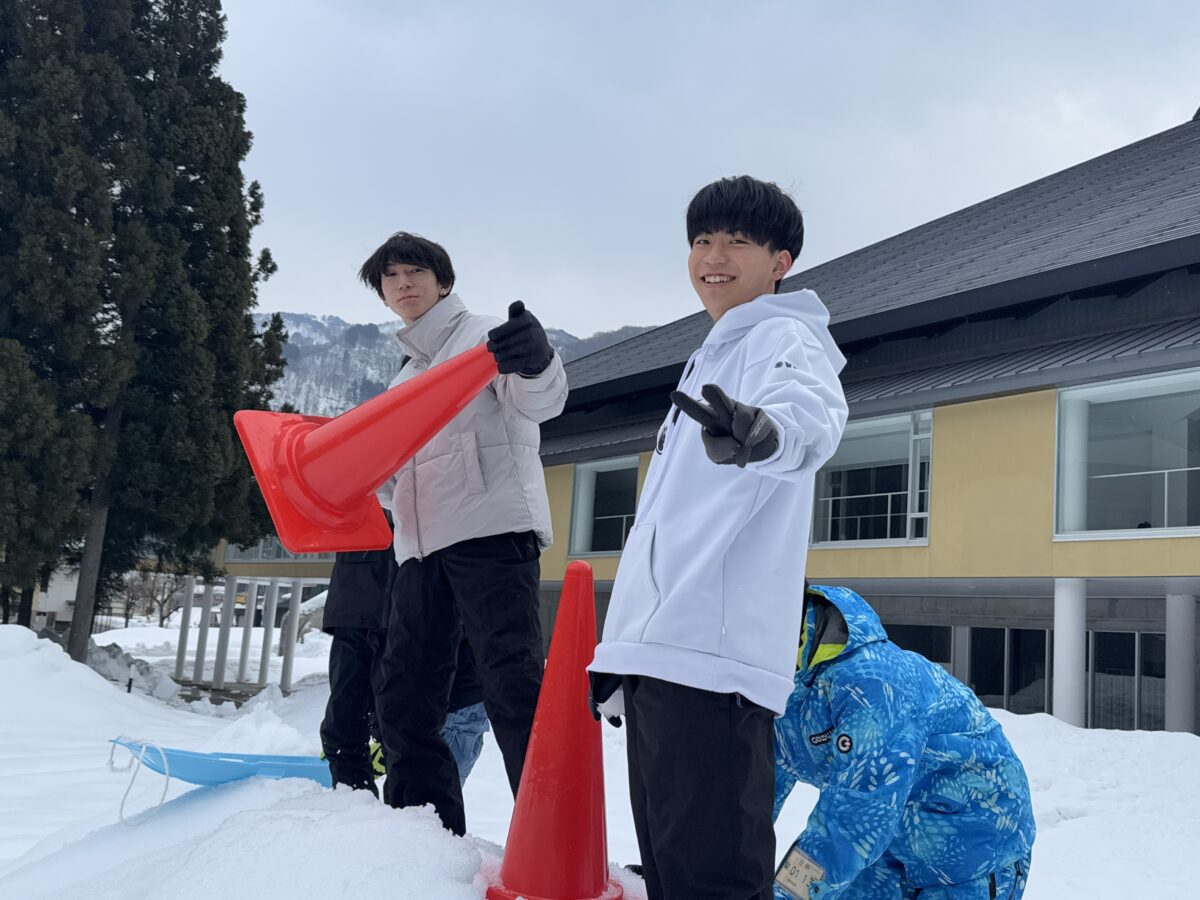
相手チームのコーンを持ち帰ろうとするフィリップ先生
これまで暖冬や雨が続き、雪が溶け始めていましたが、なんとこの日から雪が降り始めました。
まずはウォーミングアップとして、自由に雪合戦が行われました。ルールがないため、いろんな方面から雪が飛び交い、当たるたびに笑い声が響き、楽しそうな雰囲気でした。その後、学生たちは2チームに分かれ、相手チームのゴールに置かれたコーンを自分のチームの陣地まで持ち帰ることで勝利するというゲームが行われました。開始の合図とともに両チームは雪玉を投げ合い、当たった人は自分の陣地に戻って再スタートするというルールのもと、学生たちは必死に雪玉を避けながら攻め続けました。そんな中、フィリップ先生は相手チームに忍び込んでコーンを手に入れ持ち帰ろうとしましたが、相手チームから総攻撃を受け、雪玉が当たってしまい、残念ながらアウトとなってしまいました。試合は30分以上にもわたり、どちらのチームも全力で戦い続けました。決着はつきませんでしたが、勝敗に関係なく、それぞれが素晴らしいチームワークを発揮していて、雪合戦を楽しんでいる印象を受けました。




間加田 侑里
Hello, this is Yuri Makada from the Hakusanroku Office. This time, I would like to talk about the 1st and 2nd year Health and Physical Education classes held outside in the snow. In Ishikawa Prefecture starting from Tuesday, January 7th, 2025, the weather was a very harsh and it snowed intermittently from the 7th to around the 11th, accumulating as much as 1 meter of snow around the Hakusanroku campus.
On Thursday, January 23rd, 2nd Year Students
The weather had been mild winter since mid-January in Hokuriku region, and although this is the time of year when it usually snows heavily, it had been raining on and off during the day. When the 2nd year Health and Physical Education class started, the sky was cloudy, and the snowball fight began immediately.
The students were divided into two teams and they started attacking the other team's position after the signal to begin. It was difficult to move forward because their feet sunk deeply into the snow with every step they took, some students used sleds to move forward paddling like surfers!
Next, a snowball fight took place with one team of three faculty members (Health and Physical Education teacher Philip Cadzow sensei and Learning Mentors Apirak Sang-ngenchai sensei and Domyson Abuan sensei) versus 20 2nd year students. After the signal to begin, the faculty team charged toward the 2nd year students' positions. However, the 2nd year students threw snowballs at them all at once from various directions, hitting them before they had time to avoid them, and the three faculty members ran back to their positions, gasping for breath to recover and try again. After this happened multiple times and the faculty were exhausted, their strategy was changed. They loaded a sled with a large amount of snow and headed once again toward the 2nd year students territory. By throwing snowballs one after another, they managed to pepper the students with snowballs.
Towards the end of the class, a heavy rain began to fall, forcing the snowball fight to be canceled. However, it was impressive to see the 2nd year students enjoying the fight until the very last moment.
-
-
Crawling forward on the snow雪の上を匍匐前進
-
-
-
-
-
-
-
Faculty making snowballs雪玉を作る教員たち
-
-
Students confronting a team of faculty members教員チームに立ち向かう学生たち
-
-
-
-
-
-
-
On Tuesday, January 28th, 1st Year Students
The snow had begun to melt due to mild temperatures and rain, but the weather turned colder and it started to snow on the 28th.
First, as a warm-up, a free snowball fight took place. Since there were no rules, snowballs flew from various directions with students, laughing and enjoying themselves whenever they hit each other. After that, the students were divided into two teams and played capture the cone where each team had to capture the other teams’ cone and bring it back to their side to win. . After the signal, both teams began throwing snowballs at each other. According to the rules, anyone hit by a snowball had to return to their own territory and restart. The students desperately dodged the snowballs while continuing to attack their opponent's territory. In the midst of all this, Philip sensei sneaked into the opposing team’s territory, managed to grab the cone, and attempted to bring it back. However, the opposing team saw what Philip sensei was doing and pelted him with snowballs, and unfortunately Philip sensei had start again. The match lasted over 30 minutes, with both teams trying their best. Although there was no winner, each team showed great teamwork and gave the impression that they were enjoying the snowball fight.
Yuri Makada


 Happy New Year! 白山麓キャンパス、ラーニングメンターのクリシア・アティロです。クリスマスに行われたプレゼント交換の様子をお伝えします。
2024年12月24日(火)、クリスマスを祝うため、教職員と学生でプレゼント交換会を開きました。まず初めに参加を希望した教職員で「ホワイト・エレファント・プレゼント交換」をしました。このプレゼント交換は自分が用意したプレゼントが誰に届くか分からないので、全ての性別や年代にも贈ることができるプレゼント選びが必要となります。参加する教職員は、番号が書かれた紙を引いて、引いた番号とプレゼントに書かれた番号が合うものを受け取ります。全員が番号を引き、プレゼントが行き渡ったところでプレゼントを開きました。どのプレゼントも、特にこの冬の季節のプレゼントに適した素晴らしい物ばかりでした。


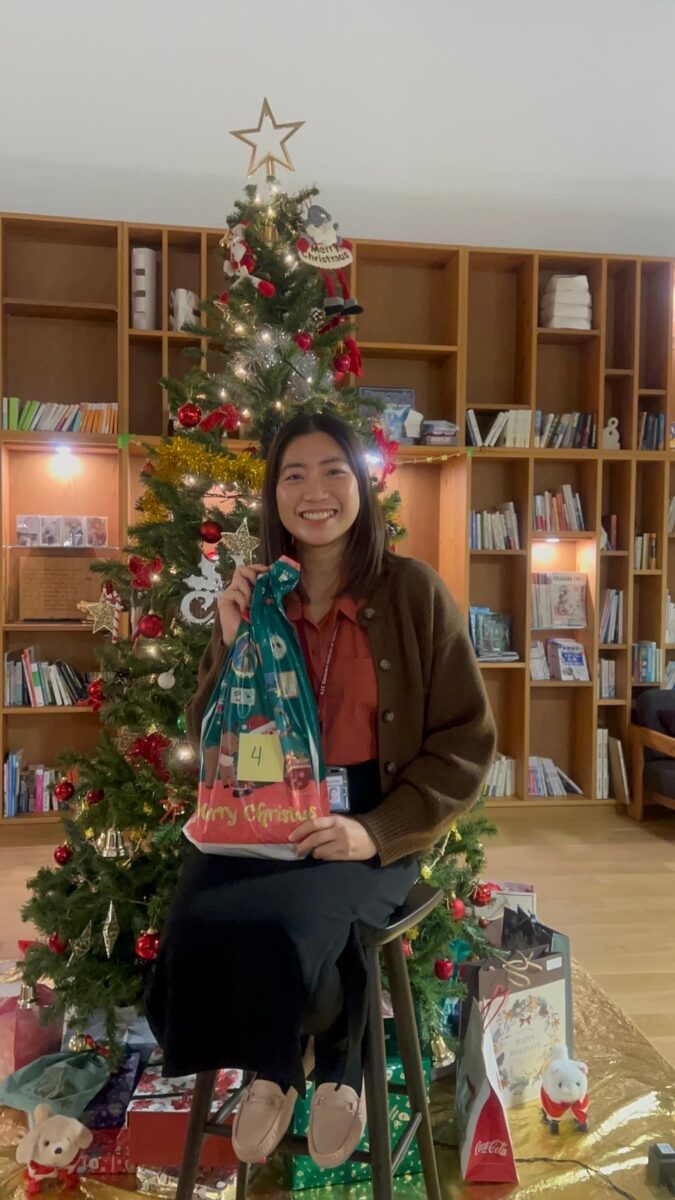

※ホワイト・エレファント・プレゼント交換とは、アメリカでよく行われるプレゼント交換で、自分が用意したプレゼントが誰に届くか当日まで分からないという交換方法です。順に番号を引いて、自分が用意したプレゼントが自分にあたった場合のみ番号を引き直すことができます。


また、12月24日のラーニングセッションの時間に学生たちへのクリスマスプレゼント交換を開催しました。パーティーをより楽しむために、ラーニングメンターたちはプレゼントを隠して学生たちに見つけ出してもらうことにしました。プレゼントを見つけた学生は中央に来て、そしてプレゼントを開きました。どの学生もワクワクしながらプレゼントを開けました!プレゼントを手に取りみんなとても嬉しそうでした!
プレゼント交換の後は、ラーニングメンターがパーティーのためにお菓子を用意しました。寒い日に最適なホットココア、クッキー、チョコレート、ポップコーンなどを食べて楽しい時間を過ごしました!学生みんなが楽しんでくれたクリスマスパーティーとプレゼント交換会でした。



クリシア・アティロ
Happy New Year everyone! I am Krishia Atillo, one of the learning mentors here at Hakusanroku Campus. I am delighted to share our Christmas Gift Exchanges from last year.
To celebrate the essence of Christmas, we had a Christmas Gift Exchange for faculty, staff, and students last Tuesday, December 24th. We first had a White Elephant Christmas Gift Exchange for the faculty and staff who wished to participate. Since this type of gift exchange didn’t have a specific receiver, each person had to buy one generic gift that could be given to either male or female, young or old. All participating faculty and staff had to choose a number that corresponded to the gift they got. Once everyone got their numbers, we started to open the presents. The presents that each faculty and staff received were all useful and wonderful gifts, especially this winter season!
During the learning session on the 24th, we held a Christmas Party Gift Exchange for the students. To make the party more fun and exciting, the Learning Mentors decided to hide the Christmas presents so students would have to find them. Once the students were able to find their Christmas gifts, each of them had to go to the center to open their presents. All of them were excited to open their presents! They were all delighted to receive their Christmas gifts!
After the Christmas gift exchange, the Learning Mentors also prepared snacks for students to enjoy. They were able to enjoy drinking hot cocoa in cold weather, and ate cookies, chocolates, popcorn, and many more! Overall, the students had fun and were able to enjoy the Christmas Party Gift Exchange.
Krishia Atillo

Departure from ICT 出発前の記念撮影
こんにちは、白山麓高専事務室の間加田 侑里です。
2024年12月17日(火)~12月23日(月)、シンガポール理工学院の学生が金沢工業大学および国際高専を訪問する「第32回マイルプログラム」が開催されました。MILE(Mobile Intensive Learning Experience)Program(以下、マイルプログラム)は1989年から始まったシンガポール理工学院(以下、SP)との交流プログラムで、今回で32回目を迎えました。金沢工業高等専門学校の時代は修学旅行でSPを訪問し、SPからは学生をホームステイにて受け入れることでお互いの親睦を深めていた歴史があります。コロナ禍で交流ができなかった時期もありましたが、昨年度から再開され、今年度も10名の学生および2名の引率者が来校しました。
前半は金沢工業大学国際交流会館で宿泊しながら、主に金沢工業大学の学生と交流を深め、後半は白山麓キャンパスに移動し国際高専の学生と生活を共にしました。
12月20日(金)白山麓キャンパス到着
12月17日~12月20日の午前中までSPの学生たちは金沢工業大学で過ごした後、夕方から白山麓キャンパスに到着し、本校の学校紹介やキャンパス案内が行われました。その後、カフェテリアで夕食をとり、本校の希望者を対象とした1、2年生とアイスブレイクが開催されました。
アイスブレイクでは、2つのゲームが行われました。まずは、「Mingo」というゲームです。このゲームでは、25個のマスにさまざまな質問が用意されており、相手に1つ質問をして、回答を得た場合、そのマスに相手の名前を記入していくというものです。質問の内容には、「辛い食べ物が好き」、「座りながら寝ることが出来る」、「日本の漫画が好き」などといったものがあり、学生たちはお互いに質問し合うことで自然に打ち解けることができていました。
次にチームで協力してカップを積み上げていく「Building a Paper Cut Tower」というゲームか行われました。このゲームでは、各自が箸を一本ずつ持ち、相手と息を合わせてカップを掴み、カップを隣の机まで運びながらタワーを作り上げていくというものです。SPの学生と国際高専の学生たちは混合チームを組みました。スタートの合図とともに、学生たちはカップを掴む段階から苦戦し、何度も落としてしまう場面がありましたが、次第にコツを掴み、お互いに声を掛け合いながら協力してカップを積み上げていくことに成功していました。
-

School introduction学校紹介
-

Dinner at the cafeteriaカフェテリアで夕食
-

MingoMingo
-

MingoMingo
-

MingoMingo
-

MingoMingo
-

MingoMingo
-

MingoMingo
-

Building a Paper Cup Tower; Team strategy meetingBuilding a Paper Cup Tower チームで作戦会議
-

Building a Paper Cup Tower; Team strategy meetingBuilding a Paper Cup Tower チームで作戦会議
-

Building a Paper Cup TowerBuilding a Paper Cup Tower
-

Building a Paper Cup TowerBuilding a Paper Cup Tower
-

Building a Paper Cup TowerBuilding a Paper Cup Tower
-

Building a Paper Cup TowerBuilding a Paper Cup Tower
-

The number of points earned is different for each cup sizカップの大きさごとに獲得点数が違います
-

Building a Paper Cup TowerBuilding a Paper Cup Tower
-

Winning team優勝チーム


12月21日(土)金沢観光
この日は、1、2年生12名がSPの学生たちに金沢を案内しました。学生たちは2つのグループに分かれ、金沢市内へ繰り出し、英語での会話を楽しみながらショッピングや食事を満喫しました。SPの学生は日本の学生の嗜好を知り、一緒に体験することで親睦を深めることができたとの声がありました。異文化交流を通じて新たな視点を得ることができ、友情を育む貴重な時間になったようです。
-

Students exploring Kanazawa金沢観光
-

Enjoying lunch together昼食
-

Took purikuraプリクラを撮りました


12月22日(日) ヒノキ細工体験・さよならパーティー
講師の指導のもと、石川県の伝統工芸品であるヒノキ細工のコースター作りを体験しました。国際高専の学生と共に日本語を英語に訳しながら、作品作りに取り組み、繊細な編み方を繰り返し出来上がった作品を愛おしそうに見ている姿が印象に残っています。
また、午後にはさよならパーティーが開催されました。学生同士がお互いに自分の国や文化、歴史、学校の様子などをプレゼンし合い、理解を深める機会となりました。中でも伝統的な遊びを紹介し、皆で体験することで、楽しみながらお互いの親睦を深めることができました。
-

Hinoki woodworking experienceヒノキ細工体験
-

ICT students introduced traditional Japanese games 国際高専の学生が日本の伝統的な遊びを紹介
-

ICT students introduced traditional Japanese games国際高専の学生が日本の伝統的な遊びを紹介
-

Hyakuninissyu (Poem card game)百人一首
-

Origami 折り紙
-

Irohani-Konpeitoいろはにこんぺいとう
-

Traditional Singaporean gamesシンガポールの伝統的な遊び
-

Snack partyお菓子パーティー
-

With everyone!みんなでパシャリ


今回の日本での経験はSPの学生たちにとって、とても大きな影響を与えたようです。SPの学生たちは日本の歴史や文化、そして日常生活に触れることで、新しい視点や理解を深めることができたと感動していました。特に、同世代の日本の学生との交流を通じて、言葉の壁を越えて心が通じ合う瞬間を体験し、異文化コミュニケーションの大切さを実感したようです。さらに、SPの学生たちは日本での経験を大切にし、将来の目標に向けて前向きに取り組みたいと、自分たちの学びに対する意欲を一層高めたようです。
本校の学生たちも同様に、SPの学生との交流を通じて異国の文化や習慣を学ぶことで異文化理解が深まり、グローバルな視野がより広がったようです。また新しい友達をつくることで、国際的なネットワークが広がり、友情を築ける素晴らしい機会になりました。
このマイルプログラムは、学生たちにとって異文化に触れることで新しい発見や成長の機会を提供し、学生たちの未来に大きな影響を与える貴重な経験になったことがわかります。学生同士がキラキラした笑顔で交流している姿が、今でも目に焼き付いています。このような交流プログラムを大切にし続け、学生たちに素晴らしい思い出や将来に通じる経験をして欲しいと思います。
-
Departure from ICT 出発前の記念撮影
-

Saying Good bye別れを惜しむ学生達
@ictkanazawa 2024年12月20日(金)〜23日(月)、シンガポール理工学院の学生が国際高専白山麓キャンパスに滞在し、国際交流を目的とした「マイルプログラム」が実施されました🇸🇬🇯🇵日本文化体験や金沢市内•白川郷での観光、学生同士の交流を通じて親睦を深めました🤝🌟 #singaporepolytechnic #ict
♬ Lilac - Mrs. GREEN APPLE
間加田 侑里
Hello, This is Yuri Makada from the Hakusanroku Office.
The 32nd MILE (Mobile Intensive Learning Experience) Program was held from Tuesday, December 17th, 2024, to Monday, December 23rd, 2024, for 6 nights and 7 days. The MILE Program, which began in 1989, is an exchange program with Singapore Polytechnic (SP), and this year marked its 32nd iteration. When ICT was Kanazawa Technical College (KTC), KTC students would visit Singapore as a school trip and then SP students would also visit Japan. SP students were hosted in homestays in Kanazawa, which fostered mutual friendships. There was a period of time when exchanges could not take place due to the COVID-19 pandemic, the program resumed last year, and this year, 10 SP students and 2 chaperones visited our school.
For the first half of the program, the participants stayed at the KIT International Community House, where they mainly interacted with KIT students. In the latter half, they moved to the Hakusanroku Campus where they lived with ICT students. The main activities of the program at Hakusanroku Campus are listed below:
Friday, December 20th: Arrival at Hakusanroku Campus
On December 20th, SP students spent the morning at KIT before arriving at Hakusanroku Campus in the evening. Then they were given an introduction lecture about our school and a tour of the Hakusanroku campus. After that, they had dinner at the cafeteria, then ice breaking activities were held with 1st and 2nd year students.
During the ice breaking activities, 2 games were played. The first game was called Mingo. In this game, there are 25 squares with various questions, and you ask your partner one question, and if you get an answer, you fill in the name of your partner in that square and then find a new partner. Questions included “Do you like spicy food?” “Can you sleep sitting up?” and “Do you like Japanese manga?” The students were able to get to know each other by asking each other questions.
Next was a game called Building a Paper Cup Tower, in which each student was given a chopstick and had to work with their teammates to transport and stack cups. SP students and ICT students formed mixed teams. When the start signal was given, the students struggled to pick up the cups and dropped them several times, but they gradually got the hang of it and succeeded in building up the cups by cooperating and supporting each other.
-
School introduction学校紹介
-
Dinner at the cafeteriaカフェテリアで夕食
-
MingoMingo
-
MingoMingo
-
MingoMingo
-
MingoMingo
-
MingoMingo
-
MingoMingo
-
Building a Paper Cup Tower; Team strategy meetingBuilding a Paper Cup Tower チームで作戦会議
-
Building a Paper Cup Tower; Team strategy meetingBuilding a Paper Cup Tower チームで作戦会議
-
Building a Paper Cup TowerBuilding a Paper Cup Tower
-
Building a Paper Cup TowerBuilding a Paper Cup Tower
-
Building a Paper Cup TowerBuilding a Paper Cup Tower
-
Building a Paper Cup TowerBuilding a Paper Cup Tower
-
The number of points earned is different for each cup sizカップの大きさごとに獲得点数が違います
-
Building a Paper Cup TowerBuilding a Paper Cup Tower
-
Winning team優勝チーム
Saturday, December 21st: Group Tour of Kanazawa City
In 2 groups, SP students explored Kanazawa City with 12 ICT students. They enjoyed shopping and dining while conversing in English. They learned about the preferences of Japanese students and deepened their friendships through shared experiences. This cultural exchange provided new and valuable time to foster friendships.
-
Students exploring Kanazawa金沢観光
-
Enjoying lunch together昼食
-
Took purikuraプリクラを撮りました
Sunday, December 22nd: Hinoki Craft Experience and Farewell Party
Under the guidance of an instructor, the SP students made hinoki woodcraft coasters, a traditional craft of Ishikawa Prefecture. Working together with ICT students, translating Japanese into English, they created their pieces, and the students cherished their completed works. In the afternoon, a farewell party was held. Students presented about their countries, cultures, histories, and schools, deepening mutual understanding. Traditional games were introduced and enjoyed by all, further strengthening friendships.
-
Hinoki woodworking experienceヒノキ細工体験
-
ICT students introduced traditional Japanese games 国際高専の学生が日本の伝統的な遊びを紹介
-
ICT students introduced traditional Japanese games国際高専の学生が日本の伝統的な遊びを紹介
-
Hyakuninissyu (Poem card game)百人一首
-
Origami 折り紙
-
Irohani-Konpeitoいろはにこんぺいとう
-
Traditional Singaporean gamesシンガポールの伝統的な遊び
-
Snack partyお菓子パーティー
-
With everyone!みんなでパシャリ
The SP students were impacted by their experience in Japan. They were deeply moved by their exposure to Japanese history, culture, and daily life, gaining new perspectives and understanding. Through interactions with Japanese students of the same age, they experienced moments of connection beyond language barriers, realizing the importance of intercultural communication. They cherished their experiences in Japan and were motivated to pursue their future goals with renewed enthusiasm.
Similarly, our students deepened their understanding of foreign cultures and customs through exchanges with SP students, broadening their global perspectives. Making new friends expanded their international networks and provided wonderful opportunities to build friendships.
The MILE Program offers students valuable experiences that lead to new discoveries and growth by exposing them to different cultures, significantly impacting their futures. The sight of students interacting with bright smiles remains vivid in our memories. We hope to continue cherishing such exchange programs, providing students with wonderful memories and experiences that will benefit their futures.
-

Departure from ICT 出発前の記念撮影
-

Saying Good bye別れを惜しむ学生達
@ictkanazawa 2024年12月20日(金)〜23日(月)、シンガポール理工学院の学生が国際高専白山麓キャンパスに滞在し、国際交流を目的とした「マイルプログラム」が実施されました🇸🇬🇯🇵日本文化体験や金沢市内•白川郷での観光、学生同士の交流を通じて親睦を深めました🤝🌟 #singaporepolytechnic #ict
♬ Lilac - Mrs. GREEN APPLE
Yuri Makada
こんにちは、白山麓高専事務室の間加田 侑里です。2024年11月29日(金)の放課後、リビングコモンズで学生たちと教員たちによるクリスマスツリーの飾り付けが行われました。
クリスマスツリーを組み立てるところからスタートし、学生たちと教員たちは色とりどりのオーナメントやキラキラ輝くライトを次々と飾り付けました。そんな中、1年生 橋本 一輝さんとドミソン・アブワン先生はクリスマスソングに合わせて踊っていたり、1年生の五百蔵 蒼天さんをクリスマスツリーに見立てて、五百蔵さんにオーナメントを飾ったりといったユニークな場面もありました。学生たちと教員たちは階段や自動ドアにもデコレーションし、校内全体がクリスマスムードに包まれました。
学生たちは完成したツリーの前で写真を撮ったり、お菓子を食べながら会話を楽しんだりして賑やかな時間を過ごしました。素敵な一日となりました🎄
@ictkanazawa Decoration the Christmas tree🎄 2024年11月29日(金)の放課後、白山麓キャンパス(1、2年生)では、クリスマスツリーの飾り付けが行われました🎄🎅🏻可愛くて豪華なクリスマスツリーに仕上がりました💕🌟🤭 #国際高専 #白山麓キャンパス #クリスマス #クリスマスツリー飾り付け #ict #christmas #happyholiday #holidayseason #christmasdecorations #treedecoration #kosen #internationalcollegeoftechnology #koseninjapan #英語 #english #ボーディングスクール #boardingschool
♬ original sound - demis hitchhiker


間加田 侑里
Hello, this is Yuri Makada from the Hakusanroku office. After school on Friday, November 29th, 2024, students and teachers decorated a Christmas tree in the Living Commons.
Students started by assembling the Christmas tree, and then both the students and teachers decorated it with colorful ornaments and sparkling lights. During Christmas tree decoration time, there were some unique moments, such as 1st year student Ikki Hashimoto and Domyson Abuan sensei dancing to a Christmas song, and 1st year student Soma Ioroi pretending to be a Christmas tree while students and teachers decorated him with ornaments. There was laughter and fun. Students and teachers also decorated the stairs and automatic doors, putting the whole school in a Christmas mood.
Students took photos in front of the completed tree and chatted happily as they ate sweets. It was a wonderful day 🎄
@ictkanazawa Decoration the Christmas tree🎄 2024年11月29日(金)の放課後、白山麓キャンパス(1、2年生)では、クリスマスツリーの飾り付けが行われました🎄🎅🏻可愛くて豪華なクリスマスツリーに仕上がりました💕🌟🤭 #国際高専 #白山麓キャンパス #クリスマス #クリスマスツリー飾り付け #ict #christmas #happyholiday #holidayseason #christmasdecorations #treedecoration #kosen #internationalcollegeoftechnology #koseninjapan #英語 #english #ボーディングスクール #boardingschool
♬ original sound - demis hitchhiker
Yuri Makada
 こんにちは、3年生の太田 晴喜です。今現在ニュージーランドに留学中で、最高に楽しい生活を送っています。4月から8ヶ月が経ち、すでに12月になってしまいました。本当に時間が経つのが早いです。国際高専に入学、そしてニュージーランドに留学させてくれた両親に感謝の思いしかありません。ありがとうございます。
ところで僕はニュージーランドでロードバイクに乗っています。日本からバイクを持ってきたのではなく、ニュージーランドで中古のバイクを6万円ほどで購入しました。通学兼トレーニング用です。しかし僕はある思い込みをしていました。「ダニーデンは街だから日本より山が少なくて平坦でロードバイクがいい」。これが大きな間違いでした。ロードバイクを買った後、ウキウキして学校の周辺を探索していると、急な坂「激坂」しかありません。住んでいる場所にもよりますが、僕のホームステイ先は学校まで激坂が連発しているエリアで、平均斜度14%という歩きでもキツイ坂がたくさんあります。マウンテンバイクや電動自転車などで行けば坂は上れるかもしれませんが、ロードバイクはギアの比率が小さいためパワーを要します。地元の人は自転車を押して歩いているほどです。つまり「キツイ(登れない)」ということです。完全に後悔しました、通学時はパソコンなどを入れたカバンを持って走るので、激坂に加えて重いウェイトです。はっきり言って地獄です(笑)でもそれは僕にとっては良いことで、大会に向けて強くなるためには必要だと思っていたので、あきらめずにほぼ毎日バイクから降りずに走っていました。そして8ヶ月たった今、激坂を簡単に登れています(思い込み)。少しは強くなったと思い喜んでいましたが、また問題が発生してしまいました。実は太ももが大きくなりすぎて、日本から持ってきたズボンの9割が履けなくなりました。
-

Lots of steep hills!激坂がたくさん!
-

Night practice夜練
-

The scene of riding my bike乗っている様子


4月からニュージーランドでロードバイクに乗っていて、いいことやキツイことがたくさんありました。ここで学んだことは「限界はない!気合いで突破する!」です。昔からチャレンジ精神旺盛でいろいろなことをやってきて、もちろんバカなことも危ないこともしてきました。しかし今まではチャレンジするだけだったり、少しでも難しいと思ったらあきらめている自分がいました。このロードバイクを通して、自分を追い込んだり、自分が制限していたところより先に行けることができました。これは何にでも共通していることで、自分がやったことのないデータ解析やAI研究のプログラミングを最初は苦手だと思い込んでいましたが、気合いでやり遂げ、今では少しずつ得意になってきました。
ロードバイクは一見、ただ高い自転車のように思えるかもしれませんが、ロードバイクに乗ることで得られることはたくさんあると思います。ロードバイクに限らず、無関心であったり、偏見で何も挑戦しないよりかは、少し頑張って何かにトライするのは良いことかもしれませんね。
この留学で、僕はいろいろな経験を重ねています。短期間ではなく、1年間という長期間で留学することはめったにできないことで、全ての人が経験できることではありません。そもそもこの国際高専に入学できたこと、異国の地で貴重な経験をさせてくれている両親に本当に感謝しています。当たり前のことではないことを実感して、感謝しながら残りのニュージーランド生活を送りたいと思います。
太田晴喜
-

Cycling wears which I received during practice with the national teamナショナルチームとの練習でもらったもの
-

-

My road bike僕のロードバイク


Hello, I am Haruki Ohta, a 3rd year student of ICT. I am currently studying abroad in New Zealand and enjoying the most wonderful life. Eight months have passed since April, and it is already December. Time really flies. I am so grateful to my parents for allowing me to enter ICT and study abroad in New Zealand. Thank you.
By the way, I ride a road bike in New Zealand. I didn't bring the bike from Japan, but bought a used bike in New Zealand for about 60,000 yen. It is for commuting and training. However, I had a certain assumption. "Dunedin is a city, so there are fewer mountains than Japan, it is flat, and a road bike is good." This was a big mistake. After buying a road bike, I was excited to explore the area around the school, but there were only steep slopes. My homestay is in an area with a series of steep slopes to the school, and there are many steep slopes with an average gradient of 14%, which is even difficult to walk on. You may be able to climb the slopes if you go on a mountain bike or electric bicycle, but road bikes require power because the gear ratio is small. Local people even push their bikes. In other words, it's "tough (I can't climb)". I completely regret it. When I commute, I ride while carrying a bag with my laptop and other items, which adds extra weight on top of the steep hills. To be honest, it's hell. But it is good for me and I think it is necessary to get stronger in competitions, so I haven't given up and ride almost every day without getting off my bike. After 8 months, I am now able to easily climb steep slopes (I think). I am happy that I have gotten a little stronger, but another problem has occurred. My thighs got too big and I can’t wear 90% of the pants I brought from Japan.
-
Lots of steep hills!激坂がたくさん!
-
Night practice夜練
-
The scene of riding my bike乗っている様子
I've been riding road bikes in New Zealand since April, and there have been many good and difficult things. What I learned here is "There is no limit! Break through with determination!" I've always had a strong spirit of challenge and have done many things, and of course I did stupid and dangerous things. But until now, I was just challenging myself, or I would give up if I thought it was even a little difficult. Through my road bike experience, I have been able to push myself and go beyond my limits. I think this is something that is common everywhere. At first, I thought I was bad at data analysis and programming for AI research, which I have never done before, but I persevered and am now gradually becoming good at it.
At first glance, road bikes may seem like just expensive bikes, but I think there is a lot to be gained from riding a road bike. It may be better to try something and put in a little effort. This is not just about road bikes, but rather it is about not being interested in anything or not trying anything because of prejudice.
I have been able to have a variety of experiences through this study abroad. It is rare to study abroad for a long period of time, such as a year, rather than a short period of time, and not everyone can experience it. I am truly grateful to my parents for allowing me to enter ICT and for giving me this valuable opportunity. I would like to live my life in New Zealand from now on, realizing that this is not something to be taken for granted and feeling grateful.
Haruki Ohta
-
Cycling wears which I received during practice with the national teamナショナルチームとの練習でもらったもの
-
-
My road bike僕のロードバイク